Civilistjävel! x Mayssa Jallad’s ‘Marjaa: The Battle of the Hotels (Versions)’ is a radical response to Mayssa Jallad’s 2023 original LP, a lyrical account of epochal events in Beirut at the dawn of Lebanon's civil war. ‘…(Versions)’ sees Civilistjävel! (aka Swedish producer Tomas Bodén) apply a stripped, dub methodology to Mayssa's rich stems, refracting the Arabic source through the hazy prism of Northern European electronica. Retaining ‘Marjaa…’s deep spatial framing and vaporous, shifting nature, traces are lifted and set down in a new landscape: a ghost of a ghost. Informed by Tomas' singular strand of ambient, minimalist, dub techno, ‘… (Versions)’ recalls the reductive, shimmering pulse of pioneering Berlin-based practitioners Basic Channel/Chain Reaction, but with the parameters stretched into the ether. Where versions typically focus on a rhythm, here the anchor is the tone and texture of Mayssa’s voice, around which a new world has been constructed. Disembodied and liminal, it conjures an eerie panorama that feels like a postscript to the original, further emphasizing the geopolitical events that have had such devastating effect in Mayssa’s homeland of Lebanon since that record’s release. ‘Marjaa…’ (tr. ‘reference’) combined Mayssa Jallad’s two main vocations: music and urban research/architectural history. The album was co-written with Fadi Tabbal and based on Mayssa's Historic Preservation master's thesis (‘Beirut’s Civil War Hotel District: Preserving the World’s First High-Rise Urban Battlefield’). The thesis examined a 5-month conflict that took place within Beirut's skyscraper-laden luxury hotel district of Minet El Husn near the start of the Lebanese Civil War. Addressing a post-war generation who have never been taught this difficult history, ‘Marjaa…’ was an attempt to process trauma, and “a call to protest for the renewal, rather than the recycling of the political class that once destroyed the country and holds us, to this day, hostage of its violence.” Often perceived as a mysterious, shadowy presence, Civilistjävel! has come increasingly to the fore in recent years through a consistently dazzling stream of records, released both anonymously and via Fergus Jones’ FELT imprint, often appearing with scant information and tracks for the most part untitled. Having featured tracks from ‘Marjaa…’ on mixes, and included the album in his picks of 2023, in early 2024 Tomas asked Mayssa to provide vocals for a track on his album ‘Brödföda’. Mayssa remembers, “Tomas asked me to choose one of the tracks he was working on. I was in Boston at the time, so I took a walk and chose a track. I wrote the lyrics at the public park, wondering if I was the only one around that was losing sleep over the genocide in Palestine and the war in South Lebanon. I went back to the apartment and recorded the vocals on my phone, while listening to the track on headphones. Tomas reworked it with the voice and sent it back. I liked it immediately.” Despite the geographical distance from Beirut to Uppsala, Sweden, where Tomas resides, Mayssa’s contribution sounds very much at home in Civilistjävel!’s atmospheric, contemplative sound-world. Tomas’ request was reciprocated by Mayssa soon after, resulting in the spectral, glassy ambience of ‘Etel, Kharita (Version)’. This was followed by an invitation to work on more tracks, which Tomas immediately embraced, intensively jamming out versions live to two-track tape in downtime between travelling. If not entirely dissimilar to his regular working practice, the immediacy of it was unusual. Much was improvised live with just a keyboard (not tethered to a grid), and a restricted set-up that largely forbade later edits - only the rhythm tracks are programmed. A sharp conceptual thinker and composer, Tomas takes creative liberties with Mayssa’s songs in a way that is deeply felt and sympathetically aligned, whilst unashamedly outside of the original context of the record. The voice is leaned into as an instrument, without the clear, specific details of language, and this axis provides an uncertain, amorphous footing - structure is often suggested or hinted at, before disappearing or collapsing into fog, and folding back into the message within the song. A somewhat unprecedented source for an album of versions, even those familiar with ‘Marjaa: The Battle of the Hotels’ may at points struggle to hear the songs these versions are rebuilt from, despite the vocal narratives remaining virtually intact. The light has shifted; eroded buildings are foregrounded; fragments of memories appear in chiaroscuro. Signs and signifiers have been replaced. Shorn of the original's warm guitar, ‘Baynana (Version)’ feels like an ominous visitation, the sun no longer visible. ‘Holiday Inn (March 21 to 29) (Version)’ is a molten, clattering invocation. The beat-less tracks nod towards the cold, otherworldly sound-scaping of late '90s isolationism. More propulsive and embodied, ‘Holiday Inn (January to March) (Version)’ and ‘Kharita (Dub)’ are strobing, iridescent techno - lithe, shifting and mutating with almost implausible finesse. A stunning addition to Civilistjävel!’s growing catalogue, ‘…(Versions)’ is a luminous counterpoint to ‘Marjaa…’, and a welcome reminder of how incredible that record remains.
Search:om unti
Khadim is a stunning reconfiguration of the Ndagga Rhythm Force sound. The instrumentation is radically pared down. The guitar is gone; the concatenation of sabars; the drum-kit. Each of the four tracks hones in on just one or two drummers; otherwise the sole recorded element is the singing; everything else is programmed. Synths are dialogically locked into the drumming. Tellingly, Ernestus has reached for his beloved Prophet-5, a signature go-to since Basic Channel days, thirty years ago. Texturally, the sound is more dubwise; prickling with effects. There is a new spaciousness, announced at the start by the ambient sounds of Dakar street-life. At the microphone, Mbene Diatta Seck revels in this new openness: mbalax diva, she feelingly turns each of the four songs into a discrete dramatic episode, using different sets of rhetorical techniques. The music throughout is taut, grooving, complex, like before; but more volatile, intuitive and reaching, with turbulent emotional and spiritual expressivity.
Not that Khadim represents any kind of break. Its transformativeness is rooted in the hundreds upon hundreds of hours the Rhythm Force has played together. Nearly a decade has passed since Yermande, the unit's previous album. Every year throughout that period — barring lockdowns — the group has toured extensively, in Europe, the US, and Japan. With improvisation at the core of its music-making, each performance has been evolutionary, as it turns out heading towards Khadim. “I didn’t want to simply continue with the same formula," says Ernestus. “I preferred to wait for a new approach. Playing live so many times, I wanted to capture some of the energy and freedom of those performances.” Though several members of the touring ensemble sit out this recording — sabar drummers, kit-drummer, synth-player — their presence abides in the structure and swing of the music here.
Lamp Fall is a homage to Cheikh Ibra Fall, founder of the Baye Fall spiritual community. The mosque in the city of Touba is known as Lamp Fall, because the main tower resembles a lantern. Soy duggu Touba, moom guey séen / When you enter Touba, he is the one who greets you. After a swift, incantatory start Mbene sings with reflective seriousness. Her voice swirls with reverb, over a tight, funky, propulsive interplay between synth and drums, threaded with one-two jabs of bass. Cheikh Ibra Fall mi may way, mo diayndiou ré, la mu jëndé ko taalibe... Cheikh Ibra Fall amo morome, aboridial / Cheikh Ibra Fall shows the way forward, he gives us strength, he gathers his disciples... Overflowing with grace, Cheikh Ibra Fall has no equal.
Interwoven with Wolof proverbs, Dieuw Bakhul is a recriminatory song about treachery, lies, and back-biting. Over moody, roiling synths and ominous, lean bass, Mbene throws out fluttering scraps of vocal, as if re-running old conversations in her head. The music shadows her despair to the verge of breakdown, at one moment seemingly so lost in thought and memories, that it threatens to disintegrate. Bayilene di wor seen xarit ak seen an da ndo... Dieuw bakhul, dieuw ñaw na / Stop judging your friends and companions... A lie is no good, a lie is ugly.
Khadim is a show-stopper; currently the centrepiece of Ndagga Rhythm Force live performances. The song is dedicated to Cheikh Ahmadou Bamba, aka Khadim, founder of the Mouride Sufi order. Serigne Bamba mi may wayeu / Serigne Bamba is the one who makes me sing. The verses name-check revered members of his family and brotherhood, like Sokhna Diarra, Mame Thierno, and Serigne Bara. Though Islam has been practised in Senegal for a millennium, it wasn’t until the start of the twentieth century that it began to thoroughly permeate ordinary Senegalese society, hand-in-hand with anti-colonialism. The verses here recall Bamba’s banishment by the French to Gabon, and later to Mauritania, in those foundational times. During exile, his captors once introduced a lion to his cell: gaïnde gua waf, dieba lu ci Cheikhoul Khadim / the lion doesn’t budge, it gives itself over to Cheikh Khadim. Deep, surging bass, steady kick-drum, and simple, reverbed chords on the off-beat lend the feel and impetus of steppers reggae. A reed plays snatches of a traditional Baye Fall melody; the dazzling polyrhythmic drumming is by Serigne Mamoune Seck. Mbene compellingly blends percussive vocalese, narrative suspense, exultant praise, introspection, and grievance.
Nimzat is a devotional tribute to Cheikh Sadbou, a contemporary of Bamba, buried in a mausoleum in Nizmat, in southern Mauritania. Way nala, kagne nala... souma danana fata dale / I call upon you and wonder about you... If I am overwhelmed, come to my aid. The town holds special significance for Khadr Sufism. An annual pilgrimage there is conducted to this day. The rhythm is buoyantly funky; the mood is sombre, reined-in, foreboding. Punctuated by peals of thunder, Mbene sings with restrained, intense reverence; huskily confidential, steadfast. Nanu dem ba Nimzat, dé ba sali khina / Let us go to Nimzat, to seal our devotion.
Mbene Diatta Seck: vocals.
Bada Seck: bougarabou, thiol, mbeung mbeung bal, tungune.
Serigne Mamoune Seck: bougarabou, khine, mbeung mbeung, tungune.
Text by Mark Ainley (Honest Jons).
Mastered by Rashad Becker.
Everything else by Mark Ernestus.
- A1: Crashing Cars
- B1: Never Smile
‘You are behind the damn wheel every day and you don’t even know it’ , weightily remarks Powerplant’s band leader Theo Zhykharyev on the reading of his latest single. London-based project signals the return to signature formula of marching drum machines and wailing synthesisers, matured by life experiencing of prolonged touring. ’Car is life, brother. Sometimes you drive it, other times - the car drives you. And, statistically, we’ll all see the airbags go off sooner than later as consequence of choices made by us or onto us, consciously or not.’
Crashing Cars breaks out the gates to the heavy low end driven dance floor. ‘I was listening to a lot of Bladee when I wrote it and needed a similar thick kick to get you moving’, says Theo. Its an emotionally loaded cannon of a track that will keep you in its grip until it has run its course and told its story. Yearning from connection unfulfilled, rings out through the heartbroken and weeping synth and choir lines. The ever-morphing and dynamic bass works in tandem with razor sharp guitars. The instrumentation, through combined ‘no looking back’ forward charge and immediacy, conjure a manic and emotional forward momentum, which rings out in the song’s lyrics. The vocal performance ranges from the trademark Powerplant goblin squeaks, to more mature, tour-hardened singing. On a sonic aesthetic level, Crashing Cars vibrates in a familiar fashion to Powerplant’s biggest hit Dungen. However, this time far less playful and harder hitting. Described as the fallout of “avoiding, chasing and running away”, lyrically it paints a dead end in human relationships concluding it car-crash heading for the scrapyard. The song concludes with a loaded four line spoken word poetry segment, that hangs over the fleeting outro.
The B side of the single, Never Smile, rolls the speed back, but throws in jangly guitar hooks and bouncy bass lines. Zhykharyev’s vocals sit in a lower register, hence are more stoic and melancholic. If this track had to be a day of the week, it would be a calm, introspective Sunday. With lyrics about looking into evil omens, the sky and reading people as ‘not something different’, it paints an ambiguous, but heavy conclusion about the world and its people. It tells a story about circumstantially settling into an identity and playing the assigned part for the convenience of the external world. It’s easier to fit than to stand apart. It's a perfect balance of mid-tempo radio-rock that builds and changes, before exploding into a shaggy guitar solo, only to go into an unexpected ethereal outro and this 7”s crescendo.
‘Both of these songs are kinda old now, sitting at around 4 years old. And although I haven’t changed the lyrics since then, I somehow find new meaning in them as time goes on. Being Ukrainian and going into the fourth year of the full scale Russian invasion back home, the chorus “my death to you - a better price to pay” makes a lot of sense looking at how the world powers are trying to spin the devastation of my people for a quick profit and an easier life for themselves. This single coming out now at this very point in my life feels both profound and very ironic. Life never ends’, summarises Zhykharyev.
Not many labels prooved stustainability over decades and can underline that they have been doing the do since the early ‘90s, always keeping it fresh to this very day. Boogie Back Records is one such shining example, releasing tracks and records from the likes of Mica Paris, Omar, Vivienne McKone back in the nineties taking the Streetsoul movement to the top until today and beyond.
They are boogie back once again with this double header of finest Neo-Boogie sounds, a neo-soul flavoured pearl, doing business as unusual, most serious and extra ordinarry by the grey eminenz of London Streetsoul himself Ernie McKone aka „The Great Ernesto“ and his family affair: Ernie & the Family McKone Feat. Laura Jackson. Both sides an uptempo Soul explosion, funky outfits, superb production, great instrumentalists such like Toby Baker known for endless contributions to the global Soul and music scene. This is another special and exclusive 45/7“ release via Soulkitchen Distribution…
Norman Westberg (guitar), Giridhar Udupa (ghatam, konnakol, khanjira, percussion) and Jacek Mazurkiewicz (double bass, electronics)An extraordinary meeting of three artists from three different musical worlds and three different continents. Norman Westberg (ex-Swans) and Jacek Mazurkiewicz have already released one album together "First Man In The Moon" in 2021 (published by the Swiss label Hallow Ground).In the new project, they are accompanied by Giridhar Udupa, an Indian master of ghatam (a clay percussion instrument that looks like a jug). The album will feature 3 long trance compositions, referring to ambient, krautrock, free jazz and Indian music.Jacek Mazurkiewicz describes the creation of this album as follows:"I met Norman Westberg while supporting the Swans tour in Poland as 3FoNIA. A few years later, during Norman's tour with Gira, we recorded a duet.The trio session took place similarly to the previous duet session during Norman's solo concert in Warsaw on the Swans tour.Recorded with Adam Toczko, a quick meeting on a day off from work.I invited Giridhar Udupa to the trio, whom I had met earlier during the period when I co-founded the band Limboski. I once invited Wacek Zimpel to play a few concerts with Giridhar. Wacek later created Saagara and I was wondering about some unusual musical context in which I would find myself with Giridhar. I was looking for an interesting sound configuration, but also a cultural one, with a different approach to creating music. I got the impression that for both Norman and Giridhar it was a fairly fresh meeting, not obvious. And on the other hand, ordinary - everyone did their own thing."Detroit guitarist Norman Westberg moved to New York in 1980 and became a part of the experimental music scene that was experiencing its golden age. Westberg himself became a permanent fixture when he joined the iconic avant-rock band Swans in 1983, and was the only member other than frontman Michael Gira to play with them for most of the band's run, both until their 1997 disbandment and his return in 2010. Westberg has also been involved with other legendary New York noise-rock acts, including Jim Thirlwell's Foetus and the post-Swans Heroine Sheiks, in which he played with Cows frontman Shannon Selberg; and in 2014, he joined the noise-rock supergroup Hidden Rifles, whose members included Mike Watt of Minutemen and Mark Shippy of U.S. Maple. Westberg's solo compositions, most often for solo guitar and a set of effects, draw on drone and post-minimalism, bringing to mind dark ambient passages from Swans albums.Giridhar Udupa is an extremely valued teacher and world-renowned artist, an Indian master of ghatam (a clay percussion instrument that looks like a jug). He was born into a family with long musical traditions. He began learning to play at the age of four, guided by his father. At the age of twelve, he already had his first performances behind him. He currently gives concerts alongside the greatest masters. He has received many prestigious awards. He performs in the USA, Spain, Canada, France, Switzerland, Germany, Oman and Kuwait. Giridhar Udupa is a member of the band of the Indian vocalist Bombay Jayashri, nominated for an Oscar for the best song for the film Life of Pi. He is one of the founders of the Layatharanga band. He also plays virtuoso other traditional instruments of South India, such as mridangam and kanjira, and is excellent at using the konnakol technique (a type of rhythmic vocalization).For three decades, the artist has been a global ambassador and icon of Carnatic music. He is the founder of The Udupa Foundation, a charity organization established in 2015 to promote Indian music, performing arts and culture. He has participated in recording dozens of albums. He is also well-known in our country thanks to his cooperation with Polish performers, which resulted in excellent artistic effects, such as the famous Indialucia - Michał Czachowski's group / project or the Saagara formation, led by Wacław Zimpel. Udupa also played on the album Lechoechoplexita, released by Leszek Hefi Wiśniewski, and on the album of the band Layatharanga, released in our country.Jacek Mazurkiewicz is interested in music in the broad sense. He puts his sounds together based on emotional impressions and pulse. Combining acoustics with electronics, he is constantly looking for a new sound. Solo as 3FoNIA, in a duet with Mikołaj Trzaska or Tomek Dąbrowski, the JMB trio with Wojtek Jachna and Jacek Buhl, in the Modular String Trio quartet, the Afrobeat quintet Faso Tamala are just some of his musical incarnations. With Patryk Zakrocki, as part of an audio mission, he massaged hundreds of pairs of ears in the Inner Ear Massage Office. He also deals with sound design, composing and producing music for films and theatre performances. He collaborated with many Polish and foreign artists.

- Ome See About Me
- Don T Let Me Slide
- Midnight In Harlem
- Bound For Glory
- Simple Things
- Until You Remember
- Ball And Chain
- These Walls
- Learn How To Love
- Shrimp And Grits Interlude
- Love Has Something Else To Say
- Shelter
"Released in 2011, Revelator is the debut studio album by the Tedeschi Trucks Band, a powerhouse blues-rock ensemble led by Susan Tedeschi and Derek Trucks. The album blends blues, rock, soul, and jazz, showcasing the band's rich, full-bodied sound. Standout tracks like ""Midnight in Harlem,"" ""Come See About Me,"" and ""Bound for Glory"" highlight Tedeschi’s soulful vocals and Trucks’ masterful slide guitar work. Produced by Jim Scott and Derek Trucks, Revelator received critical acclaim for its organic musicianship, heartfelt songwriting, and dynamic arrangements. The album won the Grammy Award for Best Blues Album in 2012, solidifying the band’s reputation as one of the finest acts in contemporary blues and rock. For fans of blues-infused rock with deep soul influences, Revelator is an essential listen, capturing the magic of a band that seamlessly blends technical brilliance with emotional depth. Revelator is available as a limited edition of 1500 individually numbered copies on red coloured vinyl."
Songs about the unity of Sudan, peace between Muslims and Christians and the fate of war orphans, backed by grooves equally taking influence from Arabic sounds, American funk as well as neighboring Ethiopia.
Kamal Keila was among the first artist we met in Sudan during our two trips to Khartoum and Omdurman last year. He is one of the key figures of the Sudanese jazz scene that was a vital part of the musical culture in Sudan from the mid 1960s until the islamist revolution in the late 1980s. When we meet Kamal he luckily presented us with two mold covered studio reels.
Each tape included five tracks. One with English lyrics and another with Arabic ones. Musically you can hear the influence of neighboring Ethiopia much more than on other Sudanese recordings of the time, as well as references to Fela and American funk and soul. His lyrics, at least when he sings in English which gave him more freedom from censorship, are very political. A brave statement in the political climate of Sudan of the last decades, preaching for the unity of Sudan, peace between Muslims and Christians and singing the blues about the fate of war orphans called "Shmasha".
A note inside one of the boxes specified the track titles, durations and the fact that the sessions were recorded on the 12th of august 1992. Both sessions stand as a hearable testament how Kamal Keila stuck to a sound aesthetic from decades ago, while incorporating current events into his lyrics.
Kamal Keila's album is the first in a series of releases covering the Sudanese jazz scene on Habibi Funk. Be on the lookout for albums by The Scorpions and Sharhabeel coming soon.
2LP + Download Code + 8 Page Booklet
Bugge Wesseltoft has long been a shaper of his own jazz idioms, through his diverse solo albums, his group projects such as New Conception of Jazz, OKWorld! and RYMDEN, and collaborations with artists such as Sidsel Endresen, Henning Kraggerud or Henrik Schwarz.
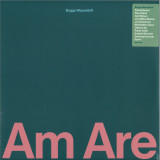
"Am Are" features special constellations of superb musicians that spans both generations and styles, and is an exploration of sonic textures, dynamic contrasts of mood and style, and ranges from sparse arrangements through to complex layers of dubs and loops and improvisational interplay.
The album begins with Bugge alone on "How?" with layers of undulating atmospheric synth, brought into focus by Bugge's piano at the forefront, creating a minimalist miniature that is both emotive and serene. For "Villrein" Bugge is joined by Elias Tafjord on drums, beginning with a santur-like synth figure, floating over ominous formant sci-fi bass synths bubbling and pulsing, and overlaid by phrenetic piano that only stops to lock into the santur figure before relaunching on its own journeys, all underpinned by Elias Tafjord's expressive drumming. "Is Anyone Listening?" demonstrate's Bugge's songcraft, layering muted percussive piano behind Rohey's distinctive and beautiful vocals punctuated by Martin Myhre Olsen's tenor saxophone, creating a soulful mood tinged with desperation.
"BAG" presents the first classic piano trio of the album - Bugge on piano and synths, Arild Andersen on bass, and Gard Nilssen on drums - announcing itself with an insistent riff, chattering drums, breaking into a progressive rock-style passage of bass and piano in unison. "Reel", the second track from this trio, is a mellow soundscape that evolves to become hazy urban downbeat jazz.
The second piano trio of Bugge (Rhodes and Korg MS20 synth), Sveinung Hovensjø (Electric Bass), and Jon Christensen (Drums and Bells) offers a completely different perspective. The first track "Render" features Bugge's Zawinul-esque Rhodes and monosynth leads, Sveinung's fuzz bass in something of a leading role, all carried with chattering gusto by Jon Christensen's dynamic drumming that brings texture and space as well as rhythm to the piece. "Vender" begins as an atmospheric piece, with reed organ-like synth washes, and octave-processed bass with a somewhat sitar-like tone, meandering until the track breaks down into drums and bass weaving around an insistent drum machine loop, dripping with synth pads and monosynth lead.
"JazzBasill" introduces the third piano trio - featuring Bugge (Piano), Jens Mikkel Madsen (Acoustic Bass) and Øyunn (Drums) - and offers a classic piano trio style with urban sophistication, that is lyrical, and interspersed with staccato cadences, giving a feeling of broken swing, slightly staggered yet driving forwards. The title track "AM ARE" is late night jazz, with baroque whispers, and distinctly melodic.
The final track, "Think Ahead" features the non-standard trio of Bugge (Piano/Organ), Oddrun Lilja (Guitar) and Sanskriti Shrestha (Tablas/Harp). Beginning with a minimalist piano figure, table, and sustained guitar, the track breaks down to a noise surge and ambient windscape, with guitar birds and abstract grinding, before returning to minimalist melodicism.
The shifting personnel across the album, as well as the three different studios in which it was recorded - Village Recording in Copenhagen, Rainbow Studios in Oslo, and his own Buggesroom Studio - creates a feeling of dynamic change and musical variety that is unified by Bugge's piano and keyboards. His playing moves between foreground, where he allows the music to elevate him, and background, where he move gently like a beneficent presence, tending to the demands of the spirit of the musical moments he has captured. It is an album powered by restless exploration and shaped by distinctive musical personalities; it is a journey through different moods, illuminated and brought into focus by Bugge's measured approach and guiding hand.
• Earliest known full concert recording of Buck and his Buckaroos!
• Mastered from the original tape by Grammy®-winning engineer Michael Graves.
• Extensive liner note from co-producer Scott B. Bomar.
• First pressing on Strawberry Jam-colored vinyl.
Buck Owens and his Buckaroos were a phenomenon when they burst onto the scene in the early 1960s. in 1963–1964, they had five #1 Country hits including “Act Naturally,” “Love’s Gonna Live Here,” “I Don’t Care (Just As Long As You Love Me),” and “My Heart Skips A Beat.”
Their live Carnegie Hall Concert release hit #1 in 1966, but how exciting they were onstage before that was largely unheard. Unless you were there. Until now. The Exciting Sounds Of Buck Owens And His Buckaroos Live From Richmond, Virginia, 1964 is the recently discovered, earliest full-concert recording of The Buckaroos onstage. The band, performing the aforementioned #1 hits and more, shows how their presence and performance in front of a live audience cemented their status as one of the greatest acts of all time—in person and on record.
Painstakingly restored and mastered by multiple Grammy-winning engineer Michael Graves, The Exciting Sounds Of Buck Owens And His Buckaroos Live From Richmond, Virginia, 1964 shows a band ready to take over the world. (Even showing appreciation to their new labelmates, The Beatles, with a cover of “Twist And Shout.”) With a first pressing on strawberry jam colored vinyl, The Exciting Sounds Of Buck Owens And His Buckaroos Live From Richmond, Virginia, 1964 looks and sounds like it could and should have appeared in 1964, but with 21st century style and technology.
So, head to Richmond and hear Buck Owens And His Buckaroos firing on all cylinders. It may have happened over six decades ago, but it sounds as vital and important to music history now as ever.
Pierre Bujeau is an expert at creating temporary escape zones—musical structures to evade the everyday. Sometimes he works collectively as part of the mysterious French groups Omertà and Tanz Mein Herz. But it’s when he’s on his own, performing as Megabasse, that he offers the most complete break from reality. His kit is simple: a few bottles of cheap lager, twin Fender amps, and his double-necked guitar. An instrument like this normally signals maximum rockist excess—think Jimmy Page, Geddy Lee, or that dude from the Eagles. In Pierre’s hands, it becomes more like a zither or a dulcimer, producing soft chiming patterns that build against themselves until the sound of the room, passed back and forth between his two amps, starts to blur everything, and we are away in another world. Wait, though—let down your yoga bun and don’t light the palo santo yet. The new space he creates has nothing to do with smug wellness. It’s a rough, do-it-yourself psychedelia, scuffed but hopeful. Not a perfect blank space to be your best self in, but instead a communal dreaming, an uncanny place where all are welcome.
Until now, without catching him live, the Megabasse experience has been difficult to find: CD-Rs, short-run tapes, and one blink-and-you-missed-it LP. Thankfully, this record on Efficient Space, a reissue of some pieces that were previously only available on a small cassette edition, will put that right. Here are two long, intricate pieces, and something new—a shorter track that hints at a move toward beautiful, burnt-out guitar soli.
Unless you are very lucky, wise, or rich, life imposes its structures on you. Maybe a record of shimmering, tranced guitar is all you need to get out from underneath?
Capturing phantom drones behind dusty beats and haunted twangs, Ellis Swan and James Schimpl return for their third album as Dead Bandit. Locked into a musical language unique to their collaboration, the duo once again put us out to pasture across broad sonic plains, drums flapping like loose fence panels in the prairie breeze and bass rumbling like distant thunder. True to their previous two records, Swan and Schimpl keep the strung out guitars at the front of what they do, whether playing a naked, desolate strum or running six strings through disruptive effects processing until they're barely recognisable.
But while there are details of disturbance when listening to Dead Bandit's self-titled record up close, the wider impression is a smoother, more direct affair that toys with post-rock complexity and matches it with the emotional weight of melodic simplicity, gentle grooves and conscious arrangements. 'Weeds' offsets its languid fuzz guitar with shimmering sustained notes before settling into a patient, heavy-hearted composition charged with heartbreak leads pealing out in the middle distance.
By comparison, 'Glass' has a smoky, half-hidden backroom quality. Its brushed whisper of a beat, lingering guitar drones and subtle sub bass come on like a dub wise flip of a sad-eyed country ballad. The mood maintains on 'Half Smoked Cigarette', which captures the grey sky sullenness of post-punk and reframes it in the seductive isolation of rural America. While there's a thickness to the sound on these most direct of tracks on the album, there's also fragility inherent to the sound world Dead Bandit have been shaping out over these past few years.
'Buttercup' swaps sadness for sinister undercurrents, once more drawing on fulsome low end to fill out the sparse threads of instrumentation up top. 'Pink' finds a steady momentum for its own brand of brooding mystery, the sharp end of the beat bringing focus to the many-layered approaches to the guitar which roundly define the Dead Bandit sound. There's an even clearer direction mapped out in the vintage drum machine pulse of 'Koyo', all the better to carry swirling effects treatments and moody melodic figures. Even in these ominous climes there's space for plaintive, endearing hooks which land as the most direct phrases in Dead Bandit's musical lexicon to date.
The fundamental sound across this album holds true, but Dead Bandit are never bound to a singular practice. 'Lucien's Bitters' strikes up a pronounced drum machine beat which comes on like 90s downtempo, and it feels like a natural vessel for the heavy, shoegaze tinted lament of the guitars. At every turn, Swan and Schimpl prove their affinity for all kinds of approaches, and yet the end product is a deeply cohesive, immediate listen that shows just how clear their creative vision really is.
- A1: I Cried Like A Child Of Three / Tôi Đã Khóc Như Một Đứa Trẻ Lên Ba
- A2: Xăm Hường
- A3: Early Night With Fa And The Dang Brothers / Đầu Hôm Với Fa Và Anh Em Nhà Họ Đặng
- A4: La Palanche / Đòn Gánh
- A5: The Universe Is A Rabid Creature / Vũ Trụ Là Con Thú Điên
- A6: Hanoi - The Motorcycle Empire / Hà Nội - Đế Chế Xe Ôm
- A7: A Conversation Under The Night Sky / Cuộc Chuyện Dưới Trời Đêm
- B1: Altar / Bàn Thờ
- B2: Roóng Poọc
- B3: Chàm Islands
- B4: Lục Bát
- B5: The Perfume River / Sông Hương
- B6: Tuj Lub
- B7: Đông Ba Market
- B8: Home Is A Fire / Nhà Là Một Ngọn Lửa
It took a village to create Le Motel’s Odd Numbers / Số Lẻ. Beneath its pulsing, shimmering tones, the record is alive with the sounds of everyday life—purring mopeds, idle whistling, the din of kitchens and whisper of rain, voices joyful and contemplative, scenes of bustling cities and domestic intimacy.
Le Motel—who runs the Brussels-based record label Maloca—gathered sounds, photographs, and videos while traveling in Vietnam in 2023. From Hanoi he ventured to Hmong communities in the mountains near the border with China, building out a network of contacts gathered from friends and friends of friends. But Odd Numbers / Số
Lẻ—which takes its title from traditional Vietnamese numerological beliefs and customs—is wholly unlike the extractive product typical of exploitative modes of Western tourism; the album’s final shape was deeply dependent upon the participation of the people the artist met in Vietnam.
Back in Brussels after his travels, as Le Motel began working with his materials, he sent early drafts to his contacts, inviting their input. This back-and-forth eventually yielded a dynamic collective effort in which nine of the album’s 15 tracks feature multiple composer credits. Among the album’s diverse collaborators are Yvonne Quỳnh-Lan Dươn, an educator and ethnomusicologist; Chi Chi, the daughter of a Hmong shaman; and Phapxa Chan, who contributes three poems inspired by landscape and Le Motel’s own music (and, in one case, psychedelics).
The result is an album that is not about making sound, broadcasting it as a one-way communication, but instead about the empathic practice of listening—about listening as an integral and even ethical part of musical creation, even (especially!) when that music is created on a computer, rather than conjured by a group of players sharing space in real time. It’s an album that adopts many of the traditional trappings of ambient music while reminding us of the importance of intentional modes of creation. Brian Eno famously said that ambient music must be as ignorable as it is interesting, but Le Motel’s Odd Numbers / Số Lẻ suggests, to the contrary, the richness of experience available to us should we make the effort to open our ears.
Complementing the album, Le Motel’s Odd Numbers / Số Lẻ also takes the form of a multimedia exhibition including photographs, video, and text-based works created in collaboration with Belgian designer and programmer Antoine Jaunard and Vietnamese poet Phapxa Chan. The exhibition is on view from January 23 until March 2, at Brussels’ 254Forest gallery, as part of Photo Brussels Festival 2025.
The music of Green Cosmos makes us realize that our never- ending quest for love can find fulfillment. You take a long, slow breath and feel the magic of transcendent wisdom. There is not one note too many, and everything gets to the heart of the matter. A saxophone that sails ahead on a world- map of sound, driven by the beat of Kalimba and drums, sometimes fraternizing with a bass that‘s now insistent and then shy, and closely listens to a reassuringly omniscient piano until the music merges into a unit that‘s greater than its parts and sees us through the night.
This VA release offers four tracks, each crafted for a distinct dance floor moment. In side A, Dani Casarano, well known for delivering high quality music Opens with deep, hypnotic grooves, setting an atmospheric tone before shifting to a punchy, bass-driven energy in both cuts In side B, the new alter ego behind Felian & our favourite Bruno Schmidt starts the side with a robotic endless loop, filled with an incidental break and reminiscent synths. This euphoric third track leads into the final minimalistic cut build By the amazing duo composed by Omar Akrhif & Lucretio, perfect for after-hours. A versatile collection for any stage of the night.
- The Line
- Red Rainbow
- Mercy
- Falsetto
- Aegis
- Redeemer
- Doorstep
- Trick Of The Light
RIYL: Portishead, Thom Yorke, BEAK>, SUUNS, TR/ST, Radiohead. Solo project of Robert Toher who was the creator of ERAAS. Covered by Quietus,Pitchfork, NME, Stereogum, Earmilk, The 405, Clash, BBC Radio, Clash and more.... Public Memory is a mixture of damaged and dubbed-out percussion, unfurling synths and sparse sampling - all strung together by producer Robert Toher's spectral tenor. The project's sophomore LP, Demolition follows 2017's Veil of Counsel EP and 2016's Wuthering Drum LP with cinematic fortitude. While Public Memory's prominent krautrock and trip-hop rhythms are represented here, Demolition explores a greater range of tempos and an expanse of alien emotions with layers of electronic drums, live drums, Korg synths and samples from nature. Themes of rebirth and reflection imbue the album's atmosphere, rich in tape delay, spring reverb, and textures that conjure a sci fi and supernatural narrative. Opener "The Line" sets the album in motion with a driving energy and introspective unease, as if estranged from the world it was created in. A meditation on impending collapse, "Red Rainbow" begins with an arpeggiated melody that hints at a sense of dread. Like the darkness of night descends, the track unfolds with haunting atmospherics and howling synths, finishing with an unexpected climax that ominously builds until at last it falls apart, quickly, softly, without incident. The slowtempoed "Aegis" reflects on the banal reality of love lost, with shuffling rhythms, lingering inflections and a growling synth at its core. Toher's adept use of space and tension articulates the world of Demolition as eerie, emotive, and above all, narcotic. Each track is an existential procession. "Turning out the lights on your illusion," Toher sings to close the album, accepting that change is an inescapable condition of being.
- 1: Reign Of Terror
- 2: Death Cantation
- 3: Terrorizer
- 4: Born Into Chaos
- 5: Wrath Of The Warmaster
- 6: Omens Of Fire
- 7: Tormentation
- 8: Terminate By The Sword
Maryland Death/Sludge reapers, YATRA, were born in 2018. The trio of Dana Helmuth on guitar and vocals, Maria Geisbert on bass, and Sean Lafferty on drums came out incredibly heavy with their first full length Death Ritual (grimoire rec) in 2019. With much critical acclaim, and followed with extensive touring of America and Europe, including many festivals, they proved themselves to be a relentless live touring band. In 2020 YATRA followed with their second full length, the more aggressive and heavier sounding, Blood Of The Night, also greeted overwhelming positive press and touring to follow until covid restrictions began. Not ones to remain idle or take a pause, in spite of touring restrictions, YATRA used their time to write and record another 2020 album, All Is Lost, bringing in more elements of their death metal roots and drenched in blackened intensity. YATRA have signed with Prosthetic Records, and will release a new full length in summer 2022, to be followed with extensive touring of America and Europe, crushing as many stages and festivals as possible. YATRA’s intense live performance is not to be missed.
13 tracks from the Rock and Roll Hall of Fame member—many making their vinyl debut. Pressed on opaque orange vinyl. Mastered by Grammy®-winning engineer Michael Graves. Lacquers cut by Jeff Powell at Take Out Vinyl/Sam Phillips Recording Service in Memphis. Packaging contains liner notes from Bill Dahl. Little Richard's place in rock history has never been disputed. "The Architect" returned in 1970 on Reprise Records with The Rill Thing, and during his tenure there, recorded four albums with only three seeing actual release. (Southern Child would remain unreleased until the material appeared on a 2007 compilation, with Omnivore Recordings releasing it in its intended form in 2020.) Along with alternate takes, singles, and appearances on soundtracks including $ (starring Warren Beatty and Goldie Hawn) and composed by Quincy Jones, those tracks were included on expanded CD reissues of King Of Rock And Roll, The Second Coming, and Southern Child. Now, 13 of those performances are available on LP—some for the first time since their original release, and others making their vinyl debut. Settin' The Woods On Fire: The Reprise Rarities collects and showcases Little Richard's dynamic time on Reprise, and offers a deeper look into the man whose output was and is as engaging and original as it had ever been, as he crossed in the 1970s (and beyond). Mastered by Grammy-winner Michael Graves and cut by Jeff Powell at Take Out Vinyl/Sam Phillips Recording Studio in Memphis, Settin' The Woods On Fire offers a look into a man whose musical boundaries were endless, and paves the way for a reissue campaign highlighting those classic albums' return to vinyl.
White[36,93 €]
"They are the Finnish / Dutch / British troupe NIGHTWISH – one of the most fascinating rock bands of the last decades, whose enigmatic paths have proceeded from acoustic passages to symphonic heavy metal and from catchy folk to progressive majesty. If there is one trait the band has year after year, it might be this: expect something familiar but also expect the unexpected. NIGHTWISH has indeed broken all kinds of boundaries – never deliberately, but perfectly naturally.
Now guess what? NIGHTWISH's new studio album ""Yesterwynde"" – the band's tenth overall – is no exception to the rule. But it is more...
“""Yesterwynde"" took more time to make than any previous NIGHTWISH album”, nods keyboardist Tuomas Holopainen, who once again envisioned most of the material. ""The new album was intensively worked on for 3,5 years. My ambition and piety really skyrocketed, and I just couldn't let go of the creative process – and didn't want to. Along the way, ""Yesterwynde"" became both an exhilarating obsession and a comforting haven for me. All aspects of the making – compositions, lyrics, arrangements, cover art, videos, mixing and so on – were given more attention than ever before.""
The result? There's a fascinating, but inexplicable feeling that NIGHTWISH has once again been able to find unprecedented nuances, spices and perspectives in their new works – exactly: after a career of nine classic albums. """"Yesterwynde"" is an experience that takes time to digest. The gravid ingredients of the songs are easily recognizable, but beneath the surface lies a large number of intriguing details and features"", Holopainen describes.
""It's interesting – but not surprising – that ""Yesterwynde"" has attracted quite a variety of opinions. Some have stated that it is the most 'band' record to date. For some it appears to be the heaviest and most ominous NIGHTWISH release. It has also been called our most progressive album. And the list goes on.""
And what does Tuomas think of it himself?
""To me, ""Yesterwynde"" sounds, tastes and feels strongly like the true essence of NIGHTWISH – enriched with new moods and flavors.""
The lyrics of ""Yesterwynde"" deal with large-sized universal themes: memories, mortality, humanism, time and much more. ""The new album is the conclusion of the trilogy – textually it follows in the footsteps of its predecessors ""Endless Forms Most Beautiful"" and ""Human. :II: Nature."""", Holopainen says. ""At the same time, ""Yesterwynde"" is the band's most lyrically driven album: our music has never been so 'married' to the lyrics. So here's a tip: if something in the composition puzzles you, the words might clear it up.""
""For me, one of the key lines is 'we are because of a million loves' – taken from the song ""Perfume of the Timeless"". Each of us is part of an unbroken chain that stretches back billions of years. If even one of your ancestors had died too young – mauled by a cave bear, for example – during this incredibly long period of time, you would never have been born. In other words: our existence is such an unfathomable privilege!”
What does the term 'yesterwynde' mean?
""It describes a feeling that cannot be found in any human language. That's why we had to invent a whole new word. The album is supposed to open that feeling to the listener.""
Without taking anything away from the solid delivery of guitarist Emppu Vuorinen, drummer Kai Hahto, bassist Jukka Koskinen and multi-instrumentalist/singer Troy Donockley, it might be worth highlighting one fact: the performance of the eloquent storyteller Floor Jansen is once again unparalleled. It is simply breathtaking how the singer is able to make songs fly with her performance. ""Floor's second child was born just over a month ago, and we hadn't rehearsed together at all... So it was a little nerve-wracking to go to Floor's home studio for vocal recordings. Well, what happened? We had booked twelve working days and after six days everything was completed in style. Floor's preparedness for the sessions was something extreme!""
After the recordings and mixing process, there was one more working phase. Mastering. Could you possibly guess that no shortcuts were taken at this point either?
""The album was mastered seven times until we reached the finish line – one hundred percent satisfied!"", states Tuomas. ""When the record was eventually finished, a three-year, extremely inspiring adventure had come to an end. I felt very, very happy.""
NIGHTWISH's next steps are clear. And they are not the most common ones.
""NIGHTWISH will not go on a world tour this time. This was a decision made for personal reasons. But don't worry... Our contract with Nuclear Blast Records includes several albums, and there's plenty of motivation to create new music!""
May the dream continue...
"
Black[27,86 €]
"They are the Finnish / Dutch / British troupe NIGHTWISH – one of the most fascinating rock bands of the last decades, whose enigmatic paths have proceeded from acoustic passages to symphonic heavy metal and from catchy folk to progressive majesty. If there is one trait the band has year after year, it might be this: expect something familiar but also expect the unexpected. NIGHTWISH has indeed broken all kinds of boundaries – never deliberately, but perfectly naturally.
Now guess what? NIGHTWISH's new studio album ""Yesterwynde"" – the band's tenth overall – is no exception to the rule. But it is more...
“""Yesterwynde"" took more time to make than any previous NIGHTWISH album”, nods keyboardist Tuomas Holopainen, who once again envisioned most of the material. ""The new album was intensively worked on for 3,5 years. My ambition and piety really skyrocketed, and I just couldn't let go of the creative process – and didn't want to. Along the way, ""Yesterwynde"" became both an exhilarating obsession and a comforting haven for me. All aspects of the making – compositions, lyrics, arrangements, cover art, videos, mixing and so on – were given more attention than ever before.""
The result? There's a fascinating, but inexplicable feeling that NIGHTWISH has once again been able to find unprecedented nuances, spices and perspectives in their new works – exactly: after a career of nine classic albums. """"Yesterwynde"" is an experience that takes time to digest. The gravid ingredients of the songs are easily recognizable, but beneath the surface lies a large number of intriguing details and features"", Holopainen describes.
""It's interesting – but not surprising – that ""Yesterwynde"" has attracted quite a variety of opinions. Some have stated that it is the most 'band' record to date. For some it appears to be the heaviest and most ominous NIGHTWISH release. It has also been called our most progressive album. And the list goes on.""
And what does Tuomas think of it himself?
""To me, ""Yesterwynde"" sounds, tastes and feels strongly like the true essence of NIGHTWISH – enriched with new moods and flavors.""
The lyrics of ""Yesterwynde"" deal with large-sized universal themes: memories, mortality, humanism, time and much more. ""The new album is the conclusion of the trilogy – textually it follows in the footsteps of its predecessors ""Endless Forms Most Beautiful"" and ""Human. :II: Nature."""", Holopainen says. ""At the same time, ""Yesterwynde"" is the band's most lyrically driven album: our music has never been so 'married' to the lyrics. So here's a tip: if something in the composition puzzles you, the words might clear it up.""
""For me, one of the key lines is 'we are because of a million loves' – taken from the song ""Perfume of the Timeless"". Each of us is part of an unbroken chain that stretches back billions of years. If even one of your ancestors had died too young – mauled by a cave bear, for example – during this incredibly long period of time, you would never have been born. In other words: our existence is such an unfathomable privilege!”
What does the term 'yesterwynde' mean?
""It describes a feeling that cannot be found in any human language. That's why we had to invent a whole new word. The album is supposed to open that feeling to the listener.""
Without taking anything away from the solid delivery of guitarist Emppu Vuorinen, drummer Kai Hahto, bassist Jukka Koskinen and multi-instrumentalist/singer Troy Donockley, it might be worth highlighting one fact: the performance of the eloquent storyteller Floor Jansen is once again unparalleled. It is simply breathtaking how the singer is able to make songs fly with her performance. ""Floor's second child was born just over a month ago, and we hadn't rehearsed together at all... So it was a little nerve-wracking to go to Floor's home studio for vocal recordings. Well, what happened? We had booked twelve working days and after six days everything was completed in style. Floor's preparedness for the sessions was something extreme!""
After the recordings and mixing process, there was one more working phase. Mastering. Could you possibly guess that no shortcuts were taken at this point either?
""The album was mastered seven times until we reached the finish line – one hundred percent satisfied!"", states Tuomas. ""When the record was eventually finished, a three-year, extremely inspiring adventure had come to an end. I felt very, very happy.""
NIGHTWISH's next steps are clear. And they are not the most common ones.
""NIGHTWISH will not go on a world tour this time. This was a decision made for personal reasons. But don't worry... Our contract with Nuclear Blast Records includes several albums, and there's plenty of motivation to create new music!""
May the dream continue...
"
- A1: Thats How It All Is (Feat Kevin Mark Trail)
- A2: Dumplings For Dinner (Feat Omar)
- A3: Long Road
- B1: No Crime To Try
- B2: Work It Out (Feat Ange Williams)
- C1: Clearer Skies (Feat Kevin Mark Trail)
- C2: Sherwood Ave (Kitchen Party)
- C3: Everything I Have To Give
- D1: That Love (Feat Louis Baker)
- D2: Some Kind Of Blockage
Black Vinyl[30,88 €]
The records is released in two options. Both hvae 180g vinyl records. The first version has two black vinyls and the second limited edition (numbered 100 pieces) has one turquoise vinyl and the other red.
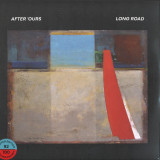
Over the last three decades, Auckland, New Zealand, has given birth to several generations of musicians, DJs, and producers who operated within the interzone between jazz, blues, soul, funk, Latin music, hip-hop, house, boogie, and broken beat. Across two slow-cooked albums that sit at the intersection of machine funk and vivid live instrumentation, Odyssey (2016) and their forthcoming sophomore release Long Road (2024), After 'Ours - the group project of pianist and composer Michal Martyniuk and drummer, guitarist and producer Nick Williams - have comfortably located themselves within this antipodean tradition.
Born and raised in Auckland, Nick Williams grew up surrounded by music from a young age. At home, his mother, Mary Anne, a record collector and DJ with deep, diverse vinyl crates, kept his ear sharp. By the time he was eight years old, he was regularly joining his musician father on stages across Australia in his blues rock band Slippery Sam. In his early twenties, Nick began leading the eleven-piece Auckland Latin-dub-funk fusion big band Tangent, who performed regularly until the late 2000s.
Michal Martyniuk, on the other hand, grew up on the opposite side of the world in Szczecin, Poland. After playing classical music for twelve years and attending jazz school, he relocated to New Zealand with his family in his teens. While studying at Auckland University Jazz school, Michal came into the orbit of the legendary New Zealand saxophonist, composer, producer, and band leader Nathan Haines, who brought him into the same world as future collaborators like Tama Waipara, Batacada Sound Machine, Sola Rosa and Nick.
Inspired by the rich stories of jazz, neo-soul, electronica, and dance music from both sides of the Atlantic Ocean and the open-eared Auckland scene they emerged from, After 'Ours formed in 2011. Born out of a friendship cultivated through playing together at bars and nightclubs around town and home studio sessions. "Nick had family and work, so I had to wait all day," Michal says. "We'd come to the studio at 10 PM and go till 3 AM. That's how we came up with the name.
Session by session, After 'Ours revealed itself to be a creatively fertile meeting of minds. "We both have our angles, but it works well in the end," Nick reflects. "It takes the music to a place we can't get to by ourselves."
Between 2011 and 2016, they wrote and recorded Odyssey with a cast of musical collaborators that included KP, Sharlene Hector & Kevin Mark Trail (UK), Matt Nanai, Nathan Haines, Jakub Skowronski, Nick's partner Ange Williams (nee Saunders) and British producer Mike Patto from the lauded UK future jazz group Reel People. Influenced by the smooth yacht rock of Steely Dan and Donald Fagan, the warm midtempo bounce of A Tribe Called Quest and J Dilla, and the complex jazz/RnB bop of Robert Glasper, Odyssey was a labour of love that emphasised community, warm-hearted hospitality, and care.
Seven years on, they're finally ready to return with Long Road, an album that contains some of their best work yet. As well as reconnecting with past collaborators Kevin Mark Trail and Ange Williams, Long Road sees After 'Ours calling on assistance from Louis Baker, Jakarta-based saxophone player Kuba Skowroński, bassist Dan Antunovich, Los Angeles-based drummer Chris Bailey and the journeyman British soul artist Omar Lyefook.
Across ten songs that plot a stargazed course through their antipodean spin on UK broken beat, jazz, modern soul, and blues rock, Nick and Michal build on everything they learned while writing and recording Odyssey. In the process, they take their joyful musical visions to sublime new heights.
- A1: Thats How It All Is (Feat Kevin Mark Trail)
- A2: Dumplings For Dinner (Feat Omar)
- A3: Long Road
- B1: No Crime To Try
- B2: Work It Out (Feat Ange Williams)
- C1: Clearer Skies (Feat Kevin Mark Trail)
- C2: Sherwood Ave (Kitchen Party)
- C3: Everything I Have To Give
- D1: That Love (Feat Louis Baker)
- D2: Some Kind Of Blockage
Color Vinyl[35,71 €]
The records is released in two options. Both hvae 180g vinyl records. The first version has two black vinyls and the second limited edition (numbered 100 pieces) has one turquoise vinyl and the other red.
Over the last three decades, Auckland, New Zealand, has given birth to several generations of musicians, DJs, and producers who operated within the interzone between jazz, blues, soul, funk, Latin music, hip-hop, house, boogie, and broken beat. Across two slow-cooked albums that sit at the intersection of machine funk and vivid live instrumentation, Odyssey (2016) and their forthcoming sophomore release Long Road (2024), After 'Ours - the group project of pianist and composer Michal Martyniuk and drummer, guitarist and producer Nick Williams - have comfortably located themselves within this antipodean tradition.
Born and raised in Auckland, Nick Williams grew up surrounded by music from a young age. At home, his mother, Mary Anne, a record collector and DJ with deep, diverse vinyl crates, kept his ear sharp. By the time he was eight years old, he was regularly joining his musician father on stages across Australia in his blues rock band Slippery Sam. In his early twenties, Nick began leading the eleven-piece Auckland Latin-dub-funk fusion big band Tangent, who performed regularly until the late 2000s.
Michal Martyniuk, on the other hand, grew up on the opposite side of the world in Szczecin, Poland. After playing classical music for twelve years and attending jazz school, he relocated to New Zealand with his family in his teens. While studying at Auckland University Jazz school, Michal came into the orbit of the legendary New Zealand saxophonist, composer, producer, and band leader Nathan Haines, who brought him into the same world as future collaborators like Tama Waipara, Batacada Sound Machine, Sola Rosa and Nick.
Inspired by the rich stories of jazz, neo-soul, electronica, and dance music from both sides of the Atlantic Ocean and the open-eared Auckland scene they emerged from, After 'Ours formed in 2011. Born out of a friendship cultivated through playing together at bars and nightclubs around town and home studio sessions. "Nick had family and work, so I had to wait all day," Michal says. "We'd come to the studio at 10 PM and go till 3 AM. That's how we came up with the name.
Session by session, After 'Ours revealed itself to be a creatively fertile meeting of minds. "We both have our angles, but it works well in the end," Nick reflects. "It takes the music to a place we can't get to by ourselves."
Between 2011 and 2016, they wrote and recorded Odyssey with a cast of musical collaborators that included KP, Sharlene Hector & Kevin Mark Trail (UK), Matt Nanai, Nathan Haines, Jakub Skowronski, Nick's partner Ange Williams (nee Saunders) and British producer Mike Patto from the lauded UK future jazz group Reel People. Influenced by the smooth yacht rock of Steely Dan and Donald Fagan, the warm midtempo bounce of A Tribe Called Quest and J Dilla, and the complex jazz/RnB bop of Robert Glasper, Odyssey was a labour of love that emphasised community, warm-hearted hospitality, and care.
Seven years on, they're finally ready to return with Long Road, an album that contains some of their best work yet. As well as reconnecting with past collaborators Kevin Mark Trail and Ange Williams, Long Road sees After 'Ours calling on assistance from Louis Baker, Jakarta-based saxophone player Kuba Skowroński, bassist Dan Antunovich, Los Angeles-based drummer Chris Bailey and the journeyman British soul artist Omar Lyefook.
Across ten songs that plot a stargazed course through their antipodean spin on UK broken beat, jazz, modern soul, and blues rock, Nick and Michal build on everything they learned while writing and recording Odyssey. In the process, they take their joyful musical visions to sublime new heights.
Black Truffle is thrilled to announce a reissue of Chico Mello and Helinho Brandão’s self-titled release from 1984, the first return to vinyl of this classic of Brazilian experimental music with its original cover art and complete track listing. An under-recognised figure whose work inhabits a singular terrain where radical new music techniques and music theatre meet musica popular brasileira, Mello has lived and worked in Berlin since the late 1980s. A student of Dieter Schnebel, Mello played in the 90s iteration of Arnold Dreyblatt’s Orchestra of Excited Strings alongside compatriot Silvia Ocougne, with whom he produced a radical and hilarious deconstruction of MPB classics on Musica Brasileira De(s)composta (an early and rather atypical release on Edition Wandelweiser).
On this release, his only recording predating his move to Europe, Mello works with the alto saxophonist Helinho Brandão, who appears to be otherwise unknown outside Brazil. The record’s six tracks range from solo saxophone improvisation to densely layered ensemble works bridging minimalism, acoustic sound art and a plaintive melodic sensibility that calls up Edu Lobo or Milton Nascimento. Beginning with a dramatic, dissonant wind and string surge from which emerge ominously pounding piano chords, opener ‘Água’ slowly builds in intensity, a halo of clustered vocal harmonies gradually closing in on Brandão’s squealing sax until the piece opens up to reveal a gorgeous passage of melodic singing. The piano accompaniment reduces to tolling bass notes as the voice begins a repeated incantation, suggesting a ritualistic atmosphere reminiscent of parts of Xenakis’ setting of Oresteia. Dissonant, sawing tremolos on the strings climb to a crescendo before disappearing into the sounds of water being poured and splashed into metal vessels, presented not as a field recording but as a percussive element performed by the ensemble. A child’s voice then appears, singing to piano accompaniment the same melody heard earlier in the piece. After a brief solo alto improvisation from Brandão, working with the guttural pops and fleeting melodic gestures of Braxton or Roscoe Mitchell, the remainder of the first side is dedicated to the leisurely unfolding of ‘Baiando’ over the course of twelve minutes. A trio for Brandão on soprano saxophone, Mello on a very period-appropriate phased nylon string guitar and Edu Dequech on bongos, the performance eases its way hypnotically through subtle variations on a set of rhythmic and melodic patterns, almost derailed at points by Brandão’s wild forays into extended technique but held together by Mello’s droning guitar notes.
The second side opens with another multi-part epic for a larger ensemble, ‘Matraca’, which makes use of strings, electric guitars and a wide range of South American percussion instruments. Rasping violin harmonics hover as drum hits, repeated guitar notes and triangle accompany a slowly descending bass glissando. A sudden change in direction introduces a thrumming, incessantly repeated bowed bass tone, beginning a series of episodes of minimalist phasing and pattern variation, the combinations of electric guitars and orchestral instruments giving the ensemble an ad hoc charm like the early Penguin Café Orchestra but with more percussive drive. Eventually the piece is overrun by a cacophony of the titular matracas (a kind of ratchet/cog rattle). Following a lyrical trio improvisation by Mello, Brandão and Gerson Kornin on bass, the final ‘Danca’ focuses entirely on Mello’s layered acoustic guitars and vocals, using this restricted palette to build up a haunting piece of almost orchestral density, reminiscent of the 70s work of Egberto Gismonti in how it thickens a folkish ambience with harmonic sophistication.
Arriving in a starkly beautiful gatefold sleeve and sounding better than ever in its new remaster, one might call the stunning music contained on Chico Mello/Helinho Brandão ahead of its time. But what (other than some of Mello’s own work) produced in the years since its initial release has really touched the organic fusion of minimalism, free improvisation, radical instrumental technique and popular song achieved here? Forty years after its first release, Chico Mello/Helinho Brandão remains music of the future.
Are you a mannequin in the eyes of your beloved? Does your partner compare your relationship to a factory that emits plumes of smoke? Are you in love with a seductive and destructive Credit Default Swap? Someone who sucks you in with skyrocketing short term erotic returns - only to ghost you until you crash so hard that you end up broke(n) in your own bed? Do you pay $300 an hour out of pocket to a psychiatrist who promises to help you strike a deal with a difcult parent - one that will produce more stable long term returns on your psychic investments? If so, then you, my friend, may be drowning in the sea of Love in the Time of Capital. It's where everyone would love to drown. It's a new album from John Davis of The Folk Implosion that fnds him backed with confdence by Eli Moore and Andrew Dorsett of the indie pop band Lake. It was recorded by Nich Wilbur at the Unknown, a cavernous recording studio in Anacortes, WA that has been a favorite destination for indie rockers around the nation. Ben Brodin recorded Megan Siebe playing strings on two tracks at his Hidden Branch studio in Omaha, and the album was mixed by Scott Solter in Durham NC. Arrangements are based on the classic power pop trio of drums, bass and electric guitar. Those elements are tastefully embellished with organs and pianos that call to mind records by classic rock bands like Tom Petty's Heartbreakers. That is, if the Heartbreakers were fltered through the Northwestern International Pop Underground tradition, and cast a critical eye on how commodity culture shapes the way we think of ourselves and our intimate relationships. The album also features four ballads, three drum and electric guitar free, for all you late night introspective heads.
Christopher Cross's debut album boasts nine legendary hits, solidifying its status as one of the most successful LPs of the classic rock era. This masterpiece is a treasure trove of chart-toppers, including the iconic "Sailing," a timeless number one that cemented Cross as a superstar and earned him all four general field awards in a single ceremony at the 1980 Grammy Awards, bringing home Record of the Year ("Sailing"), Album of the Year (Christopher Cross), Song of the Year ("Sailing") and Best New Artist at the 23rd Annual Grammy Awards. This feat was not replicated for 39 years, until Billie Eilish won all four awards at the 62nd Annual Grammy Awards in 2020. Other top hits like "Ride Like The Wind," featuring superstar Michael McDonald, further showcase the album's crossover appeal across all formats in 1979. The album features some of the most sought after musicians of the era including Don Henley, Larry Carlton, Eric Johnson, and more! Produced by legendary producer, Michael Omartian. Seeker Music is proud to present this iconic new pressing featuring limited edition lyric poster insert.
In a heartfelt tribute to Mike Wells, who tragically passed away in 2022, Viasonde, with the blessing of the Wells family, embarks on a mission to reintroduce Gridlock to the world. The four main Gridlock albums will be reissued on vinyl for the first time, starting with "The Synthetic Form" double LP.
Available on June 7th, this limited edition release will be featured on clear vinyl with black and bone splatter alongside black vinyl. Additionally, 50% of the proceeds from LP sales will be donated to the American Foundation for Suicide Prevention, honoring Wells' memory. Both formats are extremely limited and Non-Returnable.
In the mid-90s, a resurgence in Electro-Industrial was firmly focused on dance-floors. At this pivotal time, two San Francisco metal scene defectors, Mike Wells and Mike Cadoo, connected through a mutual friend. Bonding over their shared appreciation for non-metal influences, Wells, armed with a sampler and a couple of synths, had crafted a few tracks. Cadoo swiftly added vocals to these compositions, and thus, Gridlock was born.
With relentless dedication, the duo embarked on sculpting a grittier, more ominous variant of electro-industrial. Steering clear of the upbeat rhythms typical of the genre, they opted for a dystopian, dirge-like pace. Drawing inspiration from iconic acts like Skinny Puppy, Einsturzende Neubauten, and Fields of the Nephilim, they pieced together the Sickness demo. Eager to share their creation, they distributed the demo to anyone who would lend an ear, including many users on the rec.music.industrial newsgroup. Despite numerous rejections from industrial music labels citing its lack of danceability, Pendragon Records saw potential and took a chance.
Thus commenced the earnest endeavor of crafting their debut album, "The Synthetic Form." Upon its release, it marked a pivotal moment in industrial music, ushering in a fusion of classic, experimental, and dystopian ambient elements. Pendragon Records tantalizingly teased the album as "Unleashing a World of Your Demons," offering a glimpse into its bleak exploration of themes like regret and personal turmoil.
Over the years, Gridlock evolved through three subsequent albums, progressively exploring diverse sonic territories beyond the confines of industrial music. However, their journey met an acrimonious end with the duo parting ways, leaving behind their albums as poignant relics, elusive on digital platforms and sought after by collectors at premium prices... until now.
Alphawaves, is a new project by dj and electronic music producer Alex Tsotsos combining both the meditative as well as the healing power of music! The idea behind Alphawaves is to stimulate mind, body and soul through broad and repetitive soundscapes that unfold on top of elegantly pulsating rhythmics.
Each track is recorded live in the studio and moves along the lines of techno in the ultra deep field. Single takes performed in real time until the tape stops rolling. Alphawaves is inspired by the analog sound pioneered by acts like Rhythm and Sound, Maurizio and Alpha and Omega.
A01020304 EP is the sophomore release of Lowpass recordings. A record label that explores the analog realm of underground electronic music and deep techno.
Rare debut LP by the eccentric Peruvian singer Jean Paul "El Troglodita", known for his wild performances and extreme way of life. Enrique Roberto Tellería made his Peruvian television debut in 1965 under the stage name Jean Paul El Troglodita and wearing an imitation leopard skin suit. He would switch from melodic calm to shouting wildly or suddenly drop to the floor on his knees and smash the furniture like crazy. At the age of 19, DisPerú signed him to the label on the strength of these early performances. His first single included a freely translated version of 'Secret Agent Man' in Spanish. He began to work on the eleven cover versions that would feature on his first LP immediately, writing all his own lyrics and accompanied by the beat band Los Steivos. Despite the predominance of English beat music in Peru, the album only included three songs directly related to the British invasion: 'Bus Stop' by The Hollies, also played in raga rock style; 'Paint it Black' by The Rolling Stones; and 'The House of the Rising Sun', which follows the arrangement recorded by The Animals. So most songs come the American songbook. Apart from 'Tema de El Troglodita' (a versión of 'Secret Agent' by The Challengers), we find the bluesy 'Mustang Sally' (Sir Mack Rice). Two other US numbers, originally performed with orchestral accompaniment, were adapted to fit the rock band format: 'Poor Side of Town' (Johnny Rivers) and 'Take Me to the Moon' (Kaye Ballard). 'El verdadero amor' ('True Love'), an uncredited version is in a similar vein. The Spanish song 'Negro es negro' (Los Bravos) and the Brazilian track 'Que todo se vaya al infierno' (Roberto Carlos) also feature on the LP. El Troglodita's association with the so-called nueva ola, indicated on the back cover, needs clarification. In Peru, nueva ola was a mixed bag rather than a specific musical style and encompassed slow rock, twist, bossa nova and all the styles that the record industry produced to tame the wild rock 'n' roll impulses of teenagers in the early sixties. The Peruvian artists that performed these inoffensive Spanish adaptations of Paul Anka, Neil Sedaka or Frankie Avalon, were presented as successful models of youth culture. This was until 1964, when the Beatles with their mop-top haircuts hit the charts, vindicating rock 'n' roll and imposing the group format over the soloist model. Meanwhile the press continued to call any youth music recorded during the rest of the decade nueva ola. Jean Paul noted these distinctions early on and distanced himself from it in several statements. He saw his performance more in a style as a solo artist as following in the footsteps of e.g. Los Saicos. His 'hippie' lifestyle got him arrested by the new de facto military government in 1968, who accused him of promoting drug consumption and corrupting the Peruvian youth. The charges were soon dropped but his reputation was tarnished, and he ended up emigrating to Central America. The album includes Spanish sung versions of British beat songs and covers of the American songbook as well as various international hits.
Club music culture necessarily shifted gears in many ways during and after the course of the pandemic. Older participants found their way into other interests and younger participants took new reigns to orient spaces they felt good inside of. The agenda for the music, and the cultural industry surrounding it at large, took a more frivolous and “fun” turn. Clubs needed to recoup lost money, people needed more refreshing catharsis for their nightlife escape, and in some pockets scattered around the globe a newer and younger cadre of producers/promoters/DJ’s pulled optical cues from a scattering of “darker” influences to give an alternate aesthetic to the aforementioned “vibes” culture. In the midst of this, a large polarization of conceptual energy shifted within the compositional and utilitarian machinations of the club music culture leaving behind the brooding and cerebral placeholders for different kind of enjoyable hedonism. Terrestrial Paradise’ “Artificial Hell” harkens to another prescient time before that shift occurred. “Artificial Hell’ might just be an illustration of what all of this fun escapism encapsulates.
Terrestrial Paradise is the latest moniker from Montreal come Los Angeles based producer Jaclyn Kendal. Having developed and cemented her sonic positionality with releases on North American labels like Ascetic House and Summer isle over the years, as well as a series of monolithic live sets, Bank is pleased to announce Kendal’s Terrestrial Paradise first full length album “Artificial Hell”. Over the course of nine recordings, “Artificial Hell” gives a master class in pressurized industrial techno of the slower variety. Fitting with the legacy of Bank’s output since it’s inception, Terrestrial Paradise’s aesthetic sensibilities sit within the canon of a certain tinge of club music imbued with a sense of natural grit, sans pretense.
“Artificial Hell” nods to artists like Scorn, Regis, and 400 PPM while maintaining it’s own territory in the landscape of cerebral and brooding rhythmic techno. Ominous, mechanistic drones sit above succinctly exacted percussion composition and sound design. Throughout “Artificial Hell”, Kendal shows her proficiency with the push and pull of building and releasing tension. On tracks like “Salvation” and “Relativity” she melds her synth wash wallscapes with driving percussion, serving as both a hint and counterpoint to the the entirety of the latter part of the album taking on spartan ambient compositions as a way to keep the listener in a subdued stasis. This album is a statement piece from a long time participant in the North American underground music sectors. It reminds the listener through perilous, considered rhythms and darker drone impositions to cement themselves back into a place where not
everything is always a good time.
The current lineup of New Haven's long running Mountain Movers (guitarist/vocalist Dan Greene, bassist Rick Omonte, guitarist Kr yssi Battalene, & drummer Ross Menze) have been playing together for over a decade now, making their recorded debut on a slew of singles released from 2011-2013, but it wasn't until 2015's "Death Magic" (released on New Haven label Safety Meeting) that the potential of that iteration of the group became clear; Mountain Movers are a force of nature. The camaraderie & sensitivity to each others playing has only grown over time, cr ystallizing on the group's trio of albums for Trouble In Mind; 2017's eponymous "Mountain Movers" served as a reintroduction of the group to a larger audience, while 2018's "Pink Skies" raged like a group confident in its strengths, and 2020's prescient "World What World" - written & recorded before the world shut down - slightly shifted focus away from the jams & back toward the weight of guitarist/songwriter Dan Greene's poetic tales of magical realism. The band's ninth album "Walking After Dark" finds a happy medium between both aspects of the band's strengths; Greene's lyrical compositions and the group's long-form improvised jams. To those that are tuned in, that feeling of communion is evident in the Movers' playing. The members swap & cycle effortlessly through instruments without missing a beat, utilizing the downtime of lockdown to write & record every jam in their practice space. Those piles of tapes would eventually get edited & sequenced into "Walking After Dark", a tour-de-force double-album that balances fried, stony brilliance with outré excursions of experimental serenity. Consider the opening track "Bodega On My Mind" that ambles in like a road-worn traveller, its lysergic folk strums peppered with acidic lead lines from Battalene's Telecaster, eventually giving way to "The Sun Shines On The Moon, where the group's sizzling guitars are buoyed by Omonte's pillowy bass & Menze's percussion. From there on out, tracks like "Factory Dream" give the listener a taste of The Movers' modus operandi here; a mixture of (more) traditional song craft interspersed between long-form, improvised pieces of modern psychedelia. The group shuffles through instruments; synths, drum machines, auto-harp, various forms of percussion (and whatever else was laying around) as well as the trad guitar/bass/drums configuration to craft a suite of songs that - while not necessarily similar in composition - feel unified in their overall sonic scope. Tracks like the 14-minute "Reclamation Yard", whose deep-space electronic pulse is juxtaposed against side C opener "See The City "s persistent acoustic strum that showcase similar ideas of the `spirituality ' of losing ones self in repetition, but executed differently. In many ways "Walking After Dark"s duality feels like a merger of "On The Beach"-era Neil Young & the collective freak-outs of Amon Düül, taking inspiration in the `incorporeality ' of free music and lacing it with Greene's hazy, haunting lyricism and is an exciting step forward for a band that's already a few steps ahead. "Walking After Dark" is released on black double-vinyl in a full color gatefold jacket & includes an insert with artwork & lyrics by member Dan Greene.
- A1: The Godfather
- A2: Der Golem
- A3: Experiment In Terror
- A4: One Step Beyond
- A5: Night Of The Hunter (Remix)
- A6: Cape Fear
- A7: Rosemary's Baby
- A8: The Devil Rides Out (Remix)
- A9: Spider Baby
- B1: The Omen (Ave Satan)
- B2: Henry: Portrait Of A Serial Killer
- B3: Vendetta
- B4: Untitled
- B5: Investigation Of A Citizen Above Suspicion
- B6: Twin Peaks: Fire Walk With Me
- B7: Charade
silver LP[28,78 €]
Das zweite Album der Supergroup um Ipecac Label-Mitinhaber Mike Patton (Faith No More, Mr. Bungle) mit Buzz Osborne (The Melvins), Dave Lombardo (Slayer, Misfits) und Trevor Dunn (Mr. Bungle) mit Coverversionen von Titelmelodien aus Horrorfilmen und TV-Serien. Einzel-LP mit ausklappbarem Poster. Jetzt, zum 25-jährigen Jubiläum des Labels, zum ersten Mal einzeln auf Vinyl erhältlich und mit dem Original-Artwork! Bisher konnte man die Platte nur als Teil des 2014 erschienenen Wunderkammer-Boxsets erwerben mit anderem Artwork.
- A1: The Godfather
- A2: Der Golem
- A3: Experiment In Terror
- A4: One Step Beyond
- A5: Night Of The Hunter (Remix)
- A6: Cape Fear
- A7: Rosemary's Baby
- A8: The Devil Rides Out (Remix)
- A9: Spider Baby
- B1: The Omen (Ave Satan)
- B2: Henry: Portrait Of A Serial Killer
- B3: Vendetta
- B4: Untitled
- B5: Investigation Of A Citizen Above Suspicion
- B6: Twin Peaks: Fire Walk With Me
- B7: Charade
black LP[28,78 €]
Das zweite Album der Supergroup um Ipecac Label-Mitinhaber Mike Patton (Faith No More, Mr. Bungle) mit Buzz Osborne (The Melvins), Dave Lombardo (Slayer, Misfits) und Trevor Dunn (Mr. Bungle) mit Coverversionen von Titelmelodien aus Horrorfilmen und TV-Serien. Einzel-LP mit ausklappbarem Poster. Jetzt, zum 25-jährigen Jubiläum des Labels, zum ersten Mal einzeln auf Vinyl erhältlich und mit dem Original-Artwork! Bisher konnte man die Platte nur als Teil des 2014 erschienenen Wunderkammer-Boxsets erwerben mit anderem Artwork.
- A1: Missema - Mbela Bongo
- A2: Groupe Kounabeli De Masuku & Patience Dabany - Abaga Mbouga
- B1: Oyana Efiem Pelagie - Biloa
- B2: Groupe D’animation U F.p.d.g. - Mpebe
- B3: Groupe D’animation U F.p.d.g. -Tchatcha Tchatcha
- C1: Kolikagie De Masuku - Miali Mi Kolikagie
- C2: Mi Kouagna De Mounana - Legnila Nde Obele
- C3: Groupe D'animation Kakoula Djele De Bongoville - Yaya Omar Bongo
- D1: Kounabeli De Mbilasuku - Lekou Mobi
- D2: Groupe | Kounabeli De Masuku & Orchestre Banowita - Lessimbi
- D3: Patience Dabany - Ayanga
Gabon, 1980’s. President Omar Bongo has been in power since 1967. Together with his wife, the infamous singer Patience Dabany, he invents one of the ultimate political propaganda machine: ‘animation groups’, massive female choirs and dancers, up to 60 women deep, singing the praise of his regime over some of the best soukous rhythms ever, broadcasted live on TV.
Between 1982 and 1989, mainly thanks to the flourishing oil economy, a record-label is created, a state-of-the-art recording studio is set up, and the best Gabonese and Congolese musicians are recruited. Dozens of vinyls are pressed and sold with huge success all over the country.
The Bongo family has reigned continuously over Gabon until the 2023 coup d’état.
LEGENDO is a work of sonic weird fiction. A pulp fantasy. A descent through the cracks in reality, punctuated by bizarre encounters and freaky transformations. It oozes an odd mixture of wonder and fear, a fascination with whatever might be lurking around the next unlit corner, met with relentless excitement and leading towards ghastly discoveries. Like a vision of a new mythological age, one that aims more at subverting and making fun of itself than educating towards any kind of morality. Or a self-conscious fantasy RPG turning into a full-on immersive experience. The author, Lubomir Grzelak AKA Lutto Lento, arranged this eccentric narrative as a follow up to his previous LP, the ominous Dark Secret world, while also settling out to subvert the atmosphere of that record. In his Haunter debut he embraces his own quirkier side, delving further into eerie derision and surreal trickery. He achieves that by remodeling his penchant for heavy bass and gloomy dub into a kind of otherworldly folk music, drawing in deterritorialized string instruments, cheeky digital sound design, Coil-ian horror synths, and drums that remind as much of heavy metal as of Hollywood neo-classicism. It is by pushing the envelope on the most contradictory elements that LEGENDO ascends to a form of mocking poetry. Many weird characters are encountered through the narrative: from the various musicians that contributed to the music (such as vocalist John Glacier, guitarist Adam Repucha and koto player Katarzyna Karpińska), but also many fringe fascinations that hail from Grzelak’s native Poland: from the 1897 painting ‘Skarby Sezamu' by Stanislaw Wyspiański that inspired the track of the same name, to the delirious paganism of outsider artist Stanislaw Skukalski, to the lullaby referenced in ‘Iskiereczka’. These entities all dwell inside LEGENDO and conduct its chapters, rendering the liminal dimension of its sound as real as it is in its creator’s mind.
Suffolk-based singer songwriter James Varda’s fourth and final album before his death from a long battle with cancer in 2015, Chance And Time, set for a vinyl only reissue on Unspun Heroes is an astonishing aural document of a creative, forward -thinking musician coming to terms with a life slowly evaporating away. There is hubris, melancholy and an undeniable weight of sadness in these ten songs but, miraculously, there is also a stoic realisation and acceptance from Varda that is both heart-wrenching and deeply affecting. On Chance And Time Varda reconnects the human spirit to the land, a heavy, fearful heart to an optimistic soul, and in a beautiful poetic flourish gives a real tangible sense of loving and hope to his family and friends offering genuine reassurance and even, at times, a green light for celebration.
Carrying a certain air of mystique, that same sense of a ‘other worldliness’ if you will of say a Karen Dalton or a Jeff Buckley, Varda’s delivery and tone carries huge emotional weight here and an unique ability to add an honest perspective and warmth to the starkest of realities. The hard hitting impact of the opening tracks is blunt and sharply defined. There is pain, hardship, and fear wrapped in these tales - ‘The Doctor Spoke, Two Hearts Broke” - made all the more hitting as this is a real life journey in the here and now being catalogued. As we move towards the second half of the record there is something even deeper and truly incredible at play. Varda’s whole demeanor is one of understanding and acceptance - hear the celebratory shamanic vibe of the extraordinary ‘Pass It On’ and the poignantly reflective, chokingly sad finale ‘We Won’t Dream’ - bringing to an end a record that will leave a mark on everyone who hears it. Real art is both timeless and omnipresent, these songs from James Varda will hang in the air forever and be there for those who look to find understanding, joy and a sense of hope. Chance And Time is both an extraordinary record and poignant study of life and living, of death and what comes after.
James Varda released four albums between 1988 and his death in 2015. A fledgling career beginning on the singer-songwriting folk scene where his arrival was met with both curiosity and critical acclaim as was his debut, the John Leckie produced Hunger. Any momentum was lost however as it would be ten years before the next, In The Valley was met with a ruffle of applause. Cancer took hold of the troubadour and for a number of years Varda lived life and wrote songs until The River And The Stars appeared like a phoenix from the flames as he began to wrestle with the realities of his situation. It’s a record that beautifully lays the ground for this his masterpiece that was to follow.
Unspun Heroes, a new label set up by Simon White, has the sole purpose of finding and reissuing albums that he considers both undervalued and seemingly ignored. All releases will be on vinyl only complete with Obi strip and extensive liner notes. Each will be individually numbered and limited.
The oblique and annihilating transmissions emanating from the workshop of Polar Inertia have been issued intently and surely over the last decade and more. Environment Control grants access to the biggest consignment to date, with eight tracks of mesmeric play that are fraught with clinical impulsiveness and astringent rushes.
Opening with a didactic panegyric to transmutation, Polar Inertia swiftly counter our recoil with an ominous display of pressure on 'Smothering Dreams'. The intensity is sustained—as if to suggest that there's now no way back—until the menace relents on 'Artic Horizon', its shimmering gravitational pull amounting to an idealism after the unease that delivered us here.
Crypt of the Wizard is proud to present Peace Vaults - I & II on vinyl and digital formats. New blood from the Viennese gutters. Amidst the vile and hostile ravines of sooted stone and waste filled waters is a glade to be found. Peace Vaults erect four pillars of crude and stoic Black Metal, guided by luring vocals and synth melodies, which shimmer like ominously kaleidoscopic light through cracks in the walls of rat filled sewers. Hissing through cracked and blackened feedback Peace Vaults produce jangly off-kilter rhythms, awash with raw metal energy and diffuse post punk lethargy. Frantically pulling chaotic drum patterns and howling guitar leads into rhythmic structure until, wild, they pull themselves apart again. This compilation of the band's two demo tapes rightly now presented on vinyl marks the beginning of an ongoing union between Peace Vaults and Crypt of the Wizard with new material due in the not so distant future
For the first Klasse Wrecks release of 2024, the label looks back to 2020 and a previously digital only track from label co-owner Mr. Ho. During the first lockdown of covid Mr. Ho released '000Baby' as part of the digital 'Homeboys' EP alongside Luca Lozano. An alternative version popped up on the 'Michaelsoft' album in 2021 but the much lauded original has never seen the light of day on wax....until now. The first 10inch on Klasse Wrecks also features a suped and sped up interpretation from Om Unit, who expertly increases the pressure with deft 808 bass subs, a half time swagger and dubbed out atmospherics.
ME LOST ME led by Newcastle-based artist Jayne Dent announces a new album RPG via Upset The Rhythm on 7th July, and is touring across the UK including support dates with Pigs x7. RPG (recorded in Blank Studios with Sam Grant of Pigs x7) is ME LOST ME’s fourth outing as a collective, having transitioned from an ambitious solo project in 2017, Jayne now regularly collaborating with acclaimed North-East jazz musicians Faye MacCalman and John Pope.
ME LOST ME delights in experimenting with songwriting and storytelling, creating a beguiling mix of soaring vocals and atmospheric electronics that playfully weave together disparate genres, drawing influence from folk, art pop, noise, ambient and improvised music. Hauntological in part, RPG is concerned with tales and with time - are we running out of it? Does insomnia cause a time loop? Do the pressures of masculinity prevent progress? Jayne Dent asks these questions and more on RPG, her homage to worldbuilding and the story as an artform, calling back to those oral traditions around a campfire, as well as modern day video games - bringing folk music into the present day as she does so.
ME LOST ME presents sound reaching in opposite directions, straddling time towards the archaic and timeless traditions of folktales, and towards the possible and potential futures of pastoral Britain and the world at large. Part speculation, part reminiscence, what results on the new album RPG is music that sounds ultimately displaced and yet omnipresent, adjacent to a hapless Vonnegut hero whose life is scattered throughout time and history, but full of wonder and curiosity rather than fear.
On track “The Oldest Trees Hold The Earth”, we see time stretched out between the branches of impossibly old beings in the woods. This track was co-written in Aarhus, Denmark with fellow Newcastle folk musician (with Danish heritage) Ditte Elly. The pair wordlessly passed a sheet of paper between each other to write the lyrics, inspired by Højbjerg and Mosegård, the woods they were sitting in. “How long should I wait/Before the moss grows?/On my skin, on my outstretched arms,” the lyrics are sung in a round, the close harmonies delicate and detailed.
A central thesis of this album is the joy of creation, something which is paid homage to in the album’s final track, “Science And Art” (Not because we need it to last/just because we needed to make it - so we invented the words/this language). It is also reflected in the definition that Jayne gives for “folk” itself. She comments, “To me, folk is quite an expansive idea. I think of it as creative work that's often made ad-hoc, with things that are at hand and more often than not it's born of a DIY ethos. It is songs and stories of the people, as in the traditional sense, but also creative coding, game design etc. Whatever outlet someone has for their creative expression could be described as folk. It's the things we make because humans need to make things, and the stories we tell about ourselves and the world around us.”
Crucially, on latest album RPG, Dent expands her songwriting and looks towards the unreal locations of worldbuilding in video games for inspiration. She comments, “I think the main similarity is the importance of a song's setting/environment to inform its narrative and textures, I'm often most inspired when out walking in the natural landscape, in cities and travelling to places I've never been before - the environment I'm in really impacts the work I make. While writing this album, however, I found myself inspired by imaginary landscapes, those in video games, paintings, etc. I was writing stories into these unreal locations instead. Even the songs inspired by real places, like The Oldest Trees Hold the Earth, have a very surreal quality to them in the songs, like they're being warped and turned into something not of this world. I think that's the main difference for me in terms of the thematic content and inspiration behind this album - I've been getting more and more interested in balancing surreal and fantastical environmental elements with ordinary and everyday settings.”
RPG upends the concept of the eternal return - we may be in the midst of inevitable repetition, but we tell stories whilst awaiting the passage of time.
"Being familiar with, and a fan of Jayne's earlier work, it was great to get the opportunity to work with her on the production of her new record. I had in mind a sense of what the record might be, but what came of the sessions, led by the vision Jayne had for the record, totally exceeded my expectations. As far as albums go, it has a breadth of writing and a sonic depth that made it a truly brilliant record. Having Jayne join us on a leg of the Pigs x7 tour in April is going to be ace. The creative nature, the sincerity and bold strokes of ME LOST ME put it in that space outside of any genre pigeonholes, and between our two sets I imagine the audience is going to have a proper sonic bath..."
Sam Grant, Pigs Pigs Pigs Pigs Pigs Pigs Pigs, 2023
“The music of Me Lost Me is beguiling, idiosyncratic and cinematic - or should that be video-game-omatic? This suite of songscapes often hits the sweet spot between ancient and modern with its masterful blend of stark folk, neon electronic burbling and unusual arrangements. Jayne's singing is refreshingly straightforward and nuanced - it's exquisite! - and perfectly punctures the nebulae of synths and brass which billow around the old wooden frames of the songs. Whilst listening I had images in my mind of what Northumberland might look like through the eyes of Simon Stalenhag - foggy moors, a robot looking across the sea to Lindisfarne, twinkling lights on metal towers.... that sort of thing. It's a really great album.”
Richard Dawson, 2023
- 1: Dilltro (Featuring Dank)
- 2: Fisherman (Featuring J. Rocc, Vice And Detroit Serious)
- 3: Lovin' U (Featuring Eric Roberson)
- 4: Go And Ask The Dj (Featuring Guilty Simpson And J. Rocc
- 5: Jeep Volume (Featuring T3 And C-Minus)
- 6: Flowers (Featuring Niko Gray, Talib Kweli And Rhettmatic)
- 7: Honk Ya Horn (Featuring J. Pinder)
- 8: Slippin' (Featuring Early Mac)
- 9: Without Wings
- 10: Beautiful (Featuring Posdnuos And Botni Applebum)
- 11: Quicksand (Featuring Common And Dezi Paige)
- 12: Rock My World (Featuring Slimkid3 And Niko Gray)
- 13: The Throwaway
- 14: This Evening
Instrumentals[34,87 €]
KingUnderground & Delicious Vinyl present a lovingly re-issued version of this sought after & seminal hip-hop record, with all beats by J Dilla, featuring Common, Talib Kweli, Posdnuos, T-3 & Guilty Simpson, and the first time re-issued on vinyl since 2013.
Back in 2008, just two years after James Yancey aka J Dilla’s passing, Mike Ross, founder of Delicious Vinyl, presented J Dilla’s mother Maureen Yancey (aka Ma Dukes), with a vault of unreleased beats from her late son. Following Dilla’s childhood friend (and longtime collaborator) Frank Nitty (Of Frank N’ Dank) was a part of a group of confidants, who lovingly went through the treasure chest of music, formulating a tribute to their departed friend the best way they knew how. With hundreds upon hundreds of instrumentals to choose from, Nitty and Dilla’s brother Illa J narrowed the pile down to a collection of about 50 tracks, some of which would become the building blocks of their debut 2013 Yancey Boys album, ‘Sunset Blvd’. Upon its release in 2013, the LP (which featured appearances from Hip-Hop royalty including Common, Talib Kweli, Posdnuos, T-3 & Guilty Simpson) became an instant classic, gaining recognition from tastemakers across the world.
Even without J Dilla’s presence during the record’s creation, Frank & Illa J were able to harness Dilla’s omniscient creative energy during the production process of making Sunset Blvd. His contributions and spirit couldn't help but permeate the beats, the undeniable foundation for the tracks on the record. “Beyond the beats, his fingerprints were all over the record, in the guest artists we chose to ask for a feature, to the guys mixing and mastering. Most of whom he (J Dilla) worked with before he passed”, said Frank.
Through Delicious Vinyl, ‘Sunset Blvd’ and the accompanying instrumentals were both released on wax in 2013, but have not been reissued since, until now. Thankfully, UK based label King Underground (AKA KU) have once again made this seminal record (and instrumentals) available.