Open Mics might not always have a great reputation but for Merlin Hydes it brought some good things. On one hand he met his producer Jon Kenzie who is hosting "Bring Your Own Song" in Hamburg and on the other hand playing that Open Mic put him in touch with DevilDuck Records because they are good friends with Jon Kenzie and he told them to check this boy out. A couple of months later the debut album "In Plain Sight" was recorded at Kenzie"s home studio in just three days and is now ready to conquer the world... or at least a little part of it. The idea was to just record the songs in a cosy and easy set up just as in the good old days without thinking too much about it and avoid any perfectionism. "In Plain Sight" describes the balancing act between the peaceful country life, the desire to have a yard and a garden and the supposedly exciting and urban city in which you always might feel a bit strange and as you have chicken poop under your shoes", as Hydes explains....
Buscar:one act play
Warehouse find!
While the German producer Martin Matiske averages a new release under his given name every few years, there was a long stretch of time in which sightings of his Blackploid alias were much more rare. After dropping an EP for Frustrated Funk in 2006, fans found further material hard to come by over the next decade or so. However, Matiske has reinvigorated Blackploid in recent times, with the project making a few compilation appearances and dropping a couple of EPs across 2020.
That run now culminates inCosmic Traveler, a four-track affair which marks Matiske's debut appearance on Sheffield's Central Processing Unit. Given the long wait, it's great just to see Blackploid back among the fray once again. But for the project's CPU curtain-raiser to be an EP of such high-quality techno jams? Now that really is spoiling us.
Cosmic Traveler's title nods towards the sort of stargazing aesthetics one finds in classic Detroit techno. However, while there are undoubtedly ties to the Motor City in this music, the record ultimately steers less towards spacious atmospherics and more towards the taut, lean machine-funk of seminal practitioners like Dopplereffekt.
Matiske sets his stall out from the off. Opener 'Electric Engine' begins with a run of stiff-necked 808 kicks before hissing hi-hats, a grizzly bassline and all manner of futuristic sounds enter to warp the tune into hyperspace. Following cut 'Night Drive' repeats the trick of 'Electric Engine' but adds a pleasingly dinky synth lead in order to nudge itself slightly towards bleep-techno territory.
The two cuts on Cosmic Traveler's B-side are pure late-night goodness, a pair of mid-set heaters primed for dark basements. 'Pleasure Activism' delivers on the promise of its title and then some, pushing the Kraftwerk template to extremes by bringing a load of gnarly synth lines into play over a wobbling acidic chug. Finally, EP closer 'The Race' is reminiscent of both the twisted machine-funk of Gerald Donald's Japanese Telecom project and the playful modern evolutions of artists like fellow CPU high-flyer Jensen Interceptor.
The resurgence of Martin Matiske's Blackploid project continues withCosmic Traveller, an EP of timeless electro-funk and techno.
FFO: Dopplereffekt, Japanese Telecom, Jensen Interceptor, Cardopusher
repressed !
Say what you wanna say, but you have to give Strahil Velchev this: the man's a powerhouse. Recording and playing live under the KiNK alias, he went on to become one of finest purveyor's of funk in techno and house. What it is, by definition, ain't exactly clear. And that is the beauty of it.
KiNK's music is unifying in the best possible way. Channeling the spirit and feeling of a time where it didn't really matter who the faces behind the music were, KiNK plays with the elements of genres and sub-genres as if the future of it all is still wide-open. At the same time it could be accused of retro-fetishism, as much as the Pope himself is infallible.
The pure need to recreate moments, feelings and experience - rather than carbon copies of existing designs - was what started KiNK's production work. Hailing from Bulgaria, it was nearly impossible to get your hands on all the records and music that fed into a system of raves, clubs and record shops that seemed far away from Sofia, and financially it might as well have meant another galaxy. Wanting to DJ without having access to the tracks that spun the carousel meant that you had to create them yourselves. So, here we go with a private bootlegger gone public mastermind and one of the loudest voices in house, techno and beyond.
From KiNK's early productions with Neville Watson to his smash-hit for Ovum, a cerebral album for Macro, tons of remixes & tracks and his mind-bending live act, Playground seems to take all that into a blender. Simultaneously a sound-summary, the harvest of a field of ideas, and the exhibition of an artist in his prime, it also works as a sort of KiNK dictionary: avant-garde soundscapes stand next to boisterous bangers, classic club tracks and peak time emotions find their idiosyncratic and contemplative counterparts - all of it coming down like a torrent in a drought.
Vladislav Delay presents the fifth and last EP in his "Hide Behind The Silence" series. Intuitive and raw music, momentary and reflective, released on Ripatti's own label "Rajaton".
--
Stillness is a myth. Consider concepts such as ”still water”, or ”still air” for that matter. Go to a restaurant, ask them for a glass of still water, hold it against the light and see where we’re at. Even though the water itself has been captured and imprisoned in the glass, it never stops breathing. It’s filled with tiny particles, dancing. Everything can be explained on a molecular level, but since we’re not scientists – and even if you happen to be – it’s the natural world of perception that moves me.
Still air is very similar. A hot summer’s day with zero wind feels completely still. It’s the closest I have felt to complete stillness. Or for a more urban adaptation, imagine the same vibe inside a normal apartment. In those moments, revelations and mind- blowing experiences can be had with experiments in stillness.
Try this: Just sit down for a minute on a sunny day, making sure there’s enough natural light. Do absolutely nothing. Try not to breathe for a bit. (If you need a mental anchor, you can play Cage’s 4’33” in your head but nothing else.) Watch the tiny dots of dust dancing :..’ ̈.:; ́ ́*°.,’:,. ̈ ̈ ̈ ̈:,.’
The movement is crazy, but the feeling of stillness comes from witnessing how subtle it is. In (perceived) complete stillness, every act of microscopic mobility seems to speak volumes. Yet, it feels both reassuring and oddly threatening that the stillness is never complete. What if we would need absolute stillness? Or is it just enough that we can perceive something as such? Extremes attract, so for both water and air, extraordinary movement is equally fascinating. That is also a luxury item of sorts. For us to enjoy a very ”loud” body of water or air, we need to be safe, in enough control of the situation. So when you are, it’s worthwhile to pay attention and take it all in.
A rapid flowing free with extreme strength and just barely in control. Look at that water go! No still water on this one, only ”sparkling”. A windy day when birds seem surprised how hard it is to fly, but in the end they make it. Trees bend but don’t break. The wind shows you its movement but doesn’t hurt you. It feels friendly, like a big clumsy dog that doesn’t quite understand its size.
It’s beautiful to be a guest of the elements, but not at the mercy of them. A new kind of dialogue forms.
Psychedelic Latin-funk holy grail from Nicaragua, 1974!!
Poder del Alma (“Soul Power”) was a supergroup formed by some of the best musicians from the Nica scene. This all-star band of nine members was assembled to play at the famous free concert of Santana in Managua in benefit for the 1972 earthquake. After that successful gig supporting the Latin-Rock superstar, what was to be a one-night stand became the seed of the most loved Nicaraguan act from the 70s. All the members had already played an important role in the history of the Nica music / hippie scene in the 1960s. Among them, we can find Roman Cerpas (previously on Bwana), Rene “Chapo Dominguez (Los Rockets), Edgar “El Gato” Aguilar…
A few months after the Managua concert with Santana, Poder del Alma traveled to Guatemala to record their first long play for Dideca (Discos De Centroamerica, S.A.) in just one week of recording sessions. Despite the low budget and precarious recording equipment, the band managed to obtain a powerful psychedelic / afro / funk-rock sound full of electric guitar, heavy drums, hot, percussion, horns, Spanish male/female vocals…featuring titles like “El Valle del Ayatimbo”, “Ia-Taa Yo”, “Zumbale”…
White Vinyl
Soon after the release in 2022 of a triple album dedicated to electronic language, Principles of Geometry continues their orbiting journey that began exactly 20 years ago with "Penta," a Maxi composed of five electro-geometric vignettes that confirm what we already knew: the discreet French duo pilots one of the most underestimated projects in European IDM.
By returning just one year after a massive fifth album (26 tracks), Principles of Geometry makes a clear artistic move: shifting from electronic language unfolded on ABCDEFGHIJKLMNOPQRSTUVWXYZ to gesture, as one would associate intellect with manual, actions with words. On "Penta," to be visualized as the five fingers of a hand sketching the immediate and spontaneous pleasure of a hand pressing a chord, Guillaume Grosso and Jeremy Duval thus combine two essential concepts of their electronic music: the need to make the listener dance with their brains, and to touch with their mental images.
With nods to the godfathers of the genre (Autechre and Boards of Canada) or crossing paths with Aphex Twin in a Michael Mann film, "Penta" is therefore a beauty of gesture first conceived with the fingers, and without the need for words to evoke either the romance or the violence of a chord on a Roland Juno 60.
Mastered by the legend Noel Summerville (Boards of Canada, Kraftwerk, My Bloody Valentine) and designed by Ian Anderson of The Designers Republic (responsible for the graphics of the cult WipEout and many collaborations with the Warp label), this Maxi is therefore listened to as much as a recreational return to the future of the 90s as it is a concise summary of the equilateral career of Principles of Geometry; equally distant between pure emotion and the need to ponder the notes played in this very special ship.
Bassmæssage is the heaviest and most consistent bass music night out of Leipzig, operating way over 30 low frequency terrapeutic events since 2007.
Hosting ventral vibrations by the likes of Mungo's Hifi, Moonshine, Rupture, Hardwax and the homies of Jahtari, maintaining strong relations within the local soundsystem culture like Zoumo and Plug Dub and pushing a ton of grass-roots DJs and visual artists, out of doubt it is a sure shot for all who like it low and want it vibrant.
2015 saw the release of the "Volume One" vinyl, blending all kinds of styles and tempi by artists who had played at a Bassmæssage. Dub met Dubstep, Footwork went along some Snailfunk Drum'n'Bass and even Skweee had a cameo. And all this happened on one plate with a warm vibe from start to finish.
It is about time to revive the label with a new vinyl compilation named "Second Drop", following the tradition of a nice roundup across various bass music tearitorries. One side pumps at uplifting 160 BPM, while the flipside is shifting down to relaxing 135 and even 120 speeds.
Nuphlo and Bukkha team up for the energetic modern halftime piece "Drip". Nuphlo might ring a bell as part of The Nasha Experience from London and Leeds, connecting asian roots with nowadays UK bass sounds. Bukkha is state-side born and has recently emigrated to Spain, from where this worldwide touring DJ machine is firing a plethora of bass music styles on renowned labels like Moonshine, System and Innamind.
DjBadshape passes the breakbeat driven torch with handsome melodies and subby kickbass on "Drift" to reflect Leipzig's well various scenes. While checking her tracks on Defrostatica and Human, one may also find artworks for Bassmæssage and more.
Sun People is closing the 160 side with the deep but dirty retro 90s jungle bit "Rise Up". Combining Techno, Footwork and UK Hardcore Breakbeats, the Graz based bass buab made it to releases on Exit, Rua and Alphacut.
Flipping sides, Dub Across Borders redefines steppers dub into the dreamy yet rolling "Bass Tree Dream". The project was found by a Copenhagen dubber when living in Colombia, fusing the rural folklore with soundsystem energy into a world-bass music. This can be heard on labels like Basscomesaveme, Translation and 45Seven and is best to be experienced in its live dubbing appearance which premiered at a Bassmæssage in 2015.
Paranoid One grabs these feelings and drops them a bit more sinister, "Glimp" manages to hide a playful 4 to the floor kick as well beyond its smooth soundscapes and percussions. As Paranoid Society these split personalities from Tallinn were delivering to Modern Urban Jazz and Alphacut already since a decade at least.
bhed finishes with the slow far-away dubsteppish "Minerva". Make sure to not only check the releases on Row and Trusik but also the freshly baked Neuburg based live act in between cosy ambient and lush bass music at the next Bassmæssage on 18th November in LeipZig!
Italian born, London-based soundsmith Andrea Ottomani dons his Big Hands moniker for an excursion in modern dub on the burgeoning Teeth label. Ottomani is the artist behind the label Baroque Sunburst, which he runs with Soreab, and he also forms half of jazz techno unit Ottomani Parker with Abraham Parker.
The Vulgarity Of Snow is Ottomani’s woozy, lilting soundwalk through techno, experimental electronics and scorched earth acid. The untitled tracks are less like distinct entities and give way to a larger, conjoined pair of triptychs spread out over two sides of wax. They feel like a paean to the format, which no doubt comes from Ottomani’s time spent working at one of London’s most revered record shops. As a longer, more probing piece, it’s anathema to talk about The Vulgarity Of Snow in terms of bpms and sub-genres, and arguably it owes as much to free jazz and psych-rock as it does to more leaden styles such as dub and roots. At times it pays tribute to the work of acts like Basic Channel and Random Trio, deploying dub electronics in novel ways, but it is also broader in its choice of sounds. On B2, for example, Mino Carbone, the artist’s uncle and an Italian anarchist from the same lineage as artists like Dario Fo, plays a song from that tradition. It’s not a chaotic piece, but it’s not heavily constrained.
Teeth is an ideal home for Ottomani’s freeform work, following contributions to Beat Machine, Blank Mind and Oscilla. The label is the brainchild of Jojo Mathiszig, who also runs Farringdon record shop and radio station Kindred. Slade graduate and Kindred co-founder, Scarlet Griffiths, supplies the artwork following on from her recent exhibition at Dinner Party Gallery.
- A1: Chris & Cosey - Take Control
- A2: Isolators - Concentrate On Us
- B1: Mike Dunn - Life Goes On
- B2: Kc Flight - Voices (Original Dub Mix)
- C1: Faze Action - Good Lovin' (Special Disco Mix)
- C2: Hannah Holland - Ekotypic
- D1: Divine - Shake It Up
- D2: Xs-5 - I Need More (Extended Dance Version)
- D3: Liquid Liquid - Optimo
Part 1.[29,83 €]
Optimo (Espacio) started life as a weekly club night. It was born at The Sub Club in Glasgow on a wet, windy, wintry November Sunday night in 1997. Run by JD Twitch and partner in crime Jonnie Wilkes. Optimo was a reaction against what felt like an increasingly conservative musical soundtrack in clubs here at that time. Clubland felt as if it had become very bland and a bit too serious; it was the era of the dawn of the Superstar DJ. Clubs often felt like bastions of male energy. It seemed dance music and culture was going somewhere far, far away from where it was meant to be. The notion of fun had got lost.
It was no longer the world they had devoted ten years of their lives to already, and lots of their friends felt the same. When the opportunity came up to do a Sunday night at The Sub Club it felt like the perfect opportunity to rip it all up and start again. So they did. There was nothing in the city (or possibly anywhere) like it. As the club believed wholeheartedly in what they were doing, there was no pressure from The Sub Club to fill the club. So, they embraced the freedom. Groups of people who had never been in the same room at the same time before came together. A community of kindred spirits started to emerge.
Word spread, slowly. Lots of people checked it out. Many loved it, some hated it. The core of the Optimo idea was to embrace music they loved that might work on the dancefloor from whatever era or genre they thought felt right. It might not seem very radical now but at that time it was revolutionary.
After about a year and a half, the club went from having 100 people attending most nights to suddenly one week having 500 people turn up. It was very weird. It was as if a collective light bulb went off in people’s heads in Glasgow. From that week on, until the very last weekly Sunday night at the Sub Club, in 2010, over a decade later, it was packed.
There were 550 Sunday Optimo nights. A LOT of music was played. So, what was the music? People often find it hard to pin down exactly what Optimo is. This has been a positive but also a negative as we live in a world where people want easily defined “brand identities”. The simplest definition of the music played is “music for dancing”, which of course is a very broad definition. Even better than trying to define it in words, we have these 2 volumes of music that give a hint of what that might be.
This is not a “Best of Optimo” or a “Greatest Hits of Optimo” compilation. For people who come to, or used to come to the nights there are of course “Greatest Hits”. But, over such a long timespan they are “hits” belonging to a certain moment in time and space. Someone who came to Optimo in 1997 would have a completely different notion of the big tracks at the club to someone coming in 2003, or 2010, or today. This compilation is just a snap shot missing several genres that might make up the DNA of Optimo. There is though a broad sweep through lots of music Optimo loves, that they believe is amazing. Music that they know will rock a dancefloor, that they have played between 1997 and 2023. Of course Optimo nights were not all about rocking the dancefloor. The first hour was always a time for them to play music they loved that often was far removed from the dance. Side 1, Volume 1 of this compilation is the kind of music one might hear at the very start of an Optimo night.
Optimo have always loved a good slogan. The most long lived, and fitting Optimo slogan is "We Love Your Ears", which is in essence what it is all about to them.
The Sex featuring members of Mercenary God and No Suicide. A mixture of different elements with a rock substrate for an uncategorized result. Another Post-Punk gem from the 80's Italian North-Eastern scene.
My adventure buddies? The silent, enigmatic Patti, former singer of the mysterious No Suicide, and the young, faithful Chris, a passionate Police fan, we met on the battlefield and he immediately became my brother. For him, learning to play the bass was a way to get close to Sting, in other words, just one step below Paradise. Patti instead played keyboards as an extension of her mysterious and glacial presence, so still and distant that the audience sometimes wondered if she was real. And then there was my fixation for the drum machine, a futuristic device which could transform the drumming sweat into an invisible, yet physical, dreamlike pulsation. A particular combination of characters and a special astral conjunction, that’s what you need to get a nucleus source of sonic emotions, and in some ways this is what we were. You could clearly feel it during the concerts. When at the end of ‘81 My Mercenary God lost their drummer and had to disband, I felt clearly that the music had already changed.
Our old 70’s rock ‘n’ roll sound was no longer representative of the day. We were like some sort of yesterday’s newspaper. Thus I Sex was born (later The Sex). According to Freudian thought that sees sexual instinct as the driving force behind every (creative or destructive) human act. And in fact we immediately started creating, destroying, assembling and deconstructing our sound. Suddenly “tomorrow became now”. It was an outburst of creative independence in the form of homemade cassettes put together with makeshift tools, at least until the arrival of the legendary 4 track recorder. I was 19 years old, Chris was only 17. Nothing more than kids after all. Yet we were already veterans, veterans of a lost war. Wise, naive, disillusioned dreamers, everything and the opposite of everything. But, above all, we were totally devoted to our creative delirium up to the point of losing touch with reality, crossing limits, breaking down barriers and almost bordering on madness. Perhaps we were just too involved, especially if in relationship with what we could receive in return. We always spread our energies as if there was no future. We unconsciously felt that we had to live in the moment, now or never, and in retrospect it really was like that, and this is why these songs exist now. Songs created with the intent to tell an inner universe that is, now as then, far from any convention.
Fabled jazz-rock group Soft Machine present this heartfelt tribute to one of the greats of British jazz - trumpeter Harry Beckett - covering his stunning “The Dew at Dawn” on this limited edition 7” vinyl, with a cover of a classic Softs tune on the B side.
This is the second 7” in My Only Desire Records’ Brit Jazz 45s series, which sees some of their favourite contemporary jazz acts each making brand new studio recordings of two classic compositions from the golden era of ‘60s and ‘70s British jazz.
Now led by guitar master John Etheridge, an original Soft Machine member since the mid-‘70s and Canterbury scene veteran saxophonist Theo Travis, the band has undergone some recent lineup changes with bassist Fred Thelonious Baker (a former Harry Beckett bandmate) joining for 2023’s ‘Other Doors’ album. This is also the first recording with drummer Asaf Sirkis, who has replaced the late British jazz legend John Marshall.
Etheridge and Travis’ unique arrangement has upped the tempo of the “The Dew at Dawn” (originally released on Ogun Records in 1975) pushing the Caribbean-infused groove to the fore. Beckett’s joyful theme - first played on Etheridge’s guitar and then picked up by Travis’ mesmeric soprano saxophone - evokes the sun rising over the misty Hackney marshes and the hope of a better future. The track is underpinned by Baker’s nimble bass guitar and Sirkis’ scattering drums, with Etheridge’s superb soloing honed over a stellar five-decade career.
Originally recorded in 1987 at Tabansi recorded Studio & Roger All Stars and pressed by Wilfilms, Nigeria. You’ll find six tracks of drumcomputer driven lo-fi jams laced with catchy synth lines from the mind of producer Austine Onwurah, who was quite active in the 80’s.. The project with Mr. Idigo resulted in a highly addictive cosmic boogie album which includes four absolute highlights. The record starts with one of the standout cuts; Flight 505, which is a tough electro/boogie crossover with vocals and sparse vocoder on top. Followed by the heavy boogie jam ‘We Got To Love’ , that is the personal favorite and a great track for DJ’s . The magnificent A-side closes with the catchy title track, again great production with top chorus and synth hook. On the flip you’ll find the wicked digital reggae tune ‘Mystic World’ with still ever relevant lyrics that closes the LP.. There is something special about this sought after record, the way the instrumentation has been played and programmed is very groovy and musical with a certain sound to it that is unmistakably Nigerian. The synth melodies weave in the tracks with ease and layers of funky bass and guitar float on top. Music that will grow on you every time you listen to it, one of the clever wonders coming from Nigeria! Officially licensed with courtesy of the family. Carefully restored and remastered with respect to the original sound and artwork. ‘’The need to ‘Search’ has come oh’ people of the world we have taken earthly forms the wisdom of love and unity thou shall love one another for love and unity is the route of life so do I search for Love, Peace & Unity’’ – Alphonsus Idigo
A lot of water has flown under the bridge since Błoto released their last album. Sadly, in Polish rivers it wasn't just water flowing, but also all sorts of sewage of unknown origin, which destroyed the condition of these once vibrant bodies of water; it eventually led to a real catastrophe on the Odra River, which, after all, surrounds the entire city of Wroclaw, the band's birthplace. It is time for a decisive response. Błoto is making a comeback with a seven-inch vinyl and their first singles in over two years - "Szlam" and "Ścieki".
Climate change had already led to a permanent hydrological drought, which was echoed on Erozje LP. Today, as many as 91.5 percent of Poland's rivers are in very poor condition. It is not only drought that threatens rivers, but also excessive salinity. This is precisely the kind of disaster that happened on the Odra river. It resulted in 360 tonnes of dead fish and death of the river along a stretch of almost 500 km, and the reason for that was short-sighted human activity that could have been avoided. Still, the decision was made to turn the river into a cesspool.
Two years of hiatus is far too long. During this time, reality has not let up for a moment, providing new inspiration. Szlam (eng. sludge) is the sediment that forms on the river bed and sometimes the river banks. The Polish word derives from German (Schlamm), which means swamp - or mud. Szlam is therefore a sticky and unsettling remorse that rests somewhere at the bottom of the human consciousness.
In "Szlam" and "Ścieki" tracks, you will not only hear references to Erozje, but also to Kwasy i Zasady LP. For it is also a metaphor for everything that pours out of the media, smartphones, and then flows into one's head. The constant bickering, conflicts and dirty play in political campaigns, scandals to which we are already numb. On top of this, hate speech, low-quality stupefying influencer content, resulting in an ever-decreasing cultural capital of a society that breeds conformists, individualistically-minded egoists and mindless consumers. This state of affairs spawns a society of egoists, incapable of critical reflection, questioning and rebelling against reality.
The sound and genres explored by the band are, as usual, difficult to pigeonhole. These two musical miniatures contain a lot of anxious and neurotic sounds, as well as synth glitches evoking emotions such as fear, anger, sadness and guilt. The quartet consisting of Wuja HZG, OlafSaxx, Cancer G and Latarnik managed to distill this mental state by encapsulating it in shades of breakbeat ("Szlam"), and broadly defined house music ("Ścieki").
The 7" vinyl will be released on January 08th 2024 by Astigmatic Records.
FOLLOWING THEIR RECENT REUNION, THE DELGADOS REISSUE THEIR FOURTH STUDIO ALBUM HATE ON COLOURED VINYL AND CD TO MARK ITS 21st ANNIVERSARY
Ushering in a new era of emotionally vulnerable and cinematic songwriting for celebrated Glasgow group The Delgados, 2002’s Hate is the group’s most ambitious recorded statement to date. Recorded amidst a backdrop of personal change and international crisis, Hate’s internal alchemy transmogrifies darkness into light. It’s an enclosed universe full of tragedy and magic, a swirling galaxy of lush orchestration, misanthropy dealt with kindness and black humour. Above all it showed a band coming to terms with their fragility with a new power and grace.
In Hate, the band’s ambition saw them striving to reflect the breadth of human experience, both the joy and tragedy of living in tumultuous times. Initially commissioned by The Barbican in London to compose music for a film about artist Joe Coleman, the instrumental music that instigated Hate was laden with darkness from the outset. The Delgados’ worldview has always been informed by nuance, an oblique but incisive lyrical perspective but on Hate a new rawness is woven throughout the songs. Coleman’s original subject matter - portraits of troubled historical figures like Ed Gein, Mary Bell and Jayne Mansfield - influenced the tonality of the music but the songs were written against a backdrop of international tumult and personal life changes for the band members. Beginning writing sessions following a family bereavement in drummer Paul Savage’s family, Hate was then recorded while both Alun Woodward and co-singer/guitarist Emma Pollock were expecting new additions to their young families, the latter with drummer Paul Savage. In the background to the recording process were the attacks on the World Trade Center of September 2001 and their aftermath. In this context, it’s remarkable that an album was made at all, let alone one so grand and compassionate. It’s a masterclass in restraint and imagination.
Hate sounds like the world in all its ugly glory. Recorded in Glasgow and New York with Tony Doogan, Dave Fridmann and the band as producers and using over 20 additional musicians, Hate grabs the baton from the group’s breakthrough critical and commercial success The Great Eastern. Bolder, broader and more all-encompassing than anything the band had previously attempted, the album’s palette is furnished by a string section, brass and reed instrumentation, a choir and electronic elements augmenting the core group of Emma Pollock, Alun Woodward, Paul Savage and Stewart Henderson. Far from being over the top, the group’s skill is in attention to detail, in honing and refining each arrangement, allowing each element its space.
It’s a fine balancing act that pays massive dividends. Woodward’s new lyrical vulnerability is spotlighted on tracks like The Drowning Years, which throws elegiac string arrangements against the narrative of characters living in darkness, punctuated by couplets that bring a real-life documentary feel to the narrative. All Rise brings a black comedy to the idea of a confessional before a transcendent, choir-led refrain brings ecstatic resolution to Woodward’s vocal in its highest register. On the single All You Need Is Hate, Woodward’s trick of subverting the Beatles standard showcases the dark humour at the centre of Hate. Here The Delgados’ perversity is in full flow, nurturing a glowing light from darkness, the resolving melody and Fridmann production recalling contemporaries The Flaming Lips (whose Michael Ivins assisted in mixing) or Mercury Rev. The perversity is the surging serotonin induced by the group while singing the lines “Hate is everywhere, inside your mother’s heart and you will find it there. You ask me what you need? Hate is all you need.”
It’s a dark magic that pervades Hate, indeed it’s almost the driving force throughout the album. Flipping minor to major and back again, Favours is fuelled by fear and violence before blasting into the heavens with the gauche line “and you’re feeling fine,” operating in stark contrast to the verses’ tone. Album opener The Light Before We Land finds Emma Pollock in the aftermath of recent family trauma. Her vocal is effortless; a study in steady restraint against the massive, Fridmann-patented drum sound powering Savage’s playing and Henderson’s instantly recognisable melodic basslines. Coming In from the Cold is Pollock in full flight, lifted to the heavens by wide-screen, instrumental texture. Her presence on Hate highlights her knack for lyrical impressionism, the timbre of her voice lending itself to drama while always retaining a mystique. Never Look At The Sun, inspired by the Coleman painting The Big Bang Theory (itself an explosives-themed study), revels in paranoia, her performance ringing out in the eye of the storm conjured by the swirling arrangements. It reaches the peak of a redemptive arc while seemingly parodying the very idea of redemption.
Hate was the sound of The Delgados completely fulfilling their potential, a fully realised vision buoyed by the weight of coming through a darkness into light. For its 21st anniversary, the album is being reissued on the band’s own Chemikal Underground on coloured vinyl and CD. Hate is all you need
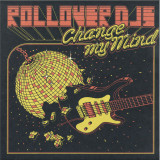
Into the best Balearic tradition boldly steps Milan’s Rollover crew. As well as a regular party in Milan, the Rollover DJs (Tiberio Carcano & Rocco Fusco) have been making edits and releasing tunes over the past several years, but with this release there has been a step change in ambition. The latest collection of songs has been produced in a studio with actual musicians and songwriters, but with the ear of an experienced DJ. The best of both worlds. It was recorded almost exactly one year ago in December 2022, with the cream of Italian players, including bass player and Jovanotti collaborator, Saturnino, sticksman Sergio Carnevale, vocalist David Blank and guitar and synth boffin Lorenzo Morresi, who’s helped the guys with production. It follows in the tradition of a new generation of Italian musicians, like Nu Genea, Mystic Jungle Tribe and also DJs like Volcov. The lead single, ‘What Do You Live For’ was what Rocco & Tiberio describes as, “a funky track inspired by the early 1980s” and grooves so hard, with Blank’s message hitting right in the solar plexus. This will be followed by a pair of bangers, ‘Change My Mind’, a mid tempo disco chugger that is a tribute to LTJ Experience, the Bologna DJ Luca Trevisi, while ‘Never Found The Way’ heads towards Arthur Russel, before pealing off directly to the dancefloor. There’s also a Bawrut remix that adds some urgency and darkness to proceedings. The package is completed by lovely artwork by Riccardo Corda, whose work has adorned the Nu Genea releases. Is it Balearic? We think it is.
What I can say about TORRES is I think the music comes from a convicted place. Not convicted meaning a person is narrowly and foolishly committed to an ideal, or unshakably convinced of themselves, or a zealot, or stubborn. I mean dedicated, I mean: If TORRES' music gets weird, gets brainy, gets funny, gets defiant, provokes, deliberately scandalizes, employs the crass to undermine the austere, courts lofty philosophical truth-it's all done with the conviction of an artist with the (essential) belief in the worth of their task. I think you can hear it in the songs, someone reaching, leaning over the boundary between known and not, probing the almighty. After a decade and six studio albums and however many one-offs and tours and articles read and conversations had, the parts of this pursuit I've been able to observe are all marked by a dedication to creation that treats the act-ongoing-with as much preciousness as the evidence of the act that is left in a record. The modes of being are different: heartbroken, broke, furious (right- and unrighteously), awestruck by love, compelled by desire. sometimes resigned to death, sometimes fascinated by and reverent of the future. Sometimes viscerally present, other times suspended in heady awareness, poised on a fulcrum of observation and participation in the phenomenon that aliveness is. The tools are the same: instruments that growl and shriek and moan, a lyrical voice shouting, swooning, chuckling, snarling as the moment commands. TORRES' music-making is conducted in a melodic vocabulary unique to itself-methods, equipment, circumstances shifting around the impulse to affirm the self within the world, to make art that bears all these little artifacts of the divine and of the real and show it to people and know it is valuable. I think that's what Mackenzie's music does. And I think it's just incredibly good music to listen to. -Julien Baker TORRES is the pseudonym of Mackenzie Scott. She was born January 23, 1991, and lives in Brooklyn, New York, with her wife Jenna, stepson Silas, and puppy Sylvia. She has been releasing albums and performing as TORRES since 2013. What an enormous room is TORRES' sixth studio album (her third with Merge). It was recorded in September and October 2022 at Stadium Heights Sound in Durham, North Carolina. It was engineered by Ryan Pickett, produced by Mackenzie Scott and Sarah Jaffe, mixed by TJ Allen in Bristol, UK, and mastered by Heba Kadry in NYC. The album contains 10 songs. Mackenzie wrote all of them. Sarah played bass guitar, synths, drums, organ, and piano. Mackenzie sang vocals, played guitar, bass, synths, organ, piano, and programmed drums. Additional synth bass, tambourine, and shakers were played by TJ Allen.
Here it finally is, the first ever official reissue of all recorded material by Zyklome A, and as a bonus one unreleased track plus unreleased live recordings! One of Belgium’s earliest and most primitive hardcore punk bands’ legendary ‘Made In Belgium’ LP has been one of the rarest artifacts in the genre, and although it was bootlegged many times, the reason why an official reissue on vinyl has never been published is complicated. Zyklome A’s story starts in the middle of nowhere: in Bonheiden in early 1980, above a bank office. Brothers Bie and Toon Puttemans started shredding and terrorizing ears and minds with Markus Verbeeck, without any knowledge of anything close to a scene or other people doing what they were doing. Completely isolated, they were struck by lightning with the genius idea of speeding up punk, playing Ramones chords backwards and letting the bank office’s fire alarm go off with their wall of noise. When drummer Bie got to hear other hardcore records through a school mate, he was baffled to hear there were other folks out there doing what they were doing as well. After a fire alarm and family drama too many, the trio moved to a tiny shed in the garden of the Verbeeck family to refine their special blend of primal hardcore. The rest is history! For just 5 years they became one of Belgium’s most active HC bands, befriending many other classic main stays such as The Dirty Scums, Moral Demolition, Vortex, Wulpse Varkens etc., creating pits everywhere, and turning many a nazi skin’s skulls into pulp! When guitarist Toon “forgot” to fulfil his army service, he had to flee Belgium, and as the police harassed the other band members constantly about this, it became next to impossible to maintain Zyklome A. Zyklome A morphed into Ear Damage, with different members. In a later, army free future, a reunion of Zyklome A was not possible due to Toon’s heroin problem. It is strange, and sad to say, that the cards played differently when Toon passed away. Zyklome A played 2 reunion gigs in 2016 with guitarist Pieter Coolen (of Toxic Shock fame) before Markus’ severe back pain sadly also led to his passing. This record is dedicated to Toon and Markus, whose spirits live on through their incredible music. You will find the entire first album plus an extra LP with their part of the split single Moral Demolition, their tracks of the ‘Alle 24 Goed’ compilation LP, their tracks of the ’Second Time Around’ compilation cassette, an unreleased track and a live recording at the height of their game from 1984 in Deventer (which includes covers such as ’These Boots Are Made For Walking’ and ‘Rock ’n Roll Rebel’) and a 76 page book filled with tons of archive material such as flyers, lyrics, drawings, pictures and a lengthy interview with Bie Puttemans on this most possibly last Ultra Eczema release, Zyklome A’s ‘Uitgesproken (1980-1985)’.
Two sublime unreleased scores from Basil Kirchin. Need we say more.
So here we are. The next Trunk / Kirchin assignment. Basically some more unreleased music from the unpredictable and slightly chaotic Kirchin Tape Archive.
Very Limited Black Vinyl.
These tapes were labelled up as follows:
Assignment K (with lots of pencil scribbles everywhere). The Strange Affair (with lots of pen scribbles everywhere).
As usual with Basil tapes / things there is little else to go on, no tracklist, no list of musicians, no singer names, no dates or anything. I have actually tried to establish the name of the singer on the song from Side One (we have called it “Love Is To Walk Away “ as it is unnamed) but having played it to a handful of knowledgeable collectors and enthusiasts who I would count as experts in this field, no one has a clue who it might be. If you think you know please get in touch. We know who it isn’t.
We can tell you that Assignment K dates from 1968, was a film about a toy maker who has a double life as an international spy. It was directed by Val Guest, who’d just finished trying to rescue the cinematic hotchpotch that was Casino Royale - he had been brought in by the Bond producers after Peter Sellers had walked off the movie. We imagine Assignment K may have been a slightly less stressful few months of shooting. As for the Kirchin score that we have here, we can tell you very little indeed, apart from the fact that the bass player was Ron Prentice (an ex blacksmith turned musician and craftsman) who worked on several Bond scores, but we know little else. And we only know this because it says so in the academic tome “Jazz On The Screen” by David Meeker.
The Strange Affair is also from 1968, and was not only controversial but also a reasonably unsuccessful movie. Directed by David Greene who also directed, amongst other films, I Start Counting and the quite brilliant Sebastian. In this rather grubby flick a policeman called Peter Strange (played by Michael York) falls for an underage girl (played by Susan George), finds himself compromised by a pair of pornographers and gets lured into an errand for a smack gang. We can tell you little else because I have no more information about it all.
But we do know that this music has all the classic Kirchin mid-period sonic hallmarks that have always set him apart.
All true improvisation involves an element of chance: the coming together of a nexus of influences impulses and actions that result in spontaneous creation. Often in the world of jazz these creative sparks blaze briefly in performance, and then disappear as the sonic vibrations fade from the air, but sometimes chance intervenes again, and moments thought to be gone forever can resurface in unexpected ways. As master drummer Jeff Williams sorted through his archive of cassette tapes from his extensive international career, he had no idea that hidden within it would be a recording of a 1991 evening when he joined storied NYC legend David Liebman for a set of spontaneous performances. Reunited together fifteen years after the breakup of their seminal band Lookout Farm in 1976, the two players reaffirmed their deep musical bond with a set of free-flowing exploratory dialogues in front of a receptive audience. Believed lost for many years, these performances can now be experienced again, with all their fearless freshness and pure committed musicianship undimmed by the passage of time.
Jeff Williams has established a formidable reputation as a drummer, composer, educator and bandleader on both sides of the Atlantic. His relationship with Liebman was forged in the exciting, expansive atmosphere of the New York scene in the early 70s: the meeting of Williams, the laid back Midwesterner, and Liebman, the mercurial, quintessential New Yorker, was an inspired coming together of opposites that always made the creative sparks fly. Williams remembers the journey that led to the Bar Room 432 on that 1991 evening:
“Just as I was leaving my home town of Oberlin, Ohio to move to New York City in 1971, I was given David Liebman’s phone number by someone who told me that Dave had started an organisation for jazz musicians there. I knew of Dave, from Ten Wheel Drive and John McLaughin’s My Goals Beyond, but I couldn’t have imagined what a significant role he would play in my musical life. Shortly afterwards, Dave would leave Elvin Jones and Miles Davis to start his own band, with Richie Beirach, Frank Tusa, and myself, (later adding Badal Roy), naming it Lookout Farm. We released two albums on ECM and one on A&M to wide critical acclaim, and toured across Europe, Japan, India and the US.”
“Following the dissolution of Lookout Farm, Dave and I embarked on a short duo tour opening for Gary Burton. That would be the last time the two of us would play until the occasion of this recording, fifteen years later.”
“Fast forward to 1991 when I discovered an attractive bar located on the far West Side of 14th Street in Manhattan. Bar Room 432 would become a six night a week jazz club for a few years, providing me, and many others, with the opportunity to perform our music. Catching wind of this, Dave suggested we do a duo performance there.”
“Luckily, I recorded it.There was no preparation, no set music to be played - we simply improvised, picking up where we’d left off. David’s mastery of the soprano saxophone is in full bloom here, as well as his incredibly resourceful musical mind.”
The performances are revelatory, moving in pure improvisation from clear, songlike melody to furious density, from ambience to pulsing groove, from light into darkness and back again. Cleaned up and remastered by Alex Bonney, the sound of the tape captures the warm, wood-lined ambience of the room, allowing the full power and dynamics of William’s drums and the warmth and fullness of Liebmans’ soprano sax to sing out, engaging the contemporary listener just as it engaged the hip Manhattan crowd thirty three years ago.