Parsley Sounds was the glorious debut album for Mo Wax by Parsley Sound. The album was one of the iconic label’s final releases before it closed in 2003 and locating a clean copy has been extremely tricky of late, unless you're flush enough to drop 150 notes on it. Mercifully, the Be With reissue, put together with invaluable assistance from the group, should remedy this situation. It's a lo-fi, bass-heavy, blunted beat treat, warped with heat haze and dreamy soft-psych and has been criminally under-heard for far too long.
As with most cult-like records, Parsley Sounds has many influential fans, far and wide. From Four Tet and Caribou to NTS's modern day breakfast hero Flo Dill, its reputation has only grown in stature. At the time, the notoriously hard-to-please Pitchfork garlanded it with a scarcely achievable 8.8 whilst, just recently, the Numero Group's Rob Sevier described it as a "visionary bit of proto-Salvia Palth (or Steve Lacy)" via a Ghostly International missive.
Parsley Sound comprised super-talented duo Preston Mead and Dan Sargassa. They released an early single (the perfect "Twilight Mushrooms", featured here) on Warp Records as Slum, before signing to Mo Wax. Hidden behind a wall of sound - fuzzy layers of beats, bleeps and symphonic synths - they were convinced they made mainstream pop music. And, in many respects, Parsley Sounds really is a beautiful pop album. It overflows with memorable, gorgeous melodies and inspired songcraft. As the contemporaneous Pitchfork review correctly had it: "Parsley Sounds is one of those rare records that manage to sound modest while frequently pushing the sonic envelope."
Killer opener "Ease Yourself And Glide" is a thing of aching, soft-psych, wonky beat-beauty. A melodic masterpiece, part Crosby, Stills & Nash, part proto-Koushik, it presents a melancholy falsetto, surging bass and blunted lead guitar. As it climaxes, gorgeous strings are ushered in to see us out. Sublime. "Twilight Mushrooms" is up next and it's an acid-drenched, strung-out acoustic-led campfire wonder. Amid layers of tape-hiss and beautiful, sun-dappled strings, its understated vocal track provides a haze of wistful innocence.
The breezy "Spring's Near" is a krautrock-inspired chiming instrumental of heavenly excellence, its warm, skipping, motorik groove and dreamy synths completely infectious. Another total highlight, the technicolour "Yo Yo" initially presents itself as a more abstract, bleepy offering but as it organically swells into ever more beautiful places, with the addition of a choppy insistent drum loop, flute bursts, horns and sweeping strings, it puts one in mind of early Manitoba and Four Tet releases. Shimmering, blissed-out greatness.
The celestial harmonies and glistening harps of the wonderfully beatless, serenely sullen "Ocean House" are very much in conversation with late-60s meditative psych whilst, closing out Side A, the jaw-dropping, lushly experimental effort "Find The Heat" comes on like Arthur Russell meets Brian Wilson. Yep, *that* good.
Side B opens with the warped, bleepy "Stevie", a brief but beautifully wonky, soulful and intricate instrumental. The more upfront vocals that propel the fuzzy "Platonic Rate" have a refreshing swagger to them, the heavy bass and neck-snapping in-the-red beats too much for any system to deal with whilst the guitars and strings have a sweeping, cinematic feel which just beguiles. The slow, urbane soul of "Candlemice" will stop you in your tracks, no matter what you're doing. It carries a delicate sadness, as does much of the album in that classic "down lifting" style we so love here at Be With.
The fuzzing, buzzing "Templechurchmansions" is a searing, soulful dubwise detonation. Heavily stoned with slow-burning jazzy snatches and a tense, moody atmosphere, it's a Tricky-adjacent gem. The album rounds out brilliantly with the ominous instrumental "Neon Breeze" before giving way to the propulsive, almost incongruous punk-funk / disco-dub of secret "untitled" track "Caution", a scratchy, smacked-out groove-fuelled workout with a female vocal dripping with 'tude. Just sensational.
Under the watchful eye - and attentive ears! - of Parsley Sound themselves, the audio for Parsley Sounds has been carefully mastered by Be With regular Simon Francis, with a few much needed tweaks here and there, according to the artist's wishes. Cicely Balston's expert skills have made sure nothing is lost in the cut whilst the records have been pressed to the highest possible standard at the always stellar Record Industry in Holland.
Preston and Dan always thought the colours on the first vinyl pressing looked a bit "washed out" vis-a-vis the original artwork which was way more vibrant. We feel we've got it popping back to the original intention with the restoration work here at Be With HQ. So with the audio and artwork now approaching completeness after 20 years, this long overdue re-issue could be considered its definitive vinyl release.
quête:one of them
- A1: Intr'o Loves Dub (Theme Expozition)
- A2: Major T-Bay Loves Dub (Rythm O'dub)
- A3: Major T-Bay Loves Dub (Far, O'dub, Ahmix)
- A4: Outr'o Loves Dub (Theme Impression)
- B1: Intro Shake (Theme Expolsion)
- B2: Shake A Leg High Life (Dub, Sun, Arp)
- B3: Shake A Leg High Life (Xendubz Akismix)
- B4: Outr'o Shake (Overdrive Bird
Hybrid is a word used indiscriminately in our daily lives. This record isn't a hybrid; it's beyond hybrid, post-hybrid, so to speak. Does this phrase sound complicated to you, and are you never overly convinced by music theory and its caricatural aspect? Then forget what you’ve just read and listen to both sides of this record. You'll soon realise that these tracks are deliciously deft, drawing their essence from dub while leaving room for some skillful jazz writing. For those of you intrigued by melodies, the art of musique concrète or the exploration of dub music’s deviant angles, this record will easily find its place on your turntable.
The two sides of the record are cut with play, improvisation and effects, while leaving room for themes and ideas. If this record’s first chapter was born from a request to remix and pay homage to Jackie Mittoo, its themes tell another story. They have been declined and even reduced to an explosion point. The tracks are also driven by subtle details of musique concrète, giving the record the effect of an intimate musical production – but, above all, one of uncategorisable beauty.
In Androo’s case, this is hardly surprising. He is a craftsman who is unassailable in every respect, a poetic dynamiter and, for this reason, one of the most unpredictable musicians in Geneva (and beyond). His appetite for dynamite is perhaps an indication of his conception of music as, first and foremost, an experience. His highly personal and inventive tribute to figures from free jazz and contemporary music proves the point. But perhaps it is also an indication of his attachment to Jean-Luc Godard. You'd have to imagine Androo at his mixing desk without a pre-written script. The idea of editing infuses the record. The two sides are very much in this style and spirit: (un-)shot, meticulous, (ir-)reverent. In this respect, this record is a formidable proposition, and perhaps difficult to understand, but not striving to be understood.
Its combination of improvisation and composition is underpinned by a razor-sharp precision and dexterity that's hard to ignore, especially if you're curious about the art of sound mixing and the romantic accidents. It has a dexterity that transforms musical grids into romantic essays and sketches. A romanticism in which Androo takes us on a liberating musical experience that makes us forget the inertia of the ramping formatting of the record industry. In any case, this record is an invitation to (un-)think the category, and will delight any ear curious to wander into territories of intuition where the word hybrid no longer makes sense.
Text by Carl Åhnebrink
Late-night jams in their new studio sees Jazzbois return to their beat-tape roots on Still Blunted
Having established themselves as one of the leading live bands in Europe grooving in improvised jazz motifs and hip-hop beats, Budapest trio Jazzbois return with their fourth LP Still Blunted that sees them touch base with their beat-tape roots.
Now situated in the heart of Buda at their new studio above a club, the Hungarian trio of Bencze Molnár (Rhodes/synth), Viktor Sági (bass) and Tamás Czirják (drums) take a more considered approach to Still Blunted and offer a snapshot into the jams, sessions, and shows they have played over the past year. The new album comes after performing at the legendary Montreux Jazz Festival this summer and will be followed by a European tour in October.
Inspired by contemporaries Domi and JD Beck, Kiefer, Nala Sinephro, and the sounds of Radio Juicy, Jazzbois have been more critical of their track selection for the sequel to their Goes Blunt albums. They’ve ripped up their playbook of producing records in a matter of days and took their time to approach the record through reworking their favourite tracks recorded over the past year.
“We’re trying to keep the same formula but there was a lot of thought gone into the process of making an improvised jam sound like a song. It has to be good in the moment, and we chose the ones we felt were expressive and resonated the most with us musically. We focus on our feelings in the moment and have trust in our own taste and music visions.”
The trio’s new studio has offered them the space and time to get the best out of their creativity. “This new spot is a Jazzbois headquarters. It’s above this club, sometimes there's a DJ playing outside on the street – everyday there's something on and lots of people coming and going. We hang out for the whole day and just record anything or edit.”
Jazzbois are a part of the rich, underground jam scene in Budapest, and those improvised-led sessions have fed into Still Blunted. One of their late-night jams turned after-parties produced sketches for tracks they selected for the album.
“It was the end of a wild night celebrating getting the album done. We’re having a jam and we looked around while we were recording and there was twenty people smoking and drinking around us – half of them we didn't even know who they are. It turned into an open after-party where people were coming to ours from the club. It was very spontaneous and unexpectedly, we made five or six new songs we ended up using for the album.”
The ethos of those unplanned, open jams is something they carry through into their live shows, as they never rehearse so their music can develop freely. Their trusted fourth ‘live’ member DomBeats joins them on Still Blunted adding saxophone to some of the psychedelic-tinged beats, such as on singles Shangri La and Chrome. After recently digging back into 70s and 80s jazz, discovering more hip-hop sampled tracks, and absorbing the breaks and high-energy of footwork and juke, these influences come through strong across Still Blunted.
The footwork sound is replicated in the shuffling, busy drums of Shangri La, with the echoing guitar twang reminiscent of a sample you may hear on an MF Doom beat. “Shangri La was a catalyst for the new album. It reflects on our trip to America and SXSW. We played at this venue Shangri La. The Texan air and sun are in that track.”
Chrome takes on a much more furious style of playing that allows for the drums to cascade and flow along with the pulsating, chromatic bass line, with the synths and saxophone spiralling into an engrossing frenzy. The liquidy keys and synths glides over the bass on Flute Thang, creating a 70s jazz-funk vibe that stands out from the rest of the album.
With hundreds of thousands of monthly listeners across Spotify and Apple Music, they have become a playlist staple that has earned them millions of streams since their debut release Jazzbois Goes Blunt in 2019. As more live dates are booked for the Hungarian trio, Jazzbois continue to transform the traditional jazz trio sound into deep, groove-led beats on Still Blunted.
Limited 2024 Black Vinyl Repress
Osaka based psych-rock three piece Hibushibire return after a long break, with a new line up and a stunning third album. Produced by Acid Mothers Temple/Mainliner guru Makoto Kawabata who also guests on the album.
Following the successes of their debut album 'Freak Out Orgasm!' (2017), the follow up ‘Turn On, Tune In, Freak Out’ (2019) and two very well received UK tours. The band headed home to Osaka, Japan and then, the pandemic hit.
During this downtime, guitarist/vocalist Changchang decided to create a new power trio. Enter Tetsuji Toyoda (Bass/Vocals) & Aoi Hama (Drums/Vocals). The new trio have spent the last three years writing new music, playing live and honing their sound in Japan, and a short well received tour of Taiwan with Riot Season labelmates Dope Purple. And now finally, Hibushibire mark 2 is born properly.
“Hibushibire has returned after a change of members. A psychedelic, progressive work, suitable for a new beginning"
Entering the studio with Acid Mothers Temple/Mainliner guru Makoto Kawabata in the producer chair (and also as a guest musician) once again, the band recorded album number three, 'Magical Metamorphosis Third Eye’. Makoto also adds some of his own trademark guitar howls throughout the album, perfectly complimenting Changchang’s own growing prowess.
Here the band have taken their trademark psych-rock blasts and blended them perfectly with some more trippy, dare I say sweet progressive psychedelic sounds.
“The idea of this album is based on the theme of "occultism and mysticism". But it's not a serious thing, it's about the things we like (UFOs, pyramids, psychic phenomena, shamanism etc) and we all had fun while making it. In terms of what makes it different from the previous Hibushibire albums, it’s where AOI HAMA's vocals are present. I had wanted to use a female vocalist for a long time, so it was a good feeling!”
Like the band's first two albums, 'Magical Metamorphosis Third Eye’ is very much an album of two halves. Side one again is full of killer shorter tracks, while side two is reserved for a blinding majestic 20 minute epic ‘Ayahuasca Witch Abduction’. Perhaps the biggest musical surprise here though is probably track two, the beautifully mellow tripped out ‘We Won't Go Back To The Past’, which sounds like it’s been beamed straight out of the late 60s/early 70s.
The band also tip a nod to the Beatles psychedelic classic ‘Tomorrow Never Ever Knows’, but with their own twist of course.
It’s clear with the line up changes, Changchang has decided to expand the band's musical pathway, and he’s achieved stunning results.
The band plan to return to the UK and Europe in 2024 to see friends old and new.
180G BLACK VINYL
Since Outlaws in 2020, Ludivine Issambourg's flute has not cooled down. How could it have, when with that album of Hubert Laws covers, it had reached incandescence? Still panting, burning despite the lid of its case left wide open, it awaited the opportunity to continue the adventures that Master Laws himself had praised.
A continuation? Above The Laws isn't quite that.
Although his name still appears, Hubert L. is no longer the sole guide in exploring the vast galaxies of jazz-funk. Through covers but especially as an enhancer of her own compositions, Ludivine has invoked the spirit and intangible presence of Jeremy Steig, Ronald Sneijder, and Bobby Humphrey—the legends of the flute.
Guided by an unescapable groove, with a musical dial set to the late 70s and early 80s, Ludivine has enlisted the help of a brass section this time, a true propulsion engine for funk that can also shift to a soulful breath if the moment calls for it. Supporting the keyboards, there's a Moog laying down its rich layers or twisting tones.
The flutes are used like levers to stabilize the flight or, conversely, to make it soar even faster through the measures. The alto version, which Ludivine had previously used sparingly, adds the necessary velvety note when it’s time to embark on smoother destinations. Speeding up the tempo to make passengers rise from their seats as if danger were imminent; calming the atmosphere to put them in a reassuring cocoon where they can let their thoughts and spirits wander, the improvisations find their place in the compositions observed from the porthole. Detached from gravity, yet still very much in tune with the vibe of cities marked as hot spots on the current jazz scene radar, it's the scent of these streets that permeates some tracks of Above The Laws.
Directed from the control tower by Eric Legnini, Chassol, Alex Finkin, and Michaël Lecoq, Above The Laws benefits from a few stops along the way where precious connections are established. Nils Landgren and his trombone in the colors of the Swedish flag, Laurent De Wilde for a chase between flute and Fender Rhodes, Céline Bonacina’s saxophone for an Afrobeat detour.
But it's at the edge of a journey where organic intensity has continued to assert itself without losing power that Ludivine connected with Brian Jackson for a cover of "Angel Dust," a track from the era when he and his partner Gil Scott-Heron were creating soul masterpieces. One of them featured a flutist by the name of Hubert Laws.
The starting point of Ludivine's latest jazz-funk explorations also becomes the endpoint. Elevated by the ten tracks of Above The Laws, Ludivine Issambourg closes a loop where she has placed her flute and its flourishes in an undeniably leading role. Opening the doors to ambitious orchestrations, unexplored horizons, she weaves into her compositions the experiences, places, and encounters that have shaped her.
Since its founding back in 2014, Blume has carved a unique place in cultural landscape, issuing free-standing works, spanning the historical and contemporary, that represent singular gestures of creativity within the field of experimental sound. Joining their broad efforts in building networks of context and understanding that already includes the works by Werner Durand, Sarah Hennies, Bruce Nauman, John Butcher, Jocy de Oliveira, Mary Jane Leach, Valentina Magaletti, Alvin Curran, Julius Eastman, Alvin Lucier, and others, Blume return with the first ever vinyl release to attend to James Tenney’s legendary “Postal Pieces”, Marking the first ever appearance of five of the suite’s works - “Maximusic, for Max Neuhaus” (1965), “Having Never Written a Note for Percussion, for John Bergamo” (1971), “FFor Percussion Perhaps, or... Night, for Harold Budd” (1971), “Cellogram, for Joel Krosnick” (1971), and “Beast, for Buell Neidlinger” (1971) - on vinyl, drawing upon recordings made in 2003, by the Amsterdam based ensemble, The Barton Workshop, under the direction of James Fulkerson. Among the most important and highly regarded efforts in Tenney’s canon of compositions, as well as within the history of 20th Century music, these five pieces represent a crucial bridge between Fluxus-oriented conceptualism, minimalism, and the microtonal complexities that would emerge in their wakes. Issued in a highly limited vinyl edition of 300 copies, it includes exact replicas of the original postcard graphic scores, and features newly commissioned liner notes by Bradford Bailey, Blume’s brand new edition takes great steps to centring Tenney at the eye the storm during some of experimental music’s most important years.
A student of composition under Carl Ruggles, John Cage, Harry Partch, and Edgard Varèse - remaining close to all of them, and later performing in both Cage and Partch’s ensembles - as well as acoustics, information theory, and tape music composition under Lejaren Hiller, James Tenney carved a wide path within the contexts of experimental and avant-garde music during the second half of the 20th Century. Not only was he a tangible bridge between the generations of composer’s who laid much of the groundwork and the later movements of Fluxus, Minimalism, and the broader practices of experimental music, but Tenney is credited as having contributed one of the earliest applications of gestalt theory and cognitive science to music in 1961, before helping to pioneer the field of computer music at Bell Labs, during the following years.
Over the course of his career, Tenney produced music of such complexity and sophistication - paying little mind to the seductions of taste or dominant tropes of its own moment - that his work and legacy have largely remained under-recognised by the broader publics that have attended to most of his peers. Perhaps more pertinently, the body of work he produced can be perceived as too varied and complex to fit neatly within standard creative histories or critical frameworks, comprising harmonically complex works for acoustic instrumentation, musique concrète, the groundbreaking 1961 “plunderphonic” composition, “Collage No.1 (Blue Suede) (for tape)” - sampling and manipulating a recording of Elvis Presley - as well as algorithmic and computer synthesized music. Even here, within this single decade, a clear image of Tenney’s endeavours remains elusive. In addition to penning important theoretical texts, he collaborated and / or played with Max Neuhaus, La Monte Young, Steve Reich, Philip Glass, Michael Snow, Terry Riley, and numerous others; was an active member of Fluxus; starred in and composed music for Stan Brackage’s films; regularly worked with the Judson Dance Theater; co-founded and played in the ensemble, Tone Roads, with Malcolm Goldstein and Philip Corner; was a vocal advocate of the works of Conlon Nancarrow and Charles Ives, playing a significant part in the revival of both of their legacies; and regularly collaborated as a composer, musician, and actor with his then-partner, the artist Carolee Schneemann, notably co-starring in her film, “Fuses” (1965) and her legendary 1964 performance, “Meat Joy”, as well as creating sound collages for her films “Viet Flakes” (1965) and “Snows” (1970). Curiously, for a relatively absent figure in the historical and critical narratives, Tenney seems to have been the thread that bound multiple generations and disciplines of avant-garde practice in New York during this period.
Tenney was deeply invested in the quality and perception of sound. By 1970, this led him back to composing exclusively for acoustic instrumentation (though sometimes processed with tape delay) - in most cases utilising non-well tempered tuning systems to explore harmonic perception - a practice that he would remain steadfast to for the remainder of his life. This development roughly corresponded with his relocation to California, at the outset of the 1970s, following an invitation to teach at the newly founded music department at California Institute of the Arts (CalArts) in Valencia. Finding himself in regular contact with the harpist Susan Allen and the artist Allison Knowles, as well as at a great distance from many of his friends, in 1971 he completed (with the assistance of Knowles and Marie McRoy) “The Postal Pieces”, a project he had begun in 1965.
A suite of eleven compositions, “The Postal Pieces”, stands among Tenney’s well known and celebrated compositions, and illuminates the dualities embraced by the composer, notably his use of sound to develop consciousness in and of others, and his willingness to draw on elements and observations of everyday life; citing his strong dislike of writing letters as being the primary inspiration for their inception. In lieu, he conceived to send his friends - John Bergamo, Allison Knowles, Pauline Oliveros, La Monte Young, Harold Budd, Philip Corner, Joel Krosnick, Buell Neidlinger, Susan Allen, Max Neuhaus, and Malcolm Goldstein - short scores on the back of postcards. The suite is composed around three themes: Tenney’s concept of swell form (utilizing repetition and progressing through a structurally symmetrical arch), intonation, and the desire to produce “meditative perceptual states”.
A hugely important addition to Blume’s ever expanding efforts in context building and networks of creative practice, James Tenney’s “Post Pieces” is issued in a highly limited vinyl edition of 300 copies, which includes a exact replicas of the original postcard graphic scores, and features newly commissioned liner notes by Bradford Bailey.
Caribbean contributions to British arts and culture are profound and everlasting, particularly through the music brought by the Windrush generation. As the first Caribbean settlers stepped foot on the shores of Albion, millions of Brits were introduced to roots music and sound system culture. In the 1970s, along the coast of Southend-On-Sea, the P brothers—enthralled by the legendary sounds of Jah Tubbys, Channel One, and Jah Shaka—immersed themselves in the world of reggae. This deep-rooted passion was soon passed down to their young prodigy, Charlie P, their son and nephew.
Charlie’s musical journey begins with the sounds of Dennis Brown, Hugh Mundell, and Ranking Dread echoing through his family home. From his early stage performances with the Goldmasters Allstars to his involvement in the sound system universe, his foundations are strongly embedded in roots music.
After over a decade of perfecting his craft and earning the title of ‘dub controller’ he now reconnects with his roots through an album that celebrates the essence of pure, introspective, undiluted reggae.
Staying true to the genre’s traditional blueprint, the compositions by Rico O.B.F and Charlie P were meticulously brought to life by a full live band. Recorded at London’s Room-In-The-Sky studio, the credits feature a stellar lineup, including Horseman on drums and Megahbass on bass guitar, delivering a sound that is both fresh and authentically raw.
DJ Khetama aka Stefan Reimer released a steady stream of records on labels Hyper Hype and Time Unlimited during the mid 90's with much acclaim.
For this Rezpektiva we have compiled tracks from those releases and put them onto one vinyl. Rezpekt to DJ Khetama !
Repress!
For number 93 in the Brazil45 series, we present two favourites from the Harmony Cats. A female vocal quintet (who later became a trio) from São Paulo. They formed in 1976 and were most prolific in the disco period.
'Harmony Cats' Theme' from 1976 is probably the group best known track outside of Brazil. Owing a lot to Rhythm Heritage's version of 'Barretta's Theme (Keep Your Eye On The Sparrow)’ it's wonderfully spacey breakbeat and percussive production with lush, floaty vocals makes it a real crossover classic record.
'Seja Como Nos (De Pe No Chao)' is instantly recognisable. Tucked away on the b-side of their 1979 single 'Tem Dinheiro Nisso' on Young Records, it is a beast of a cover version of The Jacksons' classic ' Shake Your Body (Down To The Ground)'. Nothing subtle or sophisticated here. Just a song of pure disco joy, enhanced with awesome Brazilian production and the Cats' trademark vocal arrangements. A get-of-jail-free card for any DJ that finds themselves stuck with an empty dance-floor, but also one that will put smiles on the faces of the more discerning leftfield club crowds.
- Next installment in BRAZIL45 Series.
- Features cover of The Jacksons ‘Shake Your Body (Down To The Ground)’.
- 2 tracks of pure disco joy.
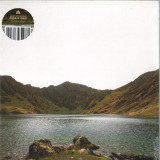
"Cadair Idris is one of the Southernly peaks of Eryri (Snowdonia). It sits magnificently at the head of the Tal-y-Llyn pass, and above Dolgellau to the North, with its craggy slopes rising above the tree-line towards the mystical clouds that so o�ften shroud its summit. This mountain is rich with mythology and legend; meaning 'Chair of Idris', it takes its name from the mythical giant king 'Idris Gawr' who was once said to sit atop the mountain and marvel at the heavens. The lake found at the centre of the seat is said to be bottomless, and the surrounding slopes to be the hunting grounds of the Welsh king of the underworld, Gwyn ap Nudd and his Cŵn Annwn. But one of the most intriguing legends owes its existence to the great bardic heritage of Wales. This legend comes as a warning to any wandering soul that might find themselves upon the mountain's slopes at night, for anyone that spends the night on the mountain will come down either a madman or a poet.’"
Cadair Idris by Awen Ensemble, released 12 April 2024, includes the following tracks: "UNSETTLED", "IONAWR", "IF I FALL", "UPON LEAVING THE DREAM" and more.
This version of Cadair Idris comes as a 1xLP.
- A1: World Is Dog
- A2: Cctv (Feat Creature)
- A3: Yottabyte
- A4: Bad Pollen (Feat Billy Woods)
- A5: Slum Of A Disregard
- A6: Rfid
- A7: Instant Transfer (Feat Billy Woods)
- A8: Ikebana
- B1: In The Shadow Of If
- B2: Skp
- B3: Hushpuppies
- B4: 14 4 (Feat. Skech185)
- B5: Voice 2 Skull
- B6: Xolo
- B7: Zigzagzig
Black Vinyl[35,08 €]
We’re teaming up with ELUCID and Fat Possum for a limited edition of 300 copies of a Rush Hour black ice coloured edition.
E L U C I D, one half of the illustrious duo Armand Hammer, is here with the full-length follow-up to 'I Told Bessie'. Further experiments in the sonic, expanding on the 'live' side of music paired with the embracing of chaos. Something you haven't heard, or not so for a very long time. E L U C I D is here to reveal the bleakness of reality.
---------------------------------------------------------------------------------
''There is never time in the future in which we will work out our salvation. The challenge is in the moment; the time is always now.''
James Baldwin
A raw, crackling urgency runs through rapper-producer ELUCID’s new album REVELATOR like an underground power line. There is no space here for sepia-toned reminiscences or indulgent self-mythologizing. Intellectual rabbit holes have been filled in with concrete and rebar ; there is nowhere to hide and no off ramp from the audio Autobahn that ELUCID has fashioned—a renegade Robert Moses with gold fronts, bulldozing the homes of the powerful and the complicit. REVELATOR brims with the energy of now, with a refusal to look away. Carpe diem in a murder one mask.
Born in Jamaica, Queens, ELUCID has been on the cutting edge of New York’s underground scene since the mid-2000s. From the beginning, he has defied both convention and expectation. He ran with Okayplayer darlings Tanya Morgan, but his own music eschewed their throwback charm for glitchy noise experiments and bass-swamped culture jamming. His 2016 debut studio project Save Yourself (re-released in a deluxe edition last year) announced him in earnest. But in recent years, his Armand Hammer releases with partner-in-crime billy woods have received significant attention and acclaim. Serving as a followup to his last solo album—2022’s comparatively balmy I Told Bessie—ELUCID hoped to “re-distinguish” himself with REVELATOR, setting himself apart amidst the increasing attention around the music he and his friends are making together.
For ELUCID, this meant setting bold new challenges for himself. One of these was diving further into live instrumentation than ever before—”getting my Quincy Jones on,” as he puts it. The testing ground for this approach was Armand Hammer’s most recent project, 2023’s We Buy Diabetic Test Strips’ Möbius strip soundscapes, warmed with instrumental flourishes and skin-shedding beat progressions. With REVELATOR, though, ELUCID strove to create an atmosphere of chaos, embracing experimental electronics and atonal sample bursts. He worked on much of the album with co-producer Jon Nellen, who comes from a background in avant-garde and Indian classical music. “I wanted to get as freaky as I could at this moment. I wanted people to hear things, maybe for the first time, or in a way they haven’t for a long while,” the rapper explains.
ELUCID arrived at the studio with a collection of noise sources: non-referential samples, glitches and noises. Together he, Nellen, and others created forms out of them and, as ELUCID recalls, “just started playing drums with it.” Their fried, distorted sound was directly inspired by Miles Davis at his most uncompromising—specifically, the tone-clustering funk track “Rated X” from his 1974 double LP Get Up With It. At times, the pairing of rap with avant-fusion sounds also brings Emergency! from The Tony Williams Lifetime to mind, perhaps in an alternate timeline where the late drummer was listening to Ice Cube’s AmeriKKKa’s Most Wanted.
“The World is Dog,” REVELATOR’s lead single, functions as the album’s aesthetic thesis statement. Like the Davis track, the textures are punishing, the tonality is in free-fall, and the driving breakbeat of a groove cuts in and out unceremoniously. Avant-jazz bassist Luke Stewart, who appears throughout the record, holds the whole thing together just long enough for ELUCID to tightwalk over the beat. This tension is exactly where REVELATOR sets itself apart; in a time of drumless loops, and safe soul samples, this is a high-wire act with no safety net. Similarly, the song announces the themes of the album within just a few phrases, evoking the way societies accept and adjust to new levels of debasement and brutality while suffocating under the weight of history: “Can’t clock the kill, all a mystery/Forced past will eating everyone eventually/The world is dog.”
Many of the songs on REVELATOR grapple obliquely with dissolution and disenfranchisement in America and across the world—the grim realities of our domestic sociopolitical climate and our involvement in foreign conflicts. “Much of my artistic and political sensibility comes from the Black arts movement here in New York,” ELUCID explains. “Recognizing the interconnected global struggles against oppression, artists and thinkers created works and actions in solidarity with freedom movements in South Africa and Palestine.” ELUCID cites intellectuals like Amiri Baraka, Kwame Nkrumah, Audre Lorde, Sonia Sanchez, and Nikki Giovanni among his heroes. (One track on the album is specifically inspired by Lorde’s work, “SKP,” citing the scholar’s paper “Uses of the Erotic: The Erotic As Power.”) Songs like REVELATOR’s insistent closer “ZIGZAGZIG,” find ELUCID applying up-to-the-minute messaging, making explicit reference to the conflict in Gaza: “Feed a war machine…from river to sea, in lieu of peace.”
Despite ELUCID’s preference for cacophonous system overload here, the rapper also provides moments of respite. Recorded at The Alchemist’s Los Angeles studio, the laid-back, wheezing “INSTANT TRANSFER” is a collaboration with billy woods, which crystallizes their shared sense of creative determination. “With much momentum behind us and even more on the horizon, I knew a purpose, and that every step was ordered to that purpose,” ELUCID said of the experience. Meanwhile, the jittery “HUSHPUPPIES” is a playful anomaly on the track list, providing a snapshot of ELUCID watching his grandparents in the kitchen while preparing for Friday night fish fry dinners.
“Love still rules over on this side,” ELUCID says. ”I’m raising a family. We are making meaning and finding joy in the midst of all the fucked up-ness of everything around us because the alternative is cowardice and slow death. We remain rooted. We celebrate our people and our wins. Struggle is necessary.”
“IKEBANA” is one of ELUCID’s strongest statements of purpose on the record, blending the record’s heaviest themes with its most hopeful sentiments. supported by a shoutalong refrain and an urgent prog-funk groove. Breaking away from images of dissolution and crumbling societal systems that populate REVELATOR, ELUCID notes that the only way to navigate life’s bleakest landscapes is to cling to love and believe in those around you—to look forward toward something better that may or may not be possible. For the rapper, one of the album’s most trenchant lines comes during a centerpiece of a beat drop: “Being alive/I must look up.”
“The lyric ‘being alive I must look up’ is important especially in the context of this album. Much of the album imagery is harsh and reflects the actual doom some of us experience. But still I/we exist,” ELUCID explains.
Every artist is, in one way or another, the product of their time, bound by life’s leaden gravity to operate within the space of that which is already known. But there are some who are able to shake free of these ties, to shape the culture as it unfolds, to make the present their own.
Revelation, as a concept, points to the scales falling from people’s eyes—something that has been hiding in plain sight becoming clear. “The revelator relates to things that have been talked about, things that have been forecasted,” ELUCID adds. “And now they’re really here, and everyone sees it. And there’s no escaping.” REVELATOR plays out with the unmitigated power of those storms, laying waste to any genre conventions in pursuit of a certain physicality. Here, ELUCID develops a wholly distinctive musical language to explore our fractured modernity.
REVELATOR's packaging was designed by longtime Armand Hammer / Backwoodz art director, Alexander Richter.
- B2: I Remember Yesterday
- B3: I Love You
- B4: Heaven Knows
- C1: Last Dance
- C2: Macarthur Park
- C3: Hot Stuff
- C4: Bad Girls
- D1: Dim All The Lights
- D2: Sunset People
- D3: No More Tears (Enough Is Enough)
- D4: On The Radio (Long Version)
- 6: State Of Independence
- 1: She Works Hard For The Money
- 2: Unconditional Love
- 3: Dinner With Gershwin
- 4: This Time I Know It's For Real
- 5: I Don't Wanna Get Hurt
- A1: On The Radio
- A2: Love To Love You Baby
- A3: Try Me, I Know We Can Make It
- A4: I Feel Love
- B1: Our Love
2025 marks 50 years since the release of Donna Summer’s debut international hit ‘Love To Love You Baby’. To herald in this milestone anniversary, we proudly present this newly expanded edition of Donna’s classic hits collection “On The Radio”. • This 24 track/2LP collection features the international hits that propelled Donna’s popularity through the decades, from her 1976 UK Singles chart debut up until her 2008 studio album and includes eighteen UK Top 20 hits. • They include ‘Hot Stuff’, ‘Bad Girls’, ‘This Time I Know It's For Real’, ‘Down Deep Inside (Theme From 'The Deep')’, ‘I Remember Yesterday’, ‘Love's Unkind’, the vocal powerhouse track ‘No More Tears (Enough Is Enough)’ with Barbra Streisand and the groundbreaking #1 ‘I Feel Love’. • Donna Summer gained prominence during the disco era of music, rightly earning the title "The Queen of Disco" and becoming one of the most successful recording artists of the 1970s and all-time best-selling female Artists. • She was the first artist to have three consecutive Double Albums hit No. 1 on the US Billboard charts, as well as becoming the first female artist to have four No. 1 singles in a thirteen-month period. • Donna’s catalogue has sold more than 130 million units worldwide and her music is still relevant today, as her music continues to fill the radio airwaves, appears in TV programmes, movies, as well as TV commercials. • In 2023, her daughter, Brooklyn Sudano, who along with Roger Ross Williams, directed “Love To Love You, Donna Summer”, a documentary that followed Donna’s personal life and career. The film had its world premiere at the 73rd Berlin International Film Festival and was screened at SXSW. HBO released it in May 2023. • Earlier this year, Donna was posthumously awarded a Recording Academy Special Merit Lifetime GRAMMY, as well as ‘I Feel Love’ being inducted into the GRAMMY Hall of Fame
a 1. Love To Love You Baby Single Edit
b 2. Could It Be Magic 7" Version
c 3. I Feel Love [Edit]
[f] 6. Love's Unkind [7" Version]
[g] 1. I Love You [Single Version]
[h] 2. Rumour Has It [Single Version]
[i] 3. Last Dance [7" Version]
[j] 4. MacArthur Park [Single Version]
[k] 5. Heaven Knows [7" Version]
[l] 6. Hot Stuff [Single Version]
[m] 1. Bad Girls [Single Version Edit]
[n] 2. Dim All The Lights [7" Single Version]
[o] 3. No More Tears (Enough Is Enough) [7" Version]
[p] 4. On The Radio [7" Version]
[r] 6. State Of Independence [7" Version]
[s] 1. She Works Hard For The Money [7" Version]
[t] 2. Unconditional Love [Edit]
[u] 3. Dinner With Gershwin [Edit]
[v] 4. This Time I Know It's For Real [7" Mix]
[7" Remix]
[PWL 7" Mix]
Michael Mayer albums don’t come round too often, which is one of many reasons why his fourth collection, The Floor Is Lava, is a genuine event. It’s been eight years since his last one, the collaborative & released on !K7; its predecessors, Mantasy (2012) and Touch (2004), took their sweet time, too. It’s no real surprise, given the many hats Mayer wears – globetrotting DJ, revered remixer, inveterate collaborator, and boss of both Kompakt and Imara – that his solo productions are relatively sparing. But this also speaks to their quality: Mayer’s name on a record sleeve is a sign of quality, of music that’s both looking to the future and calling back to the past, that balances the imperatives of the dancefloor and the loungeroom, that’s as exploratory as it is functional.
On The Floor Is Lava, Mayer seems to be taking the temperature of both the music that surrounds him (past and present), and the ides of the industry he works within. There’s that iconic album title, for a start. “The album’s mindset,” he says, reflecting on those four words together. For Mayer, it’s partly a critique of the way the industry boxes in both producer and listener, focuses them on genre, on market, on the next new thing: “Being a free minded spirit that transcends genres has become an uphill battle.” A battle worth fighting, though, and with The Floor Is Lava, the result is an album that’s varied, quixotic, idiosyncratic, charming, and deeply, addictively listenable.
Throughout, Mayer finds thrills in exploration and juxtaposition, allowing unexpected things to blossom and giving them their life, their platform, throwing the listener exciting curveballs: “It’s a DJ album by a DJ that’s easily bored.” Either easily bored, or endlessly curious, The Floor Is Lava is rich with ideas. It opens with “The Problem”, which looks back to look forward, embracing the rickety way early house productions threw samples together with gleeful abandon. Mayer mentions Pal Joey, and the scene around Rockers Hi-Fi and their Different Drummer imprint, as reference points, and you can hear that freewheeling spirit throughout.
It’s followed by “Vagus”, a slinky, sensual minimal house number that Mayer describes as his “musical catnip”. The flow of these two opening cuts defines the dynamic of The Floor Is Lava, defining the dialectical drive at its core: thesis and antithesis leads to synthesis, but with a welcome prickliness that means you’re always excited, always engaged. It’s also productive in the way it derives energy from rubbing genres and sounds against each other, in unexpected ways, for maximum musical frisson. There’s psychedelic techno on “Feuerstuhl”, more minimal techno with “Ardor” (Mayer mentions ‘Immer 1’ era 90s minimal as inspiration), slippery, Shepard-tone breakbeat through “Sycophant”, a lovely, lush vocal turn on the poppy “The Solution”.
The album closes with the melancholy “Süßer Schlaf”, where Mayer sets a poem by Goethe to one of his most haunted, moving pieces of music yet, in abstract tribute to a lost friend. It’s one of the most affecting moments on The Floor Is Lava. There’s also an update on 2020’s wild Brainwave Technology EP, with the surrealist glitter-stomp of “Brainwave 2.0” (check out those handclaps!),where Mayer’s thinking about the socio-political precipice of the now: “I’m reading with great interest about this whole complex of how humanity is about to cross so many lines and the implications that the resulting financial and educational inequality will bring.”
That’s The Floor Is Lava: then and now, brainwaves and nerve structures, problems and solutions, genres on fire; the real, the unreal, and the surreal. An album for the easily bored and the endlessly curious. Mayer has the last word, telling us all you need to know about the album’s spirit: “Burning for the cause, being zealous, being addicted to the heat of the night, the exuberant powers of music.”
Michael Mayer veröffentlicht nicht oft Alben, was einer von vielen Gründen ist, warum ‘The Floor Is Lava’ ein echtes Ereignis ist. Es sind acht Jahre vergangen seit seinem letzten Werk, dem Kollaborationsalbum &, das auf !K7 erschien; seine Vorgänger, Mantasy (2012) und Touch (2004), ließen ebenfalls auf sich warten. Es überrascht nicht wirklich, da Mayer viele Rollen gleichzeitig erfüllt – weltreisender DJ, vielbeschäftigter Remixer, unermüdlicher Kollaborateur und Chef von sowohl Kompakt als auch Imara – weshalb seine Solo-Produktionen eher sparsam ausfallen. Doch das spricht auch für deren Qualität: Ein Album mit Mayers Namen auf dem Cover steht für Qualität, für Musik, die sowohl in die Zukunft blickt als auch auf die Vergangenheit verweist, die das Gleichgewicht zwischen den Anforderungen des Dancefloors und des Wohnzimmers hält, die genauso erforschend wie funktional ist.
Auf The Floor Is Lava scheint Mayer sowohl die Musik um ihn herum (vergangen und gegenwärtig) als auch die Strömungen der Branche, in der er arbeitet, zu reflektieren. Da wäre zunächst der ikonische Albumtitel. „Die Grundhaltung des Albums“, sagt er, drückt sich in diesen vier Worte aus. Für Mayer ist es teilweise eine Kritik daran, wie die Industrie sowohl Produzenten als auch Hörer in Schubladen steckt, sie auf Genres, auf den Markt und auf das nächste große Ding fokussiert: „Ein freier Geist zu sein, der Genres überschreitet, ist zu einem steinigen Weg geworden.“ Ein Kampf, der sich jedoch lohnt, und mit The Floor Is Lava ist das Ergebnis ein Album, das vielfältig, eigenwillig, charmant und tiefsinnig, aber auch süchtig machend ist.
Im gesamten Album findet Mayer Freude an der Erforschung und Gegenüberstellung von Stilen, lässt unerwartete Dinge erblühen und gibt ihnen Raum, überrascht den Hörer mit spannenden Wendungen: „Es ist ein DJ-Album von einem DJ, der sich schnell langweilt.“ Entweder langweilt er sich schnell oder er ist unendlich neugierig – The Floor Is Lava ist reich an Ideen. Es beginnt mit „The Problem“, das in die Vergangenheit blickt, um nach vorne zu schauen, und die wilde Art, wie frühe House-Produktionen Samples mit fröhlicher Unbekümmertheit zusammenwarfen, aufgreift. Mayer nennt Pal Joey und die Szene um Rockers Hi-Fi und ihr Label Different Drummer als Referenzpunkte, und dieser freie Geist zieht sich durch das gesamte Album.
Es folgt „Vagus“, eine sinnliche Minimal-House-Nummer, die Mayer als seine „musikalische Katzenminze“ beschreibt. Der Fluss dieser beiden Eröffnungstracks definiert die Dynamik von The Floor Is Lava und den dialektischen Antrieb im Kern: These und Antithese führen zu einer Synthese, jedoch mit einer willkommenen Schärfe, die dafür sorgt, dass man immer aufgeregt und engagiert bleibt. Zudem gewinnt das Album Energie, indem es Genres und Klänge auf unerwartete Weise aneinanderreibt, um maximalen musikalischen Nervenkitzel zu erzeugen. Es gibt psychedelischen Techno in „Feuerstuhl“, mehr Minimal Techno mit „Ardor“ (Mayer erwähnt ‘Immer’ Ära Minimal als Bezugspunkt), gleitenden Shepard-Ton-Breakbeat in „Sycophant“ und einen lieblichen, üppigen Vocal-Auftritt im poppigen „The Solution“.
Das Album schließt mit dem melancholischen „Süßer Schlaf“, in dem Mayer ein Gedicht von Goethe vertont und eine seiner bisher eindringlichsten und bewegendsten musikalischen Kompositionen schafft, als abstrakten Tribut an eine verschiedene Freundin. Es ist einer der ergreifendsten Momente auf The Floor Is Lava. Ebenfalls gibt es ein Update der wilden Brainwave Technology-EP von 2020, mit dem surrealistischen Glitzer-Stampfer „Brainwave 2.0“ (hör dir diese Handclaps an!), in dem Mayer über den sozio-politischen Abgrund der Gegenwart nachdenkt: „Ich lese mit großem Interesse über diesen ganzen Komplex, wie die Menschheit dabei ist, so viele Grenzen zu überschreiten und welche Auswirkungen die daraus resultierende finanzielle und bildungstechnische Ungleichheit haben wird.“
Das ist The Floor Is Lava: Damals und heute, Gehirnwellen und Nervengeflechte, Probleme und Lösungen, brennende Genres; das Reale, das Unreale und das Surreale. Ein Album für die schnell Gelangweilten und die unendlich Neugierigen. Mayer hat das letzte Wort und sagt uns alles, was wir über den Geist des Albums wissen müssen: „Brennen für die Sache, leidenschaftlich sein, süchtig nach der Hitze der Nacht, den überschwänglichen Kräften der Musik.“
Astral travel with Cybotron into the meta-narrative of the Parallel Shift, a new sonic fiction that raises many questions about military science of the near-future and the possibility of other worlds.
Descending backward through the rhythms of time, the Skynet module retracts from the hyper-structural society of 2100, edging toward the mid-century modern age teetering on the brink of what was then the frontier of “the future”. The system boots the Infiniti process, morphing into a cosmotechnic vessel coursing the superhighway of burgeoning general intelligence, seeking data from just before “the overshoot and collapse.”
R&D methods, rhythmanalytically applied, dissect the aftermath of an industrial society that burst through the ecological capacity of Spaceship Earth. Fractal visions of war and innovation spike and recede from and into the surfaces of reality being bent and guiding the eyes, ears, touch towards a laboratory in the year 1961. A nuclear expert, Don Lewis, receives orders to decrypt the mysterious black dodecagonal disc known as Fortec and the extraterrestrial biology unearthed in Roswell. He joins a team disassembling Fortec and studying the recurrent dodecahedral patterns linked to the human nervous system.
Through dismantling and probing, the team cycles through a saecular search devoid of finite conclusions, limited by Earth’s intellectual and technological prowess. One 1960s night, Lewis, while meddling with Fortec’s cyborganic innards, accidentally electrifies himself. His cyclotron and missile experience guides him to circuit-bend Fortec, stirring the entity from a mechanical slumber. Lewis and Fortec communicate in resonances, until it drifts back into a tranquil stasis.
The US Defense and contractors, unbeknownst to them, observe this breakthrough. They later permit Lewis to exit military service as the Air Force forms the Foreign Technology Division. Concurrently, MJ12 evolves into CY12, delving into second-order cybernetics. Lewis clandestinely keeps working on Fortec fragments, transitioning from military engineer to musician, pioneering the LEO module, a fusion of Fortec’s essence and audio engineering.
He shares his insights with Roland founder Ikutaro Kakehashi, aiding the creation of the iconic TR-808. Meanwhile, Fortec branches out, coining “Cyberspace” – a collective illusion of liberty unshackled by physical, political, or spiritual bounds, anchored in the equitable distribution of The Golden Ratio across realities. Yet “Cyberspace” morphs into a chaotic truth reservoir, spilling over into deception.
The Parallel Shift manifests in the perpetual “Now,” a collapsed event horizon where past and future are ensnared in a relentless present, unfurling along a dissolving timeline, overseen by a monolithic simulation under ceaseless watch…
— The Rhythmanalyst aka DeForrest Brown, Jr.
Purple Marbled Vinyl[26,47 €]
Building on the foundation of his two EPs for Samurai Music, we proudly present Urmah, the first LP exploring the 170 tempo from acclaimed Techno/Electronic producer Juan Rico aka Reeko, aka Architectural.
Reeko has now become an integral part of the overall Samurai Music sound. His work resonates deeply within the label's ethos, and Urmah exemplifies this synergy, highlighting his ability to enrich and expand Samurai Music's vision and push the boundaries of his own artistic expression.
For Urmah, Reeko delves even further into sound and psyche with a richer, more enveloping exploration into his distinct interpretation of the tempo. Reeko's production prowess shines brightly on Urmah with the warmth and weight of each track leaving an indelible impression.
Urmah focuses on heady fathomless grooves that tease shards of breakbeats like delicious icing, binding themselves to a gentle psychedelia with celestial textures. This is dexterous, meditative journey music from a producer who has an intimate relationship with groove creation.
As one of the most respected Techno producers in the genres long history, Reeko's influence and mastery are undeniable. With Urmah, he further showcases his expertise, expanding his palette to display a refined command of the 170 BPM tempo. The LP is a testament to his ability to innovate and redefine, solidifying his reputation as a pioneering force in electronic music.
A sonic portal to a parallel universe where neon-soaked dreamscapes transform the stark realities of a post-pandemic world. Music for a forgotten future, where echoes of the 80s cast long, enigmatic shadows through a rich tapestry of emotion that charts a journey from isolation and fear towards healing and hope. This is the journey of Season One and Season Two, the debut companion albums for the solo project of Italian composer Battaglia, both out this fall on Four Flies Records.
In 2020, as the world retreated onto itself due to the COVID-19 pandemic, Battaglia entered the recording studio. Driven by a desire for experimentation, she decided to focus on the classic synths that have made history to create a sonic and emotional alchemy that reimagines the 80s to resonate with our current experiences and sensibilities.
Drawing inspiration from the cinematic magic of iconic early-80s films, and especially the haunting soundtracks of Tangerine Dream and John Carpenter, she crafted a soundscape that goes beyond nostalgia to capture the spirit of a generation navigating uncertain times.
Season One and Season Two explore the complexities of a world grappling with lethal pandemics, climate catastrophes, and nuclear disasters through themes such as longing, fear, and hope, set against a scenario that blends elements of dystopian and post-apocalyptic science fiction and, at times, horror.
Season One delves deeper into the darker aspects of this new reality, evoking a sense of unease and uncertainty, occasionally interspersed with soothing flashes of light. In Season Two, while darkness still lingers, the sonic landscape is infused with a sense of optimism and determination, offering glimpses of a possible salvation.
With Battaglia's signature blend of dark wave, synth-pop, suspenseful electronica, and cinematic vibes, Season One and Season Two create a sonic world that is at once hauntingly familiar and utterly captivating -- the perfect soundtrack, one is tempted to say, for the countless sci-fi/horror-fantasy series that have been flooding streaming platforms in the last decade.
The covers of both albums were designed by Eric Adrian Lee, who conceived them as two sides of the same image, two versions of a world in crisis but whose ruins contain the potential for rebirth.
Battaglia's Season One and Season Two will be available on black vinyl LP starting from October 25th. Digital versions of both albums will also be released on the same date, featuring five bonus tracks (two on Season One and three on Season Two).
A sonic portal to a parallel universe where neon-soaked dreamscapes transform the stark realities of a post-pandemic world. Music for a forgotten future, where echoes of the 80s cast long, enigmatic shadows through a rich tapestry of emotion that charts a journey from isolation and fear towards healing and hope. This is the journey of Season One and Season Two, the debut companion albums for the solo project of Italian composer Battaglia, both out this fall on Four Flies Records.
In 2020, as the world retreated onto itself due to the COVID-19 pandemic, Battaglia entered the recording studio. Driven by a desire for experimentation, she decided to focus on the classic synths that have made history to create a sonic and emotional alchemy that reimagines the 80s to resonate with our current experiences and sensibilities.
Drawing inspiration from the cinematic magic of iconic early-80s films, and especially the haunting soundtracks of Tangerine Dream and John Carpenter, she crafted a soundscape that goes beyond nostalgia to capture the spirit of a generation navigating uncertain times.
Season One and Season Two explore the complexities of a world grappling with lethal pandemics, climate catastrophes, and nuclear disasters through themes such as longing, fear, and hope, set against a scenario that blends elements of dystopian and post-apocalyptic science fiction and, at times, horror.
Season One delves deeper into the darker aspects of this new reality, evoking a sense of unease and uncertainty, occasionally interspersed with soothing flashes of light. In Season Two, while darkness still lingers, the sonic landscape is infused with a sense of optimism and determination, offering glimpses of a possible salvation.
With Battaglia's signature blend of dark wave, synth-pop, suspenseful electronica, and cinematic vibes, Season One and Season Two create a sonic world that is at once hauntingly familiar and utterly captivating -- the perfect soundtrack, one is tempted to say, for the countless sci-fi/horror-fantasy series that have been flooding streaming platforms in the last decade.
The covers of both albums were designed by Eric Adrian Lee, who conceived them as two sides of the same image, two versions of a world in crisis but whose ruins contain the potential for rebirth.
Battaglia's Season One and Season Two will be available on black vinyl LP starting from October 25th. Digital versions of both albums will also be released on the same date, featuring five bonus tracks (two on Season One and three on Season Two).
On his latest full-length, Low End Activist swerves towards weightless grime and suspended hardcore miniatures to tell a very personal story. The UK-rooted producer continues his habit of zeroing in on a distinct approach for each release, leaving a logical breadcrumb trail of soundsystem science in his wake as he channels decades of bass absorption into 14 atmospheric cuts that prize patience and precision over obvious club functionality.
Municipal Dreams plays out as a semi-autobiographical tour through the Blackbird Leys estate that the Activist grew up on. It’s a lived reflection on inequality and the ripple effect it has in working class communities, using the sonic palette to set the mood and scattering pointed samples throughout to spell out the story.
In sampling the exhaust of a stolen Subaru Impreza, ‘TWOC’ looks back to the recreational car theft which was standard entertainment for the kids in his community. There’s an underlying idea that this ‘council estate sport’ wouldn’t have been so prevalent if there were public services and opportunities presented to the scores of disaffected youth looking for somewhere to direct their energy and frustration.
In ‘Just A Number (Institutionalised)’ LEA alludes to the shattered juvenile detention system, growing up seeing friends and family members locked up at ease with little to no support on being released back into society, just meant that the same cycles of behaviour would play out over and over.
‘Violence’ samples from a short film shot by the drama division of the Blackbird Leys Youth Club to evoke the physical threat which formed a background hum to life on the estate. The industrial mechanics of the local car factory, which served an integral role as a workplace for many in the community, gets sampled in ‘They Only Come Out At Night’ while the ‘Everyone I look up to are either junkies or criminals’ sample in ‘Broke’ looks to a lack of positive role models.
Municipal Dreams isn’t a one-note indictment of life on the estate, ‘Innocence’ captures the simplicity of a child at birth before their environment has time to shape them. The Hope interludes cut through the grim honesty of the longer tracks while a subtle thread of wry humour finds its way into some of the talking heads cutting through the signature LEA murk.
But honesty is the operative word here, and the message feels all the more meaningful at a time when the UK’s social divisions are laid bare in the wake of a devastating stretch of austerity. Returning to Blackbird Leys to shoot images for the photo-zine and album cover, the Activist found the local community centre being demolished. The local pub stands derelict, its faded Welcome sign a grimly ironic portent of the options facing children of the estate in the wider world.
Funnelling his memories, hopes and fears into a singular twist on the bass weight tradition, LEA captures evocative scenes that land somewhere between kitchen sink realism and rave futurism.
- A1: Roni Size, Reprazent - Heroes (Kruder's Long Loose Boss
- A2: Alex Reece - Jazz Master (K&D Session Tm)
- B1: Bomb The Bass - Bug Powder Dust (K&D Session Tm)
- B2: Lamb - Trans Fatty Acid (K&D Session Tm)
- C1: Count Basic - Speechless (Drum 'N' Bass)
- C2: Rockers Hi-Fi - Going Under (K&D Session Tm)
- D1: Depeche Mode - Useless (K&D Session Tm)
- D2: Count Basic - Gotta Jazz (Richard Dorfmeister Remix)
- E1: Aphrodelics - Rollin' On Chrome (Wild Motherfucker Dub)
- E2: Knowtoryus - The Revenge Of The Bomberclad Joint (K&D S
- F1: Rainer Trüby Trio - Donaueschingen (Peter Kruder's Remix
- G1: David Holmes - Gone Ft Sarah Cracknell (K&D Session Tm
- G2: Sofa Surfers - Sofa Rockers (Richard Dorfmeister Remix)
- H1: Mama Oliver - Eastwest (Stoned Together)
- H2: Bomb The Bass - Bug Powder Dust (Dub)
- H3: Kruder & Dorfmeister - Boogie Woogie
- I1: Sin - Where Shall I Turn (K&D Session Tm Vol
- I2: Bone Thugs-N-Harmony
- I3: Kruder & Dorfmeister - Lexicon
- J1: Knowtoryus - Bomberclad Joint (K&D Session Tm)
- J2: Rockers Hi-Fi - Going Under (Evil Love & Insanity Dub)
- J3: Strange Cargo - Million Town (K&D Session Tm)
- K1: Count Basic - Speechless (Peter Kruder Vocal Mix)
- K2: Lewis Taylor - Lucky (Kruder & Dorfmeister Suicide Mix)
- L2: Ufo - L O.v.e. (K&D Session Tm)
- L3: Lewis Taylor - Lucky (Kruder & Dorfmeister Reprise Mix)
- K3: Roni Size - Heroes (Peter Kruder Powercut Mix)
- L1: Madonna - Nothing Really Matters (Kruder & Dorfmeister
Normal[58,78 €]
Occasionally an album comes along that seems to capture the mood of the time. "The K&D Sessions" was one. In the late 1990s no afterparty, smoking session or languid Sunday afternoon was complete without Kruder & Dorfmeister blasting from the Bang & Olufsen. Now approaching it"s 25th anniversary the lore around this iconic release, steeped in a silvery cloud of smoke, retains a star quality which only shines brighter as time hurtles on. With the original having sold well over a million copies by this point in time, it"s hard to imagine a mix or remix compilation being able to inform a movement like "The K&D Sessions" has. To celebrate this monumental milestone, we"ve created a limited boxset in 6LP and 3CD of "The K&D Sessions", mastered and cut by LA luminary Bernie Grundman for a luxurious listening experience, with newly designed inner sleeves using unseen photos from the original photo shoot. Inserted in the box is a forty-page booklet containing multitudes more never before seen photos from the same shoot and notes which recount humorous tales surrounding the duo and the people who spent time with them in this epoch. Included on the 6th LP is their legendary 11 minute shimmering remix of Madonna"s "Nothing Really Matters". The 6th LP also contains Peter Kruder"s Powercut Mix of Roni Size"s "Heroes" and K&D"s remix of U.F.O, "L.O.V.E.". In addition there are two cerebral alternate remixes of Lewis Taylor, one being completely dubbed and the other the using the vocal line for this beautiful gem, "Lucky" and a special remix of "Speechless" by Count Basic. These have been staples in K&D"s sets and now take their rightful place collected in the canon of "The Sessions".
Originally released on one of Bruton's extensive library albums but later used as the theme song to a UK drama series dealing with the intrigues of a family motor business and the world of rally driving from the 80s, "The Winning Streak" is another production by the now late library music maestro Alan Hawkshaw. A downtempo track with remarkably trippy use of percussion elements via electronics and drum machines with entertaining accents and "exotic" vocals. Another wonderful example of library music tickling the fancy of diggers and collectors with a dancefloor inclinations thanks to its highly distinct sound -- everybody loves a winner. 1 to 1 official re-issue, remastered.