In the Company of Serpents traffic in sonic catharsis. Their music inhabits the strange fringes between sludge metal and sprawling spaghetti western scores, constantly striving for visceral power and raw intensity, contrasted with eerie, spare instrumental passages. Founded in Denver, Colorado in 2011 the band quickly managed to establish a name for themselves. Several releases followed in the years to come and In the Company of Serpents managed to impress the masses on stage as well. Late 2019/early 2020 the band started to work on their album ‘Lux’. It turned out to be one of the most impressive Doom/Sludge Metal albums ever recorded. The band self-released the album in limited edition during 2020 but soon afterwards Petrichor noticed their supreme musical qualities and decided to offer the band a chance to release the album worldwide. A deal was made, hands were shaken and you now all have to face the impending doom before you. The music of In the Company of Serpents is so intense it mimics the gravitational pull of a black hole.
Search:one of them
Fresh one on Music With Soul - a channel for hot 7"s that always fly out here. TIP!
"Two and a half frenetic minutes that sound like Aphex Twin and The Incredible Bongo Band dancing Capoeira in the early hours of an illegal rave, somewhere in the deep amazon forest. After the success of his first solo 45, Alex Figueira comes back to the aesthetics of the early Fumaça Preta, with an utterly bonkers 45 that can only be described as an “in-your-face acid macumba techno breakbeat funk freakout”.
The flip side contains a haunting Psychedelic ballad, with the sweet vocals of Maddie Ruthless, from NY’s leading Lovers Reggae sensation, The Far East. Equally trippy and beautiful, the soothing sounds of the Wurlitzer piano and the electric sitar will be bouncing in your head for hours after first listen. The kind of song that finds collectors dropping eye-popping sums, decades after the original release. Guarantee your retirement now by getting a few copies! The song “Maracas” is the main theme of the movie “Maracas, tambourines and other hellish things” directed by fellow record nerds Matteo Fava and Dave Potsma. They managed to convince Figueira to play the main character, and later on, to do the complete music score. The movie tells the story of a struggling underground musician / part time record store clerk, whose music career is basically going nowhere until an improbable encounter gives his life a dramatic turn. They asked Figueira to give them something with “a fresh tropicalized take on Blacksploitation”. One might argue, after listening to the insanity carved on the grooves of this piece of vinyl, that he certainly did deliver.
The characteristic mix of synthesizers and heavy percussion used by Figueira in almost all his projects, gains here a somewhat freer dimension, embracing the chaos openly, without ever neglecting the groove, nor the ancestry axis. Values that are at the core of the label. Even while laying down all the instruments himself, Figueira has managed to capture the same out of control tropical psychedelic spirit of his former band, Fumaça Preta. Fans of the group’s outfit will certainly be rejoiced by this new release.
The flip carries “Grasping & Wishing”, an evocative Psych ballad that retains the same tripped-out flair of the A side, while slowing down the tempo considerably with a decidedly african 6/8 beat. Sung by New Orleans’ own “Rocksteady Queen”, Maddie Ruthless, stepping out of her classic Reggae background, to grace the track with her beautiful voice, permeating the issues of belonging, doubt and introspective reflection portrayed in the lyrics, with a thin layer of exquisite fragility that will comfort your ears.
The production includes a significant number of sound effects, ranging from different types of percussion performed with liquids to bamboo flutes of different sizes and several layers of multiprocessed electric Sitar tracks. Listen carefully and you will discover new sonic nounces every time you put the record on."
In 1970, Kevin and David met whilst they were working in the Labour Exchange Office on Aytoun St, Manchester. Both played guitar and had been searching for other musicians who played atmospheric music. Kevin had been playing in small clubs in Manchester and David performed in a few local bands. One evening, they jammed together at Kevin’s family home, and quickly realized that their playing blended together to form the basis of the sound they had been looking for. In the late ‘70s, the music scene in Manchester was bursting with new bands and music.
However, Kevin and David had little in common with the local acts, being disciples of a more meditative approach. They followed a path of their own, reaching for an otherworldly sound that they heard from artists like John Martyn, David Crosby, Erik Satie, Terry Riley, Eberhard Weber, Alice Coltrane, and Ralph Towner. They experimented combining their acoustic guitars and David’s bass with various effects pedals and techniques to try and achieve a warm and expansive sound that rides the line between ambient, jazz, and psychedelic folk Music.
Towards 1981, they had written eleven songs and accompanied a few with Moog synthesizer laid down by Rob Baxter. All were recorded on cassette decks in their simple home studios. They named this collection of music “Light Patterns”, after a poem Kevin had written. With Light Patterns complete, they set out to find a label to represent their music. They started playing a few gigs in Manchester; Band On The Wall, the Gallery, and other venues, such as Rotters which local promoter Alan Wise had organized. They set up with small amps along with their effects and played as though they were back at home. As Kevin remarks, “It was unusual, to say the least, to play such venues in a low volume chilled out way. However, people listened, often in shocked curiosity, and some even asked for tapes.”
Peter Jenner, of Blackhill Enterprises, eventually picked up the album for his new label, “Sheet”. Peter had managed lots of experimental bands and solo artists, including Pink Floyd in their early Syd Barrett days. He always favored outsiders! The tapes were taken to Strawberry Recording Studios in Manchester, who were surprised when Kevin and David walked in with just a couple of home-produced cassette tapes. Fortunately, they liked them and agreed to master the album. It was then sent to Portland Recording Studios in London for final mastering to vinyl. George Peckham, aka “Porky”, did the pressing with a personal message in the deadwax; “Kaftans, Candles and be Cool Man”. The artwork for the album cover was done by the late Barney Bubbles, a truly visionary artist.
After the album’s release, the pair continued to play together regularly until David moved away from the city. Kevin still resides near Manchester in the rolling hills outside of the city. He continues to experiment with dreamy music in his loft, and we are set to share a selection of his ethereal archival and current compositions in the coming months. David lives a quiet life in a small coastal town in the South, he likes to sail and is an avid cricket fan. We’re excited to make Light Patterns accessible again for the first time in nearly 40 years, remastered from the original tapes. As the original press release said, “Put the album on, lie back and enter the land of no floors”.
Analha was one of the first approaches I had with the design of analog basses and drums, to understand the way in which we can involve so many sounds and transform them to our own liking, to give it its own narrative, a sense, an identity in which it can be navigated about different styles without problem.
They are two pieces that make up totally different break paths where "Mi ama Dic K no" A1 is my own exploration and vision of the break beat, three melodies written in F # that count the subtlety, while the bass contrasts in an aggressive idea to the beat of many changing rhythms in the drums, which sorfs between a Mpc, 808, Dsm & V Modular ; Classic trip hop voices samples that guide the way this own idea progresses on the breaks and pads that generate a more complete environment with a very energetic atmosphere that is constantly on the rise in the active and natural development of the track.
Towards the B side "Run mami run" B1 is composed by a classic intro of acid cut while some seconds of drums interpose which are accompanied by a radio narration of a chase, a return change is present with a vinyl spin between voices from GTA & WU TANG CLAN which make an intro for an infusion of breaks fully aligned to the beginnings of oldskool drum and bass which are accompanied by voices recorded, treated and edited to connect more directly between the spaces interrupted by the glitch acid chords.
Among contrary structures "Analha" contains hidden but marked criticisms, it is a project that comes from 2018 and ended at the beginning of 2019 which made him think about how to involve more than music within his own sound narrative.
The sonorous identity of rachiid today is different, he understands his environment but does not believe in adapting, he tells us that each exploration and discovery during these years have led him to think how this first release was born until now but is not connected at all with what nowadays, describes his sonority today as changeable, essential and highly with IDM, experimental and breaks.
Ramona Córdova is a sound artist — passionate about writing, communicating, linguistics, behavioural & social psychology, observation & investigative research, photography, sound recording, and design. Their artist focus is on project-based sound and visual media, public engagement and live performance — although they are best known for their music and are typical regarded as a singer songwriter. Ramona Córdova intends to speak to the challenges of living under systems of oppression while inspiring introspection and personal growth toward the maturing of our societies. Ramona is Haitian-Filipina, Puerto Rican, born in Kingman, Arizona, USA and is inter-feminine trans non-binary.
"When I first started working on Naïve I was completely consumed by all of the technical details involved in making a 'professional studio recording' on my own - one which could not be refuted or disregarded as subpar. My only other hope was to tell some sort of story with whichever songs i could piece together. The content and message of which were much less important to me.
The story that Naïve ended up telling comes from a cohesion of themes, ceaseless in my personal experiences living day to day in the world. Although the album dares to tread on tact while speaking poetically and lyrically about issues such as systemic oppression, racism, misogyny, policing and patriarchy - I think the album really just wants to reflect - to serve as a reflection - in order to foster healing and healthy growth towards maturing. I feel it commanding a kind of firm kindness as a reminder to love yourself enough to accept others, by way of accepting yourself.
Pressed onto this 180-gram vinyl are 10 songs I wrote while living in many different places around the world. Spontaneous recordings of inspired notions of song, written one rainy evening up high above the vineyards in Banyuls-sur-Mer became Men on the Mountain. A Scrap of paper holding jots about a sudden storm on a hot day in August while helping friends on their farm in Puglia became Mouth of Autumn and Peace Through Violence. As I dressed myself into the fragile reality of the United States, I became flooded by its manipulative social governing systems. As the monuments of slave-owners, colonisers, and white supremacists came crashing down in the name of responsibility and accountability, The Bridge Works was built, a song about crossing bridges towards empathy and equality. Civil rights activist and American-Football quarterback, Colin Kaepernick, taking the knee during the United States national anthem pre-game ceremony, brought about So Long. The incessant murdering of black, brown, and transgender citizens brought Woke, Scared I'll Bite You, and The End. The murder of Eric Garner and the feeling of being choked-out and suffocated under the weight of systemic oppression brought about Still.
From all of this birthed the collection of songs that is Naïve, a title given to the album by French Ghanian artist Eden Tinto Collins. Although written both in Europe and the U.S., most of the songs were performed and recorded at the end of the year 2018 in Philadelphia, during the American-Holidays season. Still, Loving Him, and The End were written in Philadelphia, but produced in Vlorë, Albania. This helped serve as a reminder that the issues these songs speak of are not isolated to the United States of America." - Ramona Córdova
Working his mellow magic on the Growing Bin, Sorcerer entertains your inner child with eight tracks of instrumental west coast pop suitable for dancing, dreaming and surfing a wave or two.
While Basso sat in a Teutonic treehouse, feeding his head with the sounds of the woodland, Dan Judd danced on the sands of San Francisco's Baker Beach. Stretching between them, like the world's longest tin can radio, was the Dream Chimney. This legendary forum, run by Ryan Bishop, better known as The Beat Broker, helped to launch a thousand labels, and the Growing Bin is one of them - all hail the Chim!
Here, Dan, naturally mystic in his Sorcerer guise, satisfies all our sensory needs with a Kinder Surprise of sweet melodies, coastal cool and playful rhythms inspired by his children's earliest responses to music. Following his feelings and avoiding overthinking, he creates open, enticing and accessible cuts; each living and breathing that mellow magic you only get on the West Coast.
'Kids World' kicks into gear with the spheric bass of '2000 Studio', a bouncy embodiment of that spacious San Francisco sound. There's a nod to nu disco but the dreamy dubiness takes the track much deeper, especially as those surf guitars start to detune in the summer heat. The breezy fretwork continues on 'Disco Drums', topping a wriggling groove tailor made for the terrace. Shades of rave refract through a healing crystal at the midpoint, encouraging al fresco dancing from sunrise to sunset. The A3 sees Sorcerer get into the groove of 'Bahia Brothers', rolling that rubberised B-line out of his own Paradise Garage before putting the top down for the carefree Balearic pop of 'Spray Paint.'
The B-side glides into being via the night dubbing grooves of 'Fire Feel', a reverb laden journey though glassy tones, off beat perx and gorgeous chord progressions. Next up, the new wave inspired 'Crunchy' translates Sheffield's daring synth pop into a wide eyed blast of psychedelic house, boosting our mana ahead of the loose limbed and light footed 'First Wave'. Ringing guitars reference Ghanaian highlife, shimmering in the heat haze as Dan funks up the drum kit ready for the broken beat and blissed out energy of sundowning set closer 'Escape Route'.
Mannequin Records is elated to present for the first time on vinyl the reissue of Giovanotti Mondani Meccanici’s first video soundtrack, originally released in 1984 as an audiotape in less than one hundred copies. Giovanotti Mondani Meccanici (literally Mundane Mechanical Youth) or GMM was one of the most unclassifiable audiovisual experiences to emerge from Italy in the 1980s. Maurizio Dami a.k.a. Alexander Robotnick, a pivotal member of GMM, was responsible for the group’s music output.
Founded in 1984 by Antonio Glessi and Andrea Zingoni in Florence, GMM was an art collective whose production represents the quintessential expression of postmodern transmedia hybridity. GMM pioneered the genre of computer comics, created video installations, developed “multiple identity” performances, and was involved in fashion, media, and music productions, and later on produced cyberdelic environments, artificial reality projects, and proto-memes.
Alexander Robotnick’s first contribution to GMM was this soundtrack for the group’s eponymous first video, the animated version of a computer comics they coincidentally published on legendary Frigidaire magazine. Restored by Dami and reissued here for the first time by Mannequin Records, the composition was also split into two “suites” and released as an audiotape distributed by Materiali Sonori, also responsible for other releases by both Robotnick and GMM.
Determining in this work is Dami’s adoption of the alphaSyntauri, also known as the first affordable digital synth (priced less than $2000 when it was released in 1980), which was playable through its own software, “alphaPlus,” on the Apple II computer. The same computer was used by Glessi to “draw” the 3-bit strips scripted by Zingoni recounting the joyrides of the Giovanotti Mondani Meccanici, three merciless cyborgs in black suit and sunglasses dividing their time between nightclubs, rapes and murders.
As Robotnick, Dami developed an innovative formula of Italo disco that was attractive to the dance floor yet at the same time highlighted the expressive properties of the instruments he used, notably Roland drum machines and Korg synthesizers. For the soundtrack of GMM’s videos and installations, he left aside the danceable synth rhythmics in favor of ambient sounds that produced rarefied atmospheres, psychological tensions, and enhanced states of consciousness.
Dami’s scores for GMM’s artworks could be associated with Italian avant-garde music of the 1970s and 1980s, ranging from composers who adopted electronics flirting with pop and songwriting to minimalist musicians exploring seriality and drones, including Franco Battiato, Roberto Cacciapaglia, Francesco Messina, and Riccardo Sinigaglia. Analogies could also be traced with the playful and humanizing approach to personal computers that characterizes the music output of Marcello Giombini and Doris Norton.
The futuristic escapism of minimal synth and ambient music’s psychological nature is infiltrated by drifting harmonics typical of new age, as if in search of a spiritual dimension of technology. Characteristic of the postmodern ethos of GMM Suite, in line with the humanizing approach to technology that is at the base of GMM’s computer comics, is the melancholic take at speculative dystopias in which human beings would find themselves increasingly trapped into identity crises: a true cyborg’s melodrama.
Brian Leeds a.k.a. Huerco S' West Mineral label present a groggy Midwestern ambient doozy with Chat, the first collaborative release by Pontiac Streator and Ulla Straus
Pontiac Streator previously appeared as a guest on the first West Mineral LTD release, Pendant's Make Me Know You Sweet, while Ulla Straus is perhaps best known for her part on the cultishly adored bblisss compilation tape which introduced Huerco S.'s Pendant alias to the world at large.
Their first album together is a bedroom-crafted confection where drowsy blues and raga smudge with lounging exotica themes in a blunted style to properly heavy-lidded effect.
Chat was recorded on July 5th in Pilsen, Chicago on Ulla's bed after a long week spent dancing with friends, staying up all night typing in chatrooms, and hate-watching Fox news. The results channel that experience into four lop-sided creations that feel satisfyingly burned out and immersive, like the murmur of zonked chat between close friends.
In four parts; Chat One thru Chat Four, the record unfurls with a muggy mid-fi tension between its illusive fidelities, kindling a smoky atmosphere that colours listening spaces with seductive smells
and a muggy, keening tension that recalls the minutes before sundown
This balmy feel of the surreal comes out in a sylvan patina of sweetened cicadas and curling pads urged along by a stream of wooden drums, variously recalling Spencer Clark on some kind of
Aguirre soundtrack mission in the tropics, a heatsick Rainforest Spiritual Enslavement piece, or, in the dream-pop drift of the last part, like Leven Signs smudged by Muslimgauze.
Coolly serving to expand West Mineral LTD's remit after that spellbinding Pendant album and a 12" of ectoplasmic dubs from uon, the flux of arid/fluid textures and para-dimensional fidelities in
Chat feels somehow calming yet fraught with a somnambulant appeal that's dangerously easy to
Emerging from the Toronto warehouse scene, Tush is a rising electronic music act powered by Kamilah Apong and Jamie Kidd. Taking inspiration from electro funk, early disco, post-punk and '90s house; their debut album 'Fantast' embodies the rawness, vulnerability, and intimacy of the dancefloor.
'Fantast' kicks off with the slow burning 'Wavy Baby', an invitation to get close, get intimate and submit to the groove: "Vulnerability is the key to us getting to that next step of intimacy". Up next is lead single 'Chrysalis', a high octane ride through a technicolour fantasy world of heady synths and driving rhythms that propel Kamilah's voice into an erotic stratosphere.
'Don't Be Afraid' is about having the courage to love defiantly, urgently, and with intention. Driven by Jamie's infectious bass lines and FX blasts, it smoothly transforms into an uplifting gospel-infused track.
Two high points of the album, 'Jessica F***' and 'Marathons', highlight Tush doing what they do best. These tracks are the sound of the warehouse scene that birthed the project in the first place and the late night jam sessions that were full of possibility pre-pandemic. Here, Tush really stretch their improvisational muscles - the interplay of raw soulful vocals, hypnotic basslines, synth pads, and heavy disco rhythms is at the core of what makes them so invigorating.
'Fantast' closes with the uplifting sunrise energy of 'My Joy', the light at the end of the tunnel. "This song is enchanted by the backing vocals of my friends and chosen family, who are my cornerstones to working through the wonderful mess that I am". Kamilah adds "The track gives me this feeling that - no matter how hard the world tries to beat it out of me - I can and I have had to work hard to cultivate my own happiness in my own sacred spaces - one of those being Tush. Ultimately, this is all I really need".
A double album of sumptuous, expansive downbeat luxury written by Pete Woosh - one half of the celebrated duo Digs & Woosh and Nottingham's DIY collective - with Andy Riley (Toka Project, Inland Knights) during the illness which would eventually claim Pete's life. Given the background of its creation, it's a blissfully peaceful and optimistic sounding collection.
The chilled disco/house hypnotism of 'Keep Yr Shape' and 'For Your Love', all slinky, hazy vocals and headnodding back room hedonism, are obvious highlights, but more reflective moments like 'Piano Fades' make this into a varied and enduring 'proper album' listen rather a mere collection of tracks.
All profits will go to the Spirit Wrestlers foundation, founded in honour of Pete's memory and devoted to good causes in his hometown of Nottingham.
Crystal Winds legendary sophisticated soul LP first released on the privately pressed Cash Ear label in 1982, it's mad to me these amazing tracks have never made it to 45 yet so time to put that right, the classiest of classy 70s soul sides for your Djing and listening pleasure, you all know how much I love floaty 70s joints, not sure it gets better than this.
The key figures behind Crystal Winds were Paul Coleman and M.C. (Morris) Brown, both alumni of the band Rasputin's Stash which had had two albums out in the mid-'70s which had done reasonably well for Atlantic subsidiary Cotillion and Chicago indie Gemigo, respectively.
Between them, keyboardist Coleman and saxophonist Brown wrote the vast bulk of the album (guitarist Martin Dumas co-wrote Lover's Holiday with Brown, and one J.Lagrone is added to the credits of So Sad and Signs of Winter's Time) and handled the male lead vocals, with the distaff element provided by Theresa Davis. Brown wrote the horn arrangements, the pair did the string arrangements, and legendary concertmaster Rich Tufo (associated with Curtis Mayfield and other Curtom acts including Linda Clifford) was also on hand for the album (credited with conducting and orchestrating both strings and horns). Guitarist Dumas had also been a member of Rasputin's Stash, as had drummer E.Frank Donaldson (who plays on two tracks).
Repress
Nina Kraviz launches her (pronounced 'trip') label with a double-EP compilation entitled 'The Deviant Octopus', featuring a pair of brand new productions from Kraviz alongside material from Terrence Dixon, emerging talent Parrish Smith & Bjarki, and veteran producers Exos & Steve Stoll.
The idea for has been gestating for some time with Nina Kraviz, an avid crate-digger and frequenter of numerous second-hand record stores, who has long wanted to begin a label of her own which would build on some of the principles of her beloved 90s techno labels in terms of attitude and aesthetics, whilst looking for forward-thinking modern productions that reflect her core tastes for idiosyncratic electronic music.
The art and title of 'The Deviant Octopus' comes from a single-sentence scenario dreamt up by Kraviz: 'Without a moment's notice an Octopus appeared and devoured everyone in sight'. Supplied with this scenario, artist Tombo rendered his own unique visualization for the artwork that adorns the release sleeve. It's Kraviz's own nod to the labels that inspire her and grab her attention while digging through second hand records, the best of which were imbued with the unique personality of the people behind them. This extends to the sound Kraviz intends for : dusky, divergent and trippy music to stimulate brains, dreams and fantasies.
In this respect 'The Deviant Octopus' is a perfect introduction: Kraviz herself is represented on the tracklist by two new tracks that take up the mantle of last year's Mr Jones EP by returning to the vocal-flecked hypnotic techno that marked out that release. Complimenting those are two new cuts from a true master of hallucinatory off-kilter techno, Terrence Dixon in his Population One guise.
Joining them will be a pair of names from the techno pantheon who have been huge influences on Kraviz: with a career that's taken in releases on Synewave, Trax, Novamute and Richie Hawtin's early-90s Probe Records, Steve Stoll has been mining his own variant on techno and acid minimalism for over twenty years, heading up the Proper NYC label and releasing under various pseudonyms, such as Cobalt, of which Kraviz has been a long-term fan. His counterintuitively titled 'Pop Song' sits alongside a 13-minute 90s techno excursion from Reykjavik's Exos - the only previously-released cut (originally appearing on Thule Records sub-label Plast Trax in 1998) - together illustrating that will also live up to its name in the geographical sense: showcasing great music from historically vibrant electronic music scenes outside of the usual Detroit-Berlin axis.
With Kraviz looking to build a small repertory of talent around , this first release also makes room for two newer names: Bjarki is an Icelandic talent to keep a firm eye on, who drew Kraviz's attention in a chance meeting after a gig at Copenhagen's Culturebox club, after which he passed her a collection of mind-bendingly odd demos; while Parrish Smith is a talented Netherlands-based producer whose short yet impactful sketch '1.0 / 8.0 Afrika Genocide' brings the second 12' to a bewitching close.
Through their relentless hard work, non-stop touring and critically acclaimed/chart-topping releases gaining them over 250 million cross-platform streams/views – JINJER are inarguably one of modern metal's hottest and most exciting bands active today. The band has become synonymous with doing things their own way and breaking every rule in the heavy metal handbook, which is keenly evident on their highly anticipated fourth studio album and follow up to the groundbreaking Macro album, Wallflowers. The new album not only presents a methodical and premeditated next step in the band's already imposing career, but moreover, it mirrors the personal adversities they’ve faced due to the worldwide events over the last year. Wallflowers is not only an upgrade to the progressive groove metal sound that all JINJER fans crave, but also a sonic pressure cooker of technical musicianship, emotional fury and an intense soundtrack befitting the harrowing state of the world today. Hailing from the conflict-ridden Ukrainian region of Donetsk but now calling Kiev their home base, JINJER truly do not mince words – or riffs – on Wallflowers. Their exceptional precision of modern metal paired with tough as nails attitude has earned them a fiercely loyal, rabid fanbase and massive critical acclaim, making JINJER one of the most talked about bands today and garnering them many sold out performances across the globe. With nearly all of JINJER’s releases composed between vans, backstage rooms and constant touring, Wallflowers continues where its predecessor Macro left off, only this time with less distraction and more time to focus on songwriting.
- My Mistress’ Eyes (Sonnet No. 130)
- When In Disgrace (Sonnet No. 29)
- Tired With All These (Sonnet No. 66)
- When Most I Wink (Sonnet No. 43)
- Sin Of Self-Love (Sonnet No. 62)
- As An Unperfect Actor (Sonnet No. 23)
- Mine Eye Hath Played The
- Painter (Sonnet No. 24)
- Let Me Not To The
- Marriage Of True Minds (Sonnet No. 116)
- How Like A Winter (Sonnet No. 97)
Birgit Minichmayr captures the imagination and holds centre-stage on
‘As An Unperfect Actor: Nine Sonnets by William Shakespeare’. This
won’t come as a surprise to people in the German-speaking world,
where the Austrian actor is well-known from countless appearances on
TV and a substantial filmography. Perhaps equally unsurprising is the
deep experience she can bring to Shakespeare: as an ensemble
member of the Burgtheater company in Vienna, she has repeatedly lived
out the searingly dramatic lives of the Bard’s characters, notably the
daemonic anger of Lady Macbeth, the sadness of Ophelia and even the
uncomfortable truths of the Fool in King Lear.
What might be more of a surprise, however, is the exhilarating musicality
she shows on this, her first complete album as a vocalist. One could
have predicted the crystal clarity, meaning and intent in her words - the
desolation in her voice in “the very birds are mute... the leaves look pale”
in Sonnet 97, for example. And yet there is more, much more, not least
Minichmayr’s uncannily instinct to find artful and felicitous ways to shape
musical phrases.
Composer/ pianist Bernd Lhotzky has provided a wonderful array of
musical contexts. As Minichmayr says: “He got so deep into the meaning
of each sonnet, his music made it different every time. And we talked a
lot about the colour, the meaning of each poem.” The opening track, ‘My
Mistress’ Eyes (Sonnet 130)’ is a masterfully deft piece of gender-fluid
irony. In the poem, a man is describing possibly the ugliest woman he
has ever seen - while also declaring that she is the one he loves.
Lhotzky gives us an acerbic version in that most male-led of dances, the
tango, complete with bandoneon, in which the words are sung by... a
woman. Minichmayr then gives a masterclass in how to end a song as
she hits, holds and nails the words “false compare” with triumphant
fearlessness.
Throughout the course of the album, we are magically transported to
new musical and emotional places. As Minichmayr says: “Through
singing, through just doing it, I was able to find deep love, or deep
sadness. I was really touched by it.”
One of the secrets to this album’s success is Lhotzky’s wish to find
melodies which have a certain ease and straightforwardness about
them. He says that he approaches all music - whether he is listening to it
or writing it - with one simple and direct question: “What story is this
telling me?” Lhotzky is known for his work in the field of early jazz, but
the range here is far broader, with allusions to such examples of fine
songwriting as Brassens, Robert Plant and James Taylor.
LP pressed on 140g black vinyl.
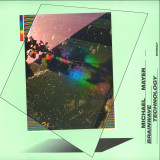
Michael Mayer’s latest EP, Brainwave Technology, comes at you purposeful, stealthy and sly. It’s a glorious left turn for the redoubtable producer, one that sees his typically lean and lithe productions buffed to a metallic, futurist sheen. There’s a gleam in the eyes of tracks like “Brainwave Technology” and “Alpha” that speaks of serious fun, of the intersection of the pleasure zone and the frontal lobe.
“Brainwave Technology” itself is informed by Mayer’s deep dive into the thorny terrain of artificial intelligence, transhumanism and posthumanism. Inspired by reading German philosopher Richard David Precht, Mayer found himself heading down the “proverbial rabbit hole,” as he describes it, “watching hours of YouTube material by self-proclaimed prophets of these ‘inevitable’ changes to come.” Never one to be taken in by the egotist’s dance, Mayer’s cynicism about the whole endeavour is tempered, a little, by the deeper questions that these figures gesture towards: “Is it really an evolutionary step that man and machine become one? Or is it rather a marketing plot by Silicon Valley billionaires?”
On “Brainwave Technology”, Mayer plays the charlatans at their own game, turning their logic against them by exposing the fruitiness of their ‘visions’. “I chose irony as my sword with which I chopped off some quotes from some of those batshit crazy prophets and self-promoters,” he explains of the drooling psychobabble he drops in the track’s lacuna. There’s a sense of humour here – how could you not laugh at these hungover egotists? – but there’s levity too, a sense that Mayer’s using sound to expose the contradictions and double-speak at the heart of these half-formed ideas. It’s a Burroughsian tactic, to slice into the heart of the voice to see what hidden truths surface.
It was Burroughs, too, who once said that “when you cut into the past, the future leaks out”; Brainwave Technology cuts into the logic of the futurologist to leak out the messiness of modern reality. On “Alpha” and “Gamma”, Mayer seems to conjure up the stark, ominous music that’d soundtrack a science fiction reinterpretation – or preinterpretation – of our modern malaise, all funereal wreaths of electronic noise and clatterboxing beats. As the EP resolves with “Device For The Young At Heart”, Mayer’s questions are piling up: “Do we want to become immortal and live on as a download? Do we really give up on Earth and put all our effort into colonising Mars?” There are no answers, of course, but plenty of imaginings-to-be. Brainwave Technology soundtracks both dystopian and utopian possibilities of what could come next.
- A1: Smith & Mighty Feat Jackie Jackson “Walk On ..”
- A2: Boca 45 “Wild Style Skit”
- A3: Massive Attack Feat Daddy Gee & Carlton “Any Love”
- A4: 3Pm “Better Late Than Never”
- B1: Rpm “2000”
- B2: One Cut “Horn Tune”
- B3: Boca 45 “Walls On Fire Skit”
- B4: Sir Beanz Obe Feat Fog Scratch Leg Aka Junior Disprol “Mars Attacks”
- C1: Purple Penguin “Memphis”
- C2: Numskullz “I’m Alive”
- C3: One Cut “Zombie Bomb Fire”
- C4: Aspects “Chinese Burns”
- D1: Atari Safari “Play This One For Them”
- D2: Hundred Strong “Sword Lies Broken” Feat Taskforce
- D3: Boca 45 Feat Stephanie Mckay “Parking Space”
Vanguard captures the iconic Bristol Sound.
The early days of the iconic Bristol Sound are captured in a new album including an exclusive re-release of the very first track from Massive Attack and tracks from Smith & Mighty, Purple Penguin and more.
The curated tracks are also linked in that all were originally released with bespoke original covers from legendary Bristol street artists, including Banksy and Will Barras, tying its release toVanguard’s current exhibition Bristol Street Art: The Evolution of a Global Movement at M Shed, Bristol, running until October.
Compiled by DJ Boca 45 (Scott Hendy), Vanguard brings together the seminal tracks that defined the rebellious era which saw the birth of the Bristol Sound for the first time. Featured tracks include an exclusive re-release of Any Love - the first ever track by Massive Attack released on Massive Attack Records in 1988, Smith & Mighty’s breakout hit Walk On, Purple Penguin’s downtempo classic Memphis and other trip hop classics.
The LP celebrates the globally recognised Bristol Sound whose experimental breakbeat rhythms and influence still dominate the scene today. Along with classic tracks from the ‘90’s into the ‘00’s and beyond, the album uncovers lesser known cuts by some of Bristol’s pioneering musicians such as One Cut and West Country hip hop’s finest Aspects.
The explosion of the Bristol Sound coincided with the boom in UK street art which led to fruitful collaborations between artists and musicians. Finding inspiration in each other’s work, street artists frequently designed rave posters, logos and cover art while DJs provided the beats to accompany street artists’ clandestine painting.
Vanguard The Album pays homage to these relationships with a beautifully put together gatefold LP featuring iconic cover art designed by some of the biggest names in street art such as Inkie, Dicy, Will Barras and Nick Walker. These early works capture the boisterous energy of the era and confirm Bristol’s status as an extraordinary cultural melting pot.
The double vinyl record also features extensive sleeve notes written by Bristolian writer and curator Jamie Hombre as he reflects on these ground breaking cover art collaborations.
Rage, confusion, despair, self-deception, and introspection Madi Diaz cycles
through the full spectrum of emotions on History Of A Feeling,
her debut on ANTI-.
It’s an album that undeniably marks Diaz’s status as a first-rate songwriter, a
craft she’s spent years refining, and one wherein Diaz establishes herself as an
artist capable of distilling profound feelings with ease.
Diaz pulls from a range of folk, country, and pop leanings she is as much influenced by Patty Griffin and Lori McKenna as she is the sonics of PJ Harvey
and directness of Kathleen Hanna. On History Of A Feeling, the Nashville based
songwriter comes to terms with the dissolution of a meaningful relationship.
By the end of it, she wills herself into a self-reflective state where she doesn’t
hate herself for being so heartbroken.
The songs on History Of A Feeling, are the most direct and introspective songs
Diaz has ever written. In the few times she’s gotten to perform them live in
front of an audience, Diaz describes the experience as one where she feels
acutely present even though she’s singing about emotions that started to take
root years ago.
It’s relatable to anyone who has experienced heartbreak and great change in
some manner, and this profound sense of intimacy and camaraderie she seamlessly weaves into the songs was important to her.
“I wanted it to sound conversational, like I had just walked over to your house
and we’re sitting and at the end of your driveway talking just like we’re hashing it out in the same way that you’d call a best friend at one in the morning
because you needed to talk about what just happened.”
New York City 4-piece deliver a modern blues rock masterclass on their feisty debut album.
“A timeless classic rock sound that revels in lean riffs and raw emotion.” – Afropunk
In an age where artistic merit is awarded to those who shout the loudest, Dakota Jones pride themselves on an unwavering ability to leave a lasting impression. Spearheaded by Tristan Carter-Jones fierce and unashamedly uncensored songwriting, the band’s fast-growing reputation as formidable live act has stamped Dakota Jones with the hell-hath-no-fury power of Chaka Khan, the wild spontaneity of Janis Joplin, and the honey-dripping sensuality of Marvin Gaye. Their debut album’s message of proud black heritage and triumphant queerness manifests itself in Carter-Jones’ ability to challenge norms of adulthood and femininity as she takes a deep dive into some of life’s most visceral emotions.
Tristan Carter-Jones: “I’m a black, queer woman expressing myself through love and music. Some folks still find that to be a transgressive act in and of itself. I work to fight that idea. I write a lot about my
Continued over…
sexuality and the ways in which I express it. Songs about sex and love bounce back and forth between songs about heartache, hangovers and self-medication, and the pleasure and pain of truly finding yourself. I don’t think we get to hear these things from a woman’s mouth as often as we should.”
Serving as an instant tone setter, the album opens with the line "Stretch marks from growing pains" with Carter-Jones lamenting the woes of adjusting to adulthood on lead single ‘Did It To Myself’ - her husky and commanding vocal instantly asserting its place in the spotlight. The atmosphere soon turns steamy on the flirtatious title track ‘Blacklight,’ whilst fantasising over a modern-day Bonnie & Clyde love affair the funk-laden ‘We Playin Bad Games’ packs a punch with its tale of free spirits entwined in a haze of late-night revelry.
Elsewhere, stories of caustic heartache twist the knife into wounded blues guitar riffs on ‘Like That’ and ‘Black Magic (That Power)’, in which Carter-Jones’s stoical voice never once faulters as she mourns the memories of a previous flame. Personal prayer ‘Lord Please’ recites empowered words of reassurance, and solidarity in the face of injustice erupts into a rallying cry for change on the classic sounding ‘Noise’ – written as a reaction to the 2016 US election. “I woke up after the election feeling pure panic and fear in my body,” remembers Tristan. “I wanted people in a place of privilege to stand up for what I was feeling, stand up for injustice, stand up for all of the things we need to change as a country. I wanted their rage, and I wanted their noise.”
Finally, the band’s tender tropes of togetherness eventually boil into gritty, guitar-slung balladry on hidden bonus track, ‘California,’ where, knees buckling under the weight of past trials and tribulations, Carter-Jones sets out on one final journey of self-discovery, hastily pulling out from reality and leaving only a dust cloud in her wake.
Production comes courtesy of the Grammy-winning John Wooler, ex Virgin Records A+R and founder of the Blues label Pointblank who has worked with everyone from John Lee Hooker and John Hammond to Isaac Hayes and Van Morrison. The album also features a wealth of hugely talented and accomplished musicians, including backing vocalist Kudisan Kai, former backing vocalist for the likes of Elton John, Chaka Khan, Anita Baker, Natalie Cole, Beck, Sting, Mary J. Blige and Jill Scott. Also present; Grammy winning keyboardist Jon Gilutin, who has spent years working with some of the industry’s most respected and iconic artists including Linda Ronstadt, James Taylor, Lady Gaga, Willie Nelson, Aretha Franklin, Diana Ross, Jackson Browne, Celine Dion, Bonnie Rait and Carole King. You’ll also hear the talents of acclaimed guitarist Michael Toles. Most well-known for being a part of the Stax Records group The Bar Kays, and for his contributions on famous records by Issac Hayes, Al Green, BB King, Johnny Taylor, Rufus Thomas, Albert King to name just a few.
Dakota Jones are a rising funk, soul and blues rock band from Brooklyn, New York City. Comprising of Tristan Carter-Jones (vocals), Scott Kramp (bass) Steve Ross (drums), and acclaimed musician Randy Jacobs (guitar) - former member of Was(Not Was) who has recorded for Seal, Bonnie Raitt, Tears for Fears, Elton John and many others. Though Carter-Jones and Ross first met in 1999 whilst at primary school, the band formed years later following a series of home jam sessions in 2016. The band’s collective alias originates from Carter-Jones’s middle name, ‘Dakota’. Dakota Jones have since released a string of acclaimed singles and EPs as well as received international attention for their track, ‘Have Mercy’ after it featured on Netflix’s 2019 film, Always Be My Maybe starring Ali Wong and Randall Park – and now after years of hard work and determination, the band are finally set to reveal their long awaited debut album. “We’d been regularly releasing EPs, waiting for our chance to come, and wondering what that would look like,” says Carter-Jones. “We didn’t realise until we started making this record that we needed to stop waiting for some break to come along, and just do it ourselves, independently.”
“Black Light really dives into a place of funk soul and everything that comes with it. There’s joy and dancing, sleek guitar licks and funky bass slaps. There’s pain and longing, and there’s the feeling of relief when you come out of that place and find your joy and purpose again. Black Light is my story.”
in winter 2016, taumel and the ensemble adapter met for several improvisational sessions to develop an evening of music in which the contrasts and boundaries between composition and improvisation, freedom and determination, chaos and structure were to blur or collide. the sessions focused on the development of a specific, sound-gestural musical language. in a way, each musician developed kind of a character on his instrument and its own specific soundgesture. we recorded these sessions and used them as a basis for "in pieces". "in pieces" consists of the remixes of these sessions, as well as additional studio material produced by taumel. "in pieces" can be understood as a sureal sound poem, an abstract sound story that wanders through the most different states - from greatest happiness to frenzy and madness. in the 2 mutating sound fields, the associative story revolves around the theme of linguistic inalienability and thus also around the theme of 'chaos and order'. this ambiguity, the attempt at beauty and its overturning into destruction and failure. attempts at writing, attempts at speaking, stammering, stuttering, screaming, constriction, drifting away, humming... in the mutation of states, heterogeneous sound events meet or are mixed to a new kind of soundmash between song, voices, melody, harmony, instruments, noise, beats, riffs, words, electronics and alienation. the action of the instrumentalists (the instrument playing) is on the same level as any other sound producing action or vocal expression as well as any electronic sound production and is always meant gesturally, performatively, as action, as acoustic dance. "volume one" is the first part of a musical context planned as a two-part work (in pieces - volume two). in two sound parts (side a, side b) "in pieces - volume one" is not a song cycle like our other series, e.g. TRAUM, but rather a musical 2-act, later altogether 4-act. here the overall form of the musical series is not divided into albums and songs, but into albums and their a+b sides, like act 1, 2, 3 and 4. perhaps, therefore, "in pieces" can also be heard as an acoustic theater, or as a radio play without words, or as a soundtrack without a film, or as a film without a picture, or simply as an order of changing sound events . "off the record" in "off the record" taumel meets other musicians and develops albums in collaboration. here different forms of musical interaction can be tried out. in this case of "in pieces" the collaboration with the ensemble adapter consisted in these sessions, which form the basic framework and skeleton for the whole album.
Jorja Smith returns to announce a new 8-track project. ‘Be Right Back’ is due May 14th and is the first body of work from Jorja since her 2019 critically-acclaimed, Mercury Prize nominated debut album ‘Lost & Found’, for which she won her second BRIT Award for ‘Best
Female’ and earned herself a nomination for ‘New Artist’ at the GRAMMY Awards.
The project finds Jorja delivering some of the most emotive and imaginative songs of her career. Over string-heavy production, she unveils a collection of songs that are diverse in their range but still extremely cohesive as a body of work - “It’s called be right back because it’s just something I want my fans to have right now, this isn’t an album and these songs wouldn’t have made it. If I needed to make these songs, then someone needs to hear them too.” - Jorja says of the project.
To coincide with the announcement, Jorja is sharing new single ‘Gone.’ Highly anticipated,
Smith states that “There’s something about being able to write about one thing and for it to mean so many different things to others. I love that this song, well any of my songs really, will be interpreted in different ways, depending on the experiences of the people listening.
This one is just me asking why people have to be taken from us.”
‘Gone’ follows in the footsteps of Jorja’s stunning March release ‘Addicted’, which also appears on ‘Be Right Back’, alongside 6 additional unheard tracks including a feature from
rising South London rapper, Shaybo on track 3, ‘Bussdown’.
Over the past three years, Smith has been celebrated unanimously across the world for her evocative song-writing, powerful delivery, pure emotion and unbridled talent as a young woman navigating her way through the world. Smith has graced multiple magazine covers,
performed at awards ceremonies and on late night TV, and sold out shows across the globe, now surpassing over one billion global streams. Her 2019 hit single ‘Be Honest’ featuring Burna Boy has become her biggest song to date at almost 250M streams worldwide. Smith continues to hone her craft and ‘Gone’ serves as a much-anticipated prelude for the release of ‘Be Right Back’ on May 14th.