Basking in the golden glow of an Indian Summer, Basso brings us a much needed reissue of one of his most treasured musical discoveries, Guy Maxwell's 'Outside My Window'. A long time favourite in the Growing Bin, this mellow masterpiece originally crept out in 1980 with no backing from its label, the soon to burst Bubble. Now resequenced and redressed to the exacting standards of Mssr. Maxwell, 'Outside My Window' is ready to warm the hearts and cheer the ears of a whole new audience.
Born in Bordeaux under a wandering star, Guy spent the 70s on the road, freewheelin' from Paris to Rome, guitar in tow, before settling in Switzerland at the end of the decade. There he reconnected with school friend Serge Maillard, whose Santiago bandmates swung by to help bring Guy's arrangements to life. Joined by Jan Dix (Om Buschmann and Foodband) on percussion and Ruth Failure (later in Mag and the Suspects) on guitar, and the Santiago powerhouse of Tato Gómez, Sergio Castillo and Paco Saval, who also leant his deft touch behind the desk, Guy put together a nine track trip through groovy AOR, gentle jazz fusion, cosmic folk and yacht rock.
For this reissue, Guy's stripped back the tracklist, tossing aside a trio which didn't quite stand the test of time in favour of a concise six song LP which brings brilliance in every bar. 'Watch Out Sally' introduces the LP with playful keys and a Latin lilt, a sophisticated seventies pop song that's more Aja than A-Ha, sax and strings sending the whole track soaring as Guy muses on wanderlust in his honeyed tones. 'You Never Sang This Song' is undoubtedly a lost classic, embodying all the bittersweet beauty of yearning while riding a rollercoaster arrangement of folk-jazz fusion enhanced by Serge Maillard's quicksilver solo. 'Funny Weather' looks both ways as it closes out the A-side, marrying the smooth sounds of the 70s with the rain-soaked jangle of the decade to come. The B-side opens with the LPs second lost classic, the frankly sublime 'Beautiful Day'. Stripped back to acoustic guitar and subtle hand percussion, this jazzy ballad brings a tear to your ear before drawing your attention skywards with the acid folk energy of the chorus. There's mellow magic in the air on 'Summer Song', an optimistic ode to sunshine and romance lifted way beyond the AOR standard by a lyrical sax solo before Maxwell closes the set with the 7/4 escapism of 'There's A Train Leaving', a fond farewell which sees the ensemble say goodbye in perfect harmony.
quête:one way records
The Men’s hugely influential album Leave Home came out during an exciting time in New York City. DIY lofts and shitty bars littered downtown Manhattan and North Brooklyn. The Acheron had just opened its doors. Kill Your Idols had broken up. Toxic State Records was just getting started with Crazy Spirit, Dawn of Humans, Hank Wood and Perdition EP’s. The city was alive with punk and noise and filth. And right at that time, The Men were the show to be at.
Every gig was dripping with sweat. Hallways and sidewalks were packed between sets. Chaos reigned in the pit. The Men hit like a bag of hard cement, a hardcore band with a familiar sound but with an aura of absolute chaos and intensity, like everything was on the brink of going off the rails at every moment of their set, a downhill freight train with no brakes. During these shows one’s focus could shoot back and forth between the intimidatingly angry-eyed, bald-headed Chris Hansell (who went on to front Warthog) and the long haired hippie punks Mark Perro, Nick Chiericozzi and Rich Samis, that made up the surrounding band.
Just one of the many juxtapositions the band embraced. If The Men were a chapter in Michael Azzerad’s Our Band Could Be Your Life, the early EP’s and cassettes would obviously be Minor Threat and Black Flag, while Leave Home would likely be… Sonic Youth. It was just before they made the full jump into each record being a smorgasbord of underground genres, from dream pop to folk;
before they had tracks called “Country Song,” for example. But it was a preview of what was to come. Leave Home was a pivot from pure hardcore punk (some might even call it mysterious guy hardcore), as the band got lost in the groove in a way one couldn’t on a straight up punk record. That groove was so strong on “If You Leave…,” “(),” and “Bataille,” while they spaced out on “Shitting With The Shaw,” and stayed as aggro as ever on “LADOCH.” But of course, Leave Home had a re-recording of their hardest track to date, “Think,” making it clear that they were still the moshers we all had come to know and love. If The Men raised their flag as an important New York punk band with Immaculada, they started waving it in the freakiest way with Leave Home.There is no doubt that Leave Home was one of the most influential records of the last decade.
You can hear their mark everywhere from Ty Segal and The Oh Sees to Milk Music and Hank Wood. Few bands have traversed as many genres as The Men and even fewer have done it so well. It is a testament to the band’s undying authenticity and adventurism that the record sounds as timeless and urgent now as it did when it blew the doors of New York punk off its hinges ten years ago, leaving a giant hole for bands of all kinds to come racing through.
one hand on the steering wheel the other sewing a garden is the name of the second album by Canadian songwriter Alexandra Levy, publicly known by the moniker Ada Lea. On one hand, it’s a collection of walking-paced, cathartic pop/folk songs, on the other it’s a
book of heart-twisting, rear-view stories of city life. Ada Lea has followed up the creative, indie-rock songcraft of her debut what we say in private with surprising arrangements and new perspectives. The album is set in Montreal and each song exists as a dot on a personal history map of the city where Levy grew up. Due on September 24th from Saddle Creek and Next Door Records in Canada, the physical record will be released alongside a map of song locations and a songbook with chords and lyrics, inspired by Levy’s love of real book standards.
Levy penned and demoed this batch of songs in an artist residency in Banff, Alberta. After sorting and editing she made her way to Los Angeles to record with producer/engineer Marshall Vore (Phoebe Bridgers) who had previously worked on 2020’s woman, here E.P. After a long walk to the studio each morning, Levy spent her session days diving into the arrangements, playfully letting everything fall in place with complete trust for her collaborators. She notes “Marshall’s expertise and experience with drumming and songwriting was the perfect blend for what the songs needed. He was able to support me in a harmonic, lyrical, and rhythmic sense.” Other contributors that left a notable fingerprint on the soundscape include drummer Tasy Hudson, guitarist Harrison Whitford (of Phoebe Bridgers band), and mixing engineer Burke Reid (Courtney Barnett). Many songs came together with a blend of studio tracks and elements from the pre-recorded demos.
The resulting sounds range from classic, soft-rock beauty to intimate finger-picked folk passages and night-drive art-pop. And the textures are frequently surprising due to the collage of lo-fi and hi-fi sounds that tastefully decorate the album without ever clouding the heart-center of the song. Tracks like “damn” and “oranges” feel timeless with their AM gold groove and 70’s studio sheen, while songs like “my love 4 u is real '', “salt spring” and “can’t stop me from dying” sound completely modern in their use of electronics, sound effects, and pitched vocals. In their subtle, sonic variety, all of the album’s songs flow together with ease into one big, romantic dream for Levy’s silken vocals to float above.
Inspired by personal experience, daydreams, and Elena Ferrante’s Neapolitan novels, the lyrics of one hand... center storytelling on a bigger scale. The experience and emotions of a year are communicated through Levy’s vignettes of city life. Her prose is centered in its setting of the St Denis area of Montreal as it draws up memories from local haunts like Fameux, La Rockette, and Quai des Brumes in rearview reverie. Levy creates a balance through the album’s year by splitting her songs evenly into four seasons. Opening track “damn”, as a song of winter, kicks off the narrative with the events of a cursed New Year’s Eve party. Immediately this timeline becomes jumbled into a Proustian haziness. The listener is then led through the heat-stricken, brain fog of Summer song, “can’t stop me from dying” and then into the autumnal romanticism of “oranges” before returning back to New Year’s on “partner,” which Levy describes as “a woozy late-night taxi blues reflection on moments when timing can be so right, yet so wrong…”. These collected stories as a whole chart the unavoidable growth that comes with experience. “All is forgiven in time. All is forgotten in time. And when the music stopped, I heard an answer” (from “my love 4 u is real”).
Whether to consider these songs fiction or memoir remains unknown. On one hand, Levy says “Why would I try to write a story that’s not my own? What good would that do?” but on the other hand, she is quick to note the ways that language fails to describe reality, and how difficult this makes it to tell an actually true story. The poetic misuse of the word “sewing” in the album’s title serves as a nod to the limitations words provide. What does it mean to sew the garden? And how can we appreciate its carefully knit blooms when the rearview mirror is so full of car exhaust?
one hand on the steering wheel the other sewing a garden is the name of the second album by Canadian songwriter Alexandra Levy, publicly known by the moniker Ada Lea. On one hand, it’s a collection of walking-paced, cathartic pop/folk songs, on the other it’s a
book of heart-twisting, rear-view stories of city life. Ada Lea has followed up the creative, indie-rock songcraft of her debut what we say in private with surprising arrangements and new perspectives. The album is set in Montreal and each song exists as a dot on a personal history map of the city where Levy grew up. Due on September 24th from Saddle Creek and Next Door Records in Canada, the physical record will be released alongside a map of song locations and a songbook with chords and lyrics, inspired by Levy’s love of real book standards.
Levy penned and demoed this batch of songs in an artist residency in Banff, Alberta. After sorting and editing she made her way to Los Angeles to record with producer/engineer Marshall Vore (Phoebe Bridgers) who had previously worked on 2020’s woman, here E.P. After a long walk to the studio each morning, Levy spent her session days diving into the arrangements, playfully letting everything fall in place with complete trust for her collaborators. She notes “Marshall’s expertise and experience with drumming and songwriting was the perfect blend for what the songs needed. He was able to support me in a harmonic, lyrical, and rhythmic sense.” Other contributors that left a notable fingerprint on the soundscape include drummer Tasy Hudson, guitarist Harrison Whitford (of Phoebe Bridgers band), and mixing engineer Burke Reid (Courtney Barnett). Many songs came together with a blend of studio tracks and elements from the pre-recorded demos.
The resulting sounds range from classic, soft-rock beauty to intimate finger-picked folk passages and night-drive art-pop. And the textures are frequently surprising due to the collage of lo-fi and hi-fi sounds that tastefully decorate the album without ever clouding the heart-center of the song. Tracks like “damn” and “oranges” feel timeless with their AM gold groove and 70’s studio sheen, while songs like “my love 4 u is real '', “salt spring” and “can’t stop me from dying” sound completely modern in their use of electronics, sound effects, and pitched vocals. In their subtle, sonic variety, all of the album’s songs flow together with ease into one big, romantic dream for Levy’s silken vocals to float above.
Inspired by personal experience, daydreams, and Elena Ferrante’s Neapolitan novels, the lyrics of one hand... center storytelling on a bigger scale. The experience and emotions of a year are communicated through Levy’s vignettes of city life. Her prose is centered in its setting of the St Denis area of Montreal as it draws up memories from local haunts like Fameux, La Rockette, and Quai des Brumes in rearview reverie. Levy creates a balance through the album’s year by splitting her songs evenly into four seasons. Opening track “damn”, as a song of winter, kicks off the narrative with the events of a cursed New Year’s Eve party. Immediately this timeline becomes jumbled into a Proustian haziness. The listener is then led through the heat-stricken, brain fog of Summer song, “can’t stop me from dying” and then into the autumnal romanticism of “oranges” before returning back to New Year’s on “partner,” which Levy describes as “a woozy late-night taxi blues reflection on moments when timing can be so right, yet so wrong…”. These collected stories as a whole chart the unavoidable growth that comes with experience. “All is forgiven in time. All is forgotten in time. And when the music stopped, I heard an answer” (from “my love 4 u is real”).
Whether to consider these songs fiction or memoir remains unknown. On one hand, Levy says “Why would I try to write a story that’s not my own? What good would that do?” but on the other hand, she is quick to note the ways that language fails to describe reality, and how difficult this makes it to tell an actually true story. The poetic misuse of the word “sewing” in the album’s title serves as a nod to the limitations words provide. What does it mean to sew the garden? And how can we appreciate its carefully knit blooms when the rearview mirror is so full of car exhaust?
UK multi-instrumentalist and story-teller Mara Simpson's new album In This Place will be released on September 24th, 2021. A heady blend of alt-folk, analogue synth and classical composition, In This Place is a tale of quiet rebellion, and taking back control. Fittingly, the new album marks the start of another new journey for Mara. In This Place will be the first record to be released on Downfield Records, a non-profit imprint set up by Simpson, placing artists at it’s centre. “I want to try and promote transparency and equality, assist other artists to get public funding and to ‘pay’ forward the time and resources I’ve benefited from,” she says. The label’s mission is to see musicians paid fairly and release records through a creative and joyous process.
Whilst the struggles of 2020 will go down in history, for Mara it was 2019 that was the tough one. A year spent consumed by worry, whilst in and out of hospital with her one year old daughter, had left Mara feeling like she was playing a constant game of catch up with a world that wouldn’t slow down. With songs ready to be recorded for her new album, she headed into the studio. “I stepped into the studio not needing my hand held, just my voice heard” explains Mara, who quickly came to the realisation that she was working in a toxic environment. Enough was enough
It was whilst waiting for a train that she had the sudden realisation that the album she was recording would never see the light of day. Struck by an overwhelming feeling of failure, Mara began to ruminate on the time and money she had wasted but then something clicked. “Perhaps it’s something about train stations, the coming and the goings, that allows a stagnating frame of mind the grace and space to clear” she says. “The funny thing is, upon realising failure, the despair I’d been feeling was now replaced with something else...Relief”.
Feeling re-energised, Mara called her dream producer Ellie Mason, of Voka Gentle, and together the pair began working on a new record. “I’ve been more hands-on with this album than I’ve ever been, taking a much more active role in production. Throughout the whole process Ellie has heard my voice, and been open to any possibility” explains Mara. “We’ve stumbled across golden moments, recording four part harmonies in Brighton’s oldest church, using every drum there is in Brighton Electric, layering New Zealand bird song with tape delayed piano, all thanks to her nurture, playfulness and kindness” she continues.
Album opener ‘Serena’, named after the apartment building in Brighton where Mara’s daughter was born, is based on the experience of becoming a mother and the responsibility of making important healthcare decisions. “How will I know how to love you” she sings over undulating synths and sparse piano chords. Title-track ‘In This Place’ is about the confrontation between mother and new-born child. The ‘sizing-up’ of one another as they embark on a new journey together. “When I left home to travel around the world and was so worried about breaking my Mum’s heart,” says Mara. “I just remember her saying that your children are never yours to keep. This is a song about the rawest of loves, and the fact that however much we love someone, they are never ours, and the beauty in that.”
In addition to the experience of motherhood, the songs on In This Place take inspiration from a wide range of places, including Mara’s ‘second home’ New Zealand. ‘Christchurch’, written in response to the Christchurch Mosque shootings in 2019, layers New Zealand birdsong on top of swirling piano and moving choral vocals. ‘Fault Lines’ was inspired by The Waitangi treaty. Signed in 1840 in New Zealand by the British Crown and Maori chiefs. The British understood that the Maori were signing over land that the British could now govern and effectively ‘own’, however to the Maori people it is impossible to own land, in the same way that you can’t ‘own’ air. “We live and die, the land remains and we are just it’s keepers for the very short time we are here. This song is about us not owning this earth - how can we? We are only the guardians of it while we are here” says Mara.
Backed by a band of accomplished musicians (Jools Owen (Bears Den) on drums, James Smith (Anaïs Mitchell) on banjo, Alexandra Hamilton-Ayres on clarinet and strings by Poppy Ackroyd) on In This Place, Mara sounds the most confident she’s ever sounded. With her new material, Mara Simpson hopes to promote a gentle, yet radical shift toward kindness and it’s this warmth that can be both heard and felt across her new record.
- 1: Spencer Krug - Red Dress
- 2: The Besnard Lakes - Good Morning, Captain
- 3: They Hate Change - The Seeming And The Meaning
- 4: Angel Olsen - Cold Blooded Old Times
- 5: Bruce Hornsby - Feel The Pain
- 6: Jamila Woods - Fast Car
- 7: Nap Eyes - Car
- 8: S. Carey - Weight Of Water
- 9: Pink Mountaintops - The Concept
- 10: Cut Worms - One For The Catholic Girls
- 11: Okay Kaya - Nightswimming
Midway through his long, earnest and often very, very
funny essay on the role playing game ‘Dungeons &
Dragons’ in the September 2006 issue of The Believer,
writer Paul La Farge proposes that ‘Dungeons & Dragons’
is not a game at all but rather a ritual. La Farge notes the
marked difference between game and ritual. Whereas a
game seeks to demonstrate how unequal or distinct
players / teams are from one another, rituals seek to do
the very opposite.
And so, across the 25-year history of Jagjaguwar - an
independent record label curiously named using a
‘Dungeons & Dragons’ name generator - we find this idea
of ritual as a conjoining practice. We see it early on when
Jagjaguwar join forces with a midwestern label called
Secretly Canadian for a powerful fusion. We see it in
familial relationships and collaboration among Jagjaguwar
artists and the ways those artists’ most treasured
collaborators make their ways to the Jagjaguwar game
board.
‘Join The Ritual’, a piece of Jagjaguwar’s 25th Anniversary
celebrations, looks to pay homage to the labels and artists
that, whether they know it or not, invited Jagjaguwar to the
table, to this wild, dark magic ritual of music. We’re talking
about independent titans like Drag City, Too Pure, K
Records and Touch & Go. We’re talking about heroes like
R.E.M., Slint, Stereolab and Tracy Chapman. These songs
captured the imaginations of founders Darius Van Arman
and Chris Swanson - and ultimately, opened up worlds to
them.
Blind, Chicago soul singer Willie Williams was first discovered performing in clubs in and around the Windy City. He was signed to ABC records by their A&R Director for the Midwest Johnny Pate a former Jazz bassist, independent producer, arranger and songwriter in his own right. Pate was a friend and colleague of fellow musician, songwriter and founding member of one of ABC’s prolific vocal groups The Trends, Tom Dorsey. Pate and Dorsey would contribute heavily as writers and producer throughout Willie’s recording career, beginning with his first ABC 45 release in 1966 “Have You Ever Been Played For A Fool/With All My Soul”. The release’s b-side became a popular radio play at the time with Willie becoming known as Willie “Soul” Williams for a while. Two further ABC releases were to follow “It Doesn’t Pay/Just Because” (1967) and “I’m Through With You/Strung Out” (1968).
Willie’s next 45 release although recorded in Chicago under Johnny Pate’s supervision found it’s way to another major label, RCA, although credited as a GWP Production (Gerrard W. Purcell). The 45 in question being the excellent Tom Dorsey penned songs “Just To Be Loved By You/Name It” released during 1969.
Two Willie Williams 45 releases did appear on the Gamma label but I’m unsure if one or both of these are by the same Willie Williams in question.
Throughout his recording career Willie continued to work the clubs with his own band which was led by his bass guitarist and confidant Bradley (Brad) Bobo a man who featured as a session musician on many recording sessions including the creation of The Notation’s album of the same name for Curtis Mayfield’s Curtom subsidiary label Gemigo.
On the 22nd of December 1970 a recording session was held in RCA’s Studio B, on North Wacker Drive, Chicago with sound engineer Russ Vestuto. The session was financed by Tom Dorsey who amongst other song writing gratuities had been paid handsomely for the 3 songs “Love Machine”, “My Baby’s Love” and “How Are You Fixed For Love” which he had wrote and contributed to the blue-eyed hit group, The O’Kaysion’s “Girl Watcher” ABC album. The result of this session yielded four Willie Williams tracks. Brad Bobo played bass guitar on the session, the composer of the four songs Tom Dorsey supplied the arrangements and Tom’s wife Carolyn (also a former group members of The Trends) joined both he and Brad on backing vocals.
The four songs were then offered to Eddie Thomas who chose two of them to release on a 45 single. The two songs being “Must Mean Love” which was later renamed “The Baa Baa Song “and “Psyched Out” which Eddie then released on his own Lakeside label, thus leaving the two other songs to remain unissued in the can.
Willie has now sadly passed away but in his later life once the opportunity’s for performing artists began to dwindle he chose a different path in his life, gaining a Doctors degree, he went on to become a College Lecturer. Tom Dorsey too turned his back on the music industry apart from his publishing company to concentrate on his family life as well as founding a very successful business involving one of his other great life passions, photography. Luckily for us he never lost the master tape of Willie’s sessions and after several years of tentative enquiries he graciously relented to my request to put them out. So now before you we have the two excellent previously unissued Willie Williams songs that Eddie Thomas passed on, the delightfully soulful “Give It All I Got” backed with the funky, social conscience themed “Do You Understand”, lost early 1970’s Chicago Soul at its finest.
The Altered Hours have just announced details of their second full length album ‘Convertible’. The Irish group have just signed with Pizza Pizza Records and the 8 track album is set for release in May 2021. Following on from some successful headline tours across Europe supporting their debut album & some blistering EP’s along the way, the group found themselves looking for the next step in their ever- evolving journey. Having previously recorded in Anton Newcombe’s Berlin studio for their debut singles & ending up in the infamous Funkhaus studios to lay down what would become their debut album ‘In Heat Not Sorry ’, the band decided once again to
change the approach & take their new songs back to the privacy of their own studio space on the outskirts of Cork City. The new LP ‘Convertible’ is the result of countless late night/early morning sessions that took place over the past 2 years. Choosing to self produce and engineer this record was a conscious choice as the band felt an urge to take what they had learned on the road & in various studios previously, and condense all of this energy back into the boiling pot of their own rehearsal space.
The group have been a part of some exciting movements since the beginning and their path has been an organic one. They quickly became known in their hometown for taking over an ex-government building in the heart of Cork city, turning into a studio and creating a hub for the scene that surrounded them. The years that follow shine a light on the relentless energy of this group and unwavering love for playing shows anywhere & everywhere. Having been invited to perform at Liverpool Psych Fest numerous times, supporting the Brian Jonestown Massacre, selling out venues, churches & clubs, playing rip-roaring DIY shows in friends’ basements, getting joined by members of Spacemen 3 on stage and more recently, being invited by fellow Irish rockers Fontaines D.C to join them on their 2019 European tour playing sold out shows in venues like The Bataclan, Paris & Paradiso, Amsterdam. It’s been a wild ride for The Altered Hours so far & their music keeps evolving & growing as the experiences build. This is a group with the spirit of music deeply ingrained in them and a passion for making rock music something that you can believe in.
Their second full length album ‘Convertible’ is a window into the band’s idiosyncratic tendencies, a closer look into how their writing & sound continuously moves forwards while somehow remaining rooted in their own unique world all at once. The Altered Hours seem born to be an underground affair, something that they wear with pride and this album is a wonderful culmination of their DIY upbringing, their unfiltered rock ‘n’ roll spirit along with a confident stride into personal songwriting.
Tape
Pauline Oliveros and Guy Klucevsek's "Sounding / Way" was originally released on cassette in 1986 and has been out of print ever since. This LP was cut by John Golden and pressed at RTI in order to achieve a quiet, dynamic pressing.
The Sounding / Way concept was simple. Each artist would write a piece for two accordions and then they would perform them together. Thus, side A contains Guy Klucevsek's Tremolo No. 6 performed by Guy Klucevsek and Pauline Oliveros. Side B contains Pauline's composition The Tuning Meditation, also performed by both Pauline and Guy.
This is the second release in an on-going effort between Important Records and the Pauline Oliveros Trust to maintain and promote the music, philosophy and legacy of Pauline Oliveros.
Guy Klucevsek is one of the world’s most versatile and highly-respected accordionists. He has performed and/or recorded with Laurie Anderson, Bang On a Can, Brave Combo, Anthony Braxton, Anthony Coleman, Dave Douglas, Bill Frisell, Rahim al Haj, Robin Holcomb, Kepa Junkera, the Kronos Quartet, Natalie Merchant, Present Music, Relâche, Zeitgeist, and John Zorn.
Pauline Oliveros, composer, performer and humanitarian is an important pioneer in American Music. Acclaimed internationally, for four decades she has explored sound - forging new ground for herself and others.
Through improvisation, electronic music, ritual, teaching and meditation she has created a body of work with such breadth of vision that it profoundly effects those who experience it, and eludes many who try to write about it. Oliveros has been honored with awards, grants and concerts internationally. Whether performing at the John F. Kennedy Center in Washington D.C., in an underground cavern, or in the studios of West German Radio, Oliveros' commitment to interaction with the moment is unchanged. She can make the sound of a sweeping siren into another instrument of the ensemble.
"On some level, music, sound consciousness and religion are all one, and she would seem to be very close to that level." John Rockwell
"Through Pauline Oliveros and Deep Listening, I now know what harmony is. It's about the pleasure of making music." John Cage
"On October 15, 1965, tenor saxophone master and composer Wayne Shorter recorded The All Seeing Eye, a brilliant and ambitiously multi-layered album for Blue Note. Shorter’s goal for the album was to use “a wider range of colors and textures” while continuing his explorations of “life and the universe and God.” Joining Shorter in his quest are Freddie Hubbard on trumpet, Grachan Moncur III on trombone, James Spaulding on alto saxophone, Herbie Hancock on piano, Ron Carter on bass, Joe Chambers on drums, and, on one track, Wayne’s brother Alan Shorter on flugelhorn.
Blue Note Records’ Tone Poet Audiophile Vinyl Reissue Series is produced by Joe Harley and features all-analog, mastered-from-the-original-master-tapes, 180g audiophile vinyl reissues in deluxe gatefold packaging. Mastering is by Kevin Gray (Cohearent Audio) and vinyl is manufactured at Record Technology Incorporated (RTI)."
- 1: I'm Not Getting Excited - Live
- 2: Great No One - Live
- 3: Whatever - Live
- 4: Mars, The God Of War - Live
- 5: Future Me Hates Me - Live
- 6: Introduction
- 7: Jump Rope Gazers - Live
- 8: Uptown Girl - Live
- 9: Bird Talk
- 10: Happy Unhappy - Live
- 11: Out Of Sight - Live
- 12: Thank You
- 13: Don't Go Away - Live
- 14: Little Death - Live
- 15: Dying To Believe - Live
- 16: River Run - Live
The anticipation is there in Elizabeth Stokes’ solo guitar riff under the opening lines of “I’m Not Getting Excited”: a frenetic, driving force daring a packed Auckland Town Hall to do exactly the opposite of what the track title suggests.
As the opener of The Beths’ Auckland, New Zealand, 2020 expands to include the full band, the crowd screeches and bellows. It’s a collective exhalation, in one of the few countries where live music is still possible.
The album title, and film of the same name, deliberately include the date and location, lead guitarist Jonathan Pearce says. “That’s the sensational part of what we actually did.” In a mid-pandemic world, playing to a heaving, enraptured home crowd feels miraculous.
In March 2020, everything seemed on track for another huge year for The Beths. Home after an 18-month northern hemisphere tour, they had just finished recording sophomore album Jump Rope Gazers and were primed for more extensive touring. But within days, New Zealand’s lockdown split the band between three separate houses. All touring was cancelled.
“It was existentially bad,” Stokes says. As well as worrying about economic survival, they lost something crucial to the band’s identity: live performance. “It's a huge part of how we see ourselves... What does it mean, if we can't play live?”
The band found an outlet through live-streaming, returning to the do-it-yourself mentality of their early days to connect with a global audience. The album and film have their genesis in that urge to share the now-rare experience of a live show, as widely as possible.
The fuzzy-round-the-edges live-streams pointed the way aesthetically. Native birds, wonkily crafted by the band from tissue paper and wire, festoon the venue’s cavernous ceiling while house plants soften and disguise the imposing pipes of an organ. The presence of the film crew isn’t disguised: much of the camerawork is handheld; full of fast zooms and pans.
With much of the material still fresh, the band was less focused on re-invention than playing “a good, fast rock show”, Pearce says. The tempo is up on crowd favourites “Whatever” and “Future Me Hates Me” (released as a live single on its third anniversary) as both band and audience feed off the mutual energy in the room.
Certain songs have taken on special resonance post-Covid. Pearce has found “Out Of Sight”, a tender rumination on long-distance relationships, hits particularly hard with live audiences.
Album closer “River Run” visibly brings Stokes to tears as a mix of achievement and relief kicks in. “You can finally relax at that point … You play the last note, breathe out a sigh and look up - and you’re in a giant room full of people happy and smiling.”
- A1: Velhas Maos Novos Tapas
- A2: Ai Meu Deus
- A3: Passarinho
- A4: Cama Do Estoque
- A5: Movimento
- A6: Burkina
- A7: Lucca
- A8: Novo Velho
- A9: Atraso Granular
- A10: Tender Strings
- B1: Marvin Jorge
- B2: Quebra Coco
- B3: Doutor Contrafacc¸a~O
- B4: Jazzlofi Da Morte
- B5: Batebate
- B6: Geraldo
- B7: Brazileiro Com Z
- B8: Amigão
- B9: Decepcionado
- B10: Samora
Residing in Rio de Janeiro, Vasconcelos Sentimento is a self-taught composer, producer and multi-instrumentalist. A mosaic of lo-fi breaks, cosmic ambient jazz and wonky chromatic funk, the eccentric Brazilian DIY wizard’s debut album Furto beautifully pieces together a huge range of seemingly disparate sonic elements. Calling himself an “amateur euphoric sound researcher”, he has no formal training in either music theory or production, and it’s simply by following his ear that has led him to creating his debut album for Far Out Recordings.
It was his fascination with his fellow countryman, the enigmatic, psychedelic 70s folk artist Jose Mauro, that led the young Vasconcelos Sentimento (real name Guilherme Esteves) to first make contact with Far Out. Coincidentally living in the same region as Mauro, Sentimento managed to track him down and put label boss Joe Davis in touch, after Davis had spent years of what felt like hopeless searching for the man many assumed dead.
When Joe and the Far Out team heard Guilhermes’ own music, there was a sense of shock. “It was unlike anything we’d heard before, but it also sounded curiously at home on Far Out. Like it had taken little pieces of different releases from the catalogue, and all the music from the ‘60s onwards that influences everything we do, and recreated all that magic in such an exciting new way”.
Indeed, Sentimento is not afraid to admit what he himself sees as acts of theft. (Furto=Theft in Portuguese). But while the debate surrounding the ethics of sampling is a never ending one, Sentimento’s music - while it does contain the odd sample, including an interview with Joe Davis himself, “One For The Masta Digga”) - steals in an entirely different way. His creative process involves an intensive period, in which he’ll listen to just one artist or song over and over, for days and weeks on end. Then he’ll head to his rudimentary bedroom studio, which, as he puts it, is “built for speed”, hit record and “blurt” whatever comes out. “I never spend more than a day working on any one song idea”...
Picasso once said “lesser artists borrow; great artists steal”. And it’s through this process of ‘Furto’ that Vasconcelos Sentimento has somewhat ironically cultivated a sound that is unmistakably his own.
Furto is due for vinyl, CD and digital release on 30th July 2021, via Far Out Recordings.
From the depths of an ancient dark underworld, Nigh/T\mare has conjured a powerful offering of burning emotions that light the fires of one's demons and invite the beginning of an epic journey through the unknown. Via Threnes Records from Switzerland, this offering is on point with their consistent releasing of top quality industrial/experimental techno. Entitled "Katharsis", this artistically crafted set of tracks in the form a debut album twists and turns its way over tribal rhythms with dynamic feels and beating drums that break down anything standing in the way. A powerful offering from the depths of the soul.
"Impure" is a powerful opener, like an army banging its drums and marching towards the fight, this track sets the stage from the drama to come. Like a speeding train through dystopia the injection of adrenaline comes in the form of "Self Immolation" which makes the heart beat with the force of a 100 pounding drums. Tribal percussion keeps banging its way through "Anti Balaka" before slowing into a deep melancholic track by the name of "Unarmed". Slowly building out of the calm "Unavoidable Unveiling" creates tension with droning notes and broken industrial percussion laying the soundscapes. "Doomed to Struggle" Feat. Prophan is a dramatic pushing and pulling of the hard hitting sounds and ritualistic chanting before diving into the galvanic rhythms of "The Summoning" Feat. LAIR. "The Path of Moans" brings the mood to a sombre place where the whispers from the demons below can be heard alongside the chiming of distant bells. Pact Infernal's remix of "Impure" demands attention as it offers chaos into the fold along with viciously delicious synths. Torn Relics remix of "The Summoning" builds into an onslaught of relentless percussion and deep howls from the underworld which leave you with chills running down your spine. A fitting ending to an impressive array of dynamic tracks, this is an experience never to be forgotten.
‘K Bay’, out on Domino Recordings, is the first new solo
material from Matthew E. White in six years.
Matthew E. White describes the album as a “love affair
with music.” It’s a record thrillingly engaged with an
eclectic range of contemporary and 20th Century popular
music. The daring production mines and foregrounds longsimmering but previously veiled influences from the realms
of hip-hop, electronic pop and dancehall but all filtered
through White’s self-described outsider perspective.
‘K Bay’ is an homage to Kensington Bay, his home studio
where he records his personal projects and is his
sanctuary of creativity (White’s second studio,
Spacebomb, is where he works on collaborative projects
and has recorded and produced records by Foxygen,
Natalie Prass and Flo Morrissey).
More than love, romance, or self-reliance, this is the
animating ideal of ‘K Bay’ - that we can forever strive for
something better, no matter how flawed or blessed we
have already been. A decade ago, Matthew E. White made
a classic beauty no one expected; on ‘K Bay’, he has
made a masterpiece by harnessing what he’s learned from
that community and life itself in entirely unexpected,
electrifying, and reaffirming ways.
Spirits Having Fun records are ones made from and for shows and spaces—arrangements rooted in a deeply collaborative process, that come to life through intuitive and locked-in live improvisation. Following their 2019 debut Auto-Portrait, Two finds the New York and Chicago based four-piece continuing to challenge ideas of what a rock band can be, pulling apart their musical experiences and reimagining them as kinetic compositions, equally studied but palpably organic.
Two is constructed around gut feelings and strong grooves, elastic rhythms and playful pacing. Its twelve songs expand, contract, and make sharp turns between melodies under singer-guitarist Katie McShane’s meditative lyrics. “Broken Cloud,” which was also released last year on a compilation in support of Chicago Community Jail Support, offers a glimpse into her reflections on the natural world: "A city grew out of the ground / to a mountain it's only a blur."
True to its name, the internal logic of the band is also just a lot of fun, built on trust and deep-rooted musical relationships. Before there was Spirits Having Fun, McShane, bassist Jesse Heasly, guitarist-vocalist Andrew Clinkman, and drummer Phil Sudderberg had performed together in various arrangements over the years. McShane, Heasly and Clinkman met in a specific corner of the Boston underground in 2013, a time when a scene had coalesced around students from local music conservatories frequently collaborating with punk bands and noise artists, exchanging ideas and warping musical worldviews. Heasly and Clinkman played together in Cowboy Band, making mutant, free jazz-inspired takes on old country tunes. When Clinkman moved to Chicago, Heasly and McShane played in experimental groups like EKP and Listening Woman; in Chicago, Clinkman met Sudderberg playing in projects like jazz scene fixture Ken Vandermark’s high-powered band Marker.
Spirits first came together as an attempt at a long-distance collaboration among friends in 2016, driven by the simple feeling of missing each other; they’d meet up for marathon weekends here and there to practice, playing small loops through dive bars and art spaces around the Midwest—just enough for McShane and Heasly to afford plane tickets back home. Being split between Chicago and New York forced the project into a deliberate pace. “We tried to take it slow and let it be what it was,” said McShane. That sense of patience unexpectedly prepared them for March of 2020, when their planned tours and the release of Two were indefinitely delayed.
Two was mostly recorded in the summer of 2019 with the help of omnipresent Chicago engineer Dave Vettraino and DPCD’s Alec Watson, whose contributions on organ, synths, and piano are laced throughout the record. The album reflects a synthesis of solitary and communal songwriting processes—each song drawing on fragments written by individuals, which McShane threaded together and shaped through her distinct compositional lens, making the songs whole before returning to them to the band to mature collectively. When composing, McShane writes first on the keyboard before adapting parts for guitars played by herself and Clinkman. Their dueling approaches to guitar are complementary: McShane, being a newer guitarist, brings a freshness to the project (“I'm just discovering the whole time,” she says) while Clinkman has been playing since childhood.
“There's a lot more collaboration on this record,” says Clinkman, “in terms of all of us letting stuff bloom a little bit more.” The record’s first single, “Hold The Phone” is a good example of this process—it started with a playful intro riff from Clinkman, a melody and bridge added by McShane, a wobbly outro groove added by Heasly, which Sudderberg brought to life. Another single, the dynamic “See a Sky,” written primarily by Heasly, underscores the rhythm section chemistry at play across the record, the song ebbing and flowing around Heasly and Sudderberg’s eclectic percussive palettes.
“Entropy Transfer Partners” is the only song on the record with lyrics by Clinkman, and the album’s most politically direct—a call for solidarity in the face of systemic failures, an acknowledgment of the shared material devastation caused by our country’s ongoing healthcare and housing crises: “These are not things we're experiencing individually. We struggle through them collectively. And we could actually declare, all of us, that it doesn't have to be this way, and fight and organize to ameliorate some of those conditions.” (“We won't work to create the shit you monetize, to run our lives,” they sing.)
From front to back, Two is an absorbing listen simply for its impressive range. But as the members explain themselves, the complexity of the record is about more than its intricate riffs, or how often they count out an odd time signature, but how they reject the notion of boxing the songs in, letting the melodies take on lives of their own. “Making music that feels alive is important to us,” says Clinkman. “Music feels most powerful to me when it deepens our sensation of feeling alive and connected to other humans. It’s so easy to feel worn down and isolated; that your life’s value is fixed to your productivity at your job, or the things that you have or don’t have. Making music that feels joyful and fun seems like one effective antidote to that feeling.”
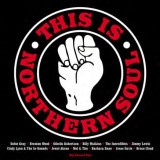
- A1: Gimme Little Sign ~ Brenton Wood
- A2: Another Dirty Deal ~ The Incredibles
- A3: So In Luv ~ Othello Robertson
- A4: I’m On My Way ~ Barbara Dane
- A5: A Little Spark Of Fire ~ Bruce Cloud
- A6: Meet Me At Midnight ~ Cindy Lynn & The In-Sounds
- B1: The Ice Man ~ Billy Watkins
- B2: Gonna Hang On In There Girl ~ Jesse Davis
- B3: One Love ~ Jimmy Lewis
- B4: Backfield In Motion ~ Mel & Tim
- B5: I’ve Arrived ~ Jewel Akens
- B6: The ‘In’ Crowd ~ Dobie Gray
The UK’s love affair with American soul music blossomed in the
mid 1960s, with the launch of the Tamla-Motown record label in
Britain. But by the end of the decade this passion took on a
distinctly homegrown twist with a new movement that grew out
of the North of England and Midlands’ underground soul and
R&B scene. It was here at dancehalls and clubs such as
Manchester’s Twisted Wheel and the Wigan Casino that
devotees danced the night away to uptempo, joyous US soul
records that always came with a heavy beat. Pretty soon the
movement had a name: Northern Soul. This collection is the
next best thing and it is all on vinyl, exactly how the movement’s
fans originally heard them
Hold onto your hats! The Allergies are back in the building. Yes, the UK beatmakers have got an absolute one-two punch with this new 7" single, as both sides are fire-in-the-hole, future classics in the making, ready to soothe your soul and ignite the party.
Leading the way is the vintage funk and beefed-up breaks bomb, 'Love Somebody'. A mix of crazy up-tempo grooves and loops, snatches of reworked soul samples, deft scratching, and dancefloor energy up the wazoo. It's that unique Allergies signature sound, with a whole new splash of club-rocking polish smothered on top.
Oh, my… And holding its own on the B-side of this release is the title track from that feverishly anticipated full length album, 'Promised Land'. This beaty, meaty, Moby meets Fatboy Slim-style anthem, will have your loins stirred, and feet tapping with its next-level sampling skills, and hugs-all-around, end-of-a-festival wonderment.
Bad Waitress’ antsy art punk revels in fits of fury and ego. It spits in your face and winks, ferocious and playful. The Toronto-based four-piece play like they’re conspiring or casting a spell, each member wielding a different power, howls and erratic drum fills and fiery riffs fueling one another.
That improvisation spirit doesn’t stop at their music. Katelyn Molgard, Nicole Cain, Kali-Ann Butala, and Moon finish each other’s sentences. Their conversations flow like free jazz. When asked to describe Bad Waitress’ sound, they agree on one word: conviction. “We play with conviction. There's nothing apologetic about it,” Kateyln says. “Even with our bizarre song structures, we don't hide anything in our music. It's just very...I don't like the word raw, it’s overused, but...raw.” The band fidget between genres, instead honing a distinct energy. “It's energetic. It's electric,” Moon adds. “It's whatever word that we can think of later that's better than raw.” Nicole suggests, “Honest?” Katelyn jumps in, “Rawnest.”
Bad Waitress’ debut full-length album, No Taste, finds strength in mood swings, from upbeat “groovin down the street” songs like “Strawberry Milkshake” to “I'm gonna fucking punch everyone” songs like “Lacerate,” as Nicole puts it. “It’s good to listen to when you're walking alone at night. I get really anxious, but I feel powerful when I listen to this album, like I’m fucking untouchable. It’s basically a self-defense album.”
Traces of Sonic Youth, Fugazi, Yeah Yeah Yeahs, and The Stooges can be heard throughout No Taste. The band also cite jazz as an inspiration. Moon’s background playing improv jazz, blues and swing makes it an essential force, at the core of Bad Waitress’ music and collaborative process. “Moon usually has a weird drumbeat that they’ll play spontaneously, then Nicole will jump in with her wack ass music sensibility on bass, and then Kali will play something that’s super wrong in a good way,” Katelyn says. “And then I’ll make sense of it and find where the chords are. It’s bizarre.”
Analha was one of the first approaches I had with the design of analog basses and drums, to understand the way in which we can involve so many sounds and transform them to our own liking, to give it its own narrative, a sense, an identity in which it can be navigated about different styles without problem.
They are two pieces that make up totally different break paths where "Mi ama Dic K no" A1 is my own exploration and vision of the break beat, three melodies written in F # that count the subtlety, while the bass contrasts in an aggressive idea to the beat of many changing rhythms in the drums, which sorfs between a Mpc, 808, Dsm & V Modular ; Classic trip hop voices samples that guide the way this own idea progresses on the breaks and pads that generate a more complete environment with a very energetic atmosphere that is constantly on the rise in the active and natural development of the track.
Towards the B side "Run mami run" B1 is composed by a classic intro of acid cut while some seconds of drums interpose which are accompanied by a radio narration of a chase, a return change is present with a vinyl spin between voices from GTA & WU TANG CLAN which make an intro for an infusion of breaks fully aligned to the beginnings of oldskool drum and bass which are accompanied by voices recorded, treated and edited to connect more directly between the spaces interrupted by the glitch acid chords.
Among contrary structures "Analha" contains hidden but marked criticisms, it is a project that comes from 2018 and ended at the beginning of 2019 which made him think about how to involve more than music within his own sound narrative.
The sonorous identity of rachiid today is different, he understands his environment but does not believe in adapting, he tells us that each exploration and discovery during these years have led him to think how this first release was born until now but is not connected at all with what nowadays, describes his sonority today as changeable, essential and highly with IDM, experimental and breaks.
The core tenets of Morgan Wright's music have long tested club music's context; the rituals and customs that define it, and how each of those genres change once removed from their traditional settings.
It's a space Morgan Wright feels at home in; one where he's constantly asking questions of the structure club music resides within, and what it means to create a new space for familiar sounds. And over the course of his debut album, Class Tourist, Morgan has found new ways to elevate those same questions - whether by way of intention, or a pandemic-induced coping mechanism.
In Class Tourist, Morgan again borrows from familiar strains of the subgenres which have come to form his musical identity. This time, he fuses sounds of post-punk, IDM and breakbeat, hopeful they converge to form a bastardised rendition of the latter, with "Australiana" at its core.
It's a sound that was made possible by a change to his songwriting approach, after pivoting from a loop-based production style - one which he has applied to a slew of other projects, for the better part of five years - to one which lends itself to a more standardised, contemporary format.
Moving through the record, Morgan toys with musical tropes of contrast with a calculated refinement unheard throughout his previous work. The coalescence of melodic optimism and bleak, mournful soundscapes feature on Class Tourist again, as you would expect. But this time, contemporary structure - with the exception of a few songs - along with the features of label-mate, Purient, and frequent collaborator, ENDL355, breathe new life, and even a new genre, into Morgan's work.