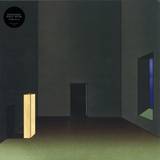
Daniel Lopatin, Sohn russicher US-Einwanderer, hat sich als Oneohtrix Point Never mit experimenteller Elektronik einen Namen als talentierter Komponist erarbeitet. Er veröffentlichte drei Alben auf Minilabels, arbeitete mit Antony Hegarty als Sänger und mit Animal Collective als Festivalhoster (ATP) zusammen und schrieb neben Brian Reitzell die Musik zu Sofia Coppolas jüngstem Film "The Bling Ring". Lopatins musikalisches Schaffen wird von Kritikern mit einem zerbrochenem Spiegel verglichen, in dem sich Klänge aus der Vergangenheit brechen. Auch auf seinem Warp-Debüt "R Plus Seven" blinkt seine Neigung zum Experimentellen immer hervor, zeitgleich wagt er sich so nah wie nie zuvor an traditionelle Songstrukturen heran, so dass die zehn neuen Tracks zu gleichen Teilen aufwühlerisch wie hypnotisch wirken.
Search:oneohtrix point never
Oneohtrix Point Never aka Daniel Lopatin stellt sein neues Album AGAIN vor, das für ihn zum Teil 'eine spekulative Autobiografie' ist, eine Übertragung, ein gebannter Rückfluss digitaler Sprachen und Klangparanoia, dessen, woran man sich erinnert und was vergessen wird, alles präsentiert in der für OPN typisch melodischen Note. Ähnlich wie GARDEN OF DELETE aus 2015 entstand auch AGAIN als Zusammenarbeit zwischen Lopatins aktuellem und jüngerem Ich – diesmal als Meditation über seine musikalische Identität im jungen Erwachsenenalter aus der Perspektive des mittleren Alters. AGAIN folgt auf die zahlreichen von der Kritik gefeierten OPN Alben, die ihm renommierte Kollaborationen (The Weeknd, James Blake, Ishmael Butler, Charli XCX, Kelsey Lu, Iggy Pop, Rosalia) und Produktionsaufträge (Anohni, FKA Twigs, David Byrne, Ryuichi Sakamoto, Moses Sumney, Nine Inch Nails) einbrachten.
Special mirrored silver foil gatefold cover with banderole.
Pressed on crystal clear vinyl.
One time pressing.
Returnal sees Daniel Lopatin fine tune his craft for creation of deep atmospheres and texture even further.
"Returnal" is the fourth album from Daniel Lopatin's Oneohtrix Point Never project, after "Betrayed In The Octagon" (Deception Island, 2007), "Zones Without People" (Arbor, 2009) and "Russian Mind" (No Fun, 2009). All 3 albums being superbly compiled on the "Rifts" double CD (No Fun, 2009). It sees Lopatin fine tune his craft for creation of deep atmospheres and texture even further. Starting off with the mind blowing triptych of "Nil Admiari / Describing Bodies / Stress Waves", which fires off into a noise / rhythm excess before entering a zone of relative calm building to the melancholy of the final part. This sets the tone perfectly for the albums title track, a stunning out of this world ballad featuring Lopatin's near desperate vocal delivery, ending what could be seen as one of his most chilling and thought provoking sides to date. The atmosphere is slightly lifted as the darkened sun comes up over the ruins on "Pelham Island Road" and "Where Does Time Go", with the album closing with edgy broken beats and fourth world possible landscapes of "Preyouandi", which fades into the distance with echoes of the "Returnal" chorus, closing the loop. What's burnt into memory here is Lopatin's love affair with the long, slow path back home... the cycle... the hypnotic sector... the ghost in the machine... and whether people are making dance music or hip hop or space head music or metal, the ouroboros is present in every sector - as it was in Bach's study, and in the elephant songs of the Ituri forests. Available on CD in digipack and LP in gatefold cover.
Daniel Lopatin Aka Oneohtrix Point Never Lässt Seinem Hochgelobten Neuen Album "age Of" Die Limitierte 4-track-ep "we'll Take It" Folgen. Der Titeltrack Ist Als Albumfavorit Gleichzeitig Die Neue Singleauskopplung, Die Übrigen Drei Tracks Sind Bislang Unveröffentlicht. Eine Editierte Version Von "trance 1" War Übrigens Teil Des Radiosignals "a Message From Earth" Zum 40-jährigen Jubiläum Der Golden Records, Die An Bord Der Beiden Voyager-missionen Mit Klängen Und Bildern Von Der Erde In Den Weltraum Geschickt Wurden.
Der dramatische Thriller der beiden Safdie-Brüder ist eine hypnotische Odyssee durch die New Yorker Unterwelt, in der der Protagonist verzweifelt versucht, seinen Bruder aus dem Gefängnis zu holen. Die Hauptrollen spielen Robert Pattinson (in seiner bislang besten Performance) und Jennifer Jason Leigh. Musik und Bilder gehen dabei eine Symbiose von unglaublicher Tiefe ein, wenn banale Events zu Dramen und Montagen zu Miniopern werden. Oneohtrix Point Never gelingt mit dem Soundtrack ein ausgesprochenes Hörerlebnis, das seinen exzellenten Studioalben in nichts nachsteht, und mit "The Pure And The Damned" featuring Iggy Pop einen markanten Schlüsseltrack enthält.
- A1: Andata Oneohtrix Point Never Rework
- A2: Andata Electric Youth Remix
- A3: Disintegration Alva Noto Remodel
- B1: Async Arca Remix
- B2: Fullmoon Motion Graphics Remix
- B3: Solari Fennesz Remix
- C1: Solari Jóhann Jóhannsson Rework
- C2: Zure Yves Tumor Obsession Edit
- C3: Fullmoon S U R V I V E Version
- D1: Zure Cornelius Remix
- D2: Life, Life Andy Stott Remodel
As one-third of Yellow Magic Orchestra and an Academy Award-winning composer for his work on the soundtrack for The Last Emperor, synth pop innovator Ryuichi Sakamoto is among the most groundbreaking artists to have emerged since the late 70s. A musician's musician, Ryuichi Sakamoto has created intriguing musical unions with artists such as David Sylvian, Iggy Pop, Tony Williams, Bootsy Collins, Jaques Morelenbaum and many others.
Following the massively successful release of the electronic masterpiece async in 2017, Ryuichi Sakamoto's first studio album in eight years, Milan is proud to announce the remix compilation async remodels: a dozen remixes of async's tracks by a who's-who of experimental giants - everyone from Icelandic composer Jóhann Jóhannsson (Arrival, Sicario) to Oneohtrix Point Never (composer of Good Time) to Arca (producer of Björk's numerous releases) have gotten their hands dirty remixing Sakamoto's work. Even reworks by the Canadian synthpop duo Electric Youth and Austin-based synthwave legends S U R V I V E are included. With such a well of talent reinterpreting such a personal album, this is one release Sakamoto fans can't afford to miss.
After their recent LP Mirages (Kraak Records, 2025) with French turntablist Guilhem’All, the group continues to explore collaborations with artists and instruments from diverse musical traditions. Building on decades of uncompromising acoustic exploration, Razen delves deeper into their practice with five improvisational pieces that unfold slowly in time and space. The duo’s radical core - Brecht Ameel and Kim Delcour - finds in Van der Harst a longtime kindred spirit, united by the impact of sound, intonation, and the sheer joy of playing.
To be released on April 24 via VIERNULVIER Records, the artwork for Stained Glass Starling was created by American visual artist Robert Beatty (Oneohtrix Point Never, Christina Vantzou, The Weeknd, Tame Impala). The physical release comes with a 16-page booklet including artwork and an interview.
A long-standing artistic kinship lies at the heart of this project, with first encounters dating back to the early 2000s in Belgian musical improv theatre. Van der Harst’s lifelong experience in improvised music and music theatre, spanning back to the 1980s, combined with a vast arsenal of rare and historical instruments, opens new tonal territories within the Razen universe.
These explorations are not incidental: his family roots in the former Dutch East Indies — through his great-grandfather — provide a quiet backdrop to his enduring affinity for Asian musical traditions. Instruments such as erhu, Javanese kacapi, and others introduce timbres
that bring the music its most pronounced Asian inflections to date.
Yet despite this shift in colour, the underlying ethos remains unmistakably Razen. Working from sound rather than form, the ensemble approaches music as painters approach a canvas: adding layers, contrasts and shades with care. There is no soloist’s ego here; all voices are equal, echoing principles found in gamelan traditions.
Over the decades, Razen and Dick Van der Harst have crossed paths repeatedly, notably through cult theatre productions by Belgian theatre maker Eric De Volder, including Zwarte vogels in de bomen (2002) and Huis der Verborgen Muziekjes I–II (2000–2006). Recording an albumtogether had long been a shared aspiration — a wish that crystallised after a 2024 concert at Concertzaal Miry in Ghent, part of the Ruiskamer series by VIERNULVIER Art Centre.
Nach den jazzigen Library-Klängen der 2023 erschienenen gemeinsamen LP ,Dolphin" mit Greg Foat und Moses Boyd kehrt der venezianische Maestro Gigi Masin zu dem Ambient-Sound zurück, für den er bekannt ist - mit ,Movement", seinem ersten Solo- Album seit ,Calypso" aus dem Jahr 2020 und seinem Debüt bei Sacred Bones Records. Angetrieben von kreativer Neuerfindung und rhythmischer Bewegung bewegt er sich nahtlos zwischen melancholischen MIDI-Klängen, technoider Robotik, groovigen, liminalen Wolkenlandschaften und meeres tiefem Ambient. Seit seinen frühen Anfängen in der Anonymität baute sein Debütalbum ,Wind" aus dem Jahr 1986 langsam eine organische Anhängerschaft im Late-Night-Radio auf, die später noch verstärkt wurde, als ,Clouds" von Künstlern wie Björk, Post Malone und anderen gesampelt wurde. Zu seinen Fans zählen heute Oneohtrix Point Never, Devendra Banhart, Caroline Polachek und der verstorbene Kenny Wheeler. Das neue Album ,Movement" reflektiert Masins Stellung im Pantheon der Ambient-Meister, seine anhaltenden künstlerischen Ambitionen und seine Bestrebungen für eine Szene, deren exponentielles Wachstum er seit ihren bescheidenen Anfängen miterlebt hat. Die LP ist zudem eine Ode an die wörtliche Bewegung, sowohl in der Natur als auch in den körperlichen Ausdrucksformen des Menschen gegenüber dem Klang. Masin strebte danach, Ambient-Musik für Bewegung zu schaffen, nicht im üblichen Sinne von Tanzmusik, sondern ,dynamische Musik, mit einem schlagenden Herzen voller Liebe". Indem er die Assoziation von Ambient mit einsamen Hörerlebnissen und kühler Akademik auflöste, wandte sich Gigi nach außen und kanalisierte etwas Somatisches, das sich mit dem Körper verbindet, nicht nur mit dem Geist. ,Bed on Mars" gibt den titelgebenden Ton für Masins neu entfachte Neugier an, mit kosmischen Atmosphären, die das Gefühl hervorrufen, auf einem neuen Planeten ohne Furcht zu erwachen, während die ergreifende synthetische Trompete und der schwebende liminale Schwebezustand von ,Lost" sich anfühlen, als würde man in einem unbekannten Meer treiben. Noch tiefer in die exzentrischen Beats taucht der himmlische Techno-Funk von ,Deception Dance" ein, der klingt, als würden Sun Electric mit Carl Craig und Kraftwerk jammen. Das strahlende Licht von ,Golden" strahlt Wärme aus und klingt wie der Bossa-Nova-Bruder von Göttschings Balearic- Klassiker E2 E4. Trotz des Todes seiner Frau nach langer Krankheit und des Verlusts seines musikalischen Archivs durch eine Überschwemmung bleibt Gigi im Herzen rein und positiv und legt seine ganze Seele in das Streben nach Schönheit. Als jüngstes Werk einer langsam beginnenden, aber stetig wachsenden Karriere festigt Masin mit ,Movement" weiterhin seinen Platz unter den wahren Ambient-Größen.
- 1: Bed On Mars
- 2: Lost
- 3: The Age Of Sampling
- 4: Movement
- 5: Umi
- 6: Golden
- 7: Deception Dance
- 8: Azimuth
- 9: Fifteen
SILVER VINYL[24,79 €]
Nach den jazzigen Library-Klängen der 2023 erschienenen gemeinsamen LP ,Dolphin" mit Greg Foat und Moses Boyd kehrt der venezianische Maestro Gigi Masin zu dem Ambient-Sound zurück, für den er bekannt ist - mit ,Movement", seinem ersten Solo- Album seit ,Calypso" aus dem Jahr 2020 und seinem Debüt bei Sacred Bones Records. Angetrieben von kreativer Neuerfindung und rhythmischer Bewegung bewegt er sich nahtlos zwischen melancholischen MIDI-Klängen, technoider Robotik, groovigen, liminalen Wolkenlandschaften und meeres tiefem Ambient. Seit seinen frühen Anfängen in der Anonymität baute sein Debütalbum ,Wind" aus dem Jahr 1986 langsam eine organische Anhängerschaft im Late-Night-Radio auf, die später noch verstärkt wurde, als ,Clouds" von Künstlern wie Björk, Post Malone und anderen gesampelt wurde. Zu seinen Fans zählen heute Oneohtrix Point Never, Devendra Banhart, Caroline Polachek und der verstorbene Kenny Wheeler. Das neue Album ,Movement" reflektiert Masins Stellung im Pantheon der Ambient-Meister, seine anhaltenden künstlerischen Ambitionen und seine Bestrebungen für eine Szene, deren exponentielles Wachstum er seit ihren bescheidenen Anfängen miterlebt hat. Die LP ist zudem eine Ode an die wörtliche Bewegung, sowohl in der Natur als auch in den körperlichen Ausdrucksformen des Menschen gegenüber dem Klang. Masin strebte danach, Ambient-Musik für Bewegung zu schaffen, nicht im üblichen Sinne von Tanzmusik, sondern ,dynamische Musik, mit einem schlagenden Herzen voller Liebe". Indem er die Assoziation von Ambient mit einsamen Hörerlebnissen und kühler Akademik auflöste, wandte sich Gigi nach außen und kanalisierte etwas Somatisches, das sich mit dem Körper verbindet, nicht nur mit dem Geist. ,Bed on Mars" gibt den titelgebenden Ton für Masins neu entfachte Neugier an, mit kosmischen Atmosphären, die das Gefühl hervorrufen, auf einem neuen Planeten ohne Furcht zu erwachen, während die ergreifende synthetische Trompete und der schwebende liminale Schwebezustand von ,Lost" sich anfühlen, als würde man in einem unbekannten Meer treiben. Noch tiefer in die exzentrischen Beats taucht der himmlische Techno-Funk von ,Deception Dance" ein, der klingt, als würden Sun Electric mit Carl Craig und Kraftwerk jammen. Das strahlende Licht von ,Golden" strahlt Wärme aus und klingt wie der Bossa-Nova-Bruder von Göttschings Balearic- Klassiker E2 E4. Trotz des Todes seiner Frau nach langer Krankheit und des Verlusts seines musikalischen Archivs durch eine Überschwemmung bleibt Gigi im Herzen rein und positiv und legt seine ganze Seele in das Streben nach Schönheit. Als jüngstes Werk einer langsam beginnenden, aber stetig wachsenden Karriere festigt Masin mit ,Movement" weiterhin seinen Platz unter den wahren Ambient-Größen.
"Tranquilizer is, Ambience by force" - Oneohtrix Point Never
"Tranquilizer" klingt nicht nach Beruhigung, sondern nach Wiederauftauchen. Daniel Lopatin verurteilt nicht unser Bedürfnis nach Flucht, sondern erkundet vielmehr, was danach passiert. Sein neues Album zeichnet eine Bewegung von schwereloser Ruhe hin zu etwas Bodenständigerem nach – keine Heldenreise, sondern der notwendige Kreislauf von Rückzug und Rückkehr, der uns in einer ebenso überwältigenden wie banalen Welt den Verstand bewahrt.
Wir stürzen aus der triefenden Glückseligkeit von "Lifeworld" in die traurige Melancholie von "Cherry Blue" und die spastischen Grooves von "Rodl Glide". Wie immer bei OPN kollidiert das Reale mit dem Unwirklichen. Wer genau hinhört, hört das Kratzen von Fingern auf einem Griffbrett, einen Stein, der über einen Kerkerboden gleitet, das Quietschen einer sich öffnenden Tür. Lopatins Musik war nie ein abstraktes Farbfeld; sie hat Gewicht, Kanten, Schatten. Während "R Plus Seven" nur aus kristallinen Arpeggiatoren bestand und "Garden Of Delete" ein fieberhaftes Erbrechen gurgelnder Synthesizer war, fühlt sich "Tranquilizer" an, als würde man aus einem Traum fallen, den man noch berühren kann.
The writer Max Sebald often pondered over the nature of human memory, specifically, how our thoughts and desires - and their results - overlap and mutate over time. In A Place in the Country, he writes of the significance of what see as “similarities, overlaps and coincidences”. Are they the “delusions” of the self and senses, or manifestations of “an order underlying the chaos of human relationships, ... which lies beyond our comprehension”?
Song of the Night Mists, the new album by post-classical composer Stefan Wesołowski, often feels it draws on Sebald’s premise.
On a simpler plane, the one where the market dictates the neatly ordered information we consume, Song of the Night Mists can be described thus: recorded in the main by Stefan Wesołowski in Gdańsk, both in his studio and in Saint Nicholas' Basilica, the album incorporates acoustic instruments - piano, violin, double bass - and classic synthesizers such as the Roland Jupiter-8, the Soviet Polivoks. A Roland Space Echo RE-150 tape delay was also pressed into service as an instrument. We also hear the basillica’s organ and field recordings from the Tatra Mountains. Other musicians were Maja Miro, who played the flute parts on ‘Glacial Troughs’ and brother Piotr Wesołowski, who played the organ on ‘Wilhelm Tombeau’. Sound engineer was Marcin Nenko, who was also on hand to record the basilica organ parts. The album was mixed in New York by Al Carlson (Oneohtrix Point Never, Jessica Pratt, Zola Jesus, Lady Gaga, and Liturgy) and Rafael Anton Irisarri handled the mastering.
Ostensibly, Song of the Night Mists is the last in a trilogy, following on from albums Liebestod (2013) and Rite of the End (2017). All three deal with existential matters such as love, death, decay and “an ultimate end”; apocalyptic and Promethean in spirit, and betraying very human conceits. The Sebaldian nature of the new record starts to make itself felt when Wesołowski talks of how he used sampling. One element is unexpected, that of sampling himself: “I go back to dozens of my own unused sketches and recordings, treating them as raw material to cut, slow down, reverse, and transform in every possible way.” Memory as sound, to be reemployed by the listener through their own imaginings.
Another set of samples made by Wesołowski plays another role. These are field recordings, originally created for an audio illustration of the formation of the Tatra Mountains, and used in a film by sound designer Michał Fojcik. Wesołowski: “You can hear cracking ice, streams, footsteps in the snow and the wind, and a real avalanche, recorded from the inside.” The “Tatra connection” on the album is also found in samples referencing composer Karol Szymanowski. The album’s title alludes to a poem about the mountains by Polish poet, Kazimierz Przerwa-Tetmajer.
Wesołowski’s Tatra recordings are “about a world without humans - about the fact that the world existed, was beautiful, and had meaning long before people arrived, and for the vast majority of its history, it was a place without us.” Wesołowski, using one iteration of the natural world, plays out in sound Sebald’s idea of another order, underlying the chaos of human relationships lying beyond human comprehension.
These feelings play themselves out on the five album tracks. Sonorous and rich, they illustrate tectonic shifts we have no control over. Wesołowski hints that the overall sound is a “meditation on the metaphysics of the non-human set against the spirituality that human presence has brought into it.” In that light, the opening number, ‘Core’, with its slow build, and crackling and straining sound effects, create an effect of the earth groaning into life in a creation myth. Once the piano part raps out a simple melody and modulated tonguing trumpet samples add to the overall atmosphere, the listener can certainly find a cue in the “spiritual”, or “human” side of the story. Human versus nature: from the strains and harmonic muscle stretches of the second number, ‘Glacial Troughs’, through to the powerful and filmic ‘Stalagmite’ and heart-on-sleeve romance expressed in closer, ‘Wilhelm Tombeau’, we listeners are cast as Friedrich’s wanderer, looking out over a landscape that will appear only if we engage with it.
Formations of melody appear incrementally, almost appearing by chance - like hidden footings in the rock shelves to give us something to grasp onto. Rhythms are used sparsely: the prolonged percussive taps on ‘Glacial Troughs’ are an anomaly and maybe there to give pace to the album to come; essentially to keep the listener strapped in. Elsewhere, percussion is used as an aid to mood, the two thudding, timpani-style passages on ‘Peak’ there to offset the short, beautiful, kosmische passage that splits them.
Elements of the borderline religious spirit that drove German electronic music in the late 1960s and 1970s also find a place on Song of the Night Mists. The swells and recessions of the organ find their emotional climax on ‘Wilhelm Tombeau’, a track which summons up echoes of the “mountain magic” vistas created by Popol Vuh or Tangerine Dream, especially with the slightly atonal wobble of the Mellotron that counters it.
This is a dramatic album, but it does feel a strangely short, or curtailed listen on ending, evoking the feeling one gets when waking from a dream, and, for all its incipient grandeur, a track like ‘Stalagmite’, for instance, ends on a minor note. Wesołowski admits that Song of the Night Mists is born of the all too human process of temptation, doubt and recalibration - Sebaldian overlaps and coincidences forming something that must live another life, away from its creator. In Wesołowski’s words, the album is “a newborn foal must stand up and walk right after birth.” Now it is yours to ponder.
Liner Notes by Martyn Pepperell
A collection of ten hypnotic guitar renditions that dive deeply into the traditional compositional musicality that underpins Harakami’s hallucinatory beatscapes before reconsidering them under a fresh, innovative and engaging new light. River: The Timbre of Guitar #2 Rei Harakami signals a new level of awareness and understanding of both Rei Harakami’s significance and Ayane Shino’s undeniable talent.
VITAL SALES POINTS:
In 1996 Tokyo-based label Sublime Records received a cassette demo from Rei Harakami, a 26-year-old Japanese experimental filmmaker, and musician. Within one year Harakami’s debut LP ‘Unrest’ was released. As the 21st century dawned, Harakami was becoming a critically acclaimed figure, and there was a feeling in Japan that Harakami would be an inevitable successor to such luminaries as Haruomi Hosono and Ryuichi Sakamoto. Sadly Harakami passed away at age 40 in 2011, leaving behind a musical legacy that seemed to deserve more recognition. A fitting tribute now comes from the incredibly gifted classical guitarist Ayane Shino. Continuing her album series ‘The Timbre of Guitar’ (the inaugural release of which was ‘Sakura’ - a cover album of Susumu Yokota's seminal album, released through the Swiss label, Mental Groove Records in 2021), she now presents ‘River ???? : The Timbre of Guitar #2 Rei Harakami’. Ayane has reworked some of Harakami’s standout tracks into an album of tranquil yet complex compositions helping to build a new level of awareness and understanding of Rei Harakami’s significance. A collection of ten hypnotic guitar renditions that dive deeply into the traditional compositional musicality that underpins Harakami’s hallucinatory beatscapes before reconsidering them under a fresh, innovative and engaging new light.
In the years that followed Harakami’s untimely passing, Sublime Records continued to sign and support new artists emerging from Japan’s rich and fertile electronic music scene. This eventually led to a meeting with gifted classical guitarist Ayane Shino in 2020. Although a new name within electronica, Shino’s classical resume is impeccable. She has performed with a range of prestigious orchestras in concert halls and at music festivals across Japan, Europe, and South America while playing classical guitar for numerous animations, movies and television commercials and holding various educational roles. These days, she also hosts the Tokyo Harmonics radio show, which is syndicated through Hyogo prefecture’s Ashiya Radio and TJS Radio in Los Angeles.
During her time completing a masters at Tokyo’s University of the Arts, Shino became fascinated by Brian Eno, Aphex Twin, Oneohtrix Point Never, Steve Reich, and, closer to home, Harakami and Susumu Yokota. ”I found myself in an environment where I was surrounded by fellow students who produced computer music, live electronics, and installations,” she explains. Following her meeting with Sublime, Hideoki Amano, the producer and owner of Musicmine, the parent company of the label, asked Shino if she would be open to transcribing and recording an album of covers of the late, great composer, producer and DJ Susumu Yokota’s music in incorporate into then-upcoming events commemorating the 5th anniversary of his death and reissues of his past works. “Yokota made music with the Roland TB-303 bass synthesizer and samplers, not in a way like a conventional instrumentalist, so I was aware it might be more of a challenge for her,” Amano explains. Fittingly, Shino was up for his suggestion, leading to ‘Sakura: The Timbre Of Guitars #1 Susumu Yokota’. Song by song, Sakura highlighted Shino’s free-flowing playing and prowess at translating electronic music into classical guitar shapes.
After considering Harakami’s background as an instrumentalist, Amano felt revisiting his catalogue should be the next step for Shino. Well-versed in how often classical versions of electronic music tend to fall flat, he asked her to examine Harakami’s songs closely, select the musical phrases suitable for guitar and create arrangements that would sound interesting to music listeners with a deep engagement with ambient, techno and electronica. In Harakami’s discography, Shino discovered “a sense of simplicity, warmth, moisture and a floating sensation.” “I was gripped by his songs, which had an array of sounds that gave me a sense of mystery but also coexisted with a sense of familiarity,” she explained. Moving beyond his official releases, Shino began digging through YouTube to find live recordings, radio appearances and obscure outtakes. Within her mind’s eye, imagining playing his songs on guitar was effortless. On her approach to the album, Ayane explains: “For this album, I succeeded in spinning some exquisite, silk thread like delicate tones, interwoven with human warmth, gentleness and simplicity. And I was also able to rework Rei Harakami's distinctive sound with a floating feel to it and transform it into a very classical guitar sound. I hope many people will be able to receive this group of sounds that I created in this album that I played with all my heart.” A record of limitless innate beauty, ‘River ???? : The Timbre of Guitar #2 Rei Harakami’ is a delicate and thoughtful body of work. A true masterclass in deconstruction and subsequent rebuilding, and an eternal lesson in how the art that we leave behind can outlive us all.
Barkley Bandon’s debut album “Love Machine” is a sexy concept album, perfect pop record and an experimental look at club music all in one.
Hard to pin down stylistically, it’s visiting multiple spaces on a colour spectrum, with hues of Sophie’s hyperpop, Hudson Mohawke’s cheek, the nostalgic shades of Oneohtrix Point Never, a nod to Dean Blunt’s DIY aesthetic and maybe flirting a little with the of Teaches of Peaches. But really, it’s carving out a sound all for itself that is like nothing else out there.
The mysterious London producer recently contributed a song on CASISDEAD’s chart topping, Brit Award winning debut album ‘Famous Last Words’ and has worked with London RnB vocalist Gloria on her release Metal, which came out on Gaika’s label The Spectacular Empire.
Working here, on in his own playpen, he shows off his pop production skills on tunes like ‘Green Light’ and ‘Nails’ (collaborations with rising artist Kaleab Samuel from Aurora, Colorado) and ‘You Decide’, a collab with pig$ - the incredible producer from LA who makes up the other half of their joint project Parking Big. Then he flips the approach, stuffs a bunch of percussion sounds in a box, shakes it and lets clanky club bangers like ‘Vertigo’ and ‘Eye Candy’ tumble out.
Fronting the cover we see Barkley’s real life wife as a teen dream - his ultimate Love Machine.
The album will be released on 25.10.2024 on his own label Laterhosen Records on digital and limited cassette tapes.
“That bass… absolutely filthy” Tom Ravenscroft, BBC Radio 6
- A1: The Call
- A2: Marty's Dream
- A3: Endo's Game
- A4: The Apple
- A5: Pure Joy
- A6: Holocaust Honey
- B1: The Humbling
- B2: Motherstone
- B3: The Scape
- B4: Tub Falls
- B5: Fucking Mensch
- B6: Rockwell Ink
- C1: Hoff's
- C2: Seward Park
- C3: The Necklace
- C4: Vampire's Castle
- C5: Back To Hoff's
- C6: Shootout
- D1: I Love You, Tokyo
- D2: The Real Game
- D3: Endo's Game (Reprise)
- D4: Force Of Life
- D5: End Credits (I Still Love You, Tokyo)
Daniel Lopatins (Oneohtrix Point Never) Soundtrack für Marty Supreme, gepresst auf schwarzem und transparentem Vinyl. Kommt mit japanischem Obi-Band und doppelseitigem "Koto Endo / Marty Supreme Offizieller Ball"-Poster. Der Film Marty Supreme ist eine Abenteuerkomödie von Josh Safdie aus dem Jahr 2025 und ist lose vom Leben Marty Reismans inspiriert, die in den 1950er-Jahren spielende Geschichte ist jedoch fiktiv. Die Hauptrolle des titelgebenden Tischtennisspielers übernahm Timothée Chalamet. Gwyneth Paltrow, Odessa A'zion, Kevin O'Leary, Tyler Okonma, Abel Ferrara und Fran Drescher ergänzten das Schauspielensemble. Marty Supreme ist der erste Film von Josh Safdie nach Beendigung der kreativen Zusammenarbeit mit seinem Bruder Benny. Das Werk wurde Anfang Oktober 2025 im Rahmen des New York Film Festivals uraufgeführt. Der US-Kinostart war an Weihnachten 2025. Ende Februar 2026 soll der Film in die deutschen Kinos kommen. Die Filmmusik von Daniel Lopatin wurde im Jahr 2025 für einen Hollywood Music In Media Award (HMMA) nominiert. Im Rahmen der Critics' Choice Movie Awards 2026 wurde Marty Supreme in die Shortlists für die Kategorien Casting & Ensemble", Szenenbild", Kamera", Kostüme", Filmschnitt" und Filmmusik" aufgenommen. Im Dezember 2025 gelangte der Film auf die Oscar-Shortlists für das beste Casting, die beste Kamera, das beste Makeup & Hairstyling und die beste Filmmusik. (Quelle: Wikipedia)
"Tranquilizer is, Ambience by force" - Oneohtrix Point Never
"Tranquilizer" klingt nicht nach Beruhigung, sondern nach Wiederauftauchen. Daniel Lopatin verurteilt nicht unser Bedürfnis nach Flucht, sondern erkundet vielmehr, was danach passiert. Sein neues Album zeichnet eine Bewegung von schwereloser Ruhe hin zu etwas Bodenständigerem nach – keine Heldenreise, sondern der notwendige Kreislauf von Rückzug und Rückkehr, der uns in einer ebenso überwältigenden wie banalen Welt den Verstand bewahrt.
Wir stürzen aus der triefenden Glückseligkeit von "Lifeworld" in die traurige Melancholie von "Cherry Blue" und die spastischen Grooves von "Rodl Glide". Wie immer bei OPN kollidiert das Reale mit dem Unwirklichen. Wer genau hinhört, hört das Kratzen von Fingern auf einem Griffbrett, einen Stein, der über einen Kerkerboden gleitet, das Quietschen einer sich öffnenden Tür. Lopatins Musik war nie ein abstraktes Farbfeld; sie hat Gewicht, Kanten, Schatten. Während "R Plus Seven" nur aus kristallinen Arpeggiatoren bestand und "Garden Of Delete" ein fieberhaftes Erbrechen gurgelnder Synthesizer war, fühlt sich "Tranquilizer" an, als würde man aus einem Traum fallen, den man noch berühren kann.
- No More Darkness
- Everybody Is
- Country
- A Place For Us
- Afterburner
- Home
- No Place To Rest My Head
- Wrong Crowd
- A Border Is Just A Space
- The Autumn Wind (No. 71)
- Parallels
- One Hundred-Twenty Dollar Song
- 13: Lakes
- All That I Know
- Un Trayecto Largo
- White Sage
- Alone Until I'm Home
Die Benefiz-Compilation "Passages: Artists in Solidarity with Immigrants, Refugees, and Asylum Seekers", mit einer unglaublichen Auswahl an Künstlern wie Alan Sparhawk, Oneohtrix Point Never (Daniel Lopatin), Benjamin Booker, Lambchop, Marisa Anderson, Lonnie Holley, Bonnie Prince Billy, Dirty Projectors, William Tyler, Tim Heidecker und vielen anderen, wurde zusammengestellt von dem genialen Musiker und Musikvideo-Regisseur Rick Alverson und Emilie Rex von Lean Year. "Passages..." enthält intime, verletzliche Songs, die alle an einem Ort der Zuflucht und Sicherheit geschrieben, aufgenommen und geteilt wurden: einem Ort, der sich wie ein Zuhause anfühlt. "Wir hoffen, dass du ,Passages" an einem Ort hören kannst, der sich wie dein Zuhause anfühlt - wo du dich wohlfühlst, sicher bist und dich frei bewegen kannst. Die Künstler haben diese Songs aus Dankbarkeit für diesen Ort und zu seinem Schutz geschrieben und aufgenommen. Unser Zuhause, wie wir es kennen, ist in Gefahr. Einwanderer, Flüchtlinge und Asylsuchende, die ihr Recht auf sichere Durchreise einfordern, verteidigen unseren Zugang zu genau diesem Recht. Zu den vielen Organisationen, die sich solidarisch mit ihnen einsetzen, gehören zwei in Texas ansässige gemeinnützige Organisationen namens American Gateways und Casa Marianella. Mit über 70 Jahren gemeinsamer Erfahrung bieten diese Organisationen kostenlose oder kostengünstige Rechtsberatung, Lebensmittel, Unterkunft, Zugang zu Gesundheitsversorgung und andere wichtige Dienstleistungen an. Zusätzlich zu den großzügigen Beiträgen der Künstler wurden alle Arbeitskosten - Produktion, Abmischung, Mastering, Design und Werbung - sowie die Herstellungskosten für die Platte gespendet oder separat gesammelt, um sicherzustellen, dass alle Einnahmen der wichtigen Arbeit von American Gateways und Casa Marianella zugutekommen. ,Passages" ist sowohl eine Anerkennung der laufenden Arbeit als auch eine Einladung, noch mehr zu tun. Unsere Vertreter müssen uns sehen. Unsere Familien müssen von uns hören. Unsere Nachbarn und lokalen Organisationen, die an vorderster Front dieser Krise stehen, sind bereit, uns aufzunehmen."
- 1: Urchins
- 2: Is It A Kind Of Dream?
- 3: Avenbury Organist
- 4: Half Moon
- 5: The Bitter Withy
- 6: He's Found It
- 7: Spooks!
- 8: Cold Lazarus
- 9: Black Vaughan
- 10: In Flanders, Again
- 11: Buried Treasure
- 12: Sin Eater
- 13: Ariconium
- 14: Lost To The Plough
Autodidactic musicologist and sample collagist U turned his archival eye on the melting pot of ‘80s post-punk with his debut ‘Life Isn’t A Fountain?’ EP for Lex. He follows up with an experimental exploration of regional identity with ARCHENFIELD, a deeply personal collection of ambient music and found sound that examines the relationship between geographical space and aural histories.
To construct this record U mined a wealth of recorded material relevant to the area. With a nod to traditional music, he takes samples from these records and creates beautifully atmospheric sound pieces that are often mixed with painstakingly researched snippets to create a stirring reflection on local history and broader themes of how we interact, or even fail to interact, with English folklore today.
Pressed on 180g vinyl, the album comes with a 24-page visual companion that expands on its themes and folk stories through imagery and narrative, echoing the album’s soundscape. : The Caretaker, Oneohtrix Point Never, JG Bie1berkopf, Maxime Denuc, Leon Vynehall
- Afternoon
- Celadon
- Tsukumogami (Sensu)
- Book Of Changes
- Supercore
- Acorns
- Soseol
- Alcoyana-Capri
- Scene For A Wooden Room
- Sondol Baram
- Barjees
- Naming The Cloud (Version 2)
Modern ambient minimalism with early music/baroque influences. Minimal and nuanced, Diary of a Candle is a consoling, melodic suite from acclaimed experimental composer, musician, and producer Faten Kanaan. On this album Faten uses counterpoint as a narrative tool to create music that is mysterious, smudgy, and deeply melodic. From the repetitive structures of modern minimalism and early music/baroque influences - to more languid textural ebbs and tides, there's a warmth in her use of synthesizers that gives her work a curiously timeless feel. Composing intuitively, her music creates its own world - one that isn't easily categorised. Diary of a Candle is punctuated with tender woodwinds and richly-layered strings, touched by the hazy atmospheres of 1970s/1980s films. Its understated heart-on sleeve romanticism follows the rhythm of nature: it bends in the breeze, drifts through the air, and settles on the ground. The ambiance is not an escapism, but the re-focusing of a lens through which humans are no longer the protagonists. Instead, a landscape's intimate details become the central figures. With the sparseness of Hiroshi Yoshimura's 1982 album 'Music for Nine Post Cards' as a starting-point influence, Faten's music exudes a wistful yet hopeful sentiment, honouring moments of beauty in the world around us. Some of the album titles are inspired by East-Asian rites and folkloric superstitions, often related to nature. All music written performed and mixed by Faten Kanaan. Mastered by Heba Kadry(Björk, Bon Iver, John Cale, Ryuichi Sakamoto, Deerhunter, Cate Le Bon, & many more). For fans of Kali Malone, Steve Reich, William Basinski, Sarah Davachi, Stars Of The Lid, , Mary Lattimore and Oneohtrix Point Never.
STANDFIRST Titanic, the project spearheaded by Mabe Fratti and Hector Tosta (aka I. la Católica), return with a sumptuous and life-affirming new album.
In her sensational 1929 biography Tiger Woman, dancer and socialite Betty May claimed her ‘coster’s eye’ meant she liked to wear as many colours as possible. “Colours to me are like children to a loving mother. Each is my favourite, yet I can never bring myself to deny the others by preferring one.” May’s bold and inclusive strategy is one that manages to transfer itself, almost a century later, to Hagen, the new record by Titanic.
Many will know Titanic as the Mexico City-based brainchild of cellist and singer Mabe Fratti and multiinstrumentalist Hector Tosta who is now operating under the pseudonym, I. la Católica, (taken, rather unusually, from the name of the street the pair live on). With Hagen, and their previous release, Vidrio, (2023), the pair are creating a distinctive signature sound in modern alternative pop music. Nobody else sounds quite like them. Both records have an open hearted nature and simple, winning melodies that play off against a taste for drama, spectacular orchestration and a feeling of otherworldly mystery. Hagen is the more ambitious, sometimes more mystical effort. From the opening handclaps of ‘Lágrima del Sol’, (a wonderfully uptempo playground chant translating as a tear from the sun but, surely, not referencing the brand of pineapple wine?), the record dances its way through various mid-to-late-eighties inspirations, lush and widescreen passages of melancholy and vertiginous contrasts.
Mystery is often found in the simple but slightly odd song titles. English translations of various track titles give, ‘you swallowed the gum’, ‘leak’, ‘a tear from the sun’, ‘raising the trophy’ ‘digging dimensions’, ‘the owner’, ‘the decapitated hen’ and ‘the trap is exposed’. All denote striking images, metaphysical hints and emotional cues or simple, even childlike actions. Though Fratti and Tosta don’t reveal its provenance, the album’s title could even be a crafty play on words: the listener would be forgiven in thinking the moments of brash contrast and eyebrow raising theatricalism in the music constitute a musical nod to German punk chanteuse, Nina Hagen.
On Hagen, singer and cellist Mabe Fratti once again displays her brilliant knack of speaking to us directly. There is never the suspicion of her playing to the gallery, and the directness of many of the lyrics don’t allow it. Parallel to this, Fratti has an almost magical ability to give Hector Tosta’s melodies, and her and Tosta’s lyrics ones imbued with an insight and meaning that feels otherworldly. Tosta admitted it was “pretty wild to hear Mabe take the interpretations to a different place” and the listener can pick up on the delight Fratti takes in (literally) adding a voice to the many narratives.
Two examples can be shown here: ‘Gotera’ (Leak) uses harsh slashes of cello and tough, gunfire-like guitars and drums and multiple vocal lines that could be acting as a Greek chorus. They play off brilliantly against Fratti’s soft, slightly baleful vocal take that delivers lyrics such as: ‘nobody knows where the leak is / but I know where it is / they fight in front of the door and / nobody can go in’. With ‘La Gallina Degollada’ the somewhat blithe melody melody line, sung with what could be sarcastic brio by Fratti, plays against an itchting rhythm and rasping guitar part. The punch comes when you see that the song is about a chicken that has been decapitated and read lyrics such as: ‘I already saw it, it moved, the decapitated chicken’ / ‘could it be that I'm broken’ and ‘Two people hurt each other by thinking that they no longer agree’/ ‘Hours pass and the chicken represents what scares me’.
There may be death and fights to deal with, but there is also a quality of chirpy self-reliance about Hagen that is a key part of its nature. Like Betty May and her colourful outfits, Hagen’s sound often revels in its own sense of richness. Throughout, the record delivers vaulting string sections or glutinous guitar squeals that could, like the powerful, driving ‘Escarbo Dimensiones’ (Digging Dimensions) have come directly from a glossy 1980s TV series. Fratti sees this “glam sound” developed by Tosta on the aforementioned track and ‘Te Tragaste el Chicle’ (You Swallowed The Gum), as moments that were truly “revealing” for the album as a whole during its making.
What else? The thud and thump of ‘La Trampa Sale’ (The Trap is Exposed), and its sudden change of tempo and mood betrays a monstrously ambitious piece of music, the players almost greedily creating the sounds. Other moments are heart wrenching: ‘Libra’ ends on a poppy chord switch that cleverly ramps up the emotion inherent in the music’s notation. You could almost imagine a teenager in a bedroom forty years ago, rewinding the track over and over on a small, cheap cassette player, unable to get enough of that sugarsweet switch. Elsewhere, Oneohtrix Point Never adds stardust and an unearthly sense of space on the changeable, slightly moody meditation, ‘Pájaro de Fuego’ (Firebird). The record ends with ‘Alzando el Trofeo’ (Lifting the Trophy), a track that could soundtrack a state wedding, what with its beautiful cascading piano parts, a sugary vocal and short triumphal guitar riffs that add a rich patina to the overall sound. Fratti: “When I doubled those vocals on ‘Alzando el Trofeo’ I felt there was an epiphany happening, right at that moment.”
Making a good record is a team game. Tosta and Fratti recall seeing Randall from Circular Ruin Studios in NYC “tweak the drums in ‘Libra’ to make that amazing effect of the gated reverb”, or the shaping of ‘Gotera’, “when (recording engineer) Nate Salon added some synths to the track.” Drummer Eli Keszler, “an amazing and versatile player” had the songs down pat in a couple of days” and, according to Tosta, Oneohtrix Point Never “just came to one of the sessions and we hung out, and after all the recordings he and Nate were together in some studio and out of nowhere they sent us some beautiful tracks for ‘Pájaro de Fuego’! Fratti concurs. “He decided that he wanted to record because he was listening to the record (Nate works closely with him) and he really liked it! It was a total honour, indeed!”
Bedazzled by the playing, the skyscraping ambition in the arrangements and the giddy moments of contrast thrown up by Hagen, we could allow ourselves a brief moment of flippancy and state that Titanic’s new record is Yacht Rock meets Aeschylus, full-on. It’s also worth speculating that, in this hyper-sensitive, intemperate age, Titanic’s music has the power, however fleetingly, to heal hurts. Hagen is a brilliant showcase for a fresh and enriching form of pop music: displaying a magpie eye for what glints and plundering what has gone before.
Like Vidrio, Hagen was partially and additionally recorded at Fratti and Tosta’s house, aka Tinho Studios in Mexico City, as well as Golden Girl Studios & Circular Ruin Studios in New York City. Mixing was done by Santiago Parra in Pedro y el Lobo Studios, Mexico City and mastered by Rafael Anton Irisarri at Black Knoll Studios, New York City. The recording engineer was Nate Salon.
Hagen featured Mabe Fratti on cello, vocals & backing vocals, I. la Católica on guitar, keyboards, prepared piano, bass & backing vocals, drums by Eli Keszler and synths in ‘Pájaro de Fuego’ from Daniel Lopatin and Nate Salon.
All compositions on Hagen are written by I. la Católica, except ‘Escarbo Dimensiones’ & ‘Pájaro de Fuego’, which were composed by I. la Católica and Mabe Fratti. The record was produced by I. la Católica and co-produced by Nate Salon & Mabe Fratti. And all lyrics are by I. la Católica except ‘Escarbo Dimensiones’, ‘Gotera’, ‘Gallina degollada’ & ‘Pájaro de Fuego’, which were written by I. la Católica & Mabe Fratti.
STANDFIRST Titanic, the project spearheaded by Mabe Fratti and Hector Tosta (aka I. la Católica), return with a sumptuous and life-affirming new album.
In her sensational 1929 biography Tiger Woman, dancer and socialite Betty May claimed her ‘coster’s eye’ meant she liked to wear as many colours as possible. “Colours to me are like children to a loving mother. Each is my favourite, yet I can never bring myself to deny the others by preferring one.” May’s bold and inclusive strategy is one that manages to transfer itself, almost a century later, to Hagen, the new record by Titanic.
Many will know Titanic as the Mexico City-based brainchild of cellist and singer Mabe Fratti and multiinstrumentalist Hector Tosta who is now operating under the pseudonym, I. la Católica, (taken, rather unusually, from the name of the street the pair live on). With Hagen, and their previous release, Vidrio, (2023), the pair are creating a distinctive signature sound in modern alternative pop music. Nobody else sounds quite like them. Both records have an open hearted nature and simple, winning melodies that play off against a taste for drama, spectacular orchestration and a feeling of otherworldly mystery. Hagen is the more ambitious, sometimes more mystical effort. From the opening handclaps of ‘Lágrima del Sol’, (a wonderfully uptempo playground chant translating as a tear from the sun but, surely, not referencing the brand of pineapple wine?), the record dances its way through various mid-to-late-eighties inspirations, lush and widescreen passages of melancholy and vertiginous contrasts.
Mystery is often found in the simple but slightly odd song titles. English translations of various track titles give, ‘you swallowed the gum’, ‘leak’, ‘a tear from the sun’, ‘raising the trophy’ ‘digging dimensions’, ‘the owner’, ‘the decapitated hen’ and ‘the trap is exposed’. All denote striking images, metaphysical hints and emotional cues or simple, even childlike actions. Though Fratti and Tosta don’t reveal its provenance, the album’s title could even be a crafty play on words: the listener would be forgiven in thinking the moments of brash contrast and eyebrow raising theatricalism in the music constitute a musical nod to German punk chanteuse, Nina Hagen.
On Hagen, singer and cellist Mabe Fratti once again displays her brilliant knack of speaking to us directly. There is never the suspicion of her playing to the gallery, and the directness of many of the lyrics don’t allow it. Parallel to this, Fratti has an almost magical ability to give Hector Tosta’s melodies, and her and Tosta’s lyrics ones imbued with an insight and meaning that feels otherworldly. Tosta admitted it was “pretty wild to hear Mabe take the interpretations to a different place” and the listener can pick up on the delight Fratti takes in (literally) adding a voice to the many narratives.
Two examples can be shown here: ‘Gotera’ (Leak) uses harsh slashes of cello and tough, gunfire-like guitars and drums and multiple vocal lines that could be acting as a Greek chorus. They play off brilliantly against Fratti’s soft, slightly baleful vocal take that delivers lyrics such as: ‘nobody knows where the leak is / but I know where it is / they fight in front of the door and / nobody can go in’. With ‘La Gallina Degollada’ the somewhat blithe melody melody line, sung with what could be sarcastic brio by Fratti, plays against an itchting rhythm and rasping guitar part. The punch comes when you see that the song is about a chicken that has been decapitated and read lyrics such as: ‘I already saw it, it moved, the decapitated chicken’ / ‘could it be that I'm broken’ and ‘Two people hurt each other by thinking that they no longer agree’/ ‘Hours pass and the chicken represents what scares me’.
There may be death and fights to deal with, but there is also a quality of chirpy self-reliance about Hagen that is a key part of its nature. Like Betty May and her colourful outfits, Hagen’s sound often revels in its own sense of richness. Throughout, the record delivers vaulting string sections or glutinous guitar squeals that could, like the powerful, driving ‘Escarbo Dimensiones’ (Digging Dimensions) have come directly from a glossy 1980s TV series. Fratti sees this “glam sound” developed by Tosta on the aforementioned track and ‘Te Tragaste el Chicle’ (You Swallowed The Gum), as moments that were truly “revealing” for the album as a whole during its making.
What else? The thud and thump of ‘La Trampa Sale’ (The Trap is Exposed), and its sudden change of tempo and mood betrays a monstrously ambitious piece of music, the players almost greedily creating the sounds. Other moments are heart wrenching: ‘Libra’ ends on a poppy chord switch that cleverly ramps up the emotion inherent in the music’s notation. You could almost imagine a teenager in a bedroom forty years ago, rewinding the track over and over on a small, cheap cassette player, unable to get enough of that sugarsweet switch. Elsewhere, Oneohtrix Point Never adds stardust and an unearthly sense of space on the changeable, slightly moody meditation, ‘Pájaro de Fuego’ (Firebird). The record ends with ‘Alzando el Trofeo’ (Lifting the Trophy), a track that could soundtrack a state wedding, what with its beautiful cascading piano parts, a sugary vocal and short triumphal guitar riffs that add a rich patina to the overall sound. Fratti: “When I doubled those vocals on ‘Alzando el Trofeo’ I felt there was an epiphany happening, right at that moment.”
Making a good record is a team game. Tosta and Fratti recall seeing Randall from Circular Ruin Studios in NYC “tweak the drums in ‘Libra’ to make that amazing effect of the gated reverb”, or the shaping of ‘Gotera’, “when (recording engineer) Nate Salon added some synths to the track.” Drummer Eli Keszler, “an amazing and versatile player” had the songs down pat in a couple of days” and, according to Tosta, Oneohtrix Point Never “just came to one of the sessions and we hung out, and after all the recordings he and Nate were together in some studio and out of nowhere they sent us some beautiful tracks for ‘Pájaro de Fuego’! Fratti concurs. “He decided that he wanted to record because he was listening to the record (Nate works closely with him) and he really liked it! It was a total honour, indeed!”
Bedazzled by the playing, the skyscraping ambition in the arrangements and the giddy moments of contrast thrown up by Hagen, we could allow ourselves a brief moment of flippancy and state that Titanic’s new record is Yacht Rock meets Aeschylus, full-on. It’s also worth speculating that, in this hyper-sensitive, intemperate age, Titanic’s music has the power, however fleetingly, to heal hurts. Hagen is a brilliant showcase for a fresh and enriching form of pop music: displaying a magpie eye for what glints and plundering what has gone before.
Like Vidrio, Hagen was partially and additionally recorded at Fratti and Tosta’s house, aka Tinho Studios in Mexico City, as well as Golden Girl Studios & Circular Ruin Studios in New York City. Mixing was done by Santiago Parra in Pedro y el Lobo Studios, Mexico City and mastered by Rafael Anton Irisarri at Black Knoll Studios, New York City. The recording engineer was Nate Salon.
Hagen featured Mabe Fratti on cello, vocals & backing vocals, I. la Católica on guitar, keyboards, prepared piano, bass & backing vocals, drums by Eli Keszler and synths in ‘Pájaro de Fuego’ from Daniel Lopatin and Nate Salon.
All compositions on Hagen are written by I. la Católica, except ‘Escarbo Dimensiones’ & ‘Pájaro de Fuego’, which were composed by I. la Católica and Mabe Fratti. The record was produced by I. la Católica and co-produced by Nate Salon & Mabe Fratti. And all lyrics are by I. la Católica except ‘Escarbo Dimensiones’, ‘Gotera’, ‘Gallina degollada’ & ‘Pájaro de Fuego’, which were written by I. la Católica & Mabe Fratti.
Die irische Musikerin Maria Somerville kündigt ihr zweites Album "Luster" für den 25. April an. Es ist zugleich ihr Debüt bei 4AD. Mit dem Announcement erscheint die Single "Garden". Der Track taucht ihre sirenenhaften Vocals in einen Sound aus schwirrendem Feedback, luftiger Percussion und nostalgischen Gitarren, der Erinnerungen an die klassische 4AD-Phase heraufbeschwört. Bereits im letzten Jahr war der hypnotische Shoegaze-Track "Projections" erschienen, mit dem Somerville eine erste Spur in Richtung des Sounds ihres kommenden Albums gelegt hatte. Somerville wuchs im ländlichen County Galway an der bergigen und rauen irischen Westküste auf. Sie zog später nach Dublin, wo sie an ihrem Signature-Sound arbeitete: atmosphärischem Dreampop, der von der Landschaft ihrer Jugend geprägt bleibt. Die ätherischen Gitarrenklänge, spärlichen Rhythmen und elektronischen Ambient-Sounds hielt sie erstmals auf dem 2019 selbst veröffentlichten Album "All My People" fest, einem Werk, das knietief in Nostalgie und Sehnsucht watet. Erst als sie nach Connemara zurückkehrte, in ein Haus nicht weit von dem, in dem sie aufwuchs - und von wo aus man einen der größten Seen des Landes, den Lough Corrib, überblicken konnte - begann Somerville mit der Arbeit an Musik, die schließlich zum neuen Album "Luster" werden sollte. Während ihr DIY-Debüt Erinnerungen und Melancholie in nebligen Slowcore hüllte, zeigen die zwölf neuen Tracks eine Künstlerin, die sich des Weges, den sie eingeschlagen hat, viel sicherer ist. "I can see more clearly than I could before. I know now what"s true for me", singt sie passend in "Trip". Gestärkt durch die neue, alte Umgebung und ermutigt durch ihre Community, entwickelte Somerville wieder kreative Energien. Der Boden erwies sich im wahrsten Sinne als fruchtbar, als sie in lockeren Wohnzimmer-Sessions erste Demos aufnahm, die später u. a. mit J. Colleran und Ian Lynch (Lankum) ausgearbeitet und schließlich vom New Yorker Engineer Gabriel Schuman (Oneohtrix Point Never, Princess Nokia, David Byrne) gemixt wurden. Eine gewisse Popularität erreichte Somerville auch durch ihre "Early Bird Show" auf NTS Radio, wo sie seit 2021 zwei Mal die Woche ein Morgenprogramm hostet, in dem sie Musik zwischen Shoegaze und traditionellem irischen Folk vorstellt. Im selben Jahr unterschrieb sie ihren Vertrag bei 4AD, wo sie bislang zwei Compilation-Beiträge veröffentlichte und mit ihren Labelmates Dry Cleaning auf Tour ging. 2025 wird sie mit Band Shows auf der ganzen Welt spielen, darunter auch Konzerte in Deutschland.
- A1: Wild Wild West
- A2: When I Sleep
- A3: Ever Shrinking World
- A4: I
- A5: Low Love
- A6: Speak For Me
- B1: Ii
- B2: Sun
- B3: Stay
- B4: Iii
- B5: We Don't Need The Weather
- B6: Drip Drip Drip
Der Grammy-nominierte, New Yorker Komponist/Perkussionist Eli Keszler präsentiert sein neues, selbstbetiteltes Album. In den letzten Jahren kollaborierte Keszler mit Oneohtrix Point Never, Skrillex, Rashad Becker und Laurel Halo, komponierte die Filmsoundtracks für Olmo Schnabels "Pet Shop Days" (2023), Lotfy Nathans "Harka" (2022) und Dasha Nekrasovas "The Scary Of Sixty First" und lieferte mit Daniel Lopatin die Filmmusik für "Uncut Gems" (2019). Nach gefeierten Alben wie "Icons" (2021) und "Stadium" (2018) ist sein neuestes Werk ein freizügiger, Lynch-artiger Songzyklus, in dem Keszlers virtuose Darbietungen eine lebendige Landschaft abstrakt-elektronischer Klänge durchqueren. Das Album atmet, knarrt und seufzt auf 12 Tracks. Noir-artige Jazz-Torch-Songs machen huschenden Trommeln und filmischen, dubartigen Texturen Platz. Die Texte werden von fast unhörbaren Stimmen geflüstert und geweint, als kämen sie aus einem entfernten Raum. Mit Gastauftritten von Sängerin Sofie Royer und Saxophonist Sam Gendel.
'Sexy Tears' is a bold departure from Tristanne's (fka Tristan) critically acclaimed pop-jazz debut Wellif and lets you veer into uncharted territory, from the first tone, the bittersweet and haunting violin tones fade in on opener 'Steady Mouth'. In a split second, Tristanne lets you vanish in a dazzling matrix deep down a rabbit hole, a place where Piero Umiliani's 70s sleazy giallo era sensually resonates with Oneothrix Point Never goldwave frequencies. With a whisper of panting tension, her soothing voice and sonic subliminal temptation she unravels her own lush love secret domain, unlocking deeply hidden lost emotions and mutated feelings.
While mellifluous harp chords in 'If Only' set a scene for a tantalizing new world utopia the percussive clutter of 'Whordus' syncopes and mutate this future dream with a chiastic slide into a videodrome for a jilted generation.
With the help from her musician friends Elisabeth Klinck (violin), Indr? Jurgelevi?i?t? (kanklès), Kaat Vanstralen (flute) and Gert Malfliet (drums), Tristanne's 'Sexy Tears' will hit you straight in the heart, like a modern-day Cupido with a well aimed dazzling sonic arrow. Ready to stay there forever.
Under her stage name Tristanne (formerly known as Tristan), Isolde Van den Bulcke makes music she defines as sitting in a 'grey zone'. By valorizing self-reliance and learning as much as possible from the get-go, the musician and producer hasn't let hardship nor pursuing a niche genre hold her back. She studied jazz vocals for 8 years, released 2 ep's before her debut album 'Wellif' in 2022.
Recommended if you like Piero Umiliani on a Sunday morning, Broadcast on the beach, Oneohtrix Point Never in a romantic mood, Autechre on Ice, Ennio Morricone on LSD, and Pierro Piccioni popping perks.
Die irische Musikerin Maria Somerville kündigt ihr zweites Album "Luster" für den 25. April an. Es ist zugleich ihr Debüt bei 4AD. Mit dem Announcement erscheint die Single "Garden". Der Track taucht ihre sirenenhaften Vocals in einen Sound aus schwirrendem Feedback, luftiger Percussion und nostalgischen Gitarren, der Erinnerungen an die klassische 4AD-Phase heraufbeschwört. Bereits im letzten Jahr war der hypnotische Shoegaze-Track "Projections" erschienen, mit dem Somerville eine erste Spur in Richtung des Sounds ihres kommenden Albums gelegt hatte. Somerville wuchs im ländlichen County Galway an der bergigen und rauen irischen Westküste auf. Sie zog später nach Dublin, wo sie an ihrem Signature-Sound arbeitete: atmosphärischem Dreampop, der von der Landschaft ihrer Jugend geprägt bleibt. Die ätherischen Gitarrenklänge, spärlichen Rhythmen und elektronischen Ambient-Sounds hielt sie erstmals auf dem 2019 selbst veröffentlichten Album "All My People" fest, einem Werk, das knietief in Nostalgie und Sehnsucht watet. Erst als sie nach Connemara zurückkehrte, in ein Haus nicht weit von dem, in dem sie aufwuchs - und von wo aus man einen der größten Seen des Landes, den Lough Corrib, überblicken konnte - begann Somerville mit der Arbeit an Musik, die schließlich zum neuen Album "Luster" werden sollte. Während ihr DIY-Debüt Erinnerungen und Melancholie in nebligen Slowcore hüllte, zeigen die zwölf neuen Tracks eine Künstlerin, die sich des Weges, den sie eingeschlagen hat, viel sicherer ist. "I can see more clearly than I could before. I know now what"s true for me", singt sie passend in "Trip". Gestärkt durch die neue, alte Umgebung und ermutigt durch ihre Community, entwickelte Somerville wieder kreative Energien. Der Boden erwies sich im wahrsten Sinne als fruchtbar, als sie in lockeren Wohnzimmer-Sessions erste Demos aufnahm, die später u. a. mit J. Colleran und Ian Lynch (Lankum) ausgearbeitet und schließlich vom New Yorker Engineer Gabriel Schuman (Oneohtrix Point Never, Princess Nokia, David Byrne) gemixt wurden. Eine gewisse Popularität erreichte Somerville auch durch ihre "Early Bird Show" auf NTS Radio, wo sie seit 2021 zwei Mal die Woche ein Morgenprogramm hostet, in dem sie Musik zwischen Shoegaze und traditionellem irischen Folk vorstellt. Im selben Jahr unterschrieb sie ihren Vertrag bei 4AD, wo sie bislang zwei Compilation-Beiträge veröffentlichte und mit ihren Labelmates Dry Cleaning auf Tour ging. 2025 wird sie mit Band Shows auf der ganzen Welt spielen, darunter auch Konzerte in Deutschland.
- Respite For The Tulpamancer
- Gajo
- Doll Park Doll Park
- Dissimulato
- Losing Faith
- Busy Walks Into The Memory Palace
- Paraphrase Of A Shadow
- Riddlecraft
- Gaolbreaker's Dream
- Tip The Ivy
,respite -- levity for the nameless ghost in crisis", aka ,r--L4nGc`, ist Colin Selfs drittes Album, nach dem gefeierten ,Siblings` (2018) und der dazugehörigen EP ,Orphans` (2019).In ,r--L4nGc" bewegt sich die Musik des in Berlin und New York lebenden Künstlers, Komponisten und Puppenspielers nahtlos zwischen schwebenden, unheimlichen Pop-Vocals, immaterieller experimenteller Elektronik und knallharten Dancefloor-Rhythmen. Strahlende, grenzenlose Schönheit und unentrinnbarer Terror sind ein und dasselbe. Unter Einbeziehung von Selfs langjähriger Praxis des Puppenmachens und auf der Grundlage eines bewussten Exils, das es dem Künstler ermöglichte, sich mit verlorenen Seelen auf anderen Existenzebenen zu unterhalten, ist ,rünL4nGc" eine integrierte Vision der eklektischen Praxis des Künstlers. Self singt in Polari, einer vergessenen Form des Slantwise-Englisch, das von queeren Subkulturen seit Jahrhunderten verwendet wird, um sich der Entdeckung zu entziehen, und performt für unsere verstorbenen Lehrer und Freunde und für den Rest von uns, die bereit sind, mit unheimlichen Geistern zu kommunizieren. Für Fans von Perfume Genius, Björk, Holly Herndon, Psychic TV, Oneohtrix Point Never, Lyra Pramuk, Bat For Lashes, SOPHIE, Talk Talk. "respite - levity for the nameless ghost in crisis", aka "r-nL4nGc", is Colin Self's third full length album, following the acclaimed "Siblings" (2018) and its companion EP "Orphans" (2019). In "r-L4nGc" the Berlin and New York based artist, composer, and puppeteer's music travels seamlessly from soaring, uncanny pop vocals to immaterial experimental electronics and hard-hitting dance floor rhythms. Radiant, limitless beauty and boundless, inescapable terror are one and the same. Incorporating Selfü's long standing practice of dollmaking, and drawing upon a conscious exile that allowed the artist to settle into conversation with lost souls on other planes of existence, "r-L4nGc" is an integrated vision of the artist's eclectic practice. Singing in Polari, a forgotten form of slantwise English used by queer subcultures for centuries to evade detection, Self performs for our departed teachers and friends, and for the rest of us, ready to commune with uncanny spirits. For fans of Perfume Genius, Björk, Holly Herndon, Psychic TV, Oneohtrix Point Never, Lyra Pramuk, Bat For Lashes, SOPHIE, Talk Talk.
[f] [CANTING]
Choke Enough, das Studiodebüt des französischen Künstlers Oklou, ist eine geduldige, meisterhafte Umsetzung von ephermeralsoftclub-Elektronik und texturär verführerischem Indie-Pop. EigenschaftenBladee,
Untermalungen, mit Produktionen von Danny L Harle, A. G. Cook, Nick León und anderen. Ihr von der
Kritik gefeiertes Mixtape Galore führte sie auf Tourneen mit Caroline Polachek, Oneohtrix Point Never und
Sampha, bevor sie vom NME als ”Vorgeschmack auf die Zukunft der Popmusik” bezeichnet wurde.
To experience Justin R. Cruz Gallego's pulverizing Sub Pop debut is to get burned down to ashes and burst forth, born anew. Grim Iconic...(Sadistic Mantra), the Tacoma-based artist's second album, is driven by opposing forces: noisy abstractions and tightly structured beats, anguish and dissolution at the outside world and empowerment within, apathy and catharsis. Grim Iconic...(Sadistic Mantra) weds scouring electronics to hooky songs and Gallego's powerful drumming in a way that feels visceral and new. It's his most personal statement to date, at once playful and intent, driven and combustible, total fucking chaos mixed into glints of broken-glass beauty. Born in Tucson, Arizona, Gallego experienced culture shock as a child after relocating to the frigid climes of the Pacific Northwest. He found solace in the Seattle punk scene centered around Iron Lung Records and has since remained a fixture in the underground community. "I see this record as first and foremost a musical statement," Gallego says. "I grew up in punk and DIY subcultures, but before that I had Latin music playing in the background through my childhood and every phase of adolescence. It was surprisingly natural to incorporate. I realized I wanted to go deeper into these rhythms. I wanted to make a record that felt as experimental as much as it felt from the perspective of a Latino. When I got a glimmer of that possibility, it felt exciting." Lead single "Dogear" is a face-melting party starter that sounds like someone forced Talking Heads and Rudimentary Peni to share a practice space. "I wanted a song that felt playful in the way it attempted to be dissonant without taking itself too seriously," Gallego says. "Cholla Beat" is even more ambitious, an anthemic mix of WAR and Wire led by unruly synthesizers spiraling down a labyrinth of production. Gallego's influences for the album are vast, ranging from British documentary filmmaker Adam Curtis to electric Miles Davis to audio miscreants like Demdike Stare and Oneohtrix Point Never. But it's Gallego's assured sonic vision that resounds the loudest. And, while J.R.C.G. is a solo project, conceived and executed primarily in Gallego's home studio, he found strength in opening the project to others, starting with Seth Manchester as co-producer. Manchester's penchant for bone-rattling frequencies, as seen in his production work with The Body, Battles, and Mdou Moctar, made him a natural fit for Gallego. Together, they retained the intimacy of Gallego's home recordings while taking advantage of the hi-fi stylings of his Machines With Magnets Studio in Rhode Island. The closing song, "World i," offers a glimpse into the live experience of Grim Iconic...(Sadistic Mantra), with upwards of seven band members blasting off. The album features a fascinating mix of supporting players, many of whom cycle through J.R.C.G.'s live lineup: Morgan Henderson (The Blood Brothers, Fleet Foxes), Jason Clackley (Dreamdecay, The Exquisites), Jon Scheid (Dreamdecay, U Sco), Erica Miller (Casual Hex, Big Bite), Veronica Dye (Terminator) Phil Cleary (U Sco), and Alex Gaziano (Dreamdecay, Kidcrash, Science Amplification). Taken as a whole, G.I.S.M. is a whirlwind of sound, pummeling, and cleansing. It's a sweaty, thrilling aural adventure and, like a great basement show, it'll leave you breathless, exhausted, and wanting to repeat it all over again. As any good mantra should.
About 20 years ago, Carlos Giffoni quickly made a name for himself both as a noise guitarist and a laptop noisician upon arriving in New York (via Florida and Venezuela). His expertly curated annual No Fun Festival, as well as his No Fun label, further solidified him as a key figure in the international noise scene. The festival's success proved the formula for experimental and improvised music fests could work with the noise underground as well, but it also capitalized on the faster rate of connections being made between geographically disparate artists as a result of the (still relatively nascent) internet. Back then Carlos would play his laptop like a pinball machine, in contrast to the static stage presence of most laptop performers, and his solo music, like many others' at that time, expressed a less dark and dour vision of the implications of harsh noise. By the close of the 2000s, he had stopped doing the festival, switched gears musically to playing the lighter No Fun Acid sets, and moved to LA. Now he has re-emerged in a big way with Dream Walker, his first full-length since 2018's Vain (and only his second since 2010). Inspired by the masterful performances and diffusions he heard at the February 2023 GRM electronic music festival in Paris, particularly sets by old friends Lasse Marhaug, Jim O'Rourke, and Eiko Ishibashi, he began conceptualizing new music of his own in response, turning to synthesizers and other hardware to produce a work more firmly in the tradition of European electronic music than anything else he's done. Intended as a late night listen that evokes the edge of consciousness, with Carlos getting as close as possible to a trance state during the actual recording and mixing, each of the eleven tracks transition into one another rather than being standalone discrete pieces, forming two side-long suites that proceed like stages of a dream. Unabashedly tonal and repetitive, the glistening opener "Now Dream," the droning "Sleep Walker," and the closing triptych of "Lost in Descanso," "Sunrise," and "The Hidden Path" occupy a power electronics-ambient nexus that feels spiritually close to the Mego label. Elsewhere, "Ticking Clock" is reminiscent of Stereolab's non-easy listening vintage electronic side, while the two-part arpeggiated "Euphoria" recalls early Oneohtrix Point Never (which Carlos released on No Fun). The contrast between "One Breath"'s crackling opening and its remarkably fluid and soaring sustained synthesized chords is a distillation of the album's lingering tension between electronics' ability to project mechanical rupture as well as the organic and the infinite _or "walking between dreams," as Carlos himself puts it. Produced by Lasse Marhaug (who also mastered Carlos' first solo album, Welcome Home, back in 2005), released by Stephen O'Malley (who I remember DJing at the No Fun fest), with cover art and photos by personal friends, Carlos considers the album a family affair. But Dream Walker most of all heralds a maturation of the artist, and stands as a record that exists out of pure desire, rather than obligation or force of habit; a statement of reconnecting with music not by merely revisiting it, but by building on what's come before, both in his own work and in the music he loves. -Alan Licht, New York, December 2023
Im letzten Jahrzehnt hat die New Yorker Komponistin und Produzentin Kelly Moran ihren Status als bahnbrechende Figur der modernen Musik gefestigt, indem sie die traditionell-klassische Denkrichtung des Klaviers mit einem zeitgenössisch-experimentellen Ansatz herausforderte. Es folgten Kollaborationen mit ähnlich visionären Künstler*innen wie Oneohtrix Point Never, FKA Twigs, Margaret Leng Tan, Kelsey Lu und Yves Tumor. Morans experimentelle Klavierkompositionen, die hypnotisierende Texturen und dramatische Spannungsbögen zaubern, werden regelmäßig in die Klassik-, Avantgarde- und Metal-Jahresbestenlisten aufgenommen, so wie die jüngsten Meisterwerke "Bloodroot" (2017) und "Ultraviolet" (2018), auf denen sie erweiterte Klaviertechniken erforscht, u.a. das von John Cage inspirierte, präparierte Klavier. Kellys neues Album "Moves In The Field" ist eine Reihe von Duetten für sich und das Yamaha Disklavier, einer technologisch fortschrittlichen Version des Pianos. Die eingesetzten Disklaviere sind in der Lage, durch intensive Feinabstimmung und programmierbare Dynamik das menschliche Spiel perfekt nachzubilden und dienen als Kontrast zu Morans Streben nach einem Gleichgewicht zwischen technischer Perfektion und emotionalem Ausdruck in ihren Auftritten und Kompositionen.
Martha and Jessica Kilpatrick (aka Waterbaby) had a creative upbringing in South London – spending their days singing in Southwark Cathedral Choir or experimenting with recording ideas onto cassette tapes, such as trying to make their out-of-tune family piano and a flute sound like an electric guitar. Eventually settling together in an attic flat in Peckham, the sisters became quiet, mystical forces in the underground London scene, emerging in and out of the sanctuary of their studio to perform their hypnotic live show with artists as varied as Kedr Livansky, James K, TAAHLIAH, and Dorian Electra. The sisters’ insular and feminine sonic world showcases inventive song structures backed by dizzying layers of production – all crafted on their stash of lost & found analogue gear in their South East London studio, squashed between Hyperdub’s headquarters and a mechanic’s garage. In a world where the analogue and the digital seem to be in constant headlock, Waterbaby effortlessly solve the equation – operating in a space where Cocteau Twins-esque anachronism meets the sharper edge of contemporary experimental electronica. Press: “The 10-track album is a window into the duo’s alternate reality, where folklore and mysticism blend together to create a kaleidoscopic dreamworld of experimental electronica." – Dazed “The sisters often go to magical places with their celestial compositions … Across the album’s 10 tracks, there’s a great deal of artistic ambition within the arrangements.” - Loud & Quiet "Like a distorted transmission from somewhere out of time, Waterbaby serve as our conduits, lightning rods for pop music and art of a more mystical variety." - Fact Mag "Their long-awaited debut 22° Halo' locates their sound somewhere between the nebulous chamber pop of Cocteau Twins, the meticulous synths of Air, and the speculative electronics of Arca or Oneohtrix Point Never
Dagerlöff & Galner is a French duo that seeks to create its own vision of modern music, including elements of futuristic synths, Japanese video games, progressive jazz or epic and textured soundtracks. Their sound has a progressive touch that can recall the works of Aphex Twin or Oneohtrix Point Never. To be given the opportunity to set this masterpiece to music, the first cinematic venture into the occult, was a real treat for them. Presented in the style of a lecture, Häxan: Witchcraft Through The Ages is a Swedish silent documentary - horror film directed by Benjamin Christensen which was originally released in 1922 (in Sweden) and deals with witchcraft from antiquity to the film's contemporary period. The movie was released in the US in 1968. Witchcraft is carefully portrayed through illustrations from medieval books and audio-visual reconstructions. From the witches' sabbath to the interrogations of the Inquisition, the classical images come to life in disturbing spectral visions using all the special effects available at the time: overprints, models, jump cuts, stop motion, make-up and prosthetics. The film's soundtrack is divided in three parts, including the one by Dagerlöff & Galner. The duo enhances the heretical character of the work through dark pieces with constant intensity. This work of digital synthesis (choirs, orchestra, organ, analog modulars and tapes) allowed them to draw lines between tradition and modernity, like a film whose purpose remains as strong and relevant almost a century later. The film was re-released in a restored Blu-ray version by Potemkine in 2021, in a limited edition of 1666copies(sold out).
Marc Richter aka Black To Comm released his debut record 20 years ago. In 2023 he is still busy releasing music under various disguises and is currently signed to the Thrill Jockey label. To celebrate this anniversary his own Cellule 75 label is re-releasing some classic out-of-print vinyl albums that originally came out on the defunct Type and De Stijl labels. The LP will feature a full-colour printed inner sleeve exclusive to this edition.
In 2009 the Type Recordings label run by John Twells had just released seminal records by Grouper, Jóhann Jóhannsson and Yellow Swans when they signed Richter and put out his breakthrough Alphabet 1968 album. The LP sold out within two weeks, receiving a glowing full-page review in The Wire Magazine by the late Mark Fisher (later reprinted in his book Ghosts Of My Life), was selected for Boomkat's Top 10 releases of the year (alongside debut albums by Leyland Kirby, Demdike Stare and Oneohtrix Point Never) and was greeted with universal praise in the underground blog network as well as established magazines such as The New Yorker and Pitchfork.
The music itself played with the notion of nostalgia without being nostalgic itself. It's the sound of half-remembered dreams, a surreal distorted vision of the past, an aural polaroid of long forgotten musics, a ghostly voice from a non-existent era.
From the original Type one-sheet:
"The mission statement for Alphabet 1968 was to write an album of "songs" for want of a better word. Short tracks which represented genre points, the milestones which stuck in Richter's mind when he thought back to his favorite records. What we arrive at is a breathtaking 10-track album which, over the course of 45 minutes, explores world music, techno, noise, avant-garde, ambient music and even exotica. Each track is linked with a loose thread of radio static or environmental sound, dragging you through the album, as if tuning in to a stray broadcast or a particularly adventurous mix. Richter has pieced the album together from hours of recordings made at his studio with home made gamelan, small instruments and loops gathered from a collection of ancient vinyl and 78 records. The scope of the album is admirable, but ignoring this, it is simply a shockingly arresting collection of experimental oddities, with references ranging from Moondog to Basic Channel by way of Bernard Herrmann. It's not hard to fall in love with Alphabet 1968, far harder would be to place exactly where the record should fit into your collection."
Mark Fisher in The Wire:
"But what if we were to take Richter's provocation seriously - what would a song without a singer be like? What would it be like, that is to say, if objects themselves could sing? It’s a question that connects fairy tales with cybernetics, and listening to Alphabet 1968, I’m reminded of a filmic space in which magic and mechanism meet: JF Sebastian’s apartment in Blade Runner. The tracks on the LP are crafted with the same minute attention to detail that the genetic designer and toymaker brought to his miniature automata, with their bizarre mixture of the clockwork and the computerised, the antique and the ultramodern, the playful and the sinister. Richter’s musical pieces have been built from similarly heterogeneous materials - record crackle, shortwave radio, glockenspiels, all manner of samples, mostly of acoustic instruments. ….. JF Sebastian's apartment was itself an update of older spaces in which science and sorcery co-existed: the workshops of ETA Hoffmann's inventor-magicians, or of Pinocchio's creator, Geppetto. I think, too, of Auguste Villiers de l'Isle-Adam's astonishing 1886 tale The Future Eve in which Edison, using the expertise he has recently acquired from inventing the phonograph, sets himself the task of constructing an artificial woman. But if there are songs here, they are sung by the gramophone and other recording and playback machines. Richter so successfully effaces himself as author that it is as if he has snuck into a room and recorded the objects as they played (to) themselves. Rather than simply automating his music, as in the case of Pierre Bastien and his mechanical machines, Richter makes us feel that he has merely recorded the unlife of objects. ….. Indeed, the impression of things winding down is persistent on Alphabet 1968. Entropy has not been excluded from Richter's enchanted soundworld. It feels as if the magic is always about to wear off, that the enchanted objects will slip back into the inanimate again at any moment."
Hardcover collection of five 12" LPs on multi-color specialty vinyl w/ 40-page graphic novel. Book is foil embossed with a faux-leather cover printed in a limited edition of 1,000 hand numbered copies.
Omnibus includes Magic Sword's first four releases: “Volume 1” 2LP on Clear + Black Smoke Vinyl, “Legend” on Red + Bone Galaxy Vinyl, “Awakening” on White + Violet Galaxy Vinyl, “Endless” on Blue + Aqua Galaxy Vinyl. RIYL: Oneohtrix Point Never, M83, Stranger Things, Kraftwerk, D & D, Daft Punk. Magic Sword Omnibus is a hardcover collection of Magic Sword's first four releases (Volume 1, Legend, Awakening, and Endless) across five 12" LPs and a 40-page graphic novel written and illustrated by Shay Plummer. Magic Sword Omnibus is foil embossed with a faux-leather cover printed in a limited edition of 1,000 hand-numbered copies. Ages ago, the immortal Dark One was freed from his prison. Since that time, the forces of good have been searching for the Light; the Chosen One; to force him back into his cell. The key to this prison is the Magic Sword. When wielded by the Chosen One, it has the power to return balance to the Universe. Magic Sword is an ageless tale of good and evil, told through an ever-expanding graphic novel and accompanying synth-heavy soundtrack albums; together they create an epic experience for those bold enough to bear witness and come away with a deeper understanding of the ultimate hero's journey
"Infinite Echo" is a fresh suite of voyaging Balearica, tinged with ocean mist. Over the years, the incredible British duo Seahwaks have crafted an expansive catalogue of trippy and cosmically-influenced, ambient instrumentals, which has seen them collaborate with the likes of Badly Drawn Boy, Tim Burgess and Jon Goddard (of Hot Chip). Helmed by perennial co-captains Jon Tye (founder of Lo Recordings) and Pete Fowler (acclaimed Welsh visual artist), their latest collection emerged from a series of scraps and vignettes informed by a breadth of eclectic chillness (mid-80's digital new age in the Higher Octave vein, Michael McDonald remixed by Oneohtrix Point Never, etc.), then fleshed out with Lyra Pramuk's Siren Songs app and Holly Herndon's Holly+ software, rendering it choral, otherworldly, and "emotional in a new kind of way." The results sound elevated and ineffable, like music heard at the edge of dreams, hinting at worlds yet to come.
A prehistoric tribe dances around the fire. Young revelers lose themselves on a packed dancefloor. Explorers fly a rocket toward another galaxy. In the TIMEBEING universe, these things are all connected. From the earliest days of humanity, people have strived to expand their reality beyond the limitations of the here and now_and have used technology to make it happen. Their methods and machines may have changed across the centuries, but the drive remains constant, vibrating through history and occupying a space where time loses all meaning. "The art of making music is the art of manipulating time," says Uji. "I have had experiences where time shifts dramatically; sometimes it slows down to a halt, while moments seemingly become infinite. This is where the magic happens. This is when the fabric of what we call reality begins to show its seams." An Argentintian electronic producer and ethnomusicologist, Uji has been navigating those seams for more than two decades, initially as one half of the pioneering duo Lulacruza, but more recently with his own solo work. TIMEBEING continues that lineage, but also elevates it, taking shape as a interdisciplinary multimedia journey that includes a new album, an accompanying short film, an immersive live show and the birth of a new decentralized community of like-minded artists, creators, seekers, and dreamers. Mesmerizing and deeply psychedelic, the TIMEBEING LP certainly reflects the rich sound palette of Latin America_and its intersection with various strains of electronic music_but Uji taps into traditions_both musical and spiritual_that can't be hemmed in by borders and boundaries. Transcendence is the goal, and the album moves through fantastical spaces that may or may not exist: a metallic jungle, a Balkan spaceship, a cloud that morphs into a tumultuous whirlpool. All the while, Uji criss-crosses history, consulting elders and futurists alike as he throws open the doors of perception and pens a new mythology about what it means to be human. FOR FANS OF: Floating Points, Four Tet, Oneohtrix Point Never, Actress, Nicola Cruz, Dengue Dengue Dengue, Nicolas Jaar, Mount Kimbie, Mucho Indio.
Advanced Myth is the lucid debut album from Dialect, the long standing project of British composer, multi-instrumentalist, and field recordist Andrew PM Hunt. An enchanted exploration of unusual source synthesis, electro-acoustic arrangements, and sound found in foreign environments, Advanced Myth is its own cosmos expanding and contracting in real time. Although a largely meditative listen, it oscillates between moments of shimmering lucidity and corrosive washes of noise. Originally released digitally by tasty morsels in 2015, Advanced Myth has been newly mastered by Stephan Mathieu from definitive mixes, and is available for the first time on vinyl. Since his debut, Hunt has built a broad oeuvre with a quiet confidence across several albums, including Gowanus Drifts (2015), Loose Blooms (2017), and Under ~ Between (2021), his debut for RVNG Intl., and its companion piece, Keep Goingü... Under. For Fans of Laurie Spiegel, Visible Cloaks, Oneohtrix Point Never, Catarina Barbieri, Clare Rousay.
Hudson Mohawke ist für viele ein Produzent, der neben Leuten wie Flying Lotus und Oneohtrix Point Never die moderne Ära von Warp definiert hat. Seine Talente als Klangkünstler und Clubagitator kommen auf 'Cry Sugar' voll zur Geltung, was sich wie das kompromisslose Hudson Mohawke-Album anfühlt, auf das wir alle gewartet haben, auf dem er seine Faszination der Verschmelzung von Hoch- und Trivialkultur auslebt. Schließlich ist er der Architekt der hochauflösenden Trap-Produktion, die sich in den 2010er Jahren zu einem Stil entwickelt hat, der überall - von mit Bierdosen übersäten College-Partys bis hin zu Arby's-Werbespots - Verwendung findet. Amerikanische Dekadenz wird so zu einer Bühne, auf der seine Musik gedeihen kann - der DJ-Pult wird für ihn zum Komponistenpodium, auf dem er das spannungsgeladene Drama zwischen Ausschweifung und Apokalypse inszeniert, die 'mise-en-scene' der Clubkultur 2022.