YELLOW VINYL LP
It's hard to speak about unspeakable things - violence, abuse, addiction and abandonment; especially when these things rupture the innocence of childhood. But one of the merits of Luke Jenner's new solo project is that he not only speaks of these things but he does so in a way that wrests them from the dark, small cubicle of shame, placing them firmly in the light so that we, as listeners and fellow survivors, can start to maybe walk with our head high. In this moment of empty pop music séance, the scope and ends of this project - to try and help people - feels almost revelatory. Revelatory is the right word here in that it carries with it, of course, the sense of religious or spiritual insight. As front man for the legendary post-punk NYC band, The Rapture (a band name that already attests to Jenner's abiding faith and interest in the force of spiritual reckoning), Jenner has never shied away from his belief in God, community, family - all as a means of recovering the fractured x of y. "How Deep is Your Love", "Grace"...
Поиск:only child
Все
»Efia,« the sophomore album by Rosaceae, picks up where the Hamburg-based sound artist’s 2019 debut on Neoprimitive left off, further exploring the topics that had already informed »Nadia’s Es- cape«. From its confrontative front cover to the eight tracks on the album, »Efia« is fully dedicated to the motif of resistance, but does not exhaust itself in polemics. Rather, it masterfully translates the complexities of its underlying central themes into a visceral narrative.
»Efia« was originally conceived as a commissioned work for the 2019 edition of Hamburg’s Noise- xistance festival and departed from a sentence uttered in the British 1980s TV show »Sapphire & Steel« which inspired cultural theorist Mark Fisher in his analysis of what he had coined »hauntolo-gy,« a term originally coined by the Algerian-French philosopher Jacques Derrida in the early 1990s: »There is no time here, not anymore.«
The album again showcases Rosaceae’s knack for combining abstract experimental sound art with a form of storytelling that had already been at the centre of »Nadia’s Escape« and which relies on both verbal and musical means of giving a voice to the voiceless. The disembodied voice of - amongst others - Jesseline Preach and manipulated vocal samples blend in with dense soundscapes, elements of Neue Musik and occasional pure harsh noise. It’s a mix that deliberately puts different artistic tradi-tions into a dialogue with each other: the hallmarks of European salon culture are con- fronted with Kurdish wedding music and the unnerving loop of someone demanding a »Zugabe« (»encore«).
Thus, »Efia« not only blurs the lines between cultural and regional traditions, but also conjures up the ghosts of a past, ghosts that are more than ready to haunt the timeless present trying so hard to repress the atrocities happening at its fringes. As a whole, this makes »Efia« both a chilling work of sound art and a vibrant political statement fuelled by burning hot energy.
Marion formed in Manchester in 1994, releasing their debut single on Rough Trade. Signed to London Records, the band found themselves bundled in with the ‘Britpop’ scene, and made their national TV debut
by performing ‘Sleep’ on Channel 4’s cult TV show ‘The Word’ in February 1995. The band gigged throughout 1995, building up a fan base, and supported Morrissey on his ‘Boxers’ tour. This World And Body was released in February 1996 and entered the top ten of the UK album chart. Demon Records is proud to present a new edition of This World And Body, pressed on 180g heavyweight translucent gold vinyl. This exclusive version includes a print of the album artwork, hand signed by Jaime Harding and is strictly limited to 500 copies worldwide.
Louh returns with his second solo EP on Les Points. Expect 5 signature psychedelic acid cuts.
Moonchild they call me, because I only appear once a month during full moon. I was once saved by the damned & doomed; now I have awoken from a structural nightmare. In my new & limited existence, I felt the urge to cast a bright light on those creatures of the night as we would share a common faith (or systematic oppression). I suppose we are a fragmented community – once a month – when the moon shines the strongest – we bring death & despair to the ones that marginalized our spirits.
LIMITED TO 300 COPIES. NOT TO BE REPRESSED.
Raw and wild soul-funk-r&b-garage from 1970, recorded and released only in Algeria! Imagine JAMES BROWN fronting THE SONICS!
Born in Puerto Rico, Bob Destiny grew up in Harlem (USA) and has a fascinating story: from starting playing piano as a child (self-taught) and tap dancing with the Five Chocolate Drops when he was 6 years old, to meeting Billie Holliday and playing with her; from appearing in a film with Shirley Temple to musicals in Broadway, dancing at Mankiewicz’s movie “Cleopatra”, singing at the San Remo Festival...
In 1969, Bob went to Algeria to teach music at the Algerian National Theater. He also continued with his singing career while living there. In 1970, he released a couple of 45s featuring “Wang Dang” and “Mahna (Troubles)” on the Freedom Musique label. He was also involved with the creation of the first Pan African Festival with Mahboud Bati and Frank Pourcel.
These 45s are very rare and were first discovered by the great Habibi Funk label a few years ago, who included “Wang Dang” on one of their compilations. For our Pharaway Sounds 45, we’ve selected one track from his first 45 and another from his second one.
After playing in Morocco with Hahmed Maraki and forming bands like The Fingers, Bob arrived to Spain in the 80s. He created a jazz school in Zaragoza and was involved with the famous “Jazz en la Margen” festival. In the 90's, Bob move to France, focusing in composition, gospel, musicals and soundtracks. Sadly, he passed away on March 31, 2016.
In the late 90’s, east-side LA was in the throws of a post-indie explosion; a network of stoned bands ranging from neo-psychedelia to pseudo-country overran Spaceland (our generation’s Troubadour) and the local Silverlake Lounge. I was playing freakbeat records twice a week in dive bars, half of Spacemen 3 was crashing at my house (my drop-out roomate was Sonic Boom’s tour drummer) and it was during this blur that I met Raymond Richards, a clean-cut all-American pedal steel guitarist playing in Mojave 3 (the country-tinged side project of 4AD shoegaze royalty, Slowdive). I was instantly swept off my feet, head over heals in love with Raymond's weeping tone—the most chill-inducing, emotionally responsive dialog I’d had with music since discovering Satie as a child—it was then and it is now, truly haunting. After a year of personnel trials, my roomate and I stole Raymond for our own band, and not only did he smother our songs with his enchanting steel, he was virtuosic with a variety of atypical instruments such as baritone guitar and theremin, he utilized them all. The band was short-lived—I joined Ariel Pink, Raymond fled to Portland and me subsequently to New York City—but in founding the ESP Institute years later, there was always a recurring mental note; we must make Raymond’s pedal steel album. I had managed to wrangle his blessed performance on a remix for Project Club’s El Mar Y La Luna, but it took almost a decade until I once again wore the producer hat and we began working on The Lost Art Of Wandering, a title borrowed from Sam Shepard’s Stories. Spiritually candid, expansive yet enveloping, this is the strung-out, visceral country music that simply radiates from Raymond. Each song is his set of coordinates in a vast open terrain, holding a sentimental familiarity, a truthful longing for the simple comforts that diffuse life’s complications, a place to get lost. –Lovefingers
Nils Frahm, born in 1982, had an early introduction to music. During his childhood he was taught to play piano by Nahum Brodski a student of the last scholar of Tschaikowski. It was through this that Nils began to immerse himself in the styles of the classical pianists before him as well as contemporary composers. Today Nils Frahm works as an accomplished composer and producer in Berlin. In early 2008 he founded Durton Studio, where he has worked with Peter Broderick and Dustin O' Halloran amongst other fellow musicians.
The three instrumentals, which make up his debut release 'Wintermusik' are piano led pieces, coloured with occasional celeste and reed organ parts. The record's equal measures of sorrowful refrains and uplifting passages, combined with a real intimacy that makes for an album you'll want to return to again and again.
The songs were originally intended as a Christmas present for friends and family, hence its winter release via London-based cinematic music label Erased Tapes. As the curator of the Swedish boutique label Kning Disk's Piano Series, Peter Broderick invited Nils to record a new Nils Frahm, born in 1982, had an early introduction to music.
During his childhood he was taught to play piano by Nahum Brodski a student of the last scholar of Tschaikowski. It was through this that Nils began to immerse himself in the styles of the classical pianists before him as well as contemporary composers. Today Nils Frahm works as an accomplished composer and producer in Berlin. In early 2008 he founded Durton Studio, where he has worked with Peter Broderick and Dustin O' Halloran amongst other fellow musicians.
The three instrumentals, which make up his debut release 'Wintermusik' are piano led pieces, coloured with occasional celeste and reed organ parts. The record's equal measures of sorrowful refrains and uplifting passages, combined with a real intimacy that makes for an album you'll want to return to again and again. The songs were originally intended as a Christmas present for friends and family, hence its winter release via London-based cinematic music label Erased Tapes.
As the curator of the Swedish boutique label Kning Disk's Piano Series, Peter Broderick invited Nils to record a new album of piano improvisations the result is 'The Bells', which will now be released on Erased Tapes in the UK, Ireland and North America. Perhaps the most stunning aspect of what on the surface appears to be an entirely pre-planned and composed body of work comes with the discovery that these pieces were in fact improvised.
These two friends share a common affinity in that they both possess an absolute mastery of melody, composition and performance able to deliver with devastating effect. The modest Mr. Broderick states 'I remember thinking to myself as I lay there stunned, that I could spend ten years trying to write an amazing piece of piano music, and still it would never be half as good as these improvisations!'
Recorded in a rented, beautiful old church in the heart of Berlin over two nights, Nils 'just played' with the occasional instruction from Peter 'I spouted "Make a song using only the notes C, E, and G", or "Make a song that you could imagine me rapping over the top of" (Track 8 'My Things'). At one point I was even inside the piano, laying on the strings, asking him to make a song called 'Peter Is Dead In The Piano'. The resultant work 'The Bells' shares the same excitement and air of playfulness.
For a musician this early in his career, Frahm displays an incredibly developed sense of control and restraint in his work. As the recognition continues to grow for both, 'Wintermusik' and 'The Bells', we are pleased to announce that 2010 will also see his next album release on Erased Tapes.
Wan Chai Records is a Hong-Kong based label, specialized in rare Asian records and quality reissues.
For their first release, they wanted to highlight a promotional record released at 500 copies only in Hong-Kong for a famous Soda brand.
It was offered with a pack of bottles in 1977 and never been
released.
Produced and arranged by Noel Quinlan, this Album is a mix of
Funk and Soul covers. The result is an awesome LP including
groovy covers, from the classic Lowdown' by Bob Scaggs, to a
Funky I Shot The Sheriff' by Bob Marley with a deep Fender
Rhodes, and 12 other outstanding tracks.
"No Secrets" - Carly Simon (voc, g, p); Jimmy Ryan (g,b); Bobby Keys (ts); Lowell George (g); Kirby Johnson (el-p); Peter Robinson (p); Bill Payne (org); Klaus Voorman (b); Andy Newmark, Jim Keltner (dr); a.o. & orchestra & backing vocals.
Carly Simon’s unquestionably best album, "No Secrets", was also her commercial breakthrough. It topped the Billboard charts for over five weeks, thus quickly gaining gold status, as did the single release of "You’re So Vain".
This song determined the album’s flippant tone, with its sexually unashamed autobiography (»You had me several years ago/When I was still quite naïve«) and its observations on the lifestyle of the jet set. But Simon’s sincerity also meant that her lyricism was double-edged. Now that she thinks she has found true love, she expresses her joy over her relationship to James Taylor with "The Right Thing To Do", another top ten hit.
On the other hand she was just as willing to recognize her own mistakes and regretted pointing her finger at other people. It was not just Simon’s frankness that made the album a success, but also Richard Perry’s simple, elegant pop-rock production, which lent Simon’s music a vitality it never known before.
Perry was mindful in particular of Simon’s vocals, making them more perceptive and stirring than in her other productions. And of course her fellow musicians, such as Paul and Linda McCartney, Mick Jagger, Klaus Voormann, Lowell George, Bobby Keys, Jim Keltner as well as her ex-husband James Taylor all contributed to the success of the album, which was awarded official platinum status by the Recording Industry Association of America.
This Speakers Corner LP was remastered using pure analogue components only, from the master tapes through to the cutting head.
All royalties and mechanical rights have been paid.
Recording: September-October, 1972 at Trident Studios, London by Robin Geoffrey Cable. Production: Richard Perry.
- Track 1 Murderous Horn Dub – Rocking Jamboree Rhythms
- Track 2 Wreaking Horns Dub – Wreak Up My Life Rhythm
- Track 3 Natty Congo Dub – Roots Natty Congo Rhythm
- Track 4 Tribulation Horn Dub - Tribulation Rhythm
- Track 5 Everybody Needs Dub – Everybody Needs Love Rhythm
- Track 6 Ambitious Dub – Breaking Up Rhythm
- Track 7 Finding Dub – You’ll Never Find Another Love Like Mine Rhythm
- Track 8 Catching Horns Dub – You Have Caught Me Baby Rhythm
- Track 9 Springtime In Dub – In The Springtime Rhythm
Tommy McCook was not only a founding member of the legendary Jamaican Ska group The Skatalites, but also a brilliant musical arranger. His informed understanding of Jazz, R&B and in fact most music styles would always add another layer to any song put his way. This made him the go to guy for most of the Jamaican producers, who would use his arrangement skills to pepper up their latest tunes.
Tommy McCook, (b1927, Havana, Cuba) came to Jamaica with his mother from Cuba aged 11 and entered renowned Alpha Boys School for underprivileged children, a school that placed great emphasis on musical tuition. At the tender of 14, such was his talent he has left to join Eric Deans Orchestra and took on stints with other bands led by Don Hinchman and Roy Coburn. All the bands played in the Swing and Jazz style of the times. He relocated to the Bahamas in 1954 where he further developed his Jazz technique and upon his return to Jamaica in 1962 began working Coxsone Dodd’s Studio One and became involved in the development of Ska. His knowledge of Jazz, R& B and Jamaican musical forms helped set the tone for the group of musicians he was working with and would name the Skatalites. The group, consisting of Don Drummond (Trombone), Roland Alphonso (Tenor Saxophone), Jackie Mitoo (Piano), Lloyd Brevett (Bass), Lloyd Knibbs (Drums), alongside Tommy himself on Tenor Saxophone. The group would back all the major Ska vocalists pf the day and would also go on to cut a catalogue of instrumental music. The Skatalites split up in 1965 and Tommy McCook moved over to work with Duke Reid’s Treasure Isle Studios where he formed The Supersonics. A set of musicians under his guidance that consisted of Lynn Tait and Ernest Ranglin (Guitar), Neville Hinds and Winston Wright (Organ), Gladstone “Gladdy” Anderson (Piano), Hugh Malcolm and Arkland “Drumbago” Parks (Drums), Clifton “Jackie” Jackson (Bass), and Tommy and Hernon Marquis (Saxophone). The more laid back sounds from 1966-1968 would be given the name Rocksteady of which again McCook was at the forefront. The top producers like Bunny Lee would use the musicianship of Tommy McCook and his arrangement skills to enhance this new sound.
We have compiled a great selection of rhythms that featured McCook blowing over tracks stripped of their vocals and replaced with some fantastic lead lines played by Tommy and some of his fellow horns men.
We hope you agree like we do that they do this in fine style.
- A1: Graham Dee - Another Night Alone
- A2: Graham Dee - Sampaguita
- A3: Maxine - A Love I Believe In (Horn Version)
- A4: Mike Berry - Soul Ride (Ascete Mix)
- A5: Graham Dee - Carrie
- A6: Graham Dee - Cheatin' On Love
- B1: Graham Dee - As Long As I'm Close To You
- B2: Lenny White - Can't Stop Thinking About Girls
- B3: Mick’s Bunch - I Just Wanna Be Your Friend
- B4: Tony Rivers - Tomorrow's Children
- B5: Razor - It's A Hard Way But It's My Way
- B6: Graham Dee - Somethin' Else
This album is Acid Jazz’s tribute to an eccentric, a charmer, an unsung Sixties hero who still has soul. The character that is Graham Dee has lived one heck of a life, from surviving the blitzing of East London during WW2 to playing with Pink Floyd and Jimmy Page - Graham has done it all and this compilation hopes to look back at the story of his life through music.
Dee was the A&R at Atlantic Records, signing artists and producing their songs plus playing on sessions that included pre-Led Zeppelin Jimmy Page and John Paul Jones. One of his tracks, ‘A Love I Believe In’, narrowly missed being a Number 1 after Tony Blackburn proclaimed the single as his Record Of The Week, only for Blackburn to be playing the flip side, ‘The Bitter With The Sweet’.
Around this period Graham was working with the likes of Georgie Fame, Elkie Brooks and Mike Berry to name just a few and even filled in for the absent Syd Barrett on some Pink Floyd shows.
He eventually parted company with Atlantic after he damaged studio equipment whilst practising pistol fast draws and purchasing a hunting bow and accidentally firing it, flooding the office and terrifying the staff.
A lot of the tracks signal specific moments in Graham’s life that involve a lot of these stories. The stories provide the context for the tracks and this spreads a certain spirit throughout the compilation. Now in his seventies, Graham Dee is still writing, recording, performing and releasing solo records.
Mar & Sol presents the reissue of "Na Cambança" the first album of the big band from Guiné Bissau SUPER MAMA DJOMBO.
The band was formed in the mid-1960s, at a Boy Scout camp, when the members were only children (the youngest was six years old)!
Djombo is the name of a spirit that many fighters appealed to for protection during Guinea-Bissau's War of Independence.
In 1974, the politically conscious band leader Adriano Atchutchi joined. The group became immensely popular in the young country, which had gained its independence on the same year. They would often play at President Luís Cabral's public speeches, and their concerts were broadcast live on radio.
In 1980, they went to Lisbon and recorded six hours of material. The first album "Na Cambança" was released in this same year, and the song "Pamparida" which was based on a children's song became a huge hit throughout West Africa, and an important historical masterpiece that finally see the lights again by the hands of our label.
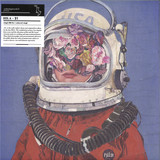
"21" is the well-crafted, sharp and original first album by the duo HILA, composed by American cellist Artyom Manukyan (who already worked with Kamasi Washington, Daedalus, Flying Lotus, Run DMC, Gretchen Parlato, Raphael Saadiq, Clive Lowe Mark...) and french producer Dawatile.
The combination of jazz, Los Angeles beat-scene and the vibrations of 80s and 90s Soviet Armenia make it a striking and unprecedented fusion. These kind of nostalgic and unconventional references forcefully shake the codes of mainstream culture to create a sincere, raw and intimate expression.
"HILA" was born from a spontaneous and intense creative impulse between Artyom Manukyan, a Los Angeles-based Armenian celloist and his partner in crime, David Kiledjian aka Dawatile, a French multi-instrumentist of Armenian descent. This project is proving to be a true master stroke given that it only took 21 days for the duo to make it a reality.
"HILA" was made in less a moon cycle but captivates and electrifies audiences upon its first outings. "H.I.L.A" colors the warmth of the Californian "High" with Armenian vibes. The artists chose this name for their creation since both have a close and valuable connection to these locales. This journey began in 2007, on the day Dawatile went to Yerevan, the capital of this small country in the Caucasus mountain to realize a first fusion project centered around local folkloric music genres.
There he was introduced to local musicians including the Armenian Navy Band, one of the country's foremost groups in which Artyom played the bass and cello. In this context, he also met many musicians such as Tigran Hamasyan and Norayr Kartashyan. This will be the beginning of connections between Lyon, Yerevan and Los Angeles. The following year, the two artists will be be seen performing next to Taylor Mc Ferrin at the Jazz à Vienne festival. More recently, they partnered up again when the cellist, who had freshly relocated in California, invited Dawatile to produce his album. As soon as the studio’s threshold was crossed, they decided to postpone this record and create a joint project: Hay (as the Armenians call themselves) / High In Los Angeles. HILA was born at the end of these 21 days of intense creation. The association of Artyom Manukyan and Dawatile is the combination of two visions, two versions of Armenia, two personalities, the reunion of the Eastern and Western blocs.
One grew up nurtured by the sounds of hip-hop and jazz in Europe and the other by art music and Russian-influenced 1980s Armenian folkloric music before moving to L. A., Ca. The cornerstone of it all, the glue that unites everything : Armenia and music. They generate a new identity synthesizing two perceptions, their complicity transcending these cultural discrepencies. To achieve this, they will scour through images of Artyom’s childhood, within the popular culture of Soviet Armenia. Together, they revisit this decidedly retro vibe, based on the work of Caucasian groups inspired by African American music. This background is rehashed and fused with ancestral Armenian sounds. The DNA of the album "21" is molded by these dear influences.
We can also hear the ancestral sounds of Armenia, a country at the edges of both Europe and Asia. The presence on two tracks of Armenian music Master Norayr Kartashyan, infuses the languor of past melodies and traditions. These purposeful anachronistic sounds offer a fantastic depth to this powerful opus. Listening to the album, one can appreciate the successful fusion of styles and influences. Those combinations, however, manage to preserve individual identities only to enhance the art through an adamant musical dialogue.
Being driven by the urge to transpose Armenian musical traditions into a unique universe, the daring artists, offer an innovative combination by blending, for the first time, these ancestral sounds with the world of Los Angeles beat-scene and jazz. An invention largely fueled by the magic strings of Artyom and maestro Miguel Atwood-Ferguson, a pillar of the genre in Los Angeles combined. These associations resonate with a triumphant equilibrium. HILA is musical uncharted territory in which Artyom's cello strings intertwine to ignite the harmonies of keyboards, the machines, the vocals and electronic layers Dawatile pieced together. HILA plays the soundtrack of an adventure set between Armenia around the end of the Soviet era and a mysterious near future.
Artyom Manukyan grew up in Armenia in the 90s. At the time, he studied Russian classical music while learning jazz with assistance by his father, a music journalist. Being an unconditional music lover, he went on to sharpen his skills at the prestigious Berkelee College of Music. Subsequently, he’s been lucky enough to travel the world touring with numerous acts and mainly with the Armenian Navy Band. The group has fostered alacritous success honored by a BBC Award as a crowning achievement. He moved on 10 years ago and made his way to L.A. with his cello on his back. In the City of Angels, he quickly became a popular figure of the jazz and hip-hop scenes thanks to his first album "Citizen". He’s accompanied prestigious musicians such as Kamasi Washington, Melody Gardot, Daedalus, Flying Lotus, Run DMC, Gretchen Parlato, Raphael Saadiq, Clive Lowe Mark, or Vulfpeck. He released his solo album on the cello, "Alone" in October 2019.
Dawatile is a bold producer and multi-instrumentist as well as a passionate and resolute musician molded by jazz. As a versatile artist, he handles and juggles the saxophone, the keys, the bass and composition. Simultaneously, Dawatile produces cross-over projects and soundtracks for the movie industry. He, as well, has had the opportunity to be a part of many tours, including with his electro hip-hop band, Fowatile and more recently with the "Future Kreyol" trio, Dowdelin. Being the ever workaholic, he has under his belt a string of prestigious collaborations with the likes of Talib Kweli, Foreign Beggars, Roy Ayers, Tigran Hamasyan, Mathieu Boogaerts, Voodoo Game and Piers Faccini. His taste for developing new musical recipes and his know-how in production make him a much sought-after album producer. In concert, the HILA duo offers a sober, precise and rhythmic performance. "21" is an aerial and lively album taking the audience on an at times joyous and sometimes melancholic dreamlike journey. The magic of "HILA" operates at the speed of light and positions it already as an avoidable group.
- A1: Pinta Manta - António Sanches
- A2: Dia Ja Manche - Dionisio Maio
- A3: Morti Sta Bidjàcu - José Casimiro
- A4: Pontin & Pontin - Bana
- B1: That Day - Fany Havest
- B2: Odio Sem Valor - Pedrinho
- B3: Mino Di Mama - Quirino Do Canto
- B4: Mundo D'margura - Tchiss Lopes
- C1: Po D'terra - Joao Cirilo
- C2: Corre Riba, Corre Baxo - Abel Lima
- C3: Ilyne - Os Apolos
- C4: Sintado Na Pracinha - Americo Brito
- D1: Capchona - Elisio Vieira
- D2: Djal Bai Si Camin - Antonio Dos Santos
- D3: Stebo Cu Anabela - Abel Lima
repress
2LP 140G VINYL + 12 PAGE BOOKLET.
"Space Echo - The mystery behind the "Cosmic Sound" of Cabo Verde finally revealed!" is the 20th release by the fabulous Analog Africa Label.
In the spring of 1968 a cargo ship was preparing to leave the port of Baltimore with an important shipment of musical instruments. Its final destination was Rio De Janeiro, where the EMSE Exhibition (Exposição Mundial Do Son Eletrônico) was going to be held.
It was the first expo of its kind to take place in the Southern Hemisphere and many of the leading companies in were all eager to present their newest synthesisers and other gadgets to a growing and promising South American market, spearheaded by Brazil and Colombia.
The ship with the goods set sail on the 20th of March on a calm morning and mysteriously disappeared from the radar on the very same day.
One can only imagine the surprise of the villagers of Cachaço, on the Sao Nicolau island of Cabo Verde, when a few months later they woke up and found a ship stranded in their fields, in the middle of nowhere, 8 km from any coastline.
After consulting with the village elders, the locals had decided to open the containers to see what was inside - however gossip as scintillating as this travels fast and colonial police had already arrived and secured the area.
Portuguese scientists and physicians were ordered to the scene and after weeks of thorough studies and research, it was concluded that the ship had fallen from the sky. One of the less plausible theories was that it might have fallen from a Russian military air carrier. The locals joked that again the government had wasted their tax money on a useless exercise, as a simple look at the crater generated by the impact could explain the phenomena. "No need for Portuguese rocket scientists to explain this!" they laughed.
What the villagers didn't know, was that traces of cosmic particles were discovered on the boat. The bow of the ship showed traces of extreme heat, very similar to traces found on meteors, suggesting that the ship had penetrated the hemisphere at high speed. That theory also didn't make sense as such an impact would have reduced the ship to dust. Mystery permeated the event.
Finally, a team of welders arrived to open the containers and the whole village waited impatiently.
The atmosphere, which had been filled with joy and excitement, quickly gave way to astonishment. Hundreds of boxes conjured, all containing keyboards and other instruments which they had never seen before: and all useless in an area devoid of electricity. Disappointment was palpable. The goods were temporarily stored in the local church and the women of the village had insisted a solution be found before Sunday mass.
It is said that charismatic anti-colonial leader Amílcar Cabral had ordered for the instruments to be distributed equally in places that had access to electricity, which placed them mainly in schools.
This distribution was best thing that could have happened - keyboards found fertile grounds in the hands of curious children, born with an innate sense of rhythm who picked up the ready-to-use instruments. This in turn facilitated the modernisation of local rhythms such as Mornas, Coladeras and the highly danceable music style called Funaná, which had been banned by the Portuguese colonial rulers until 1975 due to its sensuality!
The observation was made that the children who came into contact with the instruments found on the ship inherited prodigious capabilities to understand music and learn instruments. One of them was the musical genius Paulino Vieira, who by the end of the 70s would become the country´s most important music arranger. 8 out of the 15 songs presented in this compilation had been recorded with the backing of the band Voz de Cabo Verde, lead by Paulino Vieira, the mastermind behind the creation and promulgation of what is known today as "The Cosmic Sound of Cabo Verde".
The field of electronic music were involved. Rhodes, Moog, Farfisa, Hammond and Korg, just to name a few.
Please find enclosed one 'Deluxe' stereophonic gramophone record from Concept City, containing thirteen recordings of musics entirely produced upon 4-track portastudio for your pleasure and discourse - the sole work of Mr Robert Grant of this parish.
So states the photocopy insert from the 1985 November LP on Cordelia Records. Home to R. Stevie Moore, Rimarimba recently reissued by Freedom To Spend - and label owner Alan Jenkin's The Deep Freeze Mice, Cordelia was home to a menagerie of sound collage plucked from the ether.
Included is the only vinyl release from Concept City, spreading across 13 instrumental tracks of samples and noise. The Welsh choir and robovox meets hypnotic bass of Open The Network glides to the acoustics of Jayne Andrews and Filament, before Steam amasses TV ad cassette archives. As Etruria and Lapse Wine's Durutti meets reel-to-reel to the cold wave of War, Children and wasp synth of Helsinki, Grant slowly unfolds a masterpiece.
Looped drum samples, multiple layered to tape, sped up and slowed down for phasing, the title track is a pinnacle of 80s DiY genius. 'Crossroads' multi-sampling Meg leads to the exotica 'muzak' closings of Penetration and Friends. With just 5 albums over 40 years the music of Mr Concept can be a discovery and cherished.
The teen girl falling in love with greasy biker melodrama that set The Shangri-Las on the scene was beaten to the core when English high society child Lynn Ripley -better known as Twinkle- took it to the next level on her own composition "Terry". Penned at the tender age of sixteen, Twinkle's lyrics were found so twisted and bad tasty that the song got the honour of being banned at the BBC thirteen years before the Sex Pistols ran the same luck with "God Save The Queen." A ban that, as you would have guessed, instead of hiding the song from the era's teenage record hunters made it even more coveted. Thus "Terry", Twinkle's first 45 issued on Decca in October 1964, became an instant top 5 hit in the UK and was released successfully worldwide as well as covered by many bands (like Claude François French version or Los Extraños cover sung in Spanish).
The success of "Terry" encouraged Decca to release other comositions by Twinkle, along with her recordings of songs by other songwriters, in 6 singles and one EP published between 1964 and 1966. Another of Twinkle great tunes, "Golden Lights", was covered by big Twinkle fan Morrissey and The Smiths in their 1986 "Ask" 12" EP.
The 14 songs from the Decca 45s are collected in this fatastic LP, housed in an amazing period style sleeve w/backflaps and including a gatefold insert with photos and first hand told liner notes by Twinkle's own sister Dawn James, a music journalist working for New Musical Express back in the 1960s.
It comes in a limited edition of only 500 copies : if you like sixties girl-pop sounds like those of The Shangri-Las, pop stars like France Gall, singer-songwriters like Margo Guryan and Phil Spector-ish productions you must get your copy of Twinkle's "Golden Lights" before it sells-out!
Hot off the heels of Aluxes, his 2018 Lumière Noire debut EP, young Mexican DJ/producer Iñigo
Vontier is inviting Chloé's label on a trip to the far corners of the body & mind with an album of
demented grooves, psychedelic take-offs and imaginary comic strips of mystical rituals. A
bewitching debut full-length. Mexicans may never possess the sonic science of the Germans,
the hedonistic madness of the English or the gift for synthesis of the French, but, as proven by
Iñigo Vontier's first full-length for Lumière Noire, their universe is much more exciting than
anyone would have ever thought.
The DJ/producer fully asserts his origins by brandishing the album’s title "El Hijo del Maiz" ("the
son of the corn") almost as an emblem: "in Mexico, corn is eaten daily. It has long been defined
as 'the gold of America', and I consider all Mexicans as children of corn". A spiritual and
embodied vision Iñigo's first Lumière Noire release, the four-track Aluxes, set the tone of the
young talent's distinctive interpretation of dark disco, which creeps up on the dancefloor from its
iconoclastic side. The two tracks and two remixes (one by Flügel, the other by Inigo himself)
featured on the 12" for lead single "Xu Xu" (featuring Red Axes-affiliate Xen's irrelevant vocals)
was a full-bodied confirmation that Vontier sees the dancefloor as an arena for the occult –
whether from the peoples of the equatorial jungle, the Middle East or, even from indocile
machines. But, while the spiritual element seems part and parcel of the Jalisco native’s output, it
is in no way the only ingredient of this first long-player: "this album best reflects my own vision
and spirituality, and the way I feel it" he says.
Whether contemplative or frenetic, the collection of tracks that make up “El Hijo Del Maiz” takes
the kitchen sink and throws it out the window: languid rhythms, haunted vocals, and mysterious
percussion fuel a discombobulated house set that scrambles the listener's five senses, leaving
one disoriented and exposed to the vagaries of vertigo. Following the demented, dystopian “Xu
Xu” EP, which explored an imaginary jungle that harbored Mayan and Egyptian pyramids,
Middle Eastern accents are once more present in the off-kilter “Bo Ni Ke” and its Japaneseinfluenced vocal trickery, which Moroccan flutes à la Jajouka transform into a feverish trance.
With the following three tracks, Iñigo Vontier raises himself to the same level of excellence as
the Pachanga duo (of which pride of the Mexican scene Rebolledo, is also known as a prolific
artisan of deconstruction): “Awaken”'s slumbering voice, heard as through the veil of hypnosis,
slowly introduces a techno beat which, as in follow-up “Time”, literally brings the listener to a
levitative state. In a housier vein, yet continuing in the same psychedelic, 90s-infused spirit,
“Don’t Go Back” disrupts the genre’s usual signatures with an out-of-tune keyboard that is
becoming the artist's trademark, destabilizing the listener into a drunken vertigo, with a good
helping of sexiness: "I think the sexy dimension definitely brings a kind of magic to music," says
Vontier. “I'm sure I felt this magic during my DJ sets, and I like to think that sorcerers use this
element in their practices. I might consider myself a bit of a sorcerer when I take over the DJ
booth, by the way." A mood and sound that can once again be found – in a quieter, more
bucolic version – on “Chiquitita” (feat. the flute stylings of pioneer DJ Rocca, now a partner of
cosmic disco legend Daniele Baldelli). The more cinematic, fast-paced and dreamy beat of the
no less captivating “Little Monster” might evoke the mischievous spirit of the Mayas' minor
mythological creatures, while ode to the magical herb Marijuana (feat Thomass Jackson)
proudly tramples into the debate that such a provocative title inevitably provokes: "psychedelic
drugs are powerful tools to reach a higher level of consciousness about what surrounds us, but
we must learn how to complete this psychic journey by ourselves, notably through meditation
and love.
In the end, El Hijo del Maiz is an album-length confirmation of Iñigo Vontier's uniqueness, and
his adherence to Lumière Noire's policy of letting artists fully express their vision – while letting
their passions guide their idiosyncrasies and explorations of innovative electronic signatures
I felt totally unrestrained making this album” says Lindstrøm about his 6th solo album On A Clear Day I Can See You Forever (a title inspired by the 1970’s musical On A Clear Day You Can See Forever starring Barbra Streisand). “I’ve listened to Robert Wyatt’s solo albums and his Matching Mole’s debutalbum a lot lately. It so effortless, fearless and free. And not insisting. I was very inspired by this” In the autumn of 2018, Lindstrøm composed a commissioned piece for Norway’s premiere art centre Henie Onstad Kunstsenter. Sketches from the three sold-out performances became the foundation for the new tracks. “I decided to keep some of the initial ideas and develop them further. All the songs are based on long one-take recordings”, says Lindstrøm “Also I’ve been very conscious about the music on the album not exceeding the length of the physical limitations of the vinyl-format, finding that 2 long tracks on each side were the perfect balance for this album” This is also the first time ever Lindstrøm has made an album entirely with hardware instead of computer-plugins. He utilised thirty plus synthesizers and drum-machines during his performance at Henie Onstad Kunstsenter. The experience inspired him to embrace a similar set-up when making the album. “The joy of making music on actual physical objects and devices makes a lot of sense to me now. After working on a computer for over 15 years, I don’t think I’ll ever look back” he says with an almost childlike excitement. It was the accessibility to his enviable collection of music gear – largely consisting of sought after synthesizers – that allowed Lindstrøm to experiment so freely with ideas and soundscapes. “The title track is a 10-minutes improvisation on the Moog Memorymoog. I liked the loose feel so I decided to keep everything unedited. The other tracks were written and arranged prior to the recordings. I then set up the instruments needed for my sessions, then recorded more or less everything in a single take. I’m really happy with the way this album came together.” Lindstrøm has cited classical music as an inspiration the last couple of years “I used to study classical music at school. Back then I was listening to a lot of Opera, orchestral music and solo music on the piano. Listening to classical music again has been a revisit to my childhood days, just like I did when I embraced the 80s in the early 2000s”
Once embracing the freedom and the joy of making music without inhibitions, immersing himself in to the physical realm of making music with hardware, Lindstrøm learned something new not only about music – but about himself.
“I guess I've been trying to re-educate myself”
Limited edition (200 copies of orange transparent and 100 of yellow vinyl records with postcards-photos from Ms. Gia's family album)
Lua Preta is an Angolan/Polish duo consisting of vocalist/MC Ms. Gia of Angolan descent and experienced Polish DJ and producer Mentalcut. Together they bring the frenetic mixture of modern electronic music and African genres characteristic not only to Ms. Gia's native Angola but also to the whole continent - including kuduro, afrohouse, gqom and more.
'Polaquinha Preta' is a brand new EP by Lua Preta. With the music produced by Polish producer Mentalcut and vocals from Angolan Ms. Gia the release tells the story about Gia's childhood in Poland of the 80s and 90s and how she was seen as a foreign both here and back in Angola.
There are interesting guests on the record:
B4mba – Paris-based artist with roots in Senegal and Spain who raps both in French and Spanish. He's an author of the 'Baile Punk' EP in which he blends Latin American music with avant-garde electronic sound.
Isilda Viegas – Ms. Gia's mother hailing from Sao Tome e Principe. On the 'Polaquinha Preta' EP she's featured on 'Noemia' where she sings in forro language – a creole language native to her homeland. During colonial times Portuguese banned people from using forro. Currently only around 70 000 people use it.
Rafael Aragon – French DJ, producer and musician who has become one of the key players on the European global bass scene throughout the past ten years. In his music he relates to all the continents but especially to South America and Africa where his ancestors come from.
d B2 Noemia (Rafael Aragon Remix) feat. Isilda Viegas
Southern Lord is proud to present reissues of the first two albums from iconic Portland-by-way-of-Nashville-based hardcore punk icons, From Ashes Rise.
Alongside related acts His Hero Is Gone and Tragedy, From Ashes Rise are one of the most iconic pioneer acts of the gloom-heavy American crust/hardcore sound born of the late 1990s.
Following their EPs on Clean Plate Records and Partners In Crime Records, the debut full-length Concrete & Steel was initially released through Feral Ward Records in 2000, followed by the release of their second album, Silence, through the same label later that same year.
Staples of the band’s catalogue, these two seminal LPs have not only stood the test of time, but lie as markers at the beginning of a now well-trodden path, making From Ashes Rise one of the founding acts of the sound so many modern acts continue to draw influence from.
The reissues of Concrete & Steel and Silence have been fully remastered by the band’s Brad Boatright at his revered Audiosiege in Portland, Oregon, the LP’s original covers formatted to tip-on jackets.