Kate Nash’s new album ‘9 Sad Symphonies’ is her first signed to the legendary Kill Rock Stars label. The album was produced and mixed by Grammy winning Danish producer Frederik Thaae (K Flay, Jada, Crown The Empire). Marking a new chapter in Kate’s illustrious career, the album’s lyrical scope is both deeply personal and achingly relatable, whilst its orchestral arrangements and melodies draw from Kate’s experience in the world of musical theatre.
Kate Nash is a BRIT Award-winning singer-songwriter, musician and actress known for her fearless approach to music and unapologetic storytelling. A platinum selling artist with a career spanning over a decade, she has garnered critical acclaim for her chart-topping hits and electrifying live performances. From her debut album Made of Bricks to her latest releases, Kate’s artistry continues to resonate with audiences and has earned her a dedicated fanbase. She also captivated audiences as Rhonda in Netflix’s Emmy-nominated GLOW."
Suche:orchestral
Rare debut LP by the eccentric Peruvian singer Jean Paul "El Troglodita", known for his wild performances and extreme way of life. Enrique Roberto Tellería made his Peruvian television debut in 1965 under the stage name Jean Paul El Troglodita and wearing an imitation leopard skin suit. He would switch from melodic calm to shouting wildly or suddenly drop to the floor on his knees and smash the furniture like crazy. At the age of 19, DisPerú signed him to the label on the strength of these early performances. His first single included a freely translated version of 'Secret Agent Man' in Spanish. He began to work on the eleven cover versions that would feature on his first LP immediately, writing all his own lyrics and accompanied by the beat band Los Steivos. Despite the predominance of English beat music in Peru, the album only included three songs directly related to the British invasion: 'Bus Stop' by The Hollies, also played in raga rock style; 'Paint it Black' by The Rolling Stones; and 'The House of the Rising Sun', which follows the arrangement recorded by The Animals. So most songs come the American songbook. Apart from 'Tema de El Troglodita' (a versión of 'Secret Agent' by The Challengers), we find the bluesy 'Mustang Sally' (Sir Mack Rice). Two other US numbers, originally performed with orchestral accompaniment, were adapted to fit the rock band format: 'Poor Side of Town' (Johnny Rivers) and 'Take Me to the Moon' (Kaye Ballard). 'El verdadero amor' ('True Love'), an uncredited version is in a similar vein. The Spanish song 'Negro es negro' (Los Bravos) and the Brazilian track 'Que todo se vaya al infierno' (Roberto Carlos) also feature on the LP. El Troglodita's association with the so-called nueva ola, indicated on the back cover, needs clarification. In Peru, nueva ola was a mixed bag rather than a specific musical style and encompassed slow rock, twist, bossa nova and all the styles that the record industry produced to tame the wild rock 'n' roll impulses of teenagers in the early sixties. The Peruvian artists that performed these inoffensive Spanish adaptations of Paul Anka, Neil Sedaka or Frankie Avalon, were presented as successful models of youth culture. This was until 1964, when the Beatles with their mop-top haircuts hit the charts, vindicating rock 'n' roll and imposing the group format over the soloist model. Meanwhile the press continued to call any youth music recorded during the rest of the decade nueva ola. Jean Paul noted these distinctions early on and distanced himself from it in several statements. He saw his performance more in a style as a solo artist as following in the footsteps of e.g. Los Saicos. His 'hippie' lifestyle got him arrested by the new de facto military government in 1968, who accused him of promoting drug consumption and corrupting the Peruvian youth. The charges were soon dropped but his reputation was tarnished, and he ended up emigrating to Central America. The album includes Spanish sung versions of British beat songs and covers of the American songbook as well as various international hits.
Digipak w/ 12-pg booklet + sticker. Darwin is back! Follow-up to the critically acclaimed epic albums "Origin of Species" ('A prog rock masterpiece' - Classic Rock Magazine) and "A Frozen War" ('A rock tour de force with melody, shredding, and orchestral flourishes' - Prog Rock UK) Darwin, whose production is masterfully driven by Simon Phillips, expands on their trademark sound - adding new levels of depth and melody. The album features a stellar lineup of musicians. Bass sensation Mohini Dey joins the band, bringing her sophisticated and punchy low-end sound. Guitar maestro Greg Howe delivers some of his best playing to date across the album, which also features a beautiful solo appearance by Andy Timmons. Derek Sherinian and Julian Pollack (J3PO) add their keyboard wizardry across the tracks. Vocalist Matt Bissonette provides a rich harmony-filled performance across the various songs. Released on CD, including a special album cover sticker in the package
- A1: Betty - Version Orchestrale
- A2: Qu'attendez-Vous De Moi ? - Version Orchestrale
- A3: Woman - Version Orchestrale
- B1: Let Me Down - Version Orchestrale
- B2: Favelas - Version Orchestrale
- B3: L.s.a Theme - Version Orchestrale
- B4: Happiness Everywhere - Version Orchestrale
- C1: Final Round - Version Orchestale
- C2: Kolkata - Version Orchestrale
- C3: La Découverte - Version Orchestrale
- D1: Une Nuit Avec Elle - Version Orchestrale
- D2: Forever - Version Orchestrale
- D3: The Magic Number - Version Orchestrale
Panoram makes soundtracks for daydreams gone sideways. Picture the scene: an afternoon nap with the television on, quietly, in the corner; snatches of conversation drift in through the open window. Wandering, half-formed thoughts take unexpected detours; before you know it, there’s a movie playing out against closed lids, the colors bright, the characters unfamiliar. Accidental rhythms, incidental melodies, imitations of life, messages in code.
Across 17 fragmentary, sketch-like tracks, Panoram carves a labyrinthine path in which nothing is what it seems: a fantasy world of breathy vox pads, faux guitar, detuned synths, bursts of flute and orchestral percussion, and even the occasional cheeky cartoon sample. It’s chillout music with a chilly edge, ambient with a darkly ironic undertone. (The briefest glance at your news outlet of choice should be enough to confirm that the title—Great Times—ought to be taken with a healthy dose of skepticism.)
Panoram has been making music under his principal alias for more than a decade now, releasing albums on labels like Firecracker, Running Back, and his own Wandering Eye. (He has also performed and recorded with Amen Dunes, and has co-production credits on Amen Dunes’ forthcoming Sub Pop album Death Jokes.) Panoram’s output has ranged widely, taking in abstract pop, classical composition, twisted takes on library music, and cyborg funk. One record of “bio-acoustic transmissions” came with a cannabis leaf pressed in clear wax; his 2021 album Pianosequenza Vol. 1 gathers his experiments on the Yamaha Disklavier. But Great Times offers the truest picture yet of a project that has never been easy to pin down.
Loath to overshare details about his personal life, Panoram instead lets the music do the talking, using his cryptic tracks to express the slipperiest sorts of ideas—the thoughts that take root where anxiety, distraction, and the most fleeting traces of grace commingle. Panoram’s approach flies in the face of contemporary ambient orthodoxy, with its emphasis on immersion and uplift. Great Times expresses something thornier, more difficult to translate, yet also more tantalizing to contend with. Its 17 tracks offer a chance to get lost—and an invitation to remain in the maze as long as you like.
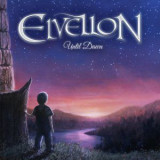
Since its foundation in 2010, the newcomer quintet has brought a breath of fresh air to the scene and fans as well as the specialized press with their melange of crunchy guitars, driving drums and orchestral bombast. and orchestral bombast: the very young five-piece was was already highly praised by renowned magazines such as magazines such as Orkus and Sonic Seducer and even dubbed "heroes of tomorrow" by Metal Hammer. of tomorrow".
The debut album "Until Dawn", which was released in 2018, impressively underlined the potential that lies within the band. The official music video for the track "Born From Hope" has over over 1.3 million views to date, and the song has been streamed well over 2.5 million streams on Spotify.
Now the song, as well as all the others of the album, will be released on vinyl for the first time. REAPER ENTERTAINMENT presents the multicolored vinyl in a gatefold, strictly limited to 300 copies worldwide.
The Guardian wrote “the Canadian songwriter has one of the all-time great singing voices in popular music, an intensely romantic Chet Baker-ish instrument that seems to float with piercing direction, like a paper aeroplane thrown hard through mist.” With Uncut describing his songcraft “as delicate and lovely as a rare orchid” and Record Collector praising the album’s “sublime alien balladry” such are the accolades that have accrued throughout Chenaux’s unique and consummately uncompromising solo music for well over a decade now. Delights Of My Life opens a new chapter for the singer/guitarist and formally introduces the Eric Chenaux Trio, with Toronto-based musicians Ryan Driver on Wurlitzer organ and Phillipe Melanson on electronic percussion. Driver is a longtime collaborator, appearing on several of Chenaux’s solo albums (even embedded into the very title of the 2010 masterpiece Warm Weather With Ryan Driver). Melanson has a long list of involvements that include Bernice, Joseph Shabason, and U.S Girls, and a recent release with his Impossible Burger project on Chenaux’s own experimental label Rat-drifting, but this marks the first fulsome involvement between the two as players on a recording. In many ways Delights Of My Life also picks up right where Chenaux’s previous album left off, in its subversions of a classic, timeless jazz-inflected balladry, while the interplay of the trio formation indeed unfurls many new delights. Recording together at Chenaux’s spartan home studio in rural France, Driver’s harmonically warped organ and Melanson’s electroacoustic sampling and percussion hold time in newfound ways. Where previously Chenaux relied on a freeze/sustain pedal and minimalist rhythmic triggers to generate both pulse and chordal foundations, Melanson now paints timekeeping with expressive and intricate colourations, through live deployments of fluid sampled percussion (including orchestral timbres like timpani, kettle drums, and woodblock) that blur the boundaries between acoustic and electronic. Driver also ramps up his role in the song arrangements (prefigured in his support playing on Say Laura), teasing out chords and melodic filigree on Wurlitzer that percolate more prominently with Chenaux’s signature fried guitar solos and succulent singing. Both trio members add dulcet backing vocals, most notably on the 10-minute tour-de-force of fuzzed and ring-modulated swing “This Ain’t Life” that opens the record. All seven songs on the album groove and sway, simmer and sparkle, like nothing in the inestimable Chenaux discography to date. Chenaux’s tunes have the uncanny ability to sound like jazz standards; songs you feel you’ve heard before, though certainly never quite like this. Yet these are of course all originals, compositionally and interpretively, bent through an inimitable avant/out-music lens. Delights Of My Life conveys warm familiarity, shot through with the exuberantly experimental subversion and playful, even mischievous, iconoclasm that continues to mark Chenaux as defiantly, virtuosically, and genially one-of-kind
- A1: Polaris (북극성) 04:22
- A2: Insomnia (불면증) 04:49
- A3: Arrival (도착) 07:44
- B1: We Shine At Night (우리는 밤이 되면 빛난다) 06:27
- B2: Parade 07:34
- B3: Sketchbook 07:02
- C1: Imagination 04:37
- C2: Sound Inside Me, Waves Inside You 05:13
- C3: Blossom 05:13
- D1: After The Magic 06:11
- D2: Your Place 10:51
"A sprawling patchwork of the artist’s dreams and fears, Parannoul’s third album After the Magic explores the enigmatic solo artist’s life in the wake of his second album’s overnight success.
Expanding on the shoegaze-shaded emo that made Parannoul’s To See the Next Part of the Dream so beloved by lo-fi and indie rock fans alike, After the Magic sees the anonymous auteur striving to write a follow-up as worthy of acclaim as the last.
Across the album’s ten songs, Parannoul plunges yet deeper into his diverse pool of influences, coming back to the surface with a record that captures and extends the magic of its predecessor. Unexpected flashes of orchestral ambient and glitched-out electronica meld seamlessly with Parannoul’s signature passages of noisy, distortion-laden shoegaze, offering a real time glimpse into the maturation of one of indie rock’s most exciting artists.
In the artist’s own words, “This album is not what you expected, but what I always wanted.”"
- Main Title
- Damien Flashback
- Outside The Church
- Headless Statue
- Dream Sequence
- It S A Wonderfull Life
- Are You My Son?
- Death Be Not Proud
- Transition To Morgue
- Noise In Priest S Study
- Father Morning
- Kinderman And Patient X
- Rites For Exorcism
- The Big Hit On Statue
- One Who Moves
- Closet Nurse
- Kinderman Realizes
- Nurse No. 1
- Nurse No. 2
- Nurse No. 3
- Nurse No. 4
- Doorbell
- Nurse Attacks Julie
- Father Morning Enters Cell
- The Cemetery
- Morgue To Cathedral
- Whispers In Corridors
- Father Morning Cue 1
- Father Morning Cue 2
- Father Morning Cue 3
- Father Morning Cue 4
- Father Morning Alt Mix
- The Exorcism Alt Mix
- Vocals Overdub (Bonus)
- Cell Scene Material
- The Exorcism
- Church Bells Ringing
Waxwork Records is thrilled to release THE EXORCIST III Original Motion Picture Score by Barry DeVorzon. THE EXORCIST III is a 1990 American supernatural horror film written and directed by William Peter Blatty based on his 1983 novel Legion. The film is set fifteen years after the events of The Exorcist (1973) and follows a character from the original film, Lieutenant William F. Kinderman who investigates a series of demonic murders in Georgetown that have the hallmarks fo the Gemini, a deceased serial killer.
THE EXORCIST III features a dark ambient score by Barry DeVorzon (The Warriors, Night of the Creeps). It was the last film score he ever created and features synth drones, sampled chanting, synthesized voices and real voices, and experimental sound design. Of the score, DeVorzon provided exclusively to Waxwork for this album's liner notes: "I was exploring a lot of synthesized sounds and textures and trying to do something that would make the scenes more chilling. Anything that was different, eerie, and had nothing to do with an orchestra. This was new territory for me - it wasn't orchestral, it wasn't rhythm oriented. It was just a really different animal."
Waxwork Records is proud to present THE EXORCIST Original Motion Picture Score for the first time in any format. Sourced from the original masters and then mixed, mastered, and constructed into a cohesive double LP soundtrack experience. The album features 150 gram purple smoke colored vinyl, exclusive liner notes by composer Barry DeVorzon, heavyweight gatefold packaging with matte satin coating, a 12"x12" four page booklet, and new artwork by Suspiria Vilchez."
A1 - Blue Sky
Opening with a clean, DJ-friendly Hot Pants break, Blue Sky offers the listener a subtle, warming production with inquisitive synth work creeping around a fine selection of serene effects, panning excitedly across a pristine, polished field. Utilising light orchestral strings, a soft undertone bassline and wistful twilight sounds, Aural Imbalance blends danceable breakbeats with the soothing sounds of yesteryear as fluidly as ever.
A2 - Starburst
Starburst jumps straight into a tight, energetic beat pattern constructed with old school breaks and an off-key bassline, soon joined by eerie, spectral pads to gradually build an ethereal, other-worldly vibe. The composition is elevated by arising symphony of swirling blippy melodies, expressing a nervy and curious tone with detail and harmony before the beat recedes, allowing the melodies to shine alone in the dreamy outro.
AA1 - Frozen Tears
Aural Imbalance conjures a quietly grandiose track with Frozen Tears, driven by muffled keys and thick hi-hats in the intro before a luscious, meditative melody enters the mix. Intricate breakbeats with a suitably understated bassline accompany the fading and echoing synthetic strings, rich pads and subtle bells, producing a beautifully varied spectrum of sound, perfect for the Spatial record box.
AA2 - Moonlit Clouds
A distinctive, impeccably produced Helicopter break takes center stage with Moonlit Clouds, a deftly relaxing ambient aura floating overhead as synths and knowing melodies slowly weave their way into your psyche like shimmering fireflies seizing the moment in the dark. A low sub bassline permeates the depths to complete a collage of euphony to round off another special EP from Aural Imbalance.
Words by Chris Hayes Spatial/Red Mist
Tangential Music is pleased to present the new album from veteran Spanish DJ and producer, Dj Toner (aka Antonio Herrera). Alongside his co-writer/arranger Daniel Molina and with guests that include the legendary Blue Note Records innovator Erik Truffaz and Grammy winning flautist and saxophonist Jorge Pardo, he has created a 10 track collection of slow-burning instrumentals that straddle the worlds of hip hop, jazz and electronica.
With a personal, precision tooled approach to his craft, the Andalusian has offered up an album of finely modelled downbeat moods.
At first glance, ‘Out Side’ is made up of recognisably superior hip hop instrumentals but if you listen carefully, and with patience, one can hear a craftsman at work. A wooden box is just a box until you look closer. The hidden joints, the perfect lining up of the grain, the years of artisanal graft and laser-focussed attention to detail that go into making something that has nothing present, that doesn’t deserve to be there. This is how Dj Toner operates.
The two singles that preempt the album’s release reveal different sides of his craft. ‘Camina’ struts with tough intentions. Soundtrack-y in an exploitation police drama manner, the get-out-of-my-way drum break and tension-filled chords suggest the bad cop, Erik Truffaz’s piercing lyrical trumpet lines, the good. The Afro-jazz horns led second release ‘Surprise’ is an altogether more playful, sunbaked affair. Sensual and slow-burning, there’s still an edge but it’s too hot to quarrel.
Dj Toner’s minimalist attitude to creation is shared with his co-composer Molina - an individual’s contribution may be cut to the bone, leaving just its aura or tone. The echo of a piano, a single blast of tuneful wind from a flute, a perfectly positioned drum hit.
Since the Wu-Tang Clan’s RZA began applying his beatmaking prowess to movie soundtracks, the hip hop instrumental has been acknowledged as something to listen to, as much as being used as a DJ tool or backing for an MC. Dj Toner’s instrumentals can, therefore, be seen as soundtracks. Soundtracks to his life and craft, vignettes of his environment in both the urban sprawl and the wider and slower spaces of “el campo”.
The sweet-tempered jazz-blues of ‘La Rimosa’ is a gentle welcome to the album. A simple, laid back groove with the most romantic of piano hooks that one could imagine Common dropping rhymes on. You’re kept on your toes with the odd purposeful moment of discordant interruption but the tender heart of the composition is never far away.
‘O’Beat’ hints at John Coltrane with the sparse but full-sounding upright bass before a head-snap break leads into a curious piano groove, a vintage organ swirls into a psychedelic fractal, whilst the bluesy female vocal snippets add the spice, that zing in the Granadan gazpacho.
The flamenco guitar driven ‘Flama’ is an excellent example of intricate sample placement and musicality. Old school (school yard) scratch interludes, sweet piano hooks, a minimalist but knife sharp flute contribution from Jorge Pardo, and the crunchiest of drums taking us for an intriguing walk round the corner.
We’ve mentioned them before but it’s on ‘Sweetband’ that we can feel that Wu-Tang dread hanging off its shoulders. A brooding orchestral number with powerful horns and a cavernous piano hit. The title of the piece is in stark contrast to the dark shadows of the tune.
Erik Truffaz returns in fine form on the super lethargic jazz-funk-hop of ‘The Day’. His instantly identifiable muted trumpet sound paints dazzling colours over the more earthy tones of the filtered down keys as a rubbery upright bass keeps the forward momentum. Dj Toner’s ‘Blessed Are The Weird People’ album, was rated in Jazz Magazine as one of the 20 jazz albums of 2021, so he isn’t some dilettante when it comes to playing with the complex hues of jazz but he does like to strip it to its bare essentials.
‘Fanega’ sees a gorgeous flute contribution from Jorge Pardo. An eerie boom-bap groove with sprinkles of electronic pulses and washed out chords is the canvas on which the award-winning multi-instrumentalist evokes the heat shimmer of the savannah.
‘Esperanza’ translates as ‘hope’ in English and this lovely slow, swinging jazzy groove really does provoke feelings of positivity and belief. Sublime vibraphone and another stunning trumpet offering from Erik Truffaz, take us on a journey of warm days and possibilities, the shuffling drums and sweet chord patterns are nicely finished off by a tranquil horn chorus towards its unhurried end.
‘Under Beat’ ends on a beefy boom-bap groove with a liquid funk bassline, elegant synth strings and old school scratching. Again, there’s that undisputable soundtrack edge, action and motion, the smell of the city.
There you have it, 10 tracks that go beyond the surface, deep into the dedicated craft of Dj Toner. Decades of experience and collaboration purified and refined into beat-heavy emotions, listen closely or crank it up, it’s down to you!
- Part - Hiirejaht 1965
- Part - Operaator Kops Uksikul Saarel 1968
- Rannap - Lend 1973
- Rannap - Varvilind 1974
- Rannap - Lugu Janesepojast 1975
- Grunberg - Klaabu Kosmoses 1981
- Grunberg - Liigub Liigub 1977
- Grunberg - Linalakk Ja Rosalind 1978
- Ehala - Aeg Maha 1982
- Aare - Korb. Dzungel - Kas Maakera On Ummargune 1977
- Aare - Linn - Kas Maakera On Ummargune 1977
- Aare - Kodu - Kas Maakera On Ummargune 1977
- Naissoo - Naerupall 1984
- Naissoo - Meemeistrite Linn 1983
- Ehala - Kaelkirjak 1986
- Ehala - Pagar Ja Korstnapuhkija 1982
- Ehala - Harjutusi Iseseisvaks Eluks 1980
Compilation of (mainly instrumental) music from 1960-80s Estonian animated films. Comes with 8-page full-colour booklet in Estonian with texts by Andreas Trossek and Berk Vaher.
Musically all over the place, as you'd expect.
Note: The animated films of this LP can be watched online at kohilarecords.eu/ark
In the mid1970s, when Tallinnfilm animation studios recruited a youthful bunch of skilled artists and cartoonists, interesting things started to happen. Contemporary themes and ironic depictions of domestic life were introduced into Estonian animation – as well as pop-art aesthetics and even psychedelic imagery. Also, composers found their chance to exercise something beyond the routine standards of pop and academic music, to try their hand at the edges of orchestral sonic palette and electronic soundscapes.
Suddenly, pop art merged pop music, and electric guitars, Rhodes pianos and synthesizers were telling tales of a better future that still hasn’t fully arrived today.
Following the release of Eric Chenaux's last album Say Laura (2022), The Guardian wrote "the Canadian songwriter has one of the all-time great singing voices in popular music, an intensely romantic Chet Baker-ish instrument that seems to float with piercing direction, like a paper aeroplane thrown hard through mist." With Uncut describing his songcraft "as delicate and lovely as a rare orchid" and Record Collector praising the album's "sublime alien balladry" such are the accolades that have accrued throughout Chenaux's unique and consummately uncompromising solo music for well over a decade now. Delights Of My Life opens a new chapter for the singer/guitarist and formally introduces the Eric Chenaux Trio, with Toronto-based musicians Ryan Driver on Wurlitzer organ and Phillipe Melanson on electronic percussion. Driver is a longtime collaborator, appearing on several of Chenaux's solo albums (even embedded into the very title of the 2010 masterpiece Warm Weather With Ryan Driver). Melanson has a long list of involvements that include Bernice, Joseph Shabason, and U.S Girls, and a recent release with his Impossible Burger project on Chenaux's own experimental label Rat-drifting, but this marks the first fulsome involvement between the two as players on a recording. In many ways Delights Of My Life also picks up right where Chenaux's previous album left off, in its subversions of a classic, timeless jazz-inflected balladry, while the interplay of the trio formation indeed unfurls many new delights. Recording together at Chenaux's spartan home studio in rural France, Driver's harmonically warped organ and Melanson's electroacoustic sampling and percussion hold time in newfound ways. Where previously Chenaux relied on a freeze/sustain pedal and minimalist rhythmic triggers to generate both pulse and chordal foundations, Melanson now paints timekeeping with expressive and intricate colourations, through live deployments of fluid sampled percussion (including orchestral timbres like timpani, kettle drums, and woodblock) that blur the boundaries between acoustic and electronic. Driver also ramps up his role in the song arrangements (prefigured in his support playing on Say Laura), teasing out chords and melodic filigree on Wurlitzer that percolate more prominently with Chenaux's signature fried guitar solos and succulent singing. Both trio members add dulcet backing vocals, most notably on the 10-minute tour-de-force of fuzzed and ring-modulated swing "This Ain't Life" that opens the record. All seven songs on the album groove and sway, simmer and sparkle, like nothing in the inestimable Chenaux discography to date. Chenaux's tunes have the uncanny ability to sound like jazz standards; songs you feel you've heard before, though certainly never quite like this. Yet these are of course all originals, compositionally and interpretively, bent through an inimitable avant/out-music lens. Delights Of My Life conveys warm familiarity, shot through with the exuberantly experimental subversion and playful, even mischievous, iconoclasm that continues to mark Chenaux as defiantly, virtuosically, and genially one-of-kind.
Yes' 90125 was a departure from their progressive style but it introduced the band to a new generation of fans, reaching No. 5 on the Billboard 200 and No. 16 on the U.K. albums chart. The 1983 album remains their best-selling album with more than 3 million copies sold in the U.S. "Cinema" earned the group a Grammy Award for Best Rock Instrumental Performance, while "Owner Of A Lonely Heart" was the band's first and only single to reach No. 1 on the Billboard Hot 100 chart.
Named for its Atco catalog number, 90125, the album — the band's 11th studio effort — it was born out of the band's self-reinvention. Begun as Cinema, a new band by Chris Squire and Alan White, the project grew to include the slick production of Trevor Horn, the new blood (and distinctly '80s guitar sound) of Trevor Rabin, and eventually the trademark vocals of returning founder Jon Anderson. His late entry insured that Rabin and Horn had a heavy influence on the sound. The album also marked the return of prodigal keyboardist Tony Kaye, whose crisp synth work on "Changes" marked the band's definitive break with its art rock roots.
"Owner Of A Lonely Heart" was a huge crossover hit, and its orchestral break has been relentlessly sampled by rappers ever since. The vocal harmonies of "Leave It" and the beautifully sprawling "Hearts" are additional high points,
90125 is a significant and well-regarded album in the Yes discography.
Analogue Productions is proud to offer the definitive reissue deluxe 180-gram 45 RPM 2LP of 90125. For Yes fans, this is a can't-miss addition to your album collection.
2024 reissue of Thomas Bückers debut album as Bersarin Quartett, originally released in 2008 on Lidar.
With some albums, you realize within a few seconds that here you have come across something really special. It is music that touches you straight away. Music that is important, that has a story to tell – and that manages to do so without even a single line of lyrics.
Wonderful orchestral pieces full of longing and melancholy. It is that certain kind of melancholy that seizes you when you are moved while following the final credits of an emotionally touching movie, remembering special moments that have faded in the course of many years and linger hazily in your memory, when you are somewhat wistfully contemplating old, worn photographs from days passed by … not a feeling of failure or hopelessness, but a bittersweet reflection.
Orchestral cinemascope sounds provide the emotionally moving fundament, wrap the tracks up in a warm coating. Graceful strings pile up, creating big moments and repeatedly ending inmelodies that are simply heart-rending, cinematic and tragic. But the Bersarin Quartett does not merely rely on these ingredients. The songs are also repeatedly interspersed with suspenseful and surprising elements, be it frail electronica, hypnotic soundscapes, drums or reverbed guitars. Rarely has amelange sounded as convincing and natural as this, and rarely has it sounded so well produced.
Thomas himself calls his music “imaginary fictional filmscores“. And it is hardly possible to come up with a more apt term. 10 tracks for 10 movies that have yet to be shot. Music that radiates such an enormous and authentic passion in every single minute, that one can’t help but completely abandon oneself to it. And honestly: Can there be anything more wonderful that can be achieved through music?
- Queen - A Kind Of Magic (From Highlander)
- Simple Minds - Don't You (Forget About Me) (From The Breakfast Club)
- Philip Oakey & Giorgio Moroder - Together In Electric Dreams (From Electric Dreams)
- Tina Turner - We Don't Need Another Hero (Thunderdome) (From Mad Max Beyond: Thunderdome)
- Limahl - Never Ending Story (From The Never Ending Story)
- Kenny Loggins - Danger Zone (From Top Gun)
- Los Lobos - La Bamba (From La Bamba)
- Duran Duran - A View To A Kill (From James Bond: A View To Kill)
- Ray Parker Jr. - Ghostbusters (From Ghostbusters)
- Survivor - Burning Heart (From Rocky Iv)
- Pat Benatar - Invincible (From The Legend Of Billie Jean)
- Orchestral Manoeuvres In The Dark - If You Leave (From Pretty In Pink)
- Oingo Boingo - Weird Science (From Weird Science)
- Huey Lewis & The News - The Power Of Love (From Back To The Future)
- The Bangles - Hazy Shade Of Winter (From Less Than Zero)
- The Beach Boys - Kokomo (From Cocktail)
- Harold Faltermeyer - Axel F (From Beverly Hills Cop)
- Deniece Williams - Let's Hear It From The Boy (From Footloose)
- Lionel Richie - Say You, Say Me (From White Nights)
- Michael Sembello - Maniac (From Flashdance)
- John Parr - St. Elmo's Fire (Man In Motion) (From St. Elmo's Fire)
- Dan Hartman - I Can Dream About You (From Streets Of Fire)
- El Debarge - Who's Johnny (From Short Circuit)
- Billy Ocean - When The Going Gets Tough, The Tough Get Going (From The Jewel Of The Nile)
- Yello - Oh Yeah (From Ferris Bueller's Day Off)
- Eric Carmen - Hungry Eyes (From Dirty Dancing)
- Echo & The Bunnymen - People Are Strange (From The Lost Boys)
"The Eighties spawned many iconic films such as Footloose, Dirty Dancing, Ghostbusters, Rocky and The Breakfast Club. Despite all the different genres, they all had something in common: great film music. 80’s Movies Hits Collected is a collection of music that is inextricably linked to Eighties movie classics, including Queen, Billy Ocean, Lionel Richie, The Bangles, Duran Duran, Pat Benatar, Tina Turner and Survivor amongst many others. 80’s Movie Hits Collected is available as a limited edition of 1500 copies on translucent blue (LP1) and gold (LP2) coloured vinyl. This 2LP-set includes an insert with liner notes, photos, and credits. "
80'S Movie Hits Collected by Various Artists, released 24 May 2024, includes the following tracks: "Philip Oakey & Giorgio Moroder - Together In Electric Dreams (From Electric Dreams)", "Limahl - Never Ending Story (From The Never Ending Story)", "Los Lobos - La Bamba (From La Bamba)", "Ray Parker Jr. - Ghostbusters (From Ghostbusters)" and more.
This version of 80'S Movie Hits Collected comes as a 2xLP. This release comes with (a) Insert(s).
The vinyl is pressed as a translucent, blue disc. Another vinyl is pressed as a translucent, gold disc.
Kater's captivating songs celebrate the power of oppressed people and act as an antidote to centuries of exploitation, fear, and greed. This collection of ten songs, featuring appearances by today's finest roots musicians such as Allison Russell, Aoife O'Donovan, and Taj Mahal, showcases Kater's biting topical songwriting and deft arranging chops. 'Strange Medicine's' intricate orchestrations were inspired by diverse sources: composer Steve Reich's propulsive minimalism, the frenetic jazz drumming of Brian Blade, the unsettling orchestral scores of film composer Jonny Greenwood, and the spiraling rhythms of the West African kora.
Furthermore, Kater's delicate yet robust banjo playing charts new territory well beyond what's expected of the instrument. With 'Strange Medicine', Kater taps into the full kaleidoscope of her artistry, creating an outlet for our collective grief and celebration and inviting the ancestors to a place of honor at the table.
Composed by Jim O’Rourke and pieced together by Jim together with longtime collaborator and trumpeter Eivind Lønning at Jim and Eiko Ishibashi’s home in the Japanese mountains, this engrossing new album blows brass wails and tense fanfares across O'Rourke's manipulated Kyma tapestries for a deep, captivating trip into the aether.
Eivind Lønning has been sharing ideas with O'Rourke for several years: the duo collaborated on music for the Whitney's 'Calder: Hypermobility' exhibition, and Lønning played trumpet on O'Rourke's brilliant 2020 album 'Shutting Down Here'. For this new work, Lønning headed to O'Rourke and EIko Ishibashi's home studio in the Japanese mountains, where he teased unfamiliar, alien textures from his trumpet to open the labyrinthine three-part composition. O'Rourke took the material and subsequently funnelled it through his Kyma system, transforming it into a swirl of sound that hums alongside Lønning's original takes. The album was composed, mixed and mastered by O'Rourke, with everything's based on Lønning's virtuosic performance.
The album begins by cautiously introducing us to its sonic palette: wavering, bird-like horn wails that O'Rourke contorts around quiet synth oscillations and computerised swarms. Lønning's spittle-drenched blasts are given the spotlight, but O'Rourke's manipulations - often gentle and illusory, and sometimes utterly lacerating - lift the sounds into completely new territory. When Lønning begins to turn rhythmic cycles using the trumpet keys, popping with his mouth to compliment its leathery timbre, O'Rourke replies with dense, hallucinatory drones, juxtaposing unstable electronics with Lønning's breathy, sustained notes. All these sounds coalesce into a dizzy vortex, but O'Rourke is careful not to overwhelm the senses, dropping to near silence as the first act transitions into the second. O'Rourke pelts Lønning's vertiginous wails, steadily mutating them into Xenakis-like stabs until they sound like cybernetic strings and icy tones that extract the tension from Lønning's brassy harmonics.
The third act is more screwed, with O'Rourke allowing Lønning's improvisations wail into cathedral-strength reverb, accompanying the sound with glassy penetrations and throbbing subs. Here, Lønning sounds as if he's heralding the arrival of a celestial being, piercing the atmosphere with bright, sustained tones and muted, jazzy flourishes. O'Rourke hangs back, carefully spinning the notes into naturalistic fibres and orchestral drapery, before he allows the electronics to subside completely and the trumpet to echo into the imposing negative space.
'Most, but Potentially All' is a dumbfounding piece that shifts the dial on contemporary experimental music; dizzyingly complex but never showy, it's the kind of record you can spin repeatedly and hear something different each time. As an exploration of the trumpet, it's a unique expression, and as a progression of electro-acoustic compositional techniques, it draws a deep trench in the sand, setting a new standard.
- A1: City Vapors
- A2: Dragon Chasers Feat. Charlotte Savary
- A3: Already Begun
- A4: B-Boy On Wax Feat. Speech Defect
- A5: Street Scent
- A6: No Pity
- B1: Dry Your Eyes Feat. Sara Genn
- B2: Masquerade Theme
- B3: Until Heaven Stops The Rain Feat. Mattic
- B4: More Songs
- B5: Leave It Feat. Dionne Charles
- C1: Escape Theme
- C2: This Train Feat. Voice & Ali Harter
- C3: Go Without Me Feat. Charlotte Savary
- C4: Sit & Listen
- D1: Fireflies Feat. Charlotte Savary & Mattic
- D2: Say Yes Feat. A.s.m
- D3: I Own You Feat. Charlie Winston
- D4: Greenfields Feat. Charlotte Savary
With "In The Mood For Life", Wax Tailor's third album composed between Paris and New York, Wax Tailor creates an organic fresco with orchestral accents which reconciles more than ever the groove of hip-hop and the melodies of pop.
As a true craftsman of sound, Wax Tailor shapes his music at his own pace, favoring work and quality over productivism. In just 4 years his music has seduced thanks to its authenticity. We find there his sound signature, his taste for melancholic melodies mixed with the energy of Hip Hop. Here, soul, jazz, funk coexist, but also, more surprisingly, 60's pop, as evidenced by this attachment to short formats where the essentials are said in a few minutes. With the collaborations of Charlie Winston or Charlotte Savary to name a few, let's bet that this new opus will make you melt like a wax statue in full sun.
Fünf Jahre nach Jessica Pratt's 2019 erschienenen Durchbruch-Album "Quiet Signs", taucht sie mit neuen Ambitionen und neuen Parametern für ihre Musik wieder auf. Für ihr neues, viertes Album "Here in the Pitch" arbeitete sie erneut in Gary's Electric Studio in Brooklyn und mit ihrem bewährten Team: Multi-Instrumentalist/Engineer Al Carlson und Keyboarder Matt McDermott.
Zusätzlich holte sie sich das Rhythmus-Duo Spencer Zahn und Mauro Refosco (David Byrne, Atoms for Peace) an die Seite, weitere Beiträge auf dem Album kommen von Ryley Walker, Peter Mudge (Mac Miller, Kendrick Lamar) und Alex Goldberg. Die Musik ist intim und emotional, wie es die Fans erwarten und die Texte sind ein impressionistischer Lobgesang auf die Unwägbarkeiten des Ehrgeizes. In den letzten 12 Jahren hat sich die verehrte Künstlerin aus Los Angeles zu einer der einzigartigsten Songwriterinnen ihrer Generation entwickelt. Vor allem durch die mystische, schwer fassbare Mischung aus ihrer zarten Akustikgitarre und ihrem atemberaubenden Gesang. Für "Here in the Pitch" schwebte Jessica Pratt eine größere Bandbreite an Einflüssen vor - große Panoramaklänge, die an den Ozean und Kalifornien denken lassen - und in diesen neun Songs werden Pauken, Glockenspiel, Baritonsaxophon und Flöte mit robusten Gesangsarrangements überlagert, die eine triumphale Stimmung erzeugen, selbst wenn die Texte auf Verwüstung hindeuten. Diese breitere Produktionspalette wird sofort beim eindringlichen Album-Opener und der ersten Single "Life Is" deutlich. Ein Schlagzeugwirbel erinnert an den großen, orchestralen Stil von 60er-Jahre-Pop-Hits wie "The Sun Ain't Gonna Shine Anymore" von den Walker Brothers.