Nirvana's third LP is a masterpiece of late UK sixties popsike turning into symphonic pop, but not having received proper promotion despite being equally good as, if not better than their previous releases, it also marked the end of the collaborations between Patrick Campbel-Lyons and Alex Spyropoulos back in 1969.
Nirvana presented it to Island boss Chris Blackwell under the title of Black Flower. Blackwell, however, decided to turn it down for release, but gave the masters to Campbell-Lyons and Spyropoulos so they could find a new label to release the album. That was to happen in the USA through Metromedia Records in 1969. At that time, the label's owner went through a scandal due to the payola days, which left Nirvana's third offering without any promotion - as a result of that, very few copies were pressed. There was also a UK release on PYE and it was even released by Metromedia in Japan. However, for years it remained as "the lost" Nirvana release, with the added fact that none of the released editions launched the album under its original title of Black Flower but under the rather cryptic Dedicated To Markos II (read why in the liner notes!).
Musically, this is Nirvana at their best. The tune that should have been the title track, Black Flower, is an incredible piece of symphonic psychedelia and probably the best produced Nirvana track ever. Campbell-Lyons and Spyropoulos were backed for the occasion by Spooky Tooth, who played on many tracks of the album, and big orchestral arrangements mesmerize the listener in one of the duo's darkest offerings. This song aside, the rest of the album was deemed as sounding too much like a French soundtrack by Island, which may do at some points –without that being a bad thing,– but there is a lot more to it, since Nirvana have not lost that popsike edge that characterised their sound in their two previous outings.
This is also a record that was widely acclaimed in the hip hop scene. And samplers of it have been used by several artists, most notably DJ Shadow used Love Suite in his 1996 debut album Endtroducing.
The Wah Wah edition has been remastered from the original tapes by Roger Prades @ Prades Mastering and comes with a bonus 7" EP and a four page colour insert with liner notes by Malcom Dome, plus a sheet with the lyrics of the songs. First ever official vinyl reissue since 1970 in a limited edition of 500 copies only!
Поиск:orchestral
Все
- A1: Psalm 34:4
- A2: Metatron, Archangel Of Kether
- A3: Raziel, Archangel Of Chokmah
- A4: Tzadkiel, Archangel Of Chesed
- A5: Tzaphkiel, Archangel Of Binah
- A6: Kamael, Archangel Of Geburah
- A7: Gabriel, Archangel Of Yesod
- B1: Michael, Archangel Of Hod
- B2: Raphael, Archangel Of Tiphareth
- B3: Haniel, Archangel Of Netzach
- B4: The Sun
- B5: Sandalphon, Archangel Of Malkuth
- B6: Anu/Enlil/Enki (The Way Of Anu)
John Bence can be described as a Savant in the world of Avant-Garde classical composition, and puts his mastery on full display in his newest release with Thrill Jockey. Archangels is a deep dive into the world and soundscape that Bence carefully crafts to offer a glimpse of the divine. Raised in Bristol"s burgeoning underground electronic music scene and a graduate of the Royal Birmingham Conservatoire, John Bence manages to employ compositional complexity to manifest potent emotions. Bence"s acclaimed early works focused on the human experience, charting the composer"s own experiences with addiction and alcoholism in both stark minimalism and caustic noise eruptions. Having written Archangels two years into his recovery, Bence deftly threads together gauzy electronic atmospheres, brooding orchestral passages, and minimalist piano meditations. Throughout his work, he manages to finely sew together Gregorian chant, orchestral arrangements, rippling synthesizers, and field recordings to reveal new surprises at every turn. Archangels is a compelling addition to contemporary composition by an artist unbound by classical traditions.
With his new album, Gecko Turner confirms that he is a standout artist in the global groove scene, a must for the outernational sounds aficionados.
Somebody From Badajoz is the fifth studio album in his much lauded discography and his first in seven years, eagerly anticipated by both his fans and himself: "this business of dedicating yourself to music and making songs... it's a long game."
With the release of his first two, remarkable, albums, Guapapasea! (2003) and Chandalismo Ilustrado (2006), Gecko started cultivating what one astute journalist defined as Afro-maduran soul—the "maduran" bit referencing Extremadura, a region in central-western Spain.
Badajoz, Gecko's birthplace, is the biggest city in the area, on the border with Portugal, by the Guadiana River. It is a place that oozes history, where there is constant movement at the border, and people's character is friendly and open-minded with foreign habits.
Gecko's Afro-maduran soul isbuilt on Afro-American music and drenched in Brazilian, African, Latin American and Jamaican sounds. There are also echoes of a youth marked in equal parts by our man's admiration for the Beatles and the flamenco that could be heard everywhere in Badajoz in the seventies. It makes for a singular sound and a musical language of its own—spicy, succulent, full of nuances, but with a very personal flavour.
The album opens with the Nigerian talking drums of Twenty-twenty Vision, (neo) soul in a magical falsetto, carried by a sumptuous orchestral arrangement with a cinematic flavour: "I'd been thinking about doing something called 'Twenty-twenty Vision' for some time, making a play on words with the vision we have of the world after the year 2020 and the medical expression, which, in ophthalmological terms, means 'normal or complete vision.' Beyond that particular song, I think that's the mood of the album: a look at society in the twenties of the 21st century and the feelings and demons it produces."
It's followed by De Balde, a very special song born from a posthumously discovered lyric by the great writer Carlos Lencero, a regular collaborator of Camarón, Pata Negra, and Remedios Amaya, and also from Badajoz. While conceived as a fandango, Gecko has moulded it into his sound in such a seamless way it now seems as if the words could only have been written to be embraced by the percussion, brass, and backing vocals heard on the album. It's the only lyric on Somebody From Badajoz not written by Turner, still it sits rather comfortably with the rest, sharing the same emotivity and sensitivity, as well as the trademark humour and irony.
Other tracks see more protagonism for the rhythm.The beat-driven Ain't No Fun Preachin' to the Choir features Gecko's vocals walking the thin line between singing and talking over a phenomenal afro-disco-funk-infused trailblazer. In Am I Sad? it's impossible to not bob your head to the queen of Papatosina's mongrel rhythm, as close to the banks of the Guadiana river as it is to the shores of the Mississippi. Qué Siesta Tan Buena, He Babeao Y To! is an ode to the snooze in true Afro-Maduran fashion. And in Come And Try, the Caribbean influence is evident—lovers' rock that invites you to dance in good company.
In these songs, and throughout the album, for that matter, the musicians accompanying Gecko, who himself plays many of the instruments as well, shine brightly. All hailing from Extremadura, Javi Mojave (percussion), Álvaro Fdez 'Dr. Robelto' (bass), and Rafa Prieto (guitar) have been carrying him with delicate forcefulness since he started out as a solo artist. At the same time, the wonderful and essential voices of Deborah Ayo, Astrid Jones, Fani Ela Nsue, and Miriam Solís give the album a sunny variety of colours. And there are many more—a sensational group of musicians contributes dazzling harmonic bursts to many of the songs. The palette of sounds is very diverse and rich in textures and nuances, including, for example, the ngoni, bells, and various repurposed kitchen utensils.
The groove is always around, moving between the magical border sound of Everybody Knows Somebody From Badajoz and Little Dose, the silky soul of The Sibariteo Appreciation Society, and the exultant celebration of End Of The World (which surprisingly sees Gecko turning to the occasional use of autotune), a piece that could be used for the final credits of a Monty Python film and, in fact, closes the album.
Gecko Turner has done it again with Somebody From Badajoz, looking to the future without losing sight of the roots. In times of upheaval all over the globe, when people are looking for purity, he delivers a formidable piece of work: risky, optimistic in spite of everything, and with a decidedly bastard sound. Let's rejoice.
Often credited as the “Mother of Hip-hop”, Sylvia Robinson was a seminal blues-turned-soul singer, producer, and writer who released a slew of sultry and sensually charged records in the 1970s as a solo act and in the duo Mickey & Sylvia. Pillow Talk remains her most intoxicating work; a steamy bedroom funk record featuring her illustrious breathy, intimate vocals embedded with silky acoustic guitars, lush orchestral strings, piloted by a series of soft, subtle, and seductive clubby rhythms that still sounds fresh and entrancing today.
Electric Light Orchestra leader Jeff Lynne did more than figuratively reach for the sky on Eldorado. Daring to be bold, and creating imaginative worlds that invite the listener to escape the mundane, the visionary composer-musician achieved a multidisciplinary fantasia and, in the process, a prog-rock landmark. Nearly 50 years later, the concept album's brilliance can be experienced like never before in cinematic, IMAX-worthy fashion.
Sourced from the original analogue master tapes, pressed on MoFi SuperVinyl vinyl at RTI, housed in a keepsake box, and limited to 10,000 numbered copies, Mobile Fidelity's UltraDisc One-Step 180g 45RPM 2LP set of Eldorado allows the long-time audiophile staple to resonate with reference-setting dynamics, tones, and colours. Conjuring the feeling of journeying to different horizons, the record's songs teem with layer upon layer of details, which can now be heard as the producers intended. This very special release both pays tribute to the record's merit and enhances the spectacular program for generations to come.
Presenting the album with breathtaking clarity yet retaining the warmth, texture, and emotion that differentiate live music from reproduced sounds, the collectible reissue features beguiling levels of in-the-moment presence, grand-scale sound-staging, and instrumental balance. Bursting with a veritable cornucopia of stimuli, MoFi's Eldorado package also benefits from superb separation and immersive atmospherics that stem from the meticulous remastering process – as well as an ultra-low noise floor, industry-leading groove definition, and dead-quiet surfaces courtesy of the MoFi SuperVinyl properties.
The premium packaging and gorgeous presentation of the UD1S Eldorado pressing befit its extremely select status. Housed in a deluxe box, it features special foil-stamped jackets and faithful-to-the-original graphics that illuminate the splendour of the recording. No expense has been spared. Aurally and visually, the reissue exists as a curatorial artefact meant to be preserved, touched, and examined. It is made for discerning listeners that prize sound quality and production, and who desire to fully immerse themselves in everything involved with the album.
An artistic breakthrough that established Electric Light Orchestra as a pioneering band (and confirmed Lynne as the leading practising Beatles disciple), the 1974 effort remains notable for its involvement of a full orchestra and choral section, the range of which are captured with exquisite results on this LP. Eldorado distinguished itself from the band's first two works not only via Lynne's sharpened songwriting but due to the hiring of an orchestra that augmented the group's three string players. Co-arranged by Lynne and conductor Louis Clark, the symphonic movements bolster the contagious fare without ever drowning it. The accents also act as transports into the varied narrative universes.
Finished as a story before Lynne put notes down on paper, Eldorado ironically owes its inspiration to Lynne's father. In response to his dad's criticisms about the band, Lynne conceived a melodic tour de force that, like The Wizard of Oz, which informs the cover art, emphasizes the power of everyday dreams and everyman heroism. It's no coincidence that the sonic journey begins with an overture punctuated by the words of a cynic who condemns "the dreamer, the un-woken fool."
Beautiful yet fun, ambitious yet consistent, Eldorado proceeds to celebrate such romantics and escapists. A Technicolour escapade marked by lush melodies, fluid crescendos, and an intoxicating blend of energetic rock and sweeping orchestral elements, the album weds rich imagery and sweeping sounds in manners that make the two inseparable. In Lynne and company's hands, reality and fantasy collide, and dissolve any dividing lines. The proof is not just in the epic production, but in the timeless (and catchy) nature of songs such as the balladic "Boy Blue," power-pop packed "Illusions in G Major," and, of course, the aptly titled hit, "Can't Get It Out of My Head."
Decades later, Eldorado doubles as an invitation to break away from monotony whether you're listening to your Mobile Fidelity reissue on a large system or an excellent pair of headphones.
MoFi SuperVinyl
Developed by NEOTECH and RTI, MoFi SuperVinyl is the most exacting-to-specification vinyl compound ever devised. Analogue lovers have never seen (or heard) anything like it. Extraordinarily expensive and extremely painstaking to produce, the special proprietary compound addresses two specific areas of improvement: noise floor reduction and enhanced groove definition. The vinyl composition features a new carbonless dye (hold the disc up to the light and see) and produces the world's quietest surfaces. This high-definition formula also allows for the creation of cleaner grooves that are indistinguishable from the original lacquer. MoFi SuperVinyl provides the closest approximation of what the label's engineers hear in the mastering lab.
More About Mobile Fidelity UltraDisc One-Step and Why It Is Superior
Mobile Fidelity Sound Lab's UltraDisc One-Step (UD1S) technique bypasses generational losses inherent to the traditional three-step plating process by removing two steps: the production of father and mother plates, which are created to yield numerous stampers from each lacquer that is cut. For UD1S plating, stampers (also called "converts") are made directly from the lacquers. Since each lacquer yields only one stamper, multiple lacquers need to be cut. Mobile Fidelity's UD1S process produces a final LP with the lowest-possible noise floor. The removal of two steps of the plating process also reveals musical details and dynamics that would otherwise be lost due to the standard multi-step process. With UD1S, every aspect of vinyl production is optimized to produce the best-sounding vinyl album available today.
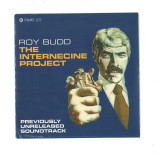
This almost unheard score holds some never before heard Budd gems. Dynamite Cuts release for the first time a 7' 45 with a selection of original cues and dialogue taken from the Film. How, James Coburn as Professor Robert Elliot creates a masterful plan to get four people, who know too much, to kill each other is a fine example of a classic British thriller with a superb twist at the finale. This 45 is a journey through the film that includes some never before heard tracks. A must have!
THE INTERNECINE PROJECT Musicians
Roy Budd - Piano, Clavinet, Rhodes, EMS AKS
Paul Fishman - ARP 2600 Electronic programmed and effects
Daryl Runswick - Double Bass and Bass
Tristian Fry - drums
Frank Riccotti - Percussion
Judd Proctor - Guitar
Ronnie Scott - Alto sax
Tubby Hays - Sax
Kenny Baker - Trumpet
String orchestral parts led by Sidney Sax: 1974 The National philharmonic
John Richards - Sound engineer
Roy Budd - Arranger
Recorded at CTS Wembley
THE BLACK WIND MILL Musicians
Roy Budd Key boards - Harpsichord, Clavinet, Rhodes and Piano, EMS AKS
Paul Fishman - Electronic programmed & ARP 2600 Keyboard
Daryl Runswick - Bass & Double bass
Ronnie Verrell- Drums
Tristian Fry & Frank Barber - Percussion
Tubby Hays, Ronnie Scott, Kenny Baker - Horns on 'Radio Music'
Orchestral parts: 1973 The National philharmonic led by violinist Sidney Sax
Dick Loosey - Engineer.
Roy Budd & Frank Barber - Arranger
Recorded at CTS Wembley
Ugly Mac Beer, a key figure in the French breakbeat scene, founder of Beatsqueeze Records and author of the critically acclaimed albums Modonut 1 & 2 alongside Mister Modo, is back with a new solo album “The Valley of the Kings”, between lofi hip-hop, abstract hip-hop or even broken beat, which will be released on January 27, 2023.
A digger/beatmaker effort par excellence, very inspired by the 90s productions of masters of the genre such as Madlib, DJ Shadow or RZA, the concept of this instrumental album with oriental sounds is based on the search for the sample of “THE” ultimate and perfectly heady loop, which can be listen to over and over again.
The eponymous title track which opens the album sets the tone with its powerful lofi hip-hop drum on a big cinematic and orchestral sound which evokes an Egyptian peplum of the 60s taking place in the heart of the mythical valley of the kings! Another highlight of the album, the track “Les chœurs perdus” resonates like a children’s tale, with its bewitching voices and magical songs set to a catchy beat that evokes the Egyptian goddesses and the mystery of the pyramids. To compose the powerful and rather dark beat of “The New Flame”, another essential piece of the album, the beatmaker drew his inspiration from New York hip-hop from the 90s but also from “crime film” soundtracks from the 70s. The sublime interludes “Fortune & Gloire”, “Years of Despare” and “Ambitious Dream” take us from one track to another, each one more powerful than the other.
In a very cinematographic mood, Ugly Mac Beer succeeds in developing its “old film about Egypt” album concept from start to finish and thus manages to tell a real story that takes us on a journey back in pyramids time.
Ugly Mac Beer, a key figure in the French breakbeat scene, founder of Beatsqueeze Records and author of the critically acclaimed albums Modonut 1 & 2 alongside Mister Modo, is back with a new solo album “The Valley of the Kings”, between lofi hip-hop, abstract hip-hop or even broken beat, which will be released on January 27, 2023.
A digger/beatmaker effort par excellence, very inspired by the 90s productions of masters of the genre such as Madlib, DJ Shadow or RZA, the concept of this instrumental album with oriental sounds is based on the search for the sample of “THE” ultimate and perfectly heady loop, which can be listen to over and over again.
The eponymous title track which opens the album sets the tone with its powerful lofi hip-hop drum on a big cinematic and orchestral sound which evokes an Egyptian peplum of the 60s taking place in the heart of the mythical valley of the kings! Another highlight of the album, the track “Les chœurs perdus” resonates like a children’s tale, with its bewitching voices and magical songs set to a catchy beat that evokes the Egyptian goddesses and the mystery of the pyramids. To compose the powerful and rather dark beat of “The New Flame”, another essential piece of the album, the beatmaker drew his inspiration from New York hip-hop from the 90s but also from “crime film” soundtracks from the 70s. The sublime interludes “Fortune & Gloire”, “Years of Despare” and “Ambitious Dream” take us from one track to another, each one more powerful than the other.
In a very cinematographic mood, Ugly Mac Beer succeeds in developing its “old film about Egypt” album concept from start to finish and thus manages to tell a real story that takes us on a journey back in pyramids time.
Under the alias The Rodeo, French artist Dorothée has been curating her discography since 2010. An exercise in self-exploration that her fourth album, Arlequine, refines and reveals with the confidence of someone who has cast doubt aside. With these nine baroque, complex and catchy French pop tracks, the singer-songwriter reveals her many faces. Truly multi-faceted, she is as much a performer on stage as she is an artist in real life. She toys with appearances instead of falling victim to them. Backed by a group of loyal virtuoso musicians, Arlequine marries melancholy and melodic clarity, anger and orchestral density, loss and pop idealism, in ambivalent songs with powerful choruses that paint a portrait of "a battle-hardened woman with a smile (...), a woman warrior with makeup" ("Arlequine"): resilient, resolute, reborn. The Rodeo has played all over the world (Europe, USA, Canada, Brazil, South Korea, Taïwan) and shared the stage with many artists (Salif Keita, Stereophonics, Villagers, Nada Surf, The Do, Kazu...). She"s involved in the European program Keychange for increased parity in the music industry.
Following up last year's orchestral album opus “Overtones For The Omniverse", Mocky has been releasing a number of upbeat and uplifting instrumental tracks and now collects them as "Goosebumps Per Minute, Volume 1" on classic vinyl and digital. Putting his vocals and songwriting to the side for this project, Mocky employs harps, horns, and 70’s analogue synths to provide a funky soundtrack that spreads a little of that California sunshine in the listeners direction. Built around Mocky's signature basslines and ensemble vocal arrangements that include his son Telly and his daughter Lulu, all recorded to his vintage ampex tape machine, Mocky did away with the normal metronomic BPM calculations in modern production and instead measured his music in "GPM" (the tempo at which music transmits Goosebumps) - and on top of a multitude of summery bass, drums & strings perfection, Vicky Farewell drops a blistering Rhodes solo on "Flutter" and Carlos Niño lends a percussive hand on the sublime "Iridescence”. Todd M. Simon handles the horn duties, and Liza Wallace infuses the dance tracks with live harp which recalls the floating approach of Alice Coltrane. Titles like "Refractions", "Wavelengths" or "Conduction" are hinting at a scientific approach to creating the conditions for "Goosebumps Per Minute" - his own calculus for the timing of how and when to hit and strum the things in his studio to make it raw & funky.
The songs were also inspired by his time hanging out at the Goldline bar in LA’s Highland Park. “Throughout the pandemic it was the one place I could go and sit outside and hear incredible music as I listened to my friend DJ Phonecalls playing from the Goldline's vinyl collection. He would be dropping these uplifting funk and disco cuts - and at the end of the night I would go home to my studio and make a track and upload it to my Bandcamp and the streaming services immediately … It reminded me of my time in Tokyo's vinyl bars so "Goosebumps Per Minute" owes a lot to that inspiring culture as well“.
About Mocky:
Performer, producer, songwriter, composer and multi-instrumentalist, Dominic "Mocky" Salole came to prominence in the Berlin electronic scene of the mid 2000s, releasing three acclaimed solo albums and co-writing and producing classics like Jamie Lidell's "Multiply" and Feist's "The Reminder". In 2009, his music took a jazz-inflected turn to the acoustic with the release of "Saskamodie" and in 2011 Mocky relocated to Los Angeles, where he quickly established himself as a co-writer with uncommon credentials collaborating with L.A.’s brightest breakthrough artists like Kelela, Joey Dosik, Vulfpeck or Moses Sumney. Mocky channeled those new creative energies into his fifth full length album "Key Change" and four digital mixtapes/EPs "The Moxtapes" Vol. IIV. After co-producing and co-writing Feist's "Pleasure" and Kelela's "Take Me Apart", in 2018 Mocky released two albums: "Music Save Me (One More Time)" and "A Day At United", an instrumental jazz album, recorded in a single day. In 2019 Mocky delved into soundtrack work by collaborating with legendary Anime director Shinichiro Watanabe on the first two seasons of the breakthrough show “Carole and Tuesday” (Netflix) for which he won Best Score at the Anime Awards. In 2020 he started a new Single series with 2 releases featuring the portugese singer Liliana Andrade and in 2021 he released his orchestral album "Overtones For The Omniverse" and started a series of funky instrumentals under "Goosebumps Per Minute".
Emo-Deutschpunk in den Neunzigern, Indierock-Experimente in den 2000ern und mittlerweile im queeren Power-Pop zu Hause: SCHROTTGRENZE Synthesizer, orchestrale Arrangements und klassische Chöre - die musikalische Reise, die hinter der einstigen Punkband aus dem niedersächsischen Peine liegt, ist erstaunlich. "Wir haben uns nie von der Musikindustrie, einer bestimmten Szene oder kommerziellen Erfolgsansprüchen abhängig gemacht und sind stets unseren gemeinsamen thematischen und musikalischen Vorlieben gefolgt", erklärt Sängerin* Saskia Lavaux, die SCHROTTGRENZE 1994 gemeinsam mit Gitarrist Timo Sauer gegründet hat. Bassist Hauke Röh und Schlagzeuger Lars Watermann vervollständigen das Quartett, das seit 20 Jahren in Hamburg ansässig ist. Als die Band 2017 - nach einer mehrjährigen Schaffenspause - mit dem Album "Glitzer auf Beton" ihr Comeback feiert, wird der Anspruch an die eigene musikalische Unabhängigkeit besonders deutlich. "Damals nahm die queere Trilogie ihren Anfang, die wir 2019 mit "Alles Zerpflücken" fortgesetzt haben und nun mit "Das Universum ist nicht binär" abrunden", fasst Saskia zusammen, die mittlerweile auf ihre ganz persönliche queere Transformation zurückblickt. Produziert wurden die besagten drei Platten, die eindeutig eine neue SCHROTTGRENZE-Ära markieren, allesamt gemeinsam mit Kristian Kühl. Neu hingegen ist die Zusammenarbeit mit Oliver Zülch, der in der Vergangenheit bereits Bands wie Die Ärzte, Sportfreunde Stiller und The Notwist tontechnisch supportet hat. Das Ergebnis: Ein neuer, klarer und empowernder Sound, der dem unabhängigen Bandkollektiv sehr gut steht.
"All This Is Chance" ist das erste Album von Lisa O"Neill auf Rough Trade Records. Der Vorgänger, laut The Guardian das Folk Album of Year 2019, erschien noch beim Imprint River Lea. In ihrer Karriere konnte Lisa bereits fünf BBC Folk Award Nominierungen einheimsen, richtigen Schub erlangte sie aber in diesem Jahr dank eines großartigen Bob Dylan Cover, das im epischen Finale der Serie "Peaky Blinders" zur Geltung kam. Für ihr neues Album beginnt beginnt O"Neill als Erzählerin ihre Reise auf irischem Grund, lässt sich vom Autoren Patrick Kavanagh und dessen Erzählungen über die Große Hungersnot in Irland inspirieren, um daraufhin über die Verbindung zur Natur, zu Vögeln, Beeren, Bienen und Blut zu meditieren. Die Musik dazu ist orchestral, dramatisch, geradezu cinematisch - wie zum Beispiel bei der ersten Single "Old Note", die sich als trauriges Wiegenlied über den Verlust der Verbindung zur Natur entfaltet. Der Song ist dabei eine Reaktion auf ein Interview mit dem traditionellen Musiker Tony McMahon und zwischen den Noten spürt man geradezu die enge Verbindung und Liebe O"Neills zur Tierwelt und der Natur um uns herum. Beim Album wirkten viele etablierter (Folk)-Musiker mit. Angefangen von Joseph Doyle am Bass, Cormac Begley, Colm Mac Con Iomaire, Kate Ellis (Crash Ensemble), der Pianistin Ruth O"Mahony Brady, Lorcan Byrne an den Drums, Produzent Dave Odlum an der Gitarre, Colm O"Hara an der Posaune, Brian Leach am Hackbrett, Mic Geraghty am Harmonium und David Coulter an der Säge. O"Neills Nichte Sadie-Mae O"Neill ist dazu noch als zweite Stimme auf "Old Note" zu hören.
Das Sony Classical-Debütalbum "Arctic" der international hochgelobten norwegischen Geigerin Eldbjørg Hemsing ist eine musikalische Reise durch die Arktis mit neuer Musik u.a. von den Star-Komponisten Jacob Shea ("The Blue Planet") von Bleeding Fingers Music und Frode Fjellheim ("Frozen"). Zusammen mit dem Arctic Philharmonic Orchestra zelebriert Eldbjørg Hemsing darauf die zerbrechliche und weithin unentdeckte Schönheit eines Ökosystems, das in einem beispiellosen Ausmaß vom Klimawandel bedroht ist. "Die Arktis wird oft als ein schroffer, unbewohnbarer Ort verkannt, dabei handelt es sich um eine Region von einmaliger Schönheit und voller Leben, die auf faszinierende Weise illustriert, wie alles in fragilen Kreisläufen zusammenhängt. 'Arctic' ist eine musikalische Reise durch diesen einmaligen, gefährdeten Naturraum", erklärt Eldbjørg Hemsing. "Ich möchte mit diesem Projekt den Menschen zeigen, wie großartig und schützenswert diese Landschaft ist und auf die Bedrohung durch den Klimawandel hinweisen, die Auswirkung auf uns alle hat." "Arctic" ist voller mitreißender Melodien und beeindruckenden orchestralen Klanglandschaften, die sich beim Anhören des Albums aufbauen, wie die atemberaubenden Lebensräume der Arktis im Lauf der Jahreszeiten. Für die musikalische Gestaltung ihres Albums hat die im norwegischen Valdres geborene Musikerin mit einer Vielzahl an Komponisten zusammengearbeitet und ein einmaliges Album kreiert, das amerikanische Filmmusik mit europäischer Klassik verbindet. So enthält "Arctic" neue Musik von den Filmkomponisten Jacob Shea von Bleeding fingers Music und Frode Fjellheim wie auch neue Arrangements von Melodien der Komponisten Selim Palmgren, Einojuhani Rautavaara, Henning Sommerro, Ola Gjeilo, Ole Bull, Edvard Grieg und James Newton Howard. Aufgenommen wurde das Album in Bodø innerhalb des norwegischen Polarkreises mit dem Arctic Philharmonic Orchestra. "Ich wollte einmalige, einprägsame Melodien mit einem malerischen orchestralen Klang verbinden, der dem großen Panorama der Arktis entspricht, um diese emotionale Geschichte zu erzählen. Entstanden ist eine sehr abwechslungsreiche Art Filmmusik für den Konzertsaal oder ein Soundtrack für eine innere Reise", sagt Eldbjørg Hemsing über die Musik von "Arctic". Das zentrale Werk des Albums ist die 20 Minuten lange "Arctic Suite" des amerikanischen Filmkomponisten Jacob Shea von Bleeding Fingers Music, der zusammen mit Hans Zimmer die millionenfach gespielte, ikonische Musik zu "The Blue Planet" geschrieben hat. In den sechs Teilen der "Arctic Suite" vertont Jacob Shea die einmaligen arktischen Naturphänomene und findet Melodien für "Frozen Worlds" im Winter, die "Aurora" in der Polarnacht oder den "Sunrise" in der Morgendämmerung des Polartages. Er gibt den Fischschwärmen im Malmström einen Klang in "Rush of Life" oder dem poetischen Pfeifen der "Polar Winds" und endet mit einem melancholischen Blick auf aktuelle Veränderungen in "Sea Ice Melting". Komponist Frode Fjellheim ist bekannt von seiner Arbeit zu "Frozen". Er entstammt den Samen, einem Volk, das bereits seit Jahrhunderten den europäischen Polarkreis bewohnt. Für seine Kompositionen "Under the Arctic Moon" und "The Return of the Sun" lässt er sich von den traditionellen Liedern der Samen, den "Joik", inspirieren. In "The Return of the Sun" singt er sogar eine dieser traditionellen Melodien. Die musikalische Reise durch die "Arctic" umfasst weitere neue und farbenfrohe Orchesterarrangements von Werken nordischer Komponisten wie das klangmalerische "Snowflakes" von Selim Palmgren, "Whispering" von Einojuhani Rautavaara, "Dawn" von Ola Gjeilo und "Vårsøg" von Henning Sommerro. "Vårsøg" ist eine bekannte Melodie in Norwegen und steht sinngemäß für die "Suche nach einem neuen Frühling". Das ursprünglich als Folk-Pop Song geschriebene Lied verkörpert damit die Hoffnung auf einen Neuanfang im Leben. Arrangeur Ben Palmer hat die Melodie in eine emotionale Hymne für Violine und Orchester gebettet.
- A1: Hardy's Jet Band – Sorry, Doc! (3 12)
- A2: Hardy's Jet Band – Wind It Up (2 52)
- A3: Hardy's Jet Band – Safari Track (2 58)
- A4: Hardy's Jet Band – Look At Me (2 27)
- A5: Hardy's Jet Band – Blue Butterfly (2 44)
- A6: Hardy's Jet Band – What You Call To Be Free (3 03)
- B1: Orchestra Klaus Wuesthoff – Lady In Space (2 26)
- B2: Orchestra Klaus Wuesthoff – Big Beat (2 45)
- B3: Jan Troysen Band – A Blue Message (3 31)
- B4: Jan Troysen Band – Pop Happening (2 29)
- B5: Orchestra Gary Pacific – Ghetto Gap (2 43)
- B6: Orchestra Gary Pacific – Soft Wind (2 07)
- B7: Orchestra Gary Pacific – So Far (1 38)
Behold! Yes, Blue Butterfly, one of the absolute stunners on the revered Selected Sound, is finally available for all the beat-heads. Heavyweight library funk with a psychedelic touch, the super in-demand Blue Butterfly from *deep breath* Hardy's Jet Band, Orchestra Klaus Wuesthoff, Jan Troysen Band and Orchestra Gary Pacific - was originally released in 1971. Incredibly ahead of its time, it's been rare and sought-after for decades.
For many aficionados, this is the best Selected Sound release. Loaded with fuzzy wah-wah guitar, deep flute-lines atop soulful psych-rock breakbeats and huge organ action, its uncompromising funk will blow you away. Sampled for many hip hop beats and dropped by well known rare groove DJs around the world, one jewel in particular from this glorious German vault needs little introduction. The intro to Orchestra Gary Pacific's mesmeric "Soft Wind" rides the illest, crispest drum break you've perhaps never heard - like, the drum break to end them all - alongside a smooth, deep bass line from the heavens. It featured notoriously on the beloved Dusty Fingers comps of the 90s and was brilliantly sampled by Pacewon for his eternal "Sunroof Top". Just listen and be dazzled.
Beyond this mini-masterpiece, the other killer tracks offer brilliance in abundance. Hardy's Jet Band take control of the full A side, and it's full of dynamic psych-funk bombs. Hard, "big city" industrial groovers. In particular, the initial one-two of "Sorry, Doc!" and "Wind It Up" provide thrilling funky-blues rock instrumentals showcasing relentless guitars, flutes, sax and organ, the latter containing gorgeous, hypnotic breakdowns; these tracks just slay. The title track, "Blue Butterfly" is a real deep strut of a track with fantastic soloing from guitar and flute over crisp drums whilst the highway banger "What You Call To Be Free" certainly sounds a lot like unbridled, rhythmical liberty.
On the flip, the ghost-riding "Lady In Space" is a string-drenched acid-western foxtrot. Yep. “Pop Happening” by Jan Troysen Band is a heavy, druggy psych-fuzz organ groover whilst their slow beat-organ-flute gem "A Blue Message" is a gorgeous psych floater conjuring deeply strange frontier lands. Preceding their monster "Soft Wind", the soulful, uptempo groover “Ghetto Gap” by Orchestra Gary Pacific contains solo piano and flute whilst closing out the set is the free-and-easy samba beat of "So Far".
Founded in the late 60s by German composer and musician Klaus Netzle (who recorded under the alias Claude Larson for Sonoton) Selected Sound began as a production music company specialising in jazz, orchestral and electronic recordings. You can’t miss those early LPs in their iconic glossy metallic copper sleeves with minimal German typography. Serious, classy stuff.
The audio for Blue Butterfly has been remastered for vinyl by Be With regular Simon Francis whilst Richard Robinson has handled reproducing the glossy metallic (iconic) original Selected Sound sleeve. Essential.
Lady in Satin was released in 1958 on Columbia Records, catalogue CL 1157 in mono and CS 8048 in stereo. It is legendary singer Billie Holiday's penultimate album completed by the singer and released in her lifetime (her final album, Billie Holiday, being recorded in March 1959 and released just after her death).
AllMusic says: "The feeling and tension she manages to put into almost every track set this album as one of her finest achievements. 'You've Changed' and 'I Get Along Without You Very Well' are high art performances from the singer who saw life from the bottom up."
The song material for Lady in Satin derived from the usual sources for Holiday in her three-decade career, that of the Great American Songbook of classic pop. Unlike the bulk of Holiday's recordings, rather than in the setting of a jazz combo Holiday returns to the backdrop of full orchestral arrangements as done during her Decca years, this time in the contemporary vein of Frank Sinatra or Ella Fitzgerald on her Song Books series. The album consists of songs Holiday had never recorded before.
Bandleader Ray Ellis used a 40-piece orchestra, complete with horns, strings, reeds and even a three-piece choir. It would turn out to be Holiday's most expensive music production. Soloists on the album included Mel Davis, Urbie Green, and bebop trombone pioneer J. J. Johnson.
Now with our 45 RPM release, mastered from the original analogue tape by Bernie Grundman, and pressed by our own Quality Record Pressings, the best-sounding version of this historic album gives listeners an even richer sonic experience. The dead-quiet double-LP, with the music spread over four sides of vinyl, reduces distortion and high frequency loss as the wider-spaced grooves let your stereo cartridge track more accurately.
Original album produced by Irving Townsend, and engineered by Fred Plaut.
- A1: Procession
- A2: Love In The Void
- B1: Untruth
- B2: It's Ok To Be Afraid Of The Universe
- B3: Release
- B4: Gods Becoming Memories
- C1: It's In This Lie
- C2: I Would Stare Into The Sun With You Forever
- C3: Undoing
- C4: Absorbed In Light
- D1: Will We Ever Be Ourselves Again?
- D2: Denial Of Endings
- D3: The End Is The Beginning
Red Vinyl
Breaking from the strange monotony and abnormal norms that took hold during two years of pandemic life, Hammock returns with Love in the Void , an album that looks to the future, seizes the present, and unabashedly relishes the experiences and bonds that bring meaning to our days. Known for crafting orchestral works of stirring cinematic ambience, on Love in the Void the Nashville-based duo of Marc Byrd and Andrew Thompson bring guitar-forward, heart-pounding urgency to songs that shout through and shatter the static of complacency. Since forming as Hammock in 2003, Byrd and Thompson have released 14 critically-acclaimed albums, and are renowned for their unique talent for bringing inexpressible emotion to life. The Covid-19 pandemic followed closely after one of Hammock's career-defining works, the Mysterium, Universalis, and Silencia trilogy that chronicled the incomprehensible loss of Byrd's 20-year- old nephew. At their homes and apart, Byrd and Thompson then recorded Elsewhere, an album of shimmering ambience that channeled alienated longing and displacement into avenues that gave way to worlds and possibilities yet realized. Shaken awake and needing to break free of frustrations and longings, Love in the Void pulses with an unbridled spirit for action and experience and a burning desire for connection Across songs that hammer home the keenly felt emotions of life's highs and lows, Byrd and Thompson crest soaring crescendos awash in reverb and delve to keenly felt moments of quiet introspection, with unflinching lyrics on tracks like "Undoing" and "Denial of Endings'' that weigh choices made and circumstances that can't be changed. Lush and dramatic string orchestration from Matt Kidd (Slow Meadow) and emphatic drumming from Jake Finch heighten the stakes in play, and Christine Byrd's (Lumenette) ethereal vocals leave mysteries lingering in the haze. Love in the Void is Hammock's loudest album to date, embracing daring and vulnerability with palpable vitality at its core, and moving into an unknown future without fear.
A Jazzman’s Blues is the 2022 Netflix drama film written, produced, and directed by Tyler Perry. It stars Joshua Boone, Amirah Vann, Solea Pfeiffer, Austin Scott, and Ryan Eggold a.o. The film centers on the forbidden romance between Bayou and Leanne who are best friends. They fall in love as soon as they cross paths, however Leanne’s mother forbids their union and forcefully takes Leanne with her to Boston.
The orchestral music in A Jazzman’s Blues was composed by the classically trained composer Aaron Zigman, who has previously scored music for films including The Notebook, The Company Men and Sex & the City. He has also written, arranged, and produced for artists including Quincy Jones, John Legend, Phil Collins, Christina Aguilera, and Aretha Franklin amongst many others. The songs of this score have been arranged and produced by Oscar-nominated trumpeter and composer Terence Blanchard. He has been nominated for composing the scores for BlacKkKlansman and Da 5 Bloods.
The soundtrack features vocals by the cast members, including Joshua Boone, Amirah Vann and Austin Scott.
AJazzman’s Blues is housed in a gatefold sleeve and includes an unfolded “paper plane” insert with lyrics of Ruth B.’s song “Paper Airplane”.
The legend of Twilight Force began to form in the year 2007 of the Human Era. It was the result of a yearning to bring back the golden age of Epic Symphonic Power Metal. But Twilight Force soon became an entity of its own, evolving and elevating the genre to new heights and sounds. By fusing triumphant melodies with rich orchestral arrangements and swift performances, Twilight Force creates an intense and immersive experience. Transporting the listener to a magic realm filled with wonder, heroic tales and mesmerising tales from the mythical world known as The Twilight Kingdoms.
Using their vast experience from previous musical endeavours, their classical training, and technical proficiency, Twilight Force spawned the first ever Adventure Metal album in 2014 H.E. - Tales of Ancient Prophecies. Two more critically acclaimed albums followed in its wake, Heroes of Mighty Magic (2016), and Dawn of the Dragonstar (2019), with the fourth opus At the Heart of Wintervale set for release on January 20th, 2023 on Nuclear Blast Records.
Once again, the cover artwork has been created by the brilliantly skilled Kerem Beyit, and is directly connected to the album’s title track as the band explains: “It depicts the tale told in ‘At the Heart of Wintervale’ where an evil curse is broken, and the ancient dragon may finally roam the realms again, free and unfettered!"
At the Heart of Wintervale will be released on CD, Digibook, and Vinyl. The limited Digibook edition will also include three bonus tracks. The first one is a song, many of the band's loyal knights may somewhat recognize; it is an acoustic blend of some of the older works, featuring an entrancing vocal performance and guitar work by Twilight Force's very own wood elf Aerendir. The second and third bonus tracks are orchestral versions of two songs from the album, where fans will have the opportunity to experience a different soundscape, and perhaps discover new exciting elements and intricacies never discerned before.
With the band embarking on a headlining tour through Europe and UK on time with the album’s release, Twilight Force look immensely forward to continue their epic tale.
“So, sharpen your swords, dust off your magic tomes, and brew your strongest potions. It is time to join Twilight Force on their quest for the eternal glory of the Twilight Kingdoms, once again.
May the Power of the Dragon guide you!”
- 1: Devil's Island
- 2: Downtown
- 3: London Bridge
- 4 10: 00 Miles
- 5: Hk
- 6: Tape Measure, Feat Juliyah
- 7: Machines Like Me
- 8: Black Sheep
- 9: Volcano
- 10: Who's Asking
Debut solo album by Dave Rowntree, best known as the drummer in Blur. It"s a record set to surprise many people, being an electronic-based album with orchestral fringes, filled with great, tuneful songs delivered by Rowntree"s assured and expressive vocal performances. While down the years he"s provided backing vocals on many of Blur"s albums and onstage during their live sets, this is the first time the drummer has stepped up to the microphone as a singer in his own right. He says he didn"t particularly find the prospect daunting. Produced by Leo Abrahams (Brian Eno, Ghostpoet, Wild Beasts), featuring co-writers including Gary Go and Högni Egilsson and stirring orchestrations recorded in Budapest, Radio Songs is a sonically expansive, but also deeply personal record.