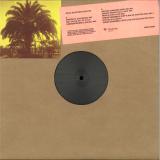
'HAPPY HOUSE' by St. Petersburg's very own DJ Stonik1917 became an instant underground hit, defining a specific raw and energetic sound within the Russian electronic and hip-hop scene, breaking genre borders and infecting crowds with its vibes and attitude, punchlines and baselines. With 'GoodDayFlopTray' and 'Kurtochka Stonik' having gone viral on social media, the sound of DJ Stonik1917 became a soundtrack for a whole generation of youth. The album's unique blend of hard-hitting beats, delayed vocals and unapologetic DIY ethos captured a moment in time, making it a sought-after title for physical media enthusiasts. The release will be a limited run, featuring the original tracklist spread across a 12-inch vinyl 180 gr. record, complete with original artwork. Poster included.
Поиск:origina
Все
'HAPPY HOUSE' by St. Petersburg's very own DJ Stonik1917 became an instant underground hit, defining a specific raw and energetic sound within the Russian electronic and hip-hop scene, breaking genre borders and infecting crowds with its vibes and attitude, punchlines and baselines. With 'GoodDayFlopTray' and 'Kurtochka Stonik' having gone viral on social media, the sound of DJ Stonik1917 became a soundtrack for a whole generation of youth. The album's unique blend of hard-hitting beats, delayed vocals and unapologetic DIY ethos captured a moment in time, making it a sought-after title for physical media enthusiasts. The release will be a limited run, featuring the original tracklist spread across a 12-inch vinyl 180 gr. record, complete with original artwork. Poster included.
- A1: Natty Dub Source: Natty Dread In A Greenwich Farm / Cornell Campbell
- A2: Lee's Dub Source: Lee's Dream / Derrick Morgan
- A3: Wonder Why Dub Source: Wonder Why / Cornell Campbell
- A4: I'm Gone Dub Source: I'm Gone / Derrick Morgan
- A5: Country Boy Dub Source: Country Boy / Cornell Campbell
- A6: True Believer Dub Source: True Believer / Johnny Clarke
- A7: Care Free Dub Source: Care Free / Mighty Diamonds
- A8: Rasta Train Dub Source: Mule Train / Johnny Clarke
- B1: Move Out Of Babylon Dub Source: Move Out Of Babylon / Johnny Clark
- B2: Give A Little Man A Great Big Hand Dub Source: Give A Little Man A Great Big Hand / Cornell Campbell
- B3: Feel So Good Dub Source: Feel So Good / Derrick Morgan & Paulette
- B4: For The Rest Of My Life Dub Source: Wonder Why / Cornell Campbell
- B5: When Will I Find My Way Dub Source: When Will I Find My Way / Owen Grey
- B6: I'm Leaving Dub Source: I'm Leaving / Derrick Morgan & Hortense Ellis
- B7: Feel Lost Dub Source: Feel Lost / Bb Seaton
- B8: Dawn Dub Source: Dear Dawn / Barrington Spence
2024 Reissue
“Tubby did three original dub albums, ‘Dub From The Roots’. ‘The Roots of Dub’ and the third is ‘Brass Rockers’ with Tommy McCook ‘pon the flying cymbals. Where he mixed it with the horn going in and out in a dub way and one named ‘Shalom Dub’ you can call Tubby’s too because he mixed the versions as they were off forty fives’’
Bunny ‘Striker‘ Lee
King Tubby and Producer Bunny ‘Striker’ Lee are intertwined in the birth of Dub Music. After discovering a mistake that made a ‘serious joke’ ( more of which later...) they went on to release the first pressings of this new musical genre namely ‘Dub Music’. Tubby’s vast knowledge of electronics and Bunny’s vast catalogue of rhythms would lay the foundations of what today is taken as a standard... the Remix / Version cuts to an existing vocal tune.
Osbourne ‘King Tubby’ Ruddock was born in Kingston, Jamaica on 28th January 1941 and grew up in the High Holborn Street area of downtown Kingston. He studied electronics at Kingston’s National Technical College and also on two correspondence courses from the U.S.A... When he had qualified Tubby began repairing radios and other electrical appliances in a shack in the back yard of his mother’s home. His work in the early days included winding transformers and building amplifiers for Kingston’s Sound Systems. Tubby built his first Sound System in 1957 playing jazz and Rhythm & Blues at local weddings and birthday parties. His reputation as a man who knew and understood both electronics and music grew steadily and as the sixties drew to a close. Tubby purchased his own basic two track equipment. He installed this alongside his dub cutting machine, a home made mixing console and his impressive collection of Jazz albums in the back bedroom of his home at 18 Dromilly Avenue which he christened his music room.
Tubby and Striker were at Treasure Isle Studio’s one day while Ruddy from Spanish Town was working with the engineer Byron Smith....
“Tubby and myself was talking when Ruddy was cutting some dub but Smithy (engineer) made a mistake through we were talking and forgot to put in the voice. It was two track recording in those days. Ruddy said ‘No Man! Make it stay! and so they cut the rhythm. When I went over to Ruddy’s that Saturday night a dance was in progress and when they played the vocal to the tune... then he said we’re going to play ‘Part Two’. They never called it ‘Version’..and then he played the rhythm track. The song was a catchy song and everybody started to sing along and the deejay started to toast so everything went down well. On Monday morning I went up and I said ‘Tubbs the mistake we made was a serious joke.It mash up Spanish Town! The people went wild. So you have to start to do that now ‘cause when the man put on the ‘Part Two’ everyone start singing this song. It played about twenty times. I said you try Tubbs!’...Well the next Saturday night now when Tubby strung up down the farm U Roy said he’s going to play ‘Part Two’ but Tubby did it different now. He started with the voice then dropped it out and let the rhythm run and then he brought in the voice in the middle and from there Tubby started to get really popular.’’
Bunny ‘Striker’ Lee
Dynamic Sounds upgraded to sixteen track recording in 1972 and Tubby purchased, again with the help of a deal brokered by Bunny Lee. The old four track equipment and the MCI console from their Studio B. The four tracks now gave him far wider scope to work with and he began to create a new musical form where the bass and drum parts were brought up while the faders allowed Tubby to ease the vocal and rhythm in and out of the mix. It was only a matter of time before Tubby’s dub plate experiments began to make it on to vinyl and the first ever long playing King Tubby releases would feature a collection of his mixes to a selection of Strikers rhythms. So please sit back and enjoy this historic set of sounds. Lovingly restored and with a few extra gems added to the CD Editions. These releases were the first to carry the name of King Tubby and the first to credit the great musicians that contributed so much to the rhythms that made these albums possible.
- 58: Second Song
- Deep End
- In The Margin
- Wild Thing
- Be-In
- Cell Phone Blues
- Togetherness Is All I'm After
- Marauders
- Love Chant
- The Key Of Victory
- Roky
YELLOW VINYL[28,53 €]
DEEP END / SAD CINDERELLA[24,16 €]
White Vinyl[28,53 €]
Kreisch! The Lemonheads kehren mit ihrem ersten Studioalbum mit ausschließlich Originalmaterial seit fast 20 Jahren zurück. Nach Jahren des Schreibens, des Umherziehens und des Neuanfangs sowie der Veröffentlichung der Single "Fear Of Living" kehrt Evan Dando mit 11 Original-Lemonheads-Songs zurück. Seit langem in Arbeit, geprägt von wechselnden geografischen Gegebenheiten, entstanden mit einer Reihe willkommener Gäste, ist es eine kühne, melodische Bestätigung einer der markantesten Stimmen des Alternative Rock. Dandos Wohnsitz in Brasilien, wo ein Großteil des Albums aufgenommen wurde, hat ihm in den letzten Jahren einen ruhigen Perspektivwechsel ermöglicht - eine Chance, sich neu zu orientieren, sich wieder zu verbinden und seine Songs endlich in den Fokus zu rücken. Das Ergebnis ist ein Album, das sowohl frisch als auch vertraut klingt: verwurzelt in den Merkmalen der besten Arbeiten der Lemonheads, aber erweitert durch jahrelange Lebenserfahrung und eine neue Umgebung. Love Chant wurde von dem brasilianischen Multiinstrumentalisten Apollo Nove produziert und bringt alte Freunde und neue Partner zusammen: J Mascis (Dinosaur Jr), Juliana Hatfield und Tom Morgan sind wieder mit an Bord, zusammen mit dem Produzenten Bryce Goggin (Pavement, Antony and the Johnsons), Erin Rae aus Nashville, John Strohm von den Blake Babies und Nick Saloman von The Bevis Frond. Und Adam Green von der New Yorker Kultband The Moldy Peaches ist als Co-Autor an dem lockeren Country-Abstecher "Wild Thing" beteiligt. In den letzten Jahren hat sich der Einfluss von The Lemonheads noch verdeutlicht, Acts wie MJ Lenderman, Courtney Barnett und Waxahatchee haben Dandos Songs gecovert und loben die emotionale Klarheit, den melodischen Instinkt und die ironische Intimität, die seine Texte auszeichnen. Diese generationsübergreifende Resonanz macht Love Chant zu mehr als einer Rückkehr - es ist eine Erinnerung an das, was diese Band in erster Linie ausgemacht hat und jetzt noch um einen späten Höhepunkt erweitert wird. Inklusive der Vorab-Singles "Deep End" und "In The Margin". "The Lemonheads' ability to merge punk rock's energetic simplicity with lush, melodic hooks is both timeless and influential." Pitchfork. CD (Digipak) oder LP (embossed vinyl sleeve artwork)
- A1: The Velvet Note Lounge (Skit)
- A2: Hollow Tips
- A3: Cut Throat Game
- A4: Playas Need Love (Feat. Rocci)
- A5: True Playas
- A6: I'm Not Yo Daddy
- A7: Boulevard Nights (Feat. Jason Joshua & Rocci)
- A8: Playing The Fool (Skit)
- A9: Money Don't Stop For You (Feat. Rocci)
- B1: Shake Junt Hoes
- B2: Pushin On Some Paper
- B3: Chain Swangin (Feat. Mikey The Magician)
- B4: Scrapin Tha Corner
- B5: Never Listen
- B6: Don't Lose Hope
- B7: Cadillac Burnin (Feat. Rocci)
- B8: Goodbye & Goodnight (Skit)
Tape[15,50 €]
Ramirez returns with THA PLAYA$ MANUAL II, the long-awaited sequel to his cult classic that helped solidify his place as one of underground rap’s most distinctive voices. Steeped in Southern-fried funk, Bay Area swagger, and Memphis-style menace, this new chapter finds Ramirez sharper, smoother, and more seasoned—delivering game like a streetwise sage with a gold grill grin.
Where the original Playa$ Manual was gritty and raw, THA PLAYA$ MANUAL II sounds like a player who's leveled up. The beats knock harder, the flows glide slicker, and the game is deeper. Ramirez weaves tales of betrayal, come-ups, late-night drives, and cold-hearted reality with the same charismatic cool that made him a standout in the $uicideboy$-adjacent G59 movement—but this time with a more refined, cinematic approach.
From trunk-rattling bangers to syrupy smooth cuts that soundtrack late-night escapades, THA PLAYA$ MANUAL II feels like a ride through Ramirez’s world with tinted windows up and the bass on max. It’s a record for the hustlers, the heartbreakers, the loners, and the legends in the making.
This is more than a sequel—it’s a statement: the playa’s still active, and the manual’s been updated.
2025 jährt sich zum 15. Mal die Komödie Scott Pilgrim Vs The World aus dem Jahr 2010, die von Edgar
Wright geschrieben, produziert und inszeniert wurde und auf der Graphic-Novel-Serie Scott Pilgrim von
Bryan Lee O’Malley basiert. Mit Michael Cera als Scott Pilgrim, einem Slacker-Musiker, der versucht,
einen Wettbewerb zu gewinnen, um einen Plattenvertrag zu bekommen, während er gleichzeitig gegen die
sieben Ex-Freunde seiner neuen Freundin Ramona Flowers kämpft.
Der Soundtrack der nun auf roter Vinyl erhältlich ist, wurde von Nigel Godrich zusammen mit Edgar Wright
produziert und enthält eine Reihe von Originalstücken, die von Beck komponiert und im Film von Michael
Ceras Band ”Sex Bob-Omb” eingespielt. wurden. Außerdem gibt es auch einen bisher unveröffentlichten
Song von Metric und auch Songs von Broken Social Scene, Beachwood Sparks, The Bluetones, Blood Red
Shoes, Black Lips , Frank Black und den Rolling Stones.
- 1: Cities Of The Plain (4:25)
- 2: Loss & The Hand Lense (4:)
- 3: The Falls (4:17)
- 4: The Torture Garden (:01)
- 5: The Fatal Muse (6:26)
- 6: Reign Of Ashes (3:04)
- 7: Dead Roads (3:20)
- 8: The Pressure Of The Text (3:15)
- 9: Trance Militant (2:14)
- 10: The Tears Of Eros (6:25)
- 11: Cities Of The Red Night (4:44)
"Originally released in 1990 on the legendary Australian label Extreme, The Annihilating Angel stands as one of Paul Schütze’s most visionary and cinematic works — a dark ambient masterpiece rooted in mystery, decay, and metaphysical beauty. Blending slow-burning soundscapes, processed field recordings, and abstract industrial textures, this album explores the sonic equivalent of sacred ruins and distant, imagined geographies.
Now officially reissued by Everland Music, this long out-of-print classic returns on vinyl with restored audio and updated packaging. The new brilliant remaster was handled by Miroslav Piškulić, a radio sound maestro renowned for his subtle approach to psychedelic electronic music. The result received praise from Paul Schütze himself — who called it the most faithful reproduction of his original vision to date."
- Home Of The Brave
- Dog At Large
- Knock Me Down
- Mr. Gridlock
- The Strip
- I Remember
- Those Who Move
- The Envelope
- Backlash Jack
- Peacemaker
- New Dreams
- Slim - Bonus Track
- Rocks Of Sweden - Bonus Track
Limited edition PLUTONIUM vinyl 1000 copies worldwide. Remastered by Bob Weston at Chicago Mastering Service. Originally released in 1986 vinyl reissue includes 2 bonus tracks. "This is a bit different than previous records in that there's only a couple of songs with their distinctive bass licks and chunky melodies. So instead of bordering on redundancy, they prove their diversity by being more melodic, rockin', and even pop. This LP is more challenging than before and really great." - MaximumRockNRoll, April 1986 - // Naked Raygun were an extraordinary staple in the Chicago music scene - beginning in the early 80's and continuing until their quiet demise in the early 90's. Their music showed the world that punk rockers could play and be really good at it. Founded in Chicago in 1980, by Marco Pezzati, Jeff Pezzati and Santiago Durango, Naked Raygun released six albums during their eleven year career that would change the sound of punk rock indefinitely. The band is widely recognized as being one of the most influential punk bands of the 80's. Their anthemic style incorporated politics in a uniquely accessible way, melding pop and hardcore into one cohesive sound, that would later be dubbed, "The Chicago Sound". Shortly after their first release, Basement Screams, Durango left to join Big Black permanently, and was replaced by John Haggerty, whose unique style of buzzsaw guitar would define Raygun's sound for their next four albums. Additionally, Pierre Kezdy replaced Camilo Gonzalez and Eric Spicer took over drums for Jim Colao. In 1990, Haggerty left the band to start Pegboy. Bill Stephens joined the band for their final studio release entitled, Raygun...Naked Raygun.
Limited edition DARK TEAL vinyl 1000 copies worldwide. Remastered by Bob Weston at Chicago Mastering Service. Originally released as a 6-song ep in 1983 vinyl reissue includes 8 bonus tracks. "The long- awaited NAKED RAYGUN EP has finally been released, and musically it's a beauty. The songwriting is extremely imaginative, the vocals are unbelievably catchy, and the unique fuzzed-out guitar work sounds wonderful." - MaximumRockNRoll, October/November 1983 - // Naked Raygun were an extraordinary staple in the Chicago music scene - beginning in the early 80's and continuing until their quiet demise in the early 90's. Their music showed the world that punk rockers could play and be really good at it. Founded in Chicago in 1980, by Marco Pezzati, Jeff Pezzati and Santiago Durango, Naked Raygun released six albums during their eleven year career that would change the sound of punk rock indefinitely. The band is widely recognized as being one of the most influential punk bands of the 80's. Their anthemic style incorporated politics in a uniquely accessible way, melding pop and hardcore into one cohesive sound, that would later be dubbed, "The Chicago Sound". Shortly after their first release, Basement Screams, Durango left to join Big Black permanently, and was replaced by John Haggerty, whose unique style of buzzsaw guitar would define Raygun's sound for their next four albums. Additionally, Pierre Kezdy replaced Camilo Gonzalez and Eric Spicer took over drums for Jim Colao. In 1990, Haggerty left the band to start Pegboy. Bill Stephens joined the band for their final studio release entitled, Raygun...Naked Raygun.
- Soldiers Requiem
- When The Walls Come Down
- Walk In Cold
- Jettison
- Live Wire
- The Mule
- Coldbringer
- Blight
- Free Nation
- Hammer Head
- Ghetto Mechanic
- Suspect Device
- Vanilla Blue - Bonus Track
- The Strip (Live) - Bonus Track
- Roller Queen (Live) - Bonus Track
- Backlash Jack (Live) - Bonus Track
Limited edition GRAPE CRUSH vinyl 1000 copies worldwide. Remastered by Bob Weston at Chicago Mastering Service. Originally released in 1988 vinyl reissue includes 4 bonus tracks. "Plenty of bands can claim Naked Raygun as an influence, from post-punkers to hardcore acts. All of them could learn a thing or two or three by studying the whoas. With Jettison... Naked Raygun achieved creative bliss. Here is an album that successfully combines dissonant instrumentation with supremely catchy vocals." - Punknews.org - // Naked Raygun were an extraordinary staple in the Chicago music scene - beginning in the early 80's and continuing until their quiet demise in the early 90's. Their music showed the world that punk rockers could play and be really good at it. Founded in Chicago in 1980, by Marco Pezzati, Jeff Pezzati and Santiago Durango, Naked Raygun released six albums during their eleven year career that would change the sound of punk rock indefinitely. The band is widely recognized as being one of the most influential punk bands of the 80's. Their anthemic style incorporated politics in a uniquely accessible way, melding pop and hardcore into one cohesive sound, that would later be dubbed, "The Chicago Sound". Shortly after their first release, Basement Screams, Durango left to join Big Black permanently, and was replaced by John Haggerty, whose unique style of buzzsaw guitar would define Raygun's sound for their next four albums. Additionally, Pierre Kezdy replaced Camilo Gonzalez and Eric Spicer took over drums for Jim Colao. In 1990, Haggerty left the band to start Pegboy. Bill Stephens joined the band for their final studio release entitled, Raygun...Naked Raygun.
Limited edition ORANGE SWIRL vinyl 1000 copies worldwide. Remastered by Bob Weston at Chicago Mastering Service. Originally released in 1990 vinyl reissue includes 3 bonus tracks. "We drove up there and my cousin Tracy had turned punk rock. And she said, 'I'm going to this show tonight. Come with me.' And so I went to this club called The Cubby Bear - it's right across the street from the baseball stadium - and a band called Naked Raygun were playing, and they're this legendary Chicago punk rock band. But I'd never seen live music. So my introduction to rock and roll was in a club that held about 150 people that was half full and I was belly up against the stage watching this incredible live band, like, sweat and spit and bleed in front of me." - Dave Grohl interview, The Record, 2011- // Naked Raygun were an extraordinary staple in the Chicago music scene - beginning in the early 80's and continuing until their quiet demise in the early 90's. Their music showed the world that punk rockers could play and be really good at it. Founded in Chicago in 1980, by Marco Pezzati, Jeff Pezzati and Santiago Durango, Naked Raygun released six albums during their eleven year career that would change the sound of punk rock indefinitely. The band is widely recognized as being one of the most influential punk bands of the 80's. Their anthemic style incorporated politics in a uniquely accessible way, melding pop and hardcore into one cohesive sound, that would later be dubbed, "The Chicago Sound". Shortly after their first release, Basement Screams, Durango left to join Big Black permanently, and was replaced by John Haggerty, whose unique style of buzzsaw guitar would define Raygun's sound for their next four albums. Additionally, Pierre Kezdy replaced Camilo Gonzalez and Eric Spicer took over drums for Jim Colao. In 1990, Haggerty left the band to start Pegboy. Bill Stephens joined the band for their final studio release entitled, Raygun...Naked Raygun.
Limited edition GREEN SWIRL vinyl, 1000 copies worldwide. Remastered by Bob Weston at Chicago Mastering Service. Originally released in 1985 vinyl reissue includes bonus track. "This band consistently defies categories. More than hardcore. More than rock. More than experimental. And this LP blazes out with a fury that's sharp, clean, and loud as fuck. The sound on this release is more concise and focused than earlier stuff but doesn't sacrifice any of their drive. Possibly one of America's most important bands." - MaximumRockNRoll, March 1985 - // Naked Raygun were an extraordinary staple in the Chicago music scene - beginning in the early 80's and continuing until their quiet demise in the early 90's. Their music showed the world that punk rockers could play and be really good at it. Founded in Chicago in 1980, by Marco Pezzati, Jeff Pezzati and Santiago Durango, Naked Raygun released six albums during their eleven year career that would change the sound of punk rock indefinitely. The band is widely recognized as being one of the most influential punk bands of the 80's. Their anthemic style incorporated politics in a uniquely accessible way, melding pop and hardcore into one cohesive sound, that would later be dubbed, "The Chicago Sound". Shortly after their first release, Basement Screams, Durango left to join Big Black permanently, and was replaced by John Haggerty, whose unique style of buzzsaw guitar would define Raygun's sound for their next four albums. Additionally, Pierre Kezdy replaced Camilo Gonzalez and Eric Spicer took over drums for Jim Colao. In 1990, Haggerty left the band to start Pegboy. Bill Stephens joined the band for their final studio release entitled, Raygun...Naked Raygun.
Limited edition BROWN & BLACK SWIRL vinyl 1000 copies worldwide. Remastered by Bob Weston at Chicago Mastering Service. Originally released in 1989 vinyl reissue includes 2 bonus tracks. "...one of the best examples of melodic hardcore just a step away from emo. The album is excellently played and is full of breathtaking anthems that, from time to time, even wink at metal soundscapes." - Debaser - // Naked Raygun were an extraordinary staple in the Chicago music scene - beginning in the early 80's and continuing until their quiet demise in the early 90's. Their music showed the world that punk rockers could play and be really good at it. Founded in Chicago in 1980, by Marco Pezzati, Jeff Pezzati and Santiago Durango, Naked Raygun released six albums during their eleven year career that would change the sound of punk rock indefinitely. The band is widely recognized as being one of the most influential punk bands of the 80's. Their anthemic style incorporated politics in a uniquely accessible way, melding pop and hardcore into one cohesive sound, that would later be dubbed, "The Chicago Sound". Shortly after their first release, Basement Screams, Durango left to join Big Black permanently, and was replaced by John Haggerty, whose unique style of buzzsaw guitar would define Raygun's sound for their next four albums. Additionally, Pierre Kezdy replaced Camilo Gonzalez and Eric Spicer took over drums for Jim Colao. In 1990, Haggerty left the band to start Pegboy. Bill Stephens joined the band for their final studio release entitled, Raygun...Naked Raygun.
- A1: Ringing Bass (Edited Length) 6 27
- A2: Subterranean Liquid 7 31
- B1: Forward (The 5 Am Mix) 4 40
- B2: Forward (Donato Dozzy Remix) 5 42
- C1: Pulse Trader 5 28
- C2: Moisture (Treatment 3) 5 53
- D1: Lustration Four (Daikaiju) 6 05
- D2: Lustration Five (息) 8 15
- E1: Lustration Six (Megalith) 5 35
- E2: Lustration Eight (Contours) 5 18
- F1: Lustration Eleven (Sarychev) 5 52
- F2: Lustration Twelve (Derecho) 6 05
Following the reissue of his debut album Dispatches, Field Records is proud to return to the seminal work of Mike Parker with an overview of his releases on Prologue — a truly original strain of steely, hypnotic techno that has touched upon many different waves within the wider scene.
Having pioneered a hard-edged, reductionist style via his Geophone label since the mid-90s, around 2010 Mike Parker found himself at the vanguard of an emergent sound alongside artists like Donato Dozzy and Cio D'or exploring the possibilities of immersive, profoundly transcendental club music. The Prologue label came to define this cult zeitgeist, where reduction and repetition took on a truly psychedelic quality and the subtle details made all the difference. It ran from 2008 to 2015, laying the foundations for the deep techno sound that remains a vital, evolving subculture in the present moment.
From Parker's first appearance on Prologue with the Subterranean Liquid EP in 2011 through to the Lustrations LP in 2013, he delivered some of the most incisive music of his accomplished career — teased-out rhythms carrying exquisitely engineered textures veering from the subliminal to the visceral, locked into endless, cyclical oblivion and maintaining a stern, machinist veneer. This collection on Field Records combs through Parker's Prologue output and makes a considered selection, gathering key pieces from the first two EPs alongside six of the album tracks on a triple vinyl pressing, alongside a further eight cuts on the expanded digital edition.
Not just a straight-forward reissue, consider Epilogue a thoughtful reframing of a key point in Mike Parker's stellar career. In every exacting pulse, every inch of tacit spatial design, it's the work of an expert sculpting a sound which remains influential in the here and now.
- A1: Whodat's Confidence Mix
- A2: Rely On The Key Of A Flat
- A3: Kassem Mosse's Snooze Mix
- B1: Snooze Seashore Korg X5D Mix
- B2: Snooze Oiseaux De La Nuit Mix
- B3: Nidia's Love In Life Mix
- B4: Sabar Ensemble Diop & 808 - We Another Part Mix 1
- B5: Picci Bis Bi Ci Dakar
- B6: Sabar Ensemble Diop & 808 - We Another Part Mix 2
On the record New Chapter, sound from all directions of the sky is transformed as it flows through the bodies of the musicians. The source material is Viola Klein’s solo record Confidant and the collaboration with the Sabar Ensemble Diop from Saint Louis, titled We. Whodat in Detroit, Kassem Mosse in Leipzig, Nídia in Lisbon, and Viola Klein in Cologne and Dakar reshape the places where Deep House, Leftfield, Kuduro, and Mbalax originated and/or continue to thrive: the USA, Germany, Portugal, and Senegal.
- A 1: Woman Of The Ghetto
- A 2: Call It Stormy Monday
- A 3: Where Can I Go
- A4: I'm Satisfied
- A5: I Wish I Knew (How It Would Feel To Be Free)
- B1: Liberation Conversation
- B2: California Soul
- B3: Go Away Little Boy
- B4: Looking Thru The Eyes Of Love
- B 5: Anyone Can Move A Mountain
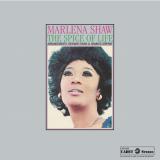
The Spice of Life, released in November 1969, stands as Marlena Shaw's second--and final--studio album for Cadet Records, produced and arranged by the renowned Richard Evans and Charles Stepney. From the opening, Shaw's voice--both playful and powerful--cuts through the lush yet tight-knit arrangements, weaving together a vibrant tapestry of soul, proto-funk, jazz, gospel, and blues. The album features two defining classics: her deeply resonant original of 'Woman of the Ghetto' and a signature take on Ashford & Simpson's 'California Soul', both staples in sampling culture (you'll probably find that you're more familiar with Shaw's material than you thought.) Evans and Stepney's arrangements are far from mere support--they're panoramic and inventive. You'll hear kalimba flourishes, psych-tinged guitar accents, and bongo-fueled organ textures that elevate each track, keeping the atmosphere rich but never overwhelming. Moments like the Bacharach-styled 'Looking Through the Eyes of Love' or the dramatic flair of 'Stormy Monday' showcase their widescreen sensibility and Shaw's versatility. Beneath its musical elegance, "The Spice of Life" carries a weighty current of social commentary. Tracks such as 'Woman of the Ghetto' and the succinct, fierce 'Liberation Conversation' bring political and feminist themes into a soulful, expressive framework--adding unexpected depth to the sophisticated sonic palette. This album offers an immersive journey through soul-jazz mastery, one that rewarded listeners with sampling gold for decades to come. Reissue on 180g vinyl.
For Martin Gretschmann, the ever-evolving Berlin artist known as both Acid Pauli and Console, music has always been a deeply personal journey.
His new imprint, All Is Acid, is the destination, a creative home for his uncompromising and experimental sound. Breaking from the cycle of trends, the label is a return to the essential, offering just a few curated releases a year. Each is intended as a timeless artifact for deep listening, primarily showcasing Acid Pauli's own intricate and intimate productions.
The label debuts with a newly remastered version of his classic 2010 EP "Den Mahlstrom rauf." But the release is given a powerful new dimension by a standout remix from Italian artist Adiel. Their collaboration was sparked by pure serendipity: a fan video of Acid Pauli playing her music in Milan reached Adiel, who responded with a short film for Vogue. In it, she revealed that "Den Mahlstrom rauf" was a formative influence and one of the very first records she ever bought.
Inviting her to remix the track that helped shape her sound was a full-circle moment, artistically and emotionally. Her bold, reverent reinterpretation honors the original's spirit while imprinting it with her own unique signature. With this release, All Is Acid launches not just with music, but with a story of connection, community and a shared artistic lineage
Phylipe Nunes Araújo's songs are as rich and varied as the diverse landscapes they were written in. The hills of Pernambuco, the lagoons of Alagoas, and the beaches of Bahia are all woven into his stripped-back, folk-inspired Brazilian songwriting. As part of a wider movement of musicians originating from Brazil's Northeast, Phylipe sees the process of music-making as the search for beauty itself.
Collaborating with fellow Northeastern artists Bruno Berle, Batata Boy and Nyron Higor among others, Phylipe's debut album represents the latest flowering of this exceptionally talented community's creative search.
The Northeast holds an almost sacred importance in Brazil's collective cultural imagination. The region bore witness to the brutal histories of Portuguese colonization and the African slave trade, while simultaneously amalgamating the diverse cultures, religions and traditions of those who have called it home. Countless Brazilian music greats - Gilberto Gil, Caetano Veloso, Hermeto Pascoal, Djavan and Luiz Gonzaga - have emerged from this vast cultural melting pot.
Born in Caruaru, Pernambuco state, and raised in the city of Santa Cruz do Capibaribe (famed for its textiles industry), Phylipe describes his music simply as "Brazilian music from the Agreste of Pernambuco". His masterful compositions thread together regional rhythm, folk poetry and sophisticated harmony.
Phylipe's musical foundations were laid in youth, listening to the local elders rehearsing their forrós, attending São João street parties in front of his house and watching the Junina Quadrilhas dance through his neighborhood. At street fairs he would read the Literatura de Cordel (handcrafted pamphlets of Brazilian folk literature), and watch the rhyme battles between cantadores, violeiros, and repentistas, who improvise verses on daily life, social commentary and philosophy. This tradition of Northeastern folk poetry proved particularly formative for Phylipe as a lyricist. "I always try to write things as simply as possible. I believe that beauty must be easily understood. If I can facilitate the path to the message, there's no reason not to. It's something I learned from the traditional poetry here: it's more beautiful if everyone understands."
At the age of 11, Phylipe first got access to the internet. As he explains: "Still in adolescence I was also able to discover things like The Beatles and Nick Drake - I started to get to know music from the rest of the world and later to correlate that with my local musical experiences." Rich with extended chords and artful dissonances, it's clear from his compositions that jazz and bossa nova also took hold, but he's quick to eschew stereotypes. "Inevitably, people associate a Brazilian musician playing a nylon-string guitar with bossa nova..." "But the foundation is another story," he asserts, "It's the Northeast."
On the guitar Phylipe experiments with the binary rhythms inherent in traditional Northeastern music. Coco, frevo, maracatu and baião are recontextualised, placed alongside Brazilian popular music (MPB), gentle lullabies and stunning ballads. "In these 10 songs, I am experimenting with making pop music on a nylon-string guitar with my foundation in the Northeastern songbook."
The contemporary musical community which Phylipe belongs to developed initially in Pernambuco's neighbouring state Alagoas. Phylipe lived in its capital Maceió for three years, where he built friendships and musical bonds with Bruno Berle and Batata Boy who together produced his album. Bruno also sings in unison with Phylipe on the duet "Valise", a song Phylipe wrote aged just 15.
In recent years, Phylipe, Bruno and Batata have migrated south to São Paulo, where the majority of the album was recorded. Other collaborators on the album include Alici, who provides vocals for the ebb and flow of "Temperim", Nyron Higor who plays drums on lead single "Asa" and the sweet indie moment "Ziz"", bassist Meno Del Picchia who plays on the mystical baião "Bixin" and the propulsive "Subindo a Ladeira", and Raphael Coelho who joins Bruno and Batata on percussion for "Santa Cruz", Phylipe's hypnotically powerful portrait of his hometown.
Los Angeles-based duo LUCKYANDLOVE are back with their third album, evoking a new sense of art school originality, following their critically acclaimed “Transitions” album. The duo defines 'Humaura' as the atmosphere that emanates from the feelings of the human spirit void of technological control.
Blending raw analog synth sounds with driving punctuated percussion and punchy analogue bass, LUCKYANDLOVE’s music is shaped by the embers of Siouxsie and The Banshees and Bauhaus, resonant spectres carry over from synth-laden galaxies, where the needle hits the vinyl groove and Doc Martens marched to basement dance floors.
LUCKYANDLOVE is the raw sonic experiment of Loren Luck and April Love, whose music transcends genres. Their live analogue synth beats, Moog instrumentation and beautiful, harmonic vocals trigger an immediate download of fuzzy sunset synthgaze, blue-black neon darkwave, and tigerprint electro punk.
“‘Humaura’ is an action-packed, cinematic, entertaining and soulful electro-dance record full of fresh air and wide-open roads where there is more freedom to party, to be in nature, and to be our wild selves,” says April Love.
Fusing together pulsating molten kicks, abrasive fuzz-laden analog synths and sensual vocals, the anti-tech angst anthem ‘I Am Human’ is a call to take back our lives, underlining the need to reconnect with being Human before it’s too late. ‘Lonely at Night’ is a "last call" bar track about the desperate, frantic desire for human connection, building from a haunting sense of isolation to a fast-paced, climactic reunion with a crush. Elsewhere, this album features enchanting lyrics rooted in emotions from melancholy and sorrowful glom to a state of blissful trance.
This album was recorded, mixed and mastered for digital release by Grammy award-winning engineer Be Hussey (Modern English, Twin Tribes, Boy Harsher) at Balboa Studio and Catwater for the digital music, and mastered for vinyl and lathe-cut by Grammy-nominated engineer Nicholas Townsend (Weezer, Grimes) at Townsend Mastering.
Their 'Lucky + Love' and 'Transitions' albums having earning them a global fan following, US and UK tours, multiple tracks featured in the indie hit film 'Tiger Within' (Ed Asner's final performance), and wide acclaim, noting their “soulful, synthesized sound" (LA Weekly), “spectral synths and dazed-dreamy feeling” (Big Takeover Magazine), not to mention their "uncompromising and inventive sonic experiment” (The Spill Magazine) and sound that “oscillates between the asphalt synth streets & interstellar outer realms” (Impose Magazine).
LUCKYANDLOVE’s visceral, dark electro-pop appeal continues to stretch through time and space. Praise for the album’s lead track ‘I am Human’ have poured in from over a dozen countries. ‘Humaura’ promises to cement the duo’s reputation as one of America’s most vivacious electronic / synthwave acts, positioning them firmly within the lineage of artists like Phantogram, Ladytron, The Soft Moon, Twin Tribes and ACTORS.
‘Humaura’ Press:
“...In contrast to its synth-laden darkwave and electropunk sound, the song presents lyrical themes of championing the human spirit and emotions over the technological void" ~ Regen Magazine
“Moog textures and distorted synth tones weaving together like electric currents. An industrial edge that carries a dreamy undercurrent, nodding to darkwave, punk rock and post-punk influences without sounding dated" ~ Myth of Rock
"Every second and note is a meld of lava-esque incitement and beguiling melodic fixation and a breath to unpredictability and stirring fuzz hued uniqueness… a thrilling encounter" ~ The Ringmaster Review
"Layers fall into place and give rise to soaring vocals. The beautiful timbre of her voice sits over the landscapes of sound and reveal poignant lines that hit home." ~ Sound Read Six