Lebanon oud master Rabih Abou-Khalil's stunning 1996 album 'Arabian
Waltz' is appearing here on vinyl for the first time."Arabian Waltz is the
pinnacle of Rabih Abou-Khalil's achievement as a composer and arranger
It is a sublime fusion of jazz, Middle Eastern traditional music, and Western
classical. In addition to Abou-Khalil on oud (the Arabic lute), Michel Godard on the
tuba and the serpent (the tuba's antique kinsman), and Nabil Khaiat on frame
drums, the album also features the Balanescu String Quartet instead of the usual
trumpet or sax. The presence of the Balanescu might seem to pose a dilemma
for the composer: traditional Middle Eastern music uses no harmony but a string
quartet is all about harmony. Abou- Khalil achieves a compromise by generally
writing the string parts in unison (or in octaves), in effect using the quartet as a
single voice, but also letting the quartet split up to play parts in unison with the
other instruments or to provide ornamentation. Without surrendering jazziness at
all, the presence of the strings makes possible a wondrous atmosphere, almost
as if one is listening to the soundtrack of a classy movie set in Beirut or
Damascus during the '40s. This feeling is greatest on "Dreams of a Dying City"
with its brooding tuba and cello motifs and grave, repeated rhythms. "The Pain
After" starts with an impressive tuba solo that turns into a long interlude for tuba
and string quartet; sad, slow music that sounds like one of Beethoven 's late
quartets. Then Abou- Khalil finally enters on oud, bringing a sustained note of
wistfulness. Fortunately, beside the darker numbers lie the propulsive drama of
"Arabian Waltz" and the bobbing and weaving quirkiness of "Ornette Never
Sleeps." Abou- Khalil is known for experimenting with the possibilities his guest
musicians bring to his style. In this case, the guests have inspired the host to
reach a new height and maybe even a new style. This recording suits every fan of
world music, jazz, classical, or just good music." - Kurt Keefner

Поиск:ornette
Все
Beginning in the 60"s, the small chamber group ensemble became increasingly important in the advancement of jazz, enabling horn players including Sonny Rollins, Joe Henderson, and Ornette Coleman to seek uncharted sonic territories and achieve new levels of freedom without the support of chordal instruments. With a mature, cohesive ensemble sound, the young trio juxtaposes tranquility and space with energy and tenacity across nine original compositions showcasing their stylistic breadth. From the swinging waltz "December" with a melodic contour reminiscent of a jazz standard, the soothing folk-influenced simplicity of "Vent", the intimate lyrical interplay between bass and clarinet in "Duo", to the heavy, propulsive power of the title track, the trio demonstrates fearlessness, listening, and spontaneity in a raw and personal recording that puts each of their distinctive voices in the spotlight. Christian Holm-Svendsen, currently resides in New York, studying for a master of music at Manhattan School of Music. In Denmark he played with, among others, The Danish Radio Big Band, Copenhagen Jazz Orchestra, Odense Jazz Orchestra, Jesper Zeuthen, and Regnfang. Daniel Sommer is an award-winning artist and sought-after drummer on the international jazz scene. Known for crossing the borders of different musical landscapes with a distinctive musical approach, Sommer currently performs with Karmen Roivassepp Quartet, Foyn/Hess/AC/Sommer and recently released the trio album "From Within" with Arild Andersen and Rob Luft on April Records. Mariusz Prasniewski is a Polish double bass player, residing in Copenhagen. A part of the Danish and European jazz scene for more than a decade, the bassist has worked with musicians like Tomasz Dabrowski, Anders Mogensen, and Gilad Hekselman.
Mario Rusca is most probably the biggest living Italian jazzman. His major influences are Duke Ellingtons composing abilities and Hampton Hawes' brilliant sound. He immersed himself in the harmonic inventions of the incredible pianists of the 60s and 70s: from Bud Powell to Bobby Timmons, Wynton Kelly and Bill Evans. Mario Rusca has been the house pianist of Capolinea, the most important Italian jazz club of the 70s and 80s. He went on to perform in important national and international settings-representing Italy in the "Piano Solo'' category of the "International Festival of Varsavia" and participating with his quintet at the "International Festival of Montreal". He has collaborated with a multitude of prestigious names: Chet Baker, Tony Scott, Curtis Fuller, Gerry Mulligan, Lou Donaldson, Art Farmer, Bob Berg, Lee Konitz, Dusko Gojkovic, Al Gray, Kay Winding, as well as Stefano Bagnoli, Enrico Rava, Tullio De Piscopo, Kenny Clarke, Stan Getz, Jimmy Owens, Toots Thielemans, Gianni Basso, Pepper Adams, Steve Lacy, Steve Grossman, Franco Ambrosetti, Woody Shaw, and Eddie "Lockjaw" Davis. With Gerry Mulligan, in particular, he toured in 1976 and with Lee Konitz, he recorded Wheres The Blues? at the end of the 90s. In this regard, Suspension in 1975 with Tullio De Piscopo and Recreations in 1976 with the phenomenal Larry Nocella playing saxophone are still very beautiful and modern recordings. As Mario says, "In jazz, you choose the companions that you can dialogue the most with.there needs to be an interplay, there needs a...a way of feeling, which is why you choose musicians because they feel like you, or, if nothing else, they follow you". The chemistry between the three of them is perfectly aligned, synergistic. Tonys drums and Riccardos bass create a soft and essential rhythmic tapestry that never hinder the creative prowess of the band leader. Here Mario Rusca is interpreting the most dynamic jazz standards. Blues for Gwen by McCoy Tyner, Blues Walk by Lou Donaldson, Blue Minor by Sonny Clark, Turnaround by Ornette Coleman, Bass Blues by John Coltrane or even Super Jet by Tadd Dameron. You cant help but imagine yourself on top of a convertible, smiling and carefree, while they travel through the soloist progressions of Turnaround and Super Jet. We need to underline the four originals included in this recording: Blue Dream (for Allerim), Tempo Blues, Double Horn e Monochrome Blues, extremely suggestive compositions, rich of intuitions and which well exhibit Mario Rusca composition skills and his ability to play the blues. MONOCHROME BLUES is a winning trio album which will deeply please the most demanding jazz hears. The musicians Mario Rusca (piano) Riccardo Fioravanti (bass) Tony Arco (drums)
Gambian kora virtuoso Dawda Jobarteh and Danish master drummer Stefan Pasborg join forces to release their exhilarating live album, "Live In Turku"Turku". A captivating fusion of traditional West African sounds and contemporary improvisation. Jobarteh was born and raised in Brikama, Gambia into a musical legacy - his uncle and grandfather before him are recognized as great masters of the kora. Initially learning calabash and all other kinds of percussion at the feet of his uncle, it wasn t until Dawda s travels to Denmark that he picked up the 2121-stringed kora. He s since gone on to tour worldwide with the famous Pierre Dorge & New Jungle Orchestra and release five albums under his own name to rave reviews from leading magazines such as Songlines. Stefan Pasborg, godson and protege of famous Danish drummer Alex Riel, is a world class drummer with a deep understanding of African music few western musicians possess, evidenced by his many collaborations with the likes of Morocco s Majid Bekkas and their joint project Magic Spirit Quartet, as well as Danish trio Ibrahim Electric. Drawing on their rich musical backgrounds and extensive experience, Jobarteh and Pasborg deliver an electrifying performance that transcends borders and genres. Recorded during a mesmerizing live set at a festival in Turku, Finland in April of 2023, the album captures the essence of their collaborative spirit and explorative energy. A followup to their landmark 2016 release "DUO"", at the heart of "Live In lies a deep connection between two extraordinary musicians. Jobarteh brings his soul soul-stirring melodies and innovative approach to the traditional instrument - going electric and drawing from the explosive energy of Jimi Hendrix in jangling improvisations soaked in psychedelic futurism. Meanwhile, Pasborg, renowned for his dynamic drumming style and eclectic musical palette sits somewhere between Art Blakey, Mitch Mitchell and John Bonham, providing a rhythmic foundation that propels the music to new heights. The album"s repertoire spans a diverse range of influences, from traditional West African rhythms to contemporary jazz and beyond. Tracks such as " first recorded in 1979 by a band of Ornette Coleman alumni, pay homage to the Jazz s origins in African music, while originals like "Communication of a Kind" showcase the duo"s improvisational prowess and boundless creativity.
Originally released in 1990, Royal Trux's 'Twin Infinitives' is being re-issued in all its (yet to be translated) alien glory, by Fire Records. A dismantled overture that sprawls out over two records, an avant-garde masterpiece that was the spark for Drag City Records and generations of new sound seeking musicians. Hailed in the same immortal breath as Beefheart's 'Trout Mask Replica', the Velvets' at their frenzied peak and Ornette Coleman at his most avant-garde, the duo of Pussy Galore's Neil "Michael" Hagerty and Jennifer Herrema recorded 'Twin Infinitives' while imbibing all kinds of mind-altering substances to create an inadvertent blueprint for what the duo was building with moog's, guitars and melodicas to name a few ingredients. It is the legendary second album from the masters of the genre mashup - long before "genre mashups" even existed. Arguably, the term "mashup" was coined to describe what Trux, as they subconsciously scrolled through the radio stations of their lives. The album's chaotic sound and offbeat construction laid the foundations for a string of Royal Trux albums that spiralled between genres, tunings, and noise. Through the 90s they would re-invent the rock 'n' roll ethic, straddle alien surf music, re-align boogie rock, not to mention 80s hair metal, and confound critics by their wildly meandering and courageous rites of passage. Remastered as part of a career spanning catalogue deal with Fire Records. The infamous and influential duo of Jennifer Herrema and Neil Hagerty will be delving into the archive with a comprehensive reissue series, unearthing the vaults and revisiting what made them such a compelling benchmark for their contemporaries and imitators. Reawakening their prolific output within a new monochrome vinyl series covering 1988-1993, they begin with their seminal deconstructed rock masterpiece Twin Infinitives. "Sounding like a subway ride inside a television inside an earthquake inside the end of the world and a pounding death rhythm of apocalyptic now." Pitchfork Ltd Double Silver Vinyl, Monochrome edition artwork, DL card.
In this collection of bass-led duets, Charlie Haden enlists Don Cherry (trumpet/flute), Archie Shepp (tenor), Hampton Hawes (piano) and a trumpet playing Ornette Coleman on the four tracks. Hawes’ playing on the Ornette-penned “Turnaround” is the clear straight-ahead highlight of this generally exploratory album. This Verve By Request title is pressed on 180-gram vinyl at Third Man in Detroit.
A landmark recording and masterful symphony of performance, composition, and execution, Miles Davis' E.S.P. established the template jazz would follow for the following decade. The 1965 record splits the gap between accessible hard-bop and the cutting-edge approach Davis increasingly pursued into the 1970s. Adventurous, sophisticated, and yet altogether cohesive, E.S.P. stands out not only due to its elastic compositions but via its chemistry, interplay, and feeling attained by the instrumentalists. The first album Davis' classic second quintet made together, it's also very arguably the group's best. Never before has the effort been experienced in such transformational sound.
Pressed at RTI, this 180g 45RPM 2LP set of E.S.P. renders the music's dynamics, pitch, colors, and textures with lifelike realism and proper scale. Reference-caliber separation, wall-to-wall soundstages, and distinct images magnify the intensity and beauty of Davis and Co.'s creations. Whether it's the distinctive snap of Tony Williams' drum sticks against the snare head, air moving through Davis' trumpet, acoustic thrum of Ron Carter's bass, or upper register of Herbie Hancock's piano, the sound is better than you'd even hear in the most intimate jazz clubs. Prepare to be swayed on every level.
For many, E.S.P. looms among the decade's best albums if only because of the significance of Davis' line-up. While Hancock, Williams, and Carter are holdovers that began playing with one another on 1963's Seven Steps to Heaven, Wayne Shorter functions as the secret weapon and key addition responsible for this ensemble hitting a new peak. Indeed, the saxophonist helped pen two of the seven compositions here – notably, E.S.P. is entirely comprised originals and clocked in as one of the longest-running jazz LPs issued at the time – and, more importantly, grants Davis the confidence and leeway necessary for the eruption of enigma, steadiness, and tension.
As he did with John Coltrane year earlier, Davis hangs back and picks his moments to solo, with Shorter stepping up to supply the churn. Their bandmates respond in kind, itching to take off into new stratospheres all the while keeping their improvisations grounded and connected to the piece at hand. Guided by Davis' visions and inspired by current boundary-pushing works by the likes of Ornette Coleman, Cecil Taylor, and Coltrane, the magnificent results spark with variation, harmony, emotion, energy, and brilliant movement.
Interlocking lines drive "Little One," alternating rhythms pulse through the funky "Eighty-One," melodies soar on the balladic "Iris," the aptly titled "Mood" broods over minor-key structures, and "Agitation" – goosed by a two-minute percussive introduction by Williams – delivers on its promise. No record – and no group of musicians – have ever balanced coherent themes and exploratory playing in better fashion than Davis' quintet on E.S.P. It's the avant-garde record even jazz traditionalists love, and essential on every level.
- A1: Lesanu
- A2: Asha The First Featuring Thundercat, Taj Austin, Ras Austin
- A3: Computer Love Featuring Patrice Quinn, Dj Battlecat, Brandon Coleman
- A4: The Visionary Featuring Terrace Martin
- B1: Get Lit Featuring George Clinton
- B2: Dream State Featuring André 3000
- B3: Together Featuring Bj The Chicago Kid
- C1: The Garden Path
- C2: Interstellar Peace (The Last Stance)
- D1: Road To Self (Ko)
- D2: Lines In The Sand
- D3: Prologue
Ltd. Red & Blue Coloured Vinyl[29,37 €]
Tanz ist das zentrale Thema des fünften Studioalbums "Fearless Movement" von Kamasi Washington. Dass er sich dem Tanz zuwendet und das Publikum mitnimmt, ist eine natürliche Weiterentwicklung von Washingtons fortwährender Beschäftigung mit Musik als Mittel der zwischenmenschlichen Verbindung. "The Epic" von 2015 und "Heaven and Earth" von 2018 waren Alben, die Genregrenzen überwunden haben und eine neue Generation in die Jazz Musik einführte. Beide Platten waren musikalischen Epen mit viel Chor und Streichern, "Fearless Movement" hingegen bietet etwas anderes. Es klingt immer noch gewaltig, aber rhythmischer - denn dieses Mal hat er den Rap in seinen musikalischen Kosmos geholt. "Die Welt ist stehen geblieben, aber ich habe definitiv nicht aufgehört", sagt Washington. "Fearless Movement" begann in den Tagen der globalen Pandemie. "Meine Tochter wurde genau in der Mitte davon geboren. Das sind zwei ziemlich große und monumentale Dinge, die gleichzeitig passieren". Das Elternsein hat Washington ein neues Gefühl der Dankbarkeit gegeben. Während die Tourneen pausierten, verbrachten sie die ersten Jahre damit, gemeinsam Washingtons Lieblingsplatten von John Coltrane, Ornette Coleman und Eric Dolphy zu hören. "Ich wollte ihr all die beste Musik zeigen", sagt er. Und eines Tages, als sie knapp zwei Jahre alt war, fiel ihr eine Melodie ein. "Wir spielten auf dem Klavier, und sie spielte sie einfach immer wieder", sagt er. Aus dieser Melodie wurde der Song "Asha The First". Washington und seine langjährigen Bandmitglieder nahmen die Melodie auf und ließen einige Lücken offen, die ein potenzieller Gast füllen sollte. " In Leimert Park, wo ich aufgewachsen bin, ist die Schnittmenge zwischen Jazz und Hip-Hop sehr groß". Also zog er Taj und Ras Austin hinzu, das Rap-Duo Coast Contra und Söhne des L.A.-Rappers Ras Kass, die er beim Herumstöbern auf YouTube entdeckt hatte. Washingtons langjähriger Freund und Kollaborateur Thundercat ist ebenfalls auf "Asha The First" zu hören. Washington ist nicht der Einzige, der auf "Fearless Movement" mit den Konventionen bricht. Andre 3000, der vielleicht beste Stilist des Rap, spielt sein allererstes Flötenfeature auf "Dream State". "Fearless Movement" vermittelt ein Gefühl der Verbundenheit, das Washingtons Arbeit über die Zeit hinweg mit der Black Music in L.A. verbindet - von der Vergangenheit über die Gegenwart bis zur Zukunft. Auf dem entspannten und funkigen "Get Lit", bei dem es darum geht, das Licht in jedem von uns zu nutzen, um unsere Gemeinschaften aufzubauen, bringt Washington den legendären Bandleader George Clinton und den Rapper D Smoke für einen der coolsten Tracks des Albums zusammen. Dieses Ethos der Elastizität und der Möglichkeiten erstreckt sich auch auf die Mitglieder von Washingtons Band, von denen einige auf dem Album zu hören sind. Unter ihnen auch Sängerin Patrice Quinn, Saxophonist Terrace Martin, Bassist Thundercat und Schlagzeuger Ronald Bruner Jr., DJ Battlecat und BJ The Chicago Kid. Die stetige Bewegung und Flexibiltät verleiht den neuen Songs eine gewisse Geschmeidigkeit, sowohl thematisch als auch musikalisch.
- A1: Lesanu
- A2: Asha The First Featuring Thundercat, Taj Austin, Ras Austin
- A3: Computer Love Featuring Patrice Quinn, Dj Battlecat, Brandon Coleman
- A4: The Visionary Featuring Terrace Martin
- B1: Get Lit Featuring George Clinton
- B2: Dream State Featuring André 3000
- B3: Together Featuring Bj The Chicago Kid
- C1: The Garden Path
- C2: Interstellar Peace (The Last Stance)
- D1: Road To Self (Ko)
- D2: Lines In The Sand
- D3: Prologue
Black Vinyl[29,37 €]
Tanz ist das zentrale Thema des fünften Studioalbums "Fearless Movement" von Kamasi Washington. Dass er sich dem Tanz zuwendet und das Publikum mitnimmt, ist eine natürliche Weiterentwicklung von Washingtons fortwährender Beschäftigung mit Musik als Mittel der zwischenmenschlichen Verbindung. "The Epic" von 2015 und "Heaven and Earth" von 2018 waren Alben, die Genregrenzen überwunden haben und eine neue Generation in die Jazz Musik einführte. Beide Platten waren musikalischen Epen mit viel Chor und Streichern, "Fearless Movement" hingegen bietet etwas anderes. Es klingt immer noch gewaltig, aber rhythmischer - denn dieses Mal hat er den Rap in seinen musikalischen Kosmos geholt. "Die Welt ist stehen geblieben, aber ich habe definitiv nicht aufgehört", sagt Washington. "Fearless Movement" begann in den Tagen der globalen Pandemie. "Meine Tochter wurde genau in der Mitte davon geboren. Das sind zwei ziemlich große und monumentale Dinge, die gleichzeitig passieren". Das Elternsein hat Washington ein neues Gefühl der Dankbarkeit gegeben. Während die Tourneen pausierten, verbrachten sie die ersten Jahre damit, gemeinsam Washingtons Lieblingsplatten von John Coltrane, Ornette Coleman und Eric Dolphy zu hören. "Ich wollte ihr all die beste Musik zeigen", sagt er. Und eines Tages, als sie knapp zwei Jahre alt war, fiel ihr eine Melodie ein. "Wir spielten auf dem Klavier, und sie spielte sie einfach immer wieder", sagt er. Aus dieser Melodie wurde der Song "Asha The First". Washington und seine langjährigen Bandmitglieder nahmen die Melodie auf und ließen einige Lücken offen, die ein potenzieller Gast füllen sollte. " In Leimert Park, wo ich aufgewachsen bin, ist die Schnittmenge zwischen Jazz und Hip-Hop sehr groß". Also zog er Taj und Ras Austin hinzu, das Rap-Duo Coast Contra und Söhne des L.A.-Rappers Ras Kass, die er beim Herumstöbern auf YouTube entdeckt hatte. Washingtons langjähriger Freund und Kollaborateur Thundercat ist ebenfalls auf "Asha The First" zu hören. Washington ist nicht der Einzige, der auf "Fearless Movement" mit den Konventionen bricht. Andre 3000, der vielleicht beste Stilist des Rap, spielt sein allererstes Flötenfeature auf "Dream State". "Fearless Movement" vermittelt ein Gefühl der Verbundenheit, das Washingtons Arbeit über die Zeit hinweg mit der Black Music in L.A. verbindet - von der Vergangenheit über die Gegenwart bis zur Zukunft. Auf dem entspannten und funkigen "Get Lit", bei dem es darum geht, das Licht in jedem von uns zu nutzen, um unsere Gemeinschaften aufzubauen, bringt Washington den legendären Bandleader George Clinton und den Rapper D Smoke für einen der coolsten Tracks des Albums zusammen. Dieses Ethos der Elastizität und der Möglichkeiten erstreckt sich auch auf die Mitglieder von Washingtons Band, von denen einige auf dem Album zu hören sind. Unter ihnen auch Sängerin Patrice Quinn, Saxophonist Terrace Martin, Bassist Thundercat und Schlagzeuger Ronald Bruner Jr., DJ Battlecat und BJ The Chicago Kid. Die stetige Bewegung und Flexibiltät verleiht den neuen Songs eine gewisse Geschmeidigkeit, sowohl thematisch als auch musikalisch.
The sophomore album from acclaimed US musician Vanderwolf and follow-up to 2022 debut '12 Little Killers' ("Soul, gospel, theatrical rock and more" Mojo), 'The Great Bewilderment' is a major rock record full of big emotions and adventurous songs. Whereas '12 Little Killers' was written and recorded during Vanderwolf's final years in London following the break-up of his semi-legendary band Last Man Standing, 'The Great Bewilderment' was mostly written during the pandemic, during which he relocated from New York to Los Angeles. For the recording, Vanderwolf reached out to an old friend, drummer Angie Scarpa, while a recommendation from John Cale's guitarist, Dusty Meadows, led to bassist H Chris Roy joining the band. Tim Sonnefeld contributes a variety of guitars, including beautiful crying feedback throughout album centrepiece "Gaza", which also features a guitar solo from Portishead's Adrian Utley. The album title itself is drawn from the mood of writing music during the pandemic. "I think we're still in that great bewilderment," insists Vanderwolf. "With threats to democracy, the division of opinion, plus this latest war on top of the war in Ukraine, and the climate crisis becoming acute, there's a looming sense that there's nothing we can do. 14 years of Tory corruption in an alleged democracy...that is bewildering. That a twice impeached President with 91 indictments against him can be the frontrunner in a presidential election...that is bewildering." As a music programmer and concert producer, Max Vanderwolf has worked for some of the worlds' most celebrated clubs and concert venues. These include New York's legendary Knitting Factory and London's internationally renowned Royal Festival Hall, where for 9 years he produced the Meltdown Festival working closely with artists including David Bowie, Patti Smith, Jarvis Cocker, Massive Attack and Ornette Coleman.
Clear Vinyl - Repress!
Trumpeter Don Cherry, an Ornette Coleman soulmate and a world musician decades ago, became one of jazz's many early losses 10 years back. But saxophonist Pharoah Sanders, who joins him on this fizzing 1966 set, has since ascended to cult status, and he is still around to admire . In the 1960s, he knew no melodic fear at all, in which respect he was aptly partnered with Cherry. This is a quartet set, strongly influenced by the melodic approach of Coleman, but with a fierce abstraction of tone quite different from Coleman's playful lyricism.
Moreover, the rhythm team of Ed Blackwell on drums and Henry Grimes on bass provides a scintillating underpinning for the music that is worth listening to all on its own. Sanders' mix of Coltrane's yearning long notes, Ayler's ghostly, fluttering wail, Coleman's fast, bumpy phrasing and his own manic bagpipe screams certainly separates the faint-hearted from the stayers on the opening Awake Nu. But the conversation between Sanders and Cherry is light, lyrical and engaging on The Thing, and the saxophonist even gets into a stubborn, Sonny Rollins-like repeating Latin vamp on There Is the Bomb. An unflinchingly quirky classic. (THE GUARDIAN)
As the title suggests, the recording Tenorlee finds Lee Konitz, the great American saxophonist,
playing exclusively on tenor. It was a spontaneous decision, and a tribute to his dear friend,
Lighthouse All-Star saxophonist Richie Kamuca, who had passed away just days before Konitz
entered the studio for these sessions. Konitz classically trained on the clarinet, but switched to jazz
saxophone after being enamored by Lester Young. By 1945 the 18 year old Konitz was performing
professionally. He made a staggering 150 albums as a band leader over the course of his long and
storied career. He played and recorded with everyone from Dave Brubeck, Charles Mingus, Ornette
Colman, Elvin Jones, and Gerry Mulligan, to Elvis Costello, Brad Mehldau and Charlie Haden.
Between 1948 and 1950, he was a member of Miles Davis’ group, and participated in the recordings
that would eventually be collected and released as Birth of The Cool. With a trio featuring Lighthouse
All-Star alum Jimmy Rowles on piano and Michael Moore on bass, Kontiz called out old and familiar
songs. The intention was to “let the tunes happen” as only finely tuned jazz musicians of certain
experience can. Of note is “Lady Be Good” which finds Konitz and Rowles quoting Lester Young’s
solo from the 1936 recording with Count Basie. From 1978, originally on the Choice label, this album
has been remastered and is presented here as the artist intended, with its original title, track order and
album artwork, for the first time since its original release. Remastered by Alex McCollough at True
East Mastering. Vinyl cut by Jeff Powell at Take Out Vinyl.
George Coleman (born March 8, 1935) is an American jazz saxophonist best known for his work with Miles Davis and Herbie Hancock in the 1960s. Coleman was born in Memphis, Tennessee and learned to play the alto saxophone in his teens. After his work with Ray Charles, George started working with B.B. King in 1953 and switched to playing the tenor saxophone.
George Coleman was a member of legendary outfits such as Max Roach’s quintet, The Slide Hampton Octet, Miles Davis’ Quintet and The Chet Baker Quintet. The list of his collaborations is impressive to say the least, Mr. Coleman recorded and performed with greats such as Freddie Hubbard, Herbie Hancock, Charles Mingus, Ahmad Jamal, Idris Muhammad, Pharoah Sanders, Ornette Coleman, Melvin Sparks, ArtBlakey…and many others.
Coleman was named an NEA Jazz Master, was added to the Memphis Music Hall of Fame in 2015, and received a brass note on the Beale Street Brass Notes Walk of Fame. George Coleman’s performances were included on classic recordings released by prominent labels from the likes of Blue Note, Atlantic, Prestige, Strata-East, Muse, Verve and Impulse!
On the album we are proudly presenting you today: Amsterdam After Dark (Recorded in 1978 at the famous NY Sound Ideas Studio and released on Timeless Records in 1979) the listener is treated to six majestic tracks of the highest caliber and features a remarkable outing of advanced musicianship by jazz-giants in their prime, delivering an inspirational gem of an album.
The all-star line-up includes Sam Jones (Dizzy Gillespie, Duke Ellington, Ben Webster) on bass, Billy Higgins (Donald Byrd, Thelonious Monk, John Coltrane) on drums and Hilton Ruiz (Roy Brooks, Rashaan Roland Kirk, Sonny Rollins) on piano. Most players featured here were also part of the legendary ‘Eastern Rebellion’ collective responsible for releasing multiple ground-breaking albums over several decades.
Amsterdam After Dark shows off George Coleman’s mastery of the sax, his brilliant vintage techniques and deep soulful tones. Coleman plays from the heart and is on top of his game. Expect both original compositions as well as standards, beautiful ballads with elegant (yet fierce) solos alternating between the instruments, growling blues-oriented themes…this is a contemporary sounding Hard Bop & Post-bop crossover album and a must have for any self-respecting jazz fan or collector!
Pianistin Geri Allen, Bassist Charlie Haden und Drummer Paul Motian schließen sich in den 80er Jahren zu einem Trio zusammen. Haden, weltberühmt als Mitglied von Ornette Colemans Doppelquartett sowie von Keith Jarretts Trio mit Motian am Schlagzeug, der wiederum mit dem Bill Evans Trio Jazzgeschichte schreibt, und Allen, der mit Steve
Coleman die Jazzwelt revolutioniert, präsentieren Bud Powells groovigen Klassiker „Oblivion", Ornettes Post-BopIkone „The Invisible" und ihre eigene geschaffene Werke, die die hohe Kunst des Trios manifestieren.
The West Indian-born alto saxophonist Joe Harriott was one of the most convincing boppers outside of the USA, though by the end of the 1950s he was exploring freer musical pastures, and the quintet with which he undertook the exploration was an outgrowth of the hard bop band with which he'd made a name on the British scene.
Often in the past the group's music, in which trumpet and flugelhorn player Shake Keane figured alongside Harriott in the front line, has been compared with that of the early Ornette Coleman quartets, but here it's far more interactive, a fact borne out most obviously by the lack of soloists. Here on Free Form (1961) is where the rhythm of that indigenously West Indian form is extraordinarily maintained in the midst of characteristic group exchanges.
Renowned Danish trumpeter Kasper Tranberg reforms his delicate chord-less trio with Nils Davidsen (bass & cello) and Frands Rifbjerg (drums) for the release of "Nobody"s Heart". Active on the jazz and improv scenes since the early 90s, Tranberg has been described as a player of great heart and purpose. Inspired by the iconic improvisers of our time, the album explores the connection between their instrument, their body and their soul. A collection of eight songs that Tranberg has deemed his favorites of the past few decades, the repertoire ranges from tin pan alley legends Rodgers and Hart, to visionaries like Ornette Coleman, to contemporary Danish singer/songwriter C.V. Jorgensen. On selecting the repertoire, Tranberg says "it was not about surface flash, technique or speed, but I followed my heart, my own footsteps and encounters in the previous 2 or 3 decades". Tranberg, Davidsen & Rifbjerg have been performin together since the early 1990"s, united by their passion for an exploratory and unpredictable playing style. With emphasis on stillness, melody, and texture, the record"s tone is melancholy, peaceful, and restorative. Tranberg"s intimate, warm trumpet sound soars above a bed of fluid bass and drum texture, slowly evolving from miniscule and sparse to dense and chaotic. Egoless, mature, and without flash, it is apparent the ensemble holds listening in high regard The trio seems to breathe as one, with each member aiming to make every note and sound mean something. Capturing the essence of each of the songs and making them undeniably their own, "Nobody"s Heart" is deeply personal, meditative and intricate. "Sometimes something else sings through the room and music - not often, but it"s a great feeling when it happens." - Kasper Tranberg
Don Cherry, Dewey Redman, Charlie Haden und Ed Blackwell verbündeten sich ursprünglich, um das Werk ihres Mentors Ornette Coleman zu würdigen, aber das Repertoire ihres Quartetts Old and New Dreams entwickelte sich bald zu einem Projekt von viel größerer Tragweite, das auch die musikalischen Erfahrungen einbezog, die die Spieler auf ihren Reisen rund um die Welt gemacht hatten. Neben einzigartigen Versionen von Ornettes ”Lonely Woman” und ”Open or Close” umfasst dieses einflussreiche, heute als Klassiker geltende Album von afrikanischer Musik inspirierte Stücke von Cherry und Blackwell, Redmans rätselhaftes ”Orbit of La-Ba” und Hadens impressionistisches ”Song for the Whales”. Das Album wurde im August 1979 in Oslo aufgenommen und von Manfred Eicher produziert. Die Vinyl-Neuauflage der Luminessence Serie enthält einen neuen Begleittext, der historischen Kontext und Hintergrundinformationen liefert.
Repress!
‘Shapes,’ the third album from London-based multi-instrumentalist, Robohands, fuses elements of jazz, krautrock, hip hop and ambient music. For fans of Khruangbin, Yusef Dayes, CAN, Coltrane and 70s library music moods.
Shapes is the solo project of London based composer, instrumentalist and producer Andy Baxter. His debut LP Green was released on Village Live Records in 2018 and was received with much love and acclaim in the UK Jazz, hip hop and surrounding scenes.
His follow up full-length, 'Dusk’, dropped in 2019, combining soul, funk, Latin & experimental moods. It featured vocalists & musicians from around the world including legendary New York French horn player, John Clark, who has worked with Isaac Hayes, Gil Evans Orchestra, McCoy Tyner, Jaco Pastorius, Ornette Coleman and many more greats.
'Shapes' is inspired by 1970s library music and their legendary composers including Piero Umiliani, David Axelrod, Brian Bennett and co. The album builds on these influences and incorporates modern motifs, contemporary jazz/hip hop drumming styles with a nod to 1990s Mo Wax artists such as DJ Shadow. The theme for the record is future/nostalgia, mixing vintage & modern instruments and production techniques.
Much of ‘Shapes’ was recorded with JB Pilon at Buffalo Studios in Limehouse, London. Due to the COVID restrictions that changed everything in 2020, the remaining parts were recorded in Andy’s flat using a collection of old mixing desk preamps and instruments.
For the heads – ‘Shapes’ features an array of vintage snares, including a 1960's Ludwig Pioneer and a mono, overhead ribbon mic on the drum kit provided extra old school points! The kick drum was re-amped through a huge vintage bass amplifier on a couple of tracks to give it some real character: “My favourite guitar sound achieved on this LP project is a Sontronics Sigma ribbon microphone in front of a WEM Dominator amp, which you can hear on the track 'Odysea'. The bass sound for all the tracks is a 1973 Fender Precision into an old Altec valve preamp, the one used on most Motown recordings."
Repress!
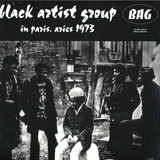
Outstanding free jazz session recorded in 1973 in Paris by Chicago outfit BAG.
It was Lester Bowie, trumpeter with the Art Ensemble of Chicago, who suggested that the Black Artists' Group (BAG) should head for Paris. In 1972 several members of BAG took his advice and flew to France for an extended stay. The following year a concert featuring saxophonist Oliver Lake, trumpeters Baikida Carroll and Floyd LeFlore, drummer Charles Bobo Shaw and trombonist Joseph Bowie (Lester's younger brother) was recorded and subsequently issued as In Paris, Aries 1973, a strictly limited edition LP on the group's own label.
Since the formation of Black Artists' Group in 1968, the home of this multidisciplinary arts collective had been St Louis, Missouri, the city where the Bowie brothers had grown up. It was there that Lester Bowie had started to investigate the expanding horizons of jazz before moving, in 1966, to Chicago where he joined the recently established Association for the Advancement of Creative Musicians (AACM). His close friend Oliver Lake visited Bowie, attended AACM concerts and meetings and was inspired not only by their artistic vision and integrity but also by their efficient organisation. In Chicago musicians were making things happen for themselves, taking control of their own destinies and giving shape to their lives as creative artists.
In June 1969, the Art Ensemble of Chicago had taken their music to France. During the preceding decade Paris had established a reputation for audiences that were unusually well-informed and open-minded, receptive to the uncompromising music of black American innovators such as Cecil Taylor, Ornette Coleman, Albert Ayler and Sun Ra. The city that had nurtured not only Cubism and Surrealism, but also Jean-Luc Godard and contemporary cinema's Nouvelle Vague was well prepared for the sonic collage forms and stylistic dislocations of the Art Ensemble. During that same month violinist Leroy Jenkins, trumpeter Leo Smith and saxophonist Anthony Braxton also arrived in Paris, three further emissaries from the AACM.
The adventure of collective improvisation resonated with the Parisian zeitgeist. Enthusiastic audiences attended their concerts and coverage in the media. In Paris, Aries 1973 offers an isolated and fascinating glimpse into that phase of the group's existence. The album is dedicated to the memory of Kada Kayan, a bassist who had hoped to make the trip from St Louis to France but, tragically, had grown ill and died. His absence adds special poignancy to the sound of the bass when it appears on this recording, played by Baikida Carroll. Listeners keen to hear Kayan himself in the company of Lake, Bowie, Shaw, LeFlore and Carroll should seek out Red, Black and Green by the 10-piece Solidarity Unit, Inc. That album, recorded on 18th September 1970 and dedicated to Jimi Hendrix, who died on that day, features an earlier version of Shaw's composition 'Something to Play On.'
In Paris, Aries 1973 reveals BAG's musical affinities with the Art Ensemble of Chicago. Both groups preserved an independently minded approach to the notion of free jazz and a carefully filtered awareness of pan-African musical practices, while their creative interest in space, mobile structure, chance occurrences and simultaneity also suggests parallels with the concerns of leading experimental composers working at that time. These performances in Paris of Shaw's 'Something to Play On' and Lake's 'Re-Cre-A-Tion,' plus two collective compositions/improvisations, display the dedication to structural fluency and sensitivity to coloration that accompanied BAG's unorthodox group dynamics and their unconventional instrumental combinations. In this case the musicians embrace congas, log drums, marimbas, woodblocks, cowbells and gongs. This is not a showcase for solos, but a shape-shifting and multi-centred statement of togetherness, quest and discovery. Removed from BAG's original multidisciplinary context the music still exudes an exhilarating spirit of collaborative exploration and shared excitement.