Cerca:osamu m
- 1



The long-awaited analog reissue of 'JATAKA,' a pioneering 1978 album by synthesizer virtuoso Osamu Shoji (also known as Osamu Tokairin), is finally here!
‘JATAKA’ stands as an ambient to experimental synthesizer masterpiece from the late 70s, showcasing Osamu Shoji's prowess as a composer, arranger, and synthesizer player. The album features a total of 8 tracks, with highlights including "PYRAMID ION," where cosmic synth elements shine.
The anticipation for this reissue is palpable, as the album has become highly sought after in the used market, with its scarcity driving up prices and generating considerable interest from overseas enthusiasts!

20 TOMES AVAILABLE, MORE THAN 55 MILLIONS MANGAS SOLD (WORLDWIDE) ONE OF THE BEST-SELLING MANGA OF THE WEEKLY SHONEN JUMP IN JAPAN
ONE OF THE BEST SUCCESS OF THE CLUB DOROTHEE

Exzellente Kollektion des in Kyoto geborenen und in Tokio lebenden, japanischen Digital-Künstler, Fotograf und Komponisten Osamu Sato mit exkusiven und bislang unveröffentlichten Ambient-Aufnahmen aus den Jahren 1993-2001. Osamu Sato began seine Karriere Anfang der 1980er mit ersten Tape-Releases und erlangte weltweite Beachtung durch die Produktion kultiger Videospiele wie "Eastern Mind" (Mac OS) und "LSD Dream Emulator" (Playstation), zu denen er auch die Soundtracks schrieb.

World Music And Ethno Sounds With An Obvious Japanese Origin Meet Progressive Rock And Psyche. The Result Is A Captivating Piece Of Melodic And Deeply Atmospheric Music That Paints Pictures Of Life In Ancient Japan Into Your Mind When You Lay Back, Close Your Eyes And Listen Closely With Your Thoughts Turned Off. If Pink Floyd Were Japanese Their Music Might Have Sounded Like That. The Frequency Of The Arrangements On - benzaiten Reminds Of What Our English Heroes Have Created In The Early To Mid 70s Just With A Different Ethnical Approach. - benzaiten Is Even A More Progressive Effort Than Anything Most British Bands Have Ever Managed To Fabricate And Still Utterly Natural And Vivid Concerning The Flow Of The Music. All Participating Musicians Here Are Professionals And Their Performances Are Tight And Still Passionate. The Sound Is Warm And Vivid, The Song Structures Are Wide Open And Welcome You To Slip Inside. East Meets West On This Record And Osamu Kitajima And His Companions Really Grab You By The Soul. Electronic Elements In The Percussion Section Add Some Oddity To The Whole Musical Picture. Not Sure What Osamu Kitajima And His Band Intended When They Recorded This Record But I Am Certain They Achieved It. The Cool Aspect Of - benzaiten Is The Rocking Guitar Which Keeps The Whole Album Together. Must Be The Japanese Pendant To German Acts Like Amon Düül Ii, Embryo And Guru Guru. Well, There Is Definitely Some Truth In This Comparison. Anyway, This Album Will Enchant You!

FORMA DI COMUNICAZIONE ALTERNATIVA E PARADOSSALMENTE ANTIMEDIATICA
Vinyl only

Oddball Japanese electro-fueled vocoder funk with occasional raps from the 80s, including unreleased material...
.
Japanese Electro original, Minoru Hoodoo Fushimi, self-released four albums. Two vinyl LPs and two CDs between 1985 and 1992. Melbourne`s Left Ear Records have selected twelve tracks, for a double vinyl retrospective. 10 tracks from Minoru`s four albums and a further two unreleased tracks from the archives.
Minoru set out to combine his love of all things Funk with traditional instruments and song from his homeland. He uses shamisen on Thanatopsis. Where Parliament`s Flashlight, George Clinton`s Atomic Dog, ride with Osamu Kitajima`s Masterless Samurai. Shakuhachi on Mizuko No Tamashii Hyakumademo. Nohdashi puts koto with a Jimmy Castor riff. All set to popping and locking beats.
Minoru`s vocals switch between raps about cellular metabolism and haemoglobin, Soul croon and vocoder. On Shinz-San he adds Metal guitar to vintage Sugarhill. And he goes crazy with his sampler. Scratching in cats, frogs, babies, laughter, giggles, traffic jams, failing ignitions, opera singers, and amorous sighs. Furarete mixes elephant roars and Go-Go. Creating unique avant grooves that share something with Tackhead`s ON-U Sound System, Savant`s tape experiments, and fellow countrymen EP-4.
co-compiled by Left Ear Records and Jerome Qpchan

- Side A. Gypsy Song
- Side B. Never Land
After traveling through Mexico, Miami, the Bahamas, and New Orleans, Nishioka recorded his fourth album South American Journey in Los Angeles,
released in 1979. From this album, two of his most celebrated tracks—“GYPSY SONG”, a fan favorite with numerous cover versions, and “NEVER LAND”,
featuring the distinctive sound of steel pans and a Japanese reggae vibe are now being pressed on 7-inch vinyl for the first time in a limited edition!
The recording features members of the So What Review band, including Junshi Yamagishi (guitar) and Osamu Ishida (guitar), along with renowned steel pan
player Robert Greenidge, known for collaborations with Van Dyke Parks and Taj Mahal.
(FLATT THE LAIDBACK)
Kyozo Nishioka Profile
(Born May 7, 1948 – Died April 3, 1999)
Singer songwriter from the Shima Peninsula in Mie Prefecture, affectionately nicknamed “Zo-san”.
After enrolling at Kinki University and moving to Osaka, Nishioka became a regular at the folk cafe Dylan in Namba, opened in August 1969 by Masaji Otsuka
and Yoko Ishimura. Dylan was a gathering spot for folk music enthusiasts from all over Japan.
Nishioka formed the folk group The Dylan with Masaji Otsuka and You Nagai, performing at folk camps and the Nakatsugawa Folk Jamboree. In 1971, Nishioka
left the group, and Otsuka and Nagai continued as The Dylan II. Nishioka wrote and composed the song “Puka Puka” under the pen name Zokyozo, which became
one of his signature works. The song was first released in July 1971 as the B-side of The Dylan II’s single “Otoko rashii tte Wakarukai” on URC Records.
Nishioka began his solo career, releasing his debut album “Dylan nite” in July 1972, produced by Kinji Yoshino on Bellwood Records, which included his own
version of “Puka Puka”. In September 1973, he appeared at the farewell concert of Happy End titled CITY – LAST TIME AROUND at Bunkyo Public Hall in Tokyo.
His 1974 album “Machiyuki Murayuki” was produced by Haruomi Hosono, and his 1975 album “Rokka My Baby” featured support from Shigeru Suzuki’s band
HUCKLE BACK. Nishioka recorded three albums under Hosono’s production, deepening their friendship.
Together with his wife and lyricist KURO, Nishioka wrote songs for artists such as Eikichi Yazawa. The couple traveled the world, recording overseas albums such
as “Nanbei Ryoko” (1977), “Yoh-Sollo” (1979), and “New York to Jamaica” (1981), incorporating reggae, calypso, and other global sounds. In the 1980s, he released
works under the duo name KYOZO & BUN with Yoshifumi Okajima, and in the 1990s returned to solo projects with albums like “START” (1993) and “Farewell
Song” (1997).
After KURO’s passing in 1997, Nishioka continued his musical activities until his own death in 1999 at the age of 50. His music transcended the boundaries of folk,
blending jazz and tropical elements to create a unique world view, leaving an indelible mark on Japanese music history.
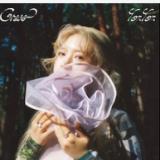
- A1: Busy Girl / Prod. A.g.o
- A2: Dreamin' (Feat. Sumin (韓国),☆Taku Takahashi(M-Flo)) / Prod.☆Taku Takahashi(M-Flo)
- A3: Memories / Prod. 80Kidz
- A4: Old Friends (Feat. Sirup, Shin Sakiura) / Prod. Shin Sakiura
- A5: Moonlight Cruising (Feat. Kirinji) / Prod. Slom (韓国)
- A6: Sweet Vacation / Prod. Sam Is Ohm
- A7: Life Is Beautiful (Feat. Ariwa (Asound)) / Prod. Chaki Zulu
- B1: Life Is Beautiful (Feat. Ariwa) - Remix
- B2: U - Remix
- B3: Moonlight Cruising (Feat. Kirinji) - Grooveman Spot Remix
- B4: Busy Girl - Remix
- B5: Orange (Feat. Peavis) - Remix
- B6: Memories - Osamu Fukuzawa Remix
YonYon's commemorative 1st album ‘Grace’ shines with new brilliance through analog sound-the long-awaited LP release!
This album features 14 tracks in total, including 7 popular songs from the album “Grace”, plus 7 remixes.
Guest artists include KIRINJI, SIRUP, South Korea's leading R&B singer-songwriter/producer SUMIN, PEAVIS, and other artists resonating across generations
and styles. Sound production features top-tier creators active globally, including ☆Taku Takahashi (m-flo), Chaki Zulu, grooveman Spot, and South Korea's
rising producer Slom. The album effortlessly crosses genre and language boundaries, weaving diverse musical elements into a rich soundscape.

- A1: Prologue
- A2: Unexpected Error
- A3: Sprint In Danger
- A4: Reality
- A5: Joyful Trotting
- A6: Inorganic Creature
- A7: New World
- A8: Despair
- A9: Encounter
- B1: Dropping
- B2: Cruel Reality
- B3: Escape
- B4: Brave Determination
- B5: Another Planet
- B6: Dark Spacecraft
- B7: Growth Alone
- B8: Enigmatic Trouble
- B9: Dark Tunnel
- C1: Nightmare
- C2: Sudden Attack
- C3: Glorious Appearance
- C4: Philosophy Of Eden
- C5: Beginning
- C6: Nostalgia
- D1: Soul Of The Earth
- D2: Peaceful Air
- D3: Rescue
- D4: Lost Future
- D5: Greedy
- D6: Contrary
- D7: Battle
- D8: Beautiful Land
- C7: Destroying Future
- C8: Devastated Illusion
STUDIO4℃×Osamu Tezuka
A story of the love and adventure of a woman who lived for 1300 years.
``Phoenix'' Nostalgia Arc has been made into two animated works with different endings!
Theatrical release of the movie “Firebird Eden no Hana” / Disney Plus “Firebird Eden no Sora” world exclusive distribution
Master Osamu Tezuka is hailed as the "God of Manga" and is still revered all over the world. Of the 12 stories in the timeless masterpiece "The Phoenix," which became his masterpiece and life's work, the "Nostalgia Chapter," which depicts the future of the earth and the universe in which we live, will finally be made into an animated film for the first time. STUDIO4°C, which continues to create artistic video works, was the one who completed the spectacular spectacle, which took seven years to create. The voice actors include Rie Miyazawa, who plays the main characters Romi, Yosuke Kubozuka, Issey Ogata, Honoka Yoshida, Shintaro Asanuma, and Ryohei Kimura. A gorgeous voice actor team gathers to make a timeless masterpiece into a movie. The person in charge of the music is Takatsugu Muramatsu, who is active in a wide range of areas including film music and providing music for numerous artists. The music, which has both a grand scale and a poetic feel, gently envelops the story.

Faitiche releases the album Improvisations And Edits, Tokyo 26.09.2001 on vinyl for the first time. For the original 2002 CD on Soup-Disk and Sub Rosa (Audiosphere), Jan Jelinek and the Japanese trio Computer Soup (Satoru Hori – trumpet, Osamu Okubo - toys & electronics, Kei Ikeda - toys & electronics) presented eight tracks all recorded one afternoon in the trio’s living room in Tokyo. They are excerpts from a joint group improvisation that subsequently underwent rudimentary editing, on which Jelinek and Computer Soup worked separately.
Jelinek met the three musicians at his first concert in Japan in 2001, at Tokyo’s Yellow club, where Computer Soup performed as the support act. Delighted by their free improvisation on pocket-sized electronic toys, trumpet and oscillators, he arranged to meet Hori, Okubo and Ikeda a few days later for a session at their apartment. The resulting three-hour recording, made on their living room floor, formed the basis for Improvisations and Edits. A few days later, Jelinek returned to Berlin. Over the following months, they separately chose passages from the recording that were then edited and assembled into an album.
Formed in Tokyo in 1996 as a quintet (including Shusaku Hariya and Daisuke Oishi), Computer Soup began by performing with acoustic instruments on the streets of Shibuya. Ikeda und Okubo soon switched instruments, and from then on the group’s minimalistic but densely woven sound was defined by electronic toys, oscillators and Satoru Hori’s trumpet. Their first album was released in 1997 on the Japanese label Soup Disk. Eight further releases followed.
From the reviews of Improvisations and Edits, Tokyo 26.09.2001 in 2003:
"The mind-blowing first track Straight Life is perhaps the best example of what the album has to offer. Jelinek's trademark smears and washes occupy the midrange, like ghosted images of Joe Zawinul's electric piano floating quietly in the wind. DSP jazz modes are set against a walking bassline (possibly computer generated) and a gently tooted trumpet complete with Harmon mute, a dead ringer for Miles Davis' Prestige-era ballads. The effect is something like a three-dimensional film, with different realities on each layer; images of what jazz was manage to interact with a real-time demonstration of all it could be."
pitchfork, 2003
"Improvisations and Edits is a warm and mellow Ambient release with beautiful glitch fragments, static noise bursts and real trumpet intersections. However, there are times where it is the exact opposite, mainly effect-laden, overdriven and bouncy with a lack of melodies and focus, so be aware of these specific tracks."
ambientexotica, 2003
"Often deliciously dreamy and hazy, Improvisations and Edits is like listening to an exceptional instrumental jazz performance while half-conscious or under some sort of chemical influence. Computerised blips and bleeps, loops and treatments and murky sonic skips curl up around desolate horn notes and scattered instrumental noises that culminate in elegant music."
exclaim.ca, 2003

- A1: Naomi Akimoto - Bewitched (Are You Leaving Soon) (Are You Leaving Soon)
- A2: Atsuko Nina - Tonkachi
- A3: Miho Fujiwara - Heartbeat
- A4: Miharu Koshi - Scandal Night
- B1: Chu Kosaka - Shirakechimauze
- B2: Teresa Noda - Tropical Love
- B3: Makoto Matsusa - Business Man (Part 1)
- B4: Susan - Ah! Soka
- C1: Yukako Hayase - Suiyoubi Madeni Shinitaino
- C2: Parachute - Kowloon Daily
- C3: Hiroyuki Namba - Tropical Exposition (Who Done It? Version)
- C4: Pizzicato Five - Boy Meets Girl
- D1: Mari Iijima - Love Sick
- D2: 1986 Omega Tribe - Cosmic Love
- D3: Osamu Shoji - Pub Casablanca
- D4: Chiemi Manabe - Untotooku
Light in the Attic’s Pacific Breeze series has supplied the world’s growing legions of Japanese music fans with an expertly curated selection of the most sought-after City Pop recordings—the mesmerizing and nebulous genre of Japanese bubble-era music of the ‘70s-’80s that encompasses AOR, R&B, jazz fusion, funk, boogie and disco. These familiar sounds are spun through the unique lens of optimistic, cosmopolitan fantasy colored by Japan’s affluence at the time. Much of the music has previously been nearly impossible to acquire outside of Japan and continues to captivate listeners with its unique blend of groove-laden escapism, even birthing wholly new genres such as Vaporwave.
Pacific Breeze 3: Japanese City Pop, AOR & Boogie 1975-1987 marks the latest chapter in the famed series and features holy grails plus under-the-radar rarities. The collection bursts at the seams to reveal some of the greatest Japanese tracks ever laid to tape, pushing towards the edge of City Pop to reveal glimmers of the next waves of styles to spring forth from the country’s creative minds. The appearance of Pizzicato Five hint at the emergence of Shibuya-kei while the influence of hip hop and electro as an emerging global trend are also evident here through the prevalence of heavier programmed drum beats on tracks such as “Heartbeat” by Miho Fujiwara.
This volume of Pacific Breeze, like its predecessors, is a female-forward offering with many tracks being voiced by women who would become household names in Japan as actresses and pop idols. Their songs here subvert the norm and brim with an innovative spirit that shatters gender roles in favor of sonic transcendence. Techno-pop classics from Susan, Miharu Koshi and Chiemi Manabe sit alongside sublime funk from Atsuko Nina and Naomi Akimoto while Teresa Noda slides into the mix with a sultry reggae jam. The genre span is stretched wider with hypnotic jazz fusion by Parachute and Hiroyuki Namba, a synthesizer fantasy from Osamu Shoji, and magnetic pop by Makoto Matsushita and Chu Kosaka.
Although not front and center, the visionary members of Yellow Magic Orchestra are still very present on Pacific Breeze 3, with Haruomi Hosono, Ryuichi Sakamoto, and Yukihiro Takahashi taking up producer and musician roles on many of these tracks. Pacific Breeze 3 serves up a captivating musical journey that adds an essential chapter to the iconic compilation series.
Tracklist:
Naomi Akimoto - Bewitched (Are You Leaving Soon), Atsuko Nina - Tonkachi, Miho Fujiwara - Heartbeat, Miharu Koshi - Scandal Night, Chu Kosaka - Shirakechimauze, Teresa Noda - Tropical Love, Makoto Matsushita - Business Man Pt. 1, Susan - Ah! Soka, Yukako Hayase - Suiyoubi Madeni Shinitaino, Parachute - Kowloon Daily, Hiroyuki Namba - Tropical Exposition (Who Done It? Version), Pizzicato Five - Boy Meets Girl, Mari Iijima - Love Sick, 1986 Omega Tribe - Cosmic Love, Osamu Shoji - Pub Casablanca, Chiemi Manabe - Untotooku

- 1: Bewitched (Are You Leaving Soon)
- 2: Tonkachi
- 3: Heartbeat
- 4: Scandal Night
- 5: Shirakechimauze
- 6: Tropical Love
- 7: Business Man Pt. 1
- 8: Ah! Soka
- 9: Suiyoubi Madeni Shinitaino
- 10: Kowloon Daily
- 11: Tropical Exposition (Who Done It? Version)
- 12: Boy Meets Girl
- 13: Love Sick
- 14: Cosmic Love
- 15: Pub Casablanca
- 16: Untotooku
Pink Vinyl[67,19 €]
- The third chapter in the acclaimed Pacific Breeze series! - Artwork by renowned illustrator Hiroshi Nagai - Compiled by Yosuke Kitazawa and Mark "Frosty" McNeill (dublab) - Newly remastered audio - 2xLP housed in a deluxe wide spine jacket with full color inner sleeves and custom die-cut OBI - Extensive artist bios by Yosuke Kitazawa // Light in the Attic's Pacific Breeze series has supplied the world's growing legions of Japanese music fans with an expertly curated selection of the most sought-after City Pop recordings-the mesmerizing and nebulous genre of Japanese bubble-era music of the '70s-'80s that encompasses AOR, R&B, jazz fusion, funk, boogie and disco. These familiar sounds are spun through the unique lens of optimistic, cosmopolitan fantasy colored by Japan's affluence at the time. Much of the music has previously been nearly impossible to acquire outside of Japan and continues to captivate listeners with its unique blend of groove-laden escapism, even birthing wholly new genres such as Vaporwave. Pacific Breeze 3: Japanese City Pop, AOR & Boogie 1975-1987 marks the latest chapter in the famed series and features holy grails plus under-the-radar rarities. The collection bursts at the seams to reveal some of the greatest Japanese tracks ever laid to tape, pushing towards the edge of City Pop to reveal glimmers of the next waves of styles to spring forth from the country's creative minds. The appearance of Pizzicato Five hint at the emergence of Shibuya-kei while the influence of hip hop and electro as an emerging global trend are also evident here through the prevalence of heavier programmed drum beats on tracks such as "Heartbeat" by Miho Fujiwara. This volume of Pacific Breeze, like its predecessors, is a female-forward offering with many tracks being voiced by women who would become household names in Japan as actresses and pop idols. Their songs here subvert the norm and brim with an innovative spirit that shatters gender roles in favor of sonic transcendence. Techno-pop classics from Susan, Miharu Koshi and Chiemi Manabe sit alongside sublime funk from Atsuko Nina and Naomi Akimoto while Teresa Noda slides into the mix with a sultry reggae jam. The genre span is stretched wider with hypnotic jazz fusion by Parachute and Hiroyuki Namba, a synthesizer fantasy from Osamu Shoji, and magnetic pop by Makoto Matsushita and Chu Kosaka. Although not front and center, the visionary members of Yellow Magic Orchestra are still very present on Pacific Breeze 3, with Haruomi Hosono, Ryuichi Sakamoto, and Yukihiro Takahashi taking up producer and musician roles on many of these tracks. Pacific Breeze 3 serves up a captivating musical journey that adds an essential chapter to the iconic compilation series.

- 1: Bewitched (Are You Leaving Soon)
- 2: Tonkachi
- 3: Heartbeat
- 4: Scandal Night
- 5: Shirakechimauze
- 6: Tropical Love
- 7: Business Man Pt. 1
- 8: Ah! Soka
- 9: Suiyoubi Madeni Shinitaino
- 10: Kowloon Daily
- 11: Tropical Exposition (Who Done It? Version)
- 12: Boy Meets Girl
- 13: Love Sick
- 14: Cosmic Love
- 15: Pub Casablanca
- 16: Untotooku
Black Vinyl[63,82 €]
- The third chapter in the acclaimed Pacific Breeze series! - Artwork by renowned illustrator Hiroshi Nagai - Compiled by Yosuke Kitazawa and Mark "Frosty" McNeill (dublab) - Newly remastered audio - 2xLP housed in a deluxe wide spine jacket with full color inner sleeves and custom die-cut OBI - Extensive artist bios by Yosuke Kitazawa // Light in the Attic's Pacific Breeze series has supplied the world's growing legions of Japanese music fans with an expertly curated selection of the most sought-after City Pop recordings-the mesmerizing and nebulous genre of Japanese bubble-era music of the '70s-'80s that encompasses AOR, R&B, jazz fusion, funk, boogie and disco. These familiar sounds are spun through the unique lens of optimistic, cosmopolitan fantasy colored by Japan's affluence at the time. Much of the music has previously been nearly impossible to acquire outside of Japan and continues to captivate listeners with its unique blend of groove-laden escapism, even birthing wholly new genres such as Vaporwave. Pacific Breeze 3: Japanese City Pop, AOR & Boogie 1975-1987 marks the latest chapter in the famed series and features holy grails plus under-the-radar rarities. The collection bursts at the seams to reveal some of the greatest Japanese tracks ever laid to tape, pushing towards the edge of City Pop to reveal glimmers of the next waves of styles to spring forth from the country's creative minds. The appearance of Pizzicato Five hint at the emergence of Shibuya-kei while the influence of hip hop and electro as an emerging global trend are also evident here through the prevalence of heavier programmed drum beats on tracks such as "Heartbeat" by Miho Fujiwara. This volume of Pacific Breeze, like its predecessors, is a female-forward offering with many tracks being voiced by women who would become household names in Japan as actresses and pop idols. Their songs here subvert the norm and brim with an innovative spirit that shatters gender roles in favor of sonic transcendence. Techno-pop classics from Susan, Miharu Koshi and Chiemi Manabe sit alongside sublime funk from Atsuko Nina and Naomi Akimoto while Teresa Noda slides into the mix with a sultry reggae jam. The genre span is stretched wider with hypnotic jazz fusion by Parachute and Hiroyuki Namba, a synthesizer fantasy from Osamu Shoji, and magnetic pop by Makoto Matsushita and Chu Kosaka. Although not front and center, the visionary members of Yellow Magic Orchestra are still very present on Pacific Breeze 3, with Haruomi Hosono, Ryuichi Sakamoto, and Yukihiro Takahashi taking up producer and musician roles on many of these tracks. Pacific Breeze 3 serves up a captivating musical journey that adds an essential chapter to the iconic compilation series.

Light in the Attic’s Pacific Breeze series has supplied the world’s growing legions of Japanese music fans with an expertly curated selection of the most sought-after City Pop recordings—the mesmerizing and nebulous genre of Japanese bubble-era music of the ‘70s-’80s that encompasses AOR, R&B, jazz fusion, funk, boogie and disco. These familiar sounds are spun through the unique lens of optimistic, cosmopolitan fantasy colored by Japan’s affluence at the time. Much of the music has previously been nearly impossible to acquire outside of Japan and continues to captivate listeners with its unique blend of groove-laden escapism, even birthing wholly new genres such as Vaporwave.
Pacific Breeze 3: Japanese City Pop, AOR & Boogie 1975-1987 marks the latest chapter in the famed series and features holy grails plus under-the-radar rarities. The collection bursts at the seams to reveal some of the greatest Japanese tracks ever laid to tape, pushing towards the edge of City Pop to reveal glimmers of the next waves of styles to spring forth from the country’s creative minds. The appearance of Pizzicato Five hint at the emergence of Shibuya-kei while the influence of hip hop and electro as an emerging global trend are also evident here through the prevalence of heavier programmed drum beats on tracks such as “Heartbeat” by Miho Fujiwara.
This volume of Pacific Breeze, like its predecessors, is a female-forward offering with many tracks being voiced by women who would become household names in Japan as actresses and pop idols. Their songs here subvert the norm and brim with an innovative spirit that shatters gender roles in favor of sonic transcendence. Techno-pop classics from Susan, Miharu Koshi and Chiemi Manabe sit alongside sublime funk from Atsuko Nina and Naomi Akimoto while Teresa Noda slides into the mix with a sultry reggae jam. The genre span is stretched wider with hypnotic jazz fusion by Parachute and Hiroyuki Namba, a synthesizer fantasy from Osamu Shoji, and magnetic pop by Makoto Matsushita and Chu Kosaka.
Although not front and center, the visionary members of Yellow Magic Orchestra are still very present on Pacific Breeze 3, with Haruomi Hosono, Ryuichi Sakamoto, and Yukihiro Takahashi taking up producer and musician roles on many of these tracks. Pacific Breeze 3 serves up a captivating musical journey that adds an essential chapter to the iconic compilation series.
Tracklist:
Naomi Akimoto - Bewitched (Are You Leaving Soon), Atsuko Nina - Tonkachi, Miho Fujiwara - Heartbeat, Miharu Koshi - Scandal Night, Chu Kosaka - Shirakechimauze, Teresa Noda - Tropical Love, Makoto Matsushita - Business Man Pt. 1, Susan - Ah! Soka, Yukako Hayase - Suiyoubi Madeni Shinitaino, Parachute - Kowloon Daily, Hiroyuki Namba - Tropical Exposition (Who Done It? Version), Pizzicato Five - Boy Meets Girl, Mari Iijima - Love Sick, 1986 Omega Tribe - Cosmic Love, Osamu Shoji - Pub Casablanca, Chiemi Manabe - Untotooku

BBE Music continues its highly acclaimed J Jazz Masterclass Series with Kemo Sabe, the
debut album from pianist Masao Nakajima. Recorded in 1979 on Yupiteru Records, it’s an
elusive beast in the field of J Jazz and balances delicate and refined playing with power and
vigour.
The Kemo Sabe album features bassist Osamu Kawakami, who has performed and
recorded with such J Jazz figureheads as Sadao Watanabe, Isao Suzuki, and Kunihiko
Sugano. Sax duty is by Toshiyuki Honda, leader of the popular fusion group Burning Waves.
On drums is Donald Bailey, the noted American drummer most known for playing on classic
Jimmy Smith Blue Note sessions. Bailey lived and worked in Japan for a number of years
from the late 70s and recorded several album dates with local artists such including Keiko
Nemoto, Isao Suzuki and George Kawaguchi.
Recorded at the height of the electric fusion era, Kemo Sabe is an avowedly acoustic album,
which may account for the small sales and low profile of the album at the time. The
propulsive title track, written by New Zealand jazzman Mike Nock, was gifted to Nakajimsan when they briefly met and was featured on J Jazz: Deep Modern Jazz From Japan vol 3.
The reissue’s liner notes features an exclusive interview with Masao Nakajima himself,
discussing his career and background to the album.
The BBE J Jazz Masterclass Series is curated by Tony Higgins and Mike Peden and is
dedicated to presenting the very finest in Japanese jazz. The series features rare, long-lost
and unreleased material presented in the highest quality reproductions of the original
releases, fully licensed and authorised.

- A1: Miwako Saito - "12 No Garnet
- A2: Yoshio Suzuki - "Touch Of Rain
- A3: Ayuo Takahashi - "Mizu Iro No Kagami
- B1: Toru Hatano - "Kanki
- B2: Akira - "Essence Of Beauty
- B3: Osamu Mizukami - "Flower Moon
- C1: Tomoko Yasuno - "Sur La Terra
- C2: Masanori Sasaji - "Rune
- C3: Shi-Shonen - "Harvest (Long Size)
- D1: Flat Face - "Hibi No Awa
- D2: Hiroko Kokubu - "Barcarolle
- D3: Mio Fou - "Picasso No Ao
Jazzy Couscous founder Alixkun comes back with a 2nd volume of "Kumo No Muko", 12 Japanese music gems from the 80s exploring Ambient & Synth-Pop atmospheres. It opens with Miwako Saito's "12 No Garnet", a soft, slow paced and dreamy piece of synth-pop. Following are Yoshio Suzuki's "Touch Of Rain" and Ayuo Takahashi's "Mizu Iro No Kagami", both flirting with Jazz, Ambient & New Age influences. Traces of YMO members can be found with Hosono produced Tomoko Yasuno's "Sur La Terra" & Flat Face's "Hibi No Awa", released on Sakamoto's related label. While going through more exotic vibes with Shi-Shonen's "Harvest (Long Size)", Alixkun doesn't forget more chill out ambiances: Toru Hatano's "Kanki" is a singular mind trip led by a guitar solo a la Pink Floyd. The project closes with Mio Fou's "Picasso No Ao", a moody track illustrated by a combination of acoustic guitar and solo piano.

Faitiche releases the album Improvisations And Edits, Tokyo 26.09.2001 on vinyl for the first time. For the original 2002 CD on Soup-Disk and Sub Rosa (Audiosphere), Jan Jelinek and the Japanese trio Computer Soup (Satoru Hori - trumpet, Osamu Okubo - toys & electronics, Kei Ikeda - toys & electronics) presented eight tracks all recorded one afternoon in the trio's living room in Tokyo. They are excerpts from a joint group improvisation that subsequently underwent rudimentary editing, on which Jelinek and Computer Soup worked separately.
Jelinek met the three musicians at his first concert in Japan in 2001, at Tokyo's Yellow club, where Computer Soup performed as the support act. Delighted by their free improvisation on pocket-sized electronic toys, trumpet and oscillators, he arranged to meet Hori, Okubo and Ikeda a few days later for a session at their apartment. The resulting three-hour recording, made on their living room floor, formed the basis for Improvisations and Edits. A few days later, Jelinek returned to Berlin. Over the following months, they separately chose passages from the recording that were then edited and assembled into an album.
Formed in Tokyo in 1996 as a quintet (including Shusaku Hariya and Daisuke Oishi), Computer Soup began by performing with acoustic instruments on the streets of Shibuya. Ikeda und Okubo soon switched instruments, and from then on the group's minimalistic but densely woven sound was defined by electronic toys, oscillators and Satoru Hori's trumpet. Their first album was released in 1997 on the Japanese label Soup Disk. Eight further releases followed.
From the reviews of Improvisations and Edits, Tokyo 26.09.2001 in 2003:
"The mind-blowing first track Straight Life is perhaps the best example of what the album has to offer. Jelinek's trademark smears and washes occupy the midrange, like ghosted images of Joe Zawinul's electric piano floating quietly in the wind. DSP jazz modes are set against a walking bassline (possibly computer generated) and a gently tooted trumpet complete with Harmon mute, a dead ringer for Miles Davis' Prestige-era ballads. The effect is something like a three-dimensional film, with different realities on each layer, images of what jazz was manage to interact with a real-time demonstration of all it could be."
pitchfork, 2003
"Improvisations and Edits is a warm and mellow Ambient release with beautiful glitch fragments, static noise bursts and real trumpet intersections. However, there are times where it is the exact opposite, mainly effect-laden, overdriven and bouncy with a lack of melodies and focus, so be aware of these specific tracks."
ambientexotica, 2003
"Often deliciously dreamy and hazy, Improvisations and Edits is like listening to an exceptional instrumental jazz performance while half-conscious or under some sort of chemical influence. Computerised blips and bleeps, loops and treatments and murky sonic skips curl up around desolate horn notes and scattered instrumental noises that culminate in elegant music."
exclaim.ca, 2003
- 1
