Born from a desire to explore her background in film composing to create a music film, Hannah Holland’s upcoming album 'Last Exit On Bethnal’ is set for release via PRAH Recordings on 18th July. Together with director Lydia Garnett, the multi-faceted London producer shaped ideas born out of images the pair weren’t finding in film, inspired by queer icon filmmakers like Kenneth Anger and Derek Jarman. “We wanted to craft something unapologetically for dykes: a poetic, surreal exploration of dyke power and sexuality set in a fantasy underworld,” explains Holland. Once the film was shot, she channelled its stunning imagery and the energy of the cast into making the record. Seductive and bass-driven, its nine tracks merge sleazy guitars with 707 machine drums, beautiful evolving arps, and surreal moments of Lynchian dreaminess and Aphex Twin-inspired atmospherics. "It was a really amazing collaborative experience and coming together of a community to make something totally unique….and hot!” she continues. The first single ‘Biker’ features a filthy synth hook atop Hannah’s signature bass-guitar, perfectly capturing the raw and sexy energy of the album and its visual centrepiece. You can listen to it here. The film will be screened at a one-off club night at London’s ICA on 11th April in association with Culture Divided, Somesuch and Bala Project.
Hannah Holland has played a pivotal role in London’s alternative and queer London club scene since the mid-noughties. Rooted deeply in London’s fertile musical community, musical exploration and the transcendent potential of dancefloor have always been her biggest inspiration. Her recent delve into experimental theatre, film and TV scores has proved a future further artistic voyage to explore her creative vision. Holland first arrived on dancefloors sharing electro-tinged techno, with equal inspiration taken from the sounds of DnB and jungle heard at legendary parties such as Metalheadz, which she had frequented in her early teens. Having already been “borrowing” (and perhaps never since returning) Kraftwerk, Grace Jones and Talking Heads records from her parents, the influence of this metropolitan musical soup ensured that Holland emerged on the decks with a unique musical character and diverse taste, hallmarks of her sound that she has not lost since. This has been reinforced with trusted residencies at iconic parties such as Trailer Trash, Adonis, Glastonbury’s NYC Downlow, or undertaking far-reaching marathon sets at Berlin’s Panorama Bar. In 2006 Hannah started Batty Bass with vocalist Mama. Immediately a roadblock party and then a record label with releases from Josh Caffe and The Carry Nation sitting in its discography, Batty Bass explores the disparate strains of electro, acid, techno and house. Hannah also released her own music on the label including the ever-anthemic Paris’ Acid Ball.
A steady stream of releases have followed on Shall Not Fade, Super Rhythm Trax, Crosstown Rebels, Classic, Nervous, as well as remixes for Blessed Madonna ft. Kylie Minogue, Planningtorock, The Knife and Goldfrapp among others. Hannah also finds the time to play bass in several bands including Black Gold Buffalo whose debut album she also co-wrote. Her much-anticipated debut album, Tectonic, came out on PRAH Recordings in 2021, with a second on the way. Hannah’s latest venture into the world of film scores have included queer icon Bruce LaBruce’s ‘The Visitor,’ Channel 4 series Adult Material and award-winning indie feature Electrician.
Hannah Holland continues to push the boundaries of electronic and live music, telling stories and carving her own path in the deeper frequencies.
Cerca:ot
- A1: With You There To Help Me
- A2: Nothing To Say
- B1: Inside
- B2: Son
- B3: For Michael Collins, Jeffrey And Me
- C1: To Cry You A Song
- C2: A Time For Everything
- C3: Teacher
- D1: Play In Time
- D2: Sossity; You're A Woman
- D3: Alive And Well And Living In
Mastered by Matthew Lutthans at The Mastering Lab from flat copies of the original U.K. and U.S. analogue master tapes Third studio album featured advanced studio recording techniques Featuring original U.S. tracklisting with bonus track "Alive And Well And Living In" from U.K. release Plated and pressed at Quality Record Pressings Gatefold old-style tip-on jacket by Stoughton Printing Jethro Tull's 1970 classic Benefit was their third studio album in as many years, following the successes of This Was (1968) and Stand Up (1969). For Benefit, Ian Anderson (flute, guitars, vocals), Martin Barre (guitars), Glenn Cornick (bass), and Clive Bunker (drums) were joined by John Evan on piano and organ.
Evan would go on to play on all of Jethro Tull's albums throughout the '70s. It was also the last to include Cornick, who was fired from the band upon completion of touring for the album. Recorded at Morgan Studios, where the band recorded Stand Up, the album featured more advanced studio techniques, such as a backward-recorded flute on "With You There To Help Me" and a sped-up guitar on "Play In Time." Frontman Ian Anderson said Evan had changed the band's style: "John has added a new dimension musically and I can write more freely now.
In fact anything is possible with him at the keyboard." Compared to Stand Up, although containing a similar mix of bluesy hard-rockers and melodic acoustic numbers, Benefit had, as Ian Anderson put it, a "harder, slightly darker feel" compared to previous material. The eclectic fusion of folk, rock, and progressive elements creates a sonic tapestry unlike any other. Anderson's virtuosic flute playing intertwines with Barre's electrifying guitar work, weaving intricate melodies that transport listeners to a world of introspection and imagination. From the hauntingly beautiful "With You There to Help Me" to the whimsical energy of "To Cry You a Song," each track invites exploration of both the inner self and the world beyond.
This Analogue Productions 45 RPM release, plated and pressed at Quality Record Pressings, gives this historic album the rich sonic presentation it deserves. The dead-quiet double-LP, with the music spread over four sides of vinyl, reduces distortion and high frequency loss as the wider-spaced grooves let your stereo cartridge track more accurately. Benefit stands as a testament to Jethro Tull's pioneering spirit, pushing the boundaries of musical expression and leaving an indelible mark on the landscape of rock music. This reissue is clean, balanced and richly detailed, the way an Analogue Productions reissue should sound.
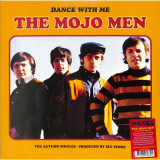
Celebrating the 60th anniversary of these iconic Mojo Men recordings, this fantastic collection now comes pressed on heavyweight colour vinyl with all new artwork and liners. Produced by none other than Sly Stone (from Sly & The Family Stone) during the group"s Autumn label era, these West Coast recordings include the breakout hit "Dance With Me" (1965) alongisde other rare cuts and rock and pop gems. Sly Stone, then a rising producer and arranger, helped shape the sound of many Bay area artists during the early-mid 60s. The partnership between Sly Stone and The Mojo Men was a key chapter in both of their stories.
- 1: You Make Every Lie Come True
- 2: It Ain't Easy
- 3: Taste Of Heaven
- 4: Never Ready To Go
- 5: The Forgiveness Tree
- 6: When The Moon Cries Wolf
- 7: Trader's South
- 8: Leave Him
- 9: Sit With My Soul
- 10: I Wish You Peace
THE SPEAKER WARS, an American rock band formed by Stan Lynch and Jon Christopher Davis, brings a unique blend of rock, country, and gospel influences to their debut self-titled release, the product of a longstanding collaboration. Stan Lynch, a founding member of Tom Petty and the Heartbreakers and Rock and Roll Hall of Fame drummer, has contributed his talents as a songwriter, producer, and multi-instrumentalist, drawing on his work with Don Henley, Ringo Starr, The Byrds, and many others. Lynch produced, engineered, and mixed the album, lending guitar, keyboard, bass, and vocal skills to the mix. Jon Christopher Davis, a seasoned singer-songwriter from Dallas, honed his craft in Nashville, writing songs for icons like Dolly Parton, Timothy B. Schmit, and Vince Gill. Davis, known for his soulful lead vocals, fronts the band and adds guitar, bass, and keyboard layers to their distinct sound. The band’s live lineup features Lynch on drums, Davis on guitar, and additional musicians Jay Brown, Brian Patterson, Steve Ritter, and Jay Michael Smith, creating a dynamic stage presence.
- 1: You Can't Hide
- 2: Take It All In Before The Lights Go Out
- 3: I Won't Run Away
- 4: Find My Way
- 5: Won Na Pa
- 6: My Voice
- 7: Story
- 8: Life As We Know It
- 9: Our Own
- 10: After The Tears Flow
- 11: Pray
During the course of his career, the legendary creator of Afrobeat Fela Kuti used his music to lament social injustices and political corruption in his native Nigeria. His music, a compelling blend of American funk and West African highlife, often locked into spellbinding grooves that seemed to go on forever. Yet that was the point: to fall deep into the rhythm and dance away the hardship. While this impacted Nigeria and the entire world, it also affected Fela’s son Femi and his son Made, both of whom carry his legacy as torchbearers for change. On February 5th 2021, Partisan Records, home to Fela’s catalog, will release two albums from Femi and Made — both very much in the tradition of Fela’s music, but with different scopes. Femi’s album, Stop The Hate, radiates the unique Afrobeat sound that he has forged throughout his long career, affirming the sharply political conviction that his father would’ve claimed in the 1960s, ‘70s and ‘80s. Made’s album, For(e)ward, is a modern and progressive freedom manifesto, pushing boundaries of the subgenre even further. Made also performs every instrument on the album. Together they will be packaged into a double album called Legacy + that, when taken as a whole, bolsters the rich musical heritage of the Kuti name. Yet this isn’t just about honoring Fela, it’s also personal for Femi and Made, a father and son with deep creative synergy. Most importantly, the project finds these men coming together in the name of family. “This is probably the most important part of my life right now,” Femi says. “I’m happy because he’s not copying me. He has found his voice. What other joy could a father want than to experience this in his lifetime?”
- A1: Don’t Wait Too Long
- B1: You Don’t Have To Lie
At Home of The Good Groove Records HQ, we are absolutely delighted to present our second release - a pair of sublime tracks making their long-awaited debut on 7-inch vinyl.
Jamaican music legend Beres Hammond has captivated audiences for over 40 years with his soulful voice and heartfelt lyrics, earning him the title “King of Lovers Rock”, with a loyal global fan base. Influenced by the American soul and jazz records his father collected – featuring icons like Otis Redding and Sam Cooke – as well as the rich sounds of ska and rocksteady, Beres crafted a sound that remains timeless.
For this release, we return to Beres’ 1976 debut album, Soul Reggae – an exceptional record that never quite received the full recognition it deserved. A masterful blend of soulful tones and reggae rhythms, the album is a testament to Beres’ artistry and the genius of his collaborator, Willie Lindo.
Lindo, a legendary reggae guitarist and producer, played a crucial role in shaping the Soul Reggae album. Beyond his impeccable musicianship, he took on multiple roles – writer, arranger, producer, and owner of the Water Lily record label, on which the album was first released. His contribution to these two tracks cannot be overstated.
The Tracks
Side A – “Don’t Wait Too Long”
An upbeat, soulful groove that will appeal to listeners across the black music genres. The track boasts a beautifully arranged melody, with Beres’ warm, feel-good vocals and rich harmonies carrying the song effortlessly. A certainty to get the dance floor vibing.
Side B – “You Don’t Have to Lie”
Lowering the tempo slightly but delivering the same soulful quality, this track brings a heartfelt vocal performance filled with depth and emotion. A timeless piece that speaks to the complexities of love and relationships.
At Home of The Good Groove, we are incredibly honoured to bring these two remarkable tracks to 7-inch vinyl for the very first time.
A huge thank you to Beres Hammond for his incredible music and to Willie Lindo, who has worked closely with us to make this release possible.
Mia Zapata was the greatest rock singer of her time. She may have likely been the greatest blues singer in punk rock history, the woman who married the 78 and the '78. Tragedy did not make this true. Mia Zapata made this true, and the ferocious, spring-loaded shrapnel frame that was built around her by Andy Kessler (guitar: metronomic and furious), Matt Dresdner (bass: fluid, punching, beat-addicted and melodic), and Steve Moriarty (drums: martial and explosive) - who, with Mia, combined to form The Gits - made it true. The Gits were formed at Antioch College in Yellow Springs, Ohio in mid-1986, grabbing and swapping pieces of art, thrash, noise, punk rock, classic rock, and all the sorts of magical silly and bookish jingle bells that an old-school liberal arts education handed you; for the next few years they worked on turning it all into something tough, sensitive, both brutal and kind. Andy, Matt, Mia, and Steve moved to Seattle in middish 1989, landing in a house on Capitol Hill where they (and fellow travelers) wood-shedded and rehearsed for the next few years. The Gits put out three EPs in 1990 and '91 before signing with C/Z Records and releasing their first full-length album, Frenching the Bully. Seattle quickly claimed the quartet as their own and embraced the Gits blend of ferocious fangs and soft heart, the slug/slap of the guitars, and the gorgeous, soft underbelly of the poetic emotions. These qualities not only fit in with the doe-eyed/sharp-clawed grunge ethos but earned the Gits the respect of their peers, including Nirvana, who tapped them to open a major local show in 1990. Then other stuff happened, and their frantic, confessional barbed-heart snowball began rolling up hill very, very fast; the Gits "quickly" (hah! After half a decade learning to implode and explode hearts and stomping their boots on manifold beer-softened, Marlboro-weeded wood stages!) inspired rapture, awe, and the levitation that happened when peak emotion meets peak grindage in front of amps spitting out something that sounded like the mad marriage of Bolan swagger and Dischord tension_ all fronted by a genuinely incomparable woman who held her heart in her mouth and shared it, in all its celebration and fear, without hesitation. The Gits were an angry, inflamed slinky fully in tune with and tuned by the Bessie Patti Smith of her time, truly the only singer who could summon Joplin, Poly Styrene, Sam Cooke, Iggy Pop and Ian MacKaye all in the same goddamn song. In 1993, less than four weeks after accepting an offer from Atlantic Records, Mia died. I leave it at that, because this is not about death; it's about an extraordinary life. I do not say, "You should have been there," I say, "We are lucky so many of us were, and I am so glad we have this extraordinary evidence of the power and gifts of Mia and the Gits that you now can hold in your hands." And I note that Frenching the Bully, this extraordinary testament to the soul, shock, fury and feeling of the Gits, has been long out of print on vinyl and CD, and this new edition - remastered by legendary Seattle engineer Jack Endino - joyfully rectifies that. -Tim Sommer
- 1: Welcome To The Family
- 2: Drop Me In The Water
- 3: Everyday's Saturday
- 4: Shine
- 5: Be Who You Are
- 6: Sex And Drugs And Rock & Roll
- 7: Sunny Lemonade
- 8: Love 'Em For Life
- 9: Break Up With Everything
- 10: Hella Good
- 11: Rise Up
- 12: I Hope I Come Back As A Song
- 13: Heaven With You
Every one of us has a family of origin—the one we’re born into—and a family we’re raised in, which, for some, like myself, may not be the same. Then there’s our chosen family—friends and community—the people we gather around us, love, and trust. We also have a musical family, and when you put all of those together, they form the world family. Right now, the world is in a time of upheaval, change, and uncertainty, leading to anxiety and fear for so many. This album is about channeling those emotions—what I experience every day—and translating them into songs that others can connect with. The first single, “Break Up With Everything,” is an example of that—taking these feelings and putting them into music that resonates and brings people together. Welcome to the Family is a record about finding connection in the midst of uncertainty, leaning into the love that surrounds us, and remembering that, no matter where we come from, we are all part of something bigger.
- Fires
- Beautification Technologies
- The Glow
- Power Down The Heart
- Plastic Glacier
- Endling
- In The Distance
- The Great Reward
An endling is the final member of a species. When an endling dies, the species is extinct. Pakistani-American composer Qasim Naqvi returns with Endling. Written as a modular synth prequel to his 2023 BBC Concert Orchestral work, God Docks at Death Harbor, Endling takes the listener on a 43-minute odyssey through an intense and beautiful landscape, set hundreds of years into the future. On the album"s centrepiece "Power Down the Heart," featuring Moor Mother, our character stumbles upon an A.I. being that is in the final moments of its life. As a kind of last rites, this ancient artificial consciousness describes the beauty, sadness and horror it has observed for hundreds of years. Qasim Naqvi is a percussionist, composer and synthesist. Along with being the drummer of lauded cult minimalist trio, Dawn of Midi, Naqvi is an accomplished solo artist and his passion for multidisciplinary work has brought him into the world of film, dance, installation art, and the stage of orchestral and chamber music. His concert music has been commissioned and performed by The London Contemporary Orchestra, The BBC Concert Orchestra, Crash Ensemble, Bang on a Can All Stars, Jennifer Koh, Stargaze, The Cello Octet of Amsterdam, The Helsinki Chamber Choir and others.
"Something of a love letter to New Orleans," Alec Ounsworth's Mo Beauty is finally available again on vinyl redesign featuring gatefold, spot gloss varnish, and marble smokey vinyl. The Steve Berlin (Los Lobos) produced "Mo Beauty" features Ounsworth's trademarks alongside New Orleans finest musicians (George Porter Jr., Stanton Moore, among others). The songs were written in conjunction with CYHSY material but, with this material, Ounsworth tried a different look. The limited deluxe reissue is being released in the wake of the 20th anniversary of Clap Your Hands Say Yeah, the classic self-titled debut album, and its celebratory 2025 worldwide tour.
- A Pancho Acosta - Egyptian Reggae
- B Money Chicha - Carnaval De Jujuy
Jonathan Richman’s classic 'Egyptian Reggae' has been responsible for setting thousands of discerning dance floors on fire. After getting the obvious Jah twist on a few occasions, so we thought it was about time for the Richman’s song to receive a fun yet respectful cumbia treatment! This cumbia candy has been recorded in Lima by no other than Pancho Acosta, founder and guitarist of Compay Quinto, and one of the greatest cumbia guitar players in Peru. On the flip side we find one of Acosta´s own original songs, 'Carnaval de Jujuy', recorded by Austin-based future-cumbia group Money Chicha.
- A1: Intro
- A2: White Chalk
- A3: Excuse Me
- A4: Realms Of Junior M.a.f.i.a
- B1: Player’s Anthem
- B2: I Need You Tonight
- B3: Get Money
- C1: I’ve Been
- C2: Crazaay
- C3: Back Stabbers
- C4: Shot!
- D1: Lyrical Wizardry
- D2: Oh My Lord
- D3: Murder Onze
- D4: Outro
The 90s were all about Hip-Hop groups. Brooklyn’s Junior M.A.F.I.A., consisting of members Lil’ Kim, Lil’ Cease, Trife, Larceny, Nino Brown, Chico Del Vec, MC Klepto, Capone, and Bugsy, formed under the guidance of The Notorious B.I.G. after he released his classic debut album Ready To Die. At the end of the summer of 1995, Junior M.A.F.I.A. released their debut album Conspiracy on Big Beat Records featuring the lead single “Player’s Anthem” which featured Biggie and was produced by the late great DJ Clark Kent. Clark Kent produced three other songs including the second single “I Need You Tonight” featuring Biggie’s wife Faith Evans on the chorus. The third single, “Get Money”, another Biggie feature produced by EZ Elpee with it’s classic flip of the Roy Ayers Orduced Sylvia Striplin track “You Can’t Turn Me Away” was certified platinum. With eight members deep, it was difficult to stand out, but Lil’ Kim and Lil’ Cease would be the breakoutr stars and go on to release solo albums. The group disbanded after Notorious B.I.G. was murdered in 1997, but left behind songs that still hold up today and remain a big part of Biggie’s legacy, as well as producer DJ Clark Kent -RIP Out of print on vinyl since 2017, Get On Down is proud to present this 90s Hip-Hop classic as a limited edition reissue preesed on splatter colored vinyl and packaged in a gatefold jacket.
- In Style
- Otherside
- Yes You Can
- I Know You Know
- Bad Weather
- Try It All Again
- Save Me (Interlude)
- Millionaire
- Better Life
- Making Waves
- Pleased To Meet You
Coloured[25,17 €]
- Motion (Feat. Jacob Collier And Seamus Blake)
- Chamego No Salao (Feat. Lenine)
- Nosso Amor Vadio (Feat. Zelia Duncan)
- Banzo (Feat. Omar Sosa)
- Hermanos (Feat. Yamandu Costa)
- Onde Nascem As Ondas (Feat. Ed Motta)
- Paisagem (Feat. Anat Cohen)
- Botero (Feat. Eduardo Farias)
- Nosso Valsa (Feat. Leila Pinheiro)
- Catarina E Teresa (Feat. Hermeto Pascoal)
The album "Plural" celebrates the remarkable encounters and partnerships that have shaped Gabriel Grossi"s 25-year career as a harmonica player, composer, arranger, and producer. Featuring 10 of his own compositions, Grossi"s renowned virtuosity flows with deep sensitivity through various genres, reflecting the solid trajectory of one of the greatest instrumentalists and most creative musicians in Brazilian music. Collaborating with prominent names from both the national and international music scenes, "Plural" showcases Grossi"s music without borders, offering the world a glimpse of his extensive career. For this celebration, outstanding guests were invited to join the musical journey. Including Jacob Collier, Ed Motta, Hermeto Pascoal, Seamus Blake, Omar Sosa and others.
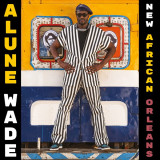
In his sixth and latest album “New African Orleans”, released by ENJA and Yellow Bird, bass guitarist and composer Alune Wade explores the multiple junctions between his native West African rhythms, the Afrobeat and juju rhythms from Lagos and the brass band repertoire immortalized in New Orleans. “I’m exploring a world that goes from my roots to the lost branches on the other side of the Atlantic,” explains the musician from Senegal. He has whittled down around 50 compositions – both original and standards - to a dozen which Alune recorded in Paris, Dakar, Lagos and New Orleans. “The idea first came to me during the Jazz à Gorée festival I organized back in 2014,” he explains. “It had me reflect on the notion of reversing the musical trip most people take from the United States to the African continent. I wanted to set out westward and begin a musical conversation with the best artists, both in Nigeria and the US.”
To achieve this, Wade has invited top artists from both sides of the Atlantic, including the Nigerian talking drummer Olaore Muyiwa Ayandeji, the percussionist Weedie Braimah and the jazz drummer Herlin Riley from New Orleans. The musical inspirations are equally transatlantic, ranging from Dr. John to Manu Dibango and Charlie Parker. But the 45-year-old also pays homage to his father who was a brass band star in his native Senegal back in the Sixties.
BACKGROUND
We only have a partial idea of the birth and remarkable development of the music born of the transatlantic slave trade. From Malinke ballads to Cuban son, from call-and-response patterns to field hollers and hip-hop, Yoruba rhythms to Argentinian tango, from Angolan percussions to the New Orleans brass band sounds… all have roots in Africa and a shackled migration that lasted four centuries. No more so than Congo Square in the Louisiana capital. In 2024, we mark the 300th anniversary of the implementation of the Code Noir which “gave enslaved Africans Sundays off to dance”. A drop in the ocean, but one which shows the importance of culture as a lifebuoy against this barbaric trade. As the Guadeloupian writer Daniel Maximin once claimed: “Our music guided us from the scream to the song, from dragging our chains to dancing.”
- 1: The Sheik Of Araby
- 2: Sans Toi Je N'ai Plus Rien (Bei Dir War Es Immer So Schon)
- 3: Suite Hongroise
- 4: Manege
- 5: Souvenir De Toronto/Frischka
- 6: Charleston
- 7: Valse Des Ecoliers
- 8: La Manouche
- 9: Suite Roumaine : Babouchka/Sirba Din Dolj
- 10: Hopla
- 11: Le Vase
- 12: Cousin Django
Angelo Debarre's extraordinary guitar technique has long been the tree that hid the forest of his profound musicality and above all, his talent as a composer. Belonging to the family of Django Reinhardt's heirs, Debarre has become a legend among Gypsy Jazz fans, one of those rare musicians, who can enchant a room and make hearts beat in unison.
The New Dictionary of Jazz (Nouveau Dictionnaire du Jazz) describes Angelo Debarre as supersonic, and indeed, he is with mad virtuosity. His left hand moves up and down the fine neck of his gypsy guitar, with speed but always with musicality. But it would be an understatement to speak only of his dexterity; he has a marvellous ability to play with subtlety, and his improvisational possibilities seem endless; all done with great ease and apparent composure. Solos, counterpoint, he's everywhere.
A child from the gypsy community, Angelo started playing guitar with his family at the age of eight. In 1984, he formed the first "Angelo Jazz Quintet". In 1985, he became one of the pillars of the famous Parisian cabaret, "La Roue Fleurie" and participated in numerous tours and recordings, including the famous Gypsy Guitars, a reference album of the genre.
Very comfortable in several gypsy styles, Debarre can be found alongside fellow guitarist Petro Ivanovitch and singer and balalaika player Raya from the group Arbat. As a guest, DeBarre can be heard with the band Bratsch, in dialogue with the pianist Bojan Z, percussionist Xavier Desandre-Navarre, the violinist Florin Niculescu and other leading figures of the gypsy guitar.
Angelo Debarre: guitar
Serge Camps: guitar
Frank Anastasio: bass
- A1: Citizen Kane
- A2: Remembrance Day
- A3: Polar Opposites
- A4: Marilyn Dreams
- A5: Ice
- B1: La Lune Lunatique
- B2: All Fall Down
- B3: Nowhere Girl
- B4: Crowds
- B5: Beginning To Fade
In May 1981 B-Movie and Soft Cell went into Advision Studios in London with the same producer, Mike Thorne (Wire, Bronski Beat, China Crisis, The Communards) to record singles for the label they were both signed to. Phonogram had really wanted to sign B-Movie but had also committed to Soft Cell, having been coerced into it by Stev0, who managed both artists and wouldn’t let them have one without the other. B-Movie commenced recording the dark moody anti-fame anthem ‘Marilyn Dreams’, whilst Soft Cell got underway on a cover of an obscure Northern Soul classic. When both songs were released in July 1981, ‘Tainted Love’ became a worldwide hit and shot Soft Cell to international fame, making them the biggest stars of 1981. B-Movie had formed in 1979, in Mansfield, a typical northern town in the middle of the Nottinghamshire coalfield. Originally a three piece featuring, vocal / bass, guitar and drums, they expanded by adding a keyboard player to broaden their initial post punk sound. Local Lincoln independent record label, Dead Good Records, firstly put them on the compilation LP ‘East’, followed by 7" inch EP and then a mini-album releases, which led to an appearance on the legendary Some Bizarre label (alongside the likes of Blancmange, Depeche Mode, Soft Cell and The The)
Major label interest followed, from which came the deal with Phonogram, B-Movie initially re-recording the track ‘Remembrance Day’, which reached No61 in the UK chart in early 1981 and, more importantly, was played by BBC Radio 1 DJ John Peel, and appearing in his Festive 50 for that year. All of the recordings the band made during their Phonogram period have been consigned to the Universal Music vault for several decades, with the band finally managing to have these returned in 2024. The various tapes have been digitised and restored, resulting in the creation of what would have been their 1982 debut LP ‘that never was’. Ten tracks including the three singles plus seven previously unreleased recordings. The CD version contains a further seven recordings including the 12” versions, single B-sides and the track “Moles’” from the Some Bizarre compilation.So “Hidden Treasures” from B-Movie, is only four decades late but still able to sit seamlessly alongside contemporaries like The Chameleons and The Sound. The LP is a darker, more brooding and psychedelic affair, more akin to the gothic elements of the Bunnymen or Joy Division, than the ‘pop sensations’ Phonogram wanted them to become. By both opening and closing this chapter of B-Movie, it puts them firmly in the same bracket as their new wave and post-punk contemporaries, which is the least they deserve, as one of the great ‘lost’ bands of the early 1980’s. "It’s nice to hear B-Movie are finally getting a chance to release their forgotten gems’” Matt Johnson (The The) Vinyl