Search:other mother

Styles
All
LORELLE MEETS THE OBSOLETE - CORPORAL

LORELLE MEETS THE OBSOLETE

CORPORAL

12inchSCR346
SONIC CATHEDRAL
23.07.2026
  • A1: Progreso
  • A2: Regresar / Recordar (Jagz Kooner Remix)
  • B1: Produccion = Destruccion
  • B2: Control ( Mythologen EDM Mix)

Lorelle Meets The Obsolete return with their seventh album. It's the Mexican duo's finest, most ferocious work to date which sees them turbo-charge their psychedelic post-punk with a new electronic engine. Mixed by Antoine Goulet (live sound engineer for SUUNS) and mastered by Mikey Young (Eddy Current Suppression Ring), the most obvious comparison in terms of mood and mode is Primal Scream's classic XTRMNTR, another record that processed personal and political conflicts and spat them out as distorted dance music. It shows the influence of the duo's DJ sets and last year's radical Remezcla remix collection on their way of thinking and why they are now namechecking the likes of Moor Mother, MF DOOM, Patrick Cowley, The Bug, Paula Garcés, Phil Kieran, Coby Sey, Run the Jewels and Anadol."Playing other artists' music is different," says Lorena Quintanilla about the change of direction towards the dancefloor. "You're not just listening, you're watching how energy flows and how it affects other people. It gives you the chance to witness what moves other bodies." And Corporal, as the title suggests, is all about the body. "The body is what carries the weight of stress, exhaustion, sadness. It's the body that the system breaks first," explains Lorena. "Unintentionally, while composing the album, our bodies were seeking joy in the songs. Reconnecting with pleasure became a way to open new dimensions - a way to escape, yet remain present." The theme is carried over into the lyrics which, according to Lorena, variously refer to "the bodies that disappear, the abused bodies, the bodies we miss, the bodies that march together in protest, the bodies that are being controlled".

out of Stock

Order now and we will order the item for you at our supplier.

Last In: 69 days ago
21,64 €
Original Soundtrack - Something Very Bad Is Going To Happen LP
  • A1: Are you sure?
  • A2: Bloodlines
  • A3: How we met
  • A4: Something red
  • A5: Portraits
  • A6: The toast
  • A7: Death and the cold cold ground
  • A8: The bride
  • B1: SOMETHING VERY BAD IS GOING TO HAPPEN
  • B2: The archives
  • B3: The witness
  • B4: Secrets
  • B5: Welcome to the family
  • B6: Something dead
  • B7: Mother
  • B8: Just married

Something Very Bad is Going to Happen is a brand new 2026 Netflix horror series produced by the Duffer Brothers, the creative minds behind the global hit Stranger Things. From the Executive Producers of Stranger Things, and the Director of Baby Reindeer, Something Very Bad is Going to Happen is on Netflix from March 26th. Created by Haley Z. Boston.

The music for the series is composed by Grammy Award-winning musician and composer Colin Stetson, renowned for his idiosyncratic use of saxophone in his projects. He has collaborated with acclaimed artists such as Bon Iver, Arcade Fire and The National, amongst others. Scoring Something Very Bad is Going to Happen builds on Stetson's extensive experience in film and game music. He has composed soundtracks for films like the psychological horror Hereditary (2018) and the dark thriller The Menu (2022), as well as the epic Rockstar game Red Dead Redemption 2 (2018). For this series, Stetson delivers a suspenseful soundtrack, perfectly complementing the Duffer Brothers' signature storytelling. A must-have release for fans!

The soundtrack of Something Very Bad is Going to Happen is available as a limited edition on red vinyl and includes an insert.

pre-order now10.07.2026

expected to be published on 10.07.2026

31,51 €
Bunny Lee - Creation Of Dub LP

King Tubby and Producer Bunny ‘Striker’ Lee are intertwined in the birth of Dub Music. After discovering a mistake that made a ‘serious joke’ (more of which later...) they went on to release the first pressings of this new musical genre namely ‘Dub Music’. Tubby’s vast knowledge of electronics and Bunny’s vast catalogue of rhythms would lay the foundations of what today is taken as a standard... the Remix / Version cuts to an existing vocal tune.

Osbourne ‘King Tubby’ Ruddock was born in Kingston, Jamaica on 28th January 1941 and grew up in the High Holborn Street area of downtown Kingston. He studied electronics at Kingston’s National Technical College and also on two correspondence courses from the U.S.A... When he had qualified Tubby began repairing radios and other electrical appliances in a shack in the back yard of his mother’s home. His work in the early days included winding transformers and building amplifiers for Kingston’s Sound Systems. Tubby built his first Sound System in 1957 playing jazz and Rhythm & Blues at local weddings and birthday parties. His reputation as a man who knew and understood both electronics and music grew steadily and as the sixties drew to a close. Tubby purchased his own basic two track equipment. He installed this alongside his dub cutting machine, a homemade mixing console and his impressive collection of Jazz albums in the back bedroom of his home at 18 Dromilly Avenue which he christened his music room.

Tubby and Striker were at Treasure Isle Studio’s one day while Ruddy from Spanish Town was working with the engineer Byron Smith....

“Tubby and myself was talking when Ruddy was cutting some dub but Smithy (engineer) made a mistake through we were talking and forgot to put in the voice. It was two track recording in those days. Ruddy said ‘No Man! Make it stay! and so they cut the rhythm. When I went over to Ruddy’s that Saturday night a dance was in progress and when they played the vocal to the tune... then he said we’re going to play ‘Part Two’. They never called it ‘Version’..and then he played the rhythm track. The song was a catchy song and everybody started to sing along and the deejay started to toast so everything went down well. On Monday morning I went up and I said ‘Tubbs the mistake we made was a serious joke. It mash up Spanish Town! The people went wild. So you have to start to do that now ‘cause when the man put on the ‘Part Two’ everyone start singing this song. It played about twenty times. I said you try Tubbs!’...Well the next Saturday night now when Tubby strung up down the farm U Roy said he’s going to play ‘Part Two’ but Tubby did it different now. He started with the voice then dropped it out and let the rhythm run and then he brought in the voice in the middle and from there Tubby started to get really popular.’’
Bunny ‘Striker’ Lee

Dynamic Sounds upgraded to sixteen track recording in 1972 and Tubby purchased, again with the help of a deal brokered by Bunny Lee. The old four track equipment and the MCI console from their Studio B. The four tracks now gave him far wider scope to work with and he began to create a new musical form where the bass and drum parts were brought up while the faders allowed Tubby to ease the vocal and rhythm in and out of the mix. It was only a matter of time before Tubby’s dub plate experiments began to make it on to vinyl and the first ever long-playing King Tubby releases would feature a collection of his mixes to a selection of Strikers rhythms. So please sit back and enjoy this historic set of sounds, mixed by King Tubby and Mr Prince Phillip Smart and another set of scorcher Bunny Lee rhythms.

out of Stock

Order now and we will order the item for you at our supplier.

13,87 €
Various - LONDON JAZZ CLASSICS LP
  • A1: Alive! - Skindo Le Le (4.05)
  • A2: Emilio Santiago - Bananeira (2.53)
  • A3: Carlos Franzetti - Cocoa Funk (5.30)
  • A4: The Robin Jones Seven - Atlas (6.58)
  • B1: Airto Moreira - Jump (4.13)
  • B2: Antonio Adolfo - Cascavel (2.57)
  • B3: Hannibal - Mother’s Land (5.09)
  • B4: Doug Richardson - Salsa Mama (5.00)

London Jazz Classics originally came out in 1993 - the first album ever to be released on Soul Jazz Records. The album brought together rare and obscure dance tracks in a unique mix of jazz dance and fusion, funk, Brazilian and Latin grooves. 

The album was ironically titled - none of the music was from London, none of the music was traditionally classified as jazz, and all of the tracks were at the time practically unknown to most people. Instead these were tracks that were filling dancefloors in a nascent jazz dance scene in London being created by a small group of DJs – Paul Murphy, Gilles Peterson, Sylvester, Patrick Forge and a few others.

As demand for these rare groove jazz tracks grew, previously unknown records such as Alive!’s ‘Skindo Le Le’, Doug Richardson’s ‘Salsa Mama’, Carlos Franzetti’s ‘Cocoa Funk’ and Emilio Santiago’s ‘Bananeira’ became sort after and even-harder-to-find items with original copies going for £100s of pounds. 
These tracks became part of the soundtrack to this jazz dance scene which has now spread across the world. This music paved the way for the arrival of many of the UK’s new wave of current artists such Shabaka Hutchings, Nubya Garcia and Ezra Collective who today offer a uniquely London sensibility of fusing jazz with wide-ranging cultural influences – everything from afrobeat to soul.

London Jazz Classics was the first album to bring this jazz dance music featured here to a wider audience. More than 30 years since its initial release Soul Jazz Records are releasing this new 2026 edition, bringing the music once more to a new generation of listeners.

out of Stock

Order now and we will order the item for you at our supplier.

Last In: 3 months ago
30,88 €
Crobot - Supermoon LP

Crobot

Supermoon LP

12inchCRBTSMLP
Megaforce
19.06.2026
  • Battle Cry
  • Bigger By The Pound
  • Gun To My Head
  • Trouble (Looking For You)
  • Happy Days
  • Cold Blooded
  • Girl From Another World
  • Me and Your Mother
  • Tethered To Maw
  • Foot Off
  • Too Heavy
  • Let It Kill Me

The album channels primal riffs, soaring vocals, and metaphysical grit into a body of work that feels both ancient and otherworldly-- equal parts head- banging ritual and late-night transmission from the void. Every track is built to hit hard and stick, delivering instant Crobot classics with zero wasted motion. Supermoon is all killer, no filler

pre-order now19.06.2026

expected to be published on 19.06.2026

25,17 €
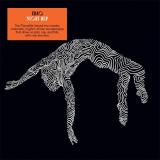
Ubaq - Night Wip

Ubaq

Night Wip

12inchKOS046
Komos
12.06.2026
  • 1: INTRO
  • 2: SCIATIQ
  • 3: SAKAKINIK
  • 4: REGARDING OTHERS ft. Talin
  • 5: FLAYOSC ft. Jules Regard
  • 6: PROUD B - PT1
  • 7: PROUD B – PT2
  • 8: FROM THE ENDING f. Mathieu Fabre

Growing together both personally and musically… That is indeed the good fortune of the musicians in the Marseille-based trio ubaq. We’re talking about bassist Antoine Carletto, guitarist Lucas Schemidt, and drummer Antoine Saussol, winners of the Rezzo springboard competition at Jazz à Vienne 2025. In their early twenties, they met in their late teens while still honing their musical skills. Nearly ten years later, they burst onto the scene, in perfect harmony, with their very first album, “Night WIP,” a follow-up to their EP, “20bis,” released in 2024. They owe their stylized stage name—written in lowercase with a “q”—to the ubac, that side of a mountain with very little sun exposure, where twilight reigns. “We liked that idea because we’re night owls,” says bassist Antoine Carletto. Hence the “night” for “nuit” and the “WIP” for “Work In Progress,” explains guitarist Lucas Shemidt. ubaq’s music is characterized by a nocturnal, melancholic heaviness, pierced by beams of light. “We love creating music that soothes us and highlights the precious nature of composing and playing in complete harmony,” says Antoine Carletto. “We cultivate complex tones, sometimes difficult to bear, whether they’re nostalgic or even verging on depression. But we manage to convey emotions without falling into clichés,” adds Antoine Saussol. Night and twilight serve as the perfect catalysts for this trio, which moves forward with perfect chemistry and harmony.

On this album, they feature the German-Armenian rapper and singer Talin, who is also based in Marseille. She appears on the track “Regarding Others,” where she chants that even though the year 2026 may see mothers weeping in every corner of the world, she still manages to smile. Thus, this track explores the three musicians’ relationship with the world and the necessity of looking at others. The unsettling “Sciatiq,” the haunting “Sakakinik,” and the ambivalence of “Flayosc”—the final track, on which the trio features trombonist Jules Regard—owe their titles to the musicians’ own observations and experiences. The multi-faceted track “Proud,” in two parts, is a tribute to Lucas Schemidt’s mother, who has since passed away. The presence of wind instruments—whether Jules Regard’s trombone or Mathieu Fabre’s saxophone on the intense track “From The Ending”—adds textures missing from the natural landscape depicted in “Night WIP.” This debut album captures the obsessions and introspective wanderings—sometimes anxious, sometimes enchanted—of a trio that cultivates melody as a pledge of warm fulfillment.

pre-order now12.06.2026

expected to be published on 12.06.2026

24,58 €
JEFFREY ALEXANDER & THE HEAVY LIDDERS - LIQUID DONNON LP
  • A1: From Loch Raven To Fells Point
  • A2: Calliope Wailer
  • A3: Tightroping
  • B1: Critical Masses
  • B2: Reservoir Drop > The Summer Song

Jeffrey Alexander and the Heavy Lidders return with their best album yet, and a UK tour this August. Press by Silver PR
‘’On the alternate timeline where the Meat Puppets inherited the bulk of the Grateful Dead’s tourheads when Jerry Garcia died in 1995, none of this would be necessary, because Jeffrey Alexander and the Heavy Lidders are a household name for evolving their own musical space that overlays dusty folk, cosmic jazz, deep psych, free improv, and even (gasp!) indie rock, building an audience that ranges from open-eared curiosity seekers to deep committed music weirdos that’s also yielded the Heavy Lidders, an infamous sub-cult of concert tapers that you’re already sick of hearing about. A lot of other things are better over on that timeline, too.
But in this consensus reality (and probably the other one, too), Liquid Donnon catches the Lidders at their heaviest, “heavy” in the Lidderverse being far from a monolithic musical idea. There’s heavy like the album-opening “From Loch Raven to Fells Point,” one of several tracks with elegant and gnarled conversational jams featuring the core Lidders lineup of Alexander alongside guitarist Drew Gardner and bassist Jesse Sheppard (both of Elkhorn) and drummer Scott Verrastro. But there’s heavy, too, like “Calliope Walker” and “Tightroping,” featuring Gardner shifted to dream-space vibraphone, the former with saxophonist Tacuma Bradley, the latter with Christina Carter of Texas noise-psych legends Charalambides on veil-crossing wordless vocals, her first collaboration with Alexander in some 20 years.
But then there’s also heavy like the cover photo of Alexander’s late friend and album namesake Donnon, taken at a Dead show at Rich Stadium in Buffalo in 1989, a spirit threading through the songs and weaving unexpectedly into Alexander’s life decades later, emerging especially when Alexander passed through a near-death experience of his own. But, taken together, the different heavies of Liquid Donnon add up into a state of musical grace, where all the Heavy Lidders from all the universes come together as one. Just, like, imagine.
Convened in 2019 on Alexander’s relocation back to his native east coast, the Heavy Lidders are the latest hard-touring expression for the guitarist’s music, joining a vast and tangled discography (and tape list) that includes the beloved long-running west coast Dire Wolves Just Exactly Perfect Sisters Band and, before them, the Iditarod and Black Forest/Black Sea, as well as a bushel of solo play-all-the-instruments projects, a stint with Jackie-O Motherfucker, sessions with Kemialliset Ystävät and Avarus and others, and you’ll have to keep digging for the rest.
And while it’s not hard to find tapers at Lidders gigs (and they encourage you to be one), or to track themes and songs over Alexander’s many live releases, Liquid Donnon makes a new primary text, the original versions of six new pieces for the repertoire. The album closes with a devastating pairing of “Reservoir Drop” into “The Summer Song,” floating into a duo between Alexander’s guitar and Carter’s voice. Catch a half-dozen Lidders shows this summer, and you might not ever catch them playing it like that again, but you just might open the doorway back to that better place." - Jesse Jarnow (writer, WFMU DJ, producer and host of The Good Ol’ Grateful Deadcast)

pre-order now12.06.2026

expected to be published on 12.06.2026

22,90 €
LA POLLA RECORDS - DONDE SE HABLA
  • 1: LOS MONOS
  • 2: CANARIOS Y JILGUEROS
  • 3: OCHO MARIPOSAS
  • 4: EL ANIMAL SIN NOMBRE
  • 5: CONEJAS Y GALLINAS
  • 6: RATA (PARTE 1)
  • 7: RATA (PARTE 2)
  • 8: EL PERRO SALVAJE
  • 9: EL AVESTRUZ
  • 10: CONFUSION
  • 11: EL CERDO
  • 12: ESCORPION
  • 13: EL PINGÜINO
  • 14: CIERVOS,CORZOS Y GACELAS
  • 15: LAS HORMIGAS
  • 16: TODOS LOS ANIMALES PRIVANDO JUNTOS EN EL BAR

This album, recorded in 1988 at Elkar Studios in Lasarte, is a happy accident, like much of La Polla Records' early output, by Jean Phocas (who also worked with other bands of the genre such as Cicatriz) and César Ibarretxe. It was lovingly designed, with a medieval atmosphere for the cover (by Txefo, Joseba Olalde and Txarly) featuring a huge scroll containing five tarot cards, a back cover in the same style with heraldic figures, and a meticulous presentation of the lyrics with separate spellings for each song, on a double sheet with photos of piglets suckling from their mother on one side and various images on the other. With animals as the common thread for the songs, it represents the confirmation that the concept album had arrived on the national punk scene. Perhaps a work of maturity, the band's traditional objectives disappear from the lyrics, and although there is still room for specific protests and chronicles of nights of alcohol and violence (such as those of La Rata), the emphasis is on revelling in the description of all kinds of personal, psychotic and hallucinatory hells. Evaristo confessed to being influenced by Umberto Eco's book The Name of the Rose (1980) in the making of this work. Far from indicating any departure from the foundations laid in previous works, it shows that the spectrum of the anti-establishment struggle the group was committed to was broad. A very complete album.

pre-order now12.06.2026

expected to be published on 12.06.2026

23,74 €
Bedouine - Neon Summer Skin
  • 1: On My Own
  • 2: Long Way to Fall
  • 3: Always on Time
  • 4: One Thing Right
  • 5: Neon Summer Skin
  • 6: Canopies (Intro)
  • 7: Canopies
  • 8: Deghma Cheega
  • 9: Na Na Na
  • 10: White Patent Leather
  • 11: Canopies (Piano Solo)
also available

Indie Exclusive[26,68 €]


On her new album, Neon Summer Skin, Bedouine, the project of Azniv Korkejian, explores this feeling of safety long before one can fully understand the concept. Written with vivid, honest and intimate imagery after visiting her family in Saudi Arabia, it tells the story of family and upbringing, and mourns the end of her childhood. There is a singular resonance and newfound heft in this music previously unheard in Bedouine’s discography. Bedouine is known for making gentle, lilting folk songs that build fingerpicked guitar melodies into tsunamis of emotion. Her masterful songwriting and timeless melodies have earned her praise from publications like Pitchfork, who said her music “boasts a surreal calm and lived in glow,” and Rolling Stone, who lauded her “humble folk-pop brilliance,” plus an NPR Tiny Desk Concert, and tours with the likes of Fleet Foxes and Father John Misty. While working on the record, Bedouine realized the pain of displacement, of searching for home, has been a throughline in her family history. Other relatives have also experienced this sense of loss as they’ve migrated between Armenia, Syria, and Saudi Arabia. “I felt so frustrated about the places that I'm from becoming war torn or difficult to return to,” she says. “My family has been split apart time and time again.” This realization prompted her to document and honor her parents’ lives and stories. On a family trip to Houston, Bedouine recorded a conversation with her mother and sampled the introduction to “Canopies.” The song tells the story of her mother’s time in an orphanage. She was put there by her own mother as a way of escaping her abusive father. Nearby, her mother would sing about feeling her daughter’s essence in the air: "The waves of Beirut's beaches flutter, and how sweetly they blow my darling's air." It’s a story of profound yearning told with the quiet profundity of a flower blossoming.

pre-order now05.06.2026

expected to be published on 05.06.2026

22,65 €
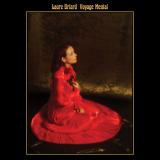
Laure Briard - Voyage Mental
  • A1: Rocking Chair
  • A2: Le Train
  • A3: Golden Sun
  • A4: Miroir
  • A5: Voyage Mental
  • A6: Surprises
  • B1: Je Comprends Pas
  • B2: Respire
  • B3: Sentimental Lies
  • B4: Force Invisible
  • B5: C’est Quoi ces Gens
  • B6: My Two Hours of Sleep
  • B7: Astrale Maison

Every so often in music, we come across voices that achieve a certain timelessness, so naturally do they encapsulate both past and present. Laure Briard is one of these voices, retro in form but contemporary at heart, spanning a career rich in aesthetic twists and turns, never without her signature magic, a special kind of eternal filter. Her first album, Révélation (2015), reveals her yé-yé influences, a testament to her love for ‘60s French pop music. Her second studio album, Sur la piste de danse (2016), follows in this vein and finds Laure accompanied as always by her long-time bandmates who share an affinity for warm, catchy arrangements that never lose their appeal. Her tour of Brazil marks a turning point in her career, introducing her to the local indie scene and thus launching her collaboration with the band Boogarins, as well as inspiring the release of multiple EPs composed and performed in Portuguese. Today, her music is embellished by touches of bossa nova and a folk sensibility, boasting increasingly intricate arrangements, as exemplified by her 2019 release, Un peu plus d'amour s'il vous plaît. Several years later, the Californian desert captures the musician’s imagination with Ne pas trop rester bleue, a poignant musical journey inspired by the rich history of Western legends and the role they play in shaping our collective consciousness.

In Voyage Mental, Laure Briard draws upon an inner energy unearthed during a new stage in her life, where the thrill of spontaneous adventure is not accessible in quite the same way. The result is a collection of sophisticated, introspective songs, narrating a young mother’s quest for balance in the face of routine. The album, nostalgic but always tethered to the present moment, is also the fruit of her collaboration with Gaëtan Nonchalant, a talented musician known for coaxing poetry out of the mundane. The two of them co-wrote and recorded five tracks at Studio Nocturne, accompanied by her long-time sidekick Pieuvre, aka Vincent Guyot, Léo Blomov, Pierre-Louis Vizioz, and Hedi Bensalem. The gentle pop opener “Rocking Chair” sways steadily to the rhythm of dynamic drums, followed by “Train,” a ballad that extends an invitation to set sail and daydream alone. The folk escapade continues with “Golden Sun,” a duet featuring the 1960s cult American musician F.J. McMahon, who Laure contacted via the internet on a whim. “Golden Sun” is an unlikely encounter between two generations and two cultures, giving new life to an old forgotten demo on the other side of the Atlantic. And while Laure sings of wide open spaces, cowboys, and sunsets sinking into the sea, we feel the city surrounding her in “Miroir,” a song composed by Hedi Bensalem that laments the suffocation of living in a crowded metropolis where the sky is a distant gray smudge. This pressing need for air, this search for rest and total disconnection, is one of the album's central themes. It may also explain the ever-present sense of nostalgia that pervades the songs, a welcome respite in our current era of doomscrolling and darkness. Along the way, Laure soothes us with melancholy guitar, delivers poetry set to scattered piano notes, and takes us by the hand during lively, uptempo passages. We climb onto her wings, never straying too far from the ground, soaring joyfully above her moods.

pre-order now05.06.2026

expected to be published on 05.06.2026

19,96 €
OR SOBRE BLAU - MAKING FRIENDS

OR SOBRE BLAU

MAKING FRIENDS

12inchSTRLP-129
Stroom
30.05.2026out soon

Andreu G. Serra and Kiran Leonard first met in Lisbon nine years ago, arriving in the city within weeks of each other by chance. Living together in a crumbling warehouse in Alto São João, they recorded a series of improvisations that became The Piri Piri Samplers (Memorials of Distinction, 2019): Serra’s abrasive, tape-warped guitar lines colliding with Leonard’s stark, pedal-free counterpoint. They played a single gallery show, left Lisbon that summer, and then spent almost a decade living in different countries.

When Stroom reissued The Piri Piri Samplers in 2024, the label suggested the duo make a new record. At first, it seemed impossible: Leonard was in London, Ubaldo in southern Catalonia, and their attempts at long-distance recording quickly collapsed into nothing. But the near-failure sparked something. Leonard travelled to Catalonia to restart the process in person; soon after, Serra moved to South London, and the pair began meeting every week.

The result is Making Friends: a richer, more expansive album built over six months. Where The Piri Piri Samplers was assembled from raw improvisations, Making Friends transforms fragments into fully realised songs, weaving together nylon and steel-string guitars, piano, drums, bells, samplers and more. For the first time, Serra and Leonard sing together, each in his own language - Catalan and English - sometimes translating one another in real time.

Musically, Making Friends still carries the jagged dissonance and free-blues spirit of the duo’s earlier work, while opening outward toward everything from emo and blown-out noise to fractured chamber pop. There are only three guests on the album, and they are worth mentioning: Rachel Leonard and Antonia Serra (the musicians' mothers) on the seventh tune, and the American poet Pete Simonelli (of Enablers) appears on Top of Duboce / Tyne Bridge Crossing, one of the album’s two sprawling centerpieces.

At its heart, Making Friends is an album about friendship: about distance, reunion, family, and the stubborn need to make music together. It begins with uncertainty and disconnection, but ends somewhere stronger - with, as put on the closing track, “molta il.lusió per lo que pugue vindre” or “much excitement for what may come.”

pre-order now

This item has not yet been released. You can pre-order the product now.

23,11 €
The Real McKenzies - Paul McKenzie Sings On Yer Bike
  • 1: Fortitudine Vincimus, The Final Voyage of The Endurance
  • 2: Shackleton
  • 3: I Wanna Eat Sardines (with Yer Mother)
  • 4: The Mad Trapper of Rat River
  • 5: Read A Book
  • 6: I Love A Lassie / Roamin' In The Gloamin
  • 7: Liver Spot
  • 8: Fiona (Wee Luv Ewe)
  • 9: The Ragged Rock
  • 10: A Cannibals Lament
  • 11: Black Agnes
  • 12: The Reckoning of Sawney Bean
  • 13: On Yer Bike

ounded in 1992 by the larger than life, Scottish punk-rock poet laureate, Mr Paul McKenzie, this merry band of miscreants has spent more than three decades circumnavigating the globe to bring the McKenzies gospel to an ever-expanding throng of rebels, scallywags and ne'er do wells. There's not many bands that can boast of a 30+ year career as staggeringly adventurous, wildly tempestuous and utterly death-defying as The Real McKenzies. It would be a serious mistake to write them off as just another Celtic punk band (they’ve been around longer than the Dropkick Murphys after all). They are an unstoppable juggernaut of touring mayhem. A ferocious troupe of insanely talented minstrels, storytellers and entertainers melding traditional acoustic and electric instruments to create a sound like no other. Their list of accolades is long. From sharing the stage with the likes of NOFX, Rancid, Flogging Molly, Metallica and Shane McGowan to appearing in film, books and video games to early releases with the almighty Fat Wreck Chords, their legendary status only continues to grow. On Yer Bike is an absolute beast of an album. A newly revitalized and laser-focused Paul McKenzie has never sounded better and his longtime bandmates have never been tighter. Boasting thirteen epic tracks, including the Sawney Bean trilogy (a trio of songs about Scotland's most infamous cannibal highwayman), the songs rage across topics including but not limited to love, literacy, historical sagas, eating sardines with your mother and, of course, cannibalism. Soaring bagpipes, heart pounding percussion and ultra melodic shoutalong Celtic punk rock are the orders of the day and are delivered piping hot from one of the most respected and adored pioneers of the genre.

pre-order now29.05.2026

expected to be published on 29.05.2026

24,33 €
AHO SSAN - THE SUN TURNED BLACK
  • 1: SUNRISE
  • 2100: SUNS PT. I
  • 3100: SUNS PT. II
  • 4: THE CHILDREN OF NOISE FEAT. ASIA
  • 5100: SUNS PT. III
  • 6100: SUNS PT. IV
  • 7: THE SUN TURNED BLACK

Aho Ssan ist der Künstlername von Désiré Niamké, einem in Paris lebenden Komponisten und Elektronikmusiker, der sich im Laufe des letzten Jahrzehnts als zentrale Figur an der Schnittstelle zwischen experimenteller Elektronikmusik, Klangforschung und zeitgenössischer Komposition etabliert hat. Zu seiner Diskografie gehören ,Simulacrum" (Subtext, 2020), ,Limen" mit KMRU (2022) und ,Rhizomes" (Other People, 2023) mit Moor Mother, Angel Bat Dawid und clipping. Er trat bereits im Lincoln Center (NYC), im Muziekgebouw (Amsterdam), in der Krakauer Philharmonie, bei Atonal Berlin, CTM, Rewire und Sonic Acts auf - und war Support von Autechre im Le Trianon (Paris, 2024). Aho Ssans künstlerisches Schaffen lässt sich als hochpräzise Klangskulptur beschreiben, in der gewaltige Ströme digitaler Klänge in rohe Texturen zerfallen, um die Themen Identität und Chaos zu erforschen. The Sun Turned Black basiert auf field recordings, die während einer Reise nach Ghana, der angestammten Heimat von Aho Ssan, gemacht wurden. Aufgebaut um einen klanglichen Dialog mit der international gefeierten Geigerin ASIA, wobei alle perkussiven Elemente bewusst weggelassen wurden, nimmt das Album einen einzigartigen Platz zwischen Ambient, Noise und elektroakustischer Musik ein. Das Projekt wurde ursprünglich von der Maison de la Radio für das Hyperweekend-Festival in Paris in Auftrag gegeben, das Album in Coop mit Subtext Recordings aus Bristol veröffentlicht.

pre-order now29.05.2026

expected to be published on 29.05.2026

19,96 €
Radhika - Cine-Pop LP

Radhika

Cine-Pop LP

12inchGLAMLP075
GLASS MODERN
22.05.2026
  • 1: Theme from R.A.D.H.I.K.A (For David Lynch) ft Mitch Mitchell
  • 2: Feline Bandits ft Mitch Mitchell
  • 3: Starry Eyes ft Gerry Love & Mitch Mitchell
  • 4: Sleep w/ Tracyanne Campbell (Camera Obscura)
  • 5: Tum Hi Ho ft Vinita Dade
  • 6: Intermission Theme (Slight Return)
  • 7: Since Yesterday w/Mitch Mitchell/Tracyanne Campbell
  • 8: Cocoa Butter Eyes
  • 9: Future Me
  • 10: Theme from R.A.D.H.I.K.A (For Lalo & Laeticia)
  • 11: Nowhere Near ft Gerry Love & Tracyanne Campbell
  • 12: (Secret Track)

Radhika Meera Dade: “Ever since I entered this realm, music has surrounded me in every way possible. The sounds of magic have been nourishing my soul since birth, the first memories I have as a young child are listening to my dad’s eclectic vinyl collection. I feel so lucky to have been exposed to such a range of music at a really young age: artists from Alice Coltrane to The Go-Betweens, all of these musicians have subconsciously and consciously inspired me musically in many different ways”.

Glass Modern is very proud to present the debut album by Radhika Meera Dade. Cine-Pop is a collection of songs that flow gently and easily in and out of each other - a suite, a short film, everything an album should be. Coming in at 33.3 minutes, it’s the perfect length for an album, it doesn’t short change you, it doesn’t stay too long - it’s designed to be played in one sitting. It’s like being in a friend’s house and noticing the things that are most important in their life - objects, family portraits, records, musical equipment, their curated accumulation. It reflects so many things - culture, community, fandom and the incredible bond between Radhika and her father, Sushil, the Future Pilot AKA. The record spans generations and continents but its home is always Radhika and the family jams she made with Sushil in various garages, bedrooms and garden dens - her soaring voice and love of all kinds of music from Bollywood to Goth Pop to The Glasgow School. The songs are collected from memory and the immediacy of time - one goes all the way back to her 10 year old self penning Future Me, an eco anthem. In different moments other musicians appear - most notably key collaborator, Eric MacDonald, on hazy synth and keys, and Radhika’s mother Vinita, who has a gorgeous voice too. The Glasgow School is very present - Mitch Mitchell (The Pastels) , Gerard Love (Lightships/ ex-Teenage Fanclub) and Tracyanne Campbell (Camera Obscura) all bring their casual magic to the table. Cine-Pop, mostly made in Glasgow at La Chunky Studio with the excellent Colin McGeogh (who also contributes flute, keys and electronics) is a one-off. It’s unrepeatable - there, gone. It’s the world through the eyes of a dazzling young Indo-Scottish woman. Everything she is has gone into it, is part of it and is there for a reason. Following on from the first single, Starry Eyes, which was played multiple times on BBC 6Music and other stations, other singles to be released from the album include Feline Bandits plus a version of the Strawberry Switchblade classic Since Yesterday. Radhika will also be collaborating with Glasgow-based film maker, Laura Meek, on promos and the plan is to play live throughout the year.

pre-order now22.05.2026

expected to be published on 22.05.2026

25,28 €
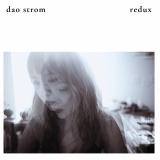
Dao Strom - Redux

Dao Strom

Redux

12inchLPNUY012
Disasters By Choice
08.05.2026

Redux, an ambient-folk album from Portland, Oregon musician, poet, and multimedia artist Dao Strom, is a collection of nine resurrected pieces. Reimagining songs she initially composed as a member of the Austin, Texas alt-country and singer-songwriter scenes of the early 2000s, Strom reworks these lost songs into ambient-folk mini-epics—part grounded and earthly, part ethereal and otherworldly. Drawing on an intimate yet spacious palette of folk, ambient, and experimental textures, woven through with a poetics of vulnerability and quiet emotion, Redux explores song as gently reverberant fields of layered vocals over finger-picked guitars with touches of electronics and sampling. Strom’s musical journey initially began in a roots and acoustic vein, simultaneously with her career as a fiction writer. In the years since, she has moved from Austin, Texas to Juneau, Alaska to Portland, Oregon; her work too has expanded across genres into more experimental formats of poetry, music, and multidisciplinary art. In returning to these earlier songs, Strom reclaims and revives them, exploring her relationships to time, voice, and the continuances of emotion and memory. The word redux means “brought back; revived”; a sense of something restored—earlier renditions of some of the Redux songs were recorded with Austin-based collaborators and producers; some songs were written in that time period but never recorded. Produced, performed, and recorded by Strom alone in her home studio, Redux is a return and reemergence of the artist to her own most personal, intuitive structures and atmospheres of voice, sound, and song. Released on cassette by Antiquated Future Records, and reissued on vinyl in 2026 by Disasters By Choice.

Dao Strom is an artist who works with three “voices”—written, sung, visual—to explore hybridity and contemplate the intersection of personal and collective histories. Her music releases move between “song-poem” cycles and ambient-folk albums. She is the author/composer of several hybrid projects that blend poetry, music, and visual art into unique multimodal experiences, including Tender Revolutions/Yellow Songs, a song-cycle with set of four chapbooks, jointly released by Beacon Sound, Antiquated Future Records, and The 3rd Thing Press (2025), and Instrument/Traveler’s Ode, a poetry-art collection and song-cycle released by Fonograf Editions and Antiquated Future Records (2020). Born in Vietnam and based in Portland, Oregon, Strom began her musical journey in the early 2000s, when she first began infusing into the context of “Americana” folk/roots music her own diasporic Vietnamese experience and stories. Her music has since moved in more experimental directions, resisting easy categorization, yet still maintaining tendrils of folk ethos. She also writes songs about the ineffable nuances of emotion, memory, and connection, as captured on the album, Redux, which gathers songs from across her songwriting years into an ambient-folk setting, self-produced and recorded by Strom, released on cassette in 2022 by Antiquated Future Records, and reissued on vinyl in 2026 by Disasters By Choice. As a multidisciplinary artist, Strom has presented performance and installations at venues such as the Time Based Art Festival (Portland Institute for Contemporary Art) and Moving Poets Novilla in Berlin, Germany, and has received awards from the Creative Capital Foundation, Spark Artist Award, and others. Strom is also a founding member of She Who Has No Master(s), a collective of Vietnamese women writers and artists making polyvocal poetry-art works as a means of reaching across borders.

pre-order now08.05.2026

expected to be published on 08.05.2026

26,68 €
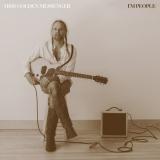
Hiss Golden Messenger - I'm People
  • In The Middle Of It
  • Who You Gonna Run To?
  • Shaky Eyes
  • Mercy Avenue
  • I'm People
  • Seneca (Time Is A Mother, Baby
  • Last Orders
  • Gabriel
  • Heavy World
  • Alright And Then Some
  • Spirit Cat
  • Depends On The River

The brand- new album from Hiss Golden Messenger and the first release with Chrysalis Records. I'm People is a vivid, deeply human album born from a period of rupture, renewal, and vast American wandering. Written across Bolinas, the North Carolina Piedmont, and a Santa Fe motel room, the record traces the artist's search for clarity through landscapes both external and internal. These songs move through heartbreak, aging, fatherhood, desire, disillusionment, and the hard- won hope that remains after the spirit has been scraped bare.

Produced with Josh Kaufman at Dreamland, a decommissioned church outside Woodstock, the album carries the warmth of musicians playing live in a circle, stained- glass light filtering across guitars, drums, and upright bass. Contributions from Bruce Hornsby, Sam Beam, Marcus King, Sara Watkins, Amy Helm, Eric D. Johnson, and members of Dawes enrich a sound world that feels immediate, vulnerable, and fully alive. "I'm People is an intensely human record, and so one that needed to feel immediate, vulnerable, and fully dancing; something you could touch, sing along to, know about, recognize, relate with. I know what the record is to me and I bet it's not so dissimilar from what it's about to you, at least in the broad strokes: The heartbreak and exhilaration, the absolute black comedy of being a person on this razor's edge that is America circa 2025. What other choice do we have than to be hopeful?" - MC Taylor on I'm People. Hiss Golden Messenger is a Grammy nominated artist based in North Carolina, with multiple Album Of The Year and Best Americana Album awards, reaching #2 in the Americana Charts and performances and tours across the world, including the UK and Europe + performances on US TV; Late Night With Seth Myers.

pre-order now01.05.2026

expected to be published on 01.05.2026

25,17 €
Byard Lancaster - Mother Africa

'A few months after recording Us, Lancaster recorded Mother Africa along with Clint Jackson III, a trumpeter, partner of Khan Jamal or Noah Howard on other recordings.
On march 8th, 1974, Lancaster and Jackson headed up a group composed of Jean-François Catoire (electric and double bass), Keno Speller (percussion) and Jonathan Dickinson (drums). Together, they create an immediate impression. From the first seconds of We The Blessed, they develop a free jazz which rapidly abandons any virulence under the effect of blues and soul based interventions.
When Gilson’s composition Mother Africa begins, listeners are transported into the studio, listening to the musicians setting up: chatting and joking… Then comes the melody: a dozen or so notes of a repeated theme which is accelerated and deformed according to their whims… The jazz played by the association Byard Lancaster / Clint Jackson III is rare: creative AND recreational. We the blessed, is apt listening to this again today!'

out of Stock

Order now and we will order the item for you at our supplier.

Last In: 5 months ago
25,84 €
Elephanz - LOVE. HURT. REPEAT LP
  • A1: Follow Your Love
  • A2: That's In My Head
  • A3: The Novel Of Our End
  • A4: Mother
  • A5: I Don't Wanna Know
  • B1: My Feet On The Ground
  • B2: Invisible
  • B3: Streets Of Rage
  • B4: In A Porcelain Shop
  • B5: What Is Love

Fifteen years after their first album "Time for a Change", and drawing on the experience of two others ("Elephanz" 2017, and "Rien de personnel" 2023), ELEPHANZ now returns with a fourth album that carries the scent of first loves, the kind you sing from the heart with your hands gripping a guitar.

"Love. Hurt. Repeat." tells, across ten songs, the story of a return to oneself, like coming home after years spent roaming the world, only to realize that everything you needed to understand yourself was already there at the starting line.

To help you understand what this new album makes me feel, I'd like to tell you about my first meeting with Jon and Max in 2009, when I became the band's bassist. Sixteen years ago, I discovered these two young men and set off in their family Kangoo van on my very first tour.

Through our early rehearsals around the piano of their childhood, I discovered their love for pop music in all its breadth, always in search of harmonies and melodies that touch the heart in the simplest way and gently ease your sorrows along the way. With them, I learned to appreciate the mainstream hits I had previously dismissed on principle, and I discovered the demanding art of melody as I listened to them sing about love and friendship through unforgettable catchphrases.

Listening today to some of the songs from their new album, I think back to those two young men with a big-city rock look, shut away in the living room of their family home, talking only about leaving that dull countryside behind to live the big life in the capital (Streets of Rage). What I once took for a kind of revenge against the hostile environment of their adolescence was in fact an almost vital need to find their place among others, to feel understood in order to feel at ease in their own skin.

Today, I find them again with the same guitar and the same inexpensive Juno as back then, but with the confidence shaped by years of concerts, writing, studio encounters, and all kinds of experimentation. The music of this fourth album has never been so close to that of their earliest days, but their voices have been set free. They no longer sing about who they dreamed of becoming, but about who they have always been, their most distant concerns, sometimes even their darkest ones, yet always in search of the light.

It is as if ELEPHANZ had to travel all the way around the world to come face to face with themselves again. There is no longer any shame in being who you are, and it is even the best way to understand yourself, to exist and to heal. To heal from grief and heartbreak, to understand the child you once were and the one who carried them (Mother), to forgive yourself and finally learn to love yourself.

That is what makes this record as sensitive as it is powerful and strikingly truthful. It was written and recorded like a cry, live, in just a few weeks, using the instruments of their beginnings: sharp bass and drums, powerful guitars, and synthesizers that are at times soaring, at times carriers of liberating melodies. The art of ballads remains, as does that of universal pop songs.

There is a beautiful urgency here, the urgency of finding oneself again in order to understand oneself through both pain and beauty, and "Love. Hurt. Repeat." is its most perfect expression.

pre-order now24.04.2026

expected to be published on 24.04.2026

22,65 €
Angelique Kidjo - HOPE!! (2x12")

Angelique Kidjo

HOPE!! (2x12")

2x12inch5026854805634
Parlophone
24.04.2026
  • 1: Bando (feat. Pharrell & Quavo)
  • 2: Aye Kan (feat. Ayra Starr)
  • 3: No Stopping Us
  • 4: Fall On Me (feat. PJ Morton)
  • 5: Oyaya (feat. Nile Rodgers & IZA)
  • 6: Superwoman (feat. Dadju)
  • 7: I'm On Fire (feat. The Cavemen)
  • 8: You Can
  • 9: Kakua (feat. Diamond Platnumz)
  • 10: Sunlight To My Soul (feat. Soweto Gospel Choir)
  • 11: For Me (feat. Charlie Wilson)
  • 12: Big Heart
  • 13: Jerusalema
  • 14: Joy (feat. Davido)
  • 15: Nadi Balance (feat. Fally Ipupa, The Cavemen, Sheila Maurice-Grey)
  • 16: Malaika (feat. Florent Pagny)

Global icon and five-time GRAMMY® winner Angelique Kidjo returns with HOPE!!, a revelatory 16-track collection that serves as a vibrant antidote to the times. Following her 2021 success Mother Nature, this album bridges continents and genres, featuring a star-studded lineup including Pharrell Williams, Quavo, Ayra Starr, Nile Rodgers, and Davido among other A-listers

Produced by Pharrell and Shizzi, and featuring songwriting by the legendary Diane Warren, HOPE!! is more than an album—it’s a global musical movement dedicated to the resilience of the human spirit.

pre-order now24.04.2026

expected to be published on 24.04.2026

38,61 €
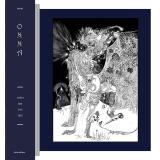
Onna - Onna Last Live 1983 LP 2x12"

Onna

Onna Last Live 1983 LP 2x12"

2x12inchAN56
An'archives
24.04.2026out soon

Onna Last Live 1983 includes the final performance by the original line-up of Onna, the psych-rock project of revered Japanese manga artist, Keizo Miyanishi. Onna’s legend has largely rested, until now, on one self-released and self-titled seven-inch from 1983. Reissued by Holy Mountain in 2009, its rediscovery, along with several archival live and studio sets that leaked out across the 2000s, signalled to a wider audience the power of Miyanishi’s strikingly hypnotic songwriting. With Onna Last Live 1983, though, we hear the group’s perfect line-up performing at its peak.

While Miyanishi was the core member and conceptualist of Onna, the other members of the group would also go on to make significant contributions to the Japanese underground. Guitarist Michio Kurihara would eventually be known for his membership of YBO2, Ghost and White Heaven, and collaborations with the likes of Boris and Damon & Naomi. Drummer Ken Matsutani formed Marble Sheep & The Run-Down Sun’s Children and The Mickey Guitar Band, while also running the Captain Trip label. Joined by the late bass player Yasui Yutaka, to whom the album is dedicated, this quartet only performed live in 1983; the live set here was recorded at Silver Elephant.

It’s a different line-up to the Onna duo that’s documented on their single. After Miyanishi and fellow manga artist Mafuyu Hiroki recorded that material, Miyanishi decided he wanted to start playing gigs; Hiroki left, and Kurihara, Matsutani and Yutaka joined soon after. This line-up allowed Miyanishi to significantly expand Onna’s powers, leading to a sound that Kurihara once described to Ptolemaic Terrascope magazine as “repetitive and heavy, yet quite orthodox.”

The songs here are simple yet deeply effective in their repetitive power, generally revolving around two or three simply strummed chords for guitar. Bass and drums repeatedly lock into mantra-like grooves as Kurihara’s guitar scales the walls, with Miyanishi’s consumptive moans and sighs sent torquing through FX. The cumulative effect of the seven songs here is very heavy indeed; if the prologue “Always…” drifts beautifully through five minutes of placid, beseeching melancholy, the epilogue, “Never Seen A Light Like This”, spirals out into sixteen minutes of glazed-over psych-rock, completely monomaniacal and thrilling in its slow-motion tumult.

Throughout, you can hear Miyanishi and co. reaching for something ineffable, something beyond and between the notes. It’s a phenomenal performance; it’s also no surprise that the group disintegrated after this show, given its intensity. Matsutani and Yutaka left after the Silver Elephant show, with Miyanishi and Kurihara continuing through the first half of 1984 firstly as a duo, and then a trio with new drummer Yoshiki Ueonyama. Kurihara left soon after. But Onna Last Live 1983 is proof plenty of the powers of the original Onna quartet, sending their Rallizes/Velvets dream-mantras off into darkened, stormy skies.

pre-order now

This item has not yet been released. You can pre-order the product now.

50,00 €
Various - Digging Central Asia: Musical Archaeology Along the Silk Road LP

Death Is Not The End collaborate with Uzbek label Maqom Soul to deliver an LP counterpart to last year's mixtape of the same title, compiling specially picked & fully licensed individual belters from the ex-soviet studios of Central Asian republics between 1978 and 1989 - incl. Uzbek, Tajik, Kurdish & Uyghur artists pulling traditional folk motifs together with pop & rock and psych elements.

"These recordings do not form a smooth or coherent history. They feel more like a sequence of discoveries made at different moments and in different circumstances. Songs and instrumental pieces that once lived inside specific contexts radio broadcasts, philharmonic programs, touring routes now sit side by side, revealing hidden connections as well as clear fractures between them.

Nasiba Abdullaeva appears here as a voice from the end of an era. Trained within a conservatory system, she worked inside the format of the Soviet pop song while filling it with melodic logic that did not come from Moscow or Leningrad. Her voice is soft and sustained, shaped by Eastern melisma, and it never functions as decoration. Even in tightly structured songs there is a sense of resistance, an effort to preserve a musical language rooted in Uzbek tradition rather than fully adapted to an all Union standard.

The ensemble Sintez, later renamed Navo, represents a different path. Beginning as a student rock group, the band was gradually absorbed into the official VIA system with all its limitations and compromises. Yet it was precisely within those boundaries that Sintez and Navo developed a recognizable sound. Electric guitars and jazz rock harmonies do not overpower the folk material but remain in tension with it. Their recordings feel like negotiations between what the musicians wanted to play and what they were allowed to perform.

The Tajik ensemble Gulshan reflects an institutional approach carried to a high professional level. Formed under television and radio structures, the group treated folk material almost as a written score. Carefully constructed arrangements, close attention to orchestration, and restrained use of pop techniques define their sound. There is less spontaneity here, but a strong sense of discipline and structure, where national melody becomes part of a carefully controlled sonic framework.

Koma Wetan occupies a very different space. Formed in the 1970s, this Kurdish rock group approached poetry and folklore as tools of cultural assertion. Their psychedelic rock never feels like a stylistic borrowing. Instead it functions as a contemporary vessel for language and themes that might otherwise have remained unheard. Even today these recordings sound fragile and stubborn at the same time.

The Uyghur ensemble Yashlik, closely connected to a musical drama theatre, operated somewhere between stage performance and popular music. Their songs are built on folk melodies but shaped for wide audiences. What emerges is a constant attempt to preserve the recognizability of Uyghur musical identity without freezing it in a folkloric frame. Yashlik's music exists in a state of balance between representation and development.

Digging Central Asia does not attempt to establish hierarchies or offer a single wayof listening. Names and dates matter less than the sound itself. Tape noise, abrupt transitions, and unexpected timbres remain part of the material rather than flaws to be corrected. This music existed at the crossroads of multiple routes geographic, cultural, and ideological. Heard today in a new context, it no longer feels peripheral. Instead it stands as a reminder that the history of popular music is far more fragmented, layered, and polyphonic than it is usually allowed to be."

out of Stock

Order now and we will order the item for you at our supplier.

Last In: 2 days ago
22,48 €
Flaer - Translations

Flaer

Translations

12inchODA06M
ODDA Recordings
16.04.2026

Artist and multi-instrumentalist Flaer embraces the search for quiet miracles on first full-length LP Translations.

In 2023, Realf Heygate - who makes music as Flaer - released his debut mini-album Preludes, composed on his mother’s piano and his childhood cello.Returning to ODDA for his debut full-length album, Heygate is now looking in another direction. A record that embraces transition and movement, Translations is in many ways more internal, less rooted to a single place and reflective of the process of laying new foundations in Cornwall.

Like Preludes, Translations is coloured with found sounds and field recordings, from the starlings which can be heard singing through the open window of his studio, to the brittle recordings of his mother, who was a linguist, learning Spanish on a set of language tapes. In both cases, Heygate embraced the translations and memories inherent to the sounds.

“When I digitised my mother’s tapes, they warped and stuttered in a very similar way to the starling’s song,” he explains. “They had this uncanny rhythm and pulse that I couldn’t quite decode, but was saying something." These decayed transmissions hint at loss, resisting clarity in favour of the ineffable.

Translations is also a record of ambiguities and in-betweens, suggested by the double meaning of the album’s opening track ‘Entre’. At once intricate and expansive, threaded with birdsong and acoustic guitar motifs, this and ‘Starling Descends’ (a reference to Vaughan Williams’ ‘The Lark Ascending’) act as a bridge away from the pastoral themes of Preludes towards a more assertive sound. At times intimate in its textured instrumentation and at others more overtly grand in orchestration, reflecting awider palette of influences.

“Flaer began in many ways when I picked up my mother’s instruments, seeking a form of reconnection. Where words evaded me, they became the tools through which I found a language for grief – and above all, for love.”

Recorded between 2023 and 2025 – what Heygate calls “A gradual process of sowing and harvesting ideas rather than a single intense creative period” - each track follows a rhythm similar to the small maquettes and sculptures he has been working on in his visual practice, whereby structures and melodies form intuitively in moments that are as rare as they are fleeting.

“It's that feeling of searching that I really enjoy,” Heygate continues. “I never know what the destination of the composition is going to be, and I never really find what it is."

Translations is released on limited edition off-white vinyl LP (500 copies worldwide) with one of five signed and numbered handmade risograph prints. It's also available as standard black vinyl LP and digitally.

out of Stock

Order now and we will order the item for you at our supplier.

Last In: 5 months ago
22,65 €
DELAIN - WE ARE THE OTHERS LP

Dutch symphonic metal band Delain released their third studio album We Are the Others in 2012 to positive reviews from music critics. The album title was inspired by the murder of 20-year-old Sophie Lancaster, whose death was likely a hate crime due to her being part of the goth subculture.

Two singles were released: “Get The Devil Out of Me” and the title track "We Are The Others", for which the band shot a music video that included many well-known people from the metal scene, including George Oosthoek, Sharon den Adel, Robert Westerholt and Rob van der Loo. The album features guest contributions by the likes of Burton C. Bell (ex-Fear Factory) and Marko Hietala (ex-Nightwish) and was produced by Jacob Hellner (aka Tripod), who is best known for producing most of Rammstein’s albums.

This release of We Are the Others contains an insert and is limited to only 750 individually numbered copies on orange & black marble vinyl.

pre-order now06.03.2026

expected to be published on 06.03.2026

30,04 €
King Tubby - The Roots Of Dub

“Tubby did three original dub albums, ‘Dub From The Roots’. ‘The Roots of Dub’ and the third is ‘Brass Rockers’ with Tommy McCook ‘pon the flying cymbals. Where he mixed it with the horn going in and out in a dub way and one named ‘Shalom Dub’ you can call Tubby’s too because he mixed the versions as they were off forty fives’’

Bunny ‘Striker’ Lee

King Tubby and Producer Bunny ‘Striker’ Lee are intertwined in the birth of Dub Music. After discovering a mistake that made a ‘serious joke’ (more of which later...) they went on to release the first pressings of this new musical genre namely ‘Dub Music’. Tubby’s vast knowledge of electronics and Bunny’s vast catalogue of rhythms would lay the foundations of what today is taken as a standard... the Remix / Version cuts to an existing vocal tune.

Osbourne ‘King Tubby’ Ruddock was born in Kingston, Jamaica on 28th January 1941 and grew up in the High Holborn Street area of downtown Kingston. He studied electronics at Kingston’s National Technical College and also on two correspondence courses from the U.S.A... When he had qualified Tubby began repairing radios and other electrical appliances in a shack in the back yard of his mother’s home. His work in the early days included winding transformers and building amplifiers for Kingston’s Sound Systems. Tubby built his first Sound System in 1957 playing jazz and Rhythm & Blues at local weddings and birthday parties. His reputation as a man who knew and understood both electronics and music grew steadily and as the sixties drew to a close. Tubby
purchased his own basic two track equipment. He installed this alongside his dub cutting machine, a home-made mixing console, and his impressive collection of jazz albums in the back bedroom of his home at 18 Dromilly Avenue which he christened his music room.

Tubby and Striker were at Treasure Isle Studio’s one day while Ruddy from Spanish Town was working with the engineer Byron Smith....

“Tubby and myself was talking when Ruddy was cutting some dub but Smithy (engineer) made a mistake through we were talking and forgot to put in the voice. It was two track recording in those days. Ruddy said ‘No Man! Make it stay! and so they cut the rhythm. When I went over to Ruddy’s that Saturday night a dance was in progress and when they played the vocal to the tune... then he said we’re going to play ‘Part Two’. They never called it ‘Version’..and then he played the rhythm track. The song was a catchy song and everybody started to sing along and the deejay started to toast so everything went down well. On Monday morning I went up and I said ‘Tubbs the mistake we made was a serious joke.It mash up Spanish Town! The people went wild. So you have to start to do that now ‘cause when the man put on the ‘Part Two’ everyone start singing this song. It played about twenty times. I said you try Tubbs!’...Well the next Saturday night now when Tubby strung up down the farm U Roy said he’s going to play ‘Part Two’ but Tubby did it different now. He started with the voice then dropped it out and let the rhythm run and then he brought in the voice in the middle and from there Tubby started to get really popular.’’
Bunny ‘Striker’ Lee

Dynamic Sounds upgraded to sixteen track recording in 1972 and Tubby purchased, again with the help of a deal brokered by Bunny Lee. The old four track equipment and the MCI console from their Studio B. The four tracks now gave him far wider scope to work with and he began to create a new musical form where the bass and drum parts were brought up while the faders allowed Tubby to ease the vocal and rhythm in and out of the mix. It was only a matter of time before Tubby’s dub plate experiments began to make it on to vinyl and the first ever long-playing King Tubby releases would feature a collection of his mixes to a selection of Strikers rhythms. So please sit back and enjoy this historic set of sounds. Lovingly restored and with a few extra gems added to the CD Editions. These releases were the first to carry the name of King Tubby and the first to credit the great musicians that contributed so much to the rhythms that made these albums possible.

out of Stock

Order now and we will order the item for you at our supplier.

Last In: 15 days ago
13,24 €
DAVID WALTERS - TI LOVE LP 2x12"

In his own time, in his own tone and in his own company.

‘Win and lose without losing oneself’’ This line from French rapper Oxmo Puccino greatly accompanied David Walters while composing his fourth studio album. Over the eleven tracks on ‘Ti Love’, David took his time to find the right tone and in turn, tell his truth.

‘Ti Love’, is a French-Creole abbreviation for “petite love”, meaning ‘little love’, evoking that sweet fondness found in those small gestures and little acts of kindness.

Think of things like young kids' brotherly love or a stranger lending you a helping hand, while expecting nothing in return. It’s these motions that allow this album to feel full of real life, carried by beating drums that also pull at our heart strings.

Basing himself in a small village in Martinique, where David had not long since scattered the ashes of his late mother, the multi-instrumentalist decided to remain there and let the writing of Ti Love pour out from deep inside him. Taking influence from around the island, the energy from his makeshift studio set up in Fort de France, allowing a resilient yet grieving man to recount, let go and come to terms with his recent loss.

So embracing these new circumstances, on the rugged coastal Caribbean island of Martinique, David took up an artist’s residency in the island’s capital Fort de France, located near the town’s port is the ‘Manoir des Artistes’, a bustling recording studio space. A place where the walls shake as the latest sounds being created are blasted by locals and visitors alike. Most studio doors are wide open; as music here is a huge part of everyday life, feedback from encouraging neighbouring musicians is on hand and welcomed. A contrast to the isolation often assumed with working in more traditional music studios.

It was here in this stimulating environment that David recorded Ti Love’s initial demos.

With his first collaborator onboard, Neeweed, a 25-year-old producer and gospel expert who David met at the Martinique Jazz Festival.

Of the album’s initial versions of the record David recollects: ‘It took me three years to write it, then I rewrote it, reworked it. In the end I'm really glad I stepped back and listened to myself.’ I found a great ally in GUTS, who ended up being the artistic director of the record”

David surrounded himself with the right people who helped him express himself in the best possible way. He called on other friends and musical comrades; album opener and title track, ‘Ti Love’ features the incomparable Fatoumata Diawara (World Circuit Records / Africa Express) and further along additional production came in from; Izem, Art Of Tones, and GUTS himself, who all added just the right amount of ‘little love’ to this

project. Further helping hands came from Californian producer and DJ Captain Planet, who David was introduced to a few years ago. Closer to home, here in Europe, the German producer Bluestaeb appears on two tracks: the very catchy disco funk ‘Mr Maraboo’ and ‘Kite Koule’, the latter being the first single lifted from the album, where David invited Nigerian guitarist Keziah Jones.

Elsewhere on the album, fellow Heavenly Sweetness recording artist Blundetto contributed two tracks; the reggae ‘Voodoo Love’, which is David's tribute to Studio One, and the very sweet and resilient ‘Bon Voyage’, which closes the album... "It's gold, it doesn't need anything changing.” remarked David - ‘Bon Voyage’ is a goodbye to his mother, whose voice called him from the bottom of the sea one night while he was surfing during the full Moon.

Released almost 20 years after his debut album ‘AWA’ released on French imprint Ya Basta, home to Gotan Project and many others, David boasts a long list of radio supporters including; Gilles Peterson, Cerys Matthews and Don Letts at the BBC, while further field Cosmo Radio in Germany, and KCRW in Los Angeles.

On this new record, David has shown sincerity and vulnerability, while still honouring the infectious groove that he is known for the world over. Despite the upsets, a little love can indeed go a long way.

CREDITS:
Produced by Bluestaeb / Blundetto / Captain Planet / Izem / Art of Tones
A&R : Guts
Mixed by Mr Gib @ Onetwopassit
Except "Bon Voyage” and "Voodoo Love" mixed by Jerome “Blackjoy” Carron
Mastered by Benjamin Joubert @ Biduloscope
Art by Elliott Walters

out of Stock

Order now and we will order the item for you at our supplier.

Last In: 7 months ago
23,11 €
Islaja - Angel Tape LP

Islaja

Angel Tape LP

12inchACU02LP
Other Power
06.02.2026

Islaja presents her new album ”Angel Tape”, her debut release on the new Helsinki-based label Other Power. Drawing inspiration from childhood epiphanies while listening to an alleged recording of angels singing, Islaja has crafted an album that stands out as a major work in her expansive and celebrated catalogue, which includes previous releases on labels such as Ecstatic Peace!, Fonal and Svart.


Islaja, aka Finnish artist Merja Kokkonen, describes her new album as a “counterwork” to her most recent albums, where the mode of composing was more song-based. This time around, she goes more in the direction of vast fields of sound where the human voice is a key ingredient of music that breaks free of strict stylistic guidelines and traditional song forms. Rough around the edges, atonal and otherworldly, "Angel Tape” is the result of a lifetime of inspiration from something beyond the immediate realm of our experience, an attempt to catch the elusive essence of musical otherness.


”As a child, I listened to the ’angel tape’ my mother played, and I never thought that the human voices I heard on it were angels singing. Instead, all the aural debris lying just beneath the surface caught my attention as I thought it was mysterious and something from a different world than ours, and so that was probably what was referred to as the ’angels’ so miraculously caught on tape”, Kokkonen explains. ”I think this was one thing that led me on this lifelong quest to find new sounds and forms in music.”


The tape she is referring to, a mid-80s church recording, was passed around in religious circles. Each time the tape was copied, it became slightly more distorted. It was believed that this recording of religious music had accidentally captured for the first time the voices of actual angels singing. The tape was rumoured to have originated in Kansas City and to have made its way to Finland.


Whereas Islaja has often thought of albums as being collections of recent songs presented together, ”Angel Tape” has a strong sense of conceptual coherence. The music comes from a place. That doesn’t mean that one must take a single path from one place to the next, as close listenings of the album reveal layers upon layers of not only sound but also of mood and meaning. From the human voice in its barest form, to the rising dense walls of sound moving and reshaping, ”Angel Tape” is a captivating album that unveils new contours with each repeated listening.

pre-order now06.02.2026

expected to be published on 06.02.2026

21,82 €
Weston Olencki - Broadsides

'In 2023, sound artist and composer Weston Olencki toured across the American South. Beginning in their hometown in South Carolina, they snaked a circuitous path from the mountains of West Virginia to the banks of the Mississippi River. As the miles accumulated, so did the initial seeds of new work.
'Instruments and artifacts they acquired hitched a ride in the backseat, while songs and sounds filled their portable recorder: water in its various states, the familiar insectoid buzz of those summer nights, trains cutting through the landscape, the traditional music that lived alongside the communities that kept it. Olencki took it all in, and over time, found ways that these experiences coalesced into a bramble-like perspective of time, where past, present, and future intersect in ways both barbed and beautiful.
'Broadsides, Olencki’s newest solo full-length is the multilayered result of this journey. The album follows their landmark release Old Time Music from 2022, which presented radical interpretations of traditional tunes from Appalachia and throughout the South alongside original compositions that drew significantly on archival recordings. On Broadsides, Olencki rejects delineations between the unmoored avant-garde and the rootedness of one’s cultural heritage, revealing their porous and intertwined nature. “My mother was a quilter. Her mother before that,” they write in the album’s liner notes. “Quilting, like music, is a practice of embedding knowledge and remembrance into the very core of the thing you are making. It’s not just about the materials, but how they’re reassembled, recontextualized, stitched, woven to form new patterns - the minutiae of craft holding significance to those looking to find it. Stories woven from stories, never told the same way twice.”
'Like all great road trips, Broadsides unfolds slowly and continuously, with moments of dramatic reverie punctuating the endless melt of highway in the rearview. We’re immediately confronted by the uncanniness of revisiting old haunts, as Southern storms break through the initial churn of the freight locomotives of Alabama. Olencki’s interpretation of the bluegrass standard “Foggy Mountain Breakdown” captures the euphoria of melancholy in motion. The permutational plucks of banjo are bounced around the frame by a computer, its pitches determined within algorithmic sequences and transcriptions of classic three-finger licks. The tonalities of old-time are smeared and stretched until all that’s audible is the insistence that Heaven might be real.
'In the album’s second half, “Omie Wise,” a murder ballad made famous by Doc Watson, follows an interlude recorded on the river in North Carolina in which the titular character’s body was laid. Ghostly echoes of a dozen other renditions float through the substrata as Tongue Depressor’s Henry Birdsey accompanies them on the pedal steel guitar. The album’s central composition, “all my father’s clocks,” is a profound meditation on entropy and impermanence. The sound of their father’s extensive clock collection ticks away as Olencki pulls a bow across the length of an autoharp sourced from a rural strip mall. The instrument was left as detuned as it was found, the resonance of its deep bass drone and clanging high-end the result of years of neglect and the warping effects of Southern humidity.
'Historically, broadsides were an early form of broadcasting, an often- musicalized telling of current news pasted in the public square. The name was later taken up by Sis Cunningham and Gordon Friesen in the 1960s, whose Broadside magazine published songs and social commentary when American folk music resurfaced as an urgent way of communicating the multifaceted politics of its time.
'Olencki borrows the phrase to recall both this old form of songmaking and that later prominent reexamination of traditional music’s role in modern life, but also to draw attention to the fragmented and machine- mediated way heritage is diffused in this very different, but no less pivotal, moment.
'As a sanitized past is used as justification for current violence and domination, we can turn to these artifacts to better understand the history of ourselves, but only if they are consciously pushed to evolve. Broadsides represents one personal, striking vision of what far-flung futurisms could be respun from = these high, lonesome sounds: a reflection of the unbridled joy and deep sorrow inherent to living together through time, and a desire to push further into the untold and unknown.'

pre-order now30.01.2026

expected to be published on 30.01.2026

24,16 €
Various - Wizzz! French Psychorama Volume 5 (67-75)

The journey through French-speaking pop archives continues with this fifth volume, packed with fuzz, gimmicks, and dissent. Far from the charts, the selected tracks display a great creative freedom, often backed by corrosive humor. Welcome to the surprising, kaleidoscopic, and colorful world of the late sixties and early seventies, Wizzz!
Born in Montauban, Robert Pico stumbled into music by chance when he met René Vaneste, then artistic director at Pathé-Marconi. René brought him to Paris to record his first 45 RPM EP in 1964. A year later, Pierre Perret introduced him to Vogue, where he recorded his second album with Claude Nougaro’s orchestra. Sylvie Vartan then introduced him to RCA, where he recorded four singles, including the astonishing "Chien Fidèle," a track backed by a hair-rising fuzz guitar. Alongside his solo career, he also composed for other artists like Alain Delon (the song was recorded but remains unreleased), Magali Noël, Bourvil, and Georges Guétary. In the Paris of the sixties, he mingled with Mireille Darc, Elsa Martinelli, Marie Laforêt, France Gall, Françoise Hardy, Petula Clark, Régine, Dani, Serge Gainsbourg, Joe Dassin, Franck Fernandel, Charles Level, and Roland Vincent. Despite his efforts and winning a Grand Prix Sacem for his final record, Robert Pico didn’t achieve the expected success in show business and decided to leave Paris and return to the Southwest, where he devoted himself to writing. He is the author of 23 books (including Delon et Compagnie, Jean-Marc Savary Editions 2025, a memoir about his youth and his many encounters). Today, he is relieved to never have become a celebrity and devotes himself to his work with passion.
In 1969, the Franco-Italian movie Erotissimo was released, directed by Gérard Pirès (who later directed Taxi in 1998, written and produced by Luc Besson). This pop comedy features Annie Girardot, Jean Yanne, Francis Blanche, Serge Gainsbourg, Nicole Croisille, Jacques Martin, and Patrick Topaloff. The soundtrack was written by Michel Polnareff and William Sheller, with lyrics by Jean-Lou Dabadie. "La Femme Faux-cils," performed by Annie Girardot. It recounts the feelings of a rich CEO's wife who seeks to develop her sex appeal under the influence of advertisement and magazines. Groovy, sparkling and light, this track, with ITS lush arrangements humorously critiques consumer society and feminine beauty standards.
“Je suis l’Etat” (1967) is the flagship track of the first EP by singer-songwriter Spauv Georges, aka Georges Larriaga, better known as Jim Larriaga (1941-2022). Born into a family of bakers, the young man was initially planning to become a hairdresser when he discovered English-speaking music through Elvis Presley and the Beatles. After this revelation, he decided he would become a songwriter and gave himself five years to succeed. He recorded his first two EP’s independently for RCA under the pseudonym Spauv Georges; meaning “that poor George”, a nickname given to him by the mother of her friend Jean-Pierre Prévotat (future drummer of the Players, Triangle, or Johnny Hallyday). Portraying a depressed and eccentric young man, Spauv Georges created corrosive and amusing songs that didn’t reach a wide audience, despite a TV appearance with Jean-Christophe Averty.
Supported by his loyal friend and fellow songwriter Jean-Max Rivière, Georges Larriaga met the future singer Carlos in the early '70s, then Sylvie Vartan’s assistant. He wrote songs for Carlos, including the popular "La vie est belle," "Y’a des indiens partout," and "La cantine", which went onto become a huge hit in 1972. He also composed for Claude François (“Anne-Marie”, 1971), Charlotte Julian (“Fleur de province”, 1972), helped launch child singer Roméo (who sold 4 million records), and later wrote the hit "Pas besoin d’éducation sexuelle" (1975) for the young Julie Bataille. In 1971, Jim recorded an album for Disc'Az: “L’univers étrange et fou de Jim Larriaga”, which featured pop gems like “La maison de mon père”.
The story of the song "Zoé" began when Pierre Dorsay, artistic director at Vogue Records, asked Swiss singer and musician Pierre Alain to write a song for a new female singer. The inspiration came when he realized that Zoé (the artist's name) was also the name of France's first atomic battery, created in 1948, which consisted of uranium oxide immersed in heavy water! The lyrics reflect a bubbling energy that must be handled with caution, while the instrumentation echoes this atomic theme, notably with the use of a theremin.
Zoé’s career lasted only as long as a single 45 RPM, but it seems Christine Fontane was the vocalist behind this pseudonym, who is known for several EPs, a good "popcorn" album in 1964, and a handful of children’s singles in the '70s. Regardless, the photograph on the cover is of a different girl entirely.
Later, Pierre Alain continued his career, writing songs for himself, Marie Laforêt, Danièle Licari, Alice Dona, Arlette Zola (3rd place in Eurovision 1982), and achieving multiple gold and platinum records in Canada. Also an inventor with several patents, president of the Romande Academy, and head of the French Alliance in Geneva, he now composes atonal music, books, and poetry. Moreover, he is also the host of "Les Mardis de Pierre Alain" at "Le P'tit Music'Hohl" in Geneva.
Filled with oriental choruses and fuzz guitar, "Fou" is from Jacques Da Sylva's only EP released by Vogue in 1967. Despite the quality of this recording, all traces of this singer disappear after this first effort.
Valentin is a baroque pop singer born in Belgium. He is the songwriter and composer of most of the tracks on his three singles released in the late 60s in Canada. A legend says that he reincarnated himself as Jacky Valentin during the 1970s for a rock'n'roll revival career in Belgium, but his older brother sadly debunked this story. Valentin's first two singles were arranged by Claude Rogen, a Parisian session pianist who had come to Canada to promote the song “Mister A Gogo”, a cover of David Bowie’s “Laughing Gnome”, adapted by singer Delphine, his wife at the time. Far from his usual network, Claude Rogen arranged music for Polydor, including the arrangements for “Je suis un vagabond” in 1969, a jerk tune with string arrangements and a furious optimism.
Jacques Malia wrote, composed, and recorded his only 45 EP for Festival in 1966. “Histoire de gitan” is an incredible beat track with bohemian scat that tells the story of a gypsy musician who came to Paris to make it in the Music-Hall, to no avail. The hero of the song and its author probably shared a similar fate, as Jacques Malia faded into anonymity after this remarkable attempt.
Bernard Jamet recorded two EPs for Barclay in the late sixties and co-wrote several songs with Christine Pilzer, Pascal Danel, and prolific songwriters Michel Delancray and Mya Simile. The track “Raison Légale” (1968), his masterpiece, immerses the listener in a courtroom right when a murderer is being judged, with jerk rhythm and free arrangements. A unique, paranoid, judicial, and psychedelic oddity.
Jean-Pierre Lebrot-Millers started his career in show business in 1967 as a singer and songwriter for the Philips label. After three singles, he wrote several songs of a new kind with his friend Pierre Halioche, in the midst of the sexual liberation movement and the democratization of drugs. With provocative lyrics, “Les filles du hasard” and “Barbara au Chapeau Rose” were released on a Philips singles in 1968. The character of Barbara was inspired by a queen of Parisian nightlife during the psychedelic years: model Charlotte Martin, who dated Eric Clapton from 1965 to 1968, then Jimmy Page from 1970 to 1983. Jean-Claude Petit’s arrangements, with a table-filled intro, soul brass, and Hendrixian guitar, emphasize the flamboyance of a hedonistic and sexy character, whose dog is named Junkie because “Junkie est un nom exquis”! The track was recorded live in three takes with a full orchestra.
Upon its release, the record was censored by Europe 1 and RTL due to its references to drug use. Jean-Pierre Lebrot was then banned from the airwaves and later dismissed by his record label. He changed his artist name to Jean-Pierre Millers, while his companion Pierre Halioche became D. Dolby for a new dreamy composition, “Chilla”, which Jean-Pierre produced himself with arrangements by Jean Musy. Once again, the song was immediately censored everywhere. After this setback, he decided to stop singing and started taking on odd jobs to support his Swedish wife and their son until the day he met Jean-Pierre Martin, then production manager at Decca, who had worked with Manu Dibango. Martin offered Jean-Pierre Lebrot-Millers, then employed at Rank Xerox, the position of artistic director at Decca. He accepted and became, a year later, promotion director (radio, press, TV). He worked on Julio Iglesias’s first album for Decca, which became a massive hit and allowed him to meet Claude Carrère. The latter asked him to write new songs and find their performers, much like a “talent scout.” It’s through him that Jean-Pierre discovered Julie Pietri and Corinne Hermès. He composed “Ma Pompadour” for Ringo, Sheila’s husband, and took the microphone again for the syncope hit “Rendez-Vous” in 1982.
That same year, Jean-Pierre Lebrot-Millers tried to release a track for which he had heavily gone into debt: “Si la vie est un cadeau”. Having recorded it in London, he presented it to numerous professionals, all of whom refused to get involved. The same thing happened with Antenne 2 and the Sacem when he proposed the song as France’s entry for Eurovision. He then met Haïm Saban, who was producing cartoon soundtracks and had just launched the Goldorak theme song. Saban, having listened to the song, declared it had the potential to become a hit. He sent Jean-Pierre and Corinne Hermès to meet the CEO of the Luxembourg radio and television network. The latter received them, asked to hear a verse and chorus a cappella in his office, and immediately hired them to represent Luxembourg at Eurovision 1983. They reworked the arrangements and recorded a new version with Haïm Saban as co-producer. The song ended up winning Eurovision 1983, a great comeback for our hero. He continued producing and hung out with the band Nacash in Belgium when a couple came to introduce their daughter for an impromptu audition in a hotel room. The girl sang “Les démons de minuit” while dancing to a radio cassette. Impressed, he had her take singing lessons for a year and composed a song for her (for which he had the melody and title, but no lyrics). This required him to go on the hunt for a lyricist, who ended up being Guy Carlier. They recorded the song, which was initially a ballad, at Bernard Estardy’s CBE studio, and gave the singer a new name: Melody. They showed the song around their industry network without success. Later, Estardy called Jean-Pierre to suggest changing the rhythm and making it pop-rock. Orlando, Dalida’s brother, liked the result and decided to co-produce the track. “Y’a pas que les grands qui rêvent » became a classic hit. The song has since been covered by Juliette Armanet (as a ballad, like the original) and Valentina.

Born into an aristocratic Breton family, Hervé Mettais-Cartier worked as a DJ at Queen Kiss, a nightclub in Poitiers, where he formed the band Les Concentrés with Michel (an actor) and Christian (a radio technician). Together, they created a repertoire of whimsical songs (“Ma bique est morte”, “J’suis un salaud”, “Fils de dégénéré”...) that they performed on stage dressed in white (in homage to “concentrated milk”). They performed at Bliboquet and Olympia in 1968 for the 10th edition of the “Relais de la chanson Française” organized by L’Humanité-Dimanche and Nous les Garçons et les Filles, sponsored by Pepsi Cola. Winners in the author-composer category, alongside Danish singer Dorte, their visibility allowed them to record a 45, and appear on television in Jean-Christophe Averty’s show. The A-side of the disc features Bruno le ravageur, a casatchok dedicated to Bruno Caquatrix, the director of Olympia, nicknamed in the song “Coq Atroce” or “croque-actrices”. The B-side is dedicated to “Fils de dégénéré”, a quirky tribute to Hervé's aristocratic roots, mixing absurdity with sophisticated vocal harmonies.
After Les Concentrés, Hervé Mettais-Cartier formed the duo La Paire et sa Bêtise with his friend Olivier Robert. They performed in Parisian cabarets and toured with Pierre Vassiliu. In the late 1970s, Hervé began a solo career. He recorded two albums for the Motors label in 1978 and 1979, which did not achieve their anticipated success due to lack of promotion. In 1980, he met Bernadette, with whom he started a family and created a “Chansons à voir” (songs to see) show that he performed until his death at the end of 2024.

Publicité comes from the final EP by the Missiles (Ducretet Thomson, 1966), a disc that also includes “La (nouvelle) guerre de cent ans”, featured on Volume 4 of our Wizzz! series. Please refer to the booklet for the story of the band.

“He’s 1.82 meters tall, 28 years old, weighs 135 kg, is black and Belgian”: this is the description of singer Hegesippe on the back of his sole single (Decca, 1967). He appears on the album cover wearing a Greek toga, like a hippie gag – we are at the end of the year 1967. In “Le crédo d’Hegesippe”, this former bodyguard of Antoine and the Charlots plays the delightful card of the thick brute converted to Flower-Power and non-violence, with arrangements by Jean-Daniel Mercier, aka Paul Mille.
“Ethéro-disco” was released on a promotional record for clients of the Maréchal company (Liège, Belgium) for the New Year 1979. Over a funky rhythm, celebrity impersonations (Brigitte Bardot, Jacques Dutronc, Fernandel…) deliver an enigmatic text about pharmaceutical products like ether, bismuth, and aspartate. The track was composed by Dan Sarravah (responsible for Joanna's “Hold-up inusité” featured on Wizzz! Volume 3) and Tony Talado, who was also a singer (one 45 in 1967), songwriter (with over a dozen credits between 1964 and 1985 in various styles from surf music to disco), author (Devenez Végétarien, Dricot Editions, 1985), ad designer, and psychologist.

Décollez-les is on the A-side of Mamlouk's only single, a pseudonym for Marsel Hurten, who is known for his work on several EPs in the late sixties, as well as composing music for Hervé Vilard’s “Capri, c’est fini”, Claude Channes' “La Haine”, Annie Philippe’s “On m’a toujours dit”, and Nancy Holloway’s “Panne de Cœur”.
This strange song, with Afrobeat horns and absurd dialogues between a chef and his kitchen staff, is the result of a collaboration between Marsel Hurten and one of his neighbors, a photographer from Pavillon-sous-Bois (93), where the musician settled after returning from the Algerian War. A music video was shot to promote the record.
Marsel Hurten was born in Tourcoing (59) into a musical family. At a young age, he joined the brass band founded by his grandfather, playing the piston before studying trumpet at the conservatory, as well as teaching himself how to play the guitar. As an orchestra musician, he toured in France, Belgium, Germany, and England. He released a series of solo 45’s between 1965 and 1968 for the DMF and Az labels before stopping recording to focus on working for other artists (Gilles Olivier, Noëlle Cordier…).
“L’amour nu” (Vogue, 1971) is the work of the short-lived Belgian band Mozaïque. The track, written by singer Jacques Albin, closely resembles another of his compositions, “Carré Blanc”, which he recorded in 1969 for Disc’AZ.
Represented by the Lumi Son micro-label based in Marignane (Côte d'Azur), Jean-Marc Garrigues released two 45 RPMs in the late sixties, defending the French jerk sound. The song “Je dis Non” is a short, joyful ode to youth, pop music, and rebellion.
Songwriter and performer Jacques Penuel released three singles. The first one, “Astronef 328” (Fontana, 1969), features a dizzying series of chords punctuated by sound effects, a sci-fi story, and arrangements by Jean-Claude Vannier.

We would like to sincerely thank Pierre Alain, Moon Blaha, Marsel Hurten, Bastien Larriaga, Jean-Pierre Lebrot-Millers, Bernadette Mettais-Cartier, Robert Pico, Olivier Robert, Claude Rogen, Micky Segura.


out of Stock

Order now and we will order the item for you at our supplier.

Last In: 8 months ago
23,11 €
Various Artists - After Dark 4
  • A1: Wolfram Feat Desire – Sad Ibiza Song
  • A2: Orion – Call A Psychic
  • A3: MOTHERMARY – Coming For You (NICOLAAS Remix)
  • A4: Double Mixte – Chateau D'eau
  • B1: Love Object – Epicurus
  • B2: The Operator – Danser
  • B3: Talvi - The Day We Met Never Ended For Me
  • B4: Kid Moxie & NINA* – Waiting For Tonight
  • C1: Farah – Losing My Religion
  • C2: Sally Shapiro – Moonlight Dance (Tommy '86 Remix)
  • C3: Glüme – Dangerous Blue
  • C4: Cigar Cigarette – Come Correct
  • D1: Desire – Silver Machine
  • D2: Causeway – I'm Falling Apart
  • D3: Esper Star – Boys Of Summer
  • D4: Juno Francis – Romantica
  • E1: Sally Shapiro – Purple Colored Sky
  • E2: Club Intl Feat Logan Avidan – Hazel Eyes
  • E3: Mesh Kimono – Afterburn
  • E4: Dlina Volny – Saturday
  • F1: Annie-Claude Deschênes – Electric Light
  • F2: Cameron Romance – Meet You On The Other Side
  • F3: JOON – I Think They Call It Love
  • F4: Lovelock Feat Orion – Riders On Dark Horses
  • F6: PYNKIE & Social Media – Zoom
  • F7: Body Double – Telescope
  • F5: Double Mixte – Am I A Fool To Love You

15 years since their fantasy disco scene-defining 1st volume, Johnny Jewel’s IDIB lasso Sally Shapiro, Desire, Farah, Lovelock and the kreme of their field for a 27-song, 2-hour re-up


Where previous volumes took their sweet time to arrive, ‘Volume 4’ graces the ‘floor only two years since the last, and nobody’s complaining. From its slo-mo, dry-iced covers of Jennifer Lopez’ ‘Waiting For Tonight’, Don Henley’s ’Boys of Summer’ and even flipping R.E.M.’s ‘Losing My Religion’, thru to exclusive pearls by our disco queen crush, Sally Shapiro, and Johnny Jewel as Desire, it’s the ideal soundtrack for late summer into silly season.

out of Stock

Order now and we will order the item for you at our supplier.

Last In: 10 months ago
50,38 €
MULUKEN MELLESSE - MULUKEN MELLESSE WITH THE DAHLAK BAND (ETHIOPIQUES)

Swan Song

The vinyl LP at the heart of this éthiopiques 31 tracks 2 to 11 was one of the very last vinyl records ever released in Ethiopia. But above all it represents, we felt, the absolute masterpiece of the Ethiopian Groove – the Swan Song of Swinging Addis. The album leaves a clear idea for posterity of the level of sophistication and mastery that modern Ethiopian music had achieved, before being crushed under the Stalino-military heel of the Derg – as the bloody revolution that was unfolding came to be called.

Ethiopia1976.

The Revolution that broke out in February 1974 rolled on in a ruthless march. The whole of Ethiopian society was utterly stunned. The bouquets of flowers handed joyfully to the first tanks of the coup d'état were to wilt very rapidly. From September 1976 to February 1978, 18 months of Red Terror (the name given by the junta itself) spilled blood throughout the country. This fratricidal conflict took its heaviest toll among students and youth. The shift from feudalism to a cruel and primitive Stalinism left the country's citizens deeply traumatised, and snuffed out any pretence of activism, whatever the sector of society. This ice age was to last for seventeen long years.

ሙሉቀን፡መለሰ Mulukèn Mellèssè Muluqän Mälläsä

It was three tracks by Muluken that served as the opener for éthiopiques-1 more than 25 years ago. Seven more tracks appeared on éthiopiques-3 and 13, all accompanied by The Equators, which was soon to become the Dahlak Band.

The first track, Hédètch alu, also the very first piece that Muluken ever recorded, left audiences both unsettled and amazed. Reflecting the singer's extremely young age (he was just 17 at the time), this angelic voice mystified many, who thought they were in fact listening to a feminine voice. He was not yet 22 when he released his last vinyl record in 1976 with Kaifa Records (KF 39LP), one of the very last to be issued in Ethiopia, before the cassette tape became the dominant medium for music distribution – and before the new revolutionary regime put a stop to all independent musical life, via an unspeakable barrage of prohibitions and other persecutions.

Mulu qèn, literally, “A well filled day”. This tender maternal intention wasn't enough to ward off the cruelty of fate. His mother's premature death drove Muluken to leave his native Godjam, in northeast Ethiopia, to live with an uncle in Addis Ababa. Born Muluken Tamer, he took his uncle's last name – Mèllèssè.

The spelling Muluken appeared in his administrative records. Transcription of Amharic to the Latin alphabet, both in Ethiopia and for scholars, gives rise to controversies and quibbles that can never be neatly settled. French allows for a closer approximation of the original pronunciation, thanks to its battery of accent marks, confusing as they may be to anglophones.

Between rather accommodating administrative record-keepers and the various versions that pop up in interviews given by the artist, Muluken's year of birth oscillates between 1953 and 1955…

1954? One thing is certain: the artist's talent made itself known very early indeed, because he got his start in 1966-67, at the age of 13 or 14. Photos from the period attest to his extreme youth. It's a strange sort of initiation for a very young teenager to become a sensation in the heart of Addis's nightlife at the time, Woubé Bèrèha – the Wilds of Woubé. And what's more, in the club of the Queen of the Night, the Godjamé Assègèdètch Alamrèw herself, the very same that was portrayed by Sebhat Guèbrè-Egziabhér in his novel-memoir Les Nuits d’Addis Abeba2… The legendary female club owner who is remembered to this day by the capital's ageing boomers.

Muluken first tried his hand at the drums, before he grabbed the microphone. He emigrated briefly to the Zula Club, across the street from the old Addis Post Office, one of the ground-breaking bars of the burgeoning musical scene, before joining the Second Police Band in 1968, for around three years. He spent a few months with the short-lived Blue Nile Band founded by saxophonist Besrat Tammènè. As the musical scene grew increasingly successful, and pulled slowly but decisively away from its institutional ties, Muluken released his first 45rpm single in February 1972 (Amha Records AE 440). It was included in two LP Ethiopian Hit Parade compilation albums in September of the same year. All in all, Muluken released eight two-track 45s and the same number of original cassette tapes between February 1972 and 1984, the year that he departed for permanent exile in the USA. After converting to Pentecostalism in 1980, Muluken gradually abandoned all secular musical activity. In 1985, at the end of a concert in Philadelphia, he decided to quit concerts and recording for good. Mèlakè Gèbré, the historic bass player from the Walias band who was playing with him that night, recalls that everything appeared so irredeemably diabolical in Muluken's eyes, that it was to be the end of his contribution to Ethiopian Groove.

The end of the story, the beginning of a legend.

Dahlak Band, forgotten by History

Aside from his personal history and vocal talents, it must be remembered that Muluken Mèllèssè was one of the biggest names in the musical innovations that marked the end of the imperial period. These éthiopiques aim to convince those who are just discovering this hidden gem... As for Ethiopians themselves, they are to this day captivated by this singular and atypical figure in the Abyssinian pop landscape – even though he withdrew from public life some 40 years ago. Incorrigible devotees of poetic twists, of more or less hidden meanings, Ethiopians appreciate above all the care Muluken took in choosing his lyrics and the writers who penned them, such as Feqerte Haylou, Alemtsehay Wodajo and, here, Shewalul Mengistu (1944-1977). Love songs, written by women, a far cry from the conventional drivel that pleases sappy sentimentalists.

Muluken is equally acclaimed for his perfectionism when it came to music, the opposite of the overly casual approach that is all too common. He remained a faithful partner of musicians who came from a lineage that borrowed from several inventive and pioneering bands (Venus, Equators, Dahlak). Amongst them were certain artists who began their musical lives with Nersès Nalbandian at the Haile Sellassie Theatre and who come of age in around 1973 – at just the wrong time, you might say. Among them were the pillars Shimèlis Bèyènè (trumpet), Dawit Yifru (keyboards) and Tilayé Gèbrè (sax & flute). Most notably Tilayé Gèbrè, certainly one of the most important musicians, composers and arrangers of his generation, of the end of the imperial era, and of the early years of the Derg.

It was only in 1981 that a miraculous opportunity arose for Tilayé to escape the Stalinist paradise of the dictator Menguistou Haylè-Maryam. Once again it was Amha Eshèté (1946-2021) who provided a solution. The spirited and courageous producer, who had been in exile in Washington since 1975, succeeded, thanks to his incredible perseverence, in bringing the Walias Band to the USA. It was, in fact an extended Walias Band comprising ten musicians3, six of whom chose to slip away after a few concerts and the recording of an LP (The Best of Walias, WRS 100). Tilayé Gèbrè was one of these. He has been living in the USA ever since. There he joined the then-nascent Ethiopian diaspora, which lived largely unto itself, and was making only very modest headway in the American musical market. It seems unfair that Tilayé Gèbrè and the Dahlak Band were not able to benefit earlier from the public recognition that they do deserve.

A similar draining away of the top-rate talents would lead to the reorganization of the major groups of the “Derg Time”. The remaining artists spread themselves around between Ibex Band (renamed Roha Band), Ethio Star Band and a remodeled Walias Band. That spelled the end of the Dahlak Band.

With this record, produced by the essential Ali Abdella Kaifa a.k.a. Ali Tango, we can appreciate everything that the Derg not only destroyed, but also prevented from flourishing. This gem of Ethiopian-style afrobeat came out in 1976 (and, by way of a parenthesis, before the FESTAC 1977 in Lagos, which was attended by an impressive delegation of Ethiopian musicians — although Fela was already personna non grata in his own country). Despite everything that might distinguish this ethio-groove from Fela’s music – no colonial axe to grind, no question of political confrontation with the authorities, no claims to negritude or Africanism for the Ethiopian musicians, and less extrovertion! –, this LP fits beautifully into the saga of intense and electrified soul of the new “African” groove that Fela and Manu Dibango embodied so well from that point onwards.

In restoring this record to its place in the afrobeat epic, it can be seen that, if nothing else, the timeline bestows a legitimate pedigree and a historical primacy to works that had no international impact when they were originally released.

Warning! Masterpiece!

out of Stock

Order now and we will order the item for you at our supplier.

Last In: 3 months ago
20,59 €
Spray - OT Rails

Spray

OT Rails

12inchSPRAY005
Spray
17.12.2025

2025 Repress

At last, we get doused from the source; four priors of reissued gems and newer beauts now land us at the quintus maximus: the inaugural Spray on Spray. It’s large and in charge, as we pull back the velvety curtain to reaffirm the exquisite curator is just-as-exquisite a melody maker. OT Rails adjusts the prog antenna to broadcast 3 anthems from the great big dance satellite in the sky, including a collaboration with French cuties Baraka. You’ve had your trad, now dance!

The title track struts along its psychedelic catwalk with a sexy house swagger, unlocking a wobbly stack of pineal-tickling melodies en route. The angels soon sing in positiva harmony, before the piano-lude calls for a tight embrace with those closest to you on the dancefloor. Raise those hands aloft, you know what’s coming; that hard house’d snare roll soon erupts and, before you know it, you’re soaring like the white dove you are. Why does it feel so good?

Spray then switches channel to Ceathair, coaxing the prog spirit from the motherland as the psilocybinised breaks wisp through the undergrowth. The vibe is bouncy, as the diva croons and bassline sings, before the vista opens and the sprayed piper summons you home. Open that third eye, súil eile.
Our swan song is reserved for Baraka and Spray, conjoining their tech trance powers on Think Of Me. The trio up the pace for the grand finale, rolling the tight groove from the off while igniting its hybridised trance rump with hypnotic fervour. The friendly mantra floats heavenly above throughout, absorbing you in a semi-lucid ecstatic state. It’s a whirlwind of dancefloor energy from beginning to end, and Spray wouldn’t have it any other way.

out of Stock

Order now and we will order the item for you at our supplier.

Last In: 6 months ago
12,19 €
MOR ELIAN - SOLID SPACE LP

MOR ELIAN

SOLID SPACE LP

12inchTOPO2-004
TOPO2
15.12.2025

Ten years after her first release, electronic musician Mor Elian presents her debut album Solid Space. Showing her full artistic range, the LP drifts between dream-like listening states and experimental club spaces. Written in a transitional time, these compositions arrived in emotional, unfiltered bursts. Solid Space brings together ambient textures, early IDM structures, and experimental electronics, with distant, hazy vocals converging into a single, subconscious flow. It is released by adventurous electronic music label topo2 on November 28, 2025. The record is pressed on 180 grams of ICCS-certified bio-vinyl, housed in a heavy full-colour sleeve, and comes with a download-code to the full release. Mastering is done by Ike Zwanikken, mixing by Gramrcy, artwork courtesy of Kees de Klein, and poetry written by Eelco Couvreur. Additional production and mixing on track 7 by Carrier.
—

in the half-sleep: a voice
not anyone’s, just sound.
what it touches, it mirrors
learning to name itself.

a throat opens —
to hum through bone
to say nothing correctly.

we coexist as opposites
in our mother tongue, dreaming
the things we were never meant to touch.

there is a channel
between pulse and sentence —
a being moving through
the being that once answered to me.

to feel and not own the feeling,
each of us made visible
by the other.

out of Stock

Order now and we will order the item for you at our supplier.

Last In: 7 months ago
17,86 €
Clint Jackson III, Byard Lancaster - Mother Africa

At the beginning of the 1960s, at the Berklee College of Music, Byard Lancaster met some feisty friends: Sonny Sharrock, Dave Burrell and Ted Daniel. It is easy to see why he rapidly became involved in free jazz. Once he was settled in New York, he appeared on Sunny Murray Quintet, recorded under the leadership of the drum crazy colleague of Albert Ayler.


In 1968, the saxophonist and flutist recorded his first album under his own name: It’s Not Up To Us. The following year he came to Paris in the wake of… Sunny Murray. He would come back to France in 1971 (again with Murray) and in 1973 (without Murray for a change). This is when he met Jef Gilson, the pianist and producer who encouraged him to record under his own name again.

On Palm Records (Gilson’s label), he would release four albums: Us, Mother Africa, Exactement and Funny Funky Rib Crib.


A few months after recording “Us”, Lancaster recorded “Mother Africa” along with Clint Jackson III, a trumpeter, partner of Khan Jamal or Noah Howard on other recordings.

On march 8th, 1974, Lancaster and Jackson headed up a group composed of Jean-François Catoire (electric and double bass), Keno Speller (percussion) and Jonathan Dickinson (drums).


Together, they create an immediate impression. From the first seconds of “We The Blessed”, they develop a free jazz which rapidly abandons any virulence under the effect of blues and soul based interventions.

When Gilson’s composition “Mother Africa” begins, listeners are transported into the studio, listening to the musicians setting up: chatting and joking… Then comes the melody: a dozen or so notes of a repeated theme which is accelerated and deformed according to their whims… The jazz played by the association Byard Lancaster / Clint Jackson III is rare: creative AND recreational. “We the blessed”, is apt listening to this again today!

This CD edition contains a bonus track, the magnificent “Love Always” that was originally released on the fourth (and last) volume of the Jef Gilson Anthology series released in 1975.


Recorded on 8th March 1974, it is a beautiful 15-minute-long modal jazz piece. Four notes from the bass (the relentless Jean-François Catoire, who makes up the rhythm section alongside drummer Jonathan Dickinson and percussionist Keno Speller), and the group is up and running!

On piano, Gilson shows the subtle tact of a sideman, leaving the lions’ share of the place to the horns. This allows us to hear the trumpet of Clint Jackson III and the alto (which sometimes sounds almost flute-like) of Byard Lancaster each staking their claim in a long hallucinatory march which moves from moments of direct exaltation to profoundly sensitive collective playing.

pre-order now05.12.2025

expected to be published on 05.12.2025

26,47 €
Sly & Robbie - Present Gregory Isaacs LP
  • A1: Soon Forward
  • A2: You'll Never Know
  • A3: Motherless Children
  • B1: Slave Driver
  • B2: Mistake
  • B3: Going Downtown
  • B4: I'm Coming Home

Reissue of the very first album ever released by Sly & Robbie’s iconic TAXI label back in 1979.


"Having saved enough money during a tour with Peter Tosh to buy 4 multitrack recording tapes, Sly & Robbie asked Gregory to voice a few songs for them. Because they had played on so many of his hits, Gregory generously agreed to do it for free to help bootstrap the new TAXI label.

In 1979, Gregory Isaacs was by far Jamaica’s most popular artist, earning his "Cool Ruler" nickname many times over releasing hit after hit, most of which were produced with Sly & Robbie, who at 25 years of age were already the hottest backing band. Out of these sessions came hits like "Soon Forward", a fabulous cover of Bob Marley’s "Slave Driver" and 4 other potent tracks. There were no flimsy soul or pop covers: Gregory Isaacs, whose voice and range were at their peak, sang with clarity, depth, verve and confidence, with no unnecessary mannerisms.

A must have for any serious music fan, this crucial album features extended so-called "Discomix" versions of all the songs, providing listeners with a generous serving of the Riddim Twins drum and bass extravaganza. In addition to the original album, we have added 3 dub versions that were only released in Jamaica, as B Sides of singles, in 1979. These have never been reissued until now and provide a fascinating glimpse into Sly & Robbie's drum and bass sound, which revolutionized Reggae music at the time."

pre-order now28.11.2025

expected to be published on 28.11.2025

23,95 €
IZAKAYA HEARTBEAT - SUBTERRANEAN SUNSET

Evolving from a solo-project of Christian Wilson Larsen to a dynasty including members of Serena Maneesh, Le Corbeau, Mindy Misty, Burning Motherfuckers, Next Life, Far From Tellus and Deathcrush, - Izakaya Heartbeat is seemingly a constellation in flux - complimentary to their psychedelic soundscape. Three available albums in our catalog and more on the horizon. "They do a sort of driving early/mid 90s alt rock thing, mentioning Sonic Youth, MBV, Trumans Water, Unwound, Can, Mudhoney and 100 other bands you know as influences. Their guitar sound is definitely Thurston/Lee, but unlike SY, they have members who can headbang their impressively long locks when locating a locked noise-rock groove." - Stereogum

pre-order now28.11.2025

expected to be published on 28.11.2025

21,43 €
Alejandra Cárdenas (Ale Hop) - A Body Like a Home LP

Following a string of acclaimed collaborations, including Agua Dulce with percussionist Laura Robles and Mapambazuko alongside Congolese guitarist Titi Bakorta, Peruvian artist Alejandra Cárdenas (aka Ale Hop) returns with her most personal work to date yet, A Body Like a Home. Marking her first album under her birth name, the project is a sonic memoir exploring the tangled realms of trauma, recovery, and love through autobiographical soundscapes.
A Body Like a Home is the artist at her most exposed. Comprising 13 songs and 15 poems, the album sees her set aside collaborative fusions for solo catharsis, channeling years of turbulence - intergenerational scars left by colonialism, racism, domestic violence, and alcoholism - into a work that oscillates between brutality and tenderness. Cárdenas states: “I grew up under Alberto Fujimori’s dictatorship, when a veil of hopelessness seemed to settle over everything. This is the backdrop of the album. The songs and poems trace the inevitable loop between private wounds - addiction, domestic violence, fractured intimacy - and Peru’s national scars, carved by colonialism. It’s not a straight story or a resolution. Writing and composing became a ritual of digging for meaning, into what’s buried, disguised, or renamed, until the body itself became a living archive.
” At the heart of the album is Cárdenas’s own voice - part witness, part confessor - reciting over layers of electric guitars, electronic textures, the haunting violin of Mexican musician Gibrana Cervantes, and a collage of field recordings, from rainfall, muffled whispers, broken glass, to archival protest footage from Peru. The result is a work that resonates like a diary written in sound.
The first single, "Motherland", is a searing testimony where Cárdenas voice cracks under the weight of history and personal loss. Amid a storm of distorted guitars, she traces the cyclical legacies of colonialism, from state massacres branding Indigenous bodies as “terrorists” to the spiral of addiction as an unavoidable future. The lyrics draw parallels between political and domestic violence: a mother’s drunken knife pressed to her chest, and a motherland where racism is currency. She utters: “sacrifice demands a body.” Yet, amid the wreckage, a willful grip on love and faith persists. Ultimately, A Body Like a Home is a document of transformation. Tracks like "Evangelina" and the title piece "A Body Like a Home" hold space for resilience, spirituality, and love, while "Early Road" and "Going South" thread subtle nods to Peruvian folklore, opening up bright vignettes into a sense of belonging.
The poetry chapbook accompanying A Body Like a Home (five of its pieces are also recited on the album) extends the work, building a parallel architecture. Oscillating between the documentary and the mythic, the intimate and the forensic, the profane and the oniric, these poems practice a theology of the ordinary, where everyday objects - cameras, knives, moth-eaten cotton - are charged withspiritual and historical weight. Here, the body is land, house, battlefield, collective pain, geological territory; and trauma is, in contrast, archival, cellular, ritualistic, inherited. Read alongside the music, the stories refract across two mediums: songs give them breath and poems give them bone.

out of Stock

Order now and we will order the item for you at our supplier.

Last In: 10 months ago
26,01 €
JOSEPH	DECOSIMO - FIERY GIZZARD

JOSEPH DECOSIMO

FIERY GIZZARD

12inchDLRLPC163
Dear Life Records
14.11.2025

Old-time and traditional music stay exciting for their contrasts. Exacting instrumentation honed through mentorships and late-night jams at fiddler's conventions tangles with a community-sourced inventiveness that influences variants and new sounds. Joseph Decosimo is a master of this genre for this very reason, blending deep technique with an openness and curiosity that keep his music crackling with life. A "marvelous fiddler" (No Depression) and banjo player who braids "exultation and veneration" (INDY Week) into his music, on his third solo album Fiery Gizzard Decosimo gathers a close-knit ensemble of friends from his musical career to infuse his interpretations of fiddle and banjo pieces with a contagious communal joy. As an artist working with traditional music from the South and Appalachia, Decosimo chooses songs based not only on historical significance and lineage but also his own sensory approach. For Fiery Gizzard, his ear was tuned to otherworldly tones and mystery, sourcing from field recordings such as Virginia fiddler Luther Davis' hypnotic version of "Shady Grove" while amping up the music's psychedelic potential. On the middle Tennessee banjo composition "Flowery Girls," a VHS of bluesman Abner Jay inspired Decosimo to rig up a pickup inside a fretless banjo and play it thr ough a tube amp to capture some of Jay's edge and funkiness. But to round out the sound and keep it kinetic meant galvanizing a genre-eschewing crew to jam out - and not in a "spaced-out drooly" kind of way, he laughs, but as a sort of "responsive conversation." Decosimo has always been a community-minded artist. He began playing as a seventh graderin Tennessee, fostering relationships with older players at jams and in homes, a learning mode natural to his inquisitive nature and desire for musical connection. A folklorist by intuition, he later became one by profession, studying with old-time legend Clyde Davenport, teaching in East Tennessee State University's renowned bluegrass program, and receiving his PhD at the University of North Carolina with a dissertation titled "Catching the `Wild Note': Listening, Learning, and Connoisseurship in Old-Time Music." In North Carolina, Decosimo kicked about in the verdant environment of Durham and Chapel Hill's folk and indie scenes, collaborating with artists including Alice Gerrard, Hiss Golden Messenger, and Jake Xerxes Fussell. This community has influenced his own music, including his "sublime and strangely heartening" (Bandcamp Daily) 2022 release While You Were Slumbering and Beehive Cathedral, Decosimo's 2024 "Appalachian mountain music treasury" (New Commute) trio album with Luke Richardson and Cleek Schrey for Dear Life Records. Continuing on this path, Fiery Gizzard is home base for a loose outfit of mostly Tarheel-based musicians from within and beyond traditional music. Inspired by a tour with fiddler Stephanie Coleman (Nora Brown), guitarist Jay Hammond, and synth builder and multi-instrumentalist Matthew O'Connell, Decosimo assembled studiomates based on close friendships and comfort. Coleman, O'Connell, and Hammond contribute to Fiery Gizzard, along with bassist and producer Andy Stack (Helado Negro, Wye Oak), horn player Kelly Pratt (Beirut, David Byrne), Mipso and Fust's Libby Rodenbough, Joseph O'Connell (Elephant Micah), and trad/experimental artist Cleek Schrey. Decosimo's fiddle and banjo work is virtuosic, intricate and simple simultaneously, a testament to his many years of study. On some tracks, his playing or lovely, plain-hearted singing is the centerpiece, such as on his interpretations of Texan street preacher Washington Phillips' 1929 recording "I Had a Good Father and Mother" or the Eastern Kentucky fiddle barn-burner "Glory in the Meetinghouse," famously played by Luther Strong for Alan Lomax. But there's also a trusting open-door policy, like where Southern Appalachian tune "Ida Red" relaxes into Coleman's sweet, confident fiddling and Hammond's loping guitar. As a bandleader, Decosimo's confidence and enthusiasm for the music reveal the heart of traditional music and how it can come to life through community. Fiery Gizzard is Joseph Decosimo as a powerful champion of traditional music - a sponge who soaks up as much as he squeezes out, a responsive artist who makes his genre accessible, and a magnet who can bring musicians of all sorts into his orbit with his same passion.

pre-order now14.11.2025

expected to be published on 14.11.2025

22,27 €
Various - Chicago Boogie Vol 4

Chicago's premier boogie purveyors STAR CREATURE dig deep with 4 extremely rare cuts, 3 of them being white whale level impossible to find & the 4th commanding big bucks online! Includes songs by TIGER JACK, SOUL INVADERS, MOTHERFOX, and PYRAMID PLUS. Heavyweight vinyl and heavyweight reverse board jacket. Due out Nov. 10.

“Let’s Bounce” was originally issued on Ajana as one of their only 2 releases, the first being earlier from Central Power System on Numero Group’s The Chicago Party compilation. Tiger Jack remained elusive, both Jack and a copy of his record until we stumbled upon a contact and were able to get in touch and stitch together the fully extended mix of this Punk Funk Boogie Bopper. Speaking of Numero Group, The 2nd track of Side 1 comes from an assist from the reissue Gods themselves as they blessed us with this never-sold-on-discogs soulful side of Boogie Slap issued on one-and-done label Magikal. When asked about the track, songwriter CA Williams said they recorded it for a restaurant jingle. Probably the best one we’ve ever heard.

Side 2 starts off with an absolute Modern Soul Monster with Motherfox’s Hot Shot. John Harris came by Star Creature’s South Side of Chicago HQ to chop it up and share some stories on Motherfox and his other passion project most deep funkers would known as Carver High. This record has reached insane demand the past few years as it’s a certified floor filler for all scenes - peak big budget sound packed into a small DIY package, total package. Track 2 delivers the full version of the ever mysterious Pyramid Plus providing the Titular Tune “Comin’ At Ya’” as vocoded talkboxed low slung, spaced out Boogie Banger.

out of Stock

Order now and we will order the item for you at our supplier.

Last In: 3 months ago
22,56 €
BJ Smith - Dedications to the Greats Four  'Don't Be Cruel' featuring Joe Harvey-Whyte

Long-time NuNorthern Soul contributor, B.J. Smith is a man in demand, dividing his time between solo work, playing guitar in Crazy P man James Baron’s popular JIM outfit, collaborating in a variety of well-regarded projects (Smith & Mudd, Bison and White Elephant amongst them) and composing for TV. Due to this impressive list of musical commitments, solo releases have been few and far between of late, with Smith’s most recent NuNorthern Soul release, a stripped back version of his Big Sur single, dropping late 2023.

It's been ever longer since he delivered a volume in his popular and ongoing Dedications To The Greats series, where the singer-songwriter and composer successfully turns his hand to other people’s songs. Since debuting the series on NuNorthern Soul in 2013 via revelatory and inspired covers of tracks by Mos Def and the Pharcyde, Smith has covered cuts by Outkast, Prefab Sprout and Soul II Soul.

On volume four, Smith’s first volume in the series for five years, he delivers a “cover of a cover” – a revolutionary and imaginative interpretation of Billy Swan’s ‘Don’t Be Cruel’, itself a version of a song first made famous by Elvis Presley. It was their mutual love of Swan’s version that brought Smith together with the release’s most prominent guest artist, Joe Harvey-Whyte, whose lilting, bittersweet and deeply emotive pedal steel performances can be heard across the EP.

Smith provides three contrasting takes. The EP is led by the ‘Mother Earth’ version, a slowly unfurling epic in which waves of effects-laden pedal steel and sun-splashed picking acoustic guitars usher in Smith’s eyes-closed vocalisations, settling into a groove reminiscent of his collaborative work with long-time friend and collaborator Paul ‘Mudd’ Murphy that showcases Harvey-Whyte centre stage to joyful effect. As the 14-minute epic progresses, we’re treated to long, languid electric guitar solos, percussion-laden slow-motion builds and hazy, stretched-out organ solos. It’s a breathlessly brilliant concoction that’s a million miles away from either Swan or Presley’s versions.

In contrast, the similarly epic ‘Earth Heart’ version – available in full vocal and instrumental takes – pushes the song front and centre. Following an extended build up, where Tamar Osborn’s gorgeous and fluid flute motifs rub shoulders with languid guitar solos and Harvey-Whyte’s pedal steel, Smith takes to the mic, delivering an emotive performance of the song’s heartfelt lyrics over a hushed, slow-motion groove. The track builds in waves as it progresses, with Smith layering up instrumentation as it rolls towards a fine conclusion.

Completing a superb package is the ‘Root Heart Version’, a Balearic-meets-Americana take built around shuffling drums, toasty bass guitar, extended pedal steel instrumentation, flashes of flute and Smith’s sun-bright acoustic guitar. Loved-up and more than a little saucer-eyed, it’s a bona-fide sunset delight.

out of Stock

Order now and we will order the item for you at our supplier.

Last In: 3 months ago
15,55 €
Items per Page:

Language