“Shambly Television Personalities/Swell Maps style earworm indie rock.” Brooklyn Vegan
“RIPPER! Melbourne’s TERRY return to complete a hat trick of three albums in three years (TERRYilogy?) that leaves the piss streak that is the rest of indie pop in 2018 dribbling down its own leg in the dust.” 8/10 CLASH
Call me Terry! It’s been a hot minute since we last heard from Terry, what’s he been up to? Five years on from their last album, ‘I’m Terry’, the Australian post-punk quartet proudly present their new record, ‘Call Me Terry’, for release on April 14th 2023.
Terry is made up of pairs Amy Hill & Al Montfort, and Xanthe Waite & Zephyr Pavey who started playing together for the fun of it in 2016. Seven years, four albums and three EP’s later, Terry is ready to pick up the phone again. Over the past few years Terry have kept themselves busy - but not only with Terry things. On top of numerous releases with alternating side projects (Constant Mongrel, The UV Race, Primo!, Sleeper & Snake, Chateau, Rocky, the list goes on… ) members of Terry have moved interstate, undertaken studies, had children and started new fields of work.
Terry began sharing the demos for ‘Call Me Terry’ online with each other in 2020 - as we all did - before getting together in 2021 at their trusty rehearsal space to record the beds. Overdubs were completed at Terry’s homes over the following year. Lyrically, in true Terry fashion, the record wastes no time in scrutinising Australia’s corrupt, colonial history. They sing it loud and sprawl it across the jacket of this record, highlighting the greed, privilege and entitlement of white, wealthy “Australia” which they won’t stand a second for.
Musically, ‘Call Me Terry’ still has the classic Terry sound; the four vocals singing as one gang, sharp guitars and quirky, burbling synths, the rolling bass and drums, all amidst their clever, dancey pop songs. Since day dot it’s been hard to reference a band that really sounds like Terry, which is always amazing. Truly a sound of their own!
But the sugar on top here may just be some of their finest horn, string and piano performances to date - all of which never feel crowded, cluttered or over-involved. More just excellent, necessary melodies. Rest assured Al still gives his famed Fuzz Factory a workout - and throws his tremolo into the pedal chain. It goes off. Tremolo is the order of the day for Amy and Xanthe too who also embrace the wobble, whilst Zephyr keeps the pulse of their politico-pop anchored.
Terry isn’t afraid to call the shots and Terry isn’t afraid to point the finger. Listen to what Terry has to say.
Search:overdub
Red Vinyl
“Shambly Television Personalities/Swell Maps style earworm indie rock.” Brooklyn Vegan
“RIPPER! Melbourne’s TERRY return to complete a hat trick of three albums in three years (TERRYilogy?) that leaves the piss streak that is the rest of indie pop in 2018 dribbling down its own leg in the dust.” 8/10 CLASH
Call me Terry! It’s been a hot minute since we last heard from Terry, what’s he been up to? Five years on from their last album, ‘I’m Terry’, the Australian post-punk quartet proudly present their new record, ‘Call Me Terry’, for release on April 14th 2023.
Terry is made up of pairs Amy Hill & Al Montfort, and Xanthe Waite & Zephyr Pavey who started playing together for the fun of it in 2016. Seven years, four albums and three EP’s later, Terry is ready to pick up the phone again. Over the past few years Terry have kept themselves busy - but not only with Terry things. On top of numerous releases with alternating side projects (Constant Mongrel, The UV Race, Primo!, Sleeper & Snake, Chateau, Rocky, the list goes on… ) members of Terry have moved interstate, undertaken studies, had children and started new fields of work.
Terry began sharing the demos for ‘Call Me Terry’ online with each other in 2020 - as we all did - before getting together in 2021 at their trusty rehearsal space to record the beds. Overdubs were completed at Terry’s homes over the following year. Lyrically, in true Terry fashion, the record wastes no time in scrutinising Australia’s corrupt, colonial history. They sing it loud and sprawl it across the jacket of this record, highlighting the greed, privilege and entitlement of white, wealthy “Australia” which they won’t stand a second for.
Musically, ‘Call Me Terry’ still has the classic Terry sound; the four vocals singing as one gang, sharp guitars and quirky, burbling synths, the rolling bass and drums, all amidst their clever, dancey pop songs. Since day dot it’s been hard to reference a band that really sounds like Terry, which is always amazing. Truly a sound of their own!
But the sugar on top here may just be some of their finest horn, string and piano performances to date - all of which never feel crowded, cluttered or over-involved. More just excellent, necessary melodies. Rest assured Al still gives his famed Fuzz Factory a workout - and throws his tremolo into the pedal chain. It goes off. Tremolo is the order of the day for Amy and Xanthe too who also embrace the wobble, whilst Zephyr keeps the pulse of their politico-pop anchored.
Terry isn’t afraid to call the shots and Terry isn’t afraid to point the finger. Listen to what Terry has to say.
The triumvirate of Roky Erickson, Tommy Hall and Stacy Sutherland had to feature. Transcendent slower songs (often) don’t feature full band performances – so, no Splash One. The song had to be a band original. So, no Baby Blue. 13 unlucky for some. This compilation launches a new phase in the 13th Floor Elevators catalogue and previews the forthcoming series THE QUEST FOR PURE SANITY: the release in optimal quality of all surviving source material for all of the band’s recordings. ‘13 OF THE BEST’ has been mastered separately to vinyl, CD, digital and streaming for the best possible sound quality for each format. Each original source has been referenced to the earliest vinyl pressing and meticulously transferred at 96khz 24- bit resolution. Multitrack tapes of the original recording sessions have been newly mixed in strict accordance with the records as first released. ‘You’re Gonna Miss Me’, the band’s seminal single, is presented here for the first time in true stereo. Taken from the original multitrack session tape, the song has been mixed to stereo in accordance with the iconic mono 45 as recorded and engineered by Walt Andrus. ‘Slip Inside This House’ viewed by fans and critics alike as the Elevators’ masterpiece and one of the key psychedelic recordings of the era, is included on the LP as the edited mono single mix so the loudest possible cut can be achieved. The eight-minute stereo version is included on all other formats. ‘Never Another’, ‘Dr Doom’ and ‘Livin’ On’ from the band’s final sessions have been newly mixed but without the overdubs added almost a year after recording. While the session tapes survive, the overdubs do not. ‘Livin’ On’ features Roky Erickson’s original superior vocal performance instead of the overdub used on the ‘BULL OF THE WOODS’ LP. What is uniquely presented here is 100% Elevators as mixed and intended for the LP. No embellishments! ‘13 OF THE BEST’ is produced by 13th Floor Elevators official archivist and historian Paul Drummond who has also written sleeve notes with full track-by-track information.
- A1: Court Is Closed
- A2: Inside Black America
- A3: Times Are Hard, Friends Are Few
- B1: Prelude To Hell
- B2: Needle N' Spoon
- LP 2: Del Jones’ Positive Vibes (1973)
- C1: Vibe-Ing Theme
- C2: Prelude Ta Hell
- C3: Needle 'N Spoon
- C4: Cold Turkey
- D1: Soul Of Black Folks
- D2: Court Is Closed
- D3: Inside Black America
- D4: Times Are Hard, Friends Are Few
Del Jones, a poet, and proto-rapper, recorded Court is Closed in 1973. It was underground Philadelphia’s response to Amiri Baraka’s and Gil Scott-Heron’s indictments of the Black American experience - a call to action not just for his city, but for the nation. The set includes an oversized 10 page booklet by Jeremy Cargill, with contributions by Now-Again founder Eothen “Egon” Alapatt which delves into Jones’ music, milieu and life as an author, activist and orator, shining a light not only on his prescient awareness of hip-hop, but also on the struggles he confronted, and his urgent, current mandate. Court is Closed, equal parts psychedelic rock and deep funk, had a limited release of 500 copies and was rarely heard before Jones overdubbed horns on the album, remixed and augmented it with additional music, and issued it as the better-known Positive Vibes. Here we present both versions of the album on the 23rd release in the deluxe Now-Again Reserve Edition series. Jones’ story, and that of his family, is like his music: a loud, vital voice long silenced. Understanding it now is not just a visceral musical experience, but an essential dissection of racism and classism in America.
Calisthenics is the first album by Institute for Certified Nomadic Illicit Sonic Practices (ICNISP), the Berlin-based duo of Brazilian musicians Marina Cyrino (flute) and Matthias Koole (el.guitar).
With a mixture of electronic and acoustic sound sources, objects and preparations, inside amplification and no-input mixing, the duo leads guitar and flute towards a common hybrid terrain. Sound perspectives are shifted, instrumental identities are displaced. The piccolo can function as a noise generator and a percussion instrument, the guitar can sound like a bird, the alto flute can be played by an external balloon that moans. Partly inspired by drawings of the Handbook of Calisthenics and Gymnastics: A Complete Drill- book with Music to Accompany the Exercises by J. Watson, first published in 1864, ICNISP came up with a series of musical exercises to stay healthy and fit during the several lockdowns over the past few years. In a playful way, the title Calisthenics also translates an agitation present in many of the duo's energetic playing modes.
On Side A, Calisthenics comprises 7 tracks - or exercises - of different lengths, with a focus on specific instrumental materials or preparations. Side B consists of one track in which a larger form unfurls, with elements of the exercises concatenated into a Full Arch.
No cuts or overdubs.
Marina Cyrino - Amplified Piccolo and Alto Flute.
Matthias Koole - Electric Guitar.
Recorded and mixed by Rabih Beaini at Morphine Raum in Berlin.
Mastered by Paulo Dantas in Rio de Janeiro.
Cover art by Sara Lambranho.
Travel, the 19th studio album by Australian improvisational trio The Necks, documents their recent practice of starting each day in the studio with a 20-minute trio improvisation.
The recordings offer some of their most ecstatic and captivating music cut to tape. As bassist Lloyd Swanton puts it: "It's a really nice communal activity to bring us together in focus each day, and some lovely music has resulted from it." Although a straight "live" improvisation has never been recorded in the studio by the band, these tracks (save for some light overdubs/post-production) feel closest to what they've been doing live for more than 30 years now.
In 2017 Stephen O'Malley's Ideologic Organ label released the band's lauded Unfold, which first offered up this uncharacteristic studio work: four sub-20-minute pieces - instead of the typical 60+ minute arc for which the band is known - along with an obfuscated track list which leaves play order to the listener's hand. The album quickly sold out, and persists as a treasure in collections or as a high-priced 'Want' on Discogs. Travel marks a return to this double-LP format, offered in a beautiful gatefold package that features photography by Traianos Pakioufakis and impeccable mastering by Doug Henderson.
Following the tumultuous riots of the late 60's, youths in Washington, DC were looking for two things: positivity and an outlet to relieve tension. MUGO, aka "Music, Unity, Guidance, & Organization", offered just that. Formed by 8 high school friends during the summer of 71', this high-octane machine was driven by Manager and retired Marine Sgt. Reuben McNair Sr. His son, Reuben McNair Jr., was a leader within the group, and consequently wrote the B-side of their only public release. This cut, entitled "Space Travel", boasts a driving rhythm section as well as synthesizer overdubs likely to captivate even musically ambitious extraterrestrials. The flip, "Organize", became the group's unofficial theme song; submitting to the public a deft vocal response to rampant inner city blues.
Electronic music legend and head of Editions Mego, Peter Rehberg, teams up with zeitkratzer mastermind Reinhold Friedl. 3 side-long pieces melting electronic / contemporary avantgarde. Uncompromising.
When Peter "Pita" Rehberg and Reinhold Friedl first met each other, they did not like each other "at all," as Friedl emphasises with a hearty laugh. The two would however eventually bond over the years thanks to a mutual respect for each other's music. In the summer of 2021, they entered the studio together for the first time. Their joint album for Berlin's Karlrecords is a faithful document—no editing, no overdubs—of their improvisations during two recording sessions shortly before Rehberg's sudden and untimely passing on July 22nd of that year. The three pieces see Rehberg working with electronics and Friedl with his inside piano, proving that they had indeed managed to find a common ground—up to a point where it at times becomes hard to tell who plays what on this record.
Friedl ran into Rehberg in Zbigniew Karkowski's tiny Tokyo apartment in 1999 while organising the first edition of the Off-ICMC that was set to take place in the following year. "I came uninvited and slept a night at Zbigeniew's before Peter arrived and I had to move out," remembers Friedl, who ended up inviting the Mego founder to perform at the Off-ICMC even though he found it hard to relate to his music. "We had very different backgrounds: he came from industrial and I had roots in classical music and improv, a high-brow prick!" After having met several times at different concerts without ever really speaking to each other in the following years, a concert in Vienna in the late 2010s marked a turning point in their relationship (or lack thereof). Playing their sets back to back and loving every second of what the other was doing, the two finally clicked on musical level. "We met for dinner on each of the three following nights!," remembers Friedl.
The two would go on to become good friends, meeting regularly to discuss music and everything else while both were living in Vienna just a few minutes away from each other. Rehberg put out Friedl's collaboration with Eryck Abecassis, "Animal Électrique" on his Editions Mego label in 2020 and eventually they entered the studio twice for sessions that were completely improvised with no prior preparation. "Caciara," "Chiasso," and "Clamore"—named retrospectively after three Italian words for "noise"—capture the spontaneity of two artists who had always been outliers in their respective fields finding a common ground in sprawling dynamics and sonic intensity as well as enabling each other to expand their individual sound palettes. "Peter gave me cover," explains Friedl. "I had the feeling that I was able to do things I otherwise wouldn't play."
Mioclono started at the end of 2016 when Oriol Riverola and Arnau Obiols did their first recording session at Angel Sound Studios in Barcelona, assisted by engineer Miquel Mestres. This became a tradition and they kept doing these recording sessions every end of the year. The present album is the result of the first recording session in 2016 and during the following months, the duo met up several times and overdubbed those early recordings. Later it was mixed and mastered later on by Gordon Pohl in DuIêsseldorf. The project is named because both Arnau and Oriol had been diagnosed with epilsepsy, a neurological disorder that affects the electrical activity in the brain. Given this coincidence, their moniker takes the name in Spanish of myoclonus.
The Netherlands' premium progressive gothic metal artists The Gathering caught live on the stage of the legendary Paradiso in Amsterdam, 1999. The Svart Records official reissue comes on 180 gram vinyl, wrapped in a heavy gatefold jacket. "It is a very good representation of where we stood back in 1998/99. We also didn’t do any overdubs so what you see is what you get. It’s a very honest document of what THE GATHERING was like in 1999", says Hans Rutten of The Gathering,"It's very pure and I'm very proud of it, especially to see it finally reissued on vinyl after a first, very limited run in 2013."
"Deining" is the first full album by bassist and composer Dries Laheye. We know Dries as a composer and bass player for bands such as STUFF., Hoera. and Lucid Lucia. He is widely referred to as one of the better Belgian bass players of his generation and now comes forward with a solo-repertoire on this debut-EP.
His intention was to create music that feels like it keeps moving. The result is a dreamy universe that flows through concrete elements and improvised passages. The compositions of this repertoire were written for solo bass guitar with effects as tools. The tracks are recorded live in the studio and some overdubs with voice, bansuri flute and synthesizer were added to create a more layered sound.
Recommended to people who love Taylor Deupree, Bibio, Bill Frisell, Skuli Sverrisson, etc.
Dubmatix has taken his time working on his new album. Sly & Robbie meet Dubmatix "Overdubbed" was released in 2018. It scooped the Juno Award for "Reggae Recording Of The Year 2019", marking the second time the Canadian producer and multi-instrumentalist from Toronto had received this coveted award. "ReWired" is his first studio album in years and it"s already abundantly clear that the wait has been more than worth it. The album offers a dazzling, masterful kaleidoscope of modern sounds of dub-oriented bass music that is enormous fun. The Canadian could be in with a great chance of winning another Juno Award.
- A1: Logic System - Unit
- A2: Kraftwerk - Computerwelt (2009 Remastered
- B1: Whodini - Magic's Wand
- B2: Rocker's Revenger - Walking On Sunshine (Feat Donnie Calvin
- C1: Klein & Mbo - Dirty Talk (European Connection
- D1: Liaisons Dangereuses - Los Niños Del Parque
- D2: Yello - Bostich
- E1: The The - Giant
- F1: The Residents - Kaw-Liga
- G1: Clan Of Xymox - Stranger
- G2: A Split - Second - Flesh
- H1: Severed Heads - Dead Eyes Opened
- H2: The Weathermen - Poison!
- I1: New Order - Blue Monday
- J1: Anne Clark - Our Darkness
- J2: 16 Bit - Where Are You?
- K1: Phuture - We Are Phuture
- K2: Model 500 - No Ufo's (Vocal
- L1: Frankie Knuckles Feat Jamie Principle - Your Love
- L2: Quest - Mind Games (Street Mix
- M1: Jasper Van't Hof - Pili Pili
- N1: Guem Et Zaka Percussion - Le Serpent
- N2: Hugh Masekela - Don't Go Lose It Baby
- O1: Sly & Robbie - Make 'Em Move
- Q1: The Ecstasy Club - Jesus Loves The Acid
- R1: Foremost Poets - Reason To Be Dismal?
- S1: Lhasa - The Attic
- S2: A Guy Called Gerald - Voodoo Ray
- T1: M/A/R/R/S - Pump Up The Volume - Usa 12" Mix
- T2: Bobby Konders - Nervous Acid
- U1: Meat Beat Manifesto - Helter Skelter
- V1: Raze - Break 4 Love
- W1: Sueño Latino With Manuel Goettsching Performing E2-E4 - Sueño Latino (Paradise Version
- X1: Off - Electrica Salsa
- O2: Brian Eno - David Byrne - Help Me Somebody
- P1: Primal Scream - Loaded (Andy Weatherall Mix
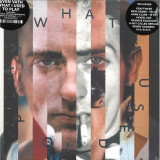
For this uniquely personal retrospective spread over twelve vinyl discs, Sven Väth takes us back to the early days of his DJ career. On What I Used To Play we meet great pioneers of electronic music, gifted percussionists, obscure wave bands, and innovative producers of a bygone 'new electronic' era. Rough beats and irresistible grooves from the identification stage of house, techno, and acid remind us not just how far electronic music has evolved over the past four decades, but how great it was to dance to EBM, techno, and house for the very first time.
If there is one protagonist of the electronic music scene who has remained curious, innovative and at the very cutting edge of music for over four decades, it's Sven Väth. His multi-layered artist albums and Sound of the Season mix compilations have been defining the genre for over two decades, and even today, he is constantly on the lookout for the next top tune to add to the highlights of his next set. At least, that's the case when he's not producing them himself as an artist or remixer. "Actually, it's always been part of my DNA to think ahead," and nothing had been further from his mind than looking back at his past, but when in spring of 2020 the international DJ circuit had to be scaled down to virtually zero, the 'restless traveler' suddenly had time. Time to stop and reflect on "how it actually was back then, at the very beginning of my career..."
"It was a great trip and with every track, beautiful memories came flooding back".
In the London apartment, he had just moved into, Sven has set up a "little music room", where he cocooned himself for several days, "to look way back for the first time and review my musical journey through the eighties, so to speak."
The interim result was six thematically oriented playlists with a grand total of 120 tracks from 'early 80s' to 'Balearic late 80s', together with excursions into afrobeat, European new wave, and EBM sounds and a few epochal techno/house tracks from the USA in between. From these 'Best of Sven Väth's favorites', the project What I Used To Play crystallized. Sven remembers how the Cocoon team reacted to his proposal: "They found the idea of making a compilation out of it MEGA from the beginning and everyone said 'Sven, go for it', but then, of course, the work really started, namely, to clear the rights and to get clean sounding masters of the up to 40-year-old tracks. There was also disappointment, of course. We couldn't clear certain titles because the rights holders in the USA had fallen out with each other or simply disappeared from the scene. In short, it wasn't easy, but now I can safely say we got the most important tracks."
Finally, after two years of research, curation, design, and administrative fine-tuning, the "little retrospective" from 1981 to 1990 is available. The exquisitely packaged, and three-kilo heavy box set is not only physically impressive, WIUTP is also the definitive record of Sven Väth's musical development. On each of the twenty-four sides of vinyl, you can trace track by track, what influenced him during which phase, and how he took off as a DJ from his parents' Queen's Pub straight into the spotlight at Dorian Gray. There and at Vogue (later OMEN), Sven became the style-defining player in the DJ booth that he still is today.
1981 - 1990: Future Sounds of Now
In the early eighties, the crowd in clubs like Vogue and Dorian Gray danced to what nowadays we call 'dance classics' - mainly disco, funk, soul, and chart pop. It was up to a new generation of DJs, including Sven Väth, the youngest protagonist in the Rhine-Main area at the time, to create their own club-ready music mix. Good new tracks and potential floor-fillers were rarities that had to be sought out and found, in order to prove oneself worthy.
Without MP3s, internet streaming, or other digital download possibilities, music didn't just gravitate to the DJ, instead, it had to be tracked down. In well-stocked record stores in Frankfurt and Wiesbaden or even in Amsterdam, London, or New York, Sven and friends sourced the material for countless magical nights. On WIUTP we can follow Sven's very personal journey through this wild, innovative era in which synth-pop, funk, hip-hop, and disco were successively replaced as 'club music' by house, techno, acid, and breakbeat. By the end of the decade, it was clear to see that these once exotic 'fringe' phenomena would soon become 'mass' phenomena.
Early 80s
Dirty Talk by the Italian-American duo Klein & M.B.O. represents the most innovative phase of the Italo-disco genre in the early eighties like no other track. Mario Boncaldo (I) and Tony Carrasco relied entirely on the original synthetic drum and percussion sounds of the Roland TR-808, coupled with the raunchy vocals of Rossana Casale and guitar accents of Davide Piatto. Of course, other tracks from this period were also influential in style, most notably Unit by Logic System, which worked as the perfect soundtrack to the laser lighting system at the legendary Dorian Gray club. With stomping beats and robotic rap interludes, Bostich by Yello also belongs on Sven's eternal playlist - after all, it caught the attention of Afrikaa Bambaataa, who invited the Swiss duo to perform at the Roxy in New York in 1983.
EBM Wave - Mid 80s
From today's point of view, the almost ten-minute-long, downtempo track Giant by Matt Johnson's band project The The, would probably not be considered an obvious club classic. However, a closer (re)listen reveals the rhythmic intricacies of the percussion overdubs by JG Thirlwell (aka Foetus) on Johnson's composition, and it becomes clear why this exceptional piece of music is one of Sven's absolute favorites. Other classics from this phase include Kaw-Liga by the mysterious The Residents, the hypnotic-synthetic Our Darkness by Anne Clark (and David Harrow), and last but not least, the somber, monotonous anthem Where Are You? by 16Bit, one of Sven Väth's projects together with Michael Münzing, Luca Anzilotti from 1986.
US House - Late 80s
You certainly can't talk about Chicago house without mentioning Frankie Knuckles. The resident DJ at the Warehouse not only gave the name to an entire genre, but also produced epochal floor fillers on the Trax label like the timeless Your Love, sung (and moaned) by Jamie Principle. Acid house protagonists Phuture also hail from Chicago, and on We Are Phuture (also released on Trax) we hear the chirping acid sounds of the legendary Roland TB-303 in full effect. Another featured classic is No UFO's by Detroit's Model 500 aka Juan Atkins, who is rightly considered the 'Godfather of Techno' even if the genre-defining track from 1985 still breathes with the spirit of hip-hop and electro from the first breakdance era.
Afrobeat
Le Serpent, by Algerian-born Abdelmadjid Guemguem, is a track that sounds completely different from everything else on WIUTP. Made in 1978, it's a monumental, rousing groove created without bass or synths, just with five congas! Even though Guem sadly passed away in 2021, his immortal, acoustic beats are understood all over the world and will continue to enrich many thousands of DJ sets for years to come. Another classic that not only Sven appreciates beyond measure is Hugh Masekela's Don't Go Lose it, Baby. In addition to being one of the most important jazz pioneers, the trumpeter and freedom fighter from Johannesburg was very experimental, integrating electronic sounds into his music in later years, in a similar vein to Miles Davis and Herbie Hancock. Dutch jazz pianist Jasper van't Hof's afrobeat project Pili Pili has also aged well. The trance-like, almost sixteen-minute-long track of the same name, manages to fill a whole side on the seventh of twelve vinyl discs in the WIUTP box.
UK-US-Euro - Late 80s
Time for a change of scene, in the truest sense of the word, and from a musical perspective, this section is like landing on another planet. First up is Andrew Weatherall's classic remix of Primal Scream's Loaded, featuring the iconic Peter Fonda sample (lifted from the 1966 biker film Wild Angels) that came to personify the mood triggered by the British Second Summer of Love in the late eighties: "We wanna be free to do what we wanna do, and we wanna get loaded...". This period also saw the emergence of M/A/R/R/S whose only single, 1987's Pump Up The Volume, became a club classic with support from DJ legend CJ Mackintosh. In this most eclectic of sections, we also encounter New York house and reggae producer Bobby Konders and his seminal Nervous Acid.
Balearic - Late 80s
Those who know him, know that Sven had already lost his heart to the 'magic island' of Ibiza as a teenager, so with that in mind, the WIUTP project couldn't end without a Balearic chapter. Inspired by Manuel Göttsching's E2-E4, the immortal, eponymously titled Sueño Latino belongs in there without question. Equally popular on the island was, and still is Break 4 Love by Raze, which thinking about it, would also fit perfectly into the house chapter. Last, but not least, there's an overdue reunion with Sven Väth himself, in his role as frontman of the successful Frankfurt trio OFF. Together with Michael Münzing and Luca Anzilotti (later of Snap!) this 'Organization For Fun' created the off-the-wall club hit Electric Salsa in 1986 which incidentally turned into an international chart smash, putting Sven in the enviable position of having to decide between pop stardom and a DJ career. Well, we all know how that decision turned out and the rest, as they say, is history. A not insignificant part of his story is What I Used To Play. Enjoy!
After a year and a half writing and recording rock music, I needed to clear my head. I listened to and made music where things generally happen gradually rather than suddenly. I would set up patches on a Monomachine or Analog Four and listen to them, hearing one sound morph into others, making changes to a patch only after having listened for quite a while, gradually adding elements, and finally manipulating the sounds on the fly. All tracks were recorded live to CD burner, with no overdubs, and executed on one or two machines.
While I was almost exclusively listening to artists such as Chris Watson, Peter Rehberg, Bernard Parmegiani, CM Von Hausswolff, Jana Winderen, Oren Ambarchi, Hazard, Bruce Gilbert, Klara Lewis, Ryoji Ikeda, and so on, I was also inspired by my mental image of John Lennon's tape and mellotron experiments he made at home during his time in the Beatles, as well as events like the first minute of Bowie's Station To Station, ...And The Gods Made Love by Jimi Hendrix, the synths in the song Mass Production by Iggy Pop, and the general idea of Eno's initial concept of Ambient music.
Music being a solitary sculpture in sonic space was the main motivating thought. I was looking at pictures of sculptures and trying to make music that simultaneously conveyed both movement and stillness. I refrained from sudden musical changes, especially avoiding sequences of notes and rhythms. In fact, this music was made from sequences which never exceed a single note, many of these pieces being made on a single pattern. The movement which a good sculptor conveys when the shape of his medium meets the eyes of the viewer who walks around the piece, or the sun changes its position, are the kinds of movement which it was the role of the synth patches to communicate.
I've been listening to music like this since I was 13 or so, but I felt that making it was out of my reach because of the amount of restraint I imagined it required. Once I found myself making this music, it did not feel like a matter of restraint at all. I wanted to build a certain type of building, and hear certain types of movement, and I knew when it was complete. There was no place for sequences of notes and rhythms in my plans.
I also cannot overstate the role that being in my band played. I had previously spent 12 years programming and engineering my own music, and then spent a year and a half making music where my role was basically to write songs and play guitar. When the band's recording phase was completed, I needed to go back to my adopted language. I had done enough with chords, rhythms, notes, defined sections, sharp transitions, etc.. What I needed was to create music from the ground up with nothing but sound, and have that music reflect "being" rather than "doing". It was a therapeutic way of re-balancing myself, before and during my band's mixing process.
This music seeks to just exist, and is not attempting to manipulate or grab the listener in any way. I believe it works well if one listens loud and focuses on it, but also works well at soft volumes and in the background. It can compete with silence on silence's own terms, and it can also happily wipe silence out.
There are two versions of this album. The CD version is pronounced "two" and called : I I . This is the longer version. The vinyl version is pronounced "one", and called . I : This version is shorter, but contains one vinyl-only track. The reason the vinyl is shorter is that some of the tracks have sounds that can not be pressed on vinyl.
John Frusciante
- A1: Hall Of Fame
- A2: Hour Of 1
- A3: G.i
- A4: Puppet On A String
- A5: Sheer Terror
- A6: Happy People
- A7: Lost In Limbo
- A8: Plain To See
- A9: Party Line
- A10: Here’s The Rope
- A11: Insomniac
- B1: Fashionite
- B2: Religious Ripoff
- B3: Asshole
- B4: No Rights
- B5: No Way Out
- B6: Twisyed Views
- B7: Snubbing
- B8: Teenager In A Box
- B9: Bored To Death
- B10: Georgetown Blues
Color Vinyl[19,96 €]
In November of 1982, I went into the studio with Government Issue to record what was to be their first full-length album. Up until that time, they had only released the Legless Bull 7”EP, and the tape they recorded early 1982 would take over a year and a half to be released as the Make An Effort 7”EP. The members of G.I. excelled at driving each other crazy and there was a lot of arguing, but still we had a great session at Inner Ear and we managed to track 20 songs in one day. From the beginning the band had been divided on what to record, and it was only after much debate that they decided to leave off the material they had recorded with the earlier line-ups and only put out 10 new songs.
In early 1983 Dischord was strapped for cash, meaning that we could only work on one release at a time. Since all of our money was tied up with the manufacturing of Minor Threat’s Out of Step 12” EP, the G.I. record would have to wait. A new DC label, Fountain of Youth, expressed an interest in releasing Boycott Stabb, so it was decided to do a ‘split-label’ record. In this case, Fountain of Youth put up the money and we let them use the Dischord Records name to help with context and distribution. It has since been reissued on a number of different labels and formats, but after coming across the master tapes and hearing the songs that had been left off, we thought it would be cool to release the complete session, and to finally release the record on Dischord proper.
In going through the tapes, I discovered that most of the outtake songs were never mixed, so earlier this year I took the recordings back into the studio. Hearing the separated tracks amazed me. Such great playing and songs! With the technological advances in the recording world made multi-tracking and overdubbing so common, it’s easy to forget that studios could also be used as something more akin to a photo-booth, capturing what was happening at that very moment. Most of the early Dischord sessions were essentially ‘live’ recordings, so the bands had to be able to play, and because the budgets were minuscule, they had to get the songs down in short order. G.I. stepped up on both counts. -Ian MacKaye, August 2010
- A1: Hall Of Fame
- A2: Hour Of 1
- A3: G.i
- A4: Puppet On A String
- A5: Sheer Terror
- A6: Happy People
- A7: Lost In Limbo
- A8: Plain To See
- A9: Party Line
- A10: Here’s The Rope
- A11: Insomniac
- B1: Fashionite
- B2: Religious Ripoff
- B3: Asshole
- B4: No Rights
- B5: No Way Out
- B6: Twisyed Views
- B7: Snubbing
- B8: Teenager In A Box
- B9: Bored To Death
- B10: Georgetown Blues
Black Vinyl[18,45 €]
In November of 1982, I went into the studio with Government Issue to record what was to be their first full-length album. Up until that time, they had only released the Legless Bull 7”EP, and the tape they recorded early 1982 would take over a year and a half to be released as the Make An Effort 7”EP. The members of G.I. excelled at driving each other crazy and there was a lot of arguing, but still we had a great session at Inner Ear and we managed to track 20 songs in one day. From the beginning the band had been divided on what to record, and it was only after much debate that they decided to leave off the material they had recorded with the earlier line-ups and only put out 10 new songs.
In early 1983 Dischord was strapped for cash, meaning that we could only work on one release at a time. Since all of our money was tied up with the manufacturing of Minor Threat’s Out of Step 12” EP, the G.I. record would have to wait. A new DC label, Fountain of Youth, expressed an interest in releasing Boycott Stabb, so it was decided to do a ‘split-label’ record. In this case, Fountain of Youth put up the money and we let them use the Dischord Records name to help with context and distribution. It has since been reissued on a number of different labels and formats, but after coming across the master tapes and hearing the songs that had been left off, we thought it would be cool to release the complete session, and to finally release the record on Dischord proper.
In going through the tapes, I discovered that most of the outtake songs were never mixed, so earlier this year I took the recordings back into the studio. Hearing the separated tracks amazed me. Such great playing and songs! With the technological advances in the recording world made multi-tracking and overdubbing so common, it’s easy to forget that studios could also be used as something more akin to a photo-booth, capturing what was happening at that very moment. Most of the early Dischord sessions were essentially ‘live’ recordings, so the bands had to be able to play, and because the budgets were minuscule, they had to get the songs down in short order. G.I. stepped up on both counts. -Ian MacKaye, August 2010
New family members Loris S. Sarid & Innis Chonnel summon a long-overdue return to the 12th Isle with an album built around percussive sounds taken from various mic-ed up objects found in a wood workshop on the East Coast of Scotland. With the pair occasionally leaving said workshop to enjoy some respite in Innis Chonnel’s horse box / studio, the artists hatched a plan to process and program their field recordings, later combining them with improvised synthesiser rhythms and overdubs. The tracks began to materialise over the course of a few follow-up sessions by which time saws sang and flutes flowed through watering cans. Shortly afterwards they found their way to us via carrier pigeon on a CD-ROM that smelt vaguely of soiled hay and we knew we had to act.
- A1: Illusion (Part 2)
- A2: Two-Person Love
- A3: I Don't Know How It Works
- A4: Dead Meat
- A5: Sniveller
- B1: Duped
- B2: That's Fine
- B3: Round The Bend
- B4: Wretched Lie
Silver Vinyl[23,06 €]
London band’s debut album (after one 7” on Prefect, and a 7-inch EP on TiM/Prefect Records (UK)). Feat. current/former mbrs of Joanna Gruesome, Ex-Void, GN, Sniffany & The Nits. London group The Tubs return to Trouble In Mind with their hotly anticipated full-length album entitled “Dead Meat”. The band were formed in 2018 from the ashes of beloved UK post-punk band Joanna Gruesome by former members Owen 'O' Williams and George 'GN' Nicholls. By incorporating elements of post-punk, traditional British folk, and guitar jangle seasoned by nonchalant Cleaners From Venus-influenced pop hooks and contemporary antipodean indie bands (Twerps/Goon Sax, et al). “Dead Meat” is resplendent in hi-fidelity strum & thrum, incorporating fleeting elements of post-punk and indie jangle, but the group’s penchant for trad British folk & Canterbury folk-rock takes a noticeable, caffeinated step forward. Echoes of Fairport Convention’s decidedly English chime cross swords with singer Owen Williams’ lyrics directing Bryan Ferry’s “thinking man’s libertine” persona into a more dolorous outlook. Many songs (like “Round The Bend” and “Duped”) soar with an urgent strum under Williams’ acerbic lyrics, recalling a younger fiery Richard Thompson. They languish in an aching, bitter resignation (of both the situations described & the protagonist’s place in it), particularly near the album’s second half. Others like the previously released “I Don’t Know How It Works”, “Two Person Love” and “Illusion” (re-presented here as “Illusion Pt. II” and all rerecorded from their original 7-inch versions) up the urgency, implying that the journey for the person described in each tune is not over & may be even more desperate than before. The band has never been tighter & more dynamic, often imperceptibly ratcheting up the tension, an extra guitar strum overdubbed, a barely audible organ/synth cranking under a chorus or bridge, or unexpected backups from current Ex-Vöid (and ex-Joanna Gruesome) vocalist Lan McArdle. The Tubs are poised to take over your stereo - there’s no point in resisting