Search:overt
Flutter Ridder is the duo of Norwegian multidisciplinary artists Espen Friberg and Jenny Berger Myhre, both of whom play important roles in Oslo’s contemporary art and music underground. The pair first collaborated during the production of Friberg’s debut solo record, “Sun Soon” (Hubro, 2022), quickly recognizing in one another a creative kinship rooted in a playful, intentionally naive approach towards making art. In November of 2023, the pair decamped to the coastal town of Hvisten in southeastern Norway to record what would become this debut, self-titled album in an ancient wooden church. Drawing from a palette of Friberg’s idiosyncratic Serge modular system and the church’s resident pipe organ and intoxicating acoustic reverb, they began recording and sculpting music informed by the notion that air and electricity share a common flow, a continuous current that can be directed through valves and potentiometers. The pair came to think of the Serge and pipe organ as sibling instruments, the former yielding characteristically unpredictable and complex timbres that complement the wooly, reedy drones and strange, microtonal overtones of the latter. At once sublime, liturgical, and whimsical, Flutter Ridder offers its listener a series of moving, cinematic natural landscapes, affirming the sensibilities of its makers and the indelible influence of the environment in which it was produced.
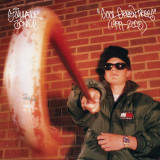
TYRON is a tale of two halves exposing human complexity. Just as with the narrative of his own life, there are always two sides to every story. Side one re-introduces us to the classic hubris, machismo, and braggadocio typical of rap music. Side two takes what you thought you knew about slowthai and flips on its head. ‘feel away’ and ‘nhs’ go some way to dip a toe inside the complexities of his mind but delve deeper and you’ll be left with a clearer understanding of who he truly is. Honesty is paramount as ultimately Ty wants listeners to know that “it’s ok to be yourself”.
TYRON was formed against the backdrop of an unforgiving climate where judgement, shaming and underdeveloped and simplistic conceptions of other people are fashionable. Instead of succumbing to such simplicity, TYRON presents an artist who is unabashedly complicated and willing to explore themes of loneliness, identity, self-acceptance, and the difficulties in becoming an individual. Unlike the political overtone of slowthai’s debut album ‘Nothing Great About Britain’ which took listeners on a journey through slowthai’s turbulent upbringing and his stance on British life – this self-titled follow up, TYRON is a melodic dive through the expansive landscape of his feelings. His ability to bear his imperfections and contradictions makes TYRON an album that is the antithesis of a culture of purity. A resistance to the rising tide of moral one-upmanship and the pervasive self-righteousness that blinds us to our own fallibility.
Originally released in 1971, produced by the legendary Sandy Roberton and featuring the likes of Richard & Danny Thompson, Keith Christmas and members of Mighty Baby & Fotheringay, the album has been talked about in glowing terms by an ever increasing fanbase over the years & is highly sought after. It’s a beautiful mixture of folk, psychedelic flourishes and adventurous production combining majestically with Shelagh’s exquisite songwriting and purity of voice. It will immediately appeal to fans of Pentangle, Incredible String Band and Joni Mitchell, as well as the solo records from members of some of the biggest U.S. bands of the 1970s; David Crosby’s ‘If Only I Could remember My Name’ and Gene Clark’s ‘No Other’, and is presented here for the first time ever on vinyl re-issue.
Born in Edinburgh in 1948 before moving to Glasgow and attending the Glasgow School of Art, Shelagh McDonald’s reputation grew rapidly on the London and Bristol folk circuit, gaining a cult following. In her early twenties she cut her first album titled simply ‘Shelagh McDonald’, the following year entering the studio with producer Sandy Roberton (Ian Matthews, John Martyn, Chocolate Watch Band, Steeleye Span) to cut ‘Stargazer’. Unfortunately for Shelagh, following a bad LSD experience, she withdrew from not only the music industry but public life shortly before commencing work on her third album.
However, it is ‘Stargazer’ that continues to grow its reputation, with original copies changing hands for hundreds of pounds.
Imbued with the finest instrumentation and vocal delicacy in late ‘60s folk, the record is heightened by a progressive production approach; the slow organ grooviness in the traditional ‘Dowie Dens of Yarrow’, uplifting gospel overtones of ‘Odyssey’ and the perfect match of melancholic piano and haunting strings by Robert Kirby on the title track. These sublime arrangements all serve Shelagh’s songwriting and soulful voice that invoke the finest folk traditions but at the same time look forward.
The album is the inaugural release on new label Different Strokes For Different Folks with more genre bending, rare and cult records scheduled for 2025.
Born from a childhood friendship, the five members of Ciao Kennedy have crafted their own sound and feeling after exploring a variety of different musical horizons. Following the release of EPs 'Keldercave' (2021) and 'the problem is' (2022), as well as being featured on the compilation Lefto presents Jazz Cats Vol. 3 in the spring of 2024, it was only a matter of time for the Brussels-based band to reappear on the music circuit.
As part of the Magma collective, alongside groups like TUKAN and ECHT!, they started to stand out with their instrumental music merging the playfulness of jazz,the repetitive facets of post-rock, and the overtly grand electronic sound evident in what is nowadays described through the grapevine as the 'Brussels sound'.
With Solarium, their debut album set to be released under the Sdban Ultra label, they have found a course and common denominator in guitars drenched with post-rock effects, steered by hypnotic electronic beats, creating an atmosphere of rare, dense melancholy, peppered with a sound that belongs in a blockbuster sci-fi movie.
Ciao Kennedy and its debut album are a tangy candy bursting in your mouth, the thrill of an afternoon at the fair, modernity meeting up with the nostalgia of childhood. Or standing beneath the shimmering neon lights of a rainy night, like colourful poetry, blending tenderness with electric intensity. Many of these musical descriptions would be completely off the mark, but after a few listens, they don't seem to miss the mark either. There's something for everyone to discover on this album, oscillating between the familiar and the unexpected, melancholy and cheer, and while everyone keeps on talking about something being a 'vibe', we can only conclude that Ciao Kennedy is the only one putting this into action.
To celebrate the release of Solarium, the band will host a release party at the Brussels venue Botanique on April 17, 2025. A must-attend event for everyone who wants to see if the live reputation which precedes Ciao Kennedy is actually true. Whatever happens, make sure to keep that date free.
Release show: 17/04 Botanique, Brussels.
- A1: Caravan (Tizol, Ellington) 5:50
- A2: Wishes (F. Sotgiu) 3:05
- A3: Ballad For Aisha (Tyner) 5:11
- A4: Stranatole (F. Sotgiu) 2:50
- B1: Black Bats And Poles (Walrath) 4:14
- B2: 7Th Street (F. Sotgiu) 4:48
- B3: Wise One (Coltrane) 3:24
- A1: Afro Blue (Santamaria) 3:37
- A2: Duke Ellington’s Sound Of Love (Miingus) 4:48
- A3: Take Five (Desmond) 5:00
- A4: Lotus Blossom (Strayhorn) 1:06
- B1: Passing (F. Sotgiu, L. Bonafede) 7:09
- B2: Calm (F. Sotgiu) 4:35
- B3: My Foolish Heart (Washington, Young) 6:37
Francesco Sotgiu has forged a unique and very swinging project of songs. With a quintet consisting of Luigi Bonafede on piano, Emanuele Cisi and Riccardo Luppi on woodwinds, Salvatore Maiore on bass, Francesco on drums, and with special guest Paolo Fresu on trumpet to cap off this heartfelt collection. There is also a nice diversity of groups within this larger collection. A nice trio piece called “Calm” featuring Paolo Birro sitting in with Marco Micheli and Francesco. And one called “Lotus Blossom” where Francesco shows his considerable skills and soul on violin. But the bulk of the material is straight-ahead jazz and is totally swinging and soulful, proving that jazz has no borders and is a worldwide language to which Francesco has added to that tradition with this project and all the great voices he has included here. Bravo maestro.
This is the comment of Gil Goldstein, American accordion player who won 5 Grammys and collaborated with giants such as Gil Evans, Wayne Shorter, and Michel Petrucciani.
This record was recorded in the middle of the pandemic times, and most of the work for preparing this record took place via the telephone: the selection of the songs on paper, the exchange of ideas on arrangements, staff and instruments, a sort of “phone rehearsal” of the structure of the songs, with the choice of a solo; everything else, everything that will happen in the recording sessions, is the result of a controlled improvisation, a jam session masterfully captured in the studio through the use of well-positioned ribbon microphones.
This is why “Passing,” literally “passing” or “crossing”: because the musicians have gone through listening to these songs as teenagers, and find themselves today, as a mature meeting of old friends who create an informal game made of nostalgic fun, great personality, confrontation, and deep spirituality. In the classic “Caravan” by Ellington and Tizol or “Afro Blue” by Mongo Santamaria, Coltrane toning, the Latin accent of the rhythm section supports the interpretation of the theme and the interplay in the solos between the soprano and tenor saxophones by Cisi & Luppi, and the piano by Bonafede.
A certain elegance in the execution distinguishes pieces such as Duke Ellington’s “Sound of Love,” yet another tribute by Mingus to the Duke, with a calibrated solo on the double bass of Maiore and the flute by Luppi, the immortal “Take Five” by Paul Desmond, with the highlighted soprano by Cisi, “Wishes,” “7th Street,” and the eponymous “Passing,” all pieces composed by Sotgiu, characterized by the precise medium/fast drive of the drums and a certain “cinematic” taste of the main themes.
In songs such as “Black Bats and Poles,” composed by trumpeter Jack Walrath for the Mingus Orchestra, and in “Stranatole,” an original piece in which Sotgiu writes a theme of Monk’s influence and enjoys overturning the traditional “Anatole Jazz” structure, the quintet opts for an effective hard bop language, with exciting moments of dazzling virtuosity in Bonafede’s solo. While in Coltrane’s “Wise One” and McCoy Tyner’s “Ballad for Aisha,” we enter a modal, mystical, and ceremonial jazz, of a cosmic depth, which seems to hover in the sweet volume of the great hall of the recording studio. These are truly magnificent interpretations.
A special separate mention for two classics such as “My Foolish Heart” by Victor Young, performed in trio by Sotgiu, Maiore, and the unmistakable trumpet by Paolo Fresu, and the (unfortunately very short) “Lotus Blossom” by Billy Strayhorn and Duke Ellington, which in the piano-violin duo of Birro and Sotgiu, in a minute gives a suspended momentary magic, sums up the roots of African-American jazz music, and also referencing an old-fashioned Italian musical sensitivity, typical of Nino Rota’s music for Federico Fellini’s films.
This new record from Black Swan evokes a desolate post-collapse world that is detailed with haunting choirs, mangled tapes and distant industrial sounds. The album unfolds like a requiem by pulling beauty from the ruins of a collapsed society. With an hour-long narrative, it shifts between rippling hums and plaintive quivers of old cassettes, slowly revealing a heart that beats beneath the crimson haze. Tracks like 'Overture' and 'Back to Dust' offer cinematic grandeur and mournful exploration, while 'Pseudotruth' and 'New Gods' introduce eerie uncertainty. In the end, the album serves as a haunting meditation on loss, memory and the fragility of civilisation.
Joni Void, the artistic persona of Montréal-based French-British producer Jean Néant (he/them) returns to songcraft on their warmest and most welcoming record yet, where the acclaimed sampledelic sound collagist chills out with an emotionally resonant song cycle tinged by downtempo, lo-fi, avant-pop, and trip-hop. Guests include Haco, Ytamo, Sook-Yin Lee, Pink Navel and N NAO. Every Life Is A Light expands on Void's recent stylistic turn towards more languorous and mellow lo-fi production, foreshadowed by the drifting looseness and ambient bricolage of their preceding experimental sound-art record. This transitional sensibility now shapes more defined song structures and styles, with loops are given time and space to unspool, and rhythms shot through the softer-focus lens of trip-hop and dub. Every Life Is A Light swaps the twitchy insistence of Void's acclaimed early albums for a newfound lightness and suppleness, still imbued with all the restlessness, sonic detailing, and emotional resonance that made their name. The neurotic brokenmachine kinetics of earlier Void, summarized by Sasha Geffen as "drawing despair and wonder from within the vast unfeeling of digital communication" in an 8.0 Pitchfork review, may be chilling out, but Void is becoming an ever better conjurer of hauntological feeling. Every Life Is A Light summons this in a comparatively buoyant, benevolent, head-nodding journey more open to tenderness and modest joys. Perhaps it's the sound of Void at greater peace with themselves and the world, despite the bittersweet cost: even as it channels grief, memorializing comrades and companions recently deceased, this album wants light. Void's raw materials continue to draw heavily from samples (their own Walkman cassette fieldrecordings and songs by others) and from a wide community of musical guests. Vocalists Haco on "Time Zone" and Ytamo on "Cloud Level" help levitate what could be lost tracks from a mid-90s Too Pure Records compilation of skewed-lounge electronica. Canadian musician Sook-Yin Lee sings on lead single "Vertigo," a sinewy 80bpm tape-loop and bassline groove propelled by psychedelically-layered lyrics that eventually turn the song in on itself entirely, like Grace Jones' "Nightclubbing" covered by Animal Collective. One of Void's greatest hip-hop loves is the Ruby Yacht collective; charter member Pink Navel drops some brilliant verses on "Story Board." The album's two minimal tracks, an extended piano loop set to a slow beat and shimmering electronics on "Muffin-A Song For My Cat" and the languid sampled bass riff and breakbeat of "Event Flow," are perhaps most overtly `lofi chill.' Indeed the whole album could be said to sit adjacent to those viral (if not already AI-generated) genre trends, which maybe begs the question on a lot of our minds: can specificity and authenticity of musical materials still be heard, still meaningfully signify substance and difference, still matter? Perhaps a question that fades in comparison to the career break Void could catch by landing on generic streaming playlists. More likely, these tracks remain too off-kilter, too genuinely lo-fi and ineffable, and too disqualified by the status of its peasant rights-holders, to catch the algos. Context remains the poor cousin of content. Meanwhile Void marches on, as a tireless organizer of local music events, bouncing around and often living in DIY venue, depending on the latest apartment eviction. With an ubiquitous polaroid camera in tow, they also document each communal happening with a single shot (and often a blinding flash bulb): a memory and metaphor for lives illuminated preciously, singularly, `imperfectly' in the moment. Dozens of these polaroids adorn the album's back cover and inner sleeve art in grid-like montages, as a fitting analog for the careful construction, grainy intimate materiality, and ephemeral feeling of these songs. Every Life Is A Light is Joni Void's most coherent and congenial record while relinquishing none of their experimentalist acumen as a producer or emotional attunement as a composer. Instead these qualities flourish, on an album that lights a humble flame for the fragile promise of homespun creative collaboration as unalienated labour and therapeutic communion, making an enchantingly idiosyncratic contribution to downtempo sample music along the way. Thanks for listening.
- A1: Summer Of Love
- A2: South Coast
- A3: Theremini
- A4: Libretto
- A5: Albatross
- B1: Sally's Beauty
- B2: Drugstore Drastic
- B3: You're Clouds
- B4: Moonlight Concessions
‘Moonlight Concessions’ goes back to basics, a return for Throwing Muses to their esoteric off-kilter best courtesy of Kristin’s pin-sharp sketches and their suitably abrasive musical arrangements. The album follows their acclaimed ‘Sun Racket’ from 2020, a heady set filled with tough and tender tales spiked with surreal imagery. Produced by Kristin Hersh at Steve Rizzo's Stable Sound Studio in Portsmouth, Rhode Island, ‘Moonlight Concessions’ is a collection of snippets from everyday life writ large - think Raymond Carver Short Cuts, overheard conversations, recounted happenings and telling one-liners, all sewed together to illustrate the times as they slowly mature, fully peppered with original Muses’ vim and vigour. ‘Drugstore Drastic’ is a kerbside soliloquy caught en route to a more alluring rendezvous. Built on a brisk acoustic strum with a guitar sub-melody underpinning proceedings, it’s an unfolding tale of social awareness from a blurred sub-conscious. ‘Summer Of Love’ began as a bet with a guy for a dollar that revolved around the idea that the seasons don’t change us. The album opener, it’s a haunting baroque overture, bowed and brooding. ‘Libretto’s strings offset the acoustic ambience, the hot and cold of longing at the very heart of it, a thematic driver filed with warmth in a safe haven lubricated by tequila. Written in the differing South Coast environs of The Gulf Of Mexico and Southern California, ‘Moonlight Concessions’ pulls from the star clusters that light both, generating optimism and hope in varying degrees. Hersh explains, “In New Orleans the stars look greenish-blue, as it’s below sea level and swamp-lit. But on Moonlight Beach, they glow icy white. All these songs were written in these two glowy places, which helped our sonic technique find itself.”
- A1: Cryo I 18:39
- B1: Cryo Ii 21:46
CRYO is the first album by the duo of cellist Nikos Veliotis (GR) and pianist Alex Zethson (SE). Veliotis is best known for the pioneering electronic group In Trance 95, MMMD and his collaboration with Giannis Aggelakas of the rock group Tripes. Zethson is a member of groups such as Goran Kajfes’ Tropiques, Martin Küchen's Angles, Fire! Orchestra, Vathres, and more. The duo met in Athens when Tropiques played at the legendary record store, gallery and concert venue Underflow, where Veliotis was invited for an opening solo set. The day after, the duo entered the Athens studio Artracks and created CRYO, consisting of two long pieces in which the duo explores slow forms and waves of sound, with the piano's bass register creating rumbling clouds and sparkling overtones that the cello blends into and transforms. Together, they’ve crafter an organically undulating, intense, heavy and dark drone music. The album was meticulously mastered by Mell Dettmer, who has collaborated with drone metal bands like Earth and Sun O))).
- In The Distant Travels
- I Want To Be With You
- Moments
- I Want To Be There
- You Dance Like The June Sky
- Somewhere
Its sound veers away from raw black metal intensity, opting for expansive, dreamy
atmospheres. Damian Anton Ojeda's signature approach tempers the harshness of
black metal's usual bleakness with a delicate sense of beauty and melancholy. The
album builds around shimmering guitars and lush soundscapes, creating a sense of
longing rather than the frostbitten aggression typically associated with the genre.
A key characteristic of "I Want to Be There" is how the screamed vocals--reminiscent
of depressive black metal--are mixed to blend seamlessly with the instrumental layers.
This intentional obscuring of vocals, pushed toward the back, transforms the vocals
into another textural element rather than a dominant force. This aesthetic decision
diffuses the emotional weight usually carried by extreme metal vocals, steering the
listener away from despair and toward introspection.
The balance between black metal's darker elements and post-rock's ethereal qualities
gives this record its emotional depth. The opening and closing tracks, "In the Distant
Travels" and the title track, lean more heavily on black metal structures but never fully
embrace the genre's typical harshness. Instead, the fuzzy guitars and crashing
cymbals are imbued with hope and uplifting energy. The post-rock influence becomes
more pronounced in tracks like "I Want to Be With You," which forgoes black metal
vocals entirely in favor of a choral atmosphere, evoking a serene and heavenly quality.
Ojeda also demonstrates his talent for creating immersive soundscapes, drawing
comparisons to *Sigur Ros*. Both artists employ sweeping melodies that evoke
feelings of transcendence. Still, where *Sigur Ros* tends to embrace more overtly
uplifting and sentimental tones, Sadness anchors these grand moments in
melancholy, avoiding overindulgence. The album is a delicate dance between light and
shadow, making the listening experience emotionally rich and layered.
While it may not have the raw emotional punch of *Deafheaven* or the nostalgic
charm of *Alcest*, *I Want to Be There* stands as a polished and thoughtfully
composed entry into the post-blackgaze genre. Ojeda's ability to fuse the weightless
hypnosis of black metal with the airy beauty of post- rock results in a sound that is
both familiar and new. Sadness offers a captivating and often beautiful exploration of
blackgaze, making the album a worthwhile listen for fans of atmospheric and
introspective metal.
Low Fidelity was commissioned by Anna Koch / Weld with support from the Swedish Arts Council for the performance Insisting On. Sneak premiere for Issue Project Room, Saint Vitus Bar, Brooklyn, USA in December 2015. First performance at Weld, Stockholm, Sweden in February 2016.
Invocation I is an excerpt from a live recording at Inter Arts Center, Malmö, Sweden, January 2017 based on Lindström’s ‘giant electronic feedback set-up. The True Laptop Quartet is named after a set of instruments built on electromagnetic feedback principles. Both the instruments and the piece were commissioned by Bergen Assembly 2016 for Tarek Atoui’s Within project. Track recorded at Sentralbadet, Bergen, Norway, June 2016 with September 1st 2016 with Tarek Atoui, Espen Sommer Eide, Mats Lindström and Kaya Molsen as the musicians. Light Vessel 21 was a collaboration with Anna Koch and presented as an A/V installation on board the historic LV21 vessel. LV21 saw most of her service off the Kent coast on the Varne and East Goodwin stations. The piece was commissioned by Töne Festival, Kent, England. World premiere: June 20th 2014. Sotto il Ponte was recorded live, with Alba G. Corall on live video, at Huset Under Bron, Stockholm, Sweden in February 2014. Shadow of the Dutchman was an overture to the Wagner opera in a version for three pianos and live electronics. The piece was commissioned by Folkoperan, Stockholm, Sweden. Its debut performance was in February 2013.
OPAQUE PINK VINYL[28,15 €]
Wrekmeister Harmonies, the duo of JR Robinson and Esther Shaw, are sonic shape shifters with expansive ideas. From special performances to collaborations the band have worked with David Yow (Jesus Lizard) Ryley Walker, Ken Vandermark, Bruce Lamont, Mark Solotroff, Sanford Parker, Jamie Fennely (Mind Over Mirrors), The Body, Mary Lattimore, Olivia Block, Jamie Stewart (Xiu Xiu), Chris Brokaw, Fred Lonberg-Holm and Thor Harris (Swans). Inspired by artists such as Glenn Branca, Rhys Chatham, and Lou Reed, the duo approach each album as a new sonic adventure. Flowers in the Spring was born of deep, careful listening as much as composing. It explores music as a meditative practice with a focus on microtonal shifts and intersectional overtones. Robinson explains: "It"s the subtle movements within and without, the fine threads of sound, loud or quiet, interior or exterior that become valuable." Limiting himself to just four mixer channels on each piece; precisely layering guitar and electronics, intently listening and manipulating either the intensity or the duration of each loop to yield unexpected interactions, moments of beauty as well as dissonance. "Flowers in Spring" emerges from fizzing distortion, hewing monolithic slabs of drone from the rock face while electronics push through fissures. "Fuck the Pigs" uses layers of noise as it metaphorically shifts into the depths of winter, arctic winds howling while the guitar scars like frost across a windowpane. In contrast "A Shepherd Stares Into the Sun" is pure light and heat, overwhelming in its sheer celestial enormity. "Flowers Variation" was born of nature"s microscopic subterranean movements in its primordial gloom and buzzing synth pads. Each track holds multitudes of micro sonic details coming together to form the album"s expansive ecosystem.
Black Vinyl[26,68 €]
Wrekmeister Harmonies, the duo of JR Robinson and Esther Shaw, are sonic shape shifters with expansive ideas. From special performances to collaborations the band have worked with David Yow (Jesus Lizard) Ryley Walker, Ken Vandermark, Bruce Lamont, Mark Solotroff, Sanford Parker, Jamie Fennely (Mind Over Mirrors), The Body, Mary Lattimore, Olivia Block, Jamie Stewart (Xiu Xiu), Chris Brokaw, Fred Lonberg-Holm and Thor Harris (Swans). Inspired by artists such as Glenn Branca, Rhys Chatham, and Lou Reed, the duo approach each album as a new sonic adventure. Flowers in the Spring was born of deep, careful listening as much as composing. It explores music as a meditative practice with a focus on microtonal shifts and intersectional overtones. Robinson explains: "It"s the subtle movements within and without, the fine threads of sound, loud or quiet, interior or exterior that become valuable." Limiting himself to just four mixer channels on each piece; precisely layering guitar and electronics, intently listening and manipulating either the intensity or the duration of each loop to yield unexpected interactions, moments of beauty as well as dissonance. "Flowers in Spring" emerges from fizzing distortion, hewing monolithic slabs of drone from the rock face while electronics push through fissures. "Fuck the Pigs" uses layers of noise as it metaphorically shifts into the depths of winter, arctic winds howling while the guitar scars like frost across a windowpane. In contrast "A Shepherd Stares Into the Sun" is pure light and heat, overwhelming in its sheer celestial enormity. "Flowers Variation" was born of nature"s microscopic subterranean movements in its primordial gloom and buzzing synth pads. Each track holds multitudes of micro sonic details coming together to form the album"s expansive ecosystem.
First vinyl edition of Carme López’ debut album of entrancing bagpipe arrangements. Unravelling forms of early music and funereal, queered droneworks full of strange tonalities, phased harmonics and curious subversions.
Carme López is a researcher and teacher of traditional Galician oral music, and ‘Quintela’ features her debut recordings for the Galician bagpipe, split into four longform movements totalling 40 minutes of supremely engrossing drone flourishes. Misunderstood by many, the bagpipe is here brought into the experimental realm as a form of decontextualisation, fashioning the instrument’s naturally peculiar timbres into soft, wavering tones.
Despite its unusual resonance, in López's hands the bagpipe almost becomes a pipe organ, producing long, swaying, sustained tones that highlight the instrument's complex timbral qualities. López plays with its breathy overtones, placing microphones on the bag itself to pick up residual sounds while she sculpts its squeals into cavernous siren calls, and then extracting half-rhythms from its reeds on the elegiac closer 'iv: CACHELOS. a César De Farbán'.
The instrument’s inherent wheezing and anomalous timbre lend the recordings a wavering foundation that feels designed to unsettle, but somehow becomes nothing short of entrancing through almost imperceptible harmonic shifts and odd tunings. It’s meditative music that requires active participation, focussed listening - so as to make sense of all the infinitesimal shifts and faults - in a way that feels unique to this most maligned, misunderstood, almost mystical instrument.
Second VHF solo LP from the Pelt/Black Twigs mainstay, following 2022’s acclaimed “Evening Measures.” “April is Passing” builds on the striking solo Hardanger-style fiddle performances on the previous LP to take the music even further out, with deep drones and extended techniques defining a vocabulary that is Americana-adjacent, but a unique and special sound that Mike is pursuing almost alone. Joined on selected tracks by Cara Gangloff’s Sruti and Kaily Shenker’s sonorous Cello, the all-original, all-live performances are resonant with both overt melody and a cloud of thick string overtones, whether on the more upbeat tunes like “Ironto Dancer” or the epic 11+ minute LP closer “Helen’s Song.” “September Air” is a mournful slow build, the fiddle embroidering a minor-key melody over the drone of the Surti box and a low cello counter point. “A Fallen Palace of Snowville” is a solo performance where the additional sympathetic strings of the hardanger fiddle are strongly heard as a ghostly accompaniment, as Mike’s elegant melody switches back and forth from minor to major. “Helen’s Song” closes side 2 with a complex, ever-changing swirl of melodic and harmonic invention, with Mike’s keening, languorous bowing leading the way through multiple moods and sounds.
Legendary Welsh stoner rock / doom metal band Acrimony is triumphantly re-releasing their monumental debut-album “Hymns To The Stone”. This sonic masterpiece was originally released in 1994; it combined bone-crushing riffs, psychedelic overtones and a visceral connection to both 1970s hard rock and the emerging sludge and doom scenes of the ‘90s. The album - with the 2019 mix and mastering by James Plotkin - was already included in the long sold out vinyl box set “The Chronicles Of Wode”, but never as a stand-alone re-release. “Hymns To The Stone” has a gigantic cult classic status and it’s often admired as a defining release in the stoner rock and doom metal scenes. Over three decades this album has built ad devoted fanbase. As one of the pioneering stoner rock bands in the UK with their raw, riff-heavy sound and deep love for the psychedelic and the smoking weed culture, Acrimony set a standard that influenced countless bands in the genre. “Hymns To The Stone” reminds fans old and new why Acrimony remains a cornerstone of heavy music. Don’t miss your chance to relive - or discover for the first time - the transcendental power of Acrimony’s debut-album! Vinyl.
Hidden Harmony presents the first full-length LP from Estonian composer and keyboardist Volodja Brodsky. The six compositions on 'Whispering Ln.' were entirely recorded during Brodsky's trip to the USA in 2018-2019 and showcased his passion for the transformative power of minimalism as an art form. The follow-up to his keyboard duties on psych funk/rare groove Estonian outfits Estrada Orchestra, Centre El Muusa, Misha Panfilov Septet, on ‘Whispering Ln’ Brodsky reinventing himself as a minimalism evangelist in his own right. From space age pop shimmering sonatas to the monolithic drone/overtone hypnotics, Brodsky created an ascetic yet complex sonic landscape where less is more.
"During this period, I was deeply engaged in the study of this art form. The compositions are meticulously distilled to their most primitive form, crafting an immersive experience that beckons to embark on a journey into the very core of emotions and thoughts. Every pause and each meticulously chosen sound within the album serves a purpose, orchestrating a delicate interplay between simplicity and depth. I hope this music carries you to a place of introspection and serenity, where you may discover the profound beauty within the plainness of life" – Volodja Brodsky
The Tonarium is an idiosyncratic instrument comprising of two sets of modular synthesizers: Serge by Random Source, and another one by Bugbrand, both of which operate alongside a mixer constructed by Piotr Ceglarek and Jan Dybała. This intertwinement facilitates precise control over audio and CV signals and integrates technology with analog sound, offering the artists a distinctive sonic palette to delve into.
The present record unfolds in two parts, each exploring the fluctuating nature of sound. Both equally contribute to the work’s immersive imaging characterized by sound intensity, continuity and endless flow. Within its sonic tapestry lies a space for listeners to uncover subtle nuances, pulsations, and moments of harmony flickering through each chord’s firm surface.
In Part I, a formidable force consisting of chord progressions pierced by abrupt shifts and transitions unfolds. This deliberate disruption of harmonic continuity invites listeners to immerse themselves fully in each musical entity, uncovering the intricate details of the chords’ overtonal structure, drifting and steadily glimmering inside their glowing cores.
Part II, on the other hand, presents a more closed form—a recurring four-chord motif that evolves and transforms with each iteration until it finally fades out into whisper-like serenity. Here, the bass pulsates with greater intensity, like a wave enveloping the listener in a froth of feelings, which prevails and swells throughout the composition. In contrast to Part I, it exudes a sense of warmth and intimacy, inviting listeners to reflect over the dimensions of their own inner landscapes.
The Tonarium is to serve as a conduit for expression—a vessel through which the artist Aleksandra Slyz is enabled to channel her creativity and emotion into the music. Both Part I and II of the work have the capacity to drag listeners into a sonic odyssey that transcends time and space, therefore leaving an indelible impression on one’s trembling soul.
Performed & recorded on December 18-19th 2023 while in residence at The New Media Laboratory in Katowice, Poland.
Organized by The Soundscape Foundation
Composed & produced by Aleksandra Słyż
Mastered by Rashad Becker
Photographies by Kacper Krzętowski
Design by Maks Posio
Executive production by Christian Di Vito
- A1: Overture
- A2: End Of An Era
- A3: Houdini
- A4: Training Season
- A5: These Walls
- A6: Watcha Doing
- B1: French Exit
- B2: Illusion
- B3: Falling Forever
- B4: Anything For Love
- B5: Maria
- B6: Happy For You
- C1: Love Again
- C2: Pretty Please
- C3: Levitating
- C4: Sunshine
- D1: Cold Heart
- D2: Be The One
- D3: Dance The Night
- D4: Don't Start Now
‘Dua Lipa Live From The Royal Albert Hall’ offers a thrilling new way to experience Dua Lipa’s greatest hits reimagined with The Heritage Orchestra, a fourteen person choir and a seven piece band. The album features a medley of fan favourites, from the infectious pop hits “Levitating” and “Cold Heart” with the incredible Elton John, alongside the bold new sounds of Radical Optimism, from ‘Training Season’ to ‘These Walls’. vinyl on December 13th, this highly anticipated live album captures the magic of Dua's unforgettable performance at one of the world's most iconic venues.
Getting to perform at The Royal Albert Hall was unlike anything I’ve ever done,” Dua shares. “For the longest time, I’ve had this idea to reimagine my music with an orchestra, and when I was making Radical Optimism, I was constantly thinking about the live element and how these songs would transform on stage, so when The Royal Albert Hall show came up, it presented itself as the perfect opportunity to not only reconstruct these songs, but also celebrate them in such a beautiful and intimate way. The experience was entirely thrilling and equally rewarding. It was a dream come true, and something I’ll always take with me.”
- A1: Satta Massa Gana-Ken Booth
- A2: Guiding Star-Horace Andy
- A3: Shame&Pride-Leroy Smart
- A4: Stick By Me-Dennis Brown
- A5: Can’t Get Me Out-Cornell Campbell
- A6: Riding For A Fall-John Holt
- A7: Once Upon A Time-Delroy Wilson
- A8: The Village-Gregory Isaacs
- B1: Ride On Girl-Johnny Clarke
- B2: Mighty King -Freddie Mcgregor
- B3: Whip Them King-Linval Thompson
- B4: Lead Us Jah Jah-Barry Brown
- B5: Everybody Needs Love-Pat Kelly
- B6: Alton Ellis - Play It Cool
- B7: Count Prince Millar - Mule Train
- B8: Owen Grey - Natty Bongo
The Sound System has become part of today’s musical/cultural heritage, playing the people’s favourite hits or just as important, breaking some new tunes.
But perhaps less known are the roots of the Sound System, which began way back when…in Kingston….
Around the late 1940’s the Sound System began to overtake the big bands that usually played at the dances in Kingston.
The American Rhythm and Blues records that were so popular at the time would find their way to Jamaica via the merchant sailors and migrant workers returning from their stints in America. For economical reasons alone it would pay to have a DJ on hand to play these hits rather than a 10 piece band that could eat and drink the promotor out of the house and on curried goat!!
The early Sound Systems were basic affairs built around a single record deck, a valve amp and a speaker.
But by the 1950’s they had grown to purpose built speakers the size of wardrobes that could be heard blocks away.
Record producer Bunny ‘Striker’ Lee would remember the time ‘Sound Systems was like our radio station…not many people on the island would own a wireless, so it was the way for the people to hear their music.
So this selection of Lovers, Ballads, Root’s classic’s made the Sound Sytems of Jamaica the place to be.
So sit back and enjoy the ride….SOUND SYSTEM ROCKERS …one and all
"We are delighted to be able to bring you these gorgeous field recordings from the Sumedang Province of West Java which, over their 50 minutes, present two distinct sides of Sundanese musical and devotional culture.
Although West Java is a Muslim country, these recordings highlight currents of pre-Islamic animist beliefs and practices that continue to flourish in the small towns and villages of the highlands of West Java. The recordings showcase two forms of trance music that are essential to the spiritual life of the Sundanese people in the highland regions.
Tarawangsa trance music is a traditional ceremonial genre known for its deep spiritual and hypnotic qualities. This music is made using only two instruments, the tarawangsa, a two-stringed fiddle, accompanied by the jentreng, a seven-stringed zither, creating a unique blend of resonant, droning sounds. Historically, tarawangsa music has been performed as part of sacred rituals and agricultural celebrations to honor local deities and ancestors, particularly associated with the Sunda culture. The minimalist, repetitive melodies gradually build, guiding participants and listeners into a meditative, trance-like state, during which dancers can be possessed by the spirits of ancestors or deities from the spirit realm, the music serving as a link between the two worlds.
In stark contrast to the calm, medititive sound of tarawangsa, we also present here two long pieces from Panca Buana Reak Group. Sundanese Reak trance music is like the punk rock of Sunda folk music, combining powerful and driving rhythms played on a number of hand drums and percussion instruments with the buzzing sound of the tarompet, a double reed wind instrument often amplified through whatever mobile speaker system might be at hand. Sometimes the group will play gamelan gongs, as heard on the first piece on the album, although this remains a music that is popular mainly with the working class youth of the rural villages, many of whom will also be fans of Indonesia's burgeoning metal and punk scenes. Reak performances are often wild, anarchic events that feature masked dancers, costumes, public trancing and spirit possession.
These recordings were made by Xenia At during her travels through West Java earlier this year. The tarawangsa recordings were made in a home in the village of Rancakalong on the evening of 17th January 2024, while Panca Buana Reak Group were recorded during rehersals in the village of Cinunuk on 19th and 20th January 2024."
Limited edition of 100 copies.
The musicians:
Overture (played by Panca Buana Reak Group, musicians: Rian Hidayat, Daffa, Rendi, Haswa, Doni, Aconk, Bayu, Zidan, Iwan Uwak, Mahadewa Sehu, Bebet, Adi, Bebet).
Reundeu - Master Yayat (kacapi), Tedi Kurniadi (tarawangsa).
Degung - Master Yayat (kacapi), Teguh Permana (tarawangsa).
Pamapag__Gelar Mataram__Panimang__Limbangan - Akbar Nendi (kacapi) & Tedi Kurniadi (tarawangsa).
Reak Lugay Pusaka Pajajaran (played by Panca Buana Reak Group, musicians: Aconk (tong), Rendi (brung), Hendrik (tarompet), Ade (kecrek), Riki (bedug), Doni (talingtit), Adi (badublag).
Xenia would like to extend gratitude to:
Master Yayat, Tedi Kurniadi, Akbar Nendi, and Teguh Permana for their incredible talent that turned this recording into a magical experience.
Ibrahim Adi Surya for technical support.
The Juarta Putra and Panca Buana Reak groups for explaining the cultural significance of local traditions.
Anggun Tresnasari for sharing her deep knowledge of regional music traditions.
Igor Moskalenko, Kate Snap, Stasya Frolova, Roman Gold, Misha Maltsev, Ilona Popychko, Galih Muhammad, Wildan Wiliansyah, Rizalu Ramadhan, Rahi Rahmat, Fahmi Solihin and Muhammad Ismael whose unwavering belief made this project possible.
Hive Mind would like to thank Luigi Monteanni (Artetetra) and Palmer Keen (Aural Archipelago) for their invaluable work and research in this region.
- Overture (Instrumental)
- Scrooge
- Room In Your Heart
- Good King Wenceslas (Traditional)
- One More Sleep 'Til Christmas
- Marley And Marley
- Christmas Past (Instrumental)
- Chairman Of The Board
- Fozziwig's Party
- When Love Is Gone
- It Feels Like Christmas
- Christmas Scat
- Bless Us All
- Christmas Morning (Instrumental)
- Thankful Heart
- Finale - When Love Is Found / It Feels Like Christmas
- When Love Is Gone
There’s something so magically transportive about the music of the holidays, and here at iam8bit, one of our beloved favorites is The Muppet Christmas Carol. It’s one of the best holiday films of all-time, so in collaboration with our friends at Muppet Studios and Walt Disney Records, we’re so very excited to bring you an exclusively remastered revival of the classic soundtrack, breathing new life into the legendary songs and score by Paul Williams and Miles Goodman, respectively.
- A1: Rondo Of Love And Darkness - Main Theme 3:49
- A2: Takt Of Heroes - Origin - 2:53
- A3: Hymn Of Despair And Atonement 3:11
- A4: Dragon Kingdom Lugnica 2:43
- A5: Another World March 1:59
- B1: Memories Of Time And Sky 1:39
- B2: Promenade Of Flute And Creation 2:06
- B3: Re:verse 2:32
- B4: Heartbeat Of Determination 2:05
- B5: Fantasy Lied 3:41
- B6: Echt Of Sorrow 3:51
- C1: Chains Of Memories 3:31
- C2: Roar Of Malice 2:56
- C3: Sloth 2:05
- C4: Call Of The Witch 2:46
- C5: Activation Of Fate 2:23
- D1: Requiem Of Silence 7:03
- D2: Death Ballet 2:47
- D3: Waltz Of Rage 2:11
- D4: Overture Of The Final Battle 3:01
- D5: Wish Of The Stars
Tune in as we join our intrepid hero as he emerges from his sonic bunker , where he’s been in hiding since the dreaded lurgy infected the world. Evil overlords have since taken over our planet with a dictatorship whose prime objective is to erase all creative influences to stop us having fun. Can our hero overthrow them with his sonic arsenal of Electro weaponry?
Music To Varnish Owls By. Does Geoff Bastow have a claim for the best album title of all time? It's certainly up there. It's also one of the hardest to find library funk records. But don't let the eye-catching name fool you into thinking this isn't serious business.
As a key member of Giorgio Moroder's team, the legendary Geoff Bastow shouldn't need any introduction. You'll be familiar with his singular brilliance as the brains behind the much-sampled boogie/disco classics "You Don't Like My Music (Hupendi Muziki Wangu?!)" and "Don't Stop", released by his group, K.I.D.
But 1975's Music To Varnish Owls By is where it all began for our hero.
It's packed with incredibly soulful, soothing music that - despite being utilised a few times by Knxwledge - remains still largely un-mined. So, beat-makers, get cracking. And instead of that hyper-rare original, spend that £300 on something else.
Born in 1949, Bastow was a Munich-based English songwriter and record producer. Originally working as a guitarist and pianist in dance bands around his home county of Yorkshire, he moved to London in the early 1970s and then Munich in around 1976. He was one of the main architects of the Munich disco sound of electronic innovator Giorgio Moroder and also released heaps of killer library records for legendary labels like Bruton (with brother Trevor), Impress, JW Music Library and the Munich-based Sonoton between the 1970s-2000s. Bastow died tragically young, in Berlin, Germany on 16 March 2007, at the age of just 57. But he left behind a truly incredible electronic music legacy. He deserves to be much better known and this reissue should bring him to a fair few more ears. Let's see why...
Light-hearted opener "The Rough With The Smooth" contains a killer open drum break and is basically guitar-drenched flute-laced piano-funk. However, the first genuine highlight, "Beautiful People", is just majestic. Reflective, pastoral and silky smooth - as the title suggests, it's just straight beautiful; a chiming, deeply soulful instrumental that has to be heard to be believed. Sampled by Knxwledge but nobody else of note, which is crazy. Slo-mo soul beat "Tumbleweed" is another stone cold track just desperate to be laced by a skilled MC. Laconic, lysergic funk with nostalgic overtones, the guitar is prominent but the flute and glock really elevate it to perfection.
"Bits And Bats" is clav-enhanced Blaxploitation-esque street-funk with tough bass and crunchy drums that, despite its hardness, manages to flirt with breeziness. All in all, sumptuous, pounding wah-wah brilliance. Another huge one, up next. The insistent piano-funk head-nodder "A Change Of Pace" is a total sleuth-funk jammer, with a wonderfully soft snare and more hypnotic, melancholic flute lines. Man, we'd love to hear Alchemist chop this up. It even sounds a bit like Bastow was keeping things thoro with this one. Closing out Side A, the bright and breezy Bossa of "Janelle" makes it a perfect run of six untouchable gems. As elegant as it is sleazy, it sounds like it could've been on the classic KPM greensleeve, Piano Viberations.
Side B opens with the Ramsey Lewis-inspired "Time And A Half", a deceptively simple bass, drums and piano workout, decorated with stylish percussion with some great chord changes and hints of drama via a great bass solo. The heavy "Supersplash" is a doped-out drama suite with fuzzy wah-wah guitars, electric piano and glock. "Fillet Of Soul" is a catchy wah-wah propelled shuffle with piano and vibes, super dynamic but also incredibly chill.
"Well Above Average" is exactly that, a funky instrumental that serves as a straight ahead guitar-soul workout. Oozing bass-driven class, it gets better with every listen. Some open drums for your delectation, too. The fuzzy clav-and-vibes funk of "The Clan" - also understandably sampled by Knxwledge - is a monster head-nod slow jam whilst, seeing us out, the uber-relaxed "Sing Song" rounds things off in bright fashion with its slow but insistent clav, electric piano and glock greatness. Swoon.
As ever, the audio for Music To Varnish Owls By has been carefully remastered by Be With regular Simon Francis, ensuring it sounds better than ever. Cicely Balston's expert skills have made sure nothing is lost in the cut whilst the records have been pressed to the highest possible standard at Record Industry in Holland. The original, iconic sleeve has been restored here at Be With HQ as the finishing touch to this long overdue re-issue.
- 1: Nothing Left
- 2: Televised Violence
- 3: Hour At A Time
- 4: Enemy
- 5: I’m An Animal
- 6: Overtime
- 7: Sniper
- 8: Highway Of Hurt
- 9: Usa
- 10: Sd Fight Song
- 11: 2 Crosses
Pittsburgh’s feral punks Snarling Dogs return to bite the hand that feeds them with their debut self-titled LP Snarling Dogs.
This unhinged offering kicks out 11 revved-up, slobbering 77-esque punk tracks that will have wasted, spikey punks diving into the pit never to return. Songs like “Nothing Left” are charged and chock full of hits sounding like a demented mix of Raw Power era Stooges with the speed and aggression of The Damned or The Dead Boys. The record expands from there with songs like “Hour at a Time”- a locked in dirgy, psychedelic stroll through crime ridden city streets. From there songs like “Enemy” rip through the void with manic energy- fast, raw and visceral almost stepping into early hardcore territory.
While the record has these intense dynamic shifts, Snarling Dogs glue it all together with their cohesive live rock n roll energy.
Snarling Dogs is the perfect escape from the mundanity of life. Chug that 40 oz on your lunch break, smoke that entire pack of cigs, and take a piss on your boss’s car.
There are two dogs in you. Now it's time to set the Snarling Dog free.
- Intro
- Pay The Reaper
- Comeback
- Pressure
- To One Far Away
- Chained
- Overture
- Opposites React (Featuring Speed)
Transparent green vinyl, limited to 300 copies. Comprised of individuals deeply rooted in the underground music scene, False Reality are a London-based hardcore band that formed in 2023. Renowned for their thrash infused, hardcore crossover sound and fiercely energetic performances they draw influences from bands such as Trapped Under Ice, Broken Teeth and Backtrack as well as early era Sepultura and even Deftones. Having recorded the debut EP 'Path of Self Destruct' with producer Steve Sears Jr (Gallows, TRC, Prowler, Conjurer), False Reality set out to prove why they stand apart, delivering a release that is in equal parts blistering as it is poetically cathartic. Lyrically delving into the complexities of life, exploring themes of betrayal, societal values, and tragedy. The first single released, 'Opposites React', is a groove-driven empowering track that features vocals from Jem of Aussie hardcore band SPEED, which has received support from Daniel P Carter and Alyx Holcombe on BBC Radio 1. Having initially been released digitally in April 2024, this is the first vinyl pressing of the EP, coming via Hassle Records. Limited to just 300 copies, this vinyl release marks a significant milestone for the band, as their reputation grows rapidly within the scene.
All music written, arranged and performed by 1000mods
Lyrics by 1000mods
Produced by Matt Bayles & 1000mods
Mixed by Matt Bayles
Engineered by Matt Bayles
Recorded at Sierra Studios, Athens, GR
Studio personnel: Christos Achladiotis and Kostas Spiropoulos
Piano recorded at Electric Highway Studio by John Vulgaris
Mixed at Red Room, Seattle, WA
Mastered by Brad Boatright at Audiosiege, Portland, OR
Artwork by Eva Mourtzi
Designed by Ouga Booga Crew
Hammond and piano on Love, Grey Green Blues and Bluebird by Jiomy Amaranth
Additional Guitar on Götzen Hammer by John S.
Additional vox on Götzen Hammer by Api
Backing vox on Overthrown by Amie
Chelo οn Bluebird by Nikos Veliotis
Semantron on Götzen Hammer by Panos Z
Pain Management presents a debut collaborative release from Bristol’s Larry McCarthy & mysterious newcomer Eris FM. The limited edition single fuses hellish Bristolian dub with tender vocal excursions on two dark cuts in equal parts tough and tender. A heartfelt comedown offering for the hyperactive via two cathartic weapons primed for maximum emotional release.
The A side’s foolish titular opener is a hellish mess of dub delays and eerie narrative exposition. Reminiscent of blown-out early No Corner offerings; a tangled mess of sirens and harsh noise ensnare FM’s disembodied commands. Turn your phone off / Tell no one where you are / Go out / Press your lips to the cracks in the soil. Overtly human exposition shrouded in a plosive shell of sawtoothed frequencies and machine drum paranoia. The effect is an unsettling hybrid of softness and uncertainty. A teeth-grinding mess of grit and potent anxiety primed for anti-dancefloor devastation; one to comfort the disturbed or disturb the comfortable depending on where you’re at.
On the flip ‘Red’ applies this same methodology to a beatless format, noisy chaos swapped out for ascendent grandeur. Here FM’s voice has more room to breathe, floating above an ever expanding synthscape. Reflective prosaic cohesion replaces the A side’s splintered present-tense directives.The rawness remains but on Red it takes the form of a commanding emotive clarity rather than claustrophobic uncertainty. A subtle heartbeat rhythm pulses beneath the nebulous pads, swaying like a slow dance in the early hours.
Hyper-limited run of 100 7” records
- Too Much Sake
- Sayanora Blues
- The Tokyo Blues
- Cherry Blossom
- Ah! So
The Tokyo Blues is an album that reflects Horace Silver's deep musicality, cultural curiosity, and love for the blues
Its combination of relaxed grooves, melodic beauty, and hints of Eastern influence make it a unique and memorable work within Silver's extensive catalog. It's a perfect example of how jazz can both explore new territories and remain grounded in its own traditions, showcasing Silver's versatility as both a pianist and a composer. Released in 1962 it is considered a gem within Horace Silver's prolific career and offers an intriguing combination of Horace Silver's unique jazz language with the subtle influence of his experiences in Japan, producing a warm, thoughtful, and musically rich album. Horace Silver's The Tokyo Blues is the result of his quintet's tour of Japan in 1961, which left a strong impression on him. While on tour, Silver was struck by the culture, atmosphere, and aesthetics of Japan, which he sought to translate into the musical language he was deeply rooted in hard bop. The album, however, doesn't feature overt Japanese musical scales or instrumentation, but rather evokes a mood and a sense of place. Silver's approach was more about integrating his impressions of Japan, its serenity, beauty, and mood of reflection, into the compositions. He did this within the framework of the jazz tradition, creating music that remains unmistakably his own. His quintet was already known for its catchy themes, complex rhythms, and inventive solos, and The Tokyo Blues adds a layer of atmospheric and emotional depth to that established style. In the early 1960s, Horace Silver was at the height of his creative powers. His work was instrumental in shaping the hard bop movement, a style that emphasized blues, gospel, and soul influences over the more intricate, intellectual sounds of bebop. The Tokyo Blues stands as an example of Silver's ability to evolve his sound while staying true to the groove-based essence of hard bop.
- Meditation
- Going Home
- A-1 Funk
- Every Step Of The Way
- Black Magic Woman
- Gypsy Queen
- Oye Como Va
- Yours Is The Light
- Batukada
- Xibaba (She-Ba-Ba)
- Stone Flower (Introduction)
- Waiting
- Castillos De Arena, Pt. 1
- Free Angela
- Samba De Sausalito
- Mantra
- Kyoto
- Castillos De Arena, Pt. 2 (Sand Castle)
- Se A Cabo
- Samba Pa Ti
- Mr. Udo
- Toussaint L'overture
- Incident At Neshabur
Released in 1974, "Lotus" by Santana is a landmark live album showcasing the band's incredible fusion of rock, jazz, and Latin music. Recorded during their Japan tour, the album features Carlos Santana's signature guitar work and the band’s dynamic improvisations. "Lotus" captures performances from Tokyo, presenting a mix of Santana's classic hits and extended jams, including tracks like "Toussaint L'Overture" and "Oye Como Va." Known for its energetic solos and vibrant rhythms, the album highlights Santana’s ability to blend diverse musical influences into a cohesive, powerful sound. The 1974 release is praised for its high-quality sound and passionate performances, solidifying Santana’s reputation as a pioneering force in rock and Latin music. For fans and collectors, "Lotus" remains a quintessential representation of Santana’s live prowess and innovative spirit. Lotus is a limited edition of 1500 copies on translucent yellow coloured vinyl.
Marionette presents 'dessus oben alto up', the first collaborative recording by Andrea Belfi and Jules Reidy. Hailing from different ends of the globe (Australia and Italy) but both longtime residents of Berlin, Reidy and Belfi’s approaches have much in common, bringing together compositional precision and electroacoustic rigour with improvisation freedom, the immediate gratifications of rhythmic pulse, and an overtly lyrical sensibility. Working together during a residency at the sound studio of Berlin’s Callie’s, an arts institution housed in a 19th century machine factory, the pair (with Marco Anulli manning the desk) have conjured up four expansive pieces where the beautifully recorded percussive clarity of Belfi’s drums threads through a sparkling haze of guitars and electronics.
Opener ‘dessus’ begins with Reidy’s distinctive just-intoned guitar figures, shimmering over a delicate substratum of Befli’s brushwork and bass drum accents. As in all of Reidy’s recent work, the guitar is twisted out of cliché by the unfamiliar tuning and electronic processing. Hanging almost inaudibly in the background for much of the piece, a rush of synthetic tones surges into the foreground to end it. ‘oben’ is built from kinetic patterns of picked guitar arpeggios, locking into irregular grooves with Belfi’s drums, which move from elegant rolls and cymbal patter to driving closed hi-hats and explosive rock interjections. Around the traditional instruments and across the stereo field, electronic sounds swarm and swirl, fizzing and popping in a sun-drenched soundscape that at points suggests both vintage analogue synth destruction and glitching harmonies. ‘alto’ begins in similar territory but turned up a notch, eventually settling into a propulsive 6/8 groove of shifting drum accents, manically strummed 12 string acoustic, and burbling synth chords.
The B side is dedicated to the fifteen-minute ‘up’, where the strategies adopted on the other pieces are put in the service of a more relaxed, slowly unfolding epic. Anchored by a steady pulse throughout, the piece combines chiming guitars, dubbed-out bass lines and constantly adjusted percussive details into a complex flux of sound. Change is at once so subtle and so ever-present that, at any given moment, the listener can never be entirely sure quite how they got there.
Knapp vier Jahre nach ihrem Debut Patterns veröffentlicht Jenobi im Mai 2024 ihr zweites Album. Ein halbes Jahr lang schloss sich die in Hamburg lebende Musikerin Jenny Apelmo Mattsson in ihrem Studio ein und ließ für "Irregularity" 11 neue Songs entstehen, die sie nicht nur selbst geschrieben, sondern auch eigenständig aufgenommen und produziert hat.
Die bereits aus Patterns bekannte mystisch-skandinavische Melancholie trifft nun auf markante Beats, die zusammen mit der charakteristisch zarten Stimme eine ganz neue Dimension eröffnen. Außergewöhnliche, elektronische Elemente erinnern teilweise an Björk und The Knife, während selbstbewusster Sprechgesang zu lässigen Basslines eine Attitüde hervorbringen, die wir bei Künstlerinnen wie Rosalia und Noga Erez wiederfinden.
Irregularity steht dabei längst nicht nur für musikalische Innovation, sondern liefert auch eine starke Message, die Apelmo Mattsson nun aus ihrer Oase in die Welt heraustragen möchte. Viele Talfahrten und Herausforderungen prägten die 13-jährige Erfahrung als Musikerin, die sich stehts in einer männerdominierten Branche behaupten musste. Doch während Patterns destruktive Verhaltensmuster thematisiert, berichten die neuen Songs von einem neu erlangten Bewusstseinszustand und Stärke. Nach der Trauer kommt die Wut – das spiegelt sich in Texten, gespickt mit cleverironischem Humor, die ein bittersüßes Gefühl hinterlassen, dass sofort süchtig macht. So gelingt es Apelmo Mattsson patriarchalische Strukturen mit
einem selbstbewussten Schmunzeln zu kritisieren.
- A1: A Love Chant (Feat Esperanza Spalding)
- A2: Om Supreme (Feat Vijay Iyer & Immanuel Wilkins)
- A3: Prema Muditha (Feat Shabaka Hutchings)
- A4: Elders Wayne And Carolina
- A5: Om Namah Sivaya (Feat Charles Overton & Ganesan Dorais
- B1: Journey In Satchidananda / Ghana Nila
- B2: A Love Supreme, Part 1 Ishmael Wadada Leo Smith
- B3: A Love Supreme, Part 1 Peter Sellars (Feat Peter Sell
- B4: A Love Supreme, Part 1 Alice Coltrane
- B5: A Love Supreme, Part 1 Ione (Feat Ione)
Vom Wall Street Journal als "eine der faszinierendsten Sängerinnen der modernen Musik" beschrieben, hat die in New York geborene und in Tamil Nadu aufgewachsene Sängerin und Multi-Instrumentalistin GANAVYA Details zu ihrem neuen Album "Daughter of a Temple" veröffentlicht, das am 15. November 2024 erscheinen soll. Das Album folgt auf ihren Auftritt bei SAULTs umjubeltem Live-Debüt 2023 in London, bei dem, laut The Guardian, ihre "Stimme eine zarte emotionale Kraft hatte, die selbst Stoiker zu weinenden Wracks machen konnte." Für "Daughter of a Temple" lud ganavya über 30 Künstler*innen verschiedener Disziplinen zu einer rituellen Zusammenkunft nach Houston ein. Dementsprechend sind auf dem entstandenen Album zahlreiche Mitwirkende zu hören, darunter renommierte Musiker*innen wie esperanza spalding, Vijay Iyer, Shabaka Hutchings, Immanuel Wilkins und Peter Sellars. Die Ergebnisse, eine innovative und zutiefst bewegende Mischung aus spirituellem Jazz und südasiatischer geistlicher Musik, wurden zunächst von Ryan Renteria aufgenommen und dann 2024 von Nils Frahm im LEITER Studio in Berlin weiter bearbeitet und abgemischt. ganavya ist die Autorin und Sängerin des ersten tamilischen Textes, der mit einem Latin Grammy ausgezeichnet wurde, sie war Sängerin in Vijay Iyers Ritual Quartet und Solosängerin auf dem von Quincy Jones produzierten "Tocororo", das Platz 1 der Jazz-Charts erreichte. Ihr letztes Album, "like the sky I"ve been too quiet", hat sie mit Shabaka Hutchings aufgenommen und versammelt Gäste wie Floating Points, Tom Herbert, Carlos Niño und Leafcutter John.
The eighth and latest slate of refined retro-futuristic synth-pop by Liz Wendelbo and Sean McBride aka Xeno & Oaklander is named after and inspired by "the study of what not to do, a negative image of a positive, the other side, the other:" Via Negativa (in the doorway light). Recorded in the fall of 2023 at their modernist Connecticut home fashioned into a two-story synthesizer laboratory and mixing studio, the album is uniquely visionary in spirit yet precision in execution, a contrast central to the duo's enduring chemistry. Embryonic piano sketches were translated to nuanced modular systems, which McBride weighted with "harmonic padding," tuned percussion, and a spectral transfer device capable of "rendering spasms of rhythmic overtonal filigree." Despite the technological complexity of their craft, emotively the songs require no deciphering - these are technicolor widescreen anthems of the cybernetic age. The eponymous opening track sets the pace, soaring sleekly over glittering synths and call-and-response vocals about arias, shattered light, and faces in stereo. From there the record expands and contracts, cycling through a gallery of moods and masks, animated by the band's fascination with drama, "the idea of personae," and theatrical characters. Track by track, a murky, tragic backstory reveals itself: forlorn figures navigating a treacherous mercury mine, alternately poisoned by fumes or buried in collapsing caverns. The tension between Teutonic, utopian synthetic pop and lyrical narratives of ghosts in silos, ruined mills, and the traumas of mineral excavation creates a compelling friction, alternately futurist and obsolete, elevated and subterranean. Wendelbo describes the music's polarities perfectly: "The heavy machinic din of extraction in contrast with the enchantment of the mined precious gems and metals." From bilingual odes to bloodstones ("O Vermillion") to cosmic chrome dance floor classics ("Lost & There" "The present tense can never feel real / So many pasts conspire in the burning sun") to strutting EBM sensualities ("Actor's Foil"), Xeno & Oaklander re-prove themselves masters of the axis of technology and poetry, snaking cables and synesthesia, mining melodies and myths across 15 years of focused artistry. Theirs is a muse still gilded and gleaming, burnished red and silver, attuned to "the unobservable, the unfamiliar, that which you don't see directly."
- Gladiator Ii Overture
- Lucius, Arishat And The Roman Invasion
- I’ll Wait For You
- Ostia
- Angry Baboons
- Strength And Honor
- Acacius Returns
- City Of Rome
- Defiance
- I See Him In You
- Acacius In The Colosseum
- Let The Gods Decide
- Macrinus’ Plan
- I Need You To Do This
- Smooth Is The Descent
- Now That I Have Found You
- Echoes In Eternity
- War, Real War
- The Dream Is Lost
- Now We Are Free
The highly-anticipated sequel, Gladiator 2—directed by Ridley Scott and starring Paul Mescal, Pedro Pascal, and Denzel Washington—is an epic historical action film with a blockbuster original score by Harry Gregson-Williams. Gladiator II picks up in the years after Russell Crowe’s Maximus gave his life, upending the leadership of the decadent and corrupt society. The central character portrayed by Paul Mescal is Lucius, last seen as the young son of Lucilla, Connie Nielsen’s noblewoman from the original movie.
The eighth and latest slate of refined retro-futuristic synth-pop by Liz Wendelbo and Sean McBride aka Xeno & Oaklander is named after and inspired by "the study of what not to do, a negative image of a positive, the other side, the other:" 'Via Negativa (in the doorway light)'. Recorded in the fall of 2023 at their modernist Connecticut home fashioned into a two-story synthesizer laboratory and mixing studio, the album is uniquely visionary in spirit yet precision in execution, a contrast central to the duo’s enduring chemistry. Embryonic piano sketches were translated to nuanced modular systems, which McBride weighted with "harmonic padding," tuned percussion, and a spectral transfer device capable of "rendering spasms of rhythmic overtonal filigree." Despite the technological complexity of their craft, emotively the songs require no deciphering – these are technicolor widescreen anthems of the cybernetic age.
The eponymous opening track sets the pace, soaring sleekly over glittering synths and call-and-response vocals about arias, shattered light, and faces in stereo. From there the record expands and contracts, cycling through a gallery of moods and masks, animated by the band’s fascination with drama, "the idea of personae," and theatrical characters. Track by track, a murky, tragic backstory reveals itself: forlorn figures navigating a treacherous mercury mine, alternately poisoned by fumes or buried in collapsing caverns. The tension between Teutonic, utopian synthetic pop and lyrical narratives of ghosts in silos, ruined mills, and the traumas of mineral excavation creates a compelling friction, alternately futurist and obsolete, elevated and subterranean. Wendelbo describes the music’s polarities perfectly: "The heavy machinic din of extraction in contrast with the enchantment of the mined precious gems and metals."
From bilingual odes to bloodstones ("O Vermillion") to cosmic chrome dance floor classics ("Lost & There" "The present tense can never feel real / So many pasts conspire in the burning sun") to strutting EBM sensualities ("Actor's Foil"), Xeno & Oaklander re-prove themselves masters of the axis of technology and poetry, snaking cables and synesthesia, mining melodies and myths across 15 years of focused artistry. Theirs is a muse still gilded and gleaming, burnished red and silver, attuned to "the unobservable, the unfamiliar, that which you don’t see directly."