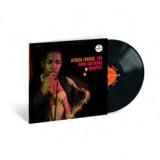
VERVE ACOUSTIC SOUNDS SERIE: komplett analog von Ryan K. Smith bei Sterling Sound von den
Originalbändern gemastert, QPR-Pressung (180 g), stabiles Tip-On-Gatefold (Stoughton Printing), wattierte Innenhülle.
“Africa/Brass”, im September 1961 veröffentlicht, war Coltranes erstes Album für das noch junge Label Impulse! Records. Das Werk markierte einen Wendepunkt in der Karriere des Saxofonisten und gilt laut dem
“AllMusic Guide to Jazz” als “Schlüsselwerk für das Verständnis des Weges, den John Coltrane in seiner
letzten Schaffensphase mit seiner Musik einschlug”. Für das im Studio von Rudy Van Gelder aufgenommene
und von Creed Taylor produzierte Album erweiterte Coltrane sein Quartett zu einem großen Ensemble mit
bis zu sechzehn Musikern. Coltranes leidenschaftliche, freie Improvisationen auf dem Tenor- und Sopransaxofon stehen dabei in reizvollem Kontrast zu dem kompakten, rhythmischen Sound des Blechbläser-lastigen
Orchesters unter der Leitung von Cal Massey. Die Arrangements für die Big Band wurden von Eric Dolphy
und McCoy Tyner erst während der Proben im Studio angefertigt
Cerca:p original
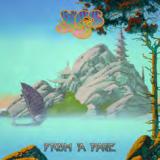
Diese erweiterte Ausgabe von „From A Page“ enthält die beiden CDs in einer Klappbox mit einem 16-
seitigen Booklet mit Liner Notes von Oliver Wakeman, einem Faltposter und fünf Kunstkarten.
und die erweiterte Ausgabe der 2LP von „From A Page“ wurde auf Halfspeedmastered 180-GrammSchwarzvinyl gepresst.
„From A Page“ ist ein Album mit Aufnahmen der Yes-Besetzung von „In The Present“ mit Chris Squire
(Bass), Steve Howe (Gitarren), Alan White (Schlagzeug & Percussion), Benoit David (Gesang) und Oliver
Wakeman (Keyboards). Die Songs wurden während der Sessions aufgenommen, aus denen schließlich das
Album „Fly From Here“ von 2011 hervorging, auf dem Geoff Downes nach Wakemans Ausstieg aus der
Band am Keyboard zu hören ist. Die 4-Song-Mini-LP „From A Page“ wurde 2019 veröffentlicht und enthält
Songs, die nicht auf „Fly From Here“ verwendet wurden.
Die 2-CD-Version von „From A Page“ enthält die ursprünglichen vier Songs sowie alternative Versionen von drei Songs aus „Fly From Here“ mit Oliver Wakemans Keyboard-Parts aus den ursprünglichen
Songwriting-Sessions und eine Studioversion des von Chris Squire geschriebenen Songs „Aliens“, der auf
der Tour 2008 gespielt wurde, auf Disc 1. Disc 2 enthält Demoversionen vieler Songs, darunter „Updraft“,
das die Grundlage für den Abschnitt „Army of Angels“ von „Into The Storm“ bildete, „Don’t Take No For
An Answer“, das nicht auf dem Originalalbum enthalten war, aber während der Sessions bearbeitet wurde,
und den Single-Mix von „To The Moment“, der zuvor nur auf Vinyl erhältlich war.
- 1: Dzamin
- 2: Lalai Baraye Madjnun Va Perendenga
- 3: Sant Antoni De Khorasan
- 4: Harame Del
- 1: As Gissoom Ta Formentera
- Figues De Tadjikistan
- 3: Motreba Narmak Bessan
- 4: Fandango Bandari
Dancing Waters is a musical fusion where the Mediterranean soul meets the deep-rooted mysticism of Cental Asia. Inspired by the surprising resonance between the work melodies of Balearic Islands and Pitiüses Islands and the haunting beauty of Persian and Byzantine melodies. QANAT weaves together the rich traditions of the Mediterranean, Mesopotamia, and Persia. The project blends old Balearic work songs with the modal textures of Middle Eastern and Central Asian music -including influences from Iran, Turkey, Tajikistan, and the ancient region of Khorasan. At the heart of the project is the remarkable melodic kinship between Balearic field songs-once sung during rural labor-and the ancient echoes of Byzantine chant. QANAT bridges these traditions, crafting new musical landscapes through original compositions, instrumental dialogues, and vocal ornamentations that celebrate the shared soul of these distant-yet-connected cultures.
- A1: Let Me Trouble (Vocal)
- A2: Hot Stuff
- B1: Let Me Trouble (Instrumental)
- B2: Let Me Trouble (Afroremix)
"Let Me Trouble" by Deborah Haslam (a pseudonym for Italian singer Elena Ferre) is a true cult classic for
Italo Disco and Cosmic/Balearic enthusiasts.
Originally released in 1984, the track features produc(on by Gianfranco Bortolo, Mauro Farina, and
Giuliano Crivellente. It stands out for its hypno(c and more "down-tempo" atmosphere compared to
commercial Italo Disco, a quality that cemented its status as a staple in Afro and Cosmic DJ sets.
Beyond the original 1984 version, the track enjoyed a "second life" in 1987 when it was remixed with an
Afro-Funk vibe and featured as the B-side of the single "Hot Stuff."
Tracklist:
- A1: We Got To Hit It Off (Jim Burgess Mix) - Millie Jackson
- A2: Night Fever (Full Length Version) - Fatback Band
- A3: Sending My Best Wishes - Garland Green
- B1: Love Contest - The Joneses
- B2: Love Vibration (Disco Version) - Joe Simon
- B3: Mucho Macho (Extended Version) - Macho
- C1: Snake - Fatback
- C2: I Wanna Get Over - Street People
- C3: Don't Send Nobody Else - Millie Jackson
- D1: Groovy Kind Of Day - The Fatback Band
- D2: I Wanna Taste Your Love - Joe Simon
- D3: What Went Wrong Last Night (Part Ii) - Millie Jackson
- A1: On Green Dolphin Street
- A2: Walkin
- B1: The Theme
- B2: Medley
- B3: Autumn Leaves
- B4: What's New
- B5: Moonlight In Vermont
- B6: Hachensack
Concert recorded on March 28, 1960 at the Apollo Theater in Düsseldorf, which had been converted into a television studio by German radio for broadcast on TV. Originally planned as a performance by the Miles Davis Quintet + Guests, Miles Davis ultimately chose not to take part in the recording, leaving Coltrane to take the lead.
First time on Vinyl.
Remastered Vinyl by Dominique Blanc-Francard
- A1: Pearlie's Swine
- A2: Silver
- A3: Time To Go
- A4: The Heat Of The Moment
- B1: The Baby
- B2: Hold Out Your Hand
- B3: The Meaning Of Love
- B4: Ulla
180g Vinyl
The album features the group playing Gary McFarland arrangements of Kuhn's compositions, accompanied by a string section on several tracks, with Kuhn delivering stream of consciousness lyrics in an unplanned and largely improvised fashion in the studio. However, that wasn't the only surprising aspect to the session. Airto Moreira's appearance was more by chance than design, he having just popped by the studio, again, unplanned. The 'Steve Kuhn' album is all the stronger for these extemporaneous and serendipitous elements and showcases a band at the top of their game; tight and funky yet relaxed and flowing like molten gold, with stabs and washes of keyboard from Kuhn. Splashes of free playing enter the session, but the band never stray too far from a melodic and harmonious centre of gravity. Kuhn's deft keyboard skills provide melodic embroidery to the impressive rhythmic textures and tonal colours of Carter, Cobham and Moreira. As if the music wasn't enough, the album is given extra significance by the fact that, within a few months of the recording, McFarland would die after being mysteriously poisoned by methadone in a New York bar. In a sense, it is a valedictory album from McFarland, channeled by Kuhn and the band. It's among the hardest of Kuhn's albums to find so this reissue is most welcome. Luxuriate in the glow of Kuhn's Fender Rhodes and the pliant funky bass of Ron Carter; immerse yourself in the percussive interplay of Moreira and Cobham, a pairing that has rarely sounded so good. This is such an exquisite album; you will lose yourself in its delicate power and find yourself coming back to it again and again. "It's a beautiful picture, and it helped me to comprehend things, life a bit, you know. And as I'm thinking about it, I hope it does that for whoever listens to it too." - Thundercat, Musician Details: Heavyweight Vinyl 45 RPM Cut / Original glued prints on Thick Cardboard 700 gram / 2 Separated parts hand-glued / Glossy lamination / PVC outer / 30x60 cm insert printed on 300 gram DNS paper with interview to Steve Kuhn by Tony Higgins.
- 1: Broken Freedom
- 2: Key Of Fortune
- 3: Master Of Evil
- 4: Screaming For Mercy
- 5: Mindless Sinner (Demo 1983)
- 6: Higher And Higher (Demo 1983)
- 7: We All Go Back (Demo 1983)
- 8: Heavy Metal Will Never Die
- 9: City Games (Demo 183)
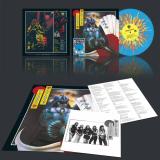
Purple Haze started out in Linköping in 1981. When singer Christer Göransson joined them towards the end of the year, they soon changed their moniker to Genocide (after the Judas Priest song of the same name) and supported local metal heroes Axewitch. A final name change was to follow: In August 1983, the band, now called Mindless Sinner, recorded a four-track demo entitled »Master Of Evil«, consisting of the title track, “Broken Freedom”, “Key Of Fortune” and “Screaming For Mercy”. This attracted Swedish label Fingerprint Records, and they in turn released the NWOBHM-inspired material as a mini-album with an awful cover and getting the band’s name wrong (spelling it Mindless Sinners). By then, the line-up of the band was Anders Karlsson (bass), Magnus Danneblad (guitar), Jerker Edman (guitar), Tommy Johansson (drums) and vocalist Christer Göransson. »Master Of Evil« originally saw the light of day on Fingerprint in January 1984. Christer Göransson takes us back to the early days of Mindless Sinner saying: “We wanted to record an album, but we couldn’t afford the studio cost. We were lucky to win a music contest, and the price money paid for the studio. I remember walking into the studio, and we thought it was like a spaceship in there, with all the buttons and flashing lights everywhere. We recorded the four songs that would become »Master Of Evil«. We then gave the tape to the Axewitch guys, and they played it to their record label at the time Fingerprint/Web Records and they liked it so much that they signed us as well.” Over the years, the music of Mindless Sinner has often been compared to the Tygers Of Pan Tang from England but Christer Göransson doesn’t see too many similarities: “We really love Tygers Of Pan Tang but I don’t think they were a big influence. It was more Judas Priest, Iron Maiden, Saxon, Black Sabbath, Ozzy, Dio etcetera. That kinda stuff.” In addition to the four tracks of the original edition of »Master Of Evil«, the current High Roller Records pressing also contains the five songs of the band’s first demo tape from early 1983 (including “Mindless Sinner”, “Higher And Higher”, “We All Go Back”, “Heavy Metal Will Never Die” and “City Games”). All nine tracks were mastered by Patrick W. Engel at his Temple Of Disharmony in November 2025. Cutting by SST Germany on Neumann machines for maximum quality on all levels ... The ultimate audiophile re-issue of this Swedish metal classic!
- 1: We Go Together
- 2: I'm Gonna (Have Some Fun)
- 3: Turn On The Power
- 4: Live And Die
- 5: Left Out On My Own
- 6: Here She Comes Again
- 7: Standing On The Stage
- 8: Voice Of The Doomed
- 9: Tears Of Pain
Purple Haze started out in Linköping in 1981. When singer Christer Göransson joined them towards the end of the year, they soon changed their moniker to Genocide (after the Judas Priest song of the same name) and supported local metal heroes Axewitch. A final name change was to follow: In August 1983, the band, now called Mindless Sinner, recorded a four-track demo entitled »Master Of Evil«, consisting of the title track, “Broken Freedom”, “Key Of Fortune” and “Screaming For Mercy”. This attracted Swedish label Fingerprint Records, and they in turn released the NWOBHM-inspired material as a mini-album with an awful cover and getting the band’s name wrong (spelling it Mindless Sinners). By then, the line-up of the band was Anders Karlsson (bass), Magnus Danneblad (guitar), Jerker Edman (guitar), Tommy Johansson (drums) and vocalist Christer Göransson. »Master Of Evil« originally saw the light of day on Fingerprint in January 1984. This was followed by the second album »Turn On The Power« in 1986 as Christer Göransson explains: “Well, »Turn On The Power« was actually recorded in October 1984, the same year as »Master Of Evil« was released. But the record label was almost out of business by 1985, so as a result »Turn On The Power« didn’t come out until January 1986, and shortly after the label went bust.” Just like on the debut, the cover was once again pretty weird. “Same story,” says the singer. “Blame the label again. We wanted a band photo for the cover but once more Fingerprint didn’t listen. We didn’t know who this girl was at all. And once again we saw the cover for the first time when we visited our local record store.” “I guess »Turn On The Power« was more of a straight heavy metal album compared to »Master Of Evil«,” describes Christer Göransson the band’s follow-up record, “better playing and better songs on »Turn On The Power«. Even though we love »Master Of Evil«. I guess it didn’t sell that much as the label went bankrupt, but the reactions were great.” Mindless Sinner played as much as they could in Sweden at the time but didn’t venture outside their home country. Over the years, their music has often been compared to the Tygers Of Pan Tang from England but Christer Göransson doesn’t see too many similarities: “We really love Tygers Of Pan Tang but I don’t think they were a big influence. It was more Judas Priest, Iron Maiden, Saxon, Black Sabbath, Ozzy Osbourne and Dio.” Shortly after the release of »Turn On The Power«, the band cut their name short to Mindless. According to Christer Göransson, this is why: “It was the sign of the times really. We wanted a more melodic kinda style and we just thought it was better to change the name to Mindless. But looking back now we should have stuck to our guns.”
Manilla Road's »The Courts Of Chaos« album was originally released in 1990. It was the band's last release for Black Dragon and also the last release before the band temporarily split up (if we do not take 1992's »Circus Maximus« into account, which was actually supposed to be a solo album). All in all it was a very tough time for Manilla Road. When he was still alive, Mark Shelton commented in an exclusive interview: "Yes, you are correct with all of that. Our releases were not selling as well as they had years before and it seemed like metal in general was having a hard time surviving the times that followed the conversion to CD technology. Right after Manilla Road broke up, I started putting together a solo project that accidentally turned into a band. So we named it Circus Maximus and signed a deal with Black Dragon but they decided to release it as a Manilla Road album because they thought it would sell better. »The Courts Of Chaos« was the last album that was a real Manilla Road project on Black Dragon." “»The Courts Of Chaos« was a tough album to get done because the atmosphere within the band was tense, to say the least”, continued The Shark. ”We all knew it was going to be the end of an era and that this line-up would most likely never do another album.” Although »The Courts Of Chaos« might not be the strongest Manilla Road effort, Mark did not consider it a “throwaway album” whatsoever: “It does not seem to get mentioned as much as many other albums of The Road. But when it does come up, it seems like that person is really sold on the project being one of our better ones. It does, in my opinion, have some really killer songs on it. 'Dig Me No Grave' is still in our show. It's always a challenge to play but I love doing that one live and it still seems to appeal to our audience. “ Another highlight on »The Courts Of Chaos« is "DOA", a cover of a Bloodrock number. Manilla Road were not known for playing too many covers. Mark Shelton explained: "I grew up in that era and yes, I love that old stuff and could be called a collector of sorts, I guess. This was the only cover song that Manilla Road has ever put on an album. We chose this song because it was the only one that all three of us could agree upon. I wanted to do some obscure hit from the old days and turn it into a Manilla Road style song. I'm still fairly fond of the version and still like to listen to it every once in a while."
Mystic Force was a progressive power metal band from Baltimore, Maryland. After releasing several demo tapes, they signed a contract with the German label Rising Sun Productions. This resulted in two albums, “The Eternal Quest” (1993) and “A Step Beyond” (1995). Their third album, “Man Vs. Machine,” followed in 2001 on Siegen Records. After Mystic Force broke up, drummer Chris Lembach and guitarist Rich Davis formed the group Shift and recorded two albums with them. Rich then started his own solo project (for which he played all the instruments and sang), before looking for suitable fellow musicians again and releasing the CD “Inside The Upside Down” in 2024. Mystic Force was originally formed in 1984 by guitarists Rich Davis and Marc Rouchard together with bassist Keith Menser. After numerous line-up changes in the early days, they finally found suitable bandmates in Chris Lembach (drums) and Bobby Hicks (vocals). In 1987, Mystic Force released their first 4-song demo, followed by “Blind Vision” a year later. After selling large quantities of self-produced cassettes (the first 4-track demo is said to have sold over 5,000 copies), it was time for their first vinyl release. In 1990, the album “Take Command” was released on the English label C.M.F.T. Records, which included the first demo and four brand new tracks: “Take Command,” “Awakened By The Dawn,” “Immortal Souls,” and “Silent But Deadly.” Later that year, the 12“ single ”Shipwrecked With The Wicked“/”Eternal Quest" was released in a limited and numbered edition by the band's own company, Pro-duction. The widespread distribution of Mystic Force's material (also via underground distributors such as Oliver Jung's “Demolition”) led to an increasing number of labels taking an interest in the band. Ultimately, the choice fell on Rising Sun Productions, who released the debut album “The Eternal Quest” in 1993, featuring tracks such as “Shipwrecked With The Wicked,” “Another World,” and “Answers Of The Mystery”—a forgotten gem of progressive power metal somewhere between Fates Warning and Hades.
- 1: Someone To Love
- 2: Night Of The Blade
- 3: Rock Me To The Limit
- 4: Warrior Of The Rising Sun
- 5: Unleash The Beast
- 6: Love Struck
- 7: Dead Of The Night
- 8: Lightning Strikes (Straight Through The Heart)
Around 1983 it looked as if Tokyo Blade were destined to become the next Iron Maiden. But somehow it wasn’t to be – history was not kind to them! In the end Tokyo Blade never became the next superstars of the glorious New Wave Of British Heavy Metal movement. “Night Of The Blade” was the follow-up to Tokyo Blade's extremely successful self-titled debut album. The band's second record was originally released in 1984 on the English Powerstation label and contained classic Tokyo Blade songs such as “Lightning Strikes”, “Unleash The Beast” or the title track. On the other hand, Tokyo Blade presented some more melodic numbers such as “Someone To Love” or “Rock Me To The Limit”. This slight alteration of the band's musical direction was partly due to the change of the vocalist (Alan Marsh was substituted by Vicki Wright). Guitarist Andy Boulton comments on the differences between Marsh and Wright: “Vic was a different person to Alan, but Alan had been a friend I had known for quite a long time and was a key figure in the band's early success, it was a sad day when we parted ways. Alan was just different from Vic and he had his own distinct sound. I don't want to talk about who was better or whatever, it's for the fans to decide. The material on 'Night Of The Blade' was all brand new, no leftovers from from Killer or Genghis Khan.” Tokyo Blade's debut (1983) and “Night Of The Blade” (1984) are two of the best albums of the entire New Wave Of British Heavy Metal period. “Night Of The Blade” was recorded by Vicki James Wright (vocals), Andy Boulton (guitar), John Wiggins (guitar), Andy Wrighton (bass) and Steve Pierce (drums). High Roller Records is proud to re-issue this long-deleted classic once again on glorious vinyl.
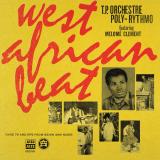
For the last few years Acid Jazz has been the proud custodian of the Albarika Store legacy. Hailing from the small but culturally-significant state of Benin, the label was operational from the late-‘60s until the early ‘80s, and was home to some of the finest, deepest, rawest West African cuts ever. A font of local and regional music, infused with contemporary Western influences, the beating heart of the Albarika sound was the mighty T.P. Orchestre Poly-Rythmo, who in various guises released dozens of recordings for the label, under the leadership of Mêlomé Clément. The intoxicating originality of their sound stems from their combination of folkloric and sacred rhythms of the region, with the modernist sound of soukous, afrobeat, soul and funk. Recorded at EMI Studios in Lagos, these recordings have a unique high fidelity and have been a target for grail-hunting record collectors for decades. For this incredible 2LP collection, Dean Rudland and David Hill compile the Poly-Rythmo 45 releases; 7” single and EP sides lost to the seeds of time. Until now. Brought together for the first time, presented in a beautiful wide spine layout, the 2 LPs present a snapshot of some of the group’s finest work from the ‘70s, their distinctive beat already honed. The printed inner sleeves include images of the rare and collectable original labels and sleeves, along with sleeve notes by Francis Gooding
- 1: Pakkanen
- 2: Maat Mennyttä Soi
- 3: Surmatuli
- 4: Rautaa Ja Tulta
- 5: Musta Yö
- 6: Joka Puun Takaa
- 7: Ne Salaperäiset
- 8: Maan Alainen
- 9: Valhallan Portit
- 10: Verta Ja Tuhkaa
Grey/Black "Iron" Vinyl[24,33 €]
Havukruunu's RAUTAA JA TULTA reissued in April Svart Records continue to reissue the albums of Havukruunu, bringing their 2016 album RAUTAA JA TULTA back on the market in April 2026. Originally meant as an EP and recorded before the debut album HAVULINNAAN (2015), RAUTAA JA TULTA contains four added tracks from later sessions and was expanded into an album. ”Rautaa ja Tulta (SPIRITUAL RESILIENCE AND VIGOR, THE IRON AND FIRE OF THE SOUL) are the first 6 tracks recorded in 2014 which cemented the recognizable soundscapes of Havukruunu. These furious songs broke the recording equipment at the time, and the remaining four songs were finished in a separate session in 2016”, comments Stefa. RAUTAA JA TULTA is available now on new limited vinyl colours, housed in a single pocket jacket and comes with an insert.
- 1: Pakkanen
- 2: Maat Mennyttä Soi
- 3: Surmatuli
- 4: Rautaa Ja Tulta
- 5: Musta Yö
- 6: Joka Puun Takaa
- 7: Ne Salaperäiset
- 8: Maan Alainen
- 9: Valhallan Portit
- 10: Verta Ja Tuhkaa
Black Vinyl[23,49 €]
Havukruunu's RAUTAA JA TULTA reissued in April Svart Records continue to reissue the albums of Havukruunu, bringing their 2016 album RAUTAA JA TULTA back on the market in April 2026. Originally meant as an EP and recorded before the debut album HAVULINNAAN (2015), RAUTAA JA TULTA contains four added tracks from later sessions and was expanded into an album. ”Rautaa ja Tulta (SPIRITUAL RESILIENCE AND VIGOR, THE IRON AND FIRE OF THE SOUL) are the first 6 tracks recorded in 2014 which cemented the recognizable soundscapes of Havukruunu. These furious songs broke the recording equipment at the time, and the remaining four songs were finished in a separate session in 2016”, comments Stefa. RAUTAA JA TULTA is available now on new limited vinyl colours, housed in a single pocket jacket and comes with an insert.
- A1: Boys Don’t Cry (86 Mix) - 2026 Remaster
- A2: Boys Don’t Cry (86 12" Mix) - 2026 Remaster
- B1: Plastic Passion (79 Mix) - 2026 Remaster
- B2: Pillbox Tales (86 Mix) - 2026 Remaster
- B3: Do The Hansa (86 Mix) - 2026 Remaster
The Cure are to release the 1986 mix of Boys Don’t Cry, making it available digitally for the first time ever in line with its 40th Anniversary. Initially released as a standalone single in the summer of 1979, Boys Don’t Cry became the title track of the US edition of the band’s debut album, Three Imaginary Boys.
The song went on to become one of the band’s signature tracks and achieved international success in 1986, when Robert Smith re-recorded the vocal and remixed the backing track. Although this new version was created to promote the best of collection Staring At The Sea – The Singles, the LP itself featured the original recording, and the 7-inch version of Boys Don’t Cry (New Voice – New Mix), now retitled Boys Don’t Cry (86 Mix), is being released on vinyl for the first time in 40 years.
Boys Don’t Cry (86 Mix), the 12” mix, and the B-Sides, Plastic Passion, Pillbox Tales, and Do The Hansa have been remastered by Matt Colton.
Nickodemus is a globally respected DJ and producer who has been touring nonstop since the mid-1990s, consistently drawing capacity crowds at clubs and festivals worldwide. As a producer, he has released five acclaimed albums (Soul & Science, A Long Engagement, Endangered Species, Sun People and Moon People) and curated eleven volumes of the influential Turntables on the Hudson compilation series. His work bridges hip-hop, house, jazz, and global sounds, highlighted by collaborations and cultural milestones including the Jungle Brothers' genre-defining legacy and the enduring house-rap classic "I'll House You" with Todd Terry. Nickodemus' hit "Mi Swing Es Tropical" (with Quantic & the Candela All-Stars) has surpassed 50 million streams and featured prominently in the film Chef. He has received extensive international press (Billboard, Rolling Stone, The FADER, Paste) and widespread radio support from tastemakers such as Gilles Peterson, BBC 6 Music, KCRW, and KEXP.
b B1: Monk-One Remix feat. Monk-One
b B1: Monk-One Remix [feat. Monk-One]
[b] B1: Monk-One Remix [feat. Monk-One]
[b] B1 | Monk-One Remix [feat Monk-One]
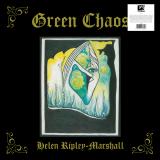
Fresh Hold Releases presents Helen Ripley-Marshall's mysterious Australian ambient electronic album "Green Chaos", reissued for the first time on vinyl LP. Originally released in 1988 on Sydney based private press label Freefall, "Green Chaos" marks the sole release from Ripley-Marshall.
In the late 80's Ripley-Marshall lived a Bohemian lifestyle in inner city Sydney; "surrounded by musicians, actors and artists, there was an amazing creative experimental vibe going on". While playing in new wave/art rock band "D Face" she began Green Chaos as a personal project to counteract the creative friction sometimes experienced within a group dynamic, heavily inspired by Arnold Frolows' "Ambience" radio show on Australia's Triple J and particularly the music of Tangerine Dream, Harold Budd and Brian Eno.
Initially a solitary endeavour, once she decided to record in a studio Green Chaos morphed into a somewhat collaborative, improvisational project with other musicians invited into the studio to improvise and add their own interpretations and ideas, additional layers and dimensions, resulting in a work that combines a clear influence from the electronic repetition of the Berlin school with a meandering, futuristic lyricism. Although influenced by the long form sonic journeys of artists like Tangerine Dream, Ripley-Marshall's background in art rock and new wave brings a more concise approach, each song a self-contained universe that says only what is necessary in the arrangement.
After completing a sound engineering course Ripley-Marshall recorded the album at Sydney's Exeter House Studio over several months alongside studio engineer Andrew Knight, met through a fellow member of D Face. Knight ran Freefall, a private press recording label releasing folk and bluegrass music, which had Green Chaos as its sole ambient release. Ripley-Marshall self distributed the album to local inner city record stores and dropped a copy to Triple J, where it became a regular staple of Arnold Frolows' show.
These days Ripley-Marshall has moved away from music and is predominantly focused on visual art. "Green Chaos" stands as the only released product of her musical years, both a personal window into the vibrant experimental art scene of late 1980s Sydney and a deep, timeless anomaly of Australian electronic music.
Here’s a brand new label from Test Pressing, going by the name Test Pressing Arts. TP Arts is a home for the more esoteric side of things — whether that’s a soul sound or solo piano. We’re excited to launch with this fantastic release from San Francisco’s Sulah Jordan. Originally a Bandcamp-only release, it was quickly jumped on by those in the know. It’s a beautiful EP you can simply put on and drift away to. I mean if it sounds your thing just press play. More soon…
Powerful lyrics are voiced by Jah Rueben Mystic, with the inspirational Ital Horns brass section.
Jah Rueben Mystic vocal evokes the fighting spirit and hopefulness of a message sent out to defeat the arrogance and greed of the capitalistic leaders of the world.
Lock up riddim, composed by Kieko De Stefanis is an original Roots Dub tune.
The Dub -produced by Gaudi- is a musical journey through the sound of 70's roots, Gaudi here adds his own analogue trademark creativity and psychedelic-dub mastery effects to the track.