Mysteries Of The World is the stunning final studio album from legendary Philly supergroup MFSB. Expertly co-written and produced with the mighty Dexter Wansel, it features the untouchable, sparkling masterpiece "Mysteries Of The World". The whole album is truly exquisite; a stylish, classy collection of pure Philly soul and orchestral jazz-funk.
MFSB, an acronym for Mother, Father, Sister, Brother, was formed by producers Gamble & Huff of Philadelphia International Records. The band's roots can be traced back to the house band at the legendary Sigma Sound Studios, where they played on numerous hit records by artists like The O'Jays, Harold Melvin & The Blue Notes and The Stylistics. Mysteries Of The World comprises slick jazz-funk grooves, mostly penned by Wansel, who produced a fair chunk of the album in a similar style to his space-funk records. MFSB's smooth sound is retained but it receives a fresh, elegant and jazzy upgrade. While this album is as mellow as the rest of the latter-period MFSB recordings, it never forgets the group's soul music underpinnings.
Swaggering, well-timed horn blasts, sweeping strings and a percolating, hard thumping slap-bassline combine to devastating effect on amazing opener "Manhattan Skyline". It's a sexy mid-tempo instrumental which sets us up nicely for what follows. Essays could be written analysing the perfection of title track. Arguably the finest jazz-funk instrumental ever made, it's absolutely magnificent. Featuring musicianship of the highest calibre, the band play with their trademark tight discipline, cooking up a syncopating rhythm with an array of exploratory keyboard riffs wrapped around a punchy bassline sent from heaven. It sounds like house music, it's that ahead of its time. The string intro is sumptuous, hypnotic and divine and that's all before the beat hits. The track fuses classical, jazz and funk into a musical journey that you never want to end. Absolutely flawless, it's a dramatic disco dancefloor killer.
Says Dexter Wansel himself: "You know, of all the songs I wrote/produced/arranged for MFSB, this is for me the most different. I think it's an experiment in rhythmic, soft sonic synth and live string and harp combinations. I composed it in an effort to blend a funky groove, along with synthesis, and orchestral sounds. There are 3 synthesizers: Oberheim 4 voice, Polymoog, and of course Arp 2600v. And, as I remember, I recorded the track with the rhythm section, string, harp and flute players first. Then I added synthesis."
The profound elegance remains in abundance on the slinky, harp-laced "Tell Me Why"; Carla Benson's beautiful voice truly shines on this sophisticated cut. The side closes out in dramatic style with the string-drenched "Metamorphosis". It's a staccato, Blaxploitation groove workout featuring wah-wah guitar, creeping basslines, rich horn solos and soulful vocals drifting in and out of the mix. The bouncy, irrepressible "Fortune Teller" opens the B side in the bass-heavy orchestral funk style before the beautiful "Old San Juan" glides in, a Balearic-adjacent track with intricate arrangements, building its mellow soul groove around an atypical flamenco guitar hook. Melancholy, guitar-led instrumental "Thank You Miss Scott" is a real highlight, with gorgeous flute, string and percussive elements whilst closer "In the Shadow" works an otherworldly synth line into its bossa nova groove.
An essential record for fans of Philly soul and groovy jazz-funk, Mysteries Of The World was mastered for vinyl by Simon Francis and cut by Cicely Ralston for Alchemy at AIR Studios. The stunning artwork, the work of renowned illustrator Robert Giusti, was restored at Be With HQ to round out this beautiful reissue.
quête:p scott
- A1: Intro 1
- A2: Intro 2
- A3: Insane
- A4: What Is This
- A5: Tainted (Feat. Dwele)
- A6: La La
- B1: All-Ta-Ment
- B2: Disco
- B3: Trinity (Interlude)
- B4: One
- B5: Hoes
- C1: Star (Interlude) (Feat. T. Banks)
- C2: Star (Feat. Dwele)
- C3: Slumber
- C4: Let's
- C5: S.o.u.l
- C6: 80S Skit
- D1: Unisex
- D2: Love U Hate
- D3: Get Live
- D4: Harmony
- D5: Who Are We (Interlude)
In the early 2000s, Slum Village was riding high on the success of their Fantastic and Fantastic Vol. 2 releases and upped the ante with the release of Trinity (Past, Present And Future). Despite Jay Dee’s starting to pursue solo efforts, the production team assembled for Trinity kept the Slum vibe found on the Fantastic albums alive. Producers on the release include Hi-Tek, Waajeed, Scott Storch, Karriem Riggins, T3, Black Milk, Young R.J., Shelton ""Ess"" Rivers with a significant contribution from Jay Dee himself.
- Scottsboro
- Blue
- How Do You See Me
- Maureen
- Some Boy
- Traveler's Cross
- Soni Wolf
- Water Into Wine
- Meltdown Rodeo
- Wild Ones
- Loamlands
Kym Register + Meltdown Rodeo (formerly LOAMLANDS) is a
transgressive and distorted country music outfit based in North Carolina
that places queer storytelling at the forefront
Their music intimately grapples with identity, retribution, reconciliation and queer
existence in both modern- day and historical (inclusive of mostly all) southern
culture.
Register is also contributing a queer lens to the southern rock ethos. By way of
supporting cast, Sinclair Palmer (bass), Joe Westerlund (drums), and Matt
Phillips categorically deliver. Check out the title track for a perfect example of the
band's ability to travel between gritty
responsiveness and tendern reflection at Register's lyrical instruction. Whether
grappling with the constrictions of gender expressions on dating apps ("How Do
You See Me"), evoking the semi-autobiographical loneliness of Dorothy Allison's
Carolina bastards ("Maureen"), or daring white folks to "get right with their history
of compliance in racial capitalism" ("Loamlands"), Register affirms that
songwriting, at its best, is a gross but necessary confrontation.
Ultimately Register and Meltdown Rodeo (both the newly named band and
album) have achieved in eleven songs something the south has only halfheartedly attempted - undoing generational curses by retiring "bless your heart"
lip service.
Repress!
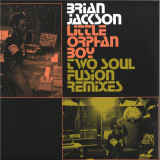
‘Little Orphan Boy’ is the second single taken from album ‘This Is Brian Jackson’, presented with remixes by Two Soul Fusion, a.k.a. Louie Vega and Josh Milan.
The veteran artist’s first true solo LP in over 20 years, ‘This Is Brian Jackson’ is produced by Phenomenal Handclap Band founder Daniel Collás. Collás lovingly re-frames and updates ideas and demos that Jackson first laid down back in 1976, right around the time he recorded ‘Bridges’ with Gil Scott-Heron, for a solo project that never saw the light of day… until now.
Alongside his ‘Two Soul Fusion’ partner Josh Milan, Louie Vega gives the album’s closing track ‘Little Orphan Boy’ two truly vintage remix treatments, taking the song on an eclectic, soul-stirring, timeless journey. The extended ‘Two Soul Fusion’ mix calls to mind the golden era of Masters at Work productions, featuring a Latin-infused percussion groove, shimmering organs and in-the-cut funky guitar lines. The ‘Downtempo’ remix lets Brian Jackson’s vocals ride over a head-nodding, stripped back, yet equally soulful arrangement.
“A dream to work with Brian Jackson” says Louie Vega. “I mean, he’s a big part of our musical landscape and has been a huge inspiration in our lives. From way back to my early years in the Bronx, through to my DJing and producing career, into productions like Nuyorican Soul, Elements of Life, Kenlou, Brian and Gil have always been with us! Now to work on such an amazing song with Brian’s keyboard work and lead vocal, it made it so much easier for Two Soul Fusion (Josh and I) to find that pocket and groove. We had to create an epic piece and take you on a trip through several styles, it was calling for it. That’s due to the original work of Brian Jackson, a true Master at Work & Two Soul Fusion hero!!! I’m looking forward to seeing what’s next on the horizon with us and the one & only Brian Jackson.
Brian Jackson: “I have always loved the musicality and the rhythmic power that surges through the artistry of Louie Vega since I first heard him in Masters at Work. I made a silent wish that one day I would hear one of my songs given that special treatment. Imagine my elation to know that it would finally happen – with a song I wrote and recorded 45 years ago for a solo project that might have never happened if not for producer Daniel Collás and BBE chief Peter Adarkwah! Louie, along with Two Soul Fusion partner Josh Milan and I are alike in so many ways, I knew that if we ever got together, magic would happen and well… here’s to magic! My love and gratitude to Louie, Josh, Daniel, Peter and the beautiful BBE family.”
- A1: Ennio Morricone - Mio Caro Assassino (From Mio Caro Assassino/My Dear Killer (1971)
- A2: Bruno Nicolai - La Notte Che Evelyn Uscì Dalla Tomba (Feat Edda Dell'orso - Long Version - From La Notte Che Evelyn Uscì Dalla Tomba/The Night Evelyn Came Out Of The Grave (1971)
- A3: Bruno Nicolai - La Dama Rossa Uccide Sette Volte (Edit - From La Dama Rossa Uccide Sette Volte/The Red Queen Kills Seven Times (1972)
- A4: Stelvio Cipriani - Tribal Shake (From Reazione A Catena/A Bay Of Blood (1971)
- A5: Stelvio Cipriani - Il Sesso Del Diavolo (Finale) (Finale)
- A6: Stelvio Cipriani - Deviation-M1 (From Deviation (1971)
- B1: Riz Ortolani - L'etrusco Uccide Ancora (Titoli) (Titoli)
- B2: Daniele Patucchi - Giallo In Tensione (From Frankenstein '80 (1972)
- B3: Ennio Morricone - Ansimando (Feat Edda Dell'orso - From Macchie Solari/Autopsy (1975)
- B4: Manuel De Sica - Black Dream (From Mystery Tour (1985)
- B5: Paolo Gatti & Alfonso Zenga - Cerro Torre (From Cesare Maestri: Il Ragno Delle Dolomiti (1980)
- B6: Berto Pisano - Greta (From La Morte Ha Sorriso All'assassino/Death Smiles On A Murderer (1973)
- B7: Sante Maria Romitelli - Bambola Sensuale (From La Rossa Dalla Pelle Che Scotta/The Sensuous Doll (1972)
- C1: Adolfo Waitzman - Languidamente (From Pensione Paura/Hotel Fear (1978)
- C2: Nico Fidenco - Il Demonio In Convento (From Immagini Di Un Convento/Images In A Convent (1979)
- C3: Ettore De Carolis - Flavour Of Death (From Il Cavaliere, La Morte E Il Diavolo (1983)
- C4: Marcello Giombini - Un Gioco Per Eveline-M11 (From Un Gioco Per Eveline (1971)
- C5: Carlo Maria Cordio - Absurd (From Rosso Sangue/Absurd (1981)
- C6: Stelvio Cipriani - Devil Dance (Performed By Goblin - From Un'ombra Nell'ombra/Ring Of Darkness (1979)
- C7: Daniele Patucchi - E Tanta Paura-M2 (From E Tanta Paura/Plot Of Fear (1976)
- C8: Marcello Giombini - Orinoco: Prigioniere Del Sesso-M19 (From Orinoco: Prigioniere Del Sesso (1980)
- D1: Franco Micalizzi - Bargain With The Devil #3 (From Chi Sei?/Beyond The Door (1974)
- D2: Stefano Liberati - The Prophecy (Version A - From I Pensieri Dell'occhio (1978)
- D3: Luigi Ceccarelli - Walking Through The Shadows (From Difendimi Dalla Notte (1981)
- D4: Daniele Patucchi - Minaccia Sulla Citta (From Belve Feroci/Wild Beasts (1984)
Red vinyl[28,53 €]
PAURA explores the horror repertoire from the precious CAM Sugar archives taking us on a hypnotic journey into the labyrinths of fear, through the different variations that Italian horror took on from the esoteric and supernatural to the slasher films of the early 1970s; to reinterpretations of Romantic literature and gothic fiction to the splatter films of the ‘80s; and from witchcraft to metropolitan horror. This is not a real “best of” but an eclectic menu full of mysterious voices, childlike lullabies, sweet melodies, obsessive music boxes, obstinate harpsichords, crazy distortions and threatening synthesizers, conceived as a succession of sequences, as if a film edit. The new collection includes some of the most creative music ever written and strives to do justice not only to some of the best known composers in this genre, but also to many great unsung composers: From celebrated composers like Ennio Morricone, Riz Ortolani & Stelvio Cipriani to long-forgotten personalities who fed the industrial backbone of Italian cinema such as Daniele Patucchi, Marcelo Giombini & Berto Pisano. The collection includes 6 previously unreleased tracks plus 3 tracks released on vinyl for the first time and 5 tracks available commercially for the first time (originally released only as a limited promo item).
Undeniably one to watch, the release of his upcoming body of work is set to cement Sam’s status as one of the year’s most exciting new artists. His music has already been praised by the likes of MTV, Clash, BBC, and Notion magazine, played across BBC Radio 1 by Scott Mills, Clara Amfo, Ricky, Melvin and Charlie, and featured on flagship Spotify editorial playlists. Elton John and Bastille are fans, pop phenomenon Bebe Rexha has co-signed his work, while Justin Bieber is a prominent supporter. The two hosted a sensational IG Live together and more recently hung out in LA, while a video of Justin singing Sam’s single ‘Whole’ has gained more than one million views –and counting. Closer to home, JayKae jumped onstage on Sam’s last tour, and renowned UK tag-team Krept & Konan are fans. Such a broad spread of support simply represents his audience as a whole; there’s a literal army of TikTok followers moving alongside him, with Sam amassing almost a half million followers on Instagram –that’s more than some very established artists. In fact, he already has more Instagram followers than some winners at the BRITs last year. Matching pop touches to a classic feel, he’s often compared to Sam Fender’s anthemic truth-seeking or Tom Walker’s revelatory autobiography. Yet Sam’s work stands alone and is already scaling
Charlie Hunter’s 1995 Blue Note debut Bing Bing Bing! was a groove-heavy tour-de-force that announced the arrival of a virtuosic new guitarist on the scene. Hunter’s unique concept on his 8-string guitar allowed him to lay down a bass line and play chords as well as a melodic line at the same time, producing music that was at once impressive and irrepressible. With his powerful trio featuring tenor saxophonist Dave Ellis and drummer Jay Lane plus contributions from trombonist Jeff Cressman, Ben Goldberg, pedal steel guitarist David Phillips, and percussionist Scott Roberts, Hunter delivered a 10-song set of propulsive originals including “Greasy Granny” and “Fistful of Haggis” plus an unforgettable cover of Nirvana’s “Come As You Are.” Hunter would go on to record six more excellent albums for Blue Note, and also gain notice for playing on D’Angelo’s 2000 neo-soul masterpiece Voodoo.
Edna Wright's idiosyncratic "Oops!" is one of the most sublime vocal refrains in soul music history. Anchoring its host album's leadoff cut, it sets the tone for a uniquely satisfying modern soul LP. Indeed, whilst many of its ilk come laden with filler, Wright's one solo record is an exercise in elegant restraint, a concise killer.
Originally released in 1977 on RCA, this rare and sought-after album followed the 1973 disbanding of Edna's much-loved Honey Cone. Produced by her husband, legendary producer/songwriter Greg Perry, the album was somewhat of a risk, a deep soul album released during the period when disco was altering the landscape of popular music. And perhaps inevitably, despite the stellar production and spine-tingling vocals throughout, the album glided gracefully under the radar, spawning only one single and seeing no chart action.
That single - the magnificent title-track - soon became a notorious rare groove stepper in its own right. However, in the years since, it has become a crate diggers classic. Its fame was elevated among hip-hop heads when Prince Paul memorably looped the shimmering intro when crafting the melodic hook for De La Soul's late-summer-stunner "Pass The Plugs", a wistfully melancholic back-porch nostalgia trip. And, more recently, Leon Vynehall liberally lifted the same intro for his sepia-tinged "Midnight On Rainbow Road" to augment the excellent Rush Hour compilation Musik For Autobahns 2.
Yet this album is so much more than its most famous song. An assuredly lean masterpiece from start-to-finish, the album features a further six dynamite tracks of warm, smooth soul. As such, it's an impossible task to choose certain tracks to highlight alongside the mighty title track. Throughout, Edna's strikingly mature vocals are wonderful, proudly stepping out with a sophisticated groove reminiscent of Jean Carn or Gloria Scott, whilst Greg Perry's gorgeous string-drenched backdrops add a rich depth. So much so, many of the other tracks have been sampled by producers with impeccable taste, from 9th Wonder to The Alchemist for songs featuring Nas and Talib Kweli.
Following her glowing role in the acclaimed documentary 20 Feet From Stardom, we pray this long overdue reissue will allow further light to shine on Edna. Officially licensed and beautifully remastered for vinyl by celebrated engineer Simon Francis, it has been pressed on audiophile 180g vinyl for the first time and features the original iconic artwork. Each copy includes a printed inner sleeve with a sumptuous black & white photo, full lyrics and heartfelt notes from Edna herself.
Blue/Black Marble Vinyl, limitiert auf 100 Exemplare. NYHC-Schlagzeuger Legende "Will Shepler" (früher bei Agnostic Front, Madball) und Sick Of It All-Bassist Craig Setari (ebenfalls früher bei Agnostic Front) hatten die Idee eine neue Punk Rock Band zu gründen. Will rief seinen langjährigen Freund, den Gitarristen und Sänger Scott Roberts (früher bei Biohazard, The Spudmonsters, Bloodclot!) an, der Biohazard nur wenige Wochen zuvor verlassen hatte. Für Scott war es das perfekte Timing, denn er wollte weitermachen und etwas Neues von Grund auf mit völliger kreativer Freiheit und Leidenschaft schaffen. Bald darauf begannen Scott und Will mit der Arbeit an dem selbstbetitelten Debütalbum von The Take. Craig war mit dem hektischen Tourneeplan von Sick Of It All beschäftigt, also rekrutierte Scott seinen Freund Eric Klinger (ehemals Pro-Pain), um das Line-up zu vervollständigen.
Hurry has grafted the best qualities of ‘90s bubblegum power pop—the pitch-perfect songwriting, the pop-rock sheen, the borderline saccharine vocal melodies—onto something far more raw and emotionally resonant. Don’t Look Back is striking in its tenderness and candor—approximately half of the lyrics on the record concern the deterioration of an 11- year relationship Scottoline was in, with the other half being a celebration of new love. The first words Scottoline sings, in opening track “Didn’t Have to Try,” is essentially a statement of theme: “And we’re back at the beginning / Never thought I’d see a face like that again / It attacks when we’re not ready / And I won’t play it safe this time.” This is pop music about actual feelings which means it’s automatically better than most pop music. It is challenging and addictive.
There is not a single moment on Don’t Look Back that isn’t completely drenched in melody and emotion. “Parallel Haunting” evokes the tuneful ache of golden age Evan Dando; “Little Brain” sounds like golden age Evan Dando and golden age Noel Gallagher. Don’t Look Back is, in a word, bittersweet, with melodies that feel like a jackhammer on your brain’s pleasure center and lyrics that feel like getting slapped in the heart.
The master sleuths at Dark Entries bring us Forbidden Overture, another tantalizing mystery from the hidden depths of sleaze. It all began years ago when Bijou Video’s Jules Zinn introduced the label to the soundtracks of the pornographic films of legendary filmmaker Steve Scott and gay superstar Al Parker. It wasn’t until The Magazine’s Bob Mainardi gifted a cassette copy of the soundtrack to the film TURNED ON—a bathhouse fantasy from 1982—that the wheels started turning. The steamy, hypnotic sounds were credited only to “Forbidden Overture…” but who was that? This question remained unanswered for some time, and countless hours of research, Venn diagramming, and elaborate flow charts all proved fruitless.
It wasn’t until a chance screening of BAD GIRLS DORMITORY, a 1986 women-in-prison movie from gay porn director Joe Gage that happened to reuse some of the same music did the answer become clear: Forbidden Overture was none other than the mighty Man Parrish!
The soundtrack to TURNED ON consists of two epic side-long pieces, both of which employ classic Man Parrish production techniques. “Primal Overture” slinks along with brooding pads and ominous chords, building and oozing throughout its 27 minute runtime like a sultrier Goblin soundtrack. “Strictly Forbidden” takes a similar groove to a major key, but it’s optimistic chirp conceals a wry, mysterious wink. Says director Steve Scott: “It took us about two weeks to find the right piece for the jockstrap scene. But it's like anything else—you know when it’s right.”
Also included is a 20 page booklet featuring photos, archival material, a pull-out poster, and interviews with Steve Scott and stars Al Parker and Scott Taylor. TURNED ON is an exciting musical rediscovery as well as a vital document of queer history.
Dot Allison returns with a new solo album, Consciousology. After over a decade away, the former One Dove singer and songwriter broke cover in 2021 with Heart-Shaped Scars and this new album follows just two years later, as she hits a purple patch of songwriting. It’s also her first full release for Sonic Cathedral after contributing to Mark Peters’ acclaimed Red Sunset Dreams last year. Consciousology finds multi-instrumentalist Dot joined by the London Contemporary Orchestra, her new labelmate Andy Bell from Ride, who plays guitar on two tracks, and Hannah Peel, who is responsible for some of the string arrangements with both the LCO and a stellar group of Scottish string players. It expands on the styles and themes of the previous album, all while pushing everything just that little bit further – the songs sound bigger, more avant-garde and experimental and, occasionally, properly out-there and psychedelic. “I wanted to make some albums that felt like a set, exploring love, what lies beyond the visible and how all these aspects dovetail together,” explains Dot. “I see Consciousology a more psych Heart-Shaped Scars with a far fuller, more immersive sound and so, in that sense, it’s a more wayward, bolder, rule-breaking partner.” Right from the eye-catching artwork by PJ Harvey collaborator Maria Mochnacz it definitely does not play it safe. It veers from the techno-played-as-folk of opener ‘Shyness Of Crowns’ and ‘220Hz’ and the Linda Perhacs-meets-The Velvet Underground chug of the first single ‘Unchanged’ to the Mercury Rev-style fantasia of ‘Bleached By The Sun’, the Brian Wilson-esque harmonies of ‘Moon Flowers’ and the kaleidoscopic colour trip of ‘Double Rainbow’. Elsewhere there are echoes of Desertshore-era Nico, Jack Nitzsche’s work with Neil Young, Karen Dalton and Anne Briggs before the relative simplicity of the Tim Hardin-inspired closer ‘Weeping Roses’. It’s a brilliant, breathtaking record.
REPRESS
Codek is the brainchild of Jean-Marie Salaun who grew up in Paris influenced by the folklore of the inner city. In 1978 he joined art rock group SpionS alongside Gregory Davidow and recorded two singles. Diving into the Paris post punk scene he met Claude Arto and designed the artwork for Claude's single on Celluloid Kwai Systeme / Betty Boop.' Robin Scott (M Pop Music') had produced the SpionS first single and wanted to collaborate further. With Claude, Jean-Marie wrote Me Me Me', intended for a choir, for M. Then SpionS split and Robin was off to Switzerland to record an album to follow-up his hit single. That left Jean-Marie alone in London, where he began working as Codek, a play on the brand name Kodak The Me Me Me' single was released by MCA Records in 1980. Back in Paris, now with some studio experience, Celluloid Records hired Jean-Marie to produce records for Artefact and Les Orphelins. Over the next 2 years he began working on ideas for the next Codek single Closer / Tam Tam'
Closer' started its life as an electric baseline played by Jean-Marie. Claude Arto sequenced the floating synthesizers. Laurent Grangier and Frédéric Lapierre of reggae band Immigration Act played the horns. The lyrics Hard to say. Easy to do. We don't need to say what we do' were a statement on creation as narration expressed Jean-Marie's ennui, I'm tired with it.' Tam Tam' was inspired by Burundi drummers playing on the plaza in front of Beaubourg where the song was recorded. Jean-Marie enlisted one of the drummers from the circle, Georges Atta Dikalo, to lay down percussion for the song. The female singers were from the French Caribbean and added falsetto tribal chants. JM was part of the the African night scene in Paris, remixing Xalam's Kanu' and Touré Kunda's Salaly Muhamed.' Claude achieved complex rhythmic patterns using a modular synthesizer and heavy processing. Jean-Marie recorded himself beating his chest for the thump noises. The recording of Tam Tam' and Closer' spanned over two years. They started on 16-track in Studio d'Auteuil, where JM blew the woofers, before resuming in Studio Centre Georges Pompidou with an added 8-track recorder. Jean-Marie was producing other bands, and a lot of this was recorded on "borrowed" studio time. The single was released in 1981 on West African Music, a tiny label from the Ivory Coast, and was re-released a year later by Island Records in the UK (where the B-side was re-named Tim Toum'). Both tracks were staples in the DJ sets of Beppe Loda and Daniele Baldelli, finding a spiritual home in the Cosmic scene of Italy.
Both songs have been remastered for vinyl by George Horn at Fantasy Studios in Berkeley. The jacket is an exact replica of the 1981 edition with artwork by Angela Boy, inspired by primitive electronics and African paintings. Each copy includes an doubles-sided insert with photos and liner notes by Jean-Marie Salaun.
Codek is the brainchild of Jean-Marie Salaun who grew up in Paris influenced by the folklore of the inner city. In 1978 he joined art rock group SpionS and collaborated with Robin Scott (M 'Pop Music'). He began working as Codek, a play on the brand name Kodak with the 'Me Me Me' single released in 1980. In 1981 the 'Tam Tam'/'Closer' single was released on West African Music, a tiny label from the Ivory Coast, and re-released a year later by Island Records in the UK (where the B-side was re-named 'Tim Toum'). 'Tam Tam' was inspired by Burundi drummers playing in the plaza in front of Beaubourg where the song was recorded. Jean-Marie enlisted one of the drummers from the circle, Georges Atta Dikalo, to lay down percussion for the song. The female singers were from the French Caribbean and added falsetto tribal chants. Claude Arto achieved complex rhythmic patterns using a modular synthesizer and heavy processing. Jean-Marie recorded himself beating his chest for the thump noises. The recording of spanned over two years. They started on 16-track in Studio d'Auteuil, where Jean-Marie blew the woofers, before resuming in Studio Centre Georges Pompidou with an added 8-track recorder.
In 2017 we reissued the 'Tam Tam'/ 'Closer' single and shortly after the 24-track master tapes were discovered in Paris by original engineer Gérard Chiron. We arranged for graphic designer Maycec to pick up the tapes and immediately began to think of remixers for this project. First up is producer and DJ Daniele Baldelli who gave the original single a spiritual home in the Cosmic 80s scene of Italy. Here he's teamed up with Marco Dionigi for two remixes. Remix A goes full on funky disco baseline while Remix B a more balearic affair. We remember Justin sharing a memory of DJing the original Island Records promo at the Mudd Club in 1981 so we had to ask him for remix. He teamed up with his Whatever/Whatever production partner Bryan Mette and delivered an hypnotic pulsing house remix and an extended edit. All songs have been mastered for vinyl by George Horn at Fantasy Studios in Berkeley. The jacket is new twist designed by Eloise Leigh on the 1981 edition artwork by Angela Boy, inspired by primitive electronics and African paintings.
Galcher Lustwerk has put together a collection of 10 ambient cuts here that he wrote to score a film by Josh Kline, a fine artist whose solo exhibition "Project for a New American Century" recently opened at the Whitey Museum of American Art in New York. It is a dystopic science fiction movie that details what happens after the climate crisis really takes hold. The music is an esoteric mix of free jazz, drones and bleeped-out ambient that is alive with busy, fizzing frequencies. It's a dense, textural brew that collides synth and sax sounds into a new sort of tribute to Ridley Scott's Blade Runner score.
If you ever thought Debris was Oklahoma's only entry into the bloodstream of feral, batshit rock, guess again. Mag Amplitude's, Wizards Of Today appeared in a miniscule, self released edition of 100 in 1983 & was the brainchild of a blind, guitarist-vocalist by the name of Matt Muncil. On Wizards Of Today, Muncil-considered by the psychedelic mafia to be the 'Higney of Heavy Rock'—& drummer Scott Roher proceed to lay down over 7 tracks an incredible wall of wildly fuzzed & primitive bash that is a singular testament to loner, outsider brilliance. Heavy on double tracked guitar riffs & growling, incomprehensible vocals concerning outer space, rocket ships & rock, Mag Amplitude's Wizards Of Today is a half hour slab of muzzed disorder of the highest possible recommendation. This Zaius Tapes reissue is in a one time pressing of 292 copies. Our first foray into (re) introducing fans & collectors into the cimmerian forest of American real people/outsider psych rock."—Johan Klepp, for Zaius Tapes
- A1: Curtis Mayfield - Move On Up
- A2: Marlena Shaw - California Soul
- A3: James Brown - The Payback Pt. 1
- A4: Bill Withers - Use Me
- A5: Minnie Riperton - Inside My Love
- A6: Sly & The Family Stone - Stand!
- A7: Bobby Womack - I’m A Midnight Mover
- A8: The Delfonics - Ready Or Not Here I Come (Can’t Hide From Love)
- A9: Gil Scott-Heron - The Revolution Will Not Be Televised
- B1: Marvin Gaye - What’s Going On
- B2: Wilson Pickett - In The Midnight Hour
- B3: Ike & Tina Turner - Workin’ Together
- B4: Clarence Carter - Patches
- B5: Jerry Butler - Never Give You Up
- B6: Irma Thomas - Anyone Who Knows What Love Is (Will Understand)
- B7: Willie Hightower - Walk A Mile In My Shoes
- B8: The Isley Brothers - That Lady Pt. 1
- C1: Fontella Bass - Rescue Me
- C2: Otis Redding - Fa-Fa-Fa-Fa-Fa (Sad Song)
- C3: Donny Hathaway - The Ghetto Pt. 1
- C4: Smokey Robinson & The Miracles - I Second That Emotion
- C5: Aretha Franklin - Chain Of Fools
- C6: The Impressions - People Get Ready
- C7: Odetta - Hit Or Miss
- C8: The Brothers Johnson - Strawberry Letter 23
- D1: Isaac Hayes - Walk On By
- D2: Solomon Burke - Everbody Needs Somebody To Love
- D3: The Staple Singers - The Weight
- D4: The Temptations - War
- D5: Freda Payne - Band Of Gold
- D6: James Carr - The Dark End Of The Street
- D7: Etta James - I’d Rather Go Blind
- D8: Lamont Dozier - Fish Ain’t Bitin
Soul music originated in the African American community throughout the United States in the late 50s and 60s. Having its roots in African American gospel music and rhythm & blues, it became popular for dancing and listening with prominent record labels as Motown, Atlantic and Stax.
On this 2LP compilation classic soul songs by Curtis Mayfield, Marlene Shaw, Bill Withers, and Aretha Franklin are paired with funky soul stompers by James Brown, Sly & The Family Stone, The Isley Brothers, and poetic soul by Gil Scott-Heron, Marvin Gaye, The Impressions and many more influential artists and groups.
Soul Collected is available as a limited edition of 2000 individually numbered copies on yellow (LP2) and orange (LP2) coloured vinyl and includes an insert.
The Waterboys’ ninth studio album is made available on vinyl for the first time, in limited edition ‘sunrise’ yellow. Originally released in 2007, ‘Book Of Lightning’ was mostly recorded at the former Island Studios in West London. Alongside Mike Scott and Steve Wickham, the album features contributions from pianist Richard Naiff, keyboard mystic Thighpaulsaandra, guitar ace Leo Abrahams and two killer drummers, Jeremy Stacey and Brady Blade. Selections include the understated country rock epic She Tried To Hold Me, the beautiful Sustain, recorded with members of Canadian band Great Aunt Ida, and two songs written for but not recorded during the classic Fisherman's Blues album sessions: Everybody Takes A Tumble and The Man With The Wind At His Heels. Reviewing the album in The Guardian, Dave Simpson said that Scott's songs, “feel like they have been handed to him from a crack in the clouds”. The vinyl format is 180g Sunrise yellow coloured vinyl. The CD format is packaged in a jewelcase with 16 page booklet.