
Поиск:paci
Стили
Все

13
Sourced from the Original Master Tapes and Presented in Audiophile Sound for the First Time: Mobile Fidelity’s Numbered-Edition 180g SuperVinyl LP Plays with Riveting Detail
Three decades before he released The Philosophy of Modern Song — an insightful book devoted to 66 tunes that both impacted his career and the music world at large — Bob Dylan issued Good As I Been to You. The under-heralded 1992 album, Dylan’s first solo acoustic album in nearly 30 years and first all-covers effort in nearly 20 years, can be seen as a prophetic prelude to what has become the Nobel Laureate’s celebrated late-career arc. It’s also an absorbing continuation of the custom Dylan has embraced since he first picked up a guitar.
Sourced from the original master tapes, pressed at RTI, and housed in a Stoughton jacket, Mobile Fidelity's numbered-edition 180g SuperVinyl LP of Good As I Been to You reveals the immediacy, detail, and stripped-down nature of recording sessions that took place in Dylan’s garage studio in California. Simple, raw, and unplugged, the record presents Dylan in peak form — and showcases a diversity of vocal phrasing, soulful chording, harmonica accents, and close-up ambience that on this reissue emerge like never before. As the first-ever audiophile edition of this almost-lost classic, this LP also benefits from SuperVinyl’s extraordinary properties: a nearly inaudible noise floor, superb groove definition, and dead-quiet surfaces among them.
Recorded and mixed by Micajah Ryan, and supervised by Debbie Gold, Good As I Been to You took shape at Dylan’s home shortly after the singer-songwriter completed sessions in Chicago with a full band. Unaccompanied, he again gravitated to existing works — in this case, traditional folk music — and, with Gold serving as a trusted advisor, performed the songs in multiple keys and tempos until he arrived at what he desired. That careful, determined albeit loose, organic approach emanates from this reissue, on which each note, movement, and space come across more directly, fully, and immediately than on the original formats. It helps draw a through-line to Another Side of Bob Dylan (1964) as well as the similarly themed follow-up, World Gone Wrong (1993) and immersive old-world storytelling of Tempest (2012) and Rough and Rowdy Ways (2020).
Well before Dylan made those renowned 21st century LPs, however, he needed to find a way out of a funk that — save for his 1989 collaboration with Daniel Lanois, Oh Mercy — followed him for years. As author Clinton Heylin reported Dylan admitting in 1997: “My influences have not changed — and any time they have done, the music goes off to a wrong place. That’s why I recorded two LPs of old songs, so I could personally get back to the music that’s true for me.”
Truth: Few, if any, concepts better encapsulate Good As I Been to You. It resonates with the same originality, honesty, resolve, and age- and time-defying relevance as the seminal Anthology of American Folk Music that fired Dylan’s imagination as a kid in small-town Minnesota and, later, per Greil Marcus’ That Old Weird America book, informed Dylan and the Band’s Basement Tapes sessions. This record also contains the type of music Dylan was playing during his acoustic sets at his period Never Ending Tour shows; within a year of the record’s release, Dylan would play half the album’s songs live.
As for those songs: Rife with strange mystery, common circumstance, and epic adventure, the stories appeal to our base instincts. Their themes — jealousy, temptation, sacrifice, love, revenge, identity, opportunity — operate on a fundamentally human level immune to trends, generations, or eras. They’re ancient and modern, serious and comical, open and disguised, simple and multi-layered. They talk of vengeance and justice (“Frankie & Albert”; “Jim Jones”), romance and tenderness (“Tomorrow Night,” “Froggie Went a Courtin’”), the troubled and trouble-free (“Hard Times,” “Sittin’ on Top of the World”). They lend voice to lovers scorned and freed (“Blackjack Davey”), the used and users (“Diamond Joe”), the powerful and powerless (“Arthur McBride,” “Canadee-I-O”), the followed and followers (“Little Maggie”). And akin to much of Dylan’s finest output, things are not always what they appear to be.
Spanning country, folk, sea shanty, bluegrass, and blues motifs, Good As I Been to You re-confirms Dylan’s position as an elite interpreter and sculptor — not of just structure but emotion. Dylan delivers the tunes as if he’s known them forever. He plays with a subtle sense of mischievousness and retains a largely upbeat demeanour; his eyes seemingly twinkle as he sings and picks. His guitar serves as the guidepost for shuffles, boogies, ballads, and mess-arounds while his innate feel for each specific arrangement and melody helps inform pacing, tone, attack.
Like a great author, he understands the importance of adhering to concision, luring an audience, holding their attention, and maximizing the impact of details, actions, and unexpected turns. Though already coarse and ragged, his voice feels ideal for the subject matter and his phrasing — from the clever ways he stretches syllables to underline meanings on the surprise twists of “Canadee-I-O” to the sheer delight he gets from singing “rowdy-dow-dow” on the protest song “Arthur McBride” — outstanding.

Percolating in the same watery diner coffee that spawned American Football and Hum, C-Clamp shrugged on and off the '90s slowcore and emo scenes in a hurry. Compiled here are the band's two albums for the venerable Ohio Gold label - Longer Waves and Meander + Return, plus a third LP of singles and compilation tracks, and a meticulously annotated book stuffed with lyrics, photos, flyers, and ephemera from their all-too-brief existence. This one's colder than a Chicago winter - better plug in that space heater.

Percolating in the same watery diner coffee that spawned American Football and Hum, C-Clamp shrugged on and off the '90s slowcore and emo scenes in a hurry. Compiled here are the band's two albums for the venerable Ohio Gold label - Longer Waves and Meander + Return, plus a third LP of singles and compilation tracks, and a meticulously annotated book stuffed with lyrics, photos, flyers, and ephemera from their all-too-brief existence. This one's colder than a Chicago winter - better plug in that space heater.

13
Champaign, Illinois band Hum is re-issuing its four-album catalog on vinyl with exclusive distribution by Polyvinyl Records. The band members oversaw every step of the re-mastering, lacquer cutting, and manufacturing stages while working with original designer Andy Mueller/Ohio Girl in updating the artwork. Each album is offered in a double-LP 180g set in black.
Recorded by Mark Rubel at Pogo Studio, Champaign, IL. Mixed by Brian Malouf at Pacifique, LA.
Licensed from Sony Music and re-mastered by Ryan Smith at Sterling Sound, New York.

13
Josh Ritter’s “Metallic Silver” vinyl edition of 2010’s So Runs the World Away. Limited to 1000 copies worldwide and newly remastered and optimized for vinyl. The last vinyl LP, coke bottle clear with blue swirl, sold out quickly, and there hasn’t been vinyl available for nearly two years. Includes album download card, and full color marketing sticker with: “Metallic Silver 1000 LP limited edition, Remastered + Optimized for Vinyl.
8
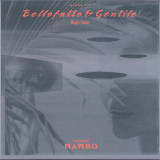
"Night Swim" is the debut LP from Bellofatto & Gentile, a collaboration that was founded on the soccer fields of Austin, Texas during the spring of 2019. The duo of Giovanni Bellofatto (an alias of Jesse Edwards) ) & Dan Gentile initially started exploring the melodies and textures of Italian dream house, but those experiments soon evolved to include modular synthesizers, breakbeats, and left-field samples.
Bellofatto's work dates back to the 90's and has credits on albums by Jessica Bailiff (Kranky), Odd Nosdam (Anticon), and His Name Is Alive. In the early 00's, he pioneered acoustic / electronic territories with his psychedelic project Red Morning Chorus. His forthcoming solo LP "The Otherworld" is due for release on Vancouver's Pacific Rhythm under the moniker C Thru. With 20 years of DJing under his belt, Gentile released his first house music productions as Time Zones in 2019 on Mystery Zone Records, with subsequent singles on Bay Area Disco and Moiss Music. He now lives in San Francisco, where he works as a journalist and creates visual art using a modular video synthesizer.
The legend John Beltran provides mixing treatments on half of "Night Swim" that will be released on Prins Thomas's balearic imprint Horisontal Mambo in 2023.

8
There’s a big clue to the pacific wisdom of The Orchestra in the Sky in the artist name – Hochzeitskapelle + Japanese Friends. For this is, indeed, music based in, and resonating with, friendship, camaraderie, collaboration, and creative exchange. Across two albums – one documenting recordings from Tokyo, the other an expansive double album of sessions from Kobe – Hochzeitskapelle gather around them some of the finest voices in Japanese independent and underground pop music, like Tenniscoats, Eddie Marcon, Yuko Ikema, and Kama Aina, and explore an open field of music, full of creative encounters.
You may already know Hochzeitskapelle as the German instrumental quintet formed by members of The Notwist, Alien Ensemble, and friends from the jazz scene. Across three albums, one a collaboration with Kama Aina (2018’s Wayfaring Suite), they’ve developed a way of playing together that’s intimate and playful, rich and human; it’s a music that’s deliberately rough around the edges, and that nestles cosily into the everyday. Their relationship with Japanese indie has developed over the years, doubtless encouraged by Saya´s „Minna Miteru“, compilations series of Japanese indie pop for Morr Music. A peripatetic gang, Hochzeitskapelle also recently backed Japanese singer-songwriter Makoto Kawamoto on her new album, Hikari.
In many ways, The Orchestra in the Sky feels like the culmination of a set of ongoing cross-cultural exchanges: the Minna Miteru compilations; tours of Japan by Hochzeitskapelle and The Notwist; and indeed, Markus Acher’s Spirit Fest group with Saya and Ueno of Tenniscoats. The latter are present throughout much of The Orchestra in the Sky, and Saya’s voice is particularly winning on songs like “Tsuki no oto”, where the two outfits are joined by brass ensemble Zayaendo. There are several lovely turns from singer-songwriter Yuko Ikema, and Eddie Marcon appear twice; their songs are still beautiful, spectral acid folk, but with Hochzeitskapelle filling the details with lush, sad brass and strings.
But it’s also the potentially lesser-known names that shine through The Orchestra in the Sky, like the frail folk of Gratin Carnival; the delightful, gentle pop songs by sekifu and Zayaendo member, Kanako Numata; a trio of beautiful, stumble-drunk melodies played in swaying consort with popo. That group, along with the presence of Zayaendo, Fuigo, and Mitamurakandadan?, make strong connections with the Japanese underground’s love of brass bands, partly informed by the tradition of chindon’ya, marching bands that walk the streets of Japanese cities. They also all appeared on the recent Alien Parade Japan compilation of such groups, assembled by Acher and Saya.
All things converge, then, on The Orchestra in the Sky, a smart, spirited collection of heavenly pop songs, intimate folk melodies, lungfuls of joyous brass, deep weeping strings, and swooning sighs. The last words go to Acher himself: “Many things we did in the last years come together here and it feels like something special was captured.” We hope you like what you hear.

- A1: Garden Of Peace - Hochzeitskapelle, Tenniscoats
- A2: Higasa Amagasa -Hochzeitskapelle, Gratin Carnival
- A3: Itsuno Manika Watashitachi - Hochzeitskapelle, Eddie Marcon
- A4: Kaze No Uta - Hochzeitskapelle, Tenniscoats
- B1: Kitakana St March - Hochzeitskapelle, Satomi Endo
- B2: Kuroganemochi - Hochzeitskapelle, Eddie Marcon
- B3: Poisong - Hochzeitskapelle, Tenniscoats
- C1: Big Park - Hochzeitskapelle, Kanako Numata
- C2: Unknown Street - Hochzeitskapelle, Gratin Carnival
- C3: Miracle Happy - Hochzeitskapelle, Mitamurakandadan?
- C4: Dep - Hochzeitskapelle, Popo
- C5: Gold Rush - Hochzeitskapelle, Popo
- D1: Boat - Hochzeitskapelle, Popo
- D2: Ashioto - Hochzeitskapelle, Kanako Numata
- D3: When The Wind Blows, The Bucket Maker Gains - Hochzeitskapelle, Satomi Endo
- D4: Coppepan - Hochzeitskapelle, Mitamurakandadan
16
There’s a big clue to the pacific wisdom of The Orchestra in the Sky in the artist name – Hochzeitskapelle + Japanese Friends. For this is, indeed, music based in, and resonating with, friendship, camaraderie, collaboration, and creative exchange. Across two albums – one documenting recordings from Tokyo, the other an expansive double album of sessions from Kobe – Hochzeitskapelle gather around them some of the finest voices in Japanese independent and underground pop music, like Tenniscoats, Eddie Marcon, Yuko Ikema, and Kama Aina, and explore an open field of music, full of creative encounters.
You may already know Hochzeitskapelle as the German instrumental quintet formed by members of The Notwist, Alien Ensemble, and friends from the jazz scene. Across three albums, one a collaboration with Kama Aina (2018’s Wayfaring Suite), they’ve developed a way of playing together that’s intimate and playful, rich and human; it’s a music that’s deliberately rough around the edges, and that nestles cosily into the everyday. Their relationship with Japanese indie has developed over the years, doubtless encouraged by Saya´s „Minna Miteru“, compilations series of Japanese indie pop for Morr Music. A peripatetic gang, Hochzeitskapelle also recently backed Japanese singer-songwriter Makoto Kawamoto on her new album, Hikari.
In many ways, The Orchestra in the Sky feels like the culmination of a set of ongoing cross-cultural exchanges: the Minna Miteru compilations; tours of Japan by Hochzeitskapelle and The Notwist; and indeed, Markus Acher’s Spirit Fest group with Saya and Ueno of Tenniscoats. The latter are present throughout much of The Orchestra in the Sky, and Saya’s voice is particularly winning on songs like “Tsuki no oto”, where the two outfits are joined by brass ensemble Zayaendo. There are several lovely turns from singer-songwriter Yuko Ikema, and Eddie Marcon appear twice; their songs are still beautiful, spectral acid folk, but with Hochzeitskapelle filling the details with lush, sad brass and strings.
But it’s also the potentially lesser-known names that shine through The Orchestra in the Sky, like the frail folk of Gratin Carnival; the delightful, gentle pop songs by sekifu and Zayaendo member, Kanako Numata; a trio of beautiful, stumble-drunk melodies played in swaying consort with popo. That group, along with the presence of Zayaendo, Fuigo, and Mitamurakandadan?, make strong connections with the Japanese underground’s love of brass bands, partly informed by the tradition of chindon’ya, marching bands that walk the streets of Japanese cities. They also all appeared on the recent Alien Parade Japan compilation of such groups, assembled by Acher and Saya.
All things converge, then, on The Orchestra in the Sky, a smart, spirited collection of heavenly pop songs, intimate folk melodies, lungfuls of joyous brass, deep weeping strings, and swooning sighs. The last words go to Acher himself: “Many things we did in the last years come together here and it feels like something special was captured.” We hope you like what you hear.

8
Lucy Railton trusts in the nuance of her own creative instincts on an intensely modern, quietly radical new album, her second for Modern Love.
Following her 2018 solo debut »Paradise 94’« and countless collaborations in the time since, Railton’s diverse musical circles here bleed into each other, creating an insoluble testament to a lifelong pursuit of sound. The multi-instrumentalist further articulates her own tonal register, embracing her solo strengths and trusting the process to reveal vulnerable and compelling emotional facets through a fluid mix of composition, and pure expression.
On the simplest level, »Corner Dancer« is a record that revels in the momentum of creation. Through a range of approaches, Railton gradually loosens her grip and allows her identities to expose themselves; cut to the bone, sinew and spirit of music making. Reaching outside tried and tested zones, she lands at a charged space characterised by unmetered pacing and an embrace of imperfection, using cello, viella (a medieval cello), Buchla, 808, a fan, synths, horse hair whips, a hand held harp and her own voice, across 8 tracks that arc from an opening sequence of ruptured asymmetries, to something bordering the sublime on »Blush Study’« the album’s masterful closing flourish.
In between, Railton invokes psychoacoustic, heady spins and repetitions, while also allowing space for live performance, a mode to which she feels most attuned, and here captured best on »Held in Paradise« (her violin debut) and »Rib Cage«.
Collapsing boundaries, Railton harnesses a lifetime of formal training in order to patiently trace more ambiguous, intimate and sometimes deviant shapes, operating to a fuzzed logic that loops back to themes with an ingenious underlying dramaturgy of energies, dismantling the form from the inside out, in a way that bends through feeling, rather than design.

15
The album was initially released by GoodVibe Records on June 19, 2001, with rights to the album eventually being acquired by Dreamworks Records. The label intended to re-release the album with five new songs, but Interscope Records consumed the label and all plans of re-releasing the album were shelved. On August 2, 2011, the album was re-released by Universal Music Group, to celebrate the album's tenth anniversary.
The album’s lead single "The Life" spent three months on the Bubbling Under Hot R&B/Hip-Hop Singles chart, where it reached number 9. It also peaked at number three on CMJ New Music Report's Hip-Hop airplay chart, and topped Billboard's Pacific Heatseekers chart.
Eventually, the album earned Mystic several accolades and award nominations. In 2001, Kludge magazine ranked it at number seven on their list of best albums of the year. In 2002, the album earned Mystic a nomination for Best Female Hip-Hop Artist at the BET Awards, where she lost to Missy Elliott. That same year, the album cut "W" was nominated for "Best Rap/Sung Collaboration," a new category, at the Grammy Awards; the song lost to Eve's "Let Me Blow Ya Mind," a collaboration with Gwen Stefani.

12
Como Asesinar a Felipes (CAF) from Santiago, Chile, displays their rhythmic existential poetry over a grounding produced by organic instruments. On the same platform elements of jazz, hip-hop, rock, classical and electronic music meet, creating a mix that has stood out for its originality, atmosphere and a lot of energy during its live performances interpreted through a signature that is uniquely their own: saturated, technicolor hues of sound painted on a dark psychedelic canvas. In 2008 their self-titled debut record was released which gained remarkable attention throughout Latin America and especially their home country Chile. Now, 15 years later, it was time for a fresh sound and a remaster. Soon after the digital release of the remastered album, the record will be released on vinyl for the first time ever!

12
Repress!
Here's a true West Coast soul-jazz gem originally released on pacific jazz in 1961. Les McCann's warm and emotional singing shines over some gorgeous big band arrangements signed by the great conductor and bandleader Gerald Wilson. McCann's usual trio with Herbie Lewis on bass and Ron Jefferson on drums is augmented by a phenomenal bunch of West Coast top musicians including clarinetist Buddy Collette, tenor sax lions Charles Lloyd, Teddy Edward, and Harold Land, and two absolute guest stars: tenor sax giant Ben Webster and organ stylist Richard "groove" Holmes, what else?
Soul-jazz and blues at their best. Allmusic Guide

- A1: 助手席のSituation (Situation In The Passenger Seat)
- A2: Passing Scene
- A3: Miss Shooting
- A4: 灰色のひととき (A Gray Moment)
- A5: さらっとゆるして〜コーヒー通の恋人 (Forgiveness Without Reservation ~ Lover A6 And Coffee Connoisseur)
- B1: Wardrobeの中の夢 (A Dream In The Wardrobe)
- B2: 秋日和 (Clear Autumn Day)
- B3: 夜の海風 (Evening Sea Breeze)
- B4: Spouse-同行者- (Traveling Companion)
- B5: One By One
10
Satoshi Suzuki (鈴木慧) described his musical practice perfectly on the OBI strip of his 1987 privately pressed LP - Tokyo Contemporary! consisting of 40% Jazz, 30% Soul, 20% Brazil, and 10% Kayokyoku - a musical mixture not too far off from what is now referred to as City Pop.
However, this archival compilation of Satoshi Suzuki's works presents a perspective of the City Pop sound not from affluent 1980s Japanese bubble economy-era studios and highly paid studio musicians, but from a one-person band making the most of the instruments in their home studio, inspired by musical traditions from around the world.
With notes of city pop, AOR, jazz, soul, bossa, and kayōkyoku - Satoshi Suzuki's intimately recorded pop songs are charming and full of wit, with a seasonal and poetic approach to these musical forms using only a drum machine and an array of digital synthesizers. Sounding a little like Pacific Breeze played on a Casio keyboard and drum machine, Uku Kuut soundtracking a SEGA video game, or the wonderful lo-fi works of Suzuki’s lo-fi homemade pop & jazz contemporaries Ronald Langestraat, Lewis, and Joe Tossini — though most of all, SUZUKI's works show a new and singular perspective of the bubble-era city pop of the Showa period.
Distant Travel Companion (遠い旅の同行者) introduces Suzuki's musical works to a wide audience for the first time, featuring remastered songs originally released over three privately pressed LPs from the 1980s, as well as a previously unheard CD from 1993. The original works were released in an impossibly limited edition of 100 copies each - printed and assembled on printing equipment at Suzuki’s company office and scarcely distributed, recording these songs at his home studio in his free time. The compilation's design and accompanying OBI and liner notes are a direct homage to the original releases.
Satoshi SUZUKI is a Japanese keyboardist, singer, songwriter, and music arranger. He is also an author of literature and winner of the "Shin-nihon-bungaku" (New Japanese Literature) Award. He was born in 1958 in Tokyo, Japan.
7
также имеющийся в продаже
Color Vinyl[42,82 €]
For fans of Mt. Eerie and Wolves In The Throne Room. Experimental, highly idiosyncratic take on black metal from Oakland California / Olympia Washington two piece. Recorded, mixed and mastered by Nicholas Wilbur (The Microphones, Have A Nice Life, Planning For Burial). Previous releases with on cult DIY label An Out Recordings. 2018 split release with Thou. Ragana is a duo whose members alternate duties on drums, guitar, and vocals to produce some of the most unique and affecting dark music in metal today. The two-piece came together in 2011 in the DIY punk scene of Olympia, WA and are now based in Olympia and Oakland, CA. In their time together so far, Ragana have self-released five albums and teamed up with genre-favourite Thou for a split release in 2018. The following year, Ragana released their heralded We Know That The Heavens Are Empty EP and have quietly been working on new music ever since. The band signed with The Flenser in late 2022 and now present their forthcoming debut album for the label, Desolation's Flower. On Desolation's Flower, Ragana draws upon a number of influences from the flora and fauna of their Pacific Northwest origins to the darkly nostalgic folk of Mt. Eerie and, yes, their Olympian forebears Wolves In The Throne Room, synthesising them into an experimental, highly idiosyncratic take on black metal. Held together by an intense focus on raw emotion and haunting atmospherics, Ragana shifts seamlessly from tender, mesmerising vocal harmonies to piercing, heart-ripping screams and back again, yielding music that is heavy, beautiful and punishing all at once. Written over the past few tumultuous years, Desolation's Flower is the band's most devastating effort to date, containing seven incantations of loss, rage, pain and hope. Expertly engineered by the masterful Nicholas Wilbur at the Unknown Studio in Anacortes, Washington (Planning For Burial, drowse, Divide and Dissolve, Have a Nice Life), the album serves as the culmination of the past decade plus of the band's ethos and execution.
7
также имеющийся в продаже
Black Vinyl[38,03 €]
For fans of Mt. Eerie and Wolves In The Throne Room. Experimental, highly idiosyncratic take on black metal from Oakland California / Olympia Washington two piece. Recorded, mixed and mastered by Nicholas Wilbur (The Microphones, Have A Nice Life, Planning For Burial). Previous releases with on cult DIY label An Out Recordings. 2018 split release with Thou. Ragana is a duo whose members alternate duties on drums, guitar, and vocals to produce some of the most unique and affecting dark music in metal today. The two-piece came together in 2011 in the DIY punk scene of Olympia, WA and are now based in Olympia and Oakland, CA. In their time together so far, Ragana have self-released five albums and teamed up with genre-favourite Thou for a split release in 2018. The following year, Ragana released their heralded We Know That The Heavens Are Empty EP and have quietly been working on new music ever since. The band signed with The Flenser in late 2022 and now present their forthcoming debut album for the label, Desolation's Flower. On Desolation's Flower, Ragana draws upon a number of influences from the flora and fauna of their Pacific Northwest origins to the darkly nostalgic folk of Mt. Eerie and, yes, their Olympian forebears Wolves In The Throne Room, synthesising them into an experimental, highly idiosyncratic take on black metal. Held together by an intense focus on raw emotion and haunting atmospherics, Ragana shifts seamlessly from tender, mesmerising vocal harmonies to piercing, heart-ripping screams and back again, yielding music that is heavy, beautiful and punishing all at once. Written over the past few tumultuous years, Desolation's Flower is the band's most devastating effort to date, containing seven incantations of loss, rage, pain and hope. Expertly engineered by the masterful Nicholas Wilbur at the Unknown Studio in Anacortes, Washington (Planning For Burial, drowse, Divide and Dissolve, Have a Nice Life), the album serves as the culmination of the past decade plus of the band's ethos and execution.

Founded in 2016, Belleville Boogie is a DJ collective inspired by the vibrant energy of Belleville's nightlife. The collective’s soul feeds on bringing people to bounce on an eclectic curation of vinyl. Belleville Boogie’s debut release is the brainchild of Lemon McWright and Jan Decent.
Born from the depths of lockdown, "Le Pacifique" is a balearic slow burner that captures the longing for the dance floor, while "Grateful" takes us on a jazz-infused journey featuring the talents of FredMelosax, Charif Megarbane, and Rafael Powell. For those who remember the early days of the French House scene, "J'aime Danser" is a playful nod to the scene that shaped us, while "Bella Belleville" lures you into a hypnotic, downtempo trance that's perfect for intimate gatherings or solo listening.
Crafted with the same heartiness as our parties, we're excited to spread the Belleville Boogie spirit with this vinyl. Be sure to check out our upcoming events to see when we'll be bringing the dance floor to your city. Let's keep the good times rolling!

- A1: Donald Campau - Welcome To The Needle
- A2: Laurent Pernice - Plan De Coupe
- A3: Brian Ladd - Brian Song
- A4: Pacific 231 - Eve Very Nice
- A5: Jacki Moreau - Knossos
- A6: Sound Color - Wandering Soul
- B1: Vox Populi! - Micro Climax
- B2: Mistery Plane - Disturbing
- B3: Sound Color - The Unconquered Sun
- B4: Jacki Moreau - Paris-Pop
- B5: Dreaming With Vox Populi! - Infusion
- B6: Jean Cocteau - Les Enfants Terribles
12
Platform 23 reunites once more with Vox Man Records to dig deep into their archives and shine a new light on. In the past they have done some mega well loved Alternative Funk compilations which got the label off to a fine start and now they dig into an array of cult cassette releases to bring us treasure from Audiologie N-4 - The Independant Psychedelic Trip and Audiologie 5 et 6 - Ethniques Urbaines. This is music from the avant-garde and post punk scenes that draws on wave, spoken word, dark dub and industrial for its eerie yet alluring charms, all with a real edge. Ethnic, idiosyncratic and psyched out, this is another great overview.
