- The Black Angels' classic sophomore album - Special color edition pressed on Metallic Silver Wax. - Triple LP housed in a Stoughton tri-fold gatefold jacket // "The Black Angels bring the aura of mid-1966 the drilling guitars of early Velvet Underground shows, the raga inflections of late-show Fillmore jams, the acid-prayer stomp of Austin avatars the 13th Floor Elevators everywhere they go, including the levitations on their second album, Directions to See a Ghost. Mid-Eighties echoes of Spacemen 3 and the Jesus and Mary Chain also roll through the scoured-guitar sustain and Alex Maas' rocker-monk incantations. But he knows what time it is. 'You say the Beatles stopped the war," Maas sings in `Never/Ever.' `They might've helped to find a cure/But it's still not over.' Even so, this medicine works wonders." - David Fricke, Rolling Stone Last time we met The Black Angels, they were staring into the desert sun somewhere outside of Austin, Texas. Two years later, night has fallen and the spirits have come out. It's time for The Black Angels to provide Directions On How To See A Ghost. If you're familiar with Passover, the band's 2006 debut, you'll know that The Black Angels's music alone is enough to invoke spirits. There's a name for the band's sound; they call it `hypno-drone 'n roll'. It's the sound of long nights on peyote, of dreams of a new world order, and of half-invented memories of the seamy side of '60s psychedelia. While the Iraq war is still a major influence on the band's lyrics, there are new forces at work here, including Eugene Zamyatin's dystopian novel We and in Christian Bland's words "psychic information from the past and future." See, The Black Angels really are in contact with ghosts. "Civil War battlefields are prime spots for seeing ghosts," says Bland. "One time at Kennesaw mountain in Georgia, I was climbing the mountain in the middle of June and it must have been close to 100 degrees, but in this one particular spot it was very cold. The hairs on my neck stood up and I knew something strange was happening. Then the wind whispered something like `retreat,' and I did. I later learned that the spot where I was on the battlefield was known as `the dead angle', the place where the fiercest fighting took place. The confederates ended up retreating from the mountain towards Peachtree Creek." The Black Angels formed in Austin, Texas, in 2004, comprising from six people (now five) from very different backgrounds. Singer/vocalist Christian Bland is the son of a Presbyterian Pastor and was raised in a devoutly religious household. Bassist / guitarist Nate Ryan was born on a cult compound and drummer Stephanie Bailey claims she's a descendent of Davy Crocket. She and Alex Maas (vocals/guitar) believe a little girl in a red linen dress haunts the group's home. The band released Passover in 2006 to critical acclaim for both the album and the song "The First Vietnamese War". Most of all, Passover established The Black Angels as a band with brains, balls and a strong message. And this time around, the message is there to read in a 16-page booklet that comes with the album. "Our central theme is that people need to open up their minds and let everything come through, and to learn from past mistakes," says Christian. "Only then will we understand the reality of this world and progress beyond where we are now as humans. We've built upon that theme with Directions to See a Ghost. We want people to study the booklet we are providing with the album in hopes that they will be able to relate each song to something in their life." _"War is Peace. Freedom is Slavery. Ignorance is Strength. Keep Music Evil."_
quête:page 82
Black Vinyl[45,34 €]
- New repress Edition - Pressed on Metallic Silver Wax - LP housed in an expanded gatefold jacket - Includes lyric insert and repro archival newspaper fold-out // Reissue of the pioneering group's debut album First Issue. In 1976 Johnny Rotten and the Sex Pistols set the agenda for punk's year zero with 'Anarchy In The UK', a song that summed up the spirit, sound and attitude of the band in one shocking package. Two years later, the Sex Pistols were in tatters, but Rotten was as unsentimental as you'd hope. He reverted to his real name - John Lydon - and set about forming a band whose very identity kicked against press and media manipulation. Featuring bassist Jah Wobble, drummer Jim Walker and guitarist Keith Levene, his new group were Public Image Limited. The public image would be limited. PiL were a very distinct prospect from the Pistols, founded with a greater thought for rhythm, and with a sound that turned the page from snarling punk to a more experimental sound fusing rock, dance, folk, ballet, pop and dub. But that's not to say Lydon's new outfit lacked vitriol. 'Public Image' hits out against the notorious British tabloid press, who never gave Lydon an easy ride, and against his own Sex Pistols public image - "You only saw me for the clothes I wore". The debut single (and the album that followed) operated as a theme song and a manifesto: "_my entrance/My own creation/My grand finale/My goodbye," as the lyrics had it. It is, essentially, the sound of four people letting loose in a studio - and not caring what anyone else thought.
Filled with aural magic and enchanting musical spells, Sorcerer is true to its name. The third of five albums devised by Miles Davis' legendary second quintet – and the second record in a still-unprecedented string of eight consecutive releases within a four-year period that forever changed the face of jazz – the 1967 magnum opus mesmerizes with instrumental colours, subdued musings, and subtle details.
This is a reference-standard reissue. You'll hear poetic lyricism pouring out of Wayne Shorter's horn, the breadth and definition of the notes spreading across an enormous soundstage. Never before have drummer Tony Williams' rim shots ricocheted with such purpose or his light percussive work mirrored that of a feather touching skin. Similarly, Herbie Hancock's piano runs now occupy their own space, where their relationship to the central rhythms and front line becomes clearer.
Prizing inflection and nuance more so than heady solos or uptempo flights, Sorcerer mesmerizes with cerebral properties and cascades of emotional interplay. Such beauty emerges in the mellow ballad "Pee Wee," an indelible statement of restrained authority and sophisticated expression. The swirling title track unfolds as jazz shadowplay, Hancock, Shorter, and Williams mirroring one another's moves with guile and purpose. The opening "Prince of Darkness" showcases the ensemble's reach and communication, every musician going in seemingly different directions yet ending up on the same page
A lasting example of Davis' visionary insight, Sorcerer is comprised entirely of pieces written by his band mates. Indeed, save for the closing "Nothing Like You" – a brief tribute to Davis' eventual wife, who also graces the cover, recorded in 1962 and adorned with vocals from Bob Dorough, the album represents a further maturation and refinement of a quintet that stands as one of the finest in jazz history.
4LP is four black vinyl discs in two gatefold jackets + two 18 x 24 folded posters in a side-load slipcase + a printed insert for full album download. This is strictly for Indies only. 2CD is two discs in a six panel wallet + a 28 page booklet + printed insert. Misfits & Mistakes: Singles, B-sides & Strays 2007–2023 is Superchunk’s fourth singles compilation, a massive, 4-LP (or 2-CD) collection covering their triumphant return from hiatus. The amount of ground covered within its gorgeous packaging is staggering: 50 songs, 16 of which are on physical media for the first time, sourced from out-of-print releases, digital singles, compilations, and more, a vital piece of the Superchunk canon. Featuring extensive liner notes by Mac McCaughan (with additional notes from Laura Ballance), Misfits & Mistakes tells the story of each release, from why they chose to cover songs by The Misfits, The Cure, Destiny’s Child, and Bananarama, to working with collaborators like Katie Crutchfield (Waxahatchee), Jane Wiedlin (The Go-Go’s), Eleanor Friedberger, Damian Abraham (Fucked Up), Norman Blake and Raymond McGinley (Teenage Fanclub), and more! Mac writes: Who knew it would take a cartoon hamburger to kick off a new period of activity for Superchunk? When we recorded “Misfits and Mistakes” for the Aqua Teen Hunger Force soundtrack at Overdub Lane in Durham, we also recorded the first version of “Learned to Surf” which gave us an on-ramp for making new music after 8 years of playing sporadic gigs. It also reminded us what we liked about playing Superchunk songs, whether they’re our own or written by our musical heroes. This collection covers a lot of ground, from heavy touring years to a pandemic where we made singles and an album at home. One difference between this comp and our first three is that this time span completely falls in the digital age; the distance from a final mix to everyone hearing it is shorter than ever. I’ve always liked artists that were prolific—throwing out singles in between albums when you least expect it. A surprise release from your favorite band is one of the few things that can still bring a little excitement to what can seem like an endless deluge of “content” (puke). Hopefully the wild swings between lo & hi fi and originals and covers on this comp still allow for some coherence and, more
importantly, convey what’s FUN about this punk rock thing.
- 1: Paper Airplanes, Paper Hearts
- 1: 2Me Vs. You
- 1: 3It's Days Like This That Make Me Wish The Summer Would Last Forever
- 1: 4Everyone Asked About You
- 1: 5A Better Way To A Broken Heart
- 1: 6I Will Wait
- 1: 7Sometimes Memory Fails Me Sometimes
- 1: 8Handsome, Beautiful
- 2: 1Crazy
- 2: Boston
- 2: 3Song For Chris
- 2: 4Letters Never Sent
- 2: 5Taxi
- 2: 6Last Dance
- 2: 7Let's Be Enemies
- 2: 8Solitaire
- 2: 9Across Puddles
- 2: 10Greek To Me
- 2: 11Outro
Queer tweemo from the pop fringe of Little Rock, Arkansas's thriving '90s DIY scene. Paper Airplanes, Paper Hearts gathers Everyone Asked About You's complete recorded works, including the Let's Be Enemies LP and their two and a half 7"s released between 1997-2000. Remastered from the original DATs for maximum nostalgic crunch, this deluxe 2xLP is housed in a gatefold tip on sleeve and includes a 20-page book crammed with flyers, photos, lyrics, and an extensive essay on this crucial missing link between midwest emo and the Moog synthesizer.
- 1: Paper Airplanes, Paper Hearts
- 1: 2Me Vs. You
- 1: 3It's Days Like This That Make Me Wish The Summer Would Last Forever
- 1: 4Everyone Asked About You
- 1: 5A Better Way To A Broken Heart
- 1: 6I Will Wait
- 1: 7Sometimes Memory Fails Me Sometimes
- 1: 8Handsome, Beautiful
- 2: 1Crazy
- 2: Boston
- 2: 3Song For Chris
- 2: 4Letters Never Sent
- 2: 5Taxi
- 2: 6Last Dance
- 2: 7Let's Be Enemies
- 2: 8Solitaire
- 2: 9Across Puddles
- 2: 10Greek To Me
- 2: 11Outro
Queer tweemo from the pop fringe of Little Rock, Arkansas's thriving '90s DIY scene. Paper Airplanes, Paper Hearts gathers Everyone Asked About You's complete recorded works, including the Let's Be Enemies LP and their two and a half 7"s released between 1997-2000. Remastered from the original DATs for maximum nostalgic crunch, this deluxe 2xLP is housed in a gatefold tip on sleeve and includes a 20-page book crammed with flyers, photos, lyrics, and an extensive essay on this crucial missing link between midwest emo and the Moog synthesizer.
- A1: Paper Airplanes, Paper Hearts
- A2: Me Vs You
- A3: It's Days Like This That Make Me Wish The Summer Would Last Forever
- A4: Everyoneasked About You
- B1: A Better Way To A Broken Heart
- B2: I Will Wait
- B3: Sometimes Memory Fails Me Sometimes
- B4: Handsome, Beautiful
- C1: Crazy
- C2: Boston
- C3: Song For Chris
- C4: Letters Never Sent
- C5: Taxi
- D1: Last Dance
- D2: Let's Be Enemies
- D3: Solitaire
- D4: Across Puddles
- D5: Greek To Me
- D6: Outro
Queer tweemo from the pop fringe of Little Rock, Arkansas's thriving '90s DIY scene. Paper Airplanes, Paper Hearts gathers Everyone Asked About You's complete recorded works, including the Let's Be Enemies LP and their two and a half 7"s released between 1997-2000. Remastered from the original DATs for maximum nostalgic crunch, this deluxe 2xLP is housed in a gatefold tip on sleeve and includes a 20-page book crammed with flyers, photos, lyrics, and an extensive essay on this crucial missing link between midwest emo and the Moog synthesizer.
High Roller Records, reissue 2021, black vinyl, ltd 250, 425gsm heavy cardboard cover, 4 page insert printed on uncoated paper, special sized poster, new mastering by Patrick W. Engel at Temple of Disharmony, new cutting
- A1: Aaway Axdigii Aynu Isku Ogeyn? (Where Is Our Promise?)
- A2: War Wayneey (Great News)
- A3: Umaayey Iyo Abo (Mother & Father)
- A4: Deriskaagi Waa Kugu Jahowareeray (Your Neighbor Is Confused About You)
- B1: Hobolada Hooyibo (Feat Dr. Rafi)
- B2: Xiriirkaagii Aan Kusoo Xarakeeyee (Let's Celebrate Our Relationship)
- B3: Wiilkii Aan Ku Waashee (The Boy Who Drives Me Crazy)
- C1: Ruuney (Feat Sahra Azura Xasan & Malow Aw Dinle)
- C2: Haba Ley Habaaree (Let Me Be Cursed)
- C3: Shaydan Buulow (Dancing Devil)
- C4: Sig Sig Nima (Come Closer)
- D1: Iisoo Buub (Give It To Me)
- D2: Kurbo Jaceyl (Love & Pain)
- D3: Imtaxaanka Dunida (The Test Of Life)
The official retrospective on one of Somalia's most famous and beloved private bands, Iftin, and a companion compilation to our Grammy-nominated "Sweet As Broken Dates". Digitized from cassettes recorded between 1982 and 1987 at the legendary Al-Uruba hotel's secret studio and the jams for the masses performed in the basement of Somalia's national theater. Banaadiri rhythms from Somalia's south, Mogadishu's finest vocalists, Dhaanto reggae-like guitar licks, and smoldering brass blend seamlessly with the sounds of Asia, the Middle East, and Africa to form one of rawest, most cosmopolitan eras of music anywhere. Iftin's Mogadishu is where the world's sounds begin and end.
Double LP gatefold with a 12" x 12" poster. Hardcover bookcase CD with 12 page booklet.
Black Truffle is pleased to announce a major archival discovery from the wildest outer fringes of the FMP universe, the Bergisch-Brandenburgisches Quartett’s Live ’82. The Bergisch-Brandenburgisches Quartett (BBQ) was formed in 1980 in Rostock, East Germany, when three of the most radical and riotous members of the West German free music scene—reedist/accordionist Rüdiger Carl, percussionist Sven-Åke Johansson and Hans Reichel on violin and his modified ‘strange guitars’ — first played as a quartet with East German saxophonist Ernst-Ludwig Petrowsky. A rare example of a working band with members from both sides of the wall, during its lifetime the BBQ left only one recorded document, a studio LP on Amiga, the pop and jazz sublabel of the GDR state-run Deutsche Schallplatten Berlin. Neither pure fire music nor orthodox free improvisation, the four members of the BBQ shared an all-embracing aesthetic where quotes and jokes sat comfortably alongside radical extended techniques and sonic experiments. Beautifully recorded at the 1982 Moers festival, the music presented here is a kaleidoscopic demonstration of what Johansson has called the BBQ’s ‘free postmodernism’. Beginning with a fractured landscape of clarinet flourishes from Petrowsky, Johansson’s spacious drums accents, banjo-esque plucks from Reichel’s handmade guitar and the groans and squawks of Carl on cuica, the music lurches between flowing melodicism and stunted locked grooves, settling after a few minutes into a lyrical clarinet and bass clarinet duet accompanied by shimmering guitar chords and some inexplicable percussive rotations. When Petrowksy starts to unfurl long, flowing flute lines accompanied by hand percussion, the music suddenly recalls Don Cherry’s global fusions, but this turn to the folkish quickly takes on a more European character when Carl and Johansson pick up accordions for the first of several comical but oddly moving duets. The more frantic second half of the set takes in a raucous digression into honking R&B, an Ayler-meets-Schlager romp with almost rockish chordal accompaniment from Reichel and an outrageous free jazz blowout with Carl on accordion, not to mention episodes of Johansson’s signature improvised Sprachgesang and antics with his expanded percussion set up, including items such as shoe stretchers and the Berlin yellow pages, which more than once cause the audience to burst into laughter. Arriving in a beautifully designed sleeve with copious archival photographs and flyers from Johansson’s collection and extensive new liner notes from Francis Plagne, Live ’82 is a major historical document that remains both musically challenging and immensely entertaining forty years on.
In the small inland town of São Domingos on Cape Verde's Santiago Island, The Ano Nobo Quartet delivers a fresh take on Koladera, a guitar-driven, subtly rhythmic sound of a lighter spirit. Their sound tells a global story with Cape Verde at its center, a creole melting pot in the middle of the Atlantic attracting the best from four continents: hypnotic, haunting Koladera guitars inflected with twangs of Salsa Cubano, Spanish Flamenco, Brazilian Samba Canção, Jamaican Reggae, Argentine Tango, Mozambican Marrabenta, and finished with a dash of Black American Blues. It's all here. Absent percussion, the quartet's sound still drips with rhythm. Rich, raw acoustic music you can dance to.
This album was recorded in three locations on Santiago Island: at homes, by the sea, and on the volcanic hills of Cape Verde. Each location used a mobile recording studio equipped with different mics placed near and far to capture both the Spanish and Chinese-made guitars and the natural environment that shapes the saudade, a melancholic longing, of Koladera. Each space has its own atmosphere heard in the interludes.
A double LP pressed at 45 RPM for an even silkier listening experience and packaged in a luxurious matte-laminated gatefold with a high quality 12-page booklet along with a hardcover bookcase CD with a 24-page booklet.
First ever Ennio vinyl box set covering his classic Westerns.
Includes an 8 page booklet featuring liner notes on each soundtrack by Italian music journalist, writer and film music expert Claudio Fuiano.
BTF Italy and Light In The Attic present an exceptional collection of Ennio Morricone westerns soundtracks – including classics such as Once Upon A Time In The West , A Fistful of Dollars, The Good, The Bad and The Ugly – all available for the first time ever in a gorgeous colored 10 x LP set!
This box-set is a precious collector’s item that contains ten iconic soundtracks by Ennio Morricone composed for the Italian Western film genre. Morricone’s name has been linked to directors such as Sergio Leone, Giulio Petroni, Tonino Valerii, Sergio Corbucci, Mario Caiano, Alberto De Martino. From these special bonds between music and moving images many masterpieces of film music were born, splendidly functional in films and equally spectacular on record off-screen. In these ten LP’s the listener will have the great honor of listening to exceptional soloists such as Bruno Nicolai at the organ and usual conductor of Ennio Morricone, the choir of Alessandro Alessandroni’s Cantori Moderni, the solo voice by Edda Dell’Orso, the harmonica by Franco De Gemini, Alessandroni’s whistle and guitar, Michele Lacerenza and Nicola Culasso’s trumpets, just to name a few, extraordinary performers who contributed to Morricone’s epic sound for Western. Through the ten records contained here, the listener will be able to travel musically through wild territories where heroic cowboys defend beautiful girls fighting against the villain of the moment.
The box set contains the following LPs:
- LE PISTOLE NON DISCUTONO (Bullets don’t argue) - PER UN PUGNO DI DOLLARI (A Fistful of Dollars) - PER QUALCHE DOLLARO IN PIÙ (For a Few Dollars More) - IL BUONO, IL BRUTTO, IL CATTIVO (The Good, the Bad and the Ugly) - C’ERA UNA VOLTA IL WEST (Once Upon a Time in the West) - TEPEPA - VAMOS A MATAR, COMPAÑEROS (Compañeros) - LA VITA, A VOLTE, È MOLTO DURA, VERO PROVVIDENZA? (Life is Tough, Eh Providence?) - CI RISIAMO, VERO PROVVIDENZA? (Here We Go Again, Eh Providence?) - IL MIO NOME È NESSUNO (My Name is Nobody)
In 1971, Bulbous Creation poured what little personal surplus they had into a full day of recording at Cavern Studios, tracking enough material for a full length album. The band wouldn’t stay together long enough to save up for a custom pressing on Rock. Singer/guitarist Paul Parkinson was deeply individualistic, and left to perform his songs as he thought they should be, as a solo act. He preferred coffee shops to concert halls, and would stick to his craft another 20 years before hanging it up. Drummer Horstmann followed suit. Jim “Bugs” Wine and guitarist Alan Lewis soldiered on, shortening their name to the more sensible Creation and adding vocalist Wayne Austin, dynamic drummer Tommy Ward, and guitarist Roger Sewell. The Bulbous Creation LP was nearly doomed to oblivion, but for the efforts of Rich Haupt, who issued an unauthorized eight song LP in 1995 on his Rockadelic imprint. Lewis died in 1998 of esophageal cancer. When Paul Parkinson died of leukemia in 2001, a lone copy turned up amongst his possessions, with piece of mind that someone, somewhere, was listening.”
Underground rock festered and splintered as it spread through the U.S. in the mid-’90s, the alternative boom giving rise to microcosmic regional scenes singularly focused on feral powerviolence or screamo songs about breakfast. Boston’s Karate emerged as a force that could grip a national youth movement whose disparate tastes still commingled in the inky pages of fanzines overflowing with florid prose and on concert calendars for volunteer-run DIY spaces, community centers, and bowling alleys. In this world, Karate’s music was an enigma, one equally inviting to sneering punks and highfalutin indie-rock aficionados.Their 1996 self-titled debut, issued on Southern Records, set the standard.
Lasooing together white-knuckle posthardcore tension, sharply focused slowcore serenity, and resplendent jazz complexity, Karate eschewed settling in any one definiable style. But they certainly used the language of punk to get their point across; occasionally, guitarist Geoff Farina abandons his warm, hushed cadences for a hoarse shout that made him sound ragged, intensifying an aggression that burst out with every snaggletoothed guitar riff or drum snap that went off like canonfire.
Few followed their path—but who could keep up? Karate could make pensive moods blossom into feverish rollicking (“What Is Sleep?”), gracefully tip-toe around aggressive punk explosions without getting bent out of shape (“Bodies”), and stretch out
slowcore’s quietest reveries till their reflective notes sound ripped from an improvisational jazz session (“Caffeine or Me?”). Karate formally introduced the trio as a vital part of an independent U.S. punk scene stubbornly flowering in the face of the major labels’ ’90s harvest.
- A4: How Does It Feel To Feel
- A1: How Does It Feel To Feel
- A2: Sylvette
- A3: Life Is Just Beginning
- A5: I Am The Walker
- A6: Ostrich Man
- A7: Sweet Helen
- B1: Midway Down
- B2: The Girls Are Naked
- B3: Bony Moronie
- B4: Mercy, Mercy, Mercy
- B5: For All That I Am
- B6: Uncle Bert
• The Creation was formed in 1966 from beat combo The Mark Four, and was quickly signed to a production deal with Shel Talmy, The Who’s producer. The first release was the urgent “Making Time”, which featured guitarist Eddie Phillips playing his guitar with a violin bow, two years before Jimmy Page started doing so.
• Alongside the “We Are Paintermen” LP, “How Does It Feel To Feel” rounds up the remainder of the recordings they made with Shel Talmy. This LP features the 2016 stereo mixes of Creation classics “How Does It Feel To Feel” (both the UK and US versions), “Life Is Just Beginning” and “Sylvette”. The last 60s lineup of The Creation, which featured future Face and Rolling Stone Ron Wood, is represented by all four sides of their two single releases.
• Pressed on 140 gram clear vinyl, the inner sleeve features 60s photos of The Creation from the collection of designer Phil Smee.
a A1. How Does It Feel To Feel UK version
[d] A4. How Does It Feel To Feel [US version]
• The Creation was formed in 1966 from beat combo The Mark Four, and was quickly signed to a production deal with Shel Talmy, The Who’s producer. The first release was the urgent “Making Time”, which featured guitarist Eddie Phillips playing his guitar with a violin bow, two years before Jimmy Page started doing so.
• Issued in 1967, “We Are Paintermen” was the only Creation LP released during their original 60s incarnation, and then only in Germany. With the exception of “Making Time” and “Try And Stop Me”, this release features the 2016 stereo mixes of Creation classics “Through My Eyes”, “Biff Bang Pow”, “Can I Join Your Band?” and “Painter Man” (as later covered with huge success by Boney M).
• Pressed on 140 gram clear vinyl, the inner sleeve features 60s photos of The Creation from the collection of designer Phil Smee.
- 1: Vmax
- 2: Anxious Nightwalk
- 3: Infrared
- 4: Voiced
- 5: Eyeless In Gizeh
- 6: Fast Return
- 7: Pop Song
- 8: Isogloss Without Prejudice
- 9: Cesare
- 10: N2
- 11: Final Decay
- 12: Edging Into The Red
Dark Entries present the first ever vinyl issue of Jon Krocker's debut album 'Monolog' originally released on cassette in 1983. Jon is from Winnipeg, Canada and got his start as half of the synth noise duo Dialog. In 1981-82, while studying for a BA in Film Studies, he would go to the studio and practice. No writing or patch memories, composing on the fly. His set up consisted of a Minimoog, Oberheim Two Voice, Roland RS-202, Roland Space Echo, EML 400, Roland DR 55, Roland System 100 mixer. After playing some of the songs to Impulse Records store owner Roman Panchyshsyn, he agreed release the album on cassette on Contagious Records. Primarily influenced by the German school typified by artists such as Conrad Schnitzler and Kraftwerk, Jon's music exhibits the cold machine ethic of the neumusik. The 12 instrumental tracks are stark and minimal, at times anxious but overall space orientated and flexible.
All songs are remastered for vinyl by George Horn at Fantasy Studios in Berkeley. Each copy includes an 8-page newsprint zine featuring ephemera, press clippings, photos and liner notes by Jon.
Cat.no.: DE 228
Format: LP
Tracklisting
- A1: Pastor T. L. Barrett - After The Rain
- A2: Camille Doughty - Elijah Rock
- A3: The Howard Lemon Singers - For The Children
- A4: The Fantastic Family Aires - Tell Me
- A5: Jean Austin & Company - Spirit Free
- B1: The Jordan Singers - Will You Save Me
- B2: The Phillipians - Never Say What You Want
- B3: The Fabulous Luckett Brothers - Help Me To Carry On
- B4: Bright Clouds - I've Got To Make A Change
- C1: The Fantastic Family Aires - Troubled Mind
- C2: The O'neal Twins - Wake Up Everybody
- C3: Rev. T.l. Barrett - Said It Long Time Ago
- C4: The Fantastic Family Aires - The Color Of God
- C5: The Brooklyn All Stars - Blessed Be The Name Of God
- D1: The Original Sunset Travelers - On Jesus' Program
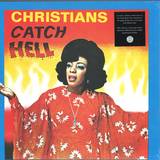
- D2: Reverend Edna Isaac And The Greene Sisters - Christians Catch Hell
- D3: The Fountain Of Life Joy Choir - Thank You
- D4: The Fantastic Family Aires - Glory
Utterly magnificent, sublimely soulful survey of the Gospel Roots label, subsidiary of the mighty TK Records at the height of the Miami Sound. Beautifully presented... the LPs with a 12"-square, full-colour, sixteen-page album of photos and original artwork. Check!!
A&R was co-ordinated by Gospel legends Ira Tucker — from the Dixie Hummingbirds — and Ralph Bass, veteran producer with Savoy, King and Chess. The label was run by Timmy Thomas, who had recently smashed with Why Can't We Live Together, for another TK spin-off, Glades. Operations were overseen by Henry Stone himself, unlikely King of Disco, who had recorded a young Ray Charles, and pushed forward James Brown. They drew in artists from all over the US, from St. Louis, Columbus, Memphis, Brooklyn, Cabrini Green in Chicago: unknowns like Camille Doughty, reluctant to jeopardise her job at GM ('Generous Motors') in Detroit, and huge-sellers like the revered Brooklyn All Stars, who started out on Peacock in 1958.
Choral belters, deep ballads, harmony quartets, epic city-blues, gritty funk, powerhouse female soul... Killer-diller Philly like a scorching version of Harold Melvin & The Blue Notes' Wake Up Everybody, and Jean Austin's raw Spirit Free, co-written by Ronnie Dyson, produced by Jesse James at Future Gold. Chicago Sound like The Fantastic Family Aires — named after the family's furniture store on North Cicero, but reminiscent of the Staple Singers at their best — through to the full-blown glory of The Fountain Of Life Joy Choir, led by Marvin Yancy from The Independents, and featuring Natalie Cole... Singers like Versie Mae Gibson, from the Jordans, by rights up there with Irma, Etta and Ree... Bangers 100%-guaranteed to find their way into Theo Parrish sets, and mortal delirium for the prissiest of soul and gospel purists.
- A1: The Mark Harvey Group - For Margot
- A2: The Mark Harvey Group - Tarot: The Moon
- B1: Thing - Sketch Pts. 1 & 2
- B2: Thing - Road Through The Wall Pts. 2 & 3
- C1: The Phill Musra Group - The Creator Is So Far Out
- C2: The Phill Musra Group - Egypt
- D1: Worlds' - 9 Degrees Black Women Liberation
- D2: Stanton Davis' Ghetto Mysticism - Play Sleep
- D3: Baird Hersey With Dave Leibman - The Year Of The Ear: Herds & Hoards
This deluxe overview Of Boston's creative jazz scene is presented as a double LP Set, packaged in deluxe box with each piece of vinyl housed in its own euro-style glossy jacket. Also Included is an 8 ½ x 5 ½, 80 page book documenting the rich history of the music with in-depth analyses and photos. Check!
In the 1970s Boston was a fertile ground for a very creative jazz scene. Small, independent venues ranging from lofts to churches to clubs opened up to support this thriving backdrop while jazz musicians set up their own labels. One man was there through it all, playing music and documenting the musical landscape. His name was Mark Harvey and here is his story....
Mark Harvey and Deano Sounds pulled together the most comprehensive package of Boston
Jazz released to date. The album has been assembled as a deluxe package that includes, in
addition to the music, an 80-page book documenting the rich history of this music scene with in-depth analyses and photos of the jazz musicians involved.
The music on this album is culled from rare private press Jazz LPs that were pressed in small
quantities of a few hundred for members of the band and the local jazz community at the time.
The music here runs the gamut of funky jazz from Arnie Cheatham's "Thing" to the deep free jazz
of the Phill Musra Group or the spoken word brilliance of Worlds, to the complex metric structures of Stanton Davis' "Play Sleep." This is a collection of very rare eccentric jazz pieces for your
enjoyment!