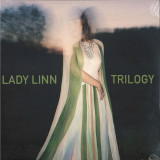
It is no longer a secret that Lady Linn has a very rich and unique voice with a versatility that is second to none, ensuring that she is right at home in a myriad of styles.
She proved exactly that in her new 'trilogy', a series of three E.P.'s - 'I'm Fine', 'Sea of Trees' & 'Nocturne'- each one telling its own unique story, and now bundled on the album 'Trilogy'.
The common thread throughout the album is her affinity with jazz, soul and dance, but also lyrically, various themes return: the tenderness within family life, melancholy, nature, and the magic of the dance floor.
There is also a clear evolution with the arrangements going from a sober, stripped-down quasi-electronic sound of the JX-03 on 'I'm fine' (with contributions from Gustaph, Gregory Frateur and producer Frederik Segers) to dreamy and warm analog synths by producer Joris Caluwaerts on 'Sea of Trees', to an organic, energetic sixties sound on 'Nocturne' with starring role for her partner and bass player Filip Vandebril and partners in crime: The Magnificent Seven, arranger Frederik Heirman and producer Jan Chantrain.
In addition to a selection of the three EPs, 'Trilogy' also includes the extra song 'Hurricane', one of Linn's personal favorites, recorded at Daft Studios with The Magnificent Seven:
'I had just watched a documentary on Laurel Canyon (on the topic of Los Angeles - the epicentre of the 'counter culture' or better 'hippie culture' - in the late 60's and early 70's and the habitat of The Mamas and the Papas, Frank Zappa, Jim Morrison, etc.) which fed my fascination for the 60's that I already had thanks to my parents. The way in which music was created and recorded in that era is a dream for every musician, me included. With the surplus in time due to the lack of gigs during the pandemic the time was right to follow my dream and record in the Daft Studios with my own band. I felt a bit like Carol King behind my piano, but I was also inspired by Joni Mitchell.'
A quote from the lyrics of 'Hurricane': 'I wanna feel the wind like the birds outside/Dive like a seagull, enter the water from flight/Into the deep I slide'.
'A very personal song about losing yourself and the longing for freedom. I composed this one specifically with 60's songs in mind, with loads of modulations and pretty complex chords.'
Lady Linn wrote a versatile trilogy, inspired by a diverse set of influences that had her digging in music history in a very original and contemporary way. She also made her mark on the sound of the productions. On both 'I'm Fine' and 'Nocturne' she was co-producer.
Cerca:pan al
Erstes Soloalbum des Queenryche Sängers Todd La Torre. Die durch die Pandemie verschobene Queenryche Tour bot Todd La Torre die Gelegenheit,das lang geplante Soloalbum zu verwirklichen. Todd tat sich mit seinem langjährigen Freund Craig Blackwell zusammen. Wie bei Queensrÿche's The Verdict spielte La Torre Schlagzeug und übernahm die Vocals, Blackwell spielte Gitarre, Bass und Keyboards. La Torre und Blackwell produzierten das Album selbst, zogen jedoch Queensrÿche- Produzent Zeuss hinzu. Gastauftritte von Jordan Ziff (Age Of Evil, Metalhead, Ratt) und Al Nunn. Insgesamt zeigt sich der Solo-Output vielseitig, ohne die progressive Basis von Queensryche zu vernachlässigen. Die Grundlagen sind allerdings mehr im klassischen Metal verortet und werden mit verschiedenen Einflüssen kombiniert. . Der Opener "Dogmata" oder "Vanguards Of The Dawn Wall" kommen mit mächtig Speed um die Ecke und mixen Heavy mit Speed und Thrash. "Pretender" erhält einen leichten epischen Touch und La Torre bewegt sich stimmlich in überraschende Höhen. Metallisch klassisch wird es mit "Hellbound And Down", dem starken "Vexed" und "Rejoice In The Suffering". Der progressive Part kommt bei "Darkened Majesty", "Apology" oder "Critical Cynic" zum Tragen. Die Balladenfreunde hören in "Crossroad To Insanity" rein.Zum Schluss gibt es mächtig dunkle Töne zu entdecken - "One By One . Craig Blackwells Gitarrenspiel setzt den Gesang von La Torre musikalisch perfekt in Szene. Todd findet sogar Vocals, die noch nie zuvor von ihm gehört wurden, wie auf dem Titeltrack und dem bestechenden "Vanguards of the Dawn Wall" zu hören ist. 2021 nur in den USA veröffentlicht, macht ROAR dieses Juwel nun endlich auch in Europa erhältlich, zusätzlich in 2 luxuriösen Vinyl Versionen. "Rejoice The Sufffering"ist ein herausragendes Opus von einem spät berufenen Sänger, der völlig losgelöst beweist, wie man eine wuchtig-moderne und vitale Metal Scheibe schreibt, arrangiert und produziert Für alle Queensryche Fans und Liebhaber des klassischen Metal.
Nach ihrem bislang erfolgreichsten Album 'The Agony & Ecstasy of Watain' in 2022 (Top 10 in Schweden & Deutschland) und pünktlich zur neuen Europa-Tour im Mai und den Festivals im Sommer 2023 legt die schwedische Black-Metal-Band Watain ihren Klassiker von 2018 jetzt auch in limitierter Vinylauflage neu auf: 'Trident Wolf Eclipse" kommt auf silber-weiß-marmorstrukturiertem Vinyl mit 12-seitigem Original-Booklet.
Es überrascht nicht, dass der Schlüssel zur Zündung der Band nach der dunklen Pandemiezeit in Form einer Liveshow kam, als sie als Headliner des Download Festival Pilot vor 10.000 Fans auftraten. Während in den zwei Jahren zuvor kein einziges neues Wort aus der Feder von Leadsänger und Keyboarder Rou Reynolds geflossen war, wurde eine Erkenntnis geboren, die die siebte LP der Band prägen sollte: 'Ich hatte einfach nicht erkannt, dass die menschliche und physische Verbindung zu anderen Menschen so zentral für mein Schreiben ist', sagt er. Enter Shikari sind nicht nur vier Menschen - es sind Hunderttausende. Während die erste Single '(pls) set me on fire' die nächste Stufe in der Entwicklung der Band einläutet, kommen die ersten Worte von Enter Shikari 2.0 nicht als Frage, sondern als Befehl: 'Bitte zünde mich an'. Entfache den Funken in uns und lass uns frei werden. Dies mag eine neue Enter Shikari sein, aber sie haben nichts von ihrem Gespür für kühne Eröffnungsgambits verloren.
Im Frühjahr 2022 zog sich die Band in ein verfallenes Bauernhaus an der Küste zurück, um ihr Studio-Setup neu aufzubauen und den neuen Schwung auf Platte zu bannen. Reynolds fährt fort: "Zurück zu den Grundlagen. Diese Band - meine besten Freunde - versammelten sich in einem alten Bauernhaus, meilenweit von allem entfernt. Vom Netz getrennt und bereit, uns selbst neu zu entdecken. Dieses Album wird von der Sonne angetrieben, dem mächtigsten Objekt in unserem Sonnensystem. Und ich denke, das merkt man auch. Es ist eine Sammlung von Songs, die eine explosive Wiedervereinigung mit dem darstellen, was Enter Shikari ist. Der Beginn unseres zweiten Aktes'.
Last year, Eartheater released her latest album, Phoenix: Flames Are Dew Upon My Skin, via PAN. After sharing a fully reworked version of the album, Phoenix: La Petite Mort Edition, digitally out February 26, 2021, PAN is now releasing a special, color vinyl LP edition of it. Originally conceived as a "sleep" mix for CRACK Magazine, Eartheater re-sculpted her entire album Phoenix into a seamless ambient edit. "This is Phoenix crushing, undressing, and compressing like carbon particles under the weight of boulders folded into silky soil, and decomposing. She is folding over and over and over and over like the rolls of young gummy stone. This is one REM cycle. I suggest listening to Phoenix: La Petite Mort Edition while asleep after climax. You are wet ash smudged across a pillow case." - Eartheater
THE big record... Full oldchool crews from The Olstad Sound System, the Cirkus Alien... But all these with Sirius & 4Q with their House & their Electro nawaday skills ! For a change and an open mind selecta !!!!!
Crazy record !!!
Repress!
Using an old door, 17 strings, chopsticks and combining them with phasers, echo units and amplification, the new device was to become his signature sound, mixing Irish folk influences with Asian and North African sounds in a mesmerising and soulful new way that brought him to the attention of the leading improvisers of his day - Alice Coltrane, Ravi Shankar, Don Cherry and more.
A logical follow up to AllChival's recent reissue of Stano's debut LP, Michael O'Shea's self titled LP was originally released on Wire's Dome Imprint in 1982.
The background to the album is as interesting and inspiring as the artist who created it - born in Northern Ireland but raised in the Republic, O'Shea was keen to travel and escape the troubles of his home.
Wandering throughout Europe and the Middle East, O'Shea found himself living and working as a relief aid in Bangladesh in the mid Seventies where he learned to play sitar while recovering from a bout of hepatitis. A later period spent busking in France accompanied on zelochord by Algerian musician Kris Hosylan Harp led to O'Shea's idea of combining both instruments as a homebuilt instrument - Mo Chara (Irish for "My Friend").
He later described the process on the back of the LP himself saying:
"Having sold my sitar in Germany and being desperate for money to travel to Turkey, I conceived of the idea of combining both sitar and zelochord. The first Mo Cara was born, taken from the middle of a door, which was rescued from a skip in Munchen"
A combination of dulcimer, zelochord and sitar, O Shea would play it with a pair of chopsticks, striking the strings softly using Irish folk rhythms mixed with the rich, nostalgic sounds of of the many Asian artists he'd encountered on his travels.
It was a pan cultural sound standing at an unusual crossroads of folk, traditional, rock, progressive, jazz, electronic and post-punk worlds without hesitation.
Perfecting the instrument on the streets, there were further spells spent busking in the underground stations and cafes of London's West End and Covent Garden during the heady days of the 1970s when they were full of eccentric street entertainers, jazz improvisers and musical pioneers.
His work with Rick Wakeman never saw the light of day but O'Shea's contact with the world of post-punk London ensured his name would live on.
Introduced to Wire's Bruce Gilbert and Graham Lewis via cartoonist Tom Johnston, O'Shea eventually acquiesced to an open invite to record at their studio. Turning up unannounced in the summer of 1981 the LP was recorded in a day in the legendary Blackwing Studios and released on Dome the year after.
The first side features the fifteen minute masterpiece "No Journeys End" with the B side featuring more input from Wire in processing the Mo Chara sound.
Lewis himself said years later of the forgotten masterpiece: 'I always said it was the best job we ever did.'
After an aborted LP with The The's Matt Johnson the following year, O'Shea quietly disappeared from the formal recording world and his brief but unique contribution to the music world came to a sad end in 1991 when O'Shea was struck by a post van and died a few days later in hospital in London.
This repress on All City's AllChival imprint has been remastered and reissued with the approval of both Dome and his surviving siblings.
An intergenerational meeting of minds, Galaxy is the first collaborative EP from Meanjin, Brisbane musicians Sam Poggioli aka Sampology and Charlie Hill. Equal parts brain dance and body music, Galaxy’s seven tracks represent a vivid intermingling of 70s jazz-funk, fusion, machine-funk, Latin house and broken beat, accented by flourishes of minimalist composition. Considered as a whole, it evokes the possibility and potential of a space-age future where technology and nature exist in simpatico.
One of the most in-demand young jazz drummers in the Meanjin (Brisbane) music scene, Charlie started producing electronic music on his laptop three years ago. It was a vibe shift that hit him after several months spent immersing himself in Europe’s jazz and electronica scenes on the eve of the global coronavirus pandemic. After returning home, he approached Sam about recording some music together.
Sam, a well-travelled Australian DJ, producer and Worldwide FM radio host, was cautious about starting a new side project. However, when he heard his demos, he realised Charlie was blending rhythmic fundamentals he’d learned while completing a music degree with a beautifully wide-eyed approach to jazz-tinged electronica.
With Charlie on drums and Sam on MPC, they set about recording the songs on Galaxy, along the way discovering Sam’s mother taught Charlie visual art as a child. They also learned that Charlie’s mother plays with Sam’s father in the Queensland Symphony Orchestra, synchronicities which made their collaboration feel like it was meant to be.
As part of the Galaxy sessions, Sam and Charlie collaborated with fellow Australian vocalists Tiana Khasi and Merinda Dias-Jayasinha. On ‘Constant Call’, Tiana threads neo-soul/modern soul melodies through a backdrop that sounds like Burial on a future jazz tip. ‘Merinda’, on the other hand, sees Merinda laying a repeated Steve Riech-style vocal refrain over a man/machine instrumental accented by stargazed synths.
At the same time as they were creating Galaxy, Charlie was also busy recording his debut solo EP Yore, both of which are due for release in August 2023, respectively, through Middle Name Records.
After releasing "Precipice Fantasy Part I" in October 2022, Koudlam delivers the second part of his album.
The first part is a salvo of meteorites where the artist uses, as usual, standardised pop motifs to better disrupt them, and always without deviating from the ultimate melody, chanted to trance.
The second part is an instrumental and contemplative record, a kind of music for an uncomfortable yoga session, that of a tourist who dreamed of climbing Everest but who no longer has the strength to get out of Kathmandu's underworld.
Koudlam thus delivers the soundtrack of summits and precipices. Or rather the path between the two, sinuous, vertiginous, always on the edge of the blade.
Caroline Polachek released her solo debut Pang back in 2019 after having been the lead singer of the acclaimed band Chairlift for more than 10 years. Immediately upon release Pang received major hype and critical acclaim, but in the years since, it has practically achieved a monolithic status in modern art pop.
Not surprisingly, expectations are huge for her sophomore album Desire, I Want to Turn Into You, but with excellent singles like "Billions" and "Sunset", it is evident that Polachek is a headstrong and original pop star who is here to stay!
- A1: Heaven Is Here - Live At Madison Square Garden
- A2: King - Live At Madison Square Garden
- A3: Ship To Wreck - Live At Madison Square Garden
- A4: Free - Live At Madison Square Garden
- A5: Daffodil - Live At Madison Square Garden
- B1: Dog Days Are Over - Live At Madison Square Garden
- B2: Girls Against God - Live At Madison Square Garden
- B3: Dream Girl Evil - Live At Madison Square Garden
- B4: Cassandra - Live At Madison Square Garden
- B5: Morning Elvis - Live At Madison Square Garden
- C1: June - Live At Madison Square Garden
- C2: Choreomania - Live At Madison Square Garden
- C3: Kiss With A Fist - Live At Madison Square Garden
- C4: Cosmic Love - Live At Madison Square Garden
- C5: My Love - Live At Madison Square Garden
- C6: Restraint - Live At Madison Square Garden
- D1: The End Of Love - Live At Madison Square Garden
- D2: Never Let Me Go - Live At Madison Square Garden
- D3: Shake It Out - Live At Madison Square Garden
- D4: Rabbit Heart (Raise It Up) - Live At Madison Square Garden
"Dance Fever was recorded predominately in London over the course of the pandemic in anticipation of the world’s reopening. It conjures up what Florence missed most in the midst of lockdown -clubs, dancing at festivals, being in the whirl of movement and togetherness -and the hope of reunions to come. It’s the album that brings back the very best of Florence – the festival headlining Boudicca, wielding anthems like a flaming sword.
Just before the pandemic Florence had become fascinated by choreomania, a Renaissance phenomenon in which groups of people - sometimes thousands - danced wildly to the point of exhaustion, collapse and death. The imagery resonated with Florence, who had been touring nonstop for more than a decade, and in lockdown felt oddly prescient.
The image and concept of dance, and choreomania, remained central as Florence wove her own experiences of dance - a discipline she turned to in the early days of sobriety - with the folkloric elements of a moral panic from the Middle Ages. In recent times of torpor and confinement, dance offered propulsion, energy and a way of looking at music more choreographically."
Das neue Album "THRIVE" von RIOPY besteht aus insgesamt 17 Tracks, darunter seine neue Kompositionen und Neubearbeitungen von Werken berühmter Komponisten wie Chopin, Pachelbel, Satie, Debussy, Brahms, Beethoven und Fauré.
Die Stücke sind teils mit dem Solo-Piano eingespielt, teils begleitet durch ein bis zu 18-köpfiges Streicherensemble. Gemeinsam haben die Stücke, dass sie einen beim Hören mit auf eine Reise von herausragender Schönheit nehmen, mal cineastisch groß, dann wieder eindringlich und nuanciert, beeindruckend vielschichtig und dabei doch träumerisch leicht, fast schwerelos.
Hinter RIOPY liegen aufregende Jahre: Sein 2019 veröffentlichtes Album "Tree of Light" bescherte ihm den internationalen Durchbruch, u.a. eroberte es in den USA Platz 1 der Billboard Classical Album Charts, wo es sich insgesamt zwei Jahre in den Top 10 hielt. Mit seinem letzten, während der pandemischen Monate geschriebenen Album "Bliss" (2021) spendete er unzähligen Menschen Trost in einer Zeit voller Herausforderungen.
ALADDIN SANE erscheint als limitierte 50th Anniversary Edition im Half Speed Mastering. Diese neue Pressung wurde auf einer speziell angefertigten Neumann VMS80-Drehmaschine mit rundumerneuerter Elektronik aus den restaurierten 192kHz-Mastern der Original-Masterbänder der Trident Studios von John Webber in den AIR Studios geschnitten, ohne zusätzliche Bearbeitung bei der Übertragung. Nicht nur das Album, auch sein Cover hat einen festen Platz in der Geschichte der Rockmusik inne. Es zeigt Bowie in seinem heute längst ikonischen Make-up mit dem rot-blauen Blitz im Gesicht – ein Bild, das sich weltweit unauslöschlich ins kulturelle Gedächtnis eingeprägt hat (bis hin zum offiziellen Emoji). Das Coverfoto wurde von Brian Duffy geschossen, der auch die Cover von LODGER (1979) und SCARY MONSTERS (AND SUPER CREEPS) (1980) fotografierte.
Limited 1 x 140g 12" picture vinyl album.
ALADDIN SANE erscheint als limitierte 50th Anniversary Edition als Picture Disc LP. Diese neue Pressung wurde auf einer speziell angefertigten Neumann VMS80-Drehmaschine mit rundumerneuerter Elektronik aus den restaurierten 192kHz-Mastern der Original-Masterbänder der Trident Studios geschnitten, ohne zusätzliche Bearbeitung bei der Übertragung. Nicht nur das Album, auch sein Cover hat einen festen Platz in der Geschichte der Rockmusik inne. Es zeigt Bowie in seinem heute längst ikonischen Make-up mit dem rot-blauen Blitz im Gesicht – ein Bild, das sich weltweit unauslöschlich ins kulturelle Gedächtnis eingeprägt hat (bis hin zum offiziellen Emoji). Das Coverfoto wurde von Brian Duffy geschossen, der auch die Cover von LODGER (1979) und SCARY MONSTERS (AND SUPER CREEPS) (1980) fotografierte.
Eric D. Johnson rarely lingers at one location too long. As a kid growing up in the Midwest, Johnson's family moved around a lot, but it wasn't until he became a touring musician years later that motion became a central part of his identity. That transient lifestyle stoked an enduring reverence for the world he watched pass by through a van window. A sense of place is a unifying theme he's revisited with Fruit Bats throughout its many lives. From the project's origins in the late '90s as a vehicle for Johnson's lo-fi tinkering to the more sonically ambitious work of recent years, Fruit Bats has often showcased love songs where people and locations meld into one. It's a loose song structure that navigates what he calls "the geography of the heart." "The songs exist in a world that you can sort of travel from one to another," says Johnson. "There are roads and rivers between these songs." Those pathways extend straight through the newest Fruit Bats album, aptly titled A River Running to Your Heart . Self-produced by Johnson_a first for Fruit Bats_with Jeremy Harris at Panoramic House just north of San Francisco, it's Fruit Bats' tenth full-length release and one that finds the project in the middle of a creative resurgence. After two decades of making music, hard-earned emotional maturity has seeped into Johnson's songs, resulting in a more complex sound that's connected with audiences like no other previous version of Fruit Bats. A River Running to Your Heart represents the fullest realization of that creative vision to date. It's a sonically diverse effort that largely explores the importance of what it means to be home, both physically and spiritually. And while that might seem like a peculiar focus for an artist who's constantly in motion, for Fruit Bats, home can take many forms_from the obvious to the obscure. Lead single "Rushin' River Valley" is a self-propelled love song written about Johnson's wife that clings to the borrowed imagery of the place where she grew up in northern California. Then, there's the gentle and unfussy acoustic ballad "We Used to Live Here," which looks back to a time of youthful promise and cheap rent. But the wistful "It All Comes Back" is perhaps the most stunning and surprising track on the album, Johnson's production skills on full display. Built upon intricate layers of synths, keyboards, and guitars, it's a pitch-perfect blend of tone and lyricism that taps into our shared apprehensions and hopes for a post-pandemic life. "We lost some time / But we can make it back / Let's take it easy on ourselves, okay?" sings a world-weary but ultimately reassuring Johnson in the song's opening lines. It's the kind of performance that makes you hope Fruit Bats stays in this one place, at least for a little while longer.
BLUE & BONE VINYL
Eric D. Johnson rarely lingers at one location too long. As a kid growing up in the Midwest, Johnson's family moved around a lot, but it wasn't until he became a touring musician years later that motion became a central part of his identity. That transient lifestyle stoked an enduring reverence for the world he watched pass by through a van window. A sense of place is a unifying theme he's revisited with Fruit Bats throughout its many lives. From the project's origins in the late '90s as a vehicle for Johnson's lo-fi tinkering to the more sonically ambitious work of recent years, Fruit Bats has often showcased love songs where people and locations meld into one. It's a loose song structure that navigates what he calls "the geography of the heart." "The songs exist in a world that you can sort of travel from one to another," says Johnson. "There are roads and rivers between these songs." Those pathways extend straight through the newest Fruit Bats album, aptly titled A River Running to Your Heart . Self-produced by Johnson_a first for Fruit Bats_with Jeremy Harris at Panoramic House just north of San Francisco, it's Fruit Bats' tenth full-length release and one that finds the project in the middle of a creative resurgence. After two decades of making music, hard-earned emotional maturity has seeped into Johnson's songs, resulting in a more complex sound that's connected with audiences like no other previous version of Fruit Bats. A River Running to Your Heart represents the fullest realization of that creative vision to date. It's a sonically diverse effort that largely explores the importance of what it means to be home, both physically and spiritually. And while that might seem like a peculiar focus for an artist who's constantly in motion, for Fruit Bats, home can take many forms_from the obvious to the obscure. Lead single "Rushin' River Valley" is a self-propelled love song written about Johnson's wife that clings to the borrowed imagery of the place where she grew up in northern California. Then, there's the gentle and unfussy acoustic ballad "We Used to Live Here," which looks back to a time of youthful promise and cheap rent. But the wistful "It All Comes Back" is perhaps the most stunning and surprising track on the album, Johnson's production skills on full display. Built upon intricate layers of synths, keyboards, and guitars, it's a pitch-perfect blend of tone and lyricism that taps into our shared apprehensions and hopes for a post-pandemic life. "We lost some time / But we can make it back / Let's take it easy on ourselves, okay?" sings a world-weary but ultimately reassuring Johnson in the song's opening lines. It's the kind of performance that makes you hope Fruit Bats stays in this one place, at least for a little while longer.
Repress!
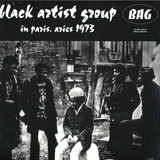
Outstanding free jazz session recorded in 1973 in Paris by Chicago outfit BAG.
It was Lester Bowie, trumpeter with the Art Ensemble of Chicago, who suggested that the Black Artists' Group (BAG) should head for Paris. In 1972 several members of BAG took his advice and flew to France for an extended stay. The following year a concert featuring saxophonist Oliver Lake, trumpeters Baikida Carroll and Floyd LeFlore, drummer Charles Bobo Shaw and trombonist Joseph Bowie (Lester's younger brother) was recorded and subsequently issued as In Paris, Aries 1973, a strictly limited edition LP on the group's own label.
Since the formation of Black Artists' Group in 1968, the home of this multidisciplinary arts collective had been St Louis, Missouri, the city where the Bowie brothers had grown up. It was there that Lester Bowie had started to investigate the expanding horizons of jazz before moving, in 1966, to Chicago where he joined the recently established Association for the Advancement of Creative Musicians (AACM). His close friend Oliver Lake visited Bowie, attended AACM concerts and meetings and was inspired not only by their artistic vision and integrity but also by their efficient organisation. In Chicago musicians were making things happen for themselves, taking control of their own destinies and giving shape to their lives as creative artists.
In June 1969, the Art Ensemble of Chicago had taken their music to France. During the preceding decade Paris had established a reputation for audiences that were unusually well-informed and open-minded, receptive to the uncompromising music of black American innovators such as Cecil Taylor, Ornette Coleman, Albert Ayler and Sun Ra. The city that had nurtured not only Cubism and Surrealism, but also Jean-Luc Godard and contemporary cinema's Nouvelle Vague was well prepared for the sonic collage forms and stylistic dislocations of the Art Ensemble. During that same month violinist Leroy Jenkins, trumpeter Leo Smith and saxophonist Anthony Braxton also arrived in Paris, three further emissaries from the AACM.
The adventure of collective improvisation resonated with the Parisian zeitgeist. Enthusiastic audiences attended their concerts and coverage in the media. In Paris, Aries 1973 offers an isolated and fascinating glimpse into that phase of the group's existence. The album is dedicated to the memory of Kada Kayan, a bassist who had hoped to make the trip from St Louis to France but, tragically, had grown ill and died. His absence adds special poignancy to the sound of the bass when it appears on this recording, played by Baikida Carroll. Listeners keen to hear Kayan himself in the company of Lake, Bowie, Shaw, LeFlore and Carroll should seek out Red, Black and Green by the 10-piece Solidarity Unit, Inc. That album, recorded on 18th September 1970 and dedicated to Jimi Hendrix, who died on that day, features an earlier version of Shaw's composition 'Something to Play On.'
In Paris, Aries 1973 reveals BAG's musical affinities with the Art Ensemble of Chicago. Both groups preserved an independently minded approach to the notion of free jazz and a carefully filtered awareness of pan-African musical practices, while their creative interest in space, mobile structure, chance occurrences and simultaneity also suggests parallels with the concerns of leading experimental composers working at that time. These performances in Paris of Shaw's 'Something to Play On' and Lake's 'Re-Cre-A-Tion,' plus two collective compositions/improvisations, display the dedication to structural fluency and sensitivity to coloration that accompanied BAG's unorthodox group dynamics and their unconventional instrumental combinations. In this case the musicians embrace congas, log drums, marimbas, woodblocks, cowbells and gongs. This is not a showcase for solos, but a shape-shifting and multi-centred statement of togetherness, quest and discovery. Removed from BAG's original multidisciplinary context the music still exudes an exhilarating spirit of collaborative exploration and shared excitement.
Brazilian experimental multi-instrumentalist Carla Boregas follows plates for Bokeh Versions and Hive Mind with a ghostly set of deep listening electronics that plays like a symphony for an imagined woodwind orchestra.
Carla Boregas is best known from her tenure in São Paulo's genre-bending experimental post-punk scene, playing in long-running outfit Rakta as well as other related offshoots. Her solo material has been knottier to unpick, here developing ideas from a collection of unfinished fragments and notebook scribbles exploring the possibility of finding a wind instrument that could be played collectively by several musicians. Coinciding with the pandemic, however, she soon realised the inherent risks involved with sharing breath and so the concept took a different direction, with added resonance.
Boregas developed a synthetic alternative, layering vocals and environmental recordings to suggest wind instrumentation without attempting to mimic it. The sounds here are airy, but rarely diegetic - on the title track, Boregas uses analog arpeggios and plucked, sustained tones to approximate the kosmische world of Ash Ra Tempel or more recently Emeralds, as if trapped in a wind tunnel, moved forward by an unseen force.
There's a whisper of the ancient past that harmonises with Wojciech Rusin's speculative medieval gasps, and Bloedneus & de Snuitkever's severely underheard ‘Milli Mille’, an examination of the ancient Greek aulos. On ’Grafia Do Invisível' the sound is completely different again, but the concept remains, using precise analog drones and minuscule timbral shifts to imitate the character of a wind instrument and simultaneously harmonise with the deep listening meditations of Éliane Radigue and Kali Malone.
A voice enters the frame on 'Sopro’, chopped into deviated gulps and syllables, creating a language that's unfamiliar and percussive. The use of breath is subtle, and vocalisations criss-cross between synths and faint whistles, forming an expression that's different from its predecessors but intrinsically interlinked. This is where ‘Pena Ao Mar’ excels, by viewing breath and its application in electronic music from multiple angles simultaneously. Fans of Lucy Duncombe, Lucrecia Dalt, or Sarah Davachi - don't miss this one.
- A1: Pasillaneando (Feat Humberto "Huango" Muriel)
- A2: El Expresidiario (Feat Humberto "Huango" Muriel)
- A3: Bang Bang (El Tiroteo) (El Tiroteo)
- A4: Langaruto (Feat Humberto "Huango" Muriel)
- A5: Todo Es Todo (Feat "Piper Pimienta" Diaz)
- A6: Oriza (Feat "Piper Pimienta" Diaz)
- B1: La Chica Del Barrio Obrero (Feat "Piper Pimienta" Diaz)
- B2: Perlas Negras (Feat "Piper Pimienta" Diaz)
- B3: El Dia Que Naci Yo (Feat "Piper Pimienta" Diaz)
- B4: Algo Pa' Goza (Feat "Piper Pimienta" Diaz)
- B5: Yo No Vuelvo A Querer (Feat "Piper Pimienta" Diaz)
- C1: El Coco (Feat "Piper Pimienta" Diaz)
- C2: Dame Un Break (Feat "Piper Pimienta" Diaz)
- C3: Canto A Panama (Feat "Piper Pimienta" Diaz)
- C4: Cumbia Bacana (Feat "Piper Pimienta" Diaz)
- C5: Pa' Los Bomberos (Feat "Piper Pimienta" Diaz)
- D1: Caifaz (Feat Joe Arroyo)
- D2: Va A Llover (Feat Wilson Saoko)
- D3: Fruko Presidente (Feat Joe Arroyo)
- D4: La Loteria (Feat Joe Arroyo)
"Shut Him Down” was the third song written by Michael Leonhart & Elvis Costello during the 2020 quarantine. The first two, “Radio Is Everything” and "Newspaper Pane”—both of which were produced by Leonhart —appeared on Elvis’ 2020 solo album, Hey Clockface.
Michael and Elvis first met in 2007 at the Molde Festival in Norway, where Costello and the late Allen Toussaint shared a double bill with Steely Dan, with whom Leonhart has played since ’96. The two kept in touch over the ensuing years, including joining forces in 2015 for an Elvis Costello & The Imposters/Steely Dan tour. Early on in the quarantine, Leonhart sent Costello some instrumental music in need of lyrics. Costello states “Michael sent this music to me from New York at the perfect time.” After finishing the first two songs, Leonhart asked Costello to sing over an original heavy Afrobeat song he had been recording with his Michael Leonhart Orchestra during lockdown. Costello crafted lyrics that exist at the crossroads of political commentary and existential contemplation. Leonhart then asked NY rapper, JSWISS to write a verse building off Elvis’ lyrics and the drums grooves of Nick Movshon and Homer Steinweiss. Antibalas guitarist Luke O'Malley then came on board to write and record additional guitar parts.
Side A ends with a fiery bass clarinet solo from Chris Potter, while side B features an extended tenor sax solo from acclaimed saxophonist Joshua Redman.
"Shut Him Down" was first released in March 2022 on The Michael Leonhart Orchestra album, The Norymn Suites (Sunnyside Records) and now becomes available as a limited edition 7” b/w instrumental through Mighty Eye Records in partnership with Fat Beats.