Since surfacing into the Scandinavian synth-pop scene 16 years ago, Nicklas Stenemo and Christian Hutchinson Berg aka KITE have steadily grown from local icons to a global phenomenon, yet until now they've never released a full-length studio album. VII breaks the ice, collecting 14 of the duo's deepest and most dynamic anthems into a stormy saga of immersive, apocalyptic emotion. Sourced from a series of six 7-inch singles released over the past half-decade, the collection persuasively showcases KITE's distinctly cinematic strain of Swedish darkwave in all its glory and desolation. Stenemo and Berg had both logged time in other bands before joining forces in the mid-aughts, although their unique chemistry became apparent immediately. After forming in Malmö, Sweden, they soon relocated to Stockholm, further refining their fusion of brooding synths, booming rhythm, and vocal theatrics over a string of celebrated, numbered EPs (named I through VI). Despite their rising profile, KITE then and now have largely refrained from publicity, allowing their music to speak for itself - which it clearly has, as KITE's live performances have become the stuff of legend, prompting frequent festival invitations, international tours, and limited engagements on prestigious stages (recently at the Royal Swedish Opera, and Dalhalla, the former limestone quarry turned open air amphitheater, to name a few). VII offers a compendium of KITE's potent recent discography, including collaborations with Blanck Mass, Anna von Hausswolff, and Henric de la Cour. From yearning dystopian pop ("Hand Out The Drugs," "Bowie `95"), to widescreen existential balladry ("Tranas Stenslanda," "Glassy Eyes"), and sleek New Romantica ("Remember Me," "Teenage Bliss"), KITE's wavelength is one of soaring heights and abysmal depths, anguish and ecstasy, pouring one's burning, battered heart into the here and now. Their years of visceral commitment and artistic integrity have been hard fought and hard won; it bleeds between the words and melodies in one holy moment after another: "I switch my ways / To seize the day / To face my life / Not fade to gray."
Search:pan amp
Sling shot debut from Harba with a batch of oddball UK techno cuts, all firmly stamped with his own style. No ‘doof doof’ business techno - strictly 140 heaters with a UK rudeness, marrying vocal chops that feel haunting and hallucinatory yet anthemic and hypey.
He covers ample ground over the four tracker - crispy percs, squiggly synths, raw textures, and dancefloor feels, all with an upfront swagger. 'Despair EP' is a wake up call for others to inject some identity into their sound. Early support from Ben UFO and Pangaea.
Given The Fall's penchant for iconoclasm, it's no surprise that they decided to say goodbye to the '70s with a series of gigs at Northern England's gruffest halls. The band's formidable live show was met with even more derision and disorder than customary during these late '79 and early '80 performances, and they skillfully amplified such sentiments back at the crowd. Totale's Turns, The Fall's first live album, was released on Rough Trade just prior to their pivotal third album, 1980's Grotesque. "The difference between you and us is that we have brains," shouts Mark E. Smith to open Totale's Turns as the band breaks into the rollicking "Fiery Jack," their latest single at the time. Each player is at their jagged best: Marc Riley and Craig Scanlon's splintering guitars, Steve Hanley's thunderous bass and Smith's combative sneer reverberate over "Rowche Rumble," "Choc-Stock" and "Spectre Vs. Rector" more than any studio would ever allow. Totale's Turns never panders to live-record conventions, serving instead as a gripping exhibit of The Fall en masse and arguably the most accurate document of the group to date. Superior Viaduct's edition is the first time that Totale's Turns has been available on vinyl domestically. Liner notes by Brian Turner.
Above & Beyond release yoga and mindfulness-inspired ambient LP: “Flow State” Above & Beyond today announced ‘Flow State’, a49-minute panoramic journey of ambient compositions and warm, neo-classicalsoundscapes that offer moments of meditative calm in these busy and often overwhelming times. A break from the anthemic dance sound that swept Above &Beyond’s ‘Common Ground’ LP to #3 in the Billboard Album Charts in 2018, ‘Flow State’ is the culmination of a journey which began at Burning Man in 2014. A chance encounter on the Playa led to a spontaneous sunset yoga set on the infamous Robot Heart stage, guided by renowned yogi Elena Brower. A magical and spiritual experience for those present, it inspired Above & Beyond to begin opening their biggest global gigs with yoga sets, creating transformative experiences for 25,000 strong crowds at The Gorge Amphitheatre in Washington and Huntington Beach, California. The original Burning Man yoga set has subsequently gone on to amass over 2 million streams on Soundcloud. As the band began writing more original music for these yoga sessions, the seed for “Flow State” was sown. “Our music has always been about getting in touch with, and understanding and accepting our emotions. After those amazing yoga sets, we realised thatthere is a bigger place for this more reflective music within our little universe,” explains Above &Beyond’sPaavoSiljamaki. “With the Flow State project, we want to help bring people's attention and focus towards helping themselves find better mental fitness and overall happiness in life,” adds Siljamaki. “Through raised awareness, being more present, one can reach a state of flow: a creative and free state of mind where time, fear and stress dissipate.” To long-time fans of Above & Beyond, this new album will come as no surprise; quieter moments have always been essential components of their chart-topping electronic albums.
"Nonesuch Records releases Rectangles and Circumstance, an album of ten songs co-written and performed by Caroline Shaw and Sō Percussion. The album follows their 2021 Grammy Award–winning Nonesuch debut, Narrow Sea, and their first record as a band, 2021’s Let the Soil Play Its Simple Part, with Shaw on vocals backed by Sō – Eric Cha-Beach, Josh Quillen, Adam Sliwinski, and Jason Treuting. Grammy-winning engineer Jonathan Low (The National, Taylor Swift) co-produced with them on both Let the Soil… and Rectangles and Circumstance. Sō and Shaw’s upcoming performances will be announced soon.
Sliwinski says in the new album’s liner notes, “After a few years of touring Let the Soil Play Its Simple Part together, with a pandemic in between, we came to record our second album, Rectangles and Circumstance, as a road-tested band who knew each other’s strengths, weaknesses, and tendencies intimately.” He continues, “Most of the songs started with instrumental pieces or fragments of pieces from Jason or Eric.
“As both a songwriter and a classical composer, Caroline is accustomed to writing lyrics as well as setting them. Going over texts with her is like working on music: I collect a handful of poems and send them over to her, waiting to see if anything catches her interest, then I modify my search based on her feedback,” Sliwinski says. “For this album, Caroline, Eric, and I sourced a group of nineteenth-century poems that shaped its expressive mode and ended up using verses by Christina Rosetti, Emily Brontë, Emily Dickinson, Gertrude Stein, and William Blake … The lyrics on this album by members of the band contain wordplay that explores the same profound feelings explored by Blake and Dickinson.”
Caroline Shaw is a musician who moves among roles, genres, and mediums, trying to imagine a world of sound that has never been heard before but has always existed. She is the recipient of the 2013 Pulitzer Prize in Music, several Grammy awards, an honorary doctorate from Yale, and a Thomas J. Watson Fellowship. She has worked with a range of artists including Rosalía, Renée Fleming, and Yo-Yo Ma, and she has contributed music to films and TV series including Fleishman Is in Trouble, Bombshell, Yellowjackets, Maid, Dark, and Beyoncé’s Homecoming. In addition to her albums with Sō, Nonesuch has released her two Grammy-winning albums Orange (2019) and Evergreen (2022), both of which feature Attacca Quartet. ‘Two-Step’, the first of Shaw’s songs with Ringdown, her duo with Danni Lee, to be released on Nonesuch is available now.
For twenty years and counting, Sō Percussion has redefined chamber music for the twenty-first century through an “exhilarating blend of precision and anarchy, rigor and bedlam” (New Yorker). Their commitment to the creation and amplification of new work, and their extraordinary powers of perception and communication, have made them trusted partners for composers including David Lang, Julia Wolfe, Nathalie Joachim, Bryce Dessner, Dan Trueman, Kendall K. Williams, Angélica Negrón, Shodekeh Talifero, claire rousay, Leilehua Lanzilotti, Bora Yoon, Olivier Tarpaga, and many others. Sō has recorded more than twenty-five albums, including a performance of Steve Reich’s Mallet Quartet on the Nonesuch record WTC 9/11. Its members are the Edward T. Cone performers-in-residence at Princeton University. Sō Percussion’s educational and community work includes the Sō Laboratories concert series and the Sō Percussion Summer Institute, an intensive two-week chamber music seminar for percussionists and composers.
"
red LP[26,85 €]
The Dream Of Delphi is an ode to motherhood created in LA, Natasha’s second home, during the Covid-19 pandemic. It’s a sonic archive of a time when Natasha birthed her daughter Delphi earth side. The record weaves together ten song poems, documenting the polarity of navigating both an exterior world that was seemingly turning upside down, whilst also experiencing theprofoundly personal and transformational early moments of mothering Delphi, named after the Greek Oracle, the ancient future teller. The music became Natasha’s sanctuary, born out of stolen trips to the studio, where each track was improvised and completed in a few hours and chronologises her diary like offerings over a period of two years; from “The Midwives Have Left”; to writing a “Letter To My Daughter”; and all the way through to “Waking up”, as well as a cover of her daughter’s favourite song, “Home”.While the storytelling behind Bat For Lashes’ previous albums have traditionally used otherworldly narratives and female lead characters (e.g. ‘Laura’, ‘Daniel’ and ‘The Bride’), for the first ti me, The Dream Of Delphi is about Natasha’s personal experience of the magical and sometimes melancholy intimacy of early motherhood. This record creates a more private form of mythology around the music than her previous work. The Dream Of Delphi touches on more of an instrumental “Bat For Lashes” world, and shows Natasha to be both a confident composer and craftswoman of intimate landscapes. While the music creates a more womb-like, ambient space for the listener, it still leaves ample room for her signature dream pop songwriting to vibrate through. Natasha has worked with Brad Oberhofer, Mary Lattimore and Jack Falby on this record.
black LP[26,85 €]
The Dream Of Delphi is an ode to motherhood created in LA, Natasha’s second home, during the Covid-19 pandemic. It’s a sonic archive of a time when Natasha birthed her daughter Delphi earth side. The record weaves together ten song poems, documenting the polarity of navigating both an exterior world that was seemingly turning upside down, whilst also experiencing theprofoundly personal and transformational early moments of mothering Delphi, named after the Greek Oracle, the ancient future teller. The music became Natasha’s sanctuary, born out of stolen trips to the studio, where each track was improvised and completed in a few hours and chronologises her diary like offerings over a period of two years; from “The Midwives Have Left”; to writing a “Letter To My Daughter”; and all the way through to “Waking up”, as well as a cover of her daughter’s favourite song, “Home”.While the storytelling behind Bat For Lashes’ previous albums have traditionally used otherworldly narratives and female lead characters (e.g. ‘Laura’, ‘Daniel’ and ‘The Bride’), for the first ti me, The Dream Of Delphi is about Natasha’s personal experience of the magical and sometimes melancholy intimacy of early motherhood. This record creates a more private form of mythology around the music than her previous work. The Dream Of Delphi touches on more of an instrumental “Bat For Lashes” world, and shows Natasha to be both a confident composer and craftswoman of intimate landscapes. While the music creates a more womb-like, ambient space for the listener, it still leaves ample room for her signature dream pop songwriting to vibrate through. Natasha has worked with Brad Oberhofer, Mary Lattimore and Jack Falby on this record.
In a world of announcements of announcements, Gatecreeper are firing no warning shots before dropping their new release. “I think the social media environment has just fried our attention spans,” vocalist Chase Mason says. “Trying to hold someone’s attention for two or three months with a typical album roll-out doesn’t seem feasible with everything else currently going on in the world.” That’s not the only reason An Unexpected Reality comes with no pre-release hype whatsoever. “It’s meant to be listened to as a whole, so we didn’t wanna break it up or release a couple songs ahead of time as ‘singles’ or whatever,” Mason clarifies. “We also didn’t wanna treat it like it’s our next full-length. Because it’s not.” Written, recorded and now released during the Covid-19 pandemic, An Unexpected Reality is Gatecreeper like you’ve never heard them before. Exploring both ends of the tempo spectrum, the release offers two opposing sides of the band’s musical personality. Side one consists of seven short, sharp shocks that have a total running time of less than seven minutes. Inspired by grind, punk and hardcore, tracks like “Starved,” “Rusted Gold” and “Amputation” are some of the fastest offerings the Arizona death metal squad has ever recorded. Side two is the exact opposite.
December 2012 I showed up totally exhausted in Vancouver BC after touring stupidly and relentlessly for however many straight months and got a job at a call centre raising money for the Red Cross. It was a scent free office but one time this woman cooked a piece of fish in the microwave for 10 minutes on low and hot boxed the whole office - we got sent home early no pay. There was the other woman I named the Call Centre Coltrane because her pitch and routine usually involved improvised flights of fancy that went off in both directions at once somehow landing back down with a credit card number and a donation. I used to sleep under the desk. I was there a few months and at the time I reconnected with John Brennan who I had played with briefly in Montreal at the Mutek Festival. In Montreal John was running an experimental music night at a burrito shop downtown called Garbage Night. While in Vancouver I began connecting with the music scene there and would go hang out with the Shearing Pinx lads who I think lived with Sydney the bass player at the time. I knew Nic and Jer from an AIDS Wolf Tour and was so stoked to get to know them both better. I really fell in love with that era of Vancouver's music scene.
Fast Forward to today. 2024
Actually it was the dying days of 2023 but you get it and John asks if I'll sit in with Earth Ball and I keep thinking about Earth Balance, the vegan butter everyone eats here. I brought my aching bones and my ipads on the beautiful ferry named the Queen of Oak Bay and out to Nanaimo BC, home of the nanaimo bar (a dessert treat - special to this region - that seems to be more popularly found under the weird glass sneeze guards in office building deli's out east in Ontario.... anyhoops ). No one in Nanaimo wants to talk to me about the famous treat. I asked a couple of people. Silence. Nanaimo is like London, Ontario but more fried and by the sea. The town is filled with blown out old sea dawgs with tin coffee pots and loose leaf tobacco, then there's the usual streetfolk you find in this part of the Canadian Pacific Northwest and a bunch of bohemians who I guess have left Vancouver behind - that fine city having become uninhabitable for those not making over 100k a year. And then up the way are all the retirees.

Yup Nanaimo is a strange one. They mined the shit out of this region and Nanaimo is surely haunted by those buried in mining shafts or maimed by the heavy machinery or blown up by accident in the explosives store house. And when Earth Ball fire up the amps in Izzy and Jer's basement you can hear the voices of the ghosts hum through electrical lines and out the speakers, Kellen's hued feedback, Izy's sturdy basslines, Jer's paperbag guitar tone and rumble pack zaps, Liam's (aka the Kid) sheets of sound and Brennen's multidirectional drums.
You wouldn't guess Earth Ball was auto-composing and from what my rat brain can tell - the lyrics are improvised too...Improvising lyrics and singing them is the hardest thing to do in all of music.. Izzy and Jer are pros. And their attitudes are pro too.
The live show is scorched and without naming names they've been known to make headliners nervous. Lucky ones will get to see them live as they tour this beast of a record entitled ‘It’s Yours’ (out May 17th on Upset The Rhythm) and I hope I'm one of them.
But now you, fan of fun but totally fucked up music, have the opportunity to Ball with them thanks to Upset The Rhythm. Enjoy
-Alex Moskos, Montreal QC, Feb 2024
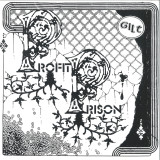
Four years and one pandemic after his latest Dreams Of A Dark Building EP, the herald of dungeon synth pop is finally back from his shallow grave.
Life has not been gentle with Seattle-based solo producer Parker Lautenschlager over the past few years, imposing its unpredictability and forcing him to channel all the feelings that come with it into Profit Prison’s music.
It’s no surprise that his first full-length album Gilt marks one futher step towards the dark corners of italo / hi-nrg body music. Typical Profit Prison’s vocals and melodies, reminiscent of OG synth masters Kraftwerk, Giorgio Moroder and Orchestral Manoeuvres in the Dark, are still here, buried in the mix and waiting to haunt the listeners and drag them down in one sulfurous dancing spiral.
Lead single Sophia juxtaposes some weirdly camouflaged vocals with one heavenly chorus that seems willing to revive your fortunes while instead it literally sings “But I lost it all”. A Matter Of Tact displays pop escapism over some throbbing minimal synth tension, Seven Words sounds like a throwback to 70’s italo filtered through the eyes of a 21st century punk rocker. Katalina has a rampant synth à la Carpenter climbing over a story of loss and Katalina, An Ascetic is a solo ramble reaching for the inner light on a carpet of cold keys.
What’s more, tracks got longer in Parker’s recent songwriting, with most of the songs being now five minute long and reaching peaks of seven minutes with the closing, almost progressive disco jam of A.R.P. (Amphetamine Research Project), nothing short of a lucid dream on the floor of Studio 54.
Last but not least, the artwork by French artist Robin Roche delivers medieval-yet-punk graphic vibes to match just perfectly the sounds on this record.
Four years and one pandemic after his latest Dreams Of A Dark Building EP, the herald of dungeon synth pop is finally back from his shallow grave.
Life has not been gentle with Seattle-based solo producer Parker Lautenschlager over the past few years, imposing its unpredictability and forcing him to channel all the feelings that come with it into Profit Prison’s music.
It’s no surprise that his first full-length album Gilt marks one futher step towards the dark corners of italo / hi-nrg body music. Typical Profit Prison’s vocals and melodies, reminiscent of OG synth masters Kraftwerk, Giorgio Moroder and Orchestral Manoeuvres in the Dark, are still here, buried in the mix and waiting to haunt the listeners and drag them down in one sulfurous dancing spiral.
Lead single Sophia juxtaposes some weirdly camouflaged vocals with one heavenly chorus that seems willing to revive your fortunes while instead it literally sings “But I lost it all”. A Matter Of Tact displays pop escapism over some throbbing minimal synth tension, Seven Words sounds like a throwback to 70’s italo filtered through the eyes of a 21st century punk rocker. Katalina has a rampant synth à la Carpenter climbing over a story of loss and Katalina, An Ascetic is a solo ramble reaching for the inner light on a carpet of cold keys.
What’s more, tracks got longer in Parker’s recent songwriting, with most of the songs being now five minute long and reaching peaks of seven minutes with the closing, almost progressive disco jam of A.R.P. (Amphetamine Research Project), nothing short of a lucid dream on the floor of Studio 54.
Last but not least, the artwork by French artist Robin Roche delivers medieval-yet-punk graphic vibes to match just perfectly the sounds on this record.
Clear Vinyl
Since her re-discovery in 2013 via cult favourite The Space Lady’s Greatest Hits, The Space Lady’s mission of galactic peace and celestial harmony has grown into a world-wide underground phenomenon. Recorded in 1990, The Space Lady’s original repertoire is a parallel universe greatest hits: songs familiar are transmogrified into shimmering bliss while new compositions amplify the message. The Space Lady’s Other Hits, released on April 20th for Record Store Day 2024, constitutes the songs recorded by Susan “The Space Lady” Dietrich Schneider as part of that repertoire that never made the original Greatest Hits, save for a limited bonus CD on the first CD pressing. Remastered by Mikey Love for vinyl, The Space Lady’s Other Hits completes the picture.
The Space Lady began her odyssey on the streets of Boston in the late 70s, then San Francisco ten years later, playing versions of contemporary pop music with an accordion and dressed flamboyantly. Following the theft and destruction of her accordion , The Space Lady invested in a then-new Casio keyboard, complete with a phase shifter, delay pedal and headset mic, birthing an otherworldly new dimension to popular song that has captured the imaginations of the underground and its leading exponents ever since.
The Space Lady’s Other Hits were recorded as they were played on the street, live, one-take, with Schneider playing, singing and simultaneously manipulating the various effects. Beginning with Elvis Presley’s iconic All Shook Up, the walking bassline underpinning the vocal, phasing in and out of this dimension, providing a fragile, extraterrestrial shadow to Presley’s original lust-driven performance. Slapback Boomerang is an original composition, written by Schneider’s then-husband Joel Dunsany a Rock ’n’ Roll pounder that could have been performed by The Cramps, its tale of relationship turmoil changed into a meditation on the nature of echo and feedback. There are moments where Schneider performs vocal caesuras, swimming in delay and phase for the pleasure of it, a pantomime drama performance that rings out. Closing Side B, Puttin’ On The Ritz is Irving Berlin’s 20s smash hit manipulated into a sombre ballad with its latent class struggle narrative brought to the fore.
A staple of The Space Lady’s performances to this day, Golden Earring’s 70s global hit Radar Love retains something of the original’s driving gallop but in The Space Lady’s telling it is shorn of the tight-trousered, taut machismo. The Space Lady coos and reaches up into the heavens away from the road, the phaser waves drenching the composition with transcendence.
Schneider’s falsetto performances in the choruses do nothing but lift the spirits ever-arching upwards. Next, The Space Lady emasculated Jim Morrison’s performance in The Doors’ 20th Century Fox. Faithfully playing Ray Manzarek’s keyboard parts on her Casio, Schneider disintegrates Morrison’s lust into waves of echo and delay, creating a Dubbed out version of the song, sounding eroded and decayed in all its ghostly glory. Pioneering Rock ’n’ Roll outfit Pete & The Pirates’ 1960 hot Shakin’ All Over, something of a response to Elvis’ All Shook Up, is blown out in warm fuzz and the celestial hug of The Space Lady’s
spirit.
Twin giant towers of amps grinding out minimal beat bloop, the transient sound molecules smell of burning gear and the floor of the pit—this is organic, electronic music at its finest. Dance? Why not. Freak out? For sure. Brothers from a different mother (Bjorn Copeland and Aaron Warren) à la two-thirds of Black Dice have come together with this fantastic debut Flaccid Mojo for us. These are mean beat vipers, spitting and tumescent on the abattoir floor.
I would call it drug music, but I’m not sure what drugs these humans consume. Stem cell and adrenal gland cocktails I’m guessing. Futuristic and primal it is, beats from the Thunder-Dome, fight music for fuckers. I’ve seen them on two separate occasions blow the power for an entire building. Baller move, boys. Produced perfectly by Chris Coady (look him up to be impressed). This record is a burning car in a field and I love it.
For fans of Black Dice, Container, Whitehouse, Negativland, Ralph Records, minimal beats à la Profan, vintage Japanese noise, Severed Heads, windburn and chapped lips. (John Dwyer)
On Natura Morta, Sven Wunder is exploring art as a bridge between nature and the human ability to judge and observe in eleven musical compositions with brightly colored textures and an emphasis on vibrant melodies.
Throughout human history, we have depicted the world we live in through art. By reworking what we see in the world, the simplest things have helped us understand the beauty of nature and to evaluate the material world that we have created around us, as a window to a constantly changing reality, through our own perception. It is that absolute reality that appears in the seam of human and nature and that can be revealed through art.
Still life painting, also referred to as Natura Morta (”dead nature”) in Italian, stretches back to ancient times. Some of the earliest works, found in Pompeii, depict commonplace objects such as fresh autumn fruits alongside man-made objects such as a small amphora and a small terracotta heap with dried fruits. These two-thousand-year-old paintings give a snapshot of Roman life, and also creates a link to time and space. A slice of life has been created by binding the earth’s pigments with extracts of oil, made from nuts and seeds, painted with brushes, made from a variety of fibers, such as trees and hair from animals. While life wanes with each brushstroke, by shifting reality into the past, art exists to make us come alive, being a living image of a dead thing, a surface and a symbol with symbolic powers of its own. Still life works celebrate material and ephemeral pleasures by returning to nature as the ultimate source for our standards in art as well as in life itself.
Natura Morta collects pieces from a continuous variety of melodies — supported by a decisive rhythm section — creating a musical kaleidoscope of ever-changing colors. Sven Wunder brings life into this rich assortment of musical implications by fusing and combining melodic instruments with each other in a setting that spans from a classical to a modern idiom. The author evokes this panoramic portrait by articulating an instrumental dialog between a chamber orchestra and a jazz ensemble. The result is a musical celebration of material pleasures that also serves as a reminder of the brevity of human life. This album was produced with financial support from the Swedish Arts Council.
London-based producer Otik releases his first album 'Cosmosis' on Martyn's label 3024. The 11-track LP signifies the fourth album on the imprint across its ten-year tenure, showcasing a more introspective side to Otik's musical output.
The album leans into delicate melodies, hazy atmospheres and lush analogue sounds, often evoking blissed-out feels and ripples of brilliant colour. Produced three years ago during lockdown, 'Cosmosis' comes after a period of spiritual struggles, where Otik questioned his faith, religious beliefs, and the concepts of right and wrong. While the pandemic allowed ample time for reflection, Otik translated these thoughts into music from his Peckham-based studio, later finding a home on 3024's evolving discography.
Following Otik's EP 'Soulo' in 2021, 'Cosmosis' marks the second release from the Bristol-born DJ and producer on 3024. This time, his sound stems from a broader palette, touching on slower, aerated ambient notes through to rugged D'n'B, displaying the far-reaching breadth, vision and maturity of Otik's aesthetic.
Keen to release a body of work that explores the journey of enlightenment and the struggles to get there, Otik drew inspiration from the luminary filmmaker Terrence Malick and how Malick portrayed ideas and philosophies in films like The Tree of Life and Voyage of Time. As a result, the record conveys a compelling narrative of rebirth, told through exquisite sound design and a push-pull pace that oscillates across the album.
The lead single 'Cosmosis' binds astral breakbeats with a star-lined melody stitched against a spacious backdrop. Sparse, celestial vocals punctuate the soundscape and add a spiritual feel, culminating in a dazzling trip at just over five minutes.
Hot Apple Band’s long-awaited debut album, So Long, Noodle House is a collection of 11 tracks recorded between 2019-2022, mostly at Jack Kinder’s home studio in Strathfield, Sydney. Once the pandemic hit, Jack and Lewis Mosley had ample time to give birth to the songs, allowing for this body of work so it could become all that it deserved to be. The resulting album will no doubt please long-time fans, with a number of songs being staples from the band’s live repertoire. So Long, Noodle House is symbolic sign-off on the band’s past and an exciting peek into what’s to come. The record covers broad ground, from 70s imbued alt-country and catchy Beatles-era pop, through to emotive folk and soft rock. Coming-of-age themes run deep in the album, as Jack Kinder's lyrics touch on life changes, friendship, shitty jobs and of course, love. With Kinder's smooth vocals, clever arrangements and gorgeous vintage production, and Lewis Mosley’s unforgettable lead guitar, slide and keyboard performance, Hot Apple Band’s debut has the same charm of some of the best records from the early 1970s, radiating George Harrison, Crosby, Stills, Nash & Young, Harry Nilsson and Fanny in a similar style to modern counterparts such as Drugdealer, Weyes Blood, Daniel Romano and The Lemon Twigs.
HERTZ marks a change in perspective for Geneve, informed by major life changes and intense growth brought to life with her signature brutally honest lyricism The release of the singer/songwriter's debut album, the AMP-nominated Learn To Like It, coincided with the pandemic resulting in the quiet months that followed spent conceptualising and writing her second LP. "My experience had broadened - I'd been touring and working so hard for so long and then I finally had a chance to do not much at all. I was also diagnosed with bipolar at that time. Understanding the implications of that diagnosis is a big part of this album," she explains. As a result this new release is very much a concept album, an incredibly vulnerable documentation of Geneve processing her experience with bipolar disorder. She plotted the progress of songs to reflect the ups and downs of a mood cycle forming a frequency, hence the album title HERTZ. Geneve is a record-breaking seven-time winner of WAM Song of the Year, and has honed her live chops on the stages of Falls Festival, Laneway, Party in the Paddock alongside bills supporting Cat Power, Kurt Vile, Julia Jacklin, Belle & Sebastian, Fred Armisen, Gareth Liddiard and more. Her debut North America tour was supporting San Cisco in 2019, and she was invited to showcase at 2020s SXSW and The Great Escape.
- 01: Jean-Marie Tjibaou - Discours Melanesia 2000 (Kanaki 1974)
- 02: Joby Bernabé - La Logique Du Pourrissement (Madinina 1985)
- 03: Lena Lesca - Aux Tortionnaires (France 1978)
- 04: Alfred Panou & Art Ensemble Of Chicago - Je Suis Un Sauvage (Benin &Amp; Usa 1970)
- 05: Léon Gontran Damas - Il Est Des Nuits (Guyane 1988)
- 06: Slimane Azem & Cheikh Nourredine - La Carte De Résidence (El Djazair 1979)
- 07: Manno Charlemagne - Le Mal Du Pays (Ayiti 1984)
- 08: Guy Cornely - Où Sont Donc Les Tam Tam ? (Karukera 1969)
- 09: Groupement Culturel Renault - Cadences 1 (France 1973)
- 10: Colette Magny - La Pieuvre (France 1969)
- 11: Salah Sadaoui - Déménagement (El Djazair 1985)
- 12: Võ Nguyên Giáp - Rien & Est Plus Précieux` Entretien À Alger (Vietnam 1976)
- 13: Les Colombes De La Révolution - Hommage À Mohamed Maïga (Burkina Faso 1985)
- 14: Hô Chi Minh - ` Arbitrer Le Conflit `(Vietnam 1964)
- 15: Peloquin & Sauvageau - Monsieur L& Indien (Quebec 1972)
- 16: Francis Bebey - On Les Aime Bien (Kamerun 1979)
- 17: Léon Gontran Damas - Blanchi (Guyane 1988)
- 18: Groupement Culturel Renault - Cadences 2 (France 1973)
- 19: Pierre Akendengue - Le Trottoir D&Apos;En Face (Gabon 74)
- 20: Eugène Mona - Pitié (Madinina 1970)
- 21: Dane Belany - Complexium - After Aimé Césaire (France &Amp; Usa 1975)
- 22: Troupe El Assifa - Extrait De Ça Travaille, Ça Travaille, Et Ça Ferme Sa Gueule (Maurice 1975)
- 23: Dansons Avec Les Travailleurs Immigrés - Versailles (France &Amp; Tunisie 1971)
- 24: Abdoulaye Cissé - Les Vautours (Burkina Faso 1978)
But after collectively moving across the country from Burlington, VT to Seattle, WA, the scrapped tracks transformed substantially into florid, at times entrancing compositions.
The pulsating "Circles" opens the album with lilted reflections on empathy, breathing in midtempo syncopation with subdued guitar tip- toeing around melodic drumming. supernowhere's cast of Meredith Davey (bass, vocals), Kurt Pacing (guitar, vocals), and Matt Anderson (drums) share a collective ambition for maximum interplay and collaborative writing, materializing cleanly knotted compositions that evoke vivid dreamscapes and the profound epiphanies drawn from them ("The Hand", "Ecdysis"). On upbeat "Dirty Tangle" Davey's voice glides through Pacing's angular arpeggiations, carving her own rhythmic lane with her distinctive, descanting singing style.
"Skinless Takes A Flight" notably would not have come to fruition without the help of engineer Dylan Hanwright (mix. Gulfer, mem. Great Grandpa, I Kill Giants), whom the band met shortly after relocating to Seattle. Hanwright offered up the studio where the album was recorded as a temporary rehearsal and writing space during the pandemic, which in turn gave him intimate familiarity with the music, resulting in an album that was recorded as intimately as it was written. Hanwright helped make the little moments shine too, as heard in the fleeting vocal harmonies on "Augury", or the spiraling chaos in "Basement Window," a further testament to the collaborative, everyone's-input-matters nature that characterizes supernowhere's dizzying yet meditative sophomore record.
- A1: No Traffic Feat. Dank
- A2: Doin' It
- A3: Off The Tap Feat. Zay Bcuz & Nicx *Rhett Cuts
- A4: Not Ever Feat. Harleighblu
- A5: Star Struck
- A6: Relapse
- A7: Shine Your Light Feat. Sam
- A8: Brag
- A9: Circus
- B1: Snaps
- B2: Funny
- B3: Plaques Feat. Maine Soul
- B4: Get Down Feat. Amp Fiddler
- B5: Og Funk
- B6: Boom Bap Feat. Frank Nitt
- B7: Mentions Feat. Serious & Joz B
- B8: Calvin Vm Interlude
- B9: Showin' Love Feat. Kid Gotti
- B10: Good Life
Enter the realm of Illa J, the musical force shaking the foundations of the industry. His latest offering, 'No Traffic', is a testament to his boundless talent and versatility, showcasing his singing, production and rapping abilities on 19 tracks written and produced entirely by Illa J himself. This album marks his debut on BBE Music and a new chapter in his musical journey. Meet Illa J: a musical prodigy raised in a family of talented musicians. With a jazz bassist father and a gifted singer mother, it's no surprise that Illa J was destined for greatness. He's best known as the younger brother of hip-hop legend J Dilla and has made a name for himself as a former member of Detroit's iconic hip-hop group, Slum Village. With a lifetime of exposure to quality music and top-tier musicians, Illa J is a force to be reckoned with. Created amidst the chaos of the pandemic, Illa J's 'No Traffic' serves as a beacon of hope, a roadmap for creatives seeking their path. He enlists the help of Detroit legends Amp Fiddler, Frank n Dank, British soul sensation Harleighblu, and introduces the rising stars of Detroit, Serious, Joz B, Maine Soul, and more, all matching Illa J's energy and passion on the tracks. The focus track of the album, "Star Struck", is a prime example of Illa J's signature style. The astral pentatonic soundscape and precise drum programming transport you to new heights, while Illa J's beats, melodies, and bars will leave you in awe. 'No Traffic' is a musical journey that takes you to a place where Illa J's playful and versatile sound reigns supreme. The album is expertly mastered by Grammy-award nominated The Carvery Studio and is a refreshing experience of a true artist reveling in their artistry. Don't miss out on this once-in-a-lifetime opportunity to delve into Illa J's musical realm."
The free folk/jazz sound of modern Los Angeles. Featuring a heavy bunch of musicians and vocalists including Moor Mother.
"Fearlessly Accessing the Divine Spirit From Here on Out" is the vinyl debut from pianist, composer, and producer Diego Gaeta. He has previously released projects as Club Diego and with the trio Human Error Club (whose members Mekala Session and Jesse Justice helped produce this record). He has quickly become a fixture in a number of Los Angeles musical environments, working with Lionmilk, The Pan Afrikan Peoples Arkestra, Carlos Niño, Black Nile among others. This album is a synthesis of these many LA environments, and carries chamber, jazz, ambient, and folk influences, ultimately giving it an uncategorizable feel similar to works by Arthur Verocai or David Axelrod.
Gaeta recorded the initial ideas for the album by himself after experiencing a burst of creativity during the lockdown of 2020, in the aftermath of a season of protests in Los Angeles, on a piano at his home in El Sereno. "I was constantly not in tune with myself, always awaiting outrage and tragedy in a very unstable world. However, hitting the streets in support of various ongoing pandemic community actions felt necessary and it marked a point in time that ushered in large societal changes. The weight of that era made me feel allergic to making art at the time. All of these ideas came after that period, expressing my reflections subconsciously. I remember that the ideas came in a short amount of time, and then they developed."
Once he had created the tracks as Ableton sessions, he realized the gravity and context of how he was processing his ideas so he, as he puts it, "felt like taking them outside the hands of midi and into the hands of friends." Gaeta was able to assemble his dream band, which ended up being a 9-piece ensemble, or a nonet. "I felt that at some point I was channeling the geometrical balance of that nonet...it's almost as if I had a sextet and then the three of the sextet that's not the rhythm section were doubled. It's a really dense sextet, that's how I see it."
The recording process began the following summer in June 2021 as the musicians were all adjusting to the newfound dynamic of getting tested for COVID, waiting a few days, and then meeting up to record. "We were eating Indian food, some of us were smoking, it was a nice memory, but I felt a little stressed, because I was the bandleader, and I felt the emotional weight of my music."
The title track and single, featuring vocals by Jimetta Rose, begins with a speech by Gaeta delivered when playing with Black Nile in 2019 at the Levitt Amphitheatre in MacArthur park. Gaeta provides the following account: "Even though it was in 2019, socio-political tensions and issues were at the forefront for me at that time. I wrote a speech that was intended to be critical of the US but it ended up becoming a collage inspired by different women that had messages of freedom that spoke to me the most. I quoted Nina Simone and Georgia Anne Muldrow, it wasn't something that I read but something that she said "kicking it with consciousness and style" that phrase stuck with me, so I used it in that speech. Although critical, the speech had a positive feeling to it, and it was hopeful. I gave that speech while fireworks were going off."
Moor Mother & Zeroh are found on their respective tracks, Memory Screen & Eccolo - both delivering a distinct, commanding vocal performance. Low Leaf colors the track Soft Spot with harp, a beautiful ballad nestled in the center of the album. Other players include Gregory Uhlmann on guitar, Jon Kaye on violin, Devin Daniels on alto saxophone, Caleb Buchanan on bass, Dante Luna on vibraphone, Patrick Behnke on viola, Bryan Baker on tenor saxophone/flute, and Mekala Session on drums.
"I’d like for us tonight to embody a freedom oriented life. Freedom isn’t just a dream, it’s a place we must all arrive at together, as one by one the people of the Earth help each other to be Free of power, hate, and insecurities. Let’s kick it with consciousness and style. Can y’all dig that? YEAH. I can too. So now we’d like to present to you a spiritual transmission I like to call: 'Fearlessly Accessing the Divine Spirit of Freedom From Here On Out.' YEAH" - Diego Gaeta
British epic doom metallers Godthrymm (featuring members once
involved in such luminaries as My Dying Bride, Anathema, Vallenfyre, and
Solstice) return with their new album, Distortions
The follow- up to 2020's widely- lauded 'Reflections' shows the Halifax- based
quartet of Hamish Glencross (guitars/ vocals), Catherine Glencross (keyboards/
vocals), "Sasquatch" Bob Crolla (bass), and Shaun "Winter" Taylor-Steels (drums)
elegantly expanding upon their sound and vision. With tracks like "Follow Me,"
featuring former My Dying Bride compatriot Aaron Stainthorpe, "Echoes," and
"Devils," Distortions advances Godthrymm into the hallowed halls of the genre
they adore to death.
"I absolutely wanted to create a much more layered and complex arrangement in
the sound," says Godthrymm's Hamish Glencross. "Totally amping up the
contrasts to the extreme--the light shines brighter, and the darker depths are vast
trenches. There is a lot more harmony and melancholy for much of it, but also
some slab-heavy riffing, too. We wanted a total progression in the production and
more class and clarity in the sound, as opposed to Reflections, which could get
quite dense in tone."
Distortions is the second part of Glencross' Visions trilogy-- the third part,
Projections, is already in the works. Throughout its seven- track, hour- long
expanse, Godthrymm's sophomore effort delves deeper into the despondent
march of post-pandemic singles "Chasm" and "In Perpetuum," the latter released
exclusively on Decibel Magazine's Decibel Flexi Series in 2022. Glencross'
emotionally-charged vocals pair perfectly with his towering riffs and thoughtful,
crestfallen harmonies. The rhythmic foundation of Crolla and Taylor- Steels is
absolutely critical to Glencross' woebegone eclat. With Catherine Glencross'
angelic vocals and atmospheric keyboards stitched into the monumental "As
Titans," the granite-hard "Obsess and Regress," and the stirring "Pictures Remain,"
Distortions has it all.
The songwriting for Distortions began during the first lockdown. For an album
centered lyrically on grief, loss, regret, resolve, love, and determination, it's hard to
imagine something inexplicably heavy yet remarkably beautiful. Producer Andy
Hawkins (Hark, Grave Lines) was the perfect man for the job. Spread across The
Nave Studio in Leeds and Sasquatch Music Studio in Huddersfield, he captured
Godthrymm at their most menacing ("Unseen Unheard") and vulnerable ("Follow
Me"). The tones he extracted from Glencross, Crolla, and Taylor-Steels absolutely
crush, while the brighter moments (like Catherine Glencross' spell-binding vocals
on "Obsess and Regress") splinter Godthrymm's disheartened darkness in two.
Distortions was mastered by Mark Midgley (Doom, Hellkrusher) for Northern
Mastering Co.
Chain Of Flowers return with their lofty and long-simmering sophomore full-length, rich with reckonings, reverb, and redemption: Never Ending Space. Despite some of the songs dating back a few years, the record first began materialising in earnest during the pandemic, by which point most of the band had relocated from Cardiff to London.
Reunited and rejuvenated, they picked up where they left off, booking two multi-day sessions at Hackney hub Total Refreshment Centre with producer Jonah Falco. In this time they successfully channelled their kinetic chemistry into 10 full-blooded anthems of torn dreams, poetic delirium, and “hope stretched too far.” Musically, Never Ending Space skews notably more maximal than the group’s previous work, fleshed out with trumpets, saxophone, synth, percussion boxes, and spoken word. (Smith jokingly calls them The Chain Of Flowers Orchestra).
Yet the songs still swing and soar with a charged heart, ripe with hooks, drama and ragged melody. Opener “Fire (In The Heart Of Hearts)” stirs to life on a tide of wiry guitar and defiant horns, facing down the embers of love that still glow in the wake of pain: “Peace came tumbling like a shower of bricks / The mind twists slowly till everything fits.”
A tense energy ripples throughout – from the nocturnal rush of “Serving Purpose” and “Amphetamine Luck” to the bruised battle cries of “Torcalon” and “Old Human Material.” Outliers like “Praying Hands, Turtle Doves” hint at proggy possible futures, while instrumental vignette “Anomia” offers an intriguing glimpse at a lesser heard facet of the band: swaying, shadowy, subdued. The album’s title track is also its closing cut, a stomping, sparkling ode to “the wrong side of the night, where time goes to die.” Smith describes the scene: “Everyone’s talking, screaming, trauma bonding, but no one’s listening. Broken dialogue. Shouting over each other. You want to switch off, but everyone’s too fucked.” The guitars spiral and slide towards the oblivion of dawn, the chance to crash and do it all again.
Chain Of Flowers return with their lofty and long-simmering sophomore full-length, rich with reckonings, reverb, and redemption: Never Ending Space. Despite some of the songs dating back a few years, the record first began materialising in earnest during the pandemic, by which point most of the band had relocated from Cardiff to London.
Reunited and rejuvenated, they picked up where they left off, booking two multi-day sessions at Hackney hub Total Refreshment Centre with producer Jonah Falco. In this time they successfully channelled their kinetic chemistry into 10 full-blooded anthems of torn dreams, poetic delirium, and “hope stretched too far.” Musically, Never Ending Space skews notably more maximal than the group’s previous work, fleshed out with trumpets, saxophone, synth, percussion boxes, and spoken word. (Smith jokingly calls them The Chain Of Flowers Orchestra).
Yet the songs still swing and soar with a charged heart, ripe with hooks, drama and ragged melody. Opener “Fire (In The Heart Of Hearts)” stirs to life on a tide of wiry guitar and defiant horns, facing down the embers of love that still glow in the wake of pain: “Peace came tumbling like a shower of bricks / The mind twists slowly till everything fits.”
A tense energy ripples throughout – from the nocturnal rush of “Serving Purpose” and “Amphetamine Luck” to the bruised battle cries of “Torcalon” and “Old Human Material.” Outliers like “Praying Hands, Turtle Doves” hint at proggy possible futures, while instrumental vignette “Anomia” offers an intriguing glimpse at a lesser heard facet of the band: swaying, shadowy, subdued. The album’s title track is also its closing cut, a stomping, sparkling ode to “the wrong side of the night, where time goes to die.” Smith describes the scene: “Everyone’s talking, screaming, trauma bonding, but no one’s listening. Broken dialogue. Shouting over each other. You want to switch off, but everyone’s too fucked.” The guitars spiral and slide towards the oblivion of dawn, the chance to crash and do it all again.
Western Massachusetts band Landowner play abrasively clean minimalist-punk. Singer Dan Shaw began Landowner in 2016, writing and recording Impressive Almanac with a practice amp and a laptop drum machine. Those available tools would inform the band’s unapologetic sound—clean, confrontational, and absurdly stark. With a stated goal to sound like “Antelope playing Discharge”, Landowner’s diamond hard structures, repetitious instrumentals and caricatured hardcore make space for lyrics that reflect on the global systems our lives are tangled in and the dark absurdities we take for granted.
Landowner’s fourth Born Yesterday full length Escape the Compound focuses on the powerful grips manipulators and reality-deniers have on their victims, examining the social, political and interpersonal damage of cult-like influence and control. “A lot of the lyrics focus on cult manipulators and narcissists: falling victim to their toxic dynamics, and the difficulty of escaping their grip” says Shaw. From climate change deniers and conspiracy theorists to deceptive narcissists and actual cult leaders, Landowner explores the ubiquity of modern unreality through evocative imagery and a keen sense of awareness. The band’s plain instrumentation sheds and subverts hardcore punk’s noisy veil in favor of a direct, unswerving examination of these themes.
Written and recorded following the release of 2020’s Consultant, Escape the Compound finds Landowner leaning into the studio through deeper experimentation with a wider palette of sounds. The group’s lineup of Josh Owsley (bass), Elliot Hughes (guitar), Jeff Gilmartin (guitar), Josh Daniel (drums) and Dan Shaw played often since coming together in 2017. But with pandemic restrictions in place, the making of Escape the Compound became a much more insular pursuit, one where the mixing and mastering process helped turn the band’s most varied batch of material into a cohesive, thematic collection of songs.
Album opener “Witch Museum” is a collage of dark Massachusetts historical imagery. The song evokes a kind of cult dynamic travelling like a shadow through time, where dark absurdities are taken for granted, toxic behaviours are excused, and normalcy begins to shift. The line “Gail's behaviour has changed” casts fictional “Gail” as the dark manipulator, whose whim we’re at the mercy of. She sheds her toxic behaviour and the crisis finally ends - “and peace returns to the Commonwealth”- an absurdity, given that cult leaders and narcissists rarely seem to change.
By considering the past, Landowner sheds light on the present. The band challenges egomaniacs reluctant to accept an uncomfortable reality with both cynicism and concern. The literal landowner described in “Heat Stroke” collapses in exhaustion, cooked by a suffocating bass line and sizzling hi-hats. “You'd rather die of heat stroke than to let anybody see you change your mind,” Shaw gasps, later pleading with the character in “Floodwatch” to “please reconsider” their brazen stubbornness as they plunge through the rising waters of a flooded road.
The character in “Swimmer of Note” refuses to admit their miscalculations, instead doubling down on an ever-growing and increasingly-unsteady tower of lies. The sneering “Damning Evidence” sets a scene all too familiar: a smoking gun scenario with zero consequences. Shaw’s exaggerated vocal refrains and sarcastic inflections mock false hope: “how will they be expected to keep their minds intact, at the shock of simply hearing such damning evidence?”
“Beyond the Darkened Library” creaks open a secret passageway into a dimly lit, endless labyrinth of conspiracy theories, in which the character becomes hopelessly lost. “Aftermath” sounds the alarms: “stare so long that you start getting used to it; one glance says you should never get used to it.” The pair of “Tactics” tracks express what Shaw calls “an interpersonal microcosm of the album’s themes.”
Perhaps the most ambitious arc on Escape the Compound loosely begins with the title track. The subject in “Escape the Compound” gradually recognizes their own victimhood and plans a calculated flight from the “captivating shepherd” – hop the fence, flee, and regain autonomy. As the narrator escapes their stifling and abusive cult microcosm, a much grander existential timeline begins to appear. “Thousands of Years in Fast Forward” narrates a psychedelic surrender to the shared human experience through space and time, an ego-death adjacent to our ancestry, our own existence, and the before and after. “At the site of the crater, molecular hands unclasp molecular hands as you lose conditioning,” Shaw sings on the title track, “Your grandmother's garden. Your grandmother's kitchen. Your grandmother's primordial ocean.” It’s a profound actualizing glimpse into a true, forgotten reality and a startling reconnection with the self.
Western Massachusetts band Landowner play abrasively clean minimalist-punk. Singer Dan Shaw began Landowner in 2016, writing and recording Impressive Almanac with a practice amp and a laptop drum machine. Those available tools would inform the band’s unapologetic sound—clean, confrontational, and absurdly stark. With a stated goal to sound like “Antelope playing Discharge”, Landowner’s diamond hard structures, repetitious instrumentals and caricatured hardcore make space for lyrics that reflect on the global systems our lives are tangled in and the dark absurdities we take for granted.
Landowner’s fourth Born Yesterday full length Escape the Compound focuses on the powerful grips manipulators and reality-deniers have on their victims, examining the social, political and interpersonal damage of cult-like influence and control. “A lot of the lyrics focus on cult manipulators and narcissists: falling victim to their toxic dynamics, and the difficulty of escaping their grip” says Shaw. From climate change deniers and conspiracy theorists to deceptive narcissists and actual cult leaders, Landowner explores the ubiquity of modern unreality through evocative imagery and a keen sense of awareness. The band’s plain instrumentation sheds and subverts hardcore punk’s noisy veil in favor of a direct, unswerving examination of these themes.
Written and recorded following the release of 2020’s Consultant, Escape the Compound finds Landowner leaning into the studio through deeper experimentation with a wider palette of sounds. The group’s lineup of Josh Owsley (bass), Elliot Hughes (guitar), Jeff Gilmartin (guitar), Josh Daniel (drums) and Dan Shaw played often since coming together in 2017. But with pandemic restrictions in place, the making of Escape the Compound became a much more insular pursuit, one where the mixing and mastering process helped turn the band’s most varied batch of material into a cohesive, thematic collection of songs.
Album opener “Witch Museum” is a collage of dark Massachusetts historical imagery. The song evokes a kind of cult dynamic traveling like a shadow through time, where dark absurdities are taken for granted, toxic behaviors are excused, and normalcy begins to shift. The line “Gail's behavior has changed” casts fictional “Gail” as the dark manipulator, whose whim we’re at the mercy of. She sheds her toxic behavior and the crisis finally ends - “and peace returns to the Commonwealth”- an absurdity, given that cult leaders and narcissists rarely seem to change.
By considering the past, Landowner sheds light on the present. The band challenges egomaniacs reluctant to accept an uncomfortable reality with both cynicism and concern. The literal landowner described in “Heat Stroke” collapses in exhaustion, cooked by a suffocating bass line and sizzling hi-hats. “You'd rather die of heat stroke than to let anybody see you change your mind,” Shaw gasps, later pleading with the character in “Floodwatch” to “please reconsider” their brazen stubbornness as they plunge through the rising waters of a flooded road.
The character in “Swimmer of Note” refuses to admit their miscalculations, instead doubling down on an ever-growing and increasingly-unsteady tower of lies. The sneering “Damning Evidence” sets a scene all too familiar: a smoking gun scenario with zero consequences. Shaw’s exaggerated vocal refrains and sarcastic inflections mock false hope: “how will they be expected to keep their minds intact, at the shock of simply hearing such damning evidence?”
“Beyond the Darkened Library” creaks open a secret passageway into a dimly lit, endless labyrinth of conspiracy theories, in which the character becomes hopelessly lost. “Aftermath” sounds the alarms: “stare so long that you start getting used to it; one glance says you should never get used to it.” The pair of “Tactics” tracks express what Shaw calls “an interpersonal microcosm of the album’s themes.”
Perhaps the most ambitious arc on Escape the Compound loosely begins with the title track. The subject in “Escape the Compound” gradually recognizes their own victimhood and plans a calculated flight from the “captivating shepherd” – hop the fence, flee, and regain autonomy. As the narrator escapes their stifling and abusive cult microcosm, a much grander existential timeline begins to appear. “Thousands of Years in Fast Forward” narrates a psychedelic surrender to the shared human experience through space and time, an ego-death adjacent to our ancestry, our own existence, and the before and after. “At the site of the crater, molecular hands unclasp molecular hands as you lose conditioning,” Shaw sings on the title track, “Your grandmother's garden. Your grandmother's kitchen. Your grandmother's primordial ocean.” It’s a profound actualizing glimpse into a true, forgotten reality and a startling reconnection with the self.
JAG PANZER not only are one of the most important US Heavy Metal bands, but also one of the first ones. The band was formed in 1981 in Colorado, and released their debut album entitled "Ample Destruction" just 3 years later, in 1984.
Today, almost 40 years later, the album – which already presented the band’s very own and unique style - is known as one of the pillars of American Heavy Metal, and is often referred to as the trailblazer of the Power Metal scene. In the last few decades the Heavy Metal scene was going through ups and downs, and so was the band’s career.
Nevertheless, JAG PANZER managed to release 10 more studio albums, and earned the status of an absolute legend of the genre. Yes, they are being called legends, they are being called veterans – but it absolutely doesn’t mean that the band sounds outdated. Exactly the opposite applies:
Their new concept studio album entitled "The Hallowed" of course includes all trademarks and sounds like a classic JAG PANZER album. But it also includes an impressive dose of energy and high-octane in-your-face attitude that will please both old school die-hard fans and young enthusiasts of the genre alike!
Cory Hanson"s third solo LP follows upon 2020"s luminescent Pale Horse Rider, upping the heat to molten levels, six strings at a time. In search of further adventures, Cory draws with vampiric glee from the madness coursing through the world outside; a spiraling shitshow that"s reawakened a compulsion in him - an old ambition, even! - to crush brutality and elegance together into a fresh set of rocks to hail down upon us. Western Cum is a high-stepping, hard-dancing, first love/heartbreak, tonight"s-the-night, future nostalgia kind of good time - the sound of guitars through the speakers of luxury cars. Like the dream you had once, alone, asleep in an amplifier, blasting Guns N" Roses through every last orifice in your body. And it"s coming through! Western Cum"s map to the treasure is less about pastiche, though; more toward executing the songs by executioner"s axe, rolling their decapitated rhythm heads and soaring melodies, the panoply of Cory"s melodic impulses with guitars, guitars, guitars. Harmony leads are just the tip of the iceberg, but be quick - the guitars like to melt everything in their path! The eight songs of Western Cum are driven by the stalwart bass of brother Casey Hanson and the drums of Evan Backer with a few passing acoustics from Cory and the intermittent spirit-moans of Tyler Nuffer"s steel guitar. The quartet sound - two guitars, bass and drums - acts as beat-making principle/phrasing device, as well as template for Cory"s layers of six-string and vocal textures. From the rooftop of their musical safe house - the band in their makeshift hut and Cory ensconced in an outhouse - they let loose with a blast both face-melting and mind-blowing: a social service that gives constipation a good name.
Ten years ago, Parish Bracha anonymously released his Disconscious album Hologram Plaza, significantly influencing the still nascent Vaporwave scene. He continued producing a number of disparate anonymous projects until Cascade II was released in 2020 on Arca's Mutant Mixtape.
Cascades of Refinement, which includes the single Cascade II, is Parish's debut album released under his own name and his focus on the dialogue between the digital and the organic continues. The techniques that defined his influential early sound have been refined into a flawless hybrid of analog and digital textures which give his post-minimalist compositions an unmistakably personal expressivity.
Classical instruments are mutilated and transmuted into razor-sharp shards of glass suspended on piano wire above warped opalescent metal while never losing sight of their tonal integrity. Much like the impartial juxtaposition Parish employs in his timbral exploration, each composition explores the concepts of beauty and gentleness through and with extremity, violence, and chaos as equal counterparts, with each successive piece refining and relieving the artificial tension between these states. Employing use of the Una Corda, prepared piano, bowed piano, plucked piano, harpsichord, church organ, untuned violin, voice, synthesizers, and resampled field recordings, Cascades of Refinement lies somewhere in the indefinite space between acoustic and electronic and is beholden to neither.
Parish's initial electroacoustic experiments with piano and strings were interrupted by the pandemic lockdown when he was limited to sampled instrumentation and digital processing available on a computer. Out of this necessity evolved an appreciation for the incidental nature of digitally sampled acoustic instrumentation and the unpredictability of its interaction with digital signal processing.
As work on Cascades of Refinement continued and acoustic recording was reintroduced, the focus turned to the tension between recorded and sampled instrumentation, with the goal of integrating the two into a singular indistinguishable material to be warped and shaped together. Each of the four pieces of the Cascade series explore this tension, successively integrating and collapsing their distinction with each piece.
The subtle artifacts of digital processing and incidental mechanical sounds of the acoustic are amplified and given presence alongside the tonal elements of each piece until a point of indivisibility is reached. The sound of a bow scraping along a string or a granular buffer freezing are neither discarded nor hidden, but selected as the ripest material to accompany and structure each composition. Cascades of Refinement is a dialogue between organic and digital, between the mercurial and infinitely reproducible, not as opposites, but as mereologically cohabiting counterparts with equal expressivity.
Repress!
Using an old door, 17 strings, chopsticks and combining them with phasers, echo units and amplification, the new device was to become his signature sound, mixing Irish folk influences with Asian and North African sounds in a mesmerising and soulful new way that brought him to the attention of the leading improvisers of his day - Alice Coltrane, Ravi Shankar, Don Cherry and more.
A logical follow up to AllChival's recent reissue of Stano's debut LP, Michael O'Shea's self titled LP was originally released on Wire's Dome Imprint in 1982.
The background to the album is as interesting and inspiring as the artist who created it - born in Northern Ireland but raised in the Republic, O'Shea was keen to travel and escape the troubles of his home.
Wandering throughout Europe and the Middle East, O'Shea found himself living and working as a relief aid in Bangladesh in the mid Seventies where he learned to play sitar while recovering from a bout of hepatitis. A later period spent busking in France accompanied on zelochord by Algerian musician Kris Hosylan Harp led to O'Shea's idea of combining both instruments as a homebuilt instrument - Mo Chara (Irish for "My Friend").
He later described the process on the back of the LP himself saying:
"Having sold my sitar in Germany and being desperate for money to travel to Turkey, I conceived of the idea of combining both sitar and zelochord. The first Mo Cara was born, taken from the middle of a door, which was rescued from a skip in Munchen"
A combination of dulcimer, zelochord and sitar, O Shea would play it with a pair of chopsticks, striking the strings softly using Irish folk rhythms mixed with the rich, nostalgic sounds of of the many Asian artists he'd encountered on his travels.
It was a pan cultural sound standing at an unusual crossroads of folk, traditional, rock, progressive, jazz, electronic and post-punk worlds without hesitation.
Perfecting the instrument on the streets, there were further spells spent busking in the underground stations and cafes of London's West End and Covent Garden during the heady days of the 1970s when they were full of eccentric street entertainers, jazz improvisers and musical pioneers.
His work with Rick Wakeman never saw the light of day but O'Shea's contact with the world of post-punk London ensured his name would live on.
Introduced to Wire's Bruce Gilbert and Graham Lewis via cartoonist Tom Johnston, O'Shea eventually acquiesced to an open invite to record at their studio. Turning up unannounced in the summer of 1981 the LP was recorded in a day in the legendary Blackwing Studios and released on Dome the year after.
The first side features the fifteen minute masterpiece "No Journeys End" with the B side featuring more input from Wire in processing the Mo Chara sound.
Lewis himself said years later of the forgotten masterpiece: 'I always said it was the best job we ever did.'
After an aborted LP with The The's Matt Johnson the following year, O'Shea quietly disappeared from the formal recording world and his brief but unique contribution to the music world came to a sad end in 1991 when O'Shea was struck by a post van and died a few days later in hospital in London.
This repress on All City's AllChival imprint has been remastered and reissued with the approval of both Dome and his surviving siblings.
The quintet set their sights beyond formulaic confines with their most introspective, uplifting, vital release to date - their first full-length in five years, 2023’s aptly titled The Awakening. The album shines as a massive and diverse offering mixing symphonic, melodic and power metal styles, yielding some of the heaviest tracks in KAMELOT’s history. KAMELOT is one of few bands in the symphonic genre to fully embrace the dark, but of course, there can be no light without it. Inspiring, engaging lyrical themes of determination, strength, overcoming personal battles and growth are abound on The Awakening, provoked by extreme societal shifts and the overwhelming realization that we have such a brief time to be true to ourselves and live life to its fullest. With crystal clear modern production helmed by the band and longtime producer Sascha Paeth, plus mastering by Jacob Hansen of Hansen Studios, KAMELOT’s score-like 13th studio album is accented by guest contributions - from genre star Melissa Bonny (Ad Infinitum), to renowned instrumentalists like violinist Florian Janoske and Grammy nominated, soundtrack-featured cellist Tina Guo. KAMELOT’s intense brand of ultramodern gothic and symphonic theatricality is amplified further and with more emotionality than ever on this inspiring, anticipated addition to the KAMELOT legacy.
- 1: Ebo Taylor - Amponsah
- 1: 2 Moussa Doumbia - Keleya
- 1: 3 Amadou Balaké - Super Bar Konon Mousso
- 1: 4 Mangue Kondé & Les
- 1: 5 Manu Dibango - The Panther
- 1: 6 Peter King - Ajo
- 1: 7 Itadi - Ayala
- 1: 8 Marumo - Khomo Tsaka Deile Kae
- 1: 9 Apples - Mind Twister
- 1: 0 The Wings - Gone With The Sun
- 2: 1 Kelenkye Band - Jungle Music
- 2: Super Elcados - Get Up And Do It Good
- 2: 3 The Apagya Showband - Kwaku Ananse
- 2: 4 Orlando Julius Feat. Ashiko - Get The Funk
- 2: 5 Alemayèhu Eshèté Feat. Hirut Beqele - Temeles
- 2: 6 Livy Ekemezie - Friday Night
- 2: 7 Willy Nfor - Boogie Down In Africa
- 2: 8 Shina Williams & His African Percussionists - Agboju Lo
- 2: 9 Soul Brothers - Bayeza
- 2: 10 Teaspoon & The Waves - Oh Yeh Soweto
Rare Groove Collection Explore the fusion of world music with soul, funk and disco through the Rare Groove Collection. With this new volume, discover unique groove tracks straight from Jamaica! Fully remastered original versions African RARE GROOVE A journey at the heart of Nigerian afrobeat from Orlando Julius to the ethnojazz of Alemayèhu Eshèté passing by the High-life of the Ghanaian Ebo Taylor...
If you find the time, please come and stay a while in abracadabra’s beautiful neighbourhood; a magically wonky wonderland where strangers leave as friends to a block party soundtrack as eclectic as it is infectious. The California duo’s album shapes & colors is a dazzling collage of psych-fuelled synthscapes and contemporary Baroque-pop of anti-capitalist movements and escapism, precisely pieced around their own working lives in a blue-collar town.
In the heart of Oakland’s industrial Jingletown above a former auto-repair shop in what was once a mechanics’ break room where poker rounds ensued, Hannah Skelton (Vocals, Synthesizers) and Chris Niles, (Bass, Synthesizers) constructed the angular 80s-tinged anthems (think John Hughes montages to Talking Heads) of their new album, to positively offset the pandemic’s amplification of dysfunctional society. “It reflects our current reality: a huge mess that is systematically broken but isn’t entirely lost,” Hannah tells. “We’re inviting listeners to conjure up every drop of hope and willpower left inside them, pour that into the giant vat of anger and frustration bubbling inside us all, and with this potion collectively enact the necessary change to bring love and light into this dark space.”
When Covid forced Hannah from her salon in San Francisco to become a backyard mobile hairdresser, what she saw inspired them both and the lyrical foundations for their new record. “I’d drive to mansions and people would complain about how hard the pandemic had been next to their swimming pool and tennis courts.” First meeting after the album’s co-producer Jason Kick (Mild High Club, Sonny and the Sunsets) recruited the pair for a Halloween band covering Eurythmics’ art-rock debut ‘In The Garden,’ the pair hit it off and shapes & colors is a product of the years that followed. It combines Chris’ own rhythmic demos following years on the road touring and opening for Amon Tobin, Matthew Dear and Generationals in Maus Haus with Hannah’s lyrical musings honed from project Cassiopeia, so even when topics are as heavy as the beats, they’re met with luminously positive arrangements of hope and warmth.
The by-product of a psychedelic New Year’s Eve escaping a monotonous 2020 reality, the title track itself captures fireworks over East Oakland as viewed from the pair’s couch whilst listening to Mort Garson’s Plantasia for 6 hours straight. The daydream collage of ‘inyo county’ is “a little souvenir taking me back into the bottled-up essence of a slow lazy morning, waking up in bed far from home,” Hannah tells recalling those enforced stay-at-home days. “It fell out of me because I was craving that blissful flavour.” Meanwhile ‘dawn of the age of aquarius’s new parallel reality evolved from a happy accident when their demos had reset to a drone which Jason reworked into a Laurie Anderson-esque breathy vocoder effect. Even bloops and beeps from a forgotten recording session at the Vintage Synthesizer Museum in Emeryville can be heard, where the pair used Mini Moog, Fairlight EMI and ARP 2600 to arrange their sound into shapes whilst distortion and dirt from mixing on 1979 Neve 5313 Console added to the recordings’ color.
Casting a brighter rainbow still, in all its pastel-hued glory, Hannah, also illustrated a self-portrait of the band for the album artwork. “It reflects our makeshift recording studio to encapsulate all aspects of that time and space,” she shares of their abode where, over an intense two-week period and fuelled by the aroma of fermenting vino from the winery below, their single chord, bass and drum-heavy, groove-first momentum took them on an unexpected journey whilst the next-door couple would fire pizzas in their yard and a grandfather across the road would sweep the street clean. “We’d drink coffee and start the day, consistently working, without interruption,” Chris tells of finding their flow. “The loft is a cool space with skylights, tall ceilings and no shared walls so we could be as loud as we wanted to be.”
Just as well. Diving into decades of electronica and crunchy sound effects, field recordings and animal sounds, blended with an infectious Latin influence, shapes & colors is bolstered by live percussionists Greg Poneris (drums), K. Dylan Edrich (Vocals, Percussion: congas, bongos, chimes, cow bells and wood blocks, tone drum and tri-tone whistle) and Tom Smith (Guitar, Synthesizers, Vocals).
NIMBY crews grab those earplugs now. abracadabra is your new noisy neighbour, and there’s no turning this party down.
- A1: Olga Gutierrez - A Veces He Pensado
- A2: Hermanas Mendoza Suasti - Alas De Sombra
- A3: Benitez Y Valencia - Amor En Tus Ojos
- A4: Caspi Shungo - Mal Pago
- A5: Gladys Viera - Palomita Cuculi
- A6: Orquesta Nacional - Ponchito Al Hombro
- B1: Lida Uquillas - Tengo Un Amor
- B2: Los Inaquingas - Blanco Lirio
- B3: Segundo Bautista - La Naranja
- B4: Benitez Y Valencia - Lindos Ojos
- B5: Los Barrieros - Siendo Triste Vivo Alegre
- B6: Segundo Bautista - Soledad
- C1: Raul Emiliani Y Hector Bonilla - Imploracion Indigena
- C2: Caspi Shungo - Indio Soy
- C3: Duo Aguayo Huayamabe - Mi Ultima Ilusion
- C4: Conjunto Caife - Huasipichay
- C5: Hermanas Mendoza Suasti - Para Ti
- C6: Olga Gutierrez - Despedida
- C7: Lucho Munoz - Lamparilla
- D1: Hermanos Valencia - Destrozado Corazon
- D2: Luis Alberto Valencia - Toro Barroso
- D3: Los Barrieros - Ashcu De Primo
- D4: Duo Aguayo Huayamabe - Panuelo De Penas
- D5: Hermanas Mendoza Suasti - Alma Enamorada
- D6: Benitez Y Valencia - Lamparilla
- D7: Orquesta Nacional - Atahualpa
Impatiently returning to the golden age of Ecuadorian musica national, this second round of retrievals is more of a selectors’ affair: less reverent, more free-flowing, with more twists and turns. There is no let-up in musical quality, maintaining the same judicious, heart-piercing balance between emotional desolation and dignified endurance, the same bitter-sweet play between affective excess and musical sublimity.
This time around, the woman steal the show. Laura and Mercedes Suasti were child stars, with an exclusive Radio Quito contract. Unlike nearly all the men here, they lived long and prospered: Mercedes died last year, at the age of 93. Gladys Viera and Olga Gutierrez both came to Ecuador from Argentina. To start, Gladys plugged the scandalous new Monokini swimwear; Olga performed for visiting British royalty in 1962. Olga was glamorous but tough. She would make little of the amputation of one of her legs: ‘I don’t sing with my leg.’ She is accompanied on our opener by quintessentially reeling, sultry musica national: haunted-house organ, twinkling xylophone, Guillermo Rodriguez’ heart-plucking guitar-playing, and lilting, dance-to-keep-from-crying double-bass. ‘Sometimes I think that you will leave me with no memories,’ she sings, ‘that you hold only disappointments in store for me… In the future your love will search me out, full of regret. By then it will be too late, there will be no consolation, only disappointment awaiting you.’
Other highlights include the two contributions of Orquesta Nacional: Ponchito Al Hombro, like an off-the-wall forerunner of the Love Unlimited Orchestra, beamed into the tropics from an unknowable time and space; and the tone poem Atahualpa, a mystical yumbo invoking Quito’s most ancient inhabitants, the Kichwa. Also the tremulous, gypsy-flavoured violin-playing of Raul Emiliani, who arrived in Quito from Italy, suffering PTSD from the Second World War; the inscrutable, sardonic experimentalism of organist Lucho Munoz; and the mooing and whistling of Toro Barroso — school of Lee Perry — in which a muddy bull dashes home to his darling chola, fearless, full of desire.
Lavishly presented, with a full-size, full-colour booklet, with transporting art-work and expert notes. Luminous sound, by way of Abbey Road, D&M and Pallas.
Following up last year's orchestral album opus “Overtones For The Omniverse", Mocky has been releasing a number of upbeat and uplifting instrumental tracks and now collects them as "Goosebumps Per Minute, Volume 1" on classic vinyl and digital. Putting his vocals and songwriting to the side for this project, Mocky employs harps, horns, and 70’s analogue synths to provide a funky soundtrack that spreads a little of that California sunshine in the listeners direction. Built around Mocky's signature basslines and ensemble vocal arrangements that include his son Telly and his daughter Lulu, all recorded to his vintage ampex tape machine, Mocky did away with the normal metronomic BPM calculations in modern production and instead measured his music in "GPM" (the tempo at which music transmits Goosebumps) - and on top of a multitude of summery bass, drums & strings perfection, Vicky Farewell drops a blistering Rhodes solo on "Flutter" and Carlos Niño lends a percussive hand on the sublime "Iridescence”. Todd M. Simon handles the horn duties, and Liza Wallace infuses the dance tracks with live harp which recalls the floating approach of Alice Coltrane. Titles like "Refractions", "Wavelengths" or "Conduction" are hinting at a scientific approach to creating the conditions for "Goosebumps Per Minute" - his own calculus for the timing of how and when to hit and strum the things in his studio to make it raw & funky.
The songs were also inspired by his time hanging out at the Goldline bar in LA’s Highland Park. “Throughout the pandemic it was the one place I could go and sit outside and hear incredible music as I listened to my friend DJ Phonecalls playing from the Goldline's vinyl collection. He would be dropping these uplifting funk and disco cuts - and at the end of the night I would go home to my studio and make a track and upload it to my Bandcamp and the streaming services immediately … It reminded me of my time in Tokyo's vinyl bars so "Goosebumps Per Minute" owes a lot to that inspiring culture as well“.
About Mocky:
Performer, producer, songwriter, composer and multi-instrumentalist, Dominic "Mocky" Salole came to prominence in the Berlin electronic scene of the mid 2000s, releasing three acclaimed solo albums and co-writing and producing classics like Jamie Lidell's "Multiply" and Feist's "The Reminder". In 2009, his music took a jazz-inflected turn to the acoustic with the release of "Saskamodie" and in 2011 Mocky relocated to Los Angeles, where he quickly established himself as a co-writer with uncommon credentials collaborating with L.A.’s brightest breakthrough artists like Kelela, Joey Dosik, Vulfpeck or Moses Sumney. Mocky channeled those new creative energies into his fifth full length album "Key Change" and four digital mixtapes/EPs "The Moxtapes" Vol. IIV. After co-producing and co-writing Feist's "Pleasure" and Kelela's "Take Me Apart", in 2018 Mocky released two albums: "Music Save Me (One More Time)" and "A Day At United", an instrumental jazz album, recorded in a single day. In 2019 Mocky delved into soundtrack work by collaborating with legendary Anime director Shinichiro Watanabe on the first two seasons of the breakthrough show “Carole and Tuesday” (Netflix) for which he won Best Score at the Anime Awards. In 2020 he started a new Single series with 2 releases featuring the portugese singer Liliana Andrade and in 2021 he released his orchestral album "Overtones For The Omniverse" and started a series of funky instrumentals under "Goosebumps Per Minute".
- A1: Gloria: In Excelsis Deo / Gloria (Version) - Patti Smith
- A2: Survive - The Bags
- A3: Iama Poseur - X-Ray Spex
- A4: I Gave My Punk Jacket To Rickie - Mary Monday & The Bitches
- A5: I Didn’t Have The Nerve To Say No - Blondie
- A6: You’re A Million - The Raincoats
- B1: Popcorn Boy (Waddle Ya Do?) - Essential Logic
- B2: Expert - Pragvec
- B3: My Cherry Is In Sherry - Ludus
- B4: Kray Twins - Mo-Dettes
- B5: Earthbeat - The Slits
- B6: Das Ah Riot - Bush Tetras
- C1: Bitchen Summer (Speedway) - Bangles
- C2: Shakedown - Au Pairs
- C3: It’s About Time - The Pandoras
- C4: Come On Now - The Pussywillows
- C5: Rules And Regulations - We’ve Got A Fuzzbox And We’re Gonna Use It!!
- C6: Her Jazz - Huggy Bear
- C7: Bruise Violet - Babes In Toyland
- D1: Rebel Girl - Bikini Kill
- D2: Pretend We’re Dead - L7
- D3: What’s Wrong With You - Bratmobile
- D4: Let Go Of The Past - The Tuts
- D5: Hot - The Regrettes
- D6: Silver Spoons – Skinny Girl Diet
• “Guerrilla Girls!”, Ace Records’ much-anticipated first release of 2023, takes us on a thrilling ride from punk’s mid-70s origins, via the left-field post-punk groups, jangly female combos, grunge bands and vigilante Riot Grrrls of the 80s and 90s, to the she-punk bands of recent years – a five-decade alternative to the macho hegemony of rock.
• The collection highlights songs that emerged out of a dynamic underculture of female creative expression. What unites the featured artists is a healthy disregard for the way the music industry ties up its female performers into pretty, neo-liberal packages. From Patti Smith, universal mother of the punk movement, to the Bags, Bikini Kill and Skinny Girl Diet, this music is anti-A&R. Including lesser-known names such as San Francisco street punk Mary Monday and London-based experimentalists pragVec, it shows that, rather than being a few novelty bands existing on the margins, these performers represent a stronger, more three-dimensional version of the female experience.
• Glorious resistance was on display in the first wave of UK female-fronted punk bands. Poly Styrene’s charged vocals on X-Ray Spex’s ‘Iama Poseur’, for instance, were a deliberate refusal to be a pretty punkette. With 15 year-old Lora Logic on saxophone, X-Ray Spex epitomised a fearless, self-defined agency that was at odds with the pastel shades and flowery, submissive Laura Ashley version of 1970s girlhood. By the early 80s, there was a hugely vibrant scene propelled by the diverse rhythms and voices of post-punk feminism. Lora Logic had left X-Ray Spex to form the interweaving textures of Essential Logic, the Mo-dettes mangled ska and off-kilter pop, and Birmingham band Au Pairs sliced political rigour into their lyrics and funky guitar work.
• Some female artists took that elemental energy into pop, creating pop-punk with a twist. We’ve Got A Fuzzbox And We’re Gonna Use It!! made a statement on music technology and female power with a cheeky play on words. Their song ‘Rules And Regulations’ shows that what Guerrilla Girls do well is debunking – taking genres of popular song and turning them inside out – like the way the Pandoras and the Pussywillows would amp up the driving beat and high vocals of the 60s girl group style, and subvert it with a DIY garage element.
• In its fanzine culture, use of montage and DIY music, 90s Riot Grrrl bands such as Bikini Kill and Bratmobile drew direct inspiration from 70s punk, articulated through the prism of Third Wave feminism. Too often, Riot Grrrl gigs were invaded by men intent on heckling “the enemy”. Liz Naylor, manager of British Riot Grrrl band Huggy Bear, says that their concerts became war zones. From the US grunge and Riot Grrrl scenes emerged more female instrumentalists, with bands such as L7 and Babes In Toyland proving that it was possible to recruit cutting-edge drummers, bass players and guitarists. Lori Barbero, whose relentless power drumming is a major element of Babes In Toyland, took the one instrument that has been a staple of male rock’n’roll and made it her muse.
• In the 2000s a new generation of girl-punk bands drew on the Riot Grrrl underculture to form their own sound. London trio the Tuts refashioned C86, Riot Grrrl and lush dream pop on songs like the ironically titled ‘Let Go Of The Past’, while the Regrettes injected shots of ska and doo wop into their explosive West Coast pop-punk. What began with Patti Smith and 70s punk has grown into a vast, spikey infrastructure of girl music. Many take inspiration from their foremothers, like Skinny Girl Diet whose vigilante feminism and punk distortion has been championed in return by Viv Albertine of the Slits. As long as these female artists stay aware of their musical vision and what they are trying to express – in a sense, A&R themselves – the underculture will continue to grow and flower. And this “Guerrilla Girls!” compilation is a celebration of that power.
• The back sleeve of the release features a scene-setting introductory essay by Lucy O’Brien (author of She Bop: The Definitive History Of Women In Popular Music). Each of the two discs come in a swanky inner bag containing a track commentary by compiler Mick Patrick (Ace Records’ long-serving champion of female artists of all persuasions) and exclusive interviews with many of the featured artists by Vim Renault and Lene Cortina (founders of the Punk Girl Diaries webzine).
SplatterVinyl[29,20 €]
High Roller Records, black vinyl, ltd 500, reissue 2022, 425gsm high gloss cardboard cover, lyric sheet, poster, A5 photo, bonus track, remix version, remastered & restored
Black Vinyl[28,03 €]
High Roller Records, black/ orange splatter vinyl, ltd 500, reissue 2022, 425gsm high gloss cardboard cover, lyric sheet, poster, A5 photo, bonus track, remix version, remastered & restored
- A1: Orkes Teruna Ria - Bulan Dagoan
- F1: Zaenal Combo - Tandung Tjina
- A2: Yanti Bersaudara - Gumbira
- A3: Orkes Suita Rama - Tepui Tepui
- A4: Band Nada Kentjana - Djaleuleudja
- A5: Orkes Lokananta & Chris Byantoro - Nganggo Teklek Nang Krikilan
- A6: Orkes Teruna Ria - Budjang Talalai
- B1: Orkes Kelana Ria - Ya Mahmud
- B2: Orkes Teruna Ria - Geleang Sapi
- B3: Zaenal Combo - Ampat Lima Dalam Djambangan
- B4: Zaenal Combo - Seruling
- B5: Orkes Kelana Ria - Sojang
- B6: Mus Ds - Neleng Neng Kung
- C1: Orkes Gumarang - Malin Kundang
- C2: Orkes Tropicana - Pantjaran Kasih
- C3: Orkes Teruna Ria - Tak Ton Tong
- C4: Orkes Lokananta - Tari Bali
- C5: Orkes Kelana Ria - Emplek Emplek Ketepu
- C6: Mus Ds - Ahai Dara
- C7: Orkes Kelana Ria - Semoga
- D1: Zaenal Combo - Kaden Sadje
- D2: Orkes Irama - Gendjer Gendjer
- D3: Orkes Teruna Ria - Modjang Parahyangan
- D4: Orkes Sendja Meraju - Bubuj Bulan
- E1: Ivo Nilakreshna - Ka Huma (Bonus 7")
- E2: Zaenal Combo - Tandung Tjina (Bonus 7")
- D5: Mus Ds - Tautjo Tjiandjur
- D6: Nada Kantjana - Nelengnengkung
Padang Moonrise is the story of modern Indonesian music
that emerged underneath the volcanoes of Java and
Sumatra. Java, the most populous island in the archipelago
of over 17,000 islands and 1300 distinct ethnic groups, and
its capital city Jakarta, was where most of the post-colonial
national identity, politics, administration and music production
was centred.
Traditional songs from Java, Sumatra, Bali and beyond were
re-imagined by a small group of state-sponsored musicians
that also composed and arranged new music. These songs
aimed at consolidating a geographically disparate country
with a new language and new ideas of national character.
This compilation brings together a handful of these recordings
that combine elements of regional popular music, Islamic
Gambus, Javanese & Balinese Gamelan and Kroncong, with
jazz, Afro-Latin music & instrumentation, and vocal harmonies
influenced by banned American doo-wop and rock & roll.
The results are a unique blend of styles that have remained
mostly insulated from the world outside of Indonesia until a
recent worldwide resurgence in the interest of recorded music
of all forms has shone a new light on these nearly forgotten
recordings.
27 tracks compiled by Miles Cleret, on double vinyl with bonus
7”, housed in gatefold sleeve with extended liner notes.
- A1: Ebo Taylor - Amponsah
- A2: Moussa Doumbia - Keleya
- A3: Amadou Balake - Super Bar Konon Mousso
- A4: Mangue Konde & Les 5 Consuls - Pop Konde
- A5: Manu Dibango - The Panther
- B1: Peter King - Ajo
- B2: Itadi - Ayala
- B3: Marumo - Khomo Tsaka Deile Kae
- B4: Apples - Mind Twister
- B5: The Wings - Gone With The Sun
- C1: Kelenkye Band - Jungle Music
- C2: Super Elcados - Get Up & Do It Good
- C3: The Apagya Showband - Kwaku Ananse
- C4: Orlando Julius - Get The Funk (Feat Ashiko)
- C5: Alemayehu Eshete - Temeles (Feat Hirut Beqele)
- D1: Livy Ekemezie - Friday Night
- D2: Willy Nfor - Boogie Down In Africa
- D3: Shina Williams & His African Percussionists - Agboju Logun (Mr Bongo 7" Edit)
- D4: Soul Brothers - Bayeza
- D5: Teaspoon & The Waves - Oh Yeh Soweto