Big Crown Records is proud to present Ekundayo, Liam Bailey’s debut record on the label. This album is a long time in the making, and after listening, clearly worth the wait. It didn’t take a long time to record, but it did take years for all the stars to line up.
Bailey, born and raised in Nottingham, England, the son of an English mother and Jamaican father got his early influences from his mom’s record collection. Bob Marley and Dillinger, Stevie Wonder and The Supremes, The Beatles and Jimi Hendrix would eventually shape the singer/songwriter we know today.
Fast-forward to 2005, Liam is in London and doing the whatever-gig-you-can-get musician hustle with hopes of landing a record deal. And it was through this time that Liam first teamed up with Leon Michels, musician / producer luminary, and the co-founder of Brooklyn's own Big Crown Records. Liam flew out to New York and those first sessions together produced the now classic tunes “When Will They Learn” and “I’m Gonna Miss You” which still get spins at reggae spots around the globe. That trip helped kick off what was to follow next for Liam: a slew of record releases, label deals, and working with some wildly-notable mainstream producers. Even a just-famous Amy Winehouse heard one of Liam's apartment-made, lo-fi recordings through a friend and liked what she heard. Regardless of the audio quality, Liam's particular sound shone through—all guitar, warm-rough and genuine soul. She signed him to her label shortly after.
But, as the story can go with major labels, they already had an idea of the Liam they wanted to make, promote, and push. With the typical pay-day enticement, Liam did his best to fit into whatever shape they put him to. "'Maybe I can make it work,' that's what you're thinking," Liam remembers, "but, you quickly find out that you can't."
While Liam’s career went through a bunch of record industry twists and turns he and Michels stayed in touch and would regularly connect and collaborate. Finally, in 2019, the time was right to do a full-length album together. And this time, it would be free of any restricting major label presumptions and opinions. "This is the record we always wanted to make," says Michels. Set to release in November 2020, the album is called Ekundayo. And the word's meaning may be all you need to know to get to the essence of this project. It means "sorrow becomes joy" in Yoruba, a language spoken mostly in Western Africa. On the surface, Ekundayo is a weighty Reggae record, full of new and old textured riddims. But listen more in-depth, and you'll find subject matter that's more recognizable from a modern-day R&B record. An example of the former is the first single off the album. Sung to the most beautiful woman at the nightspot, "Champion" is a joyous anthem powered by a silly-thick Juno-bass throb and 808-proof drums. In short, "Champion" is dancehall-ready. But then there's a song like "Don't Blame NY." Moody and sparse with a somber drive, you might have to resist the urge to compare it to a Frank Ocean-ish type vibe. Liam's voice is in a different but fitting element here, showing stripped-back emotion and soulful restraint. Anyone who has lived and tried to thrive in New York won't have a hard time relating to the lyrics but they may join the masses who blame the city, while Liam points the finger at himself and sings praises to The Big Apple.
Credit to Leon's hand, elements of Jamaican production are everywhere, peppered throughout the record. Like the pitch-perfect organ stabs that push through the authentically positive "White Light," or the muted, percussive guitar strums that chug along in the back of "Fight." In the same vein of any fantastic singer/songwriter album, Ekundayo is a reflection of who Liam Bailey is, taking on topics and approaches he never would think of just a few years ago. Some evidence: "Ugly Truth" is about reconnecting with his biological father, a subject he once thought would be too personal to address. The journey from conforming to major labels to this latest record has been a long one for Liam, and a bit of a struggle. But struggle may be the only way we truly grow and evolve. With a new clarity of purpose, sound, and life, Liam has found joy out of those struggles. And it's called Ekundayo.
Поиск:paper recordings
Все
Composed as a means to map the cultural translation between Chinese culture and European traditions, Piotr Kurek’s A Sacrifice Shall Be Made / All The Wicked Scenes is comprised of pieces composed between 2016 and 2018 specifically to accompany theatre performances directed by Tian Gebing (500m and The Decalogue) and Grzegorz Jarzyna (Two Swords). Kurek attended performance rehearsals in Beijing and Shanghai, with additional preparations and recording sessions taking place back in Warsaw.
While most of Kurek’s past work is unaccompanied by other musicians or outside help, A Sacrifice Shall Be Made / All The Wicked Scenes features various Polish and Chinese musicians both from classical and experimental scene (Barbara Kinga Majewska, Grzegorz Hardej, Łukasz Rychlicki and Hubert Zemler) as well as by actors of Paper Tiger Theatre Studio from Beijing. This approach of Kurek exploring new players and places is further juxtaposed as Kurek recycled samples from his own past, including various recordings with musicians he did throughout years, found sounds from the Internet, or cannibalised old solo work.
Recorded over the course of several years, this aural report of a monumental multi-disciplinary venture is in the end an enthralled and enthralling survey of a contemporary composer who is unencumbered by geographic or cultural boundaries. Concurrently, ditching any resemblance to local musical traditions and rearranging the compositions for all three performances, Kurek has formed an architecture that allows the phases of rituals to unfold while projecting social structure assumed in myth making. The regrouping of different moments in these stories is a curious way of narrating another myth — a synthetic, polyvalent story set in a city that strangely reassembles Beijing, Giza, and Prague at the same time.
Piotr Kurek is a Warsaw based musician and composer who straddles the world of electronic music taking inspiration from various genres but fitting comfortably in none. Through his unconventional use of a wide array of instruments both electronic and acoustic, he built a reputation for himself as a qualified inventor of hypnotic worlds drenched in uncanny arrangements.
Kurek has already released a range of idiosyncratic, forward-thinking works on a variety of imprints (including but not limited to Sangoplasmo, Black Sweat Records, Hands In The Dark, Dunno Recordings, Crónica, Foxy Digitalis) and participated in numerous music festivals including Unsound, CTM, OFF, TodaysArt and UH Fest as well as participating in extensive tours in Poland and abroad. In 2014 and 2015 he opened for Bonnie “Prince” Billy’s two European mini-tours. In 2016 he has been selected as a part of Shape platform for innovative music and audiovisual art from Europe.
Exhilarating, previously unreleased recordings by Derek Bailey and his guests at Company Week in 1983: Jamie Muir, Evan Parker, Hugh Davies, Joëlle Léandre, John Corbett, Peter Brötzmann, Vinko Globokar, Ernst Reijseger and J.D. Parran.
What’s remarkable throughout this album is the respect and affection the musicians show for each other, exemplifying the dictionary definition of ‘company’ as ‘the fact or condition of being with another or others, especially in a way that provides friendship and enjoyment.’
It starts with Landslide, a brilliant, spiky, spluttering, twanging reunion of Music Improvisation Company members Evan Parker (tenor sax), Hugh Davies (electronics) and Jamie Muir (percussion). Next up, Seconde Choix, with Joëlle Léandre’s close-miked prepared bass and Bailey’s acoustic guitar seemingly heading in different directions before coming together miraculously in just four minutes.
The opening of First Choice, a duet between Bailey and Muir, is a revelation for those who moan that the guitarist plays too many notes. His patient and truly exquisite exploration of harmonics is beautifully counterpointed by Muir’s metallic percussion.
On Pile Ou Face (Heads Or Tails) Davies concentrates on his high register oscillators, carefully shadowed by Parker’s soprano until Léandre’s deft, springy pizzicato lures them into the playground. JD In Paradise is a surprisingly delicate wind quartet, with John Corbett’s trumpet, fragile and Don Cherry-like, punctuating the sinuous interplay between Peter Brötzmann and J.D. Parran (on sopranos, flutes and clarinet), while trombonist Vinko Globokar growls approvingly in the background.
Igor Stravinsky’s definition of music as the ‘jeu de notes’ comes to mind listening to Bailey’s duet with cellist Ernst Reijseger (executing fiendish double-stopped harmonics with staggering ease). Technical virtuosity has never sounded so effortless – it is, as its title Een Plezierig Stukje simply states, a fun piece.
On the closing La Horda, Bailey and Reijseger team up with the horns for what on paper looks like it could be rough and rowdy sextet but which turns out once more to be a thoughtful, spacious exchange of ideas, shapes and colours.
When acclaimed South African musician Guy Buttery first sought out Dr. Kanada Narahari in late 2016, it was as his patient.
“It was a dark time.” Buttery recalls, “I had been bedridden for months and had been suffering from debilitating bouts of fatigue which no diagnosis or medication could help me get to the bottom of. When I first met Kanada, I was at the stage where even picking up my guitar to make music had become a joyless and taxing exercise.”
As Buttery’s searched for a cure, a family member recommended he see Kanada an Ayurvedic doctor who had relocated to South Africa from India and set up a practice in Durban. It was during this consultation, that the musician first experienced how Narahari infused the healing properties of Indian Classical music into his practice. Rather than treating him with a smorgasbord of pharmaceuticals, Narahari played his sitar and set Buttery on a strict daily diet of Raga’s to fast track his recovery.
Buttery was not only struck by his doctor’s musical talents but by the powerful healing properties inherent in his sitar compositions. When he left Narahari’s doctors room that afternoon, he asserts he was feeling decidedly clearer, lighter and stronger.
“Diving into Kanada’s music was definitely one of the reasons I'm still here today.” he admits. “The consistent tonal centre at the heart of Indian Classical Music, literally became my support pillar over this period. A central core of sorts in which to fall back on, strengthen and discover.”
Narahari as it turned out, was not only a prominent music therapist (and one of the only Ayurvedic doctors practicing in South Africa) but like Buttery, a highly accomplished musician with a devoted following back in his homeland.
Born in a small village along the Western Ghats in Karnataka, India, Narahari, at the age of nine, had enrolled to study Carnatic classical vocal and developed an interest in Hindustani Classical music with a particular passion for the sitar. While Buttery had secured his reputation as one of South Africa’s musical treasures, a multi-instrumentalist who commands sold-out performances both locally and internationally and more recently had been awarded the prestigious 2018 Standard Bank Young Artist for Music.
From this consultation, a friendship developed between the two musicians with Buttery soon inviting Narahari to join him in his studio. But it wasn’t all plain sailing in the beginning. While Buttery and Narahari’s sensibilities were very much aligned, there were a range of cultural and musical influences, nuances and inflections that first needed to be navigated and understood.
“I suppose we had to find a common ground.” Buttery says, before adding, “Which in the end turned out to be pretty "uncommon ground" for the both of us.”
It was after a few intensive sessions together that something exhilarating began to emerge. What began as a few idle improvisations soon evolved into feverish and lengthier jams. Whenever time permitted, the musicians would meet, descending deeper into the emerging sounds, while reimagining the realms that existed between their African and Indian heritages.
Over the next few months, the duo would rack up over fifteen hours of recordings in studio, and it was up to Buttery to shape the material into an album which they collectively titled Nāḍī, which Narahari translates from the Sanskrit as "The Channel" or "An Internal River".
During this period, Narahari bestowed upon Buttery, the moniker Guruji while Guy would refer to him, in affectionate return, as Panditji. Each time the musicians would meet, the studio space would be cleared by an impromptu ritual, with Guruji burning African Imphepho while Panditji would chant a Sanskrit mantra dusting Indian Agarbatti clouds over their instruments.
Once the room had been made hazy with this aromatic alchemy (with the ancestors welcomed in) the musicians would pick up their instruments and plunge into shimmering tides of sound. Reflecting on these sessions, Narahari recalls the immense creative freedom he felt throughout: “Guy and I tried to wander as much as possible, without any speculative, preoccupied ideologies or limitations. Love remained at the forefront of our journey together.”
“Those evenings we spent together in the studio” adds Buttery, “felt incredibly rich with purpose and a profound sense of freedom. While improvising, anything could happen and mostly did.”
On a first listen, the tracks on Nāḍī emerge as salty, humid invocations to the inscrutable depths and misty myths of the Indian ocean-- that vast body of water that stretches between, and laps the shorelines, of the artists’ respective homelands.
When asked to describe the sound him and Narahari refined, Buttery prefers to relay a series of evocative images.
“For me” he explains, “Nāḍī is a lighthouse, a beacon that resides at the bottom of the ocean.” As Buttery envisions it, “what once offered light to guide ships to safety, has been submerged and re-purposed by marine life as a coral-reef temple. Similarly, this sunken lighthouse exists as a concealed cenotaph, memorializing the ancient sea-routes and passages that once connected the two distant lands.”
On paper this may sound obscure but listening to the songs, it serves as an apt metaphor.
Across each meditative movement, listeners are able to relive the journey, immersing themselves in a series of incantations, replete with high dynamics, delicate African-Indian inflections and virtuoso string playing of an entirely new order. Further complimenting the fusion of musical dialects are a range of guest artists including Shane Cooper on bass, Thandi Ntuli on vocals, Chris Letcher on organ, Ronan Skillen on tabla and percussion and Julian Redpath on guitar, synth and backing vocals.
Now like the submerged lighthouse, the recordings stand as a monument, a marker and snapshot of this fortuitous meeting, a tribute to the healing gifts of Guruji and Panditji in performance. It’s a process that already, both musicians look back on with reverence and nostalgia.
Buttery ruminates in closing, that when he first met Kanada his illness correlated with the biggest drought South Africa had experienced in many years “…for whatever reason, whenever we would connect and make music together, the sky would tend to open. Even if it was just a few drops. This went on for months, until finally the drought dissipated and my health had been restored.”
By the time the heavens did open across the East Coast, a deep friendship had been forged and with it abundant musical offerings poured down. A treasured sample of which we able to share in every time we press play and immerse ourselves in the sacrosanct musical universe that is Nāḍī.
Dreamteam pairing of Defaultman and Sapurra collaborate on this highly impressive 3 tracker for Poker Flat Wax. The two have collaborated frequently before, and with this vinyl only release, the juices are really flowing. 'Paperman' kicks things off - a slinky mid-tempo groover with an edge. The tight drums keep the rhythm ticking over while dub fx and a thick bassline add the drama and suspense. On the flip comes 'Groove Tutorial' - as fair a name as any when the programming is this good. The beat shuffles and chugs along, always staying fresh and interesting, while a minimal layer of other instrumentation adds depth. 'Lessons Cost' rounds off the EP, a full jazzy-house excursion that showcases the producers’ wide ranging talents and ear for rhythmic excellence.
In 1980, the 9th Creation began working on new music at a Modesto studio, South East of Stockton. The studio was suspiciously cheaper than all of its competitors. After recording weeks of material, the band discovered the reason. 'We didn't know that the guys that were running the studio were drug dealers,' A.D. Burrise recalls. 'There was a big raid.' All the studio's master tapes were confiscated by the DEA. J.D Burrise unsuccessfully sued the DEA to recover the tapes but to no avail. Luckily Mike Micenheimer saved cassette mix-downs of some of the group's songs from those sessions. 'A Step Ahead' is the the 9th Creation's lost album. 8 unreleased songs of pure soul, funk, disco and boogie.
We are proud to present this lost album for the first time. The ultra talented Jacob Arnold also wrote the complete story of the band that we are presenting with never seen before pictures.
Finally the CD version includes bonus tracks from the Love Crime 12', the Mellow Music 7' and 3 previously unreleased (rough) demos.
(Because of the source of these recordings, please know that (sadly) some of the songs have drops in stereo and are not 100% audio quality.)
Love Not Sex is the second Stubb 12" from Paper Recordings' Ben Davis.
The original is a melancholic slice of sunshine that draws inspiration from MOR and blue-eyed soul with a hefty dose of Balearica.
Acoustic guitars, Rhodes, live drums and strings plus Crazy P's Tim Davis on bass provide the perfect cinematic backdrop for the plaintive vocals of Huw Costin (Torn Sail) and Rachel Foster.
Japanese edit hero Mori Ra delivers his first ever remix and its a doozy. Keeping the bones of the original track, he takes it in to dark psychedelic waters with the help of former_airline's tripped out guitar.
A spoken vocal tips it in to full balearic wonkiness that will have the likes of DJ Harvey and Bjorn Torske getting hot under their disco beards.
Bergen's Leca employs his trademark stripped back crisp production for a warm, dreamy remix. Steel guitar, clicks, whirrs and a Nordic playfulness make for a cosmic journey in to the Northern Lights.
The 12's will be a limited run of 300, screen printed in West Yorkshire by The Egg Factory with artwork by artist Rachel Johns in a project that celebrates community and collectivism.
The spiritual and uplifting music of Clifford White is highlighted with two of his most sought after songs, taken from his 1989 album The Lifespring, and presented here in a special extended 12" for the first time. Starting in music production at just 15, White could be described as a protegee, however his take is that they were part of a music journey that continues today. With a centre found in electronic music and spirituality, his progress, from simple home use 4-track stereo to working in professional 16-tracks studios was swift, but matched by a deeper appreciation, greater confidence and wider palette of music styles. Utilising his love of early samplers, his first use of the Akai S612 to accompany and expand his keyboard recordings saw continued development from his debut album at just 17 with Ascension (1985), to the follow up Spring Fantasy (1987) and on to The Lifespring (1989). A small review in the local paper literally led to a knock at the door and offer of a deal from the Start (State Of The Art ) label to record his next album. With a subsequent advance, professional studio equipment was hired and out of these sessions his sound expanded to include ambient, orchestral, synth pop and even ballads. From this both Lifestream and Rain Trek emerged. With a love of Jean Michel Jarre's Oxygene in mind, Lifestream's smooth beginning soon gives way to the pulse of an arpeggio driven groove. Aiming for "relaxation with an edge", the track has become a secret play for the more Balearic minded DJ in the decades since and now sees the LP trade for dizzying sums. However, the original is achingly brief, gracefully fading as part of the album's journey. Here though, with DJs and collectors in mind, White returns to the song to craft a specially extended version that completes the song and will be appreciated at sunsets across the globe. Seeking to take the music and listener to another place, Rain Trek took White's interest in Sci-Fi and the mystic powers of water to a rightful conclusion. The healing nature of his music is apparent, the mystery, yearning and travelling, all emotions evident, but with a kick that will grace the more enlightened dance.
Mirror Box is the solo analog synth project of Dallas musician Sean Kirkpatrick. With an extensive resume that includes keyboard duties for Kill Rock Stars' 00s noise rock band The Paper Chase as well as his concurrent projects, dark post-punk-synth-rockers Nervous Curtains and darkwave duo Little Beards, Mirror Box is Kirkpatrick's first foray into the purely electronic realm. Blending together elements of Giallo moodiness, dub texture, techno propulsion, a passing nod to your favorite wave music, and a flare for the kosmiche, Mirror Box' debut release, Minimal Compliance EP, is a tour de force of the veteran musician's exploration of a wide range of influences and experience.
Released by Dallas-based Gavin Guthrie (TX Connect)'s TRU (Texas Recordings Underground), the 5-track EP kicks off with the immediately-gripping title track. A huge mid-tempo 808 beat drives the menacing Moog bass while cosmic synths explore the skies over gritty, urban terrain. 'The Body,' grounded by its stuttering and singular bass line, is an expansive reworking of a track from Little Beards' debut album which features Nan Kirkpatrick on the release's only vocal appearance. Side A closes with 'Destabilized Agent,' a retro-futurist dream that effortlessly voyages from Sagan's Cosmos to a melodic minimal wave refrain.
While the first side's lush synthesizers and sophisticated syncopation are somewhat of a departure for TRU, a label that has so far defined itself by bringing the electronic sounds of Texas' underground warehouse scene to dance floors across the sea, the flip side of the record is where the four hits the floor. 'Grifter React' opens with a hard kick and electro zaps, letting the rhythm take the lead until a distorted bass finally enters to provide the hook. Minimal Compliance EP finale, 'Critical Blitz,' weaves together all of Mirror Box' finer elements into a concise mission statement. Pulsing, hypnotic mono-synth, vintage mellotrons, classic hats and claps, sweeping production (courtesy of Alex Bhore at Dallas' Elmwood studios) and sparse synth melodies converge in dark analog pleasure that will guide you along like on a cool air-conditioned drive through a devilishly hot Texas night.:
After releasing their Yantar LP digitally last year, Hell Yeah now serve up a much anticipated vinyl version of Richard Somerville and Craig Wilson's perfectly horizontal sounds. It features two of the superb originals with remixes from The Beat Broker and Los Gatos Escobar.
Somerville & Wilson have appeared on ISM Records, DWDK (Danny Was A Drag King), Paper Records and Music for Dreams and count the likes of Tensnake and Gerd Janson as fans of their laidback and charming grooves, and this EP is a real slab of heat that will surely sizzle souls across the world this summer.
First up, The Beat Broker proves he is on fire right now with a remix of the classic 'Melt'. His heart swelling remix has impossibly mellow chords ringing out into a yellow-orange sky as melodies rise and fall like a yacht bobbing on gentle waters. It's a blissed out musical sunset of the highest order.
Then comes Somerville & Wilson's 'Cero Gravity', eight minutes of cosmic synth workouts, yawning chords and long legged drums offset by soft acid. Drenched in reverb and rippling out in all directions, it's a warm musical rush that keeps washing over you until your soul melts away.
From New York, Los Gatos Escobar duo offer a more driving but just as tropical remix of 'Yantar' with big rubbery drums, zoned out chords and smeared pads. It's beautifully innocent and honest, heartfelt and meditative music that encourages you to escape to a seaside paradise.
Last of all, a melted Space Edit of Yantar is drowned in saturated chords, scorched pads and heat damaged keys that leave you adrift in a sea of sumptuousness.
Music doesn't come much more majestic, melodic and mellow than this.
Audio-visual artists Soundwalk Collective were granted exclusive access to the personal archive of the groundbreaking filmmaker and present their ambitious New Album and Remix EP: What We Leave Behind released on 18th & 25th May 2018.
The NYC and Berlin based group were invited to aurally explore the archive of the seminal French director Jean-Luc Godard and release their interpretations in an innovative new album What We Leave Behind. Drawing on Godard's personal collection of shot film, reel- to-reels and historical ephemera, the recordings reveal the moments before and after the camera rolls, from stage directions and on-set asides to rehearsals, false stars and outtakes.
'There are boxes filled with sounds, words, chaos, and also silence. For Godard sound is a musical composition and when I began listening to the tapes and heard his voice between takes, it was like little bits of life...each sound has its own value. It has always been part of our working practice to venture into untapped sonic territories, discover the poetics behind them, and explore how we (as humans) relate to it, it is part of a larger discourse.' - Stephan Crasneancki, Soundwalk Collective
Revealing much insight to the director's process and personality, the 6-track album will be followed by a remix EP, featuring unique reworks from Ricardo Villalobos, Jan Jelinek and Petre Inspirescu.
What We Leave Behind, and the subsequent remix EP, arrive 50 years to the day that the the Cannes Film Festival, 1968, was closed after Jean-Luc Godard, Francois Truffaut and Claude Lelouche, publicly announced their closing of the festival in solidarity with workers and students protesting across the country.
The LP features a conversation between Stephan Crasneanscki, of Soundwalk Collective, and Franc¸ois Musy, Jean-Luc Godard's sound engineer, printed on a translucent paper insert. The LP and Remix EP both contain imagery taken by Stephan Crasneanscki of the archives, which he has also filmed to create a series of mesmeric short music videos of original and remix tracks.
An international genre-bending group of artist-musicians with studios in New York City and Berlin, the three members of Soundwalk Collective (Stephan Crasneanscki, Simone Merli, and Kamran Sadeghi) formed in Manhattan to produce concept albums, sound installations, and live performances, and have worked with a diverse range of collaborators, from Nan Goldin and Patti Smith to Berghain and Zaha Hadid.
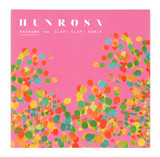
Sam Vicary A.K.A Hunrosa (meaning "to dream") is an electronic music producer capturing the wild organic senses of his childhood and anchoring it with a darker 2am undercurrent. Based in Manchester, he is principally a bassist and currently a member of The Cinematic Orchestra, Paper Tiger and The Dominic J Marshall Trio, as well as performing with Manu Delago, Imogen Heap, Matthew Halsall, Anil Sebastian and Stuart Macallum.
His latest offering 'Ransome' is a heavily rhythmic journey, full of textured hand percussion and soaring strings, accompanied by the beautifully melodic vocals of Alice Higgins drifting overhead. The Clap Clap remix sees the Black Acre mainstay exploring expansive territories, polyrhythmic hand percussion and textured electronica perfectly intertwine, drenched in dub ambience, heightened by scattered arpeggios and swirling synths. The music is inspired by a coastal upbringing, represented in the music via field recordings, as well as being aided by visual stimulus throughout the writing process.
A bit of an emotional moment for us - this much needed repress of one of our very favourite slabs of vinyl that have passed through these doors over the years. Exploring the very outer limits of dancehall and techy D&B, both sides writhe and snarl at 90bpm, beating you over the head with pressure cooked kick drums, drop forged snares and, those ugly, ugly mentasms. Upon it's original release, it was a challenging and very rewarding record - one that had DJs scratching their heads, dancers demanding wheelups and, more recently - more than a few emails from people asking if there were any copies left stashed away. Both side's disregard for genres and conventions mean this plate sounds just as fresh now as it did upon it's original release date - arguably it's better stationed for tactical deployment now than it was back in 2013 - The current crop of stripped back dancehall (and halftime D&B that has been undoubtedly informed by it) are in rude health and prime for disruption with this record. That said, regardless of which styles you play - this is one of those wildcard riddims that can be used at peak time to wreak havoc on any dancefloor. Blacklabel, sticker sealed pressure, with a yellow paper insert of the original artwork. One of those records you'll pull off the shelf in years to come, no doubt about it. Edition of 300, with insert and stickered centre labels.
more talking all that jazz, more high aiming music by fumio itabashi: mule musiq is ready to release another record by the legendary japanese jazz pianist, born in ashikaga, tochigi in the year 1949.
this time his first solo record ever: the heavy jazzing 'nature', which has never been reissued on vinyl since its birth in 1979. it has been recorded at nippon columbia 1st studio, tokyo from march 13 to 15 in the year of its release.
it features itabashi making feverish love with the piano and sharing the studio with the great bass players hideaki mochizuki and koichi yamazaki, drummers kenichi kameyama and ryojiro furusawa, soprano saxophonist yoshio otomo and vibraphone wizard hiroshi hatsuyama.
they all joined him to perform his very own songs, composed by itabashi himself and produced by ryonosuke honmura, who also produced japanese jazz heroes like saxophonist keizo inoue during his career.
but enough background information. what counts is sound. it is fresh, propulsive, twitchy and melodi-ous from the first to the last tone. sometimes the instrumentalists play a classic solo in an overall deep modal jazz atmosphere that seems to be made for cats that love the good old stars and inventors - from john coltrane to mile davis, from thelonious monk to art blakey.
'nature' also shows how deep itabashi studied the history of the genre, while keeping his very own vision of jazz alive. the man that made his professional debut as a member of the sadao watanabe quintet in 1971 and that also was a member of the elvin jones jazz machine world tour from 1985 to 1987, plays the piano in all tempos: nervous high-flying quick, deeply blue blues style slow.
besides the traditional jazz flavours, you get a feeling of mind-expanding spiritual jazz, that grand mas-ters like pharaoh sanders or gary bartz turned into a sacred music genre. a master-class record in ravishing big city jazz music, adventurous, sometimes meditative, sometimes faster than the speed of light, always grooving with a bright, pure-toned sensibility and deeply soulful melodic imaginations.
it extends the jazz history with a fine balance between tradition and innovation. and it stays infectious all the time while sounding surprisingly fresh due to a lot of thrilling musical spontaneity that touches profoundly even though all notes have been written down by fumio itabashi before he and his combat-ants entered the studio.
and maybe that's the mystery of these timeless five at times epic recordings: all notes been written on paper but each musician had the freedom to dance with them in his very own unique way. so, turn the volume loud and get ready to be steamrolled by fumio itabashi's 'nature', an inebriant album that is talking all that jazz deeply!
Paper Recordings' Ben Davis takes off his Flash Atkins cape and mask to launch a new project exploring things left of centre and balearic.
In these disposable times, Stubb will celebrate community and DIY with a limited run of 300 vinyl screen-printed kraft card sleeves of commissioned illustrations by artist Rachel Johns plus hand-drawn labels by Hebden Bridge's The Egg Factory.
We Are Launching is a journey in to psychedelic balearia with one of the most exciting artists of recent years, Jane Weaver
Her Mercury Music Prize long-listed album 'Modern Kosmology' was described by The Guardian as "a lean and thrillingly addictive slice of unearthly pop".
The Stubb collaboration is a sublime head trip to the deep reaches of space and electronica with hallucinatory guitars, burbling synths and arpeggiators that are beautifully set off by Jane's ethereal vocals.
Mike Lindsay is founder and producer of folktronica pioneers Tunng and his distinctive tones sing the praises of doing nothing on Boring Days, which is psychedelic leftfield pop at its finest.
The track is locked down by a nagging fifth bass with vocal pops, hand claps, muted afro guitar, washed synths and arps that build before the choruses hit in a wave of analogue keyboards and fuzz guitar.
After that, a gloriously stretched outro takes you straight to the mediterranean. There's also an edited instrumental that brings out the sunshine...
Paper Dollhouse is the production alias of Astrud Steehouder and Nina Bosnic. Having previously recorded albums for Jane Weaver and Finders Keepers' Bird imprint, plus the Folklore Tapes and Night School labels. The Sky Looks Different Here arrives via the group's independently ran MoonDome imprint. Paper Dollhouse have collaborated and performed with artists including Old Apparatus, The Wolfhounds, Daniel O'Sullivan, Killing Sound, DB1, Joe Cocherell and Pye Corner Audio, and their music has been featured in mixes by Skee Mask, Mark Pritchard, Blackest Ever Black, Lobster Theremin, Lanark Artefax and Ancient Methods.
The Sky Looks Different Here features twelve tracks that draw parallels between the project's past roots in spidery post-punk electronica and a neon-lit, radioactive ambient pop sensibility. This has lead to the creation of what is sure to be the most concise and realised Paper Dollhouse record yet. One that mixes the group's signature brand of darkwave influenced left-field pop, urban field recordings and electronic composition.
Both these smashers played by the legendary DJ Storm (Metal Headz) VINYL ONLY - Limited edition x300 copies pressed at MPO - Plain spine in white with white paper inner. Colourful New York subway 80s graffiti style label artwork designs on both side A. & AA for the Hip Hop crazed among us by UK artist James Jessop
Plenty Headroom' EP is a twisted techno release from Kahuun on Scandinavian label PLOINK with remixes from anonymous Norwegian act Vakum and label boss Thomas Urv.
PLOINK started life as a club in Bergen where it has hosted the biggest techno parties in the region. 2014 saw it expand into an imprint, supporting Norwegian artists with releases from the likes of Vakum, Nordenstam, Christian Tilt and label founder Thomas Urv. Bergen producer Kahuun has been DJing across Europe for well over two decades now and saw his first 12' on Paper Recordings in 1999 followed by a string of releases on the likes of Hi Fi Terapi, Bagpak Records and Sex Tags UFO.
'Plenty Headroom' incorporates stabbing, abrasive pads that tumble downwards over a muted, staccato bass and a 4/4 beat. 'Enlargement' then gets more frantic with a faster tempo and galloping bounce, overlayed with punchy warm synth sounds. Thomas Urv's remix of 'Plenty Headroom' delivers the darkness one would expect from the PLOINK founder, underpinned by a crunchy, compressed sub bass line. Tying everything up Vakum's rendition demonstrates a heady buzzing synth that builds a tension over a pounding four to the floor.
From the Lands that time forgot Birdie is proud to bring you an EP of the highest quality from the artist currently know as Causa. Hailing somewhere from up in the hills on the border between deepest darkest East Lancashire and West Yorkshire (thats up north to you lot) Causa "Joe" is a long time friend of Trevino "Marcus". Joe is underground and a lover of proper house music and has never been interested in music trends (he is a fisherman for christ sakes). He has been making music under various guises for 15 years with an apparent 6 year gap to go fishing.. He has had releases with 202/20 vision tusk wax and paper recordings to name but a few. As Marcus and Joe still meet regularly for a pie and a pint its no real surprise then that this EP of some of Marcus's favourite music of Joe's has come to pass. Enjoy.
- A1: Tap Tap Feat Supa Sayed
- A2: Disco Nap Feat Anneli Drecker & Robert Owens
- A3: End Of The World Feat Lenny
- A4: Wonder Feat Kurt Maloo
- A5: Sculptures Feat Carina Istre
- B1: Krassava Feat Mark Bell, Lenny & Øyvind Blikstad
- B2: Lowriders Lowsong Feat Marita Sørli
- B3: Awkward Feat Charlotte Thorstvedt & Øyvind Blikstad
- B4: Takelur Feat Bogdan Loebl
- B5: Kogens Gate Feat Øyvind Blikstad
April 2013 sees the release of Norwegian Disco Viking Rune Linbaek's latest long player, on his Drum Island label
Its his first album since the 2000 release (Sondag) on Paper Recordings RePap offshoot
Last year's single 'Wonder' feat Kurt Maloo on the label was a day one sell out here at All Ears and marked a significant maturing of Rune's trademark sound.
The influence of Norway on the world's forward thinking Disco scene & beyond is more than evident, with countrymen like Todd Terje, Prins Thomas and Hans Peter Lindstrom
all leading the charge for years now. The creative cauldron of the infamous 'club in a public toilet' Skansen has much to answer for !
Krasava is a very much vocal led project, with a cast of featured vocalists which includes Norwegian popstar Anneli Drecker alongside recent collaborator Øyvind Blikstad.
The album is steeped in Norwegian folklore, visually and musically and the gentle lilt of the Norse/Balearic sound, sits comfortably alongside more Cosmic flavours, Rock and beautifully crafted pop.