
Search:para x

- A1: Kumi Nakamura - Kimagure
- A2: Miyuki Maki - Indo No Michibata
- A3: Haruyoshi Yamashina - Osake To Joke
- A4: Sumiko Yamagata - Natsu No Hikari Ni
- A5: Hatsumi Shibata - Party Is Over
- B1: Makoto Iwabuchi - Moonlight Flight
- B2: Hiroshi Sato - Saigo No Tejina
- B3: Arakawa Band - Paradise's Dream
- B4: New Generation Company - I Wander All Alone (Part Iii)
- C1: Kiyohiko Ozaki - Ojosan Oteyawarakani
- C2: Kengo Kurozumi - Juggler
- C3: Ken Nishizaki - Koi No Paradigm
- C4: Jadoes - Simply Another Love
- D1: Midori Hara - Aamar Jabar
- D2: Hitomi 'Penny' Tohyama - Tuxedo Connection
- D3: Mizuki Koyama - Oh! Daddy
- D4: Haruo Chikada & Vibra-Tones - Sofa Bed Blues
- D5: Mitsuko Horie - Chigasaki Memory
18
A stylish selection of city pop, funk and modern soul from Japanese label Nippon Columbia, selected by DJ Notoya and featuring cult classics and rarities by Hiroshi Sato, Hatsumi Shibata, Hitomi 'Penny' Tohyama & many more.
Annotated by Notoya with journalist Nick Luscombe and artwork by Optigram.
Newly remastered audio.
The selection on ‘Tokyo Glow’ starts with 'Kimugare' a relaxed mid-tempo track by Kumi Nakamura, actually a famous actress who only recorded one album in 1980 for Columbia.
The set continues and flows effortlessly with the sunshine grooves of Miyuki Maki, Hatsumi Shibata and cult keyboard player Hiroshi Sato before the pace starts going faster and funkier with New Generation Company, Kengo Kurozumi - with his superb boogie, 'Juggler'
- and one of the queens of the genre, Hitomi 'Penny' Tohyama with 'Tuxedo Connection'.
Another fine example on the set is the mid-tempo groove of "I Wander All Alone Part III" by New Generation Company, an aggregate group of some of the best Japanese session musicians led by arranger Katz Hoshi and including Hiroyuki Namba (key), Kazuo Shiina (gtr) and Yutaka Uehara (ds) who all played with Tatsuro Yamashita among many others.
There are many other excellent examples in 'Tokyo Glow', showcasing the diversity and specificity of Japanese City Pop during the late 70s and 80s.
Nippon Columbia opened their much-guarded vaults to curator DJ Natoya. Tracks were remastered in Tokyo and the result, ‘Tokyo Glow’, is a unique insight into a most creative period in Japanese music.

7
London exploratory industrialist Luke Younger characterizes the creation of his latest collection, Axis, as a liberating return to roots: “It felt like going back to the beginning, it felt freeing.” Begun before the pandemic as a soundtrack to a dance performance, the initial vision was for something “visceral, with physical movement in mind.” When the project shifted to indefinite hiatus, he reimagined the material in the context of an LP, while retaining its sense of dynamic physicality. The result is grim and gripping, seasick throbs lurching in a low-ceilinged space, strafed with fractured clanging, hissing steam, and grinding spirals of granular haze. Noise in its most elevated and compelling form, from and for the body as much as the mind.

7
London exploratory industrialist Luke Younger characterizes the creation of his latest collection, Axis, as a liberating return to roots: “It felt like going back to the beginning, it felt freeing.” Begun before the pandemic as a soundtrack to a dance performance, the initial vision was for something “visceral, with physical movement in mind.” When the project shifted to indefinite hiatus, he reimagined the material in the context of an LP, while retaining its sense of dynamic physicality. The result is grim and gripping, seasick throbs lurching in a low-ceilinged space, strafed with fractured clanging, hissing steam, and grinding spirals of granular haze. Noise in its most elevated and compelling form, from and for the body as much as the mind.

7
London exploratory industrialist Luke Younger characterizes the creation of his latest collection, Axis, as a liberating return to roots: “It felt like going back to the beginning, it felt freeing.” Begun before the pandemic as a soundtrack to a dance performance, the initial vision was for something “visceral, with physical movement in mind.” When the project shifted to indefinite hiatus, he reimagined the material in the context of an LP, while retaining its sense of dynamic physicality. The result is grim and gripping, seasick throbs lurching in a low-ceilinged space, strafed with fractured clanging, hissing steam, and grinding spirals of granular haze. Noise in its most elevated and compelling form, from and for the body as much as the mind.

11
Narrow Head’s debut full-length record Satisfac- tion is available once again on vinyl for the first time since its initial release in 2016. Reissued by Run For Cover, this version of the album includes updated album art and a limited color vinyl release. While the band offered a handful of one-off sin- gles and demos prior to Satisfaction’s release, this record offers a perfect introduction to the Houston band’s world.

- A1: ) Fiend Discovered And Titles
- A2: ) Peter And Rosalind In Attic
- A3: ) Rosalind's Madness
- A4: ) Angel's Claw
- A5: ) Claw In Classroom
- A6: ) Judge By Fireside
- A7: ) Peter Fights Devil, Severs Hand
- A8: ) Judge Drives Off
- A9: ) Mark Alone
- A10: ) Death Of Marc
- A11: ) Angel Naked
- A12: ) Angel's First Curse
- A13: ) Angel's Second Curse
- B1: Return From The Graveyard
- B2: Return From The Graveyard
- B3: Kathy Crowned
- B4: Children Into Church
- B5: Kathy's Ceremony
- B6: Kathy's Rape And Death
- B7: Peter's Ride
- B8: Ralph Chops Tree
- B9: Ralph Saves Margaret
- B10: Margaret Escapes
- B11: Ralph's Wound
- B12: Ralph Bewitched
- B13: Finale And Credits - Total Running Time: 48:B8
26
Blood On Satan’s Claw – AKA Satan’s Skin in the USA, is a cult British horror movie from 1971. It’s a film from the golden age of British horror, and one that ticks most of the horror connoisseur’s boxes - it stars the Devil, Olde England, it has nudity, strange ritualism, a fair smattering of blood and of course, sublime music. Produced by cult masters Tigon, this film was the perfect companion piece to their earlier Witchfinder General (1968). Set in rural 17th century England, it tells the fine story of a small village that quickly falls under the devil’s spell. It’s brilliantly told and quite beautifully shot with a very fine cast of superb character actors.
Over many years the film has slowly gained a cultish reputation, and there are rumours that good old Tim Burton is a very big fan and used the movie as an influence for his “Sleepy Hollow” production.
The score was never released. Written by Marc Wilkinson, former director of music for the National Theatre, this cult soundtrack takes its lead from “The Devil’s Interval”, but more about that in the next paragraph. Musical appearances from the Ondes Martenot (the earliest electronic instrument) and Cimbalom add to the overall spookiness of this recording. And in 38 years the music has lost none of its depth or addictive, evil hooks. The first pressing sold out many years ago and commands high prices. A repress has been requested for many years.
Here’s Marc Wilkinson’s thoughts…
“The descending chromatic scale which features throughout the music omits the perfect fifth (the only true consonant in the chromatic scale) and therefore highlights the diminished fifth, which ever since the middle ages in Europe has been known as the Devil's Interval!!”
BRIEF ARTIST INFO: Marc Wilkinson was musical director of the National Theatre throughout the 1960s. He scored a number of films in the late 1960s and 1970s including “If” for Lindsay Anderson. Wilkinson currently lives in France.

10
WRWTFWW Records is super happy to announce the official reissue of Roland Bocquet’s highly sought after solo album, Paradia. Sourced from the original masters, this very comforting and warm gem is available on limited edition vinyl housed in heavy 350gsm sleeve with holographic sticker, as well as on digipack CD.
Originally released in 1977 on the legendary Cobra label, Paradia is the first solo album by Roland Bocquet, keyboard player for cult French band Catharsis. The (mostly) instrumental album is a wonderful oddball adventure blending cosy ambient, euro-folk, synth escapades, Latin fusion with a French touch, gentle bossa, a tiny bit of minimalist chanson, and a heavy dose of je-ne sais-quoi. The result is soothing, mysterious in the sweetest ways, and fully atmospheric: a must have for fans of Pascal Comelade, Mort Garson, Dominique Guiot, ZNR, Vladimir Cosma, movie soundtracks, library music, and unclassifiable gems.
It’s hard to describle but lovely to experience! Paradia, Paradia, Paradiaaaaaaaa…

12
One of the most important harmony groups in the entirety of Jamaican music, the Paragons have a long and complicated history. First formed in the ska years by Bob Andy and Tyrone Evans as the duo of Andy and Ronnie, the group soon expanded to a quartet through the addition of Howard Barrett and John Holt, the latter naturally assuming lead duties, following the subsequent departure of Andy, Holt, Evans and Barrett made the Paragons the quintessential rock steady trio. They had an incredible run of hits for Duke Reid and Coxsone during the mid-to-late '60s, and also issued some self-produced work, before Holt's solo career skyrocketed, leaving the group on the back-burner. Then, in the mid-1970s, the Paragons reformed, cutting material for New York-based labels such as Clocktower and Clintones, which led to this intriguing album, which saw material recorded in Jamaica at Harry J for Bunny Lee mixed with work cut at Bullwackie's studio in the Bronx, along with re-workings of classics such as 'Left With A Broken Heart' and 'Memories By The Score' is a whole range of new material, dealing with contemporary themes.

7
Editions Mego is proud to welcome Powell to its roster with a bizarre and strangely emotive new LP of synthetic computer works entitled Piano Music 1-7.
Via his own Diagonal Records imprint, his work on XL Recordings and, most recently, the opening of audio/film platform A Folder afolder.studio, Powell has firm footing in the contemporary electronic landscape. During a wry and obstinate musical life he has twisted myriad synthetic forms into shapes that explore and expand upon the districts of post-punk, techno, noise + computer music, and in the the last year alone he has released four albums of hi-def abstractions, each inspired by a formalisation of music proposed by Iannis Xenakis.
As an extension of this intense period of work/research/play with stochastic functions using probabilities to compose music, various processes emerged that Powell then began to apply to more traditional musical events. Where ordinarily in his work the probabilities and relationships are used to define parameters such as wave-shape, folding, FM, filter modes etc., he now began to use them to create musical formations and visual scores that could be played back using any software/MIDI instrument one of these can be seen on the rear cover of the LP release. While mapping out this cartography of relations, he used a basic Grand Steinway sampler as a placeholder instrument; the longer the process went on, though, the more he began to embrace the acoustic properties of the synthetic piano and make it the bedrock for this new constellation of work.
Piano Music 1-7, subtitled 'Music for Synthetic Piano and Assorted Electronics', consists of seven different synthetic islands strung together into a single composition. All were composed using the aforementioned processes that allowed Powell to play a piano, even if he never learned to do so with his hands. After all, 'In writing electronic music,' Robin Mackay once wrote, 'you also have to direct the invention of new tools.'
At times the piano skips gleefully over shadowing synthesis, whilst at others the synthetic sheets swarm and envelope the keys. The interplay between the two create a fantastical alternate reality, a cosmic machine in which time is eroded, shrunk and expanded, like a wax upon which operations and relations are inscribed or engraved. Many of the pieces express a playfulness or optimism verging on vitalism, as bundles of piano notes dance and interpolate with a never-repeating range of electronic gestures. The feel is of a brightly coloured flower-bed in various stage of bloom. This interplay of the artifical acoustic and the electronic builds on the pioneering processes developed by David Behrman in works such as Leapday Night, and Piano Music 1-7 could also be posited as a modern take on Conlon Nancarrow's investigations for player piano. Similarly, the razor-sharp sonic properties and unfolding of non-human events recall the computer works of Xenakis and the surgical precision of Mego mainstay Florian Hecker.
Recorded in late 2020, these new Powell works propose not just a bold and bright vision of electronic music but serve also as a map with which, for 35 minutes at least, we can navigate our way out of the current milieu. As the artist himself remarks in the sleeve-notes, '. . . What emerged from this fog or soup for me were ideas and processes that felt affirmative and life giving — sensations I had always hoped to convey in my music. Perhaps the optimism or positivity I felt at these musical events unfolding, these clusters and knots tumbling in different directions across time, can also be felt by you.'

8
GENOCIDE PACT return with their eponymous new album. An overdose of gut-wrenching Death Metal, Genocide Pact is heavy, engrossing, and undoubtedly brutal. "This album reflects on the feeling of watching the world crumble while dealing with personal tragedy," says guitarist/vocalist Tim Mullaney. True to his word - every track on Genocide Pact is a sonic assault brimming with palpable malaise. From the guttural screams in the album's opener "Led to Extinction", to the driving double bass that carries "Perverse Dominion", and a head rattling low end on "Deprive Degrade" - Genocide Pact is wholly negative Death Metal. The fury behind Genocide Pact captures the band's collective frustrations and personal journeys through these turbulent times. "You turn on the news and see mass shootings, a global pandemic, endless war, and corporations and politicians trying to sell you bullshit. You pick up your phone and another friend or family member has died. On top of that, you’re broke as fuck and work endlessly for a boss that doesn’t even know your name. You find yourself paranoid, pissed off, and embracing nihilism," Tim Mullaney says. GENOCIDE PACT have learned to embrace the negativity, churning out one of 2021's ugliest and unforgiving records.

4

9
What do you get when you blend a reverential take on the diverse canon of popular Caribbean music with an all-star cast of seasoned studio musicians from the heart of Brooklyn? The answer lies in Combo Lulo's much anticipated debut studio long-player, Neotropic Dream. The group takes its influence from the deep musical heritage of New York's cultural pedigree, especially the heyday of the city's Caribbean record distribution industry — a culture of music that still bubbles today in the crevices of the city's independent neighborhoods and record communities.
Despite the general scope of the muse, it's hard to precisely pin down this fantastic re-imagining. In some ways, that's why the title for the band's debut album is Neotropic Dream, a nod to the biogeographic region that encompasses the countries along the Afro-Caribbean diaspora, a region intensely diverse in its climate, fauna and flora. This theme manifests musically as you journey through Combo Lulo's original compositions and cleverly chosen covers. More than anything, it's a dreamy storm of styles and musical moments born anew. And just as weather swiftly travels and transforms the Caribbean, so the varied musical styles carry the listener from the album's start to finish. Not just a talented band's showcase of styles, but rather a sumptuous feast of savory and sweet ingredients on display, together. A musical curry roux, if you will, that fits together so harmoniously, it's no wonder the band engenders automatic appreciation both in their studio recordings and in their uproarious live shows.
Whether it's cumbia gone rock steady, or reggae gone chicha, or vocal vs. version, there's a little something for everybody on here, depending on where you drop the needle. With splendid original compositions and horn arrangements from band leader Mike Sarason and saxophonist Anant Pradhan, respectively, Combo Lulo is quickly proving themselves to be a powerhouse of the highest caliber.

10
Legendary Brazilian group Orquestra Afro-Brasileira are reborn for first new album in over fifty years, produced by Beastie Boys collaborator Mario Caldato Jr.
Led by maverick composer Abigail Moura, Orquestra Afro-Brasileira were one of the most influential yet overlooked groups in Brazilian music history. Operating for almost thirty years until 1970, they released just two albums - the first of which, Obaluayê, has recently been reissued by Day Dreamer Records - and left behind a legacy of Afro-Brazilian consciousness that continues to resonate today.
Combining Yoruba spirituality, folk tales, Candomblé chants and West African percussion with the instrumentation of the big band jazz tradition in the United States, the Orquestra placed Afro-Brazilian heritage in a new and vital context. Weaving emancipatory narratives into complex poly-rhythms and powerful, syncopated horn lines, the group educated and enlightened all those who saw them perform.
For Abigail’s protégé and percussionist on the group’s 1968 album Carlos Negreiros, the message of the group’s music had a profound impact: “I became aware of what it is to be black,” he says, “discovering the extraordinary potential of the Afro-Brazilian culture in the making of the national ethos.” Now the last remaining member of the original Orquestra, Carlos was tracked down by producer Mario Caldato Jr. - whose credits include Beastie Boys, Marcelo D2 and Seu Jorge among others - to oversee the first new album of Orquestra Afro-Brasileira material since 1968.
“I was overwhelmed with the percussive rhythms, beautiful deep vocals and combined energy,” Caldato Jr. explains. “It felt like the most authentic Brazilian roots music I had ever heard. It was raw and dynamic, a pure organic sound and energy. It was a spiritual experience.”
Alongside arranger Caio Cezar, Carlos assembled his Orquestra to record five tracks at Berna Ceppas’ Estudio Maravilha 8 studio in Rio De Janeiro. With percussion, horns and vocals cut in single takes over three days, the session captured the intuitive, pure and natural spirit of the group in full flow.
Following the success of the initial session, five additional tracks were recorded at the iconic Estudio CIA dos Tecnicos in Copacabana to complete the album. Mixed by Caldato Jr., 80 Anos is a contemporary incarnation of Abigail Moura’s vision, bristling with the flair of the original recordings.

12
The original Soundtrack to Greek-German director Nikias Chrssos’ new feature, ‘A Pure Place’, scored by John Gürtler (Eigenlicht, COUNTER019), with his studio partner Jan Miserre, and featuring a track by chameleonic British artist Shackleton.
The script for A Pure Place had a dizzying effect on John Gürtler & Jan Miserre; their minds reeling with the possibilities.
From Persian sheep bells, Chinese sheng, prepared trombone, quarter-tone piano, a beaten-up cembalo, hand percussion, and a room full of synthesizers, embryonic compositions and experiments came to life early on in the project.
An electro-acoustic extravaganza, the soundtrack for A Pure Place takes a deep bow towards the many magnificent composers and scores from the late 60s and 70s where orchestral arrangements met with tape loops, psychedelia, and instruments from across the globe. Listening to that era of film music, anything seems possible.
The minimalist tones of ‘Ritual Bells’ set the dial to weird in the opening sequence of the movie, whilst ‘The Island’ makes use of ambient vocals recorded through an oil drum, gently introducing one of the score’s main themes with a distant quarter-tone cembalo.
Acclaimed British artist Shackleton’s eerie original version of ‘Fust’s Song’ (also included) was a tonal keystone for the entire soundtrack. Gürtler and Miserre translated his psychedelic electronic blueprint, layering acoustic instruments and bottom-heavy percussion in their ‘Paradox Paradise’ production style. The vocals, written by Chryssos, and sung by the cast on set, capture the sonics of the actual crypt-like space where cult leader Fust addresses with his following.
‘A Glimpse of the Other Side’ speaks of love and death in a 70s-indebted composition reflecting John and Jan’s shared love for melancholic and suspenseful chord progressions. Meanwhile, the sparkling synths of ‘Athens’ - the children discovering neon-lit civilisation after years confined on the island - transplant us to an entirely different era.
Greek artist Maroulita del Kol features heavily throughout - her choir of vocals on ‘Erotica’ were recorded late at night in the studio foyer, capturing its unique tiled reflections and concrete reverb.
On ‘Purification’ Maroulita’s voice guides us alongside a Moog bass drone, building to an ecstatic climax, whilst she also features in the film’s disco-centric ending credits on ‘Gatoula Mou Mikri’.

clear vinyl / incl. poster
The music of Parallax is part of the foundation of Zodiak Commune Records since 1998. With ZC002 - Sinister Projects EP- and ZC005 - Occult Technology EP, Parallax created timeless underground anthems which are being reflected in the Archive EP. With previously unreleased live recordings, this EP is a well-preserved document of the past whilst being relevant in today's underground techno and acid scene. Parallax his live set was recorded at the legendary "old" Effenaar (Acid City Eindhoven, The Netherlands) while the Zodiak Commune's 10th anniversary was being celebrated. With its massive and no-nonsense acid-techno sound, Parallax transformed the dancefloor into a vortex, fueling up people with positive energy while taking them on his musical journey. A nostalgic journey that will make you crave for more timeless underground bliss! With 2002 Live Pt1 being over 12 minutes long a true story is being told. Enjoy this fine release of the purest acid-techno around!
2003 Live Pt1
A dark entrance, heavy basses that make the roof rattle, the smell of stale beer and sweaty people who all seem to speak another language but listen to the same... Those of seemingly soulless beats, but which ultimately take you closer to one self and each other than most religions have managed to realize...
Enjoy 12:30 minutes of storytelling!
1998
Clashing raw 303's, brutal beats colliding mid-air, ear piercing percussion. The soundtrack of the battle of 1998 is all but merciful, sending shivers down your spine.
2003 Live Pt2
Time seizes to exist. Beats provide the energy needed on a journey so loud there is no choice but to join. Guided by musicians, they who make you walk but not go anywhere but inside. Rebel minds choose to renounce their disobey, for their worries to be taken far, far away.

- A1: Shenmue - Sedge Tree (Original Version)
- A2: Edge In
- A3: Hound
- A4: Reap The Whirlwind
- A5: To Become A Master
- A6: Pursuit
- A7: Eager
- A8: Boundless Lands
- B1: Flowering Hill
- B2: A Strange Land
- B3: Old Clock
- B4: Flow Of The Lijian River
- B5: Peddler
- B6: The Place Where The Sun Sets
- B7: Niaowu Drama
- B8: Knowledge Of The Fist
- C1: Harbor Hotel
- C2: Skill Book Seeking
- C3: Stomping Ground
- C4: Wooden Dummy Heaven
- C5: New Paradise
- C6: Disquiet
- C7: Tech Paradise
- C8: The Miserable Fortune Teller
- E3: Secret Technique
- E4: Wise Men's Qr. ~ Visiting History And Tradition
- E5: Like Marries Like
- E6: Brother
- E7: The Bar
- E8: Acrobat Chase
- E9: Ren Of The Port
- F1: Seeking Healing
- F2: Master's Teaching
- F3: Snail's Pace
- F4: Shop A Go Go!
- F5: Buddha Statue
- F6: The Dark
- F7: Predicament
- F8: Prayer
- C9: Mysterious Woman
- F9: Fresh Picked
- G1: Pry The Secret
- G2: An Odd Piece Of Pottery
- G3: Day Off
- G4: A Peaceful Time
- G5: Halcyon Days
- G6: Market Scene
- G7: Dubious Apothecary
- G8: Riverside Blues
- G9: Romance Of The Journey
- G10: Street Fight
- H1: Black Sesame Dumplings
- H2: Exotic Hat
- H3: Happy Day
- H4: Door To The Final Battle
- H5: Shadows Creep In
- H6: Oyster Shock
- H7: Millions Served
- H8: Road Of Blooming Flowers
- H9: People Coming And Going
- H10: Fine Furnishings
- I1: Liu Jiao Shrine
- I2: Lament
- I3: Street Stall Bustle
- I4: Super Trade-In Deal ♪
- I5: Happy Convenience
- D1: Duck Heaven
- I6: Teahouse
- I7: To The Final Battlefield
69
he 20th milestone release in the Generation Series lineup, this 5-LP abridged set features 82 tracks that play in the first half of Shenmue III, which takes place in Bailu Village. Comes in a top lid box (similar to recent Generation Series releases from Brave Wave) with liner notes, archival artwork and a digital download code for all 196 tracks.

4
Rarely has the DSO sparkled as in the fresh, exuberant music of Emmanuel Chabrier. Included on this album are the Chabrier compositions ‘España,’ ‘Suite pastorale,’ ‘Fête polonaise,’ ‘Gwendoline’ Overture and ‘Danse slave.’ Recorded in the Cass Technical High School auditorium, November 18, 1960 with three Schoeps M201 microphones.

9
Now Here Is Nowhere is the debut studio album by American alternative rock band Secret Machines. It was originally released on May 18, 2004.
The band’s epic, drawn out melodies are reminiscent of classic rock bands such as Pink Floyd and Led Zeppelin, with influences from krautrock and shoegaze. Now Here is Nowhere received widespread critical acclaim, saying the band is locked-in and steady while Garza’s imperturbable drums stand strong against Brandon Curtis’ guitar explosions and Ben Curtis’ psych-rock keyboard scribbles.
The album was released online before it was released physically, which was uncommon at the time, but it did help the band gain more press coverage. The song “Nowhere Again” was used as a promotional single and appeared in the 2006 video game Driver: Parallel Lines.
10
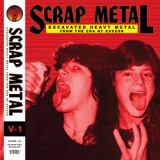
By now you’re probably familiar with our wildly popular Brown Acid series of rare, lost and unreleased proto-metal and stoner rock singles from the 60s-70s. In the endless pursuit of those glorious gems, we often uncover equally brilliant rarities from the late-70s to late-80s Golden Age of Heavy Metal that also just must be heard, but they don’t fit the series’ aesthetic. Scrap Metal, Volume 1 collects some of the greatest unknown and lost Heavy Metal tracks, long buried beneath the avalanche of the era’s classic output.
We all know the old adage that history is told by the winners. But sometimes the losers tell the best stories. And while none of these bands found fame and fortune, this artifact and the volumes to come are testament to the enduring power of heavy music. You can hear the blood, sweat and beers that went into each of these singles. The recordings may be low budget, but the inspiration and talent is immutable. Not only are the amps turned up to 11, the boyish sexual innuendo is cranked to 69. You can hear the convergence of influences — NWOBHM, thrash, glam metal, doom, etc — colliding at once as the era birthed a wellspring of subgenres.
Many of these singles are self-released and were thus limited to a small run of copies. Those that remain are hoarded by collectors and sold for exorbitant amounts. We’ve collected the best of the best for you here. As with Brown Acid, all of these tracks are licensed legitimately and the artists all get paid. Because it’s the right thing to do.
LINER NOTES:
Rapid Tears launch this series with the perfect christening. The Toronto, ON quintet’s 1981 single “Headbang” is such the pinnacle of heavy metal madness that it almost sounds like a spoof. There’s also enough of the rapid-fire sputum that inspired Metallica to bang the head that doesn’t, as such, engage in said practice, to be found on the band’s sole full length Honestly. But “Headbang” is a straightforward glammy anthem for the ages.
Air Raid’s “69 In A 55” may be lyrically so sophomoric that it’s actually pretty clever, but this 1983 Bay Area power metal single is loaded with sleek Judas Priest riffs and interwoven melodies that are downright sublime. The band’s sole release, the 2-song Rock Force 7” features a curious band photo in which 3 band members — dolled up in Crüe makeup and leather — are sexually menacing the lead singer/guitarist tied to a bed. Another low budget highlight is when singer/guitarist Tommy “Thrasher” Merry imitates a delay effect on his vocals as he sings, “tonight!...tonight...night.”
Hades’ “Girls Will Be Girls” has a real demo cassette feel to its vastly uneven mix, but the energy to the performance makes this an undeniable keeper. The long running Paramus, NJ quintet’s 1982 2- song debut 7” titled Deliver Us From Evil features this blistering thrasher dominated by shimmering leads and confident vocals that show why the band went on to near-fame on Metal Blade Records.
Resless don’t need no T to prove that they’ve got “The Power” with this 1984 driving mid-tempo rocker in the vein of Mötley Crüe and Ratt. The River Vale, NJ quartet’s tight crunch wails all over Bon Jovi posers but it’s the band’s unique and subtle deployment of background vocals that gives this rager its staying power.
Pittsburgh, the Steel City, is home to Don Cappa, a band that pays tribute to the burgh, the metal, and the awesomeness of both with “Steel City Metal.” Their lone single, issued in 1987 with only 300 copies released, sounds like the work of some serious steel driving men, with a drummer who might’ve forgotten to wear a hard hat one too many times on the construction site.
The Beast has more of a punk feel to their aggressive “Enemy Ace” track from the 4-song Power Metal EP from 1983 — something like Dr. Know meets D.O.A. But their look, artwork and lyrics all prove that Heavy Metal is where their hearts lie. And this hook filled monster delivers repeated lines like, “I command them all in my lofty realm,” with commendable conviction.
Dead Silence from Denver, Colorado, debuting in 1984 is not to be confused with Dead Silence from Denver, Colorado, who also debuted in 1984. The former a workman’s hard rock bar band, the latter a political peace punk band and neither knowing of the other’s existence throughout their tenure. The pre-internet days were a marvel, indeed.This Dead Silence spits out a slick, Nugent tinged rocker called “Can’t Stop” about life on the road.
The Danger Zone is, by all accounts, not the place to be. And, Hazardous Waste of Boston, MA saw fit to add their two cents on the matter with this 1986 single that combines Van Halen’s flashy musicianship with NWOBHM aggression that sounds so awesome it teeters on itself entering the “Danger Zone.”
Czar’s heavy, doomy “Iron Curtain” single from 1982 hearkens to the sleazy sounds of Saint Vitus and Pentagram with its cranked up DOD Distortion pedal in a Peavey combo amp guitar tone and meaty, barking vocals. The upstate NY quintet only issued this 2-song single, but its driving rhythm, nosedive whammy-bar guitar solos and comparatively mature Cold War subject matter show they had real potential.
Not much is known about Real Steel’s majestic “Viking Queen” from 1987, other than it rocks hard and the 7” 45 sells for upwards of a grand on the collectors market. The Flint, Michigan band recorded at the home studio of local radio personality Bill Lamb, who primarily released Christian Gospel recordings. So, perhaps the band was struck down by a bolt of lightning shortly after this rare single’s release. Whatever the case may be, it’s a must have for fans of classic metal mayhem.
