Camelot, the legendary seat of King Arthur's court in Early Middle Ages Britain, was probably not a real place. A corruption of the name of a real Romano-Briton city, the word "Camelot" accumulated symbolic, mythic resonances over centuries, until achieving its present usage as a near-synonym of "utopia." In the mid-20th century alone, Camelot inspired an explosion of representations and appropriations, among them the violent, affectless Arthurian court of Robert Bresson's 1974 film Lancelot du Lac and the absurdist iteration of Monty Python's 1975 Holy Grail, both of which feature armored knights erupting into fountains of blood; the mystical Welsh world of novelist John Cowper Powys's profoundly weird 1951 novel Porius, with its Roman cults, wizards and witches, and wanton giants; and the nationalist nostalgia of President John F. Kennedy's White House. Unsurprisingly there are fewer Camelots in more recent memory. Camelot, Canadian songwriter Jennifer Castle's extraordinary, moving 2024 chronicle of the artist in early middle age, charts a realer, more rooted, and more metaphorical place than the fabled Camelot of the Early Middle Ages (or its myriad depictions), but it too is a space more psychic than physical. In Castle's Camelot, the fantastic interpenetrates the mundane, and the Grail, if there is one, distills everyday experience into art and art into faith, subliming terrestrial concerns into sublime celestial prayers to Mother Nature, and to the unfolding process of perfecting imperfection in one's own nature. Co-produced by Jennifer and longtime collaborator Jeff McMurrich, her seventh record is at once her most monumental and unguarded to date, demonstrating a mastery of rendering her verse and melodies alike with crisply poignant economy. For all their pointedly plainspoken lyrical detail and exhilarating full-band musical flourishes, these songs sound inevitable, eternal as morning devotions. "Back in Camelot," she sings on the lilting, vulnerable title track, "I really learned a lot / circles in the crops and / sky-high geometry." The album opens with a candid admission of sleeping "in the unfinished basement," an embarrassing joke that comes true. But the dreamer is redeemed by dreaming, setting sail in her airborne bed above "sirens and desert deities." If she questions her own agency_whether she is "wishing stones were standing" or just "pissing in the wind"_it does not diminish the ineffable existential jolt of such signs and wonders. This abiding tension between belief and doubt, magic and pragmatism, self and other, sacred and profane, and even, arguably, paganism and monotheism, suffuses these ten songs, which limn an interior landscape shot through with sunstriped shadows of "multi-felt dimensions" both mystical and quotidian. The epic scale and transport of "Camelot," with its swooning strings, gives way dramatically to "Some Friends," an acoustic-guitar-and-vocals meditation in miniature on Janus-faced friends and the lunar and solar temperatures of their promises_"bright and beaming verses" versus hot curses_which recalls her minimalist last album, 2020's achingly intimate Monarch Season. (In a symmetrical sequencing gesture, the penultimate track, the incantatory "Earthsong," bookends the central six with a similarly spare solo performance and coiled chord progression, this time an ambiguous appeal to _ a wounded lover? a wounded saint? our wounded planet?) Those whom "Trust" accuses of treacherous oaths spit through "gilded and golden tooth"_cynics, critics, hypocrites, gurus, scientists, doctors, lovers, government, the so-called entertainment industry_sow uncertainty that can infect the artist, as in "Louis": "What's that dance / and can it be done? What's that song / and can it be sung?" Answering affirmatively are "Lucky #8," an irrepressible ode to dancing as a bulwark against the "tidal pools of pain" and the "theory of collapse," and "Full Moon in Leo," which finds the narrator dancing around the house with a broom, wearing nothing but her underwear and "big hair." But the central question remains: who can we trust, and at what cost faith, in art or angels or otherwise? Castle's confidence in her collaborators is the cornerstone of Camelot. Carl Didur (piano and keys), Evan Cartwright (drums and percussion), and steadfast sideman Mike Smith (bass) comprise a rhythm section of exquisite delicacy and depth. This fundamental trio anchors the airiness of regular backing vocalists Victoria Cheong and Isla Craig and frames the guitars of Castle, McMurrich, and Paul Mortimer (and on "Lucky #8," special guest Cass McCombs). Reprising his decennial role on Castle's beloved 2014 Pink City, Owen Pallett arranged the strings for Estonia's FAMES Skopje Studio Orchestra. On the ravishing country-soul ballad "Blowing Kisses"_Pallett's crowning achievement here, which can be heard in its entirety in the penultimate episode of the third season of FX's The Bear_Jennifer contemplates time and presence, love and prayer_and how songwriting and poetry both manifest and limit all four dimensions: "No words to fumble with / I'm not a beggar to language any longer." Such rare moments of speechlessness_"I'm so fucking honoured," she bluntly proclaims_suggest a state "only a god could come up with." (If Camelot affirms Castle as one of the great song-poets of her generation, she is not immune to the despairing linguistic beggary that plagues all writers.) Camelot evinces a thoroughgoing faith not only in the natural world_including human bodies, which can, miraculously, dance and swim and bleed and embrace and birth_but also in our interpretations of and interventions in it: the "charts and diagrams" of "Lucky #8," a daydreamt billboard on Fairfax Ave. in LA in "Full Moon in Leo," the bloody invocations of the organ-stained "Mary Miracle," and all manner of water worship, rivers in particular. (Notably, Jennifer has worked as a farmer and a doula.) The album ends with "Fractal Canyon"'s repeated, exalted insistence that she's "not alone here." But where is here? The word "utopia" itself constitutes a pun, indicating in its ambiguous first syllable both the Greek "eutopia," or "good-place"_the facet most remembered today_and "outopia," or "no-place," a negative, impossible geography of the mind. Utopia, like its metonym Camelot, is imaginary. Or as fellow Canadian songwriter Neil Young once sang, "Everyone knows this is nowhere." "Can you see how I'd be tempted," Castle asks out of nowhere, held in the mystery, "to pretend I'm not alone and let the memory bend?"

Suche:para cit y
. For Fans Of: The Weather Station, Weyes Blood, Adrianne Lenker, Phoebe Bridgers, Joan Shelley, Lana Del Rey, Cass McCombs, Angel Olsen & Neil Young. Camelot, the legendary seat of King Arthur’s court in Early Middle Ages Britain, was probably not a real place. A corruption of the name of a real Romano-Briton city, the word “Camelot” accumulated symbolic, mythic resonances over centuries, until achieving its present usage as a near-synonym of “utopia.” In the mid-20th century alone, Camelot inspired an explosion of representations and appropriations, among them the violent, affectless Arthurian court of Robert Bresson’s 1974 film Lancelot du Lac and the absurdist iteration of Monty Python’s 1975 Holy Grail, both of which feature armoured knights erupting into fountains of blood; the mystical Welsh world of novelist John Cowper Powys’s profoundly weird 1951 novel Porius, with its Roman cults, wizards and witches, and wanton giants; and the nationalist nostalgia of President John F. Kennedy’s White House. Unsurprisingly there are fewer Camelots in more recent memory. Camelot, Canadian songwriter Jennifer Castle’s extraordinary, moving 2024 chronicle of the artist in early middle age, charts a realer, more rooted, and more metaphorical place than the fabled Camelot of the Early Middle Ages (or its myriad depictions), but it too is a space more psychic than physical. In Castle’s Camelot, the fantastic interpenetrates the mundane, and the Grail, if there is one, distills everyday experience into art and art into faith, subliming terrestrial concerns into sublime celestial prayers to Mother Nature, and to the unfolding process of perfecting imperfection in one’s own nature. Co-produced by Jennifer and longtime collaborator Jeff McMurrich, her seventh record is at once her most monumental and unguarded to date, demonstrating a mastery of rendering her verse and melodies alike with crisply poignant economy. For all their pointedly plainspoken lyrical detail and exhilarating full-band musical flourishes, these songs sound inevitable, eternal as morning devotions. “Back in Camelot,” she sings on the lilting, vulnerable title track, “I really learned a lot / circles in the crops and / sky-high geometry.” The album opens with a candid admission of sleeping “in the unfinished basement,” an embarrassing joke that comes true. But the dreamer is redeemed by dreaming, setting sail in her airborne bed above “sirens and desert deities.” If she questions her own agency whether she is “wishing stones were standing” or just “pissing in the wind” it does not diminish the ineffable existential jolt of such signs and wonders. This abiding tension between belief and doubt, magic and pragmatism, self and other, sacred and profane, and even, arguably, paganism and monotheism, suffuses these ten songs, which limn an interior landscape shot through with sunstriped shadows of “multi-felt dimensions” both mystical and quotidian. The epic scale and transport of “Camelot,” with its swooning strings, gives way dramatically to “Some Friends,” an acoustic-guitar-and-vocals meditation in miniature on Janus-faced friends and the lunar and solar temperatures of their promises—“bright and beaming verses” versus hot curses which recalls her minimalist last album, 2020’s achingly intimate Monarch Season. (In a symmetrical sequencing gesture, the penultimate track, the incantatory “Earthsong,” bookends the central six with a similarly spare solo performance and coiled chord progression, this time an ambiguous appeal to … a wounded lover? a wounded saint? our wounded planet?). Those whom “Trust” accuses of treacherous oaths spit through “gilded and golden tooth” cynics, critics, hypocrites, gurus, scientists, doctors, lovers, government, the so-called entertainment industry sow uncertainty that can infect the artist, as in “Louis”: “What’s that dance / and can it be done? What’s that song / and can it be sung?” Answering affirmatively are “Lucky #8,” an irrepressible ode to dancing as a bulwark against the “tidal pools of pain” and the “theory of collapse,” and “Full Moon in Leo,” which finds the narrator dancing around the house with a broom, wearing nothing but her underwear and “big hair.” But the central question remains: who can we trust, and at what cost faith, in art or angels or otherwise? Castle’s confidence in her collaborators is the cornerstone of Camelot. Carl Didur (piano and keys), Evan Cartwright (drums and percussion), and steadfast sideman Mike Smith (bass) comprise a rhythm section of exquisite delicacy and depth. This fundamental trio anchors the airiness of regular backing vocalists Victoria Cheong and Isla Craig and frames the guitars of Castle, McMurrich, and Paul Mortimer (and on “Lucky #8,” special guest Cass McCombs). Reprising his decennial role on Castle’s beloved 2014 Pink City, Owen Pallett arranged the strings for Estonia’s FAMES Skopje Studio Orchestra. On the ravishing country-soul ballad “Blowing Kisses” Pallett’s crowning achievement here, which can be heard in its entirety in the penultimate episode of the third season of FX’s The Bear Jennifer contemplates time and presence, love and prayer and how songwriting and poetry both manifest and limit all four dimensions: “No words to fumble with / I’m not a beggar to language any longer.” Such rare moments of speechlessness “I’m so fucking honoured,” she bluntly proclaims suggest a state “only a god could come up with.” (If Camelot affirms Castle as one of the great song-poets of her generation, she is not immune to the despairing linguistic beggary that plagues all writers.) Camelot evinces a thoroughgoing faith not only in the natural world including human bodies, which can, miraculously, dance and swim and bleed and embrace and birth but also in our interpretations of and interventions in it: the “charts and diagrams” of “Lucky #8,” a daydreamt billboard on Fairfax Ave. in LA in “Full Moon in Leo,” the bloody invocations of the organ-stained “Mary Miracle,” and all manner of water worship, rivers in particular. (Notably, Jennifer has worked as a farmer and a doula.) The album ends with “Fractal Canyon”s repeated, exalted insistence that she’s “not alone here.” But where is here? The word “utopia” itself constitutes a pun, indicating in its ambiguous first syllable both the Greek “eutopia,” or “good-place” the facet most remembered today and “outopia,” or “no-place,” a negative, impossible geography of the mind. Utopia, like its metonym Camelot, is imaginary
Collapsing new rhythms and industrial visions meet restless melodic vocals on Gateway, the debut album from San Francisco duo YANTRA on Swiss label Subject To Restrictions Discs. This isn’t dance music, but you will dance to it. It isn’t ritual music, but it will channel spirits.
The dreamer is still asleep. She awakens to heed the call. Curious downtempo drums, spartan and potent, animate the body. Running through the city, shadows dance on walls, and alluring voices, whispered, sung, and soaring, possess the mind. At the end of the path, gazing at the mirror’s edge, she finds the source of the voice—and realizes it’s her own.
YANTRA are artist-producer Yaniv de Ridder, also known by the alias YNV, and lyricist-vocalist-instrumentalist Janina Angel Bath. The pair have worked together for some time, beginning with YNV’s 2021 LP Golden Hour Ritual. On Western Paradox, a YNV EP released last year on Subject To Restrictions Discs, Bath contributed vocals—and so YANTRA, the project and the concept, was born. Working together, the pair craft new forms of transcendent sound, timeless and familiar all at once
Robert Sotelo is a bedroom pop songsmith who lives in Glasgow. Sotelo has released six albums since 2017, three of which came out on Upset The Rhythm. He also performs in Order of the Toad, Dancer and Nightshift. Mary Currie is best known as half of touchstone DIY experimentalists Flaming Tunes, alongside Gareth Williams (of This Heat). Currie also performed in Officer! with Mick Hobbs amongst others.
Introduced via a mutual friend, Sotelo approached Currie last year about collaborating on four songs he was constructing with producer/electronic guru Joe Howe. This resulted in the ‘Dream Songs’ 7” EP (out October 4th on Upset The Rhythm).
Not only does the title capture the hazy, reflective nature of the music it also expounds on the origin of tracks. Sotelo experienced several lucid dreams in the first half of 2023 that left him in a state of confusion. He recalled visiting parts of London vividly, including a disused theatre of great familiarity, yet it slowly transpired that these places and circumstances were not real, much to Sotelo's disbelief.
These reveries informed the lyrical narrative of the four songs from the forthcoming EP. Currie took a similar approach with her lyrics, focusing on memory and time for her passages on the record. Currie recorded her parts in London (assisted by her good friend Alison Craig) and then sent them to Howe, alongside additional location recordings to consolidate into the mixes. These four tracks flutter with a minimalist bass, drum machine and keys dynamic, allowing Sotelo and Currie’s vocals to speak deeply into the back of your mind. ‘Expectations’ is a pensive triumph of whirled moments and momentum with Currie’s final words lending much gravity “the outcome of my days is always the same, a void that must be filled, a battle against time that drags us along; mutating, spinning, ebbing, flowing. Begin again, we work to give value to time.” ‘Telegraph Hill’ boasts a glossy fluidity, as it plays with images of motorways, ancient citadels, crows, paralysis and emanations. ‘Lady Fortune’ meanwhile is a tranquil treatise on fate, imbued with finessed electronic embellishments and clarinet flourishes. You can't quite trust where these songs will take you, they feel particularly mercurial. Dreams indeed.
‘Dream Songs’ by Robert Sotelo & Mary Currie will be released on October 4th, followed by some live performances from the band. These will include the aforementioned EP tracks, as well as recreated cuts from the Flaming Tunes era, leaning into happenstance rather aptly.
Diving deeper into the story of Japanese reggae pop, Tokyo Riddim Vol. 2 explores an electronic, new wave and often experimental sound unlike anything Japan or Jamaica had ever heard before.
The first time Ryuichi Sakamoto left Japan, he did not go to the United States or Europe - he went to Jamaica. It was 1978, YMO were about to release their debut album, but Sakamoto was in Kingston, invited to play synths for Japanese idol singer Teresa Noda at Dynamic Sound Studios in a band alongside Neville Hinds and none other than Rita Marley. It’s not a story many know, but one which would spark Sakamoto’s fascination with dub and mark a new chapter in the ongoing Japanese love affair with reggae.
The Teresa Noda tracks they cut - ‘Tropical Love’ and ‘Yellow Moon’ - bookend this second volume of Time Capsule’s Tokyo Riddim compilation, which tells the wider story of how a fascination with Jamrock swept Japan, adding a dash of lime to that sweet city pop sound, embracing a globalised musical palette and creating a whole new genre in the process.
For some, like Sakamoto, a diversion into reggae was part of broader fascination with new sounds and styles, tipped into the global disco of homage and appropriation that made Japanese music of the late ‘70s and early ‘80s some of the most creative and undefinable in the world.
You had iconic shape-shifter Yosui Inoue, who toyed with reggae, afro-beat and electro-Balearic, (and whose For Life Records released several tracks on this comp), and Kay Ishiguro, who enlisted J-reggae originator Pecker on the ambitious Stevie Wonder-esque ‘Red Drip’.
Then there were the Compass Point devotees - producers and musicians alike who were enthralled by the sound of the Bahamas studio and drew on the detached cool of Grace Jones - as heard in the music of Juicy Fruits, and the disco noir of Casablanca-signed femme fatale Yuki Nakayamate. Sometimes, as was the case with Risa Minami, the J-reggae influence said more about Japan than it did about Jamaica.
But where Tokyo Riddim Vol. 1 focused on the city pop sound, this compilation goes further, digging out the more experimental collaborations and hybrids exemplified by Tomoko Aran, who in working with Yusuaki Shimizu and Mariah emphasised just how far reggae had travelled to be recast into something entirely new on the other side of the world.
Perhaps more than anything, in connecting the dots between Tokyo and Kingston, between Jamaica and Japan, the Japanese reggae was building a musical language that existed outside of the paradigms of US and European cultural hegemony - an encounter shaped by commerce, capital and creativity that is now being recognised more broadly for the first time.
- A1: Michel Cleis Feat. Totó La Momposina - La Mezcla (Paul Kalkbrenner Remix)
- A2: Freaks - Where Were You When The Lights Went Out (Extended 12" Version)
- B1: Undercatt - Britannia
- B2: Juliet - Avalon (F*** Me I'm Famous Remix By David Guetta & Joachim Garraud)
- C1: Lustral - Everytime (Nalin & Kane Mix)
- C2: Walter One - Startrack
- D1: Markus Schulz Presents Elevation - Clear Blue
- D2: Sander Kleinenberg - Sacred
- E1: Whirlpool Productions - From Disco To Disco (Extended Disco Mix)
- F1: Smoke City - Mr. Gorgeous (And Miss Curvaceous) (Mood Ii Swing Vocal Mix)
- F2: Tony Di Bart - The Real Thing (Original 12" Dance Mix)
- G1: Binary Finary - 1998 (Paul Van Dyk Remix)
- G2: Delegate - Want You To Stay (Remix)
- H1: Cevin Fisher - Loving You (When It Comes To) (Cevin Fisher's 2001 Summer Mix)
- H2: Dj On - Super Sexy Girl (Deeper Discomix)
- I1: Michael Forzza & Dimitriandreas - Kahana
- I2: Fanny Cadeo - I Want Your Love (Mr. Marvin Mix)
- J1: Jason Downs Feat. Milk - Cherokee (John Creamer & Stephane K Remix)
- J2: Wishmountain - Radio
- K1: Soma - Soma Romanz
- K2: Didier Sinclair - Lovely Flight
- L1: Kosmas Epsilon - Innocent Thoughts
- M1: Maria Nayler - Angry Skies (Terrestrial Vox Mix)
- M2: Nikolai - Ready To Flow
- O1: Tomcraft - Prosac
- O2: Paragliders - Oasis
- P1: Josh One - Contemplation (King Britt Funke Remix)
- P2: Sarah Mclachlan - Fallen (Gabriel & Dresden Anti-Gravity Mix)
- Q1: Perry O'neil - Wave Force
- R1: Corvin Dalek - Pornoground (Mr Sam's Acid Pornstar Remix)
- S1: Travel - Pray To Jerusalem (Incisions Remix)
- T1: Jamnesia - My Memory Is Back
- T2: Reckless - Still In The Groove (Def Offenders Remix)
- N1: Dj Buzz - Situations
- N2: Aerosoul - Celebrating Life In Independance
Limited Edition! The "LaBush - Temple of House" Volume 2 Vinyl Box Set for the 30th Anniversary of the Legendary Club!
Barely six months after the phenomenal success of the first box set, La Bush - Temple of House makes history once again, celebrating its 30th anniversary with the release of Volume 2 in a limited edition 10x12" vinyl box set. A true must-have for collectors and electronic music enthusiasts!
This exclusive box set features no less than 35 tracks, an incredible number for a vinyl collection, offering unparalleled pressing quality that guarantees an exceptional listening experience, perfectly suited for any turntable. Each track has been meticulously remastered, preserving the essence of the original versions while enhancing every sonic detail.
The deluxe packaging of this box set is a work of art in itself, designed to captivate the most discerning vinyl lovers. Moreover, with tracksfrom legendary artists like Paul Kalkbrenner, Paul van Dyk, David Guetta, Tomcraft, Oliver Lieb, Matthew Herbert, and La Bush resident Mr. Sam, this box set is an essential treasure.
For those who already own the first box set, this new volume is the perfect opportunity to complete your collection in the best possible way, adding a new centerpiece to your La Bush ensemble.
Don't miss this unique opportunity to add a masterpiece to your vinyl collection. Order now before it's too late!
- Main Title
- The Principal's Office/Ashtray
- Margaret Comes Home/The Telephone Call
- The Closet/St. Sebastian/The Mirror/Reflection
- Calisthenics
- The Card Catalogue/Telekinesis
- Carrie And Miss Collins
- The Slaughter/The Storm Outside The Gym/Margaret Prays
- The Tuxedo Shop
- Waiting For Tommy/Tommy Arrives
- Born To Have It All (Vocals By Katie Irving)
- I Never Dreamed Someone Like You Could Love Someone Like Me (Vocals By Katie Irving)
- The Ballot/Carrie And Tommy/The Conspirators
- The Coronation/The Blood
- The Retribution
- Carrie Returns Home
- The Bath/Carrie And Margaret
- The Crucifixion
- The House
- The Dream/The Nightmare/End Titles
- Born To Have It All (Instrumental)
- I Never Dreamed Someone Like You Could Love Someone Like Me (Instrumental)
"Waxwork Records is thrilled to present CARRIE Original Motion Picture Soundtrack by Pino Donaggio! Expanded and re-mastered for its 45th anniversary, this deluxe double LP album marks the very first time that the complete film music has been released on vinyl. Carrie is a 1976 Horror film adapted from author Stephen King's very first published novel of the same name. The movie stars Sissy Spacek and is directed by Brian De Palma (Scarface, Phantom Of The Paradise).
The score by legendary composer Pino Donaggio (The Howling, Tourist Trap) skillfully captures the pressure of forced innocence, the humor of teen drama, and the trauma of coming of age as a girl in 1970’s America. The album also features the tracks “Born To Have It All” and “I Never Thought Someone Like You Could Love Someone Like Me” by Katie Irving. CARRIE Original Motion Picture Soundtrack features the expanded film music re-mastered and pressed to orange smoke colored vinyl, with new artwork by Phantom City Creative, and old-style tip-on gatefold jackets with matte satin coating."
Repress!
Randy Brown is from Memphis, Tennessee who recorded a body of work on the late 70's and early 80's as a solo artist having left The Newcomers. His soul albums for Parachute, Chocolate City and Stax are highly regarded and sought after. Furthermore his debut single “I’m Always In the Mood” has become a modern soul dancefloor classic, but extremely rare... selling for £200.
Equally anthemic on the dancefloor is “Love is All We Need”, astonishingly never previously available on 7” single until now.
Absolute quality from 1978, a golden era of soul.
Visionary art-pop duo Faux Real (a.k.a. Los Angeles-based Franco-American brothers Virgile and Elliott Arndt) release their debut album "Faux Ever" on City Slang.
Faux Real’s long-awaited debut album "Faux Ever" is a self-described “11-piece symphony for head-banging and longing,” the album sees the fraternal duo continuing to play on the outskirts of language and sound, exploring themes of heartbreak, labor, and the home with harmonies and humor, playful beats, and en franglais. Recorded between Paris, New York, London, Los Angeles, and Provence, "Faux Ever" thrusts Faux Real’s sultry, surreal, and unclassifiable sound towards a glossier pop horizon, an existential sonic pastiche with a glistening digital sheen. "Faux Ever" also includes such certified bangers as the bold, glitchy, and infectious “Rent Free” and the acclaimed “Faux Maux,” both available everywhere already alongside self-directed official music videos streaming now on YouTube. Known far and wide for their DIY, Iggy Pop-meets-Eurodance live performances, Faux Real are building anticipation for "Faux Ever" with international shows in the UK/EU and US.
Format: 140g Crystal Clear Vinyl
About Faux Real:
Elliott and Virgile Arndt founded Faux Real in 2018, blending post-punk, glam rock, and a taste for pop grandeur, fashioning a truly inimitable musical experience. From their increasingly accomplished studio output to mesmerizing, unprecedented live performances, Faux Real invite the audience to join them an enthralling post-realist expedition through contemporary pop culture with razor-edged satire, inspired boy band choreography, and a charged sensuality that has fast earned them a fervent fan following that includes among their number such iconic stars as Duran Duran, Beck, Paramore, Metronomy, and Wet Leg. Now, with the imminent arrival of Faux Ever, Faux Real continue to gleefully ignore boundaries and barriers, assuring the journey is as exhilarating as the ultimate destination.
2024 Repress
For Frenzy's third release, and the first solo release, the Uruguay-based William Arist is introducing us to his world of 'tribal techno'. Hailing from the city of Montevideo, this Southern-American-born artist already is a talent to watch overseas. Through their like-minded vision of electronic music, William bonded strongly with our Amsterdam-based Frenzy crew over the last couple of years. This warm connection evolved into Frenzy 03 - showcasing pure dance floor eclecticism that only William can deliver, including two remixes by no other than VIL and rising star Kenji Hina aka Alarico.
The A side instantly kicks off at full good vibe-throttle with two productions that reminisce about those iconic Love Parade moments during the very first days of rave culture. Balancing on the edge of house and techno, 'Chaka Chaka' loops the listener into a straight sense of movement. With rhythmic drums and uplifting vocals, 'Days' feels like stepping into an after hour dance-floor at the beach while the morning sun rises through the exotic vegetation. On the B side, William leans towards a more hypnotic sound. With a great tempo and a dark yet subtle mood, 'Tero' sets the tone for those murky clubbing moments where the boundaries dissolve and bodies merge. Slowly climbing out of the deep, 'Gultural' stays on the same energy level while adding dubby hints and a taste of freshness.
To top it off, the release is provided with two remixes that leave no room for interpretation. Portuguese producer VIL turned 'Chaka Chaka' into a true peak-hour beast while Italian multi-talent Alarico shows his versatile skill set with a speedy house remix of 'Gultural' under his Kenji Hina alias.
Modern progressive rock band DILEMMA presents its third full length album, ‘The Purpose Paradox’. This concept album, spanning over 60 minutes, is released on CD, double LP and via all streaming platforms, and distributed internationally by Butler Records, a division of V2 Records.
It features 9 brand new tracks ranging in length from 4 to nearly 16 minutes. The sound showcases a broader side of DILEMMA — louder, faster, more technical, more progressive. With new frontman Jermain van der Bogt (Wudstik), the vocals have become rawer and more varied. Almost six years after the previous record ‘Random Acts of Liberation’ the band sounds reborn.
Like its predecessor, ‘The Purpose Paradox’ was produced by drummer Collin Leijenaar, who, together with the famed music wizard Rich Mouser (The Mouse House, LA), was also responsible for the mix and mastering. Thanks to their unmatched ears, the result is an audio experience that DILEMMA has worked on with great pride over the past years.
As said, ‘The Purpose Paradox’ was written and produced like a concept album. Because let’s face it, you’re either a progressive rock band or you’re not. But seriously: the story of ‘The Purpose Paradox’ revolves around a man named Neon. Someone like us in the here and now. During his quest for connection and fulfilment, he finds support from an unconventional guide named Electra. She points out to him that sometimes the things we look for are the things that found us first. Will Neon’s heart glow again when he discovers the outer light? Or does the greed of the corporate machine known as The Hand succeed in extinguishing his inner fire? Can Neon’s secrets be deleted? And will he, in the end, arrive in the comfort zone of allies in the raw, rainy city he once left behind?
Kill Emil is a Greek DJ and producer, based in Athens, who since 2009 has produced tracks with powerful and sophisticated rhythms and vaporous atmospheres.
Influenced as much by Latin and Jamaican music as by Hip-Hop, Kill Emil regularly collaborates with artists such as l'Entourloop (on their album “Le Savoir Faire”), The Architect, Taiwan MC and Marina P.
Deja Vu is a sonic journey through nostalgic rhythms and fresh beats, offering listeners a blend of the familiar and the new. Each track is a testament to Kill Emil's dedication to the craft, featuring meticulously crafted layers that invite repeated listens.
- A1: The Homeless Song
- A2: Oil In My Head
- A3 45:
- A4: Soja
- A5: Prey Da Youngsta
- A6: Sad Boys Don't Fold
- A7: Konongo Zongo
- B1: Wasteman
- B2: We Up
- B3: Toxic Love City
- B4: Don't Forget Me
- B5: Oh Paradise
- B6: Kwaku The Traveller
- B7: Second Sermon (Remix) (Feat. Burna Boy)
The Villain I Never Was is the debut studio album from Ghanaian singer and rapper, Black Sherif. Originally released on October 6, 2022, the 14-track album was supported by five singles, “Second Sermon (Remix),” “Soja,” “45,” “Konongo Zongo,” & the smash hit, “Kwaku The Traveller,” which debuted at number 2 on the UK Afrobeats Singles Chart. Since the release of The Villain I Never Was, Black Sherif’s career has seen considerable growth and accolades, such as Artist of the Year (Ghana Music Awards UK 2022), West African Artist of the Year (The Headies 2023), & Best International Flow (BET Hip-Hop Awards 2023). Now for the first time, fans are able to enjoy this momentous album on vinyl. First pressing limited to 500 copies worldwide.
Tahiti 80, the cult French group, is back with a tenth album entitled Hello Hello.
Since their formation in Rouen in the 90s, Tahiti 80 have built a substantial discography, collaborating with artists such as Cornelius, Tore Johansson, Adam Schlesinger and Richard Swift. The indie pop quintet offers us today twelve irresistible and captivating songs on a solar tenth album. With its welcoming title, Hello Hello presents itself as a desire to merge the spontaneity of live performances with the chemistry of a band working in the studio. Xavier Boyer, lead singer and songwriter, explains: “We felt a slight frustration with our previous album, Here With You, released in 2022. The pandemic had forced us to record separately at home. When we realized our new demos were going in this live direction, we looked for the perfect place to capture that spirit."
It is at the Paraphernalia studio, located in the French countryside, that the members of Tahiti 80, including in addition to the singer, Pedro Resende, Médéric Gontier, Raphaël Léger and Hadrien Grange, perfected their musical interactions for ten days during the summer 2023. Integrated very early in the process, Stéphane Laporte, aka Domotic, brought his distinctive experimental touch to the arrangements and production. The vocals and additional synthesizers were then finalized between Paris, Rouen and Montpellier in the fall
The twelve songs that make up Hello Hello form a homogeneous suite, highlighting the creativity, diversity and maturity of a group which has just celebrated twenty-five years of career. Opening the album, “Every Little Thing” subtly mixes shoegaze guitars and synth pop. It’s also one of the rare Tahiti 80 tracks that keeps the same chords from start to finish. The singer confides: “It was an exercise in minimalism, with the constraint of finding varied vocal melodies revolving around the same chords. Singing the line ‘I Love Every Little Thing About Us’ made me realize that it could also be about us as a group.” The title song also plays the simplicity card with Boyer’s unique timbre, complemented by a drum machine passed through a tape echo and a catchy recorder theme – proof that years of practice of this instrument in French schools was not in vain!
The other distinctive trend is Brazilian: “Lose My Head”, “Soft Echo” or “Poison Flower” each display tropicalist attributes: swaying rhythms, rounded bass, soft guitars, all enhanced by a reverberated sound treatment. “From Caetano Veloso to Tim Bernardes, there is a unique way,” notes the vocalist, “of linking rhythm and melody that has always inspired us.”
However, the Tahiti 80 touch is not being put aside. “About Us”, sung by guitarist Médéric Gontier who can also be heard on “1+1” and “Anyway”, marks a return to the roots of indie pop. An impression confirmed by the hit “Vertigo” and its signature all in major sevenths supported by the elastic groove of bassist Pedro Resende. The song which sounds like a quick return trip between late 70s California and Tokyo City Pop, will find its place after “Crush!” and “Heartbeat” in the Rouennais’ songbook. Xavier Boyer concludes: “ if we manage to surprise ourselves, it will also work for the listener. but when you reach the tenth album, you must also manage to renew ourselves without denying ourselves what we did previously.”
With their innovative and unique approach to indie pop, their timeless melodies and their sophisticated productions, Tahiti 80 has never ceased to resonate with fans around the world. Their latest collection, Hello Hello, should easily consolidate their status as a singular group and esteemed personalities on the international music scene.
- A1: Quiero Emborracharme 03 59
- A2: Caminando De La Mano 03 44
- A3: Hoy Te Toca Sufrir 03 39
- A4: Mi Barrio 02 52
- A5: Reina De Mi Corazón 03 22
- A6: Lindas Mujeres 03 19
- B1: Recuerdos 03 19
- B2: Solo Me Has Dejado 02 55
- B3: Un Recuerdo Para Ti 02 54
- B4: Amor No Me Dejes 03 19
- B5: Chanchullo 03 16
- B6: Romeo Y Julieta 02 55
In the story of Los Sanders, many sources can be found to understand the emergence of “chicha”, a style associated with the life of migrants in the city that saw its heyday in the 1980s, but also to understand the connections between youth music, “new ola”, and rock with tropical rhythms.
Los Sanders serve as a bridge between periods and styles, and their ability to adapt to musical genres and reinvent them has given them a unique style. Los Sanders de Ñaña reflect a Lima that was transforming, giving way to a new face and a new urban soundtrack.
In the universe of Peruvian tropical music, one can distinguish a wide variety of styles. One of the most unique is known as the “carretero” style, also referred to as the “Carretera Central” sound, which alludes to the sound developed by a series of musical groups that became known during the 1970s in the areas surrounding this major highway. At that time, this area received a large influx of migrants from the provinces who came to the capital in search of a better future. The initiators of this carretero style were Los Sanders de Ñaña, and following them, other groups emerged, not only creating a unique style but also establishing a circuit.
The principles of pleasure radiate a knowing, carnal heat throughout the genre-fluid sound of LSDXOXO. His decade of dedication to the sensibility of underground club culture has brought forth club classics interwoven with pop music hooks and subversive, tongue-in-cheek lyrics.
After four years of what LSDXOXO, real name RJ Glasgow, calls a period of “healing and self-discovery,” he is consolidating his multiplicitous sound with one compelling masterstroke: the debut album DOGMA, to be released on his own imprint F.A.G. DOGMA marks a complete paradigmatic shift: it is a poetic and fantastical performance, a route for deep escapism through an expanded musical palette including piano and guitar, and a deeply personal confessional through a fresh approach to songcrafting.
Within DOGMA, RJ meditates on the interlinked qualities of fame, infamy, lust and submission, as he rediscovers a pure, unadulterated approach to music-making, all the while adopting a futurist approach to pop music appreciation. RJ’s unmistakable signatures—the smutty dancefloor caller, the maker of irresistible bangers, the latter-day electroclash and DnB nostalgist—take on even more shades and intricacies. Despite his widespread acclaim as a collaborator with and songwriter for other artists, RJ strips DOGMA down almost exclusively to himself, carving out intentional space as a chameleonic vocalist and performer. He breathes life into the album with private thoughts, external fears and a red thread through personal themes that crystallise the album’s narrative from front to back.
The album’s promo single “Bloodlust” offers angsty, intimate indie-tronica, and musings on the intoxicating nature of love and infatuation. The lead single “Ghost” reaches beyond RJ’s Philadelphia origins to find itself in the deep south, in a sultry fever dream of coquettish R&B featuring backing vocals from close collaborator Kelela. Elsewhere on the album futuristic love, pensive pop earworms, evocative vintage dance styles and sleazy club tracks intermingle. While the DOGMA era will eventually explore remixes and reworks, the album is RJ’s purest embrace of himself and his artistry.
RJ first garnered attention as LSDXOXO in New York City with his on-the-pulse Soundcloud edits and then as part of the cult GHE20GOTH1K collective. His DJ sets and productions quickly earned him acclaim across globally-linked underground scenes. His decision to shift from sampled vocals to picking up the pen and microphone pushed his reach out to the stratosphere; his association with XL Recordings via the Dedicated 2 Disrespect EP in 2021 was a turning point for the burgeoning superstar.
This multiplicity of the LSDXOXO sound has led to enviable co-signs. These include being selected as the opening DJ for Beyoncé’s German Renaissance tour dates, remixing Lady Gaga, Pink Pantheress and Shygirl and producing five tracks for Kelela's highly acclaimed 2023 album for Warp Records, Raven. His fully-realised live show has also taken to the stage, serving fierce charisma to huge audiences at festivals including Primavera, Nuits Sonores and Rewire.
When the body starts screaming...SOFT VIOLET harnesses the pain with beats and rhythms, bass, synth and vocals, to manifest a rejuvenated writhing musical being that thumps and bumps. Downtrodden...upbeat! Upbeat!
Following multiple band projects, including the parallel powerhouse acts Spinnen and the ecstatic Turkish-Armenian-Friendship TAF, multi-instrumentalist SOFT VIOLET, now releases her solo debut album: Sterner Stuff. And that it is: Guttural with a pounding heart laid out on sexy stainless-steel surface, defiantly glinting.
Playful experimentation reigns free, fusing drum-machine and analogue synths with bass and vocals, to create a hybrid glittering creature that shines sublime.
SOFT VIOLET has a special power to tap in, making clearly conscious decisions to break and irritate, strutting through techno beats, poetically proclaiming personal and political urgency with a confidence, sincerity and sense of humour echoing the likes of Zheani and Sneaks or (thrillingly also) the 1990's heroes Cibo Matto.
SOFT VIOLET urges the listener to unite, to love and be loved and find ways, through music, of transforming pain into something joyous and uplifting, porous and free, as well as incessantly danceable.
SOFT VIOLET dares to go places that others do not, tapping into an honesty that others shy away from, welcoming everyone in to come play.
SOFT VIOLET is a fighter rising in solidarity. The beginning of the matriarchy is already in full effect. See You In The International Court Of Justice Bitch. Let's bounce!
- 1: The Three ‘O’ Clock - Jet Fighter
- 2: The Rain Parade - Don’t Feel Bad
- 3: True West - Lucifer Sam
- 4: Bangles - Going Down To Liverpool
- 5: Thin White Rope - Down In The Desert
- 6: Game Theory - 24
- 7: The Dream Syndicate - Definitely Clean
- 8: The Long Ryders - Too Close To The Light
- 9: Green On Red - Illustrated Crawling
- 10: 28Th Day - Pages Turn
- 11: The Dream Syndicate - That’s What You Always Say
- 12: The Pandoras - In And Out Of My Life (In A Day)
- 13: The Long Ryders - Ivory Tower
- 14: The Three ‘O’ Clock - With A Cantaloupe Girlfriend
- 15: Bangles - All About You
- 16: The Rain Parade - Talking In My Sleep
- 17: The Three ‘O’ Clock - Her Heads Revolving
- 18: True West - Shot You Down
- 19: Wednesday Week - If Only
- 20: Thin White Rope - Exploring The Axis
- 21: The Rain Parade - Mystic Green
- 22: Green On Red - Lost World
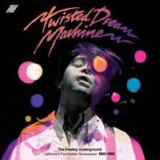
Futurismo proudly present a celebration of the Paisley Underground scene with TWISTED DREAM MACHINE The Paisley Underground / California’s Psychedelic Renaissance: 1982-1986, the next volume in their Altered Vision compilation series.
This collection draws from the neo psychedelic movement that took hold in California during the early to mid 80’s, one that melded the psychedelia, country, garage rock, avant-garde and pop of the 60’s with the DIY ethos of the then burgeoning punk scene, a hypnotic amalgamation of sound that came in staunch contrast to the blown out sonic excesses of the time.
Twisted Dream Machine takes you on a trip from the city to the desert, as the kaleidoscope of noise drifts from the The Dream Syndicate’s Velvet Underground inspired take on Crazy Horse and The Three O’Clock’s chiming baroque powerpop, to Rain Parade’s dreamy Beatlesesque melodies and the Bangles hook-laden Love inspired pop. Also featured are the wondrous sounds of Green On Red, The Long Ryder’s, Game Theory, True West, Thin White Rope and others highly worth your attention. If you are not familiar with some of the bands here, you will surely question how that is possible. The Paisley Underground, if anything, encapsulated a certain musical mindset, an outlook where the past and the future would collide in the moment. This thread would bond the bands, yet each honed it’s own sound in a twisted incarnation of the seeds planted two decades earlier. Whilst the ‘scene’ did remain contained, its influence did in fact spread throughout mainstream culture as the Bangles stuck a chord into the heart of MTV, whilst Prince took inspiration from the movement in his own songwriting and the naming of Paisley Park, as well as signing The Three O’Clock to his label and writing one of the Bangles biggest hits.
As you listen to the tracks on Twisted Dream Machine you will be reminded that there is still music left to discover and inspire, this compilation is aimed to hopefully delight longtime fans, as well as ignite a passion for those new to the bands. The Paisley Underground was the sound of neo psychedelic rock, it was subterranean pop...in
the classic sense, it was alternative rock before the term existed, a distillation of the fundamentals present at the dawn of rock ‘n’ roll, with a twist. The bands of the Paisley Underground may have been writing out of their own time, but as you listen to them in today’s context these songs should be heard as landmarks, rather than throwbacks. After all, nothing this good should stay underground. This 2xLP comes on limited edition coloured vinyl, it is housed in a gloss laminated outer sleeve with colour inner sleeves and contains a large fold-out poster with unseen photos and liner notes by Lisa Fancher of Frontier. Also available on CD with Gloss laminated Sleeve and Fold Out Poster.
"Call Of The Champions is an album by legendary American composer John Williams. The piece of the same name was composed by Williams especially for the Olympic Winter Games of 2002 in Salt Lake City. It is the opening track of this album which features over a dozen original tracks by Williams, plus an additional bonus track: ""Summon The Heroes"", the anthem written for the 1996 Olympic Summer Games in Atlanta. The album also features ""American Journey""; a six-part orchestral composition by Williams that was commissioned by U.S. President Bill Clinton for the 2000 Millenium celebrations in Washington D.C. ""American Journey"" is presented for the first time as a complete concert work on this album.
This album features The Mormon Tabernacle Choir, the Utah Symphony, The Boston Pops Orchestra and the Recording Arts Orchestra of Los Angeles. The album was released as An American Journey in the United States.
Call Of The Champions is available for the first time on vinyl as a limited edition of 800 copies on turquoise coloured vinyl and includes an insert with liner notes by music journalist Jackson Braider.
Coming out on September 6th on Sharptone Records, Sundiver is Boston Manor’s fifth album and one that represents a glimmering dawn for the Blackpool five-piece. Grown from a seedbed of optimism and sobriety, the LP celebrates new beginnings, second chances and rebirth. With two members recently stepping into fatherhood, hope is baked into every note. “Datura came out of these really dark few years over the hangover of the pandemic,” Henry reflects. “I'd been struggling a lot with drinking and not taking care of myself and bad mental health and stuff. We wanted Sundiver to be the next morning of the following day.” He explains that it feels good this time round to write through the lens of positivity. “The themes began to emerge, of rebirth, spring, dawn, sunshine and then other elements just started to fit into that.” It was during the making of Sundiver that Henry found out he was going to be a dad. This album is a significant one for the band. Originally coming out of the emo and pop punk scene, they’ve explored sonics and genres throughout their career, taken risks and achieved more than they could ever had dreamed of. They’ve grown up as Boston Manor – their lives and the world changing around them. They’re now taking stock, at a crossroads of the band they were and the band they could be.
While writing the album, they revisited the bands that shaped them in the late 90s and early 00s. “I was listening to the music I loved when I was a teenager and I just thought, why don't we make music like our favourite bands?”, guitarist Mike Cuniff remembers with a smile. “So we brought our interests to the table that way. Y2K kind of vibe. There are elements of Deftones, there are elements of Portishead in there, some Garbage, The Cardigans.” He laughs and adds NSYNC to the list of inspirations. From this cocktail of classics comes a dynamic and ambitious record, rich with depth, groove and more hooks than Peter Pan’s nightmares. Lyrics that foxtrot from parallel universes to personal growth, vivid dreamscapes to raw grief. Individually they’re single strokes full of meaning and magic. Together they’re a landscape.
Container (out Feb 15th) is the first single and it’s them at their best – impassioned and infectious. “This song is about the stagnancy of life creeping up on you & how that can bring about change.,” Henry explains, citing Ocean Song by US band Daughters as an inspiration.
The concept of the butterfly effect is present on Sundiver – how small actions can lead to big changes. This is no clearer than on their second single, Sliding Doors (out April 5th). It has the golden sound of late 90s Lollapalooza rock – think Smashing Pumpkins - rebooted with crisp 2024 production and a potent heaviness. In the lyrics Henry wonders, what if?, pondering on what could be. The idea that there are infinite versions of you whose lives splinter off in different directions at every decision you make. That there’s another you out there somewhere right now reading this sentence, and another me writing it. “So much is down to chance and circumstance,” Henry says. “You might catch that train and your life totally changes. Or you might miss it and things stay the way they are.”
Heat Me Up (out May 30th) is defiant and victorious, the audio equivalent of quitting your shit job and driving into the hot summer sun with a head full of dreams. “The lyrics are about love and gratitude,” Henry shares. “Another theme on the record is just appreciating what you have. It’s about not taking for granted the things that you've been afforded.”
There was some natural magic in the creation of Sundiver. They worked with their usual producer, Larry Hibbitt, and engineer, Alex O’Donovan, but instead of recording in London again they ended up in the green pastures of Welwyn Garden City. “Because Larry lives out in the countryside now, it was a way different environment and way different experience recording this time,” Mike remembers. “That contributed a lot to the brighter sound of the record.” The daily barbecues they had during their recording sessions imbued the process with harmony – five old friends spending quality time together and making quality music.
However, the album is by no means one-note. Birthing this new world they’ve created wasn’t without it’s pain, and that can be heard in the heavier moments on Sundiver. What Is Taken Will Never Be Lost is the most-stripped back on the album, a slow rock number seasoned with the downtempo Portishead influence. The heartfelt lyrics are Henry’s way of processing the loss of his grandfather, who died in a hospice last year(?). “It was just fucking horrible. It was always cold when I went there and they were always trying to get rid of me. The song title, What Was Taken Can Ever Be Lost, is the idea of his memory fading at the time because of dementia.” Henry goes onto explain that shoeboxes of photographs, diaries and a legacy is what he’s left behind. “He lived a really rich life and it has really impacted me and my father. His legacy is etched into the fabric of history in a very small way.” This song continues the connection between his grandfather and the band, as his painted face is emblazoned on the cover of the very first Boston Manor EP, Driftwood. As well as emotionally heavy themes, there’s heaviness in the music of Sundiver too. The closing song, Oil In My Blood, descends into an intense shoegaze outro with Debbie Gough from Heriot screaming hellfire. It’s in moments like this that the band show us aggression and fury can be as much a part of positive change as quiet introspection. The last lyrics of the song, “It resets and starts again,” leaves us in contemplation as the final chord rings out.
Touring the US, Europe and Japan over the years makes for an impressive CV, but if you know anything about Boston Manor you’ll know that they’re all about their hometown. Their choice to work with Blackpool-based photographer Nick Barkworth is testament to that. They’ve been working with him since the pandemic. “He captures Blackpool in a light that really reflects the weirdness and quirkiness of the town,” Henry says.” He's got a really good way of presenting that.” For the Sundiver cover, Nick photographed a 30ft tall abstract glass sculpture made by the local artist John Ditchfield. A striking and bewitching monolith that’s familiar to them but unusual to most people. “It has such kind of a gravity and power to it,” Henry describes the sculpture which stands in a field just outside of the seaside town. “It reminds me of either an explosion or a star or a supernova. To me it represents new life, power and radiance.” Boston Manor have got a knack for that - connecting the otherworldly and the everyday, the stars and the streets.
They’re a band known for using their music to make bigger statements about society. This time round they’re harnessing the uplifting power of music, and the communion it creates, as an antidote to the daily doom and isolation. “It seems like absolute chaos out there at the moment,” Henry says. “You’ve got Gaza and Israel, you've got Russia, you've got the fact that 40% of the world is going to have an election this year and increasingly most governments are leaning very far to the Right. The internet is dividing everybody, people are getting poorer and more desperate. It's really, really scary.” They considered trying to tackle the weight of it all in their music. “We could’ve written Welcome to the Neighbourhood on steroids, where it's just absolute darkness and misery”. He’s referring to their 2018 concept album that deals with class, inequality and the bleaker side of Blackpool. “But I think it's really important to write something that people can be immersed in and find some sort of solace in. Somewhere they can escape to from the modern day pressures and everything that’s going on. We’re all in this together.”