The buzz about the Crystal Teardrop that has been growing for the past two years looks set to reach fever pitch with the release of their debut album _IS FORMING. Featuring a dozen memorable compositions by the bands Alexandra Rose and Leon Jones, the album more than lives up to the promise of their 2024 single releases and their ecstatic live performances on stages across the UK and Europe. The band formed in Stoke-on-Trent in early 2023, "inspired," explains Alexandra Rose, "by a mutual passion for the sights, sounds and creative experimentation of the late 1960s." In addition to Alexandra on lead vocals on guitar, the band comprises Leon Jones (guitar, sitar), Stuart Gray (keyboards, Mellotron), Ed Quigley (bass, vocals), and Huw Woodward (drums, percussion). Intuitively blending elements of garage rock, folk-rock, power pop and psychedelia, the band have created an appealing concoction infused with their own perspectives and personalities. To best capture their sound, they recorded at an all-analogue facility, Tilehouse studio in North London, working closely with White Stripes producer Liam Watson of Toe Rag Studios fame.
quête:parade
- 1: The Cat
- 2: Der Verpasste Kaffee
- 3: Amnesie
- 4: Sugar Sprinkles
- 5: Pixelwissen
- 6: Iceberg
- 7: Paper Memories
- 8: Im Nebel
A unique collaboration between two of the most inquisitive and important artists in modern avant-garde electronic music.
Paper Masks marks a striking new collaboration between visionary Mute labelmates Phew and Danielle de Picciotto. Developed quietly over nearly five years, what began as an experiment between friends gradually evolved into a fulllength album. Phew composed and arranged all the music, weaving in dePicciotto’s voice and freely reshaping it to create something entirely new. Performed in both German and English, the result is an exploratory work that balances electronic minimalism with emotional immediacy.
Described by Pitchfork as “a Japanese underground legend”, Phew - former member of Osaka punk pioneers Aunt Sally - has forged a remarkable solo career, collaborating with Ryuichi Sakamoto, members of Can, and many others. In parallel, Danielle de Picciotto, an American-born interdisciplinary artist based in Berlin, co-founded the Berlin Love Parade and has performed internationally, working with Crime & the City Solution, Gudrun Gut, Space Cowboys, and her partner Alexander Hacke (Einstürzende Neubauten and frequent Phew collaborator) in hackedepicciotto.
Paper Masks stands as a mesmerizing exchange between two singular voices in experimental music - an intimate dialogue across distance, language, and sound, and a compelling addition to both artists’ evolving legacies.
Available on limited edition jellyfish color vinyl, featuring lyrics and poetry, and on CD, housed in an eco card-pack with a lyrics and poetry booklet.
- 1: The Losing Kind
- 2: Heartless
- 3: Mama Don't
- 4: Twin Brother
- 5: Hwy
- 6: Worried Brow
- 7: Your Parade
- 8: There's A Black Horse
- 9: Ready
- 10: She's Not
- 11: Repeat Performance
- 12: Burning House Of Love
- Oracle Road
- Tonic
- Rv Envy
- Not Trad
- Color In The B&W
- Compact Mirror/Last Names
- Government Job
- Pumpkin Festival
- Shelley Duvall
- Sonora
- Last Names (W/Drums)
Refracting beatifically through realities and mirages flickering along his aural parade route, Animal Collective"s Geologist rides the high country on a hurdy gurdy of many colours. Via the mystery science of musical engagement, we take his sonic kaleidoscope of encounters into our own experience as we listen. That"s the beauty of Can I Get a Pack of Camel Lights?, the debut solo transmission of the heart and soul and life and times of Geologist.
- 1: Velkommen Til Livet
- 2: Den Der Ingenting Ved Tvivler Aldrig
- 3: Natmaskinen
- 4: Arveskam
- 5: Flagellanternes Sang
- 6: Svanesang
Red vinyl[27,52 €]
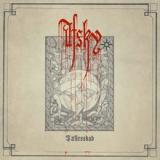
Faellesskab reveals their most critical and emotionally charged work to date, a deeply personal voyage into the heart of Nordic black metal, where raw emotion and melodic depth keep reveling in sorrow and longing beauty. Translating to "Community", Faellesskab's six tracks weave a strong musical oeuvre within the Afsky canon; their walls of haunting melancholia, interwoven with vital intensity, have never been more powerful. Yet, this new work also sees the band at its sharpest in social criticism, as Ole Luk of Afsky notes: Faellesskab - Overture to the Downfall. Here, community is praised like herd animals fleeing responsibility.
A parade of moral superiority, where truth is trampled in the name of consensus. Where unity means silence, and doubt is a crime. Six songs of shame disguised as care, of freedom suffocated, and of the solitary few who still dare to question. A chorus of hollow words, where silence screams the loudest. Welcome to the celebration - the curtain hasn't just risen, it's been torn away! Afsky will mark the release with a special show in Copenhagen on October 17, graced by a full European album release tour kicking off the following week. Two singles are set to be unveiled in the lead-up to the release. While Afsky continues to refine their signature sound, this release is set to be another landmark in the band's uncompromising discography.
Cloud Holding is NYC-based Bryce Hackford's fifth album, and first for Futura Resistenza. Seven sound sculptures are coaxed out of recorded improvisations by a group of musicians--Ka Baird, Shelley Burgon, Alice Cohen, Michael Hurder, Dominika Mazurova, Camilla Padgitt-Coles--and worked into formless figures that express an always drifting present. Guided by the Suzuki Nobara--a kind of electric koto with many traditional instrument sounds and unique pitch adjustment controls--and the lyric-less utterances of the human voice, Cloud Holding traces delicate outlines in a collaborative sound world that shines with mysterious, searching affinity.
Swan Song
The vinyl LP at the heart of this éthiopiques 31 tracks 2 to 11 was one of the very last vinyl records ever released in Ethiopia. But above all it represents, we felt, the absolute masterpiece of the Ethiopian Groove – the Swan Song of Swinging Addis. The album leaves a clear idea for posterity of the level of sophistication and mastery that modern Ethiopian music had achieved, before being crushed under the Stalino-military heel of the Derg – as the bloody revolution that was unfolding came to be called.
Ethiopia1976.
The Revolution that broke out in February 1974 rolled on in a ruthless march. The whole of Ethiopian society was utterly stunned. The bouquets of flowers handed joyfully to the first tanks of the coup d'état were to wilt very rapidly. From September 1976 to February 1978, 18 months of Red Terror (the name given by the junta itself) spilled blood throughout the country. This fratricidal conflict took its heaviest toll among students and youth. The shift from feudalism to a cruel and primitive Stalinism left the country's citizens deeply traumatised, and snuffed out any pretence of activism, whatever the sector of society. This ice age was to last for seventeen long years.
ሙሉቀን፡መለሰ Mulukèn Mellèssè Muluqän Mälläsä
It was three tracks by Muluken that served as the opener for éthiopiques-1 more than 25 years ago. Seven more tracks appeared on éthiopiques-3 and 13, all accompanied by The Equators, which was soon to become the Dahlak Band.
The first track, Hédètch alu, also the very first piece that Muluken ever recorded, left audiences both unsettled and amazed. Reflecting the singer's extremely young age (he was just 17 at the time), this angelic voice mystified many, who thought they were in fact listening to a feminine voice. He was not yet 22 when he released his last vinyl record in 1976 with Kaifa Records (KF 39LP), one of the very last to be issued in Ethiopia, before the cassette tape became the dominant medium for music distribution – and before the new revolutionary regime put a stop to all independent musical life, via an unspeakable barrage of prohibitions and other persecutions.
Mulu qèn, literally, “A well filled day”. This tender maternal intention wasn't enough to ward off the cruelty of fate. His mother's premature death drove Muluken to leave his native Godjam, in northeast Ethiopia, to live with an uncle in Addis Ababa. Born Muluken Tamer, he took his uncle's last name – Mèllèssè.
The spelling Muluken appeared in his administrative records. Transcription of Amharic to the Latin alphabet, both in Ethiopia and for scholars, gives rise to controversies and quibbles that can never be neatly settled. French allows for a closer approximation of the original pronunciation, thanks to its battery of accent marks, confusing as they may be to anglophones.
Between rather accommodating administrative record-keepers and the various versions that pop up in interviews given by the artist, Muluken's year of birth oscillates between 1953 and 1955…
1954? One thing is certain: the artist's talent made itself known very early indeed, because he got his start in 1966-67, at the age of 13 or 14. Photos from the period attest to his extreme youth. It's a strange sort of initiation for a very young teenager to become a sensation in the heart of Addis's nightlife at the time, Woubé Bèrèha – the Wilds of Woubé. And what's more, in the club of the Queen of the Night, the Godjamé Assègèdètch Alamrèw herself, the very same that was portrayed by Sebhat Guèbrè-Egziabhér in his novel-memoir Les Nuits d’Addis Abeba2… The legendary female club owner who is remembered to this day by the capital's ageing boomers.
Muluken first tried his hand at the drums, before he grabbed the microphone. He emigrated briefly to the Zula Club, across the street from the old Addis Post Office, one of the ground-breaking bars of the burgeoning musical scene, before joining the Second Police Band in 1968, for around three years. He spent a few months with the short-lived Blue Nile Band founded by saxophonist Besrat Tammènè. As the musical scene grew increasingly successful, and pulled slowly but decisively away from its institutional ties, Muluken released his first 45rpm single in February 1972 (Amha Records AE 440). It was included in two LP Ethiopian Hit Parade compilation albums in September of the same year. All in all, Muluken released eight two-track 45s and the same number of original cassette tapes between February 1972 and 1984, the year that he departed for permanent exile in the USA. After converting to Pentecostalism in 1980, Muluken gradually abandoned all secular musical activity. In 1985, at the end of a concert in Philadelphia, he decided to quit concerts and recording for good. Mèlakè Gèbré, the historic bass player from the Walias band who was playing with him that night, recalls that everything appeared so irredeemably diabolical in Muluken's eyes, that it was to be the end of his contribution to Ethiopian Groove.
The end of the story, the beginning of a legend.
Dahlak Band, forgotten by History
Aside from his personal history and vocal talents, it must be remembered that Muluken Mèllèssè was one of the biggest names in the musical innovations that marked the end of the imperial period. These éthiopiques aim to convince those who are just discovering this hidden gem... As for Ethiopians themselves, they are to this day captivated by this singular and atypical figure in the Abyssinian pop landscape – even though he withdrew from public life some 40 years ago. Incorrigible devotees of poetic twists, of more or less hidden meanings, Ethiopians appreciate above all the care Muluken took in choosing his lyrics and the writers who penned them, such as Feqerte Haylou, Alemtsehay Wodajo and, here, Shewalul Mengistu (1944-1977). Love songs, written by women, a far cry from the conventional drivel that pleases sappy sentimentalists.
Muluken is equally acclaimed for his perfectionism when it came to music, the opposite of the overly casual approach that is all too common. He remained a faithful partner of musicians who came from a lineage that borrowed from several inventive and pioneering bands (Venus, Equators, Dahlak). Amongst them were certain artists who began their musical lives with Nersès Nalbandian at the Haile Sellassie Theatre and who come of age in around 1973 – at just the wrong time, you might say. Among them were the pillars Shimèlis Bèyènè (trumpet), Dawit Yifru (keyboards) and Tilayé Gèbrè (sax & flute). Most notably Tilayé Gèbrè, certainly one of the most important musicians, composers and arrangers of his generation, of the end of the imperial era, and of the early years of the Derg.
It was only in 1981 that a miraculous opportunity arose for Tilayé to escape the Stalinist paradise of the dictator Menguistou Haylè-Maryam. Once again it was Amha Eshèté (1946-2021) who provided a solution. The spirited and courageous producer, who had been in exile in Washington since 1975, succeeded, thanks to his incredible perseverence, in bringing the Walias Band to the USA. It was, in fact an extended Walias Band comprising ten musicians3, six of whom chose to slip away after a few concerts and the recording of an LP (The Best of Walias, WRS 100). Tilayé Gèbrè was one of these. He has been living in the USA ever since. There he joined the then-nascent Ethiopian diaspora, which lived largely unto itself, and was making only very modest headway in the American musical market. It seems unfair that Tilayé Gèbrè and the Dahlak Band were not able to benefit earlier from the public recognition that they do deserve.
A similar draining away of the top-rate talents would lead to the reorganization of the major groups of the “Derg Time”. The remaining artists spread themselves around between Ibex Band (renamed Roha Band), Ethio Star Band and a remodeled Walias Band. That spelled the end of the Dahlak Band.
With this record, produced by the essential Ali Abdella Kaifa a.k.a. Ali Tango, we can appreciate everything that the Derg not only destroyed, but also prevented from flourishing. This gem of Ethiopian-style afrobeat came out in 1976 (and, by way of a parenthesis, before the FESTAC 1977 in Lagos, which was attended by an impressive delegation of Ethiopian musicians — although Fela was already personna non grata in his own country). Despite everything that might distinguish this ethio-groove from Fela’s music – no colonial axe to grind, no question of political confrontation with the authorities, no claims to negritude or Africanism for the Ethiopian musicians, and less extrovertion! –, this LP fits beautifully into the saga of intense and electrified soul of the new “African” groove that Fela and Manu Dibango embodied so well from that point onwards.
In restoring this record to its place in the afrobeat epic, it can be seen that, if nothing else, the timeline bestows a legitimate pedigree and a historical primacy to works that had no international impact when they were originally released.
Warning! Masterpiece!
Faellesskab reveals their most critical and emotionally charged work to date, a deeply personal voyage into the heart of Nordic black metal, where raw emotion and melodic depth keep reveling in sorrow and longing beauty. Translating to "Community", Faellesskab's six tracks weave a strong musical oeuvre within the Afsky canon; their walls of haunting melancholia, interwoven with vital intensity, have never been more powerful. Yet, this new work also sees the band at its sharpest in social criticism, as Ole Luk of Afsky notes: Faellesskab - Overture to the Downfall. Here, community is praised like herd animals fleeing responsibility.
A parade of moral superiority, where truth is trampled in the name of consensus. Where unity means silence, and doubt is a crime. Six songs of shame disguised as care, of freedom suffocated, and of the solitary few who still dare to question. A chorus of hollow words, where silence screams the loudest. Welcome to the celebration - the curtain hasn't just risen, it's been torn away! Afsky will mark the release with a special show in Copenhagen on October 17, graced by a full European album release tour kicking off the following week. Two singles are set to be unveiled in the lead-up to the release. While Afsky continues to refine their signature sound, this release is set to be another landmark in the band's uncompromising discography.
- 1: Bluey Theme Tune (Instrumental Parade)
- 2: Keepy Uppy
- 3: Here Come The Grannies!
- 4: A Message From The Fairies (John Ryan's Polka)
- 5: Taxi
- 6: The Claw (Pachelbel's Canon)
- 7: Pool
- 8: Who Likes To Dance?
- 9: Bluey Theme Tune (Extended)
- 10: The Weekend
- 11: Wagon Ride
- 12: Camping
- 13: Fruit Bat
- 14: The Creek (Intro)
- 15: Creek Is Beautiful!
- 16: I Know A Place (The Creek Song)
- 17: Bluey Theme Tune
- A1: Biguine Willy - Biguine
- A2: Oh Esto Y De Irvaba Cumabo - Mambo Espagnol
- A3: Saoco - Charanga Cubain
- A4: En Guantánomo - Son Montuno
- A5: A M. Decantonio - Son Montuno
- A6: No Me Persigas - Cha Cha Cubain
- B1: Mama Egée - Rumba Lingala
- B2: Vivo Africa - Rumba Lingala
- B3: Ngonga Ebeti - Rumba Lingala
- B4: Minge Rumba Fiesta - Rumba Lingala
- B5: Matulekele - Folklore
- B6: Mitele Ngo Mama - Rumba Lingala
- C1: African Negra - Cha Cha Cha Indubil-Lingala
- C2: Rithmo Ya Suka - Cha Cha Lingala
- C3: Seis Linda Cubana - Son Cubain
- C4: Mi Amor - Cha Cha Cha Espagnol
- C5: Sabrosito - Cha Cha Cha Indubil Lingala
- C6: Nadie No Puede - Cha Cha Espagnol
- D1: Nella Negrita - Bolero Lingala
- D2: Arsene Diongue - Bolero Lingala
- D3: Liliane Yo Nsomi - Bolero Lingala
- D4: Yve Ya Fabien - Bolero Lingala
- D5: Tu Te Rappelles - Bolero Français
- D6: L’edera - Bolero Italien
'The creation of the band African Fiesta, founded in 1963 by three well-known musicians, Nicolas Kasanda, Tabu Ley Rochereau and Roger Izeidi, and the contributions of the VITA label, established by Roger Izeidi, occupy an exciting chapter in the history of Congolese popular music. During the mid-1960s, African Fiesta consistently reached the top of the hit parade. The band, which back in the day positioned itself as a competitor to a current called ‘Fiesta Cubana’, breathed new life into Congolese Rumba, continuing the tradition of the African Jazz school started by Joseph Kabasele.
'The VITA label, with African Fiesta as their sole provider, besides four songs of Eduardo De Veracruz Vinagre et Son Orchestre, ran between May 1963 and early 1966. It created a spectacular legacy and back catalog full of tasteful sentiments and sensual melodies, deeply rooted in the Afro-Latin sound.
'This new compilation offers a few of the classic African Fiesta songs and complements them with an eclectic and original selection, divided into four thematic sides: Showcase, Rumba Lingala, Cha Cha Cha & Bolero. This double LP album comes with a 16-page booklet featuring the history of VITA and African Fiesta, song commentary by Congolese journalist Herman Bangi Bayo, and a written catalog of the VITA label. The heirs of Roger Izeidi kindly gave permission in Kinshasa to release this album of African Fiesta on Planet Ilunga.'
- 01: Opening
- 02: Haru Are You Awake?
- 03: The Encounter With Lune
- 04: Talking With Cats
- 05: The Cat King's Parade
- 06: The Cat Returns
- 07: Feeling Down After School
- 08: The Mysterious Voice
- 09: At The Crossroads
- 10: Following Muta
- 11: Welcome To The Cat Business Office
- 12: Kidnapped To Be The Prince's Bride
- 13: Is This The Kingdom Of Cats?
- 14: To The Cat King's Palace
- 15: Am I A Cat?
- 16: The Cat Juggler's Rumba
- 17: The Stomach Artist's Polka
- 18: Waltz "Katzen Blut
- 19: I Am Humbert Von Gikkingen
- 20: Why Do I Have To Be The Bait!
- 21: Escape From The Maze
- 22: Lune And Yuki
- 23: Escape
- 24: I'm Home!
- 27: Haru's Boogie-Woogie
- 28: Pastorale
- 29: Haru's Memories
- 25: The Baron
- 26: The Cat King
The highly popular Studio Ghibli vinyl series now includes 1993's "Ocean Waves" and 2002's "The Cat Returns" and "Ghiblies Episode 2"! The albums feature new jacket designs and comprehensive liner notes, making them a truly luxurious experience.
Enjoy the beautiful jacket design and the rich sound that only vinyl can offer.
*2-disc double jacket set (music tracks on Sides A, B, and C; the reverse of Side C features laser-etched character designs).
Yuji Nomi, the composer behind "Whisper of the Heart," has once again composed the music. Includes the theme song "Become the Wind" by Ayano Tsuji, as well as five bonus tracks.
- 1: Nocturnal Terror
- 2: Struck A Nerve
- 3: Parade Of Violence
- 4: Inside The Torture Fortress
- 5: Raining Death
- 6: Moon Sniper
- 7: Last Eyes See All
- 8: The Knife Scrapes The Bone
- 9: Leviathan Wings
Marbled Vinyl[21,22 €]
Uzed is the fourth album by Belgian band Univers Zero. It was released three years after 'Ceux du Dehors', due to a change in line-up and a new repertoire, although the EP 'Crawling Wind' had been released in the meantime.
The album marked a turning point for the band. Univers Zero explored new electric colors, giving it a more rock feel with the addition of new musicians such as Jean-Luc Plouvier, who introduced the synthesizer, guitarist Michel Delory, who played a memorable solo in 'Célesta (For Chantal)', and André Mergen on electric cello and alto saxophone, who enriched the orchestral texture. Dirk Descheemaeker on clarinet and soprano saxophone, the return of Christian Genet on bass, this evolution can also be explained by the arrival of new musicians. UZED'is entirely composed and arranged by Daniel Denis
The recording and mixing were done at Daylight Studio in Brussels in 1984, but to bring out UZED, the sound had to be improved by giving it more dynamic range, which was done at ICP Studios in 2024.
Black Vinyl[20,38 €]
Uzed is the fourth album by Belgian band Univers Zero. It was released three years after 'Ceux du Dehors', due to a change in line-up and a new repertoire, although the EP 'Crawling Wind' had been released in the meantime.
The album marked a turning point for the band. Univers Zero explored new electric colors, giving it a more rock feel with the addition of new musicians such as Jean-Luc Plouvier, who introduced the synthesizer, guitarist Michel Delory, who played a memorable solo in 'Célesta (For Chantal)', and André Mergen on electric cello and alto saxophone, who enriched the orchestral texture. Dirk Descheemaeker on clarinet and soprano saxophone, the return of Christian Genet on bass, this evolution can also be explained by the arrival of new musicians. UZED'is entirely composed and arranged by Daniel Denis
The recording and mixing were done at Daylight Studio in Brussels in 1984, but to bring out UZED, the sound had to be improved by giving it more dynamic range, which was done at ICP Studios in 2024.
- A1: Tattoo
- A2: Sleepwalker
- A3: I Parade Myself
- A4: Unburden
- A5: Better Him Than Me;
- B1: Something 99
- B2: Showtime, Valentine
- B3: Unburden, Unbound
- B4: The Dark Ride
- B5: I Absolve You
- B6: Shrinkwrapped
"Shrinkwrapped", das sechste Studioalbum von Gang Of Four, feiert 2025 sein 30-jähriges Jubiläum mit seiner ersten Vinyl-Veröffentlichung - remastered. Das Album wurde von Andy Gill und Jon King geschrieben und von Andy produziert. Einige der elf Tracks sind auf dem Soundtrack zum Film "Delinquent" von Peter Hall zu finden, darunter der Gang Of Four-Live-Favorit "I Parade Myself" und die Single "Tattoo". Das Album markierte eine Rückkehr der Kultband zu alter Form.
PRESSE:
- "Eine atemberaubende Sammlung von Lärm und Leidenschaft." – NME
- "Die härtesten Agitpopper des Punks sind zurück … mit zusätzlicher Hook und ihren typischen funkigen Grooves." – Vox
- "Dass Shrinkwrapped ein Kracher ist und ein Kracher wäre, egal wer es gemacht hat, ist ein Grund zum Feiern. Dass Andy Gill wieder ein gefährlicher Gitarrist ist, ist ein besonderer 'Stoppt die Presse, der verlorene Sohn kehrt zurück'-Kick." – All Music
- A1: Love Rocket
- A2: I Could Be Free
- A3: You Are Yours
- A4: Listening To The Rain
- A5: Romance
- A6: Love
- A7: Circle Of Friends
- B1: Are You Happy?
- B2: Parade
- B3: Vacation
- B4: Navy Blue
- B5: Embracing The Burning Sun
- B6: Let's Take It Easy
Tomoyo Harada x Tore Johansson's "I Could Be Free," a shining monument in the history of '90s J-Pop, is finally being reissued on vinyl!
JUDGMENT! RECORDS Vinyl Odyssey: Part I
Produced by Swedish virtuoso Tore Johansson, this album is renowned as the pinnacle of Tomoyo Harada's "Swedish Pop Trilogy."
This delicate worldview has been meticulously recreated on vinyl by the new label, JUDGMENT! RECORDS, headed by acclaimed record designer
Koki Hanawa, with a unique aesthetic and meticulous attention to detail. The meticulous binding, featuring an E-style trifold cover, enhances the album's
appeal both visually and aurally.
- 1: Empty Of Feeling
- 2: Girl One
- 3: Bovine
- 4: Whalebone
- 5: Shooting Spree
- 6: Melanie Lied To Me
- 7: Watertowers
- 8: Is My Confidence Reeling?
- 9: Rain On Your Parade
- 10: Cyna
- 11: The Breakers
- 12: Isotope
Tape
Atsuko Hatano is a contemporay classical Viola player who works with electronics to add textures and layers to her sound. Located in Tokyo, Japan, she is a commanding instrumentalist and composer who constructs innovative compositions with strings and layered electronics.
Cells #5 is an orchestral collection and sequel to her previous album Cells #2 which will also be released on cassette via Imprec’s Cassauna label. Cells #5 required three years to complete and the work features the artist’s signature methodology where the instrumental performances are gradually enveloped by multiple layers of a string orchestration.
When not playing solo Atsuko is extremely active recording, collaborating and playing live with Jim O’ Rourke, Eiko Ishibashi, Mocky, Midori Hirano and many more acts.
Atsuko Hatano: Violin, Viola, Cello, Contrabass, Piano (track 1), Xylophone, Oscillator and Chorus
Guest Musicians:
Eiko Ishibashi: Piano, Marimba, Vibraphone
Yuko Ikoma: Accordion
Natsumi Kudo: Horn and flugelhorn
Icchie: Trumpet, Flugelhorn, Piccolo Trumpet
Tatsuhisa Yamamoto: Snare Drum
Composed and Mixed by Atsuko Hatano. Mastered by Jim O’Rourke. Cover by Saskia Griepink.