Stunning debut release from RAFRAM aka Irdial legend Ramjac Corporation and the Toronto legend (& honorary Glaswegian) Raf Reza.
300 copies only, full printed sleeves plus riso insert.
Orphic Apparition is a new label born out of a transatlantic meeting of minds. Facilitated by a long, hedonistic party in one of present-day London’s ‘meanwhile use’ venues Grow Tottenham, Canadian producer Raf Reza and British acid house luminary Paul Chivers spent a precious day in the studio to record a 3 hour straight to DAT session before Reza's return to Canada. The result of this spontaneous yet intuitive collaboration blurs the lines between Chiver’s long-standing Ramjac Corporation alias and Reza’s genre-spanning approach to dub, breaks and house styles. Part of the early 90s rave scene and an important member of the blueprint-setting Irdial label, Ramjac locks heads with the self-professed ‘lazy music guy from Toronto’ to adapt their studio session into five separate mixdowns.
‘In The Grow’ begins with a bouncy, cut-up sounding Errorsmith-esque rhythm, the recurring fright night melody that distinguishes the record coming in all quick and powerful. The A2 ‘Rotten Mix’ offers a more traditional house approach in its composition, with dub FX and a nice DJ friendly outro. On the final uptempo choice the pair opt for a head-scrambling electro take. Choose your fighter! The ‘Swampy Dub’ on the flip really dismantles everything we’ve heard prior, slo-mo drums allowing a much different DJ experience and altering the freaky synthetic propulsion into an almost modern classical sound. A little like Paul Dresher’s eternal ‘Channels Passing’ (tip). Combined with the other edits this version almost becomes a totally different track. The final ‘Rootless Dub’ gives its clues in the title, removing all the tough drum sounds and allowing for an ambient decompression.
Orphic Apparition will return soon.
Search:part one
Giacomo D’Attorre – lead singer of Clever Square – has been through a lot of late. With his band. In his personal life. Even just with the state of the world. This fire has fuelled Clever Square’s new record Secret Alliance, eleven tracks that explore feelings of frustration, disillusionment, and disconnection, and chronicle what it’s like to be swept along by a world that “gets noisier everyday”. The record was inspired by a creeping realisation; of coming change, and a sense that D’Attorre was “losing contact with who I was before, for the good and the bad.” New needs and desires surfaced; old ones disappeared. Thus he began writing around ideas of rethinking yourself, and “acquiring a new conscience of mutation”. The darker realms of science fiction informed much of D’Attorre’s thinking here; Philip K Dick, Ray Bradbury – ‘Mr. & Mrs. K’ was inspired by The Martian Chronicles – and Flannery O’Connor, whose The Violent Bear It Away proved particularly inspiring. All of this is perfectly framed by Clever Square’s shuffling, quirky indie, and cute melodies. Soft and worn around the edges, like the perfect flannel shirt, there’s a gentle, shambling quality to the music; “blue collar”, D’Attorre calls it. Guitar lines gently bloom, Fender Rhodes organ is sprinkled throughout, and the acoustic strumming sounds easy and unhurried. From the relaxed bustle and acoustic picking of ‘Hail The Proper Karl’, to the joyous, bouncy ‘Little Flaws’; from the stripped back melancholy of ‘Obsolete Epsilons’ to the arena-ready vibes of indie classic ‘Golden Wires’, D’Attorre has crafted a spell-binding, mesmerizing set of songs that delight on first listen and reward deeper inspection. “It’s a hymn to privacy, to the joys of secrecy, and solitude,” he says of Secret Alliance. That he wraps such heartfelt, profound topics in gloriously laid-back indie adds to the charm, and cements Clever Square’s status as one of Italy’s finest contemporary bands. The world might seem increasingly complex and be spinning ever faster, but Secret Alliance slows it down just enough to savour the scenery and think about charting a path back to something a little more manageable.
Magma has been one of France’s most influential bands since their founding in 1969. They released their fifth studio album Köhntarkösz in 1974, which set them off in a completely new musical direction. The band used a more restrained approach, which resulted in every hit seeming to weight twenty tons by contrast. The result is a mysterious atmosphere which holds the listener in awe. For this recording, and in particular the track “Coltrane Sundia”, the band used John Coltrane as the main inspiration, creating a vibrant tribute.
Köhntarkösz is housed in a gatefold sleeve and is available as a limited edition of 2000 individually numbered copies on yellow & red marbled vinyl.
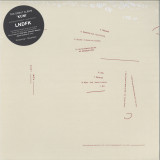
LNDFK (aka Linda Feki) presents her ground-breaking debut album, "Kuni" on Brooklyn-based Bastard Jazz Recordings. Undeniably on the rise after her 2019 breakout performance at Primavera Sound, LNDFK has already caught the attention of Pitchfork, Rolling Stone, Clash Magazine, Noisey, and Brooklyn Vegan (among many others) while being championed by the likes of Gilles Peterson, Tom Ravenscroft, and Jamz Supernova & landing spots on tastemaker playlists like Spotify's "Pollen" and "Fresh Finds."
"Kuni" is a spellbinding exploration of dichotomies: Love & Death (Eros & Thanatos), Flower & Fire, Delicacy & Violence, Poetry & Realism, Purification & Destruction. These opposites are reified in the 10-track LPs multifarious and multifaceted sounds, elegantly meandering through a variety of styles and genres, spearheaded by Linda and features the production wizardry of Darrio Bassolino who co-wrote the album.
"Kuni" opens with "Hana-bi," an ambient instrumental piece that sets the tone for the album. Inspired by the Takeshi Kitano 1997 film of the same name – particularly Joe Hisaishi's stunning soundtrack, as well as Kitano's paintings which appear in the film. "Hana-bi" expresses the dialoguing opposites of flowers and fire, the first of many dichotomous representations throughout the album. "Takeshi" acts as an extension and to "Hana-bi," albeit one of opposing sound, with its driving, highly syncopated drums (which reappear throughout "Kuni") – à la Karriem Riggins, Questlove, or Yussef Dayes – frenetic bass line, and jazz chords. Linda's sultry voice is interspersed, initially jumping around in scat fashion, being triggered as if a sample, before her lyrics come in; her vocals are used like an additional instrument, adding to the song's rich texture. "Kuni" truly hits its stride with the next song, "Smoke – a moon or a button" (its title lifted from the 1959 book by Ruth Krauss and Remy Charlip), which is structured like a jazz standard yet flows into neo-soul territory sonically with those prodigious drums a highlight once again.
LNDFK touches on experimental hip hop in two songs on the record (both of which were released as singles in 2021): "Don't Know I'm Dead or Not (feat. Chester Watson)" – track #4 – and "How Do We Know We're Alive (feat. Pink Siifu)" – track #9. Although they embrace a more hip hop-leaning sound, these songs by no means shy away from the exploratory theme, and feature two of the alt-rap scenes rising stars with Chester Watson and Pink Siifu who offer provocatively impressing verses, combining dense word play with unconventional flows. While these tracks may first appear to be outliers on the album, they are undeniably in tune with "Kuni's" message and sonic palette, acting as testaments to LNDFK's willingness to explore and experiment.
Meanwhile, "Ku" – the third and last single before the album release – furthers the pre-established future soul sound while meandering through nu jazz and left-field electronic. Inspired by the graphic novel and film, "Sin City," and its female assassin protagonist Miho, "Ku" is a musical interpretation of Miho's story, incorporating both her beauty – the first half of the song – and murderous tendencies – the second half – to create a stunning juxtaposition, culminating in an ambient finale that suggests the character's vulnerability and inner peace. The song gracefully bridges the gap between Hiatus Kaiyote-esque songwriting, Dilla's rhythmic syncopation, and Thundercat's instrumental prowess (LNDFK has shared a stage Brainfeeder labelmate Kamasi Washington).
Mixed in throughout "Kuni" are a series of instrumental pieces that function as something akin to an interlude. The aforementioned intro, "Hana-bi," and the album closer "se mi stacco da te, mi strappo tutto:" act as bookends, while "Om" indicates the half-way mark, and "Ktm" sees Jason Lindner add his sound the album. These tracks are the ambient foundation of "Kuni," representing the thematic duality of the work. Clocking in at only 24 minutes, "Kuni" packs an astonishingly diverse array of sounds, styles, and themes, all while showcasing virtuosic musicianship and instrumental prowess.
Appearing on "Hana-bi" and "Ktm," renowned international artists Asa-Chang and Jason Lindner add an additional perspective to "Kuni": Asa-Chang on "Hana-bi," and Jason Lindner on "Ktm." Asa-Chang - famously of the Japanese avant-garde group Asa-Chang & Junray - provides vocals and percussion to an alternate version of the instrumental opener, while the acclaimed keyboardist Jason Lindner offers his synth expertise on "Ktm." These features highlight the spirit of collaboration found in LNDFK's music, always willing to try out new ways of working.
LNDFK is a singer and songwriter, born of two cultures – an Italian mother and Arab father. She grew up in Naples, away from her father, the Sahara, her homeland and traditions, which has helped nourish the desire to rediscover – through art – an engagement to her roots. Her music melts with jazz, neo-soul and hip-hop influences, filtered through her experiences and sensibility.
Her first EP, "Lust Blue," was composed with the artistic production of Dario Bass and released by Feelin' Music; after that she released several singles that saw international radio support (BBC, NTS, Wordwide FM) and gained a massive audience on digital platforms. Together with her band, she toured around Europe, performing alongside such notable artists as Kamasi Washington and Mndsgn, among others. Most recently she toured Italy, and performed at Primavera Sound Festival 2019 in Barcelona.
"Kuni," is due out on NYC label Bastard Jazz Recordings in February, 2022, while the vinyl LP will follow shortly after.
After the re-release of the classic "Nu Romantix" album, Ed DMX aka DMX Krew returns to Permanent Vacation with his new album "Party Life". This time the long-haired UK legend is taking a step back from his trademark Electro and Techno sound and putting on his romancing suit.
Ed is crooning over 80's styled Boogie, Disco and Funk tracks in a way only he can do it and that will either make you jump for joy or cruising down the coastal promenade.
"Party Life" is another example why Ed is a master of all crafts in the ever expanding DMX Krew universe.
Famed free jazz concert registration of an early New Direction for the Art performance. Recorded in 1971. Old-style Gatefold LP, with rare photographs & extensive liner notes by Alan Cummings.
The performance by Takayanagi Masayuki New Direction for the Art at the Gen’yasai festival on August 14, 1971 was an intense, bruising collision between the radical, anti-establishment politics of the period in Japan and the febrile avant-garde music that had begun to emerge a few years before. The ferocious performance that you can hear here was received with outright hostility by the audience, who responded first with catcalls and later with showers of debris that were hurled at the performers. Takayanagi though described the group’s performance to jazz magazine Swing Journal as a success, “an authentic and realistic depiction of the situation”.
In 1962, Takayanagi, bassist Kanai Hideto and painter Kageyama Isamu went on to form an AACM-style musicians’ collective called the New Century Music Research Institute. Every Friday, members gathered at Gin-Paris, a chanson bar in the fashionable Ginza district of Tokyo, to push the outer limits of jazz creativity.
But the pivotal moment for his music was the creation a new trio version of his New Directions group in August 1969, with the free bassist Yoshizawa Motoharu and a young drummer Toyozumi (Sabu) Yoshisaburō. Experiments eventually led to the creation of two basic frameworks for improvisation that Takayagi referred to as Mass Projection and Gradually Projection.
“La Grima” (tears), the piece that was played at the Gen’yasai festival, is a mass projection and listening to it, you can get a clear sense of what Takayanagi was aiming at. Mass projection involves a dense, speedy and chaotic colouring in of space that destroys the listener’s perception of time, and thus of musical development.
The ferocity of the performance of “La Grima” at the Gen’yasai Festival in Sanrizuka on August 14, 1971 was consciously grounded by Takayanagi in a particular historical moment, ripe with conflict and violence. A month after the festival, on September 16, three policemen would die during struggles at the site. This was the context that the three-day Gen’yasai Festival existed within. The line-up reflected the radical politics of the movement, with leading free jazz musicians like Takayanagi, Abe Kaoru, and Takagi Mototeru appearing alongside radical ur-punkers Zuno Keisatsu, heavy electric blues bands like Blues Creation, and Haino Keiji’s scream-jazz unit Lost Aaraaff.
New Direction for the Arts trio topped the bill on the opening day, playing an aggressive, uncompromising “mass projection” set of polyphonic improvisation. Alongside drummer Hiroshi Yamazaki and saxophonist Kenji Mori, Takayanagi soloed hard and continuously for forty minutes. This was performance as precisely calibrated metaphor: three musicians responding to the demands of the moment with instinctive force and fury, untethered by rules, leaderless yet not rudderless (the direction part of the group’s name was no accident). The piece was entitled La Grima – tears - and the fusion between the palpable anger of the performance and hopeless sadness of its title were also perfectly apt for the situation. This was a fight that the state was always going to win. Yet, by all accounts, the band’s set went down like a fart at a funeral. The band were showered with catcalls and debris throughout, and by chants of “go home” when the music finally came to an end.
However, looking back at the event in the year-end issue of Japan’s leading jazz magazine, Swing Journal, Takayanagi was surprisingly upbeat: New Directions brought a solid political consciousness to our performance and succeeded in an authentic and realistic depiction of the situation. But journalism revealed its superficiality in its inability to penetrate the core of the music. I don’t know much about anyone else, but we at least left behind a competent record.
It’s a fascinating statement in many ways. Perhaps on one-hand it can be read as stubborn, solipsistic and self-justifying, yet in conjunction with his statement in 1971 there are points that guide us towards an understanding of just what Takayanagi intended with his performance at the festival. As Kitazato Yoshiyuki has argued, it becomes an almost religious act, directed at the earth deities of the land. A union of anger, sorrow and malevolence that can be placed nowhere effective, all it can do is find expression and channeling. The forcible land seizures at Narita, the eviction of farmers from land that had been in families for generations, the destruction of communities: none of this can be prevented, not least by an artistic action. All that can be done is an attempt to mark the land itself, to soak it with the combined force of emotions and the volume of the performances, to bury something there that cannot be drowned out, even by the coming roar of jet engines.
The Diva Faïrouz.
Her real name Nouhad Haddad, she was born in the Zokak el Blat district of Beirut. The eldest of a modest Maronite family, she developed a passion for singing very early on. Her parents are too poor to afford the luxury of a radio, so she spends most of her time listening, her ear glued to the wall, to the neighbors. Nouhad quickly memorizes the songs she hears and gives a few samples at parties organized by her school. It was there that she seduced her comrades with her vocal abilities and that she was noticed in 1947 by the composer Mohammed Fleyfel.
The echo of his velvety voice reaches Halim el Roumi, talent scout, renowned singer-songwriter and director of Lebanese Radio, who asks to audition him immediately. Literally fascinated, el Roumi introduced him to the choir of Radio Beirut, baptized it with the name of Faïrouz and became its appointed composer. Then, he introduces her to Assi el Rahbani, a young avant-garde composer who, in the company of his brother Mansour, wishes to renew a Lebanese song under profound Egyptian influence.
The teenager Faïrouz succumbed to the personal charm of Assi, whom she married in 1954, and to that of his compositions (the model couple of Arab song would be separated by the death of their husband in 1986). The heavenly trio causes, from the publication of its first titles, a real musical revolution. Traditionalists howl at sacrilege and distortion while sympathizers of the rejuvenation and modernization of Lebanese folklore, weary of insipid refrains and pale copies, show their enthusiasm.
In 1957, Faïrouz opened the International Festival of Baalbek (a locality mentioned in one of his flagship titles) and sang in the middle of the six columns of the Roman temple. This initial encounter with his audience, who warmly welcomed him, earned him the nickname "seventh column". Faced with this fabulous galloping success, the Rahbanis are stepping up their offensive and courageously playing the card of constant innovation. They wrote for Faïrouz musical sketches, operettas and, from 1962 to 1976, about fifteen sung plays in which she plays the role of a woman in love with Love, the true, the pure, the innocent. , and that of hope. She also appears in a few films but she quickly interrupts her cinematic odyssey.
It is still and always one of the major references of Arabic song and many of its titles, such as "Bint el Chalabia", are hummed as much by the new generation as by the old.
Boogie Butt Records presents its new reissue. Originally Released in 1983 on Becket Records, Time To Throw Down, is a party banger, between P.Funk & Boogie, created by the one & only Paul Thomas, founder of the "Magic Crew", The Circle City Band. Bandleader Paul Thomas had produced three 12" single's released under the title Circle City Band in 1983-84, one of those records titled Magic became extremely popular in the mid1980's, but this record was supposed to be the 4th 12inch single on Becket Records.
At the same time in 1983, when Reggie Griffin and Paul Thomas was mixing this instrumental track in L.A, the reverend "Rickie Clark" originally from "Circle City" in Indianapolis, came to see them hearing what there was doing, and fall in love with this track, asking if he could used it for himself .
The "Circle City Band" (CCB) is made up of eight remarkably talented souls. The band is lead and managed by founder, producer/musician/singer/songwriter Paul Thomas otherwise known as "P" aka the "Funky Skunk" and also features long time friends and mentors, including the legendary award-winning, multi-musician/songwriter/producer Reggie “Mr. Everything” Griffin of Tech-No-Funk fame
Joshua Hedley is 'a singing professor of country & western,' he declares
on his raucous and witty new album, Neon Blue - It might sound like a
punchline, but it's not
An ace fiddle player, a sharp guitarist, and a singer with a granite twang, he's
devoted his entire life to the study of this genre. His previous records have
showcased his deep knowledge of country musics history, in particular the beery
ballads of the 1950s and '60s. Neon Blue, on the other hand, examines a very
different, often forsaken era: the early 1990s. Neon Blue asks, What if that fork
had never happened? What if country kept on sounding like country?' Hedley finds
something exciting in that old hat- act sound, and Neon Blue plays up the
excitement of bigger-than-life choruses, the relatable emotions of those sad-eyed
ballads, and the inventiveness of the lively production.
- A1: 日が昇る / Higa Noboru / The Sun Rises (2022 Remaster) 04 39
- A2: ひこうき / Hikoki / Airplane (2022 Remaster) 08 12
- A3: 空気の底 / Kuki No Soko / The Bottom Of The Air (2022 Remaster) 04 29
- A4: パパイヤ / Papaya (2022 Remaster) 04 42
- A5: さっぽろんどん / Sappolondon (2022 Remaster) 03 57
- A6: ニュー・シーズンズ・デッド / New Seasons Dead (2022 Remaster) 05 15
- B1: ポー・フローデン / På Floden / On The River (2022 Remaster) 03 27
- B2: 砂漠 / Sabaku / Desert (2022 Remaster) 06 00
- B3: 誕生日の予感 / Tanjobi No Yokan / Expectation Of Birth (2022 Remaster) 04 10
- B4: 濁る空気わるくない / Nigor / Cloudy Air Is Not So Bad (2022 Remaster) 02 11
- B5: Come Maddalena (2022 Remaster) 05 17
- B6: ルーティー・ルーティー / Lutie Lutie (2022 Remaster) 04 17
Just over a decade ago, Japanese indie-pop duo Tenniscoats recorded »Papa's Ear« (2012) and »Tan-Tan Therapy« (2007), two albums made with musical and production help from Swedish post-rock/folk trio Tape. Originally released on Häpna, they are beautiful documents of the exploratory music made by a close-knit collective of musicians, fully at ease with each other, playing songs written by Tenniscoats and arranging them in gentle and generous ways. Released during a particularly productive time for Tenniscoats – during the late ‘00s and early ‘10s, they would also collaborate with Jad Fair, The Pastels, Secai and Pastacas – they have, however, never been available on vinyl. In collaboration with Alien Transistor, Morr Music is now reissuing these albums both digitally and on double vinyl, with extra tracks.
This reissue mini-series starts with »Papa’s Ear«. The second album from this expanded line-up of Tenniscoats, you can hear the musicians are immediately comfortable in each other’s presence, and they’ve almost intuitively understood what they can offer to one another. Saya and Ueno of Tenniscoats bring their magical, gentle folk-pop sensibility, and their winning way with straightforward, yet lush melodies. Johan Berthling, along with fellow Tape member Tomas Hallonsten, plus guests Fredrik Ljungkvist, Lars Skoglund, Andreas Söderstrom and Andreas Werlin, all generous and creative presences in the Swedish jazz underground, shades in the songs with endlessly inventive arrangements, highlighting the warmth and curiosity at the core of the Tenniscoats’ aesthetic – sometimes taking the songs in unexpected directions, other times pillowing the melodies with the softest of brushstrokes and the kindest of tones.
»Papa’s Ear« includes some of Tenniscoats’ most memorable songs. »Papaya« is a lustrous dreamland of a song, with the Swedish musicians singing ‘pa-pa-ya’ as an enchanted tattoo, while Saya’s piano and melodica clank and huff out, further expanding the song’s horizon. It’s followed by the spindly and mysterious »Sappolondon«, where drums and double-bass shuffle and pulse under weeping accordion and bittersweet clarinet. Saya’s voice sighs into the frame while the musicians breathe lungfuls of sweet drones and flick glittering countermelodies across the song’s surface. It reminds a little of the wild kindness of Movietone, or the regal charm of Carla Bley’s compositions.
Elsewhere, you can hear Tape and their friends embracing the freedom offered by the songs of Tenniscoats: see, for example, the glistening electronics in »På floden«, like a keyboard conducting a music box on a distant planet; or the descending phrase for winds on »Sabaku«, dovetailing beautifully into a creek of moon-lit texturology. The double-LP ends with two extra tracks, drawn from the 2008 Tenniscoats/Tape split single, also released by Häpna., »Lutie Lutie« is a sweet delight, driven by a clacking drum machine, the Tenniscoats duo joined by Hallonsten on glockenspiel and synthesizer, and special guest, Japanese indie-pop legend Kazumi Nikaido, as choir. »Come Maddalena« rounds off the set, a brooding cover of an Ennio Morricone tune, the music by Tape, the vocals by Tenniscoats and Nikaido. Open-hearted and full of puckish spirit, »Papa’s Ear« is an album of great tenderness and warm friendship.
Breez Evahflowin' is back on the scene and here he teams up with Big Deep of 2 Hungry Bros. to form Deep Breez. This first release reveals their passion for comics and Breez' career in illustration over an energetic Latin-infused Boom Bap beat, while the flip brings you a New York City True School Dream Team of Breez (Stronghold), P.so the Earthtone King (AOK Collective), Jise One (The Arsonists) and DJ Static over Deep's breakdance-ready production.
Both tracks are part the "Bring Out Your Dead" EP coming out on HiPNOTT Records.
JOYFULTALK returns with its third album for Constellation; another vibrantly divergent stylistic take on the analog materiality and sensibility of electronic composer-producer Jay Crocker, whose previous two records forged trance-inducing polyrhythmic intricacy, each from a distinct angle and sound palette, each enlisting a single instrumental collaborator. Familiar Science rallies contributions from a larger cast of musicians into a looser, cosmic recombinant combo_still shot through with JOYFULTALK's singular mixing desk kinetics, but this time deep-diving into gnarled and twisted, spliced and diced out-jazz. Crocker draws inspiration from 1980s M-Base music and Ornette Coleman's harmolodic funk period, while his own prior history as an improv guitarist also resurfaces for the first time in many years_an element in this polyvalent artist's chemistry set that hasn't appeared prominently in his own music for over a decade. Familiar Science finds Crocker folding time (as lockdown will do), immersed in his present-day kaleidoscope of solitary art and music practices in rural Nova Scotia, while channeling his former life as a bustling jazz collaborator in Calgary, Alberta. Building outwards from roiling resampled acoustic drums, Crocker extracted additional sonic and rhythmic textures, then formed the head of each song using dusted-off archival recordings and his own bass, keys and midi sequencing. Albertan percussionists Eric Hamelin (Ghostkeeper, Chad Vangaalen) and Chris Dadge (Lab Coast, Alvvays) provided improvised drum tracks to be chopped and harvested; Nova Scotia-based Nicola Miller (Ryan Driver, Doug Tielli) laid down resplendent excursions on saxophone and flute; Crocker's own dexterous guitar appears on several cuts. Familiar Science also poignantly features samples from live recordings by the late Calgary saxophonisticonoclast Dan Meichel, catalysing some of the album's heaviest contortions. Crocker weaves all these raw materials into exuberant compositions that blur the line between sizzling corporeal combo and sampledelic futurist jamz, variously conjuring (leftfield) Flying Lotus, (later) Tortoise, BADBADNOTGOOD and Squarepusher's Music Is Rotted One Note. The rubbery hyper-compression of boom-bap opener "Body Stone" initiates the séance, and the album offers a panoply of skittering grooves and soaring melodic pathways thereafter, through quags of heady jazz alternately streaked with dayglo delirium and other more vaporous states of revelry. Crocker's own wordless stacked vocals are the giddy secret sauce on several cuts, and his lead guitar work (in kinship with the lean progressions of Mary Halvorson or Jeff Parker) features on "Take It To The Grave", "Stop Freaking Out!" and the album's title track. More honeyed passages on songs like "Blissed For A Minute" and "Ballad In 9" center around Miller's bouyant alto sax and flute. Familiar Science is a rousing feast of noise-tinged polychrome electronic avant-jazz: richly harmolodic compositions teeming with intersecting textures and turbulences; exploratory, exhilarated and indeed joyful.
Edizioni Ishtar and Schema Records proudly celebrate the 15th anniversary of one of their most successful releases and artists (more than 30 million streams and 300 thousand monthly listeners on Spotify) with the first ever vinyl edition of Toco’s Outro Lugar. Produced by S-Tone Inc., this record includes fan-favourite tracks “Outro Lugar”, “Samba Noir
” and most of all “Guarapiranga”, which was chosen for the soundtrack of “Silver Linings Playbook”, a film that awarded Jennifer Lawrence an Academy Award prize as best actress in a leading role in 2013. The strings at the beginning of the title-track have also been sampled by PinkPantheress for her song “Nineteen”, out of her latest album “To Hell With It”.
Outro Lugar hasn’t aged a bit during all these years, for various reasons; first of all it benefits from the outstanding contribution of bossa nova pioneer and inspiration source Roberto Menescal, who played guitar in every track. Most of the album was recorded in Rio De Janeiro at Menescal’s studio, with the participation of some of the best ‘carioca’ musicians, especially double-bass player Adriano Giffoni and pianist Adriano Souza. All these elements gave the album exactly the taste requested by the artist and the producer: inspired from the past yet, through thorough attention, aimed at a sound at the same time fresh and modern, slightly electronic, filled with grooves perfectly blending into acoustic instruments. The second part of the recording was carried out in Milan, with some of the best musicians in the Milanese jazz scene.
The album also sees the contribution of Rosalia De Souza, singing in several tracks and standing out in “Bom Motivo” especially. French chanteuse Coralie Clément appears in “Contradição”, her own piece here re-interpreted by Toco.
Outro Lugar is an album for any kinds of Brazilian music lovers that showed the world what Toco was capable of: a refined and cultured musician, a gifted performer of a warm and smooth voice able to awaken the emotions of the most sensitive listeners.
- A1: Let Me Be The One
- A2: Glad Now
- A3: Back With You
- A4: Tears That I Cry
- A5: I Don't Wanna Know
- A6: Dance To The Music
- A7: Break Down The Walls Of Heartache (Live)
- A8: I Can't Get No Satisfaction (Live)
- A9: Shake!
- A10: You Want It, You Got It
- A11: It Ain't Nothing But A House Party (Live)
- A12: Girl
- A13: Sweet Soul Music
- A1: Vacushna
- A2: Fish This Week But Next Week Chitlings
- A3: For Carl Perkins
- A4: The Truth
- B1: A Little ¾ For God & Co
- B2: Oat Meal
- B3: Little Girl From Casper
- B4: Chip Monk
- C1: One More Ham Hock Please
- C2: Gone On & Get That Church
- C3: Pia
- D1: They Call It Stormy Monday
- D2: God Bless The Child
- D3: Willow Weep For Me
- D4: Lost & Lookin
- D5: Blues Is A Woman
Coleman Leslie McCann, known as Les McCann, is arguably the most soulful jazz pianist of the sixties. All you have to do to be convinced of this is to go and listen to him, all business ceasing, with Eddie Harris, in concert in Montreux, on June 21, 1969. This recording is a monument in the history of soul jazz.
But before this concert, the trio of Les McCann with Herbie Lewis and Ron Jefferson, imposed a new style characterized by joy and pleasure, to play, to groove, to listen. Impossible in a Les McCann concert not to participate in his joy, in his desire to share, impossible not to beat time.
Intimacy is manifested in every moment of Radiator, the debut album from Philadelphia’s Sadurn. This feeling of closeness, of being able to lend your every sense to one’s confessions of internal conflict, is due in large part to the circumstances under which this album was created.
Much of the world fell apart in 2020, but Sadurn tucked themselves away in a Pocono’s cabin, creating and recording what would become their first full-length. Within the confines of their close quarters, passing animals as the only auditory witness to a make- shift recording studio created by moving furniture, Sadurn created an album that will break your heart and then slowly piece it back together.
- 1: Can't Get It When You Want It
- 1: 2 (You're Never More Than) Seven Feet Away
- 1: 3 Crucify
- 1: 4 Nothing Left To Do But Cry
- 1: 5 Night After Night
- 1: 6 It Don't Come Cheap
- 1: 7 You Know I Do
- 1: 8 Ain't No Good (But It's Good Enough For Me)
- 1: 9 You're Bad For Me (But I'm Worse For You)
- 1: 0 Long Time No See
- 1: The Sins Of The Father
Having scooped the prestigious Record Store Day Unsigned 2020 award, her debut album 'In The Blue Corner' was released as a limited edition run on turquoise sparkle vinyl in November 2021. Now available on a full digital and physical release including a new vinyl pressing on dusk blue coloured vinyl. "Loving this. Really cool voice_ love the voice!" Craig Charles (6Music) // "The most original sound. Like Little Richard, Mark Ronson, Nina Simone and Nick Cave all got locked in a New Orleans speakeasy" Record Store Day Unsigned Panel 2020 // "Wow, I mean what's not to like about that? That is sensational! How groovy is that?! Mark Radcliffe, BBC 6Music // "What a voice!" Robert Elms, BBC London // "Her voice is stunning, powerful and unique, and her stage presence hits the back of the room at any venue she plays" DJ Anne Frankenstein, Jazz FM // Included in Craig Charles' Funk and Soul 'Ones to Watch 2022' list. From London via Lagos, charismatic chanteuse Sister Cookie will take you on an eclectic excursion into the roots & fruits of black music. Old sounds, new tricks. Sensuous, seductive and moody. As well as possessing a distinctive voice that's tender and sweet when it needs to be, she's a composer and self-taught pianist who writes honest and raw songs about pain, heartbreak, suffering - all that bad (meaning-good) stuff. A mainstay on the vintage Soul & R'n'R circuit since 2015 with slots at Wilderness, Latitude, Red Rooster, Port Elliot and more under her belt - as well as touring across Europe with her band - Sister Cookie has so far been supported by Craig Charles, Mark Radcliffe & Cerys Matthews at 6Music, Robert Elms on BBC London plus plays on Resonance, Jazz FM and Amazing Radio. Craig Charles is a big supporter on BBC 6 Music and has played current single 'Ain't No Good (But It's Good Enough For Me)' several times. Steve Lamacq and Lauren Laverne have also given the track multiple plays. The track has also been playlisted at Jazz FM. Singles from the album have been played many times across European radio stations including France Culture, Rock Radio (Greece), Radio Nova (Portugal), Mach 5 (Italy), HR Radio Sijeme (Croatia). She's performed at some of the UK's most esteemed venues including the 100 Club and Union Chapel, The Round Chapel and has enjoyed a number of stints as a guest vocalist with The Soulful Orchestra, Jim Jones & The Righteous Mind, Future Shape Of Sound & MFC Chicken. Sister Cookie Is going to be part of the judging panel for Record Store Day Unsigned competition in April, the competition she won in 2020.
To celebrate the 45th anniversary of iconic Dutch jazz label Timeless Records, Music On Vinyl is releasing a series that features albums that are part of the Timeless Records legacy and will be released mainly throughout 2021/2022.
American jazz drummer Billy Higgins recorded his second album The Soldier in 1979. Featured on this album are Monty Waters on alto saxophone, Cedar Walton on the piano, Walter Brooker on bass and vocalist Roberta Davis. The track “Peace” features guest performer Horace Silver and on “Sonny Moon For Two”, Higgins is accompanied by Sonny Rollins.
Higgins mainly played free jazz and hard bop. He was one of the house drummers for Blue Note Records and played dozens of Blue Note albums of the 1960s. His drums were an important addition to many recordings such as Dexter Gordon’s Go! and Herbie Hancock’s Takin’ Off.
The Soldier is available as a limited edition of 500 individually numbered copies on translucent green coloured vinyl and includes an insert with upcoming titles from the Timeless Records 45th Anniversary Jazz Series.
Two hip-hop legends that are both part of historic groups themselves, are
forming a new group - Havoc, from the Queensbridge bred Mobb Deep
(rest in power Prodigy) and Styles P of The Lox, straight out of Yonkers,
are forming Wreckage Manner
Both Havoc and Styles P have collaborated with a number of artists in recent
years. Havoc released joint albums with Alchemist, Flee Lord and Dark Lo. His
last solo album was in 2014, the same year as the last Mobb Deep album. Styles
has teamed up to release projects with Talib Kweli, Berner and Dave East in
recent years. In addition to new music from The Lox, Styles P has released at
least one new album every year since 2018.
On the album, Styles P raps over Havoc's gritty, piano- laced production. Havoc
also gets busy on the mic and lets his opponents know that for all his success,
he's still the same kid from 41st Side.
Continuing with the theme of finding and releasing quality 21st century CD-only tracks on to 7” vinyl, Jai Alai now are proud to present their fourth release which showcases the stand-out tracks from the only two albums released under the name Sir Wick.
Chad ’Sir Wick’ Hughes is probably best described as a musician (trombone, piano, percussion), composer, teacher, adjudicator and clinician, but somehow that doesn’t seem quite enough to describe such a unique musical talent. Born in Detroit, and graduating from the same High School as Diana Ross, Paul Thompson, & Ron Carter, he went on to study composition and arranging, and holds regular clinics around the north and mid-west US states sharing his expertise.
The topside on this limited edition release is the lead track from his debut album “An Interpretation Of A Universal Language” (2007 Sir Wick Entertainment LLC) which features the sublime vocals of Sedalia Marie, a beautiful mid-pacer, whilst the other side “I Love You” features the mellow vocals of Anthony Saunders on a track from Chad’s opus work “A Tale Of Two Fools”, which he began in 1996 but only finally orchestrated and released as his second album in 2017 - a soundtrack featuring a full orchestra comprising eight woodwind parts, full strings, big band brass, and seven-piece rhythm section.
Originally intended as an operetta, it was evolving into something bigger; an opera, musical or stage play maybe, but he finally referred to it as a ‘novical’ (a musical novel), which best describes this story of a young musician falling in love for the first time. A biopic, maybe?
One could easily take these two fabulous tracks at face value as simply just another great double-sider, but isn’t it nicer to know the full story?
Steve Hobbs (Solar Radio, Totally Wired Radio)