Cindytalk is the mercurial, expressionist outlet of Scottish artist Cinder. An evolution of her early 1980's Edinburgh-based punk band The Freeze, she launched the project upon moving to London, inspired by the crossroads of exploratory UK post-punk and early European industrial. Her work thrives on chance and transformation, collaging elements of noise, balladry, soundtrack, catharsis, and improvisation. After a series of celebrated albums for the Midnight Music label as well as collaborations with This Mortal Coil and Cocteau Twins, Cinder migrated to the United States, becoming involved with various underground techno collectives around the Midwest and West Coast. Subsequent relocations to Hong Kong and Japan further expanded Cindytalk's horizons, resulting in a fruitful partnership with Viennese experimental institution Editions Mego, for whom she released five albums of swooning, granular atmosphere. 2021 finds her as engaged as ever, at the precipice of long-awaited back catalog reissues alongside multiple new works, guided by her lasting love of discovery and deviation: “new pathways always being uncovered.”
Across decades of activity Cinder’s body of work has forever followed its own elusive muse but nowhere is this restless spirit more apparent and ambitious than the 4th Cindytalk LP, Wappinschaw. Conceived as “a call to arms” inspired by Scotland and its struggle for independence, the title refers to an archaic Scottish battle inspection during which clan chieftains surveyed their group's weapons to ensure they were combat ready. A mindset of reflective preparation threads throughout the record, manifested in forms both naked and noisy, ancient and anguished.
Opening with an aching solo vocal rendition of the British folk standard “The First Time Ever (I Saw Your Face),” the album then surges into the Cindytalk classic, “A Song Of Changes,” sparkling and spiraling in strange waves of sorrow and joy. From there the mood fragments, tracing asymmetrical paths of feverish dirge, pensive spirituals, noir abstraction, spoken word (landmark Glaswegian writer Alasdair Gray guests on “Wheesht”), bagpipe drone, and apocalyptic post-punk. Given its aggressive eclecticism, it's not surprising that Cinder describes the creation of Wappinschaw as a “precarious” process, composed from “scraps” with abruptly shifting personnel – a situation only compounded by the impending dissolution of their label at the time, Midnight Music.
Search:partners in time
Cindytalk is the mercurial, expressionist outlet of Scottish artist Cinder. An evolution of her early 1980's Edinburgh-based punk band The Freeze, she launched the project upon moving to London, inspired by the crossroads of exploratory UK post-punk and early European industrial. Her work thrives on chance and transformation, collaging elements of noise, balladry, soundtrack, catharsis, and improvisation. After a series of celebrated albums for the Midnight Music label as well as collaborations with This Mortal Coil and Cocteau Twins, Cinder migrated to the United States, becoming involved with various underground techno collectives around the Midwest and West Coast. Subsequent relocations to Hong Kong and Japan further expanded Cindytalk's horizons, resulting in a fruitful partnership with Viennese experimental institution Editions Mego, for whom she released five full-lengths of swooning, granular atmosphere. 2021 finds her as engaged as ever, at the precipice of long-awaited back catalog reissues alongside multiple new works, guided by her lasting love of discovery and deviation: “new pathways always being uncovered.”
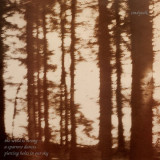
The 3rd album by Scottish industrial enigma Cinder aka Cindytalk began life as the soundtrack to an experimental film by English director Ivan Unnwin entitled Eclipse (The Amateur Enthusiast's Guide To Virus Deployment), and was originally slated for release via Factory Records' video division, Ikon. Inspired heavily by Alan Splet's eerily disembodied sound design in David Lynch's Eraserhead, the collection's 15 pieces seethe between field recordings, wistful piano vignettes, and lurking metallic haze – a hybrid palette Cinder characterized at the time as “ambi-dustrial.” Unfortunately Ikon collapsed on the eve of the project's completion so the film was never distributed, but the Midnight Music imprint repackaged Cindytalk's score as an LP in 1990 under the name The Wind Is Strong... (full title: The Wind Is Strong - A Sparrow Dances, Piercing Holes in Our Sky).
Cindytalk is the mercurial, expressionist outlet of Scottish artist Cinder. An evolution of her early 1980's Edinburgh-based punk band The Freeze, she launched the project upon moving to London, inspired by the crossroads of exploratory UK post-punk and early European industrial. Her work thrives on chance and transformation, collaging elements of noise, balladry, soundtrack, catharsis, and improvisation. After a series of celebrated albums for the Midnight Music label as well as collaborations with This Mortal Coil and Cocteau Twins, Cinder migrated to the United States, becoming involved with various underground techno collectives around the Midwest and West Coast. Subsequent relocations to Hong Kong and Japan further expanded Cindytalk's horizons, resulting in a fruitful partnership with Viennese experimental institution Editions Mego, for whom she released five full-lengths of swooning, granular atmosphere. 2021 finds her as engaged as ever, at the precipice of long-awaited back catalog reissues alongside multiple new works, guided by her lasting love of discovery and deviation: “new pathways always being uncovered.”
The 3rd album by Scottish industrial enigma Cinder aka Cindytalk began life as the soundtrack to an experimental film by English director Ivan Unnwin entitled Eclipse (The Amateur Enthusiast's Guide To Virus Deployment), and was originally slated for release via Factory Records' video division, Ikon. Inspired heavily by Alan Splet's eerily disembodied sound design in David Lynch's Eraserhead, the collection's 15 pieces seethe between field recordings, wistful piano vignettes, and lurking metallic haze – a hybrid palette Cinder characterized at the time as “ambi-dustrial.” Unfortunately Ikon collapsed on the eve of the project's completion so the film was never distributed, but the Midnight Music imprint repackaged Cindytalk's score as an LP in 1990 under the name The Wind Is Strong... (full title: The Wind Is Strong - A Sparrow Dances, Piercing Holes in Our Sky).
Tashan, we believe is one of the greatest soul singers of modern times who first became known as a solo artist for his debut album 'Chasin A Dream' on Def Jam in 1986. There wasn't many better released soul albums in the 1980s. Tashan released was his 'Life Goez On' album in 2002. This album was only ever released on CD. We are releasing in partnership with Tashan two songs from the album in 'This Could Be' and 'After Hours.'
Before there was Rimarimba, Suffolk-born, Felixstowe-based musician and home recording enthusiast Robert Cox assembled a cast of friends, some musicians and some not so much, for an experiment in group exploration and ecstatic expression under the name The Same. Sonically and gravitationally defined by Cox's collaboration with guitarist Andy Thomas (a partnership which formed in 1976 to record as General Motors), Sync or Swim, The Same's one and only album, also featured keyboards by Florence Atkinson and Paul Ridout, and vocals by Robert's sister Rebecca. Originally released in small cassette and vinyl quantities on Unlikely Records, Cox's imprint and a meeting point for many other musicians found at the fringe, the back cover of the original album jacket is as much a map of the personnel, place, and process fundamental to Sync or Swim as it is a table of contents for DIY music-making at the beginning of the 80s: "Recorded in peaceful Wiltshire between September 18th and October 6th 1981 (using a miscellany of home made devices) onto a Teac A-3300SX via a Teac A-3440. No noise reduction systems were used." Cox's own definition of British psychedelia is "folk music meeting technology and going bonkers." It's by this definition that Sync or Swim takes unexpected forms, from tape-speed tomfoolery, concrète sound collage and analog delayed marimbas, to the colorful spectrum of interwoven guitar play between Cox and Thomas reminiscent of Ghanaian Highlife but more accurately indebted to Jerry Garcia. On the album's culminating final track, "E Scapes," all of these elements are brought together in twenty-minute journey through layers of chiming guitar loops and spritely solos, keyed percussion, and tape experiments, all played as though the sun were rising over the standing stones of Salisbury Plain. Cox would later go to similarly greath lengths with certain solo sound endeavors, but the confluence of musicians on "E Scapes" pushes the piece to exceptional, unforgettable heights. Transferred and remastered from the original tapes, The Same's Sync or Swim arrives on LP July 16th, 2021 on Freedom To Spend, just in time for the album's 40th anniversary.
2021 Repress
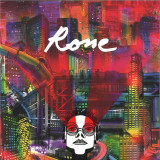
Rone is a stalwart of the French electronic scene and returns with his fourth album, 'Mirapolis', a synesthetic journey with features from Bryce Dessner (The National), Baxter Dury, John Stanier (Battles) and Saul Williams. The artwork was created by the critically acclaimed director Michel Gondry.
Stepping into Rone's music is like sleepwalking through a vividly colourful dream, eventually stumbling across a strange, scintillating Megapolis of saturated light and colours: 'Mirapolis'. Its twelve tracks / districts, each with their own specific planning, pulsate as though animated by their musical mastermind.
The project was an opportunity to get reacquainted with long- time stage and studio partners John Stanier, Gaspar Claus and the Vacarme band and Bryce Dessner (guitarist for The National,) while bringing in new collaborators (and thus, new interpretation of Rone's dreams). We find American slam-poet Saul Williams, who happened to be in Paris for a moment and contributes a searing anti-Trump screed, Baxter Dury, who brings an irresistible East London touch to 'Switches', a kind of fan fic that reimagines the Beatles' Sergeant Pepper lounging pensive in a club chair, Israeli electronic music muse Noga Erez, who inspired 'Waves' which, despite being recorded remotely, betrays a euphoric partnership, and finally, Kazu Makino, Blonde Redhead's bewitching singer and multi- instrumentalist, who contributes to the album's closer, the gauzy 'Down For The Cause'.
Rone remains a producer of grand instrumental pieces, which cannot be easily categorized in the architectural canon of our electronic music galaxy. Hypnotic, cinematic opening track 'I Philip' is an offshoot from the score for the first French virtual reality fiction, built around Philip K Dick - the perfect gate into a city that then opens up myriad temporal perspectives.
• The tracks from the group’s two 1984 EPs together on a swanky 10-inch vinyl LP. Inner bag features liner notes by Kris Needs incorporating new interviews with all three Delmonas and a series of great photos by Eugene Doyen.
• Sarah Crouch, Hilary Wilkins and Louise Baker started singing together as a unique spark of spontaneous magic inextricably linked to their boyfriends in the Milkshakes, then rocking a garage-punk antidote to shiny synth-pop and brash chart stars with a direct lifeline back to rock’n’roll’s original simplicity and wildness. After Billy Childish and Bruce Brand formed the Pop Rivets in 1978, the guys hooked up with Micky Hampshire and Russell Wilkins to found the Milkshakes. Sarah shared a student house with boyfriend Micky plus Billy. After she and Hilary, then dating Russell, sang backing vocals on the Milkshakes’ rollicking Beatles-translated take on the Shirelles’ ‘Boys’, Louise’s arrival turned them into a girl group pretty much by accident.
• “I loved the music the Milkshakes were playing,” Louise recalls. “Loved the small, intimate venues and most of the bands that played with them, especially the Prisoners. I’d gone with the Milkshakes to Belgium and was somehow persuaded to get up on stage and sing something. Next thing I knew, there was some kind of plan to get the three of us in the studio.” At first the three girls were called the Milk-boilers, renaming themselves the Delmonas by the time Ace Records’ Roger Armstrong and Ted Carroll suggested recording the EPs that furnish this collection. “I think we were asked to each think of three songs and turn up,” says Louise. “I mostly listened to music from the 60s: lots of girl groups, Irma Thomas, Dusty Springfield, Bo Diddley, Velvet Underground, Kinks. Bruce had the best record collection; Mel Tormé was in there somewhere and one of my faves. Sarah came up with doing the Doors cover.”
• ‘Comin’ Home Baby’ was written as an instrumental before Bob Dorough added lyrics and Mel Tormé recorded it in 1962. The Delmonas’ finger-clicking, noir-dynamic version kicked off their first EP with authentic-sounding 60s production resonance, iced with mysterioso organ. The Cookies scored a hit with Goffin & King’s ‘Chains’ in 1962, the Beatles’ version providing the Hamburg Star-Club template for the Delmonas’ energised rendition. The first EP, “The Delmonas Volume 1”, rounded off with two songs from the Childish-Hampshire songwriting partnership: ‘Woa’ Now’ and ‘He Tells Me He Loves Me’, the latter recalling the New York Dolls covering the Shangri-Las’ ‘Give Him A Great Big Kiss’, mainly because it has similar chords.
• “The Delmonas Volume 2” opened with Sarah’s idea of covering the Doors’ hit. “We thought, ‘How would the Kinks have played it?’” she affirms. ‘Hello, I Love You’ had got the Doors into hot water with the Kinks’ publishers for its resemblance to ‘All Day And All Of The Night’. The Delmonas home in and highlight that similarity, adding bonkers psychedelic drop and evocative new coda. Their surf-tinged version of the Milkshakes’ ‘I’m The One For You’ is followed by the swampy screaming of ‘Peter Gunn Locomotion’, a cover of a 1963 single by Freddie Starr in his pre-stand-up comedian days as singer with the Midnighters. The set closed with the sultry organ-led vamp of the Milkshakes’ ‘I Want You’, the nearest the Delmonas get to the slowies Sarah helpfully points out they referred to as “shag songs”.
• All these tracks would re-appear on their “Dangerous Charms” album, along with out-takes and recordings from a BBC session, before the original trio splintered, leaving Sarah and Hilary to return for further adventures as Ludella Black and Ida Red. The eight tracks here capture a moment when three fun-loving friends got to live out some musical fantasies and had a blast doing it. 37 years later, it sounds just as contagious.
Death Waltz Recording Co., in partnership with Milan Records, A24, and Stage 6 Films, is proud to present the soundtrack to Saint Maud.
The score by Adam Janota Bzowski is a stand-alone work of genius, it’s minimal, restrained, claustrophobic, and unrelenting. Its minimalist approach allows Bzowski to fully explore sound design and ambient drones while still creating a mesmerizing soundtrack album full of gorgeous themes. A masterpiece.
A24’s SAINT MAUD, by director Rose Glass, is an absolute tour de force. One of the best horror films of the last ten years, it’s genuinely chilling and scary. It deserves your time, continuing the winning streak from A24 started with The Lighthouse, Midsommar, and Hereditary.
With Bending the Golden Hour, the third album from Memphis, Tennessee’s Aquarian Blood, husband and wife team J.B. Horrell (Ex-Cult) and Laurel Horrell (formerly of the Nots) continue the gorgeously stripped-down and atmospheric direction set on their critically acclaimed previous effort A Love That Leads to War.
While Aquarian Blood has roots as a chaotic punk rock six-piece, the band shifted gears after two raucous cassette-only releases on ZAP Cassettes, a pair of seven-inches, and 2017’s Last Nite in Paradise, released on Goner Records. After drummer Bill Curry broke his arm, the Horrells redefined
Aquarian Blood, reemerging in early 2018 as the more intimate, mostly acoustic balladeers behind the staccato, fever dream sound of A Love That Leads to War. Like its immediate predecessor, Bending the Golden Hour was recorded at the Horrell's Midtown Memphis home. The band turned over 43 tracks to Goner co-owner Zac Ives, who handpicked 17 songs for the album.
The final result is shimmering and hopeful; as beautiful and sparse as a Rockwell Kent snowscape. Bending the Golden Hour begins ominously with “Channeling,” which sounds like an outtake from Paul Giovanni’s soundtrack to 1973’s pagan nightmare The Wicker Man. Then the band upshifts for “Time in the Rain,” a sweet duet set to a rigid snare beat. From there, Aquarian Blood zigs to country and zags to psychedelic folk, brooding on one song and soothing listeners with the next. And while the music, feel, and experience is different, Aquarian Blood naturally brings to mind some legendary musical partnerships: Richard and Linda Thompson, Lee Hazlewood and Nancy Sinatra, Johnny and June Carter Cash, Gram Parsons and Emmylou Harris; not to mention similarly-bent-but-beautiful luminaries like Roy Harper, Pentangle circa 1967 -1973, and Jackson C. Frank.
There’s a big middle ground, like folk-psych, or weirder country music,” he says, reeling off names like Skip Spence and Syd Barrett as stepping stones between the genres of punk and folk.
Inspirations for Bending the Golden Hour come from myriad sources that document the milestones and minutiae in a family’s full life. Some lyrics name a time or a place; others reflect the fleeting moments that elapse unnoticed. “Come Home,” which is sung by J.B. and his daughter Ava, was written the day Ava got her driver’s license. “Ava took the car out by herself afterwards, and I wrote the song immediately—she sang her part when she got home that evening,” J.B. recalls. Whether or not the listener knows the backstory, the song rings sentimental, with subtle, supportive instrumentation that underscores guitar and vocals. The bewitching “Rope and Hair,” on the other hand, is less sketched out, with lyrics that are simply a recitation of the talismen found on a silver sabertooth charm that J.B. purchased for Laurel at a Latin strip mall in southeast Memphis. That’s all to be said. “Sometimes when you know too much about what the song is about, it takes away the magic,” says J.B. “Alabama Daughter,” says Laurel, is about a place where a childhood friend lived called Castleberry Holler. “It was really rural, just a lot of shacks without electricity—the kind of place you didn’t go to unless you were invited,” she says. “Probable Gods” is a hazy reflection on the struggle of such a strange year. “It’s been very cathartic to put all of this into words and not have it live
First self-penned album by the 2017 Eurovision winner. Bpm is the first album composed entirely by Salvador, in partnership with Leo Aldrey.
With nine songs in Portuguese, two in English, and two in Spanish, it highlights Salvador’s enduring versatility and global vision. The first single, “sangue do meu sangue”, will be released on March 24, along with a video in which Salvador is subjected to the elements, symbolising the passage of time, as he stoically plays the piano and sings.
“When I sent the lyrics of ‘sangue do meu sangue’ to Leo (producer and co-author of the songs), we were still mapping out the album, and within 24 hours I received a melodic and harmonic structure that was absolutely perfect. In my opinion, it’s the best marriage of lyrics and music on the album”.
Salvador Sobral is one of Portugal’s most international artists, thanks to his resounding triumph at the 2017 Eurovision Song Contest with a song composed by his sister Luísa Sobral, achieving the highest score in the history of the festival.
On 16th April 2021, three years to the day since producer Tim Larcombe and I began work in the studio, my debut album will be
released independently on our label EKT Records.
spell_hope is about finding the hope, the way forward, the light in dark places, the order in chaos, the things that are most
important. It is about creative freedom. Not compromising on integrity and originality, and resisting the shortcuts, the temptation of
an easier road. It is about reaching that end goal, that unstoppable ambition. The power we all have within us to change things, to
make things happen. To keep running even after our legs tell us to “stop!”.
The track list adventures from realms of the organic to the electronic, modern to classic, the understated to the overtly dynamic.
Brimming with an inadvertent frankness which I realised more fully after the event of recording (much of the time when I write I let
my subconscious do the talking), these songs comprise a journal, in words and melodies, of my life up to this point…
“Towers” was written at the piano back in 2013, in the moment I resolved to leave my university course behind in favour of the path
that has led me to writing this now - a song I have since been determined would end up on my first record. “Stronger Heart” at the
first sense of heart-break. “Plans” at my first sense of true partnership. “Stones”. “Big Bad Thoughts”, “Small Things” and “Spell
Hope” reactions at various points to the difficulties and destitution of my chosen career piling on top of other issues (- we all have
‘em right?), over time challenging my determination and mental stability.
Veteran NYC based Scottish electronic musician Drew McDowall's latest work is his loftiest, most liturgical, and least industrial outing to date —and potentially the apex of his recent discography.Named after an ancient Greek word for votive offering, Agalmaexudes a hooded, devotional aura, creaking and keeling under vast rafters of stone, stained glass, and shredded wires. It's a music of majesty and mystery but also modernity, McDowall's refined modular system shape-shifting strings, piano, pipe organ, and choral masses into disorienting synthetic mirages of the sacred. He cites the intersection of “joy, terror, and the elegiac” as a centering inspiration –or, phrased more bluntly, “that 'what the fuck is going on' feeling.”
As a career collaborator himself, with stints in Coil, Psychic TV, and countless other shorter-lived partnerships, it's telling that McDowall chose this project to gather such an impressive spectrum of peers. Italian synthesist Caterina Barbieri, American drone organist Kali Malone, prolific multi-instrumentalistRobert Aiki Aubrey Lowe, operatic Humanbeast vocalist Maralie Armstrong-Rial, Saudi producer MSYLMA, and warped futurist beat-makers Bashar Suleiman and Elvin Brandhi cameo across the album's 42 minutes, contouring McDowall's nuanced negative spaces with shudders, shadows, and shivering flickers of serenity. Each of them shines in their spotlight, elevating these elusive alchemical states into surreal revelations of texture and transcendence.
McDowall's original working title for the record is revealing: Ritual Music.He speaks of his creative practice in ceremonial terms, negating binaries by seeking the middle path to anuminousequilibrium that erases the distinction between the inner and outer worlds.These compositions feel similarly processional and intuitive, at the crossroads of holiness and hallucination, the sacred vertigo of yawning naves rising into untouchable night skies. It's a vision of industrial music as enigma and invocation, cryptic hymnals of shroudedbeautysummoned in catacombs and crumbling cathedrals.
Despite its depths, Agalmais also an album of immediacy and emotion. Celestial laments of and for times of unrest and suffering. McDowall characterizes his initial intention for this music as an to attempt to convey experiences he felt incapable of putting into words: “To try and approach sublimity, or at least acknowledge it in some way.”Agalmamore than acknowledges the ineffable –it embodies it.
LEGENDARY SESSION ! FIRST TIME EVER ON VINYL AND CUT DIRECTLY FROM THE ORIGINAL MASTER TAPES WITH NO DIGITAL PROCESS WHATSOEVER!!!
TIP ON SLEEVE PRINTED JUST LIKE THE OLD NIMBUS LP’s FROM THE 70’s and 80’s… BRAND NEW ARTWORK FROM ORIGINAL SESSION PHOTOS AND LINER NOTES BY Mark Weber
At long last…On Vinyl…From original tapes. 3/5ths of the Quintet that recorded "‘the Giant is Awakened’ LP in 1969…this album sat unreleased for 20+ years before it saw a small run on cd (with poor mastering the early 2000’s), now, 40 years after it was recorded, finally released in the original format it was intended for….This LP sounds fresh and amazing…if you’ve only heard the cd, you’ve not truly heard this lost gem in its full glory. edition of 500
Born in Mississippi in 1937 and beginning to play the saxophone at 14, Billie Harris relocated to Los Angeles in 1965 after a 4 year stint in the Air Force, becoming one of the great, unsung forces of underground jazz in the city for many years (he later relocated to the Mojave Desert, where, at last record, he still plays in a church band). A Venice Beach street musician and longtime member of the Pan Afrikan Peoples Arkestra - you can hear him playing on Live at I.U.C.C. and Flight 17, as well as Jesse Sharps Quintet & P.A.P.A.’s Sharps and Flats (reissued in 2018) - he was also director of the AZZ IZZ jazz club in Venice Beach during the 70s.
On April 29 and May 3, 1980, Harris entered the studio, backed by Horace Tapscott on piano, David Bryant on bass, Daa’oud Woods on percussion, and Everett Brown Jr on drums, recording, over those two days what was to be his only outing as a leader. Once heard, the tragic lack of further material can’t be ignored. It is a truly stunning piece of work, even more surprising for the fact that it sat unreleased for over 20 years, only to be released as a small, poorly mastered edition on CD during the early 2000’s. Now, finally appearing very first time on the format and label for which it was intended, 40 years after it was recorded, we can hear this lost gem in all its glory.
Harris was 43 years old at the time of the Nimbus West sessions that resulted in I Want Some Water, and the power and experience of his playing, honed over three decades, shows in full force. The band is equally imbued with power, sensitivity, and experience. Tapscott, Bryant, and Brown’s working partnership goes back to 1969, when they recorded Tapscott’s debut as a leader, The Giant Is Awakened. In quintet’s hands, channeling the heavy modal relationships pioneered by Coltrane, heavy spiritual groove lock and unfurl, threaded by the release via incredibly forward-thinking improvisation.
Like so much of the work that came out of the Pan Afrikan Peoples Arkestra scene, I Want Some Water has a giant sound, each track long in length, building slowly over time toward towering heights that leave the listener immersed in one of the greatest treasures of spiritual jazz that almost nobody ever heard. Rhythmic, rollicking, and tonally inspired, the joyous interplay of the band goes deep, locked in, and challenging the predictable path, while making nods to numerous, discreet traditions of music.
As far as reissues go, Nimbus’ first ever vinyl pressing of Harris’ I Want Some Water is about as good as it gets. Not only does it deliver some of the best music we’ve heard all year, but it takes huge steps toward allowing a crucial artist to be celebrated in a way that he’s always deserved.
Cut directly from the original master tapes, featuring brand new artwork from the original sessions and liner notes from Mark Weber, and issued in a limited edition of 500 copies, it’s an absolute must that can’t be missed.
ick Waterhouse takes the colour blue as his hue of choice on Promenade Blue. In Nick’s musical and lyrical world, blue is a refraction of his life and memories — evoking the endless tours, marathon recording sessions, and highs and lows of success he’s experienced in his decade-long career; conjuring romances that were doomed, loves that lingered, and hope for future days of parity and partnership; summoning spirits of people who have gone but permeate his mind forever. That’s the world of Promenade Blue — one that is vivid and magnetic, buoyed by both light and density due to Nick’s newfound collaboration with producer Paul Butler (Michael Kiwanuka, The Bees, St. Paul and the Broken Bones). It’s not Gatsby’s New York in the 1920s, it’s Waterhouse’s California in the 2020s... but as anyone who’s ever listened to a Waterhouse record knows: time, though clearly pegged to the dawn of this new decade, is a more malleable concept. In no uncertain terms, Promenade Blue represents Waterhouse’s finest hour as a writer and bandleader — leveraging the musical partnerships he has built over many years to put something forth that is so fully realized and felt that it sparkles beatifically, reverberating with energy, heart, creativity, and vibe from start to finish. For fans of: Phil Spector, Brian Wilson, Leon Bridges, Nathaniel Rateliff, Jon Batiste, Charles Bradley, Lee Fields, JD McPherson, Van Morrison, Ty Segall, Allah-Las, Michael Kiwanuka, St. Paul and the Broken Bones Full one-sheet:
As long-time fans of this sublime four-track compacto 7" by the illustrious Brazilian duo Luli Lucinha e O Bando, we have floated the idea of re-issuing this beauty for several years now. So finally, the time feels right to release this beloved gem back into the world.
Originally issued on Som Livre Records in Brazil in 1972, this rarity has long been lost to only but the most hardened Brazilian record collectors and those lucky few who own an original copy. The four genre-defying compositions blend elements of psychedelic rock, MPB and folk, and are glued together by the synergy of Luli and Lucinha's vocals and the outstanding arrangements by Zé Rodrix. Whether it be the lost Brazilian-psych anthem of 'Flor Lilás’, or the tripped out folk-funk of 'Dourado Da Manhã’, the EP oozes magic and brilliance. The record also features the Brazilian percussionist, Alyrio Lima, who later became a member of the iconic Weather Report.
Luli (Heloisa Orosco Borges da Fonseca) and Lucinha's (Lucia Helena Carvalho e Silva) records have become extremely sought-after in recent years. Their inclusion on John Gómez's superb 2017 'Outro Tempo' compilation helped spread the gospel about their beautiful folky, MPB, private press albums from the late '70s and '80s. Prior to their musical partnership back in 1965, Luli released a heavenly Bossa Nova 7" nugget entailed 'Baleiro' and a self-titled solo album on Philips Records, which are now also highly-prized by collectors.
Here at Mr Bongo we feel Luli and Lucinha's names should be more widely recognised and break out of their cult artist status. They should be rated up there amongst some of the progressive, left-field greats of Brazilian music of their era. Sadly Luli passed away in 2018, but left behind an inspiring musical legacy for us all to savour.
- A1: Qualsiasi Cosa
- A10: Lesbo (Seq 13)
- A11: Crepuscolo Sul Mare
- A2: L'isola Dell'amore
- A3: Lesbo (Seq 3)
- A4: A Mezza Luce
- A5: Sesso In Controluce
- A6: Lesbo (Seq 8)
- A7: Lesbo (Seq 10)
- A8: Lesbo (Seq 11)
- A9: Lesbo (Seq 12)
- B1: Lesbo (Seq 17)
- B10: Lesbo (Seq 34)
- B11: Lesbo (Seq 35)
- B12: Lesbo (Seq 36)
- B13: L'isola Dell'amore
- B2: Lesbo (Seq 19)
- B3: Drammatica Rinuncia
- B4: Sirtaki Di Lesbo
- B5: Lesbo (Seq 23)
- B6: Lesbo (Seq 24)
- B7: Con Te Per Sempre
- B8: Lesbo (Seq 29)
- B9: Lesbo (Seq 30)
"Lesbo" is a 1969 erotic film directed by Edoardo Mulargia, his only experiment in this genre within a filmography mostly focused on Western films and sentimental/romantic comedies. Calling "Lesbo" an underground film is practically an understatement, as no official home video releases of this movie seem to exist; its soundtrack instead has luckily survived to the present day and, given the caliber of its two composers, it could only be a terrific work.
The friendship between Francesco De Masi and Alessandro Alessandroni is even more dated than the artistic partnership that was later born between the most famous spaghetti western whistle and Morricone, and "Lesbo" is 'only' one of the various collaborations between these two composers.
Introduced as usual by a sensual theme sung by a seducing female voice, this warm and Mediterranean-flavoured soundtrack has numerous variations with a romantic/symphonic, lounge, even jazz taste, with some typically 'Morriconian' moments of tension too.
An extremely varied work, therefore, of which in 1969 - the year the film was released in theaters - only eight tracks were published on the single side of an LP containing, in addition to the soundtrack of "Lesbo", also that of "L'amore questo sconosciuto" on side B. Recently reissued with the addition
of numerous bonus tracks, it is here in its full version - 24 tracks! - on vinyl for the first time ever.
A guitarry hybrid of AZITA’s edgy rock / soul / R&B sound. Grooving good times, acerbic exchanges overheard in the street, shifts in community, the losses you will carry always, dark recesses late at night that echo with a wonder you've never felt before. Life.
All instruments played by AZITA; the wackest, most AZITA-harmonious sounding pop album yet.
For those who find the passage of time a one-way process of attrition, here’s good news for you. In the eight years since AZITA’s last long-player her fevered brain has barely rested and the proof is a new album of unbounded physical and mental activity, music and entertainment, entitled ‘Glen Echo’.
The worlds of the previous AZITAs have left their unmistakable essence. Her singular conception of pop music - the idiosyncratic songs, singing and playing that have graced seven acclaimed releases - is in verdant recurrence on ‘Glen Echo’, blossoming anew, cutting sharply in the spirit and image of her everevolving, always questioning style.
Writing and arranging on keyboards since the time of her solo debut, AZITA focused on guitars for this set of songs. Not simply for swagger or a fresh approach to soloing but as part of a way to elide expected singer-songwriter tropes, to democratically populate the sound-stage in equal partnership instead.
This is a key aspect of the ‘Glen Echo’ sound, one that determined another new choice - AZITA playing everything on the album herself.
Previous long-players ‘Enantiodromia’, ‘Life On the Fly’ and ‘How Will You?’ were achieved via close work with players and engineers who took the compositions from the demo to a finished form. Invariably though, something would get lost in the transmigration somewhere. With ‘Glen Echo’, AZITA comes through fully, jaggedly, most vividly, owning her intention entirely in the dialogue of singing and playing her rock and rhythm and blues.
The lyric sheet is riddled with language that circles, through the many moments of life, aspects of the passage of time, the pre-empted dreams and strangeness of the present and the way we invent an idealized past in response to the changes, guiding the narrative... where? It’s all banded together by AZITA’s wit, equal parts droll and dire, her dispassionate view of fates and outcomes for all of us here together on the planet, textured with unique, cinematic details and sudden dives into a deeply felt, utterly OG sense of soul.
In ‘Glen Echo’ are a multitude of sounds - all the moments in a life: the good time grooves, acerbic exchanges in the street, shifts in community and generosity, moments of loss you know you will carry forever, reflection upon unknown futures and pasts, the dark recesses late at night that echo with a wonder you’ve never felt before. You name it, AZITA’s got some sweet and sour theme music for it.
In early 2018, Nathan Jenkins returned from the coast of Arrábida to his new home studio in a cottage tucked behind the grand hotel setting of Wim Wenders’ Lisbon Story. Breaking for lunches under a Datura tree in the garden and a far cry from the Finsbury Park basement flat he rented the previous year, a set of recordings followed that galvanised into an EP - ‘We Had A Good Time’. Music informed by out-of-town trips in a 1987 Renault 9 Super, Pitchfork attributed “remarkable healing powers” to lead song ‘Hula’.
After leaving London for a spell in Portugal, Nathan lost his taste for the night life and drew a line under a long-running NTS radio show. Much of the time spent abroad was dedicated to a longstanding collaboration with Westerman, whose album they recorded in a remote part of the Algarve countryside in 2019. Nathan’s own discography opened in 2007 with ‘Pet Sounds: In The Key Of Dee’, before pivoting in a more electronic direction via ‘Get Familiar’ and ‘Young Heartache’. From the sampledelia of 2011’s ‘Too Right’, the new wave and rave of ‘Say Arr Ee’ to the Robert Wyatt-influenced ‘Love Me Oh Please Love Me’, he’s mapped a deliberately peculiar path. 2015’s ‘Rooster’ was Eno & Byrne’s ‘Bush Of Ghosts’ given a shangaan-electro lick and clip. While Nathan’s partnership with fellow out-there pop auteur Jesse Hackett, as Blludd Relations, staggered like a half-cut Prince.
Collaged, rhythmic alternatives. Syncopated avant-garde sambas. Off kilter Sci-Fi jazz. Think Asha Putli in the spot at the Star Wars cantina. Arty, angular. Rich, but uncluttered. Frenetic, electric, blurring the boundaries between what is sampled, what is played. Nathan’s is a wilfully weird Pop, showcased in 2016 on his album ‘Loop The Loop’. Wayward but woven with hooks that come out of nowhere. Lyrical, often beautiful, solos on violin, oboe and desiccated guitars. Songs that demonstrate a nose-thumbing playfulness, a refusal to sit still. Where there’s always the urge to interrupt a carnival beat with a burst of galloping horse hooves. Or juxtapose ambient chords with a kazoo.
A roll call of Nathan’s broader musical adventures encompasses work with Paul Epworth, Sampha, Westerman and Nilüfer Yanya. Commissioned remixes reach from Dita Von Teese to Model 500, Tricky, Todd Terje and Lee “Scratch” Perry. Solo efforts gracing labels Honest Jon’s, R&S, Young Turks, Whities and The Trilogy Tapes. ‘Blue Pedro’, on the latter, making it into Crack Mag’s Top 100 Tracks Of The Decade.
In 2012 Nathan started his own label, DEEK Recordings, assuming the role of inhouse producer to collaborators. The imprint’s tagline and aesthetic - Pop, not slop! - is illustrated by an ongoing playlist of the same name and further explored in a series of compilations where Nathan and friends cover and reinterpret unsung ‘unclassics’ from alt. country to obscure 80s European arthouse scores, bouncing between Captain Beefheart, The Pixies, Sade and Mazzy Starr. DEEK’s roster is equally eccentric, non-linear and pop-literate. Laura Groves and Nautic - the realization and crystallization of a shared love for the Cocteau Twins.
12” pressed on crystal clear vinyl.
No other pairing in the history of Darkwave ever matched the unfettered creativity, resolve, and DIY attitude from the collaboration between the two creative minds that compromise Lebanon Hanover.
The meeting of the Swiss musician Larissa Georgiou, aka Larissa Iceglass and British artist William Maybelline a decade ago in the latter’s hometown of Sunderland in the UK, was a monumental occasion, reverberating throughout the European music scene and even across the Atlantic.
Lebanon Hanover would emerge from the peak of the world-wide minimal wave revival, with their 2011 split 7-inch record with La Fete Triste issued as the catalog debut of Europe’s most ubiquitous Techno-Industrial EBM labels, Aufnahme + Wiedergabe
With Berlin as their new physical home, William and Larissa would soon, however, join the Fabrika Records family. From here, they would go on to release two full-length albums through the Athens based label, starting in early 2012 with their winter debut LP The World Is Getting Colder, and it’s All Hallows Eve follow up Why Not Just Be Solo.
It was Lebanon Hanover’s 2013 third studio outing Tomb for Two that would go on to cement the duo’s legacy, with the album’s single “Gallow Dance” becoming a post-punk anthem for the times, with artwork became the band’s defacto logo. Not only that, the song “Sadness is Rebellion”, also featured on the album, became the band’s official Mantra.
Two years would pass before the release of 2015’s critically acclaimed fourth record, “Besides the Abyss”. In the intervening years, William and Larissa, initially a couple, would find other partners, and relocate to Athens.
Meanwhile, Lebanon Hanover as a live act would expand rapidly in popularity, exceeding capacity during their performances at Wave Gotik Treffen in Leipzig, and performing sold-out shows across Europe and the UK.
With the playful Babes of the 80s maxi-single released in the interim, three years would pass before the next record from Lebanon Hanover, with 2018’s Let Them Be Alien, the band’s fifth studio album.
At the dawn of the global pandemic, where dystopian nightmares that were only ever seen before within the pages of books and flashes of silver screen celluloid, has become a daily reality, a new kind of darkness envelops the world. It was at this Lebanon Hanover returned, sharing a glimmer of hope with the single “The Last Thing,” the duo’s first song from their forthcoming sixth studio album Sci-Fi Sky.
Spanning an epic journey across ten tracks that wander through industrial landscapes, and ascend beyond the atmospheric aether, Sci Fi Sky is Lebanon Hanover’s most cohesive artistic statement to date. With their icy hearts on their sleeves, this is the culmination of a decade’s worth of musical creativity radiating from the minds of both Iceglass and Maybelline, and altogether an otherworldly beacon of hope in a time of sheer darkness.
No other pairing in the history of Darkwave ever matched the unfettered creativity, resolve, and DIY attitude from the collaboration between the two creative minds that compromise Lebanon Hanover.
The meeting of the Swiss musician Larissa Georgiou, aka Larissa Iceglass and British artist William Maybelline a decade ago in the latter’s hometown of Sunderland in the UK, was a monumental occasion, reverberating throughout the European music scene and even across the Atlantic.
Lebanon Hanover would emerge from the peak of the world-wide minimal wave revival, with their 2011 split 7-inch record with La Fete Triste issued as the catalog debut of Europe’s most ubiquitous Techno-Industrial EBM labels, Aufnahme + Wiedergabe
With Berlin as their new physical home, William and Larissa would soon, however, join the Fabrika Records family. From here, they would go on to release two full-length albums through the Athens based label, starting in early 2012 with their winter debut LP The World Is Getting Colder, and it’s All Hallows Eve follow up Why Not Just Be Solo.
It was Lebanon Hanover’s 2013 third studio outing Tomb for Two that would go on to cement the duo’s legacy, with the album’s single “Gallow Dance” becoming a post-punk anthem for the times, with artwork became the band’s defacto logo. Not only that, the song “Sadness is Rebellion”, also featured on the album, became the band’s official Mantra.
Two years would pass before the release of 2015’s critically acclaimed fourth record, “Besides the Abyss”. In the intervening years, William and Larissa, initially a couple, would find other partners, and relocate to Athens.
Meanwhile, Lebanon Hanover as a live act would expand rapidly in popularity, exceeding capacity during their performances at Wave Gotik Treffen in Leipzig, and performing sold-out shows across Europe and the UK.
With the playful Babes of the 80s maxi-single released in the interim, three years would pass before the next record from Lebanon Hanover, with 2018’s Let Them Be Alien, the band’s fifth studio album.
At the dawn of the global pandemic, where dystopian nightmares that were only ever seen before within the pages of books and flashes of silver screen celluloid, has become a daily reality, a new kind of darkness envelops the world. It was at this Lebanon Hanover returned, sharing a glimmer of hope with the single “The Last Thing,” the duo’s first song from their forthcoming sixth studio album Sci-Fi Sky.
Spanning an epic journey across ten tracks that wander through industrial landscapes, and ascend beyond the atmospheric aether, Sci Fi Sky is Lebanon Hanover’s most cohesive artistic statement to date. With their icy hearts on their sleeves, this is the culmination of a decade’s worth of musical creativity radiating from the minds of both Iceglass and Maybelline, and altogether an otherworldly beacon of hope in a time of sheer darkness.