Multi-Platinum Maryland quartet All Time Low are celebrating two decades together as a band this year. To commemorate this significant milestone, the band will be releasing The Forever Sessions Vol. 1 album via their own imprint - Basement Noise Records - in partnership with Photo Finish. The new LP will feature re-recordings of the band’s greatest hits from the early part of their career including “Dear Maria, Count Me In (ATL’s Version)”
Suche:partners
- A1: 胎児* - Radioactive Ash
- A2: Non Band - Duncan Dancin
- A3: Mannequin Neurose - #¼&¢
- A4: Antena - Drug Patient
- A5: Unknown Artist - Unknown Song
- A6: Coma - Coda
- A7: Sadie Sads - Pair Dog
- A8: G-Schmitt - Future Daze
- A9: C·c·mekka = 爬虫類の脳* - アルゴソの空
- B1: Asylum - 自虐者
- B2: Bardo Thödol - Silver Stug
- B3: Unknown Artist - Unknown Song
- B4: いんど猫* - 水の中
- B5: Mensu - Lura
- B6: Phaidia - 戦略
- B7: The Lautrec - Dark Crystal
- B8: Unknown Artist - Unknown Song
PT I[16,77 €]
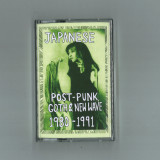
DINTE presents a cassette-only two-part Japanese post-punk, goth & new wave mixtape, the first in a tranche of regionally-focused mixes produced in partnership with Philadelphia's punk archivists World Gone Mad.
- Cold Outside
- Nick Of Time
- Lonely One
- It's My Time
- Left Unsaid
- Try Try Try
- Hall Of Mirrors
- Much Too Much
- Your Kinda Thing
- New Questions
- Kill City
- I'm Not Gonna Do It
- Don't Wanna Play
- Nashville Nights
- Today I Shot The Devil
- Tell Me Things
- Live With Me
- Just Another Day
The Fluid are arguably the great unsung band from the fertile underground rock scene of the late '80s and early '90s. The Denver five-piece - John Robinson (vocals), James Clower (guitar), Matt Bischoff (bass), Garrett Shavlik (drums), and the dear departed Ricky Kulwicki (guitar) - fused the fire of '80s hardcore with crunching Detroit protopunk, '60s garage rock, and '70s rock swagger. Think MC5, Faces, '70s Stones, all cranked up and really high on Sex Pistols and Black Flag singles. Rising from the ashes of early-'80s Denver bands Frantix (whose "My Dad's a Fuckin' Alcoholic" is a true gem of American punk) and White Trash, The Fluid were the first non-Seattle band to sign to Sub Pop, and Clear Black Paper was the second full-length album the label ever released. The label honchos were fans of Frantix, and happily got involved with The Fluid when the opportunity arose via the label's European licensing partner, Glitterhouse. Witnessing The Fluid's dominant live presence helped - a particularly fiery early show at Seattle's Central Tavern featured The Fluid, Mudhoney, Mother Love Bone, and Soundgarden all trying to outdo one another on stage. The band fit right in on Sub Pop's nascent roster of acts who, wherever they stood on the spectrum of punk/rock/metal, shared a commitment to thunderous riffs and explosive live shows. Legendary for their ferocious stage presence, The Fluid toured all over the US and Europe, holding their own and then some on bills with Mudhoney, Nirvana, Soundgarden, Dinosaur Jr., and other powerhouses of the era. From 1986 to 1993, The Fluid put out four albums and a number of EPs and singles, including a split 7" with Nirvana in 1991, before doing one album for a major label and promptly disbanding. Yet, while their partners-in-crime bulldozed into the mainstream, The Fluid remained something of a cult band, their audience confined to those who got hip during the band's existence, and crate diggers who nabbed original vinyl or CDs, which had quickly become rarities after selling through their original runs. Why? Record industry machinations? The fickle finger of pop culture? Being from Denver, not Seattle? Who the hell knows_ and who cares! The point is the band ripped, and the world deserves to hear them again. The Fluid took influences they shared with their contemporaries and ran in their own direction, focused on ass-shaking grooves more than misanthropic sludge. Rock anthems like "Cold Outside" sit alongside Stooge-oid rhythmic poundings ("Black Glove"), bluesy romps ("Leave It"), the occasional grungy dirge ("Wasted Time"), and raw punk bangers ("Is It Day I'm Seeing?" from the seminal 1988 Sub Pop 200 compilation). The band wasn't shy about their inspiration, either: scattered through their catalog are covers of The Troggs, The Rolling Stones, MC5, Iggy Pop and James Williamson, and Rare Earth. The Fluid stand out as champions of a feral, urgent, exuberant approach to rock 'n roll. As it turns out, that wasn't a recipe for stardom in the era of hyper-slick pop, boomer dinosaurs crying tears in heaven, and hair-metal power-ballads. But someone had to do it. To set things right, Sub Pop, The Fluid, and producer Jack Endino (Nirvana, Soundgarden, High on Fire, Mudhoney) teamed up to refresh and reissue The Fluid's entire indie-label catalog: their 1986 debut, Punch N Judy; 1988's Clear Black Paper; 1989's Roadmouth; the 1990 Glue EP (produced by Butch Vig, of Nevermind fame); and a treasure trove of rarities and previously unreleased material. All the music has been remastered from original tapes by Endino and JJ Golden, and the bulk of it has been meticulously remixed by Endino and the band, righting some sonic quirks that diminished the impact of the original records. Now, with their definitive material sounding better than ever, it's high time The Fluid get their due.
- You
- Goin' Away
- Saccharine Rejection
- Mouse Trap
- Turn Away
- Static Cling
- Preacher Man Blues
- My Future
- Madhouse
- 13: Th Nite
- Graveyard Tramps
The Fluid are arguably the great unsung band from the fertile underground rock scene of the late '80s and early '90s. The Denver five-piece - John Robinson (vocals), James Clower (guitar), Matt Bischoff (bass), Garrett Shavlik (drums), and the dear departed Ricky Kulwicki (guitar) - fused the fire of '80s hardcore with crunching Detroit protopunk, '60s garage rock, and '70s rock swagger. Think MC5, Faces, '70s Stones, all cranked up and really high on Sex Pistols and Black Flag singles. Rising from the ashes of early-'80s Denver bands Frantix (whose "My Dad's a Fuckin' Alcoholic" is a true gem of American punk) and White Trash, The Fluid were the first non-Seattle band to sign to Sub Pop, and Clear Black Paper was the second full-length album the label ever released. The label honchos were fans of Frantix, and happily got involved with The Fluid when the opportunity arose via the label's European licensing partner, Glitterhouse. Witnessing The Fluid's dominant live presence helped - a particularly fiery early show at Seattle's Central Tavern featured The Fluid, Mudhoney, Mother Love Bone, and Soundgarden all trying to outdo one another on stage. The band fit right in on Sub Pop's nascent roster of acts who, wherever they stood on the spectrum of punk/rock/metal, shared a commitment to thunderous riffs and explosive live shows. Legendary for their ferocious stage presence, The Fluid toured all over the US and Europe, holding their own and then some on bills with Mudhoney, Nirvana, Soundgarden, Dinosaur Jr., and other powerhouses of the era. From 1986 to 1993, The Fluid put out four albums and a number of EPs and singles, including a split 7" with Nirvana in 1991, before doing one album for a major label and promptly disbanding. Yet, while their partners-in-crime bulldozed into the mainstream, The Fluid remained something of a cult band, their audience confined to those who got hip during the band's existence, and crate diggers who nabbed original vinyl or CDs, which had quickly become rarities after selling through their original runs. Why? Record industry machinations? The fickle finger of pop culture? Being from Denver, not Seattle? Who the hell knows_ and who cares! The point is the band ripped, and the world deserves to hear them again. The Fluid took influences they shared with their contemporaries and ran in their own direction, focused on ass-shaking grooves more than misanthropic sludge. Rock anthems like "Cold Outside" sit alongside Stooge-oid rhythmic poundings ("Black Glove"), bluesy romps ("Leave It"), the occasional grungy dirge ("Wasted Time"), and raw punk bangers ("Is It Day I'm Seeing?" from the seminal 1988 Sub Pop 200 compilation). The band wasn't shy about their inspiration, either: scattered through their catalog are covers of The Troggs, The Rolling Stones, MC5, Iggy Pop and James Williamson, and Rare Earth. The Fluid stand out as champions of a feral, urgent, exuberant approach to rock 'n roll. As it turns out, that wasn't a recipe for stardom in the era of hyper-slick pop, boomer dinosaurs crying tears in heaven, and hair-metal power-ballads. But someone had to do it. To set things right, Sub Pop, The Fluid, and producer Jack Endino (Nirvana, Soundgarden, High on Fire, Mudhoney) teamed up to refresh and reissue The Fluid's entire indie-label catalog: their 1986 debut, Punch N Judy; 1988's Clear Black Paper; 1989's Roadmouth; the 1990 Glue EP (produced by Butch Vig, of Nevermind fame); and a treasure trove of rarities and previously unreleased material. All the music has been remastered from original tapes by Endino and JJ Golden, and the bulk of it has been meticulously remixed by Endino and the band, righting some sonic quirks that diminished the impact of the original records. Now, with their definitive material sounding better than ever, it's high time The Fluid get their due.
- Prologue
- Your Band Needs Your Voice
- Gretchen's Song (Featuring Hunter Schaefer)
- The New House
- Gretchen Theme
- Bike Chase
- Hospital 1
- Crashed
- Hospital 2
- Investigations
- The Lovers Nest
- Confrontation
- The Answering Machine
- The Villa
- The Pool
- Confirmation Of Dreams And Good Intentions
- Insights
- Panic
- Shelves
- Lamento
- Sisters
- Away From This Place
Mutant, in partnership with NEON, are proud to present the premiere physical release of the original soundtrack to Cuckoo.
Tillman Singer’s follow-up to Luz is an incredibly intense and unique thriller set in the Bavarian alps, blending elements of horror and science fiction.
Composer Simon Waskow returns to score Singer’s sophomore feature, adding a distinct voice to the film. His music becomes a supporting character to the action on screen, transitioning from the intimate and delicate to neck snappingly loud and direct as needed. This is a truly masterful score that deserves to be played as loud as possible.
This limited edition soundtrack features “Gretchen’s Song” with vocals by the film’s star Hunter Schaefer.
Pressed on 140g blue vinyl, and housed in a gatefold sleeve.
- Motion (Feat. Jacob Collier And Seamus Blake)
- Chamego No Salao (Feat. Lenine)
- Nosso Amor Vadio (Feat. Zelia Duncan)
- Banzo (Feat. Omar Sosa)
- Hermanos (Feat. Yamandu Costa)
- Onde Nascem As Ondas (Feat. Ed Motta)
- Paisagem (Feat. Anat Cohen)
- Botero (Feat. Eduardo Farias)
- Nosso Valsa (Feat. Leila Pinheiro)
- Catarina E Teresa (Feat. Hermeto Pascoal)
The album "Plural" celebrates the remarkable encounters and partnerships that have shaped Gabriel Grossi"s 25-year career as a harmonica player, composer, arranger, and producer. Featuring 10 of his own compositions, Grossi"s renowned virtuosity flows with deep sensitivity through various genres, reflecting the solid trajectory of one of the greatest instrumentalists and most creative musicians in Brazilian music. Collaborating with prominent names from both the national and international music scenes, "Plural" showcases Grossi"s music without borders, offering the world a glimpse of his extensive career. For this celebration, outstanding guests were invited to join the musical journey. Including Jacob Collier, Ed Motta, Hermeto Pascoal, Seamus Blake, Omar Sosa and others.
In France: Live at the Nancy Jazz Pulsations Festival (1977) is a previously unissued live recording from the legendary bluesman B.B. King captured by the ORTF in France on October 7, 1977 and released on producer Zev Feldman's Deep Digs label in partnership with Elemental Music and INA France.
The limited-edition 180-gram 2-LP set will be mastered and cut by Matthew Lutthans at The Mastering Lab, and include rare photos by Thierry Trombert, Val Wilmer, Jan Persson and more; plus liner notes by the acclaimed french author Jean Buzeline; and testimonials from fellow blues icons who knew or were inspired by B.B. King.
In 2012, Army of God released a cult cut of cold wave: “Salvation”. This was the only EP by the partnership of Aroy Dee and Miss Jagroe, the only EP until now that is.
Army of God are back, after more than a decade the duo return with Endless Skies. Analogue warmth is sliced by surgical synth stabs and bittersweet strings, Jagroe’s unmistakable voice echoes into the distance with the beseeching mantra of “until the music dies”. Aroy Dee’s edit of the title piece fortifies drums for the floor, emotion is further stripped from the already deadpan lyrics as melodies bleed into distorted wonder. The black streak that characterises Army of God turns a shade darker for the flip. A throbbing bass is inked by off-kilter keys, clusters of claps piercing the thicket of static and chilling chorus of “Fear the Night”. Venturing ever deeper into the night, the darker version will set speaker cones shaking and shivering.
Juddering and trembling, basslines are bolstered with vocals invoking the very darkest regions of the dancefloor.
- 1: Putrid Infestation
- 2: Gaggin On Maggots
- 3: No End In Suffering
- 4: Congenial Aglossia
- 5: Frothy Purge
- 6: Butchers Of The Damned
- 7: Atrocity Propaganda
The No End In Suffering EP is a compilation of songs that are a bit more outside the box of traditional HAGGUS material. On this record HAGGUS experiments with brand new riff territories, added previously unused tempos and left no stone unturned when it came to delivering this slab of horror-inducing sonic butchery. Production-wise the band purposely went for a more raw 90’s goregrind sound while still adhering to the downtuned, heavy theme of the Three Cadavers EP. Limited Blood Red Vinyl for retail. Haggus was formed in 2014 by guitarist / vocalist, Hambone, as an outlet to merge the traditional sound and politics of Mincecore with the sonic barbarity of old school Goregrind. Obsessed with pitch shifters but finding a lack of bands using them that were not labeled misogynistic porno-grind, Hambone set out on an unstoppable quest to put his brand of “Mincegore” on the map. Solely influenced by the mighty Agathocles, Hambone was determined to keep the spirit of true Mincecore alive (encompassing everything from their relentless release schedule to their uncompromising political agenda speaking out against misogyny, sexism and homophobia in the scene) while adding his own style of gore infused vocals into the mix. Coming from a purely crust and punk background, Hambone has taken a strictly DIY approach with Haggus since inception. With a tireless work ethic, the band dropped close to 100 songs within the first 6 months of existence followed by self-releasing over 60 splits, 10 EPs and 3 full length albums while touring over 20 countries since 2014. In traditional Mincecore fashion (just like Jan is to Agathocles), Hambone is the sole founder and only remaining original member of the band. After a decade of DIY, Hambone is proud to announce the partnership with the now legendary Bay Area label, Tankcrimes, and wants any Haggus fans to know that this is only the beginning… gore freaks and mince mongers commence - for worldwide Mincecore domination is upon us!!!
- 1: The Art Of Self Degradation
- 2: Like Maggots To A Corpse
- 3: Rotten And Forgotten
- 4: Ectoplasmic Seepage
- 5: Severed At The Torse
- 6: Chain Of Carnage
The Three Corpses EP is a heavier, fresh take on HAGGUS traditional brand of mincegore, debuting their new drummer and lowest tuning yet (drop G) to the world. Expanding on the classic HAGGUS approach, they’ve made it the heaviest and nastiest it’s ever been without straying too far from the traditional HAGGUS sound. In traditional fashion this was recorded in the HAGGUS practice space by Hambone but professionally mixed and mastered by Chris Revill of the now defunct band Shitlife. Limited Neon Green Vinyl for retail. Haggus was formed in 2014 by guitarist / vocalist, Hambone, as an outlet to merge the traditional sound and politics of Mincecore with the sonic barbarity of old school Goregrind. Obsessed with pitch shifters but finding a lack of bands using them that were not labeled misogynistic porno-grind, Hambone set out on an unstoppable quest to put his brand of “Mincegore” on the map. Solely influenced by the mighty Agathocles, Hambone was determined to keep the spirit of true Mincecore alive (encompassing everything from their relentless release schedule to their uncompromising political agenda speaking out against misogyny, sexism and homophobia in the scene) while adding his own style of gore infused vocals into the mix. Coming from a purely crust and punk background, Hambone has taken a strictly DIY approach with Haggus since inception. With a tireless work ethic, the band dropped close to 100 songs within the first 6 months of existence followed by self-releasing over 60 splits, 10 EPs and 3 full length albums while touring over 20 countries since 2014. In traditional Mincecore fashion (just like Jan is to Agathocles), Hambone is the sole founder and only remaining original member of the band. After a decade of DIY, Hambone is proud to announce the partnership with the now legendary Bay Area label, Tankcrimes, and wants any Haggus fans to know that this is only the beginning… gore freaks and mince mongers commence - for worldwide Mincecore domination is upon us!!!
Introducing Wishy, a brand new band from celebrated Indiana songwriters Kevin Krauter and Nina Pitchkites. Wishy came to life as a musical partnership between the two Indianapolis musicians when Pitchkites moved back home from Philadelphia in 2021. The two bonded over their love for 90s alternative bands like The Sundays and My Bloody Valentine and soon began crafting their own brand of swirling pop-rock with an introspective, grungy flair. By day Krauter works as a music teacher, giving drum and guitar lessons to students, while Pitchkites is a seamstress by trade and often makes embroidered merch for the band. While Krauter spent the better part of the last decade cementing his place as a torchbearer of Midwestern dream pop with 2018's Toss Up and 2020's Full Hand, Pitchkites delved into her own indie electro-pop project Push Pop, writing songs like "Spinning" that would later be reworked for Wishy. To round out the live band, Pitchkites and Krauter enlisted guitarist Dimitri Morris, bassist Mitch Collins, and drummer Conner Host. Across two trips to Los Angeles in late 2022 and early 2023, Krauter and Pitchkites linked up with friend and producer Ben Lumsdaine, who had some spare time between Durand Jones tours to record the pair's newly written songs. The result of their fruitful time in sunny California is the aptly named Paradise, a breezy and melodic EP that puts on full display the songwriter's musical fluency. Tastefully blending shoegaze, dreampop, and alt-rock into a heavenly haze, Wishy delivers a strong 5-song introduction that's dense with melodic earworms and stirring sentiment. Wishy's debut single for new label home Winspear, the driving and distorted "Donut," showcases Pitchkites' hypnotic vocal and Krauter's melancholic wash of guitars. Written after a period when Pitchkites was driving on a spare, "Donut" laments the cynical capitalism of Midwest living and the reliance on a car to get around. Of the song Pitchkites says "When you've got the possibility of the open road plus the limitations of your shitty car-and you're stuck driving on a donut spare tire- it's a Catch 22." Throughout Paradise, the band laments on American loneliness and idealism as it relates to our everyday lives. Across the EP's five tracks, Pitchkites and Krauter trade bittersweet reflections on love and self actualization over vast, scrappy guitar chords. The whole thing feels equally indebted to early aughts alt-rock and '90s jangle pop. Wishy's music is cathartic, yet underlined by a subtle brooding energy-sitting nicely alongside the work of their contemporaries like Momma or Tanukichan, both of whom Wishy will have shared the stage with. Wishy will be touring this Fall supporting Tanukichan, and the band will make their first festival appearance at LEVITATION in Austin, TX. After that, they have their eyes set on finishing their debut album, slated for release via Winspear in 2024
The Invisible Road: Original Recordings, 1985–1990 compiles an unheard, previously unreleased body of recordings by Sussan Deyhim and Richard Horowitz, dissidents from diametric backgrounds who met during the heady days of Downtown New York in the 1980s. This collection reveals the creative and life partners’ radical shared vision of avant-garde pop in all of its boundary pushing freedom, combining Deyhim’s singular approach to vocalization, Horowitz’s invention of new musical languages, and touchstones of traditional music from around the world, creating a new music that ultimately retains a voice entirely its own. Despite their difference in backgrounds and respective journeys, at the time of their meeting in the early 1980s in New York City, Sussan Deyhim and Richard Horowitz were both products of the search for freedom and understanding (and resultant awakenings) that swept the globe and helped culturally define the late 1960s and 70s. Deyhim, born and raised in Tehran, spent her teens dancing with Iran’s Pars National Ballet company, performing weekly on Iranian national television, and travelling her home country studying with master folk musicians and dancers, before relocating to Belgium and joining Maurice Béjart’s prestigious Béjart Ballet of the 20th Century. Horowitz, born and raised in Buffalo, New York, had spent much of the decade before abroad, first departing for Paris under the shadows of the Vietnam War, where he studied piano, Eastern philosophy, and became entrenched the city’s free jazz scene, playing with the likes of Steve Lacy, Anthony Braxton, and Alan Silva, before embarking south to Morocco where his friendship with Paul Bowles helped cultivate a deep passion for the country’s musical traditions and a shift in his musical practice.
The pair met by chance sometime in 1981 at Noise New York, a small studio on West 34th Street founded by the musician and recording engineer, Frank Eaton, as a utopian creative laboratory that beckoned artists and bands like Arthur Russell, Christian Marclay, Liquid Liquid and Butthole Surfers into its orbit. Both artists had recently relocated to the city, Horowitz having recently released his debut album, Oblique Sequences (Solo Nai Improvisations), on the legendary Paris based imprint Shandar, and fallen in with members of New York avant-garde like La Monte Young, Jon Hassell, David Byrne, and Brian Eno, and Deyhim having begun to more actively incorporate singing into her practice, notably recording a vocal score for choreography she was doing at La MaMa Experimental Theatre.
Initially bonding over a cassette tape of field recordings made by Paul Bowles that had been given to mutual friend and writer Brian Cullman (seeking answers for Ornette Coleman’s question “what is the sound of sound”), their earliest collaboration was documented on Horowitz’s 1981 album, Eros In Arabia, with Deyhim contributing vocals to the track “Queen Of Saba.” Over the coming years, their deep connection would routinely gravitate them into the studio, culminating in the body of recordings that would appear on their 1986 album for Crammed Discs, Desert Equations: Azax Attra. Unknown to nearly all but the artists, laying in wait over the decades on numerous multi-track and stereo reels, DAT tapes, and reference cassettes, were a vast array of recordings made by Deyhim and Horowitz bookending Desert Equations. The 13 pieces represented on The Invisible Road: Original Recordings, 1985–1990 were recorded largely between Noise New York and Daylight Studio in Brussels, during a period that Deyhim describes the partnership between herself and Horowitz’s as seeking a music “free of any specific cultural reference, with a personal musical signature,” blossoming into a body of sonority that embraced the energy of contemporary boundary pushing pop and the avant garde, filtered through their mutual love and study of various musical traditions from across the globe and deep engagement with the ideas and tactics of experimental music.
Undeniably rooted in Horowitz’s study of the North Africa ney and the music of the Berber and Gnawa cultures during his time in Morocco, Deyhim’s deep engagement with the folk traditions of Iran, and the couple’s immersion in the interconnected Downtown underground music scenes, each piece on The Invisible Road offers its own vision creative and cultural hybridity. Deyhim sings in both English and Farsi, as well as a composite tongue that she developed by drawing upon numerous indigenous vocal techniques from around the world, intuitively responding to Horowitz’s simultaneous sound syntax forming and combining a wide range synthetic and acoustic instrumentation, and experimental tape techniques, within a visionary series of free-standing expressions.
- A1: Trapped
- A2: Dirt Farm
- A3: Chess
- A4: Summerville
- A5: Research
- A6: Under The Floor
- A7: Nice Replica
- A8: Culpable
- A9: Laboratory
- A10: Lab Partners
- A11: Definitely Class Five
- A12: Go Go Go
- A13: Trap Him
- A14: Don't Go Chasing Ghosts
- A15: Mini-Pufts
- A16: Down The Well
- A17: The Temple Resurrected
- A18: The Plan
- A19: Suit Up
- A20: No, I'm Twelve
- A21: Getaway
- A22: Callie
- A23: Protecting The Farm
- A24: Showdown
- A25: Reconciliation
Ghostbusters: Afterlife is available as a limited edition of 2500 copies on “Muncher” coloured vinyl (crystal clear & transparent green). The heavyweight gatefold sleeve has a special UV Spot varnish + embossing finish. The package contains a printed innersleeve and 4-page booklet (featuring several of your favorite mini-pufts!) and a special litho of the gatefold artwork.
Ghostbusters: Afterlife is co-written and directed by Jason Reitman and stars Carrie Coon, Finn Wolfhar, Mckenna Grace, Annie Potts, and Paul Rudd. The film follows a single mom and her two kids who arrive in a small town, where they begin to discover their connection to the original ghostbusters and the secret legacy their grandfather left behind.
Rob Simonsen rejoins director Jason Reitman with his score for Ghostbusters: Afterlife, having scored The Front Runner & Tully for the director. Other recent film scores include The Friend, The Way Back, and Love, Simon. Based in Los Angeles and ever with his finger on the pulse of contemporary music, he co-founded the influential collective The Echo Society with the mission ‘to inspire, challenge, enrich and connect the community through the creation and performance of new sonic and visual art’. Simonsen’s debut artist album Rêveries was released in 2019 on Sony Masterworks.
Deluxe Edition = "Queen's Tassel Pink" Vinyl + bonus 7". Video Age make breezy and timeless songs that are so ineable, they can only be the result of a decades-long friendship and songwriting partnership. Across four albums, Ross Farbe and Ray Micarelli have gleefully worn their influences on their sleeve, writing inviting tunes that reference sounds ranging from disco to pop and indie rock. On their latest LP, Away From The Castle, the New Orleans duo have strayed from nostalgia and instead have honed their own unique musicality, making songs that sound like themselves with a taste of inspiration from classic singer-songwriters of the 60s and 70s. The album is a testament to the possibilities that come from getting out of your comfort zone, the freedom of writing vulnerably and unselfconsciously, and the joys of getting to work with your closest companions. After releasing and eventually touring their critically-acclaimed third album Pleasure Line in 2020, Farbe and Micarelli sought inspiration for their next project through collaboration. They worked with Drugdealer on his album Hiding In Plain Sight, Micarelli gigged throughout New Orleans' jazz and blues scenes, and Farbe recorded local artists at his home studio, most recently producing Esther Rose's new album Safe to Run. Feeling refreshed, they rented a cabin in Eunice, Louisiana with touring members Nick Corson and Duncan Troast, where they spent eight days in August 2022 jamming, cooking and writing together. Through this process, Video Age have made their best collection of tracks to date by perfectly alchemizing their influences and experiences into a record still tinged with nostalgia, but moving towards a more succinct and authentic voice. Away From The Castle is a document of a band having fun and rediscovering their love for making music together, but it's also their most honest and personal work yet-Video Age distilled to its purest form.
Dark Evergreen VInyl. The odd couple of Kristian Dunn (El Ten Eleven) and Damon Che (Don Caballero) was the result of some clever musical matchmaking by Karl Hofstetter, founder and curator of Joyful Noise Recordings. Karl introduced Dunn and Che via email in April 2023 after Dunn's prolific output outgrew the resources and abilities of his instrumental duo El Ten Eleven. Less than a year later, after countless text messages and song sketches were exchanged, and one fateful meeting at a recording studio was organized, their nascent project's debut record, See You at the Solipsist Convention, was complete. Despite Che's initial unfamiliarity with Dunn's musical output, their personalities bridged any and all gaps_both Che and Dunn share a flair for the comically absurd and musically adventurous, a mindset that shines throughout See You at the Solipsist Convention. Che has become legendary for his calculated polyrhythms and undeniable physicality, while Dunn is known for relentless experimentation and productivity akin to a freight train. Quickly, the unlikely pair transformed into destined collaborators. Scaffolded around eight-string bass, knotty percussion, and intricate syncopation, See You at the Solipsist Convention is a carnival of delights for fans of the post-everything persuasion_uncategorizable yet reverent to the altar of instrumental rock. Beyond all measure, Yesness stands as a testament to the powerful dividends of friendship and collaboration. We are nothing without each other - our partners, our local record store clerks, our neighbors. Music, too, thrives on our entanglements. With twelve tracks, an upcoming tour, and an unexpected friendship stemming from one email, Yesness underscores the brilliant machinery of human connection.
7A Records is proud to present our deluxe reissue of Robert Gordon's Rock Billy Boogie album. It has been remastered and expanded with four bonus tracks, features extensive liner notes and is pressed on 180g Pink Vinyl. Robert Gordon entered New York City's Plaza Sound Studio in April 1977 to record his first album. Four months later, Elvis Presley was found dead in his Memphis mansion, Graceland, at the age of 42. The media was anxious to anoint a successor to the late King of Rock and Roll, and Gordon-twelve years Presley's junior-was high atop many lists. Gordon's vocal resemblance to Elvis Presley was hard to ignore, although the singer never crossed the line into impersonation. He retained his originality and an attitude honed in New York's vibrant punk scene. In late 1978, Gordon was signed to Presley's longtime home of RCA Records. He inaugurated his label tenure with the early 1979 release of his third and perhaps finest album, Rock Billy Boogie. The power-packed LP would become a cornerstone of the so-called rockabilly revival. Four additional recordings round out this deluxe, expanded edition of Rock Billy Boogie: Gordon's 1980 cover of John Beveridge and Peter Oakman's "A Picture of You," a # 1 U.K. hit for entertainer Joe Brown in 1962; and three tracks looking back to his seminal partnership with Link Wray from the Private Stock years: "Lonesome Train (On a Lonesome Track)," "Summertime Blues," and "Red Cadillac and a Black Moustache."
Even as the obstacles to meaningful connection mount into an Everest-ian hurdle, artists nevertheless find ways to bend the technologies of our days to foster visceral human connection, rather than bereft isolation. Comprised of a West Coast bassist (Kristian Dunn of El Ten Eleven) and an Appalachia-adjacent drummer (Damon Che of Don Caballero), Yesness forges a friendship mediated through the language of collaboration, all formed through emailed song sketches and text exchanges of Van Halen demos. The odd couple of Kristian Dunn (El Ten Eleven) and Damon Che (Don Caballero) was the result of some clever musical matchmaking by Karl Hofstetter, founder and curator of Joyful Noise Recordings. Karl introduced Dunn and Che via email in April 2023 after Dunn's prolific output outgrew the resources and abilities of his instrumental duo El Ten Eleven. Less than a year later, after countless text messages and song sketches were exchanged, and one fateful meeting at a recording studio was organized, their nascent project's debut record, See You at the Solipsist Convention, was complete. "We were ships in the night of the musical variety until Karl found a way to merge our paths," Che said of his introduction to Dunn. "There are very few comparisons in the aesthetic approach to how we created the music. We worked remotely for eight months before physically meeting for the first time at the recording studio." Neck-deep in their own ambitions, Che and Dunn swapped musical ideas and quirky song titles throughout the summer, working at a breakneck pace. Star Wars references were intertwined with walloping bass lines ('If You Say So'); non-sequiturs were punctuated by Che's signature frenetic percussive jabs ('Horror Snuggle'). Scaffolded around eight-string bass, knotty percussion, and intricate syncopation, See You at the Solipsist Convention is a carnival of delights for fans of the post-everything persuasion—uncategorizable yet reverent to the altar of instrumental rock. Tearing through the record's evocative instrumentals is a delightful bolt of strangeness, felt as much as heard in the spontaneous chemistry between Che and Dunn. "Occasional Grape?" dances like a waltz played with a sledgehammer—delicate moments shattered by bursts of aggression, while still embedding a rhythmic earworm deep into your heart. 'Nice Walrus,' a string-studded panorama featuring Kishi Bashi, volleys between nervy hyperactivity and heartfelt grandeur. The album's closing track, "Non-incredible Visitor," contrasts Che's meticulous precision with Dunn's imaginative instrumentation, bonding bass and percussion like nesting dolls. Just as the track seems to settle, it drives off an uncharted auditory cliff—abruptly, without ceremony, leaving the listener grasping for meaning in the murk. Beyond all measure, Yesness stands as a testament to the powerful dividends of friendship and collaboration. We are nothing without each other – our partners, our local record store clerks, our neighbors. Music, too, thrives on our entanglements. With twelve tracks, an upcoming tour, and an unexpected friendship stemming from one email, Yesness underscores the brilliant machinery of human connection.
- Always
- Like Licorice
- My Baby Just Squeals (You Heel)
- The Devil's Wife
- Tipsy Woman
- My Baby Just Purrs (You Re Mine, Not Hers)
- My Baby Just Whistles (Here Come The Missiles)
- World Serious
- Early Shirley
- Yesteryear Is Near
- Birkenhead Girl
- Smoke Ring Angle
- Wooden Women
- (I Don T Want Your) Lyndon Johnson
- Lotta Money
- Pure Bubblegum
- Cathy Come Home
- Bygones
- Row Me Once
- Clown Around Town
The exact relationship between Henry (T-Bone Burnett) and Howard Coward (Elvis Costello) remains ambiguous. They often referred to themselves as “One and a Half Brothers,” which might hint at their height difference or imply they were not actually siblings but were involved in an elaborate ruse. Their musical partnership, known as The Coward Brothers, was initiated by Smiley “Doc” Snipson, who discovered Henry Coward in 1956 and signed him for a UK tour. The brothers' hit single, “My Baby Just Squeals (You Heel),” was followed by less successful records and a controversial Cold War-themed song. To preserve their fading fame, Snipson orchestrated their supposed death in a plane crash, but they were actually in hiding on a Caribbean island, secretly recording music and sending it back to Snipson. When their funds ran out, they returned to Miami and made sensational claims about writing famous songs, leading to a brief stint as songwriters for Bill Bogguss. They later resumed recording, but their partnership eventually fractured, leading to years of estrangement. Their music, from early rock and roll hits to later, more introspective songs, is compiled in the album, The Coward Brothers. After years of silence, their story was explored in a radio program, revealing the complexity of their relationship and their enduring bond. Despite their tumultuous history, their music remains a testament to their unyielding spirit. The Coward Brothers are Elvis Costello and T-Bone Burnett. The Audible Original radio play, The True Story Of The Coward Brothers, is directed by Christopher Guest, and stars Howard Coward, Henry Coward, Harry Shearer, Edward Hibbert, Rhea Seehorn, Stephen Root, and Kathreen Khavari.