Miles Davis' A Tribute to Jack Johnson is the best jazz-rock record ever made. Equally inspired by the leader's desire to assemble the "greatest rock and roll band you have ever heard,” his adoration of Johnson, and Black Power politics, Davis created a hard-hitting set that surges with excitement, intensity, majesty, and power. Bridging the electric fusion he'd pursued on earlier efforts with a funkier, dirtier rhythmic approach, Davis zeroes in on concepts of spontaneity, freedom, and identity seldom achieved in the studio — and just as infrequently accepted by the mainstream.
Sourced from the original analog master tapes, pressed on MoFi SuperVinyl, and housed in a Stoughton jacket, Mobile Fidelity's 180g LP reissue brings it all to fore with startling realism. Benefitting from SuperVinyl’s nearly inaudible noise floor, superb groove definition, and clean, ultra-quiet surfaces, this 180g LP showcases everything — from the bold tonality of the headliner's white-hot trumpet solos to the decay of crashing cymbals, carry of wiry guitar notes, and echoes of the studio — in reference fashion.
Bristling with exuberance, Davis' high-register passages explode with authority and commanding presence. Around him, a barrage of urgent backbeats, knifing riffs, and supple bass lines emerge amidst black backgrounds. One of the most prominent differences long-time fans will notice is how much more aggressive, immediate, and vibrant the music sounds, with those aspects central to the composer's original desires.
Utilizing wah-wah and distortion, the go-to instrumentalist of the performances— guitarist John McLaughlin — attacks with a nasty edge, slashing style, and vicious streak that allows A Tribute to Jack Johnson< cross the until-then-impenetrable divide between rock and jazz. Davis puts both feet in the former camp and erases any gap. The stories of the record’s creation are nearly as legendary as the sounds within: Two sessions, multiple jams, different sets of musicians (several uncredited), and near-miraculous production perfectionism that made it all appear cohesive.
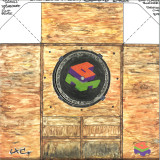
The least-well-known masterpiece of Davis' career, the 1971 record — seamlessly assembled and spliced together by producer Teo Macero — was a victim of limited record-label promotion. Audiences also didn’t immediately know what to make of its original cover art — faithfully replicated here. In addition, the powers that be at Columbia Records were directing the public’s attention to Miles at Fillmore, a completely different kind of album guided by two keyboardists. A Tribute to Jack Johnson practically lives in a different universe, one from the future. To many listeners who did manage to hear it — among them critic/musician Robert Quine, Stooges leader Iggy Pop, and renowned critic Robert Christgau — it surpassed everything that came before.
Indeed, Davis treated it as a personal manifesto: An opportunity to salute the Black championship boxer admired for his threatening image to the establishment and impeccable taste in clothes, cars, women and music. Davis explains in the liner notes his affinity for Johnson — a stance mirrored by the defiant music, which hits with a prize fighter's force and reflects the graceful elegance with which a pugilist navigates the ring — and closes the album with a Johnson quote read by Brock Peters.
Inspired not only by Johnson but by Jimi Hendrix and Sly Stone, Davis changed his approach and his band. He surrounds himself with a cadre of musicians in their 20s and, in the case of bassist Michael Henderson, a 19-year-old fresh from touring with Stevie Wonder. Henderson gives Davis what he requested: boogie-based grooves that don’t lose shape or direction. Soprano saxophonist Steve Grossman, drummer Billy Cobham, and organist Herbie Hancock adhere to a similar aesthetic that prizes brazenness, innovation, and energy.
In that vein, during a portion of “Yesternow,” Davis segues into a separate performance (which became known in its entirety as “Willie Nelson”) played by guitarists McLaughlin and Sonny Sharrock, bass clarinetist Bernie Maupin, keyboardist Chick Corea, bassist Dave Holland, and drummer Jack DeJohnette. Dig it!
Talking with jazz scholar Bill Milkowski — who himself noted how McLaughlin’s unrestrained style, decibel-forward volumes, and rapid-fire power chords engendered himself to the rock crowd at the same time that his harmonics and syncopation still definitely made him a jazz player — guitarist Henry Kaiser summed up part of the appeal of A Tribute to Jack Johnson as well as anyone, saying: “It’s a jazz record that way way more open than other jazz records at the time, but still not free jazz. McLaughlin’s rhythm guitar playing on ‘Right Off’ — the use of different chords in a rock shuffle than what anybody had used before — was revolutionary.”
And to think that’s just one aspect of a record that contains multitudes. “Never let them forget it.” Indeed.
Buscar:pas cam
Dire Straits never made a big to-do about its final run. In classic understated British fashion, the band simply let its music speak for itself. And how. Originally released in September 1991, On Every Street became the group's swan song – a lasting testament to the influence, musicianship, and integrity of an ensemble whose merit has never been tainted by cash-grab reunions or farewell treks. It remains an essential part of the Dire Straits catalog and a blueprint of the distinctive U.K. roots rock the collective played for its 15-year career.
Sourced from the original master tapes, housed in gatefold packaging, and pressed at RTI, Mobile Fidelity's 180g 45RPM 2LP set of On Every Street presents the album like it has always been meant to be experienced: in reference-grade audiophile sound. Recorded at AIR Studios in London and produced by Dire Straits leader Mark Knopfler, it features all of the band's sonic hallmarks – wide instrumental separation, visceral textures, seemingly limitless air, broad soundstages, atmospherics that you can almost reach out and feel. Each element is made more vibrant, physical, and lifelike on this collectible reissue, which marks the first time this 60-minute work has been available at 45RPM speed.
Afforded generous groove space and black backgrounds, the songs from On Every Street burst with nuanced details and vibrant colors. Dire Straits' playing appears to float, their intricate performances organized amid hypnotic, fluid, three-dimensional arrangements. Mobile Fidelity's definitive-sounding set also brings into transparent view Knopfler's finely sculpted guitar lines, expressive tones, and laid-back vocals – as well as the balanced accompaniment from his band mates. Here's a record on which you can hear the full blossom and decay of individual notes, and imagine the size and shape of the studio. It is in every regard a demonstration disc. And it happens to be filled with timeless fare.
Remarkably, On Every Street almost never came to light. Dire Straits initially dissolved in September 1988 after touring behind its blockbuster Brothers in Arms and suffering the departure of two members. At the time, Knopfler professed his desire to work on solo material; bassist John Illsley also explored side projects. But Knopfler's decision in 1989 to form the country-leaning Notting Hillbillies reignited a spark to reconvene his primary band and craft a fresh batch of songs. Six years removed from Brothers in Arms, Knopfler, Illsley, keyboardist Alan Clark, and keyboardist Guy Fletcher teamed with A-list session pros – steel guitarist Paul Franklin, percussionist Danny Cummings, saxophonist Chris White, guitarist Phil Palmer included – to create what still stands as an unforgettable farewell.
The platinum record brings the band full circle in that it returns Dire Straits to a quartet formation; finds the group refreshingly out of step with the era's prevailing trends; and sees Knopfler and Co. knocking out song after song with the deceptive ease of a punter tossing back a pint at a pub. That subtle cool, clever poise, and innate control – signature traits that no other band ever matched – dominate On Every Street. Knopfler's clean, virtuosic six-string escapades unfurl with dizzying melodicism and economical efficiency. Led by his winding fills and focused solos, Dire Straits traverse a hybrid landscape of rock, jazz, country, boogie, blues, and pop strains with near-faultless prowess.
More than any other entry in the group's oeuvre, On Every Street welcomes quick detours down back alleys and into the depths of human souls. What makes it more brilliant is its staunch refusal to cater to commercial expectations or take advantage of prior successes; every passage feels true, every measure echoed in the service of song. It's evident in the humorous satire of "Heavy Fuel," closeted desperation of the witty "Calling Elvis," and shake-and-bake bounce of "The Bug." It pours from the album's darker corners, as on the high-and-lonesome melancholy of the title track and bruised emotionalism of "When It Comes to You."
Hinting at the open-minded approaches and boundless curiosity he'd embrace as a solo artist, Knopfler doesn't limit himself when it comes to style or subject matter. Look no further than "You and Your Friend," a shuffle whose all-inclusive lyrics encourage an array of interpretative meanings. Another of the album's deep cuts, "Iron Hand," comes on as one of the band's most memorable moments – the narrative addressing the abuses of power at the 1984 Battle of Orgreave during the U.K. miners' strike. Given cinematic heft by the expert production, the true-fiction account puts into perspective the richness, poetry, and depth of On Every Street.
"Every victory has a taste that's bittersweet," sings Knopfler on the title track. At least that bittersweetness seldom sounded so damn good on record.
For a few years Leo Robinson was the sort of hidden secret you sometimes come across in local music scenes. First in Manchester and now in Glasgow, he’d pop up regularly on DIY bills or as local support to a touring act, quietly blowing them off stage with his rich baritone vocal and homespun lo-fi tales of folklore and animism. With The Temple – his debut on PRAH Recordings – he looks set to cross over from being a cult concern.
“There's a spectrum within the album between fully mythologising or symbolising my lived experience, and just stating it in very matter of fact terms - that push and pull between the need to abstract and the need to break through the abstraction and have an honest moment with oneself” he explains. “This is one of the themes of the album as well as part of the process. The aim was to take all these anecdotal or symbolic elements and merge them into one narrative and one world, in a way that you can find your way through the record as if it were a landscape or language with its own logic.”
The record takes on a pastoral, slightly baroque nature that Robinson partly attributes to a friend screening a lot of ‘70s BBC material in his book shop that they used to hang out at. There are also elements of jazz, flickering to life in “The Spring”’s piano-led finale and coda.
Thematically, Robinson likens it to a Jungian ‘Hero's Journey’, his voice possessing a character who goes through several defined stages of consciousness. From conception and the beginning of an earthly life, the first half of the album recognises the development of the protagonist’s narrative and identity, before “The Pink Light”’s freeform departure from the hitherto more song-based suite devastatingly shatters this. The second half of the album then sees the protagonist witness “the uncontainable” water; learning that true divinity lies not in the individual self or lofty notions of gods and temples, but in the unremarkable nettles, insects and dogs on the roadside riverbank - referenced on tracks “The Cormorant” and “The Spring”.
Although now residing north of the border, The Temple was written while Robinson was finding his feet in Manchester, having moved there to go to art school as a teenager (as a visual artist, he has exhibited at the Tiwani Contemporary in London and Cardiff’s Chapter Arts Centre). As a result, many of the tracks bear out the shadows of his experiences in the northern city – at their most visible and explicit on the beautifully fragile storytelling of “The Pavement”. Written the day after the Manchester Arena Bombings, it recalls Robinson waking up to go to work on a hot summer’s day to discover that his street had been blocked off for terrorism investigations; it then progresses through the rest of his day, amidst the grimly surreal aftermath of the previous night.
Having written the chords, melodies and lyrics to the album, Robinson fleshed out the tunes by scoring out parts for the additional instrumentation, but it was only when a friend sent a demo to PRAH that he was able to fund its full recording. Guitars, vocals, piano and French Horn (the latter recorded by Lauren Reeve-Rawlings) were put down at Green Door Studios in Glasgow. Microphones were placed around the room and the sound of the musicians stepping on creaky floorboards and opening creaky doors were left audible to further the record’s live feel. The harpsichord heard on “The Serpent”, meanwhile, came from University of Glasgow lecturer David McGuinness. Strings were then recorded at PRAH Studios by Francesca Ter-Berg and Raven Bush, the Social Singing Choir adding their choral vocals to “Temple II”.
The result is an album that feels both luscious and yet intimately raw; as grand as Richard Dawson at his most panoramic but containing the rough edges and skeletal looseness of a Calvin Johnson work. At times Robinson lyrically moves towards the surreal, but ultimately this is a record grounded in reality; a true showcase of Robinson’s skill as a lyricist and songwriter.
"L'idée nous est venu lors d'une conversation un peu arrosée dans un pub du sud de Londres avec Philippe du label Tapeworm" dixit François Kirmann Gamaury alias Franz Kirmann alias Dj Salinger – producteur français établi à Londres depuis plus d'une vingtaine d'années.
"Voyage voyage voyage" est une mixtape. Mais pas dans le sens traditionnelle du terme. Kirmann l'appelle une mixtape subjective, où les morceaux ne sont pas joués tels quels mais présentés tels qu'ils sont ressentis par l'artiste.
Un peu comme le DJ Vladimir Ivkovic qui ralentit certain morceaux sur ses platines pour en révéler un autre aspect, Kirmann zoom dans l'étoffe même des enregistrements, étire les notes et les sons à l'infini, pour en mettre à jour un sens caché, altérer notre perception de ces chansons qui peuvent parfois sembler un peu désuètes. Ici elles sont transformées en nappes fantomatiques et envoutantes qui évoquent un souvenir d'une période de sa vie, une trace sonore d'une époque un peu naive, qui revient aujourd'hui sous forme d'echo, une musique nostalgique trempée dans la reverb et la distortion.
Kirmann a grandit au Sénégal pendant les années 80 et il se souvient des étés de son enfance passé chez ses grand parents, les chansons à la radio, dans le bus du centre aéré, dans un Prisunic en Dordogne, où une fête de camping en Alsace: Catherine Lara, Elsa, Veronique Jeannot et bien sûr Desireless et son fameux tube "Voyage voyage".
Les chansons sélectionnées pour la cassette ont toutes en commun une incitation au départ, une recherche de l'ailleurs, un amour perdu, un souvenir, les thèmes de predilection d'une certaine pop française que l'on nommait variété.
Ces idées d'évasion sont accentuées ici par le traitement sonore qui leur est appliqué. Les chansons sont paralysés dans le temps, figées dans le son, comme si l'on avait souligné certain passages dans un roman pour les détacher du texte intégral.
Distortion, écho, réverbération et autres effets sont appliqués et donnent à la musique et au son une qualité rêveuse et distante. Certains passages reconnaissables se dévoilent et sortent de la brume sonore, ils se révèlent plus net, d'autres sont noyés dans un brouillard imprécis, une musique proche de l'ambient qui enveloppe l'auditeur.
Kirmann: "Chaque track est basé sur une chanson de variété française des années 80, je voulais re-créer une impression de distance, quelque chose de lointain. Les morceaux deviennent des sortes de tapisseries sonores mais dont l'essence de la chanson originelle est toujours présente. Il y'a un roman de Patrick Modiano où les personnages lancent des avis de recherche pour la France à partir d'une station de radio d'un pays lointain. Le son est brouillé, les voix étouffées. J'avais un peu cette idée en tête de faire quelque chose de similaire, comme si les chansons étaient entendus sur un vieux poste de radio mais émises d'une station lointaine et d'un autre temps."
Le résultat est un voyage nostalgique, une musique ambient et nébuleuse façonnée à partir de tubes synthétiques 80's. Imaginez Fennesz ou My Bloody Valentine jouant des reprises de Laurent Voulzy et vous y êtes presque…
Loveless non, Desireless oui!
DJ Salinger. Voyage Voyage Voyage – Disponible en cassette uniquement. 100 exemplaires sur le label Tapeworm.
—
Franz Kirmann is a French music producer living in London. He has made albums for various labels including Denovali, Bytes, Mercury KX. He also writes music for film and TV and is a lecturer in music production at Point Blank Music school.
- Rain And Snow- J. Obray Ramsey
- Mama Tried- Merle Haggard
- Iko Iko- Dixie Cups
- Samson And Delilah- Rev. Gary Davis
- Big Railroad Blues- Cannon's Jug Stomp
- El Paso- Marty Robbins
- It's All Over Now, Baby Blue- Bob Dylan
- Spoonful- Charlie Patton
- The Red Rooster- Howlin' Wolf
- The Promised Land- Chuck Berry
- Don't Ease Me In- Henry Thomas
- Big Boss Man- Jimmy Reed
- Turn On Your Love Light-Bobby "Blue" Bland
In their long career The Grateful Dead have been inspired by a stunning variety of American musical artists and traditions from blues to country to rock to folk - some of the most exciting and moving music ever recorded. Here are the original versions of The Dead's best loved cover tunes that surprise and delight with their musical depth, originality, and feeling. This collection has been lovingly compiled by a group of Dead insiders including Henry Kaiser, David Gans, and others with the enthusiastic support of The Dead itself. There are extensive notes included that give an overview detailing how the band came to cover each of these tunes and when they first played them in concert. The distinctive Robert Crumb cover artwork is an instant attraction and add to the collectability of this release.
- A1: The Great Hen-Yuan’ River
- A2: Summer Will Not Come
- A3: Six Coral Devils (Part Ii)
- A4: Six Coral Devils (Part Iii)
- A5: Six Coral Devils (Part Iv)
- A6: Six Coral Devils (Part V)
- A7: Six Coral Devils (Part Vii)
- A8: Definitely That Ketsal
- A9: The Waltz Windows On The Floor
- B1: Blue
- B2: Kwolyj Twist (Slow Twist)
- B3: Argolida (Part I)
- B4: Argolida (Part Ii)
- B5: Argolida (Part Iii)
- B6: Argolida (Part V)
- B7: Argolida (Part Vi)
- B8: Argolida (Part Vii)
- B9: Argolida (Part Viii)
- C1: All Secrets Of A Poem (Part Iii)
- C2: All Secrets Of A Poem (Part Iv)
- C3: All Secrets Of A Poem (Part Vi)
- C4: All Secrets Of A Poem (Part Vii)
- C5: Poliuwannia (The Hunt)
- C6: Smilywo Chodit’ Do Zymy (Walk Brave To The Winter)
- D2: Widen Spyt’ (Vienna Is Sleeping)
- D3: Wartowyj (The Stand Guard)
- D4: Procesija Mertwych (Dead Ceremony)
- D5: Na Skryni (On The Basket)
- D6: Untitled (Bonus Track)
- C7: Zradnyky (The Traitors)
- D1: Obminaj Misce (Around This Place)
The founders of Cukor Bila Smert’ (Ukrainian: Цукор– Біла Смерть, English: Sugar – White Death) band were Svitlana Okhrimenko (a.k.a. Svitlana Nianio), Oleksandr Kohanovs’kyi, and Tamila Mazur, who studied at the Reinhold Glier Kyiv Academy of Music in 1984-1988. In the summer of 1988, they got acquainted with Eugene Taran, a young guitarist and artist. He joined the band and also became the ideologist of Sugar – White Death. Moreover, Eugene coined the name for the band: the irony towards the Yellow Press. The musicians gathered at Kohanovs’kyi’s house, where they spent their free time not only playing music but also listening to and discussing new records and thinking about the conception of their new project.
For two years, the band recorded a few home-made albums, such as “Rhododendrons Coral Aspides” in 1988 (which is considered lost), where Kostyantyn Dovzhenko took part as a guitarist and sound engineer. He also replaced Taran during the recording session because Eugene was passing an exam at that time. The band also recorded another album – “Lilies and Amaralises,” in 1989, which is also considered lost. Eugene remembers that the band made a lot of recordings but did not pay so much attention to them. Sugar – White Death played live occasionally but spent more time creating their own sound, which was named by Oleksii Dekhtyar (a founder of “Ivanov Down”) as a “sugar calypso sound.” At that time, the music was mostly created by Oleksandr Kohanovs’kyi, and the lyrics were written by Svitlana Okhrimenko and Eugene Taran.
In February 1990, a quartet came to the Scientists House Studio in Kyiv, where they had one studio session only, recorded by Valerii Papchenko. Musicians played live for about one take. This session was represented on the “Mannered Music” compilation by several blocks – “Venus with Long Neck,” “The New Sissies,” and “Rhododendrons Coral Aspides,” which was shortened to “Rhododendrons” on the cassette (two songs from which – “Summer Will Not Come” and “The Great Hen-Yuan’ River,” dedicated to Grigorii Khoroshylov, the sinologist from Kyiv). The compilation cover design was created by Eugene Taran. Later, this tape got to Vlodek Nakonechnyj, the founder of Koka Records, a young Polish label, who released “Mannered Music” on cassettes and made efforts to invite Sugar – White Death to play several gigs in Poland.
In November 1990, Sugar – White Death played their last gig as a quartet in Kharkiv. They were invited by Sergii Myasoyedov, who curated the art association “Nova Scena” (The New Scene). The band played selected tracks from the albums “The New Sissies” and “The Shellfishes in Gold Wrappers” (the last one is also considered lost). Due to Sergii Myasoyedov's efforts, the performance was documented: he saved a lot of photos and fragments of soundboard recordings on reel-to-reel tape.
Later, Oleksandr Kohanovs’kyi and Tamila Mazur left Sugar – White Death: Oleksandr founded his own project Pan Kifared, and Tamila became a bass player of Shake Hi-Fi (whose co-founder was Eugene Taran). Sugar became a duo of Svitlana and Eugene. They started to focus on their next work: “Antinoy Is Leaving” in late 1990.
In 1992, they were also invited by Sergii Myasoyedov for a studio session in Kharkiv, where due to the efforts of Oleksandr Vakulenko, Sugar recorded the new album called “All Secrets Of A Poem”. Some tracks from the work (“Dead Ceremony,” “Vienna Is Sleeping,” and “Untitled”) were released on their next and last album, “Selo” (“The Village”). The rest compositions were published as a part of the compilation for the first time.
In the autumn of 1992, the musicians went to Poland, where Vlodek Nakonechnyj, who wanted Sugar to come to a “real” studio, organized their last recording session. Although the journey’s beginning was unsuccessful (Eugene’s guitar was taken away by a customs officer when crossing the border), the musicians worked fast during the session at the Arek Was studio at Marki on an 8-track reel-to-reel machine. Boleslav Blazhchyk took part as a cellist, playing the parts created by Svitlana. The album was completed in three days – the musicians spent two days recording and one-day mixing, mostly done by Eugene Taran. In 1993, this work was released as “Selo” (“The Village”) album on cassette tapes by Koka Records (remastered by Tadeusz Sudnik). Later, Sugar – White Death was disbanded.
Credits:
Cukor Bila Smert’: Svitlana Okhrimenko (lyrics, keyboards, piano, vocals), Eugene Taran (lyrics, keyboards, guitar), Oleksandr Kohanovs’kyi (piano, A1-B2), Tamila Mazur (cello, A1-B2), Boleslaw Blaszczyk (cello, C5-D6)
Cover photo by Vlad Urazovs’kiy
Photo archive courtesy: Vlad Urazovs’kiy, Vlodek Nakonechnyj (Koka Records),
Oleh Yuhrinov, Sergii Myasoyedov
Audio archive courtesy: Vlodek Nakonechnyj (Koka Records), Guido Erfen,
Sergii Myasoyedov
Liner notes: Vlad Yakovlev
Compiled by Dmytro Nikolaienko, Dmytro Prutkin and Sasha Tsapenko
© ? Shukai / Cukor Bila Smert’
2024
- A1: Stronger (Feat. D-Train)
- A2: Love The Way You Fly (Feat. Seest)
- A3: Queen Sugar (Feat. Jasmine Franklin)
- B1: Skintight (Feat. Rachel Matthews)
- B2: Save Your Love (Feat. Boogie Back & David A. Tobin)
- B3: Sexability (Feat. Kevin East)
- C1: Slow Burn Love (Feat. D-Train)
- C2: No Matter What (Feat. Yolanda Lavender)
- C3: Keep On (Feat. Matthew Winchester
- D1: Come Back Home (Feat. David A. Tobin)
- D2: Share The Light (Feat. Janus Soliånd)
- D3: Your Move (Feat. Sophie Ripley)
- D4: Summer Rain (Feat. Faye B)
Five albums, sixty tracks and still counting. Cool Million are back with a new album!
Ten years ago the euro soul duo Cool Million released their first album 'Going Out Tonight' on UK soul label Expansion Records. The album took the soul crowd by surprise, cause who were these guys that out of the blue, could recreated the soulful sound of the 80's hey day like no other?
The answer to that question is; Rob Hardt and Frank Ryle. One a super musician from Germany with skills you can only dream of. The other a Dj/musicfreak from Denmark with a masterplan – both of them with tons of dedication and passion for thier craft.
Thier passion and ambition have kept them in the came for a decade and they have worked with a long list of artists, some known some not, some forgotten some on their way up! The list include names such as: Jean Carne, Keni Burke, Shirley Jones, Eugene Wilde, Meli'sa Morgan, Rena Scott, Leroy Burgess, Peggi Blu, Yvonne Gage, Marc Evans, Alton McClain, Kenny Thomas, Lisa Stansfield, Tom Moulton, Joey Negro, Dimitri From Paris and John Morales, Glenn Jones, Marc Sadane, Tim Owens, Gavin Christopher, Michael Jeffries.
Cool Million tells that they feel privileged and humble when they look at the list of names they have worked with over the ten years. Futhermore they add; 'Who would have thought that two dudes from northern Europe would be able to create music with people that talented, we hope we could do it, when we started but that we actually done it, is amazing and wonderful'.
Reflecting on the first decade of Cool Million it's fair to say that Rob & Frank are two determined and ambitious gentlemen with extraordinary talent.
So what can Cool Million tell us abouth their new album? 'It's a classic Cool Million album where we work/collaborate with various artists, staying true to our original concept both in terms of genre and how we think a album works best. Having say that we think that our fans will be a little surprised with the fact that this is our slowest album to date. We believe we have more variety than ever and it's a fact that the music on the new album is slowed down in terms of more ballads and mid-tempo songs compared to our other albums'.
'The reason for this development is that we wanted to try something that was a little out of our comfort zone. Also we felt that we wanted to prove that we can do quality slow jams aswell. You could also argue that is's beause we both turned fifty this year.. haha'.
- A1: Pushing Feat Derane Obika
- A2: Right Of Me Feat Derane Obika (On My Dace Side Version)
- A3: Back In The Underwater Feat Reiwa Pia
- A4: Walkin’ A Dream Feat Derane Obika
- A5: Hold The Line Feat Derane Obika
- A6: Cat With Camera
- B1: Fall Into The Flame Feat Derane Obika
- B2: I Am Believe Feat Derane Obika
- B3: Don’t You Worry Feat Derane Obika
- B4: Are U Ready? Feat Derane Obika
- B5: Watergate Feat Manuela Amalfitano
- B6: I Am Believe Feat Derane Obika (Dreamy Vibe)
The debut album by musician and producer GO.SOUL.MAP. is a little gem in which pop and soul intersect and the clichés between
mainstream and underground leap. A sexy and pensive nocturnal journey, immersed in thirteen songs between soft bass and space disco trips, with the voice of Londonbased Derane Obika of Living Sounds.
The selection of songs in this album were made with the hope to bring the listener to deep thought, the lyrics and melodies seamlessly
married to tracks that drive the listener's emotions.
Produced, written and performed by Derane and Salvo, they came together by chance and were inspired to make the album making
sure to balance the sound between the Lyrics, Melody and Music to insure that not only the songs are heard but the experience
remembered and both spirit and soul are touched.
The album is truly "Music From The Heart"
Behind the alias GO.SOUL.MAP. hides one of the most authentic and purest talents of the current Catania music scene. Of which,
moreover, under other guises and names, he has been an indispensable pillar for over a decade. An artist of immediate sensitivity, not only artistic. His training is fairly canonical: as a child, he studied piano. From there, as if following the movements of concentric circles, the passion for synths, drum machines, the world of samples and the recording studio. Above all, an uncommon ability to breathe in music. Accepted and found without prejudice, but always with the need to reveal a distinctive track, a signature. Touring between bars, streets, concerts and clubbing. An experience very consistent with the subject matter of this disc. Which is, in fact, the debut of a nonrookie. An ambitious record, because it possesses a sound that is as sexy as it is thoughtful and a writing style, exemplary, that lies on that borderline that, in the stereotype, defines underground and mainstream. Fields that instead it crosses naturally and between which it moves without any particular problems. After all, the music comes not from the malice of the intellect but from the nuances, tender or vehement, of naivety.
Peaceful Sound For Broken Minds is a pop record, pop soul, of modern urban pop. Yes, labels, even in the sense of tags, are definitely that. Of course, it is the way in which ideas are rendered that makes the difference. The record is about the need to find one's peace, but it is the fall that it shows and not the landing. With honesty and, above all, style. That is, mastery of means and an important file work with which to decline that therapeutic soul pain in which his songs are immersed.
We wait for hours more, the initial Fall Into The Flame and I Am Believe seem to tell us from there we move on. Hold The Line is where trip hop forgets itself, immersing itself, to the point of blurring, with the retro atmospheres of someone like Curtis Harding. Pushing has a space disco cadence that, more pronounced, we also find in the lunar expedition sound of Watergate. The exotic visions of Back In Underwater, between the stardust of Air and the innocence of Plone, become more jazzy in Cat With Camera. Just as in the urban streaks of Don't You Worry, which in upbeat mode would sound like a great reggae song, or Are U Ready, or in the disco funk of Right Of Me, the soulful accent of Derane Obika of Living Sounds emerges, a Londoner of Nigerian origin who grew up listening to gospel, Prince and Stevie Wonder, whose voice guides us through the songs of Peacefull Sound For Broken Minds. Which is a new point for that work of redefining the standards of pop today that Space Echo is doing. Throwing the clock overboard, because the time it wants to capture is nothing more than the movement of its hands.
Maybe your demands of punk are a little too high. Maybe they're a little too exacting - you know what you want, but you don't know how to get it. Maybe you've got an itch that's needed scratching since you first heard '(I'm) Stranded' (sounds like a doctor needs to look at that, mind). Maybe all or none of these things are true and you're just in search of three or four chords and some righteous snot. Reader, you have come to the right place. Split System came sauntering out of Melbourne back in 2022 with a self-titled 7" and a debut LP (the sensibly-titled 'Vol. I'), and as a listener of exquisite taste, one or both of those items will have carved out their own spaces within easy access of your record player. With members of acer-than-ace garage punkas Stiff Richards and Speed Week among their number, not to mention the redoubtable Jackson Reid Briggs, they deal in a gloriously back-to-basics take on punk that's part Undertones, part Royal Headache and part Chris Bailey - all hooks and glory, all the time. They're so much more than the sum of their parts and they make this shit sound effortless. Well, here's an update for you: they're back! Second album (the equally-sensibly-titled 'Vol. II') is now upon us, and a thoroughly tremendous follow-up it is too. As soon as opener 'The Wheel' slams into your speakers, it's clear that they've lost none of the pep or power that made their debut such an essential listen; if anything they're even more raucous and revved-up than before. Yep, that's jargon for 'they rule hard', and let me add here that you could listen to this album 100 times in a row or simply try inserting dynamite sticks with lit fuses into your ear canal; either way, your poor little mind is gonna blow. It's an album made entirely of bangers (still on that explosion metaphor, are we?) - the concise questioning of 'End of the Night' is as pure a punk rock nugget as you could ever wish to uncover, and 'The Drain' is just energy distilled to a perfect series of hooks - with a passion for rock'n'roll in its most scintillating form. Just listen to it. That's all you need to do. Your demands have been met - here's your new favourite record.
Cam aka Cam the Wizard is a Canadian MC from Edmonton, Alberta. Gram, aka Graham Murawsky, better known as Factor Chandelier, is a Canadian producer from Saskatoon, Saskatchewan and owner of Side Roads Records. G.A.M. aka Giovanni Allen Marks, aka Subtitle, is an MC/producer hailing from Los Angeles, California. He is affiliated with the legendary Project Blowed Crew and one half of Lab Waste, with partner Thavius Beck.
Record label boss, producer / DJ, and revered collector Marc Davis returns to his Chi-Talo series with the much-anticipated second volume. A concept of a split EP, taking one ultra-rare Chicago gem and the other a scarce Italian disco record and re-interpreting them for the modern dancefloor aesthetic.
With the first volume, released on Marc’s own Black Pegasus label, now trading hands for considerable amounts of money, round two sees him impart another double dose of digging sorcery for this Mr Bongo 12”.
Marc began his illustrious career in the Windy City in the ‘80s and was one of the first out of Chicago to be recognised for his eclectic approach to DJing. Presenting a global sound palette that took in choice cuts from Brazil, Africa, jazz fusion, house, soul and disco, whilst mixing it together Chicago style. Decades of knowledge and experience that is now distilled down into the Chi-Talo series.
The Italo selection came via a tip from Marc's Swedish friend, Julian Wareing. Hearing the track led Marc down the rabbit hole to secure a copy of this Italo-Disco, album cut oddity by the New Sound Quartet from 1979. The original of 'Bass Construction', measures in at four and a half minutes and is already a feverish funk groover. But Marc saw an opportunity to extend and re-edit the track, keeping in the vein of the original but giving it space to breathe. Tweaking out every last ounce of goodness, Marc locks you into a hypnotic groove for maximum dancefloor deliverance.
The Chicago side is as rare, as the rarest of hens-teeth, only ever existing as a one-off acetate by the band The Saucer Planes. One of the members of the group was the sadly passed-away older brother of Marc’s DJ mentor, Jahmal Anderson. From the very first listen, Marc knew he’d been hooked up with an undiscovered boogie gem. A long-lost track that the world needed to hear. But the project has remained dormant until now, not least due to the fact that the original recording of this low-fi vocal boogie groove is housed on an ever-deteriorating solo acetate. Rescued, restored and given a brand-new lease of life, Marc has turned the track into a low-slung, psychedelic instrumental boogie bounce. Raw, rough and mesmerising, it’s a refreshed relic that is a testament to Chicago’s club sound and swagger.
Whichever side you draw for, this is guaranteed to move bodies as much as it wins over hearts.
It’s a family affair. One formed almost thirty years ago, back in the mid-nineties, when the pair joined seminal French jazz combo Olympic Grammofon. For twenty-four years they have worked together as Bumcello, each complementing the other, echoing polar opposites. The Boom in Bumcello is none other than Cyril Atef, incisive drummer, relentlessly pushing beats towards new horizons. The Cello is Vincent Ségal, cellist without blinkers and extraordinary musical alchemist. Since 1999, these two die-hard music fans, coming together for mercurial results, have released one record after the other whilst conquering the hearts of their live audiences, old regulars as well as new recruits. We have all been seduced by the way their music leapfrogs categories - these two experts are much more interested in kindred spirits than pigeonholing, and this very spirit is celebrated on more than one track of this ninth record, whose concept is original to say the least.
Everything began with an idea by Cyril Atef - a soundtrack based upon drawings penned by Marin, Vincent’s son, architect and visual artist. The musicians involved then coached their reaction to these images on a score, and the pair were charged with collating and adjusting the results. These thirteen ink drawings, in a heroic fantasy vein, constituted a matrix which was then to serve as a guide, like a roadmap through a singular and multi-faceted labyrinth. The key to this sonic fresco is in Bumcello’s image – an eclectic aesthetic twinned with a great sense of contrast. Herein lies the trademark of this entity animated by the gift of musical ubiquity, gorged on scales and rhythms, capable of a slap as much as a gentle caress. From classical music to electronics, from improvised music to sophisti-pop, everything is allowed with no preconceived ideas. They can even reclaim the traditions of others, all the better to propel them towards new horizons - this is how the very history of music has always panned out.
If you listen between the lines and look at the details, more than one piece bears witness to the moments and individuals that have impacted the criss-crossing lives of Vincent and Cyril. The track Crash is the perfect excuse to create a Jamaican-style jam with New York inflections, and we can see, in capital letters, the name Hilaire Penda, playing alongside Bumcello at the Apollo Theater in the associated drawing. This bass player from Cameroon, who died on 5th November 2018, was more than just a friend for the two Frenchmen. He was one of the family. Similarly, they give a nod to another Cameroonian, and another departed friend - singer of rock band les Têtes brûlées, Zanzibar, through the vocals of fellow countryman Zanzi. The ghost of Rémi Kolpa Kopul, emblematic voice of Radio Nova, haunts the margins of Spark Av, in a vocal sample with a smattering of effects. As for I Remember Tim, it directly honours the memory of Timothy Jerome Parker, aka The Gift Of Gab, another friend who left us in 2021. Tim is depicted in a drawing with the docks of Oakland in the background, and it’s his alter ego within Blackalicious, Chief Xcel, who remotely added his signature to the track, notably by adding the words of Lateef The Truthspeaker to brass and woodwind sounds.
These are the only additions to Bumcello’s original nucleus, all the better to create a genuine musical concoction where Vincent Taurelle is in charge of production and mixing sessions recorded live and direct. He is also invited for a twinkle on the keys (piano, synths, Wurlitzer, organ), on a handful of tracks. Already at the commands of previous opus Monster Talk, always taking care over the slightest detail, the one that makes all the difference, this pianist is now also part of the family. “Everything he brings is perfect, whether added though slight touches or through very important choices”, say the two members of a combo which today, appears to us under the guise of a trio, adding an extra dimension to a far-reaching mix, in the image of the veiled or more explicit tributes making up the cornerstones of this release.
Booker, a drawing where we see the musicians enter a club, honours James Booker, great pianist from New Orleans who has always fascinated Vincent, in a genre that is off-beat and gender defying. Her Story was created by Cyril in support of the Iranian women’s movement. Aysyen Kampe evokes, even in the original drawing, a tradition that remains impactful for Bumcello – Haitian mysticism, and Ouï Khouïette Ouï conjures up the beats of the Allaoui, a war dance from Western Algeria, one they have taken part in in the past with the help of Cheikha Rabia. They deliver a metal version, original and surprising, especially as Marin Ségal’s drawing features the Nicholas Brothers, those iconic dancers of the 30s jazz scene!
Resolutely hard to pin down, Bumcello’s beats can initially take on the structure of disjointed house, though Sangre begins like a film soundtrack, “in a Mexican style” adds Vincent, who was at the origin of this track. A delicate alap on the cello can open up onto afrobeat rhythms, a well-pitched voice can enchant, like on the amazing The City Has Eyes which has everything of a hummable pop hit. Emblematic of this manner of encompassing all music without being exclusive, Le Grand Sommeil, a direct reference to the Howard Hawks movie inspired by Raymond Chandler, a precursor of David Lynch, begins nice and smooth but ends on a wild tempo, on a drum’n’bass tip, as in the good old days of Cithéa, when this Party story began in the other century.
Die legendären Schweizer Industrial-Black-Metaller SAMAEL veröffentlichen ihr Live-Album Passage - Live, am 16. Februar 2024 über Napalm Records!
Aufgenommen während eines ausverkauften Konzerts in Krakau am letzten Tag der europäischen Etappe der Passage 25th Anniversary Tour, lässt
Passage - Live das bahnbrechende 1996er Album in neuem Glanz erstrahlen. "Dieses Album ist eine Feier eines Albums, das einen Meilenstein in
unserer Geschichte darstellt. Das Album, das uns zu der Band gemacht hat, die wir heute sind“, sagt die Band selbst.
Es war das erste Mal, dass das Album komplett und in voller Länge Live gespielt wurde. Die Songs sind die gleichen geblieben, aber eingefangen in der
Dringlichkeit einer Live-Umgebung, erscheinen sie rauer und schwerer als auf dem originalen Album – ein Vierteljahrhundert nach Veröffentlichung
ist Passage jetzt eindringlich wie nie zu hören. Dabei ist Passage - Live die erste offizielle Aufnahme mit der aktuellen Besetzung der Band. Die neuen
Mitglieder Drop und Ales, die beide Fans des Albums waren, bevor sie der Band beitraten, verleihen der Musik eine neue Energie.
Passage - Live ist das Zeugnis eines Albums, das eine ganze Generation von Metal-Fans geprägt hat, als SAMAEL sich in Richtung eines industrielleren
Sounds bewegte, sich von ihren Wurzeln im Black Metal entfernte und gleichzeitig die Band einem breiteren internationalen Publikum zugänglich
machte. Passage hat den Test der Zeit bestanden und ist heute noch genauso frisch wie bei Erscheinen. Mit Passage - Live erweisen SAMAEL einem
der wichtigsten Alben in der Geschichte der Band die Ehre und lassen es in einem nie zuvor auf Platte gehörten Gewand erstrahlen!
- A1: Darkland (00:39)
- A2: Tulips (02:55)
- A3: Immaculate Conception (00:46)
- A4: Love Theme No 3 (01:23)
- A5: The Owl In Daylight (00:51)
- A6: Innovative Patterns (02:24)
- A7: Osiris (00:58)
- A8: Groove Experiment No 3 (01:49)
- B1: Raincloud (03:57)
- B2: Phonic (00:48)
- B3: Love Theme No 2 (01:58)
- B4: Italian Summer (00:52)
- B5: Endless (02:11)
- B6: Wonder Theme (01:09)
- B7: Willow (01:06)
2023 Repress
Maston’s Darkland is a breezy collection of the material from the Tulips sessions that didn’t make it on to the original LP. Originally a digital-only release for those in the know in the autumn of 2018, after re-issuing Tulips in 2020 it made too much sense for Be With to give Darkland a vinyl release.
Like Tulips, Darkland was recorded mostly in Hoorn, in the Netherlands, between 2015-2017 during downtime from Frank’s touring duties with Jacco Gardner’s band. Bits were also done in Los Angeles on some extended trips back home.
The collection plays like an alternate view of Maston’s instant modern classic Tulips; a companion piece to the LP proper with similar mixture of shorter themes and more full length tracks. As Frank Maston explains: “I think Darkland is the shadow of Tulips in a way… what it might’ve been in a different universe. But the heart of Tulips beats in these songs as well and they evoke the same memories and feelings for me. I see my process playing out across these songs - lots of experimentation and trying out new techniques and sounds and just sort of going for it.”
Frank goes on: “It was all from the same pool of material, like 30+ ideas. I was making a lot of little demos… some would be more fleshed out and become songs and others would just be a cool riff and not go anywhere. When I started trying to form it all into an LP I went through all the sessions and ideas and collected the ones I thought were the most fleshed out and cohesive together as a whole. There were a fair amount of songs that were finished and in hindsight really should have been on Tulips (like what would’ve been the title track). And the rest of these songs are either very early versions of tunes that ended up on Tulips or some cool ideas that just ended up being dead ends. It definitely shows how wide my net was in the beginning before I narrowed the record down stylistically.”
Darkland opens with its ornate 39 second title-track before striding into “Tulips”, that full-length title-track that never was. It’s a real head-nod, percussive-rich electric piano stunner that would’ve been a comfortable standout on the album proper. But now this “downlifting” gem is given ample room to shine on this record.
The funky organ-led bass and drums workout “Immaculate Conception” will keep your neck gently snapping while MPC fiends go reaching for their sampler. And that’s gospel. “Love Theme No 3” cuts a breathtakingly stylish vibra-slapped swathe through the middle of the opening side before we’re startled by the pronounced bass and twinkling percussion of “The Owl In Daylight”. Charming digi-drums underpin the wonky synth (quiet-)banger “Innovative Patterns” which has a lovely melodic switch-up in the final third before the tempo (and hairs on your neck) rise on the faintly creepy yet imminently groovy “Osiris”. The gorgeously soft-focus “Groove Experiment No 3” closes out the first half in slow-mo wonderment.
The lushly melancholic “Raincloud” ushers in side B before the emotionally-stirring “Phonic” taps at the door, coming on like the long lost sister to Pet Sounds’ “Let’s Go Away For A While”. Next up, the swooning beauty “Love Theme No 2” keenly sways in front of you, growing ever more insistent and hypnotic. The too-short “Italian Summer” conjures the same flirtatious imagery as the title hints at whilst “Endless” is a fascinating “piano-pella” alternative version to “Rain Dance” from Tulips. “Wonder Theme” has a nostalgic, exotic 60s swing and album closer “Willow” is a hushed, campfire folk gem. The gently circular strumming is just magical.
Speaking to Aquarium Drunkard back in 2019 about the sessions that became Tulips, Frank noted: “I was really surprised by the lack of sunlight during my first winter in Holland, so I would call it Darkland which then became the name of the first demo I wrote during that time. It was also the working title of the record when I first started writing. Some are full songs that didn’t make the cut (including what would have been the title track), some are just ideas that I never finished.”
Whilst we were working on Darkland’s vinyl release Frank explained more specifically about the music that didn’t make it on to Tulips: “When I was putting together the tracklisting for Tulips I was already thinking that whatever didn’t make it onto the LP would be cool to release eventually somehow. The response to Tulips has been so passionate over the years that it’s nice to be able to offer another piece of that world. And for me personally it’s amazing to have more of my work out there in the world. Most common bit of feedback was that many of these songs should have been on Tulips. The odd friend says it’s much better than Tulips.”
Just like Tulips before it, Simon Francis’s vinyl mastering for Darkland has been cut at 45rpm so you can trip out to this as well at a woozy 33 1/3. The artwork too has been designed by Frank himself as a literal visual continuation of the Tulips cover.
We couldn’t possibly say whether Darkland is better than Tulips, and luckily we don’t have to decide.
Limited pastel red LP version! 2022 RZA LP, who reprises his own Bobby Digital Production Persona for this one, produced in association with DJ Scratch. Back in 1998, RZA had already cemented his status as Wu-Tang Clan's man behind the boards, producing the entirety of the group's respective solo albums. But when it came to his own breakout moment, the producer opted to introduce the world to Bobby Digital, a cartoonishly hedonistic mad-rapping alter-ego and grew so fond of the character that he released another album under the moniker before finally delivering 2003's Birth of a Prince as the RZA. Now it seems Bobby Digital is back in the picture and potentially set square up with his host. On Friday, RZA announced a new album, RZA vs. Bobby Digital, with the release of the hard-hitting new single, "Saturday Afternoon Kung Fu Theater." According to a press release, production on the album is handled by DJ Scratch. "Giving Scratch the reins as a producer and me taking the reins as an MC, that's what frees me up creatively and lets me play more with lyrical gags and lyrical flows because I don't have to be focused on everything," the producer noted in a statement. The new single marks the second Bobby Digital drop of the year, following "Pugilism," which was slated to be featured on the long-rumored project, The Cure, but seems to be a part of another upcoming collection of songs under the moniker titled Digital Potions. However, neither of those projects have a firm release date at the moment.
Sun Yellow LP[21,22 €]
Clear Vinyl
Blue Lake is the musical moniker of American born, Copenhagen based multidisciplinary artist and musician Jason Dungan, who signs to the Tonal Union imprint for the release of his new longform album ‘Sun Arcs’. It follows 2022’s release ‘Stikling’, earning a nomination for ‘Album of the Year’ at the Danish Music Awards plus warm praise from The Hum blog and musicians and DJs alike including Jack Rollo (Time is Away/NTS) and Carla dal Forno. A self taught player, Dungan began freely experimenting with self-built multi-string instruments, preferring to build his own hybrid 48-string zither and working in the realms of left-field ambient music, off kilter folk and improvised acoustic minimalism.
The starting point of ‘Sun Arcs’ saw Jason travel for a week alone to Andersabo, a cabin set in the idyllic Swedish woods just outside of Unnaryd, known also as the music project, festival and residency space which has been run by Dungan since 2016, hosting artists like Sofie Birch, Johan Carøe and Ellen Arkbro. Whilst writing 1-2 pieces per day, a conscious decision was made to leave behind everyday distractions and shut out the outside world to instead focus on the natural passage of time as Dungan recalls: “My only sense of time came from these daily walks out in the woods with my dog, and an awareness of the sun’s path as it moved across the sky each day.”
The album’s immersive world unfolds with the opener ‘Dallas’, an ode to his home state and a musical synthesis of these two disparate spaces (Texas and Denmark), the touchstones of Dungan’s life. A folk-esque single acoustic builds to a flowing arrangement of clarinets, organ and cello drones coupled with percussion. ‘Green-Yellow Field’ chimes in as the first of two solo oriented zither recordings twinned with the dreamlike title track ‘Sun Arcs’, both densely rich as cascading and overlapping harmonic tones resound. ‘Bloom’ emerges with a krautrock psyche before an eruption of cello drones, slide guitar and free-ranging zither playing, ushering in the anticipation of spring. With half of the recordings conceived in Andersabo, Jason returned to Copenhagen to form the album's centre piece ‘Rain Cycle’ which features a tempered Roland drum machine alongside shifting zither improvisations. ‘Writing’ explores the shimmering harp-like qualities of sweeping playing figurations with Dungan mapping out adjusted tuning “zones” on the zither for unconventional but creatively liberating effects. ‘Fur’ captures the feeling of openness and the momentum of time, seeing Dungan perform waves of solo clarinet, often in one takes and embellished with textural drones, a zither solo, and layers of guitar. ‘Wavelength’ the album's closer is fondly inspired by the film works of Michael Snow and Don Cherry’s seminal live album ‘Blue Lake’ (1974), as it builds out from a drone-generated zither chord and features an alto recorder solo. Dungan found a deep connection to Cherry’s stripped back performance ethos, focusing on the core beauty of minimal instrumentation creating a genre-less meeting between folk and jazz. A dialogue is formed between the solo and the bandlike performances, interlinked in a geographical duality with all finding a sense of commonplace as musical sketches of visited landscapes. The bountiful instrumentation ebbs and flows as further layers emerge with Dungan constructing his material much like an artist would, recording and reviewing, adding and subtracting.
Musically it portrays a form of double life led by an American-identifying person living in Scandinavia, and a new found presence in Denmark, seeking out underdeveloped marshlands and barren stretches of beach adrift from other rhythms and distractions. Highlighting their individual and potent importance Dungan concludes: “Both places feel like “me”, I think on some level the music is always some kind of self-portrait.” ‘Sun Arcs’ depicts the intricate balance of nature’s cycles and the paths outlined by the seasons, from a winter dormancy to a warm sun drenched scene. The album scales new glorying heights and further defines Dungan’s musical narrative, inhabiting a unique space in left-field, improvised and experimental music, borning his most accomplished compositions to date. A singular and visionary expression, drawing on an array of instruments and sound worlds with a renewed sense of joy and discovery.
The album's rich tapestry was mixed by Jeff Zeigler (Laraaji, Mary Lattimore, Kurt Vile /Steve Gunn) and mastered by Stephan Mathieu (Kali Malone, KMRU, Félicia Atkinson).
Bassmæssage is the heaviest and most consistent bass music night out of Leipzig, operating way over 30 low frequency terrapeutic events since 2007.
Hosting ventral vibrations by the likes of Mungo's Hifi, Moonshine, Rupture, Hardwax and the homies of Jahtari, maintaining strong relations within the local soundsystem culture like Zoumo and Plug Dub and pushing a ton of grass-roots DJs and visual artists, out of doubt it is a sure shot for all who like it low and want it vibrant.
2015 saw the release of the "Volume One" vinyl, blending all kinds of styles and tempi by artists who had played at a Bassmæssage. Dub met Dubstep, Footwork went along some Snailfunk Drum'n'Bass and even Skweee had a cameo. And all this happened on one plate with a warm vibe from start to finish.
It is about time to revive the label with a new vinyl compilation named "Second Drop", following the tradition of a nice roundup across various bass music tearitorries. One side pumps at uplifting 160 BPM, while the flipside is shifting down to relaxing 135 and even 120 speeds.
Nuphlo and Bukkha team up for the energetic modern halftime piece "Drip". Nuphlo might ring a bell as part of The Nasha Experience from London and Leeds, connecting asian roots with nowadays UK bass sounds. Bukkha is state-side born and has recently emigrated to Spain, from where this worldwide touring DJ machine is firing a plethora of bass music styles on renowned labels like Moonshine, System and Innamind.
DjBadshape passes the breakbeat driven torch with handsome melodies and subby kickbass on "Drift" to reflect Leipzig's well various scenes. While checking her tracks on Defrostatica and Human, one may also find artworks for Bassmæssage and more.
Sun People is closing the 160 side with the deep but dirty retro 90s jungle bit "Rise Up". Combining Techno, Footwork and UK Hardcore Breakbeats, the Graz based bass buab made it to releases on Exit, Rua and Alphacut.
Flipping sides, Dub Across Borders redefines steppers dub into the dreamy yet rolling "Bass Tree Dream". The project was found by a Copenhagen dubber when living in Colombia, fusing the rural folklore with soundsystem energy into a world-bass music. This can be heard on labels like Basscomesaveme, Translation and 45Seven and is best to be experienced in its live dubbing appearance which premiered at a Bassmæssage in 2015.
Paranoid One grabs these feelings and drops them a bit more sinister, "Glimp" manages to hide a playful 4 to the floor kick as well beyond its smooth soundscapes and percussions. As Paranoid Society these split personalities from Tallinn were delivering to Modern Urban Jazz and Alphacut already since a decade at least.
bhed finishes with the slow far-away dubsteppish "Minerva". Make sure to not only check the releases on Row and Trusik but also the freshly baked Neuburg based live act in between cosy ambient and lush bass music at the next Bassmæssage on 18th November in LeipZig!
For the second instalment in our Cuban Classics series, we proudly present this sought-after slice of sublime Afro-Cuban jazz from 1976. It comes courtesy of one of Cuba’s most influential acts, Grupo Irakere. Founded in 1973 by Chucho Valdés (son of the Cuban pianist and bandleader Bebo Valdés) the group was home to many of Cuba’s finest musicians over the years. With an electrifying style and sound, they mixed traditional Cuban music with jazz, funk, and rock.
This self-titled album includes the much-loved, dancefloor heavy-hitter 'Chequeré-Son’, a Latin-jazz funk masterpiece with Cubanized bebop-flavoured horn lines, lush keys, and ‘70s hip swagger. Though 'Chequeré-Son’ is the keystone of the record, the album is laced with brilliance at every turn, from the Carlos Santana-esque channelling ‘Iya’ with its percussive Latin power, to the sultry, slick and passionate '38 1/2’. Elsewhere, the absorbing, ever-building energy of 'Juana 1600’ and steamy vocal dancer ‘Xiomara’ are also highlights of this incredible album.
Pressed on Cuba’s state led Areito Records, the album was well received internationally, garnering distribution in Finland on Love Records, in Italy on Phase 6 Super Stereo, and also in the Dominican Republic, Mexico and Venezuela.
A cherished Afro-Cuban triumph, this album has been crying out for a reissue and we’re delighted to make that happen.
Cam Cameron appears to be another one of those performers from an infinite list of Black American artists that cut a solitary 45 single and then disappear into obscurity never to be seen or heard from again. Couple this with the passing of any of the relevant protagonists from the time along with any of the surviving ones ever diminishing memories and the job of collating events and artists back stories from over 50 years ago becomes that much harder.
Cam Cameron appears to be one of those artists (although our investigations are ongoing). Therefore, from the information currently gleaned, the artist Cam Cameron was none other than Alvin Cameron the writer of the featured song “You Say”, with Cam being a kind of nickname. The string arrangements on both “They Say” and “I’m A Lonely Man” were provided by the late John Andrew Cameron a hugely respected arranger, producer and songwriter within the Chicago music scene of the 1960’s and early 70’s, more often credited as Johnny Cameron. Johnny’s credits can be found on many recordings of the time often working with fellow Chicago music scene producer Clarence Johnson, some of the highlights from this liaison being the song “I Really Love You” recorded by both Jimmy Burns (Erica) and Bobby James (Karol) and the girl group, ‘The Lovelites’, on their acclaimed album “With Love From The Lovelites” (Uni). Johnny’s involvement with the Scott Brothers goes as far back as 1965 when he provided the musical arrangements on The Howard Scott penned song “I’ve Got To Get Over” recorded by Syl Johnson for the TMP-Ting label. Although they share the same surname, Alvin (Cam) Cameron is believed to be of no relation to Johnny Cameron.
“You Say” would gain a release on the independent Capri label owned by Sephus Howard Scott who together with brother Walter Scott composed the 45’s flipside “I’m A Lonely Man”. Howard also featured as one of the songs producers alongside the mysterious Edgar Mullins (a name which has been found on a couple of other tape boxes, the investigations continue).
Musical accompaniment was provided by The Scott Brothers Band, with both songs being recorded at RCA Victor’s Chicago number 2 Recording Studio at 445 North Lake Shore Drive, in the Navy Pier section. on the 10th of August 1967 and released on Capri Records during the month of February 1968.
Cameron’s “You Say” was another 45 that was first introduced to UK Soul Collectors via those much lamented and fondly remembered soul packs, always regarded as a quality collector’s 45 the only regular turntable action remembered was provided by Northampton’s very own discerning DJ Cliff Steele at venues such as ‘Detroit Academicals’, ‘Bretby Country Club’ and later ‘Albrighton’ during the leaner days of the UK Rare Soul Scene?! Hopefully a wider appreciation of both sides of this soulful Windy City 45 beckons! The second release in Soul Junction’s Capri series.
- 1: O Astronauta (Baden Powell / Vinicius De Moraes)
- 2: Tristeza De Nos Doi (Bebeto, Durval Ferreira, Mauricio Einhorn)
- 3: Chuva (Durval Ferreira, Pedro Camargo)
- 4: Tema Para Martin (J. Demonte)
- 5: Consolação (Baden Powell, Vinicius De Moraes)
- 6: Canto De Ossanha (Baden Powell, Vinicius De Moraes)
- 7: Pro Forma (Arnaldo Costa, Mauricio Einhorn)
- 8: Samba Do Avião (A. Carlos Jobim)
- 9: Niña No Divagues (Agustin Pereyra Lucena)
- 10: Berimbau (Baden Powell, Vinicius De Moraes)
Following Far Out’s reissue of Agustin Pereyra Lucena Quartet’s La Rana, the label continues its memorialisation of the late, great Argentinian guitarist’s music, with the first ever direct from tape, audiophile reissue of Pereyra Lucena’s self-titled debut album from 1970.
One of the outstanding South American guitarists, Agustin Pereyra Lucena commanded a unique position in Latin music history. He hailed from Buenos Aires, but was obsessed with the music of Brazil. A disciple of Antônio Carlos Jobim, Baden Powell and Vinicius De Moraes, the nature of Agustin’s Argentinian roots combined with the nurture of Brazil and its music to give Agustin a sound entirely his own.
After being scouted in a nightclub, by musician and guitar craftsman Jorge Demonte, Agustin was invited for an audition at Argenitinian label Tonodisc. Before he knew it, aged 22, he was in the studio recording his first album.
Agustin enlisted fellow Argentinian Brazilophiles Mario "Mojarra" Fernandez who played bass and drummer Enrique "Zurdo" Roizner. He had first heard the duo backing Vinicius de Moraes, Toquinho and Maria Creuza on their legendary La Fusa live album, also recorded in Buenos Aires. For vocals, Agustin brought in his old friend, a French teacher called Helena Uriburu, who at the time had (unbelievably) never sung in a studio before.
The atypical bossas and spiritual swinging sambas, composed by many of Agustin’s aforementioned heroes, were elevated to new heights by Agustin’s dazzling arrangements and phenomenal guitar playing. The almost cosmic reaches Agustin achieved with his sound are balanced against the stylish sophistication and breezy nature of the music.
Moments of calm serenity include Agustin’s own composition “Nina No Divagues”, Durval Ferreira and Pedro Camargo’s “Chuva” and the Brazilian bossa classic “Tristeza Nos Dois”, which feels like it draws equally upon exotica and early library records. Accompanied by Roizner’s shuffling samba jazz drums, opener “O Astronauta” is Agustin’s cover of the Brazilian guitar standard composed by Baden Powell. Another Baden Powell classic, “Consolacao” is an extended full-band set, which features Agustin’s crisp guitar dancing around a hypnotic rhythm section. Upright bass is swapped out for a big, round-sounding electric one, which sits loud in the mix for almost seven minutes of deep, groovy, distinctively early-seventies magic.
Agustin passed away in 2019, and it is only in recent years that he is starting to gain his plaudits as one of South America’s greats. On the liner notes of the album Vinicius De Moraes writes: “I think I never saw, with the exception of Baden Powell and Toquinho, anyone more linked to his instrument than Agustín Pereyra Lucena. It would give the impression that if the guitar were taken away from him, he would fade into music as one dies from the amputation of an arm.”
Agustin Pereyra Lucena will be released on audiophile vinyl LP, CD and digitally on the 26th January 2024 via Far Out Recordings.