Embark on a sonic odyssey with DÍAS DE CAMPO RECORDS as we unveil "REGIONAL GROOVE," an EP personal work by the brit amigo, Jack D. Delve into 4x4 contagious house DUB aromas of the four enchanting tracks – "Regional Groove," "Dub Traveller," "Magic Pipe," and "Congo Experiment." Crafted with unparalleled passion, this vinyl journey promises to transport you to forbidden corners of the planet, epitomizing the essence of the 6th edition of Spain's premier music festivals for vinyl enthusiasts.
DÍAS DE CAMPO RECORDS, the beating heart of Montanejos' boutique music scene, invites you to surrender to the allure of Jack D's creation. From the pulsating beats of "Regional Groove" to the hypnotic allure of "Magic Pipe," each track encapsulates a freedom of thinking that extends beyond musical boxes. Immerse yourself in a rich tapestry of sound, where the needle drops on an EP that transcends boundaries, leaving an indelible mark on the soul – a timeless wax that elevates the legacy of both the artist and the festival. The groove awaits; let the vinyl spin and transport you to the extraordinary.
Cerca:pas cam
Introducing "Solace", a captivating 6-track EP by dubstep virtuoso Bukkha.
Crafted amidst the stillness of 2020's turmoil, far from all the noise pollution of everyday life, each track is like an unique demonstration of Bukkha's emotional state throughout these tumultuous times. "What came out was not forced and was just a very natural and fluid process" said Bukkha about working on this EP.
"Solace" also features an exclusive collaboration with soulful Drum & Bass artist Redeyes.
Embark on this heartfelt musical journey where Bukkha's passion and authenticity resonate through every note. As Bukkha eloquently puts it, ''I have always found comfort in music. I hope that the people listening to this record will find solace in it as well.''
Bright Magus is an instrumental quintet born under the influence of Miles Davis' metaphysical electric period, a visceral and magical passion always shared by Giovanni Calella and Leziero Rescigno. Davis' most eclectic and psychedelic period, that of recordings for Columbia from 1969 throughout the 70s. Albums like “In a Silent Way”, “Bitches Brew”, “A tribute to Jack Johnson”, “On The Corner”, “Big Fun” made them immerse themselves in one of the most fascinating experiments that Miles has generated in his long and prolific career. We are talking about music that is difficult to fit into one genre, in these masterpieces you can feel the contemporaneity of that historical period. Electric Jazz, Funk, Psychedelia, Rock, Afrobeat, Ambient, drag you into something absolutely new, mysterious and sometimes furious. Just a year ago Giovanni and Leziero took courage and started recruiting musicians who had to have the right attitude and knowledge. Guitarist Alberto Turra was the first to be interested in the project, then came Mauro Tre, pianist and keyboard player and Gianni Sansone on trumpet. All seduced by Miles and in love with that magical period.
Before making the first album "Jungle Corner", the band did some live shows to amalgamate all the ideas that came out during the improvs recorded by Tullio Treffiletti in the trumpeter's home studio (later baptized Selim Studio). At the Isola Studio in Manuel Agnelli's space and with the help of the very talented Guido Andreani, Bright Magus then recorded in three days live all the material which in the meantime had been enriched with more structured melodic themes and less casual drafts . Mauro's contribution was very important in this. The finalization of the album was then managed by them in the small "Diabolicus Studio" taking care of editing, post production and mixing.
Guest on the album in two songs, Enrico Gabrielle of Calibro 35 on flute and clarinet.
The cover design is a work by Barba Ughi alias BAX.
There’s something to be said for getting noticed, for standing out from the crowd. West London’s T.Williams is one of those people, having accomplished a full sweep of merited recognition over the years. Emerging onto the house scene in 2010, T.Williams instantly marked himself as a breakthrough artist with a difference; his unique take on house music turning heads.
Far from a newcomer, his path as a musical artist started in the grime scene as Dread.D. Signed at the tender age of 17 with grime anthem Invasion on Jon E Cash’s Black Ops label, Williams went on to have mass success in the grime and bass world selling thousands of singles worldwide. After a five-year reign, Williams found himself veering towards the world of house music. With a new found love for the sound and its sub-genres, T.Williams forged a signature sound influenced by his grime days, jungle, and garage. With a style that undoubtedly impacts, T.Williams’ crossover has been the catalyst for his success. Not only rife with groove and feeling but meticulously produced and engineered with deep rumbling basslines, the unapologetic bounce of grime and smooth vocals that bleed through African infused percussion work.
While in 2010 the industry took note when hit record ‘Heartbeat’ featuring vocalist Terri Walker made an impression, it was throughout 2011 that T.Williams defined himself - releasing solo works on his imprint Local Action and Pattern with remixes for Maya Jane Coles, Ben Westbeech and Skream. Not stopping at pricking the ears of fellow artists and those on the dancefloor, the end of 2011 saw Williams nominated for ‘Best Breakthrough DJ’ by DJ Mag, ‘DJ Stars of 2012’ by Time Out and featured in The Guardian.
Two relationships came to the forefront in 2012 that propelled Williams to greater heights. The first was his weekly show on legendary London station, Rinse FM and the second, Williams’ relationship with label PMR through his remix of Javeon McCarthy’s ‘Lost Time’. The remix was named Record of the Week by BBC Radio 1 and supported by tastemakers Annie Mac and Fearne Cotton. From here T. signed to the label exclusively releasing his debut EP for the label in September 2012, and in the process receiving further support from BBC Radio 1. Further remixes of Mikky Ekko, Wretch 32 and Lianne La Havas followed suit, as well as his biggest to date - Disclosure’s ‘Latch’. Powering dancefloors across the globe, T. went on to play three US tours, numerous festival stages, and deliver a second EP on PMR titled ‘Feelings Within’. The EP once again spanned a number of bases, from club bangers to heartfelt vocal driven tracks alike. Gaining his own monthly residency show with BBC Radio 1, 2013 ended with T. having played over 100 shows across four continents.
2017 marked the launch and release of the first collaborative EP with UK producer Julio Bashmore, via their joint independent Conch Records, a label aiming to push out more underground cross-genre music with heavy rotation from the likes of Moxie and Shy One. With an ever-expanding global tour schedule and further solo releases on the legendary NYC house label Strictly Rhythm turning heads, T.’s upward trajectory has never showed signs of slowing down. Selected to soundtrack the social media campaign for boxer Anthony Joshua in 2019 and now using his technical prowess as a musician to educate the next generation of rising stars at London’s respected Point Blank Music School has cemented his status as one of the UK music scene’s key players.
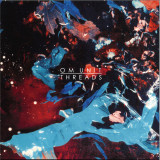
‘Threads’ was my 1st album as Om Unit and this 10-year re-mastered anniversary edition comes around at what feels like a similar time for me of experimentation and finding new ways to connect sounds. Something of a full circle of sorts but then again I am marking time with this re-issue at a time where I can look back and feel very proud of the work still sounding so convincing. Now even better thanks to Subvert Central’s Robert Macchiochi!
Reflecting on the past 10 years since this record came out, I can say it’s been an incredibly fruitful journey, with the most striking element of it all being the opportunity to travel and meet so many people from so many different backgrounds with different world views and stories. I found that ‘Threads’ for many was their first insight into my music, and for some people was something of a milestone in their journey of exploring music itself with tracks like ‘The silence’ and ‘Governor’s Bay’ having been mentioned over the years as amongst favourites alongside some of the work released on Cosmic Bridge and Civil
I want to take a moment to give my Love and gratitude to all the featured vocalists. Thanks to Simon Jinadu for his angelic voice on ‘The Silence’, to Charlie Dark MBE for his reflective words on ‘The Road’ and to Alex ‘Bogues’ Rendall aka MC Jabu (of Jabu) for his intense delivery on ‘Patients’ as well as Jneiro Jarel for his self-reflective narration on “just sayin’” All 4 are still outliers in their own field and upstanding creative forces to boot. I feel blessed to have been able to capture them on this project.
Threads was made in a bedroom of 2a Station Rise in Tulse Hill, a flat I shared with journalist and writer Laurent Fintoni, in a space that had such a great sound to it that I’ll always miss that room. I hope that you feel the warmth that I felt then whilst making it. It’s been an adventure since and whilst I’ve moved on from a lot of the tropes intrinsic to the album, it will always remain a body of work that is dear to my heart.
Enjoy!
<3
Debut album of heavy Colombian salsa by the obscure and short-lived El Clan Antillano. Founded in 1975 by singer Jacky Carazo and radio personality / composer Mike Char and backed by a studio orchestra comprised mostly of Fruko Y Sus Tesos band members. The record has been remastered from the original tapes, with an additional three bonus cuts taken from two rare 45 singles, including the sought after track ‘Alma’. First time reissue. 180g Vinyl.
El Clan Antillano was an obscure, short-lived salsa group started in 1975 by singer Jacky “El Caballo” Carazo, originally from Cartagena, and radio host / song composer Mike Char, from Barranquilla. The band was active only until 1977, with a mere two albums to its name. Carazo and Char, “los amigos costeños” (friends from the Caribbean coastal area) created El Clan Antillano as a fresh start after the previous group Carazo had been the lead singer for, El
Afrocombo, had become inactive.
Char primary passion was music, especially songwriting. One of his skills in this area was adapting foreign songs, often in a different language, rhythm, arrangement or genre, and refashioning the tune in an uptempo Caribbean dance mode as a salsa or cumbia. This formula, as well as his own original compositions, soon brought him success not only with costeño friends like Carazo and Vicentini, but also with Medellín’s Fruko, allowing him to make a name for himself with record labels in that city. It was at this juncture, in 1975, that El Clan Antillano was born. This is their first album and was recorded with local studio musicians. It’s been said that most on the first album were from Fruko Y Sus Tesos (the voice of Joe Arroyo can be heard on coro) as well as others involved with various groups like La Protesta (de Colombia) and Juan Piña’s La Revelación.
The album kicks off with ‘Donde ‘sta? Donde ‘sta?’, a medley of costeño lyrical phrases quoting various popular porros. Gradually changing the vibe, this is followed by Enrique Aguilar’s ‘El baile del
ratón’, a humorous cumbia that changes into a salsa halfway through. As if El Clan Antillano were not entirely confident about featuring purely salsa from the start, the same cumbia/salsa hybrid formula is used in the third piece, a faithfully rendered version of Eddie Palmieri’s ‘Mi cumbia’.
‘Estás equivocada’ rocks hard like the best Venezuelan salsa of the time. ‘Esta mañana’ is a cover version of an obscure bolero from Curaçao’s Erwin Castaneer with Super Combo Castaneer. ‘En la oscuridad’ is an interesting mashup of Puerto Rican bomba and New York style pachanga. ‘El despertar’ is a sunny sounding pop song reinvented as a Nelson y sus Estrellas style salsa/cumbia hybrid with a fantastic ‘montuno’ section.
Up next is a hard salsa jam in the ‘pregón’ (street vendor’s cry) genre, written by Fruko Y Sus Tesos percussionist Álvaro Velásquez (composer of ‘El preso’). The original album track list closes out with a fantastic rendition of Puerto Rican singer/composer Bobby Capó’s classic ‘El negro bembón’ that the world first leaned to love through Cortijo y Su Combo. Three bonus tracks have been added to the album as it was originally very short. Interestingly, there were four songs from two 45 singles cut by the band that were never included on either long play. While the ephemeral El Clan Antillano may not be as well known as the groups it’s related to, namely El Afrocombo and Fruko Y Sus Tesos, it certainly deserves credit as a worthy participant in the historical evolution of salsa colombiana.
I Talk To Water, the fifth album for Kompakt by Danish producer Kölsch, is the artist’s most personal statement yet. While all the trademarks that make his music so popular and powerful are still present – lush, melodic techno; swooping, trance-like figures; sensuous, shivery texturology – I Talk To Water is also a deep and intimate rapprochement with family and history, a beautiful, finely detailed document of loss and memory, and a tracing of the long, unbroken thread of grief that runs through our lives once we’ve lost those we loved.
The emotional core of I Talk To Water, then, is a cache of recordings by Kölsch’s father, Patrick Reilly, who passed away in 2003 from brain cancer. With time rendered elastic by the pandemic and its associated lockdowns, its sudden, alienating shifts in everyday living, Kölsch found himself reflecting on his father’s passing and ongoing spiritual presence, thinking about how best to memorialise such a significant figure in his own life. Those recordings opened a gateway, of sorts, for Kölsch to move through – a way to bring past and present together and entwine them in a sensitive, poetic manner.
Kölsch’s father was a musician – “touring in the sixties and seventies, in the Middle East especially, he was doing the whole hippy trail, playing guitar, and wrote some songs over the years,” he recalls. “But all in all, he decided to focus on family rather than pursue a musical career.” Reilly kept playing and writing music over the years, though Kölsch hadn’t listened to the material for some time: “I’d never had the guts to listen to it, because I just felt too fragile listening to his voice. It’s such a tough thing to go through.”
During the pandemic, though, Kölsch listened through the fragmented body of work that his father had produced over the years. “I decided I’m gonna finally release my dad’s music twenty years after his passing,” he reflects. “This whole album is about the process of loss, and for me it’s been one of my main driving forces in my musical life, the whole emotional aspect of whatever I’ve done has been based in that feeling that he’s not there anymore.”
Recordings of Reilly appear on three songs across I Talk To Water. His guitars drift pensively across “Grape”, offering a lush thread of melody that Kölsch wraps with clicking, driftwood rhythms and droning, melancholy bass. “Tell Me” is a lovely three-minute art song, a sadly beautiful reflection, minimally adorned with gentle keys and a muted pulse. And on the closing “It Ends Where It Began”, Kölsch lets his father’s acoustic guitar take centre stage for a lament that’s unexpectedly folksy, a guitar soli dream, which Reilly originally recorded in 1996. “He actually recorded it for my first album that never came out,” Kölsch reveals, “and I had it sitting around forever. That is purely him.”
These three imagined collaborations between father and son are poised and delicate. But their relationship also marks the gorgeous music Kölsch has made across the rest of I Talk To Water, from the itchy yet lush “Pet Sound” (titled in tribute to one of Reilly’s favourite albums), the flickering synths and yearning vocal samples that slide through “Khenpo”, the ecstatic shuddering that marks “Only Get Better”, or “Implant”’s slow-motion pans and subtle reveals.
There’s also the title song, where Kölsch is joined by guest Perry Farrell (Jane’s Addiction, Porno For Pyros), singing a mantra for internal reflection: “I talk to water / Searching for myself / Looking for answers / Oceans of you.” Farrell’s appearance brings another timbre, another spirit to the album, aligning neatly with his recent interest in electronic music. “He was completely taken by this idea of talking to water,” Kölsch says, thinking about the ways we collectively lean towards the natural world as a comfort and a listener, a guide through mourning, a way to map out the terrain of the heart. This mapping is something that Kölsch has proven remarkably adept at through the years; dance music for both body and mind, but also both for the here-and-now, and for the hereafter.
“I Talk To Water”, das fünfte Album des dänischen Produzenten Kölsch für Kompakt, ist zweifellos das persönlichste Statement des Künstlers bislang. Während alle Markenzeichen, die seine Musik so beliebt und kraftvoll machen, immer noch präsent sind – üppige, melodische Techno-Tracks; schwebende, tranceartige Elemente; sinnliche, fiebrige Texturen – ist “I Talk To Water” auch eine tiefe und intime Annäherung an Familie und Geschichte. Es ist ein wunderschönes, fein ausgearbeitetes Dokument des Verlusts und der Erinnerung, und es verfolgt den langen, ungebrochenen Faden der Trauer, der durch unser Leben läuft, sobald wir diejenigen verloren haben, die wir liebten.
Der emotionale Kern von “I Talk To Water” besteht aus Aufnahmen von Kölschs Vater, Patrick Reilly, der 2003 an Hirnkrebs verstarb. Durch die Pandemie und ihre damit verbundenen Lockdowns, die plötzlichen, entfremdenden Veränderungen im Alltag, fand Kölsch sich in Gedanken an den Tod seines Vaters und seine fortwährende spirituelle Präsenz wieder. Er überlegte, wie er eine so bedeutende Figur in seinem eigenen Leben am besten verewigen könnte. Diese Aufnahmen öffneten ihm sozusagen ein Portal, um Vergangenheit und Gegenwart miteinander zu verbinden und sie auf sensible und poetische Weise zu verweben.
Kölschs Vater war Musiker – “er tourte in den sechziger und siebziger Jahren, vor allem im Nahen Osten, auf dem Hippie Trail, spielte Gitarre und schrieb im Laufe der Jahre einige Songs”, erinnert sich Kölsch. “Aber alles in allem entschied er sich, sich auf die Familie zu konzentrieren, anstatt eine musikalische Karriere zu verfolgen.” Reilly spielte und schrieb jedoch im Laufe der Jahre weiterhin Musik, obwohl Kölsch das Material lange Zeit nicht angehört hatte: “Ich hatte nie den Mut, es anzuhören, weil ich mich einfach zu zerbrechlich fühlte, seine Stimme anzuhören. Es ist so schwer, das durchzustehen.”
Während der Pandemie hörte sich Kölsch jedoch durch das fragmentierte Werk, das sein Vater im Laufe der Jahre produziert hatte. “Ich beschloss, die Musik meines Vaters zwanzig Jahre nach seinem Tod endlich zu veröffentlichen”, reflektiert er. “Dieses ganze Album handelt von dem Verlustprozess, welcher für mich generell eine der Hauptantriebskräfte in meinem musikalischen Leben ist. Der ganze emotionale Aspekt von dem, was ich getan habe, basierte auf dem Gefühl, dass er nicht mehr da ist.”
Auf “I Talk To Water” sind Aufnahmen von Reilly in drei Songs zu hören. Seine Gitarren ziehen nachdenklich durch “Grape”, bieten einen üppigen Melodiefaden, den Kölsch mit klickenden, treibenden Rhythmen und dröhnendem, melancholischem Bass umwickelt. “Tell Me” ist ein schönes dreiminütiges Kunstlied, eine traurig-schöne Reflexion, minimal geschmückt mit sanften Tasten und einem gedämpften Puls. Und auf dem Abschlusstrack “It Ends Where It Began” lässt Kölsch die akustische Gitarre seines Vaters im Mittelpunkt stehen, ein überraschend folkiger Klagegesang, den Reilly ursprünglich 1996 aufgenommen hatte. “Er hat es tatsächlich für mein erstes Album aufgenommen, das nie veröffentlicht wurde”, enthüllt Kölsch, “und ich hatte es ewig liegen.”
Diese drei erdachten Kollaborationen zwischen Vater und Sohn sind ausgewogen und zart. Aber ihre Beziehung prägt auch die wunderschöne Musik, die Kölsch im Rest von “I Talk To Water” geschaffen hat, angefangen bei dem nervösen, aber üppigen “Pet Sound” (benannt als Hommage an eines von Reillys Lieblingsalben), den flimmernden Synthesizern und sehnsüchtigen Vocal-Samples in “Khenpo”, den ekstatischen Erschütterungen in “Only Get Better” oder den langsamen Schwenks und subtilen Enthüllungen in “Implant”.
Es gibt auch den Titelsong, in dem Kölsch von Gast Perry Farrell (Jane’s Addiction, Porno For Pyros) begleitet wird, der ein Mantra für die innere Reflexion singt: “I talk to water / Searching for myself / Looking for answers / Oceans of you.” Farrells Auftritt bringt eine weitere Klangfarbe, einen weiteren Geist in das Album, der gut zu seinem jüngsten Interesse an elektronischer Musik passt. “Er war völlig fasziniert von der Idee, mit Wasser zu sprechen”, sagt Kölsch und denkt darüber nach, wie wir kollektiv zur Natur als Trost, Zuhörer, Führer durch die Trauer neigen, um die Gelände des Herzens zu kartieren. Diese Kartierung ist etwas, in dem Kölsch im Laufe der Jahre erstaunlich geschickt war; Tanzmusik für Körper und Geist, sowohl für das Hier und Jetzt, als auch für das Leben danach.
The 1973 album “El Violento” was the fifth full-length salsa LP led by Julio Ernesto Estrada Rincón, aka Fruko, and the second credited to Fruko Y Sus Tesos. Though it did not contain hits like ‘A la memoria del muerto’ or ‘El Preso’, it’s a collector’s item today in places like the US, Europe and Japan, perhaps precisely because it is obscure yet full to the brim with unrelentingly hard and heavy salsa bangers that never let up from start to finish (hence the title, which translates as “The Violent One”). A mix of originals and interesting covers, the LP is “all killer and no filler”, purposely designed to set the dance floor ablaze. It features Fruko’s two main vocalists that took over from the first pair of Humberto “Huango” Muriel and “Píper Pimienta” Díaz, namely the beloved duo of Álvaro “Joe” Arroyo and Wilson “Saoko” Manyoma. Los Tesos were a talented “wild bunch” who listened to their fearless leader, with Fruko holding down the bottom end on electric bass, Hernán Gutiérrez in the piano chair, the Villegas brothers on hand percussion (Jesús tickling the bongos and Fernando slapping the congas), augmented by Rafael Benítez on timbales and an ace horn section of Freddy Ferrer and Gonzálo Gómez (trombones) and Jorge Gaviria and Salvador Pasos (trumpets). The super aggressive sound comes directly from the South Bronx playbook of Willie Colón. The snarling trombones and soaring trumpet are somewhat sweetened by a nice little Puerto Rican cuatro guitar solo. Sonically lightening the mood somewhat, ‘Nadando’ (‘Swimming’) is a bouncy tune in the ‘Mercy’ genre (basically a hybrid of pop, funky soul, cumbia and salsa, in the style of Nelson y Sus Estrellas), gleefully sung by Joe Arroyo. The beats are complex and ever changing, with a little bit of mozambique, conga, bomba, jala jala and of course salsa thrown in for good measure. The side closes out with a brilliant, uptempo salsa reworking of the venerable ranchera chestnut, ‘Tú, sólo tú’. Side two explodes with the frenetic descarga jam session ‘Salsa na’ ma’—which is exactly that: nothing more than the hottest “sauce” to make the dancers go crazy. Fruko’s tune is dedicated to the Latin community in New York that listens to salsa from everywhere and dances to it so fervently on the weekend. The relentless percussion propels the listener along at breakneck speed as if hurtling down the Bronx Expressway, demonstrating that Fruko y Sus Tesos have mastered the ‘violent’ form of urban salsa that was having its transnational moment in the early 1970s. While “El Violento” may not be as well known as some Fruko records, it certainly deserves a new look and should be assessed on its own merits as a very powerful, confident entry in the historical evolution of Colombian salsa dura.Sleeve
From Chile comes "Skydream EP," an ode to House music in its purest and most exhilarating form! Talented Chilean artists Camilo Gil & Rodrigo Valdivia have joined forces to create a vinyl EP that will elevate your musical experience to new heights. "Skydream" is a sonic journey that will take you through the deepest corners of imagination. Each track is an invitation to explore ever-changing soundscapes and surrender to the hypnotic rhythm that only these two electronic music maestros can provide. But that's not all; "Skydream EP" also features two astonishing remixes that add an additional dimension to the experience. JEF K & ST.JHONS bring their insight to one of the tracks, transforming the music into an even more immersive experience. Meanwhile, PETER F. SPIESS adds his magical touch to another of the songs, taking the music to uncharted territories. This EP is a celebration of electronic music in its most diverse and thrilling form. Camilo Gil & Rodrigo Valdivia have crafted a work that transcends borders and connects listeners from around the world through their passion for music. Get ready to take off into a "Skydream" filled with rhythm, melody, and emotion. Chilean electronic music is poised to capture your ears and your heart. Stay tuned for the release date and make sure not to miss this one-of-a-kind sonic journey.
Mastered by Tobias
You know Krash Slaughta right? The man behind the recent wildly successful DOOM/Sugacubes mash-up LP Sugar-Coated DOOM, not to mention his unofficial remixes of the Wu’s K.R.E.A.M. and P.L.O. Style and collab. 45 with Phill Most Chill, Rebel Base? ‘Is he at it again?’ the monkey hears you ask. Yes, he is at it again, though the closest of the the three aforementioned releases to what he’s about to drop is the Wu remix 45. And what he’s about to drop is Diggin Deeper, not a single this time but a whole remix album of one of his (and the monkey’s!) all-time favourite hip-hop LPs – to wit, Niggamortis – more usually known as Six Feet Deep (especially in the U.S., though minus the best track under that name) by hip-hop supergroup Gravediggaz.
As many will know, this LP with its horror-movie fixated lyrics gave birth to a whole hip-hop sub-genre – that of ‘horrorcore.’ However, none of those who came after seemed to manage the lyrical humour of The RZArector, The Grym Reaper and The Gatekeeper (a.k.a. RZA, Poetic and Frukwan) and the only bit of production by The Undertaker (a.k.a. Prince Paul) that they seemed interested in was the sub-metal rap sludge of the shouty Bang Your Head – i.e. the LP’s one weak spot. But don’t worry, Krash isn’t interested in that sort of thing. Not only does he avoid rap-metal beats for Bang Your Head, he doesn’t use any on the LP at all – hurrah! What he does do is employ, arguably, as eclectic an array of sample sources as Prince Paul on the original – though with an entirely different end result. Bang Your Head with its apparently sixties garage band-derived beat for example is one of the standouts. The skeletal piano skank of 6 Feet Deep is another, while a beat featuring spaced-out eighties synths forms the new musical backdrop to Constant Elevation. Two more of the monkey’s favourites on this one are Here Comes The Gravediggaz, now underpinned by double-bass-led funk and the glorious inappropriately joyous bounce of Blood Brothers. The result? Your favourite cuts on this one might not be the same as your favourite cuts on the original. Two different versions of a much-loved LP, then; it’s why people remix hip-hop. All the vocal stems were created by Krash and the ultimate intention is to do a limited vinyl release. Cover art is by the Dead Residents’ Junior Disprol.
Italian legend Walter Del Vecchio aka Quiroga pays tribute to the acid house era on Hell Yeah with a new package that comes with two originals, an ambient mix and a remix from cult hero DMX Krew.
Quiroga released his last sublime album Passages on this label and it came as the latest entry into a discography filled with beauty and detail. He is a talented musician from Naples who has his own left-of-centre take on the Mediterranean sounds of the city, as he shows once again here with a house-leaning outing.
Quiroga has teamed up with cult musician Dario Bassolino and called upon Whodamanny's mixing skills for these new tracks. First is 'Once Again', a punchy and chunky house cut with skewed bass spraying about the mix. Its rough analogue edges are lit up by searing acid lines that never quit and will turn any party into a cauldron of intensity. The Ambient Version is a full-flavour downtempo workout that keeps the wild acid lines, adds in some FX, old-school piano chords and a yelping female vocal next to a blissful breakdown. 'Once Again' (DMX Krew Remix) is then a bumping acid-electro monster with fat drums and the manic 303 offset by serene chord work to make for a perfectly emotional dance floor delight.
'Freak The Funk' is a second original cut, as rides of crisp snares and snapping drum breaks blend with a warm bassline and smeared cosmic chords up top. It's a classy peak-time house cut with magical pixelated synth melodies.
Alongside superb artwork from PlanetLuke, this is another essential package from Hell Yeah.
DJ Support:
Sean Johnston (ALFOS), Kristian (AME), Fango, Front De Cadeaux, Sinchi Collective, Phat Phil Cooper, Balearic Gabba Sound System
Got dust? Krash Slaughta has. In fact, for him, Everything’s Turning Up Dusty right about now. Surely this can’t be his brand-new double-vinyl LP journey into sound which finally realises an ambition to create a cut n paste opus held since his pre-turntable days of pause-button mixes? It certainly can! The project comes in four parts corresponding to four sides of 12″ vinyl which weigh in at approximately fifteen minutes each and each side of which took around a month to make!
Man, that is epic! When did he ever get the time and concentration to put such a beast together? Wait – are we talking about yet another Krash Slaughta lockdown project? We are! And this bad boy stitches together vintage vocal loops, rare breaks, library records and obscure samples along with remixes of Stetsasonic, O.C., Tanya Winley, Jurassic 5, Edan, Nas, ODB, Gang Starr, Super Lover Cee & Casanova Rud (any one of which would be straight fire on 7″or 12″) along with pretty much whatever the hell else he wanted to put on there. Pressed at 45 rpm, this one features two differently-coloured slabs of wax: one mauve and one blue while even the centre labels and cover art get in on the cut n paste vibe having been created by hand by Krash homie Saleem Andrew McGroarty. As with previous such efforts from the KS camp, there will be no re-press! Sleep at your peril.
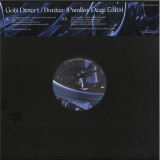
While digging for music at Snickars records in Stockholm, local producer, DJ and promoter Maya Lourenco aka Parallax Deep came across two classic goa/psy tracks.
These were ‘Gobi Desert’ by 100th Monkey & Tristan (released on Matsuri Productions in 1995) and ‘Bunker’ by Four Carry Nuts (released on Aurinko Records in 2000). She took the records home and began working on creating her own edits by expertly slicing and re-arranging different sections of the tracks and coming up with her own unique versions staying true to the original identity, giving new life to two classics from decades past.
Long Beach legend Scotty Coats links the West Coast eclecticism of Stones Throw to the NYC cool of DFA and Rong to the Balearic gods of DJ Harvey et al. He personally introduced Be With to Ned Doheny 10 years ago and he was immortalised on Smith & Mudd's last LP. And he's the main man behind the mysteriously titled duo Todd Russell & The Dangerous Coats, alongside Erick "Todd" Coomes (Lettuce founder/bassist).
In very real danger of being lost forever, we unearthed two of their private recordings and present them as a double A-Side 12", adorned with S-T-U-N-N-I-N-G artwork, courtesy of Arizona artist Frank Gonzales.
"Playa Larga" is a melodic, mellow masterpiece and is quintessentially Balearic. It's stretched out, low slung, guitar-soaked drum-machine soul music. It's multi-layered and contains multitudes: it builds and builds and builds and mesmerises as it does so. On the flip, "1900 Ocean Avenue" is a super slo-mo, sunbaked drug-chug which is already blowing minds thanks to early leaks of this cosmic, psychedelic detonation.
On first listen back, Erick said to Scotty: “So wait, nothing really happens, I mean nothing bad happens but nothing really happens”. Apparently these tracks were a bit foreign for Erick, musically, because of the lack of structure in the songs.
One morning, years later, Erick called Scotty and excitedly declared: “dude, I get it now!”. He was listening to random music with a lady friend while watching the sunrise in his 1900 Ocean Ave apartment and "Playa Larga" came on randomly. He'd forgotten all about it and said he had to get up and see what song it was because "it was the perfect soundtrack for a psychedelic sunrise over the ocean."
And that's exactly how we came across it, circa 2018, randomly popping up on a playlist while we were busy doing other things. It stopped us in our tracks but, when trying to find any info on iTunes, we were out of luck. It was only years later that we worked out Scotty had sent it to us. Ever since, we've been working on getting this out to you all. It's finally time.
We've only 500 pressed for the world, with many of them spoken for by those lucky enough to be already ITK, so these are gonna fly: be warned!
Scotty is a world class raconteur so we'll hand over to him to explain how these songs came about and why they mean so much to him in the context of his wider raison d'être:
"These were made 13 years ago when I was a new dad and left my job at Ubiquity Records to provide security for my newborn son, Nolan Liam Chai Coats. I became miserable working a job outside of music for the first time in my life and I was laid off 4 months into it. I was left wondering how the fuck am I going to provide for my family?
I lived in Long Beach and Erick lived a few blocks away. I would walk to his house when Jen finally got Nolan to sleep so I could escape my panic, drink some beers (is it beerlearic?) and make some music. He lived overlooking the ocean with the Queen Mary on the horizon, so I guess mellow Long Beach nights unintentionally inspired the music. These songs were the first two songs we ever made and they embody the desperation and hope I really needed at that time. 12 years later, when Rob at Be With expressed an interest in releasing it, we had Erick's brother Tyler Tycoon Coomes play drums on it at Jazzcats Studio in LBC, with Jonny Bell.
Shortly after I was laid off, I discovered The Stepkids. I was blown away by "Shadows On Behalf" and sent it on to Gilles Peterson. He played it on Worldwide the next day. The Stepkids pulled me back into music and made me realize I wasn't prepared to do anything but be involved with music. After I heard their unreleased album, I knew there was something there so I sent it to my good friend Jamie Strong who was at Stones Throw at the time. Jamie passed it along to Peanut Butter Wolf and the band asked me to be their manager. I didn't think I was the right guy for the job but wanted to see them do well so I told them I would help shop their album. Jamie suggested I take his place at Stones Throw, just as he did when he left Ubiquity Records. I always joke that Jamie can call me Scotty Coat Tails because I had been riding his for years.
Wolf told him that "Scotty is a nice guy but has horrible taste in music", which was ironic because he was literally trying to sign the band that I brought him. The Stepkids signed with Stones Throw and found a real manager. 6 or so months later Jamie sent me a note saying "Stones Throw is hiring and you should apply lol". I told him I was going to send my resume and the subject of the email was to read I HAVE GREAT FUCKING TASTE IN MUSIC. I did just that and got a call the next day from their new GM asking me to come in for an interview. When I walked in I was in Wolf's office where I had been 6 months before, signing The Stepkids
deal. Wolf and Jason McGuire were asking me some questions and wanted to introduce me to Jeff Jank. Jank walked in and said "Isn't this the guy that Jamie wanted to bring on 6 months ago?" They confirmed and he threw his hands up and walked out saying "I've seen enough". I got the job. I worked there for 2 or 3 years until I left to join forces with Jamie Strong at his label and stayed there for almost 7 years."
Scotty wanted to use a painting by his good friend, Frank Gonzales, for the front cover image. Frank was incredibly generous in letting us use this one, and Scotty was completely honoured. We think you'll agree, it's pretty striking. Simon Francis carefully mastered the original audio for both tracks and Cicely Balston's precise cut for Alchemy at AIR Studios ensures this double A-side 12" sounds appropriately outstanding. The immaculate Record Industry pressing will ensure these previously unheard, recently discovered recordings finally get a chance to shine.
- A1: Here Lies Love Feat. Florence Welch (Florence & The Machine)
- A2: Every Drop Of Rain Feat. Candie Payne & St. Vincent
- A3: You'll Be Taken Care Of Feat. Tori Amos
- A4: The Rose Of Tacloban Eat. Martha Wainwright
- A5: A Perfect Hand Feat. Steve Earle
- B1: Eleven Days Feat Cyndi Lauper
- B2: When She Passed By Feat. Allison Moorer
- B3: Walk Like A Woman Feat. Charmaine Clamor
- B4: Don't You Agree? Feat. Róisín Murphy
- B5: Pretty Face Feat. Camille
- B6: Ladies In Blue Feat. Theresa Andersson
- C1: Dancing Together Feat Sharon Jones
- C2: How Are You? Feat. Nellie Mckay
- C3: Men Will Do Anything Feat. Alice Russell
- C4: The Whole Man Feat. Kate Pierson
- C5: Never So Big Feat. Sia
- C6: Please Don't Feat. Santi White
- D1: American Troglodyte
- D2: Solano Avenue Feat. Nicole Atkins
- D3: Order 1081 Feat. Natalie Merchant
- D4: Seven Years Feat. Shara Worden (My Brightest Diamond)
- D5: Why Don't You Love Me? Feat. Tori Amos & Cyndi Lauper
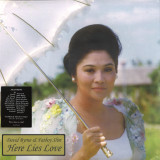
David Byrne & Fatboy Slim’s acclaimed 2010 album Here Lies Love receives its first-ever vinyl release to coincide with a new production opening on Broadway this summer. Here Lies Love is a double-disc song cycle – improbably poignant, decidedly surreal, surprisingly thought provoking – about the rise and fall of the Philippines' notorious Imelda Marcos. It was conceived by David Byrne; composed by Byrne and DJ/recording artist Fatboy Slim, AKA Norman Cook; and performed by a dream cast drawn from the worlds of indie rock, alt country, R&B and pop. Byrne's taste in collaborators is as imaginative as it is impeccable, including Cyndi Lauper (who recounts, to lighthearted disco beats, Imelda's courtship with Ferdinand Marcos), Steve Earle (as the power-hungry Ferdinand), Dap-Kings vocalist Sharon Jones (recalling Imelda's introduction into New York society) and Natalie Merchant (as spurned Imelda confidante Estrella, anticipating the onset of martial law). Along with vocals turns from such stars as Tori Amos and the B-52's Kate Pierson, Byrne works with rising indie rockers St. Vincent and My Brightest Diamond; New York chanteuses Nellie McKay and Martha Wainwright; and dance-music divas Róisín Murphy and Santigold. Byrne himself appears as the voice of imperialistic America on ‘American Troglodyte’, a send-up that wouldn't have seemed out of places in Talking Heads' True Stories.
Byrne originally envisioned this as a musical theatre piece, to be mounted in disco and nightclub settings, reflecting the globe-trotting Marcos' taste for such velvet-roped spots as Studio 54 and Regine's. In 2006, he performed work-in-progress versions to enthusiastic audiences at New York City's Carnegie Hall and the Adelaide Festival in Australia. While plans for a US theatrical production continued to evolve, he delivered this unique recording. The award-winning theatrical production eventually premiered at The Public Theater in New York in 2013, travelled to London’s National Theater for a sold-out run (2014–15), and was remounted at the Seattle Repertory Theater (2017).
Here Lies Love has an effervescent disco feel, redolent of Fatboy Slim's own dance-floor anthems, with warm undercurrents of the Latin rhythms that have percolated through Byrne's recent solo work. The sunny arrangements act in counterpoint to the reality of the Marcos' increasingly repressive regime, reflecting the imagined inner life of the glamour-obsessed Imelda. Explains Byrne, "For me, the darker side of the excesses are, for the most part, a matter of record. A lot of the audience is going to come with that knowledge already. What's more of a challenge is to get inside the head of the person who was behind all of that, and understand what made them tick." Byrne offers no judgment and avoids the obvious – there is no mention of Imelda's infamous shoe collection.
Many of Byrne's lyrics are, astonishingly enough, constructed from actual Imelda quotes, including the project's title, the words that Imelda, now returned to the Philippines from US-assisted exile in Hawaii, would like to have inscribed on her gravestone. In addition to his new liner note, Byrne illustrates the story with archival photos. In a detailed preface, he reveals what drew him to this subject and the bumpy route he took to launch the project and, ultimately, record this album. The booklet is indeed a page-turner, just as Here Lies Love is a wonderfully old-school album that rewards start-to-finish listening. Once again, Byrne – beloved as musician, thinker and bicyclist-about-town – reveals the breadth and singularity of his vision.
The new production of Here Lies Love will premiere at the Broadway Theatre in New York City. Performances begin June 17, ahead of an official opening night on July 20. Tony Award winner Alex Timbers (direction) and Olivier Award nominee Annie-B Parson (choreography) reunite with Byrne (concept, music, and lyrics) and Fatboy Slim (music) to bring Here Lies Love to Broadway, continuing a ten-plus year collaboration on the project. Tom Gandey and J Pardo contribute additional music. Here Lies Love is produced on Broadway by Hal Luftig, Patrick Catullo, Diana DiMenna for Plate Spinner Productions, Clint Ramos, and Jose Antonio Vargas. The staging at the Broadway Theatre will transform the venue’s traditional proscenium floor space into a dance club environment, where audiences will stand and move with the actors. A wide variety of standing and seating options will be available throughout the theatre’s reconstructed space. The producers of Here Lies Love said, “As a team of binational American producers – Filipinos among us – we are thrilled to bring Here Lies Love to Broadway! We welcome everyone to experience this singularly exuberant piece of theatre. The history of the Philippines is inseparable from the history of the United States, and as both evolve, we cannot think of a more appropriate time to stage this show. See you on the dance floor!”
David Byrne’s recent works include the launch of Reasons to be Cheerful, an online magazine focused on solutions-oriented stories about problems being solved all over the world (2019); Joan of Arc: Into the Fire, a theatrical exploration of the historical heroine that premiered at the Public Theater in New York (2017); The Institute Presents: NEUROSOCIETY, a series of interactive environments created in conjunction with PACE Arts + Technology that question human perception and bias (2016); Contemporary Color, an event inspired by the American folk tradition of color guard and performed at Brooklyn’s Barclays Center and Toronto’s Air Canada Centre (2015); Here Lies Love; Love This Giant, a studio album and worldwide tour created with St. Vincent (2012); and How Music Works, a book about the history, experience, and social aspects of music (2012).
Byrne curated Southbank Centre’s annual Meltdown festival in London in 2015. A co-founder of the group Talking Heads (1976–88), he has released eight studio albums as a solo artist and worked on multiple other projects, including collaborations with Brian Eno, Twyla Tharp, Robert Wilson, and Jonathan Demme, among others. He also founded the highly respected record label Luaka Bop. Recognition of Byrne’s various works include Obies, Drama Desk, Lortel, and Evening Standard awards for Here Lies Love; an Oscar, Grammy, and Golden Globe for the soundtrack to Bernardo Bertolucci’s The Last Emperor; and induction into the Rock and Roll Hall of Fame with Talking Heads. Byrne’s work as a visual artist has been published and exhibited since his college days, including photography, filmmaking, and writing. He lives in New York City. In addition to 2019’s cast album for American Utopia on Broadway, Nonesuch has released eight other David Byrne records since 2003, including 2018’s American Utopia studio album and two versions of his musical Here Lies Love.
q C6. Please Don't feat. Santi White Santigold
A new artist on the Citizen Records / Clivage Music roster, Vhinz is a musician based in Brussels. After taking his time to break onto the electronic scene, he’s now ready to share Belvédère, his debut, dreamlike album, confidently intense, sweeping between cinematic songs and soaring, epic electronic sounds.
Vincent Honca is Belgian, with Armenian roots and a love of keyboards: the mini synth he used to play as a child, the classical piano of his years of training at the Académie de Musique, the Yamaha synth of his teenage years... During the noughties of his adolescence, electronic music was omnipresent in his life as he listened to and admired Daft Punk, Moby, Vitalic, Air and The Chemical Brothers. He also went out dancing, a lot, in the nightclubs and parties of Brussels and the vicinity, and soon his love of computers, technology and synthesisers led to him producing his own music. “I wanted to create beautiful textures with synths,” he says. “I wanted to have fun and discover the possibilities. As part of the internet generation, I taught myself everything I know through reading magazines and checking the forums.”
Vincent went on to become a computer programmer and decided to make music in as much of his spare time as possible. His first productions came out in 2015, including “Drastical”, one of three deep house dancefloor-orientated tracks recorded with none other than Kris Menace. “At the time I was really searching for my musical identity,” explains Vincent, and progressively his music started to lean towards another of his passions – films and film music. “I’ve listened to soundtracks a lot since I was a teenager, and they’ve been a big influence, in particular the music for Heat by Elliot Goldenthal, Gladiator (Hans Zimmer), Saving Private Ryan (John Williams), The Last Temptation of Christ (Peter Gabriel), The Virgin Suicides (Air) and Leon (Eric Serra).” Coincidentally, Vincent has already worked on two independent Belgian films by director Christophe Karabache, UltravoKal and Vortex, both collaborations with Michel Duprez.
Now Vincent has chosen the name Vhinz, bringing together his expertise with machines and computers, his passion and enthusiasm for the electronic sounds of his adolescence and his adoration of cinema’s powerful, impactful soundtracks. Vhinz’s first track is thus called “Aether”, a track brimming with character and confidence, with sung-spoken vocals that sweeps the listener up in bewitching synthetic themes and drums like an off- kilter heartbeat. The track perfectly encapsulates the Vhinz sound, and Citizen Records – the only label he sent it to – immediately loved it and were ready to release a 12” with more. “Then Covid and the lockdown happened, and everything came to a complete halt,” remembers Vhinz. During those long two years without anything being released, the project continued its gestation and has now grown in a mini-album of eight coherent, fascinating tracks. “I really wanted a strong concept for everything, and so was born this album that I’ve called Belvédère. I imagined myself on a belvedere with a panoramic view of the world, channelling all the emotions it elicited in me into music.”
Belvédère is a dreamlike debut album, confidently intense, sweeping between cinematic songs and soaring, epic electronic sounds. It’s a place for Vhinz to showcase his dreams, talk, sing and invite others too: Margot Ferro sings on “Le Passage” and “Envole-moi”, and Michael Meers lends his vocals to “Evolution”. “My album tells a story, with the tracks in chronological order. There are both times of hope and darker periods of my life, with sadness and love,” meaning that listeners are invited to experience a suite of different emotions and be swept along by the author’s musical daydreams. Musically, the album falls somewhere between Moby, Vitalic, Air and Serge Gainsbourg, with a density and atmosphere that are completely Vhinz. “With Belvédère I was looking for beauty, but also something darker, dirtier, more organic. The album is the culmination of that.”
You know Krash Slaughta right? The man behind the recent wildly successful DOOM/Sugacubes mash-up LP Sugar-Coated DOOM, not to mention his unofficial remixes of the Wu’s K.R.E.A.M. and P.L.O. Style and collab. 45 with Phill Most Chill, Rebel Base? ‘Is he at it again?’ the monkey hears you ask. Yes, he is at it again, though the closest of the the three aforementioned releases to what he’s about to drop is the Wu remix 45. And what he’s about to drop is Diggin Deeper, not a single this time but a whole remix album of one of his (and the monkey’s!) all-time favourite hip-hop LPs – to wit, Niggamortis – more usually known as Six Feet Deep (especially in the U.S., though minus the best track under that name) by hip-hop supergroup Gravediggaz.
As many will know, this LP with its horror-movie fixated lyrics gave birth to a whole hip-hop sub-genre – that of ‘horrorcore.’ However, none of those who came after seemed to manage the lyrical humour of The RZArector, The Grym Reaper and The Gatekeeper (a.k.a. RZA, Poetic and Frukwan) and the only bit of production by The Undertaker (a.k.a. Prince Paul) that they seemed interested in was the sub-metal rap sludge of the shouty Bang Your Head – i.e. the LP’s one weak spot. But don’t worry, Krash isn’t interested in that sort of thing. Not only does he avoid rap-metal beats for Bang Your Head, he doesn’t use any on the LP at all – hurrah! What he does do is employ, arguably, as eclectic an array of sample sources as Prince Paul on the original – though with an entirely different end result. Bang Your Head with its apparently sixties garage band-derived beat for example is one of the standouts. The skeletal piano skank of 6 Feet Deep is another, while a beat featuring spaced-out eighties synths forms the new musical backdrop to Constant Elevation. Two more of the monkey’s favourites on this one are Here Comes The Gravediggaz, now underpinned by double-bass-led funk and the glorious inappropriately joyous bounce of Blood Brothers. The result? Your favourite cuts on this one might not be the same as your favourite cuts on the original. Two different versions of a much-loved LP, then; it’s why people remix hip-hop. All the vocal stems were created by Krash and the ultimate intention is to do a limited vinyl release. Cover art is by the Dead Residents’ Junior Disprol.
These recordings weren't intended for release, they aren't even demos, but rather exercises – process tracks in an attempt to mirror the influences of an aspiring artist as they oriented their emerging work. Most of the tracks were constructed in single sittings and recorded to cassette at home in Glasgow through a Philips AW-7694 boombox. That they feel finished, even iconic amid the shortlived confluence between Detroit techno and intelligent dance music, is a testament to what was materialising, but also to our collective nostalgia, revisionism, and thirst to understand how we've arrived here and why. Übungen has that youthful and pre-internet utopian aura, without being tethered to the phony maxed-out optimism ricocheting across the Atlantic in a 4G pollution. That I first came to Dave Clark's earliest work in the anxiety-ripening stage of the pandemic while I was becoming chronically sick – a time when it was all too easy to glide through dystopian nightmares and realities alike – only speaks to the work's presence and its allowance to dream, ahistoricism or splice into the affect of histories, and to dismantle the contemporary, not in an arsy or nihilistic way, but to appreciate (questioningly) the passage of time.
Sitting somewhere between an EP and a full-length, these six pieces predate Dave's other archival release – Sparky's 94Archive2/8 Rubadub, 2015, which also features cassette transfers originally recorded in stereo without overdubs. As a sound archivist myself, it was a welcome experience first listening to Dave's transfers on headphones while walking around the canals of Maryhill rather than handling the digital captures in a studio. I've been enamored with the music ever since and despite the original utilitarian intention, shifting contexts and the chance to listen afresh decades on allows for clearance (dare I say recuperation). It is, for this reason, and the sardonic re-opening of archival material perverted into something on the ground, that's not merely dog shit, that I am very pleased to finally share this collection.
Each of the titles provides the recording year and is initialed by the respective influence: Carl Craig, Aphex Twin (you'll recognise the shimmering hi-hats), Yellow Magic Orchestra, Black Dog, Polygon Window, and Drexycia.
All music was produced by Dave Clark, except "1993CC" produced by Dave Clark & Graeme Slater, and "1992PW" produced by Dave Clark & Roger Elliott.
Back in 2011 when I was tentatively looking for a second release for my fledging record label Clay Pipe Music, I stumbled upon a mysterious MySpace page by a group called ‘Tyneham House’, the page was decorated with artwork by Rena Gardiner (who was unknown to me at that time) and the music was an otherworldly mix of field recordings, Mellotron and acoustic guitar. It turned out that Tyneham was promised to Glen Johnson’s Second Language label, so I offered to do the artwork, and in January 2012 the two labels co-released it on tape and CD in a cardboard box with a handmade booklet of my illustrations.
In 2016 Clay Pipe reissued it on 10” vinyl, in an edition of just 300, which has since become sort after. The new 2023 pressing is on blue and transparent marbled vinyl, with a reverse board cover and inner sleeve, and the booklet of illustrations has been given a complete redesign. Frances Castle 2023
The pastoral, wistful yet ineffably disquieting music of Tyneham House is made by artists who wish to remain anonymous here, save for their eponymous title. The musicians are happy, however, to let it be known that these recordings have been around for some years (many of them complied from old cassettes) and that they take inspiration from the 1960s/’70s/’80s work of the Children’s Film Foundation – a body who really ought to have made a film about this mysterious West Country curio. At least now we have its endlessly poignant soundtrack.
The small village of Tyneham, on the beautiful Isle of Purbeck, in Dorset, was once a thriving little community – that is until the British Government requisitioned it for training manoeuvres and other ‘strategic purposes’ in the run up to WWII. This was supposed to be a temporary measure, but the area remained in military possession long after hostilities had ceased, causing distress among former inhabitants, many of whom were farmed out to prefabs in nearby Wareham and Swanage.
Tyneham was characterised by its red telephone box, a tiny parade of shops – Post Office Row – and a grand country pile which stood about half a mile away from the village: Tyneham House. The army removed the building’s oak panelling and ornate decorative details and promptly set about using it for target practice. So great was the shame expressed locally about the damage inflicted upon one of Dorset’s grandest houses that the powers that be decided to grow a copse around the remains of the structure to give the impression that it was no longer there. Despite this, a substantial part of the structure remains intact, including its Saxon hall.
Land access around Tyneham was opened up in the 1970s, but admission to the house remains strictly verboten. Those who’ve been found around the premises, especially anyone wielding a camera, have felt the full weight of military trespass law. Tyneham today is regarded as a nature reserve by some – as a national embarrassment by others. It’s still a political hot potato, in Dorset at least.
The Belgian vibraphonist Guy Cabay has played with Toots Thielemans, Philip Caherine or Raoul Faisant. Composer, arranger, musicologist and singer, he also wrote and recorded two extraordinary albums in Liege Walloon. Tricatel is happy to make them available at last, 46 years after their publication.
"Gravity kills us. Perhaps that is the meaning of Adam's Fall. We are condemned to be Newton's apple, not the balloon carried away by the wind. But it happens nevertheless that, by the grace of music in particular, we escape gravity, that time escapes time, that another breath inflates our lungs, so much lighter than the one that usually suffocates us.
We don't take light music seriously, and that's good. Only serious music deserves to be treated so badly. Guy Cabay's music flows from a purer source and speaks to us in a more tender voice. One can obviously describe it as one labels export product. Origin: Belgium. Ingredients: jazz, bossa nova, tropicalism, song - proportions may vary. Calorific value: none.
Non-perishable product. But this would say as much about what this music really is as if, in. order to evoke what the foggy blue of a Norman sky inspires, one were to take note of the variations in the percentage of humidity in the atmosphere at Etretat and make a learned presentation on the laws of refraction.
Guy Cabay did pass through Brazil and still lives there a little, a Brazil that is not the one ofcartographers or travel agencies, a Brazil that is as real as the Far West in which Fenimore Cooper's child readers lived, as blurred and limpid as a dream. It is not the Amazon thatflows through this Brazil, but the Ourthe, a tributary of the Meuse, which makes it morefamiliar, stranger and even more poetic.
To let oneself be bathed in this melancholichappiness, to let oneself be carried by this river is sweet, as sweet as the fluid consonants of the Walloon language, this 'd' which becomes 'dj' in his mouth, as in Portuguese, by the way. To know how to create melodies that hold on a note like Jobim's samba, like a fildeferist above a waterfall of chords, is not given to everyone. It is a gift. Knowing how to lace others on dozens of points, as on Tot a-fet rote cou d'zeur cou d'zos, a poignant encounter between Randy Newman and Robert Wyatt, is another. These are not the only ones that the fairies offered to Guy Cabay and that, by an almost miracle, he offers us again today. Hearts up."
Bertrand Burgalat