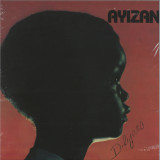
Comet Records present the new reissue out of the Comet new reissue series, Dilijans by Ayizan. A mind-blowing session of Spiritual Jazz recorded in NYC in 1984 led by Haitian genius Alix Pascal blending traditional Ra Ra elements with modal/spiritual melodies. The result was like nothing else coming out of Haiti or the Haitian exile community in the US at the time. Dark, mystical, lyrical and abstract, with its otherworldly shifting rhythms, Dilijans came off like a Haitian version of Bitches Brew.
The album sounds less like a stylish mini-jazz performing in a hotel dancehall than like a cry of ancestors emanating from the spirit world to lament over the complications of modern Haitian society.
quête:pascal m
The origins of Cos date back to the second half of the sixties when Daniel Schell joined forces with Jean-Paul Musette, Pascale Son and Robert Pernet to form Classroom. When Classroom split, Daniel Schell and Pascale Son moved ahead and formed Cos together with Charles Loos, Alain Goutier and Bob Dartsch. They produced an experimental jazz rock sound linked to the influences above mentioned, but without being mere copycats since they always managed to keep to their own personality.
Babel was Cos' third long playing release, issued in 1978. It represented a new step in the band's evolution with the addition of new influences that ranged from musique dodécaphonique, minimalist droning, or even a hint of disco, without turning their backs to their earlier love for Canterbury sounds or more conventional jazz-rock. Dirk Bogaert, Francis Cahen and Marc Moulin all played in its sessions, making this a superb sample of what was going on through the Belgian music scene in those days.
The Wah Wah reissue comes housed in a beautiful reproduction of the original sleeve. Limited edition of 500 copies, licensed from and with the collaboration of Daniel Schell.
A record that should never leave any HiNRG sympathetic record bag. You get two monstrous club tracks from the second half of the 80s for the price of one. These two singles put the power couple (Pascal and Denise Languirand) on the HiNRG map worldwide. “Imagination” is an electro influenced anthem that will shift gears for any dancefloor. The percussive work on the break is a ground quaking homage to freestyle/latin influences from the scene in LA at the time, (reminiscent of the unconstrained drum machine programing on “Just My Love” by Umo Vogue for example). Flip it and you're left with “I'm Yours Tonight”: a highly sought after Patrick Miller holly grail that might have been too honest to be taken seriously by the already "house" infected zeitgeist which might have been dominating the mainstream for the tail end of the late 80s. But for many faithful HiNRG scholars this would never leave our radars, so here it is again at a now reasonable price and remastered for serious club application.
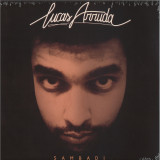
Favorite Recordings presents a reissue of Lucas Arruda's first album, Sambadi.
Lucas Arruda’s born in 1983, in a Brazilian state called Espírito Santo, near Rio de Janeiro. Coming from a musical family (his dad and older brother are musicians) he started playing and listening to music very young. At the age of 13, he was also playing professionally already.
After studying electric guitar and playing in various bands, Lucas passion quickly turned into Rhodes and keyboards, expanding his musical range of skills. At the same time he started a project called Du Black, with his older brother Thiago, quickly receiving various local support from people like Ed Motta, William Magalhães (Banda Black Rio), Robert Lamm (Chicago) or Hyldon (Brazilian soul legend).
From the growing notoriety obtained, the band began to work with various other artists and singers such as Tamy Macedo, or Bossa Nova’s legend, Leila Pinheiro, leading Lucas to build a recording studio with Thiago in 2011. Now 2 years after he launched this home-studio, here comes “Sambadi”, first solo album by Lucas Arruda!
On this recording he also started to team up with Fabricio di Monaco (Modo Solar), who clearly became a fundamental piece, as Lucas relates: “Fabricio introduced me to Pascal Rioux at Favorite Recordings, as they released his EP few years ago. He’s a brilliant musician and a great human being.”
In Lucas’ words, Sambadi is highly inspired by Rio de Janeiro. As for the musical side, the album almost sounds like a tribute to his longtime heroes like Stevie Wonder, Curtis Mayfield, Marcos Valle, Azymuth, or Robson Jorge & Lincoln Olivetti. And Lucas also humbly concludes: “I really hope to honor all the guys who influenced me.”
The origins of Cos date back to the second half of the sixties when Daniel Schell joined forces with Jean-Paul Musette, Pascale Son and Robert Pernet to form Classroom. When Classroom split, Daniel Schell and Pascale Son moved ahead and formed Cos together with Charles Loos, Alain Goutier and Bob Dartsch. They produced an experimental jazz rock sound linked to the influences above mentioned, but without being mere copycats since they always managed to keep to their own personality.
Postaeolian Train RobberyI is an obscure classic from the 1970's Belgian jazzy prog scene that has become a much sought after piece in the collector's market since it was originally released in 1974. Highly inspired by both the UK's Canterbury scene and the Zeuhl sound, the debut album by Cos has been compared to the likes of Soft Machine, Gong, Hatfield & The North, National Health, Gilgamesh, Egg, Placebo, Magma or Zao, with Pascale Son's unique wordless vocals and nonsense syllables singing in a voice that some sources have compared to Flora Purim's.The album was released on the small obscure label Plus, and has arised interest not only among prog-rock psych-heads and jazz experimentalists, but also among those looking for breaks and bits to sample.
The Wah Wah reissue comes housed in a beautiful reproduction of the original gatefold sleeve, featuring a 4-page image booklet and an insert with photos and liner notes. Mastered from the original tapes. We did the first official LP reissue with its original sleeve of this album some time ago and it sold out so soon that many of you has been asking for a reprint since - here is another 500 copies, again licensed from and with the collaboration of Daniel Schell.
Comes with a reproduction of killer original poster.
- A1: Love Song
- A2: Young Bastards
- A3: Stop It
- A4: Blind Man
- A5: Skin O Daayba - Complex Habits No.3
- A6: We Are Waiting
- B1: Mantra
- B2: Skin O Daayba - Feedbackless World
- B3: Cupping Glass
- B4: Half Monk Half Herring
- B5: Ukoidm - Fishing (Edit)
- B6: Eric
- B7: In The Garden
- B8: Sequencer
- C1: Who Are We
- C2: Hit
- C3: Yozti 2
- C4: Voices Cricket
- C5: Attempt To Raise Hell
- C6: Anna's Assignment
- D1: In Our Culture (Surname Version)
- D2: Lesson 4 Voices
- D3: Intermission
- D4: Chicken
- D5: Untitled
- D6: Against Soap
- D7: Bereshit
- D8: Caretakers
Black Truffle is pleased to announce Uri Katzenstein’s Audio Works, produced in collaboration with Holon’s Centre for Digital Art. Spanning sculptural installation, performance, video art, and many other media, Katzenstein’s absurdist, poetic, and often hilarious work made extensive use of sound and music. This, however, is the first release dedicated to the artist’s audio work, collecting 28 tracks produced between the early 1980s and 2017. Compiled from dozens of hours of recordings left uncatalogued (and in some instances unheard) at the artist’s death in 2018, these four sides are a treasure trove, offering a captivating glimpse into a uniquely uninhibited creative practice. Predominantly recorded alone, with some contributions from regular collaborators such as Ohad Fishof on the later pieces, many of these tracks stem from Katzenstein’s time living in New York in the 1980s. Feeding on the cross-pollination of post-punk energy, radical art practice, and new media possibilities that characterised the New York scene at this time, many of Katzenstein’s recordings squeeze multilayered vocal experimentation into synth-based miniatures with a distinctively pop twist, their forms ruptured with anarchic bursts of free-form electronics, sounds from self-built instruments, and field-recorded snatches of the outside world. Katzenstein’s electronic production calls up touchstones of skewed 80s art pop like Laurie Anderson, Ambitious Lovers, and Scritti Politti, but imbued with DIY directness and economy of means. The arrangements of synths, percussion, and noise elements are invigoratingly raw and, at times, almost austerely minimal. On ‘Intermission’, thick distorted chords accompany a wandering portamento melody, inhabiting the wayward carnival space of Roedelius’ most unhinged efforts. Many of the tracks centre on Katzenstein’s multi-tracked vocal performances, often moving between multiple languages, (most commonly English, German, French, and Hebrew). A bewildering range of vocal approaches are present on these pieces, from sweet wordless harmonies to hammed-up growls and monastic recitations. On ‘Skin O. Daayba – Complex Habits no. 3’, improvised resonance singing against a backdrop of echoing electronics and radio snatches. ‘Half Monk Half Herring’ layers multi-lingual syllabic fragments, crossing sound poetry techniques with melodic invention in a way rarely heard outside of Caetano Veloso’s Araçá Azul. On ‘Attempt to Raise Hell’, Katzenstein’s distorted voice spits out streams of alliterative nonsense (‘the hemlock of Henry, he was a hermit…purple pumpkin pulsates to pops’), while on the hilarious ‘Eric’, Katzenstein appears to instruct a small boy simultaneously in basic French and German conversation. On ‘Chicken’, vocal harmonies accompany the pecking and clucking of the titular fowl. Moving from bent, outsider synth pop to snatches of Jo Jones-esque automated instrumental clang and absurdist linguistic experiments, these are far more than footnotes to an artist’s gallery works. Accompanied by extensive, beautifully written liner notes by Roee Rosen and the little information that exists on the individual tracks, Katzenstein’s Audio Works inhabits an outer fringe of DIY pop and sonic experiment reminiscent of Pascal Comelade or Die Welttraumforscher, where accessible forms convey radical interrogations of song, word, and sound.
The origins of Cos date back to the second half of the sixties when Daniel Schell joined forces with Jean-Paul Musette, Pascale Son and Robert Pernet to form Classroom. When Classroom split, Daniel Schell and Pascale Son moved ahead and formed Cos together with Charles Loos, Alain Goutier and Bob Dartsch. They produced an experimental jazz rock sound linked to the influences above mentioned, but without being mere copycats since they always managed to keep to their own personality.
Viva Boma was their second LP, originally issued in November 1976, and added some African influences to the mix, including the cover which, designed by Alain Goutier upon a concept by Daniel Schell, depicted a trio of hipopotamus that made reference to Boma, a portuary city at the banks of the river Congo, and Bomma, Belgian word for grandmother (hence the title appearing either with one or two m's on different parts of the artwork).
The Wah Wah reissue comes housed in a
After the success of HSW001, we thought it was about time to announce the second stage of our exciting unknown artist vinyl series. HSW002
Early
support from ; Priku, Cosmjn, Barac, Vlad Arapasu, Costin Rp, Rossi, Iuly.B, Rich Nxt, Olivian Nour, SUAT, Mikhu, Dragutesku, Mariano Mateljan, Kirik, Rhadow, Pascal Benjamin, XXX Culture, Lee Hasty & more
Limited Edition (500) (No Repress)
Multi colour 180g Vinyl
White Label
Hand Stamped & Signed with love
Specially designed outer sleeve artwork
Gazelle Twin, Lali Puna, This Mortal Coil, Slow Walkers, Atlas Sound, Bowery Electric, Broadcast Press Release: Snakeskin is an album of visionary electronic dream pop, shapeshifting above ambient and industrial undercurrents. It is moody, unsettling, luminous – the culmination of a decade of collaboration and friendship between Lebanese producer/musician/ engineer Fadi Tabbal and singer-songwriter Julia Sabra from Beirut-based indie trio Postcards. The duo began working on Snakeskin in the aftermath of the August 2020 Beirut port explosion, which killed at least 218 people, injured 7,000, and left over 300,000 people homeless. Indeed, Julia's home was destroyed by the explosion and her partner and bandmate Pascal badly injured. The first song that they wrote together afterwards was 'Roots', which closes out the album and was composed for the Ruptured-curated series The Drone Sessions in the fall of 2020. Snakeskin utilizes tape loops, synthesizers, vocals, and drum machines, combining Julia’s pop-inspired melodies and choral roots (an echo from her religious upbringing) with Fadi’s affinity for minimalism and musique concrète. The album seamlessly incorporates the melancholy electro-pop of 'All The Birds', the quiet menace of 'In Our Garden' (long-lost treasures, ancient lies / another buried paradise), and the beat-driven 'Signs'. The title track sums up their frame of mind, beginning as a lullaby and evolving into a glittering tapestry of distortion and feedback. As the artists write, Snakeskin is a product of "the disappearance of life as we know it, and with it the decay of nature and living creatures. There is no rebirth, no renewal. It’s about what it means to feel at home in such a place." Some tracks were also inspired by events happening in the surrounding region, such as the invasion of Armenia by Azerbaijan and the Palestinian uprising of May 2021 in Sheikh Jarrah - both events shedding light on relationships to home and land across the wider region. That such compelling art can emerge from unceasing tragedy may be the ultimate testament to human resilience and the pursuit of freedom and justice. "The moon speaks in tongues we can't discern / A plastic dove hangs from a cypress branch / Haven't you heard? / Nothing grows here anymore / The air is burnt / Nothing grows..." Highlights: – This is the second volume in the Corrosion Series, a collaborative effort by Beacon Sound and Ruptured, and the sixth collaboration between the two labels. – Fadi used samples of Julia's voice on his fifth solo album Subject to Potential Errors and Distortions (2020, Beacon Sound/Ruptured) – The Tunefork Studios team, led by Fadi, administered the Beirut Musician's Fund after the port explosion, as covered by Pitchfork, NME, and the Financial Times. – Julia's band Postcards released their third full-length album After The Fire, Before The End on Berlin label T3 Records in 2021 and are currently touring Europe. Credits: All music composed, performed and produced by Julia Sabra and Fadi Tabbal between November 2020 and December 2022. Lyrics by Julia Sabra. Drum samples by Pascal Semerdjian. Recorded by Fadi Tabbal, mixed by Sary Moussa and Fadi Tabbal at Tunefork Studios, Beirut. Cover photo by Lujain Jo. Design by Josette 'ZOoz' Khalil. Mastered by Rashad Becker. Bios: Julia Sabra is a Lebanese musician, songwriter and composer. She co-founded acclaimed Lebanese dream-pop outfit Postcards in 2013 and is the band’s multi-instrumentalist, lead singer and lyricist. Postcards have released two EPs (2013, 2015) and three albums (2018, 2020, 2021) and have been regularly touring Europe and the Middle East since 2015. She has been the manager of Tunefork Studios since 2017. Lebanese musician, producer, and sound engineer Fadi Tabbal’s work consist of minimalist pieces ranging from ambient and electronic to drone and contemporary classical. He has released six solo albums and has collaborated with various musicians, artists and filmmakers through the years. Often referred to as “the hardest-working person in Lebanon’s alternative music scene”, Tabbal established Tunefork Studios, a collective of producers, engineers and musicians, which has helped shape Beirut's contemporary music scene since 2006.
ft. Tamar Osborn
Emerging labels and established producers, Don Pascal (Afro Atlantic) and Tom Funk (Lazy Robot Records) collaborate as "September Sun" for this two track release.
With special guests Myele Manzanza on drums and flautist/saxophonist Tamar Osborn adding their signature sound to this Leon Thomas-esque release.
Harnessing spiritual delicacy and timeless melodies, this debut two track release covers a cross section of Jazz, reminiscent of the 70s, with a contemporary UK edge.
- A1: Migas 2000
- A2: I'm Dead
- A3: Je Ne Suis Pas Très Drogue
- A4: Down Underground
- A5: Je Suis Une Gogo Girl
- A6: La Fille De La Ligne 15
- B1: Je M'en Vais
- B2: Salvation
- B3: Votre Côté Yeye M'emmerde
- B4: Cold Was The Ground
- B5: My Black Sabbath
- B6: Carnival Of Souls (Feat. Pascal Comelade)
- C1: El Beach
- C2: Prisunic
- C3: Dahlia Rouge
- C4: Garden Of Love (Feat. Peter Hook)
- C5: Istanbul Is Sleepy (Feat. Anton Newcombe)
- C6: The Gift (Feat. Peter Hook)
- D1: Shadow People
- D2: Dimanche (Feat. Bertrand Belin)
- D3: One Blood Circle (Feat. Etienne Daho)
- D4: Calentita
- D5: Saul (Feat. Laurent Garnier)
Orange Vinyl[41,98 €]
The garage -psychedelic French duo The Liminanas straddles since 2009 the boundary between psychedelic ,shoegaze,garage & French yé-yé up to cool vocals . Quintessentially French but first known at the start in the US before hitting homeland France. 7 studio albums so far, 2 rare tracks compilations, many Eps,some OST, collabs such as L’Epée with Anton Newcombe & Emmanuelle Seigner : time for a first time Best of, and actually more than a Best of : Double Cd , Ltd Triple Vinyl& Digital editions offer 12 exclusive bonus tracks -new songs + rare songs when they called themselves les Bellas, before The Liminanas-.
“Electrified” also includes 23 classics songs , with featurings such as Peter Hook, Anton Newcombe and French pionners Laurent Garnier, Etienne Daho & Pascal Comelade.
Features liner notes written by Iggy Pop, Peter Hook & Keith Streng (Fleshtones) : because it’s only rock’n’roll.
- 1: Haizea - Egunaren Hastapena
- 2: Izukaitz - Xori Bele
- 3: William S. Fischer - Pello Joxepe
- 4: Magdalena - Lanera Sartzen
- 5: Enbor - Agurra Ii
- 6: Itoiz - Ezekielen Ikasgaia
- 7: Koska - Ogia Eska
- 8: Itziar - Ameskoi
- 9: Errobi - Andere
- 10: Lisker - Amets Jazarriak
- 11: Amaia Zubiria Eta Pascal Gaigne - Itxasoan Laino Dago
- 12: Gontzal Mendibil - Hasperen Itun
- 13: Urria - Arrano Beltza Eta Amaia
1972-1985 KATEBEGIAK - Prog-Rock, Psych-Folk & Jazz-Rock Music from the BASQUE COUNTRY. The album KATEBEGIAK, now published by ELKAR, contains 13 tunes on double LP gatefold edition from Haizea, Izukaitz, William S. Fischer, Magdalena, Enbor, Itoiz, Koska, Itziar, Errobi, Lisker, Amaia Zubiria & Pascal Gaigne, Gontzal Mendibil & Taldea and Urria, and the CD-Book edition adds an extra bonus track by the great unknown artist Juan Arkotxa. Complied by Mikel Unzurrunzaga Schmitz aka DJ Makala. Music produced in the 70's in the Basque Country got trapped between two earth shattering artistic currents; Ez Dok Amairu in the 60s and Basque Radical Rock in the 80's, and unfortunately, most of the lovely discs and tunes created at that magical time have been pushed to a remote (and sometimes even despised) corner of our collective memory. 60's and 80's music currents are almost opposite, and both work as magnetic poles with a very strong power of attraction, and maybe also as a burden for any of the later artistic currents. 60's generation of artists searched within their rich and ancient cultural roots to acknowledge and update them, in proud, hopeful and unforgettable folk songs. The 80's one on the other hand, worked in a flammable environment in constant social and political conflict and found in punk the perfect way to express their anger and weariness for so many unfulfilled promises and the lack of opportunities into short, noisy, direct and corrosive songs, technically sparse but full of energy and expressive power. Most of the "classic" names engraved in our memory come from one or the other like Benito Lertxundi, Mikel Laboa, Lourdes Iriondo and Xabier Lete or Kortatu, Hertzainak, Zarama, Las vulpes, Eskorbuto or Cicatriz. 70's generation and their music work somehow as the "missing link" ("katebegia" in Basque) between the two. They loved folky tunes and don't forget their ancient roots, but they also look outside for inspiration and experimentation. Just as the 80's boys and girls found punk the 70's guys found a completely different sonic and aesthetic landscape in the works of Grateful Dead, Fairport Convention, King Crimson, Soft Machine, Gong_ and worked closely with keen souls in other neighboring regions such as Maquina!, Pau Riba or Sisa in Catalonia or Smash and Triana in Andalusia. This resulted in more abstract and poetic lyrical content, much longer psych-folk-prog-jazz tunes, full of complex instrumental passages and mesmerizing structures of sheer ambition and masterful execution in many cases. But, most important of all, they found a voice of their own, rich, unique, and fascinating, and that's what makes them so valuable to us. Not only to us, but also to lots of vinyl collectors and crate-diggers around the world, who have in many cases paid fortunes for some of the original editions of LPs that are the source of tunes in this compilation. Mikel Unzurrunzaga Schmitz aka DJ Makala, DJ and producer of worldwide scope and wisdom, noticed this fact first and decided to pay homage to these wonderful tunes through this masterful and dedicated selection for your pleasure and as an open invitation to dig deeper into your adventures in the dark and hidden side of Basque popular music.
- A1: Pale Blue Care Biobiopatata06 09
- A2: Crossing The Tamariver Maher Shalal Hash Baz 48
- A3: Bayern Mitamurakandadan? 02 39
- A4: Anton Popo 04 08
- A5: Tohonoko Kourakuen 03 03
- A6: People Have Called Them Flowers Various Sighhorns 03 32
- B1: A Sparkle To Your Eyes Zayaendo 04 58
- B2: Swamp Strada05 18
- B3: New Window (Onto A Collapsed House) Sekifu 01 41
- B4: Gone Astray Hose 04 44
- B5: Ghhgh Compostela02 40
- B6: Wippi Zayaendo 01 25
- C1: Just Watching Gratin Carnival 04 35
- C2: Apple Ringo Pascals 02 50
- C3: Way To The Seatail 02 59
- C4: Pensive Miss Noahlewis’ Mahlon Taits 03 33
- C5: Nagyon Szeretrek Mindenkinek K`dlokk 05 57
- D1: Kemuri Fuigo 04 28
- D2: Mado Petit Daon 05 53
- D3: Minato Nrq 02 35
- D4: The Ending Theme Tenniscoats 02 59
- D5: A Day With The Saints Satomi Endo 03 13
Alien Transistor present Alien Parade Japan, a joyous double-album compilation of groups from Japan’s indie-pop and avant-garde undergrounds, all of which feature brass or woodwind instruments as part of their line-up. Compiled by Markus Acher (Alien Transistor, The Notwist, Hochzeitskapelle) with plenty of support and help from his Spirit Fest bandmate, Saya (also of Tenniscoats), it features some familiar names – Tenniscoats, naturally, but also Zayaendo, Tori Kudo’s Maher Shalal Hash Baz – alongside lesser-known groups like Biobiopatata, Mitamurakandadan?, Kourakuen, sekifu, and Noah Lewis Mahlon’ Taits, amongst many others.
The collection of songs here rests upon a simple question, and an interesting parallel: Why do so many groups from Japan include brass and woodwind, and how closely does this echo the scene that Acher is involved with in Munich? The idea was formulated in Acher’s mind after one of his groups, Hochzeitskapelle, had been invited by Saya to Japan in 2019, to take part in the Alien Parade Japan tour. “Saya and her friends recommended a lot of music to me that I didn’t know of,” Acher recalls, “and I was surprised and excited to find so many Japanese bands who use brass and woodwind instruments.”
This approach was something Acher had been familiar with for a while, thanks to his experiences in Munich: “Until then I thought of the Munich scene, where Hochzeitskapelle come from, as being quite unique in having ex-punk and still-indie musicians form loud acoustic bands with many brass instruments and play a wild mixture of styles.” And indeed, that variety is reflected in the twenty-two songs on Alien Parade Japan, which flits from the pastoral melody of Maher Shalal Hash Baz’s “Crossin The Tama River”, through the tenderness of various sighhorns’s “people have called them flowers”, to the folksy lament of Gratin Carnival’s “Just Watching”.
Alien Parade Japan reaches further afield, too, drawing in some groups, like HOSE, Fuigo, and popo, that feature musicians like Toshihiro Koike, Masafumi Ezaki and Taku Unami, who may be better known for their experimental and improvised releases on labels like ftarri and Erstwhile. It also looks back to material recorded in the 1990s - the swinging slide guitars and sax/tuba duet of Strada’s “Swamp”, from 1998, and Compostela’s energetic, rousing “ghhgh”, from 1990. Both pieces were written by, and feature, saxophonist Kanji Nakao; Compostela’s membership also included late saxophonist Masami Shinoda, who was also part of such storied Japanese groups as Pungo, A-Musik, Orquestra Del Viento, Ché-SHIZU, and the fiery free jazz outfit, Seikatsu Kōjyō Iinkai.
Groups like Compostela help to draw some through-lines to the aesthetics of chindon’ya, a type of Japanese marching band made up of costumed street performers who advertise businesses; the music made by these bands is brash, spirited, and full of energy. Alien Parade Japan weaves all of this together – chindon’ya; jazz; indie-pop; psych-folk; big band – into one beautiful, big tapestry of gorgeous melody, sweetness, and melancholy, with plenty of creative fraying at its edges. “The collection is a very personal view of Japanese bands using brass and woodwind instruments,” Acher concludes: “it’s not a representative anthology, it’s mainly held together by my personal taste, experiences, and friendships.” But it’s also a wonderfully coherent collection of some of the most playful and elated music you’re likely to hear this year. As musician and writer David Grubbs says:
„Now it is confirmed: my favorite genre of music is Alien Parade Japan. Hopefully now people will know what I’m talking about when I gush about the unassailable brilliance of longtime favorites like Maher Shalal Hash Baz, Popo, Mitamurakandadan?, Hose, and Tenniscoats, presented here alongside others whose music I have only begun to search out. Please share in my gratitude and enjoyment of this lovingly assembled collection, one that I welcome into my home as I would a long-anticipated guest.“
If you check the credits of The Rolling Stones' Goats Head Soup LP from 1973 you'll find a certain "Pascal" listed on the percussion section. That is none other than Los Angeles based artist Nicolas Pascal Raicevik (1933-1994), aka 107-34-8933, aka Head, aka Nik Pascal, aka Nik Raicevic. Besides his hitting the bongoes on the Stones album, Nik was a great artist on his own, both as a painter and as a musician. As a musician, he was a pioneer in the use of synthesizers, preceeding the Berlin school by some years when his Head LP was released on on Buddah in 1970. Buddah probably saw in Head the opportunity to cash in some money from the remains of the psychedelic scene - the three tracks on the LP are named after drugs used in the late sixties. The sounds, however, are accomplished works that show Raicevic as one of the most interesting pioneers in the use of synths. The album probably didn't do too well, since Buddah didn't renew the contract with Raicevic, who instead took his own way releasing his works on his very own Narco Records and Tapes label. Between 1968 and 1975 Narco would issue 4 LPs credited either to Nik Raicevic (Beyond The End... Eternity) or Nik Pascal (The Sixth Ear, Magnetic Web and Zero Gravity) plus one credited to 107-34-8933 (Numbers, which is in fact the same LP as Buddah's Head, albeit with different cover art). Copies of these LPs came with an ironic sticker over the shrinkwrap that read "Do not listen to this LP if you are stoned".
Numbers was the first reference in the Narco catalogue (NR101), each of the three tracks it contains is named after a drug: Cannabis Sativa, Methedrine and Lysergic Acid Diethylamide. The album was credited to 107-34-8933, there is no date of release on the disc, some sources take it as back as 1968 - in any case, this is the same record that was issued on Buddah in 1970 credited to Head and eponymously-titled. The Wah Wah reissue features the original cover artwork from the Narco edition.
Besides his musical explorations, Nik was also an interesting painter. His paintings are auctioned from time to time, and are consciousness expanding works influenced by abstract cubism and surrealism, some kind of Salvador Dalí on drugs exploring the outter and inner space. All the artwork on the sleeves of his LPs is done by himself. Spacey landscapes and psychedelic colours that fit perfectly to the music they contain.
"Nik Raicevic's music is at the intersection of radical psycho-electronic weirdness and kraut kosmische music (in particular the scifi-hypno-minimal modules of Conrad Schnitzler in Grun, Rot and Blau). It presents mega epic & tripped out electronic improvisations.
"This is an absolute must for collectors and fans of visceral, neurotic soundscapes."
"As far as late-60s / early-70s American Bedroom' Electronic Music goes, these LPS have to be among the first transmissions from this sector, made all the more attractive when coupled with Raicevic's alien topographIes - the covers are high-color portrayals of Venusian lanes, knotted growths, & future-past architecture in a style you might equate with Vintage' sci-fi pulp-novel covers - & copious Downer' sentiment. This music is imbued with a sort of lonely, anti-social sensibility that's about as far as you can get from the Academic' Early Electronic vector. I will say that if the Steve Birchall, Cellutron & the Invisible, and/or Pythagoron™ seed your garden, this will likely do the same."
Never reissued before on vinyl format, the Wah Wah reissue features original sleeve artwork made of paintings and drawings by Nik himself and reproduction of the famous ironic "Do not listen if you are stoned".
Limited edition, 500 copies only.
If you check the credits of The Rolling Stones' Goats Head Soup LP from 1973 you'll find a certain "Pascal" listed on the percussion section. That is none other than Los Angeles based artist Nicolas Pascal Raicevik (1933-1994), aka 107-34-8933, aka Head, aka Nik Pascal, aka Nik Raicevic. Besides his hitting the bongoes on the Stones album, Nik was a great artist on his own, both as a painter and as a musician. As a musician, he was a pioneer in the use of synthesizers, preceeding the Berlin school by some years when his Head LP was released on on Buddah in 1970. Buddah probably saw in Head the opportunity to cash in some money from the remains of the psychedelic scene - the three tracks on the LP are named after drugs used in the late sixties. The sounds, however, are accomplished works that show Raicevic as one of the most interesting pioneers in the use of synths. The album probably didn't do too well, since Buddah didn't renew the contract with Raicevic, who instead took his own way releasing his works on his very own Narco Records and Tapes label. Between 1968 and 1975 Narco would issue 4 LPs credited either to Nik Raicevic (Beyond The End... Eternity) or Nik Pascal (The Sixth Ear, Magnetic Web and Zero Gravity) plus one credited to 107-34-8933 (Numbers, which is in fact the same LP as Buddah's Head, albeit with different cover art). Copies of these LPs came with an ironic sticker over the shrinkwrap that read "Do not listen to this LP if you are stoned".
"Raicevic is clearly still in the early learning-curve stages," which it a key LP to understand Nik's evolution and setting the path for more evolved works to follow.
Besides his musical explorations, Nik was also an interesting painter. His paintings are auctioned from time to time, and are consciousness expanding works influenced by abstract cubism and surrealism, some kind of Salvador Dalí on drugs exploring the outter and inner space. All the artwork on the sleeves of his LPs is done by himself. Spacey landscapes and psychedelic colours that fit perfectly to the music they contain.
"Nik Raicevic's music is at the intersection of radical psycho-electronic weirdness and kraut kosmische music (in particular the scifi-hypno-minimal modules of Conrad Schnitzler in Grun, Rot and Blau). It presents mega epic & tripped out electronic improvisations.
"This is an absolute must for collectors and fans of visceral, neurotic soundscapes."
"As far as late-60s / early-70s American Bedroom' Electronic Music goes, these LPS have to be among the first transmissions from this sector, made all the more attractive when coupled with Raicevic's alien topographIes - the covers are high-color portrayals of Venusian lanes, knotted growths, & future-past architecture in a style you might equate with Vintage' sci-fi pulp-novel covers - & copious Downer' sentiment. This music is imbued with a sort of lonely, anti-social sensibility that's about as far as you can get from the Academic' Early Electronic vector. I will say that if the Steve Birchall, Cellutron & the Invisible, and/or Pythagoron™ seed your garden, this will likely do the same."
Never reissued before on vinyl format, the Wah Wah reissue features original sleeve artwork made of paintings and drawings by Nik himself and reproduction of the famous ironic "Do not listen if you are stoned" sticker. Limited edition, 500 copies only.
New album by the Berlin-based musician, composer and producer MIDORI HIRANO aka MIMICOF, entirely recorded using the EMS SYNTHI100 at Electronic Studio Radio Belgrade during an artist residency: contemporary electronic music / ambient for the advanced listener.
Midori Hirano is a Japanese musician, composer and producer based in Berlin. She started learning the piano as a child and later studied classical piano at university. Therefore the music she releases under her own name is based on the use of piano, but yet experimental and an eclectic mixture of modern digital sounds with subtle electronic processing and field recordings. So far, Hirano released 7 solo albums under her civilian name on labels such as Sonic Pieces and DAUW.
Under the moniker MimiCof she explores the realm of more experimental music and detailed rhythmic patterns, combined with an idea of drawing melodic shapes and harmonies. As MimiCof she performed at prestigious festivals and events such as CTM, Heroines of Sound Festival, Boiler Room Berlin and L.E.V. Festival, and was selected by Frank Bretschneider for the first volume of the "Sichten" compilation series on his raster label.
Besides producing her own works, Hirano has composed music for dance performances, video installations and films which have been screened at Berlin International Film Festival, Krakow Film Festival, SXSW Film Festival and HongKong International Film Festival (among others) and remixed tracks by artists including Rival Consoles, Foam And Sand aka Robot Koch, Liars and Pascal Schumacher.
While the last MimiCof album "Moon Synch" (2017, Alien Transistor) was recorded on the Buchla analogue modular Synthesizer at EMS Elektronmusikstudion in Stockholm, her latest effort "Distant Symphony" (the 4th as MimiCof) was created on a different synthesizer: the EMS SYNTHI 100 Synthesizer at Radio Belgrade. All sounds from this instrument were recorded as single sound samples at first, then mixed and modified into three long pieces of music, so that the audience can experience the machine's uniqueness and versatility of sound. Hirano understands this work as a gesture of respect for the SYNTHI 100's character: though a vintage instrument, it has never lost the beauty of its modern sound.
Animalia presents the first in a series of 2 x 12" compilations... For volume one, comes Microevolutions... An homage to the label's continued growth and evolution, a label dedicated to authentic celebrations of talented local artists. Here, Animalia returns to its roots with a release compiled by the members of Menage (plus special guests Ebbs n Flow), all compiled in the northern suburbs of Naarm (Melbourne). The compilation showcases the various moods and facets that make up the deep yet somehow undefinable Animalia sound. From deep techno to UK garage and everything in between, Microevolutions is an earnest reflection of the diversity of sound that makes Animalia so special.
Lined up next on Cosmocities is a special delivery and direct nod to our formative years’ loves - in this very case, trance music. Fruit of 90s cross-channel outfit Prism, the collaborative endeavour of French producer Pascal Eloy and UK-based Grant Wilkinson, the three-track EP “CMSR006” mixes unreleased music (Refraction), a 1996-issued goodie (Rain) and an exclusive remix from SYO, better known for his ambitiously retro-futuristic output under the S.O.N.S moniker.
Originally released as part of Planet Dog’s 1996 compilation “Feed Your Head”, “Rain” retains all of its original mystique and soulful use of modern production tools - letting a cascading flow of arpeggiated synths, stealth bass onslaughts and 303-borne trippiness pour down as a fully immersive digital shower for the senses.
An unheard gem from the vault, initially written and recorded in 1995, “Refraction” pulls further dynamic traction from a bubbling drum programming and damp, urban jungle-y atmosphere - beaming us straight back in the rave’s most compelling heyday with its feverish maelstrom of fluttering bleeps, spiralling tribal motifs and faux-organic, Neo-Easternmost harmonics.
Adding his ever innovative spin to the table, SYO cuts into the flesh of the original to deliver a further syncopated and spacious version, flush with complex rhythmic sleights of hand and subtle melodic trickery throughout, bound to keep you on the edge with every bar. 25 years on since it was first designed, Prism’s lasting relevancy shines bright on this all-road, bold-to-the-full trance epic that’s lost nothing of its flair.
Bààn is a Belgian instrumental duo, formed in 2016 in Brussels by Pascal N. Paulus (keyboards) and Jean-Philippe De Gheest (drums).In their music they interweave ambient, psych, jazz and rock and they create an infectious atmosphere that immediately transports the listener to distant places