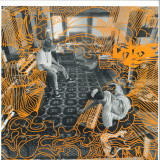
A guitar stands alone in Wedding, that metropolitan biotope in the western center of Berlin, caught in constant transformation between idyll and abyss. It lets its gaze wander, unsettled, almost shy, until it encounters a trumpet, with which it begins a cautious, then ever more intimate pas de deux.
Welcome to the second studio album by the Berlin-based band Conic Rose.
The album title Wedding is no coincidence. The story of Conic Rose is closely intertwined with the Berlin neighborhood that gives the record its name. The band's studio is located here, and both studio albums were created in the immediate vicinity of the small river Panke. This place settles over the music like a warming patina. The album feels as though the musicians and the neighborhood have invited one another to get to know each other. Not least because Wedding also means marriage. These marriages between a band and an urban landscape, a fading past and an emerging future, fear and hope - unfold in every single song on Wedding.
For their second album, Conic Rose repositioned themselves completely. Not in terms of personnel, but in the question of how to move forward. Conic Rose still sound like Conic Rose; their distinctive blend of cinematic jazz, ambient textures and guitar-led contemporary music remains untouched. And yet Wedding is, in many ways, the conceptual counterpart to their debut album Heller Tag. Where the debut documented movement within an urban setting, Wedding describes a state of being. Behind every piece seems to hover a large question mark.The group opens up its palette, allowing more influences, becoming at once more subtle, more profound, more filigree. It is less about definition than about the spaces in between. The most immediately striking difference from the previous album is the strong presence of the guitar. In Bertram Burkert's playing, many voices seem to converge. His yearning openness forms an equal counterpoint to Döben's trumpet and flugelhorn. Blurred and layered sounds occasionally make the ground seem to slip away beneath one's feet, while Döben's gliding lines create both closeness and distance. Together, the band express in a deeply subtle way a sense of life that corresponds precisely to our time. Something lurks in the background, omnipresent yet still unnameable. Conic Rose need no words to convey this feeling of uncertainty with remarkable eloquence. Perhaps this has something to do with Wedding being a place of confrontational introspection, but Conic Rose confront the escape from escape itself. With the recording and release of Wedding, this process is far from complete. The seed only begins to grow in the listener's ear. With every listen and the echo it leaves behind in memory, the studio bud continues to bloom. The album is merely the point of departure. What ultimately matters is what it sets in motion within those who encounter it.
quête:patin
- 1: Stray Dogs (With Iron & Wine)
- 2: Dark Circles (With Fenne Lily)
- 3: Rollercoaster
- 4: Things Change, Even Now
- 5: The Ocean (With Uwade)
- 6: Big Sky (With Ken Pomeroy)
- 7: Charlie, Short For Charlotte
- 8: When I Look At You
- 9: Your Voice (With Ken Pomeroy)
- 10: Swimming Pool
- 11: Home Movies
Hrishikesh Hirway, Musiker, Komponist und Podcast-Ersteller, bekannt für seinen preisgekrönten Podcast und die Netflix-Serie ,Song Exploder" sowie Kompositionen für Film und Fernsehen, darunter ,Companion", Save The Date, Our Nixon und Everything Sucks!, begann sein eigenes Musikprojekt unter dem Namen One AM Radio und änderte seinen Namen mit der Veröffentlichung von To Call My Own EP im Jahr 2022. Produziert vom Grammy-Gewinner Philip Weinrobe (Big Thief, Adrienne Lenker, Theo Katzman, Cass McCombs), In the Last Hour of Light ist eine Erinnerung daran, loszulassen - von Menschen, von Erinnerungen, vom Wunsch, die Zeit davon abzuhalten, zu schnell zu vergehen. Die Songs entstanden nach dem Tod von Hrishikeshs Mutter, als die Jahre sie immer weiter in die Vergangenheit drängten; in den Momenten, in denen er in seinem Krankenhauszimmer darauf wartete, dass sich sein Vater erholte; in dem Traum von einer Tochter, die er nie haben wird. Es gibt auch Liebeslieder - aber es ist die Art von Liebe, die die Patina eines langen gemeinsamen Lebens trägt, in dem man ebenso viel Zeit hinter sich hat wie vor sich. Die Band von Hrishikesh bestand aus Shahzad Ismaily (Feist, Arooj Aftab), Ken Pomeroy, Mike Haldeman (Moses Sumney, Dawn Richards) und Joshua Crumbly. Zur Besetzung von Hrishikeshs Band gehörten Shahzad Ismaily (Feist, Arooj Aftab), Ken Pomeroy, Mike Haldeman (Moses Sumney, Dawn Richards), Joshua Crumbly (Leon Bridges, Kamasi Washington), Oliver Hill (Kevin Morby, Broken Bells, Vagabon), Sean Mullins (Sam Evian) und Cole Kamen-Green (Beyoncé, Taylor Swift); mit Gastauftritten von Iron & Wine, Fenne Lily, Ken Pomeroy und Uwade Hart (St. Vincent), Zosha Warpeha (L'Rain) und Dustin O'Halloran.
- A1: Herbaliser – A Mother
- A2: Small World – Livin’ Free (Soundtrack Mix)
- B1: Tango – Spellbound
- B2: The Lab Rats – Give My Soul
- B3: Statik Sound System – Revolutionary Pilot
- C1: Jmj & Flytronix – In Too Deep
- C2: Aquasky – Kauna
- C3: James Bong – Mr. Kiss Kiss Bong Bong (Big Brothers Dubbing You Full On - Dub Tractor Remix)
- D1: Hardfloor Presents Dadamnphreaknoizephunk – Dupdope (Dubdope)
- D2: Thievery Corporation – Shaolin Satellite
- D3: Kruder & Dorfmeister – High Noon
- E1: Beanfield – Keep On Believing
- E2: Sapien – Que Dolor
- E3: Shantel – Bass And Several Cars
- F1: Karma – Look Up Dere
- F2: Showroom Recordings – Radio Burning Chrome
- F3: Kruder & Dorfmeister – Black Baby (Dj-Kicks)
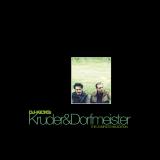
For its 30th anniversary, Kruder & Dorfmeister’s DJ-Kicks is available for the first time in mixed form on 3LP, remastered by Bernie Grundman and packaged in a special box set including original imagery. Kruder & Dorfmeister's rendition of the series created an era defining moment, which tied together a glowing array of musical registers. The Viennese downtempo royalty blended a fusion of slowed down moments across many genres with rolling Drum and Bass from the likes of Aquasky, the melting acid lines of deep Hardfloor and the 90s boom bap sampling, smoked out atmospherics of Thievery Corporation amongst many more.
These masters of mood channeled the sound of a moment with their DJ-Kicks, which still retains a certified cinematic sheen, the patina of the real – curation and mixing at its most playful and refined. It remains to this day one of the most recognizable DJ-Kicks and mixes of all time. Containing two certified cuts from K&D themselves; the wooze is strong on “High Noon” with Dorfmeister's intoxicating jazz flute licks and a trembling harmonica atop a mirage of breaks. Their DJ-Kicks original and legendary tune “Black Baby” closes the mix providing a piece of grandeur, riding off into the distance deep to the vanishing point.
When the mix dropped in 1996, the slo-beat pioneers were among the hottest producers in the dance universe. Even though they only produced two unreleased maxis, names like Count Basie, Bomb The Bass, Alex Reece or United Future Organization had some of their tracks remixed by these exceptional producers. Rumour has it during the work for DJ-Kicks and their debut album they refused doing remixes for U2, Grace Jones, Elvis Costello and the Fantastic Four! ‘DJ-Kicks: Kruder & Dorfmeister’ took its place in the pantheon a long while back, effortless in its ability to traverse sounds, styles and tempos while retaining a selection which remains timelessly recognisable as: Kruder & Dorfmeister.
- A1: Sunday In The Park With George
- A2: No Life
- A3: Color And Light
- A4: Gossip
- B1: The Day Off
- B2: Everbody Loves Louis
- B3: Finishing The Hat
- B4: We Do Not Belong Together
- C1: Beautiful
- C2: Sunday
- C3: It's Hot Up Here
- C4: Chromolume #7 / Putting It Together
- D1: Children And Art
- D2: Lesson #8
- D3: Move On
- D4: Sunday
- D5: Putting It Together
- D6: Sunday
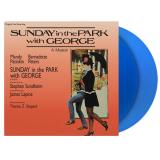
Sunday in the Park with George presents the music from the original 1984 Broadway production of Stephen Sondheim and James Lapine’s acclaimed musical. Recorded shortly after the show’s premiere, the album features the original cast performing Sondheim’s layered score, inspired by Georges Seurat’s painting "A Sunday Afternoon on the Island of La Grande Jatte".
The cast of the musical is led by Mandy Patinkin and Bernadette Peters, whose performances tell a story about art, love, and artistic legacy across two time periods. The recording includes notable songs such as “Sunday,” “Finishing the Hat,” and “Move On.” Winner of the Pulitzer Prize for Drama, Sunday in the Park with George is widely regarded as one of Sondheim’s most distinctive works. Produced by Thomas Z. Shepard, the recording won the 1984 Grammy Award for Best Cast Show Album.
The soundtrack of Sunday in the Park with George is available as a limited edition on blue vinyl and includes a 4-page booklet. The 2LP is packaged in a deluxe sleeve with linen laminate finish.
Following their 2023 LP Presents, Nathan Nelson's American Cream Band bring the Twin City heat back to Quindi with an album rooted in duality. From the yin and yang party-starting A side and meditative B side to the dual-attack boy-girl vocals, the nature of opposites and equals steer the expansive, artful strain of rock n' roll that spill out of this wholly unique Minnesotan export. For the ever intriguing Quindi, it's a strident step into Spring after the frosty introspection of Roudi Vagou & Läuten der Seele's Taghelle Nacht. While the world burns and injustice prevails, Twin is a celebration of unity and radical expression-all the more urgent against the backdrop of authoritarian overreach and righteous protest that has whipped through Minneapolis in recent times.
Twin continues Nelson's drive at the helm of American Cream Band to draw in a colourful cast of players to feed into his orgiastic sound, meshing the trance-induction of krautrock with the irrepressible funk of the post-punk-new-wave explosion. But principal among the cast of characters and forming a central tenet to the identity of this album is Liz Buhmann, lead vocalist and a formidable, playful foil to Nelson's own Midwestern twang. Around the electric spark between Buhmann and Nelson, a heavy duty ensemble wrangle guitar, bass, sax, a cornucopia of synths and a battery of percussion into all manner of sonic forms.
The double-sided concept manifests throughout Twin. On 'Call Me' Buhmann sings in French to contrast Nelson's English, while the strident strut of the NYC disco groove is offset by an inherent dreaminess that turns the track into a more cosmic kind of dancefloor workout. 'Ethical Vampire' is a spiky cut with a garage rock patina that spirals into a psychedelic, synth-soaked get-down. 'Don't Burn The House Down' is a loose and limber roller that captures Can at their funkiest along with the hypnotic vibe of other such esteemed long format jammers, but American Cream Band boils that energy into a hook-laden art pop sensibility before a gentle, drawn out landing.
Even the more pensive moments on Twin find space for friction. For all its tender, smoky temperament, 'Leda and the Swan' lets the electric piano and guitar fray at the edges and bleed into the red while Mat Heinrich's tumbling drums lurch with pent-up intensity on the one. 'No Funeral Necessary' skirts around the mellow pools of new age but prefers to let liberally doused Tape Echo tweak out Alex Meffert's honeyed sax inflections and Buhmann and Nelson's disparate sermons.
Nelson describes Twin as "an oppositorum coincidentia" - a reference to the mystical Latin concept of the coincidence of opposites that suggests contradictory ideas 'fall together' in a higher reality. Beyond the sound of the album, this idea also manifests in the cover photography by Sho Nikado and the swans on the LP labels by Autumn Garrington. As freewheeling and wide-open as American Cream Band feels, nothing appears by accident. The end result feels like a nourishing whole - rich with substance and nuance, deep enough to be explored and absorbed yet also so brazen and immediate you can't help but feel its surface charms from the first thrusts of 'The Hive Is Pissed' to the last ripples of 'We're Not So Sinister'.
Diagonal celebrates 13 years inbusinessvia a 4 x 12" run featuring label stalwarts and influential collaborators. This is LP2, the second in the series. Like LP1 before it, this 12" comes with a coloured, elastic H band. All four LPs will be accompanied by these meaning customers can combine the records and complete their own 4 x 12" set!
This plate welcomes Regis back tothe label he inspired into existence, this time turning his attention toPowell's "Nomad". The result is techno bliss! Streetwalker (Beau Wanzer & Elon Katz) offer up a gloomy ballad, StabUDown Productions, a label mainstay, delivers the beats we love him for. There's a gripping and unsettling DJ tool from Patino and a beat-fest from Novoline. DIAG050 LP2 has it all.
Microclimat is a free party project organized in collaboration with its participants in parks, forests, ice rinks, wharfs, underground, wasteland and boats of the Paris region since 2012. The artists on this record have all performed live in our parties.
Microclimat est un projet de fête libre organisé en collaboration avec ses participants dans des parcs, forêts, patinoires, quais, souterrains, friches et bateaux de la région parisienne depuis 2012. Les artistes de ce disque se sont tous produit en live chez nous.
- Honey
- The Smoke
- Division
- Bury Me
- Limits
- Love You Better
- River Rise
- Believe In The Devil
- Outgrowing
Ora Cogans Musik ist wie Alchemie: teils Instinkt, teils Ritual und immer aus den Ecken entstanden, wo das Leben am intensivsten ist. ,Hard Hearted Woman", ihr Debüt bei Sacred Bones, ist wie ein Zauber für alle, die in einer immer härter werdenden Welt wild bleiben wollen. Mit einer Mischung aus eindringlichem Folk, Psych Rock und einem Hauch von Country schafft Cogan eine Welt, in der Katharsis üppig, geheimnisvoll und lebenswichtig ist. Geschrieben im ,Twin Peaks"-ähnlichen Nanaimo, British Columbia, entstand ,Hard Hearted Woman" aus einer Mischung aus kalten Wasserbädern, langen Schwimmrunden im Fluss, nächtlichen Gesprächen mit Freunden über Kunst und Politik und langen Autofahrten durch die ländliche Landschaft von Lillooet, um ihre Patin zu besuchen. Sie nahm das Album mit ihrer geliebten Band und Gästen aus der Country- und Experimentalmusikszene zusammen mit David Parry (Loving) im Dream Club in Victoria, British Columbia, sowie in ihrem Studio in Nanaimo und aus der Ferne mit Tom Deis auf. Das Ergebnis ist ein Album, das wie etwas aus Rauch und Meerwasser geglänzt ist - intim, schimmernd und ebenso von Witz wie von Trauer geprägt. Es ist eine wirbelnde, juwelenfarbene Ode an alle Engel und Dämonen. Das Album beginnt mit ,Honey", einem langsam aufblühenden, brennenden Song, der auf warmen Streichern und lockeren, treibenden Percussions aufgebaut ist. Cogans Stimme ist ruhig, rauchig und tröstlich und richtet sich an die ,hartgesottene Frau", die das Album prägt. Der Song, der als Reaktion auf die Anti-Trans-Gesetzgebung geschrieben wurde, strahlt Widerstandsfähigkeit aus, ohne jemals seine Zärtlichkeit zu verlieren. ,The Smoke" steigt auf einem hypnotischen Rhythmus empor, der an JJ Cale erinnert, während er die Form auseinanderzieht. Es ist ein Groove für die Endzeit, in dem Congas, Shaker, geknackte Gitarren und geisterhaft verwitterte Texturen aufeinanderprallen, während Cogan die dunkleren Ecken unserer gemeinsamen Menschlichkeit durchforstet. In ,Division" hallt ihre Stimme durch eine karge, hallende Landschaft. Der Song baut sich auf wie eine Leuchtrakete in der Nacht, ein Plädoyer gegen die betäubende Grausamkeit, die heutzutage zur Routine geworden ist. ,Hard Hearted Woman" ist ein Werk der Hingabe an das Geheimnisvolle, an die Gemeinschaft, an die seltsame Kraft, in einer zerbrochenen Welt Kunst zu schaffen. ,Das ist der wichtigste Teil, die Magie", sagt Cogan. Trotz seines Titels geht es in Hard Hearted Woman nicht darum, sich zu verschließen, sondern um Härte als Widerstandsfähigkeit. Es ist die Hülle, die wir uns zulegen, damit unser menschlichstes, zerbrechlichstes Selbst überleben kann. Es ist ein Album für alle, die versuchen, offen zu bleiben, auch wenn die Welt das unmöglich erscheinen lässt.
In an engrossing lattice of polyrhythmic beat science and deep atmospheric meditation, Samurai Music is thrilled to welcome Marco Shuttle to the fold for the Sumud EP.
Since his early years locked into the 00s London techno scene, Marco Sartorelli has developed as an artist entirely on his own terms. Through the rush of new ideas and cross-pollination that has characterised cutting-edge techno over the past 20-odd years, Sartorelli has travelled as Marco Shuttle from one considered stylistic concept to the next. On his own Eerie label and across expansive releases for respected outposts such as Spazio Disponibile, Incensio and Astral Industries, he's taken an exploratory approach to rhythm and spatial design while always drawing on intentional thematic frameworks, creating distinctive and immersive dance music in the process.
As Samurai Music continues to celebrate the rich seams of inspiration where deep techno and drum & bass intersect, Sartorelli's malleable, mysterious strain of drum work fits right in and sets a captivating tone for the label's operations in 2026. 'Sumud' is a steely drum mantra dealing in fractured patterns with the primal patina of the early Artificial Intelligence era, while 'Las Dunas de Taroa' leans on gently pulsing melancholia undulating at a half-time pace. 'Iso 50' taps into raw, analogue minimalism once more, evoking the sound of Roman Flugel's Ro70 records in their icy, alien formation. Completing the set, we're guided towards the tense electronica of 'Polylayering What I've Got', where uneasy melodic chimes interlock with intricately programmed drum machines.
There's a distinct sense of golden-era, mid-90s electronica coursing through Sumud EP, but Sartorelli shrouds the classic tools at his disposal in his subtle signature atmospherics, pushing towards a plain of expression that transcends time.
Nach weltweit über einer Million verkaufter Einheiten erscheint das legendäre SCORPIONS-Debüt-Album
„Lonesome Crow“ pünktlich zum 60-jährigen Bandjubiläum am 27.02.2026 als komplett neu gemixte Auflage in transparentem Vinyl, als Digisleeve-CD und digital als Dolby Atmos-Mix. Unter der Aufsicht von
Stephan Plank, dem Sohn der 1987 verstorbenen Studioikone, wurden die Analog-Tonbänder in einem
modernen State-Of-The-Art-Verfahren von der Patina der letzten fünf Dekaden Jahre befreit und von
Grammy-Gewinner Hans-Martin Buff (Peter Gabriel, Prince etc.) in einen brandneuen Mix umgesetzt,
zusätzlich wurde das Original-Artwork um zahlreiche unveröffentlichte Fotos sowie jede Menge spannender
Making-Of-Anekdoten ergänzt. Ein Kultalbum erstrahlt in neuem Glanz!
„Es ist spannend, nochmal zurückzuschauen und sich daran zu erinnern, wie unsere verrückte Reise damals
angefangen hat“, erklärt Klaus Meine. „‘Lonesome Crow‘ ist eine Liebhaber-Platte für Die-Hard-Fans, die
tief in die Vergangenheit dieser Band eintauchen und unsere Wurzeln erkunden wollen. Die meisten sind
sehr überrascht, weil sie die Scorpions, die man heute kennt, darauf nur in Ansätzen wiederfinden. Trotzdem ist das Album ein wichtiger Punkt in unserer Geschichte, von dem aus wir uns immer weiterentwickelt
haben. Es ist eine irre Sache, nach 53 Jahren in die alten Bänder einzutauchen, neu zu remixen und neue
Klangfenster im Dolby Atmos-Sound aufzumachen.“
Waiting is the essence of travel. Patience is its own reward.
Two people. A Telecaster guitar with a few effect pedals. A drum machine. An audio interface is connected to a laptop. The ingredients are simple yet effective.
But any suggestion of four-track cassette machines and vintage bedsit productions is quickly dispelled by digital dubbiness and refined arrangements. A tail of reversed echos. The crystalline flourish of octave-pitched delays. Riddled hi-hats tickle and taunt. A bass drum asserts its space.
Winkler's guitar patterns have a fragmented, almost haphazard connotation. Searching in a shimmer of reverb. Until the beat, the framework, sets in to reveal structure. Intentionality. Reihse's programmed rhythms go just to the point of a groove, holding the moment of tension, knowingly delaying the gratification. Beats that have scratchy patina anda subtly playful edge; their crispness stands in contrast to the contemplative drift of the guitar. Is it a trance? Or a dance? Yes.
There are some apparent references here: a good portion of Les Disques du Crépuscule, some kraut-esque electronica, even a smidgen of Morricone / Spaghetti Western, blending into a kind of Musique Noir – yet these serve as a set of orientational coordinates, rather than quotations.
This is so far the most assured release by Periode, perhaps eschewing some of the naiveté that was wilfully cultivated in earlier output – there is no cheeky cover version this time. And no singing either. The nine pieces have the quality of a series, a variation on a mood, or a subset of moods. What emerges is an inviting swagger in the face of bleakness. There is a profound melancholy, but it is not the darker kind, and does not exclude humour.
First impressions may suggest that this is purely nocturnal music. Yet it equally evokes the harsh sunlight and baking summer heat. Or a rainy day. And transportation: the music suggests the motion of travel, even if that travel only happens within the mind. And waiting. Waiting while doing nothing much. Because that's all you can do. (Alexander Paulick)
STANDFIRST Titanic, the project spearheaded by Mabe Fratti and Hector Tosta (aka I. la Católica), return with a sumptuous and life-affirming new album.
In her sensational 1929 biography Tiger Woman, dancer and socialite Betty May claimed her ‘coster’s eye’ meant she liked to wear as many colours as possible. “Colours to me are like children to a loving mother. Each is my favourite, yet I can never bring myself to deny the others by preferring one.” May’s bold and inclusive strategy is one that manages to transfer itself, almost a century later, to Hagen, the new record by Titanic.
Many will know Titanic as the Mexico City-based brainchild of cellist and singer Mabe Fratti and multiinstrumentalist Hector Tosta who is now operating under the pseudonym, I. la Católica, (taken, rather unusually, from the name of the street the pair live on). With Hagen, and their previous release, Vidrio, (2023), the pair are creating a distinctive signature sound in modern alternative pop music. Nobody else sounds quite like them. Both records have an open hearted nature and simple, winning melodies that play off against a taste for drama, spectacular orchestration and a feeling of otherworldly mystery. Hagen is the more ambitious, sometimes more mystical effort. From the opening handclaps of ‘Lágrima del Sol’, (a wonderfully uptempo playground chant translating as a tear from the sun but, surely, not referencing the brand of pineapple wine?), the record dances its way through various mid-to-late-eighties inspirations, lush and widescreen passages of melancholy and vertiginous contrasts.
Mystery is often found in the simple but slightly odd song titles. English translations of various track titles give, ‘you swallowed the gum’, ‘leak’, ‘a tear from the sun’, ‘raising the trophy’ ‘digging dimensions’, ‘the owner’, ‘the decapitated hen’ and ‘the trap is exposed’. All denote striking images, metaphysical hints and emotional cues or simple, even childlike actions. Though Fratti and Tosta don’t reveal its provenance, the album’s title could even be a crafty play on words: the listener would be forgiven in thinking the moments of brash contrast and eyebrow raising theatricalism in the music constitute a musical nod to German punk chanteuse, Nina Hagen.
On Hagen, singer and cellist Mabe Fratti once again displays her brilliant knack of speaking to us directly. There is never the suspicion of her playing to the gallery, and the directness of many of the lyrics don’t allow it. Parallel to this, Fratti has an almost magical ability to give Hector Tosta’s melodies, and her and Tosta’s lyrics ones imbued with an insight and meaning that feels otherworldly. Tosta admitted it was “pretty wild to hear Mabe take the interpretations to a different place” and the listener can pick up on the delight Fratti takes in (literally) adding a voice to the many narratives.
Two examples can be shown here: ‘Gotera’ (Leak) uses harsh slashes of cello and tough, gunfire-like guitars and drums and multiple vocal lines that could be acting as a Greek chorus. They play off brilliantly against Fratti’s soft, slightly baleful vocal take that delivers lyrics such as: ‘nobody knows where the leak is / but I know where it is / they fight in front of the door and / nobody can go in’. With ‘La Gallina Degollada’ the somewhat blithe melody melody line, sung with what could be sarcastic brio by Fratti, plays against an itchting rhythm and rasping guitar part. The punch comes when you see that the song is about a chicken that has been decapitated and read lyrics such as: ‘I already saw it, it moved, the decapitated chicken’ / ‘could it be that I'm broken’ and ‘Two people hurt each other by thinking that they no longer agree’/ ‘Hours pass and the chicken represents what scares me’.
There may be death and fights to deal with, but there is also a quality of chirpy self-reliance about Hagen that is a key part of its nature. Like Betty May and her colourful outfits, Hagen’s sound often revels in its own sense of richness. Throughout, the record delivers vaulting string sections or glutinous guitar squeals that could, like the powerful, driving ‘Escarbo Dimensiones’ (Digging Dimensions) have come directly from a glossy 1980s TV series. Fratti sees this “glam sound” developed by Tosta on the aforementioned track and ‘Te Tragaste el Chicle’ (You Swallowed The Gum), as moments that were truly “revealing” for the album as a whole during its making.
What else? The thud and thump of ‘La Trampa Sale’ (The Trap is Exposed), and its sudden change of tempo and mood betrays a monstrously ambitious piece of music, the players almost greedily creating the sounds. Other moments are heart wrenching: ‘Libra’ ends on a poppy chord switch that cleverly ramps up the emotion inherent in the music’s notation. You could almost imagine a teenager in a bedroom forty years ago, rewinding the track over and over on a small, cheap cassette player, unable to get enough of that sugarsweet switch. Elsewhere, Oneohtrix Point Never adds stardust and an unearthly sense of space on the changeable, slightly moody meditation, ‘Pájaro de Fuego’ (Firebird). The record ends with ‘Alzando el Trofeo’ (Lifting the Trophy), a track that could soundtrack a state wedding, what with its beautiful cascading piano parts, a sugary vocal and short triumphal guitar riffs that add a rich patina to the overall sound. Fratti: “When I doubled those vocals on ‘Alzando el Trofeo’ I felt there was an epiphany happening, right at that moment.”
Making a good record is a team game. Tosta and Fratti recall seeing Randall from Circular Ruin Studios in NYC “tweak the drums in ‘Libra’ to make that amazing effect of the gated reverb”, or the shaping of ‘Gotera’, “when (recording engineer) Nate Salon added some synths to the track.” Drummer Eli Keszler, “an amazing and versatile player” had the songs down pat in a couple of days” and, according to Tosta, Oneohtrix Point Never “just came to one of the sessions and we hung out, and after all the recordings he and Nate were together in some studio and out of nowhere they sent us some beautiful tracks for ‘Pájaro de Fuego’! Fratti concurs. “He decided that he wanted to record because he was listening to the record (Nate works closely with him) and he really liked it! It was a total honour, indeed!”
Bedazzled by the playing, the skyscraping ambition in the arrangements and the giddy moments of contrast thrown up by Hagen, we could allow ourselves a brief moment of flippancy and state that Titanic’s new record is Yacht Rock meets Aeschylus, full-on. It’s also worth speculating that, in this hyper-sensitive, intemperate age, Titanic’s music has the power, however fleetingly, to heal hurts. Hagen is a brilliant showcase for a fresh and enriching form of pop music: displaying a magpie eye for what glints and plundering what has gone before.
Like Vidrio, Hagen was partially and additionally recorded at Fratti and Tosta’s house, aka Tinho Studios in Mexico City, as well as Golden Girl Studios & Circular Ruin Studios in New York City. Mixing was done by Santiago Parra in Pedro y el Lobo Studios, Mexico City and mastered by Rafael Anton Irisarri at Black Knoll Studios, New York City. The recording engineer was Nate Salon.
Hagen featured Mabe Fratti on cello, vocals & backing vocals, I. la Católica on guitar, keyboards, prepared piano, bass & backing vocals, drums by Eli Keszler and synths in ‘Pájaro de Fuego’ from Daniel Lopatin and Nate Salon.
All compositions on Hagen are written by I. la Católica, except ‘Escarbo Dimensiones’ & ‘Pájaro de Fuego’, which were composed by I. la Católica and Mabe Fratti. The record was produced by I. la Católica and co-produced by Nate Salon & Mabe Fratti. And all lyrics are by I. la Católica except ‘Escarbo Dimensiones’, ‘Gotera’, ‘Gallina degollada’ & ‘Pájaro de Fuego’, which were written by I. la Católica & Mabe Fratti.
STANDFIRST Titanic, the project spearheaded by Mabe Fratti and Hector Tosta (aka I. la Católica), return with a sumptuous and life-affirming new album.
In her sensational 1929 biography Tiger Woman, dancer and socialite Betty May claimed her ‘coster’s eye’ meant she liked to wear as many colours as possible. “Colours to me are like children to a loving mother. Each is my favourite, yet I can never bring myself to deny the others by preferring one.” May’s bold and inclusive strategy is one that manages to transfer itself, almost a century later, to Hagen, the new record by Titanic.
Many will know Titanic as the Mexico City-based brainchild of cellist and singer Mabe Fratti and multiinstrumentalist Hector Tosta who is now operating under the pseudonym, I. la Católica, (taken, rather unusually, from the name of the street the pair live on). With Hagen, and their previous release, Vidrio, (2023), the pair are creating a distinctive signature sound in modern alternative pop music. Nobody else sounds quite like them. Both records have an open hearted nature and simple, winning melodies that play off against a taste for drama, spectacular orchestration and a feeling of otherworldly mystery. Hagen is the more ambitious, sometimes more mystical effort. From the opening handclaps of ‘Lágrima del Sol’, (a wonderfully uptempo playground chant translating as a tear from the sun but, surely, not referencing the brand of pineapple wine?), the record dances its way through various mid-to-late-eighties inspirations, lush and widescreen passages of melancholy and vertiginous contrasts.
Mystery is often found in the simple but slightly odd song titles. English translations of various track titles give, ‘you swallowed the gum’, ‘leak’, ‘a tear from the sun’, ‘raising the trophy’ ‘digging dimensions’, ‘the owner’, ‘the decapitated hen’ and ‘the trap is exposed’. All denote striking images, metaphysical hints and emotional cues or simple, even childlike actions. Though Fratti and Tosta don’t reveal its provenance, the album’s title could even be a crafty play on words: the listener would be forgiven in thinking the moments of brash contrast and eyebrow raising theatricalism in the music constitute a musical nod to German punk chanteuse, Nina Hagen.
On Hagen, singer and cellist Mabe Fratti once again displays her brilliant knack of speaking to us directly. There is never the suspicion of her playing to the gallery, and the directness of many of the lyrics don’t allow it. Parallel to this, Fratti has an almost magical ability to give Hector Tosta’s melodies, and her and Tosta’s lyrics ones imbued with an insight and meaning that feels otherworldly. Tosta admitted it was “pretty wild to hear Mabe take the interpretations to a different place” and the listener can pick up on the delight Fratti takes in (literally) adding a voice to the many narratives.
Two examples can be shown here: ‘Gotera’ (Leak) uses harsh slashes of cello and tough, gunfire-like guitars and drums and multiple vocal lines that could be acting as a Greek chorus. They play off brilliantly against Fratti’s soft, slightly baleful vocal take that delivers lyrics such as: ‘nobody knows where the leak is / but I know where it is / they fight in front of the door and / nobody can go in’. With ‘La Gallina Degollada’ the somewhat blithe melody melody line, sung with what could be sarcastic brio by Fratti, plays against an itchting rhythm and rasping guitar part. The punch comes when you see that the song is about a chicken that has been decapitated and read lyrics such as: ‘I already saw it, it moved, the decapitated chicken’ / ‘could it be that I'm broken’ and ‘Two people hurt each other by thinking that they no longer agree’/ ‘Hours pass and the chicken represents what scares me’.
There may be death and fights to deal with, but there is also a quality of chirpy self-reliance about Hagen that is a key part of its nature. Like Betty May and her colourful outfits, Hagen’s sound often revels in its own sense of richness. Throughout, the record delivers vaulting string sections or glutinous guitar squeals that could, like the powerful, driving ‘Escarbo Dimensiones’ (Digging Dimensions) have come directly from a glossy 1980s TV series. Fratti sees this “glam sound” developed by Tosta on the aforementioned track and ‘Te Tragaste el Chicle’ (You Swallowed The Gum), as moments that were truly “revealing” for the album as a whole during its making.
What else? The thud and thump of ‘La Trampa Sale’ (The Trap is Exposed), and its sudden change of tempo and mood betrays a monstrously ambitious piece of music, the players almost greedily creating the sounds. Other moments are heart wrenching: ‘Libra’ ends on a poppy chord switch that cleverly ramps up the emotion inherent in the music’s notation. You could almost imagine a teenager in a bedroom forty years ago, rewinding the track over and over on a small, cheap cassette player, unable to get enough of that sugarsweet switch. Elsewhere, Oneohtrix Point Never adds stardust and an unearthly sense of space on the changeable, slightly moody meditation, ‘Pájaro de Fuego’ (Firebird). The record ends with ‘Alzando el Trofeo’ (Lifting the Trophy), a track that could soundtrack a state wedding, what with its beautiful cascading piano parts, a sugary vocal and short triumphal guitar riffs that add a rich patina to the overall sound. Fratti: “When I doubled those vocals on ‘Alzando el Trofeo’ I felt there was an epiphany happening, right at that moment.”
Making a good record is a team game. Tosta and Fratti recall seeing Randall from Circular Ruin Studios in NYC “tweak the drums in ‘Libra’ to make that amazing effect of the gated reverb”, or the shaping of ‘Gotera’, “when (recording engineer) Nate Salon added some synths to the track.” Drummer Eli Keszler, “an amazing and versatile player” had the songs down pat in a couple of days” and, according to Tosta, Oneohtrix Point Never “just came to one of the sessions and we hung out, and after all the recordings he and Nate were together in some studio and out of nowhere they sent us some beautiful tracks for ‘Pájaro de Fuego’! Fratti concurs. “He decided that he wanted to record because he was listening to the record (Nate works closely with him) and he really liked it! It was a total honour, indeed!”
Bedazzled by the playing, the skyscraping ambition in the arrangements and the giddy moments of contrast thrown up by Hagen, we could allow ourselves a brief moment of flippancy and state that Titanic’s new record is Yacht Rock meets Aeschylus, full-on. It’s also worth speculating that, in this hyper-sensitive, intemperate age, Titanic’s music has the power, however fleetingly, to heal hurts. Hagen is a brilliant showcase for a fresh and enriching form of pop music: displaying a magpie eye for what glints and plundering what has gone before.
Like Vidrio, Hagen was partially and additionally recorded at Fratti and Tosta’s house, aka Tinho Studios in Mexico City, as well as Golden Girl Studios & Circular Ruin Studios in New York City. Mixing was done by Santiago Parra in Pedro y el Lobo Studios, Mexico City and mastered by Rafael Anton Irisarri at Black Knoll Studios, New York City. The recording engineer was Nate Salon.
Hagen featured Mabe Fratti on cello, vocals & backing vocals, I. la Católica on guitar, keyboards, prepared piano, bass & backing vocals, drums by Eli Keszler and synths in ‘Pájaro de Fuego’ from Daniel Lopatin and Nate Salon.
All compositions on Hagen are written by I. la Católica, except ‘Escarbo Dimensiones’ & ‘Pájaro de Fuego’, which were composed by I. la Católica and Mabe Fratti. The record was produced by I. la Católica and co-produced by Nate Salon & Mabe Fratti. And all lyrics are by I. la Católica except ‘Escarbo Dimensiones’, ‘Gotera’, ‘Gallina degollada’ & ‘Pájaro de Fuego’, which were written by I. la Católica & Mabe Fratti.
On his new album All Cylinders, Yves Jarvis expresses a brazen songcraft and pure musicianship. 11 tracks he played himself, without a single additional contributor, transforming his now four-time-Polaris-nominated vision into the stuff of verses and choruses, hooks and hits, vibrating like a cosmic anthropology. Whereas once he had fetishized analog tape, now Jarvis appreciated the value of working without any such preciousness: much of All Cylinders was recorded on bare-bones Audacity, sans plugins, channeling the spirit of Paul McCartney’s II.
Jarvis is an omnivore, and All Cylinders smashes together a stunning array of influences: Serge Gainsbourg, Judee Sill, Sheryl Crow, Captain Beefheart, Jackson Browne, Throbbing Gristle, Ray Charles, Brian Eno, Fleetwood Mac… All distilled into tunes that feel like taking sips from a cup, or drags from a cigarette. Vivid and self-contained songs that are just two or three minutes long. “I feel like this is the least contrived thing I’ve ever done,” Jarvis declares. Lyrics that matter. Vocals up front, where people will actually hear them. “If something’s true to you,” he explains, “it’s probably true to a million other people.”
The first run of All Cylinders on limited edition vinyl sold out, leading to this highly anticipated second pressing. This edition includes 4 bonus tracks from the forthcoming deluxe release, making it an essential piece for fans and collectors alike. Originally released via In Real Life to critical acclaim from Pitchfork, Financial Times, NPR, Aquarium Drunkard, Far Out Magazine, New Noise, Out Front, KCRW, RANGE, Atwood Magazine, The Luna Collective, Billboard Canada, The Fader, Blamo! Podcast, Stereogum, and Guitar World.
- Hypnagogia
- Hold My Hand
- Under The Spell Of Joy
- Bliss Out
- Hey Dena
- The Universe
- It All Washes Away
- Little Things
- 10: Day Miracle Challenge
- I'd Rather Be Dreaming
- Dream Cleaver
The album opens with "Hypnagogia," an ode to the space between sleep and wakefulness where we are open to other realms of consciousness. The song slowly builds along a steady pulse provided by bassist Pickle (Nicole Smith) and drummer Rikki Styxx. Tripped out saxophone bleats from guest player Gabe Flores swirl on top of the organ drones laid out by guest keyboardist Gregg Foreman. The band's choral objectives for Under the Spell of Joy are established right off the bat, with Bonnie Bloomgarden's melodic invocations bolstered by a choir, giving the album a rich and vibrant wall-of-sound aesthetic. The song ominously builds on its hypnotic foundation until it opens up into a raucous revelry at the four-minute mark. The portentous simmer of the opening track yields to the ecstatic rocker "Hold My Hand," where verses reminiscent of Velvet Underground's "I'm Waiting For The Man" explode into big triumphant choruses. From there the band launches into the title track, which marries the griminess of The Stooges with an innocence provided by a children's choir chanting the album's primary mantra "under the spell of joy / under the spell of love." Death Valley Girls have always vacillated between lightness and darkness, and on "Bliss Out" they demonstrate their current exuberant focus with a patina-hued pop song driven by an irrepressibly buoyant organ line laid down by keyboardist The Kid (Laura Kelsey). A similar cosmic euphoria is obtained on "The Universe," where alternating chords on the organ help elevate soaring saxophone and keyboard lines out beyond the stratosphere. If you're looking for transcendental rock music, look no further.
Glasgow-based Effective Dreaming—the solo project of Scottish artist and musician Iain Ross—unveils Dream Catalogue Vol. 1, arriving June 21st, 2025 (Summer Solstice) via Swedish experimental label Fluere Tapes.
Issued as a limited run of 50 cassettes, each adorned with hand-worked, corroded copper sheet inserts and labels, Dream Catalogue Vol. 1 feels less like a release and more like an unearthed artefact: weathered, humming, quietly alive. The materials echo the music’s exploration of fragile impermanence and erosion: oxidised metal, magnetic tape, hiss, hum. A tactile world where sound wears its decay like a patina.
Across its length, the album unfolds in a series of flickering vignettes—drifting, dissolving, reappearing. Shaped by synths, environmental recordings, tape loops, and soft drones, the pieces move like glints of light on water—never fixed, always in motion. Achingly beautiful melodies rise and vanish, tracing fragile pathways through a landscape of shifting sensations. Some moments glow with a gentle warmth, like sunlit glass or breath on a fogged mirror. Others slip into shadow: slow, submerged passages feel closer to memory than music. The album feels loose and weightless, yet dense with feeling—a presence more sensed than held.
There is no fixed narrative here—only fragments and artefacts, half-remembered places, echoes of dreams. Each track hovers just at the edge of clarity, evoking not specific stories, but moods, textures, and the quiet drift of time. It’s music that feels both intimate and remote, like overhearing a distant signal only you can understand.
The name Effective Dreaming is drawn from Ursula K. Le Guin’s The Lathe of Heaven, where a dreamer's visions alter the very fabric of reality—past and present reshaped, histories rewritten, unnoticed by all but the dreamer himself. In a similar spirit, Ross’s music inhabits a space where memory, perception, and matter blur—where each sound carries the residue of something once real, now transformed and dissolving as one drifts through the seams of the world.
Dream Catalogue Vol. 1 is a meditation on texture, transience, and the quiet resonance of what slips away.
For listeners of: Wave Temples, Dolphins Into the Future, Guenther Schlienz"
- A1: Patina Shift
- A2: Blistex
- A3: Rust Halo
- A4-: Lesio
- B1: Sightjacker Ft. Visio
- B2: Here Used To Be A Star
- B3: Spume (Formerly An Icefield)
- B4: Hypnoxia
- C1: Astral Trepidation Ft Jiyoung Wi
- C2: Spotshadowsphere
- C3: Cable Eater
- C4: Velvet Myst Ft. Heith
- D1: Nerveghost
- D2: Relaxus
- D3: L’ Inaperçu Nous Traverse Ft. Bernardino Femminielli And Habib Bardi
Corrosiv, the sophomore album from Orchestroll, reveals the duo at their most mature and vulnerable. Originally conceived as a reflection on hybridity and bastardization, the album deploys New Age and ambient compositional tropes as a launchpad, exposing their trite sanctity to the realities of corrosion. Having come of age in the 1970s and 1980s, the New Age movement perdures today as a domain of contradictions; its promise of transcendence riddled with the very commercialized dogma from which its adherents claim to flee. Healing modalities such as reiki, crystal therapy, and sound baths are simultaneously pathways to solace and sites of exploitation; their sonic counterparts—ethereal synth pads, shimmering textures, celestial drones—claim to facilitate meditation and enlightenment while devolving into empty signifiers of vitality. With Corrosiv, Orchestroll displays neither reverence nor disdain toward New Age: they exhume it instead, revealing the saccharine effervescence and commodified murk undergirding its aesthetics. The result is intoxicating—disquieting.
Born from a two-week residency at EMS Studios and expanded through a performance at MUTEK Montreal’s 25th anniversary, Corrosiv has since outgrown its original conceptual nucleus, taking on a broader scope. Its inquiry into New Age ideology’s voided rhetoric and aesthetic mysticism now informs a broader interrogation of cultural mediocrity, anti-authoritarianism, gatekeeping, music industry toxicity, and the crumbling edifice of late capitalism and techno-feudalism—all the mechanisms by which meaning is stripped from ceremony, and once-potent forms of knowledge are subsumed into the machinery of economic extraction, severed from their original essence, and transformed into hollow simulacra. Corrosiv distills these themes through a loose narrative: a soul, fixated on wellness as dictated by cosmetic economism, becomes ensnared in an endless afterlife, unable to transcend and shed its dilapidated consciousness.
Framed as an act of audio dissolution, the album thus engages in an alchemical process, whereby complex waveshaping, morphing synthesis, and distortion enact a ritual of fragmentation. There is also friction: between the rigid, mechanical imposition of systematized order and the untamed, chaotic force of organic metamorphosis. Here corrosion and confinement are not solely conceptual motifs; they are enacted in real time, sculpting the album’s terrain. Scraping, tarnishing, degradation—the languid wear of form and substance—become instruments in their own right: buffing as abrasion, entrapment as transformation, corrosion as a means of reconfiguration. The ‘protagonist,’ if there must be one, is the listener, caught within the throes of structural determinism and the potential for emancipation, unable to pass into something greater as the specters of collapsed futures accumulate in the margins.
Corrosiv extends its reach through collaborations with familiar voices: Heith (PAN), VISIO (Haunter), Femminielli (Drowned by Locals), Habib Bardi (Interzone), and Jiyoung Wi (Enmossed, Psychic Liberation, Doyenne) each leave their imprint on its sprawling landscape. At 1h16m, it is a procession, dense with earworms that burrow into the listener’s unconscious.
Misshapen, broken-down metals leach copper into blood, acid reflux burning through the core. Psyche disaggregates into cosmic turmoil, drifting between planes—tongue on rustline, gullet laced with solvent hymns, molars unlatching, bitcrushed to marrowspill. A spasm of brine, ferrous scripture, venomtext blooming in leaden rivulets, cartilage smoldering in phosphor decomposition, synapses drowning in a quicksilver choir. Crest of bile, churning ore, breath clotting into arsenic mist, vein-thread cinched, a corrosive gospel, limb by limb, oxidized to silence.
Ultimately, as the music exhales its final breath, its residue refuses to dissipate—and stillness alone remains. There are no conclusions here—no resolution, no collapse—only the slow drift outward of a vessel unmoored, lost in the sea of symbolic souring. Corrosiv sings the song of a world barren of prophecy, littered with aesthetic detritus. Whether this magic has been transfigured or simply worn away is unclear: the last breath dissipates, but the oxidation does not stop. The silence, too, will decay.
Conceptualized, composed, performed, recorded, mixed, engineered and produced by Jesse Osborne-Lanthier, and Asaël Richard-Robitaille in 2023 and 2024 at Elektron Musik Studion (EMS) - Stockholm, Sweden and Landsc8pe Studio - Montréal, QC, Canada.
Artwork by Jesse Osborne-Lanthier.
Mastered by Stephan Mathieu @ Schwebung Mastering.
Tornamented Walls is the first result of a collaboration that began in 2022. The album is a freeze-frame of emergence: personal preparations prior and minor aside, the album was live and improvised. Rosa Anschütz sings, speaks, plays harmonium, and utilizes a looper as an instrument in itself. Her symbolic prose is at the heart of the music, emotionally direct yet haunted by a translucent potential of meaning. In lockstep with the voice, Tennota dissolve the dense rhythmic complexity of their recent work into a creeping mantra, the material interrogated until the patina of the sound is the music itself.
Tornamented Walls floats on top of a wave of slow-motion techno influences, a deepened ambient and experimental perspective, and a feel of subtle and subdued lyricism not strictly limited to its vocal parts. It is a record of darkly ambient and abstracted techno pop, listening music to be played loud. More disenchanted than dark, it is confrontational through its fearless incorporation of a widely varying set of different states of mind.
Tennota are Tom Wheatley & Grundik Kasyansky. Since 2019, they have been reimagining the relationship between physical and digital worlds through music, using gut strings, sine waves, tree sap, and feedback, and flexing them over contemporary technologies into an elemental suspension. Not futuristic, but rather an alternative present.
Rosa Anschütz is an artist and musician whose sound-based practice is framed by sculpture, installation, and scenography. Her meditative and sometimes haunting compositions combine the dark ambiance of post-punk and cold wave with ethereal polyphony, synth-driven melodies, and spoken word.
Теnnota & Rosa Anschütz will be touring in April, stopping over in Eupen on April 18th for a concert night at the Galerie vorn und oben. Further on the bill that night will be Tristwch Y Fenywod.
Each of the ten tracks on "mixtape suite" is likely to evoke such absurd associations in music lovers. The album authentically and unpredictably creates a feeling of total boundlessness with a global approach. Effortlessly uniting an entire record shop within itself. One time you think of Madlib or the Bee Gees, then of Joan Baez or Amon Düül, other times of Beck or Gorillaz. Between boom bap and Krautrock, disco styles, folk references and trip-hop vibes spread out organically. Analogue percussion blurs with 90s sampling sound aesthetics.
TIKHET sounds unplanned and anarchic, with a raw core and some well rounded patina on the outside.
1883 Magazin: "Keep an eye on this emerging act"
Mesmerized: "the project has all the elements needed for a powerful musical output..., an impressive debut for the visionary pair"
Indieshake: "Fucking love this"
Picture Vinyl[27,31 €]
Zurück zu den Wurzeln oder zurück in die Zukunft? Egal wie man es nennt, Grave Digger nehmen das erste Album ihrer Karriere komplett ohne Keyboard-Passagen auf. „Bone Collector“ ist ein Manifest des deutschen Heavy Metal, Old-School vom Feinsten, ohne Rost und Patina, ohne Selbstkopie und immer authentisch, so lässt sich das neue Werk der Band beschreiben