
pas en stock
Commandez maintenant et nous commanderons l'article pour vous chez notre fournisseur.
7,77 €
Commandez maintenant et nous commanderons l'article pour vous chez notre fournisseur.

Commandez maintenant et nous commanderons l'article pour vous chez notre fournisseur.

Commandez maintenant et nous commanderons l'article pour vous chez notre fournisseur.

Oxblood Vinyl[22,65 €]
As WARNING prepares to release Rituals of Shame - their first new music in twenty years,vocalist/guitarist Patrick Walker is self-effacing about what led to this moment. Over the last two decades he continued to write and release music, satisfied that he had achieved what he set out to do with WARNING. In those intervening years, interest in WARNING swelled, organically gathering an ardent fanbase. In particular, the 2006 album, Watching from a Distance, has gained a cult following. In response to a transformative period in his life, Walker turned towards writing new songs, and it soon became apparent that these belonged to WARNING. In early January 2025, he started with a completely blank canvas, and piece by piece, he started to fill it with ideas that evolved to become the songs that make up Rituals of Shame.
His immersion in the project became a full-time pursuit. After successfully demoing the five songs, Walker retreated to a remote house on a hill outside Florence, Italy, to refine the lyrics. Recording took place at The Arch Studio, a 140-year-old former church in Southport, UK. Chris Fullard (Idles, Sunn O))), Ulver) handled the recording and mixing. Walker's lifelong musical inspirations can be traced through Rituals of Shame. The ambitious structural arrangements harken to Marillion’s complex but soaring episodic songs. They retain a sparsity that is reminiscent of June Tabor’s economic arrangements; thick with melody but with a diaphanous air to them. Citing John Brenner of Revelation as an enduring inspiration, Patrick credits him with introducing the idea of how to infuse heavy music with significant emotional depth. Often reluctant to discuss the minutiae of his lyrics, Walker does acknowledge that making this album was a direct response to the immediate concerns of his current life period. Rituals of Shame also echoes the enduring themes and fixations that have marked most of his work: guilt, shame, personal failure, obsession, longing, and separation, but, most of all, he says, love. Short: WARNING return with Rituals of Shame - the pioneering Doom band's first new music in 20 years! FFO: My Dying Bride, Candlemass, YOB, Black Sabbath, 40 Watt Sun, Pallbearer, Pagan Altar
Disponible en stock et prêt pour l'expédition

After touring the globe showcasing their A/V moshpit-inducing live show, they are revealing their new musical creations to an unsuspecting public. Never Sleep are proud to present a landmark moment in the Japanese hardcore new rave scene. The blinding lights of DEATH RAVE point to an untraveled journey, a sci-fi fusion of black metal, gabber, cyberpunk, performance art and techno. It’s their first for the Berlin label (founded by Gabber Eleganza) following 2021’s EP Principle of Light Speed Variance. Full description VMO aka Violent Magic Orchestra break through the darkness and herald a spectacular mould-melting sound on their forthcoming album DEATH RAVE. After touring the globe showcasing their A/V moshpit-inducing live show, they are revealing their new musical creations to an unsuspecting public. Never Sleep are proud to present a landmark moment in the Japanese hardcore new rave scene. The blinding lights of DEATH RAVE point to an untraveled journey, a sci-fi fusion of black metal, gabber, cyberpunk, performance art and techno. It’s their first for the Berlin label (founded by Gabber Eleganza) following 2021’s EP Principle of Light Speed Variance. Ahead of the release VMO have brought their digital harcore to festivals around the globe, including Roadburn Festival, BANG FACE Weekender, Brutal Assault extreme music festival, Le Guess Who?, CTM Berlin and Dark Mofo. Their performance is the ultimate extreme visual music project in which techno, black metal, and industrial unite to create a ritual from the near future, 2099. All visual art and stage setting is provided by non-touring member, artist and programmer Kezzardrix (who has been visual director for millennium parade and BABYMETAL previously).The power consumption of a VMO show is equivalent to 56 guitar amplifiers, 5000W, a mind-expanding supreme noise and light experience. The band members all go by the names of classic black metal bands rendered in the Japanese katakana script; “ダークスローン”; “メイヘム”, and “エンペラー”. Their new LP is the first to feature lead vocalist ザスター. The record features guest vocals from extreme metal icon Attila Csihar, known for singing with Mayhem and Sunn O))). Other featured artists include Dylan Walker, singer of Full of Hell, punk-techno artist Infinity Division (aka Ash Luk), Icelandic darkwavers Kælan Mikla and Ican Harem of Gabber Modus Operandi. The result is a leap forward from their 2016 debut, where they have found a singularity where death metal meets Kraftwerk, or Rephlex goes black. Dressed in corpse paint and other hell-raising looks, onstage they are like “Shinigami (death gods) from the Death Note manga”. Singles Venom, Supergaze and Martello Mosh Pit featuring Gabber Eleganza have been released in the lead up to the record and have been shocking techno dance floors too with their hi-NRG-symphonic doom-gaze. They have shared their video for Planet Helvetech (here), created by Berlin-based Patrick Defasten. Helvetech combines the Norwegian word for hell (hevlete) with techno and is a reference to the infamous black metal shop founded by Mayhem’s Euronymous. It’s a song that imagines time travel from 2099 on the planet Helvetech (where VMO comes from) to 1990s Oslo. In 2023, they performed at the CTM festival in Berlin, as well as at Berghain, receiving rave reviews. At Sydney’s leading multi-sensory SOFT CENTER festival they drove the crowd into a frenzy on the 17 metre X 30 metre jumbo screen. They have also collaborated with artists, performing at the two day installation by the trailblazing Tianzhuo Chen - The Shepherd - at the Kyoto International Performing Arts Festival in 2021 here. At Sónar 2023, VMO provided the music for Taiwanese visual artist Yuen Hsieh’s work about virtual life after death DIGITAL AFTERLIFE AGENCY here. VMO will tour the world again for the new record, with appearances at ROSKILDE and media art and music fest Sónar 2024 announced so far and the DEATH RAVE experience getting bigger and bigger.
Disponible en stock et prêt pour l'expédition
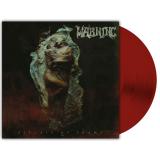
As WARNING prepares to release Rituals of Shame - their first new music in twenty years,vocalist/guitarist Patrick Walker is self-effacing about what led to this moment. Over the last two decades he continued to write and release music, satisfied that he had achieved what he set out to do with WARNING. In those intervening years, interest in WARNING swelled, organically gathering an ardent fanbase. In particular, the 2006 album, Watching from a Distance, has gained a cult following. In response to a transformative period in his life, Walker turned towards writing new songs, and it soon became apparent that these belonged to WARNING. In early January 2025, he started with a completely blank canvas, and piece by piece, he started to fill it with ideas that evolved to become the songs that make up Rituals of Shame.
His immersion in the project became a full-time pursuit. After successfully demoing the five songs, Walker retreated to a remote house on a hill outside Florence, Italy, to refine the lyrics. Recording took place at The Arch Studio, a 140-year-old former church in Southport, UK. Chris Fullard (Idles, Sunn O))), Ulver) handled the recording and mixing. Walker's lifelong musical inspirations can be traced through Rituals of Shame. The ambitious structural arrangements harken to Marillion’s complex but soaring episodic songs. They retain a sparsity that is reminiscent of June Tabor’s economic arrangements; thick with melody but with a diaphanous air to them. Citing John Brenner of Revelation as an enduring inspiration, Patrick credits him with introducing the idea of how to infuse heavy music with significant emotional depth. Often reluctant to discuss the minutiae of his lyrics, Walker does acknowledge that making this album was a direct response to the immediate concerns of his current life period. Rituals of Shame also echoes the enduring themes and fixations that have marked most of his work: guilt, shame, personal failure, obsession, longing, and separation, but, most of all, he says, love. Short: WARNING return with Rituals of Shame - the pioneering Doom band's first new music in 20 years! FFO: My Dying Bride, Candlemass, YOB, Black Sabbath, 40 Watt Sun, Pallbearer, Pagan Altar
il devrait être publié sur 19.06.2026

WARNING celebrates 20 years of their groundbreaking album Watching from a Distance with a deluxe gatefold 2xLP/CD. Led by guitarist and vocalist Patrick Walker, every moment of WARNING's Watching from a Distance feels monumental; the album is widely considered to be one of the most emotionally-driven and profoundly Doom Metal records. From the onset, the album's eponymous opener crawls with a sombre melody that carries the emotional heft of WARNING's musings on love and longing. The band's classic track "Footprints" showcases Walker's ability to match his colossal riffs with a visceral, gut-wrenching vulnerability that was previously unheard of. Walker ruminates about his weakest moments; his vocal deliveries ranging from dejection to despair. The end result is truly "heavy" in every sense of the word - and a timeless take on the genre with thundering drums, lead-pipe backing bass, and swirling guitars. Fast-forward to the present day, and WARNING's introspective sensibilities resonate as hard as they ever have. Watching from a Distance showcases a band and moment in time that honed in on what "Doom" could really be. "I leave behind me the ruins Of the fortress I swore to defend I leave behind me foundations, I'll leave you a man I'll need you to mend And through all the battles around me I never believed I would fight, Yet here I stand a broken soldier, Shivering, naked, in your winter light" Short: WARNING celebrates 20 years of their groundbreaking album Watching from a Distance with a deluxe gatefold 2xLP/CD. FFO: Yob, My Dying Bride, Katatonia, Candlemass, Pallbearer, Pagan Altar, Khemmis
il devrait être publié sur 16.01.2026

The debut album from Addy Weitzman, ‘Light Months Will Fly Over Us’ explores new-wave, romantic pop and art rock with elegance and ambition, drawing from Weitzman’s scattered network of collaborators, as well as a “frighteningly vast” personal archive of compositions. Sequenced by Seth Troxler and released on his Slacker 85 label, it represents a pivot in musical direction for the imprint, and a showcase for the songwriting craft Weitzman honed as a member of cult electro duo Footprintz, and Montreal synth-pop projects The Beat Escape and Dawn to Dawn.
The title Light Months Will Fly Over Us is derived from a line in a poem by the Russian writer Anna Ahkmatova. Weitzman was immediately struck by its “hopefulness, its mystery… it gives the feeling of being suspended, hanging in a dream-like state”. This interpretation has been translated to the album, rich in memorable songwriting that nonetheless invites the listener to lean in further. Delicately mixed by engineer Pierre Guerineau, known for his work alongside Marie Davidson, each of the eight tracks gently interrogates life’s greater mysteries; fear, love and salvation, each defining and revealing the human soul.
Opener ‘End of The Line’ invites us into an immediately lush space of lounge lizard existentialism, soft brass and piano helping Weitzman introduce “where the journey begins and the fantasy dies”. Across orchestral arrangements arranged by Adam Wilcox, whose sensitive, ambitious compositions are weaved throughout the album, ‘Beyond The Speed of Life’ brings to mind the laments of Scott Walker. Navigating vulnerability via grandeur, Weitzman’s earnest vocals flourish in wide-eyed call-and-response with the object of a transcendent love affair.
Alongside collaborator, Richard Lamb, the next chapter of the LP plunges into contrasting machine-driven moods; the wry, bubbling ‘Entertainment Is All I Wanted (And I Found It)’ is imbued with the playfulness and experimentation of 80s electronic pioneers such as Fad Gadget, while the tougher, icier ‘Stranger To Your Kind’ shifts in a more instrumental direction, recalling Weitzman’s dancefloor experience, as well as contemporaries such as Matthew Dear.
Album centerpiece and striking first single ‘Running & Returning’ is the first of a suite of three tracks in collaboration with Weitzman’s The Beat Escape and Dawn to Dawn bandmate, Patrick Boivin. Blending lush saxophones and angular guitars with a wistful melodic touch and lyrics, its irresistible art-rock rhythm provides the foundation for one of Weitzman’s most involving vocal performances.
It’s followed by an anthem for existential absurdity: ‘Ice Cream Candle’ provides a driving acceptance that “the more and more you learn, the less you understand”; Weitzman submits to this uncertainty with equal grace on ‘No Man’s Land’, as baroque invocations of “words swept through the fields” and meeting “where the water lilies grow” give way to a blistering guitar solo, humbly riding hypnotic percussion.
For the compassionate finale of Light Months Will Fly Over Us, Weitzman narrates the experience of ‘Gabrielle’, a woman slipping between rooms between shuttered blinds in the towering city, “where cigarettes and roses fill the air.”
As lyrically delicate as it is musically ambitious, Light Months Will Fly Over Us is a sublime debut album, enriched with care, love and much-needed enchantment.
Commandez maintenant et nous commanderons l'article pour vous chez notre fournisseur.

Bill MacKay and Drag City are delirious with pride to announce the discovery of a new territory: Locust Land, a record which seeks to reflect the nerve-shredding consciousness run amok in our world today - and somehow allay it with sound. Bill"s music is a visceral crackling where it meets the air, and Locust Land can"t help but reflect its era more than any other in his discography. It"s been five years since the release of Fountain Fire - but in the interim, Bill has barely stopped moving, collaborating with artists across the spectrum, including cellist Katinka Kleijn, banjo player Nathan Bowles and keyboardist Cooper Crain. He"s also contributed to recordings by Steve Gunn, Ryley Walker, Bill Callahan & Bonnie Prince Billy (Blind Date Party), and Black Duck (on their self-titled record featuring Douglas McCombs and Charles Rumback). Forget five years - how"d he even get Locust Land squeezed out of his temporal lobes? Bill"s sense of music as art is constantly modulating - lifting off from where it is found and naturally migrating to some other place. Sometimes, that"s elsewhere - others, it"s simply to be found deeper inside the starting point. And so, the action of moving on informs the landscape of Locust Land. This manifests in several different ways. A restless energy and urgency is repeatedly felt - in the driving momentum of "Keeping in Time," "Glow Drift," and "When I Was Here" - while a dogged persistence radiates from the tone colors and percussion of "Oh, Pearl." Mating a dirge-like desolation with sparkling guitars, "Radiator" adds darkness and depth. The sense of searching, displacement and longing in vocal tracks "Keeping in Time," "Half of You," and "When I Was Here" speak literally to the tumult of current vibrations. Within the arrangements, there"s also departure from previous norms - in addition to the brilliant guitar work for which he is known, Bill plays a variety of keyboards, from piano to organ to synth, extending his music with the available voicings, while enriching the sound field without abandoning his signature brevity. For fans of his singing, and following in the recent tradition of Fountain Fire as well as his collaboration with Nathan Bowles, Keys, Locust Land expresses with an increased vocal presence - and heightened engagement, with Bill"s words and melodies drawing us closer. Also different: on his previous solo recordings, Bill played every sound. Here, he has invited other illustrious Chicagoans to join him: Sam Wagster (The Father Costume, Mute Duo) plays bass on three songs, two of which feature the percussion playing of Mikel Patrick Avery (Natural Information Society, Jeff Parker, etc.). Additionally, Janet Beveridge Bean (Eleventh Dream Day, Freakwater) adds otherworldly vocal textures to the elegiac "Neil"s Field." Whether played alone or with companions, this music projects the strength of a universal collective. Even with a piece that might earlier have passed for blissful pastorale, Bill displays some declamatory motives. The reverie which opens the album, "Phantasmic Fairy," embodies both transcendent and desperate moods, with Bill"s ineffable slide guitar playing afloat, with organs and synths, in a dream state suffused with a sense of foreboding - a requiem, perhaps for the days of unencumbered bandwidth? On the other side of the album, the strength to continue to hope appears in the lifting melodicism/exoticism of the album-closing title track, leaving the listener with the sense of having achieved a hard-won space - a place of personal contemplation and dissent, one that everyone on the planet deserves to visit every single day on earth. With cover art also by Bill MacKay (the third of his albums on Drag City to feature his work), Locust Land stands as a thoroughly personal statement from Bill to everyone everywhere.
il devrait être publié sur 24.05.2024

Bill MacKay and Drag City are delirious with pride to announce the discovery of a new territory: Locust Land, a record which seeks to reflect the nerve-shredding consciousness run amok in our world today - and somehow allay it with sound. Bill"s music is a visceral crackling where it meets the air, and Locust Land can"t help but reflect its era more than any other in his discography. It"s been five years since the release of Fountain Fire - but in the interim, Bill has barely stopped moving, collaborating with artists across the spectrum, including cellist Katinka Kleijn, banjo player Nathan Bowles and keyboardist Cooper Crain. He"s also contributed to recordings by Steve Gunn, Ryley Walker, Bill Callahan & Bonnie Prince Billy (Blind Date Party), and Black Duck (on their self-titled record featuring Douglas McCombs and Charles Rumback). Forget five years - how"d he even get Locust Land squeezed out of his temporal lobes? Bill"s sense of music as art is constantly modulating - lifting off from where it is found and naturally migrating to some other place. Sometimes, that"s elsewhere - others, it"s simply to be found deeper inside the starting point. And so, the action of moving on informs the landscape of Locust Land. This manifests in several different ways. A restless energy and urgency is repeatedly felt - in the driving momentum of "Keeping in Time," "Glow Drift," and "When I Was Here" - while a dogged persistence radiates from the tone colors and percussion of "Oh, Pearl." Mating a dirge-like desolation with sparkling guitars, "Radiator" adds darkness and depth. The sense of searching, displacement and longing in vocal tracks "Keeping in Time," "Half of You," and "When I Was Here" speak literally to the tumult of current vibrations. Within the arrangements, there"s also departure from previous norms - in addition to the brilliant guitar work for which he is known, Bill plays a variety of keyboards, from piano to organ to synth, extending his music with the available voicings, while enriching the sound field without abandoning his signature brevity. For fans of his singing, and following in the recent tradition of Fountain Fire as well as his collaboration with Nathan Bowles, Keys, Locust Land expresses with an increased vocal presence - and heightened engagement, with Bill"s words and melodies drawing us closer. Also different: on his previous solo recordings, Bill played every sound. Here, he has invited other illustrious Chicagoans to join him: Sam Wagster (The Father Costume, Mute Duo) plays bass on three songs, two of which feature the percussion playing of Mikel Patrick Avery (Natural Information Society, Jeff Parker, etc.). Additionally, Janet Beveridge Bean (Eleventh Dream Day, Freakwater) adds otherworldly vocal textures to the elegiac "Neil"s Field." Whether played alone or with companions, this music projects the strength of a universal collective. Even with a piece that might earlier have passed for blissful pastorale, Bill displays some declamatory motives. The reverie which opens the album, "Phantasmic Fairy," embodies both transcendent and desperate moods, with Bill"s ineffable slide guitar playing afloat, with organs and synths, in a dream state suffused with a sense of foreboding - a requiem, perhaps for the days of unencumbered bandwidth? On the other side of the album, the strength to continue to hope appears in the lifting melodicism/exoticism of the album-closing title track, leaving the listener with the sense of having achieved a hard-won space - a place of personal contemplation and dissent, one that everyone on the planet deserves to visit every single day on earth. With cover art also by Bill MacKay (the third of his albums on Drag City to feature his work), Locust Land stands as a thoroughly personal statement from Bill to everyone everywhere.
il devrait être publié sur 24.05.2024

By the turn of the 80s, the impact of David Bowie’s ground- breaking Berlin recordings – the synths, the alienation, the drily futuristic production – was being felt on music across Europe. What’s more, the records being made were reflecting back and influencing Bowie’s own work – 1979’s Lodger and 1980’s Scary Monsters owed a debt to strands of German kosmische (Holger Czukay), new electronica (Patrick Cowley, Harald Grosskopf), and the latest works from old friends and rivals like Robert Fripp, Peter Gabriel and Scott Walker, all of whom had been re-energised by the fizz of 1977.
Compiled by Saint Etienne’s Bob Stanley and the BFI’s Jason Wood, Fantastic Voyage is the companion album to their hugely successful Café Exil collection, which imagined the soundtrack to David Bowie and Iggy Pop’s trans-European train journeys in the mid-to-late seventies. “Fantastic Voyage” is what happened next.
Bowie’s influences and Bowie’s own influence were rebounding off each other as the 70s ended and the 80s began, notably in the emergent synthpop and new romantic scenes as well as through the music of enigmatic acts like the Associates and post-punk pioneers such as Cabaret Voltaire.
Like Low and Heroes, some of the tracks on Fantastic Voyage are spiked with tension (Grauzone’s ‘Eisbär’) while some share those albums’ sense of travel (Simple Minds’ ‘Theme for Great Cities’, Ryuichi Sakamoto’s ‘Riot in Lagos’) and others find common ground with “Lodger’s” dark, subtle humour (Thomas Leer’s ‘Tight as a Drum’, Fripp’s ‘Exposure’).
This is the thrilling, adventurous sound of European music before the watershed moment when Bowie would abandon art- pop for America and the emerging world of MTV with “Let’s Dance” in 1983. Fantastic Voyage soundtracks the few brief years when the echo chamber of Bowie, his inspirations, and his followers created an exciting, borderless music that was ready to challenge Anglo American influences.
Commandez maintenant et nous commanderons l'article pour vous chez notre fournisseur.
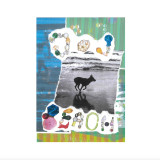
DOG BEACH is Merryn Jeann’s first full length album, produced by Rob Ellis, comparing her directely with his previous collaborators.
Rob Ellis is a record producer, composer, arranger and musician who has been acting for about 40 years and during which he's had the honor to work with such notable artists as PJ Harvey, Marianne Faithfull, Scott Walker, Nick Cave, Warren Ellis, Brian Eno, Thom Yorke, Anna Calvi, ...
About working with Merryn : "In every instrumental phrase that she arrived at and each line of her vocal delivery Merryn's enthusiasm and very individual creativity comes across brilliantly I think... whilst still managing to retain an expression of deeply felt heart and soul... a rare combination in my experience, and a match for any of my aforementionel, much admired collaborators."
"The days in the studio were endlessly creative and playful... and subsequently very exhilarating... by the end it felt like we had really gone through something extremely special, and I believe the resulting LP strongly reflects that." Rob Ellis
Album was recorded over 5 weeks in England, including musicians such as Jim Barr (Portishead), Ben Christophers (Bat For Lashes) or Patrick J. Pearson (Daughter, LYR) but also Christelle Canot aka Confuse, half of IN CASE OF FIRE recently signed to Steve Budd’s prestigious record producer agency.
Merryn Jeann is a Naarm/Melbourne and Bundjalung Country/Byron Bay Shire based singer-songwriter and multi-instrumentalist. She has crafted a genre-bending, dreamy world of soundscapes that bear an enticing musical wisdom.
Sitting somewhere between Caroline Polachek, Cat Power, Weyes Blood, Feist, and Kelsey Lu, Merryn Jeann’s sound is fueled by authenticity. Her raw and honest self packaged into intricate and reflective morsels, many of which are yet to be revealed.
She played Glastonburry at the beginning of her career with the band TORA.
UK and international promo by Whiteboard PR.
A second LP will be recorded in 2025 again with Rob Ellis at the production.
Side projects : OSOO with Kyson & Chris Hill, IN CASE OF FIRE
il devrait être publié sur 23.02.2024

Chicago-based producer/multi-instrumentalist Ben Billington makes music under the name Quicksails.
A pillar of the Chicago experimental scene and its branches across the midwest and national DIY circuits, Billington has enriched his communities through overlapping roles as a musician and curator /
promoter of freak sounds for more than two decades. In addition to his work as a solo artist, he has performed with bands such as ONO, ADT, Circuit Des Yeux, Tiger Hatchery, and Ryley Walker’s
band. Billington’s solo recordings as Quicksails encompass everything from free jazz-inspired electro-acoustic production to rhythmic synth-pulse tapestries to music focused on what could be
considered one primary instrument among the many he works with: the drum kit and auxiliary percussion. Surface, his fifth release to appear on Hausu Mountain, combines all of these idioms into
one diverse program while also expanding his palette to rope in his more recent experiments with touch-sensitive custom synthesizers and modular systems. Surface shimmers with a sense of tonal
sophistication and emotional resonance that sets a high-water mark for the Quicksails project.
The album’s mind-bending juxtapositions of electronic and acoustic sound sources of contrasting fidelities charge each composition with energies at once alien and familiar — rooted in free improvisation and
jazz traditions while streaking off into realms of lush synth arrangement, and textural abstraction.
Within Quicksails’s dense fields of sound, one voice stands out with particularly bold contrast: the saxophone of modern experimental stalwart Patrick Shiroishi (Fuubutsushi, The Armed, a multitude of
improvised collaborations on labels like Astral Spirits and Touch Records), who guests on three of the album’s ten tracks. Shiroishi’s sax performances alternately burst out in squalling atonal spirals and
glow with neo-noir melodicism as if glimpsed in the smoke under a streetlamp on a darkened city corner.
il devrait être publié sur 27.10.2023

For the second release on their Black Series, Ravage invited electronic music veterans Al Matthews and Patrick Walker to team up under their Forward Strategy Group moniker. The last release of these legends was quite a few years ago, but the wait was worth it. Their East Port Rangers EP kicks-off with Nine and One, a hypnotic, heavy-loaded stomper containing some uplifting, loopy vocals. Following is the most minimalistic track of the EP, Lisp Your Way, yet it still has a lot of substantial punch and lash to it.
The B-side starts off with heavy broken beats, combined with a classic rave sound, taking the listener back to the blistering sound of the nineties. Finally, the EP oozes down with the track In Abeyance; a haunting, down-tempo track with a melody to send shivers down your spine, which could be deemed a real creeper.
Commandez maintenant et nous commanderons l'article pour vous chez notre fournisseur.
