Certainly one of the most obscure and perhaps one of the most fascinating work of the English jazz revolution. Master of ceremonies is cellist Paul Buckmaster, known for his work with the Third Ear Band and for his (later) collaborations with Miles Davis, David Bowie and Elton John. Chitinous is his the only album as leader and it was recorded between 31 March and 13 April 1970, by an orchestra of no less than 51 players, with violins, violas and cellos. In this enormous line-up we find the cream of English musicians involved, starting with trumpeter Ian Carr and ending with drummer John Marshall. The leader is on cello, his main instrument, but also on keyboards, which he shares with the excellent Pete Robinson. The music is organized in suites, with very broad suggestions that draw from classical and contemporary music and then move back into jazz territory.
Поиск:paul davis
Все
As former member of the Miles Davis sextet Bill Evans made a strong impression with his first trio, which included the innovative bassist Scott LaFaro and drummer Paul Motian. Their 1961 live ‘Sunday At The Village Vanguard’ set the standard for interactive trio work and is still regarded as a jazz classic. Tragically, LaFaro was killed in a car accident 10 days after that historic session. There followed a succession of rhythm tandems until Evans found another inspired pairing in 1968 with bassist Eddie Gomez and drummer Marty Morell who remained together for seven years. Limited edition on blue transparent vinyl. "Autumn Leaves - In Concert" includes the following tracks: "Quiet Now", "Very Early", "What Are You Doing The Rest Of Your Life?", "Some Other Time" and more.
180-GRAM VIRGIN VINYL - THE COMPLETE CONCERT. TOTAL TIME: 59 MINUTES - LIMITED EDITION
The complete April 8, 1960 concert at the Kongresshaus in Zurich, Switzerland by the splendid Miles Davis Quintet with John Coltrane on tenor sax, Wynton Kelly on piano, Paul Chambers on bass, and Jimmy Cobb on drums. Along with the frequently heard “All Blues” and “So What”, the Zurich concert has versions of “Fran Dance” and “If I Were a Bell”. “If I Were a Bell” had been first recorded by Miles and Coltrane in a quintet format in the celebrated October 26, 1956 studio session for Prestige and the Zurich version heard here is the only surviving appearance of this song from the 1960 European tour
Complex, emotive, and straddling several genres, Sketches Of Spain is one of Miles Davis’ masterpieces, a landmark of orchestrated jazz. The third of his collaborations with Gil Evans, Sketches was inspired by the classical ‘Concierto de Aranjuez,’ which sparked the suite that makes up the LP. Drummers Jimmy Cobb and Elvin Jones and bassist Paul Chambers reconfigured their approaches to blend with the orchestra under Evans’ command and Davis uses a muted flugelhorn for the epic opener; his solo on ‘Saeta’ is blinding and the adapted Andalusian folk song ‘Solea’ draws on flamenco. This absolute stunner is a must-have!
Miles Davis' boundlessly influential On the Corner was so far ahead of its time upon release in 1972, the jazz cognoscenti rejected its groundbreaking concoction as middling in nature. Yet time has a way of righting wrongs and shifting views by adding needed context and perspective to visionary ideas, music, and approaches — the likes of which fill Davis' boldest and most controversial — undertaking. Designed to bring the focus back on the groove and bottom-end frequencies, the funk-loaded On the Corner revolutionized jazz. It also set new standards for record production, presaging remixing and electronica by more than a decade. And the work has never sounded more thrilling thanks to this very special pressing.
Sourced from the original master tapes and pressed on MoFi SuperVinyl, Mobile Fidelity's numbered-edition 180g 33RPM SuperVinyl LP of On the Corner exposes the internal mechanisms, free-associated playing, and then-unmatched studio techniques in vivid fashion. The low end, crucial to every composition here, is both heard and felt, with locked-in bass lines and low-range percussion conveyed as taut, solid, and visceral passages. You can discern the multiple layers of rhythm Davis employed on complex tracks such as "Black Satin," as On the Corner stands as his first effort to use overdubbing and multiple tape machines. As a pioneer, Davis likely would’ve loved MoFi’s groundbreaking SuperVinyl profile that features the lowest-possible analogue noise floor as well as pristine transparency, dead-quiet surfaces, and superb groove definition.
New degrees of spaciousness and airiness — equally important to the musique concrete arrangements — give the impression Davis and Co.'s creations float in space. Instruments are portrayed in three-dimensional manners, rhythmic loops retain tonal purity, and horn solos skitter across an extra-wide soundstage that takes listeners into Columbia's Studio E. Mobile Fidelity's SuperVinyl LP captures Teo Macero's innovative production — and the trumpeter's cutting-edge aural collages — in definitive fashion.
Heavily inspired by Sly and the Family Stone, On the Corner portrays street vibes and remains Davis' Blackest-sounding record. The conscious attempt to connect with youthful audiences tapped into rock and funk is evident not only on the colorful cartoon cover art depicting hot-pants and zoot-suit revelers, but in the music's emphasis of recurring drum and bass grooves. Distinct from Davis' earlier fusion experiments, the record's long-misunderstood set dials back improvisation in favor of beats, loops, and atmospherics that generate trance-like effects. While Davis utilizes his band for core duties — Chick Corea and Herbie Hancock prominently figure — he also relies on an all-star cast of side-men for concentrated soloing and additional support.
With rhythm providing the basic foundation, other notes fall into place, with their positioning steered by Macero and Davis' editing-room techniques. Looking to the manipulation-based work of Karlheinze Stockhausen and teaming with Stockhausen disciple Paul Buckmaster, Davis re-imagines what grooves constituted and could accomplish throughout On the Corner. The shapes of the songs become completely transformed as they progress. Faint melodies, spacey chords, chunky riffs, wah-wah fills, and repeated motifs bounce in and out of a sonic funhouse that wouldn't be out of place at a Harlem block party.
Exotic, intrepid, and filled with Davis' "jungle sound," On the Corner remains daringly hip more than four decades later.
Cookin’ is the first of four albums derived from the Miles Davis Quintet’s fabled extended recording session on Octobre 26, 1956; the concept being that the band
would document its vast live-performance catalogue in a studio environment, rather than preparing all new tracks for its upcoming long-player. The bounty of material in the band’s live sets –
as well as the overwhelming conviction in the quintet’s studio sides – would produce the lion’s share of the Cookin’, Relaxin’, Workin’ and Steamin’ albums.
As these recordings demonstrate, there is an undeniable telepathic cohesion that allows this band – consisting of Miles Davis (trumpet), John Coltrane (tenor saxophone), Red Garland (piano),
Paul Chambers (bass) and Philly Joe Jones (drums) – to work so efficiently both on the stage and the studio. This same unifying force is also undoubtedly responsible for the extrasensory dimensions
scattered throughout these recordings. The immediate yet somewhat understated ability of each musician to react with ingenuity and precision is expressed in the consistency and singularity of each
solo as it is maintained from one musician to the next without the slightest deviation. « Blues by Five » reveals the exceptional symmetry between Davis and Coltrane that allows them to complete each others’ thoughts musically.
Cookin’ features the pairing of « Tune Up / When the Lights Are Low » which is, without a doubt, a highlight no only of this mammoth session, but also the entire tenure of Miles Davis mid-‘50’s quintet.
All the éléments converge upon this fundamentally swinging medley. Davis’s pure-toned soloes and the conversational banter that occurs with Coltrane, and later Garland during
« When the Lights Are Low », resound as some of these musicians’ finest moments.
Miles Davis created just one studio album with his original sextet: Milestones. And he made every moment count. Pairing with Cannonball Adderley, John Coltrane, Red Garland, Paul Chambers, and Philly Joe Jones, Davis not only laid the groundwork for the modalism that immediately followed but tailored a genuine modern-jazz masterwork laden with performances among the most explosive of his distinguished career. Sandwiched between the more famous 'Round About Midnight and the epochal Kind of Blue, Milestones remains a seminal work of art.
Sourced from the original master tapes and pressed on dead-quiet SuperVinyl, Mobile Fidelity's numbered-edition 180g LP grants each musician their own space amid broad soundstages. Afforded the benefits of a nearly non-existent noise floor and supreme groove definition, this vinyl reissue doubles as a time machine back to the February-March 1958 recording sessions.
Colors, shapes, and dimensions appear in the manner that resembles what you'd glean from behind a studio control room's window. Davis' burnished trumpet is rendered in three-dimensional perspective and seemingly coaxes the band to play with unburdened zest. Coltrane's trademark saxophone teems with lifelike tonality and images with specificity; his solos work in tandem with and against the driving rhythms. Garland's swaggering piano lines? Visualize the keys as he hits full stride, the chords and fills slithering around skeletal frameworks.
Inducted into the Grammy Hall of Fame and selected as a "Core Collection" record by the Penguin Guide to Jazz, Milestones is as famous for its title track – widely considered ground zero for modalism and bolstered by Jones' hallmark "Philly Lick" rim shot – as the players that produced it. The launching pad for many of Davis' improvisational flights, the album teases the explorations Coltrane would soon chase. Davis' own solo work broaches territories that far exceed what he had done in his bop-rooted past. Every song is a highlight.
Take the bravado "Dr. Jackle," featuring a hot-foot pace and bebop strains, or "Sid's Ahead," which continues the album's blues theme while juggling edgy harmonics and inside-out structures. On "Billy Boy," distinguished with an arco bass solo from Chambers, Garland gets a turn in the spotlight and channels the openness practised by one of his heroes, Ahmad Jamal. Even more instructive is the band's reading of Dizzy Gillespie's "Two Bass Hit." Three years removed from the version Davis and company recorded for the trumpeter's Columbia debut, this interpretation demonstrates the extent to which the group had jelled in a relatively short amount of time.
Then there's "Straight, No Chaser," the definitive rendition of Thelonious Monk's signature piece. Coltrane's marbled playing pulls at the tune's borders, Adderley takes liberty with solos, and Davis dances around his mates, at one point quoting "When the Saints Go Marching In" while demonstrating his knowledge of tradition and casting an eye towards the future.
About that future. Garland already had one foot out the door during the Milestones sessions to the extent Davis spells him on "Sid's Ahead." Jones would stick around for a bit longer but soon plot his exit. History proves Davis navigated the changes with visionary aplomb. Yet the chemistry, excitement, and beauty the sextet achieves on Milestones cannot be overstated. This reissue helps put the album in proper perspective – and presents the music the fidelity it deserves.
- 1: Frankie & Johnny - I'll Hold You
- 2: David Essex - So-Called Loving
- 3: The Flirtations - Nothing But A Heartache
- 4: Fearns Brass Foundry - Don't Change It
- 5: Clyde Mcphatter - Baby You've Got It
- 6: Micky Moonshine - Name It You Got It
- 1: Ronnie Jones - My Love
- 2: Fantastics - Ask The Lonely
- 3: Tom Jones - Stop Breaking My Heart
- 4: Billie Davis - Billy Sunshine
- 5: Amen Corner - Our Love (Is In The Pocket)
- 6: Danny Williams - Whose Little Girl Are You
- 1: Eyes Of Blue - Heart Trouble
- 2: Bobby Hanna - Everybody Needs Love
- 3: Dave Berry - Picture Me Gone
- 4: John E. Paul - I Wanna Know
- 5: Elkie Brooks - The Way You Do The Things You Do
- 6: Jon Gunn - I Just Made Up My Mind
- 7: Adrienne Poster - Something Beautiful
- 1: Brotherhood Of Man - Reach Out Your Hand
- 2: Sonny Childe - Giving Up On Love
- 3: Truly Smith - My Smile Is Just A Frown (Turned Upside Down)
- 4: Stevie Kimble - All The Time In The World
- 5: Tony Newman - Let The Good Times Roll
- 6: The Bats - Listen To My Heart
Today's club culture all started with Northern Soul and its roots in the Mod all-nighter scene of London clubs. All the ingredients were there: DJs privy to the latest imports and advance promos, dancers fuelled by illegal uppers, venues which had scarcely opened when the pubs were all but deserted. The records, drugs and clubs have all changed, true, but the lifestyle is identical. Featuring classics from the Northern Soul Scene including Tom Jones, Ronnie Jones, Brotherhood of Man, Sonny Childe, Billie Davis, Tony Newman, Bats and more. Presented for the first time on orange colour vinyl and CD, this is essential for any funk and soul lovers.
Recorded in London in September 1979 with Jean Paul Florens on guitar, Henri Florens on piano, Jim Richardson on bass and Tony Mann on drums, this album features the only studio version of Round' Midnight by Chet Baker. It also includes 2 alternative versions of My Funny Valentine, entirely instrumental and very intimate. The version of "All Blues" (Miles Davis) features Rachel Gould on vocals. Hardly available since 1979, this vinyl edition, mastered in Paris at MB Mastering for sumptuous listening
Released in 1960, Giant Steps was a watershed album for John Coltrane, solidifying the saxophone legend's reputation as one of the most influential and innovative musicians in jazz history, as well as delivering jazz to an increasingly mainstream audience, while garnering significant critical acclaim.
Although this was John Coltrane's debut for Atlantic, he was concurrently performing and recording with Miles Davis. Within the space of less than three weeks, Coltrane would complete his work with Davis and company on another genre-defining disc, Kind of Blue, before commencing his efforts on this one.
Coltrane (tenor sax) is flanked here by essentially two different trios. Recording commenced in early May of 1959 with a pair of sessions that featured Tommy Flanagan (piano) and Art Taylor (drums), as well as Paul Chambers — who was the only bandmember other than Coltrane to have performed on every date. When recording resumed in December of that year, Wynton Kelly (piano) and Jimmy Cobb (drums) were instated — replicating the alternate non-Bill Evans lineup featured on "Freddie the Freeloader" on Kind of Blue, sans Miles Davis of course. At the heart of these recordings, however, is the laser-beam focus of Coltrane's tenor solos.
All seven pieces issued on the original Giant Steps are Coltrane compositions. He was, in essence, beginning to rewrite the jazz canon with material that would be centered on solos — enabling the solo to become infinitely more compelling. This would culminate in a frenetic performance style using melodic phrasing that noted jazz journalist Ira Gitler accurately dubbed "sheets of sound."
The Giant Steps chord progression consists of a distinctive set of chords that create key centers a major third apart. Jazz musicians ever since have used it as a practice piece, its difficult chord changes presenting a "kind of ultimate harmonic challenge", and serving as a gateway into modern jazz improvisation. Several pieces on this album went on to become jazz standards, most prominently "Naima" and "Giant Steps."
The Penguin Guide to Jazz selected this album as part of its suggested "Core Collection" calling it "Trane's first genuinely iconic record." In 2003, the album was ranked No. 102 on Rolling Stone magazine's list of The 500 Greatest Albums of All Time, 103 in a 2012 revised list, and 232 in a 2020 revised list.
Undeniable music perfection deserves definitive sound and top-notch packaging. This reissue was mastered directly from the original master tape by Ryan K. Smith at Sterling Sound and cut at 45 RPM. Pressed on 180-gram vinyl at Quality Record Pressings, and housed in tip-on old style gatefold double pocket jackets with film lamination by Stoughton Printing.
Overall, Giant Steps is not only a critical triumph but also a defining moment in John Coltrane's career. Its innovative compositions, masterful performances, and profound influence on jazz make it an essential entry in Coltrane's discography and a timeless masterpiece in the history of the genre.
Contradictory accounts of Miles Davis’ creation of the soundtrack to Louis Malle’s film noir Ascenseur pour l'Échafaud have all become part of its legend. Rarely has a soundtrack been so decisive. Nearly seventy years on, beyond the myth, this taut, feverish recording, imbued with extreme dramatic tension, remains one of the Miles’ finest records. The basic outline remains: Jean-Paul Rappeneau suggested to Malle asking Miles Davis to create the film's soundtrack who agreed to record the music after attending a private screening. Davis was performing at the Club Saint-Germain in Paris in November 1957 and on December 4, he brought his four sidemen to the recording studio without having had them prepare anything. Davis only gave the musicians a few rudimentary harmonic sequences he had assembled in his hotel room, and, once the plot was explained, the band improvised without any precomposed theme, while edited loops of the musically relevant film sequences were projected in the background. Bassist Pierre Michelot recalled in 1988 that “Miles just asked us to play two chords, D minor and C7, 4 bars of each, ad lib.” Typically, Miles planned very little but know exactly what he wanted. François Leterrier, the film’s Second Assistant Director picks up the story: “The session started at around ten o’clock and went on until dawn. The screen in the auditorium was showing the scenes for which Miles had devised some harmonies, and they were edited into a loop. And that’s what makes this music unique: it was entirely improvised in conditions that went back to the days of silent films, while watching frames shot in black and white by cinematographer Henri Decaë: tracking shots of Jeanne Moreau wandering down the Champs-Elysées at night, passing in front of lit window displays or going into bars, while looking for her lover/murderer alias Maurice Ronet … All of us there in the dark auditorium were aware that something extraordinary was taking place, something that had definitely never happened before. … In the small hours we all met up again at the Pied de Cochon in Les Halles, and Louis was looking at Miles with the disbelieving eyes of a child … as if he couldn’t believe the gift he’d just received. Even in his wildest dreams he had probably never imagined what his film would be like once it had been as if illuminated by the trumpet of Miles, incisive or wrapped softly in cotton.” The music was released on 10” by Fontana and received the Grand Prix from France’s Académie Charles Cros. It was released in the USA on Columbia as the A-side of the 12” LP Jazz Track, which received a 1960 Grammy nomination for Best Jazz Performance, Solo or Small Group. This beautiful re-issue of the original recording is pressed on 180g vinyl at GZ, and packaged in a deluxe gatefold tip-on jacket with Boris Vian’s original liner notes and Jean-Pierre Leloir’s iconic studio photo of Miles and Jeanne Moreau, and an essay on the circumstances that led to this out-of-the ordinary music by Franck Bergerot.
- A1: Jeito Bom De Sofrer
- A2: Papo Furado (Jive Talking)
- A3: Xibaba (She-Ba-Ba)
- A4: Andei
- A5: Back Streets Of Havana
- B1: Flora's Song
- B2: San Francisco River
- B3: Vera Cruz
- C1: Celebration Suite
- C2: Casa Forte
- C3: From The Lonely Afternoon
- C4: Black Narcissus
- D1: When Angels Cry
- D2: O Sonho (Moon Dreams)
- D3: Summer Night
- E1: A Secret From The Sea
- E2: O Cantador / I Just Want To Be Here
- E3: Light As A Feather
- E4: O Canto Da Sereia
- F1: Open Your Eyes You Can Fly
- F2: Hot Sand
- F3: Parana
- F4: Jump
- G1: Fingers (El Rada)
- H1: Samba De Flora
- H2: Amajour
- H3: The Road Is Hard (But We're Going To Make It)
- I1: Above The Rainbow
- I2: Love Lock
- I3: What Can I Say
- I4: Musikana
- J1: The Happy People
- J2: Peasant Dance
- J3: Dom-Um (A Good Friend)
- J4: Outernational Meltdown - Hungry On Arrival
- G2: Toque De Cuíca
- G3: Romance Of Death
Airto Moreira and Flora Purim, the legendary King and Queen of Brazilian Jazz, have captivated audiences for over six decades with their vibrant albums and exhilarating live performances. With a dedicated global fan base including the UK's jazz funk and jazz dance scene to Japan's concert halls, the power couple continues to make waves in the industry – Flora's 'If You Will' (2022) album was even nominated for a Grammy! The duo met and came together musically in Sambalanço and the Sambrasa Trio. The mixture of Airto's rural Brazilian background and percussion talents and Flora's classical training and involvement in the underground Bossa Nova movement, created a unique blend of sounds that resonates across generations. They have not only collaborated with music legends like Miles Davis and Chick Corea but have also produced ground-breaking music alongside the likes of Hermeto Pascoal. Despite facing numerous challenges, including Flora's arrest and incarceration in 1974, the duo's close connection with friends-musicians like Thelonius Monk and Cannonball Adderley, their persistence and absolute passion for music have propelled them to the pinnacle of success. They worked with renowned musicians like Wayne Shorter, Jaco Pastorius, Herbie Hancock, Joe Henderson, McCoy Tyner, George Duke and producers such as Orin Keepnews and Creed Taylor. Having been a part of numerous prestigious ensembles, including Dizzy Gillespie's United Nations ensemble, Airto and Flora's journey is a testament to their innovation and devotion to their craft. This collection offers a glimpse of that incredible journey, showcasing their extraordinary talent and unique sound and it’s also the first comp scanning their 60 year careers Compiled by Straight No Chaser editor/publisher Paul Bradshaw & Totally Wired Radio presenter Roberta Cutolo. Àṣẹ.
- Fred Astaire - Cheek To Cheek
- Louis Armstrong & His Orchestra - When You're Smiling
- Nat "King" Cole - My Baby Just Cares For Me
- Vic Damone - Let's Fall In Love
- Tony Bennett - I'm A Fool To Want You
- Gene Kelly - Singin' In The Rain
- Chet Baker - I Fall In Love Too Easily
- Frank Sinatra - I've Got You Under My Skin
- Perry Como - Papa Loves Mambo
- Sammy Davis Jr. - Something's Gotta Give
- Frankie Laine - I Can't Give You Anything But Love, Bab
- Johnny Mathis - Wonderful! Wonderful!
- Cab Calloway - Minnie The Moocher (Theme Song)
- Bing Crosby - Autumn Leaves
- Dean Martin - Sway (Quien Sera)
- Harry Belafonte - Day O (The Banana Boat Song)
- Bob Mcfadden & Dor - The Beat Generation
- Paul Anka - Put Your Head On My Shoulder
- Bobby Darin - Beyond The Sea
- Joao Gilberto - Chega De Saudade
- Mark Murphy - Firefly
- Oscar Brown Jr - Dat Dere
- Louis Prima, Sam Butera, Gia Malone & The Witnesses - S
- Mel Tormé - Comin' Home Baby
- Andy Williams - Moon River
- Leon Thomas - Song For My Father
- Brook Benton - Love Me Or Leave Me
- Bobby Cole - A Perfect Day
Coltrane, Shorter, Hubbard, Davis & Perkins from a Latin perspective! The Mantecas represent one of the finest concentrations of experience and talent in Latin and Jazz music ever to be based in the UK. A pure uplifting Latin Jazz music celebration. NOT-TO-BE-MISSED!! Recorded at different locations in London during 2022/23. Mixed at Abbey Road Studios in March 2023. The Mantecas (formerly known as "Manteca") is an eight piece, London-based, Latin Jazz, Soul and Boogaloo band well known for creating a party mood at festivals and gigs everywhere they go, from Glastonbury, Ealing Festival and Tropical Pressure Festival to The 606 Club and The Jazz Café in London. They have a particular ability for bridging the culture gap with any audience getting all crowds up hitting the dance floor in a jive. The Mantecas will blow your mind with a mesmerising mix of salsa, Cumbia, Funk, Latin jazz and Boogaloo. For this new release album, the band is exploring the legacy of some of the Jazz giants through a Latin lens, reworking timeless pieces by Coltrane, Shorter, Davis, Hubbard and Perkins, giving them the infusion of Latin rhythms while remaining true to the Jazz language. The band is made up of some of the best musicians in the Latin, Jazz and Pop scenes in London: TRYPL HORNS: Paul Booth (Incognito/Brand New Heavies), Trevor Mires (Jamiroquai/Incognito), Ryan Quigley (Gregory Porter/Beverly Knight) Dave Oliver: Keys (Lisa Stansfield/Snowboy) Satin Singh: Percussion (Jazz Jamaica/Roberto Pla/Pucho and the Latin Brothers) Javier Fioramonti: Bass and arrangements, MD (Alex Wilson/Jack Costanzo/Joe Bataan/Salsa Celtica) Flavio Correa: Vocals (Omar Puente/New Regency Orchestra) Will Fry: Percussion (Tom Misch, Tony Allen) Rob Luft: Guitar (Dave O'Higgins, Byron Wallen) "Expect loads of hard-hitting salsa, exploding drums and outrageously funky boogaloo". Time Out * "Ripping new Latin Jazz band from the finest musicians of London". Fact Magazine * "One of the best Latin Jazz-funk bands working the scene today". The Jazz Café, London Ltd Ed.
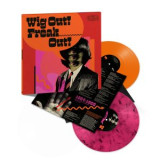
- A1: The Sonics - Shot Down
- A2: The Standells - Dirty Water
- A3: The Haunted - 1-2-5
- A4: The Birds - You’re On My Mind
- A5: Paul Revere & The Raiders - I’m Not Your Stepping Stone
- A6: The Shadows Of Knight - Shake
- A7: The Starlets - You Don’t Love Me
- A8: The Wimple Winch - Save My Soul
- B1: The Action - Land Of 1000 Dances
- B2: Jacques Dutronc - Le Responsable
- B3: The Eyes - You’re Too Much
- B4: The Remains - Don’t Look Back
- B5: The Kinks - Louie Louie
- B6: Rita Chaos & The Quests - Hanky Panky
- B7: The Argyles - Farmer John
- B8: The Poets - Wooden Spoon
- C1: The West Coast Pop Art Experimental Band - Shifting Sands
- C2: ? & The Mysterians - Up Side
- C3: The Third Bardo - I’m Five Years Ahead Of My Time
- C4: The Shadows Of Knight - Gloria **
- C5: The Chocolate Watch Band - Let’s Talk About Girls
- C6: The Open Mind - Magic Potion **
- C7: Count Five - Double-Decker Bus
- C8: The Satans - Makin’ Deals
- D3: Julie Driscoll, Brian Auger & The Trinity - Indian Rope Man
- D4: The Hi-Fis - Tread Softly For The Sleepers
- D5: The Yardbirds - Stroll On
- D6: The Pirates - Cuttin’ Out
- D7: The Seeds - Pushin’ Too Hard
- D8: Davie Allan & The Arrows - Blues Theme
- D1: The Quik - Berts Apple Crumble
- D2: The Spencer Davis Group - I’m A Man
Neon Pink Marble + Orange[37,77 €]
- A1: The Sonics - Shot Down
- A2: The Standells - Dirty Water
- A3: The Haunted - 1-2-5
- A4: The Birds - You’re On My Mind
- A5: Paul Revere & The Raiders - I’m Not Your Stepping Stone
- A6: The Shadows Of Knight - Shake
- A7: The Starlets - You Don’t Love Me
- A8: The Wimple Winch - Save My Soul
- B1: The Action - Land Of 1000 Dances
- B2: Jacques Dutronc - Le Responsable
- B3: The Eyes - You’re Too Much
- B4: The Remains - Don’t Look Back
- B5: The Kinks - Louie Louie
- B6: Rita Chaos & The Quests - Hanky Panky
- B7: The Argyles - Farmer John
- B8: The Poets - Wooden Spoon
- C1: The West Coast Pop Art Experimental Band - Shifting Sands
- C2: ? & The Mysterians - Up Side
- C3: The Third Bardo - I’m Five Years Ahead Of My Time
- C4: The Shadows Of Knight - Gloria **
- C5: The Chocolate Watch Band - Let’s Talk About Girls
- C6: The Open Mind - Magic Potion **
- C7: Count Five - Double-Decker Bus
- C8: The Satans - Makin’ Deals
- D3: Julie Driscoll, Brian Auger & The Trinity - Indian Rope Man
- D4: The Hi-Fis - Tread Softly For The Sleepers
- D5: The Yardbirds - Stroll On
- D6: The Pirates - Cuttin’ Out
- D7: The Seeds - Pushin’ Too Hard
- D8: Davie Allan & The Arrows - Blues Theme
- D1: The Quik - Berts Apple Crumble
- D2: The Spencer Davis Group - I’m A Man
Coke Bottle Green[40,29 €]
American jazz bassist, composer, and producer Jaco Pastorius was a member of Weather Report during the Seventies and also recorded albums as a solo artist. As of 2017, he is the only electric bassist inducted into the Downbeat Jazz Hall of Fame and has been lauded as one of the best electric bassists of all time.
He recorded five albums in total with acclaimed drummer Brian Melvin, including the 1989 Jazz Street. This body of work is one of Pastorius' last studio dates and features session musicians Rick Smith, Jon Davis, Paul Mousavi, Bill Keaney and Keith Jones. Together they recorded cover versions of jazz classics; Joe Henderson “Out Of The Night”, John Coltrane “Miles Mode”, and three Jon Davis tracks, “Wedding Waltz”, “No Slack” and “Drums Of Yadzarah”.
Miles Davis is regarded to be one of the most influential and acclaimed figures in the history of jazz and 20th-century music. Quiet Nights is the fourth and last studio album that Davis collaborated on with Gil Evans. The 1963 release took inspiration from the bossa nova genre that rose to popularity during the time.
Quiet Nights is a mix of situations and sources: Brazilian folk (“Prenda Minha”, titled “Song #2” on the album), Spanish classical (“Adelita” by guitar pioneer Francisco Tárrega, here called “Song #1”), and a few ballads, including one that stands out from the rest of the big band album: “Summer Night,” a quintet take featuring Miles playing muted then open trumpet and the start of a new band: tenor saxophonist George Coleman, pianist Victor Feldman, bassist Ron Carter, and drummer Frank Butler.
The album was produced by Teo Macero. Some of the additional performers on this album include Paul Chambers, Bill Barber, Steve Lacy, Jimmy Cobb, Willie Bobo, and George Coleman amongst others.
Rare Jazz-Funk album from 1978 by Headhunters founder.
Featuring an all-star line-up including Herbie Hancock.
Originally released in 1978 on Tobisha EMI Japan.
First vinyl reissue outside of Japan released in collab w/Totown Records. Comes with double side insert.
Paul Jackson (born in Oakland, California in 1947) needs little introduction. Paul began playing bass at the age of nine and was considered by many of his teachers to be a musical prodigy. Jackson was known as a “Musician’s Musician” and shaped a sound that launched a new direction in contemporary music: the so-called ‘Pulse Playing’, a trademark sound of close-meshed funk grooves combined with sensational rhythms. With this innovative approach, he influenced entire generations of jazz and funk musicians to come. Paul’s compositions were sampled by big acts from the likes of Prince, TLC, Mobb Deep and NWA…just to name a few.
Paul Jackson was a founding member of the Headhunters under Herbie Hancock (THE group responsible for their ground-breaking fusion and jazz-funk compositions that took the world by storm in the 70’s). The solid union between Hancock and Jackson has been especially evident in the many international tours they have made together…not to mention that he participated on most of the Headhunters albums and Herbie’s solo albums.
Paul has also worked as a producer and as a studio/live musician alongside acts such as Santana, Sonny Rollins and The Pointer Sisters. He was a frequent guest performer at renowned international festivals such as the Montreux and Newport events. Jackson’s composing has not gone without recognition and was nominated for Grammy Awards in 1974, 1975 and 1976. Like other highly talented, creatively motivated engineers of music, Paul has expanded his career to other mediums such as playing on blockbuster movie soundtracks such as “Death wish” and “Dirty Harry”.
Paul Jackson also wrote five solo albums worth listening to – including the monster of an album that is known as “Black Octopus” which is considered to be a kind of lost Headhunters album.
His debut album “Black Octopus” saw the light of day in 1978 and is a total piece of art filled with abstract sticky funky grooves, floating electric piano playing, strong thumping bass lines, raw heavy drums and amazing vocal acrobatics (Jackson himself takes vocals in 3 out of 5 songs, and his soulful singing voice strikes an emotional chord that does not go unnoticed).
On “Black Octopus” you’ll also find some of the best all-star musicians from the likes of Alphonse Mouzon (Roy Ayers, Betty Davis, Azar Lawrence)…and last but not least fellow Headhunters Bennie Maupin and Herbie Hancock himself.
With “Black Octopus” Paul Jackson wrote the book on how a jazz-funk-fusion album should sound like. The fact that the album was only distributed in Japan at the time (Jackson resided in Tokyo since the late 70’s, where he passed away in 2021) continues to increase its reputation as an album that is VERY hard to find. This is a must-have gem…not only for fans of jazz, funk and rare grooves, but also for DJs and collectors around the globe.
Joel Paterson has been a mainstay of the Chicago roots music scene for
over twenty years, playing with many bands and showcasing his unique
blend jazz, blues, rockabilly, country and western swing
'Wheelhouse Rag' is a 14- track collection of original rags and country blues on
solo, finger picking acoustic guitar.
The all- acoustic, 1920's- tinged 'Wheelhouse Rag' may at first seem like a
departure in genre for the guitarist - he is predominantly known for his
instrumental multitracked recordings reminiscent of Les Paul and Chet Atkins -
Joel learned to play guitar by ear from the records of acoustic legends such as
Blind Blake, Robert Johnson, Reverend Gary Davis, and Big Bill Broonzy. He later
expanded his repertoire to include techniques of the thumb-picking giants Merle
Travis and Chet Atkins. These influences can be heard throughout the album,
mixed in with many more twists and turns from the mind of the artist, to bring
you, 'Wheelhouse Rag:' the original fingerstyle guitar instrumentals of Joel
Paterson.
Original fingerstyle guitar rag and country blues instrumentals by in-demand
Chicago roots guitarist Joel Paterson, who has played with Cactus Blossoms, JD
McPherson, Kelley Hogan, and more, bringing his unique blend of jazz, blues,
rockabilly, and country & western style to the mix.
RIYL: Les Paul, Chet Atkins, Reverend Gary Davis, Cactus Blossoms, Pokey
LaFarge, Merle Travis
"Guitarist Paterson's free-ranging music defies easy categorization. He addresses
classic country, blues and Tin Pan Alley tunes as timeless works that reward
repeated listening." - Howard Reich, Chicago Tribune"Of all the "vintage" artists
injecting new life into bygone styles with originality and a sense of humor, Joel
Paterson just might top the list." - Dan Forte, Vintage Guitar Magazine