UK-Indierock-Koryphäen Maxïmo Park kündigen ihr achtes Studioalbum 'Stream Of Life' an, das am 27. September über Lower Third erscheinen wird. Auf dem Weg zu 'Stream Of Life' hat sich die Band aus Newcastle erneut mit Ben Allen (Gnarls Barkley, Animal Collective) zusammengetan, dem Grammy-prämierten Produzenten des Vorgänger-Albums 'Nature Always Wins' aus dem Jahr 2021.
Die Band befindet sich in der vielleicht nachdenklichsten Phase, in der sie je war. Leadsänger Paul Smith, dessen Stil sich vermutlich als Literatur-Pop beschreiben lässt, hat den Titel des Albums einer Kurzgeschichte der ukrainischstämmigen brasilianischen Schriftstellerin Clarice Lispector entnommen, inspiriert von ihrem Bewusstseinsstrom und der Art und Weise, wie sie zum Nachdenken über die inneren Mechanismen der Menschen anregt. Sie wirft die Frage auf, warum wir die Dinge tun, die wir tun, selbst wenn sie für Außenstehende kontraintuitiv erscheinen. Jedes Individuum hat einen inneren Fluss - einen Strom des Lebens.
Cerca:paul smith
Nubya Garcia isn’t an artist you can easily classify. Is it jazz? Sure, the London-born saxophonist, composer and bandleader grew up studying the genre under the noted pianist Nikki Yeoh at Camden Music. But it isn’t until you listen to albums like 2020’s Source and 2024’s Odyssey that you hear broader creativity shining through: It’s jazz, classical, dub, R&B and whatever else Garcia wants to convey. It all comes from a place of exploration and self-study, of wanting to do all the things across all disciplines while ignoring arbitrary boxes that don’t t.
Garcia’s sophomore album Odyssey, out in September 2024 via Concord Jazz, is a majestic feat on which she blends orchestral arrangements with R&B, jazz, broken beat and dub, resulting in a grand, nuanced record that feels airy and celestial without sacricing the groove. It’s a deeply personal oering about her trek to falling back in love with musical composition over the past four years.
Source, her 2020 debut album, was released via Concord Jazz to massive critical acclaim, an NPR Tiny Desk (Home) Concert, a Pitchfork “Best New Music” review and a Rolling Stone “Album of the Month” mention. In a prole, The New York Times called Source “a sweeping set of jazz with Afro-Caribbean inuences that funnels a life’s worth of experiences into an hourlong listen.” Also upon release, the album entered the UK charts in the Top 30, and she was just one of three artists selected to perform live at Glastonbury’s 2020 Experience, which aired on the BBC to thousands of viewers. Source was also nominated for the Mercury Prize, a prestigious award given to the best albums from the UK or Ireland.
In 2022, Garcia toured the US in support of Khruangbin, performing in sold-out venues including Radio City Music Hall in New York, the Ryman in Nashville and the Met in Philadelphia. She then headlined her own tour in the UK and US, performing at various festivals including Glastonbury, Love Supreme, Pickathon and Newport Jazz.
Garcia continues to tour worldwide while also collaborating with major brands like Lululemon, Paul Smith, Labrum, Nicholas Daley and Burberry. She was one of three creatives selected for Fossil’s “Moment In Time” campaign, which was published globally in VOGUE, GQ, and GLAMOUR magazines. Elsewhere, Garcia has been featured in numerous print publications, including Mojo, Vogue and Ebony.
As a composer, Garcia’s original music has been placed with Apple TV (Ted Lasso); OWN Network (Cherish The Day); FX TV (Atlanta); EPIC GAMES (Fortnite); and on multiple podcasts (including the theme tune for Anika Noni Rose’s Clio award-winning podcast Being Seen).
Nubya Garcia isn’t an artist you can easily classify. Is it jazz? Sure, the London-born saxophonist, composer and bandleader grew up studying the genre under the noted pianist Nikki Yeoh at Camden Music. But it isn’t until you listen to albums like 2020’s Source and 2024’s Odyssey that you hear broader creativity shining through: It’s jazz, classical, dub, R&B and whatever else Garcia wants to convey. It all comes from a place of exploration and self-study, of wanting to do all the things across all disciplines while ignoring arbitrary boxes that don’t t.
Garcia’s sophomore album Odyssey, out in September 2024 via Concord Jazz, is a majestic feat on which she blends orchestral arrangements with R&B, jazz, broken beat and dub, resulting in a grand, nuanced record that feels airy and celestial without sacricing the groove. It’s a deeply personal oering about her trek to falling back in love with musical composition over the past four years.
Source, her 2020 debut album, was released via Concord Jazz to massive critical acclaim, an NPR Tiny Desk (Home) Concert, a Pitchfork “Best New Music” review and a Rolling Stone “Album of the Month” mention. In a prole, The New York Times called Source “a sweeping set of jazz with Afro-Caribbean inuences that funnels a life’s worth of experiences into an hourlong listen.” Also upon release, the album entered the UK charts in the Top 30, and she was just one of three artists selected to perform live at Glastonbury’s 2020 Experience, which aired on the BBC to thousands of viewers. Source was also nominated for the Mercury Prize, a prestigious award given to the best albums from the UK or Ireland.
In 2022, Garcia toured the US in support of Khruangbin, performing in sold-out venues including Radio City Music Hall in New York, the Ryman in Nashville and the Met in Philadelphia. She then headlined her own tour in the UK and US, performing at various festivals including Glastonbury, Love Supreme, Pickathon and Newport Jazz.
Garcia continues to tour worldwide while also collaborating with major brands like Lululemon, Paul Smith, Labrum, Nicholas Daley and Burberry. She was one of three creatives selected for Fossil’s “Moment In Time” campaign, which was published globally in VOGUE, GQ, and GLAMOUR magazines. Elsewhere, Garcia has been featured in numerous print publications, including Mojo, Vogue and Ebony.
As a composer, Garcia’s original music has been placed with Apple TV (Ted Lasso); OWN Network (Cherish The Day); FX TV (Atlanta); EPIC GAMES (Fortnite); and on multiple podcasts (including the theme tune for Anika Noni Rose’s Clio award-winning podcast Being Seen).
The magic and majesty of Holger Czukay’s late career works for Claremont 56 is being celebrated on a new compilation. The former Can bassist – a musical maverick renowned for his freewheeling approach to composition, recording and promotion – released a string of inspired tracks on Paul Murphy’s label between 2009 and 2012, typically delivering hard-to-pigeonhole workouts, bona-fide epics and radical reinventions of some of his most beloved tracks.
The collection has been a labour of love – fitting given the sonic details and inventive musicality that marked out the late artist’s solo career – for Claremont 56 founder Paul Murphy AKA Mudd, who first reached out to Czukay after witnessing his now legendary live performance at the Roundhouse in 2009. As Murphy details in his introductory liner notes, it led to a productive working relationship between the pair that included collaborative recording sessions with Ben Smith in Czukay’s legendary Innerspace Studio – a former cinema in Cologne in which much of Can’s music was recorded.The impact of that Roundhouse gig on Murphy is reflected in the fact that two of the tracks on the collection are based on that celebrated performance. There’s ‘Ode To Perfume’, a languid and solo-laden version of one of Czukay’s most celebrated solo records that ratchets up the original’s inherent dreaminess, and a jaunty take on quirky kraut-pop number ‘Photosong’ featuring a spoken introduction recorded at the concert in question.
Murphy’s ability to coax Czukay into delving into his archives is evident across the compilation. Opener ‘A Perfect World (Remix)’ is an eccentric, ever-building masterpiece originally recorded in 1984 – but later re-imagined for Claremont 56 – featuring vocalist Sheldon Ancel and former Can band-mates Jaki Leibezeit and Michael Karoli, while ‘Fragrance’ is a subtly re-wired slab of picturesque Balearic kraut-dub which was initially recorded as a coda for ‘Ode To Perfume’ but lay unreleased for decades.
Then there’s ‘Let’s Get Cool’, a bright and breezy, French horn-sporting 2009 take on 1979 avant-disco classic ‘Cool In The Pool’; ‘My Persian Love (Remix)’, a 2010 re-take of one of his earliest solos recordings; and the near 18-minute brilliance of ‘Music Is A Miracle’. Originally recorded for his fans in the 1980s – but only released three decades later – this widescreen epic not only features drums by Jaki Leibezeit and a fine spoken word vocal by Czukay, but also numerous nods to some of his most revered tracks.
It's fitting, too, that two of the most potent cuts feature Czukay’s much-missed wife and musical muse Ursa Major: the dense, trippy and fittingly out-there ambient soundscape ‘In Space’, and the mesmerising ‘Music To be Murdered By’. Partially inspired by hearing painfully out of tune violin practice through his studio windows, the track was originally recorded for an unreleased album but finally found a home on Claremont 56’s 10th anniversary box set ion 2017. A genuinely spaced-out and mind-mangling slab of organic dub in Czukay’s distinctive style, it delivers a fine curtain call to the iconic artist’s endlessly inventive career.
2024 Repress
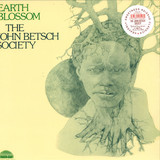
180 Gram, Tip On Sleeve RSD version of this classic. One of the rarer records of the mythical Strata East albums is finally reissued for the first time on Heavenly Sweetness!
The recording of Earth Blossom, the John Betsch Societys one and only album, seems something of an enigma nowadays. For even though Nashville is clearly one of the towns in the US with the highest number of recording studios, who would have thought that the capital of country music would give birth to one of the forgotten masterpieces of 1970s spiritual jazz. The path leading to the album starts in 1963 when John Betsch, originally from Jacksonville in Florida, arrives in Nashville to study at Frisk University. He is a young drummer and joins Bob Holmes trio. Holmes is one of the towns major jazz organists and pianists; he becomes Betschs mentor and, over the space of two years, John will play alternately with him and with the trumpeter Louis Smiths group. However, in 1965, John leaves town to go to the prestigious Berkeley University in Boston and do a two-year course along with his fellow debutants with names like John Abercrombie, Ernie Watts and Alan Broadbent. Two years later, he is invited by a pianist friend, Billy Chilf, to join the legendary singer/songwriter Tim Hardins group. Just after Woodstock, John Betsch and Tim record a psychedelic album Columbia will never release together with the members of the future group Oregon: Colin Walcott, Glen Moore, Paul McCandles and his friend Billy Chilf. But he soon leaves this group to return to Nashville where he hooks up again with his friend Bob Holmes. Two years later, he is accepted on Archie Shepp and Max Roachs famous course at the University of Massachusetts Amherst (UMASS) and for the next four years he participates in this collective of intellectuals and musicians under the aegis of the two masters.
During this period he returns to Nashville to form his Society whose music is obviously influenced by the Afrocentric ideas of the UMASS student and political movement. However, the album, recorded in one day and in one take, also bears the hallmark of their generations psychedelic experiences, and in the themes and playing of the musicians we can hear a less violent form of music than the radical free jazz of New York or Chicago. Nature and environmental themes are the inspiration behind tracks touched by the spirit of Coltrane but also of Flower Power.
After Amherst, John Betsch joins Marion Browns group in 1976, leaves Tennessee for good and makes his home in New York over the next ten years or so. He plays and records with Dollar Brand, Kalaparusha Maurice McIntyre and many others, before heading off to France. He has lived in Paris for the last twenty years and played in Steve Lacy, Mal Waldron and Archie Shepp bands, as well as forming groups of his own. He now lives in Paris and plays with many musicians/bands.
VERVE ACOUSTIC SOUNDS SERIE: Stereo, komplett analog von Ryan K. Smith bei Sterling Sound von
den Originalbändern gemastert, QPR-Pressung (180 g), stabiles Tip-On-Gatefold (Stoughton Printing),
wattierte Innenhülle.
Mit seinem schwerelosen und luftigen Ton revolutionierte Gerry Mulligan in der Cool-Jazz-Ära das Image des Baritonsaxofons und trug so maßgeblich dazu bei, es als Soloinstrument zu emanzipieren. Bevor
Mulligan 1960 seine Concert Jazz Band gründete, spielte er eine Reihe sehr populärer Alben ein, bei
denen andere große Saxofonisten wie Lee Konitz, Stan Getz, Paul Desmond und Johnny Hodges seine
“Sparrings”-Partner waren. Zu einem besonderen historischen Treffen kam es 1959 mit dem legendären
Swing-Tenoristen Ben Webster. Für den US-amerikanische Radiosender NPR ist es “ein klassisches Album
zweier Giganten”, das in keiner Jazzsammlung fehlen sollte
- 01: Double Take (Feat. Lucas De Mulder)
- 02: Hey! (Feat. Lucas De Mulder)
- 03: El Gato (Feat. Lucas De Mulder &Amp; The Haggis Horns)
- 04: Guinnee Drop (Feat. Lucas De Mulder)
- 05: Sugar Man (Feat. Lucas De Mulder)
- 06: Galáctico (Feat. Lucas De Mulder)
- 07: Retiro (Feat. Lucas De Mulder)
- 08: Dame Lo Que Tienes (Feat. Lucas De Mulder)
- 09: Moonbow (Feat. Lucas De Mulder)
- 10: Lost On You (Feat. Lucas De Mulder)
An exciting new collaboration between New Mastersounds Hammond organist and Madrid based guitarist Lucas De Mulder plus drummer Luke Flowers (Cinematic Orchestra). Recorded at Joe's home studio on his cherished C3 Hammond (where The New Mastersounds' latest album "Old School" was recorded Galáctico will delight vintage jazz-funk fans with nods to Jimmy Mcgriff, Dr Lonnie Smith,George Benson etc etc. Joe and Lucas worked together on Lucas's album "Feel the spirit" in 2019 on Color Red label based in Denver.
The trio will be launching the record at the Saint Paul Soul Jazz festival in the south of France on 7th July and continue to play a series of other fgigs through-out the summer
The album starts with the frenetic James Brown groove of Double Take - a catch jazz guitar head that builds moving up in key to a frenetic hammond solo punctuated by The Haggis Horns.
Track 2 is the Meters-esque "Hey!" The only English language vocal track on the record and at that only one word
Next up is "El Gato" featuring Sam Bell on Congas and Atholl Ransome and Malcolm Strachan from the Haggis Horns a latin four to the floor vibe with solos traded throughout
Guinnee Drop is a swaggering funk jam with Luke Flowers funk drums breaks a feature
The only cover on the album is Sixto Rodriguez' Sugarman - Lucas and Joe were both inspired by his story and loved the song so much it had to go on the album with a mellow instrumental twist
The title track "Galáctico" is has funky soundtrack tune - the horns are back and take the track out with some blistering solos
"Retiro" inspired by the park near Lucas's pad in Madrid is a laid back boogaloo vibe and has Sam Bell on Congas and an upright piano solo from Tatton
"Dame Lo Que Tienes" - The first single from Joe Tatton's second album "Give me what you got!"- led by a funky guitar riff followed by a cutting hammond melody - a little "Meters, Booker T, The Crusaders "!
"Moonbow" a hypnotic slower tune with a nod to Khurangbin
The final track on the album is "Lost on You" A Breezy George Benson nod along
Out on vinyl, CD and digital on 5th July !
Nick Garrie was an unknown backpacker until his music was discovered in the late ’60s while busking in the South of France. Recognising his talent, work on a collection of recordings followed which would culminate in his legendary debut album The Nightmare of J.B. Stanislas. Set to be released in 1969 on the influential French label Disc’Az, however due to the suicide of the label’s founder, Lucien Morisse, shortly before the album’s release date, only about 100 copies of this psych pop/soft rock masterpiece came into circulation. It became a cult album in the truest sense and was finally reissued almost 40 years later. With the death of Morisse, Nick took some time away from recording only to return under an alias, writing with Oscar and Golden Globe winning composer Francis Lai. His directory of credits only grew as he worked with Paul Samwell-Smith (The Yardbirds), Alun Davies (Cat Stevens’ Band), drummer Gerry Conway and Leonard Cohen. Nick Garrie grew his audience in Europe, penning an album that would top the charts in Spain. In 2005 the album The Nightmare of J.B Stanislas was reissued, achieving critical acclaim from The Independent, BBC & Record Collector. Nick’s resurgence combined with fascination of his back story led to a new generation of music fans and musicians appreciating Garrie’s work. In this tim he was collaborated with the likes of Duglas T. Stewart (BMX Bandits) Norman Blake and Francis McDonald (Teenage Fanclub) and Gary Olson (The Ladybug Transistor). Now, for the first time ever, the classic title track is to be released as a 7” single. It is also the first ever vinyl release of Nick’s work on a UK label. The B side is a song close to Nick’s heart Around the World. This track was also written in the ’60s but had never been recorded before. It was recorded at Nick’s home in late 2023 with the help of fellow 9X9 recording artist Jamie Whelligan and musician/producer Nick Frater.
New York Blues Hall of Fame inductee Bette Smith returns with her 3rd studio album – ‘Goodthing’ – a triumphant injection of soul music and gospel into rock & roll. Produced by Grammy-winning producer Jimmy Hogarth (Amy Winehouse, James Bay, Paulo Nutini, Sia), the album showcases Bette Smith’s penchant for anthemic, feel-good Soul Rock carried by her signature raspy, soulful vocals inspired by legends Tina Turner, Aretha Franklin and Etta James.
Tracing elements of her sound to her childhood in rough Bedford-Stuyvesant, Brooklyn, Bette connects the soul music she heard on the corners with the gospel music she heard in church and around the house every weekend - “My mother listened to nothing but gospel,” she recalls, citing Mahalia Jackson and Reverend James Cleveland as other influences.
The album sees her sound scale new heights, and build on the accolades she received on 2017’s debut ‘Jetlagger’ and 2020’s ‘The Good, The Bad, and The Bette’, and her tremendous range and power combined with ‘Goodthing’’s infectious energy, solidify her position as an authentic and dynamic rising soul artist, an iconic force in music.
New York Blues Hall of Fame inductee Bette Smith returns with her 3rd studio album – ‘Goodthing’ – a triumphant injection of soul music and gospel into rock & roll. Produced by Grammy-winning producer Jimmy Hogarth (Amy Winehouse, James Bay, Paulo Nutini, Sia), the album showcases Bette Smith’s penchant for anthemic, feel-good Soul Rock carried by her signature raspy, soulful vocals inspired by legends Tina Turner, Aretha Franklin and Etta James.
Tracing elements of her sound to her childhood in rough Bedford-Stuyvesant, Brooklyn, Bette connects the soul music she heard on the corners with the gospel music she heard in church and around the house every weekend - “My mother listened to nothing but gospel,” she recalls, citing Mahalia Jackson and Reverend James Cleveland as other influences.
The album sees her sound scale new heights, and build on the accolades she received on 2017’s debut ‘Jetlagger’ and 2020’s ‘The Good, The Bad, and The Bette’, and her tremendous range and power combined with ‘Goodthing’’s infectious energy, solidify her position as an authentic and dynamic rising soul artist, an iconic force in music.
Musicians include Aston 'Family Man' Barrett, Carlton Barrett, Robbie Shakespeare, Sly Dunbar, Ansel Collins, Ossie Hibbert, Earl 'Chinna' Smith, Tommy McCook, Cornell Campbell, Jackie Mittoo. Both The Aggravators and The Revolutionaries were influential in creating the distinctive sound of reggae music during its formative years, contributing their talents as studio bands behind some of the most significant recordings in the history of Jamaican music. 'Guerilla Dub' provides an illustration and insight into the close working relationships between the many producers, musicians and mixing engineers who created so many of Jamaica's marvellous musical masterpieces during its golden age and how interwoven and interconnected they were during this period of intense musical creativity.
How do you follow up a work described in the Independent on Sunday as “the best debut album since Marquee Moon”? That’s the question facing singer-songwriter John Canning Yates, twenty years on from the critically acclaimed ‘The First Album’ by his band Ella Guru.
‘The Quiet Portraits’ will appeal to anyone who loves the beautiful melodic soundscapes woven by Brian Wilson, Burt Bacharach, and Tom Waits, while Yates’s unique vocals evoke the emotional fragility and compelling narrative of Neil Young, Paul Buchanan, Mark Linkous and Elliott Smith.
Mastered by Jason Mitchell (PJ Harvey, Robert Forster), and featuring guest contributions from pedal steel maestro BJ Cole and friend and multi-instrumentalist Andy Frizell (Kevin Ayers, Wizards of Twiddly), those dedicated followers of Ella Guru who stayed the path will find their patience very well rewarded. ‘The Quiet Portraits’ is a remarkable achievement from an unassuming, yet hugely talented artist.
It’s a welcome relief amid the rapidly changing musical landscape to find that all that has changed in John’s world is the number of musicians around him. The beautiful storytelling, the art of finding those magical musical moments that will remain with you for years to come: all of that has survived the passing of time intact.
Happiest with headphones on, working alone in the small hours from his Liverpool home, Yates has created another masterpiece.
He explains: “In the wee small hours, with loved ones safely asleep and the busy day done, there comes a hush. Within it, you can breathe and listen. Listen for the infinite possibilities. From those possibilities emerged these portraits. I have sought to find those precious moments: of love and peace in turbulent times, of truth and hope for calmer days ahead. I hope you find them too.”
Entitled ‘The Quiet Portraits,’ the new solo album from John Canning Yates tells tales of people and places, of time, family, history, belonging, forgetting and remembering.
In 2014, Wye Oak released Shriek, their fourth album. It was a necessary departure for Jenn Wasner and Andy Stack, who found themselves on uncertain ground after two years of constant touring for 2011's Civilian, living on opposite ends of the country and trying to revitalize their creative partnership. Wasner set aside her guitar for a bass. Stack took on the band's upper register, playing syncopated, meditative keyboard parts that interacted with Wasner's voice, which was newly freed from its call-and-response relationship to the guitar_what had been, until then, a signature of Wye Oak's sound. "This idea and the ensuing creative reworking of our band did what it was meant to do," Wasner writes in 2024. "It ended a long, painful period of creative stagnancy and reconnected me with the joy of making music." During that period, Wasner and Stack were introduced to William Brittelle, the Brooklyn-based composer whose 2019 LP Spiritual America featured Wye Oak, the Metropolis Ensemble, and the Brooklyn Youth Chorus. His orchestral reimaginings of five songs from Shriek (Shriek: Variations, if you will) are the centerpiece of this package, which serves not only to mark the tenth anniversary of a great album, but to demonstrate the richness of Wye Oak's compositions. Stack says of Shriek: Variations: "It's like looking at the songs in a funhouse mirror. The songs on Shriek can be stripped down or embellished_this is maximal embellishment. William took the album and blew it to smithereens, looking at it in a weird, prismatic way." Through Brittelle, Wasner and Stack found themselves at the intersection of classical, experimental, and pop music. Further collaborations, like the Brooklyn Youth Chorus- featuring No Horizon and Paul and Michi Wiancko's string arrangements on "My Signal" from The Louder I Call, The Faster It Runs, followed, as this connection fundamentally changed the way Wye Oak approached making records, incorporating an entirely new palette of sound into their work. That shift began here. Shriek: Variations may feel like a startling take on the material, something like light bursting into a room through drawn curtains, but Brittelle's arrangements are largely original to his first collaborations with Wye Oak a decade ago, suggesting that his maximalist arrangements have lived comfortably within the framework of Shriek the whole time, waiting for the right moment to emerge. It's a fitting reintroduction to the album, which upon its initial release was pigeonholed into the easy one-note talking point of being the "no-guitar" record. But even so, as that happened, Shriek quietly started to become a staple among Wye Oak's core fans. Here, with help from Brittelle's expansive compositions, the release draws attention back to the songwriting_how, regardless of the instrumentation, Wasner and Stack's uncanny musicwriting partnership at the core is what makes both Shriek and Wye Oak excellent. Joined by the Metropolis Ensemble, Paul Wiancko, and Lizzie Burns, Wye Oak turn songs like "Logic of Color" inside out, reaching towards a kind of pastoral bombast, Brittelle's aesthetic with Wasner and Stack as an anchor. In fact, "Logic of Color" in this iteration takes that "no-guitar" script and flips it, with Wasner playing the synthesizer ostinato on acoustic guitar at its center. If Shriek is a record that charts the depths of solemnity and inner space, its Variations, roiling in a sea of winds, brass, and strings, recolors that space and complicates it, a gorgeous, unexpected response to the original's siren call.
- 1: Frankie & Johnny - I'll Hold You
- 2: David Essex - So-Called Loving
- 3: The Flirtations - Nothing But A Heartache
- 4: Fearns Brass Foundry - Don't Change It
- 5: Clyde Mcphatter - Baby You've Got It
- 6: Micky Moonshine - Name It You Got It
- 1: Ronnie Jones - My Love
- 2: Fantastics - Ask The Lonely
- 3: Tom Jones - Stop Breaking My Heart
- 4: Billie Davis - Billy Sunshine
- 5: Amen Corner - Our Love (Is In The Pocket)
- 6: Danny Williams - Whose Little Girl Are You
- 1: Eyes Of Blue - Heart Trouble
- 2: Bobby Hanna - Everybody Needs Love
- 3: Dave Berry - Picture Me Gone
- 4: John E. Paul - I Wanna Know
- 5: Elkie Brooks - The Way You Do The Things You Do
- 6: Jon Gunn - I Just Made Up My Mind
- 7: Adrienne Poster - Something Beautiful
- 1: Brotherhood Of Man - Reach Out Your Hand
- 2: Sonny Childe - Giving Up On Love
- 3: Truly Smith - My Smile Is Just A Frown (Turned Upside Down)
- 4: Stevie Kimble - All The Time In The World
- 5: Tony Newman - Let The Good Times Roll
- 6: The Bats - Listen To My Heart
Today's club culture all started with Northern Soul and its roots in the Mod all-nighter scene of London clubs. All the ingredients were there: DJs privy to the latest imports and advance promos, dancers fuelled by illegal uppers, venues which had scarcely opened when the pubs were all but deserted. The records, drugs and clubs have all changed, true, but the lifestyle is identical. Featuring classics from the Northern Soul Scene including Tom Jones, Ronnie Jones, Brotherhood of Man, Sonny Childe, Billie Davis, Tony Newman, Bats and more. Presented for the first time on orange colour vinyl and CD, this is essential for any funk and soul lovers.
Released in 1960, Giant Steps was a watershed album for John Coltrane, solidifying the saxophone legend's reputation as one of the most influential and innovative musicians in jazz history, as well as delivering jazz to an increasingly mainstream audience, while garnering significant critical acclaim.
Although this was John Coltrane's debut for Atlantic, he was concurrently performing and recording with Miles Davis. Within the space of less than three weeks, Coltrane would complete his work with Davis and company on another genre-defining disc, Kind of Blue, before commencing his efforts on this one.
Coltrane (tenor sax) is flanked here by essentially two different trios. Recording commenced in early May of 1959 with a pair of sessions that featured Tommy Flanagan (piano) and Art Taylor (drums), as well as Paul Chambers — who was the only bandmember other than Coltrane to have performed on every date. When recording resumed in December of that year, Wynton Kelly (piano) and Jimmy Cobb (drums) were instated — replicating the alternate non-Bill Evans lineup featured on "Freddie the Freeloader" on Kind of Blue, sans Miles Davis of course. At the heart of these recordings, however, is the laser-beam focus of Coltrane's tenor solos.
All seven pieces issued on the original Giant Steps are Coltrane compositions. He was, in essence, beginning to rewrite the jazz canon with material that would be centered on solos — enabling the solo to become infinitely more compelling. This would culminate in a frenetic performance style using melodic phrasing that noted jazz journalist Ira Gitler accurately dubbed "sheets of sound."
The Giant Steps chord progression consists of a distinctive set of chords that create key centers a major third apart. Jazz musicians ever since have used it as a practice piece, its difficult chord changes presenting a "kind of ultimate harmonic challenge", and serving as a gateway into modern jazz improvisation. Several pieces on this album went on to become jazz standards, most prominently "Naima" and "Giant Steps."
The Penguin Guide to Jazz selected this album as part of its suggested "Core Collection" calling it "Trane's first genuinely iconic record." In 2003, the album was ranked No. 102 on Rolling Stone magazine's list of The 500 Greatest Albums of All Time, 103 in a 2012 revised list, and 232 in a 2020 revised list.
Undeniable music perfection deserves definitive sound and top-notch packaging. This reissue was mastered directly from the original master tape by Ryan K. Smith at Sterling Sound and cut at 45 RPM. Pressed on 180-gram vinyl at Quality Record Pressings, and housed in tip-on old style gatefold double pocket jackets with film lamination by Stoughton Printing.
Overall, Giant Steps is not only a critical triumph but also a defining moment in John Coltrane's career. Its innovative compositions, masterful performances, and profound influence on jazz make it an essential entry in Coltrane's discography and a timeless masterpiece in the history of the genre.
Autumn 1904 is a post-punk indie-rock band formed in 1982 in Edinburgh, Scotland by Allan Dumbreck (keyboards) and Ross Thom (guitar). The band originally became a five-piece (Billy Bowie – bass, Keith Falconer – drums, Billy Leslie – vocals) but grew to a seven piece in early 1983 (taking on two female backing vocalists, Indira Sharma and Lisa Cameron). Autumn 1904 were part of the DIY indie-rock movement in Edinburgh in the early to mid 1980’s kicked off by The Shop Assistants, they worked alongside The Wild Indians, Finitribe (originally Gallery Macabre) and Goodbye Mr MacKenzie, often performing together or attending each other’s shows.
In February 1984 the band performed at the John Peel Roadshow at Edinburgh University and afterwards were invited to record a BBC Radio 1 session which was broadcast three times on the Peel show. They were immediately courted by 11 major record and publishing companies. In March 1984 their song “I heard Catherine Sing” featured on the Deadbeat magazine compilation album “Deadbeat 1”. Internal tensions and health issues over the summer of 1984 held up development and caused Sharma and Cameron to leave the band.
The band first split in January 1985 with Thom, Bowie and Falconer going on to form The Crows with former members of First Priority, including future Glasgow Cathouse / Garage promoter Donald McLeod MBE. Dumbreck and Leslie reformed the band and performed throughout 1985 sometimes including Shirley Manson, then working with Goodbye Mr MacKenzie and later with Garbage. This line-up lasted until November 1985 when the band split again. Dumbreck went on to work with Scottish groups The Big Dish, Horse and Thrum. Later working extensively in music education setting up the music department at UWS where Jim Prime (Deacon Blue) and Paul McGeechan (Love and Money) became lecturing staff.
The line-up at the time of the Peel session was Dumbreck, Thom, Bowie, Falconer, Leslie and backing vocalists Indira Sharma and Lisa Cameron.
In May 2021, the original five members agreed to re-master / re-record the original material from their studio recordings for release. Work began with producer Liam McCluskey (Gun, King King, Twin Atlantic). Approaching Ian Smith in 2022 at independent record label Last Night from Glasgow for advice, he offered to release the album on the label. The final masters include Tippi from label-mates The Hedrons on vocals and a number of fresh recordings of material written in 1982-83 but never previously recorded.
United Kingdom-based Dirty Water Records has signed the California-based rock and roll / Power Pop outfit The Tearaways to a 5-year deal. The label has released the Ed Stasium-produced (Ramones, Talking Heads, Smithereens) digital version of their new record called “And For Our Next Trick.” The band features the dual lead singers of bassist John “Fin” Finseth and rhythm guitarist Greg Brallier, lead guitar David Hekhouse and Rock & Roll Hall of Fame drummer Clem Burke (Blondie). Also, from Tom Petty & The Heartbreakers, Benmont Tench played keyboards and Steven McCarthy (Jayhawks, The Long Ryders) added pedal steel guitar. The new record was recorded at legendary Village Recorders in Los Angeles and mastered at Sterling Sound by Greg Calbi. The first single being released to radio was “Charlie, Keith and Ringo,” along with the the award-winning video (Raindance Festival directed by Stephen David Brooks (“Flytrap”). The spring single is called “Saturday Everyday” and is being serviced to radio stations and other outlets right now. Label chief Paul Manchester: “We are thrilled to have assembled an all-star team of distributor Cargo Records UK, Wipe Out Music Publishing, Seán Crossey from the UK promotion firm High Violet PR & Plugging, and US publicity specialist Lou Mansdorf to help launch this project.“
When Paul Murphy released his critically acclaimed debut solo album, Claremont 56, in 2006, many thought it would be the first of many. In a way, it was, as in the years since he’s released a string of collaborative sets alongside Benjamin J Smith (as Smith & Mudd), and as part of underground ‘supergroups’ Paqua, Bison and Hillside. But that second solo album? Well, it just had to wait. In early 2023, Murphy finally decided to scratch that itch, roping in some of his most trusted collaborators (keyboardist and bassist Michele Chiavarini, percussionist Patrick Dawes, guitarist Dave Noble and HF International’s Kashif included) to lay down a sumptuous set of tracks that not only showcases his now familiar (bit hard to pigeonhole) neo-Balearic sound, but also proves how much he has matured as a writer and producer since 2006.
In The Garden of Mindfulness is richly musically detailed, expertly arranged and full to bursting with fluid instrumental solos, with Murphy and his collaborators serving up tracks that brilliantly blur the boundaries between languid jazz-funk, downtempo, vintage synth-laden krautrock, dubby grooves and sun-splashed soundscapes. It simply sparkles from the moment that opener ‘Eighty Three’ slowly rises like the morning sun, with gentle, undulating synth sounds ushering in a slow-motion jazz-funk excursion rich in twinkling electronics, spacey pads and warming bass. Recent single ‘Katanaboy’, a lusciously layered dub disco-infused dancefloor excursion in Murphy’s familiar style, raises the temperature a touch, before ‘Bonne Anse’ and the sublime ‘Unka Paw’ (whose combination of evocative fretless bass, extended electric piano solos, Clavinet licks and acoustic guitars is genuinely spellbinding) invite a combination of wavy shuffling and flat-on-the-back, eyes-closed appreciation.
And so it continues, with gorgeous title track ‘In The Garden of Mindfulness’ making way for the boogie-influenced, Japanese-British brilliance of ‘Hangsang’ (check the jaunty pianos, yearning breakdown and exotic melodies). Murphy’s long held love of warm, weighty bass, hypnotic disco grooves, colourful analogue synth sounds and jazzy guitars once again comes to the fore on ‘Way Of The Hollow’ before the album reaches a fittingly triumphant conclusion with ‘Late In March’.
A neat sonic summary of all that makes the set such a rewarding and entertaining experience, repeat listens reveals a wealth of musical details, from off-kilter triple-time drums and surprise bass guitar solos, to impeccable piano solos (provided by the immensely talented Chiavarini), fizzing jazz-funk synth doodles and stirring synth-strings. It’s a breathlessly brilliant way to end an album that was genuinely worth waiting for.
Culled from three 1985 gigs in the UK during a transitional and transcendent time in the band’s story, Sonic Youth’s The Walls Have Ears appeared / disappeared as a 2LP set in 1986, not just a live album but an artful tapestry full of live experimentation with songs, between-song tape segues, darkness, humor and audio verité. It’s now issued for the first time officially under the band’s auspices.
The ’85 shows were the second time the band appeared on UK soil, Brits now getting juiced to the mythos of the emerging guitar-slinging American independent underground; an art / punk band from NYC sporting casual attitudes and tees sporting Bruce Springsteen, Madonna, and Prince made some good press copy on top of their bludgeoning stage appearance. Paul Smith of the newly-founded Blast First label acted as an overseas diplomatic envoy for Sonic Youth through their SST years as well as issuing their classic 1988 Daydream Nation outside the USA. However the Smith-produced ‘bootleg’ of their ’85 UK gigs surfaced much to everyone’s surprise, just before EVOL was to be released. It turned out to be a marker of the group’s dissatisfaction that ultimately led to the release’s deletion, and the band and Smith parting ways after Daydream.
In this 2LP set brimming with primitive classics like ‘The Burning Spear,’ ‘Death Valley 69,’ and ‘I’m Insane’ (uncredited on sleeve), segues and live guitar changes ooze together threaded by Madonna tapes and vocal loops off the board (somewhat a necessity for distraction until the band had a full fledged stage crew to prepare guitars). The first two sides of Walls are massive, cavernous, with newly-drafted drummer Steve Shelley. SY tear it up especially on one trash-fi excerpt of ‘Blood On Brighton Beach’ (actually ‘Making The Nature Scene’) from a legendary outdoor gig November 8th where Thurston Moore, Kim Gordon and Lee Ranaldo’s guitars treble-blast dissonant shockwaves over the black-stoned beach of Quadrophenia fame.
The record’s second slab spotlights an April 1985 at London’s Hammersmith Palais and was one of the final appearances live of Bob Bert on drums, again featuring some molten takes on ‘Brother James,’ ‘Flower’ (listed as ‘The Word (E.V.O.L.)’), and others. This document remains an essential representation of some lean and mean years of the quartet’s throttling march out into the world. (by Brian Turner)
Culled from three 1985 gigs in the UK during a transitional and transcendent time in the band’s story, Sonic Youth’s The Walls Have Ears appeared / disappeared as a 2LP set in 1986, not just a live album but an artful tapestry full of live experimentation with songs, between-song tape segues, darkness, humor and audio verité. It’s now issued for the first time officially under the band’s auspices.
The ’85 shows were the second time the band appeared on UK soil, Brits now getting juiced to the mythos of the emerging guitar-slinging American independent underground; an art / punk band from NYC sporting casual attitudes and tees sporting Bruce Springsteen, Madonna, and Prince made some good press copy on top of their bludgeoning stage appearance. Paul Smith of the newly-founded Blast First label acted as an overseas diplomatic envoy for Sonic Youth through their SST years as well as issuing their classic 1988 Daydream Nation outside the USA. However the Smith-produced ‘bootleg’ of their ’85 UK gigs surfaced much to everyone’s surprise, just before EVOL was to be released. It turned out to be a marker of the group’s dissatisfaction that ultimately led to the release’s deletion, and the band and Smith parting ways after Daydream.
In this 2LP set brimming with primitive classics like ‘The Burning Spear,’ ‘Death Valley 69,’ and ‘I’m Insane’ (uncredited on sleeve), segues and live guitar changes ooze together threaded by Madonna tapes and vocal loops off the board (somewhat a necessity for distraction until the band had a full fledged stage crew to prepare guitars). The first two sides of Walls are massive, cavernous, with newly-drafted drummer Steve Shelley. SY tear it up especially on one trash-fi excerpt of ‘Blood On Brighton Beach’ (actually ‘Making The Nature Scene’) from a legendary outdoor gig November 8th where Thurston Moore, Kim Gordon and Lee Ranaldo’s guitars treble-blast dissonant shockwaves over the black-stoned beach of Quadrophenia fame.
The record’s second slab spotlights an April 1985 at London’s Hammersmith Palais and was one of the final appearances live of Bob Bert on drums, again featuring some molten takes on ‘Brother James,’ ‘Flower’ (listed as ‘The Word (E.V.O.L.)’), and others. This document remains an essential representation of some lean and mean years of the quartet’s throttling march out into the world. (by Brian Turner)