quête:paul young
- A1: Homage
- A2: Rolling 50 Deep (Feat. Sheek Louch, Styles P, Benny The Butcher, Bun B, Ghostface Killah, Raekwon, Az, Papoose, Ransom, Memphis Bleek, Billy Danze, Lil Fame, Dave East, 3D Natee, Joell Ortiz, Saigon, Mistah F.a.b., Chris Rivers, Jon Connor, Twista, E-40, Nino Man, Shoota, Mysonne, Sauce Money, Ice-T, Trick Trick, Rj Payne, E-A-Ski, Fred The Godson, Loaded Lux, Termanology, Young Noble, Edi, Locksmith, Cassidy, Maino, Vado, Rockness, Dj Paul, Mc Gruff, Stan Spit, Uncle Murda, Cory Gunz, Melle Mel, Grandmaster Caz, Trae Tha Truth, Bynoe, Hocus 45Th & Royce Da 5'9)
- A3: It's About To Go Down (Feat. Ghostface Killah, Busta Rhymes & Junior Reid)
- B1: Where Is The Love (Feat. Conway The Machine, Sheek Louch & Jhonni Blaze)
- B2: Man Down (Feat. Juicy J, Jim Jones, Phresher, Bun B & Pesh Mayweather)
- B3: Rhyme Or Die (Feat. Joell Ortiz, Papoose, Ransom & Tre Williams)
- B4: We Get Busy (Feat. Az, Papoose, Bun B, Benny The Butcher, Trae Tha Truth, Zone & Ghostface Killah)
- B5: Lose Control (Feat. Emc Scotty, Billboard Baby, 6 Keys & Sammi J)
- B6: Street Life (Feat. Dave East, Vado & Julian Morgan)
The longstanding DJ comes through with a brand new album for the modern times, keeping the tradition alive through a stacked tracklist of heavy hitters. With an extension of the popular posse cut, “Rolling 25 Deep,” DJ Kay Slay ups the ante with an 18 minute anthem, “Rolling 50 Deep,” featuring the likes of Benny The Butcher, Bun B, Styles P, Ghostface Killah, Raekwon and more. He further adds to his track record of pairing together artists for hit records with cuts from Ghostface Killah & Busta Rhymes, Conway the Machine & Sheek Louch, and Juicy J & Jim Jones.
Un Singe En Hiver (“A Monkey in Winter”) starred the greatest name of the
time in French Cinema, Jean Gabin and a “rising newcomer”,
Jean-Paul Belmondo.
This is popular early 60s mainstream French cinema, with a certain ‘quality’
that would not be to the taste of the nouvelle vague aficionados. In fact this
film is nothing less than the reflection of a certain Gaullist spirit of rebellion,
fiercely individualistic and disabused of all ideologies.
The music of Michel Magne outlines the nostalgic wanders of Albert Quentin
(Jean Gabin) who after an adventurous youth on the Yang-Tse-Kiang now lives
a quiet life with Suzanne (Suzanne Flon) whom he met at the Bourboule and
manages the Stella hotel at Tigreville (actually Villerville in the Normand Calvados) and takes care of Gabriel Fouquet (Jean-Paul Belmondo), a young adman
whose heart was broken in Madrid.
The genius of Magne is found in his evocations of Spain and China not as they
were at the time but as the two main characters picture them with the help
of not just a few drinks. Here is a jolly good record you will want to go back to
every time the right-minded ones try to mess with your basic rights.
Concentric Records presents Radiant, the third compilation of its introductory release trilogy. Featuring music by ASWA, HOLOVR, Max Loderbauer, Petre Inspirescu, Supply, The Waves, William Selman, the album evokes luminous, iridescent and ethereal sonic spaces - a journey that overcomes struggles, spinning upward towards the light.
The album opens with calm, bright and assertive tonalities, evoking mental spaces prone to exploration and wondering. Molecular textures and real-world sounds bring us closer to an intimate and physical sphere, a voice. Ultimately everything dissolves into a synthetic domain of acid-like washes, in a cinematic sense of departure.
MAX LODERBAUER has been an active engineer, producer, and musician across four decades. He first came to notice in the late ‘80s as a member of Fischerman’s Friend. Known then as Daimler Max, Loderbauer’s associates included Stephan Fischer and Tom Thiel, as well as producer Thomas Fehlmann. Once the group went dormant, Loderbauer and Thiel established Sun Electric; one of the leading sources of entrancing downtempo and ambient techno through the ‘90s. During the 2000s and 2010s, Loderbauer collaborated in numerous settings, including NSI with Tobias Freund, Chica & the Folder with Paula Schopf, and Moritz von Oswald Trio with Vladislav Delay and Moritz von Oswald. Loderbauer was partly responsible for some of the most progressive and experimental electronic music released during these years. In 2011, he and contemporary Ricardo Villalobos assembled Re: ECM, a project that involved radical transformations of ECM label recordings by the likes of Bennie Maupin, Christian Wallumrød, John Abercrombie, and Arvo Pärt. More recently he consolidated the collaboration with Ricardo Villalobos via the Vilod project, and with Samuel Rohrer and Claudio Puntin as Ambiq - both described as ‘a fertile patch of inspiration, shaking up the principles of minimal techno with the loose, expressive qualities of jazz’. The album opening track - ‘Harmonic’ - feels like a glowing dream. Composed of stunning electronics in a polychromatic, blinding and shimmering light; harmonious interwoven melodies calmly wind down invoking a serene mental state and grounding peace.
WILLIAM SELMAN was the very first artist ever approached by Concentric Records prior to the label’s birth, back in 2018, following his defining release ‘Musica Enterrada’. A musician and multimedia artist currently based in Portland, Oregon, his work employs analogue and digital synthesis techniques, live percussion and instrumentation, and his own rich field recordings to create compositions and sound art focused on the ideas of place and environment. Selman's recent works have been released on Mysteries of the Deep and Hausu Mountain.
PETRE INSPIRESCU is an extremely versatile composer. As co-founder of the legendary RPR Soundsystem together with Rhadoo and Raresh, he mostly produced club-ready, heavily textured takes on tech-house and minimal techno. In 2015 he released his first album on Mule Musiq, considered a significant departure from his previous work, scoring piano, strings and woodwind instruments for the first time, resulting in a set that sat somewhere between ambient and neo-classical. Since then, he continued to explore further sonic territories, adding in vintage synthesizers and occasional nods to dub techno, resulting in melodious sequences of musical movements that relate to the work of classical composers, American minimalists and ambient legends. ‘The Garden’ is a dreamy, intimate and nature inspired composition, recorded in his home studio in Ibiza sometime in the Summer.
DJ and producer SUPPLY (youngest so far on the label) was born and raised in Gießen, within sight of the skyscrapers of Frankfurt am Main, and has been living in Berlin since 2017. Musically socialised through hip hop, he found his connection to electronic music produced in Chicago and Detroit in the 90s by moving to FFM in 2013. For almost 6 years he has hosted his own events in his hometown. His productions connect the dots between hip hop, retro futuristic movie soundtracks and techno, he recently released on YAY Recordings. ‘Inhale / Exhale’ was created during a time of stress and mental tension, partly self-inflicted, partly result of my surroundings, as it turned out in retrospect. The track tries to capture a moment of taking a deep breath by releasing that tension for a moment. I came up with the first sketch one night around 4am, the final arrangement found its way onto a C60 Chromoxid Cassette - inhale - exhale.’ - Supply
THE WAVES is a post-punk and synthwave-inspired project led by Maayan Nidam, that places her vocals at its front and centre. As a musician obsessed with sound and the technology behind its creation, her workflow places a strong focus on the studio environment. Triggering chain reactions between guitar pedals, drum machines, modular synths and acoustic instruments, generating sounds in unpredictable ways. Drum machines keep a steady groove as to give support to an array of guitars and synthesisers, all topped with The Waves own, mostly unmasked, lyrics and voice. ‘Hold On’ was written by Maayan during the 2020 pandemic as she dived deeply in studio work in Berlin. Her lyrics are featured as part of the art print insert, and have became a central statement to the LP and its narrative - the power to hold on and break through.
Jimmy Billingham's HOLOVR project has racked up various releases on some of the most forward-thinking electronic music labels over the past few years, including Firecracker Recordings, Likemind, Further Records, Opal Tapes and his own Indole Records. Though best known for melodic, drifting acid techno and electronica, he's equally at home crafting textured ambient soundscapes. HOLOVR's deeply emotional synth passages and pads will take you on a journey into the outer. 'Melancholy of Time came out of a period exploring ways of producing and recording outside of the grid-based structures that I was previously working with. I wanted to strip it back to what I often find to be the emotional core of a piece of electronic music - ebbing and flowing synth pads - but to push and pull it a bit to create a slight disjointedness, unpredictability and shop-worn texture, as if it's coming apart and fraying, yet retaining a sonic clarity. I recorded it live using looped and layered synth phrases, underpinned by a layer of hiss and pin-prick textures. I find reflections on time and its passing to be a recurrent feature of my work, both in a more straightforward way of harking back to music of a certain period or pieces of equipment but also in a more abstract sense of creating a feeling where time doesn't matter - a deep feeling of now; that escape that you find in music and other ecstatic experiences. Though of course we’re always in - and running out of - time, and hence the melancholy.’ - Jimmy Billingham
Hailing from the German underground scene, ASWA aka Attila Fidan has an intricate, hypnotic style of electro, techno and ambient. Coming from visual arts and not primarily a trained musician, Attila produces under various and multiple monikers: ‘I never really start out knowing which moniker the track will be made under’. Since 2017 he runs a boutique Berlin label named ‘Tape Archive’. ‘Dust Palace’ is a synthetic piece that resonates with a cinematic vastness, closing the LP in an uplifting tone that evokes new departures and new beginnings.
"The definition of a hidden gem" - John Peel / "The world seems finally to be catching up to Leslie Winer, whose startling intelligence and singular vision shine through her copious recording life." - Max Richter / "She might just be the coolest woman on the planet!" - Boy George "When I Hit You - You'll Feel It" is a 16-track anthology that celebrates the extraordinary work of musician, poet, and author, Leslie Winer. The collection spans Winer's three-decade-long musical career: from her groundbreaking solo work in the early '90s to her latest inspired projects. Featuring musical contributions from Jon Hassell, Helen Terry, Jah Wobble, Renegade Soundwave's Karl Bonnie, and others, the collection also spotlights Winer's diverse collaborations, unearths previously-unreleased recordings and was newly remastered by the GRAMMYr-nominated engineer John Baldwin. The album includes a new interview with Winer, captured by the compilation's co-producer, acclaimed author and critic Wyndham Wallace. Rounding out the package is an insightful essay by the award-winning writer and scholar Louis Chude-Sokei and an original cover collage by the renowned British photographer and artist, Linder, featuring photography by Mondino, and design by designer Christopher Shannon. Musician, poet, iconoclast, model, artist, enigma. Leslie Winer is many things. She grew up in Boston with a voracious appetite for music and the written word and embraced the city's lively jazz and folk scene in the '70s. Moving to New York for art school, she formed an unlikely friendship with writer and artist William S. Burroughs and lived on-and-off with Jean-Michel Basquiat. In London, where Winer began her musical ventures in earnest, she was a regular at Leigh Bowery's underground club Taboo, where she met many of her collaborators, including filmmaker John Maybury, Kevin Mooney (of Adam and the Ants), and Boy George. Winer's striking looks also attracted fashion designers and photographers. Throughout the early '80s, she was an in-demand model-appearing in campaigns for Valentino, Christian Dior, and Yohji Yamamoto, and serving as a muse for a young Jean-Paul Gaultier, who later dubbed Winer "the first androgynous model." She posed for Helmut Newton, Irving Penn, and Pierre et Gilles, and graced the covers of The Face, French and Italian editions of Vogue, and Mademoiselle. But music was Winer's true passion and, at the turn of the '90s, she would unknowingly help invent the massively popular genre known today as trip-hop. On her debut, Witch, Winer masterfully blended the uninhibited sampling of early hip-hop with dancehall basslines and programmed beats, while weaving mesmerizing - and coolly-detached - spoken-word vocals into her ambient tracks. It was unorthodox in the most delicious ways. While Witch was finished in 1990, it wouldn't be released for three years, due to the whims of Winer's label. By the time the album saw the light of day (released under the pseudonym "c"), trip-hop was gaining mainstream traction via acts like Portishead, Massive Attack, and Madonna. Although Winer eventually gained wider acknowledgment (prompting the NME to give her the dubious distinction of "The Grandmother of Trip-Hop"), Witch initially went sorely unnoticed. Winer continued to record, undeterred by the elusive nature of mainstream success in the modern music business. Her network of inspired collaborators continued to grow and expand, yet her influence remained largely a secret except to those in the know, such as Grace Jones and Sinead O'Connor, who would cover her songs. In the modern era, one is hard-pressed to find an artist who continues to push the creative envelope as much as Winer does. And yet, three decades after her revolutionary debut, her work remains just as startling and fresh.
- A1: The Nips - Gabrielle
- A2: Dolly Mixture - New Look Baby
- A3: The Blades- Revelations Of Heartbreak
- A4: The Crooks - Modern Boys
- A5: Inspiral Carpets - Saturn 5
- A6: The Users - Kicks In Style
- A7: Untamed Youth - Untamed Youth
- B1: Les Elite - Get A Job
- B2: The Gents - The Faker
- B3: The Name - Fuck Art Let’s Dance
- B4: The Scene - Something That You Said
- B5: The Killermeters - Why Should It Happen To Me
- B6: The Accidents - Blood Spattered With Guitars
- C1: The Fixations - No Way Out
- C2: The Leepers - Paint A Day
- C3: The Variations - Fight Back
- C4: The Same - Movements
- C5: The Kick - Stuck On The Edge Of A Blade
- C6: Daggermen - Ivor The Engine Driver
- C7: New Hearts - Only A Fool
- D1: The Long Ryders - Looking For Lewis And Clark
- D2: Ocean Colour Scene - The Day We Caught The Train
- D3: Nine Below Zero - Pack Fair & Square
- D4: The Jolt - I Can’t Wait
- D7: The Moment - Sticks & Stones
- D5: The Inmates - Dirty Water
- D6: Scarlet Party - 101 Dam-Nations
In 1979 as a 15-year-old Eddie Piller was perfectly placed to be at the epicentre of the Mod revival. An inquisitive passion
for music, a family connection to Mod royalty The Small Faces, and an attitude that saw him travelling his home city, then
the country and then the world to take in the sounds that were emerging. In the years since, Piller has been a legendary
figure within the music industry setting up and continuing to own the ground-breaking Acid Jazz label, signing multiplatinum artists such as Jamiroquai and The Brand New Heavies collaborating on compilations with Martin Freeman and as
an award winning broadcaster even setting up his own Totally Wired Radio station. In The Mod Revival he looks back at the
movement that set him on his way.
• Mod is a sixties youth movement original built on sharp clothes, American soul music and nights on the town, that has never
really died. The originals added young British groups to their likes and then moved on, but their influence echoed on
through the 1970s in Northern Soul clubs, and in the sixties influenced bands of the pub rock era. When punk arrived, it was
supposed to sweep away the past, but instead the Sex Pistols were covering the Small Faces. The Clash brought in Mod DJ
Guy Stevens to produce London’s Calling, The Buzzcocks sounded closer to the Hollies than The Ramones and in The Jam’s
Paul Weller there was a musical and sartorial nod to the past of The Who, The Beatles and pop art arrows.
• Weller had spent the 1970s becoming obsessed by mod and saw punk as having a similar youthful energy to the era he had
missed by being born a decade too late. For others Weller’s style proved an inspiration, and as the Jam broke through in late
1978, they saw a wave of bands follow in their wake, and they themselves influenced others to form their own groups. But
there were other things. In bleak late 70s Britain the glorious optimism of the 1960s looked bright and shiny, and as it was
only a decade or so in the past, it was easy to pick up original records, clothes and books for pennies, and as you bought
these you met other like-minded souls who did the same. For those a little too young for punk, it was a community of gigs,
scooters, clothes, bands and records, and for many it developed on through.
• Eddie never stopped being a mod and has a unique perspective having now lived through four decades of being intimately
involved in the music that has emerged from the mod scene. In this part two double vinyl edition (Part 1 and its CD
equivalent reached #14 in the UK compilations charts) Ed guides us through some of his favourite music from the scene. He
guides us through a plethora of bands whose influences include The Who, The Kinks and the Jam, to sixties soul and R&B,
those with an eye on psychedelia. The records have a vitality and a certain stylish swagger to them, that marks them out as
mod. In the deluxe booklet, Piller has written a 5000 word note describing what it meant to him and has granted access to
his own scrapbooksfrom his many years of gig-going from which pages and memorabilia are reproduced.
• Eddie Piller’s Mod Revival is a personal appraisal from the founder of The Modcast, on what the mod explosion of the late
70s and 80s means to him…
Having already unearthed three collections of archival ‘70s recordings by Catherine Christer Hennix, Blank Forms continues their annual illumination of the visionary Swedish composer’s music by turning to more recent work with this first-time vinyl edition of Hennix’s “Blues Alif Lam Mim in the Mode of Rag Infinity/Rag Cosmosis,” a 2014 piece first released as a CD in 2016 (Important Records).
The double album captures the April 22, 2014 premiere of Hennix’s composition by by the Chora(s)san Time-Court Mirage, her expanded just intonation ensemble, featuring a brass section of Amir ElSaffar, Paul Schwingenschlögl, Hilary Jeffery, Elena Kakaliagou, and Robin Hayward; live electronics by Stefan Tiedje and Marcus Pal; and voice by Amirtha Kidambi, Imam Ahmet Muhsin Tüzer, and Hennix herself. Intended to reveal the blues’ origins in the eastern musical traditions of raga and makam, “Blues Alif Lam Mim in the Mode of Rag Infinity/Rag Cosmosis” has its roots in Hennix’s 2013 realization of an “Illuminatory Sound Environment,” a concept developed in 1978 by anti-artist Henry Flynt on the basis of Hennix’s own “The Electric Harpsichord.”
As Hennix explains in Other Matters, Blank Forms’ 2019 collection of her writings:
“Rag Infinity/Rag Cosmosis presents fragments of ‘raga-like’ frequency constellations following distinct cycles and permuting their order, creating a simultaneity of ‘multi-universes.’ When two such ‘universes’ come in proximity of each other and begin unfolding simultaneously along distinct cycles, there is a kaleidoscopic exfoliation of frequencies as one universe is becoming two, but not separated—the effect of cosmosis is entrained, binding two or more frequency universes into proximity where their modal properties interact and blend, creating in the process entirely new microtonal constellations in an omnidirectional simultaneous cosmic order with phenomenologically ‘transfinite’ Poincaré cycles (cyclic returns to initial conditions).”
As with Hennix’s best work, the organic unfolding of this quivering drone belies a precision that opens onto the infinitesimal. Upon its mesmerizing ebb and flow, the vocalists incant a devotional poem written in Arabic by Hennix and featuring quotations from the Quran. Also reproduced on the album’s gatefold jacket, Hennix’s reduction of the sacred text to its most elegant formulation invites the contemplator to bring their inner knowledge to the composition for use as a prompt for meditation. Yet the piece offers depth to even the most secular listener willing to immerse themselves in music brimming with such serene intensity.
Catherine Christer Hennix (b. 1948) started her creative life playing drums with her older brother Peter, growing up in Sweden where she heard jazz luminaries, such as John Coltrane, Eric Dolphy, Dexter Gordon, Archie Shepp, and Cecil Taylor perform from 1960 to 1967. Directly after high school, Hennix went to work at Stockholm’s pioneering Elektronmusikstudion (EMS), where she developed early tape music, incorporating computer generated speech done at the Royal Technological University (KTH), where she was an undergraduate student. After traveling to New York In 1968, she met artists Dick Higgins and Alison Knowles who invited her to stay at the Something Else Press Town House where she had the opportunity to meet, among others, composers John Cage, James Tenney, and Phil Corner. During the following years she developed fruitful collaborative relationships with many composers in the burgeoning American avant-garde, including, most significantly, Henry Flynt and La Monte Young. Young introduced Hennix to Hindustani raga master Pandit Pran Nath and she would later study intensively under him as his first European disciple. While Hennix continued to make music performing alongside Arthur Russell, Marc Johnson, Henry Flynt, and Arthur Rhames, she also served as a professor of Mathematics and Computer Science at SUNY New Paltz and as a visiting Professor of Logic (at Marvin Minsky’s invitation) at MIT’s Artificial Intelligence Laboratory. In recent years Hennix has led the just-intonation ensemble the Chora(s)san Time-Court Mirage, which has featured musicians Amelia Cuni, Amirtha Kidambi, Chiyoku Szlavnics, Hilary Jeffrey, Amir El-Saffar, Benjamin Duboc and Rozemarie Heggen. She currently resides in Istanbul, Turkey pursuing studies in classical Arabic and Turkish makam.
When Rey Sapienz was eight years old, the Democratic Republic of Congo was plunged into the Second Congo War. The conflict last five years and was the bloodiest since World War II, leaving an indelible mark on East Africa and creating mass displacement and loss of life. But Sapienz endured, cutting his teeth as a young rapper at twelve, first performing to celebrate Congo's independence day. When he finished school, he headed to nearby Kampala to hone his craft and collaborate with local producers. But civil war broke out back home and he was forced to extend his stay in Uganda. Since then, Sapienz has established himself as a force to be reckoned with, co-founding the Hakuna Kulala label, teaching his Ableton Live skills to Kampala's young producers and releasing two acclaimed EPs. For his debut album, Sapienz embarks on an ambitious project that travels beyond the avant beatscapes of his early material. Alongside traditional percussionist, vocalist and dancer Papalas Palata and rapper Fresh Doggis, he has formed The Congo Techno Ensemble, utilizing their skills and experience to offer a statement that speaks to the past, present and future of the DRC. On "Eza Makambo", the trio channel rich musical traditions and historic tension, evolving electronic and traditional forms into boundless sci-fi mutations. The track breaks open the stories all three artists accumulated in the DRC, augmenting radioactive techno-dancehall beats with radical, open-hearted words and rhymes. "Eza Makambo" is a heady cocktail of stylistic futurism and harsh reality that could be compared with Zizou Bikaye's seminal "Noir et Blanc or Danis Mpunga & Paul K.'s genre-breaking electronic experiments. But marked by the DRC's recent scars, it's a critical work that stands painfully alone.
Another top notch Funky Spiritual Jazz release from Paul Murphy's Jazz Room Records. Featuring Strata-East stalwart Shamek Farrah on Saxes and an all star cast including Trumpet Legend Malachi Thompson.
The music is a Funky Spiritual Afro-Latin Soul mix with the Miriam Makeba influenced Cape Township Party title track and the Jazz Soul grooves of "Waiting For Marvin" both highlights..
Get down to the Worldwide Sound with the Latin Jazz grooves of "The White Lady" featuring Sonelius Smith on Piano and "Along Came Ron Rahsaan" with Vivian Chandler singing a wordless Spiritual Jazz Headspace Lullaby.
Totally obscure and his recordings fetching exhorbitant prices (a re-issue Japanese CD is 3 figures) Shamek Farrah ranks with the great unrecorded. Two releases on Strata East in the '70s, a couple for RA, a release in '95. The reissue of this 1978 recording for RA by Jazz Room Records reintroduces a roomful of rarely heard musicians, along with a young Malachi Thompson soon to become an Internationally renowned Jazz Heavyweight.
Transmeridian is the first album from Departure Lounge (ex-Bella Union) in 19 years. It features all four original members plus a guest appearance from legendary REM guitarist, Peter Buck, one of many long-standing admirers of a band that embodied a lost age of reflective, experimental pop music coming to the fore at the turn of the Millennium alongside The Beta Band, Tunng, Boards Of Canada and Gorky’s Zygotic Mynci.
The surprise new album, named after the defunct ‘golden age of aviation’ cargo airline for which singer/guitarist Tim Keegan’s dad was chief pilot, is released on Violette Records (formed by Michael Head (Shack, The Pale Fountains) and Matt Lockett ) on digital and vinyl formats on Fri 26 March 2021.
Originally scooped up by Simon Raymonde’s Bella Union label (labelmates with John Grant’s Czars) following the self-funded release of their debut album Out Of Here (1999), Departure Lounge’s sophomore outing, Too Late To Die Young (2002) was equally acclaimed and was honoured as the first ever Album Of The Week on the emergent BBC 6 Music. The band toured extensively in the UK, Europe and the US, including outings with The Go-Betweens, Morcheeba, Paul Heaton and Robyn Hitchcock, peers whose stylistic contrasts reflect the eclectic nature of Departure Lounge themselves.
Calling a halt in late 2002, citing family and geographical reasons (drummer Lindsay lives in Nashville, where their second album Jetlag Dreams (2001) was recorded), the four members remained firm friends and occasional collaborators, before reuniting in late 2019 for shows at The Green Door Store, Brighton and The Lexington, London, ostensibly to support the digital reissues of their first three cult-classic albums. With no plans other than to make some new music, the next day they set off for Middle Farm Studios, Devon.
Tim Keegan (vocals/guitar), Chris Anderson (lead guitars/keyboards/bass), Lindsay Jamieson(drums/keyboards) and Jake Kyle (bass/guitar/drums) channelled their evident joy at being back together into a complete 13-track album, largely conceived and recorded in just one 24-hour session in the company of studio owner and co-producer, Peter Miles. Ranging from soulful Americana to piano and mellotron-fuelled melancholia via pastoral musings on the nature of post-youth and eerie Spaghetti Western-tinged instrumentals, the next leg on the Departure Lounge journey is a multi-mood expression of pure artistic freedom.
The ‘leak’ of instrumental track Al Aire Libre (remixed by Parisian groovemeister Kid Loco) in October 2020 gave little away as to what fans could expect from a new Departure Lounge record, the track going gracefully everywhere and nowhere on a whistled Latino breeze. First single proper, Mercury In Retrograde, covered in the twinkling lights of a music box Casio CZ101 melody, turned the clock back - this was an old live favourite that never got past the studio door. Unfinished business brought to a happy conclusion, the single returned Keegan’s honest and distinctive lyrical voice back to British music at just the time listeners needed it.
It was an emotional thread, rather than one musical style, which gave the first three Departure Lounge albums their coherence. The songs told the story of the band. Transmeridian has the same sense of deeply connected musical energy. The purring, campfire acoustica of Timber and So Long bear no obvious resemblance to the ethereal, end-of-the-evening, piano-led interlude Paging Marco Polo, whilst the quasi-glam stomp of Mr Friendly would normally have no business sharing space with the strange, spacey Gurnard Pines (named after an abandoned holiday camp on the Isle Of Wight). Yet the journey’s ebb and flow, accelerations and pauses make for compelling, grown-up listening. Australia, showcasing the chiming Rickenbacker 12-string of Athens, GA’s finest guitar slinger, leaves no doubt that Departure Lounge’s pop sensibilities also remain solidly intact.
These four friends from different musical backgrounds came together originally with the stated aim of ‘creating music to soothe the troubled soul’. Citing their love of (and placing on record their debt to) influences including Robert Wyatt, Nick Drake, Talk Talk, Lou Reed, Arvo Pärt and Cocteau Twins, the band’s diversity of taste is reflected in the music they create.
Transmeridian is only the second full-length LP released by Violette Records, formed by Michael Head (Shack, The Pale Fountains) and Matt Lockett as a platform for Head’s work and developing into a respected independent label as well as multi-disciplinary event organiser, drawing in outsiders working in music, literature, art and design. The label continues to host live events whenever possible and recently initiated an ELP (halfway between and EP and an LP) vinyl series, putting out acclaimed releases by The Pistachio Kid and Studio Electrophonique.
The waiting is hell but heaven is waiting...it seeemed like an age to complete this record, we had demo’d it in a couple of days in swanyard studios and it sounded fresh and powerful, just like we wanted. Signing to Arista had given us the means and funds to take us to the next level and we were itching to get started. We had new equipment, the status of being a ‘signed band’ and we hoped the backing & Finances of a record company that believed as we did, that we could be big. Not ‘pop star big’ that was never for us, but ‘big’ like pink floyd who didn’t have to care about ‘pop’ singles. We were young & naive, even idealistic. Negotiations about producers ensued and Nigel Gray who had produced the Banshees was suggested and accepted and we shipped off for a month to his studios in Leatherhead... (Paul Nash, from the liner notes)
- A1: I Call It Pretty Music But The Old People Call It The Blues (Part 1)
- A2: I Call It Pretty Music But The Old People Call It The Blues (Part 2)
- A3: La La La La La
- A4: Little Stevie Wonder & Clarence Paul - Little Water Boy
- A5: Little Stevie Wonder & Clarence Paul - Little Water Boy (Promo Version)
- A6: Don’t You Know
- A7: Contract On Love
- A8: Sunset
- B1: Fingertips (Part 1)
- B2: Fingertips (Part 2)
- B3: Work Out Stevie, Work Out
- B4: Monkey Talk
- B5: La La La La La (Live)
- B6: Drown In My Own Tears (Live)
- B7: Hallelujah I Love Her So (Live)
- B8: Soul Bongo (Live)
British funk/disco band The Chequers began in reggae, formed by bassist John Matthias and
his guitarist brother Richard in 1973, with drummer George Young, keyboardist Paul War
and vocalist Jackie Robins. Despite the success of early single “Rudi’s In Love,” the group
soon aimed for a broader sound informed by lush disco and Philly soul; thus, debut LP Check
It Out had Mike Spear on congas, Andy Dummit on sax and flute and Ken Freeman on string
synth. Tracks like “Theme One” and “Rock On Brother” are heavily orchestrated, and there’s
an unusual funk/disco reading of The Wailers’ “Get Up Stand Up” too.
- A1: Wolfwalkers Theme
- A2: Wolves
- A3: Running With The Wolves (Wolfwalkers Version)
- A4: Mechanical
- A5: Wolf Or Girl
- A6: I'm A Wolfwalker
- A7: Howls The Wolf (Moll's Song Wolf Run Free) (Moll's Song Wolf Run Free)
- A8: Our Forest
- B1: What Are You Doing Here?
- B2: This Is Intolerable
- B3: Please Mummy
- B4: My Little Wolf
- B5: Our Victory
- B6: Follow Me
- B7: Mebh's Tune
- B8: Robyn's Tune
In the cinema, the composer must go to meet the filmmakers, enter their world, but without giving up his own. This is the difficulty or the paradox of music for the image. By collaborating with directors from a wide variety of backgrounds, I think I have indirectly discovered a lot about myself. It helped me to progress, to explore territories that were not naturally mine. Cinema is a laboratory where I have sought to construct original orchestral formulas combining Corsican polyphonies, musicians from jazz, variety, classical, or even rappers. Like the world today, a fragmented world where all cultures mingle. So said Bruno Coulais, one of the most innovative composers of contemporary cinema, during the tribute paid to him in 2011 at the Cinémathèque de Paris
In 1978, Bruno Coulais, a young composer of concert works, discovered in film music a new means of expression, a way of bringing the demands of his writing to the masses. François Reichenbach, then Josée Dayan, Jacques Davila, Souleymane Cissé or Laurent Heynemann, first on television and then in the cinema, lead him of his own accord in the discovery of this new world.
In 1995, he composed the music for Microcosmos. This centimeter-scale initiatory journey offers him the opportunity to reveal the full dimension of his writing. He injects into his score a strange lyricism, between wonder and fantasy, confirming the lesson learned from François Reichenbach: "to any documentary image, music brings a part of fiction".
The success of Microcosmos established the musician and made him the indispensable composer of other natural tales, notably alongside Jacques Perrin (Le Peuple migrateur, Oceans, Les Saisons, etc.). Other long-term relationships will be forged, in particular with Benoît Jacquot, with whom he has worked for more than a decade, not to mention Frédéric Schoendoerffer, James Huth or Jean-Paul Salomé.
In addition to great popular successes such as Les Choristes, Brice de Nice or Sur La Piste Du Marsipulami, it is hardly surprising that this insatiable curiosity has found in the animated cinema the most inspiring playgrounds, in particular through his collaboration with two exceptional designers, Henry Selick and Tomm Moore.
The first, American director of The Nightmare Before Christmas produced by Tim Burton, invites Bruno Coulais to sign in 2009 the magnificent score of Coraline (film nominated for the Oscars). 10 years later, he is about to find him for a new and beautiful Wendell & Wild adventure. For Irishman Tomm Moore, Bruno Coulais has already composed the music for two Oscar-nominated films, The Secret of Kells (2009) and Song Of the Sea (2014), and in 2020 he will sign the score for Wolfwalkers.
Whether it is about author's films or more mainstream films, Bruno Coulais maintains the same standards, always considering his art as a window open to the world. Much less wise than it seems, he reveals in it a gift of a modern alchemist and a very personal way of mixing the most diverse cultures in universal harmony at work.
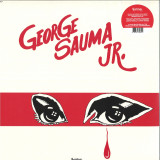
Favorite Recordings proudly presents an exclusive eponymous LP by Brazilian singer and composer George Sauma Jr., originally produced in 1985. Imagine a never-marketed release on which you’d hear not only the beautiful and genuine George’s songs but also the work from two figures of the Brazilian Music Golden Age: Arthur Verocai and Junior Mendes! A much-needed album for all Brazilian connoisseurs.
Back in the days, George Sauma Jr. was a young artist from Rio de Janeiro, learning on his side how to play chords and compose songs since he was 10. Still at the university, he’s influenced by Brazilian artists like Cassiano or Tim Maia, deeply fascinated by the arrangements and the “levada” (the groove) of all these new Brazilian songs. Simple and romantic music that resonated to his soul and creativity.
Around 1985, the story took an unexpected turn. George tells: “Dna Deyse Lucidy, the mother of Junior Mendes was a candidate for deputy and went to my father’s company to advertise. When I saw her, I shouted, “I’m a big fan of your son!” ” Of course, she could not praise more the work of her son. On her advises, George went to his studio on Rua Siqueria Campos at Copacabana. Junior loved the project and sent him to Arthur Verocai to improve the arrangements. Without money, the decision was taken to record everything at Junior Mendes’ studio on an 8-channel mixer. It was a small set-up but the emotions were there! George surely had other plans for some of his songs but without the budget, they ended up doing everything the best they could. And they did very fine with a top-notch team of musicians: Paulo Black on Drums, Arthur Verocai on Guitar, Ricardo Do Canto on Bass and Helvius Vilela on Keyboards.
Leaving the studio with the tapes, George tried to knock doors of international labels, but none did even dare to give him an answer. With less than 1000 copies pressed back in the days and without any distributor or label behind him, he went with proud to record stores, but received nothing than a strong reality check regarding the difficulties for a young Brazilian artist to achieve something on the saturated market of the 80s. Even for free, record stores didn’t want it. In the end, he ended up giving copies to friends and families, knowing deep inside that the songs were good! George tells: “I decided to leave, calm and conscious. I’ve still made three more albums, however on tapes, as it was more affordable. This time, just for my pleasure…”.
Thirty-five years after, it’s with great emotion that this first album by George Sauma Jr. is now made available as Vinyl LP with its original offset printed innersleeve & CD
In early 2018, Nathan Jenkins returned from the coast of Arrábida to his new home studio in a cottage tucked behind the grand hotel setting of Wim Wenders’ Lisbon Story. Breaking for lunches under a Datura tree in the garden and a far cry from the Finsbury Park basement flat he rented the previous year, a set of recordings followed that galvanised into an EP - ‘We Had A Good Time’. Music informed by out-of-town trips in a 1987 Renault 9 Super, Pitchfork attributed “remarkable healing powers” to lead song ‘Hula’.
After leaving London for a spell in Portugal, Nathan lost his taste for the night life and drew a line under a long-running NTS radio show. Much of the time spent abroad was dedicated to a longstanding collaboration with Westerman, whose album they recorded in a remote part of the Algarve countryside in 2019. Nathan’s own discography opened in 2007 with ‘Pet Sounds: In The Key Of Dee’, before pivoting in a more electronic direction via ‘Get Familiar’ and ‘Young Heartache’. From the sampledelia of 2011’s ‘Too Right’, the new wave and rave of ‘Say Arr Ee’ to the Robert Wyatt-influenced ‘Love Me Oh Please Love Me’, he’s mapped a deliberately peculiar path. 2015’s ‘Rooster’ was Eno & Byrne’s ‘Bush Of Ghosts’ given a shangaan-electro lick and clip. While Nathan’s partnership with fellow out-there pop auteur Jesse Hackett, as Blludd Relations, staggered like a half-cut Prince.
Collaged, rhythmic alternatives. Syncopated avant-garde sambas. Off kilter Sci-Fi jazz. Think Asha Putli in the spot at the Star Wars cantina. Arty, angular. Rich, but uncluttered. Frenetic, electric, blurring the boundaries between what is sampled, what is played. Nathan’s is a wilfully weird Pop, showcased in 2016 on his album ‘Loop The Loop’. Wayward but woven with hooks that come out of nowhere. Lyrical, often beautiful, solos on violin, oboe and desiccated guitars. Songs that demonstrate a nose-thumbing playfulness, a refusal to sit still. Where there’s always the urge to interrupt a carnival beat with a burst of galloping horse hooves. Or juxtapose ambient chords with a kazoo.
A roll call of Nathan’s broader musical adventures encompasses work with Paul Epworth, Sampha, Westerman and Nilüfer Yanya. Commissioned remixes reach from Dita Von Teese to Model 500, Tricky, Todd Terje and Lee “Scratch” Perry. Solo efforts gracing labels Honest Jon’s, R&S, Young Turks, Whities and The Trilogy Tapes. ‘Blue Pedro’, on the latter, making it into Crack Mag’s Top 100 Tracks Of The Decade.
In 2012 Nathan started his own label, DEEK Recordings, assuming the role of inhouse producer to collaborators. The imprint’s tagline and aesthetic - Pop, not slop! - is illustrated by an ongoing playlist of the same name and further explored in a series of compilations where Nathan and friends cover and reinterpret unsung ‘unclassics’ from alt. country to obscure 80s European arthouse scores, bouncing between Captain Beefheart, The Pixies, Sade and Mazzy Starr. DEEK’s roster is equally eccentric, non-linear and pop-literate. Laura Groves and Nautic - the realization and crystallization of a shared love for the Cocteau Twins.
12” pressed on crystal clear vinyl.
Thom Morecroft’s new live single 'The Beast' is unafraid to show the scars. Liverpool, UK — Thom Morecroft’s new 7 inch single ‘The Beast’ has
already been described by writer Paul Du Noyer (NME, Q, Mojo, Word) as “that killer finale”. Recorded live at Studio2, Parr Street, it captures the Shrewsbury-born singer-songwriter closing the launch of his latest album in his hometown of Liverpool.
Following the release of the rich and layered ‘Feng Shui and the Sushi’ album, ‘The Beast’ brings everything back home to an acoustic guitar, the raw voice and a captive audience. A personal story of family alcoholism and mistaken identity, it captures a
young artist at his most direct and vulnerable; giving just a little too much away.
After a UK album tour cut short (and the thrill of a huddled audience for many a distant memory) Thom wanted to reach out with a song that could only really be heard live.
Available on 7” Vinyl and across all digital platforms. For more information, promo requests, or to arrange an interview, get in touch via details at the top.
“The earth shall rise again...”
AMOR/LEMUR finds the Glasgow quartet AMOR in partnership with Norwegian improvising ensemble LEMUR to hopeful and ecstatic effect. Conceived before the onset of Covid 19 but finished during spring lockdown, their eponymous EP is the most loose, alive and elevated recording in AMOR’s catalog. AMOR/LEMUR takes the template of throbbing avant disco expanded upon on previous recordings for Night School and lifts it into new
territories, with new tonalities and unexpected turns on the journey. More than anything, the expanded, near- cinematic expression of human connectivity feels like a lightning new energy to grasp in the dark.
Following a revelatory concert in Glasgow in January 2020 wherein the two sets of musicians met and performed together for the first time, a recording session was arranged the following day, resulting in the most elevated permutation of AMOR’s art to date. Each track was built upon a rhythmic bedrock of percussion and drums performed by Paul Thomson and samples/synthesizer by Luke Fowler. Thomson used bamboo Javanese gamelan (most notably on For You) and scrap metal, as well as traditional percussion and drums while Fowler incorporated processed ambient field recordings recorded in enclosed acoustic spaces around Glasgow. Singer/pianist Richard Youngs contributes some of the most bright and mindful work of his career. Acoustic bass player Michael Francis Duch, whose lush playing as ever provides the elastic spine to each song, scored the string parts for LEMUR on piano at home in Norway. The addition of swelling strings and drones fills out the AMOR sound significantly, lending a sonorous tone to 8 minute, epic closer For You or an ascending melodic introduction to Stars Burst that feels like a new morning dawning on a world saved from certain death. With the circumstances of lockdown forcing the musicians to work differently, a thread of optimism and utopia grounded in the moment weaves through these tracks. Unravel reveals a spine tingling vocal from Youngs. It’s a song about the simultaneously grounding and ecstatic effect of love, feeling connected to others. It’s a simple message, “I’m finding myself in your smile, always unravels me” speaks of ego death, the dissipation of the material into a nirvana of pure energy, the power of surrender. This isn’t a quasi-religious message, this is the power of each other, a love song to connection in a temporary age of isolation. Stars Burst is a play on the inner and outer cosmos, with narrator Youngs exploring wonder to a pounding galloping rhythm and snake-charming synth. It’s an open dance, with the group locked in together for the wild ride. Fear is the centerpiece of the record, starting with drones and scraped overtones before swirling synth notes filter upwards to meet reverberating minor chords. Over 8 minutes of tight but loose playing, Youngs is the shaman instructing us to use Fear as a celebration of the moment, embrace it and jump into the unknown. The only way to overcome your fear is to feel it, use it as an energy. The use of the studio as an instrument throughout side 2 is particularly important, with the dubbing and mixing prowess of engineer Paul Savage (who mixed unattended due to lockdown restrictions) and tape manipulations performed by Jason Lescallet coming into play. For You closes out with a largely instrumental, evolving composition that uses many of the abstract and novel aspects of this permutation to aid the trance. It’s massive, an unfurling creature with unexpected tonalities and serious heft.
- A1: Intro / Vessels
- A2: She
- A3: Trash
- A4: Filmstar
- A5: Animal Nitrate
- B1: Heroine
- B2: Pantomime Horse
- B3: The Drowners
- B4: Killing Of A Flashboy
- C1: Can't Get Enough
- C2: Everything Will Flow
- C3: He's Gone
- D1: The Next Life
- D2: The Asphalt World
- D3: So Young
- D4: Metal Mickey
- E1: The Wild Ones
- E2: New Generation
- E3: Beautiful Ones
- F1: The Living Dead
- F2: The 2 Of Us
- F3: Saturday Night
• At the request of the Teenage Cancer Trust, after a seven-year hiatus Suede reformed to play what they believed would be a one-off concert at the Royal Albert Hall on 24th March 2010. As a result of the extraordinary reaction from the audience, the band decided to reform permanently, and have gone on to record three new studio albums.
• Featuring exhilarating versions of their most popular songs, including ‘Beautiful Ones’, ‘Animal Nitrate’, ‘Trash’, ‘Saturday Night’ and ‘The Wild Ones’, luckily this incredible performance was captured on tape, and is now available again as a 3LP set, pressed on 180 gram clear vinyl.
• The inner sleeves feature Paul Khera’s beautiful photos of the event.
“The greatest thing about being a musician is experiencing it with other people,” says Ed Riman, the Brighton-based Eurasian singer, songwriter and sound-scapist who records as Hilang Child. “Whether that’s playing with others, creating together, sharing a vision, whatever, I just think in all aspects it’s a totally elevated experience when you’re not alone.” Proof rings out with force and feeling on Hilang Child’s superlative second album, ‘Every Mover’, released on Bella Union.
In 2018, Riman delivered a serene, textured debut album in ‘Years’, rich in sound and feeling. Lauren Laverne, Q, MOJO and others lavished praise but the “isolating process” of making the album left Riman hungry to find alternative ways of working. Meanwhile, the “lonely, pressured” aftermath of ‘Years’ found Riman grappling with “rough selfesteem and anxiety issues,” amplified in part by social media’s “fulfilment narratives.” Duly, he set out to navigate and overcome these mindsets, drawing deeply on his own insecurities and those he recognised in others.
These themes converge emphatically on ‘Every Mover’, an album steeped in everyday emotional states and crafted for cathartic, communal performance. Drawing on a rich spread of collaborators, sounds and themes, Riman uses his frustrations as the impetus to transform the brimming promise of ‘Years’ into upfront and expansive new shapes. “I wanted it to sound a bit gutsier than the first album,” he says, succinctly, “heavier and closer to the kind of stuff that hits me when I go to shows or blast music in the car. I started out in music as a drummer playing for pop or beat-driven artists and grew up listening to louder stuff, but a lot of the music I’ve made as Hilang Child has been more ethereal. I wanted to bring it back to a place that feels more ‘me’ and make more of a thing of having big hypnotic drums, aggressive bass, ripping distorted instruments and a general energy to it.”
‘Good To Be Young’ serves swift notice of this leap, its banked synths and twinkling sound clusters leading to an assertion of fresh force when the main beat lands and a congregation of friends - AK Patterson, Paul Thomas Saunders, Dog in the Snow, Ellen Murphy, members of Penelope Isles - unite for the gang-vocal refrains. “It’s all iridescent colour I’m on,” Riman exults, a claim lived up to on the full-flush folktronica of ‘Shenley’.
A reflection on spiralling insecurity, ‘Seen The Boreal’ ups the ante again with its monkish chorales, looping samples, spectral woodwinds (from multi-instrumentalist John ‘Rittipo’ Moore, of Public Service Broadcasting and Bastille previous) and ecstatic chorus, Riman transforming a meditation on hindsight’s limiting effects into a spur to look forwards. And surge forwards he does with the glittering synths, spacey guitars and Krautrock propulsion of ‘King Quail’, developed in jam sessions with dream-pop wonder Zoe Mead (Wyldest) in her basement studio.
Brought to a sublime close with ‘Steppe’, the resulting album projects its own epiphanic force. Thankfully, most of the main parts were recorded pre-lockdown between East London, Gateshead, Brighton, Wandsworth and elsewhere, before mixing proceeded remotely. Meanwhile, alongside indie-pop trio OUTLYA’s Will Bloomfield (percussion/coproduction on ‘Play ’Til Evening’), visual design collective Tough Honey (accompanying videos) and other collaborators, Riman’s bond with co-producer JMAC (Troye Sivan, Haux, Lucy Rose) proved crucial. “It felt freeing to work collaboratively and have that push-andpull of ideas,” says Riman. “Even the moments where we didn’t see eye-to-eye made it feel like I wasn’t alone, with someone else working just as passionately on the project.”
LP pressed on red transparent vinyl.
The Fall is a deconstruction of November by Dennis Johnson.
Written for solo piano in 1959, November is the first example of minimalist music composition and was the inspiration for La Monte Young's The Well-Tuned Piano (1964). The 66 minute piece is a collaboration between legendary artist Lustmord and renowned classical pianist Nicolas Horvath, in which they reduces Johnson's original November to its core element and place it in a landscape of complimentary sound. The Fall echo's November but with further resonance.
Recorded in May-June 2019 in Los Angeles, and Misy-sur-Yonne, France.
Lustmord
Active since 1980, born of the original 'industrial' scene of the period. With its own distinctive approach, blurring the line between music and sound design Lustmord's work has featured in 45 motion pictures including The Crow and Underworld and also in video games, television and commercials. Recently Lustmord scored the music for Paul Schrader's movie First Reformed. While Lustmord is often credited for creating the 'dark ambient' genre there is much more nuance to its work than what that label implies. The music is not dark, but is a light that shines into and upon the darkness. Notable collaborations amongst many include Tool, Melvins, Jarboe, John Balance of Coil, Clock DVA, Chris & Cosey, Paul Haslinger, Karin Park and Robert Rich.
Nicolas Horvath
An unusual artist with an unconventional résumé, pianist and electroacoustic composer Nicolas Horvath is known for his boundariesless musical explorations. Horvath is both an enthusiastic promoter of contemporary music - he has commissioned numerous works (including no fewer than 120 as part of his Homages to Philip Glass project in 2014) and collaborated with leading contemporary composers from around the world, including Alvin Lucier, Mamoru Fujieda, Jaan Rääts, Alvin Curran and Valentyn Silvestrov - and a rediscoverer of forgotten or neglected composers such as Moondog, Nobuo Uematsu, Germaine Tailleferre, François-Adrien Boieldieu, Hélène de Montgeroult, Jean Catoire, Karl August Hermann.
- A1: The City Is At Standstill
- A2: If Tonight We Could Only Sleep
- A3: She Painted Pictures
- A4: The Mourners Of St. Paul's
- A5: This Is Love
- B1: Is This Love?
- B2: Paperboats
- B3: Roadsigns And Redlights
- B4: Shall We Dance
- B5: Try Try Try
The much sought after debut album from Manchester's Liam Frost & The Slowdown Family is back by popular demand.
Includes the singles "The Mourners of St Paul's" and "The City Is At Standstill“
Pressed on 180g translucent blue vinyl.
Recently featured on Tim Burgess’s Twitter Listening Party
Released originally in 2006, Liam Frost is described by Guy Garvey as "the UK’s answer to Bright Eyes".
"Young, fun and riotously talented, Liam Frost And The Slowdown Family are a free-wheeling 21st century folk carnival" -- NME
Nasser Baker’s talent precedes him. A handpicked protégé of Dennis Ferrer, the blossoming talent is now carving his own niche in the house space. His ascension continues today with the release of ‘Tribes Of The Metronome,’ marking his DIRTYBIRD debut.
“Tribes Of The Metronome” uses sputtering bass and distorted vocals to make its impact, maintaining a consistent, yet driving pace that keeps energy levels high from start to finish. “About You” sees Baker laying on the heavy grooves, with a reverberated bassline, off-kilter synths, and crisp hi hats joining together with its vocal elements for a tech house piece with a classic flair. Both have been sought-after set weapons for Claude VonStroke, making their release particularly exciting for the DIRTYBIRD flock.
Beyond his work with Dennis Ferrer, Nasser Baker’s keen ear for house has been recognized by plenty of industry greats. His ‘Say Something’ EP on Circus was an instant hit, receiving remixes from the likes of Paul Woolford and Rebūke. Nasser’s work has also appeared numerous times on Objektivity, and recently, he was tapped by Green Velvet for an EP on Relief. It’s clear this young producer is here to stay!
Selva Discos keeps broadening horizons. Its next release celebrates the start of a new series called Novaterra, this time focused on showcasing the music of contemporary Brazilian artists. First up is Zopelar, known not only for his work with the anarchic-techno-punk act Teto Preto but also for the project My Girlfriend and his solo LP, both on Apron Records.
Novaterra vol. 1 by Zopelar is a mini-LP featuring 6 tracks that range from the introversion to the extraversion. In one hand you have an A-side banger like "Be Together", with its addictive looped-sample, and in the other, you get the laidback interlude of "Modo Avião", which sounds like one of those MF Doom's instrumentals – and between both, you will find a whole spectrum of music where you can experience the duel between super crispy beats (a signature in Zopelar's work) and the richness of melodies and harmonies that he's able to knit stitch close to perfection.
The opener "Livre" has a great deep house vibe that makes you think of Prescription Records and Jazzanova, featuring a catchy bossa ad-lib. "NOX" is a Hammond-led tune with a groove bassline and lead that gets you going in no time as if Cesar Camargo Mariano and Larry Young toured together in the late 70's, like, a big, fat jazz-funk tune. "Dias Tensos" is a nervous drum workout led by an automat Tony Williams as if jamming in a 16-bit version of The Tony Williams Lifetime. And to wrap things up, "Boogie da Paz" is one of those perfect comedown tunes – a true tearjerker that works its melody line like a good pill works your serotonin, making it one of those tracks that you keep under your sleeve for those special 6 AM moments on a dancefloor.
The artwork is courtesy of Colletivo Design Studio in Sao Paulo.
- A1: L'aventurier (Feat Helena Noguerra & Louis Ronan Choisy)
- A2: Putain Putain (Feat Camille)
- A3: Marcia Balla (Feat Adrienne Pauly)
- A4: Sandy Sandy (Feat Soko)
- A5: Ou Veux-Tu Qu'je R'garde (Feat Emily Loizeau)
- A6: Two People In A Room (Feat Cocoon)
- A7: Dereglee (Feat Melanie Pain)
- A8: Oublions L'amerique (Feat Nadeah Miranda)
- B1: Voila Les Anges (Feat Coeur De Pirate)
- B2: Week-End A Rome (Feat Vanessa Paradis)
- B3: Mala Vida (Feat Olivia Ruiz)
- B4: Anne Cherchait L'amour (Feat Julien Dore)
- B5: Ophelie (Feat Yelle)
- B6: Amoureux Solitaires (Feat Hugh Coltman)
- B7: So Young But So Cold (Feat Charlie Winston)
- B8: Je Suis Deja Parti (Feat Coralie Clement)
The 80s owed everything to the punk revolution ... and betrayed it time and again.
ln 76-77, the incredible explosion of English-speaking bands focused the energies of a whole generation of Western youth - rebels ready to pick up a guitar and use it like a weapon. Yet more than punk music itself, it was the creative burst it triggered that radically shaped 80s pop and heralded an unending stream of inspired performers.
Although we often speak of the British and American golden age of post-punk from 78 to 84, with artists that included Talking Heads, Joy Division, PIL and Devo, France (together with Switzerland and Belgium) joined the movement too. Today, on a new album, the group Nouvelle Vague have paid tribute to this sumptuous "Frenchy" period clothed in the nihilism of punk, along with bitterness fuelled by the economic crisis and, paradoxically, the bewitching spirit of pop.
lts title, Couleurs sur Paris (Colours on Paris) is based on both a famous postcard collection and Oberkampf's 1981 punk anthem, and reflects the period, which oscillated between elation and despair. Written by artists sometimes known as "the modern young people" and including faux naïf electropop nursery rhymes by Elli & Jacno ("Anne cherchait l'amour", 1979), Lio ("Amoureux solitaires" , 1980)
and Etienne Daho ("Week-end à Rome", 1984), along with Lili Drop ("Sur ma mob", 1979) and Taxi Girl ("Je suis déjà parti", 1986), the songs clearly express the hopes and disappointments of the day.
The sense of melancholy suggested by the disenchanted lyrics of "Déréglée" - performed in 1977 by Marie-France, an icon of Paris nightlife - is even more noticeable on the 1981 hit by The Civils, who cynically sang, "Tonight, they're dying in Chad, but l'm buying my dream Walkman" before taking it to the chorus: "The economic crisis is fantastic, decadence is the right feel".
The punk shockwave con also be felt in the music of bands who radically shaped French culture and song. Like Rouen, with Les Dogs ("Sandy, Sandy", 1982), every provincial town and city in France began to produce bands at the end of the 70s and the start of the 80s. Wunderbach's 1983 punk pamphlet "Oublions l'Amérique" was a foretaste of what is now called alternative punk, a genre that won acclaim in 1988 with Mano Negra's "Mala Vida". Indochine, French pop legends for the last thirty years, also encouraged the trend in the summer of 1983 with "L'aventurier", after a first single brimming with the spirit of rebellion, "Dizzidence Politik".
Rita Mitsouko, the duo that emerged from the underground Parisian punk scene of the late 70s, rocketed to stardom in 1984 with "Marcia Baïla". Equally baroque, TC Matic - the first band fronted by Belgian singer Arno - released an ironic, political underground hit in 1983: "Putain, putain". Other artists fuelled a post-punk movement that explored the romanticism of machines and the darkness of new wave, including the cult, much-neglected duo from Nancy, Kas Product ("So Young but so Cold", 1982) and Switzerland's Stephan Eicher, whose "Two People ln A Room" (1985) followed on from "Eisbaer", a hit in a more underground style written with Grauzone in 1981. However, the genre's most influential practitioners were certainly Noir Désir. From their first single in 1987 ("Où veux-tu qu' je r'garde?"), they won mainstream success with their unique fusion of 80s gloom and power rock. Beyond from the meteoric success of Bordeaux's Gamine ("Voilà les anges", 1988) and the subversive spirit of Jad Wio ("Ophélie", 1989), French post-punk reached its climax with the success of Noir Désir, Rita Mitsouko, Stephan Eicher and Manu Chao, whose albums reigned supreme in the 90s French charts. From the underground scene to gold records: the eternal story of pop.
Emma-Jean Thackray, an outstanding figure in the UK jazz scene, releases Um Yang, her long-dreamed project dedicated to the Taoist philosophy of duality and harmony. Ahighly ambitious and personal record that sees Thackray leading a septet featuring
Soweto Kinch and Steam Down’s Wonky Logic, recorded straight to vinyl. An accomplished trumpeter, beat-maker, singer, composer and DJ, Thackray draws on far wider influences than jazz. Her sound is distinctive; in the words of The Guardian like “Bitches Brewera Miles entering the dub chamber with a New Orleans marching band – in a good way”. Since debuting in 2016, Thackray has directed the London Symphony Orchestra, performed at the NY Winter Jazz Fest, played Glastonbury five times in 2019 alone, and launched her own record
label, Movementt (in association with Warp). Championed by Gilles Peterson, Theo Parrish and Jamie Cullum, Thackray has firmly cemented her place among a new wave of exciting young
musicians, collaborating with Makaya McCraven, Junius Paul and Angel Bat Dawid, and still finds time to host her monthly radio show on Worldwide FM. Raised in Yorkshire, Thackray inherited a grounding in Taoism from her father, and approaches her music with the same pursuit of harmony between Um & Yang (the Korean Ying & Yang), balancing melody and rhythm, groove and free improvisation, cerebral and physical. For this one-off recording, Thackray has applied this ideology in every sense, even down to the ensemble itself featuring not one but two percussionists. Um commences with ethereal interplay between keys, percussion, and Thackray’s trumpet, recalling the spiritual jazz of Alice Coltrane’s classic records. As the piece builds, an earthy groove emerges. On both trumpet and vocals,
Thackray leads the ensemble further out until the piece peaks with an epic breakdown. On the flip, Yang starts on the same cacophonous note but progresses to a joyful groove before returning to a peaceful state again, balance restored.
Flaming Pie is the tenth solo studio album by Paul McCartney, first released in 1997.
Having been heavily involved in The Beatles' Anthology project, Paul had time to reflect on the standards he and his bandmates had set during their career, and applied these to what would become his first album in four years. Made in a much more spontaneous style, with songs recorded here and there, mostly on holiday, it's an album that luxuriates in its own sense of fun.
Featuring producers George Martin and Jeff Lynne, as well as musicians including Steve Miller, Ringo Starr and his own son, James McCartney, Flaming Pie would go on to become one of Paul's most acclaimed albums. Sales were brisk, with the album only kept from the Number 1 slot on both sides of the Atlantic by the cultural phenomenon that was the Spice Girls' Spice album.
Half-speed master of the remastered main album tracks cut over 2LPs for the first time
1LP of the Demos and Home Recordings
o E1. The Song We Were Singing Home Recording
[p] E2. The World Tonight [Home Recording]
[q] E3. If You Wanna [Home Recording]
[r] E4. Somedays [Home Recording]
[s] E5. Young Boy [Home Recording]
[t] F1. Calico Skies [Home Recording]
[u] F2. Flaming Pie [Home Recording]
[v] F3. Souvenir [Home Recording]
[w] F4. Little Willow [Home Recording]
[x] F5. Beautiful Night [1995 Demo]
[Home Recording
- A1: When Will You Be Mine 4.23
- A2: Please Don't Fall In Love 3.42
- A3: Walk On By 3.56
- A4: Feel No Fret 6.22
- B1: Stop The Rain 4.28
- B2: Atlantic Avenue 3.12
- B3: Ace Of Hearts 3.48
- B4: Too Late To Cry 3.40
- B5: Fire Burning 3.27
Widely and rightly regarded as one of the best ever soul and funk bands, the now legendary Average White Band tore-up the rule book and conquered the US, UK & International charts with a series of soul and disco hits between 1974 and 1980. AWB’s repertoire has been a source of inspiration and influence for many R&B acts and they are one of the most sampled bands in history, remaining relevant today, continuing to reach new generations of younger audiences. Snoop Dogg, Fatboy Slim, Ice Cube, Puff Daddy, TLC, Rick Ross, will.i.am and Mark Ronson amongst countless others, have all borrowed sections of their grooves. ‘Feel No Fret’ is the 8th album by AWB, originally released in 1979. The album reached #15 in the UK and #32 in the USA. ‘Feel No Fret’ includes the singles ‘Atlantic Avenue’, ‘Walk On By’ and ‘When Will You Be Mine’, as well as the much sampled ‘Stop The Rain’. ‘When Will You Be Mine’ reached #33 in the US
This was the Band’s final complete studio album for Atlantic Records, which they produced alongside Gene Paul.
Rose Colour Vinyl[19,96 €]
Repress
MARA is the debutalbum of Munich-based jazz group FAZER. The young musicians combine African and Latin rhythms with dubby basslines and melancholic melodies. The unusual lineup with two drummers (Simon Popp, Sebastian Wolfgruber), bass (Martin Brugger), guitar (Paul Brändle) and trumpet (Matthias Lindermayr) leaves an open space for unfettered improvisation. Through the concept of repetition and finely measured dynamics, Fazer create a drawing energy that can be felt directly at their live shows and has been captured perfecty on this record.
Rising Manchester star FINN takes the helm for the next release on Ruf Kutz with two hyper-real contemporary raw bangers crafted for maximum emotional impact backed with remixes from RK big guns RUF DUG & GLOWING PALMS.
Even though he's a comparative youngun, this is by no means Finn's first time at the rodeo - he's a label boss, an NTS pioneer, a Boiler Room veteran, a Defected Records Old Boy and also holds down the coldest twitter account on the information superhighway. It's a big deal to us that we managed to snare him for a release on his ascent to whatever accelerated dimension he is headed for.
Purposely conceived as raw club tracks after a heavy Paul Johnson listening session, TRICK TRICK and BELLE THEME contain many of his beloved hallmarks while also showcasing new creative pathways - the title of the EP surely alluding to what Finn is about to pull from up his sleeve...
Opener TRICK TRICK is many things all at once - a raw turbo-jacker, a hugely emotive bassline roller, a super-fresh club banger that has few elements, yet uses them with such efficiency it's impossible not to be drawn up into its vapour trail.
BELLE THEME winds the pace & harmonic tension up with manic abandon as we find ourselves in Finn's familiar 130-plus territory but while the tempo is slamming he somehow manages to drape everything in a lacy coating, as if we were playing a bonus level from a lost Studio Ghibli PS1 beat-em-up.
Back in the real world we flip the record for 2 textbook Ruf Kutz remixes. First up label boss RUF DUG guts Trick Trick and serves up the fillet on an unashamedly tech-house bed, purpose-built for DC10 circa 2009 - meanwhile Ruffy's partner in crime GLOWING PALMS dips into his secret stash of double doves and takes Belle Theme for an unforgettable night out in a Burnley warehouse.
Of the release Ruf Dug says "It's been a big thrill to follow Finn"s development over the years since we first met. I've been hoping to collaborate with him for quite a while so for it to be finally happening especially at this stage in his career is a genuine mega buzz!"
Finn says: "Been a keen Ruf Kutz fan since Rachel's Team in 2016! So happy to contribute to the label with two rough (ruf) and ready club tracks - late night/early morning hymns"
In 2016, talented artist Paul Cut released his first vinyl with Popcorn Records: the Basement Jam EP.
This album foresaw the rise of the young producer, who has since piled up project on top of project, and record on top of record. One of the driving forces behind the D.KO label, and a (literal) key player of the Secret Value Orchestra band, Paul has also thrived on collaborations. Whether with Chez Damier, Jef K, Flabaire… They all fall under the spell of the young pianist’s skill, who has become in just a few years one of the leading figures of French house.
In 2019, Paul joined house legend Larry Heard for his world tour, and multiplied appearances at famed festivals such as Glastonbury, Dimensions, DGTL or Printworks. In 2020 Popcorn Records is turning 10. And to mark the occasion, Paul is coming back to his beloved label to unveil his first album. More than a year of thought and work went into “Le Bal des Douaniers”. An album composed of 10 titles, which all reflect fragments of Paul Cut’s influences.
London-based folk-psych-country band The Hanging Stars return with their eclectic third studio album, A New Kind Of Sky, due out on 21 February 2019. Carrying on their exploration of transatlantic psychedelic folk and cosmic country, the new album blends twelve-string, harmony-laden lullabies with soft rock anthems to create a guilded box of bucolic folk-rock. As well as the band’s signature wistful pastoral escapism, there are lyrical concerns about the recent past; the systematic division of people, values, facts and humanity in The West in general - and the UK in particular. The band weave the same thread they have always woven but this time with a more unified vision, creating a kaleidoscopic poncho for these times.
The Hanging Stars comprise songwriter, singer and guitarist Richard Olson, Sam Ferman on bass, Paulie Cobra on drums, Patrick Ralla on guitars, keys and vocals, and renowned pedal steel player Joe Harvey-Whyte. Returning guest Collin Hegna from Brian Jonestown Massacre plays an instrument called a Marxophone on “Choir of Criers”. They also welcome Sean Read of The Rockingbirds and Dexy's Midnight Runners, who adds horns to “Three Rolling Hills” and “I Was A Stone”.
The main bulk of the recording for the new album was done live in the studio at Echozoo in Eastbourne with Dave Lynch. For the first time, the band decided to dive straight in to the recording studio following their German tour in 2018. Having lived in each other’s pockets and playing their new songs every night, the band were as tight and primed as they could possibly be. There ensued a few, very long, days of recording, capturing the essence of the band in their element.
The songwriting process was even more collaborative for this album, with the usual co-writes between Richard Olson, Sam Ferman and Patrick Ralla enhanced by Joe Harvey-White’s arrangements and Paulie Cobra’s harmonies. The biggest difference is that Sam Ferman sings lead on the first single “‘(I’ve Seen) The Summer in Her Eyes”, a song about lost love and self doubt channeled through two and a half minutes of garage pastoralism.
The album’s title track “A New Kind of Sky” tells a story from the point of view of somebody who idealises a past that never existed. The band go glam-rock on the stand-out track “I Will Please You”, a tale of a cult leader/world leader and his irresistible (for some) charm from the point-of-view of his most recent victim and “Heavy Blue” is a country music tale of drunken debauchery seen through the eyes of an inexperienced young man. The triumphant trumpet-driven song “These Rolling Hills” is a minor-key tale of a journey into the hills of Marin County, California undertaken by Paulie and Richard to visit friends Asteroid No. 4, with a most interesting outcome.
The Hanging Stars released their debut album Over the Silvery Lake in 2016, which received plaudits from broadsheets such as The Times, who described it as; "An album with enough of a hazy, sun-dappled charm to make the capital's dreariest weather bearable”, as well as The Guardian, who said; “Mersey-laced harmonies and just a whiff of the Gun Club.” They picked up a good amount of support at 6 Music and “The House on the Hill” scored a much-coveted 10/10 by John Robb on Steve Lamacq’s Roundtable.
Their second album Songs For Somewhere Else in 2017 received critical acclaim from the likes of Uncut (Revelations article), Shindig (several features and 4* review) as well as The Quietus and The Line Of Best Fit, plus radio support from Gideon Coe and Bob Harris (they performed an Under the Apple Tree Session for Bob Harris in January 2019).
Whilst playing their own successful sold-out headline dates, the band were invited to share the stage with Teenage Fanclub, The Clientele, Wolf People, The Long Ryders and GospelbeacH, as well as playing festivals such as Liverpool’s International Festival of Psychedelia, Red Rooster, Ramblin' Roots, UK Americana Festival and The Long Road.
To call Marcos Valle 'a legend' of Brazilian music is much more than just easy press-release hype. As singer, writer, musician and record producer, Marcos has played an integral role shaping the sound of the country’s music from the 'golden era' of the 60's and 70's, through to the modern day. Alongside his brother, Paulo Sergio Valle, they have penned a huge catalogue of classic songs, not just for themselves but for other greats such as Elza Soares, Astrud Gilberto, Claudia to name a few.
‘Braziliance!’ takes things back to the early heady days of Marcos’ career with the bright and optimistic sound of Rio's Bossa Nova scene. It includes an instrumental version of ’Crickets Sing For Anamaria’ or 'Os Grilos’ in Portuguese, which would also be re-recorded with vocals. Though only in his early twenties at the time, ‘Braziliance!’ depicts very sophisticated production for a musician so young. Recorded in 1966, produced by Louis Oliveira and Ray Gilberts with arrangements by the very talented Emir Deodato, the album was released on Warner Bros. Records.
The artwork presents a very clean-cut, wholesome looking Marcos but darker things were around the corner for Brazil. The ‘Tropicalica’ movement was on its way and about to shake thighs up both musically and politically.
Unlike some of his Bossa Nova contemporaries, Marcos continued to stay relevant, surfing the changes and adapting to the musical developments that culture and society projected and needed, without comprising his art. Under exclusive license to Light In The Attic Records & Distribution, LLC | Mr Bongo Records.
Pacific Express emerged from Cape Town, South Africa in the 1970s. The band were from the so called "Coloured" community and were ground breakers in both musical and political arenas. The founder members Paul Abrahams (Bass), Jack Momple (Drums) and Issy Ariefdien (Guitar) were joined by Chris Schilder (Piano), Vic Higgins (Pecussion), Barney Rachabane (Alto Sax), Stompie Manana (Trumpet) and Zayn Adams & Kitty Tshikana on vocals for their second album "On Time" in 1978.
On several occasions the group fell foul of Apartheid laws and discrimination by the state broadcaster, SABC. On one occasion they were asked to leave the stage of an international tour by Australian act John Paul Young, because the law forbade racially mixed performers on the same stage. The promoter, management and band members all resisted and once he incident made the Australian newspapers the authorities had little choice and turned a blind eye.
And so to the music. The most important thing. The LP opens up with the slick jazz-boogie funk of "We Got A Good Thing Going On", a perfect vehicle for the vocals of Zayn and the statement-of-intent, on-point musicianship of the band.
"I Hear Music" is the first of three smooth sweet string-laden ballads to feature on the LP. The majority of the songs on the LP were written by keyboard player Chris Schilder. As well as high-craft songwriting Chris also contributes layers of effortless musicality with his Rhodes and piano. "Good Old Days" (the only cover on the LP) is next and its smooth-rock grooves swing effortlessly to the fore. The A-Side of the vinyl closes with the instrumental jazz funk of "Saturday Night".
The flip side of the album opens with the bands biggest commercial success. A sweet soul ballad penned "Give a Little Love". Stepping outside their usual sound. This hit however was not without controversy as the video was removed from the TV airways after the South Africa Broadcasting Corp realised that the group were of mixed race, which was against rules for so called local artists in public performance at the time.
"Dream" follows on with the driving jazz rock and travelling keyboard solos. "Reaching Out For Love" is a power-pop boogie groover powered by guest vocalists Erica Lundy and Kitty.
"Say The Last Goodbye" is the last of the trio of ballads. A smooth style moment sounding all the bit like a 70's US TV drama closing theme. The LP features with a funky workout where the band show off their chops and slick level of musicianship.
Besides the success in southern Africa this album became a regional hit as a pirated music cassette in Nigeria. It was also released in France and Japan.
The band would go on to record one further LP in 1979 and a single in 1981. They carried on performing however well pass that. Throughout their years together the band acted as central hub for Jazz musicians within the Cape Town area. Players as Tony Cedras, Jonathan Butler and Alvin Dyers gaining experience alongside established names such as trumpeter Stompie Manana and alto saxman Barney Rachabane.
Here at World Seven we are ever so pleased to be re-releasing what we consider the bands finest album moment.
Black Truffle is pleased to present Realejo, the first vinyl release from Brazilian sound artist and composer Manuel Pessoa de Lima. Having composed works for diverse contexts including cinema, contemporary dance, theatre and television, Lima’s live appearances often take the form of self-reflexive lecture performances that combine electro-acoustic sound, red light, video and spoken text, moving unpredictably from the hilarious to the distressing.
Realejo consists of two side-long pieces of highly idiosyncratic electro-acoustic collage, beginning with recordings Lima made of himself playing the organ in the Schloss Solitude Chapel in Stuttgart. Exploring the peculiarities of the instrument’s mechanics, Lima made hours of recordings with the organ stops half-way open, moving from haunting gliding tones to oddly tuned fair-ground melodies reminiscent of the record’s namesake realejo, a hand-cranked organ traditionally found in Brazil as the musical accompaniment to the work of fortune-telling parrots.
To these organ sounds, Lima added recordings of a security guard made in São Paulo: ‘Just before coming to Stuttgart, I started making field recordings of a security guard in São Paulo. It's something pretty common in residential areas: they sit in a chair with a whistle, and use that to signal when people arrive, leave or pass by in the street. This particular security guard, Miguel Viana, works on the same street my parents live, and where I had my childhood, and he has worked there since I was a small child. He has watched the street at night, from 8PM to 6AM, every single day, except Sundays, for over 30 years’.
The poignant sounds of the security guard’s whistles punctuate Lima’s electro-acoustic environment, which also includes raw digital synthesis, recordings of his friends’ infant child, audio lifted from Youtube, and, on the LP’s second side, elements taken from an earlier work, ‘36 English to Portuguese Lessons’. Finely chiselled from dozens of hours of source material into a detail-rich, mercurial structure, Realejo is alternately jarring and seductive, introducing listeners to a young composer with a powerfully individual voice.
Recital publish the newest record by Canadian composer Sarah Davachi. Currently working on her PhD in Musicology at UCLA, her trajectory has been unorthodox. Hailing from Calgary, Alberta, which, if you've never been there, doesn't really scream "Avant-Garde" (Calgary is the rodeo capital of the world). From a young age, Sarah was a driven pianist (and figure-skater, although that's a story for a different time). It is important and interesting that she chose to study esoteric music; as Sarah could have easily been a cowgirl or a concert pianist had her ingrained love of synthesis and sonic phenomenology not taken the wheel.
Sarah is a considered person. I find few people that have the diligence and resolve to take their time with music... especially in a live context. I respect that about her. The first time I saw Sarah perform, I presumptuously told her that her music reminded me of my favorite Mirror albums (the exceptional project of Andrew Chalk and Christoph Heemann). Sarah was not familiar with Mirror, so the compliment was initially lost on her. Years back I was in the same situation when a review compared my music to Andrew Chalk, who was unknown to me at the time. So I felt a kinship in our magnetic drift towards unspoken and clustered beauty.
Let Night Come On Bells End The Day follows the release of her "sound-wheel" LP All My Circles Run, which examines the isolation of different instruments. Let Night Come On..., recorded mainly with a Mellotron and electronic organ, feels like a return to the nest. Burrowed in the studio, Davachi was the only performer on this album. She both splays her compositional architecture and re-contextualizes the essence of her early output. She chiseled careful and shadowed hymns; anchors of emotion.
Two pillars of this album are "Mordents", which to my ears drops hints of her love for Progressive rock music - and "Buhrstone," comparable to a sombre funeral march of piano and flutes. These two examine punctuations of early music, gently plucking melodies and movements. The three other compositions are tonal works, blowing slow jets of lapping harmonics.
Writing this description now, I find it hard to separate "At Hand" from filmmaker Paul Clipson, who made a melancholic film for this piece of Sarah's. A fitting title for Sarah and Paul's relationship - frequently working in orbit of each other, meticulous and tactile. I cherish this track as a memory of Paul.
This is a lovely album to fill an evening living room with. A blanket, a cup of wine, a dim bulb, a wide window.
Three beautiful photo-prints by Davachi are included with Let Night Come On Bells End The Day. Frames are not included.
- Sean McCann
One of the greatest enigmas of the music scene in mid to late 1970s Harare was The New Tutenkhamen, a band which played an eclectic brand of Zimbabwean township music combining
traditional rhythms and western influences. The band included some luminaries of Zimbabwean township music. Elisha Josamu was an alumnus of the fabulously-named Hallelujah Chicken Run Band (alongside Thomas Mapfumo), and Green Jangano’s long-running Harare Mambos, and would later form Two Plus Two with bassist Christopher “Chex” Tavengwa. Jethro Shasha played the drums, and would arguably become the New Tutenkhamen’s most famous export, making continental waves working with likes of Salif Keita. Paul Sekerani played the rhythm guitar, with Amos Chatyoka on the organ, while the enigmatic Maggie Mbuli provided vocals and F. Manda played the sax. The New Tutenkhamen recorded I Wish You Were Mine at Teal Records, produced by Crispen Matema, a talented jazz drummer in his own right who had played drums on the all-time classic Skokiaan, and had backed Louis Armstrong on his 1960 Rhodesia visit. Combining the
heavyweight producing talents of Matema and the writing chops of Josamu, The New Tutenkhamen band created an album howcasing various musical styles popular at the time. From the afro-jazz jam session aesthetics of “Tutenkhamen Theme”, “Big Brother alcom” and “Forever Together”, to the almost Van Morrison-sounding “Sunday Morning”; from the upbeat rock ballad “True Love”, to the funk-infused dance song “Togetherness”; from the bouncy jazz
exhortations to work hard in “Ane Nungo”, to the brassy, raunchy foot-stomper “Me & Dolly”. The title track “I Wish You Were Mine” is a ska-infused ballad that wouldn’t be out of place in post-war
Birmingham, while the star of the show is “Joburg Bound”, itself a fast-paced rock piece with Motown undertones and funky guitar lines. As a collective effort, I Wish You Were Mine provides a fascinating insight into a fraught time in Zimbabwe’s history, and the bands plying their trade through the turmoil, making music for young people, by young people.
Yoshi Wada's Lament For The Rise And Fall Of The Elephantine Crocodile, originally released in 1982 on India Navigation, remains one of the most remarkable flowers to grow in the rarefied air of American minimalism – akin to Terry Riley's Reed Streams and Pauline Oliveros' Accordion & Voice, yet with a wild, liberated energy all of its own.
After graduating from Kyoto University of Fine Arts with a degree in sculpture, Wada moved to New York City in 1967 and quickly fell in with the community of artists known as Fluxus. In the early '70s, he began building his own instruments and writing musical compositions, studying with La Monte Young and Hindustani singer Pandit Pran Nath.
Recorded during an epic three-day session in an empty swimming pool in upstate New York, Wada's first album brings together two of the oldest drone instruments – the human voice and bagpipes – to simple and glorious effect. A visit to the Scottish Highlands spurred Wada's interest in bagpipes, which the composer integrated into these sparse, otherworldly sounds heard on Lament.
"That swimming pool was quite hallucinatory," recalls Wada. “It was another world. I felt it in terms of resonance. I slept in the pool, and whenever I moved, I woke up because of the reverberations.... The piece itself is an experiment with reeds and improvisational singing within the modal structure."
This first-time vinyl reissue is limited to 750 numbered copies. Comes with poster.