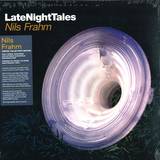
Penguin Cafe Orchestra’ is the second studio album by the Penguin Cafe Orchestra, released in 1981, and recorded between 1977 and 1980. By this album, the line-up for the band had expanded greatly, with contribution including Simon Jeffes, Helen Leibmann, Steve Nye and Gavyn Wright of the original quartet, as well as Geoff Richardson, Peter Veitch, Braco, Giles Leamna, Julio Segovia and Neil Rennie.
All pieces were composed by Simon Jeffes, except for ‘Paul’s Dance’ (Jeffes and Nye), ‘Cutting Branches’ (traditional), and ‘Walk Don’t Run’ (by Johnny Smith).
The cover painting is by Emily Young.
‘Cutting Branches For A Temporary Shelter’ is based on the traditional Zimbabwean song, ‘Nhemamusasa’, a field recording of which can be heard played on mbira on the Nonesuch Records album ‘The Soul of the Mbira’.
The Boston Globe opined that “this is one of the most eccentric records released this or any year... It’s also one of the most delightful.”
In 2021, ‘Penguin Cafe Orchestra’ was named among The Fifty Best Albums Of 1981 by Spin.
This repress uses the 2008 remaster.
Pressed on apricot vinyl.
Buscar:penguin cafe
- 1
‘Music From The Penguin Cafe’ is the first studio album by the Penguin Cafe Orchestra. It was recorded between 1974 and 1976 and released in 1976. The executive producer for the album was Brian Eno, who released this album on his experimental Obscure label, with catalogue number ‘Obscure 7’. The original cover was by John Bonis. The reissue cover painting is by Emily Young. The album was included in Robert Dimery’s ‘1001 Albums You Must Hear Before You Die’.
This is the first repress since 1987 and uses the 2008 remaster.
Pressed on blue vinyl
The Penguin Cafe Orchestra Mini Album is an EP by Penguin Cafe Orchestra consisting of six pieces, two derived from previous released recordings (‘The Penguin Cafe Single’ and ‘Air À Danser’), two that were recorded from a live performance in Tokyo (‘Numbers 1-4’ and ‘Salty Bean Fumble’), and two previously unreleased pieces which had not appeared elsewhere (‘The Toy’ and ‘Piano Music’).
The two live pieces were recorded by NHK Radio at the Kan-i Hoken Hall on 10 June 1982.
‘Piano Music’ is a solo piece recorded by Simon Jeffes in Tokyo on 7 July 1982 and ‘The Toy’ was recorded in 1983.
The cover painting was by Emily Young. This is the first repress since 1983. Pressed on red vinyl.
- Music For A Found
- Harmonium
- Prelude And Yodel
- More Milk
- Sheep Dip
- White Mischief
- In The Back Of A Taxi
- Music By Numbers
- Another One From The
- Colonies
- Air
- Heartwind
- Isle Of View (Music For
- Helicopter Pilots)
- Now Nothing
‘Broadcasting From Home’ is the third studio album by the Penguin Cafe Orchestra, released in 1984.
The opening song was named after Penguin Cafe Orchestra leader Simon Jeffes found a discarded harmonium in an alleyway in Japan.
This is the first repress since 1987 and uses the 2008 remaster.
Pressed on white vinyl.
Signs Of Life’ is the fourth studio album by the Penguin Cafe Orchestra.
It was recorded at the Penguin Cafe between 1985 and 1987 and released in March 1987.
It includes ‘Perpetuum Mobile’, one of their most famous pieces.
The album reached Number 49 in the UK Albums Chart.
This is the first repress since 1987 and uses the 2008 remaster.
Pressed on orange vinyl.
- Air À Danser
- Yodel 1
- Cutting Branches For A
- Temporary Shelter
- From The Colonies
- Southern Jukebox Music
- Numbers 1 To 4
- Telephone And Rubber
- Band
- Air
- Beanfields
- Paul’s Dance
- Oscar Tango
- Music For A Found
- Harmonium
- Isle Of View (Music For
- Helicopter Pilots)
- Prelude And Yodel
- Dirt
- Giles Farnaby’s Dream
When In Rome...’ is a 1988 live album by Penguin Cafe Orchestra, and was recorded at The Royal Festival Hall, London, on 9 July 1987.
It was produced by Simon Jeffes. The cover painting is by Emily Young. This iteration has for the first time the full gig and uses the 2008 remaster.
Coloured vinyl repress of Penguin Cafe album Rain Before Seven… A sense of optimism infuses Penguin Cafe’s fifth studio album, not the braggadocious, overconfident kind, but more a blithe, self-effacing optimism in keeping with the national character. Even when all signs point to the contrary, it operates within the certainty that things are going to be alright. Probably.
The title comes from an old weather proverb with the rhyming prognostication — fine before eleven — hinting at a happy ending, irrespective of the science: “I found it in a book and I'd never heard it before,” says Arthur Jeffes, leader of Penguin Cafe. “It has faintly optimistic overtones and I quite like it. It's fallen out of usage recently but it does describe English weather patterns coming in off the Atlantic.”
From the widescreen reverie of opener ‘Welcome to London’ with its cheeky nod to Morricone to ‘Goldfinch Yodel’, the self-described “Maypole banger” at the denouement, there’s a welcome sense of sanguinity, always with an undercurrent of exotic rhythmic exuberance. Playfulness pervades, with a titular nod to A Matter of Life... from 2011, the last album title that concluded with an ellipsis. That Penguin Cafe debut is the bridge between the legendary Penguin Cafe Orchestra, led by Arthur’s father Simon Jeffes, and the much- loved descendent, led by Arthur.
“Stylistically it's really satisfying to get back to playful rhythms and instruments,” says the younger Jeffes, who kept the group’s debut from 12 years ago in mind when writing the new album. “Certainly when starting out, I became aware that we’d stopped using quite a few of the textures that had been there at the beginning—and it was certainly there in my dad's earlier stuff. So there's a lot of balafon and textures from completely different parts of the world, musically and geographically: ukuleles, cuatros and melodicas that you can hear.”
Encouraged by co-producer Robert Raths, the rhythmic elements of Rain Before Seven... have never been more to the fore and, at times, even hint at the electronic. ‘Find Your Feet’, for instance, is underpinned with more than just a pulse. Mixed by Tom Chichester-Clark, it brings to the musical melange what Arthur describes as a “near electronic feel”. He adds, excitedly: “There are elements of fun here which we haven't really done with the last three records.” Another ebullient highlight is ‘In Re Budd’, dedicated to the late ambient godfather Harold Budd, who Arthur discovered had died on the day he’d been writing the celebratory ear worm with a deceptively tricky syncopation. Played on an upright piano with some “prepared” felt to accentuate the bounce, Jeffes feels a track with an Afro Cuban Cafe vibe would appeal to Budd’s contrariness.
Penguin Cafe kündigen heute ihr fünftes Studioalbum Rain Before Seven... an, das am 7.Juli 2023 bei Erased Tapes erscheinen wird.
Eine zuversichtliche Grundstimmung durchzieht das fünfte Studioalbum von Penguin Cafe, Rain Before Seven…, wobei es sich keinesfalls um jenen extrem selbstbewussten, fast schon prahlerischen Optimismus handelt, sondern eher um so eine auf bescheidene Art hoffnungsvolle Grundhaltung, die man den Menschen auf der Insel ja häufiger nachsagt. Auch wenn alle Anzeichen das Gegenteil behaupten, spürt man hier sofort diese Gewissheit, dass sich alles doch noch irgendwie zum Guten wenden wird. Vermutlich zumindest.
Der Titel des Albums geht auf eine alte Bauernregel zurück, wobei die gereimte Vorhersage – „… fine before eleven“: ab 11 Uhr also wieder alles klar – auf ein baldiges gutes Ende hindeutet, vollkommen unabhängig davon, was die Wissenschaft sagt: „Ich habe diesen Spruch in einem Buch entdeckt. Davor hatte ich ihn noch nie gehört“, erzählt Arthur Jeffes, der Kopf von Penguin Cafe. „Er hat so einen dezent optimistischen Beigeschmack, und das gefällt mir sehr. Man verwendet ihn heutzutage kaum noch, aber der Reim beschreibt tatsächlich Wetterphänomene in England, die vom Atlantik aus über die Insel ziehen.“
Angefangen beim leinwandgroßen und schwärmerischen Eröffnungstitel „Welcome to London“, der mit einem Augenzwinkern auf Morricone anspielt, bis hin zum „Goldfinch Yodel“, jenem „Maibaum-Banger“ (um es mit Arthurs Worten zu sagen), mit dem das neue Album ausklingt, zieht sich ein angenehmes Gefühl von Leichtigkeit und Lebensmut durch den Longplayer, unterfüttert mit der Ausgelassenheit exotischer Rhythmen. Alles wirkt spielerisch und verspielt, und selbst der Titel ist eine Anspielung – auf A Matter of Life… aus dem Jahr 2011, der letzten Veröffentlichung, deren Titel in eine Ellipse mündete Jenes Debütalbum von Penguin Cafe diente einst als Bindeglied und Brücke – zwischen dem legendären Penguin Cafe Orchestra, das einst Arthurs Vater Simon Jeffes leitete, und dem gefeierten Nachfolger, als dessen Mastermind seither Arthur verantwortlich zeichnet.
„Ich glaube, das wirklich Neue an seinem Ansatz bestand darin, spannende und schräge Ideen zu nehmen – und dann seltsame Dinge damit anzustellen“, meint Arthur, „dabei aber konstant im Blick zu haben, dass es hinterher auch schön klingt und emotional ansprechend bleibt.“ Dieses Ethos lebt weiter in der Musik von Penguin Cafe: „Dazu haben wir uns entschlossen, als ich daran anknüpfte, schließlich spielen wir die Sachen meines Vaters und machen dazu auch neue Musik, die im selben Klanguniversum angesiedelt ist. Das bedeutet, dass ich gewissermaßen moralisch dazu verpflichtet bin, den ursprünglichen roten Faden im Auge zu behalten – und dafür zu sorgen, dass wir nicht plötzlich in Richtung Thrash-Metal abbiegen.“
Dennoch waren die rhythmischen Elemente, die zum Teil sogar an elektronische Sounds erinnern, noch nie so präsent und tonangebend wie auf Rain Before Seven…, was durchaus auch dem Co-Produzenten Robert Raths geschuldet ist. „Find Your Feet“ etwa hat ein Beat-Fundament, das weit über einen bloßen Pulsschlag hinausgeht. Abgemischt von Tom Chichester-Clark, blitzt an Stellen wie diesen etwas auf, das Arthur selbst als „fast schon elektronischen Vibe“ bezeichnet, um dann ganz aufgeregt zu ergänzen: „Es geht vor allem auch einfach ums Spaßhaben, was auf den letzten drei Alben nicht so zu hören war.” Extrem ausgelassen klingt auch „In Re Budd“, das dem verstorbenen Ambient-Urgestein Harold Budd gewidmet ist. Arthur erfuhr von dessen Tod an jenem Tag, als er diesen feierlichen Ohrwurm komponierte, dessen Synkopen deutlich komplexer sind, als sie auf den ersten Blick wirken. Auf einem präparierten Klavier gespielt, wobei die Filzstücke dem Track zusätzlichen Bounce verleihen, setzt Jeffes hier auf einen Afro Cuban Cafe-Vibe – was wunderbar zum widerspenstigen Geist des verstorbenen Budd passt.
Und schließlich wäre da noch das bereits erwähnte „Welcome to London“, das seinen Titel erhielt, als sich die Welt gerade wieder zu öffnen begann und die Menschen auch wieder Fernreisen antreten durften. Jeffes, der somit nach langer Zeit endlich wieder einen Fuß auf britischen Boden setzen konnte, war sofort beeindruckt von filmischen Soundtrack-Qualitäten (à la John Barry) dieses Stücks, als er mit dem Taxi von Heathrow nach West-London fuhr und zur Musik die opulente, in Dämmerungslicht getauchte Metropolenkulisse auf sich wirken ließ. Hier kann man deutlich die eingangs erwähnte Zuversicht raushören – und dazu vielleicht auch einen Hauch von bissiger Ironie: „Robert Raths hat der Sache noch eine Nuance hinzugefügt, die ich interessant finde, weil doch so viele Londoner ursprünglich gar nicht aus London stammen. Man schlägt also in London als Zugezogener auf, man weiß noch nicht, zu welchem Lager man sich zugehörig fühlen soll, und dann wird man auf der Straße überfallen und ausgeraubt – und in dem Licht betrachtet, hat dieses ‘Welcome to London’ doch einen eher sarkastischen Beigeschmack.“
Penguin Cafe kündigen heute ihr fünftes Studioalbum Rain Before Seven... an, das am 7.Juli 2023 bei Erased Tapes erscheinen wird.
Eine zuversichtliche Grundstimmung durchzieht das fünfte Studioalbum von Penguin Cafe, Rain Before Seven…, wobei es sich keinesfalls um jenen extrem selbstbewussten, fast schon prahlerischen Optimismus handelt, sondern eher um so eine auf bescheidene Art hoffnungsvolle Grundhaltung, die man den Menschen auf der Insel ja häufiger nachsagt. Auch wenn alle Anzeichen das Gegenteil behaupten, spürt man hier sofort diese Gewissheit, dass sich alles doch noch irgendwie zum Guten wenden wird. Vermutlich zumindest.
Der Titel des Albums geht auf eine alte Bauernregel zurück, wobei die gereimte Vorhersage – „… fine before eleven“: ab 11 Uhr also wieder alles klar – auf ein baldiges gutes Ende hindeutet, vollkommen unabhängig davon, was die Wissenschaft sagt: „Ich habe diesen Spruch in einem Buch entdeckt. Davor hatte ich ihn noch nie gehört“, erzählt Arthur Jeffes, der Kopf von Penguin Cafe. „Er hat so einen dezent optimistischen Beigeschmack, und das gefällt mir sehr. Man verwendet ihn heutzutage kaum noch, aber der Reim beschreibt tatsächlich Wetterphänomene in England, die vom Atlantik aus über die Insel ziehen.“
Angefangen beim leinwandgroßen und schwärmerischen Eröffnungstitel „Welcome to London“, der mit einem Augenzwinkern auf Morricone anspielt, bis hin zum „Goldfinch Yodel“, jenem „Maibaum-Banger“ (um es mit Arthurs Worten zu sagen), mit dem das neue Album ausklingt, zieht sich ein angenehmes Gefühl von Leichtigkeit und Lebensmut durch den Longplayer, unterfüttert mit der Ausgelassenheit exotischer Rhythmen. Alles wirkt spielerisch und verspielt, und selbst der Titel ist eine Anspielung – auf A Matter of Life… aus dem Jahr 2011, der letzten Veröffentlichung, deren Titel in eine Ellipse mündete Jenes Debütalbum von Penguin Cafe diente einst als Bindeglied und Brücke – zwischen dem legendären Penguin Cafe Orchestra, das einst Arthurs Vater Simon Jeffes leitete, und dem gefeierten Nachfolger, als dessen Mastermind seither Arthur verantwortlich zeichnet.
„Ich glaube, das wirklich Neue an seinem Ansatz bestand darin, spannende und schräge Ideen zu nehmen – und dann seltsame Dinge damit anzustellen“, meint Arthur, „dabei aber konstant im Blick zu haben, dass es hinterher auch schön klingt und emotional ansprechend bleibt.“ Dieses Ethos lebt weiter in der Musik von Penguin Cafe: „Dazu haben wir uns entschlossen, als ich daran anknüpfte, schließlich spielen wir die Sachen meines Vaters und machen dazu auch neue Musik, die im selben Klanguniversum angesiedelt ist. Das bedeutet, dass ich gewissermaßen moralisch dazu verpflichtet bin, den ursprünglichen roten Faden im Auge zu behalten – und dafür zu sorgen, dass wir nicht plötzlich in Richtung Thrash-Metal abbiegen.“
Dennoch waren die rhythmischen Elemente, die zum Teil sogar an elektronische Sounds erinnern, noch nie so präsent und tonangebend wie auf Rain Before Seven…, was durchaus auch dem Co-Produzenten Robert Raths geschuldet ist. „Find Your Feet“ etwa hat ein Beat-Fundament, das weit über einen bloßen Pulsschlag hinausgeht. Abgemischt von Tom Chichester-Clark, blitzt an Stellen wie diesen etwas auf, das Arthur selbst als „fast schon elektronischen Vibe“ bezeichnet, um dann ganz aufgeregt zu ergänzen: „Es geht vor allem auch einfach ums Spaßhaben, was auf den letzten drei Alben nicht so zu hören war.” Extrem ausgelassen klingt auch „In Re Budd“, das dem verstorbenen Ambient-Urgestein Harold Budd gewidmet ist. Arthur erfuhr von dessen Tod an jenem Tag, als er diesen feierlichen Ohrwurm komponierte, dessen Synkopen deutlich komplexer sind, als sie auf den ersten Blick wirken. Auf einem präparierten Klavier gespielt, wobei die Filzstücke dem Track zusätzlichen Bounce verleihen, setzt Jeffes hier auf einen Afro Cuban Cafe-Vibe – was wunderbar zum widerspenstigen Geist des verstorbenen Budd passt.
Und schließlich wäre da noch das bereits erwähnte „Welcome to London“, das seinen Titel erhielt, als sich die Welt gerade wieder zu öffnen begann und die Menschen auch wieder Fernreisen antreten durften. Jeffes, der somit nach langer Zeit endlich wieder einen Fuß auf britischen Boden setzen konnte, war sofort beeindruckt von filmischen Soundtrack-Qualitäten (à la John Barry) dieses Stücks, als er mit dem Taxi von Heathrow nach West-London fuhr und zur Musik die opulente, in Dämmerungslicht getauchte Metropolenkulisse auf sich wirken ließ. Hier kann man deutlich die eingangs erwähnte Zuversicht raushören – und dazu vielleicht auch einen Hauch von bissiger Ironie: „Robert Raths hat der Sache noch eine Nuance hinzugefügt, die ich interessant finde, weil doch so viele Londoner ursprünglich gar nicht aus London stammen. Man schlägt also in London als Zugezogener auf, man weiß noch nicht, zu welchem Lager man sich zugehörig fühlen soll, und dann wird man auf der Straße überfallen und ausgeraubt – und in dem Licht betrachtet, hat dieses ‘Welcome to London’ doch einen eher sarkastischen Beigeschmack.“
Penguin Cafe's A Matter of Life album is 10 years old in 2022 so gets this loving assembled anniversary reissue on clear wax via Erased Tapes. This was their debut album after the band was formed by composer Arthur Jeffes to commemorate his late father's own avant-pop project, Penguin Cafe Orchestra. It has been remastered for this edition and has an all new recording of the lead single 'Harry Piers.' It is a joyous record that is run through with British charm and pastoral feels. Tracks like 'Finland' are beautifully melancholic.
On October 4th Erased Tapes present Handfuls of Night — the highly anticipated follow-up to Penguin Cafe’s much applauded 2017 album The Imperfect Sea — inspired by the Antarctic, Arthur Jeffes’ journey following in Scott’s footsteps and our penguin friends that reside there. Using gut-stringed violins, viola, cello, bass, percussion, upright and grand pianos, synthesiser, harmonium and more, Arthur Jeffes and his cohorts have crafted a vivid series of panoramic sonic landscapes, that are as rich in cerebral poignancy as they are in emotional depth.
Bookended by the atmospheric ambient piano pieces ‘Winter Sun’ and ‘Midnight Sun’, the album traverses glacial minimalism with ease, combining their signature contemporary classical panoramas, such as the melancholic yet upbeat lead track ‘At the Top of the Hill, They Stood...’ and the colossal cinematic piece ‘Chapter’, with the crystalline folktronica on ‘Pythagorus on the Line Again’ — a re-visiting and continuation of the Penguin Cafe Orchestra’s 1993 Union Cafe song on the principles of harmonics.
- A1: Scherzo & Trio
- A2: Lifeboat (Lovers Rock)
- A3: Nothing Really Blue
- B1: Cage Dear
- B2: Vega
- B3: Yodel 3
- C1: Organum
- C2: Another One From Porlock
- C3: Thorn Tree Wind
- C4: Silver Star Of Bologna
- C5: Discover America
- C6: Pythagoras On The Line
- D1: Kora Kora
- D2: Lie Back & Think Of England
- D3: Red Shorts
- D4: Passing Through
Union Cafe turned out to be the last collection of new material the original PCO recorded, originally released 1993.
This album retains the intimacy and charm of all previous works, featuring a recording of the electric Aeolian harp on Cadbury Hill, Somerset, and a piece dedicated to the memory of John Cage recorded at the Real World recording week in 1992.
Union Cafe is a vigorous re-statement of traditional Penguin musical values. The African inheritance was again rearranged in Kora Kora, Venezuelan cuatro strums infused Lifeboat, the sound of the deep South of America was subtly hinted at in Nothing Really Blue.
- A1: Nils Frahm - 4:33
- A2: The Baka Forest People Of South-East Cameroon - Liquindi 2
- A3: Carl Oesterhelt / Johannes Enders - Divertimento Fur Tenorsaxophon Und Kleins Part 4
- A4: Four Tet - 0181 (Excerpt)
- A5: Boards Of Canada - In A Beautiful Lace Out In The Country
- A6: Bibio - It Was Willow
- B1: Dictaphone - Peaks
- B2: System - Sk20
- B3: Rhythm & Sound - Mango Drive
- C1: Victor Silvester - It's The Talk Of The Town (Nils Frahm's '78' Recording)
- C2: Miles Davis - Générique
- C3: Colin Stetson - The Righteous Wrath Of An Honorable Man
- C4: Penguin Café Orchestra - Cutting Branches For A Temporary Shelter
- C5: Nina Simone - Who Knows Where The Time Goes
- C6: Gene Autry - You're The Only Star (Nils Frahm's '78' Recording)
- D1: Dinu Lipatti - O Herr Bleibet Meine Freunde, Bmv 147
- D2: Nina Jurisch - Cleo The Cat
- D3: Dub Tractor - Cirkel
- D4: The Gentlemen Losers - Honey Bunch
- D5: Nils Frahm - Them (Solo Piano Edit)
- D6: Cillian Murphy - In The Morning (Exclusive Spoken Word)
Composer, musician and producer Nils Frahm steers the new edition of Late Night Tales, set for release on 11th September. A hypnotic voyage through modern and classical composition, experimental electronics, jazz, dub techno, soundtracks and soul; Frahm's Late Night Tales haunts and beguiles. It's not mixing, so much as gently layering, like a particularly fluffy goose-down duvet folding in on itself, the folds part of the attraction, the layers part of the overall picture being painted. Many of the tracks have been edited, effected and re-made. The subtly overdubbed parts on Rhythm & Sound's 'Mango Drive' adding to the haunting hypnosis, while choral interruptions aid Miles Davis' 'Générique' on its journey towards the light. Meanwhile, on Boards Of Canada's 'In A Beautiful Place Out In The Country', the tempo is somewhat sluggish, the organs slurred, as Frahm slows it down to a funereal 33rpm that nevertheless fits perfectly. The purring of his girlfriend's cat Cleo transitions playfully between Nina Simone's definitive version of 'Who Knows Where the Time Goes' and unearthing the gentle electronics of Dub Tractor. Eddy Arnold's 'You're The Only Star', a country tune that sounds like its transmitting from a mid-west diner wireless circa 1947, is straight from the soundtrack to an imaginary David Lynch movie, comforting and dismaying all at once. This crackly reality abounds, as on Finnish band Gentleman Losers' 'Honey Bunch', that adds an unsettling texture, with a sound that is modern but as nostalgic. Frahm's own tracks bookend the mix, opening with an inspired "rework" of the infamous silent John Cage piece '4:33' ("I sat at the piano in silence and worked from
there. I listened and took in the atmosphere and this is what came out of it") and ending with a solo piano version of 'Them', taken from his recently released score of the film 'Victoria'. The traditional Late Night Tales spoken word epilogue is voiced by actor Cillian Murphy (Inception, Batman, 28 Days Later), reading a short story by Edna Walsh (Hunger, Disco Pigs).
“Lonesome for a Storm” is the result of a felt sense in the summer of 2024.
A fleeting feeling in the body meditated on and played through a restrained pallette of instruments and found sound . LFAS is Gustav Kemps’s first solo album under his own name, but he’s been a frequent behind the scenes coll- aborator in various other bands (if you can connect the dots, there’s a lot to find). Mystery can be fun, but this album of his feels tender and generous in what it conveys.
RIYL: Empress, Loren Connors, Penguin Cafe Orchestra, The Humble Bee, Yo La Tengo, Taku Sugimoto...
- A1: Kajagoogoo - Kajagoogoo (Instrumental)
- A2: Simple Minds - Don't You (Forget About Me)
- A3: Orchestral Manoeuvres In The Dark - If You Leave
- A4: Oingo Boingo - Weird Science
- A5: Furniture - Brilliant Mind
- A6: Dave Wakeling - She’s Having A Baby
- B1: The Flowerpot Men - Beat City
- B2: The Psychedelic Furs - Pretty In Pink
- B3: Flesh For Lulu - I Go Crazy
- B4: Dr. Calculus - Full Of Love
- B5: Lick The Tins - Can't Help Falling In Love
- B6: Steve Earle & The Dukes - Six Days On The Road (A
- C1: Kirsty Maccoll - You Just Haven't Earned It Yet Bab
- C2: Suzanne Vega & Joe Jackson - Left Of Center
- C3: Pete Shelley - Do Anything (Soundtrack Version)
- C4: Carmel - It's All In The Game
- C5: The Dream Academy - Power To Believe (Instrume
- C6: Kate Bush - This Woman's Work
- D1: The Beat - March Of The Swivelheads (Rotating He
- D2: Nick Heyward - When It Started To Begin
- D3: Orchestral Manoeuvres In The Dark - Tesla Girls
- D4: Big Audio Dynamite - Bad
- D5: Killing Joke - Eighties
- D6: The Specials - Little Bitch
- E1: Gene Loves Jezebel - Desire (Come And Get It) (Us
- E2: Flesh For Lulu - Slide
- E3: Love And Rockets - Haunted When The Minutes Dr
- E4: Sigue Sigue Sputnik - Love Missile F1-11 (Ultraviole
- E5: Lords Of The New Church - Method To My Madnes
- F1: The Jesus And Mary Chain - The Hardest Walk (Sing
- F2: Echo & The Bunnymen - Bring On The Dancing Hor
- F3: General Public - Tenderness
- F4: The Blue Room - I'm Afraid
- F5: Belouis Some - Round, Round
- F6: Thompson Twins - If You Were Here
- F7: The Dream Academy - Please, Please, Please Let M
- G1: Yello - Oh Yeah
- G2: Book Of Love - Modigliani (Lost In Your Eyes)
- G3: Otis Redding - Try A Little Tenderness
- G4: Patti Smith - Gloria In Excelsis Deo
- G5: Westworld - Ba-Na-Na-Bam-Boo
- G6: Divinyls - Ring Me Up
- G7: Topper Headon - Drummin' Man
2LP Edition[87,35 €]
Demon Music group in conjunction with the Hughes family are proud to present the first official compilation of music
from the movies of legendary filmmaker John Hughes, covering the classic eighties period 1983 – 1989.
For anyone growing up in the 1980s, the films of John Hughes are some of the most iconic of the decade and have
created a lasting cultural impact still felt and referenced across TV, film and music. As well as the characters and
stories created in these iconic movies, what made John Hughes’ movies different from the rest was the symbiotic
relationship between scene and music. Whether Cameron Frye staring at the painting in Ferris Bueller’s Day Off set to
The Dream Academy’s “Please, Please, Please Let Me Get What I Want (Instrumental)”, Duckie and Andie from Pretty
In Pink at prom set to Orchestral Manoeuvres In The Dark’s “If You Leave”, or even Neal and Del’s classic “Those aren’t
pillows” scene from Planes, Trains and Automobiles set to Emmylou Harris’ “Back In Baby’s Arms”.
“Music was a huge part of filmmaking for him, it was a thing he seemed to like the most.” Matthew Broderick
Curated by John Hughes’ music supervisor Tarquin Gotch, this 6LP vinyl boxset includes 73 tracks from the movies
National Lampoon’s Vacation, Sixteen Candles, The Breakfast Club, Weird Science, Pretty In Pink, Ferris Bueller’s Day
Off, Some Kind Of Wonderful, Planes, Trains And Automobiles, She’s Having A Baby, The Great Outdoors and Uncle
Buck.
“Back when we were working on these movie soundtracks, the best way to send music around the world was the
cassette, by Fedex. We sent John cassettes of newly released music, of demos, of just finished mixes (and in return he
would send VHS videos of the scenes that needed music).” Tarquin Gotch
The films of John Hughes spawned many classic tracks, some licensed for the films, some commission specifically, and
many going on to become huge international hits from acts such as Simple Minds, Kate Bush, Furniture, Yello, and
The Psychedelic Furs.
“It serves as a reminder not just to the musicians he championed in the 1980s, but to how intensely his search for
music expanded beyond this era. Until his final days, he was still collecting outrageous amounts of music from around
the world, galaxies removed from the New Romantic and new wave sounds that, to many, still define him.” James
Hughes
Also includes an extensive 24-page booklet including memories from Matthew Broderick, James Hughes, Tarquin
Gotch, Ron Payne, plus track-by-track sleeve notes.
“John said he only made movies so he could choose what music to put in them, so as his success at the Box Office
grew, and thus his power with the studios, the number of tracks in his films, by up and coming UK bands, steadily
grew.” Tarquin Gotch
Billy Idol - "Catch My Fall" (From The 1987 Movie 'Some Kind Of Wonderful')
The Association - "Cherish" (From The 1986 Movie 'Pretty In Pink')
Penguin Cafe Orchestra - "Music For A Found Harmonium" (From The 1988 Movie 'She's Having A Baby')
Zapp - "Radio People" (From The 1986 Movie 'Ferris Bueller's Day Off')
Blue Room - "Cry Like This" (From The 1987 Movie 'Some Kind Of Wonderful')
Ray Charles - "Mess Around" (From The 1987 Movie 'Planes, Trains & Automobiles')
Joe Turner - "Lipstick, Powder & Paint" (From The 1989 Movie 'Uncle Buck')
Darlene Love - " (Today I Met) The Boy I'm Gonna Marry" (From The 1984 Movie 'Sixteen Candles')
Marvin Gaye - "How Sweet It Is (To Be Loved By You)" (From The 1988 Movie 'She's Having A Baby')
Perry Como/Mitchell Ayres & His Orchestra/The Ray Charles Singers - "Juke Box Baby" (From The 1989 Movie 'Uncle Buck')
The Chordettes - "Mr Sandman" (From The 1989 Movie 'Uncle Buck')
Ray Anthony & His Orchestra - "The Peter Gunn Theme" (From The 1984 Movie 'Sixteen Candles')
Lindsey Buckingham - "Holiday Road" (From The 1983 Movie 'National Lampoon's Vacation')
Emmylou Harris - "Back In Baby's Arms" (From The 1987 Movie 'Planes, Trains & Automobiles')
Hugh Harris - "Rhythm Of Life" (From The 1989 Movie 'Uncle Buck')
Spandau Ballet - "True" (From The 1984 Movie 'Sixteen Candles')
Propaganda - "Abuse" (From The 1987 Movie 'Some Kind Of Wonderful')
The Dream Academy - "The Edge Of Forever" (From The 1986 Movie 'Ferris Bueller's Day Off')
Yello - "Lost Again" (From The 1987 Movie 'Planes, Trains & Automobiles')
Bryan Ferry - "Crazy Love" (From The 1988 Movie 'She's Having A Baby')
The Rave-Ups - "Positively Lost Me" (From The 1986 Movie 'Pretty In Pink')
Los Lobos - "Don't Worry Baby" (From The 1985 Movie 'Weird Science')
Steve Earle - "Continental Trailways Blues" (From The 1987 Movie 'Planes, Trains & Automobiles')
The Revillos - "Rev Up" (From The 1984 Movie 'Sixteen Candles')
Boston - "More Than A Feeling" (From The 1988 Movie 'She's Having A Baby')
Balaam & The Angel - "I'll Show You Something Special" (From The 1987 Movie 'Planes, Trains & Automobiles')
The Rave-Ups - "Rave Up/Shut Up" (From The 1986 Movie 'Pretty In Pink')
Pop Will Eat Itself - "Beaver Patrol" (From The 1988 Movie 'The Great Outdoors')
The Vapors - "Turning Japanese" (From The 1984 Movie 'Sixteen Candles')
Silicon Teens - "Red River Rock" (From The 1987 Movie 'Planes, Trains & Automobiles')
out
An expanded and remastered reissue of the 2009 debut album the collaborative musical project. Vocals and songs from Julianne Regan (All About Eve), Monica Richards (Faith & the Muse), Evi Vine and Amandine Ferrari. Enhanced by violin from Van Morrison/ Penguin Café"s Bob Loveday, Steve Carey on guitars, Fields of the Nephilim"s Tony Pettitt on bass, plus many friends. The album came about from Carey & Pettitt exploring music they enjoyed, and deciding on a revolving line-up of female voices. The result was an amalgam of trip-hop, prog rock and exotic goth-rock, enriched by lyrics and vocals from four exceptional female artists. The album now includes an additional six songs recorded around the same sessions as the original album. The band subsequently had five more releases and regularly toured the UK & Europe.
Since the first releases of ECHT!, one question has been on everyone's lips: does this act belong on a live stage, or is their music best experienced through a set of powerful speakers in a packed, sweaty club? With their third album, 'Boilerism', the band finally settles the debate, diving headfirst into the heart of club culture and bringing the ecstatic energy of the dance floor to the live stage.
Since their debut with the EP DOUF (2019), followed by the full-length albums Inwane (2021) and Sink-Along (2023), ECHT! has consistently been building a reputation for redefining their musical standards, blending deep grooves and adding raw textures. With 'Boilerism', they pick up the pace, exploring genres like acid, drum & bass, footwork, and UK garage. all while retaining their signature love for the unexpected. The album features tracks filled with sudden shifts and twists that keep listeners on their toes. Known for transforming electronic, hip-hop, and jazz influences into live-performed compositions, ECHT! continues to deliver a fresh perspective on electronic music that feels both innovative and uncompromising.
The album's title, a nod to the underground club scene and its unifying energy, captures the album's spirit: music that challenges limits, encourages experimentation, and unites through its intensity.
Opening with tracks like Boilerbeek, Wacky Wave, and the single Highed, the band builds upon the foundations of their two previous albums. However, it's with Mtwk Parts 3 & 4, a direct continuation of earlier chapters, that the energy kicks into higher gear. Midway, the album ventures into harder, more intense territory, showcasing the band's confident evolution. A brief but intricate interlude, Black Sablon, offers a layered moment of respite before the intensity returns. From there, ECHT! fully embraces their club-oriented sound with acid-infused bangers like Klaas Rescue and the provocatively titled BK-hole. These tracks leave no doubt about their intent, delivering straight-up, relentless dancefloor energy that captures the essence of their live performances.
The album concludes with Penguin Alfred, a thoughtful and emotive finale that seamlessly transitions between ambient soundscapes and delicate breakbeats, highlighting the band's dynamic range and creative depth.
It's been three years since ECHT!'s debut album Inwane, followed by their second LP Sink-Along in 2023, both released on Sdban Ultra. Their music has garnered acclaimfrom notable outlets such as Mixmag, DJ Mag, and Tsugi while earning support from respected DJs including Lefto, Gilles Peterson, and Jamz Supernova on BBC Radio 6. ECHT! has performed at iconic venues such as the Jazz Café (London), AB (Brussels), Melkweg & Paradiso (Amsterdam), and Gretchen (Berlin). Their most recent tour spanned 14 countries, including Mexico and India.
- A1: All Werk Is Play
- A2: Move Different
- A3: You Kraft
- B1: Eterno Retorno (Feat Moreiya)
- B2: Battered Mars Bar
- B3: Downtools & Boost
- B4: In Saint-Gilles (Feat Le Motel)
- C1: May Day (Feat Chunky)
- C2: On The Rhythm Of It
- C3: Microwerk
- C4: Beauty & The Bloc
- D1: Pick Up Football
- D2: Count Yer Pace (Feat Kemani Anderson)
- D3: Derive
First Word Records is very pleased to bring you the sophomore album from Werkha, a 14-track double LP entitled 'All Werk Is Play'.
Werkha hails from Manchester and has been releasing music for a decade, collaborating and remixing artists such as Quantic, Bryony Jarman-Pinto, Marcos Valles and Andrew Ashong. Werkha and his live band have been lighting up dancefloors in recent months at venues such as Low Four Studio in Manchester and The Jazz Cafe in London, with festival appearances locked for the Summer at the likes of We Out Here and Moovin. In past years, he has toured extensively with artists like Bonobo, Chet Faker and Mr Scruff.
In 2020, Werkha released 'The Rigour' on First Word, and dropped 'Beat Tapestry' in late 2021 on a limited cassette. 'All Werk Is Play' marks Werkha's first full-length solo project since his debut album 'Colours Of A Red Brick Raft' on Tru Thoughts in 2015, and sees this multi-talented musician produce a delightfully vibrant body of werk.
This album is predominantly a set of uptempo compositions from Werkha (real name Tom Leah), fusing analogue jazz-funk vibes with modern dance music sensibilities. Nestling somewhere between broken beat and breakbeat, Werkha has been nurturing his own unique sonics for some time; incorporating live horns & wind instruments with bass, double-bass, harp and guitar, along with a selection of sweet squelchy synths and deliciously delectable drum programming.
We've had several single releases from this project so far, namely 'Eterno Retorno' (with Portuguese singer Moreiya),'In Saint-Gilles' (with Brussels DJ & producer, Le Motel), 'Move Different' (with Mancunian singer & musician Ellen Beth Abdi), 'Beauty & The Bloc' and 'Battered Mars Bar'. As well as the afore-mentioned collaborations, this album also features bars from legendary MCR MC Chunky (Swamp81 / Levelz) on 'May Day', soulful vocals from Kemani Anderson (Secret Night Gang) on 'Count Yer Pace' and some heavyweight accompaniment from the likes of bassists Nick Blacka (GoGo Penguin) and Tom Driessler (Adele, Tom Misch, Jordan Rakei) amongst others.
'All Werk Is Play' was an opportunity for Werkha to produce a full body of work in the conceptual formation of an album, as opposed to a set of singles strung together. From 'The Rigour' EP to the subsequent releases, this album completes a circle in his current creative curve, from a design perspective and sonically. Werkha has been steadily pushing his own self-production and musicality, embracing mistakes, and challenging himself both creatively and mentally. As a self-edutaining piece, the depth, nuances and examples of work as play are numerous, and whilst each track was thematically inspired by different topics, the fun element of "play" was always forefront in his mind, to ultimately create something powerful, yet positive.
In Werkha's words "this record is dedicated to mixing things up, to walking down that street for once because your feet took you that way, to deciding not to take the bus today, to moments of improv, to breaking with convenience, to challenging structure, to play."
Tracks have received recent spins & support from BBC Radio heavyweights on 1Xtra & 6 Music like Jamz Supernova, Tom Ravenscroft, Huey Morgan and Afrodeutsche, as well as love from selectors such as DJ Paulette, Scratcha DVA, Harvey Sutherland, Zakia Sewell (NTS) & Jyoty (Rinse).
J Mahon lässt sich von Künstlern wie Sparklehorse und Daniel Johnston inspirieren und erschafft eine erbauliche und zugängliche "Chamber-Pop"-Klanglandschaft, die an Bands wie Spiritualized und Sigur Ros erinnert, während seine gefühlvolle Stimme und seine Lyrik an andere Koryphäen wie Jeff Buckley, Townes Van Zandt und Joanna Newsome erinnern.
2023 machte sich J Mahon daran, ein Album zu kreieren, das sich wie ein "echtes" Album anfühlt. Ein Album, das Erinnerungen an die Stunden weckt, die man als Teenager mit Kopfhörern im Bett verbracht hat, während man an die Decke starrte und sich Gedanken über die Zukunft machte.
"Begin Again, Again" wird begleitet von Callum Brown (Ulrika Spacek) am Schlagzeug, Victoria RH am Gesang, Geige und Bratsche von Clementine Brown (The Penguin Cafe), wobei alle anderen Instrumente und Streicherarrangements von Jarrod geschrieben und gespielt wurden. Co-produziert und gemischt mit Syd Kemp und gemastert von Jason Mitchell (PJ Harvey, XTC, Aldous Harding).
WOW. Daniel O'Sullivan's transcendent new album, Eros, is one of the greatest things we've ever heard. A simply stunning song cycle of hypnotic, experimental contemporary chamber music composed for a 14-piece ensemble. Combining minimalism, complex syncopation, detailed acoustic textures, weird intervals and samurai precision, this record will elegantly blow your mind. When Daniel first sent us this, he pitched it as “Liquid Swords meets Michael Nyman”. Trust us, he wasn't wrong. A "unique hybrid orchestral music", it presents a confluence of Daniel's longstanding fixations; indeed, there's elements of Nyman, Antonio Carlos Jobim, Magma, Aaron Copland and RZA. But this is wholly O'Sullivan's. Originally commissioned for the Sonoton Music Library in Munich, Eros now receives a deluxe vinyl release courtesy of Be With Records, bringing this meticulously crafted work to a wider audience. Limited to just 500 copies for the world, these are gonna fly.
An English composer and multi-instrumentalist, Daniel O'Sullivan’s career has been marked by versatility and innovation. In addition to his work with Sonoton, he has composed extensively for the legendary KPM music library, contributing to its storied legacy of production music. As a deep virtuoso and collaborator, O'Sullivan has also played in a number of influential projects, including Ulver, Sunn O))), This Is Not This Heat, Grumbling Fur and Miracle (with Steve Moore), leaving an indelible mark on the contemporary experimental music landscape.
O’Sullivan’s first foray into classically informed chamber music, Eros is a culmination of his long-standing fixations and expansive musical influences. The album features arrangements that are as detailed as they are emotionally resonant, showcasing his unparalleled ear for intervals and mastery of counterpoint. The music brims with complex rhythmic syncopation and a sensitivity to texture and space, resulting in a soundscape that is both intoxicating and dauntingly precise.
Recorded June 2023 and February 2024, in Brussels, London and Carmarthenshire, Wales, Eros features members of Echo Collective (Neil Leiter and Margaret Hermant), Thighpaulsandra (from seminal post-industrial band Coil), and jazz pioneer Oren Marshall. Daniel's sonic weapons of choice, in his own inimitable words, were "Big Bad Drum, Pee Anne Oh, Low End Brass, Willowy Winds & Samurai Strings." You get the picture. As a cyclical suite, this is a record that really needs to be heard in its entitreity, from start to finish, to truly appreciate the genius at work here.
A jaw-dropping statement of intent, the minimalist "Golden Verses" sets the tone with its complex cue which has your neck snapping right when it feels like it needs to. Listen and you'll understand. A syncopated tangle of sharp strings, crunchy bass, drums percussion and bright piano and mallets vie for position with French horn and woodwind melody in the most compelling and unexpected ways. Quite simply, it's one of the finest album openers I've ever heard. It's followed by the atmospheric rippling minimalism of "Lyre Lyre", a gorgeous gem with shimmering chimes, bright melody, human percussion and syncopated pizzicato strings. It kinda comes on like a less-abstract Boards Of Canada, bursting with typical wonderment. The piano and string-drenched "Dolorous Stroke" effortlessly builds its warm, pastoral orchestration with flowing piano arpeggio, steadfast drums, expressive string quartet, rich low brass, woodwind and lyrical flute. Just sublime.
The insistent frenetic propulsion of "Plain Paper" is utterly beguiling, featuring a determined string motif, urgent drums and percussion, driving low brass and breathless, energetic flute. The haunting, interweaving string arpeggios that propel "Grapes Draped" presents a claustrophobic minimalism for chaos and darkness, with growling low woodwind and brass, spiky harpsichord, skittering flutes and tight drums. Up next, "Xanix Annum" is a stately minimalist waltz with expressive lyrical string quartet and delicate woodwind, anchored by drums and percussion. "Painting Rose" is a bouncy stop-start track with angular syncopated strings and a piano pulse underneath bright harpsichord and flutes. "Rotunda Garden" presents ethereal textural minimalism for landscapes and reflection with flowing string arpeggios, warm, low woodwind drones, floating choir and cymbal swells. Closing out this extraordinary side of music, the glowing, flowing minimalism of "Flowry Orb" features urgent organ, piano and woodwind arpeggios, half-time drums with shimmering cymbals, a soaring, beautiful violin solo and hypnotic vocal chant.
Side 2 opens with "Theia Mania" a determinedly off-kilter, angular track featuring low wind, brass and drum stomp in dialogue with lively string trio, woodwind and solo horn. The light, airy minimalism of "Painting Percy" is built around an interplay of rhythmic motifs for piano, low brass, bassoon, fluttering flutes, urgent strings, drums and percussion whilst "For Archetypes" is a delicate, gently syncopated chamber cue for nostalgia, nature, reflection and moments of calm, with steady piano motif, intimate woodwind and French horn, and warm, graceful strings. The urgent Ars Memoriae is a propulsive march for progress, processes and industry, underpinned by driving tuba, with determined strings, resolute drums, and vivid, expressive flute, clarinet and French horn.
The syncopated energetic minimalism of "Mirrored Seven" presents layers of melodic and cyclical piano, drums, low brass, harp, flute and strings. "Pure Ornament" follows, a slowly evolving chamber cue with flowing clarinet, string and harp arpeggio, plodding tuba and percussion, fluttering flute and graceful, lyrical solos. Stunning! Up next, "Brave Boy" moves from its tender, warm, lullaby-like intro with lyrical flute, clarinet and strings before opening into a playful backend driven by a bouncy tuba riff and syncopated piano, woodwind, string trio, and drums and percussion. Rounding out this astonishing piece, "Waxen Waned" is a warm, pastoral chamber cue with light lyrical woodwind, tender French horn and subtly pulsing string trio.
The album's title is a reference to Plato’s conception of Eros, which is more than romantic or physical desire. It is a dynamic and creative force that drives individuals to seek perfection whether in art, relationships, philosophy or the pursuit of truth. Wholly appropriate, here, we think. When asked what his influences were in making this astounding record, he answered thusly: "Non-musical: Householding, Pythagoras, Goethe, Grail romances, Hermeticism, Doctrine of Signatures (Parcelsus, Bohme, Pliny), Eric Rohmer, John Stezaker, Yasujiro Ozu. Musical: Duke Ellington (late suites), Smile-era Brian, early RZA, Wagner (Parsifal Overture), Magma, Mancini, Axelrod, YMO, Hildegard, Nyman, Penguin Cafe Orchestra, Jobim (Stone Flower), Alessandro Alessandroni, Tavener, Moondog, Orthodox Music, Secular Music." That's some pretty deep shit. Makes you want to dive in, no?
Mastering for this vinyl edition was overseen by Be With regular Simon Francis, and it was cut by the esteemed Cicely Balston at Abbey Road Studios to be pressed in the Netherlands by Record Industry. Truly, Eros is a work of extraordinary depth and sophistication. It invites listeners to immerse themselves in its intricate layers, to lose themselves in its hypnotic rhythms, and to marvel at the precision of its execution. With this release, O’Sullivan reaffirms his position as one of the most inventive and uncompromising voices in contemporary music. Do. Not. Sleep.
- 1: A Day Walks By
- 2: Glow Emits
- 3: Window Dream
- 4: Poem
- 5: Flex
- 6: A Go To
- 7: Explain A Green
- 8: Something New All Day
- 9: Shedding Shredding
- 10: Do You Know What I Mean
The Durutti Column, Linda Perhacs, Penguin Cafe Orchestra, Judee Sill. Hello and welcome to Decide Which Way The Eyes Are Looking, the new record by Lina Tullgren. It is a deeply gorgeous intervention, a carefully ornamented dilemma, the most inviting crisis. Made with a host of Los Angeles musicians, Decide exposes Tullgren's daring and trust. Each song is a ring of curious sound: the skip of harp strings, the flutter of woodwinds, the ratchet of percussion, the euphonium's sigh. And at the center of each wreath, Tullgren sings, finding this space between Judee Sill and Sam Jayne. It's a tone that signals weariness, but a weariness hand-in-hand with tenacity. There's a clarity, a kind of immovability. Lina Tullgren's first record came in 2016, a homemade, under-the-skin set of laments. Subsequent LPs and constant touring cemented Tullgren's reputation as a composer of "wide-eyed wonder paired with a resonant despair." 2019's Free Cell showed Tullgren lingering in the margins of their songs, finding places both aloof and spare. Floodgates opened; Tullgren spent the subsequent years exploring deep listening, improvised music, and extended technique. They developed a patience and faith in cooperation that ranged at the far edge of song. Collaborations with Mayo Thompson and Claire Rousay furthered this development. This was not a break with the past for Tullgren, rather it was an opportunity to see how far a song could go. And from that distance, deep in a landscape of drone and tension, Tullgren returned to the bright vulnerability of a lyric and a hook. Weaving together the affective and the radical, Tullgren took the quiet isolation of a shoreline cabin to write the songs that would become Decide Which Way The Eyes Are Looking. For Tullgren, Decide is a culmination of all the work they've done throughout their life: the melodic, the dense, the confessional, the unknowable. It's also a tribute to collaboration. Describing the sessions as having "a lot of space and a lot of ease,"" Tullgren invited musicians from a vast field of songmaking to play on the recording: Leng Bian, Zach Burba, Luke Csehak, Corey Fogel, Jenny Hirons, Tara Milch, Tim Ramsey, Michael Sachs, Jude Tedaldi, Marta Tiesenga and Ben Varian. Jonny Kosmo's backhouse was offered as a cozy, easygoing space for the players to create their parts together, and the record was completed by Tullgren and Luke Csehak together at their Los Angeles home. In Tullgren's words: "I feel really strongly that this album is a portrait of the community I found in Los Angeles." Decide Which Way The Eyes Are Looking is a quiet masterpiece: a generous, memorable journey. It is the result of five years of labor, the product of abandoning the pop song entirely and starting over. Whatever wanderings or doubt fueled it, Decide is also entirely at ease: a record on which Tullgren sings "and I know/what to do now" and "I know exactly what to do" in subsequent songs, clear in the revelations this path has given the
Bonding over their disillusionment with exhausting world tours and the relentlessness of the music industry, David Bardon, Oscar Robertson and Olivier Huband formed Sunglasses For Jaws in 2017.
Over the course of their albums, they have collaborated with Clementine Brown (Penguin Café Orchestra), Miles Kane (Last Shadow Puppets) & Rosetta Carr (Alabaster Deplume). Hailing from London, this band takes you on a unique musical journey, skilfully blending the lounge, experimental and groovy influences of the 70s with a contemporary twist that leaves plenty to the imagination.
What if Japanese city pop met no wave? Neither in your wildest dream such occurrence could be real, but let’s make things clear. Frank Chickens could have been possibly forerunners for several famous alternative bands, Cibo Matto on top of all, but sure had a development on their own. Our history began in London, early eighties, art duo Frank Chickens is the original creation of Japanese performers Kazuko Hohki and Kazumi Taguchi. All of a sudden the band debuts with a pair of singles and a full length on Kaz Records, it’s 1984, but could have been easily 1994. Backed by the likes of Steve Beresford (Alterations, The Slits, General Strike, London Improvisers Orchestra), Annie Whitehead (Penguin Cafe Orchestra, Robert Wyatt), Lol Coxhill, Tony Coe and Clive Bell (the top of the cream of the English avantgarde) the band soon became a case in history. Now we have the pleasure – 37 years after its original release – to reissue their second album: Get Chickenized!
The record came out in 1987 on the british label Flying Lecords and showed a different side of the project, with a major focus on the so-called synth wave counterculture, still maintaining a certain avant feel. With original conspirator Steve Beresford still on board, the band was propelled in the studio by another key figure of the London underground: journalist, composer and producer David Toop. Being John Peel’s favorite for a while, the band built a cult following retaining some absurd live performances, well known for their idiosyncratic choreography. Later revamped in the year 2000 - thanks to cult label Ninja Tune – the band enjoyed a second wave of success, with a remix album featuring the likes of Pizzicato 5, Fink and Neotropic. With a cover embellished by the labor of Pere Ubu David Thomas, this second influential album is finally available for your listening pleasure. Here’s your chance to dive deep into this exotic pop extravaganza.
Expected late October/early November
Scott Gilmore’s Volume 01, an Analog Synth Gem, Makes Its Vinyl Debut - Pressed at 45RPM for maximum fidelity.
Recorded on a vintage Tascam 388, the LP version of Gilmore’s alluring, easy-going instrumental electronic record arrives in the physical world via In Sheep’s Clothing Hi-Fi Records.
Los Angeles, CA — When the Los Angeles electronic musician and multi-instrumentalist Scott Gilmore recalls the creation of the songs on Volume 01, he describes specific moments of spontaneous inspiration. “I remember sitting at the tape deck, watching the leaves outside the window as they flittered in the sunlight—a moment of stillness that became intertwined with the melody I was recording,” Gilmore recalls, speaking of the track “Song For Cate.”
This sense of simplicity and presence is at the heart of Volume 01, which was recorded entirely on a Tascam 388 using a carefully curated selection of instruments.
Volume 01, an intimate, instinctual album that mixes lo-fi digital rhythms, strummed guitar, and melodic synth layers, is a collection of songs that captures Gilmore’s magnetic fluidity and the spontaneity of his process. Initially released digitally and as a limited edition cassette, Volume 01 is set to be issued on vinyl for the first time by In Sheep’s Clothing Hi-Fi.
The Tascam 388 is a classic mid-1980s analog machine that combines an 8-track reel-to-reel tape recorder with a built-in mixing console. Volume 01 exudes the kind of hazy, nostalgic warmth that only such recorders can provide. For the nine-song album, Gilmore harnessed analog synths including the Arp Odyssey, Yamaha CS-01, Korg DW-8000, Hohner Pianet T, Roland TR 606, and Roland SH 101, as well as bamboo alto saxophone, clarinet, electric guitar, and electric bass.
The album is awash in brief, propellant pieces. At just over four minutes, the relatively epic “Horizon Line” is driven by a three-note snare pattern, a two-note cymbal tap, with a humble bass-line serving as the rudder; Gilmore’s improvised keyboard runs move with an intuitive, conversational glee. The pensive "Shade" sounds like it could be a Penguin Cafe Orchestra demo. Closing track “D. Hareem” runs on a wobbly time signature but with an insistent, determined rhythm that belies genre descriptives. “I prefer to not know what I’m making as I compose,” Gilmore says. “It’s when I can’t clearly define what the music is that it’s then something that I want to put out into the world.”
In hindsight, Volume 01 was a portent. After its 2016 cassette release, Gilmore connected with International Feel, the Balearic imprint run by Marc Barrot, to release the sublime Subtle Vertigo. In 2019, Gilmore’s music caught the attention of Marc Hollander, the experimental composer and founding member of Aksak Maboul, which led to a signing with the Belgian label Crammed Discs. That deal enabled the creation of Gilmore’s solo album Two Roomed Motel and Doctor Fluorescent, a retro-futuristic, Vocoder-heavy 2020 collaboration with Eddie Ruscha V, a.k.a. Secret Circuit). Across these projects, Gilmore’s work has been mentioned in the same sentences as Stereolab, Arthur Russell, Woo, Air, R. Stevie Moore, and others, all of whom have combined synths and non-synths to memorable effect.
With the upcoming vinyl release, Volume 01 will set into wax an enduring set of works, offering listeners the chance to experience analog artistry in its most authentic, tangible form. In Sheep’s Clothing Records is honored to bring Gilmore’s work to vinyl.
- A1: Januaries (Am Anfang)
- A2: To The Train
- A3: At Least We Got To Sit On The Ground, Pt 1 &Amp; 2
- A4: Made / Found (For C)
- A5: Imperfect / Conditional
- B1: Januaries (Am Fenster)
- B2: She Translates
- B3: Abwaschen
- B4: Improvisation On Our City (For Lyra)
- B5: Brücke
- B6: Stoopy
- B7: Prelude For The Hinterhof (To Lg)
We are delighted to present the debut record by pianist, poet and radio producer Phil Smith. Turning his attention away from BBC feature-making, and his cult Jazz-Disjunction NTS show, Phil offers us the diaristic, heartfelt and homespun "Tagebuch".
"Tagebuch" is a collection of musical journal entries, spanning Phil's time living in Berlin from 2013—2017. Using sweetly tumbling piano as a starting point, he flexes his storytelling chops, shifting from scene to scene via voice, folk-jazz arrangements, musique concrète and the occasional techno-synth chugger.
Don't be fooled by Phil's back-of-envelope charm, this is an expertly-crafted radio biopic without words; the minutiae of life percolated through layers of accordion, U-Bahn harmonics and beer foam. A talented cast of guests and friends, notably multi-instrumentalist Zac Gvi, add an unassuming weight and emotional muscle to this deeply personal source material.
Recommended if you like John Carroll Kirby, Penguin Cafe Orchestra or Alabaster DePlume. The vinyl edition of "Tagebuch" comes complete with a book of poems and photos by Phil.
Black Truffle is thrilled to announce a reissue of Chico Mello and Helinho Brandão’s self-titled release from 1984, the first return to vinyl of this classic of Brazilian experimental music with its original cover art and complete track listing. An under-recognised figure whose work inhabits a singular terrain where radical new music techniques and music theatre meet musica popular brasileira, Mello has lived and worked in Berlin since the late 1980s. A student of Dieter Schnebel, Mello played in the 90s iteration of Arnold Dreyblatt’s Orchestra of Excited Strings alongside compatriot Silvia Ocougne, with whom he produced a radical and hilarious deconstruction of MPB classics on Musica Brasileira De(s)composta (an early and rather atypical release on Edition Wandelweiser).
On this release, his only recording predating his move to Europe, Mello works with the alto saxophonist Helinho Brandão, who appears to be otherwise unknown outside Brazil. The record’s six tracks range from solo saxophone improvisation to densely layered ensemble works bridging minimalism, acoustic sound art and a plaintive melodic sensibility that calls up Edu Lobo or Milton Nascimento. Beginning with a dramatic, dissonant wind and string surge from which emerge ominously pounding piano chords, opener ‘Água’ slowly builds in intensity, a halo of clustered vocal harmonies gradually closing in on Brandão’s squealing sax until the piece opens up to reveal a gorgeous passage of melodic singing. The piano accompaniment reduces to tolling bass notes as the voice begins a repeated incantation, suggesting a ritualistic atmosphere reminiscent of parts of Xenakis’ setting of Oresteia. Dissonant, sawing tremolos on the strings climb to a crescendo before disappearing into the sounds of water being poured and splashed into metal vessels, presented not as a field recording but as a percussive element performed by the ensemble. A child’s voice then appears, singing to piano accompaniment the same melody heard earlier in the piece. After a brief solo alto improvisation from Brandão, working with the guttural pops and fleeting melodic gestures of Braxton or Roscoe Mitchell, the remainder of the first side is dedicated to the leisurely unfolding of ‘Baiando’ over the course of twelve minutes. A trio for Brandão on soprano saxophone, Mello on a very period-appropriate phased nylon string guitar and Edu Dequech on bongos, the performance eases its way hypnotically through subtle variations on a set of rhythmic and melodic patterns, almost derailed at points by Brandão’s wild forays into extended technique but held together by Mello’s droning guitar notes.
The second side opens with another multi-part epic for a larger ensemble, ‘Matraca’, which makes use of strings, electric guitars and a wide range of South American percussion instruments. Rasping violin harmonics hover as drum hits, repeated guitar notes and triangle accompany a slowly descending bass glissando. A sudden change in direction introduces a thrumming, incessantly repeated bowed bass tone, beginning a series of episodes of minimalist phasing and pattern variation, the combinations of electric guitars and orchestral instruments giving the ensemble an ad hoc charm like the early Penguin Café Orchestra but with more percussive drive. Eventually the piece is overrun by a cacophony of the titular matracas (a kind of ratchet/cog rattle). Following a lyrical trio improvisation by Mello, Brandão and Gerson Kornin on bass, the final ‘Danca’ focuses entirely on Mello’s layered acoustic guitars and vocals, using this restricted palette to build up a haunting piece of almost orchestral density, reminiscent of the 70s work of Egberto Gismonti in how it thickens a folkish ambience with harmonic sophistication.
Arriving in a starkly beautiful gatefold sleeve and sounding better than ever in its new remaster, one might call the stunning music contained on Chico Mello/Helinho Brandão ahead of its time. But what (other than some of Mello’s own work) produced in the years since its initial release has really touched the organic fusion of minimalism, free improvisation, radical instrumental technique and popular song achieved here? Forty years after its first release, Chico Mello/Helinho Brandão remains music of the future.
- 01: Gavin Bryars - The Sinking Of The Titanic
- 02: Gavin Bryars - Jesus Blood Never Failed Me Yet
- 03: Christopher Hobbs - Aran
- 04: John Adams - American Standard - (I) & John Philip Sousa
- 05: John Adams - American Standard - (Ii) & Christian Zeal And Activity
- 06: John Adams - American Standard - (Iii) & Sentimentals
- 07: Christopher Hobbs - Mccrimmon Will Never Return
- 08: Gavin Bryars - 1-2, 1-2-3-4
- 09: Brian Eno - Discreet Music
- 10: Brian Eno - Fullness Of The Wind
- 11: Brian Eno - French Catalogues
- 12: Brian Eno - Brutal Ardour
- 13: Max Eastley - Hydrophone
- 14: Max Eastley - Metallophone
- 15: Max Eastley - The Centriphone
- 16: Max Eastley - Elastic Aerophone - Centriphone
- 17: David Toop - Do The Bathosphere
- 18: David Toop - The Divination Of The Bowhead Whale
- 19: David Toop - The Chairs Story
- 20: Jan Steele - All Day
- 21: Jan Steele - Distant Saxophones
- 22: Jan Steele - Rhapsody Spaniel
- 23: John Cage - Experiences No.1
- 24: John Cage - Experiences No.2
- 29: Michael Nyman - Bell Set No.1
- 30: Penguin Cafe Orchestra - Penguin Cafe Single
- 31: Penguin Cafe Orchestra - From The Colonies
- 32: Penguin Cafe Orchestra - In A Sydney Motel
- 33: Penguin Cafe Orchestra - Surface Tension
- 34: Penguin Cafe Orchestra - Milk
- 35: Penguin Cafe Orchestra - Coronation
- 36: Penguin Cafe Orchestra - Giles Farnaby&Apos;S Dream
- 37: Penguin Cafe Orchestra - Pigtail
- 38: Penguin Cafe Orchestra - The Sound Of Someone You Love Who`s Going Away And It Doesn`t Matter
- 39: Peguin Cafe Orchestra - Hugebaby
- 40: Peguin Cafe Orchestra - Chartered Flight
- 41: John White - Autumn Countdown Machine
- 42: John White - Son Of Gothic Chord
- 43: John White - Jew`s Harp Machine
- 44: John White - Drinking And Hooting Machine
- 45: Gavin Bryars - The Squirrel And The Ricketty Racketty Bridge
- 46: Tom Phillips, Gavin Bryars & Fred Orton - Introduction
- 47: Tom Phillips, Gavin Bryars & Fred Orton - Overture
- 48: Tom Phillips, Gavin Bryars & Fred Orton - Aria - I Tell You That&Apos;S Irma Herself
- 49: Tom Phillips, Gavin Bryars & Fred Orton - First Interlude
- 50: Tom Phillips, Gavin Bryars & Fred Orton - Aria - Irma You Will Be Mine
- 51: Tom Phillips, Gavin Bryars & Fred Orton - Second Interlude
- 52: Tom Phillips, Gavin Bryars & Fred Orton - Chorus - Love Is Help Mate
- 25: John Cage - The Wonderful Widow Of Eighteen Springs
- 53: Tom Phillips, Gavin Bryars & Fred Orton - Postlude
- 27: John Cage - In A Landscape
- 54: Harold Budd - Bismillahi & Rrahmani & Rrahim
- 55: Harold Budd - Two Songs
- 56: Harold Budd - Madrigals Of The Rose Angel
- 57: Harold Budd - Juno
- 26: John Cage - Forever And Sunsmell
- 28: Michael Nyman - 1-100
ONLY AVAILABLE ON PREORDER!!
The first-ever LP box set gathering the entire 10 albums collection of Obscure Records produced by Brian Eno’s.
Curated by Gavin Bryars
Originally issued between 1975 and 1978, nearly 50 years on the output of Obscure remains radically forward-thinking - offering glimpses of a future yet to be fully seen - and amounts to one of the most important, influential, and creatively accomplished album series ever conceived.
Co-curated by Eno and the composers Gavin Bryars and Michael Nyman - issuing the recording debuts of Bryars, Nyman, John Adams, Christopher Hobbs, David Toop, Max Eastley, Jan Steele, Simon Jeffes / The Penguin Café Orchestra, and Harold Budd, in addition to important works by John Cage, Tom Phillips, and John White - Obscure’s collective output is a groundbreaking landmark in the histories of Minimalism, modern composition, and Experimental music, and laid much of the groundwork for the soon to emerge movement of Ambient music.
Illuminating the remarkable, and largely otherwise undocumented, creative ferment within and between the British and American scenes of experimental music during the mid to late 1970s, this collection - made in full collaboration with all of the composers or their estates - contains the entire 10 album output of Obscure, the majority of which have been out of print for years, with a number having never received a CD reissue.
Offering each of Obscure’s albums, completely remastered and housed in faithful replicas of their original covers and liner notes, as well as a 80-page book (LP dimension) for LP-BOX SET, filled with rare photos, archival material and texts by - among others - Gavin Bryars, Bradford Bailey, David Toop, Max Eastley, Richard Bernas, and Tom Recchion, this historic collection marks the first time this seminal series has received a complete LP repress.
Recorded in 1973 at the Church of Saint Mary Magdalene in Paddington, London, Unfinished Picture is Rupert Hine's second LP. The songs where all composed by Hine with lyrics by David McIver and Simon Jeffries. On its sessions, Hine was surrounded by a host of outstanding musicians that included Simon Jeffes (Penguin Cafe Orchestra), Mike Giles (Giles, Giles & Fripp / King Crimson), Mick Waller (Cyril Davis, The Steampacket, Jeff Beck Group), Ray Cooper (Eric Clapton, Elton John) among others.
Rupert Hine's recording adventures started with the release of a 7" 45 by the folk duo Rupert & David "The Sounds Of Silence". In 1971 he was approached by Purple Records for the release of his debut solo LP Pick Up A Bone, which despite its lack of commercial success featured a strong collection of critically acclaimed compositions that made Purple Records want him to record a second album - Unfinished Picture, on which Hine showed a fantastic evolution to a more conceptual, cinematic approach. Echoes of Ray Davies, Kevin Ayers or hints of Nick Drake taken to a more 'happy' territoire mix with beautiful strings by The Martyn Ford Orange Ensemble and even some ARP synth explorations to build a fantastic collection of sounds that take the listener on a trip through the worlds of folk, psych and prog.
Hine's career would soon take off as a famed producer, he did work with Kevin Ayers, Milla Jovovich, Jonesy, Steve Tilston, Anthony Phillips, Camel, Saga, Rush, Tina Turner, Howard Jones, Bob Geldof, Suzane Vega, and many others.
- A1: Rival Consoles - Them Is Us
- A2: The Art Ensemble Of Chicago - Mama Koko (Feat Moor Mot
- A3: Bell Orchestre - The Stars In His Head / Bernard 33- Da
- B4: Masayoshi Fujita - Book Of Life
- B5: Hatis Noit - Aura
- B6: Anne Müller - Nummer 2
- C7: Lubomyr Melnyk - Son Of Parasol
- C8: Daniel Brandt - Flamingo
- C9: Ben Lukas Boysen - Clarion (Kiasmos Remix)
- C10: Crayon - Ithinkso (Feat Bastien Brison)
- D11: Penguin Cafe - Harry Piers 2021
- D12: Peter Broderick - Sonata For The Sirius
- D13: Qasim Naqvi - Aftertouched
- D14: Kevin Richard Martin & Hatis Noit - After The Storm
- E15: Rival Consoles - I Love This, I Love You
- E16: Douglas Dare - Heavenly Bodies (Feat London Contempora
- E17: Roedelius & Story Spirit - Clock
- E18: Högni - Anda _Inn Gud (Feat Hatis Noit)
- E19: Daniel Thorne - From The Other Side Of The World
- F20: Michael Price - Sandham (Feat Shards)
- F21: Shards Inner - Counterpoint
- F22: David Allred - The Garden
- F23: Nils Frahm - O I End
A new compilation titled Erased Tapes _+ù_¦ö, encompassing a two hour cross-section of the label"s 15-year history including hidden gems and previously unreleased material, will be available on November 4 to coincide with specially curated festivals in London and Berlin. The first offering comes from UK producer Kevin Richard Martin aka The Bug and Japanese voice artist Hatis Noit who share their paranormal first collaborative cut After the Storm amongst other unique pairings such as The Art Ensemble of Chicago featuring Moor Mother, Bell Orchestre interpreted by Colin Stetson, Douglas Dare joined by The London Contemporary Orchestra and Ben Lukas Boysen remixed by Kiasmos. Premiered exclusively via The Wire magazine in form of a free download ahead of their debut live performance at Le Guess Who? Festival 2019 in Utrecht, the track is now finally made available on vinyl and streaming platforms alongside other previously unreleased pieces from electronic producer Ryan Lee West aka Rival Consoles and Icelandic composer Högni. "As a solo vocalist and voice artist, I"d always dreamed of floating and being drowned in a beautiful sonic storm. And then I met Kevin Martin" - Hatis Noit The artwork is composed of the Japanese kanji for "15" - calligraphed by label founder Robert Raths and designed by Munich-based artist Bernd Kuchenbeiser.
We used to enjoy presenting Chapelier Fou's work using the idea of music in the form of a treasure hunt. However, while the phrase in itself it still just as relevant today, we would never have imagined that it would become such an integral part of one of his albums. Or two of his albums to be perfectly exact - Méridiens and Parallèles. Two records with twelve songs each which answer each other back in the form of anagrams. They are like the two sides of the same planet - similar but simultaneously so different. They need to be discovered one after the other taking the time necessary to travel through the sound territories produced by his imagination. The starting point is a sombre night in Uqbar… Chapelier Fou's opening reference to Borgès was obviously not made by chance. He subsequently confided in us the objective of his diptych, namely to combine reality with fiction to question certainties and our relationships with the imaginary sphere. He has continued with his traditional classical-contemporary electronic approach which, although now known to a wide audience, has the advantage of opening up a whole range of possibilities right up to the infinite scale. Moving away from an "État Nain" (Dwarf State) to take refuge on an asteroid...Throughout Méridiens, each composition can be seen as a universe in itself or a specific landscape with its own temporality. Proof of this is the introduction to the chamber music format composed for and performed by only strings which can only be given the date we want to give it. This is "État Nain" in which violins are played like guitars. In some parts we find the spirit of the Penguin Cafe Orchestra and the idea of cheering up classical instruments and not taking everything too seriously. In other parts, we find something close to a mischievous and childish unplugged grunge anthem that could be from the French series Les Shadoks. This mischievous view of things is shown to full effect in Am Scharchtensee. The introduction shows Chapelier Fou's whole classical universe and mastery of orchestration in which "modular" electronics provide a subtle and discreet backdrop. Then, the record suddenly switches to a surrealist dialogue between these classical sounds and modular synthesizers with the flavour of the German pioneers Kluster/Harmonia to name but one example. Timelessness and imaginary places. La vie de cocagne confirms this choice of total freedom. It's traditional music with old sounds, a kind of forgotten bourrée (old French dance) in which electronic sounds disturb the established order and thus reach another musical dimension. Le méridien du Péricarde followed by Désert de Sonora push this idea of a trompe l'oreille and a hall of mirrors even further. The latter track ends almost like a catchy 80s melody and we can no longer find any logical meaning. We let ourselves be carried away by this profusion of madness and are a little amazed by this mastery of sound, composition and space. It sometimes all seems like a succession of conjuring tricks. Chapelier Fou takes not being serious very seriously indeed. The end song Everest trail is the perfect conclusion, a deadpan track in which the primary aspect of a totally classical melody in all its straightness is underpinned by a permanent exchange of electronic tweets which mocks the main musical posture. This impertinence harks back to Pierre Schaeffer who directed the ORTF's very serious experimental department in another era and allowed the development of Jacques Rouxel's series Les Shadoks thus introducing the general public to the notion of concrete music. This is also perhaps why Louis Warynski's stage name is French – because he has opted to use his French musical heritage. Thus the first singles selected from this album, Constantinople with its groovy and jazzy allure and Le Triangle des Bermudes evoke composers like Michel Magne or Michel Colombier both of whom have totally open minds and consider all music to have the same importance, namely that of sound. In absolutely all the tracks that make up Méridiens, you will find at least one detail - a pattern, melody, sometimes a simple sound - that will draw you back to explore it a little more. And the words are carefully weighed for sure. It's quite simple. This is undoubtedly his most hypnotizing and catchy album. Chapelier Fou has become a complete master of his own universe. He draws the start and finish lines himself and no one can follow him in a field that now belongs to him alone. Composed imaginary spheres, illustrated territories...Music is just as meaningful as the more visual arts. Therefore the artwork of Méridiens had to project each of the twelve tracks considered individually and not just the whole album as such. Chapelier Fou therefore asked his old friend the contemporary artist Corentin Grossman to create twelve windows to represent glimpses of the twelve worlds composed for the record. Windows or mirrors when it comes to that? You can never be sure of anything...Space OK. But what about time? The years go by and sometimes we forget that fact. But a simple glance back is often enough to gently touch the time that has passed. It is over 10 years since his first official record and he has been composing, recording and sharing his music for almost 20 years. 20 years is a long time. It makes some people look old while others fall into reassuring but sterile nostalgia. Chapelier Fou, on the other hand, has released his most ambitious project and tried to take a higher view of his discography that was itself nevertheless irreproachable. Although the journey is over we can see Parallèles universes on the horizon. Chapelier Fou has announced 12 additional tracks which are like echoes of the compositions on Méridiens' and will be released on the album Parallèles next spring. They are neither twins nor opposites – they are instead totally original new compositions which go further in exploring a universe which is already richly abundant.
Spindle Ensemble’s highly anticipated sophomore album is scheduled for a release on Thursday 27th May 2021 on vinyl, CD and digital download via Hidden Notes Records. The vinyl version will be accompanied by a special 12 page booklet which also includes liner notes written by celebrated DJ and Broadcaster Nick Luscombe (BBC3’s Late Junction/Musicity/Flomotion Radio).
In conjunction with the announcement a brand new single Caligo - with B side Menilmontant - was released via Bandcamp on Friday 5th February 2021 together with a unique music video that combines super 8 footage and scratched 16mm film visual artist Narna Hue (watch the video below).
A special socially distanced album launch concert is due to take place at St George’s Bristol on Thursday 27th May depending on COVID guidelines and restrictions at that time.
Since their formation in Bristol in 2016 contemporary chamber quartet Spindle Ensemble led by composer and pianist Daniel Inzani (Yola, Alabaster dePlume, Tezeta) which also features tuned percussionist Harriet Riley (Charles Hazelwood’s Paraorchestra, Bristol Symphony Orchestra), cellist Jo Silverston (Mesadorm) and violinist Caelia Lunniss (Edward Penfold) have garnered much praise for their innovative take on contemporary classical music, rooted in spontaneity and improvisation performed with deft musicianship and unique instrumental pairing all resulting in truly captivating sonic soundscapes.
Equally at home performing in concert halls such as the Union Chapel, Southbank Centre, Bristol Beacon, St George’s Bristol and festivals including Shambala and Hidden Notes to churches, art centres, record shops and independent venues across the UK they continue to bring their music to a diverse and ever growing audience.
Listeners may hear influences from composers such as Satie, Pärt, Ravel, Reich, Glass and Moondog in their music but might also find the soundtracks of Morricone and the minimalist aesthetics of the Penguin Cafe Orchestra nestled alongside the more experimental leanings of groups such as Rachel’s, Esmerine, Bell Orchestre and Amiina.
The quartet’s forthcoming album Inkling was recorded at various venues across Bristol, capturing their performances as unique 3D sound images enabling the listener to hear each instruments position mimicking the audible experience as a live audience member. Unlike their debut BEA, some of the compositions on Inkling also features a collection of guest musicians expanding their sound to an orchestral scale, featuring the addition of brass and percussion instruments.
In September 2019 the group released a double A-side single of Chase and Okemah Sundown from the album with accompanying videos by acclaimed Director/Cinematographer Fred Reed and stop-motion animator Marie Lechevallier.
Spindle Ensemble’s highly anticipated sophomore album is scheduled for a release on Thursday 27th May 2021 on vinyl, CD and digital download via Hidden Notes Records. The vinyl version will be accompanied by a special 12 page booklet which also includes liner notes written by celebrated DJ and Broadcaster Nick Luscombe (BBC3’s Late Junction/Musicity/Flomotion Radio).
In conjunction with the announcement a brand new single Caligo - with B side Menilmontant - was released via Bandcamp on Friday 5th February 2021 together with a unique music video that combines super 8 footage and scratched 16mm film visual artist Narna Hue (watch the video below).
A special socially distanced album launch concert is due to take place at St George’s Bristol on Thursday 27th May depending on COVID guidelines and restrictions at that time.
Since their formation in Bristol in 2016 contemporary chamber quartet Spindle Ensemble led by composer and pianist Daniel Inzani (Yola, Alabaster dePlume, Tezeta) which also features tuned percussionist Harriet Riley (Charles Hazelwood’s Paraorchestra, Bristol Symphony Orchestra), cellist Jo Silverston (Mesadorm) and violinist Caelia Lunniss (Edward Penfold) have garnered much praise for their innovative take on contemporary classical music, rooted in spontaneity and improvisation performed with deft musicianship and unique instrumental pairing all resulting in truly captivating sonic soundscapes.
Equally at home performing in concert halls such as the Union Chapel, Southbank Centre, Bristol Beacon, St George’s Bristol and festivals including Shambala and Hidden Notes to churches, art centres, record shops and independent venues across the UK they continue to bring their music to a diverse and ever growing audience.
Listeners may hear influences from composers such as Satie, Pärt, Ravel, Reich, Glass and Moondog in their music but might also find the soundtracks of Morricone and the minimalist aesthetics of the Penguin Cafe Orchestra nestled alongside the more experimental leanings of groups such as Rachel’s, Esmerine, Bell Orchestre and Amiina.
The quartet’s forthcoming album Inkling was recorded at various venues across Bristol, capturing their performances as unique 3D sound images enabling the listener to hear each instruments position mimicking the audible experience as a live audience member. Unlike their debut BEA, some of the compositions on Inkling also features a collection of guest musicians expanding their sound to an orchestral scale, featuring the addition of brass and percussion instruments.
In September 2019 the group released a double A-side single of Chase and Okemah Sundown from the album with accompanying videos by acclaimed Director/Cinematographer Fred Reed and stop-motion animator Marie Lechevallier.
On March 15th Erased Tapes presents the invigorating and powerful debut solo album Lines of Sight by Australian-born, Liverpool-based composer, saxophonist and founder of Immix Ensemble, Daniel Thorne. Deeply moving, full of otherworldly beauty and rapture, the album is alive, throbbing like a circulatory system, colourful and glowing. It literally dazzles - effectively capturing what the birth (or death) of a planet might sound like.
In Daniel's own words, 'Thematically, this music was inspired by birds-eye aerial images and the idea of perspective - how something incredibly complex like a river or the surface of the ocean is reduced to a simple line or shape when viewed from the heavens. The line between natural and man-made becomes increasingly blurred.'
Every strand is fresh, vital and purposeful. The description 'seamless' might suggest a smooth, bland fusion, but here elements overlap in intermittent, undulating layers of mesh. Avant-garde, noise, electronics, ecclesiastical, classical, a touch of jazz and traces of Wyatt-style contemporary folk come together, each occupying their own space while acquiescing with the whole.
'Several compositions are derived from ratios and processes, and are highly calculated, while others evolved in a much more organic way. I wanted to create music that blurred lines between acoustic and electronic, organic and synthetic, composition and improvisation.
I've long been a fan of studio-based composition, but have always found the infinite possibilities on offer daunting and, often, a stumbling block. To get around this I set myself a challenge of limiting myself to the physical instruments in my possession - a few different saxophones and a bass synth, with no more than four tracks to record them,' he adds.
Lines of Sight follows Thorne's work as artistic director of the acclaimed, collaboration-focussed group Immix Ensemble. Together with experimental electronic artist Vessel, he co-wrote Transition released on Erased Tapes in 2016, described by BBC Radio 6's Mary Anne Hobbs as 'a remarkable new piece of music'. More recently, he worked with acclaimed modular synth wizard Luke Abbott, to create a four-part suite, which was premiered live in June 2017. Immix Ensemble have also performed special live commissions with Kelly Lee Owens, Dialect, Jane Weaver and Bill Ryder-Jones, among others.
Prior to leaving Australia, Daniel was fortunate to work with some of the country's leading new music ensembles as both a composer and performer, receiving commissions from the TURA New Music Festival and the Australia Council, as well as being appointed as Composer in Residence at the Western Australian Academy of Performing Arts. In the UK he was the recipient of the prestigious Dankworth Prize for Jazz Composition, and also undertook a residency at Metal Liverpool, which provided him with the time and space to create Immix.
As the first track under Thorne's own name, 'Iroise' was recorded for the Erased Tapes 10th anniversary release 1+1=X, alongside works by Nils Frahm, Penguin Cafe, A Winged Victory For The Sullen and Rival Consoles. He also recently remixed Manu Delago, known as the live percussionist for Björk and Ólafur Arnalds. After a first solo performance at Sea Change Festival 2018, the new year will see Daniel tour across Europe, promoting the forthcoming release of Lines of Sight.
Mammal Hands are a trio of like-minded musicians: Nick Smart piano, Jesse Barrett drums and tabla, and Jordan Smart saxophones. Floa is their second album for Gondwana Records and in the 18 months since their debut, Animalia, they have carved out a growing following both here and abroad for their hypnotic fusion of jazz, folk and electronica: winning fans from Bonobo and Gilles Peterson to Jamie Cullum. Landmark live performances have included shows at King's Place in London and the RNCM in Manchester, as well as a barn-storming debut at the Montreal Jazz Festival. Drawing on a rich well of influences from Sufi and shamanic African trance music, Irish and Eastern European folk music, to Steve Reich and Philip Glass and more contemporary electronica influences, their music is built around deceptively simple sounding ideas that are lent power through the use of repetition and rhythmic loops. They have been compared to both Portico Quartet and GoGo Penguin for the way in which they navigate the choppy waters between contemporary dance music and jazz. Floa (an old Norse word that means to deluge or to flow) is the sound of a more confident, experienced band: one that has grown together naturally through touring and gigging and through mammoth writing and rehearsal sessions where all three bring rhythmic, improvisational and melodic ideas to the table. Floa was recorded at Gondwana's home from home, 80 Hertz Studios in Manchester, reuniting the band with producer Matthew Halsall and features some of the Gondwana Orchestra strings who played on Halsall's acclaimed album Into Forever. Together they have crafted a wonderful sounding record, the richness of which perfectly illuminates the band's music. Artwork is from Gondwana's in-house design maestro Daniel Halsall whose artwork of symbols created from older symbols perfectly illustrates the creative ideas that drive the band's music.
The release is supported by an extensive UK tour including dates in Norwich, Bristol, Brighton, Manchester and beyond. The band support Matthew Halsall at St John's Hackney on May 26th and have their own head-line show at the Jazz Cafe, Camden on 31st May. Confirmed airplay from Jamie Cullum BBC Radio 2, Gilles Peterson 6 Music, Radio 3 Late Junction, BBC Scotland Jazz House, Jazz FM, John Kennedy X and full servicing to all specialist and online radio stations. Reviews from The Guardian, Mojo, Record Collector, Jazzwise, Nos Magazine, Nowthen and local press. Online support from AllAboutJazz, Quietus, Access All Areas, Bebop Spoken Here and beyond.
- 1