The music of Horace Tapscott and The Pan-Afrikan Peoples Arkestra is part Sun Ra Arkestra, part John Coltrane, part Art Ensemble of Chicago. This groundbreaking and monumental album explores the multi- faceted deep and spiritual jazz of Tapscott - Afro-centric rhythms, hypnotic bass lines, Tapscott's stabbing modal piano playing and stunning flute and horn arrangements. "The Pan-Afrikan
Peoples Arkestra - Live at I.U.C.C." is a true high point in the cannon of great independent underground jazz music recorded during this era.
Поиск:peoples
Все
Y2K era Central AYR Productions. From the orlando home office of Mr. Cole session genius, all songs written, performed and recorded by a one man band well ahead of his time. We'd like the thank the lady who gifted him the 4-track cassette to digi converter that started this whole journey.
KU is proud to celebrate a powerful moment in hip-hop history, in which the underground found space amongst the mainstream.
20 plus years ago, Dilated Peoples dropped their first studio album, ‘The Platform’. The Los Angeles-based group was composed of legendary Beat Junkies member, DJ Babu, staple underground and prolific emcee, Evidence, and fellow Los Angeles-based rapper, Rakaa.
The crew formed in the early 90s, exploring their craft and dynamic for many years before making their imprint known and gaining the attention of Capitol Records, who’d eventually put out ‘The Platform’ in the year 2000.
Mainstream Hip Hop and specifically the greater Los Angeles area radio during those years was inundated with West Coast Gangster Rap. Dilated Peoples offered a different look for the genre, steering away from celebrating gun violence and misogyny. Stepping into the light with notes of positivity, boosting one another up, thought-out observations about social issues, and catharsis.
KU is celebrating the influential group with a replica 45” repressing, of the title track from ‘The Platform’. The track hit #22 on the US rap charts in 2000, and #89 in the UK. “The Platform” was produced by the aforementioned, The Alchemist.
Dilated Peoples is the Los Angeles hip hop trio that achieved great success in the underground hip hop community during the Nineties and Zeroes. The trio consisted of Evidence, Rakaa Iriscience and DJ Babu. Their fourth studio album 20/20 was originally release in 2006. The album’s lead single “Back Again” made a strong impact, partly due to MTV refusing to play the video, due to a scene in which Rakaa wore a bulletproof vest. “Back Again” and the title track were both produced by acclaimed producer The Alchemist. In addition, the album features guest performances by Dr. Greenthumb, Talib Kweli, Krondon, Defari and Capleton.
If you live anywhere outside of Richmond Virginia you may have never heard of Sharpp. The group formed in the early 80s consisting of high school friends led by keyboard player Josh Fertel. They played cover songs mainly, performing around the fan, and at high school dances. With some gig money they managed to record two original titles at the defunct Harbor Sounds Studios. That would be their sole output, released locally on a 7” single, handed out to band members, friends and fam.
PPU and FLICKK back with this highly anticipated reissue featuring both of his sought after 7"s on one PPU platter. This second round finds Flickk assuming his Sherlock Holmes alter ego as a private investigator on "Prime Suspect", and an attentive human body mechanic on "Body Shop". Both were previously self-released in the mid 80s on Flickk's on West Coast label.
PPU by way of Southeast France.. Spaced Out Krew & Westbrook of La Maison Venturi, formed a live band and turned out hours of jams from 2020-2022, truly inspired funk for the freaks, just all around nasty on every level.. featuring Maeva Rojas on vocals
Dodging Dues is a startlingly expansive record “startling” in part because it’s relatively short (seven songs, all but one hovering around the four minute mark), but also because it traverses so many moods and styles: languid and dreamy one moment, surging and intense the next. Garcia Peoples (these days a six-person band) “hit their stride” a long time ago, but here they seem to be hitting a dierent one, working themselves loose of in‑uences (though this tree has roots: traces of Thin Lizzy, of more arcane bits of U.K. folk-prog, of vintage Meat Puppets in some of the softer passages) while at the same time opening themselves up to their own individual strangeness, becoming ever more singular and ever more free.
Over the past decade or so, Chris Forsyth has produced a series of perennially year-end list haunting studio albums of expansive art-rock, from 2013’s Solar Motel to 2019’s All TimePresent , in the process becoming one of the leading lights of the so-called “indie jam” scene, musicians combining omnivorous influences with post-Dead sprawl.
These critically lauded albums have established Forsyth as one of today’s most unique and acclaimed guitar player/composers - a forward thinking classicist synthesizing cinematic expansiveness with a pithy lyricism and rhythmic directness that makes even his 20-minute workouts feel as clear, direct, and memorable as a 4-minute song.
Pitchfork has called his music “a near-perfect balance between 70s rock tradition and present day experimentation,” NPR Music named Forsyth “one of rock’s most lyrical guitar improvisors,” and the New York Times calls him “a scrappy and mystical historian… His music humanizes the element of control in rock classicism (and) turns it into a woolly but disciplined ritual.”
But the studio records are just the tip of the iceberg.
You see, in a live setting Forsyth’s music is never really finished.
He hasn’t had a fixed band in years and plays with a rotating cast of characters. Regulars in Forsyth’s bands have included bassists Doug McCombs (Tortoise) and Peter Kerlin (Sunwatchers), and drummer Ryan Jewell (Ryley Walker, too many others to mention), among others - basically, whoever is available for the given gig or tour.
These are not groups that rehearse, exactly. Operating more like a jazz band, Forsyth and his players treat the songs as frameworks that remain identifieable but morph based on who’s playing them, like weather to a landscape.
Embracing this flux has become a cornerstone of Forsyth’s live sets, rendering every performance special and thereby catching the attention of tapers from his home base in Philly to New York City, Chicago, and Minneapolis. In fact, most of his live performances over the last few years are recorded and posted on the Live Music Archive site.
But the taper recordings, though many are high quality and full of character, are not professionally recorded and mixed multi-tracks.
Which brings us to Peoples Motel Band , the new live LP culled from a set that Forsyth played with NY-based group Garcia Peoples as his band, and is self-releasing on his own Algorithm Free label in a limited pressing of 500 copies.
Recorded September 14, 2019 before a packed and enthusiastic hometown crowd at Johnny Brenda’s in Philadelphia, Peoples Motel Band catches Forsyth and Garcia Peoples (plus ubiquitous drummer Ryan Jewell) re-imagining songs from Forsyth’s last couple studio albums with improvisatory flair.
Forsyth and Garcia Peoples played a number of 2019 shows together, beginning with a semi-legendary jam set at Nublu in NYC in March, through a couple dates on Forsyth’s month-long weekly residency at Nublu in September and concluding with a five-date tour of the Northeast in December. The chemistry between the players is tangible.
As is often the case with Forsyth shows, the gloves come off quickly and the players attack the material - much of it so well-manicured and cleanly produced in the studio - like a bunch of racoons let loose in a Philadelphia pretzel factory.
Recorded and mixed with clarity by Forsyth’s longtime studio collaborator, engineer/producer Jeff Zeigler, the record puts the listener right in the sweaty club, highlighted by an incredible side-long take of the chooglin’ title track from 2017’s Dreaming in The Non-Dream LP (note multiple climaxes eliciting wild shouts and ecstatic screams from the assembled).
This is not the new Chris Forsyth album, exactly, but then again, it kinda is because whenever he sits down to play, something new comes out.
Horace Tapscott's Pan-Afrikan Peoples Arkestra (P.A.P.A.) was one of the most transformative, forward-thinking and straight-up heavy big bands to have played jazz in the 1960s and 1970s. If P.A.P.A. doesn't have the interstellar rep of that other famous Arkestra, and if the name Tapscott doesn't ring bells like Monk or Tyner, there's a reason why: in an industry dominated by record labels, a band that doesn't record doesn't count. And the Pan-Afrikan Peoples Arkestra didn't record for nearly twenty years. But recording success was never their concern -- they weren't about that. First formed as the Underground Musicians Association in the early 1960s, Tapscott always wanted his group to be a community project.
From their base in Watts, UGMA got down at the grassroots. The group was renamed the Pan-Afrikan Peoples Arkestra in 1971, and soon after they established a monthly residency at the Immanuel United Church of Christ which ran for over a decade, while still playing all over LA and beyond. But they never released a note of music. It was the intervention of fan Tom Albach that finally got them on wax. Determined that their work should be documented, Albach founded Nimbus Records specifically to release the music of Tapscott, the Arkestra, and the individuals that comprised it. The first recording sessions in early 1978 yielded enough material for two albums, and the first release was Flight 17. The album commences with the magnificent title track. It is effectively in three parts. It begins with unaccompanied pianos. Then the ensemble embark on a dense, circular and mechanical movement, a platform for horns and pianos to swoop and dive. We return to Earth with a beautiful solitary flute. The second track, the piano-centric, ‘Breeze’ is different to ‘Flight 17’ in intensity and also brevity but it is quietly as daring as the title track. It concludes with a moving lush wash from the full Arkestra, which sound almost like strings only more substantial. These first two tracks take full advantage of the texture of the unusual mix of the various instruments. Next though, it’s a significant change with ‘Horacio’, which is an exuberant Latin infused jingle. It’s unlike anything else on the album. I like to think it was named after the conductor’s Cuban alter-ego! ‘Clarisse’ gracefully switches between slow blues and bop and is bookended with a grand vaguely East Asian theme. The busy bass line introduces ‘Maui’. As with the previous track, it moves between a number of contrasting melody lines and rhythms but there’s still space for a tuneful sax solo.
This is a must-have album. I think the first two tracks on their own make this release essential. Kevin Ward/UK Vibe/Boomkat
A never before issued recording of Horace Tapscott leading his legendary Pan Afrikan Peoples Arkestra, 'Live at Century City Playhouse 9/9/79' documents the entirety of a 2 hours performance, sprawling across glorious 3 LPs, that rises as one of the most beautiful, striking, and historically important records of the year. A joyous explosion of sound, seeded by social, political, and community-based action, at the juncture of spiritual and free jazz, this one's a 10 out of 10 and not to be missed.
Jersey Shore's finest funk. Minority Band hails from the beaches of Monmouth County New Jersey. The septet performed locally from New York to Neptune City in the late 70s and recorded only one LP on JSR records entitled "Journey To The Shore". Widely unknown and hyper-collectible, these recordings fetch those 4 figures... Unattainable until now. We've taken two of the best cuts from the album and pressed them proper on 12inch.
FPO (onesheet currently in development):
-
The digitally remastered release of JAK3's Moonlight Radiation is a menagerie of cyberpunk mutations arising out of the Memphis revival rap movement. The album's big, blown-out sound might have seemed an incidental result of an analog recording process in its original cassette release. Now, rendered in digital clarity, listeners can better perceive how JAK3 sculpts varying degrees of panic, aggression and resolve very intentionally through the hard mix of industrial noise, inventive beats, flush synths and recordings from a slew of rappers including Freddie Dredd (Toronto), Apoc Krysis (Memphis), and fellow Waistdeep Clique members Agnarkea and Calsutmoran.
The short format of Moonlight Radiation's 16 tracks allows JAK3 to cover a lot of ground, and even within a single track he keeps one guessing. Track 2, "2FAKE," goes from an atmospheric burn, to a slow drive with the snappy flow of Moistbread, and then abruptly crashes back into an oozing vortex of synths. The penultimate interlude "Return from Hyperspace" sounds like one is being forced through a hellish modem, only to land in a haunted and abandoned transmitter for the closing track, "This Night Will Never End."
Between, those tracks, one gets a tour of the wild possibilities that could come next from this producer and the sounds emerging from the Memphis chopped-and-screwed scene. In a milieu that is retreading the past, the mutants of Moonlight Radiation may seem to be arriving a little prematurely. But you can't stop evolution when the field is so wide, and young producers like JAK3 are moving fast.
- A1: Welcome To My World (Live 2007)
- A2: Night Jeee
- A3: Still Talkin To My Lil' Boy Uku
- A4: Missing A Lot The Way We Talked Uku
- A5: Experimental Lta Fusion Sauce Outtarules (2018 Demo)
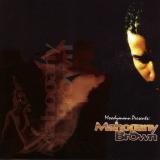
- A6: The Day Will Come
- B1: We Will Work It Out (With Uku Kuut - La 90 Demo)
- B2: One Ch Of Funny Dreamboy
- B3: Short Pori Jazz 83 (Funny Memory Demo)
- B4: Short 5Th Moon (2017 Demo)
- B5: Last Part Of L L82 (With Uku's Moog Solo - Demo)
- B6: There I Go
Seriously good new PPU - obscure lowdown funk from Miami..
Central AYR Productions.. Recorded in various places and others spaces, mostly around Orlando Florida. Multi-Instrumentalist and Vocalist, Anthony Cole is the latest chapter of the PPU family album. AYR, pronounced "air", was formed in 1993. AC recalls "those were very productive and indulgent periods of my life", "the next level in black light". We've got countless hours of 4-track cassette recordings to sort through, these were the first few standout tracks, presented to you in their unedited entirety. Stay tuned for more of the what we call Dirt Music, only in the underground, building on where PPU began.
- A1: Oracle
- A2: High Priestess
- A3: Dreamscape From The Night Kitchen
- A4: Sunset
- B1: Embrace (Live Version, Nyc 1987)
- B2: Environment (Temporary & Indefinite Edit By K. Leimer)
- C1: Sadhana Environment (Pharaohs Mana Mix)
- C2: Sadhana Environment (Dreems \\\\'Natu¨rliche Liebe\\\\' Remix)
- D1: Sadhana Environment (Oahu Suite By Lieven Martens Moana)
Over two years in the making, 'Talisman' is a retrospective and re-interpretative celebration of the work of American musician Robert ÆOLUS Myers. Touched first by the emotional depth of the music, and subsequently by the warmth and wisdom of the man, Origin Peoples sought to capture a snapshot on this special vinyl release.
This newest chapter of the ÆOLUS myth seen for the first time on vinyl are five of his most expressive pieces, alongside a quartet of remixes by kindred spirits from all corners of the globe. This is the first time his music has been interpreted by others, and Robert's delight at the result speaks volumes of his adventurous and open-minded attitude. Approaching the often intangible new age genre with a humanist approach, Robert creates immersive and expansive pieces which connect with the listener on a spiritual and emotional level.
Archetypal narratives are retold through nuanced electronics, evocative motifs and empathetic flute, the varied compositions informed by Myers' classical training, spiritual pursuits and study of ethnomusicology. Part retrospective, part remix project, 'Talisman' is the perfect reflection of Robert ÆOLUS Myers, a musician whose timeless expression of theme and emotion has enriched minds, bodies and souls for almost 40 years.
The 45 of Everyday People - World full of people is well known on the modern soul and funk scene and it relatively easy to find a copy for maybe 500 pounds. What was always less well known was that there was also an LP by the same band but labels as People Pleasure. I first came across this LP in Turku, Finland in the early 2000s when at the house of DJ and Collector Felix Manell who pulled a pile of rare and interesting bits that day. I did not really appreciate the true rarity until trying to source my own copy. The next copy I saw was in Japan in 2004 but was not going anywhere. Roll on 15 years, Russell Paine, collector, DJ and super record researcher called me saying he had finally unravelled the mystery and was talking to Bill brown & Al Hall Jr. Russel sets himself the hard task of only putting out unreleased material on his own label so we also work together on LPs and Singles on Athens of the North. After we managed to clear the rights the final hurdle was finding a clean copy, not an easy task. After asking loads of deep collectors, Zaf put me onto DJ Nick the Record who very kindly lent me his minty personal copy, a huge favour considering how rare this record is, almost impossible to replace. So we mastered from the vinyl (no tapes exist) and while it still sound pretty raw it is twice as good as the O.G. Been a long time coming.
Wave Stu might just be the Platonic ideal of icy, emotionally fraught synth-pop. On his debut release for Origin Peoples, Stockholm-based musician Michel Isorinne puts paragons of this style like Orchestral Manoeuvres In e Dark in his slipstream. Laced with spoken-word passages from films and television shows, Wave Stu weaves a loose tale about the nature of time, physics, and mortality that can be summarized by the key phrase, uttered by a woman scientist somewhere throughout the album, 'magic is in the molecules...'
Isorinne essentially creates introverted minimalist symphonies in which sprightly synth leads peacefully coexist with melancholy, drone-y undercurrents. Throughout the record, Isorinne's melodies bear a fruitful contrast between the morose and the jubilant. He repeatedly places exceptionally delicate and beautiful tunes amid subliminal waves of pensiveness. It truly is a masterly balancing act. e zenith of this approach is Side A's closing track, in which gorgeous countermelodies intertwine like lovers on a tropical beach while a pistoning rhythm pumps up the libido. It's instant paradisiacal bliss.
Side B contains Wave Stu 's most cheerful, uptempo track yet it never bursts into full-on euphoria. Elsewhere, Isorinne reverts back to more somber moods: an eerie, methodical chiller full of quiet wonderment and subdued sparkle reminiscent of Casino Versus Japan, Plone, and others of their gnomic ilk; a low-key anthem in which '70s Vangelis grandiosi meets the workmanlike bass-synth chug of Ulrich Schnauss; an elegiac piece that conjures an intimate majes ; a bass-heavy dirge festooned with forlorn wisps of melodiousness.
The complex, paradoxical happy/sad pendulum at the heart of Isorinne's music lends Wave Stu a tingly resonance that will reward repeat listens. Please welcome an extravagantly rich synth-pop classic.
Inspired by a longstanding respect for the pioneering sounds of Cluster, Neu!, Harmonia & John Foxx, the legendary K. Leimer fuses tape loops, Moog tones and a variety of real and imagined instruments into an immersive journey brimming with electronic emotion throughout this homage, 'Mitteltöner.'
A key figure in America's musical avant garde, Leimer's experiments with tape manipulation, fractal loops and textured ambience have been well documented in recent times, with RVNG and VOD both offering excellent and exhaustive retrospectives of the artist's seventies and eighties output. Tracing Leimer's discography from 1979's 'Translucent: / Memory' to 1983's 'Installation View', via the dislocated rhythms of the Savant project, these archival releases detail a move from the pastoral synthesis of kosmische into more angular, experimental territories. Simultaneously looking to the past and the future, this Origin Peoples release is both a return to Leimer's earliest stylistic explorations, and his first vinyl release of original work in twenty five years.
Oddly for such a sonic outlier, 'Mitteltöner' (midrange to non teutophones) takes its conceptual cues from the idea that the midrange contains all the core information. Over ten tracks, Leimer employs subtlety and skill to navigate the emotional depth of the kosmische genre while maintaining the focus and detail which has remained constant in his work.
Opener 'Dunne Luft' owes as much to post rock as krautrock, evolving from chiming harmonics and understated rhythms into an optimistic roar of motorik percussion and towering guitars. From there, 'Webermelodie' dives into crystalline calm, tracing delicate arps around a processed groove before 'Anode' sends us skywards, drifting through glistening piano refrains and hypnotic sequences. Te dramatic 'As Long Ago As This' glides through a deserted city of metal and glass leaving the measured ambience of 'Entferntemusik ' to close out the side in a swell of static.
Leimer shifts tone as we move onto the flip, segueing the stomping, cybernetic Sturm Und Drang of 'German Defaults' into the propulsive electronics of 'London Interiors', a dynamic sample-topped suite in the tradition of Bill Nelson. The addition of graceful piano motifs and swathes of hazy synthesis lends a tranquillity to the pulsating bass of 'Auf Einem Fahrrad', while 'SHM' marries soothing melody and crunching rhythm into a thoroughly medicated experience. Finally, 'Café Florian' pays homage to Schneider or Fricke with a euphoric fusion of metallic percussion and esoteric energies.
Far from a simple homage to the electronic idols of his youth, 'Mitteltöner' finds K. Leimer reimagining their nuanced sonic framework through a lifetime of musical experience and experimentation.
PPU providing it yet again with 10 more selections from the archives of estonian funk front man Uku Kuut !
Grand Hotel is an instrumental journey from his days in the Soviet Union, Sweden, Los Angeles, Estonia.
Including his very first home recording dating back to 1982, and an opening track that was recorded at Herbie Hancock's personal studio. It's a miracle these masters are still around after 30+ years of traveling from country to country !
- A1: Vision Of Estonia
- A2: Real Love
- A3: Secret Dream
- A4: Mayday
- A5: Dream Lover
- B1: Stevie Bossa
- B2: Vision Of Estonia
- B3: Soft Fashion
- B4: I Ask U Now
- B5: Right Or Wrong
*Repress*
PPU's first long-play LP highlights some of the early beginnings of one of the label's favorite producers, UKku Kuut. Written and recorded at Uku's home studio in Los Angeles and Stockholm between 1982 & 1989.
Some tracks co-written with Maryn E. Coote, famous jazz vocalist who had her beginnings in 1960s Soviet Union. "That's my MOM" recalls UKU, "I remember when I was little, sitting under the mixing board at her sessions". Growing up in studios, Uku's love of music production began early, and over the years he has amassed a vast collection of domestic and soviet electronic gear. In true PPU style this LP is a mix of Uku Kuut's raw cassette demos, forgotten masters and unreleased magic.
- A1: Kid Frost - La Raza
- A2: Bahamadia - Rugged Ruff
- A3: Pete Rock Feat. Slum Village - Da Villa
- A4: De La Soul - Shopping Bags (She Got From You)
- A5: Super-Wolf - Super-Wolf Can Do It
- A6: Funky 4+1 - That's The Joint (Remix)
- B1: Dj Jazzy Jeff Feat. Baby Blak & Pauly Yamz - For Da Love Of Da Game
- B2: Pete Rock Feat. Rza & Gza - Head Rush
- B3: Dilated Peoples - Clockwork
- B4: Bubba Sparxxx - Ugly
- B5: Masters At Work Feat. Screechie Dan - Give It To Me
- B6: King Tim Iii - Charley Says! (Roller Boogie Baby)
- A1: Gil Scott-Heron - The Revolution Will Not Be Televised
- A2: Mandingo Griot Society With Don Cherry - Sounds From The Bush
- A3: Roy Ayers Ubiquity - Red, Black And Green
- A4: Philip Cohran And The Artistic Heritage Ensemble - Malcolm X
- B1: Sarah Webster Fabio - Sweet Songs
- B2: Phil Ranelin - Vibes From The Tribe
- B3: Horace Tapscott With The Pan Afrikan Peoples Arkestra - Desert Fairy Princess
- C1: David Mcknight - Strong Men
- C2: Joe Henderson - Black Narcissus
- C3: Oneness Of Juju - African Rhythms
- D1: Doug Carn - Suratal Ihklas
- D2: Duke Edwards And The Young Ones - Is It Too Late
- D3: Carlos Garnett - Mother Of The Future
Underground Jazz, Street Funk & The Roots Of Rap 1968-79. Soul Jazz Records' new release 'Soul of a Nation: Afro-Centric Visions in the Age of Black Power' is released in conjunction with a major worldwide art exhibition, Soul of A Nation: Art in the The Age of Black Power which takes place at the Tate Modern, London, UK (July-Oct 2017) and The Brooklyn Museum, New York, USA.
The album shows how the ideals of the civil rights movement, black power and black nationalism influenced the evolvement of radical African-American music in the United States of America in the intensely political and revolutionary period at the end of the 1960s following the assassinations of Malcolm X, Martin Luther King and the rise of the Black Panther party.
Featuring groundbreaking artists such as Gil Scott-Heron, Roy Ayers, Don Cherry, Oneness of Juju, Sarah Webster Fabio, Horace Tapscott, Phil Ranelin and many others, Soul of A Nation shows how political themes led to the rise of 'conscious' black music as new afro-centric styles combined the musical radicalism and spirituality of John Coltrane and radical avant-garde jazz music alongside the intense funk and soul of James Brown and Aretha Franklin and the urban poetry and proto-rap of the streets.
The Soul of a Nation exhibition draws on the links between Black art forms - art, music, poetry - and how they came together during the civil rights and black power era as part of the wider black arts movement across the United States.
Iconic African-Amercian revolutionary figures such as Martin Luther King, Malcolm X and Angela Davis, John Coltrane, Muhammad Ali all appear in the radical artworks of Barkley L. Hendricks, Romare Bearden, Norman Lewis, Lorraine O'Grady and Betye Saar.
A selection of original radical jazz record sleeves artworks which appear in Soul Jazz Records' earlier groundbreaking Freedom, Rhythm and Sound - Revolutionary Jazz Original Cover Art book will also be on show at the Tate, London throughout the exhibition. The Freedom, Rhythm and Sound book is also newly back-in-print in conjunction with this major exhibition and the release of the Soul of a Nation album.
Stuart Baker (founder of Soul Jazz Records) will appear on the panel of Jazz for Soul of a Nation: Art in the Age of Black Power discussion at the gallery as part of the show. Soul of a Nation comes with extensive sleeve-notes and exclusive photography in a large 36-page outsize booklet and slipcase. Double gatefold vinyl album edition comes with full colour inners + bonus download code and includes full sleeve-notes/photography.
Taking place in the Paras district, Cangallo province, in the Ayacucho region of the Central-South Sierra of Peru - this is a recording of a ritual held on February 5th 2020 for the one year anniversary of the death of Mrs. Sofía Miranda de Bellido, recorded by her grandson Hánkel Bellido.
At noon the coffin of "Mamay Sofía" was presented, so that her relatives could say goodbye for the last time. Following tributes from family members, these songs dedicated to her life and her passing were sung.
The townspeople were notified of the events by the sound of bells that produce a peculiar and powerful sound, and that can be heard in the other nearby towns of Paras. It is said that these bells were greased with human fat, and brought from the Cerro de Pasco region during colonial times. The bells must be played all morning until the change of mourning takes place.
At midnight the songs of the Almakunapaq (also known as San Gregorios) mass began. These are unique to the Andean peoples - a fusion of Andean and Christian syncretic traditions - and are said to help the dead to enter the eternal Kingdom.
It was 4am when the change of mourning took place, and in accordance with traditions, the friends & family announce the presence of harp and violin players, to liven up the proceedings with songs of joy and merriment until the next day.
"Mamay Sofia, manan wañukunkichu, kawsakuchkankim sunquykupi; sichus qunqarusqaykiku, chaymi ichaqa wañukunki!"
"I have not died, I will die on the day that you forget me!"
- Kofán – El Bejuco Umbilical
- Ensamble Juyungo – Chimborazo
- Llaquiclla – Agua Larga
- Asunción Quiñonez – Bambuco La Katanga
- Juan Luis Restrepo – A Saravino
- Juan Cayambe – Negra Muele Caña
- Rosa Huila – Andarele
- Ensamble Juyungo – Amanece
- Caynamanda Cunangaman – Candela Y Ron
- Llaquiclla – Ceremonia Matrimonial
- Ensamble Juyungo – Patagoré
- Papá Roncón – Sanjuanito Chachi
- Ensamble Juyungo – Llacta Pura
- Llaquiclla – Ritual Emberá
- Osvaldo Lindberg Valencia – Torbellino
- Raúl García Zárate – Kasilla Shungulla
- Ensamble Juyungo – Tren Con Ritmo De Caramba
- Ensamble Juyungo – Caramba Con Ritmo De Tren
- Llaquiclla – El Viaje Del Yagé
- Ensamble Juyungo – Toquesito
- Llaquiclla – Galapago
- Llaquiclla – Carambalante
‘Since the 16th century, the Ecuadorian province of Esmeraldas has been home to a unique Afro-Indigenous culture originating in the integration of the Indigenous Chachi and Nigua peoples with African Maroon communities. Juyungo documents significant Esmeraldan artists and bands playing the Afro-Ecuadorian folklore of the province, as well as including some older field recordings. Based mostly on the marimba, whose origins lie partly in the African balafon, partly in Indigenous percussion instruments, the music is laced with call and response chants, ambient insect and bird noise, the filigree finger-styles of the Andean guitar tradition and the panpipes of the mountains. This is resonant insider roots music at its headiest — the mystic revelation of Esmeraldas, gully deep and lustral.’
- Francis Gooding, The Wire.
The fifth in our series of LPs compiling classic music from Ecuador. Customary Honest Jons runnings: a beautiful gatefold sleeve; superior pressing, with vivid, intimate sound; full-size, sixteen-page booklet, in colour throughout, with detailed, fascinating, bi-lingual notes, and stunning photographs.
The music is transfixing, magical; not like anything else. From start to finish, this album is continuously, profoundly immersive; a kind of journeying, trippy meditation about slavery and cultural resistance, identity and mix, places and spaces, futures and pasts. It’s inscrutable to net-surfing, algorithms, Shuffle. But for a taste try the insurgent marimba roller Agua Largo, jet-propelled by Rosa Huila’s rapturous blend of African spiritualist and Christian chant. ‘Healing music,’ Zakia called it on Gilles Peterson’s BBC show recently. And the ravishing pasillo Kasilla Shungulla — ‘calm your heart’ in the Quichua language — a duet between the Peruvian master-guitarist Raúl García Zárate and viola da gamba by Juan Luis Restrepo from Medellin, recorded in a baroque church in Buzbanza, Colombia.
Welcoming prolific and essential Mexican artist Andy Martin to Animalia, with his mesmerising, mind-bending musical interpretation of the Nahual, a common & integral figure of the belief systems of ancient Indigenous peoples of the Americas, which embodies the spiritual connection between humans & animals. In some traditional stories, this connection is so strong that they are said to transform into one of them. Tierra de Nahuales refers to a region of ancient America inhabited by these mythological beings, which in this EP become part of the Animalia universe, shaped by psychedelic broken rhythms, tribal sounds, and dub influences. A release that feels both deeply personal to Andy's musical & cultural identity as well as the label's own - a telling ode to the abilities of the depth & outer worldly sense to his music - a world-building, shapeshifting & one of a kind artist who feels truly at home in the Animalia family.
On Lila, his debut LP, Moroccan artist Karim presents a series of undulating electronic rhythms laser-etched into tessellated form: drumless techno from the pre-Sahara, built for communal psychic expansion.
Drumless, yes, but not percussionless. There are shakers, castanets, stabs, plonks, thuds. There are insistent basslines propelling forward, pulsing with energy, rippling in time. There are tones interlocking, rolling, fluttering, pattering. Dancing within, around, between each other. Considered in terms of sheer geometry, Lila is a techno record, unmistakably. But it sounds quite unlike any other techno record you've heard lately.
To write the album, Karim borrowed from the music of the Gnawa, a religious-spiritual musical tradition descended from West African peoples brought to Morocco as slaves hundreds of years ago. Now integrated deeply into Moroccan culture, the centerpiece of Gnawa music is the lila—or "night," in Arabic—an all-night-long ritual of rhythm designed to induce participants and musicians alike into a healing trance state. Which, if you're a dedicated raver, may sound familiar, yes?
Crafted entirely with modular synthesizers, Lila conjures a range of textures and moods. The show opens with "Bakh," a blissful exercise in beatlessness, clear and crystalline. On "Philipoussis," "Kiyex," and "Sonic," arpeggiated synths approximate Gnawa chants while interlaid percussion keeps time in multiple meters. "La" and "Kille" pulse in half-time, ideal for creative mixing. "Joul à lèvre" bristles with electricity, the sound of a charged lightning rod. "Pamil," woozy and lurching, feels like being shipwrecked on a forgotten island. Last and absolutely certainly not least, on the final track, "Miloir," Karim faces West and unleashes the album's only kick drum for a ten-minute psychedelic techno masterpiece. The mind warps; the body moves.
Lila is released on Tikita, Karim's own record label, founded in 2014. Tikita's discography, spare but tightly curated, features artists from across the globe pushing outwards into techno's deepest reaches. Karim's album pushes even farther. Listen for yourself.
ALTERNATE ART EDITION[29,83 €]
On a Sunday in the early 70s in South LA one could asily find themselves experiencing the Pan Afrikan Peoples Arkestra doing what they do for the community, performing incredible music. "Live at Widney High December 26th, 1971" is a previously unreleased PAPA recording. It finds director Horace Tapscott conducting the band at Widney Career Preparatory & Transition Center, a special-education magnet high school in Los Angeles. The band played shows here between 1970 and "72, often sharing the bill with contemporaries John Carter and Bobby Bradford"s group, and at one point the Sun-Ra Arkestra. These weekend shows were free and meant for the surrounding Black community. On this date the PAPA performed a range of compositions from the Ark"s expansive songbook, including arrangements of tunes by Pharoah Sanders and John Coltrane.
STRICTLY LIMITED TO 100 COPIES ARTIST PROJECT After discovering techno at La Concrète, invited by my girlfriend, it was a revelation, and I very quickly felt the urge to contribute in my own way. My intention has been to create tracks infused with positive energy (even if the creative process sometimes leads into slightly darker corners of music). Still, I realized—rather late—the importance of the musical genre known as “techno.” Here is my reflection on it: Nothing is closer to village music (with everything that implies among indigenous peoples, for example—important and respected moments of communion) than techno. On one side, you have basic organic instruments and the voice; on the other, the most advanced technology available. But fundamentally, the difference is only superficial—the essence is the same: a guide, and people who participate intuitively, ultimately finding or discovering their own inner paths… individuation. Techno represents the re-emergence of a kind of initiation rite that had been missing in the West for quite some time—a sort of continuation of Woodstock, more spread out over time but just as powerful from a societal perspective. This release is my contribution to that revival, in the same way a villager might feel free to join trance music with a simple stick that sounds right, or a drum—something intuitive that all our ancestors must have practiced naturally at one point or another. In short, nothing pretentious—just something made with heart
Vibe Ride is the sixth release of Adam Rudolph's Hu Vibrational project and marks his 60th release as a leader or co-leader. Comes with insert and download code.
“With every record, the goal is to explore new creative territory,” explains Rudolph. Vibe Ride continues a deeper exploration of a trance-like groove and a conceptual framework known as Sonic Mandala. This album marks the most complete realization of that idea, partly due to the group's experience touring beforehand. That time on the road helped to refine ideas and strengthen musical chemistry. The recording process unfolded organically—likely due to the long-standing collaboration within ensembles like Go: Organic Orchestra and Moving Pictures, where the musicians have developed a deep familiarity with the shared musical language.
Sonic Mandala refers to a musical approach distinct from traditional linear structures of theme and development. Found in cultures across the globe, it may represent one of the oldest forms of musical expression—predating written history by tens of thousands of years. Today, it is most vividly preserved in the music of the Ituri Forest peoples (Aka, Baka, Ba Benzele, Mbuti), whose sound traditions revolve in cyclical, orbit-like patterns. Vibe Ride seeks to bring that ancient sense of circularity into a contemporary—and perhaps even futuristic—context.
The ensemble of Vibe Ride—Alexis Marcelo, Jerome Harris, Harris Eisenstadt, Neel Murgai, Tim Kieper, and Tripp Dudley—brings exceptional creativity and skill to the project. While grounded in the sonic languages of today, their performance channels an ancient vibrational lineage, connecting with ancestral sound makers who were attuned to the rhythms of the sun, moon, stars, and seasons. Human beings have always been deeply responsive to natural cycles.
Like a mandala, where the circle reveals itself as a spiral—always returning, but never to the exact same point—the Sonic Mandala musical experience spirals through motion. Refined signal patterns emerge through overtone-rich instrumentation. The groove becomes a threshold, shifting the listener from passive observation into active, even transcendent, participation. With open ears and an open mind, the sound spirals inward—toward a primal center—and outward into the cosmos. When this elevated state is shared among participants, it creates what mystics describe as resonance.
Vibe Ride thrives on the distinctive sonic voices of its players, interwoven with care and nuance into the compositions. Hu Vibrational merges elements of world music, electronica, and improvised jazz into something both funky and spiritual, intense and soothing.
Using signature techniques of organic orchestration, layered arrangement, and electronic processing, the compositions are sculpted from percussion, electronics, and ethereal textures. Rhythmic foundations drawn from diverse traditions serve not as endpoints, but as building blocks. As the saying goes, “Orchestration is the key.” In shaping the sound, the aim was to discover fresh ways of balancing structure and sonic color. As Don Cherry once said: “The swing is in the sound.”
The audiophile LP was carefully recorded, mixed, and mastered by James Dellatacoma—longtime engineer for both Bill Laswell and Rudolph—at Laswell’s Orange Studio.
“This crew artfully blends together to create a seamless tapestry of rhythm… the end results are mesmerizing. Hu Vibrational is all about communing with the groove spirits and creating worlds where earthy rhythms and other-worldly sounds are one.”
— Dan Bilawsky, All Music Guide
“You can be sure that when Adam Rudolph and an ensemble of breathtaking drummers get together mystical and wonderful things will happen.”
— Raul da Gama,
“A stunning effort, enjoyable and grows with repeated listening.”
— Stefan Wood, Freejazzcollective