Bonobo alias Simon Green - heute einer der größten Namen in der Dance-Musikszene - tauchte erstmals Ende der 90er Jahre als einer der hellsten Sterne des Downtempo-Genres auf. Ursprünglich um die Jahrtausendwende veröffentlicht, ist Bonobos Debütalbum "Animal Magic" ein zeitloses Album und ein Kultfavorit unter den Fans geworden.
Aufgenommen auf einem Akai 4-Spur-Tonbandgerät, nimmt "Animal Magic" einen besonderen Platz in der Geschichte des in Brighton ansässigen Independent-Labels Tru Thoughts ein, denn es war das erste Album des Künstlers, das auf der Tru Thoughts-Compilation "When Shapes Join Together" debütierte. Bonobos Anfänge als talentierter DJ und Produzent begannen unter der Anleitung von Tru Thoughts A&R Robert Luis und seinen Label-Nächten in Brighton, wie z.B. phonic:hoop, wo Simon seine ersten Erfahrungen sammelte und begann, die ganze Nacht hindurch DJ-Sets zu spielen.
"Animal Magic" ist das Ergebnis von Simon Greens Zeit in der kreativen Küstenstadt Brighton und markiert einen wichtigen Meilenstein in seiner musikalischen Reife. Die Stadt übte einen entscheidenden Einfluss auf ihn aus und ermöglichte es ihm, seine Fähigkeiten als Drum-Programmierer und Produzent weiterzuentwickeln, während er unermüdlich als DJ in diesem kreativen Zentrum auflegte.
Während er in Brighton lebte, veröffentlichte Bonobo neben seinem kultigen Debütalbum "Animal Magic" eine Handvoll EPs und Singles wie "Scuba", "Terrapin" und "One Offs, Remixes & B-Sides" und legte mit anderen Künstlern von Tru Thoughts und Ninja Tunes in ganz Europa und Nordamerika auf.
Mit der Veröffentlichung von "Animal Magic" im Jahr 2000 wurde Simon Green als ernstzunehmendes Talent in der Szene bekannt, das der elektronischen Musik eine echte musikalische Note verleiht. Seitdem wurde Bonobo bei Coldcut's Ninja Tune unter Vertrag genommen und veröffentlichte sechs weitere Alben, darunter das GRAMMY-nominierte "Fragments" im Jahr 2022, während er seine DJ-Performance zu einer voll orchestrierten Live-Band weiterentwickelte, weltweit auf Tournee ging und zu einem beliebten Mainstage-Performer auf den größten Musikfestivals der Welt wurde.

quête:ph
Re-press expected soon: The Action Is Go Deluxe Edition, celebrates the band’s 4th album and debut of
guitarist Bob Balch and drummer Brant Bjork, which was originally released on 7 October,
1997.Produced by White Zombie’s J. Yuenger and recorded at the legendary Sound City Studios and also
at Grandmaster Studios in Los Angeles, California, The Action Is Go is considered a classic of the '90s and
a pillar for the "stoner rock" movement. Highlights include the lead single "Evil Eye", which was featured
on the soundtrack for Tony Hawk’s Pro Skater 2 and is included on the reissued version released 4
September 2020 alongside live staples "Grendel, Snowman,” “Hogwash” and “Saturn III”. This limited
edition 1,000 unit double LP run is cut at 45 RPM for maximum heaviness and the gatefold package
design includes never before seen photos of the band. Also included is a bonus Sparkle vinyl 7” of
“Swami’s Last Command” and an alternate version of “Module Overload” recorded during The Action Is
Go album sessions, both of which were previously only available on the European pressing of the original
album. Both the LP and 7” feature newly remastered audio for optimum fidelity.
Marking one year following Phase Fatale’s (aka Hayden Payne’s) last EP on his label BITE, ‘Love Is Destructive’ is a clear shift into true techno territories, integrated with his distinct curation of narrative and sonic framework, imprinted with a musical diet of sleek, synthesised storytelling.The 4-Track EP reflects the turbulent ebb-and-flow found with emotional conclusion - a genesis soundtracked by raw energy and driving undercurrents. The Berlin-based DJ, Producer and Label-owner’s propensity for creating a symbiotic harmony by blending seemingly divisive elements from his genre defying repertoire, demonstrates his masterful understanding and control of the listener’s borderless, auditory journey. Exemplified by his marathon closing sets at Berghain, as well as techno arenas such as Khidi in Tbilisi (both of which he is a resident), Phase Fatale’s recent DJ performances and production endeavours reflect his fresh approach to pure techno sensibilities. The title track sets the tone with imperative grooves, energetic vigour and intrepid attitude. Following a progression of techno propulsion in ‘Magma Driver’, infused metallic textures and trippy, headier elements add depth, whilst the body of work’s cutting edge sound design echoes spacey vivacity and purification in equal measures. Dichotomy comes forward with tracks ‘Ambivalence’ and ‘Introjection’, processed vocal samples with dub techno leanings and hints towards broken rhythms are sculpted by Payne’s focused approach, resonating a feeling of hopeful resolution akin to resurgence. These romantic sensibilities offset by cold mechanical nuances are reflected in the EP’s artwork, depicting roses against the backdrop of engine-like machinery. ‘Love Is Destructive’ is dedicated to Juan, Simone and Luis. Featuring artwork by Silent Editions.
- A1: Strange Timez (Feat Robert Smith)
- A2: The Valley Of The Pagans (Feat Beck)
- A3: The Lost Chord (Feat Leee John)
- A4: Pac-Man (Feat Schoolboy Q)
- A5: Chalk Tablet Towers (Feat St Vincent)
- A6: The Pink Phantom (Feat Elton John & 6Lack)
- B1: Aries (Feat Peter Hook & Georgia)
- B2: Friday 13Th (Feat Octavian)
- B3: Dead Butterflies (Feat Kano & Roxani Arias)
- B4: Desole (Feat Fatoumata Diawara)
- B5: Momentary Bliss (Feat Slowthai & Slaves)
repressed !
Gorillaz started the year with Episode 1 - ‘Momentary Bliss ft. slowthai and Slaves’ - of Song Machine, a whole new concept from one of the most innovative bands around. Now, six episodes in, Noodle, 2D, Murdoc and Russel have visited Morocco and Paris, London and Lake Como, as well as travelling all the way to the moon, and Gorillaz is ready to bring you the full collection titled Song Machine: Season One - Strange Timez, out on 23rd October 2020.
Song Machine is the ongoing and ever-evolving process which has seen Gorillaz joined by an expanding roster of collaborators captured live in Kong Studios and beyond. The result is an expansive collection of tracks embracing a myriad of sounds, styles, genres and attitudes from a breath-taking line-up of guest artists including Beck, Elton John, Fatoumata Diawara, Georgia, Kano, Leee John, Octavian, Peter Hook, Robert Smith, Roxani Arias, ScHoolboy Q, Slaves, Slowthai, St Vincent and 6LACK.
To date the project has seen over 100million streams on all tracks already and the band’s biggest period of sustained growth across both listenership and fanbase growth. All this before the album has even been announced!
Virtual band Gorillaz is singer 2D, bassist Murdoc Niccals, guitarist Noodle and drummer Russel Hobbs. Created by Damon Albarn and Jamie Hewlett, their acclaimed eponymous debut album was released in 2001. The BRIT and Grammy Award winning band’s subsequent albums are Demon Days (2005), Plastic Beach (2010), The Fall (2011), Humanz (2017) and The Now Now (2018). A truly global phenomenon, Gorillaz have achieved success in entirely ground-breaking ways, touring the world from San Diego to Syria, winning numerous awards including the coveted Jim Henson Creativity Honor.
The band are recognised by The Guinness Book Of World Records as the planet’s Most Successful Virtual Act.
j 10. Désolé (feat. Fatoumata Diawara) Extended Version
2024 repress.
French saxophonist Laurent Bardainne summons the spirit of astral jazz on heavy-grooving album, 'Hymne au Soleil'
A dreamlike, cinematic excursion to the outer reaches of the solar system and the inner workings of the soul, Laurent Bardainne returns to Heavenly Sweetness with his Tigre d'Eau Douce group for a second album of genre- agnostic jazzfunk.Building on critically acclaimed 2020 album 'Love Is Everywhere', 'Hymne au Soleil' sizzles with Arnaud Roulin's Hammond organ licks, in-the-pocket bass work from Sylvain Daniel, and shuffling drum and percussion interplay from Philippe Gleizes and Roger Raspail, pinning Bardainne's soaring saxophone lines to the mast like a flag in the wind.
The 11- track album represents a consolidation of Bardainne's vision as a consummate jazz saxophonist, having made his name collaborating with the likes of Pharrell Williams and Cassius, afrobeat legend Tony Allen and co- founding Tigersushi electro outfit Poni Hoax.
That eclectic experience comes to the fore on 'Hymne au Soleil', which is named after a piece by trailblazing French composer Lili Boulanger. Beginning with the lilting, late-night smoker "Oh Yeah", which recalls the mellow funk of Khruangbin, the album rolls through a rich musical landscape, whether in the Motown-era soul breakdowns of "Adieu My Lord" or the roaring, dance floor- ready "Hymne au Soleil", that draw parallels with the high-octane sound of UK jazz outfit The Comet Is Coming..
Warehouse Find!
The masterful, supergroup of Phreek lead by Patrick Adams, sees three of its sought-after masterpieces, two of which have never been on a 12 inch, officially reissued and remastered on a label that’s fast becoming a go-to for in demand reissues, South Street Disco.
A pure classic, ‘Weekend’, was born back in ‘78 written by Leroy Burgess and James Calloway and produced by Patrick Adams and Burgess, they lead an expertly curated troupe for this massive Paradise Garage staple and Larry Levan favourite. That late ‘70s sound where synthesisers rose to prominence, sees a combination of cosmic keys, freakish strings and power-play funk guitars, tied together with tight percussion, bold basslines and Christie Shire’s lead vocals, that whole heartedly captures the spirit of disco. Famously remade into a house anthem 10 years later by Todd Terry, ‘Weekend’ is a timeless slice of celestial magic.
In a similar fashion ‘Everybody Loves A Good Thing’ does another blast around the cosmos - a Universal Robot Band feel emanating from the buzzing synths and awe-inspiring vocal prowess of Leroy Burgess, coupled with ‘Shining’ star, Venus Dodson. As uplifting as it gets, complete with a killer piano breakdown to draw out every ounce of anticipation.
Flip it over and a whole side is devoted to the greatness of ‘I'm a Big Freak R*U*1*2’. A mesmerising, fast-paced, disco workout with sensuous groans, sleazed up, supernatural keys and a heavy bass that just goes and goes and goes! Favoured by the biggest and best out there, from Ron Hardy to Theo Parrish, it’s got the power and energy to light up even the most demanding of dancefloors.
Nachdem The National den Soundcheck für ihren Auftritt in Vancouver am 5. Juni 2023 beendet hatten, spielte die Band einfach weiter. Etwas braute sich zusammen: Die prägnanten Gitarrenparts von Aaron und Bryce Dessner trafen auf den Signature-Drumbeat von Bryan Devendorf. Als der Bassist Scott Devendorf loslegte, fing Matt Berninger an, einige Zeilen zu singen, die schon seit ein paar Jahren in ihm reiften. " Smoke detector, smoke detector / All you need to do is protect her", intonierte er. Ihr Tontechniker ließ die Aufnahme laufen und plötzlich war es ein 12 Minuten-Jam. Sie wussten, dass sie etwas Besonderes hatten, und nahmen die Live-Aufnahme bald darauf in Aarons Studio mit. Sie haben ein paar Minuten gekürzt, aber ansonsten das beibehalten, was auf der Bühne in Vancouver passiert ist. Dieser Song, "Smoke Detector", ist der krönende Abschluss von "Laugh Track", die überraschende zweite Hälfte eines Doppelalbums, das im April mit "First Two Pages of Frankenstein" begann. Es erwies sich als das letzte Kapitel eines Werks, das ansonsten neben dem Schwesteralbum geschrieben wurde - der Schlussakt einer Katharsis, die zeigt, was The National in den letzten drei Jahren durchgemacht haben. Vor zwei Jahren war die "Smoke Detector"-Zeile einer der wenigen Fetzen, die Matt während einer lähmenden Depression schreiben konnte und das zu einer Zeit, in der sich die Band fragte, ob sie jemals wieder ein Album machen würde. Nach der Pandemie belebte ihr neuer Glaube aneinander die kreativen Fähigkeiten wieder. "Weird Goodbyes", das bereits im August 2022 erschien, war ihr erster Durchbruch und der erste Vorgeschmack auf diese neue Ära. "Wir haben es wirklich schnell veröffentlicht, weil es wie ein Baby war, das in der Dunkelheit geboren wurde, oder so", lacht Matt. "Wir mussten es den Menschen zeigen". Aber als sie schließlich mit diesem umfangreichen Werk vorankamen, entschieden sie sich, "Weird Goodbyes" nicht auf das Frankenstein-Album zu nehmen. "Es fühlte sich an, als ob die Geschichte bereits erzählt worden wäre. Es war eine eigene Sache", sagt Aaron. "Aber es fühlte sich auch so an, als hätte es einen Bezug zu dem, was wir taten. Das war ein Teil der Logik für die Aufnahme einer weiteren Platte - wir wollten "Weird Goodbyes" ein eigenes Zuhause geben." "Laugh Track" ist das vielleicht musikalisch bedingungsloseste Album, welches die Band seit Jahren gemacht hat. Es ist aufmüpfig und dennoch leichtfüßig, doch es enthält ebenso viel seltene, ungebremste Schönheit wie Trostlosigkeit. Thematisch gibt es keine absichtliche Trennung zwischen "Frankenstein" und "Laugh Track". Während Matt auf "Frankenstein" eher auf der Suche nach einem Zufluchtsort war, hat er hier eine neue, klare Sicht auf das, was zählt. Sein dringendes Bedürfnis nach Intimität wird durch eine immer größere Angst vor der Unwirklichkeit des modernen Lebens noch verstärkt. Die Charaktere auf diesem Album (keine Vornamen, abgesehen von einer Tourmanagerin namens Alice - nur "ich" und "du") decken einander, träumen füreinander und helfen, den Schein zu wahren - und lösen damit das Versprechen von der gegenseitigen Fürsorge ein, das Matt auf dem Frankenstein-Schlusslied "Send for Me" gegeben hat. Wenn "Frankenstein" ein Zeichen für die Wiederherstellung des Vertrauens zwischen den einzelnen Bandelementen war, so ist das lebendige und neugierige "Laugh Track" das selbstbewusste Produkt dieses Prozesses und eine Absichtserklärung für jetzt und die Zukunft.
Wewantsounds is delighted to reissue Harold Land's 1971 Mainstream Records LP 'Choma (Burn),' recorded in Los Angeles with Bobby Hutcherson and featuring Reggie Johnson on bass, Ndugu and Woody Theus on drums, Bill Henderson & Harold Land Jr. on piano/Fender Rhodes. Together the musicians create a superb spiritual mix of funky and modal Jazz that was the trademark of the Harold Land-Bobby Hutcherson quintet between 1968 and 72. Choma (Burn) is reissued here in its original gatefold artwork with all the photos scanned from first generation negatives recently found in the Mainstream Records vaults, and comes with newly remastered audio and a 2-page insert including new liner notes by Kevin Le Gendre
Attention, aficionados of sublime pop music! Jim is, in fact, the older brother of pop singer Gerry Rafferty. Following two albums of sophisticated, melodic material with strong emphasis on vocal harmonies (not dissimilar to his brother"s work), Jim entered the 80s with no record deal, but good new tunes to shop. His original demos provided chart fodder for Frida (late of Abba), Clannad and Ian Matthews, but Jim"s versions outshine them all!"I See Red" was picked up by Phil Collins for Abba star Frida"s 1982 solo album.The flip-side of Jim"s "I See Red" has its own cover history - "Fear Strikes Out" first appeared on Ian Matthews" 1984 LP, Shook. Now, some 40 years later, the superior versions of these two Jim Rafferty originals arrive on a 7" single.
The new album from Hysterical Love Project is a moody collection of guitar-shimmered downtempo odes. Lashed by the blue-hot debris of missing, it reverbs with adoration for those dear and far. It says I'm sorry for taking photos of sunsets, I couldn't wait to be alive.
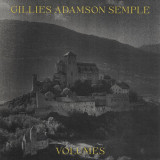
Artist and musician Gillies Adamson Semple explores the material resonance of drone
on new vinyl-only album Volumes.
In 2022, Gillies Adamson Semple made a pilgrimage to the Valère Basilica in the Swiss Alps to play the oldest functioning pipe organ in the world. Built in 1435, this unique instrument is the centrepiece of this sensitive and stirring 6-track release, tracing the elemental themes of spirituality, anatomy, ecological collapse, and the nature of listening in its glacial minimalist drones.
Drawing inspiration from the long-form compositions of Sarah Davachi and Kali Malone, Volumes was built from in-situ recordings Semple made in Switzerland, with the aim of capturing the physical qualities of the sound, from the stops and pedals to the air rushing through the organ’s ancient pipes. Treated like sculptural material and re-assembled at Semple’s London studio in the tradition of musique concrète, the tracks evoke a sense of exquisite timelessness, at once part of and floating free of their environment.
As Semple explains: “What I like about the organ is that you can make it feel very physical. It has all these mechanical parts that sound really beautiful. And the piece is never performed. It is something that is rooted in the site. The whole pilgrimage to see this organ in Switzerland ended up acting like that, where you’re going to this very sacred place to see this specific instrument, but all you’re taking back is recording.”
Released on vinyl via Fourth Sounds, Volumes was initially conceived as the soundtrack to Semple’s 2023 exhibition of the same name at Cedric Bardawil in London.
Edition of 200 with risograph insert, liner notes by Anton Spice. Fully remastered for vinyl.
- A1: Improvisation 4
- A2: Improvisation 5
- A3: Improvisation 6
- A4: Improvisation 7
- A5: Where Is The Police
- A6: Christiani Eddy
- A7: The Squirrel And The - Ricketty-Racketty Bridge
- B1: Improvisation 3
- B2: Improvisation 8
- B3: Improvisation 9
- B4: Improvisation 10
- B5: Improvisation 11
- B6: Improvisation 12
- B7: Improvisation: York
Recorded in 1971, Solo Guitar Volume 1 was Bailey's first solo album. Its cover is an iconic montage of photos taken in the guitar shop where he worked. He and the photographer piled up the instruments whilst the proprietor was at lunch, with Bailey promptly sacked on his return. The LP was issued in two versions over the years — Incus 2 and 2R — with different groupings of free improvisations paired with Bailey's performances of notated pieces by his friends Misha Mengelberg, Gavin Bryars and Willem Breuker. All this music is here, plus a superb solo performance at York University in 1972; a welcome shock at the end of an evening of notated music. It's a striking demonstration of the way Bailey rewrote the language of the guitar with endless inventiveness, intelligence and wit.
- A1: What I Love About Nicole
- A2: What I Love About Charlie
- A3: Last Critique
- A4: Procession To The Trailer
- A5: Nicole Tells Her Story
- A6: Mommy Phase
- B1: Trick Or Treat
- B2: New House
- B3: Sockpants / Dirty Sockpants
- B4: Shouting And Shopping
- B5: Separate Lives
- B6: What I Love About Charlie (Reprise)
- B7: Sgt. Pepper Shoelaces
- B8: End Of Story (Credits)
Score by 20 Time Academy Award Nominee, 2 Time Academy Award Winner, Music Legend: Randy Newman. The album is pressed on classic black vinyl and includes printed inner sleeves. The vinyl release features different artwork from the CD and digital releases. Written & Directed by Academy Award Nominee Noah Baumbach. "At once funny, scalding, and stirring, built around two bravura performances of incredible sharpness and humanity, it's the work of a major film artist, one who shows that he can capture life in all its emotional detail and complexity — and, in the process, make a piercing statement about how our society now works.”
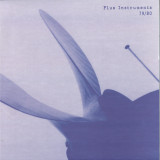
While she was still a member of Nasmak, one of the leading bands of the Dutch ultra-movement, Truus de Groot started Plus Instruments in 1978 with herself as the sole member. When the project evolved, she found a wide range of rotating collaborators like Michel Waisvisz, Lee Ranaldo and James Sclavunos. Plus Instruments was about freedom and the live performances were largely improvised. The sound minimal but captivating. The music always came from within, but De Groot was also triggered by bands like Red Crayola, Suicide, DAF, Wire, Per Ubu, Devo and the No Wave scene in NY. She was always experimenting with primitive multi-track recording and whatever crappy gadgets she could find. Always looking for a gritty, dirty sound and bizarre overtones.
At a young age she travelled to New York and began to immerse herself in the nightlife of the city that never sleeps. Here she found true creativity, passion and expression. The club scene was alive but highly competitive, so this fearless Dutch girl would just knock on promoter’s doors to get gigs booked at places like CBGB’s, Peppermint Lounge, Underground and the Pyramid. De Groot eventually settled in the United States and never stopped experimenting with sound. In recent years she reinvented Plus Instruments and led the group into new territory.
The recordings for this LP were made by De Groot at home and the music is experimental, minimal, industrial but also playful, sounding nothing like most of the later material. 14 tracks in total of which 7 are taken from the elusive and impossible to find self-released debut cassette as ‘Truss Plus Instruments’ which was sparingly distributed by Nigel Jacklin and his legendary Alien Brains fanzine in 1980. The remaining 7 tracks are from the same period (1979-1980) and were carefully selected from the vast archive of De Groot. We are glad to present this anthology that serves as a long overdue testimony to the formative phase of a unique female pioneer of electronic music.
The eleventh issue of We Jazz Magazine, "Oni Puladi" for Carla Bley.
All articles presented IN ENGLISH. Carla Bley by Stewart Smith, Gondwana Records by Debra Richards, Ahmed by Seymour Wright, Amirtha Kidambi by Ayana Contreras, Ruth Goller by Daryl Worthington, Abdul Wadud by Pierre Crépon / David Neil Lee, François Jeanneau by Bret Sjerven, Mette Henriette by Debra Richards, Nduduzo Makhathini by Rob Garratt, Discaholic column by Mats Gustafsson, We Jazz Festival 2023 photo essay by Julius Töyrylä, album & live reviews, plus more.
128 pages, 170 x 240 mm in size and printed on 140g Edixion paper with laminated 300g Invercote covers.
In an inspiring collaboration uniting artists from different corners of Europe and the Middle East, Palestine's Muqata'a, French-Irish Zoë McPherson, and Lebanon's Rabih Beaini have merged their creative forces to remix the Belgian/Iraqi band Use Knife's influential album 'The Shedding Of Skin'.
'Peace Carnival', released on Berlin’s Morphine Records, challenges the narrative around peace through its percussion, glitches, distortions, and Muslimgauze-esque minimalism to critique and rethink perceptions of justice and freedom.
This year, Carnival's usual satire and mockery should be directed towards the so-called and one-sided definition of 'peace'.
- 1: Different Type Time (Prod. Quelle Chris & Cavalier)
- 2: Custard Spoon (Prod. Quelle Chris)
- 3: Can’t Leave It Alone Feat. Eric Jaye (Prod. Glassc!Ty)
- 4: Come Proper (Prod. Jacob Rochester)
- 5: Touchtones (Prod. Aummaah)
- 6: Déjà Vu / Tydro ‘97 (Prod. Messiah Muzik / Quelle Chris)
- 7: Doodoo Damien (Prod. Quelle Chris)
- 8: Baby I’m Home (Prod. Wino Willy)
- 9: Yeah Boiii (Prod. Quelle Chris)
- 10: All Things Considered (Prod. Wino Willy)
- 11: Pears (Prod. Malik Abdul-Rahmaan)
- 12: Told You (Prod. Fushou)
- 13: Badvice (Prod. Low Key)
- 14: Think About It Feat. Billzegypt (Prod. Obliv)
- 15: Up From Here / 7Th Ward Spyboy (Prod. Ahwlee / Quelle Chris)
- 16: Manigaults / I Miss Them (Prod. Ruffiankick)
- 17: Lazaroos (Prod. Vinny Cuzns)
- 18: Bespoke Feat. Dominic Minix (Prod. Hann_11)
- 19: 50 Bags Feat. Lord Chilla (Prod. Child Actor)
- 20: Axiom / My Gawd (Prod. Glassc!Ty / Quelle Chris)
- 21: Flourish (Prod. Quelle Chris)
"It seemed that if I didn’t somehow repeat the process of greatness, and do so immediately, multiple times away to satisfy playlist and binge watch culture, then I “wasn’t shit”. After a while I was like “nah this doesn’t feel good,… I don’t know if I am finding joy in this”. I would record songs and not release them, obsess over sessions recorded in my home with 30 takes of vocals and wake up only to delete them. When it began to feel right I found solace in an epiphany that I was not obligated to operate at any other wavelength. I am moving on a different type of time, and that doesn’t expire." -Cavalier
For heads of a certain time period of NYC hip-hop, Brooklyn born, New Orleans-based rapper and songwriter, Cavalier was the one that got away. The outrageously talented artist whose name and reputation preceded him everywhere you went in the scene. The rapper who everyone knew was so dope that he had to blow, but who never seemed concerned with any of that. The pretty boy draped in Polo who stole every live show with a feather in his hair and a mouth full of gold fronts. The cat so dedicated to his own independence that even indie labels stopped trying to sign him and projects came when they came, but when they came they were undeniable.
Cavalier was THAT guy for a lot of us; a silver-tongued philosopher with an eye for the poignant details of black life and a delivery as effortless as a young Ken Griffey’s swing. All that said, it never really felt like Cav had that moment in the spotlight that we always assumed was coming. After chiseling away through headier cult corners of the NYC hip-hop scene Cavalier was recognized for his memorable co-pilot to Quelle Chris’ 2013 Mello Music debut, Niggas Is Men. The critically acclaimed LP helped propel Quelle Chris into the forefront of indie hip-hop (and also happened to be the first production credits for Messiah Muzik). Cav followed up with his first full length, Chief, which sports a notable Raekwon feature but also early work from producers like Ohbliv and Tall Black Guy. A relocation to New Orleans and partnership with producer/vocalist Iman Omari yielded two more projects: 2015’s Lemonade EP and Private Stock in 2018. Great records all; eagerly sought by collectors and signal boosted by influential media like OkayPlayer, Solange’s Saint Heron, and Pitchfork. Cavalier’s bonafides have never been in question, but his new album Different Type Time feels like a revelation—a sonic suspension bridge between his rich history and the artform’s future.
Different Type Time doesn’t sound like the future though, its vibrations are somewhere all their own. It sounds like jazz, like a conversation overheard in roti shop, or a pool hall, or the foyer of your old building on a fall day, front door propped open with a brick. The blues is in there too, and the south—the American South, and theGlobal South, and South Brooklyn. It’s not that it sounds like the past, but you can hear everything that came before in the thick of the basslines and the yearning of the keys. Different Type Time also doesn’t sound like now, it sounds like RIGHT NOW; the bounce of the lyrics like the staccato of basketball in the park, carried on a spring breeze.
Although he doesn’t rap on DTT, Quelle Chris plays a pivotal role; producing eight songs and serving as associate producer/consigliere to Cav throughout the creative process. “There is no time wasted in explaining things when I collaborate with Quelle. He understands the universe I am in and the realities I want to create. He’s in them. And I don’t think I can envision one without him,” Cavalier explains. Messiah Muzik, Wino Willy, Ohbliv, Ahwlee, Child Actor, Fushou and several other producers round out the credits, all lending their talents to the album’s spaciously soulful sound. At the center of all these alchemies is Cavalier, nimbly dancing in and out of pockets like a sidewalk game of jumprope. Different Type Time is a masterclass in this thing we call hip-hop; daring and original, yet always standing deeply rooted in the culture.
A landmark publication celebrating the life and work of American musician and composer Arthur Russell, the man the Guardian called 'One of the 20th century's true musical visionaries'
The music of Arthur Russell defies classification. From his pioneering compositions as part of New York's vibrant avant-garde scene (alongside artists including Philip Glass, David Byrne, Laurie Anderson, John Cage, and Allen Ginsberg) to his genre-expanding disco productions, from his new wave and art pop to his posthumously released folk songs, Russell crafted timeless and foundationally influential work until his premature death in 1992 from AIDS-related illnesses.
Now, in a landmark publication assembled by critically-acclaimed writer Richard King, Travels Over Feeling collects the extensive ephemera found in Russell’s New York Public Library archive, along with pieces from the personal collections of those who were closest to him. Combining unseen visual material—handwritten scores, lyrics, photos, letters, and drawings—with new texts by King and extensive original interviews with Arthur’s collaborators, contemporaries, family, and friends, Travels Over Feeling paints a portrait of Arthur Russell unlike any which has come before, revealing a true picture of one of the most distinctive artists of the last fifty years.
Charles Arthur Russell Jr., better known as Arthur Russell (May 21, 1951—April 4, 1992) was an American cellist, composer, producer, singer, and musician from Iowa whose work spanned a disparate range of styles. After studying contemporary composition and Indian classical music in California, Russell relocated to New York City in the mid-1970s, where he became involved with both Lower Manhattan's avant-garde community and the city's burgeoning disco scene. His eclectic music was often marked by adventurous production choices and his distinctive voice. He died from AIDS-related illnesses in 1992.
Richard King was born in South Wales and for the last twenty years has lived in the rural county of Powys, in mid-Wales. He is author of Original Rockers (2015), which was shortlisted for the Gordon Burn Prize, and How Soon Is Now? (2012), which was Sunday Times Music Book of the Year. The Lark Ascending was published in 2019, and was a Rough Trade, Mojo, and Evening Standard Book of the Year. His latest book, Brittle with Relics, was published in February 2022.
Dieses Album ist wie aus einem Guss. Perfekt produziert. Grosse Melodien, Hymnen gar – opulent und doch so zart. Getragen von dieser einzigartigen sanft weich und doch so kraftvoll und bisweilen rauhen Stimme. Untermalt von den stimmigen Arrangements des Haseland Orchesters. Hier wächst ein Steiffen über sich hinaus. Er selbst sagt auf die für ihn so berühmte schüchterne und zurückhaltende Art:
Dies ist mein bestes Album seit „Arbeiter der Liebe“! Und recht hat er!
Auf seinem 2. Studioalbum wirkt der „Arbeiter der Liebe“ reifer, nachdenklicher, hinterfragt Beziehung, seziert Persönlichkeitsstrukturen und beschreibt dabei Typen und Situationen, die wir alle kennen. Und zwar so klar und präzise und stellt sich damit ungefragt auf eine Stufe mit Goethe, Nietzsche oder Heine. Ist hier vielleicht der grösste Philosoph des 21. Jahrhunderts am Werk? – Wahrscheinlich nicht. Aber er kennt die Menschen und spricht ihre Sprache. An Christian Steiffen scheiden sich die Geister. Die einen lieben und verehren ihn, die anderen vergöttern ihn schlichtweg. Und sollte der eine oder die andere auch überfordert sein im Angesicht der Fülle und des Reichtums dieser Tonaufnahmen, Christian bringt es wie immer auf den Punkt:
“Diese Platte ist wirklich zuviel des Guten!“