Greece’s ecstatic ritual singer, pianist, and ambient composer Maroulita de Kol announces her debut album Anásana, a record of deeply traditional Hellenic ceremonial cultures interwoven with contemporary experimental colour.
Athens-raised, Berlin-based Maroulita de Kol creates music formed from the ancient, pre-Christian rites and practices of Greece, newly re-presented through a contemporary lens. A former student of classical piano and voice, an unbreakable bond with her homeland
yielded an extensive and ongoing dive into the mythologies, arts and storytelling of ancestral Greece. These studies eventually guided her to the debut solo works that make up Anásana.
The instrumentation and themes of Anásana borrow both from the ancient ecstatic ritual of historical Greece and meditative electronic ambient music. Flowing lines of deeply learned piano technique clothe traditional Hellenic folksong. And while its imagery was unmistakably born in Greece, its tones are inflected by de Kol’s time in Berlin and her immersion in its electronic and experimental scenes. “My music is an act of freedom and beauty,” she explains. “Hymns that aim for the restoration of Women's faith; they can heal the collective wound of the feminine.”
Suche:phantom limb
Essential UK experimental composer Richard Skelton returns to Phantom Limb for new album selenodesy, interweaving his newfound love of electronics and synthesis with mastery of gritty organic texture.
Skelton’s music has always been rooted in landscape, in the loam and grit of the earth: from his 2009 Pennine Moors-inspired modern classic Landings to his more recent Moraine Sequence of geological excavations, his work has been bound inexorably with the stark and untended wilderness of northern landscapes. With this new album, however, Skelton shifts his gaze skyward — in part the result of a move in 2017 to the countryside near the Kielder Observatory, and to a so-called ‘dark sky’ region of the UK. In this remote landscape, light pollution is minimal, allowing the austere majesty of the night sky to be seen with greater clarity.
The resulting album, selenodesy, reveals a new, reverberant spaciousness to Skelton’s use of electronics. It marries the twin worlds of his previous Phantom Limb release - 2020’s These Charms May Be Sung Over A Wound, and its abandoned-factory threnody - with the landscape-revering arcana of his earlier work, which saw him bury instruments in the soil to return months later to recover and record with them, newly imbued with the land they occupied. selenodesy was prefigured by a period of insomnia and the relief found
in stargazing, during which Skelton tried to transcribe his hypnagogic visions: “much of this music came to me in the early hours, in that nowhere state between dreaming and waking. I’d look out the window and the night sky would be swirling with stars. Mars or Venus would be hovering in the corner of the room. I’d lie there and watch the Aurora Borealis dance across the ceiling.”
In selenodesy, we find the lingering, distorted sine waves of album opener “Albedo” that thrum and fizz with an icy, foreboding moonlight, rays of subtle movement that illuminate and darken alternately. Next follows lead single “The Plot of Lunar Phases”, whose passive shrieks echo about a cold, yawning space, reaching an ecstatic crescendo of hissing sonics and swirling celestial drone. Its dynamic range acts like the light of a lunar passage, from utmost darkness to radiant luminosity. Elsewhere, the pulsing, precessional bass of “Faint Ray Systems” gradually opens to reveal mournful, elegiac synthesis that reaches high into the night sky with an unearthly beauty. It is as if, during those long months of lockdown in the Scottish countryside, Skelton tapped into a series of sidereal electromagnetic transmissions, and transposed them into musical form.
Hailing from Baltimore, Punjabi-American sitar player, songwriter and ambient musician Ami Dang unites the disparate worlds of Indian classical music and dreamy synth-infused song composition on beguiling new album The Living World’s Demands.
Envisioned as a lament to the challenges to which humanity has subjected the world and itself, Ami Dang’s newest album builds on the floating, blissful ambience of 2019’s Parted Plains and the vocal-led, pop structures of 2020 collaborative release Galdre Visions (a bona fide ambient supergroup also featuring Green-House and Nailah Hunter). The Living World’s Demands is an immensely evocative and expressive collection, just as complex, nuanced and precious as the living world in its title. Within are themes of trauma, survival, resistance, desperation and righteous vitriol, responding to greed, fear and injustice, yet the music is often euphoric, disarming and breathtakingly beautiful. Lilting sitar lines sparkle about an unpredictably broad spectrum of synthesis; Indian classical percussion rattles and snakes through its drum programming. And atop, Ami’s astonishing singing voice - with lyrics of English and Punjabi - deftly weaves her two worlds together with silken threads of both contemporary and traditional textures.
Acclaimed UK electronic musician Kevin Richard Martin (The Bug, King Midas Sound) releases a stunningly powerful rescore of Andrei Tarkovsky’s seminal 1972 movie Solaris on Phantom Limb.
In May 2020, British musician Kevin Martin was invited by the Vooruit arts centre in Gent, Belgium to compose a new score for a film of his choice. Having been long inspired by pioneering Soviet filmmaker Andrei Tarkovsky, Martin tells us that his 1972 masterpiece Solaris was the “natural choice”. The film is an unattested giant, not only of science fiction and Soviet film, but also in the annals cinematic history. And its original score, composed by regular Tarkovsky collaborator and early Soviet electronic musician Eduard Artemyev, is a magnificent work of haunting majesty, a key element to the film’s brilliance. Martin’s challenge was great: “it was with a certain amount of trepidation I stepped into such large footprints,” he writes.
The results - an all new score entitled Return to Solaris - are breathtaking. The film is intense, psychologically devastating and bleakly compelling. Interweaving themes of love, horror, sorrow, nostalgia, memory and dystopia, Martin’s score expertly mirrors this expansive breadth of psychic weight, from existential dread to heartbreaking poignancy, with immense emotional gravity. Drawn to its “narrative struggle between organic, pastoral memories of a lost past, and the harsh, dystopian realities of a futuristic hell,” Martin employs atonal noise, simmering waves of distorted synthesis, undulating drones and otherworldly, astronomic sound-design to crushing effect. Subtly submerged recurring motifs - reflections of individual characters - rise and fall amidst the fog, occasionally illuminating the doom like motes of starlight, before settling back into the density of space.
Xochimoki - celebrated American ethnomusicologist Jim Berenholz and Aztec descendant / wisdom keeper Mazatl Galindo - traverse millenia with career compendium Temple Of The New Sun, an album recorded in New Mexico in the mid 1980’s but tracing a lineage back thousands of years.
Xochimoki summon feathered gods and animal spirits. They incant mythological folktales of celestial glory and supernatural dread. Their songs are sung in Pre-Columbian Central and South American languages, including Nahuatl, Maya, Purepecha and Quechua.
A boundless creative spirit, Australian artist Paul Schütze has worked for over forty years as a musician, photographer, visual artist and perfumer. He has exhibited at institutions such as the Hayward Gallery, the V&A and Madrid’s Arco, held residencies at the Cité des Arts in Paris and has works in collections worldwide. He has collaborated with musicians from Jah Wobble to Toshinori Kondo, from Bill Laswell to David Toop, and worked both as a filmscore composer and music critic in print.
A new, remastered compilation of key works from Schütze’s catalogue, The Second Law, collates music from various periods and albums. Represented here are tracks from 1990’s The Annihilating Angel, an album of blissed-out fourth-world mystery; from the transcendent homage to traditional Indonesian gamelan music The Rapture of Metals (1993); from the ethereal, spiritual, Nino Rota-esque melancholy of 1991’s Regard: Music by Film. It is occasionally dark, industrial and begrimed; occasionally paradisiacal and breathtakingly elegant. There are works of celestial, astronomic grandeur alongside microscopically detailed miniatures. Empty, deserted spaces of man-made abandonment contrast with studies of ornate natural beauty.
- 1: Let's Do That Again Space Cadet
- 2: Tyler Moonlight
- 3: In The Mouth Of Sadness
- 4: Kodak Break
- 5: Thus Spoke My Father, The Coward
- 6: Drug Dealer, Drug Dealer
- 7: Sway Me, Sway Me Into The Arms Of The Lord
- 8: Dis Dumbass Ghost
- 9: Brian's #1
- 10: Für Arvo (In 2025)
- 11: Death Of A Hip Hop Dancer
- 12: Black Addicts
- 13: Hatred For Muzak Pt 2
- 14: (...)
African-born, Baltimore-based experimental hip-hop producer Infinity Knives joins PhantomLimb for the release of his unique debut album Dear, Sudan, a vibrant and polymathic labyrinth of moods and colours.
Infinity Knives - aka producer and musician Tariq Ravelomanana - moved from Tanzania (via Kenya, South Africa and Madagascar) to Baltimore with his family as a teenager, soaking up the raw,vociferous hip hop culture around him, devouring Western classical music, and embedding himself with the city’s verdant music scene. This unique combination of life experiences and contrasting strands of musical education empowered and enabled him to create his Infinity Knives guise, allowing us a window into his singular energy with Dear, Sudan.
Tariq writes “Music has always been my medium. Since I was a child living in Tanzania, music has been my babysitter. The one central idea I kept dwelling on was that all humans experience sorrow, but despite the fact that it's universal, we still experience it as if we were alone.”
Appropriately, Infinity Knives casts a wide and thrilling net. Dear, Sudan runs like a masterful showreel of deftly balanced disparate elements, a late night channel-hopping between multiple, vital, powerful musics. Tariq himself offers “experimental, drone, hip hop, leftfield minimalism, neo-classical and Baltimore” as his key styles. “I wanted Dear, Sudan to be a record of the things that I enjoy, the things that keep me coming back to this life and I wanted it to be in the language I understand the most. I hope that this album can be a companion to those in need.”
‘The Other Side’ sees musical styles woven together into a lyrical tapestry of sound, blending improvisation with co-created original compositions. A truly unique ensemble in compositional process and performance style. On 5th June, Quest Ensemble will release their sophomore album ‘The Other Side’. With nods to influences as broad as the contemporary minimalism of John Adams and Steve Reich, the experimental melancholic textures of Radiohead to the progressive jazz precision of Brad Mehldau, ‘The Other Side’ inhabits its own soundworld somewhere in the gaps between chamber, jazz, folk and contemporary classical music. From the emotive ‘Moments’, the elasticated melodies of ‘Pendulum’, to the fluid lines and compelling urgency of ‘The Boatman’ and ‘Pedal Down’, Quest Ensemble’s compositions fuse layered melodies and rhythmic patterns to create contrapuntal webs of sound. The process involves sharing improvised ideas, building up layers of music on each instrument to create a patchwork of musical themes with a rich vein of surging Reichian rhythms underpinning each. Fusing their backgrounds in western classical, Indian classical, jazz and improvisational technique, Filipe Sousa (piano), Tara Franks (cello) and Preetha Narayanan (violin) are all graduates of the Guildhall School of Music Leadership Programme. In May 2014, Quest Ensemble released their much-lauded debut album ‘Footfall’, a collection of part-composed and part-improvised original compositions, steeped in the sense of place that inspired the sound and imagination of their stories.
Newcomer Hekla releases her uniquely beautiful debut album for solo theremin and voice Á through Phantom Limb Records - run and curated by former FatCat Records, Thrill Jockey and Royal Albert Hall execs James Vella, Ken Li and Mark Pearse.
A Berlin-residing Icelander, Hekla's sparse, delicate, fractal music exists within these two worlds: dark and magical as Iceland's permanight folklore; and (though beatless) as deeply sonic and intense as Berlin's electronic scene. A long-term scholar of solo theremin, Hekla (shortened from her own name Hekla Magnúsdóttir) uses her instrument as an otherworldly and highly evocative Siren-call. A spectral, wailing, howling, lamenting yearning second-voice that underpins a soft vocal delivery, as if her studio had been haunted with a chorus of ghostly backing singers.
While a handful of reference points share a similar ground to Á - Colleen's interplay of voice and instrumentation; the richly immersive filmscore work of sadly passed fellow Icelander Jóhann Jóhannsson's; 'grandmother of theremin' Clara Rockmore's close relationship with such a singular instrument; Julia Holter's intelligent and classically-aligned songwriting - Hekla's music still exists singularly. A one-off talent, emerging from no particular scene, ascribing to no particular rules.
As a creative tool, the theremin - bizarre, unique, rarely heard - can be expressive, intuitive and highly adaptable. In Hekla's hands, her instrument covers an enormous range, from skittering birdsong of high frequency chirrups and chirps, to grinding, tectonic sub-bass. We are given the throbbing, apocalyptic dread of 'Muddle' and the baroque beauty of traditional Icelandic hymn 'Heyr Himna Smiur' in sequential tracks on the album's a-side. Appropriately, she also writes that the album title - Á - is similarly multifaceted in her native Icelandic: 'a river is an á and also it means ouch like when you hurt yourself, and also when you put something on top of something you put it á (on) something.'
The album was written and self-recorded by Hekla in her home studio in Berlin around her son's daycare schedule. Icelandic super-musician Mr Silla (a part-time múm member) guests on a number of tracks. Tallinn-based engineer Jose Diogo Neves - a stalwart of Icelandic and Portuguese music - mixed and mastered Á.
James Vella formed Phantom Limb in June 2017 after eight years in A&R for FatCat Records. Mark Pearse (formerly head of contemporary music programming at the Royal Albert Hall) and Ken Li (formerly of Thrill Jockey, now of Nettwerk) joined the team shortly after.
Fantastische Best-Of-Compilation des venezuelanischen Ambient/Electronic-Musikers Miguel Noya mit remastered Highlights seiner Karriere seit seinem Solodebüt, dem deepen Sci-Fi-Electronic-Werk "Gran Sabana" (1984). Inspiriert von Brian Eno, Jon Hassell und Tangerine Dream vereint Noya Ambient, Space-Electronica, Soundtrack, Psychedelia und organische Geräusche zu einem intensiven Sound, der sich - ähnlich japanischer Ambient-Produzenten - mit einer eigenen Note von den westlichen Pendants abhebt.
2026 Repress
After a storming Soma debut at the tail end of 2017, Cleric returns with the Silent Kingdom EP. This typically intense and raucous new release features an epic VSK remix on the flip.
Phantom Limb opens the EP, all guns blazing. Calamitous percussion hammers through as twisted synth hooks tear the speakers with unrelenting drive. Tag X takes on a more hypnotic functionality yet still embodies Cleric's fierce, vigorous energy. Title track Silent Kingdom concludes Cleric's original tracks for the new EP and doesn't let up on intensity one bit. Pervasive rhythmic elements are bolstered by dystopic pads that cleave through the heart of the track creating an absolute killer, peak time cut. The in-form, Berlin based VSK, fresh from his Soma release under Symmetrical Behaviour offers his take on Silent Kingdom; a decidedly gritty affair he retains the deeper elements of the original but certainly ups the severity.
Another hard hitting and astute release from one of the UK's brightest talents.
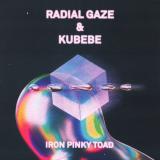
When Radial Gaze meets Nicola Kubebe, the result is Iron Pinky Toad — a title that sounds either like a secret kung-fu move or a lost cartoon book. But don’t be fooled — this one hits hard.
The long-awaited collab brings three original tracks — Phantom Limb, Lights of Phoenix and the title cut Iron Pinky Toad — that effortlessly bridge the gap between slow-burning tribal techno and the raw pulse of new beat nested into an early techno nutshell. Imagine dancing barefoot in a ritual under a disco eclipse — you’re getting close.
To seal the record, Playground Records boss Martin Noise steps in alongside rising sensation Anastasia Zems, pushing the release into full-blown dancefloor sorcery. The groove is deep, the bass is sweaty, and the toad… well, the toad is on fire !
Dropping Friday, July 18, 2025, via THISBE Recordings — available on vinyl and digital. Spin it, stream it, or whisper its name into the smoke at 3AM — either way, the dancefloor won’t know what hit it.
Let the amphibian groove begin.
Artwork by Christoffer Budtz
- 1: Peace & Purpose
- 2: Safe Room
- 3: Not The Same Thing
- 4: Life On A Farm
- 5: Pick Apart
- 6: Marathon Of Hope
- 7: Stop Cutting Me Down
- 8: Shut The Fuck Up
- 9: Reunion
- 10: Phantom Limb
- 11: Thoughts On My Faith
- 12: Eris On The Run
- 13: Red House
- 14: Truth In Trauma
Can’t go over it. Can’t go under it. Gotta go through it. And somewhere out there in the Pitch black beyond all darkness lies Peace & Purpose. The horizon you never quite crest until the inevitable end. Breathe deep — this fearful moment is the most alive you’re ever gonna feel. For the last decade, Crack Cloud’s vision has grown ever more expansive, more cinematic. Last go around, they dropped from The Heavens and then performed with their bare backs to an endless darkening desert. Now they’ve crammed all that life into some metallic and strange object called Peace & Purpose. All the terror of living. All the helplessness. All the raw human will. All glued and screwed and locked into this impossible tactile shape of dungeon dub; sour milk vox; Avant-protest music. Music arm wrestling itself to the ground. Far afield of beauty. The discordant symphony of factory farming and grim timber of the meat processing plant. The grinding din of the cogs. And yet, never giving up in spite of all good sense. Even in death, we are a coterie of survivors. Look now: There’s Terry Fox on his one-legged Marathon of Hope across The Great White North while cancer spreads through his lungs. A self-annihilating drive to feel alive. Rage against the dying of the light, they say. Well, how ‘bout it then!??! Peace & Purpose is not in any way some art project meditation on Punk Rock. It is Punk Rock. Terrifying, inspiring, vital, invigorating and most importantly, utterly unexpected. Every goddamn stupid day is a sublime slice of fresh hell. That’s the point. Gotta go through it. Wishing you Peace & Purpose — if only in that last big breath.
On 'Models', Lee Gamble liberates sonic spectres to inform a suite of illusory anthems, subliming vulnerable, half-remembered fragments of dream pop, Soundcloud rap and trance in the process. Sung by cybernetic voices in an almost wordless language, his widescreen memories reverberate across the last few decades of pop history, smudging Elizabeth Frazer's surreal poetry into disembodied diva cries and Lil Uzi Vert's abstract, AutoTuned mumbles. Extracting haunted fragments of synthetic corrupted chatter and indecipherable non-words to sculpt dreamy pop simulacrums, Gamble takes the concept of the pop producer to its logical extreme; examining how intonation and language is engineered to monopolise our attention, his magical inversion of pop playing like a bewitching symphony of earworms.
- Strohmann
- Napoleon
- Böse Lügen (Body Mix)
- Know
- Earth Song
- Spirit Of Love
- Come Inside
- Monumental
Riki is the Los Angeles based dark synth-pop outfit commandeered by the mysterious Niff Nawor, a visual artist and musician active in the deathrock / anarcho-punk scenes of the California bay area (formerly a member of Crimson Scarlet), before founding her solo endeavor as Riki in 2017. Niff's desire to explore her own sound manifested in the recording of the Hot City cassette tape in 2017, which featured Chelsey Crowley of Crimson Scarlet, Skot Brown of Phantom Limbs and Pedaof Doomed to Extinction. Released on Commodity Tapes and later reissued on vinyl by the well-regarded Symphony of Destruction label, Riki followed the release of the single with several small tours and festival dates, performing with such acts as Light Asylum, Black Marble, and Trisomie 21.For her self-titled debut album for Dais, Riki explores courage, physicality, and romance across eight timeless synth pop anthems. Produced and engineered by hardware-based synthesist Matia Simovich of INHALT, influences and ideas are worn proudly without deviating from fresh and daring electro-pop territory. Nostalgic cues can be heard ranging from Neue Deutsch Welle, early Adrian Sherwood productions, classic ZYX Italo Disco, Japanese Visual Kei and even classic new wave/pop like Pat Benatar, Kate Bush, and early Madonna.The lead single, Napoleon, contains Riki's indelible sound design, reminiscent of 80's New York dance floor electro-pop that recalls the fusion of uptown and downtown styles and culture, told through Riki's present day West Coast narrative. For contrast, the second single entitled Böse Lügen (Body Mix) was previously released in demo form and re-mixed to emphasize its commanding presence and addictive nature. Translated simply to "Wicked Lies" and sung completely in German, Böse Lügen moves away from the upbeat romanticism found throughout the album and commands serious self-reflection guised within an infectious dance floor anthem.
Die britischen Hardrocker Doomsday Outlaw präsentieren ihre beiden Alben "Suffer More" (2016, Frontiers) und "Hard Times" (2018, Frontiers) in neu abgemischten, remasterten REDUX-Versionen, betreut von Dave Draper (The Wildhearts, Terrorvision). Zwei Alben vollgepackt mit ihrem typischen Sabbath-meets-Clutch-Riffing, gepaart mit gefühlvollen Vocals, die Geschichten von Herzschmerz und Erlösung erzählen. "Suffer More" erscheint erstmals auf Vinyl, "Hard Times" enthält einen vorher Japan-exklusiven Bonustrack. Mit neuem Artwork und ausführlichen Linernotes von Mike Hayes (Cheap Trick). Remixed. Remastered. Reborn. Redux.
Drei Jahre nach ihrem morbiden Manifest "Limbo", einer bitteren Abrechnung mit der Pandemie und ihren bestialischen Folgen, kehrt Wave-Alchemist Ronny Moorings zurück. Im Gepäck hat er einen schwarzen Blumenstrauß aus Trauergesängen für eine kranke neue Welt, Elegien für einen neuen Status quo, mit dem wir alle leben müssen.
Auch 40 Jahre nach ihrer Gründung sind CLAN OF XYMOX ein Leuchtfeuer tragischer Eleganz und düsterer Tristesse. Sie sind die unbestrittene, unangefochtene Speerspitze einer Szene, die zuletzt überraschend die Aufmerksamkeit einer viel jüngeren Generation auf sich gezogen hat, die ihre Angst und ihren Schmerz durch Musik wie diese ausdrücken will. Gerne doch! "Exodus" zeugt von diesem Ausnahmestatus und führt das Feld der prosaischen Trauer mit zehn neuen Hymnen von erlesener Nachtschwere an. Das Besteck, welches Ronny Moorings benutzt, mag noch dasselbe sein; das Ergebnis ist ein weiteres Meisterwerk voller sehnsüchtiger Melodien, weltabgewandten Vocals aus den Tiefen der Erde, hallenden Gitarren und hypnotischen Drums, die die Phantome in uns allen zum Mitternachtsschmaus einladen.
Wir tanzen direkt in den Abgrund, will uns dieses Album sagen. Aber wenigstens tanzen wir noch. Denn wenn es nichts mehr gibt, an das man sich wenden kann, wenn alle Hoffnung verloren scheint und die Welt uns unter Fluten biblischen Ausmaßes begräbt, bleibt manchmal nur noch, sich der Musik hinzugeben. Diesem fesselnden Exodus in Richtung Katharsis. Vielleicht ist das der Grund, warum "Exodus" einige der düstersten und niedergeschlagensten Stücke enthält, die Ronny Moorings seit vielen Jahren geschrieben hat. Vielleicht ist das der Grund, warum diese Platte mit den besten Veröffentlichungen von THE CURE mithalten kann. Weil die Zeiten, in denen wir leben, ihn dazu gezwungen haben. Weil es einfach keinen anderen Weg gibt, als all seinen Kummer, seine Wut und seinen Weltschmerz in seine klagende Musik einfließen zu lassen. Nicht, weil die Welt danach eine bessere sein wird. Sondern weil es für ihn die einzige Möglichkeit ist, mit dem brutalen Wahnsinn, den wir Alltag nennen, fertig zu werden.
"Exodus" ist kein Album für Träumer. Es ist aber auch kein Albtraum - trotz der Schatten, die unter der Oberfläche brüten. Es ist ein Tor für all jene, die die Dunkelheit unserer Tage anerkennen und sich dennoch weigern, aufzugeben. Lasst uns also diese nächtlichen Wiegenlieder gemeinsam singen und tanzen, solange wir noch einen Boden dafür haben. Denn das ist alles, was wir im Moment tun können.