This concert from 2016 marks the first time Heart played at London’s famous Royal Albert Hall.
To make the sold-out night even more special, the band was accompanied by the Royal Philharmonic Orchestra, who added further depth and an epic scale to Heart’s songs.
The set included hits, fan favourites and both new and reinterpreted tracks from their most recent album at that time: “Beautiful Broken”. The chemistry between the band and orchestra added a truly magical quality to a concert that will live long in the memory of those Heart fans lucky enough to have been present.
quête:phil b
“Finding The Sacred Heart - Live In Philly 1986” was recorded at The Spectrum in Philadelphia during the second leg of the “Sacred Heart”
tour in June 1986.
It is a spectacular show with Ronnie James Dio’s in fine voice as ever while the band delivers a blistering performance featuring tracks from Dio’s first three albums alongside Black Sabbath and Rainbow classics. This monumental live show is now becoming available again on black vinyl.
Produced on 180g virgin vinyl, this edition will please fans of heavy 80s rock.
- A1: Madrigal - Leo Blomov
- A2: Billy Joel - Lord$
- A3: Plus Vite - Charles Dollé
- A4: Dream - Comateens
- A5: Pôve Tièsse - Guy Cabay
- A6: Fallen Snow - Louis Philppe
- A7: La Mémoire Des Pierres - Catastrophe
- B1: Das Macht Dich Heiss - Ingrid Caven
- B2: Sweet Jesus !!! - Chassol
- B3: J'n'ai Pas Bougé D'ici - Stéphane Salvi & Kumisolo
- B4: Tee Shirt Finisher - A S Dragon
- B5: The Girl Of September - Bertrand Burgalat
- B6: Montées Infinies - Karol Beffa
On the occasion of its exceptional evening at the Cabaret Sauvage, Tricatel is releasing a superb vinyl compilation of thirteen tracks, including several previously unreleased ones. It's a collector's item for long-time fans and for those who want to discover the label.
The Tricatel Machine compilation pays tribute to this unique evening, including each artist present at the party. But not only that! Of the thirteen tracks, many are new or unreleased on vinyl.
Zusammengebracht wurden die Musiker 1994 von Thomas M. Lauderdale. 1997 wurde ihr erstes Album auf ihrem eigenen Label Heinz Records veröffentlicht. Über 650.000 Einheiten wurden weltweit verkauft. Diverse Songs wurden ausgekoppelt und fanden ihren Platz auf verschiedenen Compilations wie zum Beispiel der legendären 'Buddha Bar'. Pink-Martini-Stücke sind auch in Filmen und Serien zu hören, darunter 'Die Sopranos' oder 'Sherlock'.
Alle französischen Songs von Pink Martini aus der gesamten Diskografie sind in dieser Compilation zusammengefasst, erhältlich auch als dreifarbiges Deluxe-Vinyl. Das perfekte Geschenk für alle frankophilen, Frankreich-Studierenden oder Paris-Reisende. 'Non Ouais' enthält einige der größten internationalen Hits dieses "kleinen Orchesters", darunter natürlich auch 'Sympathique (Je ne veux pas travailler)', welches in Frankreich für den 'Song des Jahres' nominiert wurde. Inkl. der französischen Stars Georges Moustaki und Philippe Katerine als musikalische Gäste!
Mango Vinyl. Leon Russell war einer der angesehensten Studiomusiker der Rockgeschichte. Er wirkte an einer überwältigenden Anzahl von Platten von Legenden wie Jerry Lee Lewis, Bobby Darin, Phil Spector, Frank Sinatra, den Byrds und den Beach Boys mit. Russells Solowerke profitierten von seinen erstaunlichen Seilschaften, Koryphäen wie George Harrison, Eric Clapton, Willie Nelson, verschiedene Rolling Stones und andere, verhalfen Russell im Laufe der Jahre seinen Alben den letzten Schliff zu geben. Als "Meister von Raum und Zeit" mischte Russell Südstaaten-Soul, Gospel, Country, Rock und den Piano Singer/Songwriter-Stil. "A Song For Leon" zelebriert Leons Leben und seine Karriere, ikonische Acts wie die Pixies, Orville Peck, Nathaniel Rateliff & the Night Sweats, U.S. Girls featuring Bootsy Collins, Durand Jones & The Indications und andere unglaubliche Künstler sind hier versammelt. "A Song For Leon" zeigt die Wirkung von Leon Russells Liedern in anderen, neuen Versionen seiner Musik.
Today, Anjimile Chithambo, better known as Anjimile, announces his new album, The King, out September 8th, his first full-length since 2020’s breakthrough Giver Taker. To herald the announcement, he shares lead single, ‘The King’, accompanied by a visualiser by Daniela Yohannes, whose striking painting takes centre stage on the album cover.
Highlighting the artistic shift from Giver Taker to now, ‘The King’ opens with a lofty, melodic choir, an intro that belies the song’s motives. Suddenly, sinister arpeggios interrupt the reverie, and the voices grow darkly serious. Deeply steeped in the confusion, grief, and rage of being Black in America, ‘The King’ pushes back against the tired adage, “what doesn’t kill you makes you stronger,” hissing, “What don ’t kill you almost killed you// What don’t fill you//pains you// drains you.”
“If Giver Taker was an album of prayers, The King is an album of curses.” In his second album, Anjimile continues exploring what it means to be a Black trans person in America. The brutally honest reflection of 2020’s deadly summer is less reminiscent of the pink cloud of early sobriety and more rooted in the reality of seeing brutality with clear eyes. Drawing from influences ranging from religion, Phillip Glass, and lived experiences, the album is a grand step forward for Anjimile. Nearly every sound you hear on The King comes from two instruments: an acoustic guitar and Anjimile’s own voice. Other than a few beautiful contributions from Justine
Bowe, Brad Allen Williams, Sam Gendel, and James Krivchenia (Big Thief), the album is the result of a year in LA working intimately with Grammy and Juno winner Shawn Everett.
Today, Anjimile Chithambo, better known as Anjimile, announces his new album, The King, out September 8th, his first full-length since 2020’s breakthrough Giver Taker. To herald the announcement, he shares lead single, ‘The King’, accompanied by a visualiser by Daniela Yohannes, whose striking painting takes centre stage on the album cover.
Highlighting the artistic shift from Giver Taker to now, ‘The King’ opens with a lofty, melodic choir, an intro that belies the song’s motives. Suddenly, sinister arpeggios interrupt the reverie, and the voices grow darkly serious. Deeply steeped in the confusion, grief, and rage of being Black in America, ‘The King’ pushes back against the tired adage, “what doesn’t kill you makes you stronger,” hissing, “What don ’t kill you almost killed you// What don’t fill you//pains you// drains you.”
“If Giver Taker was an album of prayers, The King is an album of curses.” In his second album, Anjimile continues exploring what it means to be a Black trans person in America. The brutally honest reflection of 2020’s deadly summer is less reminiscent of the pink cloud of early sobriety and more rooted in the reality of seeing brutality with clear eyes. Drawing from influences ranging from religion, Phillip Glass, and lived experiences, the album is a grand step forward for Anjimile. Nearly every sound you hear on The King comes from two instruments: an acoustic guitar and Anjimile’s own voice. Other than a few beautiful contributions from Justine
Bowe, Brad Allen Williams, Sam Gendel, and James Krivchenia (Big Thief), the album is the result of a year in LA working intimately with Grammy and Juno winner Shawn Everett.
Despite the name, the band does not perform exclusively in trio formation, but expands the lineup with illustrious guests of the jazz genre. In the past AMC Trio has collaborated with Philip Catherine, Bill Evans, Ulf Wakenius, Mark Whitfield, Michael Patches Stewart and many others, including the guest on 'Following the Light' Randy Brecker.
The AMC Trio band has been around for about twenty years and consists of pianist Peter Adamkovic, bassist Martin Marincak and drummer Stanislav Cvanciger. It has its musical foundations in mainstream jazz but over the years has managed to develop its very own musical sound and style. The band incorporates many self-experienced stories and emotions in their compositions.
Although their music is influenced by Slovak music, it goes beyond the usual jazz progressions and touches on a number of diverse genres. For example, the wide range of melodies is inspired by popular and classical music, melodies from Eastern Slovak folk music, nature, literature and spirituality.
Anchored by the powerhouse precision drumming of Felix Lehrmann and the resounding groove of electric bassist Thomas Stieger, augmented by kaleidoscopic contributions from Raphael Meinhart on vibes, marimba, MalletKAT Pro and synth and pyrotechnic shredding from six-string marvel Arto Makela, this potent collection of intelligent high- energy music conjures up favorable comparisons to everyone from Philip Glass and Frank Zappa to Joe Zawinul, Allan Holdsworth, King Crimson and Tribal Tech.
And while those varied influences may seep into the fabric of the ten
compositions here, the members of Marriage Material apply their own personal touch to the material, which they've come to define as "cinematic jazz."
An aura of mystery hangs over Jacky Giordano, a studio musician who has mostly worked for library music.He is the one behind the amazing label Freesound (Schifter, Philopsis, Challenger), but as well on Montparnasse 2000 with Pop in Devil's Train (reissued on Le Tres Groove Club), on Timing (Timing N?1 and Timing N?5, under the nickname Jacky Nodaro), on Musax with Boucles Rythmiques (under the nickname Joachim Sherylee, reissued as well on Le Tres Groove Club) or Black Devil Disco Club whose paternity for this record is still disputed between him and Bernard Fevre. Jacky Giordano wasn't an altar boy, far from it, and will have sadly been more known for his troubles with justice than for his music.This is his work for the label l'Illustration Musicale (IM) which can now be rediscovered thanks to this new reissue on Le Tres Groove Club.Organ Plus (IM26) is the sequel to Organ (IM 24), also reissued by Le Tres Groove Club. The title is misleading here, an organ not being preponderant part of the record which honours the Fender Rhodes, string machine, bass synth and clavinet. 'Be Careful', 'Riffologic', 'Twillight' : Jacky Giordano offers slow tempo jazz-funk, without losing his melancholy and low-fi groove that make his tracks immediately recognisable regardless the record label or nickname.
ltd 700 copies on black vinyl housed in reverseboard printed sleave with printed inner sleave. Comes with lyric booklet, poster and postcard inserts ** Formed in 1968, The Plastic People Of The Universe – named after a Mothers of Invention song and heavily influenced by Frank Zappa and The Velvet Underground – were iconic figureheads of the Prague Underground, a loose collective of Czech poets, philosophers and artists considered a threat by the Communist government. Banned and jailed under Czech communism The Plastic People Of The Universe are a true story of artistic perseverance, Authorities claimed their music would have a "negative social impact", and they were banned from playing for the public, having to play secret shows in remote locations. The raw DIY sound of their recordings escaped to Europe on tape and was released without the band's knowledge, their first album being a document of artistic defiance against the control of a stringent political environment they lived under.
Egon Bondy's Happy Hearts Club Banned, PPU's debut LP, was recorded in 1973-74, but not released until 1978 (and even then, only in France). A beguiling album of lo-fi experimental rock that falls somewhere between Can, The Fall and Canterbury psych-folk with Ayler-esque sax solos. First-time vinyl reissue and it is limited. Essential.
One of the best band you never heard of
Preceded by his reputation as a rap experimentalist, Bladee is a prolific and highly inventive entity with work spanning and intersecting the worlds of music, art and fashion.
He began his career as a teenager, trading art and lyrics with close friends. After releasing his first projects, international recognition came quickly and his network of Stockholm innovators soon arrived at the vanguard of a new era in music culture.
Working on Dying is a collaborative mixtape between Bladee and Philadelphiabased producer collective Working on Dying. Features appearances from Yung Lean and Ecco2k.
ltd 700 copies on black vinyl housed in reverseboard printed sleave with printed inner sleave. Comes with lyric booklet, poster and postcard inserts ** Formed in 1968, The Plastic People Of The Universe – named after a Mothers of Invention song and heavily influenced by Frank Zappa and The Velvet Underground – were iconic figureheads of the Prague Underground, a loose collective of Czech poets, philosophers and artists considered a threat by the Communist government. Banned and jailed under Czech communism The Plastic People Of The Universe are a true story of artistic perseverance, Authorities claimed their music would have a "negative social impact", and they were banned from playing for the public, having to play secret shows in remote locations. The raw DIY sound of their recordings escaped to Europe on tape and was released without the band's knowledge, their first album being a document of artistic defiance against the control of a stringent political environment they lived under.
Egon Bondy's Happy Hearts Club Banned, PPU's debut LP, was recorded in 1973-74, but not released until 1978 (and even then, only in France). A beguiling album of lo-fi experimental rock that falls somewhere between Can, The Fall and Canterbury psych-folk with Ayler-esque sax solos. First-time vinyl reissue and it is limited. Essential.
One of the best band you never heard of
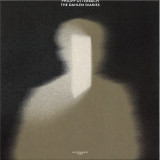
The new LP by Krefeld-born, Berlin-based artist Philipp Otterbach entitled 'The Dahlem Diaries'.
Recorded in a little-visited corner of the German capital, 'The Dahlem Diaries' is a convergence of ideas, sketches and tracks, both old and new, most of which were produced between 2020-2022. Whilst eerie atmospheres, electronics and drums have played a pivotal role in Philipp’s earlier releases, his latest is a rather more introspective affair, in which the guitar takes a leading role. A role Otterbach uses to quietly bring light and hope to his music.
Speaking about his writing process, Philipp explains that, based around his original compositions, “Friends were nice enough to contribute additional parts on their instruments which I then reworked, put together and re-contextualized. The recordings encapsulate a very specific moment in time, one that would have sounded perhaps very different the day before or after.”
Combined with a strong use of effects and field recordings, 'The Dahlem Diaries' feels somewhat like a scene or fragment from a story, in which the narrative remains undefined. It is a playful album that is something of a blurred underwater adventure, sounding as bright as it is hazy, even psychedelic at times, yet with an almost melancholic positivity. In Philipp’s own words: “It could be an album about friendship and being at one with myself, whilst at the same time bringing a certain seriousness to my music, but not necessarily to myself; there is also a playful humour hidden in there. ”
Wewantsounds is delighted to announce a special edition of the legendary 1979 Masahiko Togashi album "Song of Soil," recorded in Paris with Don Cherry and Charlie Haden and released on Japanese label Paddle Wheel. Supervised by Parisian producer Martin Meissonnier - then Don Cherry"s right hand man - "Song of Soil" reaches heights of spirituality mixing Eastern influences with jazz and deep ambient soundscapes. The album is reissued here with its original artwork and remastered by King Records in Japan. It includes the original Japanese 2-p insert plus a deluxe 8-page booklet featuring new notes (Eng/Fr) by Martin Meissonnier in conversation with Jacques Denis and also an Togashi Biography by Paul Bowler and never-seen photos by cult French photographer philippe gras who witnessed this unique session.
Welchem 60s-Fan klingen die Songs nicht in den Ohren: 'Painter Man', 'Making Time', 'Cool Jerk', 'Tom Tom', 'Biff Bang Pow', ihre ultra-coolen Versionen von 'Like A Rolling Stone' oder 'Hey Joe' und einige mehr. Speziell in Deutschland hatte die 1966 formierte Beat-Band um Gitarrist Eddie Phillips eine treue Fan-Gemeinde.. Stilistisch nah bei The Who und den Kinks wurde The Creation von deren Produzenten Shel Talmy produziert. Bis sich die Band 1968 erstmalig auflöste, entstand kein reines Studioalbum, aber jede Menge Single-Hits. Später wurde das legendäre Label von Alan McGee nach ihnen benannt. Das luxuriöse 2CD-Set im 7inch Format hält nochmal alle Klassiker bereit, die die Band in den 1960er Jahren aufgenommen hat. Die im Tracklisting reduzierte Halfspeed-Master-LP kommt mit dem dänischen Artwork , OBI-Strip, 4-Seiten-Booklet und natürlich auf 180Gr. Black Vinyl.
In 1972, a foursome of design students set out to make a record. This was, in many ways, a strictly creative endeavor. The quartet — composed of Dave Pescod, Alan Lewis, Phil Rawle, and Ted Rockley — were all trained, not as musicians, but as creatives. Art school heavyweights, the four were well-versed in the methodology of intentional experimentation, in the delicate balance of pushing the limits without completely unmooring oneself from a guiding creative intention. Emboldened by a high-brow familiarity with thoughtful experimentation and all the non-conviction of non-musicians, Bowes Road Band’s stint in the world of popular music yielded a record that is as much mind-melting as it is a direct product of its time. Their sprawling LP “Back in the HCA” embodies the exigence “art for art’s sake,” but it is for art’s sake that this record, however off the deep end it seems to travel (hear: “Doctor, Doctor”), remains a unified, and stunning, body of work. The LP’s do-ityourself garage rock noisemaking meets highfalutin creative processes. “Back in the HCA” is warbling psychedelic freakout (“Two Fingers,” “Doctor, Doctor”), Donovan-esque English countryside folk stylings (“Inside My Head,” “Goodbye to Rosie”), and avant-garde jazz improvisions (“Grass is Grass,” “Tomorrow’s Truth”) in one luminous release.
Originally an 9-track LP, Jakarta, Uno Loop, and Bowes Road Band decided to mine the six most cohesive tracks for the reissue, though the extras may be released somewhere down the line. Cohesion efforts aside, “Back in the HCA” stands alone in its singular conception of a genre-bending continuum — it evades definition. That said, the LP can easily be situated in the sonic environment in which it was conceived. By the end of the 60s, England was crawling with blues-based rock outfits that were starting to venture into prog rock territory. You can hear this popular dint cast over the folkier side of the LP. But Bowes Road Band was armed with their non-musicianship: they existed completely liberated from the motivating yet ultimately paralyzing lust for stardom. Enjoying this liberation, Bowes Road Band was utterly free to make noise. This freedom meant drawn out sax interludes amidst sweetly folk stylings (“Grass is Grass”) and Shaggs-like fuzzed-out freakouts that spiral into a void (Doctor, Doctor). This freedom also meant straight-forward tuneful cuts like “Goodbye Rosie” that conspicuously introduce heavily distorted auto-organ accompaniment mid-track amidst poignant lyricism. Bowes Road Band crafts a unified sound and then cracks it open.
With a completely off-the-radar status, Bowes Road Band could only press 50 copies of the record — 10 for each of them and 10 for the school. The band’s lifespan was to end there, or so they thought. “Back in the HCA” was the accidental fruit of a Berlin flea market treasure hunt by Jannis Stürtz, DJ and co-founder of Habibi Funk and Jakarta Records. After finding and sharing the LP with a few colleagues, Stürtz managed to get in touch with the band, get ahold of the master tapes collecting dust in Ted Rockley’s attic, and start the reissuing process. The record is still adorned with its original cover art designed by Alan Pescod, both reminiscent of bygone school days and the Zoom calls of yesterday — in short, reunion. Its re-discovery was happenstance and ought to be listened to as such. That is, “Back in the HCA” was not made to be listened to on a broad scale, or, at least, was not made with this goal in mind; it is neither in its time nor of its time. Of course, the group explicitly cites the folk tunes of the English countryside, the distorted rock groups that reigned during the record’s conception, and the fringes of psychedelic music that only the uber-underground might recognize (e.g., “Dreaming of Alice”). Yet still with these obvious influences, “Back in the HCA” always existed beyond the domain of both traditional musicianship and conventional commodification. Bowes Road Band’s DIY musicality beams through in technicolor across “Back in the HCA.” The vinyl includes an 8-page booklet detailing the albums creation and interviews with the band.
Lead single “Grass is Grass,” out July 14 along with album pre-order, encapsulates the record’s range: the track unfurls into a sprawling sax-driven trip following a sundrenched, Donovan-esque intro w/ lyrics “naively about parks and gardens, not marijuana!” The keyed-down folk cut “Goodbye to Rosie” is single 2 and elevates stripped-down acoustics with golden tinges, out August 4th. Focus track “Tomorrow’s Truth” constructs the fuzzed-out underbelly of acid folk. Listen for echoes of late Beatles, Mark Fry, and Donovan (if they were armed by an unshakabele willful naiveté). Like Sgt. Pepper’s on a shoestring budget—take a trip to the underground with LP “Back in the HCA,” available everywhere physically and digitally on September 1st via Jakarta Records and Uno Loop.
Besides online promotion from label profiles, the album will be further promoted by external agencies within the UK and US.
Tracked in 1977, this bundle of never-before-released basement demos throw Harris’ beloved Philadelphia Sound into an unfinished root cellar, pelting it with Clavinet attacks, disco skats, and infectious hooks. Named for the street address of its underground uptown genesis, 1514 Oliver Avenue (Basement) is James “Jimmy Jam” Harris’ first foray into songcraft and an organic Minneapolis-vintage alternative to a late ’70s Prince songbook gone increasingly synthetic.
Timechild ist zurück mit ihrem lang erwarteten zweiten Album "Blossom & Plague", das am 1. September 2023 weltweit über Mighty Music veröffentlicht wird. Die Vision dieses Albums ist es, zu zeigen, wie Heavy Rock auch im Jahr 2023 noch herausfordern und überraschen kann.
Der schwere und dynamische Sound und die Texte der dänischen Band haben sich auf diesem Album in eine progressivere und dunklere Richtung entwickelt. Obwohl das Fundament des Sounds der Band eindeutig von den Giganten der Vergangenheit gelegt wurde, wird die Inspiration sowohl durch die Zeit als auch durch die Genres gezogen. Genau diese Möglichkeit, in die vergangenen Jahrzehnte der Musikgeschichte einzutauchen und dadurch ihren eigenen Sound zu definieren, war ein wichtiger Teil des Songwriting- und Aufnahmeprozesses.
Das Artwork wurde von Travis Smith (Opeth, Megadeth, Katatonia, Avenged Sevenfold) entwickelt, der Timechild dabei half, die perfekte visuelle Darstellung der Platte zu erreichen.
Produziert, gemischt und gemastert wurde das Album erneut von Soren Andersen (Glenn Hughes, Phil Campbell, Jesper Binzer). Mit seiner großen Erfahrung in diesem Genre, sowohl als Produzent als auch als Musiker, war Soren eine natürliche Wahl, als es darum ging, die neuen Visionen der Band zum Leben zu erwecken. Das Ergebnis sind acht starke und einzigartige Tracks, die die dynamische Bandbreite und die künstlerischen Visionen der Band aufzeigen.