Just when you thought Kevin Richard Martin's music couldn’t go any slower, lower or deeper, Sub Zero emerges. A slow-motion excavation of drug-tech, dub, dreamy noise and frozen ambience, the album gradually mutates into hypnotic pulsations and melodic melancholia. It is arguably Martin’s most striking release to date under his given name.
Originally released digitally on Bandcamp only in the depths of winter 2022, amid the final year of the COVID-19 pandemic and Russia’s initial invasion of Ukraine, this desolate epic went on to become KRM's best-selling digital album on the platform. With persistent demand for a vinyl pressing and a full DSP release from fans, Martin thought the time was right for Sub Zero to finally surface in its full glory: remastered and paired with fresh new artwork.
Unnervingly, the album is as beautiful as it is solemn, as glacial as it is relentless, and as subtle as it is terrifying. A trip into a sonic abyss, with a tour of a philosophical void, it’s to my ears, KRM’s most seductive work yet, and also his most emotionally resonant. Martin expertly balances tear-jerking motifs with heavier than hell rhythmic weight. With its melodic fog, eternal drones and eerie atmospherics, the peripheral throb of distant kick drums, the heartbeat punctuation of cavernous subs and the snowstorm blizzard of fuzz absolutely envelopes the mind, whilst crushing the soul.
In terms of lineage, Sub Zero might recall a more paranoid Porter Ricks, a dystopian GAS, or a brutally dubbed-out Pan Sonic. Most fitting, however, is its kinship with the deepest dub terrain Martin previously explored on In Blue, The Bug’s acclaimed 2020 collaboration with Dis Fig for Hyperdub, where he obsessively probed subaqueous pulses and low-end modulations.
Sub Zero is possibly the most minimal, desolate, and deviant dub record yet released on Martin’s PRESSURE label. It marks the point at which dub disappears into its own effects trails. Dub music capturing frozen moments in time. Dub as an addictive painkiller, that sounds both sacred and ocean deep.
Cerca:phil b
Jorge Ben is someone who needs no introduction. Since his first hits in the early 60s, this the greatest icons of the greatest icons of Brazilian pop music. His anthems 'Mais Que Nada' or 'Pais Tropical' are among two of the most ever listened Brazilian songs of all time. Ben's self-titled 1969 album is a true samba-soul masterpiece from one of Brazil's most creative voices. This isn't your typical late-'60s LP: Jorge Ben blends the hypnotic swing of samba with funk, psychedelia, and sun-soaked soul in a way that feels both classic and ahead of its time. Released in November 1969, this was Jorge Ben's sixth studio record, and his first back with the Philips label after a creative hiatus. He recorded it with the tight-knit, percussive groove of Trio Mocoto -- whose rhythms lock in beautifully with Ben's laid-back guitar and vocals. On top of that, the album features lush orchestral arrangements from Jose Briamonte and Rogerio Duprat, adding a soaring, psychedelic dimension to Ben's sound. Standout tracks? You've got the joyous anthem 'Pais Tropical', a perfect celebration of Brazilian life.
Then there's 'Take It Easy My Brother Charles', a socially conscious number that tells the story of a rebellious sailor -- Ben weaves in themes of race, identity, and resilience. And songs like 'Que Pena' bring in that sweet, soulful melancholy, while breezy cuts like 'Criola', 'Domingas', and 'Barbarella' highlight his playful, poetic side. This record is a rare blend of genres -- samba, soul, funk, psychedelia -- and it's got a timeless energy. Whether you're already into Brazilian music or just looking for something fresh and soulful, Jorge Ben's 1969 album is a joyous entry point. Reissue on 180g vinyl.
- A1: Late Last Night
- A2: Walking Down A Road
- A3: Titus
- A4: Lovey Dovey
- A5: Sweet Dreams
- A6: Stranger Than Fiction
- A7: Time For A Change
- A8: Matinee Idyll
- A9: The Woman Who Loves You
The next chapter in this series, 'Second Thoughts (Expanded Edition)', marks 50 years since Split Enz ventured to London to record with Roxy Music's Phil Manzanera in the producer's chair. This definitive 2LP set pairs the original 1976 mix, remastered from the original tapes, with a companion LP 'Wide Angle Enz' - a treasure trove of live recordings and alternate mixes, including a previously unreleased archival rough mix of '129 (Matinee Idyll)' which is exclusive to this release. Presented in the distinctive Australia/New Zealand sleeve featuring John Prew's band portrait, the album concludes with the hypnotic locked- groove of 'Mental Notes', mirroring the international version's striking finale. Pressed on two 140g vinyl, housed in a wide- spine sleeve with printed inner bags. Remastered from the original tapes by Phil Kinrade and overseen by Eddie Rayner, with lacquers cut by Harry Rudkins at AIR Studios.
- A1: Another Thought (02:16)
- A2: A Little Lost (03:18)
- A3: Home Away From Home (05:12)
- A4: Lucky Cloud (02:16)
- B1: This Is How We Walk On The Moon (04:42)
- B2: Hollow Tree (02:30)
- B3: See Through Love (04:46)
- C1: Keeping Up (06:20)
- C2: In The Light Of The Miracle (06:05)
- C3: Lucky Cloud (Return) (03:00)
- C4: Just A Blip (03:42)
- D1: Me For Real (04:55)
- D2: Losing My Taste For The Night Life (04:34)
- D3: My Tiger, My Timing (05:41)
- D4: A Sudden Chill (02:45)
2026 Repress
Another Thought was the first collection of Arthur Russell’s music to be released after his death in 1992. Released in 1993 on Point Music it marked the beginning of nearly 30 years of work to let the world hear the enormous archive of unreleased recordings Arthur left behind. Be With revisits this first compilation for a new gatefold double vinyl version and a triple-fold digipak CD reissue.
Both versions of Be With’s 2021 reissue of Another Thought have been mastered by Simon Francis and the vinyl cut by Pete Norman. The original artwork has been restored and tweaked at Be With HQ for the gatefold sleeve and the triple-fold digipak, with the essential help of Janette Beckman. Each version comes with an insert reproducing the liner notes and lyrics from the original CD release.
Together with Calling Out Of Context, Soul Jazz’s World of Arthur Russell, and much of the ongoing work of Audika, Another Thought is absolutely essential for even the most casual Arthur Russell collection. In fact we’d argue it’s essential for any fan of non-obvious pop music. This is the only place where you can hear some of Arthur’s most recognisable tunes and it’s an album that absolutely deserves to be kept in press.
We’ll assume that by now you’re all at least a little familiar with the story of Arthur Russell, the farm boy from Iowa who moved to 1970s New York. Arthur Russell the genuine musical genius who died just 40 years old, leaving behind a wealth of music that dwarfed the few 12"s and LPs that were released during his short life.
Although Arthur had been working on an album for Rough Trade during his last years, with the label no-longer operating it was Point Music (Philip Glass and Michael Riesman’s label set up together with Philips) who stepped in to help Arthur’s partner Tom Lee start working out exactly what Arthur had left behind.
Tom suggested that Arthur’s friend Mikel Rouse was the right person to make the first catalogue. Working in Tom and Arthur’s apartment he had only two weeks to go through what turned out to be around 800 tapes.
As Tom explained “at the end of each day he would generally wait for me to come home and I would, to the best of my knowledge, name and identify pieces in question from that day’s work. As he worked Mikel compiled about a dozen cassettes that he thought would present the most finished sounding songs for Don/Point to use. As Don listened he would then suggest and ask me and thus we collaborated on the choices.”
Don is Don Christensen, Another Thought’s producer. With a final selection of songs from recordings made between 1982 and 1990, including sessions with some of Arthur’s regular collaborators Peter Zummo, Steven Hall, Mustafa Ahmed, Elodie Lauten, Julius Eastman, Jennifer Warnes and Joyce Bowden, it was then Don’s job to turn these into a finished album.
Another Thought is a little different from the compilations of Arthur’s music that came out since. In our conversations with Steve Knutson (who founded Audika Records and who manages Arthur’s estate together with Tom), he explained that “more than any project released by Arthur during his lifetime or posthumously by Audika, ‘Another Thought’ is the most worked over. The material was significantly edited and rearranged from the original source tapes”.
If the aim was to release a comprehensive exploration of every facet of Arthur’s music, from the most avant-garde of his avant-garde compositions through to the most disco-not-disco of his disco-not-disco tunes then the project was a spectacular failure. But as a coherent album of non-obvious pop music Another Thought is wonderful.
Starting with the sparse voice-and-cello of the title track, A Little Lost adds some guitar along with the sneaking suspicion that we’re listening to something nowhere near as simple as it first sounds. By the time we get to This Is How We Walk On The Moon - it could be the moment you notice the congas, or the percussion that’s been building behind them, or maybe it’s that blast of trumpet and trombone - we realise we’ve gone from splashing around to being completely submerged in the musical world of Arthur Russell.
From here the album heads off on its journey around the sounds of the left-field contemporary classical music of the time, re-directed towards pop ears, with minor detours through the swirling woozy disco of the half-remembered night before on In The Light Of The Miracle and My Tiger, My Timing. Whether it’s just Arthur, his cello and some bleeps on Just A Blip, or whether he has some vocal help as he does on the bounding Keeping Up, this is difficult music made so, so easy. And through it all is Arthur’s voice and cello. Sometimes drowned in distortion and sometimes clear as a bell, but always there somewhere.
A Sudden Chill finally returns us to the calmer waters we started in and this last track closes the album with a melancholy that’s not surprising given how soon after Arthur’s death the album was put together.
Whilst Another Thought holds together with the consistency of a proper album, there’s still no getting away from the fact that this was put together from audio recorded in different ways, in different places, with different people at different times. Those with keen ears will hear traces of tape hiss, the occasional blown-out note and some digital fuzz, all fingerprints of those original recordings as well as of the 1990s digital equipment that was used to piece Another Thought together.
Add to this Arthur’s obvious pleasure in making music from the sort of sounds that can make microphones, speakers and ears uncomfortable, it’s no surprise that Another Thought isn’t glossy and pristine. Don Christensen’s productions have been careful to not scrub up those original recordings so much that they lose their original vibe, understandable given that Arthur wasn’t around as a guide. We’ve applied a similarly light touch with the mastering for these Be With versions, just working to make sure they sound like they should on both the vinyl and the CD.
Despite the Discogs rumours, Another Thought was never originally released as an LP. So when it came to the sleeve for this Be With vinyl version we took the original CD artwork as a starting point to come up with something that looks like it could have been in the record racks back in 1993.
We have to thank Janette Beckman for helping us reproduce her iconic photograph of Arthur in his newspaper boat hat. One of many photographs she took of Arthur, Janette shot this in her New York studio back in 1986 for a short article in the January ’87 issue of The Face Magazine. Those with eagle-eyes will notice we’ve used an ever-so-slightly different shot from the one that appeared in The Face and then again on the original cover of Another Thought. The original has long since been lost so we’ve worked with what is left in Janette’s archives. And we also have to thank Tom Lee for giving us permission to reproduce his liner notes from the original CD booklet, together with Arthur’s lyrics.
- Never Come Never Morning
- Cannibal World
- A Short History Of Decay
- The Rain Don't Care
- Purple Strings
- Toothless Coal
- Ballet Of The Traitor
- Nerve Scales
- Essential Tremors
Nothing waren schon immer Regelbrecher. Shoegaze-Rebellen, die das typischerweise leichtgewichtige Genre nach ihrem eigenen, knallharten amerikanischen Image neu erfunden haben. Outlaw-Poeten, die existenzielle Ängste auf kilometerbreiten Leinwänden aus Fuzz und Hall ausbreiten. Angefangen als Solo-Projekt in einem Schlafzimmer in Philadelphia im Jahr 2010, hat die Musik von Nothing immer die ganze Bandbreite des Menschseins eingefangen, sowohl die schreiende Wut als auch die flüsternde Traurigkeit. ,A Short History of Decay", das fünfte Soloalbum von Nothing und das erste für Run For Cover Records, erweitert diesen Horizont noch weiter und bietet die bisher hochauflösendste Darstellung von Nothing. Die Band hat noch nie so kolossal geklungen, sich noch nie so intim angefühlt, war noch nie so ehrlich. Mit dem stärksten Arsenal in der sich ständig verändernden Besetzung von Nothing - Gitarrist Doyle Martin (Cloakroom), Bassist Bobb Bruno (Best Coast), Schlagzeuger Zachary Jones (MSC, Manslaughter 777) und dem dritten Gitarristen Cam Smith (Ladder To God, ebenfalls von Cloakroom) - wusste Singer-Songwriter Domenic ,Nicky" Palermo wusste, dass er die nötige Manpower hatte, um das bisher ambitionierteste Album der Band aufzunehmen. Mitgeschrieben und produziert wurde es zusammen mit Whirr-Gitarrist Nicholas Bassett, zusätzliche Produktions- und Mixing-Arbeiten übernahm Sonny Diperri (DIIV, Julie). a short history of decay ist das musikalisch ausgereifteste Statement im Katalog von Nothing. Songs wie ,Cannibal World" und ,Toothless Coal" sind katastrophale Ausbrüche mechanisierten Industrial-Gaze, die wie My Bloody Valentine klingen - nur extremer. Am anderen Ende des Spektrums steht das kunstvoll-düstere ,Purple Strings" mit einem wunderschönen Streicharrangement, an dem die Harfenistin und zweifache Nothing-Mitwirkende Mary Lattimore beteiligt ist. Diese barocke Zartheit durchdringt auch andere Höhepunkte von ,A Short History of Decay", insbesondere ,The Rain Don't Care", eine beschwingte Ballade, die die abgenutzte Eleganz von Mojave 3 kanalisiert, sowie ,Nerve Scales", ein prasselnder Bop, der in seiner Verbindung von jenseitiger Atmosphäre und tödlicher Präzision an Radiohead erinnert. Palermo bezeichnet das neue Album als ,letztes Kapitel". Nicht das Ende von Nothing, sondern der Abschluss einer Geschichte, die mit dem Debütalbum von Nothing aus dem Jahr 2014, Guilty of Everything, begann - einem weiteren Album über Zeit, Reue und die Konfrontation mit unangenehmen Wahrheiten - und nun mit A Short History of Decay ihren Abschluss findet. Es ist ebenso sehr eine Momentaufnahme von Palermos Vergangenheit wie ein Sprung in die Zukunft von Nothing.
- The Wires: Part 1
- Hall's Creek
- Emu Creek
- The Crater
- Alien F100
- Abysmal Horizon
- Talimnavi
- Liz
- The Shed: Part 1
- Arcane Menace
- Escape
- The Shed: Part 2
- The Cliff
- Mick
- The Return
- Trophy Room
- Head On A Stick
- Kristy
- Statesman Deville
- Ben
- Monumental Isolation
- Epilogue
- The Wires: Part 2
- Wolf Creek: Main Title
Erleben Sie den packenden Soundtrack des australischen Horrorklassikers "Wolf Creek" (2005) wie nie zuvor – neu remastert und auf Red+Black Splatter-Vinyl gepresst, mit exklusivem Artwork und Liner Notes. Der Komponist Francois Tétaz erschuf mit Klavier, Alan Lambs einzigartigen Telefonleitungsaufnahmen aus dem Outback Westaustraliens und einem Streichquartett einen Soundtrack, der als philosophischer Kontrast zum Horror von "Wolf Creek" fungiert. Eine eindringliche Mischung aus atmosphärischen Klanglandschaften, sparsamer Instrumentierung und unterschwelliger Bedrohung – die Musik fängt die Einsamkeit und Bedrohlichkeit des Outbacks in jeder Rille ein. Exklusive Collector's Edition für alle Horrorfans, Soundtrack-Sammler und Vinyl-Liebhaber gleichermaßen.
- 1: Dear Prudence - Ramsey Lewis
- 2: Les Fleur - Minnie Riperton
- 3: It's All Up To You - The Dells
- 4: By The Time I Get To Phoenix - Billy Stewart
- 5: Stand Up And Be Counted - Meditation Singers
- 1: Love Has Fallen On Me - The New Rotary Connection
- 2: What Color Is Love - Terry Callier
- 3: Brother Where Are You - Marlena Shaw
- 4: More And More - Little Milton
- 5: Eternal Journey - Ramsey Lewis
- 1: California Soul - Marlena Shaw
- 2: Can't Catch The Trane - Terry Callier
- 3: The Love We Had (Stays On My Mind) - The Dells
- 4: Teach Me How To Fly - Rotary Connection
- 5: More And More - Phil Upchurch
- 1: I'm High Again - Bo Diddley
- 2: Let's Spend The Night Together - Muddy Waters
- 3: Smokestack Lightning (1969 Version) - Howlin' Wolf
- 4: Girl You Lit My Fire - Junior Wells
- 5: I'm Gonna Keep It To Myself - Buddy Guy
- A1: Run I
- A2: Run Ii
- A3: Ray
- A4: High Purple I
- A5: High Purple Ii
- A6: High Purple Iii
- A7: Riddim 345 I
- A8: Riddim 345 Ii
- A9: Riddim 345 Iii
Fast sieben Jahre nach ihrem letzten Release, zahlreichen internationalen Touren, und dem Preis als Beste Band bei der ersten Ausgabe des Deutschen Jazzpreis 2021, veröffentlicht PHILM gleich zwei neue Alben. "2024" wurde in einem alten Berliner Kinosaal, der Zentrifuge, aufgenommen. Auf der Suche nach "eigenen rhythmischen Mantras", nach seltsamen, vielschichtigen Grooves und ungewohnten Sounds. Durch Groppers Kompositionen in merkwürdige Welten katapultiert, geht es PHILM um den emotionalen Gehalt dieser Grooves und um das gemeinsame Navigieren in diesen. Diese abenteuerliche Atmosphäre im Raum und das zwischenmenschliche Zusammenspiel hinterlassen ihre Spuren im Sound. Denn genau dies macht PHILM aus: eine Band, in der es nicht darum geht, sich gegenseitig mit Solos zu überbieten, sondern eine geteilte musikalische Sprache zu finden, gemeinsam zu gestalten, wie eine verzahnte Soundmaschine.
- A1: What To?
- A2: No Words I
- A3: No Words Ii
- A4: Eyes/Sorry
- A5: *
Schwarzes Vinyl, 140g. Fast sieben Jahre nach ihrem letzten Release, zahlreichen internationalen Touren, und dem Preis als Beste Band beim der ersten Ausgabe des Deutschen Jazzpreis 2021, veröffentlicht PHILM am 27. Januar 2026 gleich zwei neue Alben. "2025" wurde im Kölner Loft im April 2025 live aufgenommen. Der Sound ist hier düsterer, emotionaler. Die beiden Stücke "no words" I und II sind dafür ein gutes Beispiel, beschäftigen sie sich mit der Fassungslosigkeit und dem Entsetzen angesichts aktueller Krisen, Kriege und der immer wieder zerstörerischen Rolle des globalen Nordens. Zwischen Dissonanz und Schönheit eröffnet sich ein weites Feld der Gefühle. Mit 2024 und 2025 schlagen PHILM ein neues Kapitel für sich auf, spitzen ihr seit langem und zu Recht gefeiertes konsequentes Verständnis von Jazz, von Erzählen durch Musik, weiter zu, durchaus stilprägend für die europäische Avantgarde.
Hamburg is sinking into an ever-expanding landscape of fresh construction ruins born from investor fantasies, concrete monster-bridges and ghostly office spaces. But from secret basements, a Geflecht begins to grow. After the first tape by Hamburg duo Kostenfalle, now comes their second album on vinyl.
The furious electropunk of Kostenfalle has been cut into the matrix at 45 RPM. Nine
songs in the fast lane, driven by sequencers, synthesizers, drum machines, and bass guitar. Despite the electronic machinery, Kostenfalle remain fiercely dynamic, twisting and shifting through intricate structures and sudden turns. Punk and Electronic Body Music lock into a dance; without warning we’re plunged into a psychedelic riff, only to slam angrily into the next guardrail.
With alternating vocals, Christian manning the transistors, Philipp holding the bass, the lyrics emerge dark and oblique, meditating on life as a one-dimensional human and on the spaces between people. Boycott and sabotage. Explode and generate.
Auf ihrem achten Album "Nothing's About to Happen to Me" erzählt Mitski, musikalisch unterstützt von ihrer Band und einem Orchester, eine vielschichtige, verrätselte Geschichte, in deren Mittelpunkt eine Frau steht, die zurückgezogen in einem verwahrlosten Haus lebt. Außerhalb ihres Zuhauses ist sie eine Außenseiterin; innerhalb ihres Zuhauses ist sie frei. Mitski schrieb alle Stücke auf "Nothing's About to Happen to Me". Das Album, produziert und aufgenommen von Patrick Hyland und gemastert von Bob Weston, setzt die musikalische Linie von "The Land Is Inhospitable and So Are We" (2023) fort. Eingespielt wurde es live von Mitskis Tourband The Land. Die Orchesteraufnahmen, arrangiert von Drew Erickson fanden in den Sunset Sound und TTG Studios statt, die Tontechnik übernahm Michael Harris. Mitski ist "die faszinierendste und geheimnisvollste Musikerin des Indie-Rock" (Rolling Stone), die sich "immer wieder auf brillante und wunderbare Weise weiterentwickelt" (NPR Music). Im Laufe ihrer Karriere hat sie bislang sieben Alben veröffentlicht, vier davon erreichten Goldstatus. Ihr Stück "My Love Mine All Mine" ist ein Welthit und erreichte Vierfach-Platin. Zu Mitskis vielfältigen Kollaborationen mit anderen Künstler:innen zählen zwei Co-Writing-Beiträge für das aktuelle Florence and the Machine-Album "Everybody Scream", sowie eine Zusammenarbeit mit David Byrne und Son Lux für den Oscar-nominierten Film "This Is A Life". Derzeit schreibt sie Musik und Texte für die Musical-Adaption von "Das Damengambit". Ihre Konzerte, die Variety als "faszinierende Bewegungsstudie" bezeichnet hat, wurden auch als "hochstilisiert, brillant umgesetzt, supercool" (Philadelphia Inquirer) und "ungewöhnlich, rätselhaft und absolut fesselnd" (The Guardian) beschrieben. Ihr erster Konzertfilm "Mitski: The Land" lief im Oktober 2025 in über 600 Kinos weltweit und festigte ihren Ruf als "eine der wenigen Indie-Stars, die sich den großen Durchbruch verdient haben" (Uproxx). Er erschien zeitgleich mit dem Live-Album "The Land".
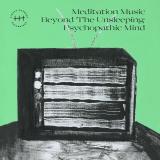
'Meditation Music Beyond The Unsleeping Psychopathic Mind' — a raw, deep free-jazz exploration where synth, voice, saxophone, and percussion dissolve into a single, unfiltered sound world. No boundaries, no polish — just presence and freedom for sonic expression.
Music spontaneously composed (improvised) by all members of the group. Recorded at Threshold Studios in Hamilton, Ontario, Canada. Produced by our good friend Devin Brahja Waldman and wrapped in hypnotic cover artwork specially crafted by renowned Vancouver-based artist Boone Naka.
Annie Shaw - keys/synth/vox
Sarah Good - keys/synth/vox
Nadah El Shazly - keys/synth/vox
Adam Kinner - tenor saxophone
Connor Bennett - soprano saxophone
Devin Brahja Waldman - synth, alto saxophone
Vicky Mettler - guitar
Alexei Orechin - guitar
Daniel Gélinas - drums, percussion
Philippe Melanson - drums, percussion
Bettye Swann possessed one of the most emotive voices in soul music’s cannon but her recording career was that of a shooting-star; it blazed at the start, then illumined brightly before abruptly dissipating, all in just eleven years. In 1975 she ceased recording, moved to Las Vegas and retired her Bettye Swann persona.
The Louisianan Betty Jean Champion had relocated to Los Angeles as a young woman where in around 1964 she was introduced to Al Scott, owner of Money Records. It was her fourth Money 45 “Make Me Yours” that propelled Swann into the stratosphere. One of the defining songs of the era, it was her pathway to Capitol Records with whom she signed in 1968.
By 1972 Bettye was at Atlantic Records. The initial Atlantic 45 “Victim Of A Foolish Heart” b/w “Cold Day In Hell” recorded at Fame with Mickey Buckins and Rick Hall, made for a promising debut reaching #16 on the Billboard chart. It was followed by Bettye’s version of Merle Haggard’s “Today I Started Loving You Again” and “Til I Get It Right”, a gentle country-soul labour. “I’m Not That Easy To Lose” also dates from those sessions.
In an attempt to broaden her appeal Atlantic sent Swann to Sigma Sound in Philadelphia where she cut Phil Hurtt’s’ and Tony Bell’s “Kiss My Love Goodbye”, “Time To Say Goodbye” and “When The Game is Played On You”. Her fortunes continued to wane so Swann was next placed with Nashville producer Brad Shapiro. The results were artistically stellar and included three unissued gemstones in The Isley’s “This Old Heart of Mine”, a definitive version of Maxine Weldon’s “I Want Sunday Back Again”, and “Either You Love Me Or Leave Me”.
- In | A Lake
- Where's | My Phone?
- Cats
- If | I Leave
- Dead | Women
- Instead | Of Here
- I'll | Change For You
- Rules
- That | White Cat
- Charon's | Obol
- Lightning
Auf ihrem achten Album "Nothing's About to Happen to Me" erzählt Mitski, musikalisch unterstützt von ihrer Band und einem Orchester, eine vielschichtige, verrätselte Geschichte, in deren Mittelpunkt eine Frau steht, die zurückgezogen in einem verwahrlosten Haus lebt. Außerhalb ihres Zuhauses ist sie eine Außenseiterin; innerhalb ihres Zuhauses ist sie frei. Mitski schrieb alle Stücke auf "Nothing's About to Happen to Me". Das Album, produziert und aufgenommen von Patrick Hyland und gemastert von Bob Weston, setzt die musikalische Linie von "The Land Is Inhospitable and So Are We" (2023) fort. Eingespielt wurde es live von Mitskis Tourband The Land. Die Orchesteraufnahmen, arrangiert von Drew Erickson fanden in den Sunset Sound und TTG Studios statt, die Tontechnik übernahm Michael Harris. Mitski ist "die faszinierendste und geheimnisvollste Musikerin des Indie-Rock" (Rolling Stone), die sich "immer wieder auf brillante und wunderbare Weise weiterentwickelt" (NPR Music). Im Laufe ihrer Karriere hat sie bislang sieben Alben veröffentlicht, vier davon erreichten Goldstatus. Ihr Stück "My Love Mine All Mine" ist ein Welthit und erreichte Vierfach-Platin. Zu Mitskis vielfältigen Kollaborationen mit anderen Künstler:innen zählen zwei Co-Writing-Beiträge für das aktuelle Florence and the Machine-Album "Everybody Scream", sowie eine Zusammenarbeit mit David Byrne und Son Lux für den Oscar-nominierten Film "This Is A Life". Derzeit schreibt sie Musik und Texte für die Musical-Adaption von "Das Damengambit". Ihre Konzerte, die Variety als "faszinierende Bewegungsstudie" bezeichnet hat, wurden auch als "hochstilisiert, brillant umgesetzt, supercool" (Philadelphia Inquirer) und "ungewöhnlich, rätselhaft und absolut fesselnd" (The Guardian) beschrieben. Ihr erster Konzertfilm "Mitski: The Land" lief im Oktober 2025 in über 600 Kinos weltweit und festigte ihren Ruf als "eine der wenigen Indie-Stars, die sich den großen Durchbruch verdient haben" (Uproxx). Er erschien zeitgleich mit dem Live-Album "The Land".
"And what about you? What are you looking for?" - René Daumal
This musical journey pays tribute to René Daumal and his enchanting world of mysteries and magic. The album shares its title with Daumal's novel, Mount Analogue: A Novel of Symbolically Authentic Non-Euclidean Adventures in Mountain Climbing, published posthumously in 1952, eight years after the author's untimely death.
Mount Analogue is a classic allegorical adventure novel. The novel describes an expedition undertaken by a group of mountaineers to travel to and climb the titular Mount Analogue an enormous mountain on a surreal continent, that is invisible and inaccessible to the outside world and can be perceived only by the application of obscure knowledge. The central theme of mountaineering is extensively explored through literary and philosophical lenses. Daumal died before the novel was completed, providing an uncanny one-way quality to the story, which ends abruptly in the middle of a sentence.
The first disc features a fifty-minute composition divided into six chapters: Introduction, Meeting, Supposition, Crossing, Arrival, and Conclusion. This album weavestogether a rich tapestry of diverse instruments, sounds, and voices that collectively tell the story of this conceptual work, loaded with a synesthetic multitude of colors, aromas, meanings, textures, and moods.
Contributors to this musical poem include Bill Laswell (bass), Henry Kaiser (guitar), Anna Clementi (vocals), Percy Howard (voice), Hideo Yamaki (percussion), Graham Haynes (cornet), Dorian Cheah (violin), Nils Petter Molvaer (trumpet), Peter Apfelbaum (keyboard), and P.ST (concept, electronics), who all lend their talents to a series of excerpts from Daumal's text.
A truly global project, the recordings took place across various locations in Europe, North America, and South America, culminating at Orange Music Studio in New York, thanks to the collaborative efforts of Bill Laswell, James Dellatacoma, and Michael Fossenkemper.
The second disc presents five improvisations for solo electric guitar by Henry Kaiser. The first solo, Jodorowsky's Peradam, draws its inspiration from Alejandro Jodorowsky's 1973 film The Holy Mountain, which was inspired by the Daumal novel. Kaiser's initial forty-eight-minute guitar solo serves as a foundational guide for his four subsequent, Rashomon-esque, solo musical interpretations of Mount Analogue, as seen through the psychedelic labyrinth of Jorodrowsky's cinematic masterpiece.
"And what about you? What are you looking for?" - René Daumal
This musical journey pays tribute to René Daumal and his enchanting world of mysteries and magic. The album shares its title with Daumal's novel, Mount Analogue: A Novel of Symbolically Authentic Non-Euclidean Adventures in Mountain Climbing, published posthumously in 1952, eight years after the author's untimely death.
Mount Analogue is a classic allegorical adventure novel. The novel describes an expedition undertaken by a group of mountaineers to travel to and climb the titular Mount Analogue an enormous mountain on a surreal continent, that is invisible and inaccessible to the outside world and can be perceived only by the application of obscure knowledge. The central theme of mountaineering is extensively explored through literary and philosophical lenses. Daumal died before the novel was completed, providing an uncanny one-way quality to the story, which ends abruptly in the middle of a sentence.
The first disc features a fifty-minute composition divided into six chapters: Introduction, Meeting, Supposition, Crossing, Arrival, and Conclusion. This album weavestogether a rich tapestry of diverse instruments, sounds, and voices that collectively tell the story of this conceptual work, loaded with a synesthetic multitude of colors, aromas, meanings, textures, and moods.
Contributors to this musical poem include Bill Laswell (bass), Henry Kaiser (guitar), Anna Clementi (vocals), Percy Howard (voice), Hideo Yamaki (percussion), Graham Haynes (cornet), Dorian Cheah (violin), Nils Petter Molvaer (trumpet), Peter Apfelbaum (keyboard), and P.ST (concept, electronics), who all lend their talents to a series of excerpts from Daumal's text.
A truly global project, the recordings took place across various locations in Europe, North America, and South America, culminating at Orange Music Studio in New York, thanks to the collaborative efforts of Bill Laswell, James Dellatacoma, and Michael Fossenkemper.
The second disc presents five improvisations for solo electric guitar by Henry Kaiser. The first solo, Jodorowsky's Peradam, draws its inspiration from Alejandro Jodorowsky's 1973 film The Holy Mountain, which was inspired by the Daumal novel. Kaiser's initial forty-eight-minute guitar solo serves as a foundational guide for his four subsequent, Rashomon-esque, solo musical interpretations of Mount Analogue, as seen through the psychedelic labyrinth of Jorodrowsky's cinematic masterpiece.
- 1: Heavydale
- 2: Superposition 1
- 3: Flying Hotel
- 4: Vander
- Scanner
- 6: Apex
- 7: Rocker
- 8: Tesla's Future War
- 9: Nexus
- 10: Red Cuffs
- 11: Radio Hotel
- 12: Untitled@33Rpm
- 13: Superposition 2
- 14: Radium
- 15: H'vydale
The singles are long out of print!! “It's like electronic stoner rock. Very doomy, very sabbath! Sit back and nod your head to it. I don't know what this sounds like!’ JACK OSBOURNE (review of Kling Klang’s Heavydale in Kerrang) KKKKK - Single of The Week // “I could not believe it when I saw that there was a band named Kling Klang from Liverpool. A group named after Kraftwerk's Dusseldorf studio? I had to check them out. Pounding Krautrock inspired Motorik beat, like Neu! welded to incessant Phillip Glass keyboard riffs on acid. But somehow creating their own authentic style. I had to go and say “hello” and offer them studio time. Great maverick music… Their recordings still sound amazing, and like no other band that I have heard before or since.” Andy Mccluskey, OMD // “I first heard Kling Klang when recording The Coral with Geoff Barrow (BEAK>) and we immediately loved them. Heavydale blew me away then and still does. When we curated All Tomorrows Parties festival we invited them to play, then invited them to come on our European Tour for our Album Third. They were so awesome live. For me, when they played it was the beginning of the whole show and not just a support band. So cool this collection of singles is happening.” Adrian Utley, Portishead.