Cerca:phil week

Generi
Tutto
Level 42 - World Machine

Level 42

World Machine

12inchUMCLP097
PROPER RECORDS
30.04.2025
  • World Machine 5:12
  • Physical Presence 5:27
  • Something About You 4:22
  • Leaving Me Now 4:58
  • I Sleep On My Heart 4:05
  • It's Not The Same For Us 4:34
  • Good Man In A Storm 4:35
  • Coup D'etat 3:35
  • Lying Still 5:36

This re-issue of World Machine, Level 42's 1985 breakthrough album, is presented with scrupulous attention to the detail of the original UK first pressings and available in audiophile 180g pink vinyl in celebration of the album's 40th anniversary.

By 1985, Level 42 – bassist and vocalist Mark King, keyboard player/vocalist Mike Lindup, guitarist Boon Gould, drummer/lyricist Phil Gould and studio-only keyboard player Wally Badarou – were on the verge of breaking big - After a string of well-received albums, such as their pioneering jazz-funk 1981 debut or the Ken-Scott produced True Colours, the group decided, rather than work up material through jamming, to sit and write some songs for their forthcoming album.

Producing themselves, with assistance from engineer Julian Mendelsohn, this new approach meant that World Machine was the quantum commercial leap they craved. And most of that was due to the album's towering lead single, the pop-funk of "Something About You". With its expensive video seeing the group styled for the 80s, it set radio alight, becoming a Top 10 hit and charting around the world, importantly in the US. Following up with the tender ballad "Leaving Me Now" and then the bouncy funk of the album's title track as singles, the album's success was guaranteed; it reached No 3 in the UK charts and spent an amazing 72 weeks on the listings.

pre-ordina ora30.04.2025

dovrebbe essere pubblicato su 30.04.2025

30,67
The 7:45s - The Way that I Love You / Too Little Too Late

Manchester-based original soul collective The 7:45s release their debut single.

Named after 7-inch 45-rpm vinyl, The 7:45s write short and snappy soul singles. Their debut is a double A-side, giving you two bops for the price of one. Inspired by Charles Bradley, 'The Way that I Love You' is full of contrasts: the piano chimes and horns respond, a man calls and a woman answers. It's laidback then intense, major then minor, nostalgic then heartbroken. On the flip-side, 'Too Little Too Late' is an upbeat northern soul stomper, featuring an earworm of a vocal hook over an infectious bassline that's sure to ruffle tail feathers.

Recorded with vintage equipment at EVE Studios in Stockport, both songs feature the captivating vocals of collaborator Martin Connor. On 'The Way that I Love You', Connor's vocal rises from a crooning baritone to a fever pitch, culminating in spine-tingling ad libs. Magic moments like this are heightened by songwriter and bassist Sam Flynn's perfectionist arrangements, which feature dozens of musicians: spotlighting vocal harmonies, horns, and even strings on 'Too Little... more

credits

releases March 7, 2025

Been in UK soul chart and played on all the indie soul stations , Starpoint , solar etc

Too little Too Late was Played on BBC radio six Craig Charles Funk and soul show twice and the Way That I Love You was played on BBC radio six Craig Charles day time show

Track of the week on Simon Phillips Jazz FM

Featured in Blues and Soul and Echoes Mag

non in magazzino

Ordina ora e ordineremo l'articolo per te presso il nostro fornitore.

18,07

Last In: 14 months ago
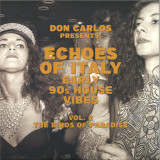
Various - ECHOES OF ITALY – THE BIRDS OF PARADISE – EARLY 90S HOUSE VIBES VOL.2 (2x12")

Googling “paradise house”, the first results to pop up are an endless list of European b&b’s with whitewashed lime façades, all of them promising “…an unmatched travel experience a few steps from the sea”. Next, a little further down, are the institutional websites of a few select semi-luxury retirement homes (no photos shown, but lots of stock images of smiling nurses with reassuring looks). To find the “paradise house” we’re after, we have to scroll even further down. Much further down.

It feels like yesterday, and at the same time it seems like a million years ago. The Eighties had just ended, and it was still unclear what to expect from the Nineties. Mobile phones that were not the size of a briefcase and did not cost as much as a car? A frightening economic crisis? The guitar-rock revival?! Certainly, the best place to observe that moment of transition was the dancefloor. Truly epochal transformations were happening there. From America, within a short distance one from the other, two revolutionary new musical styles had arrived: the first one sounded a bit like an “on a budget” version of the best Seventies disco-music – Philly sound made with a set of piano-bar keyboards! – the other was even more sparse, futuristic and extraterrestrial. It was a music with a quite distinct “physical” component, which at the same time, to be fully grasped, seemed to call for the knotty theories of certain French post-modern philosophers: Gilles Deleuze, Félix Guattari, Paul Virilio... Both those genres – we would learn shortly after – were born in the black communities of Chicago and Detroit, although listening to those vinyl 12” (often wrapped in generic white covers, and with little indication in the label) you could not easily guess whether behind them there was a black boy from somewhere in the Usa, or a girl from Berlin, or a pale kid from a Cornish coastal town.

Quickly, similar sounds began to show up from all corners of Europe. A thousand variations of the same intuition: leaner, less lean, happier, slightly less intoxicated, more broken, slower, faster, much faster... Boom! From the dancefloors – the London ones at least, whose chronicles we eagerly read every month in the pages of The Face and i-D – came tales of a new generation of clubbers who had completely stopped “dressing up” to go dancing; of hot tempered hooligans bursting into tears and hugging everyone under the strobe lights as the notes of Strings of Life rose up through the fumes of dry ice (certain “smiling” pills were also involved, sure). At this point, however, we must move on to Switzerland.

In Switzerland, in the quiet and diligent town of Lugano, between the 1980s and 1990s there was a club called “Morandi”. Its hot night was on Wednesdays, when the audience also came from Milan, Como, Varese and Zurich. Legend goes that, one night, none less than Prince and Sheila E were spotted hiding among the sofas, on a day-off of the Italian dates of the Nude Tour… The Wednesday resident and superstar was an Italian dj with an exotic name: Don Carlos. The soundtrack he devised was a mixture of Chicago, Detroit, the most progressive R&B and certain forgotten classics of old disco music: practically, what the Paradise Garage in New York might have sounded like had it not closed in 1987. In between, Don Carlos also managed to squeeze in some tracks he had worked on in his studio on Lago Maggiore. One in particular: a track that was rather slow compared to the BPM in fashion at the time, but which was a perfect bridge between house and R&B. The title was Alone: Don Carlos would explain years later that it had to be intended both in the English meaning of “by itself” and like the Italian word meaning “halo”. That wasn’t the only double entendre about the song, anyway. Its own very deep nature was, indeed, double. On the one hand, Alone was built around an angelic keyboard pattern and a romantic piano riff that took you straight to heaven; on the other, it showcased enough electronic squelches (plus a sax part that sounded like it had been dissolved by acid rain) to pigeonhole the tune into the “junk modernity” section, aka the hallmark of all the most innovative sounds of the time: music that sounded like it was hand-crafted from the scraps of glittering overground pop.

No one knows who was the first to call it “paradise house”, nor when it happened. Alternative definitions on the same topic one happened to hear included “ambient house”, “dream house”, “Mediterranean progressive”… but of course none were as good (and alluring) as “paradise house”. What is certain is that such inclination for sounds that were in equal measure angelic and neurotic, romantic and unaffective, quickly became the trademark of the second generation of Italian house. Music that seemed shyly equidistant from all the rhythmic and electronic revolutions that had happened up to that moment (“Music perfectly adept at going nowhere slowly” as noted by English journalist Craig McLean in a legendary field report for Blah Blah Blah magazine). Music that to a inattentive ear might have sounded as anonymous as a snapshot of a random group of passers-by at 10AM in the centre of any major city, but perfectly described the (slow) awakening in the real world after the universal love binge of the so-called Second Summer of Love.

For a brief but unforgettable season, in Italy “paradise house” was the official soundtrack of interminable weekends spent inside the car, darting from one club to another, cutting the peninsula from North to centre, from East to West coast in pursuit of the latest after-hours disco, trading kilometres per hour with beats per minute: practically, a new New Year’s Eve every Friday and Saturday night. This too was no small transformation, as well as a shock for an adult Italy that was encountering for the first time – thanks to its sons and daughters – the wild side of industrial modernity. The clubbers of the so-called “fuoriorario” scene were the balls gone mad in the pinball machine most feared by newspapers, magazines and TV pundits. What they did each and every weekend, apart from going crazy to the sound of the current white labels, was linking distant geographical points and non-places (thank you Marc Augé!) – old dance halls, farmhouses and business centres – transformed for one night into house music heaven. As Marco D’Eramo wrote in his 1995 essay on Chicago, Il maiale e il grattacielo: “Four-wheeled capitalism distorts our age-old image of the city, it allows the suburbs to be connected to each other, whereas before they were connected only by the centre (…) It makes possible a metropolitan area without a metropolis, without a city centre, without downtown. The periphery is no longer a periphery of any centre, but is self-centred”.

“Paradise house” perfectly understood all of this and turned it into a sort of cyber-blues that didn’t even need words, and unexpectedly brought back a drop of melancholic (post?)-humanity within a world that by then – as we would wholly realise in the decades to come – was fully inhuman and heartless. A world where we were all alone, and surrounded by a sinister yellowish halo, like a neon at the end of its life cycle. But, for one night at least, happy."

non in magazzino

Ordina ora e ordineremo l'articolo per te presso il nostro fornitore.

28,99

Last In: 35 days ago
Grass is Green - Yeddo

Exploding In Sound Records is thrilled to reissue Yeddo, the debut album from Boston’s Grass Is Green. Originally self-released back in 2010, the seminal record, which pre-dates the label, celebrates fifteen years in 2025, and the band will reunite to play a weekend of shows together with Ovlov, Speedy Ortiz, and special guests in Boston, Brooklyn, and Philadelphia. A truly legendary debut, this record served as a major catalyst for the formation of Exploding In Sound, and Grass Is Green’s third album, Ronson, eventually became the label’s very first release. We’re beyond excited to bring Yeddo to vinyl for the first time ever, a raw and flawless album of arty punk, post-hardcore, and math rock that feels exuberant at all times.

pre-ordina ora28.02.2025

dovrebbe essere pubblicato su 28.02.2025

29,62
Various - ECHOES OF ITALY - ARTISTS IN WONDERLAND – EARLY 90S HOUSE VIBES VOL.1 LP 2x12"

Volume 1 of this expertly curated project of 90s Italian House - put together by Don Carlos.

If Paradise was half as nice… by Fabio De Luca.

Googling “paradise house”, the first results to pop up are an endless list of European b&b’s with whitewashed lime façades, all of them promising “…an unmatched travel experience a few steps from the sea”. Next, a little further down, are the institutional websites of a few select semi-luxury retirement homes (no photos shown, but lots of stock images of smiling nurses with reassuring looks). To find the “paradise house” we’re after, we have to scroll even further down. Much further down.

It feels like yesterday, and at the same time it seems like a million years ago. The Eighties had just ended, and it was still unclear what to expect from the Nineties. Mobile phones that were not the size of a briefcase and did not cost as much as a car? A frightening economic crisis? The guitar-rock revival?! Certainly, the best place to observe that moment of transition was the dancefloor. Truly epochal transformations were happening there. From America, within a short distance one from the other, two revolutionary new musical styles had arrived: the first one sounded a bit like an “on a budget” version of the best Seventies disco-music – Philly sound made with a set of piano-bar keyboards! – the other was even more sparse, futuristic and extraterrestrial. It was a music with a quite distinct “physical” component, which at the same time, to be fully grasped, seemed to call for the knotty theories of certain French post-modern philosophers: Gilles Deleuze, Félix Guattari, Paul Virilio... Both those genres – we would learn shortly after – were born in the black communities of Chicago and Detroit, although listening to those vinyl 12” (often wrapped in generic white covers, and with little indication in the label) you could not easily guess whether behind them there was a black boy from somewhere in the Usa, or a girl from Berlin, or a pale kid from a Cornish coastal town.

Quickly, similar sounds began to show up from all corners of Europe. A thousand variations of the same intuition: leaner, less lean, happier, slightly less intoxicated, more broken, slower, faster, much faster... Boom! From the dancefloors – the London ones at least, whose chronicles we eagerly read every month in the pages of The Face and i-D – came tales of a new generation of clubbers who had completely stopped “dressing up” to go dancing; of hot tempered hooligans bursting into tears and hugging everyone under the strobe lights as the notes of Strings of Life rose up through the fumes of dry ice (certain “smiling” pills were also involved, sure). At this point, however, we must move on to Switzerland.

In Switzerland, in the quiet and diligent town of Lugano, between the 1980s and 1990s there was a club called “Morandi”. Its hot night was on Wednesdays, when the audience also came from Milan, Como, Varese and Zurich. Legend goes that, one night, none less than Prince and Sheila E were spotted hiding among the sofas, on a day-off of the Italian dates of the Nude Tour… The Wednesday resident and superstar was an Italian dj with an exotic name: Don Carlos. The soundtrack he devised was a mixture of Chicago, Detroit, the most progressive R&B and certain forgotten classics of old disco music: practically, what the Paradise Garage in New York might have sounded like had it not closed in 1987. In between, Don Carlos also managed to squeeze in some tracks he had worked on in his studio on Lago Maggiore. One in particular: a track that was rather slow compared to the BPM in fashion at the time, but which was a perfect bridge between house and R&B. The title was Alone: Don Carlos would explain years later that it had to be intended both in the English meaning of “by itself” and like the Italian word meaning “halo”. That wasn’t the only double entendre about the song, anyway. Its own very deep nature was, indeed, double. On the one hand, Alone was built around an angelic keyboard pattern and a romantic piano riff that took you straight to heaven; on the other, it showcased enough electronic squelches (plus a sax part that sounded like it had been dissolved by acid rain) to pigeonhole the tune into the “junk modernity” section, aka the hallmark of all the most innovative sounds of the time: music that sounded like it was hand-crafted from the scraps of glittering overground pop.

No one knows who was the first to call it “paradise house”, nor when it happened. Alternative definitions on the same topic one happened to hear included “ambient house”, “dream house”, “Mediterranean progressive”… but of course none were as good (and alluring) as “paradise house”. What is certain is that such inclination for sounds that were in equal measure angelic and neurotic, romantic and unaffective, quickly became the trademark of the second generation of Italian house. Music that seemed shyly equidistant from all the rhythmic and electronic revolutions that had happened up to that moment (“Music perfectly adept at going nowhere slowly” as noted by English journalist Craig McLean in a legendary field report for Blah Blah Blah magazine). Music that to a inattentive ear might have sounded as anonymous as a snapshot of a random group of passers-by at 10AM in the centre of any major city, but perfectly described the (slow) awakening in the real world after the universal love binge of the so-called Second Summer of Love.

For a brief but unforgettable season, in Italy “paradise house” was the official soundtrack of interminable weekends spent inside the car, darting from one club to another, cutting the peninsula from North to centre, from East to West coast in pursuit of the latest after-hours disco, trading kilometres per hour with beats per minute: practically, a new New Year’s Eve every Friday and Saturday night. This too was no small transformation, as well as a shock for an adult Italy that was encountering for the first time – thanks to its sons and daughters – the wild side of industrial modernity. The clubbers of the so-called “fuoriorario” scene were the balls gone mad in the pinball machine most feared by newspapers, magazines and TV pundits. What they did each and every weekend, apart from going crazy to the sound of the current white labels, was linking distant geographical points and non-places (thank you Marc Augé!) – old dance halls, farmhouses and business centres – transformed for one night into house music heaven. As Marco D’Eramo wrote in his 1995 essay on Chicago, Il maiale e il grattacielo: “Four-wheeled capitalism distorts our age-old image of the city, it allows the suburbs to be connected to each other, whereas before they were connected only by the centre (…) It makes possible a metropolitan area without a metropolis, without a city centre, without downtown. The periphery is no longer a periphery of any centre, but is self-centred”.

“Paradise house” perfectly understood all of this and turned it into a sort of cyber-blues that didn’t even need words, and unexpectedly brought back a drop of melancholic (post?)-humanity within a world that by then – as we would wholly realise in the decades to come – was fully inhuman and heartless. A world where we were all alone, and surrounded by a sinister yellowish halo, like a neon at the end of its life cycle. But, for one night at least, happy.

non in magazzino

Ordina ora e ordineremo l'articolo per te presso il nostro fornitore.

28,99

Last In: 35 days ago
BOILERMAKER - NOT ENOUGH TIME TO GET ANYTHING HALFWAY DONE LP 4x12"
  • Roller Rink Skate Date
  • Hill
  • Switch
  • Ladyfinger
  • Lot 235
  • Crispin Glover Weekend
  • Slingshot
  • Alone
  • Trunk
  • Dark Island
  • Iris
  • Backseat Boat
  • Slow Down
  • Jingle Dell
  • Last Good Growth
  • Shepherd
  • Five Lined Skink
  • Phil The Water Sweep
  • Pathos Delay
  • Breach
  • Norman
  • Midnight Manager
  • Last Stop On The Way To Vegas
  • Last On The Drive
  • 1: 0/98
  • Sunset Ridge
  • From Phoenix At Four
  • Tumbleweed
  • Here Comes Rolling
  • Thinner Runs Through Her
  • Bluebird
  • Used To Be
  • Beseme Mucho You Fucker
  • Drained Nonsense
  • Mobile Home
  • Why Is Grandma On The Roof?
  • Slow Down
  • Sleeping Arms
  • Switch _91X
  • Slingshot
  • Trunk (Live At Che Fest)
disponibile anche

Color Vinyl[77,94 €]


From the frayed loop of San Diego's white belt `90s scene, Boilermaker provided a subtle counterpoint to the Gravityobsessed post-hardcore landscape. They called it Leucadia-core, a hybrid of major chord riffs, emotive yelps, angular bass chug, and pounding rhythms, building and releasing with the Swami tides. NotEnough Time To Get Anything Halfway Done compiles the trio of Terrin Durfey, Tim Semple, and Richard Sanderson complete discography_three albums, singles, and rarities_into a 41-song/ 4xLP box set, with annotation and illustration in the accompanying 24-page book. Surfs down. Hang zero.

pre-ordina ora24.01.2025

dovrebbe essere pubblicato su 24.01.2025

71,85
BOILERMAKER - NOT ENOUGH TIME TO GET ANYTHING HALFWAY DONE LP 4x12"

From the frayed loop of San Diego's white belt `90s scene, Boilermaker provided a subtle counterpoint to the Gravityobsessed post-hardcore landscape. They called it Leucadia-core, a hybrid of major chord riffs, emotive yelps, angular bass chug, and pounding rhythms, building and releasing with the Swami tides. NotEnough Time To Get Anything Halfway Done compiles the trio of Terrin Durfey, Tim Semple, and Richard Sanderson complete discography_three albums, singles, and rarities_into a 41-song/ 4xLP box set, with annotation and illustration in the accompanying 24-page book. Surfs down. Hang zero.

pre-ordina ora24.01.2025

dovrebbe essere pubblicato su 24.01.2025

77,94
Dr. Dre - The Chronic LP 2x12"

Dr. Dre

The Chronic LP 2x12"

2x12inch5509996
Interscope
16.01.2025

Legendary 7X GRAMMY and Emmy Award-winning artist/producer Dr. Dre celebrates the 30th anniversary of his magnum opus, The Chronic by announcing the album will be re-released. The Chronic, which is not currently available on streaming services, will again be available to fans on all major DSPs .

Steve Berman, Vice Chairman of Interscope Geffen A&M, said: “Dr. Dre is without a doubt one of the most iconic and groundbreaking artists in the modern era. He has also used his platform to fuel some very impactful philanthropic efforts that will ensure his legacy is felt for generations to come. Dre’s solo career all started with the The Chronic, one of the most celebrated recordings of all time.

First released on December 15, 1992, The Chronic peaked at No. 3 on the Billboard 200 and has spent 97 weeks on the chart since its release. The album also spawned three top 40 hits on the Hot 100, including top ten records with "Nuthin' But a “G” Thang" (No. 2) featuring Snoop Dogg and "F— Wit Dre Day" (No. 8). The Chronic topped the Top R&B/Hip-Hop Albums chart for eight weeks, while "Nuthin’ But a "G" Thang" hit No. 1 for two weeks on Hot R&B/Hip-Hop Songs. Last June, Rolling Stone placed The Chronic on its 500 Greatest Albums of All-Time List, boasting how the album "redefined the West Coast Hip Hop sound." Pitchfork also holds the seminal album in high standing, saying The Chronic lives on as a “timeless show of strength” and “gave shape to L.A.’s present and future.” Videos from The Chronic are also available on Dr. Dre’s official YouTube channel.

Last year, Dr. Dre dazzled during the Super Bowl LVI Halftime Show in Los Angeles. His enormous set was star-studded, as Dre performed alongside some of music's biggest stars, including Snoop Dogg, Kendrick Lamar, Mary J. Blige, Eminem, and 50 Cent. Dre commanded the stage – just a few miles from his birthplace of Compton – with a groundbreaking setlist anchored by hits such as "The Next Episode" and the 2Pac-led "California Love." The historic performance earned Dr. Dre his first-ever Emmy for Outstanding Variety Special (Live). The Hollywood Reporter called the halftime show "thrilling and nostalgic," while Billboard credited Dre for his "seismic impact" on music.

non in magazzino

Ordina ora e ordineremo l'articolo per te presso il nostro fornitore.

35,50

Last In: 40 days ago
Nadia Reid - Listen To Formation, Look For The Signs LP
  • A1: Runway
  • A2: Track Of The Time
  • A3: Reaching Through
  • A4: Holy Low
  • A5: Just To Feel Alive
  • B1: Seasons Change
  • B2: Some Are Lucky
  • B3: Ruby
  • B4: Call The Days
  • B5: Holy Loud

8/10 FULL-PAGE LEAD REVIEW IN UNCUT: “TALENTED ARTISTS SUCH AS ALDOUS HARDING , DELANEY DAVIDSON, IVY ROSSITER AND MARLON WILLIAMS REPRESENT A FRESH COUNTRY-FOLK/AMERICANA MOVEMENT IN AND AROUND CHRISTCHURCH AND DUNEDIN. NADIA REID'S IMPECCABLE DEBUT WILL MAYBE SET A WIDER ORBIT IN MOTION.”
4/5 LEAD REVIEW IN MOJO: “INSPIRED DEBUT BY A YOUNG NEW ZEALAND SINGER-SONGWRITER YOU'LL FEEL YOU'VE KNOWN FOREVER. A WONDERFUL ALBUM"

SUNDAY TIMES DEBUT OF THE WEEK: "SHE RANKS ALONGSIDE LOW AND THE COWBOY JUNKIES FOR DELIVERING SLOW-BURN EMOTION"
"It has all that well-smoked wisdom, that mingling of strength and yearning that seems to charge the work of all my favourite female artists – Laura Marling, The Weather Station, Sharon Van Etten and Tift Merritt, to name but four. Reid is just 23, and since I am loathe to run that “old beyond her years” line, let us simply say that when I hear a young artist making an album as soulful and rich and self-possessed as Listen to Formation, Look for the Signs, I feel so thrilled not only for the existence of that record but for all the music they will make over all the years to come.” THE GUARDIAN PLAYLIST
6MUSIC ALBUM OF THE WEEK
A richness of voice; a depth of emotion; and wise beyond her years; with Listen To Formation, Look For the Signs, 23-year-old New Zealand native Nadia Reid has claimed her place as one of the country’s most evocative and profound young songwriters. Her music traces the sharp mountain peaks, azure coastline, and mirrored images of the land and sky that pinpoint her home country’s vast open landscapes.
Whether nerding about with friends, stunning audiences into silence with her spellbinding live shows or unwinding in the tranquillity of her favourite hometown spot overlooking Port Chalmers’ harbour through her large-rimmed spectacles, Nadia Reid has achieved a gloriously fresh and eloquent new folk sound. “I’ve been in New Zealand my whole life and guess at times I take for granted the serene beauty that I live so closely with,” she says of her music’s majestic affiliation with nature. Mapping out tales of change and loss, whilst drawing inspiration from reading, writing, the human condition, falling in and out of love, death, and birth - it all lends to a superbly balanced album that moves surreptitiously between sparse and fragile melancholia to beautifully brutal lyricism with a philosophical maturity that bellies her years.
Born in Auckland, Nadia’s acoustic roots stem from an upbringing in a musical household where attending folk clubs and festivals were regular occurrences on the family calendar. “I was lucky to witness a lot of live music and theatre performances because my mum was an actress. I was encouraged to learn piano and guitar, and attended a Steiner school where we spent a lot of time in nature, singing songs.” Before long Nadia was listening to The Be Good Tanyas with friend and fellow recording artist Aldous Harding, which spurred her chosen career path. “There was something spiritual about the Tanyas’ records - I vividly remember the goose-bump feelings up my arms, a true connection to the lyrics and vocals,” she recalls. “Aldous was the first person who told me I had a good voice and I thank her for that. I admire her as an artist and writer, and we like to keep up with what each other is up to.”
Creating her own enchanting wonderworld, each of Nadia’s songs explores the elements; truly organic, her vocals ebb, flow and soar but are always ignited with fire from the gut. Her lyrics clearly reference lush landscapes but equally reflect alienation provided by the surrounding Pacific Ocean and mortality of living in such close proximity to Mother Nature’s wrath, as experienced whilst living in Christchurch at the time of 2011’s devastating earthquake. “It shook the city to its core,” Nadia recalls. “I’m sure living through it has shaped my personality and writing. My first EP was recorded just months afterwards, it was a strange time. We were all quite fragile, but I was braver somehow.”
Boldly infusing folk with full flavour, Listen To Formation, Look For The Signs was produced by Ben Edwards, owner of Lyttelton Records in his Sitting Room studios with Nadia’s band consisting bassist Richie Pickard, guitarist Sam Taylor and percussionist Joe McCallum. Whilst 'Reaching Through’s rich but unhurried nature evokes She Hangs Brightly -era Mazzy Star and intricate nuances of Beth Orton are recalled on lead single ‘Call The Days’ which talks of moving to a new town and was the first song penned after Nadia moved from Christchurch to Wellington; spurred on by a “panic attack” and being “worried about making the right choices in life”. Elsewhere ‘Runway’ and ‘Some Are Lucky’ immediately channel Nadia’s love of TBGT’s Jolie Holland and appreciation for New Zealand’s Maori music by Maisey Rika and Anika Moa, plus the inspirational narratives of Kenyan-born Somali poet Warsan Shire.

pre-ordina ora29.11.2024

dovrebbe essere pubblicato su 29.11.2024

21,43
Sussan Deyhim & Richard Horowitz - The Invisible Road: Original Recordings, 1985–1990 LP

The Invisible Road: Original Recordings, 1985–1990 compiles an unheard, previously unreleased body of recordings by Sussan Deyhim and Richard Horowitz, dissidents from diametric backgrounds who met during the heady days of Downtown New York in the 1980s. This collection reveals the creative and life partners’ radical shared vision of avant-garde pop in all of its boundary pushing freedom, combining Deyhim’s singular approach to vocalization, Horowitz’s invention of new musical languages, and touchstones of traditional music from around the world, creating a new music that ultimately retains a voice entirely its own. Despite their difference in backgrounds and respective journeys, at the time of their meeting in the early 1980s in New York City, Sussan Deyhim and Richard Horowitz were both products of the search for freedom and understanding (and resultant awakenings) that swept the globe and helped culturally define the late 1960s and 70s. Deyhim, born and raised in Tehran, spent her teens dancing with Iran’s Pars National Ballet company, performing weekly on Iranian national television, and travelling her home country studying with master folk musicians and dancers, before relocating to Belgium and joining Maurice Béjart’s prestigious Béjart Ballet of the 20th Century. Horowitz, born and raised in Buffalo, New York, had spent much of the decade before abroad, first departing for Paris under the shadows of the Vietnam War, where he studied piano, Eastern philosophy, and became entrenched the city’s free jazz scene, playing with the likes of Steve Lacy, Anthony Braxton, and Alan Silva, before embarking south to Morocco where his friendship with Paul Bowles helped cultivate a deep passion for the country’s musical traditions and a shift in his musical practice.


The pair met by chance sometime in 1981 at Noise New York, a small studio on West 34th Street founded by the musician and recording engineer, Frank Eaton, as a utopian creative laboratory that beckoned artists and bands like Arthur Russell, Christian Marclay, Liquid Liquid and Butthole Surfers into its orbit. Both artists had recently relocated to the city, Horowitz having recently released his debut album, Oblique Sequences (Solo Nai Improvisations), on the legendary Paris based imprint Shandar, and fallen in with members of New York avant-garde like La Monte Young, Jon Hassell, David Byrne, and Brian Eno, and Deyhim having begun to more actively incorporate singing into her practice, notably recording a vocal score for choreography she was doing at La MaMa Experimental Theatre.


Initially bonding over a cassette tape of field recordings made by Paul Bowles that had been given to mutual friend and writer Brian Cullman (seeking answers for Ornette Coleman’s question “what is the sound of sound”), their earliest collaboration was documented on Horowitz’s 1981 album, Eros In Arabia, with Deyhim contributing vocals to the track “Queen Of Saba.” Over the coming years, their deep connection would routinely gravitate them into the studio, culminating in the body of recordings that would appear on their 1986 album for Crammed Discs, Desert Equations: Azax Attra. Unknown to nearly all but the artists, laying in wait over the decades on numerous multi-track and stereo reels, DAT tapes, and reference cassettes, were a vast array of recordings made by Deyhim and Horowitz bookending Desert Equations. The 13 pieces represented on The Invisible Road: Original Recordings, 1985–1990 were recorded largely between Noise New York and Daylight Studio in Brussels, during a period that Deyhim describes the partnership between herself and Horowitz’s as seeking a music “free of any specific cultural reference, with a personal musical signature,” blossoming into a body of sonority that embraced the energy of contemporary boundary pushing pop and the avant garde, filtered through their mutual love and study of various musical traditions from across the globe and deep engagement with the ideas and tactics of experimental music.


Undeniably rooted in Horowitz’s study of the North Africa ney and the music of the Berber and Gnawa cultures during his time in Morocco, Deyhim’s deep engagement with the folk traditions of Iran, and the couple’s immersion in the interconnected Downtown underground music scenes, each piece on The Invisible Road offers its own vision creative and cultural hybridity. Deyhim sings in both English and Farsi, as well as a composite tongue that she developed by drawing upon numerous indigenous vocal techniques from around the world, intuitively responding to Horowitz’s simultaneous sound syntax forming and combining a wide range synthetic and acoustic instrumentation, and experimental tape techniques, within a visionary series of free-standing expressions.

non in magazzino

Ordina ora e ordineremo l'articolo per te presso il nostro fornitore.

23,49

Last In: 15 months ago
MAC DEMARCO - SALAD DAYS (TAPE)

"As I'm getting older, chip up on my shoulder..." is the opening line from Mac DeMarco's second full-length LP `Salad Days,' the follow up to 2012's lauded `Mac DeMarco 2.' Amongst that familiar croon and lilting guitar, that initial line from the title track sets the tone for an LP of a maturing singer/songwriter/producer. Someone strangely self-aware of the positives and negatives of their current situation at the ripe old age of 23. Written and recorded around a relentless tour schedule (which picked up all over again as soon as the LP was done), `Salad Days' gives the listener a very personal insight into what it's all about to be Mac amidst the craziness of a rising career in a very public format. The lead single, "Passing Out Pieces," set to huge overdriven organ chords, contains lines like "...never been reluctant to share, passing out pieces of me..." Clearly, this isn't the same record that breezily gave us "Dreamin," and "Ode to Viceroy" but the result of what comes from their success. "Chamber of Reflection," a track featuring icy synth stabs and soulful crooning, wouldn't be out of place on a fantasy Shuggie Otis and Prince collaboration. Standout tracks like these show Mac's widening sound, whether insights into future directions or even just welcome one-off forays into new territory. Still, this is musically, lyrically and melodically good old Mac DeMarco, through and through. The same crisp John Lennon / Phil Spector era homegrown lush production that could have walked out of Geoff Emerick's mixing board in 1972, but with that peculiar Mac touch that's completely of right now. "Brother," a complete future classic, is Mac at his most soulful and easygoing but with that distinct weirdness and bite that can only come from Mr. DeMarco. "Treat Her Better" is rife with "Mac-isms," heavily chorused slinky lead guitar, swooning vocal melodies, effortless chords that come along only after years of effort, and the other elements seriously lacking in independent music: sentiment and heartfelt sincerity. We're only at Part 2 and 1/2 (one EP and two LP's in) into Mac's career. As you read this and as you hear the album on April Fool's Day of this year, he'll probably be on tour, or preparing for one... or maybe already writing new music. A relentless work ethic is something to be admired in today's indie music scene, but when it's of the quality Mac is giving us time and time again, it starts to turn from admiration to awe.

pre-ordina ora08.11.2024

dovrebbe essere pubblicato su 08.11.2024

14,08
Night Owl - Northern Soul Revue 2017

For the Northern Soul collector few places rival Detroit as a source for quality, rare records. But Philadelphia comes pretty close and it is the city of brotherly love that produced America's number one independent record label... the mighty Cameo-Parkway. Here, for the first time, we present the very best that that iconic company has to offer.From the Wheel to Wigan, to the Weekender and beyond, the sound of Cameo-Parkway has packed the dance floors across the UK for over 50 years. From the opening bars of Dee Dee Sharp's driving cover of Mel Tormé's Comin' Home Baby' it's easy to see why the label is so highly prized by collectors and dancers alike and why this unique vinyl tribute will touch the hearts of the faithful! All of the classics are here: Chubby Checker, Christine Cooper, Bobby Paris, Yvonne Baker, Bunny Sigler, Jerry Jackson etc etc. The difficulty has been in deciding what to leave out, not what to include, maybe a second volume later in the year One thing is for certain, 1.2 million YouTube viewers just love Cameo-Parkway!

non in magazzino

Ordina ora e ordineremo l'articolo per te presso il nostro fornitore.

17,61

Last In: 9 years ago
Lori Goldston & Stefan Christoff - A Radical Horizon (TAPE)

A RADICAL HORIZON is comprised of a series of duets between cellist Lori Goldston and pianist Stefan Christoff, recorded on a late Fall afternoon in Brooklyn, NY. A conversation between friends, these improvised excursions reflect a willingness to be open to the spirits in the space and between the notes; a spirit of communion that, as Stefan writes, "guides and dances with our dialogue together".

Stefan Christoff is a Canadian musician, community organizer, and journalist based in Montreal, Quebec. He has collaborated with artists such as Sam Shalabi and Adriana Camacho, performs with his brother Jordan as a duo in Anarchist Mountains, and has released music on labels such as Moon Villain, Shimmering Moods, and Aural Canyon.

A lifelong community activist, he helped establish the Musicians For Palestine project and has engaged in street-level solidarity work in Lebanon and The Philippines as well as closer to home in Montreal. This is his second appearance on Beacon Sound after 'In Sofia', an album of piano improvisations recorded in Bulgaria, was released on the label in 2023.

Classically trained and rigorously de-trained, possessor of a restless, semi-feral spirit, Lori Goldston is a cellist, composer, improvisor, producer, writer and teacher from Seattle. Her voice as a cellist, amplified or acoustic, is full, textured, committed and original. A relentless inquirer, her work drifts freely across borders that separate genre, discipline, time and geography.

Current and former collaborators and/or bosses include Earth, Nirvana, Mirah, Jessika Kenney, Ilan Volkov, Eyvind Kang, Stuart Dempster, David Byrne, Terry Riley, Jherek Bischoff, Malcom Goldstein, Steve Von Till, Lonnie Holley, Cat Power, Ellen Fullman, Maya Dunietz, Mik Quantius, Embryo, O Paon, Tara Jane O’Neil, Natacha Atlas, Broken Water, Ed Pias, Christian Rizzo and Sophie Laly, Threnody Ensemble, Cynthia Hopkins, 33 Fainting Spells, Vanessa Renwick, Mark Mitchell, Lynn Shelton, and many more.

Her work has been commissioned by and/or performed at the Kennedy Center, Sydney Festival, Cineteca Nacional de México, Tectonics Festival, Frye Art Museum, Time Based Art Festival (TBA), WNYC, The New Foundation, Paris Fashion Week, Northwest Film Forum, On the Boards, Seattle International Film Festival, Seattle Jewish Film Festival, Bumbershoot, Crossing Border Festival, Boston’s Museum of Fine Arts, Joe’s Pub, the Stone, University of Chicago, and venues large and small throughout North America, Mexico, Australia, and Europe.

pre-ordina ora25.10.2024

dovrebbe essere pubblicato su 25.10.2024

12,82
Jiraffe - Out'A The Box

Jiraffe

Out'A The Box

12inchSTILLM043
Still Music
07.10.2024

Still Music Chicago is thrilled to announce the reissue of Jiraffe's ''Out'A The Box,'' a legendary dance record from New York City. Originally released in 1988 on Goldqwest Records, this track emerged from the collaboration between Richie Weeks and Al Smith. This limited 12'' release includes a full sleeve with a never-before-seen picture of Richie Weeks with Vaughan Mason at Vaughan home studio and a story of ''Out'A The Box''. Richie Weeks, known for his work with The Jammers and Weeks & Co, founded Goldqwest Records after Salsoul Records closed. Inspired by his friend Vaughan Mason, Richie ventured into house music production, recording demos that caught the attention of Reynald ''Crazy Frenchman'' Deschamps of M.T.I Exports. A generous supporter funded Goldqwest's third release, leading to Richie and Al Smith creating ''Out'A The Box'' at Al's home studio in Philadelphia. The track blended post-disco, dance, latin, and proto-house elements, achieving cult status among DJs worldwide.

non in magazzino

Ordina ora e ordineremo l'articolo per te presso il nostro fornitore.

17,44

Last In: 12 months ago
Moo Latte - Mellowmaniac LP

The 180g vinyl is available in two colors: Classic Black and a Limited Burgundy Edition, with the outer cover hand-colored and numbered (100 copies) by Moo Latte himself.

Mellomaniac, the seventh full-length album by Moo Latte, is different. These 28 compositions, written and recorded in 2021/22, were initially created for Moo's personal use, serving as a life soundtrack during many weeks and months spent away from home while touring with the band. Most of the tracks were recorded in hotel rooms and even backstage areas, fully embracing the lo-fi mindset and philsophy. Comparing to his previous works, this one holds a special significance and it's the most personal of them all.

What's Mellomaniac? The wordplay combines "melomania"—defined as an excessive and abnormal attraction to music—with the "mello" vibe that reflects both Moo Latte's personality and the nature of the music itself. The album leans toward a mellow sound, designed more for an intimate, individual listening experience where each spin of the record leads to new discoveries.

Why is this album different? Each of these pieces was created without any predetermined goal, which is why the tracklist is so eclectic—much like Moo Latte's palette of inspirations. These influences stretch back to when he was just four years old, singing in front of others for the first time or listening to his sister practice the violin. These early memories and instincts are blended with more deliberate musical choices, refined over two decades of music education. Each song is dedicated to a person, place, or situation that shaped him both as a musician and as an individual, reflecting the journey he has been on so far.

After six previous albums rooted in beat-making culture, this is the first one that is 95% drumless and free from sampling of any kind. Although the stories in these songs are told without words, Moo Latte incorporates his voice alongside a wide array of instruments, using it more expressively than ever before. The album's sonic quality is both raw and lush. The grit comes from the way it was recorded, using gear and microphones that, while not top-tier, were simply what was available. Everything was mixed in Moo Latte's bedroom and mastered on analog tape, resulting in a personal, intimate, and dynamic listening experience.

pre-ordina ora04.10.2024

dovrebbe essere pubblicato su 04.10.2024

27,31
Moo Latte - Mellowmaniac LP

The 180g vinyl is available in two colors: Classic Black and a Limited Burgundy Edition, with the outer cover hand-colored and numbered (100 copies) by Moo Latte himself.

Mellomaniac, the seventh full-length album by Moo Latte, is different. These 28 compositions, written and recorded in 2021/22, were initially created for Moo's personal use, serving as a life soundtrack during many weeks and months spent away from home while touring with the band. Most of the tracks were recorded in hotel rooms and even backstage areas, fully embracing the lo-fi mindset and philsophy. Comparing to his previous works, this one holds a special significance and it's the most personal of them all.

What's Mellomaniac? The wordplay combines "melomania"—defined as an excessive and abnormal attraction to music—with the "mello" vibe that reflects both Moo Latte's personality and the nature of the music itself. The album leans toward a mellow sound, designed more for an intimate, individual listening experience where each spin of the record leads to new discoveries.

Why is this album different? Each of these pieces was created without any predetermined goal, which is why the tracklist is so eclectic—much like Moo Latte's palette of inspirations. These influences stretch back to when he was just four years old, singing in front of others for the first time or listening to his sister practice the violin. These early memories and instincts are blended with more deliberate musical choices, refined over two decades of music education. Each song is dedicated to a person, place, or situation that shaped him both as a musician and as an individual, reflecting the journey he has been on so far.

After six previous albums rooted in beat-making culture, this is the first one that is 95% drumless and free from sampling of any kind. Although the stories in these songs are told without words, Moo Latte incorporates his voice alongside a wide array of instruments, using it more expressively than ever before. The album's sonic quality is both raw and lush. The grit comes from the way it was recorded, using gear and microphones that, while not top-tier, were simply what was available. Everything was mixed in Moo Latte's bedroom and mastered on analog tape, resulting in a personal, intimate, and dynamic listening experience.

pre-ordina ora04.10.2024

dovrebbe essere pubblicato su 04.10.2024

33,57
Phill Niblock, Anna Clementi & Thomas Stern - Zound Delta 2 LP

A new piece by minimalist / experimental composer PHILL NIBLOCK (1933 - 2024), co-composed and performed by ANNA CLEMENTI & THOMAS STERN. Intense, menacing layers of thick drones and alien sounds.

In summer 2022, within just a few weeks and by pure coincidence, 2 proposals regarding PHILL NIBLOCK albums arrived: one suggesting an overdue vinyl reissue of a CD release (more on that when the time has come for it), the other email was from ANNA CLEMENTI saying she and THOMAS STERN were working on new pieces that PHILL NIBLOCK has written for her … when "Zound Delta 2" was complete, PHILL sent photographs for the two artworks, we met twice to discuss details, but unfortunately he died unexpectedly early january this year so the album now is, sad as it is, a posthumous release … an intense goodbye from one of 20thcentury most iconic composers.

Phill Niblock

Phill Niblock (1933-2024, USA) was an artist whose fifty-year career spans minimalist and experimental music, film and photography. Since 1985, he has served as director of Experimental Intermedia, a foundation for avant-garde music based in New York with a branch in Ghent, and curator of the foundation's record label XI. Known for his thick, loud drones of music, Niblock's signature sound is filled with microtones of instrumental timbres that generate many other tones in the performance space. In 2013, his diverse artistic career was the subject of a retrospective realised in partnership between Circuit (Contemporary Art Centre Lausanne) and Musée de l'Elysée. The following year Niblock was honoured with the prestigious Foundation for Contemporary Arts John Cage Award.

Anna Clementi

Italian-Swedish singer Anna Clementi grew up in Rome, where she first studied the flute and completed acting training before moving to Berlin and studying experimental vocal music and experimental music theater with the composer Dieter Schnebel at Hochschule der Künste (now UdK Berlin). Anna Clementi sees herself as an "actress of the voice" rather than exclusively as a singer. In this way she also articulates the diversity of her artistic expression, with which she is always searching for new connections between voice, gesture, language, dance and theater.

During her decades spanning career, Anna Clementi has performed at the most important festivals, has premiered numerous works, many of which have been composed especially for her, and worked with Fast Forward, Michael Hirsch, Rupert Huber, Christian Kesten, Alexander Kolkowski, Olga Neuwirth, Josef Anton Riedl, Iris ter Schiphorst, Dieter Schnebel, Laurie Schwartz, Elliott Sharp, and many others.

A special focus of hers is the work of John Cage, whose pieces she has performed worldwide.

Thomas Stern

Born in Bremen, Thomas Stern moved to Berlin in 1984 where he joined Mona Mur with Alex Hacke and F. M. Einheit (both from Einstürzende Neubauten, with which Stern also worked as live sound engineer for many years). Around 1987 he co-founded the Berlin set up of Crime And The City Solution (Mick Harvey, Alex Hacke a.o.). Over the years, he has has collaborated with artists like Ulrike Haage, Phew, Nick Cave, Ton Steine Scherben, Meret Becker, Nina Hagen, Jaki Liebezeit, Ben Becker, N.U. Unruh, Gry, Iris ter Schiphorst, Automat, Swans, Hans Joacxhim Irmler and many more, on the road or in his own Sternstaubstudio.
credits:

Anna Clementi: voice

Thomas Stern: slide guitar, bass and soundprocessing

Composition by Phill Niblock, Anna Clementi and Thomas Stern

Recorded and mixed by Thomas Stern at Sternstaubstudio, Berlin

Mastering and lacquer cut: Kassian Troyer at D&M, Berlin

Cover photography by Phill Niblock

Layout and design by kaidoh

non in magazzino

Ordina ora e ordineremo l'articolo per te presso il nostro fornitore.

22,48

Last In: 7 months ago
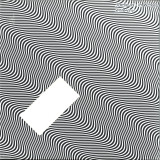
Jamie xx - In Waves LP

Jamie Xx

In Waves LP

12inchYOLPE356
Young/XL
20.09.2024

Fast ein Jahrzehnt hat sich Jamie xx seit Veröffentlichung seines Solodebüts Zeit gelassen. „In Waves“, das zweite Album des Londoners, der mit seiner Band The xx zu den prägendsten Figuren der jüngeren Musikgeschichte gehört. Erneut lässt er seiner Liebe zur elektronischen Musik freien Lauf und entwirft die Geschichte einer Nacht, in der man in den himmlischen Puls von Schatten, Licht und Dancefloor-Rhythmen hinabtaucht.


“In Waves” hat seinen Ursprung in einem Mix, den Jamie 2020 für BBC Radio 1 machte. Hier tauchten neben Tracks der aktuellen Generation an UK-Dancemusic auch diverse musikalische Helden auf, etwa Roy Ayers, Fela Kuti, Tom Zé oder Philip Glass. Auch erste Versionen von Songs, die nun auf dem Album erscheinen werden, waren zu hören. “Es erinnerte mich daran, warum ich diese Musik liebe“, so Jamie, der zuvor lange mit der Frage gehadert hatte, wie es für ihn weitergehen würde. “Ich fand einfach Spaß am kreativen Prozess, ohne dabei an ein Ergebnis zu denken.“


Jamie xx pflügt auf „In Waves“ durch die Subgenres und Dekaden und fügt Northern Soul, Disco, Garage, Acid House, Techno, Tropicalia. Hip-Hop, Funk und den Sound der UK Underground Pirate Radios zusammen. Die kleinen Momente sind dabei so eindrucksvoll wie das übergreifende Ganze. Etwa jener Part bei “Treat Each Other Right“, der parallel zum Album-Announcement erscheinenden neuen Single: Zunächst wird man herausgerissen aus dem breiten Breakbeat-meets-Future-Soul-Vehikel, um sich mit den gepitchten Motown-Vocals plötzlich im Mittelwellenradio der 60er wiederzufinden. Die Worte “I’ll never let you down“ werden in die Ewigkeit gezogen, bevor ein biepender Puls über atmosphärischen Synths einsetzt und man direkt zurückgeführt wird in die schweißnasse Katharsis des Dancefloors.


Im Zeitalter der Algorithmen ist “In Waves” Zeugnis für pure menschliche Empfindung, ein lebensbejahendes Gegengift, das über den Kopfhörer in eine andere Dimension führt und zugleich gemeinsam auf der Tanzfläche erlebt werden will. Mit dabei sind u. a. Romy und Oliver, The Avalanches, Robyn und John Glacier.

non in magazzino

Ordina ora e ordineremo l'articolo per te presso il nostro fornitore.

22,27

Last In: 15 months ago
Articoli per pagina:
N/ABPM
Vinyl