After the 1974 release of The End…the magnetic and controversial Warhol muse went on a fruitful partnership with French director Philippe Garrel, for almost seven films. Back in New York in 1979 she started to perform again live, appearing firstly at the CBGB with John Cale and musical partner Lutz Ulbrich (former guitarist of Agitation Free and Ash Ra Tempel)… Back in France, she met young and talented Corsican bassist Philippe Quilichini who produced her comeback, Drama of Exile, in 1981. The album was released twice, in two different versions. Hereby we present the second, appearing in 1983, after a legal controversy was settled with Aura Records that released the first issue. While the first press was a 9-track offering, this second issue excludes “Purple Lips” but adds the tracks “Saeta” and “Vegas” released on a 7″ single in 1981. For this album, Nico recorded covers of the Velvet Underground’s “I’m Waiting for the Man” and David Bowie’s “Heroes”.
Cerca:philippe b
- A1: Moods - Love Is Real
- A2: Emancipator - Black Lake
- A3: Dj Cam Quartet - Cantaloop Island
- A4: Waldeck - Jerry Weintraub
- A5: 7Apes - Sunset Blvd
- A6: Guts - Ain't Perfect (Feat Beat Assailant & Mary May)
- B1: Gotan Project - Last Tango In Paris
- B2: Dlj - Grounds
- B3: Mr Scruff - Bernard's Shuffle
- B4: Kazam - Waterlily
- B5: Quantic - Latitude (Feat Western Transient)
- B6: Philippe Cohen Solal - Mind Food Variation (Feat Chassol)
- A1: Sleepwalkers
- A2: Money For All
- A3: Do You Know Me Now?
- A4: Angels
- B1: World Citizen - I Won't Be Disappointed
- B2: Five Lines
- B3: The Day The Earth Stole Heaven
- B4: Modern Interiors
- C1: Exit - Delete
- C2: Pure Genius
- C3: Wonderful World
- C4: Transit
- D1: World Citizen
- D2: The World Is Everything
- D3: Thermal
- D4: Sugarfuel
- D5: Trauma
REMASTERED
Grönland Records announce a revised, remastered reissue of “Sleepwalkers” by DAVID SYLVIAN. Available as a gatefold 2LP with exclusive art print and as a gatefold digipack CD, this new edition also features the previously unreleased track “Modern Interiors”.
in the 00s, DAVID SYLVIAN produced two of his strongest and most solitary statements, BLEMISH and MANAFON. but those records don’t tell the whole story. during that the same period, SYLVIAN created an alternate body of work: a series of collaborations and side projects with leading talents of pop and improv, electronic and contemporary classical music. the best of these recordings are gathered here on SLEEPWALKERS, meticulously sequenced and remixed: the fruits of one-off meetings and lifelong partnerships, they jump from bliss to intrigue, romance to sensuality, as arch experiments lead into the lushest pop.
the single ‘world citizen – i won’t be disappointed,’ written with RYUICHI SAKAMOTO, is a sublime example, with an impeccable melody and lyric warmed by SYLVIAN’S gorgeous tenor. SYLVIAN has worked with SAKAMOTO for close to three decades. by contrast, on ‘pure genius,’ a collaboration with CHRIS VRENNA aka tweaker, he sounds like he’s walked into a heist flick, singing the part of a delusional, dangerous bedroom genius. as sylvian explains, tracks like this ‘give me a chance to write in a way that’s completely non-personal, playful. it’s an exercise of some kind, working within the parameters of a given assignment.’
intrigue of a different kind drives ‘sugarfuel,’ with music by JEAN-PHILIPPE VERDIN, aka READYMADE FC. the lyrics offered ‘an opportunity to grapple with a more overt sexual theme than anything i’d previously attempted, as suggested by a vocal sample in the original track provided, a threateningly insistent ‘i’m on your side.’ so i took that as my point of entry and ran with it. i would love to write more on this subject should i find the right context. you’re always aware of walking a thin line exploring sexuality with language alone. the failings of the great and the good are strewn all around.’
NINE HORSES’ ‘wonderful world’ strolls in on a black tie bassline and the echoing coos of swedish chanteuse STINA NORDENSTAM, whose high chirps brush hands with SYLVIAN’S lead; there’s the blistering ‘money for all’ by FRIEDMAN and SYLVIAN, an oblique response to the fallout of 9/11 and the war on iraq. this is followed by the last known recording of SYLVIAN’S singing voice in over a decade, ‘do you know me now?’, a live studio recording later augmented by JAN BANG, EIVIND AARSET and ERIK HONORÉ. it’s certainly a title that’s become more relevant over time as SYLVIAN, in the latter stages of his career, repeatedly comes face to face with a new generation of admirers fixated on the life and times of the band formed by his younger self. SYLVIAN is one of only a handful of musicians to have successfully moved on from overt pop beginnings into a domain all his own but is consistently plagued by the misguided desires or expectations of some unfamiliar with his evolution to do a u-turn, pick up where he left off in the late 90s. although this compilation, as well as his writing for NINE HORSES, adequately shows SYLVIAN’S traditional love of melody is
intact, that it’s consistently remained part of his output, there’s no denying his focus has shifted, evolved.
the refusal to embrace complacency, the need to cover new ground ‘as older generations of popular musicians have a moral duty to explore despite, or because of, the greater possibility of failure’ will, i believe, lead to a reassessment of his later work that embraces a sightly more complex relationship with what we’re referring to as ‘melodic’, accompanied by an exploration of improvisation without dogma or beholden to any ‘givens’ for which he’s not infrequently been castigated. for SYLVIAN, there are no such boundaries. it’s obvious that different facets of his work co-exist without conflict but not necessarily for the majority of his audience. again, this places SYLVIAN in the odd, rare, unenviable(?) position of moving forwards leaving many in his devoted audience behind as, should he decide to return to music, it’s unlikely he’ll be aiming to placate an audience in love with work that preceded the 00s. in fact we’ve no idea where new work, should it surface, may lead.
SLEEPWALKERS also spotlights the innovators who contributed to MANAFON and BLEMISH. CHRISTIAN FENNESZ hangs a crackling, shimmering curtain behind the vocal on ‘transit,’ matching his signature mass of sui generis sounds to sylvian’s stately performance. and the title track began with an instrumental handed to SYLVIAN by MARTIN BRANDLMAYR of POLWECHSEL, soon after the first recording session for MANAFON. spite crackles in the gaps between the percussion, and onkyo artists TOSHIMARU NAKAMURA and SACHIKO M set the stage for the scathing lyrics in the chorus.
it cuts close to the bone and so do the two spoken word cuts, ‘angel’ and ‘thermal,’ produced by SAMADHISOUND recording artists JAN BANG and ERIK HONORÉ (and featuring ARVE HENRIKSEN on trumpet). SYLVIAN describes the latter work as a ‘love poem’ to his daughter. ‘‘thermal’ reflects on a period when our time in sonoma, ca was coming to an end. we’d stayed in temporary accommodation which had lulled us into a false sense of security. we had pear, apple, lemon, and figs trees growing in the yard. a small but exotic paradise. a cocoon. but the cracks were beginning to show in the relationship between ex-wife INGRID CHAVEZ and i which is where i think this underlying sense of anxiety, which runs throughout the poem, is derived from, coupled with the need to provide physical and spiritual stability to the children, the youngest of whom was just under two at the time. the poem is addressed to her. our world was dissipating, coming apart at the seams, but we were an island unto ourselves.’
‘five lines’ marked the start of a new partnership with acclaimed young composer DAI FUJIKURA, who at the time of recording was also working on remixes of MANAFON for what became DIED IN THE WOOL. the string quartet was performed by the celebrated ICE ENSEMBLE and written for SYLVIAN, who FUJIKURA cites as an early influence. says SYLVIAN, ‘the composition moves through numerous changes in time signature but as i had no knowledge of what these were i just relied on my gut instinct, and responded, as i always do, with what felt right to me, composing an entirely new melody in the process. some months later i was working in a studio in london and dai dropped by. i rather tentatively asked if he’d like to hear a rough mix of the song as it stood, painfully aware that my contribution might make no sense to him at all but, to my relief he loved the result.’
there’s one further new addition to this collection, the first official release of a track composed in response to the tsunami in fukushma, ‘modern interiors’, featuring SYLVIAN once again in collaboration with BANG and AARSET.
like 2000s EVERYTHING AND NOTHING, SLEEPWALKERS is a retrospective of a particular decade when SYLVIAN was free of major label interference and could follow his own instincts without having to explaining himself – but it’s also an eye-opening complement to his solo releases. as SYLVIAN explains, ‘some collaborations seem to be a one-off exchange but you can never be too certain of that fact. others have been long term. in this respect, RYUICHI comes to mind. there’s others with whom you hope to continue working as you feel you’ve barely scratched the surface. other times offers come out of the blue, welcome, inspired. regardless, it’s wonderfully explorative to have so many possibilities to juggle with. each collaboration seems timely. it’s as if there’s a rightness to the exchange at a given moment in time.’
in the meantime, we hope you enjoy the work presented here, personally selected, remixed and sequenced and entirely remastered. these are the orphans, abused, estranged, exotic, migrating from diverse corners of the globe, brought together under one roof which they're learning to share despite their differences.
‘as many of you will already be aware, despite relatively continuous work on solo albums, i’ve maintained strong ties with a number of musicians throughout my life in one context or another. on this new collection, let’s call it SLEEPWALKERS 2.0, a selection of collaborative work produced over the period encompassing blemish through to manafon, i’ve included compositions by nine horses as well as more fleeting flirtations and one-offs. neglected offspring. represented also is long term friend and writing partner, RYUICHI SAKAMOTO, as well as more recent but potentially equally productive partnerships such as CHRISTIAN FENNESZ, ARVE HENRIKSEN and contemporary classical composer DAI FUJIKURA.
i hope you enjoy the work presented here, personally selected, remixed and sequenced and entirely remastered. these are the orphans, abused, estranged, exotic, migrating from diverse corners of the globe, brought together under one roof which they're learning to share despite their differences.
we contain multitudes. we’re nothing if not contradictory.’
DAVID SYLVIAN, 2010
(consistency is contrary to nature, contrary to life: aldous huxley)
- 1: This Foolish Heart Could Love You
- 2: Samba Em Prelúdio (Un Jour Sans Toi)
- 3: Perhaps You’ll Wonder Why
- 4: What Of Your Eyes
- 5: Recitativo
- 6: Plus Fort Que Nous
- 7: Ode To Every Man
- 8: À La Tour Eiffel
- 9: Darling Fare Thee Well
- 10: Fleurs Du Dimanche
Melody Gardots Traumstimme hat unzählige Fans längst erobert. Ihr neues Album stellt diese Stimme jetzt verführerisch in den Mittelpunkt, nur begleitet von Pianist Philippe Powell. ”Entre eux deux“ ist eine Oase der Ruhe und musikalischen Konzentration. Als würde Gardot einem direkt ins Ohr flüstern, singt sie großartige neue Songs aus eigener Feder, die einem wie halbvergessene Evergreens erscheinen.
Dass bis auf einen Titel aus Feder von Filmmusik-Legende Francis Lai und einem von Philippe Powells berühmtem Vater Baden Powell alle Songs von Gardot und Powell selbst geschrieben wurden, ist eine
weitere Überraschung dieses Albums, das mit Sinnlichkeit und Melancholie gewinnt.
- A1: Bakeina's Dream (Feat Bocar Sana Coulibaly)
- A2: Golden Cage
- A3: Quicksand Blues
- A4: Mad Girl Lament (Feat Mariam Kone & Samba Toure)
- A5: Ghost Sands
- B1: Are U Satisfied (Feat Samba Toure)
- B2: The First Sone (Feat Anansy Cisse & Bocar Sana Coulibnaly)
- B3: Minamba (Feat Mariam Kone)
- B4: Heaven Sands (Feat Hugo Race)
- B5: Bankoni (Feat Djime Sissoko)
Based in Bamako for sixteen years, Philippe Sanmiguel has been the producer of albums by the famous Malian bluesman Samba Touré since his international debut. Over the years, Philippe has expanded his work with other artists such as the legendary Tuareg band Tartit, Anansy Cissé, Mariam Koné or Djimé Sissoko among others.
While working on the albums of these artists, he often had the inspiration to add influences from his original rock culture but in small measures. That's how Black Mango was born, to gather his favorite musical collaborators around his own compositions and expand the vision. It started with an EP released on Glitterbeat Records in 2014 from which the idea for a full-length album was born.
Black Mango's Quicksand album was recorded in Bamako over a period of several years, in various recording sessions, giving each musician free range to play on a rhythmic and melodic basis prepared in advance. The alchemy was immediate in all cases, often from the first takes.
Philippe originally met producer and musician Hugo Race with Chris Eckman during their stay in Bamako for the recording sessions of Dirtmusic's Troubles & Lion City albums. Hugo loved the raw feeling of the tracks and offered to remix the album in his Melbourne studio, bringing his own unique touch.
The fruit is ripe!
Recorded at Akan Studio & Funhouse Studio in Bamako, Mali by Konan Kouassi & Philippe Sanmiguel
Produced, mixed and mastered by Hugo Race at Helixed Studio
A few words about the main " stars " :
- Samba Touré is Samba Touré.
- Anansy Cissé is a young songhoy artist for whom Sanmiguel has produced two albums, including the recent and acclaimed "Anoura".
- Mariam Koné is one of the most beautiful voices of Mali, who has a self-produced album and teaches music at the conservatory of Bamako.
- Singer Bocar Sana Coulibaly & Ali Traoré are singer and guitarist from Niafunké, nephews of the great Ali Farka Touré and have a band called Espoirs de Niafunké
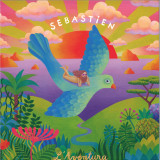
L'Aventura arose from the Brazilian heat and the French romanticism. This is the history of Sebastien Tellier's fantasy childhood in Brazil, arranged by the local cult figure Arthur Verocai. A wild mixture of love, dreams, sun and landscapes.
"For this album I wanted to rewrite my childhood. I chose to place this adventure in Brazil, land of splendour and joy, with an eternal childish soul." Sebastien Tellier
The recording produced by the artist took place between Paris and Rio de Janeiro during the year 2013. These adventures brought him into Jean-Michel Jarre's, Bernard Estardy's, and Philippe Zdar's (Cassius/Phoenix) studios. Zdar who knows so well how to make the French music sound internationally sublimates the ten tracks of this album, in halfway between the elegancy and the required level of a maestro and the immediacy of a popular song.
This sixth opus was composed and writed by Sebastien Tellier. For the first time of his career, all the lyrics are written in French. Gainsbourg is not far, like a tutelary figure, Christophe as a springboard, who lets him more space to express himself, and Lucio Battisti, the Italian made him understand that singing in his native language was possible.
L'Aventura is a record of shores stretching in an everlasting restart. Naive art carried by an openheart and childish vision of the creation, close to his classic Sexuality (2008).
Honey for Petzi sind zurück! Heute feiern wir, (etwas) mehr als ein Jahrzehnt nach dem letzten Album (General Thoughts and Tastes, 2011), eine neue Veröffentlichung des Trios aus der Westschweiz
'Observations + Descriptions' durch Two Gentlemen! Auf dem neuen Album finden sich zwölf Tracks voller offener, agiler und sich entwickelnder Emotionen - wie mit einem scharfen und subtilen Messer geschnitten.
Das Trio, bestehend aus Sami Benhadj Djilali (Gitarre und Gesang), Philippe Oberson (Bass und Gesang) und Christian Pahud (Schlagzeug und Gesang), entstand Ende des 20. Jahrhunderts in Lausanne. Als damals die Post-Rock-Szene aufblühte krönten Honey For Petzi diesen Prozess mit ihren packenden Rhytmen, schwachen Beats, Fallen und Synkopen. Diese Ästhetik hat im Laufe der Jahre über die herausragenden Alben der Band - insbesondere Heal All Monsters (produziert von Steve Albini) und Nicholson (2003), beide auf Two Gentlemen - mehrere Mutationen erfahren.
Ende 2021 veröffentlichten Honey for Petzi mit 'Écoute' ein neues Stück: Die ungeraden Taktarten, die das bisherige Schaffen des Trios kennzeichneten, sind zwar vorhanden, werden aber durch eine einen befreienden Impuls ergänzt, den man so noch nicht gehört hatte. Grammatikalisch gesehen könnte 'Écoute' in zwei Kategorien eingeordnet werden: als Substantiv (die Handlung des Zuhörens), aber vielleicht auch als Imperativ. Dies impliziert: alles ist möglich.
Und in der Tat: Dieser Track ist sowohl ein Vorspann als auch eine Einladung, das gesamte Album 'Observations + Descriptions' zu entdecken, das heute veröffentlicht wird. Die Band erklärt gemeinsam die Entstehung des Al bums wie folgt: 'Es war Ende 2018, als wir auf die Idee kamen, wieder zusammen zu spielen. Nach ein paar gemeinsamen Tagen wurde 'Observations + Descriptions' 2019 und 2020 geschrieben. Anfang 2021 reichten wir die neuen Songs bei unserem Label ein, welches begeistert und interessiert war, das Album zu veröffentlichen.'
Verständlich! Diese Platte enthält ein ganzes Arsenal an Waffen. Treibende Steigerungen: Apnée (welcher Ende 2021 auch als Single veröffentlicht wurde), Island oder Géométrie zeichnen sich durch eine polyrhythmische Raserei aus, die den Weg für verrückte Tänze ebnet. Echorec geht sogar noch einen Schritt weiter: ein wuchtiger Bass, eine vielschichtige Gitarre: ein reines Meisterwerk an Energie und Seltsamkeit - wie Kawasaki und sein parodistischer und trockener Humor, inspiriert
von dem Paar Bardot/Gainsbourg.
Lasst es uns noch einmal von der Band selbst hören: 'Wir haben da weitergemacht, wo wir mit 'General Thoughts and Tastes' aufgehört haben. Es war ein Album, das bereits mehr ‘Pop’-Formate enthielt, als wir zuvor gemacht hatten.' Die ätherische Subtilität anderer Tracks auf 'Observations + Descriptions' (wie Infini oder Dog even) mit ihren herzzerreissenden Akkorden zeugt von einer Wende, die zudem mit einer grösseren Risikobereitschaft einhergeht: 'Neu an diesem Album ist
die (signifikante) Präsenz von Titeln, die auf Französisch gesungen werden. Dies ist ein fruchtbarer Schritt, der uns direkt in die Poesie von Benhadj Djilali, Oberson und Pahud führt: etwas, das gleichzeitig eine Form der Detailgenauigkeit, des halbautomatischen Schreibens und der Melancholie, manchmal sogar der elegischen Ekstase ist.'
'Observations + Descriptions', und das ist seine tour de force, schafft es, diese Wege, von denen man annehmen könnte, dass sie parallel verlaufen oder sich gar kreuzen, zu einer mehr als kohärenten Einheit zu verbinden. Vielleicht ist es ganz einfach eine Definition von Identität: die Aufrechterhaltung eines starken Herzens unter der Vielfalt seiner Bewegungen.
- 1: Bdbb2 (Feat. Tedji & Helmé)
- 2: Bitter (Feat. Masta Ace)
- 3: Strasbourg (Feat. Dooz Kawa)
- 4: Yipkaye (Feat. -Ize)
- 5: Top Ten (Feat. Souffrance & Cenza)
- 6: Life (Feat. Melly-Mel)
- 7: Stupid Mother F***** (Feat.punchline)
- 8: Poussière (Feat. Rockin' Squat)
- 9: Reggie Wayne (Feat. Mad Squablz)
- 10: Au Nom De La Prose (Feat. Passi)
- 11: Murder Bars (Feat. Gennessee)
- 12: Sergio Leone (Feat. Bonbec)
Badaboombap is like Terminator, the first one is good but the second one is even better ! Badaboombap is that type of record you find in a box in the basement, along with old memories. The good old rap record that we were missing. French beatmaker James Digger produced this follow-up while meeting American, Quebec and South African artists. There are guests from the golden age but also from the new generation of boombap. The cover picture was taken by Philippe Hamon, the great photographer of 90's rap. Featuring Masta Ace, Tedji & Helmé, Dooz Kawa, 4-Ize, Souffrance & Cenza, Melly-Me, Punchline, Rockin' Squat, Mad Squablz, Passi, Gennessee and Bonbec.
A holy grail of French classic new wave! Thierry Müller, who initiated the French RUTH project, is not at his first try when the album POLAROID/ROMAN/PHOTO including the eponymous title track is released in 1985, but already a known name in underground experimental/electronic music with ARCANE, ILITCH (albums "Periodmindtrouble", "10 Suicides") as well as the more punky RUTH M.ELLIYERI (cult track "Mescalito"). Together with Philippe Doray, quite a big name of French experimental music at the times, Müller started RUTH. As early as 1982, a first instrumental version of the track Polaroïd/Roman/Photo is out under the name of the project RUTH. "I wanted to write a piece to make the girls dance and make fun of the boys. I plugged a small handmade clock on my Farfisa organ as a sequencer. I had a small Roland synth-guitar, I put the organ in it and that's how it started." Next came Frédérique Lapierre, who contributed original vocals on the track in 1984 as well as wrote lyrics and sung two more album tracks. Thierry asks some friends to write texts for the album and then recording tracks with Phillipe as well as Frédérique. But when the sessions are over, both musicians are not too happy with the results of the Polaroïd/Roman/Photo version: according to them, it lacks "flamboyance". They decide then to record a new female voice with a professional singer (Frédérique Cambon), sound engineer Patrick Chevalot offers to mix the track "so that it blows out". The whole album was finally released in 1985 with Paris Album, a small independant label, barely selling 50 copies in 1985, despite its eponymous title as a potential success. A first limited CD version was issued in 2001 via Fractal, but In 2004, DJs Marc Colin and Ivan Smagghe discover the track Polaroïd/Roman/Photo and decide to exhume it from oblvion. They released it on a compilation called So Young but so cold (Tigersushi) and then with Born Bad records on the BIPPP compilation in 2008. Thanks to them, the track (remixed and released via Aufnahme & Wiedergabe) and the album (reissued in 2008 (CD) via Infrastition and 2010 (LP) via Angular) started a new life, now back in print via BORN BAD RECORDS! + 12 pages booklet (Iiner notes UK + french) + Download code RIYL: Cold, Minimal & New Wave, Dark Dance, Elektro
Bààn is a Belgian instrumental duo, formed in 2016 in Brussels by Pascal N. Paulus (keyboards) and Jean-Philippe De Gheest (drums).In their music they interweave ambient, psych, jazz and rock and they create an infectious atmosphere that immediately transports the listener to distant places
Following their recent Difference and Repetition, A Musical Evocation Of Gilles Deleuze 2LP/CD this limited 7'' edition features The Tears of Nietszche on side A with Richard Pinhas as guest musician and Vecteur d'abolition on side B with the voice of Gilles Deleuze.
Formed in Paris in 1989, Palo Alto released his first album (a cassette) on the Italian label Old Europa Cafe in 1990. The year 2020 is therefore an opportunity to celebrate the 30th anniversary of this first stone, the founder of a discography rich with 10 albums. The band is now composed of Jacques Barbéri (also a science fiction author), Laurent Pernice (ex-member of the French industrial band Nox) and Philippe Perreaudin (also coordinator of several compilations and reissues: Legendary Pink Dots, Un Département, Nino Ferrer Revisited, Ptôse, Hardy Fox). Literature, and particularly science fiction, is a leitmotiv in the band's work. Antoine Volodine, Thomas Pynchon, Philip K. Dick, Lewis Carroll or J. G. Ballard have been invoked many times. In recent years, Palo Alto has multiplied musical collaborations with, among others, The Residents, Ptôse, Klimperei, Tuxedomoon... From industrial music to inextricable electronic ramifications, by making a detour through improvisation, the musical universe of Palo Alto is multifaceted.
Minimal Wave presents a reissue of the seminal first album from Swiss Wavers, Guyer's Connection. Tibor Csébits and Philippe Alioth formed Guyer''s Connection in Basel, Switzerland when they were only 14 and 15 years old. At the time they were in a new wave rock band called 'Kurtzschluss' which they decided to break from in order to make purely electronic music. They began with two synthesizers, a drum machine, a 4-track tape recorder and a multitude of ideas. They channeled their unique and humorous vision into their first album, entitled Portrait which they produced themselves and self-released in 1983. Over the years, the album became a highly sought after minimal synth cult classic. It stands alone as one of the strongest examples of Swiss Minimal Wave, and probably the only one that is in Baseldytsch.
Intimate, sensual: such is the music of Malik, shaped as desired over the albums: Un (2017), Tempéraments (2019), which earned him the nomination “Revelation album of the year” at the Victoires de Music 2020… And, today, Troy. Which opens a new chapter, that of an organic bias whose idea germinated after his last tour. Major fashions, solar and organic: TROIE imposes itself in warmth and sensuality.
Malik Djoudi has always been fond of duets or collaborations - with Juliette Armanet, Cécile de France or even Etienne Daho, support from the start - does not deprive himself of it here. Thus, we savor the tempo shared with the young rapper Lala & ce, “Point sensible” and the synthetic poetry explored with Philippe Katerine, “Eric”. Third collaboration, and not the least: "A few words", sung with Isabelle Adjani, the immense actress in a state close to Ohio, that of the navy sweater made in Gainsbourg.
- 1: How Deep Is The Ocean – Irving Berlin
- 2: Foolish Love – Rufus Wainwright (Cd Only)
- 3: Excursion A Venise – Kate And Anna Mcgarrigle
- 4: Triste Apprêts – Jean Philippe Rameau
- 5: Go Leave – Kate And Anna Mcgarrigle
- 6: Gay Messiah – Rufus Wainwright
- 7: Who By Fire – Leonard Cohen
- 8: All I Want – Joni Mitchell (Cd Only)
- 9: Argentina – Rufus Wainwright
- 10: I’m Going In – Lhasa De Sela
- 11: L’île Inconnue – Hector Berlioz
- 12: Arachne – Rufus Wainwright
- 13: Amsterdam – Jacques Brel
In January 2017 Rufus Wainwright toured with the prestigious all string ensemble Amsterdam Sinfonietta through the Netherlands. Critics and audiences of the ten concerts were enraptured by the intimacy and intensity of the program curated by Wainwright. The concerts reflected the immense bandwidth of Wainwright’s musical influences and interests from Verdi Arias to Leonard Cohen and Joni Mitchell, from Rameau pieces to the American songbook and French chanson and from Wainwright’s beloved Berlioz to his family’s and his own songs, some of them written for this program. Emotional center piece of the album is Wainwright’s almost 9 minute version of late Canadian singer songwriter Lhasa de Sela;s harrowing “I’m going in”, a song she wrote about her own death from cancer at the age of 37. All arrangements were created specifically for the Amsterdam Sinfonietta and around Wainwright’s voice that is truly at the peak of its power. The artistic kinship between Wainwright and the Amsterdam Sinfonietta lead by Candida Thompson is astounding and make these live recordings into something utterly unique and breathtaking. “Rufus Wainwright and Amsterdam Sinfonietta Live 2017” will be released on BMG’s Modern Music Label as vinyl, CD and digital releases with two bonus tracks on the digital formats.
The album was mixed by multiple Grammy winner Ryan Freeland and mastered by Ruairi O’Flaherty both in Los Angeles and is comprised of live recordings from five of the ten concerts.
In November 1976, Jef Gilson’s phone rang. What a surprise! It was Serge Rahoerson, one of the musicians he had met in Madagascar at the end of the 60s and who had played on his first album “Malagasy”. Rahoerson announced that he was in Paris for a few days.
Immediately, Jef wanted to organise a recording session, starting the next day. He thought of a trio including Serge, Eddy Louiss on organ and cellist Jean-Charles Capon, who had also been on one of the trips to Tananarive and so had also known Rahoerson there. Unfortunately, Eddy Louiss –who had already played with Gilson and Capon on the album “Bill Coleman Sings And Plays 12 Negro Spirituals” in 1968- had to drop out at the last minute: he was delayed by a session with Claude Nougaro. Jean-Charles Capon had also become a sought-after studio musician since his trip to Madagascar in 1969. He appeared on several key albums on the Saravah label including the now famous “Comme À La Radio” by Brigitte Fontaine, “Un Beau Matin” by Areski and “Chorus” by Michel Roques, without mentioning the album by his own Baroque Jazz Trio. He was also to be found with Jef Gilson for his album on Vogue with the ex-drummer from Miles Davis’ first great quintet, Philly Joe Jones, or also in the orchestra led by Jean-Claude Vannier for the album “Nino Ferrer & Leggs”. He also played regularly on albums by Georges Moustaki.
Jean-Charles Capon and Serge Rahoerson found themselves thus in the studio, with Jef at the controls. He had decided to record the rhythmic structure right away. He would find the soloists later, that didn’t worry him. Serge Rahoerson was on drums. Though a saxophonist by training, Jef remembered that Serge was also capable of great things behind a drum kit: he was the improvised drummer on their cover of “The Creator Has A Master Plan” on the album “Malagasy”... The great memories came flooding back (the nod on the title “Orly - Ivato”), and the old magic worked again.
Brought in momentarily from Europamerica, Gilson’s new big band, in which JC Capon also played, the saxophonists Philippe Maté, from France (another Saravah stablemate) and the American Butch Morris (soon to be a key member of David Murray’s band) were invited to record their parts later and Gilson mixed it all as if it had been one single session (as he had already done on other albums, with the tracks by Christian Vander recorded before the creation and success of Magma).
The album would not appear until 1977, on Palm, Jef’s own label, and was dedicated to the memory of Georges Rahoerson, Serge’s father, who had also played on the album “Malagasy” and who had died prematurely at the age of 51 in 1974.
“I only received my own copy of the album in 1981 when I came to live in France definitively”, a still-moved Serge Rahoerson told us in 2013. “I was playing in a club one night and Jef turned up by surprise with a copy of the album for me, I was so pleased to see him again. When I arrived in France, I told everyone that I had played with Jef Gilson a few years previously, and I was surprised to learn that so few people knew of him. For us, he was of one of the great jazz visionaries.” (Jérôme "Kalcha" Simonneau)
More than an obscure curiosity, Ex Vitae played its part pretty well during the heydays of the 70’s French underground music scene. Led by René-Marc Bini & Jean-Marc Philippe, the band mastered its own way of delivering fusion jazz where eclectism and forward thinking were perfectly blended into an insanely precise groove. Their unique album was self -released in 1978 and has been feverishly sought-after ever since. Let Replica grace you with a piece of crazy music done the French way with this original first time reissue!
- A1: Rita « Erotica »
- A2: Francoise «Hum ! Hum ! Love Is Strange»
- A3: Armando Travaioli « Sesso Matto »
- A4: Monsieur Goraguer « Sexy Dracula »
- A5: Jacques Frençay & Sonia Reff « Top Secret »
- A6: Geraldine « Les Chattes»
- A7: Jean Yanne « Coït »
- B1: Prince Buster « Big Five »
- B2: Bourvil Et Jacqueline Maillan « Ça (Je T’aime Moi Non Plus »
- B3: Philippe Nicaud « C’ex »
- B4: Noelia Noel « Encuentro »
- B5: Jean-Benard De Libreville « Sex-Phone »
- B6: Mchele Mercier « Six-Huit»
- B7: The Afro-Rhythm Group « African Love »
What a relief to escape the humdrum, to conquer one’s ennui, to spice up the too-long evenings stuck at home... Here’s a proposition: SEX-O-RAMA!!! Oh la la, such an aptly named compilation! Rascally El Vidocq this time dares to sway outside his comfort zone. Here humanity’s oldest obsession is tackled tastefully, with class. The selection is amusing, but ever well-meaning, for these songs are as stimulating to listen to as they are to dance to! Naturally, our intrepid collector had to roam beyond his habitual ‘50s and ‘60s, for the real sexual revolution did occur a tad later... A few seductive caresses of varying insistence (Michele Mercier, Geraldine), a few advances “in due and proper form” (naughty Prince Buster!), an eloquent series of moans and groans (Rita, Armando Travaioli, Noelia Noel), chance encounters (intransigent Jean Yanne)... not to mention a few exquisite parodies (Jacqueline Mayand and Bourvil, as drole as they are tender)... So hesitate no longer! Stop biting your lip! The sap is rising, as they say, so time for a change of ambiance... Time to slip on some SEX-O-RAMA!
Andre Navarra,Josef Suk,Czech Philharmonic Orchestra
BRAHMS: CONCERTO FOR VIOLIN, CELLO AND ORCHESTRA
This LP is extracted from the CD “Cello” box set which received rave
reviews. Awarded the first prize at the Conservatoire de Paris by
unanimous decision of the jury when he was only 13, Andre Navarra was
barely 20 years old when his soloist career began, taking him across Europe
as he performed with the finest orchestras to play all the concertos
of the repertoire.
Navarra took first prize at the Vienna International Competition in 1937. But
the war put a temporary obstacle in the way of his ascension. Unlike some of
his fellow musicians, he refused to collaborate with the occupiers and he took
refuge behind his music stand, playing as an ordinary member of the Paris Opera orchestra. From 1945 onwards, he could again be heard in the capitals of
Europe, conducted by the likes of Munch, Paray and Barbirolli, and later Mehta,
Ristenpart and Ancerl.
A parallel career opened up for him: teaching. He taught in Paris, Sienna, SaintJean-de-Luz, Nice, London, Vienna, Sion and Detmold. His mastery of the bow
was unique: he borrowed the technique used by violinists. It revolutionized
the method of cello playing, bringing roundedness, sensitivity and strength. He
pursued his two callings with equal intensity, one career enriching the other, as
this collection shows so clearly.
He approached every repertory with the same passion: contemporaries such
as Jolivet and Schmitt; classics such as Bach, Boccherini and Haydn; romantics
such as Dvorak, Brahms, Schumann, Bruch and Bloch; and early 20th century
composers such as Prokofiev, Kodaly and Martin.
Navarra died under the Tuscan sun that was so dear to him, his legacy a school
of cello playing that is unique in the world and whose technique and phrasing can still be recognized in the playing of those who use it, from Heinrich
Schiff, Frederic Lodeon, Philippe Muller, Roland Pidoux, Marcel Bardon, Rene
Benedetti, Anne Gastinel, Valentin Erben, Dominique de Williencourt, Marcio
Carneiro, Yvan Chiffoleau and Christophe Coin to Gautier Capu on, Yan Levionnois, Xavier Phillips, Taeguk Mun, Victor Julien-Laferriere and Bruno Philippe.
His perpetual, intense energy notwithstanding, Navarra leaves us with the image of a warm-hearted, unassuming man, who could, after a day alone with his
cello, invite his students on the spur of the moment to fun-filled spaghetti parties. Pablo Casals, who admired Navarra’s free spirit, said to him at a competition in Mexico City, “Ah, there you are, Andre. The man who never comes when
I invite him. I thought you were afraid of me. But no, the cello is your only love.”
- A1: Ocean Logo
- A2: Title
- A3: Map Screen
- A4: Woody Land 1 & 2
- A5: Woody Land 3 & 4
- A6: Spider Attacks
- A7: World Clear
- B1: Adventure Park
- B2: House
- B3: Living Room
- B4: In The Washbasin
- B5: Washbasin Boss
- C1: Volcano Underpass
- C2: Volcano Underpass 2
- C3: Clouds
- C4: Ograoum Papas
- C5: Mean Streets
- C6: Little Clown
- D1: Ice Scream
- D2: Mr Blizzard
- D3: Ending
- D4: Game Over
Mr. Nutz has marked a generation of players with its colorful world and enchanting music. Developed by only three persons in the early 90s and published by Ocean, the game was a worldwide phenomenal success and remains one of the most beloved platform game released on the Snes at the time.
To celebrate the upcoming 30th anniversary of the little squirrel, we have the pleasure to pay a tribute to this jewel made in France with the release of the original soundtrack, newly illustrated by its original creator, Philippe Dessoly!
Mr. Nutz original soundtrack is composed by Raphaël Gesqua and remastered for the vinyl format in this 'Totally Nutz' collector Edition !
Buried amongst the gems on the second Claremont Editions compilation was ‘Oui Non’, a collaborative cut that marked the first label appearance of Jpye (real name Jean-Philippe Altier), a French multi-instrumentalist, DJ and producer best known for his work as part of Twonk alongside Leonidas and percussionist/vocalist/guitarist Renato Tonini.
Here Jpye and Tonini join forces once more for their first single on Claremont 56 – a sensual and seductive slab of slow-motion, sun-soaked synth-pop that features more than a few subtle nods to classic Italian Balearic disco cuts such as Radio Band’s ‘Radio Rap’ and Tullio de Piscopo’s ‘Stop Bajon (Primavera)’.
Built around squelchy synth bass and a shuffling drum machine rhythm, ‘Cosa Ti Va’ is marked out by glistening, jazz-fired guitar solos, vibrant synthesizer squiggles, rich electric piano chords and echoing, dubbed-out electronics. It’s a pin-sharp but effortlessly laidback number that’s as tactile and loved-up as it as lazy and horizontal.
‘Cosa Ti Va’ is presented in two complimentary versions. On the A-side of the vinyl version you’ll find the full vocal, which boasts Tonini rapping in his native tongue in the manner of Italo-disco’s most eccentric and atmospheric vocalists. With his deep, rich tone and fluid flow, it’s hard not to fall in love with Tonini’s previously unheard rapping. Rounding off the single is the pair’s vocal-free instrumental take, in which Jpye’s stunning guitar motifs and tactile, soft-touch production can be savoured in full.
Deep spiritual jazz recorded in Germany, performed by Jamaican born saxophone player Fitz Gore and his international group The Talismen, featuring a.o. bassist Gérard Ebbo from Morocco and drummer Philippe Zobda-Quitman from Martinique. This is the first reissue of their second album, released in 1976 by the small private label GorBra from Bonn, including "Delilah" and "Requiem For Julian Cannonball Adderley". The rare LP comes in a newly mastered version with original cover design and sleeve notes. Fitz Gore's music is full of tremendous tension and movement between deep seriousness, inwardness and humility; it affects your life, it liberates and heals.
Original sleeve notes from 1976:
"Soundmagnificat" is the successor to "Soundnitia" (GorBra Records F 665 532), the first release from the Talismen, an international group with Jamaican Tenor saxophonist Fitz Gore (born1935) as founder, spiritual and musical leader, main soloist. "Soundnitia" contained concert performances of June, 1975, including compositions by John Coltrane, Horace Silver and one by Gérard "Prof. Dr. Splüm" Ebbo, bassist of the Talismen.
This second offering from the Talismen is more varied. It has four tracks recorded at four different occasions. It presents Fitz Gore as a singer, a composer, as well as, a tenor saxophonist. The opener, Requiem for Julian "Cannonball" Adderley, is a moving tribute to a great American artist, the late alto saxophonist "Cannonball" Adderley. On this track, Hungarian drummer Janos Sudy is heard with the Talismen, for the first time. The playing by the quartet on this slow lament very adequately illustrates the mood of the composition
For the next piece, a concert performance, Gore selected a gem from the American Negro Song Tradition and he displays a mighty, masculine and soulful voice in Steal Away. An example of a modern artist using an old traditional to express his own inner feelings. Delilah is taken from another concert performance, the same concert as the music on "Soundnitia". It has extensive playing by Gore, a bass solo by Gérard Ebbo, leading into some exciting conga playing by Lamont Hampton.
The final track, A Sinner Kissed An Angel, was recorded by another tenor player, Wardell Gray, in 1950, but this version is all Gore's. After the piano introduction, Gore delivers the melody with authority and with an expressive use especially of the high register of his instrument. In his improvisation, Gore's playing becomes more dissonant. Some of his playing here causes me to think of the way the late Albert Ayler sounded on his first recordings done in Sweden, in the beginning of the 60s. No drums here, but nice accompaniment and solo work of Jochen Paul on vibes.
I met Fitz Gore in Copenhagen in the fall of 1975. We were both listening to the trumpet playing of Harry "Sweets" Edison at the now defunct Café Montmartre. Prior to that time, I did not know Gore and his music, but listening to his playing on this album and the earlier one, has once more widened my musical horizon. His music has struck some chords within me. "Music is communication", John Coltrane once said. I feel sure that as you listen to the music of Fitz Gore and his Talismen, you will get the message.
In these notes, I have mentioned a couple of jazz artists and another one ought to be named primarily, because he has meant a lot to Gore: Sonny Rollins. The two met in Paris in 1966. Gore says of Rollins: "He openend my eyes ...big man … phenomenon … my man". As Sonny Rollins's artistry, the music of Fitz Gore holds many aspects, some being aggressive and even hysterical, others being those of beauty and peace. As life itself … (Roland Baggenaes, June 1976)
The music of Fitz Gore, rooted in the blues, is full of tremendous tension and movement between deep seriousness, inwardness, humility and humor, hardness and tenderness; it affects your life, it liberates and heals - a hopeful, a truly groundbreaking, a timeless, a new music - Newsic!
(Gisela Braasch, 1976)
In memory of Fitz Gore.
Mastered 2020 by Roskow Kretschmann at Audiomoto,
kindly supported by Tom Sky. Vinyl cut at SST.
Producer for reissue: Ekkehart Fleischhammer,
reproduction of original cover design by Gisela Gore:
Patrick Haase aka rab.bit.
(High quality 45 in a silk screen sleeve) Mind-blowing melting pot of jazz, funk, rock and ska. These two songs were the only releases by this outstanding band led by American organist / pianist Scott Bradford with musicians of the Jess and James band and Belgian jazz legend Philippe Catherine on guitar.
- 01: Music Box Lba (Aka Lba’s Theme)
- 02: The Empire
- 03: Mother Earth
- 04: In The Temple
- 05: Desert
- 06: Emerald Moon
- 07: Hamalayi
- 08: The Quest
- 01: Opening For Lba (Lba1)
- 02: The Quest (Lba1)
- 03: The Rebels (Lba1)
- 04: Village (Lba1)
- 05: Hamalayi (Lba1)
- 06: Lba’s Theme (Lba1)
- 07: Song For Gabriel (Lba2)
- 08: The Empire (Lba2)
- 09: Honey Bee (Lba2)
- 10: Emerald Moon (Lba2)
- 11: Zeelich (Lba2)
The cult French game is celebrating its 25 years old with Wayô Records! Philippe Vachey, the original compositeur of this game series, achieved this fantastic Symphonic Suite with the Scoring Orchestral, recorded at the Seine Musicale of Paris!
1994-2019. For the 25th anniversary of the Little Big Adventure game series, here come the fully-licensed Symphonic Suite based on the music from these cult games by their composer Philippe Vachey, with the official support of the original team led by Didier Chanfray and Frederick Raynal! This project is, of course, led by the composer himself!
In the mid-nineties, Little Big Adventure (Relentless: Twinsen’s Adventure in USA and Asia) revolutionized the video gaming with an innovative system, a captivating storyline and characters that live in everyone’s memories. The hero, Twinsen, fights evil in a journey that leads him to discover the secrets of his destiny and to explore fantastic places around the world, and beyond!
It is the symphonic music composed by Philippe Vachey which adorns the two opuses of Little Big Adventure, with an extraordinary orchestration and quality of writing. These two titles are two standouts in the action adventure and fantasy genre. 25 years after the creation of the game, Philippe Vachey finally realizes the project of arranging the music of Little Big Adventure 1 & 2 for an exceptional symphonic suite, in collaboration with the best talents of the symphonic production in Europe!
- A1: T'aimer Follement
- A2: Laisse Les Filles
- A3: J'suis Mordu
- A4: Souvenirs Souvenirs
- A5: Je Veux Me Promener
- A6: Tu Parles Trop
- A7: Une Boom Chez John
- B1: Oui Mon Cher
- B2: 24000 Baisers
- B3: Sentimental
- B4: Tutti Frutti
- B5: Nous, Quand On S'embrasse
- B6: Tu Peux La Prendre
- B7: Viens Danser Le Twist - Let's Twist Again
- C1: Retiens La Nuit
- C2: Sam Di Soir
- C3: Ya Ya Twist
- C4: Ja, Der Elefant
- C5: Be-Bop A Lula
- C6: Maybeleene
- C7: Hound Dog
- D1: Madison Twist
- D2: Hey! Baby
- D3: Pas Cette Chanson
- D4: Hey Little Girl
- D5: L'idole Des Jeunes
- D6: C'est Le Mashed Potatoes
- D7: Comme L'été Dernier
- D8: La Bagarre
Jean Philippe Smet went to a different type school: while education came second, he spent most of his time in music halls. He began studio recording at 17 and was still there almost 60 years later, at 74. You can fool people for a long time and an audience for a brief moment, but no one could have fooled such a diverse fanbase for 57 years. There are only few examples, in France or anywhere else, of such longevity in the music industry.
Not only did Johnny Hallyday attract a horde of admirers around him, but he also never stopped growing his fans who stayed with him for 57 years. Staying at the top for five decades is only possible for an artist who combines sincerity with talent.
It is that combination of gifts and personality, along with the exceptional composers and writers surrounding him, that can explain why three years after his death, people are still looking for the slightest opportunity to get together and celebrate their idol.
There’sone word that unites everyone who loves Johnny Hallyday with the ones who don't; and this word is 'Respect'. This record is available in crystal clear with a printed inner sleeve!”
After two UK #1 albums, 2 million album sales and an array of international acclaim, you might’ve thought you knew what to expect from Royal Blood. Those preconceptions were shattered when they released ‘Trouble’s Coming’ last summer. Hitting a melting pot of fiery rock riffs and danceable beats, they delivered something fresh, unexpected and yet entirely in tune with what they’d forged their reputation with.
The reaction was phenomenal, with highlights including 20 million streams, a premiere as Annie Mac’s Hottest Record and a run on Radio 1’s A-list and earned alternative radio support and media attention across the globe. In short, Royal Blood are primed to be bigger than ever before. That feat is set to be realised when they release their eagerly anticipated third album ‘Typhoons’ on April 30th via Warner Records.
When Mike Kerr and Ben Thatcher sat down to talk about making a new album, they knew what they wanted to achieve. It involved a conscious return to their roots, back when they had made music that was influenced by Daft Punk, Justice, and Philippe Zdar of Cassius. It also called for a similar back-to-basics approach to what had made their self-titled debut album so thrilling, visceral and original.
“We sort of stumbled on this sound, and it was immediately fun to play,” recalls Kerr. “That’s what sparked the creativity on the new album, the chasing of that feeling. It’s weird, though - if you think back to ‘Figure it Out’, it kind of contains the embryo of this album. We realised that we didn’t have to completely destroy what we’d created so far; we just had to shift it, change it. On paper, it’s a small reinvention. But when you hear it, it sounds so fresh.”
Those traits pulsate throughout the new single and title track. Kerr’s spiralling bass riff casts an hypnotic allure as it grows in intensity, while his vocals switch at will between a raw rock roar and a soulful falsetto. It’s underpinned by Thatcher’s thundering beats, his taut rhythms infused with groove-laden hi-hats.
After setting the tone with ‘Trouble’s Coming’, the album opens in breathless, take-no-prisoners style with the fierce metallic grooves of ‘Who Needs Friends’ hitting an early visceral peak. Royal Blood further reference their fresh array of influences by deploying vocodered vocals on ‘Million & One’ before dynamically switching between the biggest contrasts of their sound with ‘Limbo’. Already a fan favourite having been a regular during the duo’s 2019 shows, ‘Boilermaker’ lives up to its reputation and is more than matched by ‘Mad Visions’, which evokes a hyper-aggressive Prince. It ends with a final surprise in the shape of the stark piano ballad ‘All We Have Is Now’, a vulnerable and revealing reminder to live in the moment.
That song’s unguarded sentiments gives the album a redemptive finale. Whether directly or allusively, the album focuses on exploring the flipside of success that they’ve experienced. It comes from the realisation that success is much more complicated than it seems and that having the time to regain perspective is a precious commodity which becomes ever more elusive. The situation called for reflection and change, which Kerr addressed in Las Vegas. He downed an espresso martini and declared it to be his last drink, and soon discovered that his new-found sobriety would have a positive impact upon his creativity and life as a whole.
That new approach manifested itself in the duo’s decision to produce the majority of ‘Typhoons’ themselves. ‘Boilermaker’ was produced by Queens of the Stone Age frontman Josh Homme, the two bands having first connected when Royal Blood supported them on a huge North American tour. Meanwhile, the multiple Grammy Award winner Paul Epworth produced ‘Who Needs Friends’ and contributed additional production to ‘Trouble’s Coming’.
After two UK #1 albums, 2 million album sales and an array of international acclaim, you might’ve thought you knew what to expect from Royal Blood. Those preconceptions were shattered when they released ‘Trouble’s Coming’ last summer. Hitting a melting pot of fiery rock riffs and danceable beats, they delivered something fresh, unexpected and yet entirely in tune with what they’d forged their reputation with.
The reaction was phenomenal, with highlights including 20 million streams, a premiere as Annie Mac’s Hottest Record and a run on Radio 1’s A-list and earned alternative radio support and media attention across the globe. In short, Royal Blood are primed to be bigger than ever before. That feat is set to be realised when they release their eagerly anticipated third album ‘Typhoons’ on April 30th via Warner Records.
When Mike Kerr and Ben Thatcher sat down to talk about making a new album, they knew what they wanted to achieve. It involved a conscious return to their roots, back when they had made music that was influenced by Daft Punk, Justice, and Philippe Zdar of Cassius. It also called for a similar back-to-basics approach to what had made their self-titled debut album so thrilling, visceral and original.
“We sort of stumbled on this sound, and it was immediately fun to play,” recalls Kerr. “That’s what sparked the creativity on the new album, the chasing of that feeling. It’s weird, though - if you think back to ‘Figure it Out’, it kind of contains the embryo of this album. We realised that we didn’t have to completely destroy what we’d created so far; we just had to shift it, change it. On paper, it’s a small reinvention. But when you hear it, it sounds so fresh.”
Those traits pulsate throughout the new single and title track. Kerr’s spiralling bass riff casts an hypnotic allure as it grows in intensity, while his vocals switch at will between a raw rock roar and a soulful falsetto. It’s underpinned by Thatcher’s thundering beats, his taut rhythms infused with groove-laden hi-hats.
After setting the tone with ‘Trouble’s Coming’, the album opens in breathless, take-no-prisoners style with the fierce metallic grooves of ‘Who Needs Friends’ hitting an early visceral peak. Royal Blood further reference their fresh array of influences by deploying vocodered vocals on ‘Million & One’ before dynamically switching between the biggest contrasts of their sound with ‘Limbo’. Already a fan favourite having been a regular during the duo’s 2019 shows, ‘Boilermaker’ lives up to its reputation and is more than matched by ‘Mad Visions’, which evokes a hyper-aggressive Prince. It ends with a final surprise in the shape of the stark piano ballad ‘All We Have Is Now’, a vulnerable and revealing reminder to live in the moment.
That song’s unguarded sentiments gives the album a redemptive finale. Whether directly or allusively, the album focuses on exploring the flipside of success that they’ve experienced. It comes from the realisation that success is much more complicated than it seems and that having the time to regain perspective is a precious commodity which becomes ever more elusive. The situation called for reflection and change, which Kerr addressed in Las Vegas. He downed an espresso martini and declared it to be his last drink, and soon discovered that his new-found sobriety would have a positive impact upon his creativity and life as a whole.
That new approach manifested itself in the duo’s decision to produce the majority of ‘Typhoons’ themselves. ‘Boilermaker’ was produced by Queens of the Stone Age frontman Josh Homme, the two bands having first connected when Royal Blood supported them on a huge North American tour. Meanwhile, the multiple Grammy Award winner Paul Epworth produced ‘Who Needs Friends’ and contributed additional production to ‘Trouble’s Coming’.
2LP on crystal clear vinyl. In these trying times, where intimacy and closeness are fraught with danger, Dans Dans (Dance Dance) brings you the sound of connection, communication, passion and togetherness.
In these trying times, where intimacy and closeness are fraught with danger, Dans Dans (Dance Dance) brings you the sound of connection, communication, passion and togetherness.
Dans Dans unites the talents of three of Belgium's most prolific music makers in Bert Dockx (Flying Horseman), Fred 'Lyenn' Jacques (Lyenn, Lanegan band) and Steven Cassiers (Dez Mona, DAAU). An utterly unique musical collective, the trio are set to release new album 'Zink' on the 23rd April via Ghent based independent, Unday Records.
From jazz, psychedelic blues and ecstatic noir soundtracks to spacey rock 'n' roll, Dans Dans cut their teeth on the cool jazz cafe scene in Flanders, Brussels with their sensational live performances and have since gone on to become a mainstay on the flourishing Belgian musical landscape.
Releasing their self-produced, eponymous debut album back in 2012, their highly distinctive, intuitive mix of musical styles and their ever-imaginative live shows caught the attention of discerning music lovers, journalists and promoters. A relatively unknown tour de force outside the Benelux region, Dans Dans have built a solid fan base since their inception with limited edition runs of early releases becoming collector's items among vinyl enthusiasts.
Well-received appearances at Cactus Festival, North Sea Jazz and Pukkelpop, as well as Gent Jazz, Ljubljana Jazz and Jazz Middelheim have confirmed their reputation as one of the most unique and exciting bands to come out of Belgium. In recent years, the group has been touring throughout Europe, garnering enthusiastic reactions beyond the Belgian borders as well. There's a case to be made that Dans Dans even played a key role in breaking down the wall between the Belgian jazz scene and the pop/rock circuit (years before pop journalists began referring to a New Wave of Belgian Jazz).
Opening with the moody noir rhythms of 'Cinder Bay', Dans Dans look to construct their own musical universe across 'Zink'. 'Naiad' unfolds into a devastating explosion of heavy feedback and wild, crashing drums before subtle electronica and baroque art-rock collide on 'Anemone' giving a good indication of Dans Dans' eclecticism. There's unquestionably a deep, underlying filmic beauty to the music, an evolving darkness and a perpetual sense of dread and paranoia. Elsewhere, 'Ravine' is intoxicating, provocative and uncompromising while the beatific 'Shell Star' is an infectious exploration of hypnotic grooves, atmospheric sounds and mind-bending melodies.
Producer Christine Verschorren (Philippe Catherine, Ivan Paduart) accentuates the music's wondrous fluidity throughout 'Zink'; the intriguing interplay; the subtle ties; the deep layering. Musical styles and influences are being blended organically and sublimated into what can only be called Dans Dans-music. "This is no fusion, no rock or jazz or ambient. This is the sound of the searching, intuitive human; of a timeless, mysterious dream; of the heart, the gut and the soul," says Dockx.
- A1: Willie Dunn - I Pity The Country
- A2: John Angaiak - I'll Rock You To The Rhythm Of The Ocean
- A3: Sugluk - Fall Away
- A4: Sikumiut - Sikumiut
- A5: Willie Thrasher - Spirit Child
- A6: Willy Mitchell - Call Of The Moose
- B1: Lloyd Cheechoo - James Bay
- B2: Alexis Utatnaq - Maqaivvigivalauqtavut
- B3: Brian Davey - Dreams Of Ways
- B4: Morley Loon - N' Doheeno
- B5: Peter Frank - Little Feather
- B6: Ernest Monias - Tormented Soul
- C1: Eric Landry - Out Of The Blue
- C2: David Campbell - Sky Man & The Moon
- C3: Willie Dunn - Son Of The Sun
- C4: Shingoose - Silver River (Poetry By Duke Redbird)
- C5: Willy Mitchell & Desert River Band - Kill'n Your Mind
- D1: Philippe Mckenzie - Mistashipu
- D2: Willie Thrasher - Old Man Carver
- D3: Lloyd Cheechoo - Winds Of Change
- D4: The Chieftones (Canada's All American Band) - I Shouldn't Have Did What I Done (Canada's All American Band)
- D5: Sugluk - I Didn't Know
- D6: Lawrence Martin - I Got My Music
- E1: Gordon Dick - Siwash Rock
- E2: Willy Mitchell & Desert River Band - Birchbark Letter
- E3: William Tagoona - Anaanaga
- E4: Leland Bell - Messenger
- E5: Saddle Lake Drifting Cowboys - Modern Rock
- E6: Willie Thrasher - We Got To Take You Higher
- F1: Sikumiut - Utirumavunga
- F2: Sugluk - Ajuinnarasuarsunga
- F3: John Angaiak - Hey, Hey, Hey Brother
- F4: Groupe Folklorique Montagnais - Tshekuan Mak Tshetutamak
- F5: Willie Dunn - Peruvian Dream (Feat Jerry Saddleback - Part 2)
Deluxe 3LP mit 34 neu gemasterten Tracks und einem 60-seitigen Buch mit ausführlichen Linernotes, Interviews, bisher ungesehenen Archivphotos und den Texten (samt Übersetzung) in einem ,Tip On"-Schuber und drei ,Tip On"-Sleeves. Linernotes von Kevin ,Sipreano" Howes. Bisher fast nicht an die Öffentlichkeit gedrungen, kaum dokumentiert, aber im Kern ungeheuer revolutionär, nehmen die Aufnahmen verschiedenster Gemeinden amerikanischer Ureinwohner endlich in Form von ,Native North America (Vol. 1): Aboriginal Folk, Rock, and Country 1966-1985" den Platz ein, den sie verdienen. Eine Anthologie von Musik, die einst fast ausgestorben, aber nun für alle zu hören, ist ohne Frage eins der ambitioniertesten Projekte in der 12-järhigen Geschichte von Light In The Attic. ,Native Norht America (Vol. 1)" versammelt Musik der eingeborenen Völker Kanadas und der nördlichen USA, die in den turbulenten Jahrzehnten zwischen 1966 und 1985 aufgenommen wurde. Die Musik spiegelt die Zusammenführung globaler Popkultur und die Neuerweckung der eingeborenen Spiritualität und Ausdruckskraft wider. Der größte Teil dieses Materials war über Jahrzehnte lang durch fehlende Distributionskanäle und wenig Präsenz in den Massenmedien in Vergessenheit geraten - bis jetzt! Hier versammelt sich Garage Rock vom Polarkreis aus der Nunavik Region des nördlichen Quebec, melancholischer Yup'ik Folk aus Alaska und flüsternder Country Blues aus dem Wagmatcook First Nation Reservat in Nova Scotia. Man vernimmt Echos von NEIL YOUNG, VELVET UNDERGROUND, LEONARD COHEN, CREEDENCE CLEARWATER REVIVAL, JOHNNY CASH und anderen in den Songs, die jedoch mit eingeborenem Bewusstsein, Erzählkultur, Poesie, Geschichte und Zeremonie angereichert werden. Die Compilation ist gewidmet dem legendären Métis Singer/Songwriter und Dichter WILLIE DUNN, der auf der Anthologie auftritt, während der Zusammenstellung des Albums jedoch verstarb. ,Native North America (Vol. 1)" ist nur der Anfang; eine Zusammenstellung von Folk, Rock und Country aus den südlichen 48 Staaten der USA und Mexiko wird momentan in der Light In The Attic Goldmine ausgegraben.
Sam Gendel’s new album, DRM, is the follow-up to his Nonesuch debut, Satin Doll, released earlier this year. DRM features Gendel’s solo musical experiments with vintage instruments such as a forty-year-old Electro Harmonix DRM32 drum machine, antique synthesizers, and a sixty-year-old nylon-string guitar — accompanied by his voice. While Satin Doll was a futuristic homage to classic jazz, DRM includes just one cover song: Lil Nas X’s ‘Old Town Road’, which Gendel interprets as an instrumental, playing the melody on an old German analogue synthesizer. The album’s accompanying short films were directed by Marcella Cytrynowicz and filmed at various locations around Gendel’s home state of California during COVID lockdown.
“I’m imagining people listening to DRM and thinking, ‘What the hell is this?’, like they’d just encountered some sailing ship in the sky,” Gendel says of the new work. “I imagine it as if someone many years into the future listened to the popular music of today and then tried to recreate it, without any of the tools or the understanding. Stylistically, it’s not too far from so much contemporary pop-rap music that you hear on the radio. A lot of those electronic backgrounds and instrumentals you hear today are tending towards something really out-there and experimental. It’s rhythmic and pointillistic, collaging different, seemingly unfitting elements together in cool ways. The visuals aren’t necessarily dictated by the music, but they both share the same slightly surreal feel, like I’m a video game character, inhabiting all these different backgrounds,” says Gendel.
Gendel is best known as a world-class saxophonist — it’s the instrument with which he’s led most of his bands, as well as the instrument on which he’s guested with the likes of Vampire Weekend, Ry Cooder, Moses Sumney, Sam Amidon, and Louis Cole’s Knower — but DRM is saxophone-free. “There was no active effort on my part not to include it; it just wasn’t part of the equation when I started recording it,” he says. “I just found a formula, working around this DRM32 drum machine, and rolled with it. I don’t consider myself just a saxophonist, I’m just someone who works in music.”
DRM was recorded in one sixteen-hour session, and then manipulated by Gendel with electronic percussionist Philippe Melanson. It was mixed by Blake Mills, and mastered by Grammy-nominated engineer Mike Bozzi. Gendel’s previous discography includes 2018’s Music for Saxofone & Bass Guitar with bassist Sam Wilkes, 4444, and Satin Doll, which the Los Angeles Times called “a woozy, blissfully twisted album.” He also performs on two other Nonesuch releases this month: Joachim Cooder’s Over That Road I’m Bound and Sam Amidon’s new self-titled album.
A cheeky riff on the Beatles’ White Album, Cleaners From Venus frontman Martin Newell’s second solo album from 1995 is a sophisticated follow-up to the critically-acclaimed The Greatest Living Englishman. Produced by él Records fixture Louis Philippe and featuring XTC’s Dave Gregory on guitar, it’s a vivid snapshot of Newell’s life with a French chanson-inspired ease.
A longtime fan of French music, Newell sought a Gallic quality on this record - with the vocal riding at the top of the mix, rather than blurred under indie rock guitars, as was common at the time. Philippe was happy to oblige. The effect is a clarity of both form and content - on “Arcadian Boys,” Newell’s impassioned voice careens over a heartbreaking string quartet (arranged by Philippe himself) as he wonders what’s become of those “too late for the sun.” It’s a much more emotional take on the song than the guitar-laden, uptempo version that appears on the Cleaners From Venus’ My Back Wages. But The Off White Album doesn’t dwell too long in solemnity - it’s still a Martin Newell record, after all. His classic wit is on full display, whether he’s putting an irreverent spin on the Smiths (“Some Girls Are Bigger Than Others”) or fondly warning a neighbor to “watch your chemicals, girl” (“The Girls In The Flat Upstairs”).
A rich cast of characters make up The Off White Album, via both the process of its recording and the subjects of its songs. It’s a record born on the road, inspired by Newell’s experiences travelling through Europe and Asia the year of its inception. Perhaps the clearest portrait that emerges as the album draws to a close, however, is one of Newell himself: as poet, coffee shop customer, bandleader, lover and neighbor. By his own admission, The Off White Album is “a more intimate portrait of my life at that time than I’d intended.”
Kënnlisch, one of the rarest haunting psychedelic acid folk LPs from France, was the work of brothers Philippe and Jean-François Macherey.
Originally released in 1976 on the mega collectable label Le Kiosque d'Orphée, it contains some of the most beautiful sounds to come out of the 1970s alternative music scene.
An instrumental album, it opens with a burst of sunshine vibes and takes them into the experimental scene of French alternative folk avantgarde with a strong Cosmische influence. Beauty is the word, grown over acoustic guitar parts harmonised with the most elegant Moog Satellite lines you'll ever hear to create atmospheres of sound that make this is the perfect record for your mind to float away on a peaceful Sunday morning under a clear blue sky - it does have that therapeutic quality that we miss so much in modern music.
Wah Wah presents the very first official reissue of this mega rare LP, housed in it's original minimalist hand made artwork with the little upgrade twist of silk-screen printing and including a 4-page colour booklet with photos and text provided by the Macherey brothers themselves.
500 copies only!
This new album (the tenth in their discography) was born from two ambitions: to pay tribute to Soft Machine's Third on form (4 sides / 4 titles) and to philosopher Gilles Deleuze (Difference and Repetition is the title of his thesis) on the contents. The 4 long pieces of this double concept album were developed over 2 years and each has a different style and climate. Bold and kaleidoscopic, Difference and Repetition perfectly synthesizes the musical and literary obsessions of Palo Alto.
Formed in Paris in 1989, Palo Alto released his first album (a cassette) on the Italian label Old Europa Cafe in 1990. The year 2020 is therefore an opportunity to celebrate the 30th anniversary of this first stone, the founder of a discography rich with 10 albums. The band is now composed of Jacques Barbéri (also a science fiction author), Laurent Pernice (ex-member of the French industrial band Nox) and Philippe Perreaudin (also coordinator of several compilations and reissues: Legendary Pink Dots, Un Département, Nino Ferrer Revisited, Ptôse, Hardy FoxŠ). Literature, and particularly science fiction, is a leitmotiv in the band's work. Antoine Volodine, Thomas Pynchon, Philip K. Dick, Lewis Carroll or J. G. Ballard have been invoked many times. In recent years, Palo Alto has multiplied musical collaborations with, among others, The Residents, Ptôse, Klimperei, Tuxedomoon... From industrial music to inextricable electronic ramifications, by making a detour through improvisation, the musical universe of Palo Alto is multifaceted. Their new album is no exception to this ruleŠ
- A1: Idrissa Soumaoro Et L´eclipse De L´ija - Nissodia
- A2: Rail Band - Mouodilo
- A3: Ambassadeurs Du Motel De Bamako - M’bouram-Mousso
- B1: Super Tentemba Jazz - Mangan
- B2: Sory Bamba - Yayoroba
- B3: Super Djata Band - Worodara
- C1: Zani Diabate Et Le Super Djata Band - Fadingna Kouma
- C2: Salif Keita, Ambassadeurs International - Mandjou
- C3: Alou Fane & Daouda Sangare - Komagni Bela
- D1: Super Djata Band De Bamako - Mali Ni Woula
- D2: Idrissa Soumaoro Et L´eclipse De L´ija - Fama Allah
Malian music is arguably deeper, more sophisticated and lyrical than any other form of African music. Those of us deeply entranced by Malian culture, and, in particular, the immense hypnotic beauty of Malian music, have put together a selection of songs from across the country.
Compiled by Vik Sohonie & Dave 'Mr Bongo’ Buttle, the story of this release began in 2015 when Dave happened upon the Soul Bonanza blog. A treasure chest of rare finds from around the world! One mix in particular stood out and totally enthralled Dave - le monde à change: a tribute to mali 1970 - 1991. He already knew of Malian legends such as the Rail Band, Salif Keita, & Les Ambassadeurs du Motel de Bamako, but this mix was something else! Deep & culled from the collections of some of the heaviest African music collectors in the world; legends like Vik Sohonie, Hidehito Morimoto, Philippe Noel, Gregoire Villanova, and Rickard Masip. Dave immediately contacted Vik and a journey of discovery tracking down the rights-holders began. He also turned to the font of Malian music knowledge; Florent Mazzoleni. Florent has written the definitive book about Malian music – 'Musiques modernes et traditionnelles du Mali’. He proposed some incredible tracks to include and provided the back bone of the sleeve notes and photos that are used in the album. No Malian album would be complete without a striking front cover photo, and ours is sourced from the late great Malian photographer Malick Sidibé.
On this album you will find well-known artists sitting next to rarer discoveries. The Rail Band, who are one of the best known of all the big bands in Mali, gave us the stars Mory Kanté and Salif Keita. Les Amabassedeurs du Motel de Bamako were another big act that had Idrissa Soumaoro, Kanté Manfila, and for a while Salif Keita in their ranks. Sometimes Salif would play in both bands in one night, quite a feat considering the bands were fierce rivals. As an albino Salif has had to face considerable prejudice from society, focusing on his musical career to help overcome this.
A major discovery on the album has been Idrissa Soumaoro et L'Eclipse de L’Ija. L'Eclipse de l'Institut des Jeunes Aveugles was a Blind teenagers institute and their record was produced by the German association that took care of blind Malian teenagers in Bamako. It was never properly released commercially and was the first recordings by the legends of Malian music Idrissa Soumaoro, Amadou Bagayoko and Mariam Doumbia. Amadou & Mariam later got married and became household stars, including making an album with Manu Chao.
This album is a concerted global effort to showcase the most vital cornerstone of Malian culture in an attempt to preserve its reputation in the face of its current, grim reality. We hope our highlights of Mali's rich history of musical innovation will serve as a starting point for reclaiming an image tainted by unnecessary conflict. May peace and music return to Mali soon.
This previously unreleased session from 1988 features the French saxophonist Barney Wilen and the Spanish pianist Tete Montoliu. Recorded live at the Grenoble Jazz Festival they are accompanied by Riccardo Del Fra on bass and Aaron Scott on drums.
The programme of standards includes ‘Round Midnight, Summertime, Someday My Prince Will Come and All The Things You Are.
“To my knowledge, Barney Wilen and Tete Montoliu had never played together before. The uniqueness of the event gives it even more flavour.”
Philippe Vincent
2023 Restock
Within the elusive confines of this film awaits an unreleased album that defies categorisation by a musician who in a different time and space would be revered amongst some of the most important exponents of progressive rock, dark ambient, Krautrock and pioneering synthesiser composition - not to mention sound design and art-house film scores. As a protégé of François Bayle and Luc Ferrari who had studied classical music before immersing himself in found-sound manipulation and oscillators, Alain Pierre quickly became an enthusiastic go-to man for sound sculpture and technical studio proficiency in Belgium’s small film industry.
To the many generations of dedicated fans of the visual work of Philippe Druillet it might seem virtually impossible to adequately “score” the alien, futurist landscapes of the man who many called the “space architect” (on account of his space age reductions of Gothic cathedrals, Art Nouveau, and Indian temples), but once you have heard the sonic reactions of Alain Pierre on this the first-ever dedicated Druillet documentary, Ô Sidarta, complete with his own equivalent sound palette, it will be difficult to “hear” Druillet’s world via any other composer. Despite Druillet’s truly incredible record sleeve designs for projects like cosmic disco ensemble Black Sun, concept albums such as Attention by Jean-Pierre Mirouze (composer of Le Mariage Collectif), Parisian metal bands like Sortilège, gatefold portraits of Jimi Hendrix, later period albums by William Sheller and most relevantly on albums by Igor Wakhévitch (Docteur Faust, 1971) as well as separate releases by both Richard Pinhas and Georges Grünblatt (both from the cosmic prog outfit Heldon), it is fair to say that this criminally unreleased album by Alain Pierre would conjure up the closest synergy between sound and vision that either artist would come close to.
The almost twelve of continuous music that Alain Pierre supplied for Ô Sidarta in 1974 fortunately appears in its entirety, unedited, as it does here for the first time ever away from its original broadcasts. Broadcast on Belgian and French TV that autumn, the film received a warm reception from Druillet fans, prospective film producers and space rock fans lucky enough to catch the short feature.
Throughout his career Alain’s commitment to conceptual music excelled within both cinematic realms as well as with the live arena. Never shying away from the constraints of transporting heavy synthesiser technolog and unpredictable analogue equipment to public spaces, Alain took his self-initiated “live” work very seriously. It was within his lesser-documented performances that you would find the closest sound to the music on Ô Sidarta, proving that the Druillet collaboration was naturalistic and conceptually close to Alain’s personal stylistic agenda. A rare recording of a one-off concert at the Université libre de Bruxelles in October 1976 reveals a very similar set of movements and soundscapes found on Ô Sidarta. This rare artefact has been included on the second side of this record under its original title Notions de physique intérieure (Notions Of Interior Physics) and stands as a perfect companion piece to Ô Sidarta - complete with a very similar “kit list” including the welcome addition of an Arp Sequencer, a Korg Vocoder and a Theremin (a back line whose total would far surpass any stationary studio of the era never mind a live show!).
By looking back at his original composition for one of his very first solo soundtrack commissions, Ô Sidarta, you can hear that back in 1974 Alain had already successfully managed to combine more unlikely musical influences, experimental techniques, and previously unheard soundscapes and studio tricks in to one twelve-minute score than most musicians fail to cram in to a whole discography. But still there is so much music yet to be discovered and Ô Sidarta is just the tip of the iceberg in the middle of a cosmic sea. Much like a character from one of Philippe Druillet’s books, Alain Pierre is a rogue pilot, steering his own ship in to the unknown, uncharted, unnoticed and quite unbelievable.
Sam Gendel’s Nonesuch Records debut, Satin Doll, was recorded in Gendel’s native California, and is a futuristic homage to historical jazz. The album features three musicians — Gendel on saxophone, Gabe Noel on electric bass, and Philippe Melanson on electronic percussion — engaging in simultaneous synchronized sonic construction/deconstruction of jazz standards, including Miles Davis’ ‘Freddie Freeloader’, Charles Mingus’ ‘Goodbye Pork Pie Hat’, and Duke Ellington’s ‘Satin Doll’.
Sam Gendel is a musician and producer living in Los Angeles, CA. He is most known for his work with the saxophone, though he is proficient on multiple instruments. His work is diverse and includes significant collaborations with a wide range of artists including Ry Cooder, Blake Mills, Sam Amidon, Perfume Genius, Moses Sumney, Knower, Vampire Weekend, and inc. no world. Gendel’s previous discography includes the critically praised Music for Saxofone & Bass Guitar with bassist Sam Wilkes and 4444.
An exchange between several voices of African artists (the Congolese Flamme on guitar, the late Cameroonian Hilaire Penda on bass, the Beninese Angélique Kidjo on vocals, and the dj singer producer
from South Africa Mo Laudi on the mike) gathered for the dance and celebration of this World Heritage work. The most popular anthem of classical music revisited in Afro Pop mode for crowds around the world. About this project, the producer Philippe Cohen Solal (ex-Gotan Project) tells: « When Mo Laudi, a Paris-based South African DJ, joined me in the studio, he delivered a great rap full of positive energy and geopolitical rhymes, from Patrice Lumumba to Biko and from Congo to São Paolo. Then Queen Angelique Kidjo, like a divine diva, fervently sang her hymn "Lonlon" in the Mina language, where the Afro literally meets the Bolero. We will not forget the fine team that allowed me to concoct this sacred cocktail: Flamme Kapaya,
outstanding Congolese guitarist, the Parisian DJ-beatmaker Lazy Flow and the late Hilaire Penda, Cameroonian bass player who unfortunately left us since. Benin, South Africa, Congo and Cameroon meet in Paname, the capital of World Sound, but the musical adventure did not stop there. The remixes take us straight to London with Poté, to Berlin with Daniel Haaksman and to Johannesburg with the super-group Batuk formed by the godfather of the African electro Spoek Mathambo, the kwaito maestro Aero Manyelo and the Mozambican singer Manteiga. At a time when travel is prohibited or
not recommended, let us be glad that music does not need certificates or passports and knows no borders ».
- A1: Juliette Greco - La Chanson De Prevert
- A2: Hugues Aufray - Judith
- A3: Catherine Sauvage - La Femme Des Uns Sous Le Corps Des Autres
- A4: Philippe Clay - Le Rock De Nerval
- A5: Jean-Claude Pascal - Jeunes Femmes Et Vieux Messieurs
- A6: Juliette Greco - Charleston Des Demenageurs De Piano
- A7: Les Mercenaries - Ronsard 58
- A8: Pia Colombo - L'alcool
- A9: Isabelle Aubert - L'eau A La Bouche
- B1: Simone Bartel - Cha Cha Cha Du Loup
- B2: Trumpet Boy - Mambo Miam Miam
- B3: Hugues Aufray - Baudelaire
- B4: Helene Martin - La Recette De L'amour Fou
- B5: Brigitte Bardot - L'anthracite
- B6: Los Goragueros - Sois Belle Et Tais Toi
- B7: Catherine Sauvage - Douze Belles Dans La Peau
- B8: Ce Grand Mechant Vous
- B9: Viva Villa
- C1: Black Trombone
- C2: Les Amours Perdues
- C3: Intoxicated Man
- C4: Le Poinconneur Des Lilas
- C5: Du Jazz Dans Le Ravin
- C6: L'amour A La Papa
- C7: Quand Tu T'y Mets
- C8: Personne
- D1: Le Claqueur De Doigts
- D2: En Relisant Ta Lettre
- D3: Ce Mortel Ennui
- D4: Les Cigarillos
- D5: Requiem Pour Un Twisteur
- D6: Indifferente
- D7: Fugue (From "Les Loups Dans La Bergerie") (From "Les Loups Dans La Bergerie")
- D8: Les Femmes C'est Du Chinois
- D9: Black March (Bande Originale Du Film "L'eau A La Bouche") (Bande Originale Du Film "L'eau A La Bouche")
- E1: Les Amours Perdues
- E2: Le Poinconneur Des Lilas
- E3: Baudelaire
- E4: Chanson Pour Tezigue
- E5: La Recette De L'amour Fou
- E6: Valse De L'au-Revoir
- E7: Quand Tu T'y Mets
- E8: Defense D'afficher
- F1: La Chanson De Prevert
- F2: Douze Belles Dans La Peau
- F3: Le Claqueur De Doigts
- F4: Mes Petites Odalisques
- F5: Ronsard 58
- F6: L'appareil A Sous
- F7: Mambo Miam Miam
- F8: Black Trombone