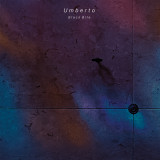
Black Bile compiles some of Umberto"s most resplendent, sanguine music to date The solo work of LA composer Matt Hill draws heavily from the world of cinema, spinning immersive narratives and rich atmospheres using sound alone. Hill, an active composer for film and television, recently scored the 2022 Jerry Pyle film Loveseat (soundtrack was released in 2023). Other recent scores include the 2020 thriller Archenemy, from the producers of cult classic Mandy. Inspired by the ancient Greek theory of the "four humors," an early medical theory linking the inner workings of the human body to the elements. "Black bile" specifically links the feelings of melancholy with autumn. Hill"s celestial compositions are an autumnal soundtrack conveying beauty, yearning, reflection and comfort. Many of the album"s phrases are constructed from just two notes or sounds, arranged by Hill into complex patterns that undulate with an organic pulse. The spare melodic structure holds a myriad of small and beautiful details. The songs began with Hill improvising on the piano, to find the notes and patterns that created the musical and emotional structure from which he could expand with textural detail. Hill then would often remove the initial structure leaving a sparer and more skeletal one which he could again expand upon to create a full piece. The careful attention to each detail gives his minimal compositions emotional heft. The album masterfully stakes Umberto"s claim among other avant-ambient boundary pushers such as Lawrence English or Laurel Halo.
Cerca:phra
In 2004, California-based indie band Golden Shoulders followed up their highly acclaimed debut with their second album, Friendship Is Deep. Now, on the twentieth anniversary of its release, the album most requested by their fans for a vinyl release is finally set for one on Unspun Heroes. Described as “one of the great semi-lost albums of the 21st Century”, the album showcases singer, songwriter, and band mainstay, Adam Kline’s knack for lyrical hooks and penchant for catchy melodies. But, like friendship, this is deeper than its pop sensibilities might suggest.
From the moment the opening track I Will Light You On Fire opens with its simple piano refrain and vocal harmonies you know you’re listening to something worthy of further exploration. From this building of tension between its temporary aural chaos and the beauty that ultimately emerges, you’ll be hooked. Yet, scratch beneath the surface and you’ll find this is an album that carries with it a political, pro-peace, and pro-humanity message, albeit somewhat more satirical than you might expect of a band hailing from America’s West Coast. This is particularly notable on tracks such as Golden Soldiers and the Committee, where Kline’s turn of phrase and wit shines through, cleverly weaving words so they create detailed poetic mosaics.
Golden Shoulders is a loose and ever-changing lineup of international talent, with Kline as the kingpin and sole songwriter. Given the pedigree of those whose talents grace the album – among them, Todd Roper and Greg Brown (Cake), Josh Klinghoffer (PJ Harvey, RHCP, Pearl Jam), Neal Morgan (Joanna Newsom, Fleet Foxes), and Dan Elkan (Broken Bells) – it’s no surprise the compositions and attention to detail present in each and every one of the 14 songs is top notch. It’s this pleasing mix of accomplished individuals, and their mishmash of influences, which lend a pinball effect to the set of stylistically diverse songs on Friendship Is Deep. Collectively though, the music you’ll hear has a focus, one that channels late 90’s Brendan Benson, the poppier side of 80’s Violent Femmes, and even the mid-60’s flair of the Beatles’ Rubber Soul.
Søren Skov Orbit's debut album, "Adrift," is at once subtle and profound. The saxophonist and his collaborators have created something quite special and consistently deep. This record may not easily be classifiable, but the most interesting music creeps between the lines
Danish tenor and soprano saxophonist Søren Skov (Debre Damo Dining Orchestra) and keyboardist Peder Vind co-founded the trippy quintet Søren Skov Orbit in 2016 to explore “more jazzy ideas,” as the saxophonist puts it. Joined by a rhythm section steeped in contemporary improvisation and psychedelia, bassist Casper Nyvang Rask, drummer Rune Lohse and percussionist Ayi Solomon of the legendary 80's Ghanaian roots/highlife band Classique Vibes, the Orbit belts out a richly focused helping of broadly African-inspired modern jazz with a hazy sheen.
On the opening “Notifications of Nothingness,” Skov digs in his heels, a steely but languid unspooling of burnished tenor lines atop condensed, quavering piano and the thick footfalls of bass and percussion. As a tenor player, Skov has done his homework and has a kinship with Albert Ayler, Archie Shepp, J.R. Monterose, and the Dutchman Hans Dulfer, but he clearly has got his own robust phraseology and expressiveness. He also cites multi-reedists John Gilmore, Yusef Lateef, and Bilal Abdurahman as, “some of the players I’ve been listening to the most for the last 10-15 years.”
A healthy dose of reverb is present throughout the album, echoing Alton Abraham’s studio wizardry with the Sun Ra Arkestra or the trance-inducing and compressed fidelity of certain Ethio-jazz and Mystic Revelations of Rastafari sessions. Skov notes that, “everything is recorded live at the same time in the same room. I wanted to do it that way in order to catch the dynamics and authenticity of the music.” There is, in fact, a complex teeter- totter between crisp and hazy execution, achieved by a delicately balanced mix that keeps the group’s sound simultaneously advancing and receding. Vind’s phrasing is terse and introspective, a vibrating echo that nudges and reflects on Skov’s brusque tenor in a dance of sonic displacement.
“Orbiting” pits a chunky backbeat and the teetering, taut hand-rhythms of Solomon against an infectious, almost microtonal piano riff, while Skov’s arpeggios are clean and florid as he patiently rises up from under a carpet of funky loops. Following the freer “Reflections of Rif,” “Naration” lilts with a wink at “Footprints” and tugs between up-tempo polyrhythmic drive, clanging keyboard accents, and the innately steadfast keenness of the bandleader. The coupling of Solomon and Lohse is a big part of the group’s detailed energy; as the leader puts it, “Ayi knows everything about regional differences in drum patterns. He is always listening and super responsive, and his and Rune’s dynamics are amazing.” The music both presents a “vibe” and keeps the door open for engaging well under the surface as repeated listens will be extremely rewarding.
Limited Orange Vinyl Edition[31,81 €]
"The Blues is a unique sound that comes from particular times, places, and people. However, that sound is universal in that it can be used to articulate every human emotion. In this album, I invite listeners from all walks of life to the world of The Blues as it is in 2024. I invite people to engage with the ups and downs we all experience, through this music.
The blues was a black-American innovation in our history that had many facets to it. There are technical components to the blues - standards and vocal phrasing. There are also components to the blues that are more abstract, such as history, geography, even intellectual movements. In this album, I endeavored to use those building blocks to articulate the humanity I see around me - past, present, and future - without compromising the quality, the foundation that the blues provides.
These fifteen original songs are my invitation to everyone out there - whether you’re a blues aficionado or just passing through the genre, I hope you find plenty to engage with."
Black Vinyl[29,62 €]
"The Blues is a unique sound that comes from particular times, places, and people. However, that sound is universal in that it can be used to articulate every human emotion. In this album, I invite listeners from all walks of life to the world of The Blues as it is in 2024. I invite people to engage with the ups and downs we all experience, through this music.
The blues was a black-American innovation in our history that had many facets to it. There are technical components to the blues - standards and vocal phrasing. There are also components to the blues that are more abstract, such as history, geography, even intellectual movements. In this album, I endeavored to use those building blocks to articulate the humanity I see around me - past, present, and future - without compromising the quality, the foundation that the blues provides.
These fifteen original songs are my invitation to everyone out there - whether you’re a blues aficionado or just passing through the genre, I hope you find plenty to engage with."
Das sechste Album von Still Corners heißt "Dream Talk". Wunderschön arrangiert, elegant und wehmütig, ist "Dream Talks" eine Sammlung von zehn sorgfältig gestalteten klassischen SC Songs. Vom herbstlichen Opener "Today is the Day" bis zum heißen Sommernachtsfinale von "Turquoise Moon" haben Still Corners einen Sound geschaffen, der fokussiert, stilvoll und verführerisch ist. Tessa Murray sagt: "Die Entstehung vieler dieser Songs geht auf Träume zurück. Jede Nacht habe ich die Träume, an die ich mich erinnern konnte, aufgeschrieben. Während der Aufnahmen holte ich mein Buch der Träume heraus und sang über verschiedene geloopte Phrasen, an denen Greg gearbeitet hatte. Die sich wiederholende Natur der Loops und des Gesangs fühlte sich fast wie eine Trance an. Viele der Songs sind aus diesem Prozess entstanden, es hat Spaß gemacht, und was ich für eine Art Geschwafel hielt, hat uns am Ende mit seinen verschiedenen Bedeutungen und Bildern überrascht." Schwarzes Vinyl kommt mit einem Download-Code, die CD ist ein Digipak.
I thought I would write this one myself.
Over the last few years, I found myself making music for everyone else. What would other musicians think about this record? Would this track get me more gigs? The process of creating become secondary and I fell out of love with it entirely.
This album is a journey to get back to the reason I started doing this in the first place, because I love making music. It is a return to embodying that most unfairly derided of phrases, the bedroom DJ, the bedroom artist. Where else is the love for this game stronger than in those early years, surrounded by your friends and the endless possibility of creation.
Lots of love,
Dan
The album opens with a 13 minute improvisation titled “The Time Is Now For Change”. As Ranelin , Belgrave, and Harrison exchange flurries of notes and squeaks over improvised chaos from the rhythm section, the group builds to a spiritual high that calls to mind the best Albert Ayler recordings. Bebop lines and unison phrases occasionally rise to the surface, offering a glimmer of familiarity in what is largely a harsh soundscape. Yet what sets Ranelin (and indeed, all of his Tribe contemporaries) apart from the larger free and spiritual jazz scene at the time is their sense of rhythm. Even as Harrison evokes sounds that would make a Meditations era Coltrane blush, the drums stay in time, and the looping bass and piano riffs take on an almost hypnotic quality, repeating quietly under a whirlwind of sound.
Later tracks see the ensemble veer into soul jazz, and jazz-funk, with “Black Destiny” perfectly highlighting the group’s ability to meld the avant-garde with grooves that you won’t be able to stop yourself from tapping your foot to. Members of the Tribe were well known for their appreciation of African American popular music, and the influence of groups such as Sly And The Family Stone is clear in the song’s edgy rhythms and dense sound.
This double LP reissue also contains alternate versions and outtakes that are so good you’ll be wondering why they were originally left out! With modern remastering, three bonus tracks, and an obi-strip, you don’t want to miss the definitive version of Phil Ranelin’s The Time Is Now! "
Boxed set of five 7-inch vinyl records, 300 copies limited edition. Artwork poster included.
All tracks remastered from the original master tapes.
Alessandro Alessandroni is no longer remembered simply as 'the whistler' in Morricone's spaghetti western soundtracks – and rightly so, since he was the key figure behind much of Italian 'secret music' from the 60s and 70s, always there in the studio during recording sessions, whether as a multi-instrumentalist or as the leader of session vocal group I Cantori Moderni di Alessandroni. Today his pervasive presence and important role has been finally recognized by music professionals and enthusiasts alike, so much so that he is now considered the true father of Italian library music – a genre whose sound he shaped since 1968.
As a film composer, Alessandroni often worked for small productions that had very limited (and often regional-only) distribution, and whose budgets were worlds apart from those in the 'top league' where friends and colleagues like Morricone, Bacalov, Trovajoli or Piccioni thrived. Rarely released as a soundtrack, this music ended up, at best, forgotten inside dusty ¼-inch reels or, at worst, disappearing into thin air.
After a string of releases that have brought back to life forgotten or lost works by Alessandroni (Sangue di Sbirro, Afro Discoteca, Lost and Found, etc.), it was pretty natural for us at Four Flies to start delving into a little investigated area of his filmography: his scores for erotic films, the last genre to gain popularity in the flourishing Italian film industry of the 60s and 70s, and perhaps the most extreme too, the one that, by pushing things too far, eventually put an end to that industry and its genres.
So, we're now very proud to present Alessandroni Proibito, an exclusive boxed set of five 7-inch records. It contains a total of 14 previously unreleased tracks from the soundtracks of 4 soft-core erotic films that included hard-core sequences and, therefore, fell somewhere in-between normal commercial distribution and the underground scene of adult movie theatres.
Taking an artisanal approach to his musical craft, Alessandroni was not afraid of having to deal with spicy subject matter, wobbly productions, implausible plots, improvised actors, or cinematographers who were clearly no disciples of Storaro. And he was so good at making a virtue out of necessity, at turning budget constraints into creative advantages, that he created soundtracks that far surpass the films' quality, with music that at once captures and elevates the spirit of the erotic genre as if into a condensed symbol.
More specifically, the maestro recorded many of the pieces in a DIY fashion at home, using a 4-track Teac tape machine to arrange his compositions. The Teac allowed him to play different instruments on each track, which meant he could basically put an entire soundtrack together all by himself, or almost all by himself.
These recordings often feature drum machines – which provide that retro, early electronic music vibe – as well as funk guitars and exotic-sounding percussion in the rhythm tracks. In addition, there is an extensive, almost bewildering use of synthesizers to replace solo instruments that would have required a paid session player. On top this minimalist arrangement, Alessandroni layered what he could: some piano chords, a little flute and, most importantly, his signature 12-string guitar phrasing.
The result is just stunning: a unique mixture of electronic music and acoustic instruments, in a style that stops short of kitsch and ranges from cinematic ambient pieces like "Tensione erotica" to disco-funk tracks like "Snake Disco" and "One Sunday Morning", both of which feature vocals by Alessandroni himself.
Alessandroni Proibito comes with artwork by Eric Adrien Lee and a matching 30x70cm folded poster inspired to the insert-size posters which used to be hung outside movie theatres to attract cinema-goers.
The boxed set is being released in a limited edition of just 300 copies and will never be reissued. First come, first served.
Roy Porter was approaching 50 years of age at the time when he released his first album, breaking a long period of silence and aiming for a comeback. The album is a hot one, with a superb sense of rhythm and vigorous drumming that clearly conveys his ambitious attitude. It is also his most expensive album, with the original selling for over $1000. The album includes 'Jessica', one of his best-known songs, which he wrote for his girlfriend, a long jazz-funk song with a melody of indescribable melancholy and colour, 'Funky Twitch', with its percussive beat and lush horns & guitar, and 'Wave', which quotes a phrase from Jobim's classic song 'Wave'. The LP comes on clear yellow vinyl, plus a 7" featuring a Kenny Dope re-edit of 'Jessica'!
D. Carbone steps up for the next entry on UFO Inc. with four exhilarating energy boosts. Raised in the Vesuvian area but a longtime resident of Berlin, Davide Carbone has spent years honing in on a bold, industrial-leaning sound that targets the body and mind in equal transcendence. His aesthetics are seemingly on the harsher side, but underneath each phrase lies a carefully arranged sonic mapping that weaves together the raw, the delirious, and the euphoric. As a producer and DJ who works across multiple aliases, Davide's commitment to the culture has been firmly planted over many years of exploring the weirder corners of techno, working with a wide range of beloved labels and performing across the globe. For his debut on UFO Inc, he focuses on a clear sonic paradigm, considering the fusion of uplifting, trance-y breaks and contrasting hard rhythmic frameworks in order to craft a unique space between two extremes.
- Azoka Eguna (Feat. Toots)
- Euskal Herria Jamaika Clash (Feat. U-Roy)
- Baxua Eta Lurra (Feat. I-Threes)
- Plastic Turkey
- Askatasun Parabolikoa (Feat. Luciano)
- Mongolian Barbacue
- La Fille Du Quartier Populaire (Feat. Lisa Dainjah)
- Yalah, Yalah, Ramallah! (Feat. Yacine Belahcene)
- La Línea Del Frente (Feat. Masta Blasta)
- Basque Xamuraia (Feat. I-Threes)
- Beamon Jauzia (Feat. Sorkun+Masta Blasta)
- Le Mouv'dub
- Azoka Eguna - Remixed By Xabi Pery
- Baxua Eta Lurra - Remixed By Rob Smith
- Plastic Turkey - Remixed By Neil Perch (Zion Train)
- Mongolian Barbacue - Remixed By Peter Rose
- Yalah, Yalah, Ramallah - Remixed By Dmd (Nebukhednezzar & Daniel Díaz)
Remastered edition on 180 grams double vinyl of 'Euskal Herria Jamaika Clash', released by Talka Records & Films in 2006. To the 12 tracks that appeared in the original CD edition we have added 5 remixes made by producers as renowned as Xabi Pery, Rob Smith, Neil Perch, Peter Rose or Nebukhednezzar and Daniel Díaz. DESCRIPTION "On the wall of the toilet a freshly made graffiti, "Get out of the ghetto, organize the hate", reminded me of the rage we owe to this society. However, I was also at ease, savoring our Original Soundtrack: "ROOTS, ROCK, RAP, REGGAE". This phrase belongs to the song "B.S.O." from the album "Gure Jarrera" by Negu Gorriak. For music fans, the real ones, the ones who spend their fingers searching for rare vinyls in second-hand shops, there are records that have a special meaning. That record has special meaning for me for several reasons, but one of them is singular: it has helped me to discover a multitude of music. It turns out that the credits of that album were full of fundamental names in rock, hardcore, funk, Hip Hop, soul, ska, Latin music... a good guide for the young man of musical discoveries that I was fifteen years ago. But there was also that song, "B.S.O.", with the word "REGGAE" at the end of the chorus. A genre that I had never paid much attention to and that since then, slowly, I have been tasting... from classic figures to new trends, from Jamaican reference records to admirable peninsular formations (Basque Dub Foundation, Lone Ark or The Starlites). A few years ago I had the opportunity to interview Fermín Muguruza and in one of his answers he said: "It's clear that the basis of reggae is going to remain firm, because it's been a constant since Kortatu's first album. Reggae will be there in any of its expressions or derivations, of which there are already many". And it's true. Going through Fermín Muguruza's discography, and his groups, forwards or backwards, we come across reggae in different doses, proportions and orientations, but it has been present in all his albums. And in his "solo" stage, in a more prominent way. Now he releases "Euskal Herria Jamaica Clash", a coherent link in his chain of albums, where he accentuates that proportion of reggae, looking more than ever at the classic conception of the genre, but with some mestizo nuances present (rock strength, some Hip Hop drums or the sound of the trikitixa). The album has been recorded in Jamaica and has featured some renowned figures from those lands: U-Roy, Luciano, Lisa Dainjah, Masta Blasta, Yacine, Toots and the I-Threes (the usual female vocal trio in Bob Marley's albums, to which Rita Marley belongs). The new album offers twelve tracks, where, apart from reggae, one can also feel the optimism of the new lights that illuminate the future of the Basque Country ("Euskal Herria Jamaika Clash")... an optimism that is intertwined with descriptions of local customs ("Azoka Eguna"), rebellious spirit ("Mongolian Barbecue", "Basque Xamuraia", "La Fille Du Quartier Populaire"), songs of hope ("Yalah Yalah Ramallah"), a snapshot of a symbolic triumph ("Beamon Jauzia"), criticisms of alienation ("Askatasun Parabolika"), to the dictatorship of the empire ("Plastic Turkey"), a poetic air of rest on music and feelings ("Baxua eta Lurra"), a final instrumental ("Le Mouv Dub") and a luminous and hopeful revision in reggae key of an old song by Kortatu ("La línea del frente"). "Euskal Herria Jamaika Clash. The soundtrack of the present: DREAMS, HOPE, ROOTS, REGGAE." FM-Hop (2006)
Pledging to Keep It Alive with her debut album in 2022 (In The Red), Liz Lamere doubles down with her latest full-length second album, One Never Knows, released on In The Red. Dedicated to her late partner Alan Vega, with whom she collaborated on his solo works for over three decades, Lamere’s minimalist approach to creating music is clearly in line with the Vega aesthetic that she helped develop with him during countless experimental hours in the studio since the late ’80s. Lamere teamed up again with her and Vega’s son Dante Vega Lamere in their Dujang Prang NYC home studio surrounded by the Suicide singer’s spectacular light sculptures, co-producer Jared Artaud, and mixing and mastering engineers Ted Young and Josh Bonati. Vega had always encouraged Lamere to create her own music. After he passed away, she began writing as a form of catharsis which became the inspirational bedrock for her solo music. Lamere said, “At the end of Alan’s life, he was using the expression ‘one never knows’ to underscore that we don’t know how much time we have in this realm or where this journey will lead us. It was a phrase that had resonated so much for me. Alan taught me to go bravely into the unknown; to be fully present in the moment and deeply explore what is already here.”
2024 Reissue
Although he rose to prominence in the NYC jazz scene, working as Nina Simone's exclusive touring pianist, he never blossomed as a solo artist, so he decided to take the plunge and create "Liberated Brother" on his own. This work, which was completed in just 2 days of rehearsal and 5 hours of recording with trusted musicians, is an important work that instantly boosted his popularity as a composer!
The opening title track, "Liberated Brother," is a Latin-taste instrumental covered by Weldon's mentor, Horace Silver. Freddie Hubbard, J.J.Johnson, Peter Hervorzeimer and others have covered "Mr. Clean", which has a complex melody but a memorable phrase. Stanley Turrentine covered jazz-funk "Sister Sanctified" with comical synth phrases, and the version was re-evaluated with the sampling of Boogie Down Productions' "My Philosophy". The album "A Tribute to Brother Weldon" released in 2004 on Stones Throw after Weldon's death covers Blakestra. And jazz funk with a strong blues taste, "Homey" is a super classic that was heavily played on the dance floor in the 90's. The simple and groovy drums with few sounds and the melancholy melodica played by Weldon are cool and very sophisticated songs, and I agree that it was useful in the rare groove scene.
A work that triggered the recognition of his talent as a composer, with such a large number of masterpieces recorded. Don't miss this opportunity!
Circling guitar lines; the rise of fall of delicate bass; deep, breathy horns: sonic elements that exist in a state of slow, perpetual motion, like ideas sprouting from some kind of cognitive compost. With wonder and charm, G. S. Schray's new solo album, Whispered Something Good, evokes a realm of new growth while offering a fitting soundtrack for its exploration, as if tailor made for both the daydreamer and silly adventurer.
We start in the darkness of "Unlit Center" with elliptical phrases of jazz guitar. A conversation between double bass, synthesiser, and piano plays out on "In Tears Twice A Page" before we're ushered into the reflective zone of "Another Haunted Mirror." There is synth mist which trumpet cuts through decisively like a shaft of light from the sun: warm and clear. As the album proceeds, firmer rhythms coalesce. On "Prelude for Probably," clattering drums lock into a triumphant groove with horns. And then, to close, the instrumental art-pop of "Gone in Amber," probing not necessarily towards a final destination but another stop-off, one of distant birdsong and the faintest flicker of synth. Intimate and inviting, the act of listening to Whispered Something Good is akin to digging through an imagination. It's a place of subliminal melodies blooming into rhizomatic musical shapes, stray musings coalescing as bolts of inspiration — change fostering yet more change.
- A1: As Can Be
- A2: My Smile Is A Rifle
- A3: Head (Beach Arab)
- A4: Big Takeover
- A5: Curtains
- A6: Running Away Into You
- B1: Mascara
- B2: Been Insane
- B3: Skin Blues
- B4: Your Pussy's Glued To A Building On Fire
- B5: Blood On My Neck From Success
- B6: Ten To Butter Blood Voodoo
- C1: Untitled #1
- C2: Untitled #2
- C3: Untitled #3
- C4: Untitled #4
- C5: Untitled #5
- C6: Untitled #6
- C7: Untitled #7
- C8: Untitled #8
- D1: Untitled #9
- D2: Untitled #10
- D3: Untitled #11
- D4: Untitled #12
- D5: Untitled #13
2024 Repress
Niandra LaDes And Usually Just A T-Shirt is the first solo record by John Frusciante. Between 1990 and 1992 the guitarist made a series of 4-track recordings, which at the time were not intended for commercial release. After leaving the band Red Hot Chili Peppers in 1992, Frusciante was encouraged by friends to release the material that he wrote in his spare time during the Blood Sugar Sex Magik sessions.
Originally released on Rick Rubin's American Recordings label in 1994, Niandra LaDes is a mystifying work of tortured beauty. Frusciante plays various acoustic and electric guitars, experimenting with layers of vocals, piano and reverse tape effects. Channeling the ghosts of Syd Barrett and Skip Spence, his lyrics are at once utterly personal and willfully opaque.
Frusciante's rapidfire, angular playing shows how key he was in the Chili Peppers' evolution away from their funk-rock roots. His cover of "Big Takeover" perfectly deconstructs the Bad Brains original with laid-back tempo, twelve-string guitar and a fierce handle on melody.
The album's second part - thirteen untitled tracks that Frusciante defines as one complete piece, Usually Just A T-Shirt - contains several instrumentals featuring his signature guitar style. Sparse phrasing, delicate counterpoint and ethereal textures recall Neu/Harmonia's Michael Rother or The Durutti Column's Vini Reilly.
On the front cover, Frusciante appears in 1920s drag - a nod to Marcel Duchamp's alter-ego Rrose Sélavy - which comes from Toni Oswald's film Desert in the Shape.
This first-time vinyl release has been carefully remastered and approved by the artist. The double LP set is packaged with gatefold jacket and printed inner sleeves.
French saxophonist Musina Ebobissé unveils ARMAUN, his third release under the Blendreed name. ARMAUN – Ambient Resistance Music Against Urban Noise – takes a stand against the interference of invasive irritants with sublime slow motion music. Its four pieces evoke an ecstatic peace, allowing both artist and listener to breathe deeply. As the compositions unfold, each exhalation resonates at the frequency of the human mind in repose.
Layers of treated and reverberant saxophone fuse into a hypnagogic whole, as elongated melodies interact with their own fragmented and transformed echoes. In a semi dream state, existence is experienced at a languid pace, as each phrase decays into a haze of crosscurrents.
If ARMAUN recalls the fourth world music of Jon Hassell and Eno, it equally finds oblique kinship with André 3000's "New Blue Sun". Likewise, it shares essential DNA with vaporwave and the tape-loop experiments of Terry Riley. Conceived as a confluence of acoustic and electronic elements, Blendreed explores the intersection of jazz, ambient, post-rock and experimental music.
This is work of exquisite beauty with a direct function. It provides an antidote to the bombardment of our senses. After unhooking your mind from temporal entanglements, ARMAUN will absorb your soul.
BLUE NOTE CLASSIC VINYL EDITION: Stereo, komplett analog, von Kevin Gray von den OriginalMasterbändern gemastert, bei Optimal auf 180g-Vinyl gepresst. LPs im Single-Sleeve-Cover. Der Tenorsaxofonist Stanley Turrentine begann seine lange Zusammenarbeit mit Blue Note 1960 mit einem grandiosen Doppelschlag, als er gleich zwei exzellente Alben mit souligem Hardbop für das Label einspielte: “Look Out! und “Blue Hour”. Auf letzterem kam es zu einem besonders fruchtbaren musikalischen Austausch mit dem von dem Pianisten Gene Harris geleiteten Trio The Three Sounds, das sich mit seinen eigenen Aufnahmen für Blue Note bereits als eine der besten Hardbop- und Soul-Jazz-Formationen etabliert hatte. Als den “Mittelgewichts-Champion des Tenorsaxofons” hatte der Kritiker Leonard Feather einst den 1986 verstorbenen Hank Mobley bezeichnet. Das klingt zunächst nicht sonderlich schmeichelhaft, sollte aber nur zum Ausdruck bringen, dass Mobley mit seiner Phrasierung zwischen zwei anderen Tenorsax-Champions rangierte: dem “Schwergewicht” John Coltrane und dem “Leichtgewicht” Stan Getz. Auf “Workout” präsentierte sich Mobley 1961, sekundiert von einem Quintett junger Modernisten, in bestechender Höchstform.
- A1: Signs
- A2: Driving Dreams
- A3: Duw Neu Magic
- B1: Tell Me Who I Am
- B2: Would It Kill You To Ask
- B3: Chemistry (Feat. Euros Childs)
- B4: Driving Dreams (Reprise)
- C1: Falling
- C2: Better Off Blue
- C3: Eucalyptus
- C4: Dim
- D1: Ok Diner A55
- D2: When It All Comes Down
- D3: I'm Not Driving
- D4: Bright Morning Stars (Feat. Euros Childs)
2024 sees the release of Georgia’s fourth studio album - Cool Head. Written in the year after her husband and collaborator was taken seriously ill, Georgia describes the album as a long drive through night into morning. "Cool head," a phrase her dad would always use to urge calm thinking, presents a candid and affecting collection of songs, spanning wide-open Americana to 60s- influenced folk ballads. Recorded in Sain studios, near Caernarfon, the album features contributions by Iwan Huws (Cowbois Rhos Botwnnog), Stephen Black (Sweet Baboo), Gwion Llewelyn (Aldous Harding) and Rhodri Brooks (Melin Melyn). With Gorky's Zygotic Mynci stalwart Euros Childs adding his unmistakable vocals to a couple of songs, this is a truly Welsh affair. It also features string arrangements by Gruff Ab Arwel, whose ear for melody brings a new dimension to the songs. These are performed by Angharad Davies, Angharad Jenkins and Patrick Rimes. The album is co-produced with long-time collaborator Iwan Morgan
For the first time on 7'', the two grooviest tracks from the soundtrack composed by Riz Ortolani for "Confessione di un commissario di polizia al procuratore della Repubblica" (aka, "Confessions of a Police Captain"), the renowned 1971 crime drama by Damiano Damiani, starring Franco Nero at the peak of his career.
On Side A, "Serena e Lomunno" is a jazzy spell performed by an exceptional quartet - unfortunately uncredited - consisting of bass, electric guitar, drums, and piano. On Side B, the quartet reduces to a trio (sacrificing the piano) to give life to "Il ricordo di Serena," without losing any of the rhythmic essence infused in the previous track.
In both cases, the pieces' structure is entirely supported by the perfect interplay of bass and drums, with particularly striking and sharp timbres, complemented by electric guitar and piano with their refined phrasings.
The result? A succession of irresistible and elegant jazz-funk breaks, practically tailor-made for sampling.
This is an essential addition to the series of 45s that Four Flies is dedicating to the best Italian golden age soundtrack and library productions. A must-have for any serious Italian sound digger!


![ROY PORTER SOUND MACHINE - JESSICA [DELUXE EDITION] (LP+7")](https://www.deejay.de/images/l/8/4/1071884.jpg)