'A Handful Of Memories' is the result of an appreciation upon reflection of Adam's
past experiences, trips with his family, his touring families and friends in some
places that hold special memories for him.
To reflect the personal, minimalist nature of the tracks, no effort was made to
remove any of the pedal noises or enhance the tracks in any way, as Adam
wanted them as exposed and natural as they can be.
The pandemic had a hand in Adam's return to modern classical piano after 25
years. As a highly sought- after touring pianist, Adam played extensively with
Black Sabbath, Ozzy Osbourne, Travis and many others. When the pandemic
started, and the music world paused, he was halfway through a South American
tour with Martin Barre on his 50th Anniversary Tour of Jethro Tull. Forced to leave
his gear in Peru and hurry home before the airports closed, a period of reflection
had started and this album is a result of that.
Search:pia
Smooth as a dry martini and equally intoxicating, Chantal Chamberland's "Dripping Indigo" cements her role as one of the best interpreters of classic song book favorites Two factors set Chamberland's music apart from the pack. First, the
arrangements are slow and sexy relying on a small jazz ensemble for backing (piano, sax, bass light rhythm). Secondly is her luscious voice, which caresses the listener with a breathy purr throughout the album. With a repertoire that features "Smoke Gets In Your Eyes", "Bewitched, Bothered & Bewildered" and "How Deep Is Your Love", the album slowly seduces with its corner jazz club ambiance and torch singer grace. This is re-release is a part of the evosound 20th Anniversary special collection. The album will be available on vinyl for the first time, as a 180g double transparent purple LP.
When imbued with real emotive powers, they have the capacity to elevate and transport. We become lost in romance or reverie. This second orchestral collaboration between iconic Swiss trumpeter Franco Ambrosetti and two- time, Grammy-winning arranger Alan Broadbent takes us there. The album title is an apt description of Franco's approach to each golden note he plays on flugelhorn. Backed by an all- star group of pianist Broadbent, guitarist
John Scofield, bassist Scott Colley and drummer Peter Erskine, along with a 29- piece orchestra arranged and conducted by Broadbent, Ambrosetti pulls heartstrings on a program of four originals and four well-chosen covers
Damian Wilson and Adam Wakeman's 3rd full-length studio album 'Can
We Leave The Light On
Longer?' containing 10 new songs, features Damian on vocals and acoustic guitar
and Adam on piano, vocals, Hammond organ, acoustic & electric guitars, bass
and percussion. Additional drums and trumpet are provided by Pete Riley and
George Hogg and there's an 18-voices choir.
In line with, perhaps even more than on, their previous albums the songs have a
very personal depth and meaning to Adam and Damian.
Damian is a songwriter and vocalist who's known for his exploration into different
genres and is considered one of the most versatile singers in rock. Adam is best
known as the keyboard and guitar player with Ozzy Osbourne and Black Sabbath,
Adam has also released several albums with his father Rick Wakeman.
-Daniel Zelonky (aka Low Res) has been producing records since 1978. Notable credits span from The Misfits to his own iconic club track "Amuck".
-His 2022 orchestral funk celebration of "Marvin Gaye's Trouble Man" has earned critical acclaim. This record, featuring many outstanding musicians, breaks the mold of history-conscious record making, eschewing the slavish copying of past styles which has become so common, and exemplifying the label’s stated mission of “Reimagining a futuristic past” where “weird vistas of fresh possibilities unfold before us...”
Suite Crude Revue is a rotating cast of outstanding performers committed to an unshackled aesthetic. Produced, composed, and arranged by Daniel Zelonky, this single presents songs for imagined films.
“Cowpoke Detox” might be termed “spaghetti jazz”. It’s a strange hybrid of spaghetti western style baritone guitar lines supporting jazz noir harmonies, creating a surreal backdrop for the tale of an unrepentant murderer, who feels regret only in terms of the consequences he’s facing.
“Blue Ramen #1” is a lover’s lament, set to what might be termed a “Hollywood samba”: One imagines Los Angeles session players emulating samba for a commercial film, not an authentic Brazilian band. The lush aural environment culminates in a dreamy closing vamp with the impassioned vocal set amid a swirl of improvised trumpet, violin, and piano. This haunting, yet ironic song may well have found its way into the popular consciousness ... if the movie had actually existed!
2024 Repress
Dauw welcomes Berlin based musician Midori Hirano to the label with her new album Soniscope. Award winning composer Robot Koch provided a rework of the track Patterns under his recently announced new ambient project Foam and Sand.
With releases on acclaimed labels such as Longform Editions, Sonic Pieces and Alien Transistor, Midori Hirano is no stranger within the field of electro-acoustic piano music. While she is more known for her studio-work, it is often forgotten that she also has a long tradition of writing for films and theatre productions. This forms an important part in her work and a constant inspiration for her autonomous work. Soniscope is no exception in that regard. While working on the film Mizuko (Kira Dane, Katelyn Rebelo, 2019), a still of many little Jizo statutes got her attention and came to be the first steps of her new album.
“I was fascinated by the combination of the image and sound which well emphasized the stillness with a slight of emotion.” (Midori Hirano)
With the Jizo statutes on her mind, Midori Hirano wanted to make an album and started envisioning several personal narratives. Soniscope can be considered as the soundtrack of her own personal stories related to these statues of which Mizuko Jizo was the starting point. With Soniscope, Hirano continues in the same vein as her previous albums in which piano and electronic arrangements hold a central place. However, on this record she specifically explored new possibilities in terms of techniques and instruments.
Midori Hirano is a Japanese musician, composer and producer, born in Kyoto and living in Berlin since 2008. She started learning the piano as a child, and this triggered what was to later see her study classical piano at university. Therefore her productions are based on the use of acoustic instruments such as the piano, strings or guitars, but yet experimental and an eclectic mixture of modern digital sounds with subtle electronic processing and field recordings.
Her first two albums were released on noble records, and her second, “klo:yuri”(2008), saw her further develop of her sound, garnering critical acclaim from various media including TIME magazine , BBC radio and FACT Magazine. Over the following years Midori has performed in venues and festivals as diverse as Club Transmediale, Heroines of Sound Festival, Erased Tapes Sound Gallery, L.E.V. Festival, Boiler Room Berlin, and Wonderfruit Festival.
The nine solo albums and numerous single track releases to date include the works of her other moniker MimiCof, in which she explores the realm of experimental music and detailed rhythmic patterns, combined with an idea of drawing melodic shapes and harmonies. Her recent works have been released by labels such as Sonic Pieces, Daisart, Alien Transistor, raster-media, 7k! Music and Longform Editions.
Besides producing her own works, she composes music for films, video installations and dance performances. The films that have commissioned works by Midori have been screened at Berlin International Film Festival, SXSW Film Festival, International Documentary Film Festival Amsterdam and among others.
2024 Repress
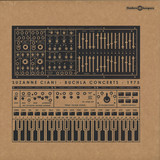
Finders Keepers invite you to witness the incredible first ever Buchla synthesiser concerts/demonstrations providing a distinctive feminine alternative to The Silver Apples Of The Moon if they had ever been presented in phonographic form. This is history in the remaking.
This spring Finders Keepers Records are proud to release an archival project that not only redefines musical history but boasts genuine claim to the overused buzzwords such as pioneering, maverick, experimental, groundbreaking and esoteric, while questioning social politics and the evolution of music technology as we've come to understand it. To describe this records as a game-changer is an understatement. This record represents a musical revolution, a scientific benchmark and a trophy in the cabinet of counter culture creativity. This record is a triumphant yardstick in the synthesiser space race and the untold story of the first woman on the proverbial moon. While pondering the early accolades of this record it's daunting to learn that this record was in fact not a record at all... It was a manifesto and a gateway to a new world, that somehow never quite opened. If the unfamiliar, modernistic, melodic, pulses, tones and harmonics found on this 1975 live presentation/grant application/educational demonstration had been placed in a phonographic context alongside the promoted work of Morton Subotnick, Walter Carlos or Tomita then the name Suzanne Ciani and her influence would have already radically changed the shape, sound and gender of our record collections. Hopefully there is still chance.
In short, Suzanne was a self-imposed twenty-year-old employee of the Buchla modular synthesiser company, San Francisco's neck and neck contender to New York's Moog. Buchla was run by a community of festival freaks and academic acid eaters whose roots in new age lifestyles and the reinvention of art and music replaced the business acumen enjoyed by its likeminded East Coasters. In the eyes of the consumer the creative refusal to adopt rudimentary facets like a piano keyboard controller rendered the Buchla synthesiser the more obscure stubborn sister of the synth marathon, steering these incredible units away from the mainstream into the homes and studios of free music aficionados, art house composers and die-hard revolutionaries. Championed and semi-showcased by composer Morton Subotnick on his albums The Bull and Silver Apples Of The Moon, Buchla's versatility began to open the minds of a new generation, but the high-end design features and no-compromise modus operandi was often confused with incompatibility and, in the pulsating shadow of Moog's marketing, the revolution would not be televised nor patronised. Suzanne Ciani, as one of the very few female composers on the frontline (and also providing the back line) did not lose faith.
These concerts' are the epitome of rare music technology historic documents, performed by a real musician whose skills and academic education in classical composition already outweighed her male synthesiser contemporaries of twice her age. At the very start of her fragile career these recordings are nothing short of sacrificial ode to her mentor and machine, sonic pickets of the revolution and love letters to an absolutely genuine vision of and 'alternative' musical future. In denouncing her own precocious polymathmatic past in a bid to persuade the world to sing from a new hymn sheet, Suzanne Ciani created a bi-product of never before heard music that would render the pigeon holes ambient' and futuristic' utterly inadequate. Providing nothing short of an entirely different feminine take on the experimental records' of Morton Subotnick and proving to a small, judgmental audience and jury the true versatility of one of the most radical and idiosyncratic musical instruments of the 20th century. These recordings have not been heard since then.
The importance of these genuinely lost pieces of electronic musics puzzle almost eclipses the glaring detail of Suzanne's gender as a distinct minority in an almost exclusively male dominated, faceless, coldly scientific landscape. Those familiar with Suzanne's work, a vast vault of previously unpublished non-records', will already know how the creative politics in her art of being' simultaneously reshaped the worlds of synth design, advertising and film composition before anyone had even dropped a stylus in her groove. Needless to say this record, finally commanding the archival format of choice, courtesy of the Ciani and Finders Keepers longstanding unison, was not the last first' with which this hugely important composer would gift society, and the future of a wide range of exciting evolving creative disciplines.
You have found a holy grail of electronic music and a female musical pioneer who was too proactive to take the trophies. With the light of Buchla and Ciani's initial flame Finders Keepers continues to take a torch through the vaults of this lesser-celebrated music legacy shining a beam on these non-records' that evaded the limelight for almost half a century. You can't write history when you are too busy making it. With fresh ink in the bottomless well, let's start at the beginning. Again. You, are invited!
Chet Baker was an American jazz trumpeter, actor and vocalist and a major innovator in cool jazz, leading him to be nicknamed “the prince of cool”. The 1989 album Cool Cat contains six tracks, split into 3 instrumentals; ""Swift Swifting "", ""'Round Midnight"", ""Caravelle"" and the 3 vocal tunes ""For All We Know"", ""Blue Moon"" and ""My Foolish Heart"". The songs are written by top jazz composers, including Thelonious Monk, Rodgers & Hart. For the recordings of Cool Cat, Chet is accompanied by pianist Harold Danko, bassist Jon Burr and drummer Ben Riley. Cool Cat is available on black vinyl.
Inhaler is the third studio album by American rock band TAD, originally released on October 19, 1993. It was the band's major label debut after two albums and an EP released by Sub Pop, and it was also their first album with drummer Josh Sinder, formerly of The Accüsed. Producer J. Mascis (Dinosaur Jr.) gave TAD a more focused and driven sound on this record. He can be heard playing the piano on ""Luminol"". The song ""Grease Box"" was played during the end credits of the 1994 movie Brainscan. Inhaler is easily their best and most consistent album to date and obtained positive critical reception upon release. Fortunately, the group has lost none of the grit that marked them as the grungiest of the Seattle scene. In promotion of Inhaler, TAD toured with Soundgarden. Inhaler is available as a limited edition of 1000 individually numbered copies on magenta coloured vinyl and includes an insert.
To this day, jazz pianists are influenced by Bill Evans by his use of impressionist harmony, interpretation of traditional jazz repertoire, and his trademark rhythmically independent, “singing” melodic lines. Evans gained his first spotlight when joining Miles Davis’ sextet during the time Kind of Blue was recorded. After leaving the sextet, Evans began his career as bandleader, which he finished in his last trio with Marc Johnson on bass and Joe LaBarbera on drums. This trio recorded The Brilliant in 1980 live at the Keystone Jazzclub, San Francisco, just before Evans’ passing. The Brilliant is available on black vinyl.
music to be issued on The Avant Garde (with Don Cherry), Coltrane's Sound and the all-time classic My Favorite Things, he embarked on the making of Coltrane Plays the Blues, a thematic LP consisting of six tunes based on the blues. "Blues for Bechet", one of the two pieces on this album on which Trane plays the soprano sax, is obviously dedicated to the jazzman who brought this instrument to jazz: Sidney Bechet. Pianist McCoy Tyner sits out on "Blues to Bechet" and both takes of "Blues to You", reducing the band to a trio on these tracks.
d Blues To Elvin Alt Tk
[h] Blues To You [Alt Tk]
[d] Blues To Elvin [Alt Tk]
[Alt Tk]
One of the four classic albums Miles Davis recorded in 1956 to fulfill his contract with the Prestige label, Steamin' features him on trumpet leading his iconic quintet with John Coltrane on tenor sax, Red Garland on piano, Paul Chambers on bass and Philly Joe Jones on drums.
g Well You Needn T [1954 Quartet Version]
Summer and the seventh part of Running Back‘s revered various artist series are here. This time consisting of five tracks across the spectrum of cunning and contemplative dance music. Taking over the a-side duties, Ricardo Baez and Josh Micky demonstrate the uncanny alliance of pianos and Italo bass lines for heavy modern disco hitters: high times, fun stuff. BSS‘ Jannis puts that concept on its head with a different kind of piano track. Hypnotic deep house minus all its cliché-ridden traps. Bryolfur and Running Back mainstay Storken opt for trippy and tricky disco with Twist, while Jonus Eric ticks all the IDM and brain dance boxes with Ribbon.
Easy to swallow and value for money.
180g vinyl + Deluxe hard-cardboard sleeve + OBI + resealable outer sleeve
This isn’t just a seminal album. It is an estuary. All the black rivers that would form Brazilian funk/hip-hop flow through it. Led by Paulista pianist Salvador Silva Filho – Dom Salvador – “Som, Sangue, e Raça” from 1971, one year after the explosion of Tim Maia on the scene, catalyzed the bossa nova and jazz background of its leader with the rhythm and blues of its members like saxophonist Oberdã Magalhães, nephew of samba-enredo master Silas de Oliveira and future leader of Banda Black Rio, who since the group Impacto 8 (which had, among others, Robertinho Silva on drums and Raul de Souza on trombone) had already been trying to reconcile MPB with Stevie Wonder and James Brown. Add to all this a mixture of samba, Nordestino accent, and even the black side of the Jovem Guarda represented by the authorial presence of Getúlio Cortes (older brother of Gerson King Combo, our James Brown “cover”) in ‘Hei! Você’. Alongside these elements and the presence of Rubão Sabino (bass), who still called himself ‘Rubens’, drummer Luis Carlos (another member of Black Rio), the record enlists the trumpet and flugelhorn of symphonic musician Darcy in place of the original Barrosinho (yet one more founder of Black Rio), who was traveling during the recording but would end up being a leading force of the band.
The album ‘Som, Sangue e raça’ paves the way for future generations of musicians and producers of the Carioca scene at the beginning of the 1970s. The lyrics that dealt with the question of race and the explosive fusion of samba, soul, jazz, and funk, elaborated by Dom Salvador and his troupe, Abolição, established the bases for the development of new sounds and tendencies in Brazilian music.
An innovative and idiosyncratic pianist, Thelonious Monk has been hailed as one of Be-Bop’s founding figures, with unexpected melodic shifts and dramatic hesitation hallmarks of his work. Monk By Five is one of the lesser-known sessions recorded for Riverside in the late 1950s and is one worthy of a wider audience; it features the bright swing of the new ‘Jackie-ing’ and the more dissonant ‘Played Twice,’ alongside engaging revisits of ‘Straight No Chaser,’ ‘I Mean You’ and ‘Ask Me Now,’ the interplay between Monk, cornetist Thad Jones and saxophonist Charlie Rouse especially noteworthy. Definitely worth investigating.
Comes with insert and download coupon.
Imagine a Latin remake of Back to the Future. The mad scientist is Arsenio Rodriguez (the godfather of salsa) and the young student who travels through time with him is Eblis Alvarez (Meridian Brothers). This album can only be described as the perfect soundtrack for that movie that never was.
After the massive buzz generated by his first solo album, Mentallogenic, Alex Figueira got back in the studio to work in a more collective fashion this time, carefully assembling the second album of his largest project to date, Conjunto Papa Upa; a team of 6 musicians, spanning 3 generations of some of the best talent in the Latin and avant-garde scenes.
In an era where tropical music is dominated by purely electronic and rhythmically uniform sounds, the ten songs encompassed in “Fruta Madura” (“Ripe Fruit”) wander through the most diverse tempos, rhythms, and motifs effortlessly. A real breath of fresh air that gracefully incorporates soul, funk, jazz, psychedelia, and electronics into a solid tropical, irresistibly polyrhythmic foundation, without ever succumbing to the many genre clichés.
The distinctive production and catchy songwriting of Figueira shine in a very distinctive light on this second full-length. Living up to his reputation (Miles Cleret, founder of Soundway Records, called him “one of the scene's truly authentic and eccentric producers”), he takes the opportunity to show he’s not afraid to keep walking his own path.
Taking the band for a wild ride through the traditions of Africa, America, and the Caribbean; contrasting them with a ridiculously wide plethora of vintage, contemporary, and futuristic sounds, and pivoting on the exuberant musicality displayed by his musicians; the result leaves no doubt: this album is destined to be considered a future classic of the exciting tropical psychedelic music of the 21st century.
Addressing the most diverse themes in this new collection of songs, things take on a much more mature tone, as the title clearly suggests.
The opening track “El segundo es más sabroso” (“The second one is tastier”) sets the tone in the most assertive way imaginable, with the band boldly declaring, through multiple metaphorical references (laid upon a crazy mix of Dominican merengue, Detroit techno, classic and free jazz, dub, and electro), that the bar will be set higher with this second album.
The remaining compositions touch upon the most diverse subjects, with a fair dose of humor, sarcasm, and postmodern “magic realism”. “El Algoritmo” (The Algorithm) is a parranda-cumbia hybrid (for lack of a specific term) about the omnipresence of technology in our lives. The sophisticated Latin soul of the titling track “Fruta Madura” makes a case for the beauty of the maturity process. Some key philosophical teachings of Marcus Aurelius (the role of causality, the impositions of “the logos” and the importance of self-control) get a twisted cumbia treatment on “Reos del Deseo” (Prisoners of Desire). “No le pongas Coca-Cola” (“Don’t put Coca Cola in it”) shows us the most satirical side of the band, accusing those who mix Coca Cola with Rum of committing "sacrilege", on a powerful base of Dem Bow (the grandfather of Reggaeton), intertwined with touches of soul, salsa, and Cuban comparsa.
"Háblame Claro" (“Talk to me clearly”) is a story of heartbreak that evokes in its first part the spirit of the erotic salsa of the 80s (a subgenre deeply despised by purists), and after an unexpected samba interlude, leads to the hardest salsa of the 70s (a subgenre adored by purists), to end up in the surprising form of pure Afro-Cuban ceremonial music.
“Tu mamá tenía razón” ("Your Mom Was Right") is an attempt to exalt the spirit of the Latin American soap opera in the key of “acid bachata”, to recount a real-life case, witnessed by the band on countless occasions: the partying woman who arrives at the show accompanied by her bitter husband, who obviously does not like to dance. A very cheeky song to talk about the very serious and pertinent topic of female empowerment.
“La misma vaina” (“The same thing”) with its indescribable blend of bantú, candomblé, and Mozambique rhythms with abstract synthesizers, is an ode to adventure in favor of the aversion to taking risks and seeking predictability.
“Amigas picadas” (“Salty friends”) is another humorous song recounting another real-life case witnessed by the band on countless occasions: a love encounter sabotaged by the girlfriend's friends, who all happen to fancy the same guy. A jazzy take on the ancient Dominican rhythm of pambiche (grandfather of merengue), with generous psychedelic touches, resembling the classy late 60s releases of Guadeloupe's legendary producer / label owner Henri Debs.
“Vinimos a hablar” (“We came to talk”) takes sarcasm to the highest level, to ridicule the absurdity (also experienced by the band firsthand) seen in live music venues where people pay a ticket to go and have conversations that could be carried out much better on any bar, where no band is playing. The music alternates between a delicate melody with loose, sparse percussion and a full-on, pumping Angolan semba, with a techno kick drum included; bringing things to an apotheotic grooving finale, where the peculiar swing of Venezuelan calypso from the Callao region is thrown on top of all the precedent elements; closing the album in the most uplifting, “end of the carnival parade” feel.
The artwork is a delicate and impactful oil painting by Colombian artist Kevin Simón Mancera, who has collaborated many times with the label before (“Maracas, tambourines and other hellish things” tape and the Lola’s Dice LP).
What the experts are saying:
“Alex (Figueira) dove into this work with a brutal cohesion between lyrics and synths. Timbre poetry, sound poetry (you name it). And that, superimposed on his always impeccable percussive base, confirms the title of “avant-garde visionary of our beautiful Latin music”".
EBLIS ALVAREZ (MERIDIAN BROTHERS)
“Papa Upa's infectious quirkiness is a balm against boredom. A mature album, but without an expiration date”.
GLADYS PALMERA
“Here there is a lot of strength, drum, cadence and psychedelia, lost dance rhythms, united in an intercontinental Latin/African/and Caribbean journey, a unique winning combination that we could consider the new “Ritmo Figueira”.
DISCODELIC
Conjunto Papa Upa are:
Alex Figueira - Timbales, percussion, vocals.
Gerardo Rosales - Congas, percussion, vocals.
Ramón Mendeville - Bongos, percussion, vocals.
Randy Winterdal - Bass.
Andrew Moreno - Guitar.
Nico Chientarolli - Organ, piano, synths.
All songs written by Alex Figueira.
Arranged and performed by Conjunto Papa Upa.
Recorded, produced, mixed and mastered by Alex Figueira at Heat Too Hot, Amsterdam.
Repress!
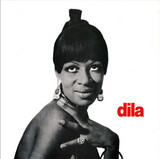
Far Out Recordings proudly presents the first and only album from the mysterious Brazilian vocal sensation Dila (pronounced “Jee-la”). Having reportedly died in a car crash shortly after the album’s release in 1971, there is very little known about the woman behind the voice. But the joyous music Dila left behind, gives us a picture as good as any, of a powerful feminine soul at the top of her game.
The liner notes on the elusive original LP, written by composer Arnoldo Medeiros attest: “Friend, look out! Because when this girl starts to sing, you’re in trouble. Hold the railing so you don’t fall down the stairs, because she’s coming this way and shaking up everything.”
Arranged and produced by Durval Ferreira, alongside his studio band affectionately known as “Os Grillos” (The Crickets), Dila (1971) is a rare glimpse into the authentic soulful Samba sound of Rio’s favelas in the late sixties and early seventies.
A blast of funky, percussive Brazilian breaks, scorching hot brass and swing-laden piano, the music is as iconic as the album’s stark cover, as is clear on opener ‘Inez’, composed by The Crickets’ bassist Romildo. There’s a fantastic interpretation of the Ivan Lins classic ‘Madalena’ (made famous by Elis Regina), a moving version of the Tom Jobim and Vinicius De Moraes classic ‘O Morro Não Tem Vez’, and a number of sunny original compositions by Arnold Madeiros, who’s other writing credits include music for Marcos Valle, Wanderlea, Evinha and Dom Salvador.
With original LPs extremely hard to come by, this rare treasure of Brazilian soul, which fans of Gal Costa, Celia, Evinha and Elis Regina will love, gets a much-deserved official reissue: remastered and pressed to 180g vinyl.
The hypnotic folk music of the Ainu a cappella group Marewrew has received the first of two remix treatments by Pingipung artists. Part 01 is by Andi Otto and M.RUX.
Andi Otto was the curator of the Marewrew album for Pingipung, released earlier in 2024. He selected gems from their archive for the "Ukouk" LP. His remix pays homage to the frenetic vocal dynamics of the round canon Sikata Kuykuy. Beginning with a stubborn piano beat, it's the bass clarinets that sit in sync with the vocals that make this dance track so charming. Bonus fact: they're played by Pingipung co-founder Heiko Gogolin - his first outing on the instrument for his own label.
M.RUX's take on Etukuma Kara is playful and groovy. Many will remember his legendary 2018 remix of Umeko Ando (Iuta Upopo), which marked Pingipung's first involvement with Ainu traditional music from northern Japan. His reworking of Marewrew's vocal music blends elements of various tracks with his own percussion, and the result is nothing short of spectacular.
The two tracks will be released on 7" vinyl.
2024 Repress
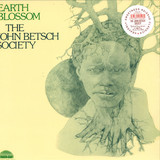
180 Gram, Tip On Sleeve RSD version of this classic. One of the rarer records of the mythical Strata East albums is finally reissued for the first time on Heavenly Sweetness!
The recording of Earth Blossom, the John Betsch Societys one and only album, seems something of an enigma nowadays. For even though Nashville is clearly one of the towns in the US with the highest number of recording studios, who would have thought that the capital of country music would give birth to one of the forgotten masterpieces of 1970s spiritual jazz. The path leading to the album starts in 1963 when John Betsch, originally from Jacksonville in Florida, arrives in Nashville to study at Frisk University. He is a young drummer and joins Bob Holmes trio. Holmes is one of the towns major jazz organists and pianists; he becomes Betschs mentor and, over the space of two years, John will play alternately with him and with the trumpeter Louis Smiths group. However, in 1965, John leaves town to go to the prestigious Berkeley University in Boston and do a two-year course along with his fellow debutants with names like John Abercrombie, Ernie Watts and Alan Broadbent. Two years later, he is invited by a pianist friend, Billy Chilf, to join the legendary singer/songwriter Tim Hardins group. Just after Woodstock, John Betsch and Tim record a psychedelic album Columbia will never release together with the members of the future group Oregon: Colin Walcott, Glen Moore, Paul McCandles and his friend Billy Chilf. But he soon leaves this group to return to Nashville where he hooks up again with his friend Bob Holmes. Two years later, he is accepted on Archie Shepp and Max Roachs famous course at the University of Massachusetts Amherst (UMASS) and for the next four years he participates in this collective of intellectuals and musicians under the aegis of the two masters.
During this period he returns to Nashville to form his Society whose music is obviously influenced by the Afrocentric ideas of the UMASS student and political movement. However, the album, recorded in one day and in one take, also bears the hallmark of their generations psychedelic experiences, and in the themes and playing of the musicians we can hear a less violent form of music than the radical free jazz of New York or Chicago. Nature and environmental themes are the inspiration behind tracks touched by the spirit of Coltrane but also of Flower Power.
After Amherst, John Betsch joins Marion Browns group in 1976, leaves Tennessee for good and makes his home in New York over the next ten years or so. He plays and records with Dollar Brand, Kalaparusha Maurice McIntyre and many others, before heading off to France. He has lived in Paris for the last twenty years and played in Steve Lacy, Mal Waldron and Archie Shepp bands, as well as forming groups of his own. He now lives in Paris and plays with many musicians/bands.