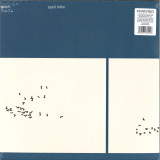
Recorded in 1995 and 1996, mostly in John Fahey"s room at a Salem, Oregon boardinghouse, the performances on Proofs and Refutations prefigure the ornery turn of the page that marked Fahey"s final years, drawing another enigmatic rabbit from his seemingly bottomless musical hat. Cloaked in the language of dogma - what is he proving? refuting? - this is Fahey dancing a jig in the Duchampian gap, jester cap bells a-jingling. True believers? He"s got something for you: an uncompromising vision that you can sneer at ("guy can"t play anymore and refuses to concede!") or embrace as evidence of his genius ("the reinventor does it again!"). Skeptics? He"s there with you, too: sending up the fallacy of certitudes altogether. Institutions, systems, accepted wisdoms. Heroes. Alternative facts, indeed. Right out of the gate, Fahey re-materializes before us, somewhere between Oracle of Delphi and Clown Prince at Olympus. Mounting a thundering dialectic from on high, "All the Rains" resembles nothing else in his extensive discography - betraying roots in everything from Dada to Episcopal liturgical chant - and contains nary a plucked guitar note. You can"t fool him! When the lap steel of yore appears on "F for Fake," it serves more as soundbed for an extended sequence of vocal improvisations, running the gamut from wordless Bashoian caterwauling to free-form (but decidedly fake) Tuvan, even revealing a burnished falsetto in the process. Fahey takes on a different kind of provocation in the two acoustic guitar-based tracks closing Side 1 - "Morning" parts 1 and 2 - the first of 4 recordings in this session that have him wrestling with the ghost of Skip James, perhaps Fahey"s effort to wrench the "bitter, hateful old creep" (his words) back into the grave. Anchoring Side 2 is the two-part "Evening, Not Night," the second half of his extended cathexis on James (and the latter"s avowed castration complex - another story for another day, perhaps). Bit of a chill in the air - where"s the impish Fahey from earlier? Unmistakably working through some psychic wounds here, we might think: the unheimlich rendered in glistening viscera. Or is he playing with our notions of authenticity, of his reputation as troubadour of raw emotional states, a pilgrim of the ominous, the simmering unconscious? These cards are kept decidedly close to the vest. The opening and closing pieces again feature Fahey"s guitar as drone soundbed - employing distortion, oscillation, and an altogether absurd quotient of reverb to create texture and harmonics that are - if we wanna go there - not dissimilar to the sustained tonic clusters of Tibetan singing bowls, the hurdy gurdy, Hindustani classical music, or La Monte freaking Young. Portions of this material appeared on obscure late "90s vinyl in the 7" or double-78 rpm format, but as a "session" it has lain dormant more than a quarter century now. Taken together, we can now see these tracks as secret blueprints to latter-day Fahey provocations, several years prior to records like 1997"s City of Refuge and Womblife.
Buscar:piece process
- Hox A
- Echo A.d
- The Pit
- Hox B
- A Web, A Knot, A Tangle
- But At What Cost?
- Æthervision
- Little Ghosts
- Hox C
- S.c.c. (Surge Cell Continuum) / Hox D
- The Rift / Hox Z / Desolation Overdrive
- Doom Country
Black[26,01 €]
Antifreeze Green Vinyl. Black Market Brass is proud to present Hox, due out on Colemine Records on September 8, 2023. Their third LP is a new take on afrobeat that combines traditional grooves with heavy, hypnotic, sci-fi sounds that reflect the band's myriad of influences as record collectors across genres. "We didn't leave the traditional afro-beat sound behind, but we did allow ourselves to pull from different places with less hesitation." Shared saxophonist Cole Pulice. Like their previous albums, the 9-piece band recorded Hox live to tape. "The sound and aesthetic of the analog recording process is important for this kind of music," Pulice explained. "We're looking to capture lightning in a bottle." With that, the album features several sections of heavily processed synthesizers, harsh glitches, fuzzed out guitars, and a burning percussion section that pays homage to the traditional drumming cultures of Nigeria and Ghana. The performances are dynamic and confident. The grooves are infectious and hypnotic. BMB has pushed further into musical experimentalism, but at the end of the day, they're still making dance music. Krautrock, free-jazz, doom metal - the inspirations for Hox stem from all kinds of musical backgrounds, but the sound is far from scattered. It's a polished, innovative record that's sure to exceed expectations and keep the listener engaged from start to finish.
Eight years after its original release in 2015, and sold out upon release, Umor Rex finally presents a vinyl repress of Sirens, by Kara-Lis Coverdale and LXV. This new edition is limited to 500 copies and comes with revised artwork.
Inspired by the link between seduction and violence, Sirens comprises a series of timbrally vast anamorphic pieces that poise the voice as a newly imagined tool of multiplicity. Processes of sample manipulation, signal processing, routing, and source design inform instrumental writing and performance in feedback until intertwined, flickering between states of conflict and consonance. Apparitions of the schizophrenic voice are at one moment fractured and cold and at the next full of warmth and vivaciousness, embodying velvet rituals of romanticism in the digital age.
Ultimately, Sirens is music for ambitious dreamers: surreal sound portraits sound like the warmth of the world laid over an ice cold virtual altar. LXV’s vocal truncations and fleshy sound palettes depict the archivation of the breath and aural fantasies of the flesh which Coverdale sets amongst a vast and unconfined landscape of deeper and unknown force. Harmonically active and dynamic orchestrations underpin post-sacred tonalities while brooding pipe organs, sphinx flutes, and hailstorms of metallic percussion characterize uniquely disjointed discussions between disparate compositional ontologies. At times violent and at others serenely peaceful and seductive, these pieces, at their most powerful moments illuminate a felt space between cybernetic energy and the body.
Composed and recorded by Kara-Lis Coverdale and David Sutton. Mastered by John Tejada. Cover photograph by Cody Cobb. Layout by Daniel Castrejón.
The free folk/jazz sound of modern Los Angeles. Featuring a heavy bunch of musicians and vocalists including Moor Mother.
"Fearlessly Accessing the Divine Spirit From Here on Out" is the vinyl debut from pianist, composer, and producer Diego Gaeta. He has previously released projects as Club Diego and with the trio Human Error Club (whose members Mekala Session and Jesse Justice helped produce this record). He has quickly become a fixture in a number of Los Angeles musical environments, working with Lionmilk, The Pan Afrikan Peoples Arkestra, Carlos Niño, Black Nile among others. This album is a synthesis of these many LA environments, and carries chamber, jazz, ambient, and folk influences, ultimately giving it an uncategorizable feel similar to works by Arthur Verocai or David Axelrod.
Gaeta recorded the initial ideas for the album by himself after experiencing a burst of creativity during the lockdown of 2020, in the aftermath of a season of protests in Los Angeles, on a piano at his home in El Sereno. "I was constantly not in tune with myself, always awaiting outrage and tragedy in a very unstable world. However, hitting the streets in support of various ongoing pandemic community actions felt necessary and it marked a point in time that ushered in large societal changes. The weight of that era made me feel allergic to making art at the time. All of these ideas came after that period, expressing my reflections subconsciously. I remember that the ideas came in a short amount of time, and then they developed."
Once he had created the tracks as Ableton sessions, he realized the gravity and context of how he was processing his ideas so he, as he puts it, "felt like taking them outside the hands of midi and into the hands of friends." Gaeta was able to assemble his dream band, which ended up being a 9-piece ensemble, or a nonet. "I felt that at some point I was channeling the geometrical balance of that nonet...it's almost as if I had a sextet and then the three of the sextet that's not the rhythm section were doubled. It's a really dense sextet, that's how I see it."
The recording process began the following summer in June 2021 as the musicians were all adjusting to the newfound dynamic of getting tested for COVID, waiting a few days, and then meeting up to record. "We were eating Indian food, some of us were smoking, it was a nice memory, but I felt a little stressed, because I was the bandleader, and I felt the emotional weight of my music."
The title track and single, featuring vocals by Jimetta Rose, begins with a speech by Gaeta delivered when playing with Black Nile in 2019 at the Levitt Amphitheatre in MacArthur park. Gaeta provides the following account: "Even though it was in 2019, socio-political tensions and issues were at the forefront for me at that time. I wrote a speech that was intended to be critical of the US but it ended up becoming a collage inspired by different women that had messages of freedom that spoke to me the most. I quoted Nina Simone and Georgia Anne Muldrow, it wasn't something that I read but something that she said "kicking it with consciousness and style" that phrase stuck with me, so I used it in that speech. Although critical, the speech had a positive feeling to it, and it was hopeful. I gave that speech while fireworks were going off."
Moor Mother & Zeroh are found on their respective tracks, Memory Screen & Eccolo - both delivering a distinct, commanding vocal performance. Low Leaf colors the track Soft Spot with harp, a beautiful ballad nestled in the center of the album. Other players include Gregory Uhlmann on guitar, Jon Kaye on violin, Devin Daniels on alto saxophone, Caleb Buchanan on bass, Dante Luna on vibraphone, Patrick Behnke on viola, Bryan Baker on tenor saxophone/flute, and Mekala Session on drums.
"I’d like for us tonight to embody a freedom oriented life. Freedom isn’t just a dream, it’s a place we must all arrive at together, as one by one the people of the Earth help each other to be Free of power, hate, and insecurities. Let’s kick it with consciousness and style. Can y’all dig that? YEAH. I can too. So now we’d like to present to you a spiritual transmission I like to call: 'Fearlessly Accessing the Divine Spirit of Freedom From Here On Out.' YEAH" - Diego Gaeta
Dutch multi-instrumentalist Felbm returns with the conceptual album "cycli infini" : a 38-minute composition of metamorphosing tape loops, musical patterns and instrumental sketches. Further exploring the concept is the vinyl release which features the track spread over both sides and cut to the end of each locked groove - creating an essentially never-ending piece that challenges the idea of the traditional listening process. The idea came to fruition by way of a lifelong interest and growing awareness of the cyclical nature of the world around him - be it through observing nature, or the mathematical and mind-bending works of Dutch artist MC Escher, or minimalist composers such as Erik Satie, Laraaji and Melaine Dalibert.
"The openness of Laraaji"s and Satie"s music have also been an influence to create a certain softness and feeling of comfort, as I like this piece to be a place you want to revisit", says Felbm, real name Eelco Topper. While Topper"s previous releases on Soundway Records comprised series of short, individual sketches, on cycli infini the tapestry is sewn seamlessly together using a step-like progression through the circle of fifths, which as the name suggests, brings the listener back to the musical key and soundscape at which they started. Should the full track be on repeat, it begins anew without being noticed. The piece began life with a layer of drone loops using tapes and delay pedals, over which acoustic instruments such as flute, saxophone and bass trumpet would playfully but gently interpret a melody - toying with jazz, ambient, fourth world and percussive sounds. As the music evolves through the key progression, organic elements such as birdsong and wind chimes ground the piece in nature. Says Topper: "the never-ending metamorphosis of matter has always fascinated me, the idea that nothing ever really disappears and everything has already been here... just in different shapes."
In 2018, New York based composer and improviser Lucie Vítková made recordings in caves in the Czech Republic and an abandoned Gothic church in Slovakia. Their album Cave Acoustics combines a beguiling exploration of the physicality and acoustics of these unique locations with profoundly personal themes of family legacy and roots.
Lucie performed with their sisters in Výpustek Cave – an underground system of tunnels and former Soviet-era bunker. The choreography-based piece creates crescendos of metallic noise as the trio moves around the spaces. It begins with echoing clanks of tins and coins and accelerates towards a rattling cacophony with distant singing floating up from deep in the shadows. Bearing in mind the siblings had never performed together before, their frenzied kinetic outpourings seem even more special, a wordless cohesion forming between them. Lucie clearly doesn’t shy away from a physically full on experience; they embarked on a Fitzcarraldo-style journey to carry heavy props up a steep hill and across a river to reach the less accessible Jáchymyka Cave.
‘Hair Score’ is an attempt to process the death of the siblings’ mother through a serene then slightly unsettling swaying ritual, with rising and falling waves of wailing and emergency siren sounds growing in intensity as they emerge from their mourning mouths.
After the cavernous acoustics, ‘Stones’ by American experimental classical composer Christian Wolff feels more immediate with its textural sounds and fast, insistent rhythms, as we hear different sized stones knocked together rapidly, following the composer’s instructions not to break anything.
‘Inside the Ritual’ was a “transformative” experience for Lucie, where they felt their body merge with the forest and hills in Slovakia. The 23-minute long track is hypnotic, listening to cowbells and chirping insects at the end of a hot summer’s evening. Things get stranger as metallic clatter is punctuated with Lucie’s voice and reedy tones from their Japanese hichiriki flute.
The album is a calm, contemplative but also energetic and moving reflection of these rare and unheard environments and Lucie’s reunion with the people and places that have shaped them.
Mary Jane Leach is a composer focussed on the physicality of sound, its acoustic properties and how they interact with space. She has played an instrumental role in NYC’s pioneering Downtown scene alongside Arthur Russell, Ellen Fullman, Peter Zummo, Philip Corner and Arnold Dreyblatt, as well as devoting years to the preservation and reappraisal of Julius Eastman’s work since his death in 1990, compiling the »Unjust Malaise« 3CD set in 2005 and editing the 2015 book »Gay Guerrilla: Julius Eastman and His Music«. »Woodwind Multiples« is her second album for Modern Love, following »(f)lute songs« (2018).
»Woodwind Multiples« features four pieces for multiples of the same instrument: four bass flutes, nine oboes, nine clarinets, and seven bassoons. Each piece works closely with the unique sound of each instrument, combining pitches that create other, sometimes unexpected, tones, primarily combination and interference tones, as well as rhythmic patterns. What you hear is what happens naturally - there is no processing or manipulation.
»8B4 (1985/2022)«, played by Manuel Zurria, is for four bass flutes. It is a revision of 8x4, which was written in 1985 for the DownTown Ensemble and was only performed once, due to its unusual instrumentation: alto flute, English horn (originally bass oboe), clarinet, and voice.
»Xantippe’s Rebuke« (1993) was written for Libby Van Cleve, for eight taped oboes and one live, solo oboe. The eight taped parts are equal and dependent, while the solo part is meant to be a solo with the tape as accompaniment. The piece works with the unique sound of the oboe, starting with unison pitches that create the richest sound, building the piece from there. Pitches and rhythmic patterns that occur naturally are notated and then played later, which in turn create other pitches and rhythmic patterns. So, in effect, the nature of the oboe and its natural sound determine the direction of the piece.
»Charybdis« (2020), played by Sam Dunscombe, is for solo clarinet and eight taped clarinets. It combines a somewhat obscured reference to Weep You No More, a John Dowland piece, which combines with the sound phenomena created from the melody and supporting chords of the Dowland.
»Feu de Joie« (1992) was written for bassoonist Shannon Peet and is an homage to the bassoon and its wonderful sound. It is for seven parts—six taped and one »live.« The taped bassoons combine to create a bed of sound that exploits the unique qualities of the bassoon, creating combination and interference tones, starting off with unison pitches, creating a rich sound that builds from there. Most of the subsequent pitches and phrases occur naturally, and are then notated later on in the piece, which in turn creates other notes and phrases.
NoCorner and Stone King proudly presents the first official collaboration between Ossia and Andy Mac. Both are fresh off a series of high-profile releases and projects - Ossia with recent releases on Berceuse Heroique and Blackest Ever Black, and Andy with his new Deep Street label and the 2nd Diving Bird 12 that just came through on Idle Hands.
Featuring three tracks written & recorded between 2015 and 2017, the record sees Andy & Ossia's mutual love for Jamaican and African rhythms, dusty records and a tape-saturated approach to guide a fresh, dubwise production process involving a battered old Roland Sampler and Ossia's infamous half-broken analogue Trident Mixing desk.
A Side Soup Riddim serves itself up as a hybrid slab of dancehall, dub and perhaps even the looser stylings of house - a fresh twist with an eternally-universal emphasis on space, and the movement within it. On the flip, Cado leans even further into negative space, allowing a gorgeous piece of samplism to drive the rhythm all the way to its conclusion in the blink of an eye, with the soft insistence of the percussion playing with the listener's sense of time. This feeling intensifies in the final track, Linguine Loop. A shapeshifting low-frequency hum underpins a hypnotic melodic loop that develops, delays and distorts into a dizzying crescendo of feedback and noise. The final minutes serve as a final reflection on what came before as the melody slowly re-filters into the mix as a ghostly, half-there form of itself, drawing the reductive conclusion to this EP, a triple version excursion of far-away sounds.
Edition of 300, six times (at least) hand-stamped, in kraft sleeve.
Mastered and cut by Lewis at Stardelta.
After a 9 year hiatus, Jim Lockey & The Solemn Sun return to Xtra Mile Recordings with their brand new album 'Colour' -to be released on 28th July 2022. Available on PINK vinyl, CD and digitally. The 4 piece from Cheltenham, have poured their heart and soul in to this album, the follow up to 2012's album 'Death'. Focused on prominent occurrences in Lockey’s life after ‘Death’ the album discusses the thoughts and feelings he’s most at war with. Dealing with the premature end of a marriage, rediscovering himself as an individual and finding ways through are themes that bubble under the surface throughout; with notions of all punctuating each song Written during the breakdown of the relationship, this album became a method of healing. Like the chaotic process of grieving it’s an agitated reflection that shifts back and forth - from losing everything, rediscovery and finding the resolve to move forward.
To call Current Affairs a Glasgow band may initially seem misdirection. Though Joan Sweeney (ex-Rose McDowall’s Band, Aggi Doom, The Royal We) is a lifer, Sebastian Ymai (Comidillo Tapes, Pissy, Anxiety) came from Chile via York, recently relocating to Berlin in 2021, and new member Gemma Fleet (The Wharves, Order of the Toad, Dancer) alongside Andrew Milk (Shopping, Pink Pound) were persuaded to leave London for the ‘second city’ after touring through with previous bands. However, Glasgow is the heart and hub of the band’s music, musical life and the place where Off the Tongue was solidified and produced. Their current line up formed in 2020, but the four have been circling each other for years, touring and playing with their previous bands within the close UK network of DIY music. Stalwarts of their respective scenes they finally began working together through the creation of the Spitehouse collective – a project designed to promote Queer and female-fronted music through events mainly held at Transmission Gallery and Glasgow Autonomous Space, putting on many local and international acts (Sneaks, Sacred Paws, Still House Plants and Comfort amongst others). When an opening for a new bassist arrived, Gemma was the obvious compliment, the slogan of Spitehouse being the language of Current Affairs – “Everyone’s welcome, but don’t get it twisted.” Following on from 2019’s singles collection, Object & Subject, the wait for their debut full-length may belie the urgency of its sound. Songs that were written in pieces over a long time and distance, but fully formed in the instant of the recording room across just a few days by producer Ross McGowan at Chime Studio. Current Affairs’ song-writing process has always been collaborative. Songs are developed responsively, with each of the band’s members sending/bringing elements or hooks to each other, but practices being the place where the songs flesh out, structure and are fully realised. These new songs feel a little brighter than their previous offerings, yet still hold true to their propulsive and caterwauling sound. Still embryonic in the most exciting way that that can be. Current Affairs’ music straddles new-wave pop and gothic post-punk in the way that you should expect a Glasgow-Berlin band to do so: with grit and panache. Written from within the world of crumbling services, broken bonds and wounded spirits, Off the Tongue rolls off an ecstatic rage, filled with hope for you, them and everyone else. It’s a rallying cry away from hopelessness, forgiving your fears and laying them to waste. Their album holds a place for you to be angry and to be focussed. In lieu of having anything else, we’ve always got each other, and an uncertain future is open game for us too
The latest by Canadian composer Tim Hecker serves as a beacon of unease against the deluge of false positive corporate ambient currently in vogue.
Whether taken as warning or promise, No Highs delivers – this is music of austerity and ambiguity, purgatorial and seasick. A jagged anti-relaxant for our medicated age, rough-hewn and undefined.
Morse code pulse programming flickers like distress signals while a gathering storm of strings, noise, and low-end looms in the distance. Processed electronics shiver and shudder against pitch-shifting assemblages of crackling voltage, mantric horns (including exquisite modal sax by Colin Stetson), and cathedral keys.
Throughout, the pieces both accrue and avoid drama, more attuned to undertow than crescendo. Hecker mentions “negation” as a muse of sorts – the sense of tumult without bombast, tethered ecstasies, an escape from escapism. His is an antagonism both brusque and beguiling, devoid of resolution, beckoning the listener ever deeper into its greyscale alchemies of magisterial disquiet.
- A1: Ritual
- A2: Confrontation 1
- A3: Village 1
- A4: Confidential Information 1
- B1: Confidential Information 2
- B2: Confrontation 2
- B3: Death Laguna
- B4: Information Policia
- C1: Sarayaku Hidding
- C2: Information
- C3: Demonstration
- C4: Info Resistance
- C5: Sicario
- D1: Village 2
- D2: Storming Camp
- D3: Legal Process
- D4: Trail
- D5: Swat
- D6: Ritual Reprise
Alva Noto’s award winning score for the 2022 German documentary film ‘This Stolen Country of Mine’ directed by German filmmaker Marc Wiese features nineteen compositions to be released on NOTON in April 2023.
The documentary film explores the question of a state's sovereignty in the face of foreign powers. The film portrays Ecuadorian resistance fighters and journalists who oppose the sell-off of an extensive part of the country's resources to Chinese investors.
Alva Noto's music subtly accompanies the struggle of a mountain village, immersing us into the film’s narrative and pathos. Across nineteen compositions, the music exposes and holds back when the images and statements of the protagonists speak for themselves, reflecting the dark shadows and the glares of hope of communal resistance.
The documentary was the recipient of the German Documentary Film Music Award 2022.
Focus track #19
'Ritual Reprise' is the closing composition of Alva Noto's award-winning score for the 2022 German documentary film 'This Stolen Country of Mine.' The piece merges minimal digital textures with emotional resonances, taking the listener to a sonic path filled with a serene tenor. The tone is set on the slow-burn haze of gloaming ambient-electronica scapes, compounding under a unified cinematic soundscape of warm digital ambiances and liquified electronics.
"Bills past due, what you gon do?"
2lanes is part of the latest resurgence in Detroit's techno underground whose infamy is built via amorphous live appearances / DJ sets, collaborations with contemporaries like AceMo and John F.M., and a steady, hilarious and blunt presence on Twitter. PGS is proud to present 2lane’s 2nd piece of wax, the AA side "Baby's Born To Fish'' / "Impish Desires'' following the "Giving & Receiving" EP on NYC's Ceramic Records, February 2020.
2 Lanes first appeared in Detroit ~six years ago and quickly made a name for himself in the local scene, promoting shows with international artists and friends from NYC, all while making an effort to respect the city's unique musical identity and history. He carries the tradition of Detroit's electronic pioneers who pursued new ideas in production and gear, bringing perfection to the craft, and developing unique twists in his process.
Participating in the contemporary electronic music world required splitting your time between 2 places at once: Online, always-on, in constant engagement with friends + foe alike; In Real Life, physically traveling city to city, DJing and collaborating, all while maintaining a sense of self. And now, all that's different.
"Lately, I've been, going, going through some changes"
Releasing a club-ready 12" in the midst of a global pandemic? That's the 2 Lanes. We heard an earlier version of "Baby's Born 2 Fish" what feels like 10 years ago, rinsing "Impish Desires" when there were still gigs. Do you remember the Apollo Masters plant fire in early February? How long were pressing plants closed, again? How long have we been living in this new reality? 2lanes hopes that the messages of this music; fear, isolation, friendship, love and how we exist at this intersection comes through for the listener.
"Baby's Born To Fish" / "Impish Desires" is a heavy hitting AA side, rejuvenating, explosive, off your face. They're ready for the eventual return 2 the dance floor, and sooner for your streaming DJ set. We don't know when we can see you IRL, but we know it'll be in mixes for decades to come.
"You’re gonna cast your reel out and you don’t know if you’re gonna get a fish that day, but you’re still gonna cast it out." - 2 Lanes
Fates Warning’s ninth studio album, “Disconnected,” contain recurring images of separation and incompleteness reflective of the album’s title. “To do something similar to earlier release would have been an easy way out,” says guitarist Jim Matheos of the set. “The best thing for me to do, and the biggest inspiration, is to say, ‘Let’s do something different now and stretch ourselves in the other direction.’ ” Disconnected,” sees Fates Warning collaborate with ex-Dream Theater keyboardist Kevin Moore, as well Armored Saint’s Joey Vera on bass and backing vocals. Vocalist Ray Alder takes a more active role in the writing process for this album. Matheos, who writes the group’s music, has served as Fates Warning’s primary lyricist for years, but on “Disconnected” Alder pens the words to two songs, including the first single, “One.” Another “Disconnected” track, “Pieces Of Me,” is the first lyrical collaboration between Alder and Matheos. Throughout the band's career, Fates Warning has always cut a clear path, remaining steadfast in their vision to create inspired progressive metal. A must have for fans!
»Don’t Ever Let Me Know« is Sheffield’s first solo release since 2018’s »Repair Me Now« (Glistening Examples) and is a work in a similar mode to that album in that it comprises two lengthy pieces of multiple movements and moods. For this new work, and as a kind of ode to his late father, Sheffield has employed samples entirely taken from (or inspired by) the city in which both men were born. In this way, the sounds have been utilized as a kind of shorthand for the specific subjects at hand. The two audio assembla ges, meanwhile, mirror the ways in which loss and memory are processed – with both melancholy and wonder in equal measure: at once beautiful and confounding.
Colin Andrew Sheffield (b. 1976, El Paso TX) is a composer whose work is focused on the recontextualization of samples derived from various commercially available recordings – generally those taken from his own expansive collection of records, tapes, and compact discs. Conceptually his output is akin to plunderphonics-style sound collage, though aesthetically it is seemingly closer to soundscapes of ambient drone. Since his earliest recordings from the 1990s, his work has developed into a kind of hybrid of the aforementioned approaches.
Somewhere in the Lower-Franconian vineyards lies a hidden and mostly unknown canyon, a place that often returns to the thoughts and dreams of Läuten der Seele’s Christian Schoppik. Though a much rarer occurrence now as a consequence of environmental change, chance encounters upon the area in the past would sometimes reveal small ponds amongst the reeds, teeming with life and populated by colonies of newts and the now endangered yellow bellied toad. The transience of the water and the wildlife it hosts, dependent on season or climate, lends the area an almost fantastical, dream-like quality. Was it ever even there at all? A secret place that may or may not be present holds vast appeal to some enquiring minds… Ertrunken Im Seichtesten Gewässer, the third Läuten der Seele album in two years, is inspired directly by these experiences. Translating as ‘drowned in the shallowest stretch of water’, a title as pregnant with dread as it is wonder, the themes present speak both to personal memories and a wider understanding of place and time, and how we might interpret our own position within an ever-changing, sometimes disappearing world.
The record is presented as two long-form pieces divided into four separate movements, each titled so as to reflect this natural environment and its intersection with imagination, relying on processes of collage that draw from myriad indeterminable samples, field recordings and various recorded instruments. Those familiar with Schoppik’s work, both as Läuten der Seele and with Brannten Schnüre, will find present many of his signature tropes - the way deeply layered collages render abstracted visions of the past alive in the present - though what is always significant about his approach is not so much aesthetic as the wider concepts it attempts to express and emote. Indeed, emotional response is key to the Läuten der Seele sound, how overlapping notions of nostalgia, memory and identity calibrate experience and understanding of who we are and the world around us, whether it’s a world that’s gone or another imagined into being. If you observe the artwork closely enough, you may find a clue as to the canyon’s location, though such specifics are besides the point. The music itself infers a wider sense of the impermanence that characterises hidden worlds, wherever they might be or whoever they might belong to.
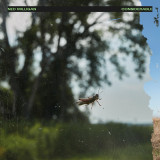
Ned Milligan is a New York based elementary school teacher and occasional musician. He’s behind the great small-run label Florabelle since 2015. This is his sixth solo album.
"My work in the past five years has been grounded in recording and playing outdoors, trying to communicate the meaning of being in a particular location and finding meaning in interacting with whatever sounds or elements are equally present. I'm still excited by all of it! This sense of purpose continues with Considerable and the most I could wish for is that the specificity of what I am doing and where I'm doing it manages to evoke something in anyone listening--a connection to their own environments and spaces. None of these pieces is strictly documentary or one-take in approach or composition, but I hope that the combination of processed and "factual" sounds achieve integrity."
chimes, singing drum, autoharp, field recordings, processing: Ned Milligan
campfire recording in "Sky Smokes & Electronics": Jerome Klap
additional percussion in "Mosey With Me": Rory Milligan
singing: graciously and anonymously donated
recorded mostly outdoors, sometimes indoors in York, Maine.
- 1: Past And Present Ft. Pupajim
- 2: Good Lovin Ft. Lady Ann
- 3: Sugarwater Ft. Hollie Cook
- 4: Riddim General Ft. Kiko Bun
- 5: We Pulsating Ft. Solo Banton
- 6: Only Love Ft. Prince Alla
- 7: Rain Keeps Falling Ft. Johnny Clarke
- 8: Total Disaster Ft. Shanti D & Ranking Levy
- 9: Control The Border Ft. Charlie P & Daddy Freddy
- 10: Birds Of Vice
Mungo’s Hi Fi return with their exciting new vocal project Past And Present. Released on their Dumbarton Rock label, it’s the eagerly awaited vocal companion piece to 2021 dub album Antidote. Past And Present is unique for Mungo’s in being devoted to the Rub A Dub reggae style that arose in late 70s and early 80s Jamaica. The record has its roots in both past and present. Back in 2021, Mungo’s responded to the pandemic with the dub project Antidote, an album of reflection among wide spaces and nature. As the world has reopened, Past And Present celebrates the return of verbal communication and dancing to hypnotic basslines, with the original vocal cuts by veteran and rising microphone talent. The haunting voice of French pure singjay Pupajim encourages us to face living in the now, on title track Past and Present. Pioneering Jamaican female deejay Lady Ann toasts the importance of Good Lovin’ over a sensual, waist-winding rhythm. Ethereal UK neo lovers rock singer Hollie Cook revisits her classic Sugar Water, floating above a sparse and eerie future Rub A Dub soundscape. Honey-toned Londoner Kiko Bun exudes confidence and humility as a Riddim General while veteran talker Solo Banton shakes up the dance on his seismic, much requested, We Pulsating. The biblical voice of Jamaican legend Prince Alla sounds fresh on a revisit to his immortal Only Love Can Conquer. Fellow elder statesman of reggae Johnny Clarke contributes the sole non Rub A Dub offering with the “Flying Cymbals” driven, deep roots track Rain Keeps On Falling. French singjay Shanti D and Israeli chanter Ranking Levy pair up on the mighty Jaqueline rhythm for a warning against Total Disaster. The prodigious Charlie P joins Godfather of UK emcee-ing, Daddy Freddy, to request freer movement on Control The Border. The final statement is without words or vocals: as Mungo’s production team take centre stage for the soaring Birds Of Vice – the A side to Antidote’s closing dub, Birds Of Pleasure. In reggae, the vocal traditionally precedes the dub. By completing their pairing of Antidote with Past and Present, Mungo’s have flipped the script and reversed the process – crafting a loving tribute to Rub A Dub’s rolling basslines and upward vibes in a modern style
I Shall Die Here / Earth Triumphant is an expanded edition of the fourth full-length album by The Body, first released to widespread acclaim, and terror, in 2014. Sharing their moribund vision with Bobby Krlic, aka The Haxan Cloak, the tried and true sound of The Body is shred to pieces on I Shall Die Here, mutilated by process and re-animated in a spectral state by the collaboration.
This double album set is expanded with the previously unreleased Earth Triumphant, a full-length companion album that would become I Shall Die Here, showcasing The Body's brutality in its most primal form. With both albums revisited by The Body and Seth Manchester at Machines With Magnets and remastered by Matt Colton at Metropolis Studios, this is the definitive edition of a shocking classic of unbridled bleakness and innovation. Formed by drummer Lee Buford and guitarist Chip King in Little Rock, Arkansas in 1999, The Body soon relocated to Providence, Rhode Island. The duo remained in Providence for a decade before moving west to their current home of Portland, Oregon. Their debut self-titled album (Moganano, 2003) and on the widely-acclaimed, classification curtailing of All the Waters of the Earth Turn to Blood (At A Loss, 2011) readied the band for even more experimentations. The employment of the Assembly of Light Choir's classical chorales on All the Waters, alongside more industrial music techniques such as vocal sampling and drum programming, prompted RVNG to inquire with King and Buford which darker corners of the electronic universe they were presumably interested in exploring.
The undertaking of I Shall Die Here was aided by Seth Manchester and Keith Souza, The Body's long standing engineer and creative collaborator, and noted producer Bobby Krlic. Krlic's own work as The Haxan Cloak struck a similarly despairing chord to The Body with the celebrated Excavation (Tri Angle, 2013), itself a minimalist evocation of the afterlife. I Shall Die Here shares similar nether space with the morbidly deviating darkness of Excavation, but remains sculpturally frozen in a sort of earthen purgatory.
The Body's musical approach, engraved by Buford's colossal beats and King's mad howl and bass-bladed guitar dirge, became something even more terrifying with Krlic's post-mortem ambiences serving as both baseline and outer limit. I Shall Die Here sonically serrates the remains of metal's already unidentifiable corpse and splays it amid tormented voices in shadow. This expanded edition gives us a window into the creation of a classic with the inclusion of its in utero twin, Earth Triumphant. Recorded as a nearly finished album by Buford and King before The Haxan Cloak's transformation, it stands as a raw statement of intent, the original DNA for what would soon mutate into something wholly new.
Fans of I Shall Die Here will find familiar sonic fragments in a more primitive state - like seeing an out-of-context photograph of a family member taken well before you knew them - but the album stands on its own in its minimalist brutality, a natural bridge to what The Body was soon to become. The Body's I Shall Die Here / Earth Triumphant will be released in digital and vinyl formats on June 30, 2023. On behalf of The Body, The Haxan Cloak, and RVNG Intl., a portion of the proceeds from this release will benefit Intransitive, an organization that works to advance the cause of Trans liberation in Arkansas through art, education, advocacy, organizing and culture in order to create effective systemic change and on-the-ground impact.