The first in a four-volume retrospective of Kuduro and tarraxinha pioneer DJ ZNOBIA. Incoming unto the world for a very long time from the musseke of Rangel, home of Casa da Mé&e Ju, in the Angolan capital o Ldanda, one if not the pivotal visionary of his country’s music electronic and digital modernism DJ Znobia, o/fum/an inventor. Usually considered the first purveyor of the fluency regarding tarraxinha (drinking in its foundational slow shuffle from the city of Benguela), as well as a main player in free thinking, spontaneous, funny, depressive, silly, melancholic, hilarious all encompassing beats within kuduro, batida, techno and beyond, his influence as a producer, DJ, MC and public fiuce has had a great imprint in Angolan culture for the better part of the last three ecades. This venture went through over 700 tracks of his archive (more than double are lost in the meantime between his and the NNT library) in order to collaboratively select a fiercely representative albeit balanced affair from his production, between instrumentals for sung kuduro, instrumental kuduro/batida, sung and instrumental tarraxinha, and other creative styling from the late 90’s to the mid 2000’s. Forms now heard around the world which started here, with Znobia a decisively influential contributor, along with several of his peers and collaborators, which will be also in evidence in this four volume retrospective. His story is way too far flung for this endeavor to try and make a simple narrative out of it. You have to be him, you have to be within this territory, and we ask of the people who will approach to ask him what has happened with the history of this music and what is the current reality at ground zero Luanda, as he is a mirror and visionary of its streets, in a country with such complicated dynamics and brutal treatment of its citizens. To try to put in a clean slate for this conversation, let’s talk to a genius of street music. Your question. First, here's the opening collection of what we have to share with you.
Buscar:pivot
Repress!
10 years since the consumerist musings of Tesco, Matthew Herbert reanimates his Wishmountain project and heads deep underground to find the source material for Stonework: 1000 metres down.
Like many of Herbert’s projects, Wishmountain releases revolve around specific, material sound palettes, and for this latest album he’s drawn from a sample library created as a commission for the Stone Techno festival, which took place at the UNESCO World Heritage Zollverein mine in Essen, Germany. Working with sound recordist Lorenzo Dal Ri, Herbert and Dan Pollard captured a varied and wide variety of hits, tones, textures and one-shots from the frozen-in-time remnants of the Ruhr region’s coal-mining industry and from specific materials in the nearby Ruhr Museum and Mineralien-Museum. A sample library created by Matthew and Dan of the recordings was also used for the Stone Techno series, from which tracks have been commissioned by the likes of Luke Slater, Megan Leber, Ben Sims and KiNK drawing from the same sounds heard on this album.
These stone-cast sounds lend themselves to the Wishmountain framework – skeletal, quasi-industrial techno with an angular impulse and a subtle swing. Much like the breakthrough hit, 1996’s ‘Radio’ (made using samples of a broken radio), the limitations on the source material sharpen the focus of the music. What started out as a practical hardware restriction in the early 90s became a purposeful way of working for Herbert – one which carried through the 1999 album Wishmountainisdead to 2012’s Tesco with its sampling of the British supermarket chain’s 10 most popular products.
Musically, Stonework is consistent terrain for Wishmountain – austere and forbidding in one sense, playful and irreverent in another. But from a club music perspective, which Wishmountain absolutely is, it offers DJs a variety of rhythmic formations within the tool-like minimalism of the arrangements, opening up intriguing possibilities for mixing into, out of, or somewhere in between. For every 4/4 thrust and jerk there is a fractured, snaking meditation pivoting around other time signatures.
Crystal clear in its creative intention and simultaneously successful as surface-level club music, Stonework: 1000 Metres Down is a natural continuation for one of Herbert’s most celebrated, albeit intermittent, aliases.
Mindgames is a new Samurai Music affiliated label aiming to capture the essence of the sound that magnetised label head Presha into Jungle/Drum and Bass in the mid 90’s. Experiencing this musical development as it happened lit a flame of passion and drive that forged a focused musical path that continues unabated today.
94/95 were pivotal years for Jungle with new approaches to production and musical shades that shaped how the music progressed. Light and Dark musical hues were working side by side more frequently in these years as the music found its way, and Mindgames will reflect this.
With the resurgence of artists absorbing this sound and creating updated versions with added production finesse, Mindgames mission is to enlist current-day producers who have successfully captured and reimagined the vibe and feel of these years into new forms that underline the foundation of our sound.
Dauw welcomes back Arovane to the label with his new album Drei Formen. A first edition on glitter tape was given away to the artist and the people we work with, while a second risograph tape edition is now available publicly. With this album the label and artist just want to thank their listeners and followers for their continued support. We hope this music resonates with you and gives some light in these troubled times.
Arovane is the moniker of German based composer and sound-designer Uwe Zahn who’s working in the field of minimal electronica and experimental music. In the late 1990’s his work reached a wider audience through releases on pivotal IDM labels DIN and City Centre Offices. In recent years, he released music on 12k and Puremagnetik and collaborated with Taylor Deupree, Porya Hatami and Synkro among others.
Texan country blues legend Lightnin’ Hopkins was a fingerpicking genius with a mournful voice who, after a spell in prison, first came to prominence through recordings for Aladdin and Gold Star in the late 1940s. Somehow, by the mid-1950s, his star had waned, but when Samuel Charters appeared at his one-room Houston apartment with a bottle of gin, Hopkins agreed to cut ten unaccompanied songs for Folkways, the resultant Lightnin’ a pivotal success that reignited his career, sparking the blues revival in the process. Full of haunting loneliness, despair, sly innuendo and doses of good humour, this must-have LP is absolutely brilliant!
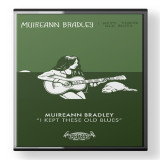
Muireann Bradley is a young blues, ragtime, roots and folk guitarist and singer based in Ballybofey in County Donegal Ireland. “This is my first album. Most of these tunes were originally recorded by the great blues men and women who were making records from the 1920s and 1930s right up in some cases to the early 1970s. I have also found inspiration for the renditions recorded here in the playing of some of the musicians who began recording this music in the 1960s and later, and who in some cases learned at the feet of the greats. Many of these guitarists played pivotal roles in the 1960s blues revival and subsequent “rediscovery” of many of the greats of country blues. I grew up steeped in these old blues in the hills overlooking the valley of the River Finn just outside the town of Ballybofey in County Donegal. My father would play this music constantly at home and wherever we went in the car and talk about it endlessly whether anyone was listening or not, telling stories about the lives of these musicians as if they were legend, mythology or the evening news. My father could of course play all this stuff on guitar, I remember watching him when I was very young and thinking “I want to be able to do that”. When I was nine he agreed to teach me and bought me my first little travel guitar. I worked hard to learn how to play but as time wore on I seemed to have less and less time to practice as I became more and more invested in the combat sports I was regularly training and competing in. Then in March 2020 the first Covid lockdowns happened and all contact sports were shut down. I was lost for a while but soon found my way back to the guitar. I was now listening, playing and practicing with a new intensity and focus. In a very serious moment, I wrote out a list of tunes I was going to learn. The first tune on that list was Blind Blake’s “Police Dog Blues”. I’m not sure now how long it took to get that arrangement together but when it was ready we videoed me performing it and posted it on YouTube. It ended up getting a lot of attention, I remember my parents being quite shocked and soon after that Josh Rosenthal got in touch… and here we are! Each individual track on this album was recorded live in the studio and represents one entire take with me singing and backing myself up on guitar simultaneously. Most are either first or second takes. Nothing has been added or taken away, no overdubs or modern recording tricks of any kind have been used at all so at least in some respects this album has been recorded in the same way as those classics of the 1920s and 1930s
A1 - Healing Properties
Opening his Spatial account with Healing Properties, Eusabia immediately throws down the gauntlet showcasing an inimitable versatility with breakbeats, permeated with a jungle flex so rarely captured in the atmospheric D&B landscape. Pivoting effortlessly as the track progresses from drumloop to thunderous drumloop with a simmering haunted atmosphere and deep, weighty basslines to yearning filtered vocal samples, this track has it all.
A2 - The Space Between
Smooth jungly synthwork seizes the foreground before crisp breaks begin to reveal our direction through The Space Between, jittery key stabs and familiar old school FX create a unique sci-fi style backdrop as the breaks drive the vibe forward, switching and weaving in style, constantly mixing it up to ram the point home that you cannot fully appreciate a Eusabia track until every second has been consumed - many times over, as The Space Between demands.
AA1 - Scope of Understanding
A more contemplative piece, Scope of Understanding strips things back with a synthwave-esque vibe tinged with intrigue and allure. Soon the breakbeats leap into gear and develop with an incredible level of refined detail, expertly edited, chopped and cut to a darkly undertone of sub bass and subtle micro melodies. Scope of Understanding will leave you in awe of the quickfire ideas Eusabia can conjure in the space of 6 minutes.
AA2 - Self Reflection
A smooth atmospheric introduction ushers in a thumping drum tools workout, somehow perfectly in sync with the calm harmonies dancing around in the composition. Certainly a track to enjoy both on the discerning dancefloor and while driving home with rain lashing at the windscreen at 2am, Self Reflection's synths and breaks conclude the EP in style leaving a long lasting memory of a Spatial debut you will not forget.
Words by Chris Hayes.
Big Thief's music, rooted in the songs of Adrianne Lenker, paints in vivid tones "the process of harnessing pain, loss, and love, while simultaneously letting go, looking into your own eyes through someone else's, and being okay with the inevitability of death," says Adrianne.
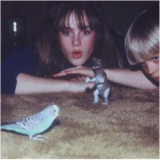
Masterpiece, Big Thief's debut album, is -lled with characters and visceral narratives, songs that pivot in the space of a few words. Adrianne's voice and guitar playing speak of rich emotional territory with grace and insight. In her words, the record tracks "the masterpiece of existence, which is always folding into itself, people attempting to connect, to both shake themselves awake and to shake o the numbness of certain points in their life. The interpretations might be impressionistic or surrealistic, but they're grounded in simple things.'
Adrianne met her longtime musical partner, guitarist and singer, Buck Meek, in Brooklyn a few years ago, and they quickly formed a creative bond tempered by the experience of traveling and performing for months on end in old dive bars, yards, barns, and basements together. They recorded a pair of duo albums (A-Sides and B-Sides), and Adrianne showcased her songs on a solo album, Hours Were The Birds.
Now, as a full rock and roll band, with Buck on guitar, Max Oleartchik on bass, and James Krivchenia on drums, they bring a steady wildness, giving the songs an even deeper layer of nostalgia. "These guys feel like a pack of wolves at my back," says Adrianne, "they make the songs howl and bark with a fierce tenderness that gives me courage."
After spending last July in an old house that they turned into a studio on Lake Champlain with producer Andrew Sarlo, the resulting collection soars on what Big Thief fan Sharon Van Etten calls "...a real journey, with intelligent stories and twist-and-turn melodies.
Red Vinyl
For the first time in their diverse second act, they allow themselves to be a rock band, freed of adornment and embellishment. As much as Carlson’s guitar has always been the focal point of EARTH’s music, it’s been surrounded by consistently diverse instrumentation. Here the dialog between Carlson and Davies drumming remains pivotal, underpinned by the sympathetic bass of Bill Herzog (Sunn O))), Joel RL Phelps, Jesse Sykes and the Sweet Hereafter) and thickened by additional layers of guitar from Brett Netson (Built To Spill, Caustic Resin) and Jodie Cox (Narrows). Perhaps the largest left turn on Primitive And Deadly, though, is the prominence of guest vocalists Mark Lanegan and Rabia Shaheen Qazi (Rose Windows) who transform the traditionally free ranging meditations of EARTH into something approaching traditional pop structures.
On “Rooks Across the Gates,” a song stylistically the closest to the folk inspired modality of Angels Of Darkness, Carlson stretches out into some of his most lyrical playing to date, creating an almost symbiotic relationship between his performance and the vocals of old friend Mark Lanegan. “From the Zodiacal Light,” meanwhile, takes the late 60s San Franciscan/freaked-out jazz-rock transcendence of The Bees Made Honey In The Lion’s Skull and quickly re-appropriates that sound into a musky torch song for the witching hour.
This contradictive tension between a band pushing itself ever-forward whilst surveying their history is reflected in the albums twin recording locales. The foundation of the record was laid in the mystic desert highlands of Joshua Tree, California where EARTH recorded hour after hour of meditations on each track's central theme at Rancho de la Luna. Upon returning to Seattle these were edited, arranged and expanded upon at Avast with the help of long-term collaborator Randall Dunn (who was previously at the helm for the Hex, The Bees Made Honey In The Lion's Skull and Hibernaculum sessions).
First-ever vinyl repress of Sheena Easton’s hit 1983 album.
• Remastered from the original master tapes and pressed
on white coloured vinyl with refreshed artwork including
new inner sleeve.
• Includes the US smash singles ‘Almost Over You’ and
Grammy-nominated ‘Telefone (Long Distance Love
Affair)’ as well as her stunning take on the Dusty
Springfield classic ‘Just One Smile’.
Sheena Easton rocketed to overnight fame in 1980 with the BBC
broadcast of The Big Time - arguably the first pop reality show -
subsequently breaking records with her first two singles ‘Modern
Girl’ and ‘9 To 5’ simultaneously hitting the UK Top Ten. Within
a year, she had topped the US Hot 100 with the renamed
‘Morning Train (Nine To Five)’, recorded the Bond theme ‘For
Your Eyes Only’, released two platinum-selling albums and
become an international sensation.
1983 proved a pivotal year for Sheena as she fully embraced her
burgeoning US stardom following a sell-out US tour, hit TV
specials and regular primetime appearances. ‘Best Kept Secret’
was her first album recorded Stateside. Working with red-hot
producer Greg Mathieson (fresh from holding down the top two
slots with Toni Basil and Laura Branigan) and Grammy-winner
Jay Graydon (Earth Wind & Fire, Dionne WarwickJ) the album
repositioned Easton as a youthful new wave stylist - as capable
of rocking hard on cuts like ‘Devil In A Fast Car’ as she was in
nailing a soaring Streisand-style ballad like the top 5 AC smash
‘Almost Over You.’ Lead single ‘Telefone’ was an out of the box
smash - reinstalling Sheena in the US top 10 pop and establishing
her as heavy rotation MTV star and dance chart regular.
This is the fourth in a series of remastered vinyls of her 1980s
albums, and part of Cherry Red’s on-going reissue campaign of
the star’s EMI catalogue in association with RT Industries.
Celebrating 30 years of success, Candlebox has revealed their final studio album, titled 'The Long Goodbye,' will be released on Friday, August 25th via Round Hill Records. Emerging from Seattle’s burgeoning mid-90s grunge scene, Candlebox quickly found mainstream success with their deep, lyrically-driven melodies and big radio hooks, as evidenced by their massive hits “Far Behind,” “You” and “Cover Me” that propelled their self-titled debut album to sell more than 4 million copies worldwide. Their follow-up album, 'Lucy,' earned a platinum certification and solidified Candlebox as a tour de force in the thriving alt-rock scene. While the commercial success of the first album played a pivotal role in the band’s trajectory to the top, it was their raw and unapologetically honest live performances that ultimately solidified their place among Seattle’s elite. In 1998, Candlebox released 'Happy Pills,' which would be their last album before going on hiatus from 2000 to 2006. In 2008, the band reformed and released their fourth album, 'Into The Sun,' and hit the road for the first time in 10 years, touring extensively and releasing 'Alive In Seattle,' a live album that included tracks from every era of their career. 2016 marked the triumphant return of Candlebox with the release of 'Disappearing In Airports,' a more classic rock-tinged album hailed by many critics and fans as their best work in years. Singles “Vexatious” and “Supernova” drove the album to debut at #9 on the Billboard Charts and spurred multiple U.S. and international tours including major festival appearances at Carolina Rebellion, Welcome To Rockville, and Lollapalooza Chile. While these iconic rockers have been blazing full-steam since, releasing their latest album, Wolves, in 2021, Candlebox is now wrapping up their long and illustrious 30-year career with The Long Goodbye.
The Roger Webb Sound's Moonshade is one of the coolest records ever. Originally appearing via the legendary De Wolfe library in 1971, it's a sumptuous jazz-soul-funk instrumental set. Full of melodic, melancholic yet sun-drenched songs, rich with colour and contrast, it was composed by self-taught jazz pianist Roger Webb and features vocal performances by Barbara Moore. That's right; *the* powerhouse library music duo! It makes Moonshade the perfect precursor and accompaniment to Barbara Moore's eternal classic Vocal Shades And Tones. It will come as no surprise that original copies, if you can ever find them, will set you back north of 200 notes.
Moonshade is a phenomenal showcase of Brit maestro Webb's own roots in jazz. Those roots are served up here with a plethora of fast-stepping rhythms that truly give flight to the vocals of Barbara Moore, as they soar in wonderful ways. Moore sings wordlessly throughout, allowing her voice to act like another instrument in concert with the horns and keyboards elevating the fine arrangements. This is a deeply beautiful record.
The album opens with the ornate Baroque pop splendour of the sun-dappled melancholia of "Sunshine". Strings, piano and wordless female vocals combine to create this brief beauty of unimaginable grace. The cool "Gentle Eyes" features haunting and beautiful vocals, smooth jazz piano and horns and a general easy vibe without being easy listening, if you know what we mean. You do. Just listen. The pounding "Heavy Lace" is one for the beat-heads, funky open drums (!) with muted organ, bassy piano chords and ace horns. Sampled by Quakers for their great debut album on Stones Throw. The nostalgic "Yesterday" is wistful and beautifully melodic instrumental soul music with gorgeous acoustic guitar and flutes. It's followed by the light, lilting "Petal Soft" which features more Baroque styles, overflowing with flutes and harps. The bright, bouncing "Coaster" is an easy-going piano-led, guitar-driven swinger whilst "Grey Sigh" is another classic. A real highlight, with more fantastic propulsive drums and percussion and plaintive wordless vocals courtesy of Barbara. Speaking of which, the soft, sweet Rhodes jazz of the lilting "Sweet Thing" is another staggering showcase of the brilliance of Barbara. Just astounding.
Head straight past the honky-tonk-by-numbers piano jaunt "Cough Drop" and luxuriate in the soft, delicate beauty of the album's melodic, cyclical title track, "Moon Shade". Fragile flutes and acoustic guitar float across judicious bass notes before giving way to slightly ominous piano and, again, those beguiling wordless vocals. And then round again to the flute refrain of the intro. This time with the vocals to see us out. Majestic drama jazz at its finest. The cello-and-flute adorned "Sapphire" is a fluid orchestral beauty whilst "Interweave" rides with more urgency in its string and bass stabs. When the warm keys enter, it's a bonafide mellifluous wonder. The softer "Musette" begins in beautifully gentle fashion before pivoting for a driving yet elegant piano middle section. It reverts back to the mellow intro, for its outro. Understood? The melodic organ and prominent rhythm section running through "Reminiscence" makes for a delightfully understated folk-funk instrumental whilst the cool, rolling piano feels of "7.30 For 8.00" seem to perfectly suit the phrase "dinner jazz". It's no bad thing, c'mon. This classy, memorable set is rounded out by the half-minute mince of the Barbara-blessed "Sparky". It's just over too soon!
The audio for Moonshade has been brilliantly remastered by Be With regular Simon Francis, ensuring this release sounds better than ever. Cicely Balston's expert skills have made sure nothing is lost in the cut whilst the records have been pressed to the highest possible standard at Record Industry in Holland. The original, iconic sleeve has been restored here at Be With HQ as the finishing touch to this long overdue re-issue.
C"mon Tigre, the innovative music collective known for their genre-blending compositions, releases their highly anticipated fourth album Habitat. Drawing inspiration from the concept of an ecosystem where various forms of life, both animal and vegetal, thrive and coexist, the album takes listeners on a sonic journey through the intricate and ever-evolving nature"s theater. C"mon Tigre"s ability to blend inï¬éuences from distant corners of the world enriches their music and visual imagery. The album is deeply inï¬éuenced by rhythms coming from Brazilian tradition, the backbone is rooted in samba, forro, through instruments and tempos that come from this cultural magnificence. However, it retains the African jazz, electronic, and mixed inï¬éuences that have characterized the project thus far. Connecting the dots, the result is a richly layered and genre-defying soundscape. The record boasts a stellar lineup of collaborations. Among these are Seun Kuti, heir to the legacy of the legendary Fela Kuti, whose afrobeat roots infuse the album with a potent and infectious energy. The record also features Xenia Franca, a dynamic Brazilian artist hailing from Sao Paulo, Arto Lindsay, recognized as a pivotal figure in the world of experimental music, Giovanni Truppi and the Californian collective Drumetrics which featured on C"mon tigre"s records since their debut in 2014.
Highly Limited Edition re-issue of this mid 80s nugget from down under. HUGE TIP!
Poetical License was a brief project uniting Scottish born and Aotearean (New Zealand) musician Mark Airlie and keyboardist and vocalist Keri Ansley after the duo met in New Plymouth. The solitary 7” came together in 1986, recorded at the infamous Auckland studio, The Lab.
The A side’s fragile Footprints is as utterly charming as it is drenched in melancholia with a delicate glockenspiel lick and Ansley’s ethereal delivery of the vocals. On the B Side, Room 101 pivots to wonky rock and a more post-punk approach to composition. The two tracks shine brightly among an abundance of outsider gems made in Aotearoa during the 1980s.
On For Annette, singer-songwriter ronja summons forth a certain unbridgeable void within our existence and the acceptance of the deafening silence that comes with it. Weaving the strands of her previous release something about us with multiple openings towards more abstract territory, this 5-track EP marks her debut under the forward-thinking Unguarded label, astutely situating her music well beyond the confines of the genre.
The opening track “Nothing Makes Me Feel” beckons the listener into a discreet moment amid the early light of dawn, commencing with an up-close acoustic guitar, soon to be graced by ronja’s hushed voice, softly whispering, as if to avoid waking someone near. “Just Once”, with its weeping waltz, is about losing one’s place in the world, about choosing the imaginary over the real. Behind the strummed chords hides a soft dither of sine tones that attempts to fill the gap that cannot be filled, only to transform into quavering distortion ever after. Where language may falter, ronja turns to choral-like instrumental pieces (“Light” & “Grass from Below”), characterized by her distinctive and multi-layered flute arrangements. The absence of words here allows for a sensible stage of introspection, a fleeting and diaphanous pause, forging a passage to a more hopeful outlook. Yet, these pieces are not isolated; hints of fluttering air and cavernous depths are subtly alluded to in the earlier, more song-based tracks. In just under 18 minutes running time, the theme of loss, or the anticipation of its arrival, lingers solemnly before transcending intermediate states in “Almost There”.
Admirers of the dreamgaze band Roomer, which made waves in and around the Berlin music scene this past year, might detect faint resemblances. Nonetheless, ronja—a pivotal presence in said band—unveils a distinct effort here, striking subdued but enticing tones, a foreshadowing of what is yet to come from this luminary artist. – Luka Aron
Recital presents the first full-length vinyl LP by sound artist Asha Sheshadri. Whiplash combines elements of sound poetry, diary-like narrations, and delicate incidental music. Sheshadri has crafted a unique and marvelous album.
Asha Sheshadri is a visual artist and musician, who “meditates on meaning, context, and impermanence” (Joshua Kim). Moves freely between video, writing, sound, and photography. Her forms flow together to create unpredictable observations of the overlooked, while documenting personal and political networks within our collective, imperfect memory.
“This record is an alternate approach to the autobiographical ‘confessional’ – I wanted to stitch together some pivotal sketches in self-understanding and forgiveness. While their designs may seem affectively disparate, they are in fact quite interrelated. My intention (as with past recordings) is to task the listener with tracing the contours of the narrative (or lack thereof). Each track contains sound from video work, excerpts from writers I admire, ethnographic methods, recovered and recycled voice/text memos, photographs from personal and public archives, and research-driven fictions. These sources expand and collapse into each other, only to reveal the eponymous "whiplash". To me, the feeling of "whiplash" is the collision of: a refracted ambivalence towards what was once real, the endless cycle of reckoning with wherever "home" has taken place, the fraught process of anchoring one’s self in the wake of slow-release trauma, and how (if even possible) to translate all of this into artwork.” –Asha Sheshadri, 2023
“Place is security, space is freedom: we are attached to the one and long for the other. There is no place like home.” –Yi Fu Tuan, Space and Place: The Perspective of Experience.
All tracks arranged & recorded by Asha Sheshadri; in bedrooms, living rooms, libraries, bars, airplanes, backyards and parks across North America.
Mastered by Sean McCann.
In the 1950s and 60s, the blues was the dominant form of Black vernacular music throughout Texas and the surrounding areas In segregated neighborhoods, community members gathered in saloons, dancehalls, and each other's homes to hear their neighbors sing their stories of sorrow, heartbreak, jubilation, and triumph. Robert "Mack" McCormick, an academically untrained but fanatical devotee of the blues, stepped into this world and became one of its most devout advocates and documentarians. By photographing Black and Latino Texans and their neighborhoods, as well as recording and interviewing musicians, many of whom never stepped foot into a proper recording studio, McCormick endeared and eventually embedded himself into these communities. By the time he died in 2015, McCormick had amassed a collection of 590 reels of sound recordings and 165 boxes of manuscripts, original interviews and research notes, thousands of photographs and negatives, playbills, and posters. Because McCormick never published or released most of these materials, his collection became a thing of legend and intense speculation among scholars, blues aficionados, and musicians alike. 'Playing for the Man at the Door..' is the first compilation of music drawn from this fabled collection, which indelibly documents a pivotal moment in African American history. It features never- before- heard performances not only from musicians who became icons in their own right, including Lightnin' Hopkins and Mance Lipscomb, but also, crucially, performers whose names may be unfamiliar to even the most devoted blues fans and scholars. Newly mastered recordings and accompanying photographs bring to life many of these forgotten figures: offering insight into their lives and illuminating in new, enlightening ways their joys and anguish, deep social connections, distinctive voices, and cultural networks. The collection spans gospel, ragtime, country blues dirges, the unclassifiable music of George "Bongo Joe" Coleman, and more, showing that no community, no matter how tight knit, is monolithic. Accompanying the music is a 128- page book, which contains breathtaking photographs by McCormick and his associates, as well as contextual essays by producers Jeff Place and John Troutman on McCormick's life, and by musicians Mark Puryear and Dom Flemons on some of the marginalized communities throughout "Greater Texas" to which McCormick devoted his life's work.
Rico Friebe is back with the album "Faces Meet" after his recent debut "Word Value" and delivers his personal "deer in the headlight"-moment. What once appeared sparely uncertain and questioning, equalling the fragile try to overcome a state of darkness and forsakenness, now forms into a frenzy of confrontational flashes on "Faces Meet".
Like reflecting on the uncertainties presented on "Word Value", "Faces Meet" reveals some genuinely harrowing findings, creating a wholesome musical moment in time that might never happen like this again.
Besides the uncompromising statements as to find in the opener "Look At Me", refined perceptions in "Nowhere To Run" or "Fifty-One", open-hearted calls in "Do More" and "Let Go", Rico's pivotal confrontation with the irrevocable truth and emotional dissection peaks in his heartbreaking story on "The Best Talk" which marks the crucial lynchpin of the whole album.
Like faces (and therefore people) are constantly meeting everywhere, being faced with the decision how honest and open to meet at all, "Faces Meet" happens to be an even more involved metaphor about surrendering to your true inner self in a mirror-like situation.
Deeply rooted in the seeds of his debut album "Word Value", Rico follows a highly natural and severely plain musical language while implementing new and further ideas and elements throughout his sonic landscape.
"Faces Meet" is an album of insight and self-awareness and the inevitably necessary foundation for his third double LP and magnum opus "Anthems For A Lost Generation" (set to be released in Spring 2024), accelerating a lately unstoppable story into unforeseeable pathways.
Rico Friebe is back with the album "Faces Meet" after his recent debut "Word Value" and delivers his personal "deer in the headlight"-moment. What once appeared sparely uncertain and questioning, equalling the fragile try to overcome a state of darkness and forsakenness, now forms into a frenzy of confrontational flashes on "Faces Meet".
Like reflecting on the uncertainties presented on "Word Value", "Faces Meet" reveals some genuinely harrowing findings, creating a wholesome musical moment in time that might never happen like this again.
Besides the uncompromising statements as to find in the opener "Look At Me", refined perceptions in "Nowhere To Run" or "Fifty-One", open-hearted calls in "Do More" and "Let Go", Rico's pivotal confrontation with the irrevocable truth and emotional dissection peaks in his heartbreaking story on "The Best Talk" which marks the crucial lynchpin of the whole album.
Like faces (and therefore people) are constantly meeting everywhere, being faced with the decision how honest and open to meet at all, "Faces Meet" happens to be an even more involved metaphor about surrendering to your true inner self in a mirror-like situation.
Deeply rooted in the seeds of his debut album "Word Value", Rico follows a highly natural and severely plain musical language while implementing new and further ideas and elements throughout his sonic landscape.
"Faces Meet" is an album of insight and self-awareness and the inevitably necessary foundation for his third double LP and magnum opus "Anthems For A Lost Generation" (set to be released in Spring 2024), accelerating a lately unstoppable story into unforeseeable pathways.
Rico Friebe is back with the album "Faces Meet" after his recent debut "Word Value" and delivers his personal "deer in the headlight"-moment. What once appeared sparely uncertain and questioning, equalling the fragile try to overcome a state of darkness and forsakenness, now forms into a frenzy of confrontational flashes on "Faces Meet".
Like reflecting on the uncertainties presented on "Word Value", "Faces Meet" reveals some genuinely harrowing findings, creating a wholesome musical moment in time that might never happen like this again.
Besides the uncompromising statements as to find in the opener "Look At Me", refined perceptions in "Nowhere To Run" or "Fifty-One", open-hearted calls in "Do More" and "Let Go", Rico's pivotal confrontation with the irrevocable truth and emotional dissection peaks in his heartbreaking story on "The Best Talk" which marks the crucial lynchpin of the whole album.
Like faces (and therefore people) are constantly meeting everywhere, being faced with the decision how honest and open to meet at all, "Faces Meet" happens to be an even more involved metaphor about surrendering to your true inner self in a mirror-like situation.
Deeply rooted in the seeds of his debut album "Word Value", Rico follows a highly natural and severely plain musical language while implementing new and further ideas and elements throughout his sonic landscape.
"Faces Meet" is an album of insight and self-awareness and the inevitably necessary foundation for his third double LP and magnum opus "Anthems For A Lost Generation" (set to be released in Spring 2024), accelerating a lately unstoppable story into unforeseeable pathways.