Mercury Prize and Brit Award winner Arlo Parks first came to the attention of music press with her debut single ‘Cola’. It’s a breath-taking, tender, poetic and confessional introduction to an artist just eighteen at the time of its release.
The then London based singer demonstrated soul beyond her years and with 'Cola' the submissive tones of her powerful voice are laid atop slow guitar melodies that beckon you to stop what you're doing and just listen. The track is written about bad love - in Arlo’s words, "Cola is a reminder that betrayal is inevitable when it comes to pretty people that think flowers fix everything".
‘George’, an ode to poet Byron was released in 2019 just weeks before signing to Transgressive Records and set Arlo on the path to being one of the most critically acclaimed artists of the year.
Buscar:poet z
Anfang der 1960er lösten die Songs eines jungen amerikanischen Folksängers ein Erdbeben aus. Ausgehend von einem zeitlosen Repertoire und unter Hinzufügung von Offenheit, Humor und moderner poetischer Bildsprache, definierte Bob Dylan neu, was ein Künstler in einem Lied ausdrücken konnte. Er erschütterte damit die gesamte Musikindustrie und trug dazu bei, die Grundlagen des modernen Rock zu legen. Dieser illustrierte Bildband enthält 7 Songs seines selbstbetitelten Debütalbums auf Vinyl.
If naming is a form of claiming, of being claimed, how is one tethered to both the physical landscape that surrounds us, as well as our own internal emotional landscape_at times calm, at times turbulent, and ever changing? H.C. McEntire's new album Every Acre grapples with those themes_themes that encompass grief, loss, and links to land and loved ones. And naming_claiming land, claiming self, being claimed by ancestry and heritage_permeates the hauntingly beautiful landscape that is this poignant collection of songs. The songs straddle the line between music and poetry. In "New View," McEntire cites poets "Day, Ada, and Laux, Berry, and Olds"_fixtures in the world of writing, whose works are beacons of light over bleak horizons. The beginning of the song is backed by soft guitar plucks that fall on the downbeat and spangle like stars, and, throughout, guitar, bass, and drums swell together gently, mimicking ebbing and flowing tides under the moon. McEntire's voice (at once tender and fierce) intones the truth of both giving and taking, releasing and claiming: "Bend me, break me, split me right in two. Mend me, make me_I'll take more of you." Permeated by heartbeat-like drums, "Shadows" develops quiet ruminations on surrender and loss_reminiscing, moving on. This ponderous, dreamlike song asks the question of how "to make room." How does one make room, for self and for renewal and surrender, when it is so difficult to leave what you know behind? Playing with slivers of descending chromatics, along with the occasional downward-stepping bass, here McEntire yearns for home, and for nesting. Perhaps one of the more grief-stricken songs, "Rows of Clover" is a lamentation, one that touches on the loss of a "steadfast hound." The lone piano in the beginning of the song is rhythmically hymn-like. The stark verse arrangement gradually leads to a chorus that reads like a moody exhale, swollen with lush guitar strums and a Bill Withers-esque understated soul groove. But what stands out the most is an image of being "down on your knees, clawing at the garden"_the only explicit mention of a person in the song. "It ain't the easy kind of healing," sings McEntire, seemingly from further and further away as her voice echoes; and healing ta;kes time, time takes time_truths that linger painfully. "Dovetail" is a song that tells of various women. The song moves back and forth between solo piano and the addition of bass and drums under vocals. McEntire's gentle, trembling vibrato_harmonized in thirds in a celebratory manner_calls to mind a rejoicing psalm and shines through these images, leaving the listener cuttingly fraught with emotions_such as wonder, sadness, nostalgia_that can only arise with these juxtapositions. Gracious (and graceful) with its lilting melodies and lush harmonies, Every Acre ex - plores the acres of our physical and emotional homes. These songs are reaching for the kind of home that we all seek: one where we can rest and lay down (or tuck away) our burdens of loss. And maybe, moving through every acre of a world that often tries to tear our sense of identity and heritage down, McEntire sheds light on what it is to be human in this life_both stingy and gracious, both hurtful and kind.
Orange Viny
If naming is a form of claiming, of being claimed, how is one tethered to both the physical landscape that surrounds us, as well as our own internal emotional landscape_at times calm, at times turbulent, and ever changing? H.C. McEntire's new album Every Acre grapples with those themes_themes that encompass grief, loss, and links to land and loved ones. And naming_claiming land, claiming self, being claimed by ancestry and heritage_permeates the hauntingly beautiful landscape that is this poignant collection of songs. The songs straddle the line between music and poetry. In "New View," McEntire cites poets "Day, Ada, and Laux, Berry, and Olds"_fixtures in the world of writing, whose works are beacons of light over bleak horizons. The beginning of the song is backed by soft guitar plucks that fall on the downbeat and spangle like stars, and, throughout, guitar, bass, and drums swell together gently, mimicking ebbing and flowing tides under the moon. McEntire's voice (at once tender and fierce) intones the truth of both giving and taking, releasing and claiming: "Bend me, break me, split me right in two. Mend me, make me_I'll take more of you." Permeated by heartbeat-like drums, "Shadows" develops quiet ruminations on surrender and loss_reminiscing, moving on. This ponderous, dreamlike song asks the question of how "to make room." How does one make room, for self and for renewal and surrender, when it is so difficult to leave what you know behind? Playing with slivers of descending chromatics, along with the occasional downward-stepping bass, here McEntire yearns for home, and for nesting. Perhaps one of the more grief-stricken songs, "Rows of Clover" is a lamentation, one that touches on the loss of a "steadfast hound." The lone piano in the beginning of the song is rhythmically hymn-like. The stark verse arrangement gradually leads to a chorus that reads like a moody exhale, swollen with lush guitar strums and a Bill Withers-esque understated soul groove. But what stands out the most is an image of being "down on your knees, clawing at the garden"_the only explicit mention of a person in the song. "It ain't the easy kind of healing," sings McEntire, seemingly from further and further away as her voice echoes; and healing ta;kes time, time takes time_truths that linger painfully. "Dovetail" is a song that tells of various women. The song moves back and forth between solo piano and the addition of bass and drums under vocals. McEntire's gentle, trembling vibrato_harmonized in thirds in a celebratory manner_calls to mind a rejoicing psalm and shines through these images, leaving the listener cuttingly fraught with emotions_such as wonder, sadness, nostalgia_that can only arise with these juxtapositions. Gracious (and graceful) with its lilting melodies and lush harmonies, Every Acre ex - plores the acres of our physical and emotional homes. These songs are reaching for the kind of home that we all seek: one where we can rest and lay down (or tuck away) our burdens of loss. And maybe, moving through every acre of a world that often tries to tear our sense of identity and heritage down, McEntire sheds light on what it is to be human in this life_both stingy and gracious, both hurtful and kind.
Newly mastered to vinyl from original BYG tapes. Lacquers cut by Alchemy Mastering at AIR STUDIOS. Insert with exclusive liner notes by author, journalist and BYG-authority Kevin Le Gendre. CD: Original 1969 BYG album. Digitally mastered from original BYG tapes by Nick Robbins. 16-pages booklet with photos & exclusive liner notes by author and journalist Kevin Le Gendre. *** Florida-born saxophonist, composer, poet, actor and playwright Archie Shepp was one of the most articulate exponents of politicized black culture in the late ‘60s, a time of enormous upheaval and radical thought. Relocating to Paris he made a number of highly influential albums, such as Blasé, that broached the essential themes of freedom and racial equality, and tapped into the bedrock of African-American music. Gospel and blues were a major part of the work, which also had a strong avant-garde sensibility. The band featured stellar vocalist Jeanne Lee and members of Art Ensemble Of Chicago. These trailblazing artists who combined jazz, poetry and radical politics made a definitive musical statement. “This re-mastered version of a seminal album still has great musical and emotional power... “ Kevin Le Gendre, 2022
Space Dimension Controller’s first release in 2023 is also his first outing to Running Back. Needless to say that it pushes all the right buttons. Warm and playful, but forcing and with fresh jive, Neuclidea and its siblings revolve around classic SDC values. Nevertheless, the Irish melodist is also moving on to new pastures. Hardware sequencing, vintage digital synthesizers via analogue processing spawn a sound that pirouettes as much around the lost cyber-hippie poetry of Border Community as it’s the effigy of fast balearic euphoria – if Ibiza would have been a party scene in Gattaca. Completing this treasure chest is a remix by Hodge for the pragmatic minded out there. Using some heavy drums of the west, his version of Neuclidea extracts the trance-like elements of the original and turns it into a floor-polishing brush. To sum up: music for heartbroken and lovesick victims alike.
Meg Baird’s songs are rarely made up of tidy stories. In fact, for Meg, mystery itself is often the
medium. With ‘Furling’, Meg’s fourth album under her own name, she explores the breadth of
her musical fascinations and the environments around them - the edges of memory,
daydreams spanning years, loose ends, loss, divergent paths, and secret conversations under
stars. ‘Furling’ moves through these varied spaces with the slippery, misty cohesiveness of a
dream - guided by an ageless, stirring voice that remains singular and unmistakable.
Since co-founding the beguiling and beautiful Espers in the mid-aughts amid Philadelphia’s
fertile underground music community, Meg’s solo recordings have constituted just a fraction of
her work.
Her first solo LP, the disarmingly out-of-time ‘Dear Companion’ (2007), saw her carve a quiet,
sunlit space away from the flickering swirl of Espers. Since her last solo releases, ‘Seasons on
Earth’ (2011) and ‘Don’t Weigh Down the Light’ (2015), Meg has lent thunderous drumming,
lead vocal, and poetry to Heron Oblivion (Sub Pop) on an album that garnered praise from the
New York Times and made Mojo’s Top Ten Albums Of 2016 list. She collaborated with harpist
Mary Lattimore on the mesmerizingly hazy ‘Ghost Forests’ (2018). She’s played drums with
Philadelphia scuzz-punks Watery Love (In The Red, Richie Records) and explored her deep
familial folk roots in the Baird Sisters (Grapefruit Records). She also contributed her vocal
arrangements to albums from Sharon Van Etten, Kurt Vile, Will Oldham and Steve Gunn, and
toured with Angel Olson, Dinosaur Jr., Bill Callahan, Thurston Moore and Bert Jansch, among
others.
Yet ‘Furling’ is the album that most irreverently explores the span of her work and musical
touchstones. It showcases her natural tether to 1960s English folk traditions. But it also reveals
her deep love for soul balladry, the solitary musings of Flying Saucer Attack and Neil Young
shackled to his piano deep in the foggy pre-dawn, dubby Bristol atmospherics, the melancholy
memory collage of DJ Shadow’s ‘Endtroducing’, and the delicious, Saturday night promise of
St. Etienne.
‘Furling’ was primarily recorded at Louder Studios by Tim Green (Bikini Kill, Nation of Ulysses,
Melvins, Wooden Shjips). Additional piano and vocal recording were captured at Panoramic
Studios in Stinson Beach, CA with Jason Quever (Papercuts). It was mastered in Brooklyn by
Heba Kadry, who mixed Bjork’s ‘Utopia’ and mastered albums for Slowdive, Cass McCombs
and Beach House.
For all its adornments, ‘Furling’ remains deeply intimate. The entire album was performed by
Meg and her long-time collaborator, partner, and Heron Oblivion bandmate Charlie Saufley.
While her prior solo work hinted at more expansive horizons, ‘Furling’ explores the idea of Meg
Baird as a band much more freely. Venturing beyond the musical confines of fingerstyle guitar,
she plays drums, mellotron, organs, synths, and vibraphone over her piano and guitar
foundations. Her distinctive, simultaneously elegiac and uplifting vocals, meanwhile, connect
surreal dream montages, graft sunshine sonics to swooning mediations on romantic solidarity
in trying times, and weave odes to the simple gestures of friendship - and the loss of family and
friends.
This rich sound world makes the songs a varied bunch: ‘Twelve Saints’ mates Pacific sunset
ambience and Pink Floyd pastoral to a meditation on mortality and escape. The infectious and
kinetic ‘Will You Follow Me Home’ contemplates hope and longing through the looking glass of
a Jimmy Miller-era-Stones strut. And in the closing piece, ‘Wreathing Days’, language
disintegrates over tone clusters that feel somewhere between falling and flying.
‘Wreathing Days’ also reveals much about Meg’s mastery of contrast - situating the dear and
delicate adjacent to chaos. And while it’s true that some songs on ‘Furling’ grapple with
humanity’s existential unknowns in stark terms, they primarily revel in the mysteries that hide in
nature and humanity at their most ordinary. ‘Furling’ lives in the notion that whole universes of
experience, enlightenment, elation and ecstasy can bloom in these corners.
If naming is a form of claiming, of being claimed, how is one tethered to both the physical landscape that surrounds us, as well as our own internal emotional landscape at times calm, at times turbulent, and ever changing? H.C. McEntire’s new album Every Acre grapples with those themes that encompass grief, loss, and links to land and loved ones. And naming claiming land, claiming self, being claimed by ancestry and heritage permeates the hauntingly beautiful landscape that is this poignant collection of songs. The songs straddle the line between music and poetry. In “New View,” McEntire cites poets “Day, Ada, and Laux, Berry, and Olds” fixtures in the world of writing, whose works are beacons of light over bleak horizons. The beginning of the song is backed by soft guitar plucks that fall on the downbeat and spangle like stars, and, throughout, guitar, bass, and drums swell together gently, mimicking ebbing and flowing tides under the moon. McEntire’s voice (at once tender and fierce) intones the truth of both giving and taking, releasing and claiming: “Bend me, break me, split me right in two. Mend me, make me I’ll take more of you.” Permeated by heartbeat-like drums, “Shadows” develops quiet ruminations on surrender and loss reminiscing, moving on. This ponderous, dreamlike song asks the question of how “to make room.” How does one make room, for self and for renewal and surrender, when it is so difficult to leave what you know behind? Playing with slivers of descending chromatics, along with the occasional downward-stepping bass, here McEntire yearns for home, and for nesting. Perhaps one of the more grief-stricken songs, “Rows of Clover” is a lamentation, one that touches on the loss of a “steadfast hound.” The lone piano in the beginning of the song is rhythmically hymn-like. The stark verse arrangement gradually leads to a chorus that reads like a moody exhale, swollen with lush guitar strums and a Bill Withers–esque understated soul groove. But what stands out the most is an image of being “down on your knees, clawing at the garden” the only explicit mention of a person in the song. “It ain’t the easy kind of healing,” sings McEntire, seemingly from further and further away as her voice echoes; and healing takes time, time takes time truths that linger painfully. “Dovetail” is a song that tells of various women. The song moves back and forth between solo piano and the addition of bass and drums under vocals. McEntire’s gentle, trembling vibrato harmonized in thirds in a celebratory manner calls to mind a rejoicing psalm and shines through these images, leaving the listener cuttingly fraught with emotions such as wonder, sadness, nostalgia that can only arise with these juxtapositions. Gracious (and graceful) with its lilting melodies and lush harmonies, Every Acre explores the acres of our physical and emotional homes. These songs are reaching for the kind of home that we all seek: one where we can rest and lay down (or tuck away) our burdens of loss. And maybe, moving through every acre of a world that often tries to tear our sense of identity and heritage down, McEntire sheds light on what it is to be human in this life both stingy and gracious, both hurtful and kind.
- A1: Introduction/The Revolution Will Not Be Televised
- A2: Omen
- A3: Brother
- A4: Comment #1
- A5: Small Talk At 125Th & Lenox
- A6: The Subject Was Faggots
- A7: Evolution (& Flashback) (& Flashback)
- B1: Plastic Pattern People
- B2: Whitey On The Moon
- B3: The Vulture
- B4: Enough
- B5: Paint It Black
- B6: Who'll Pay Reparations On My Soul?
- B7: Everyday
• Gil Scott-Heron was twenty-one years old when he was signed to Flying Dutchman by Bob Thiele to make an album of his poetry. The resultant “Small Talk at 125th and Lenox” was recorded before a small live audience and, released in 1970, sat perfectly in a world where the Last Poets had just tasted Top 10 success with their debut LP. “Small Talk at 125th and Lenox” opened with a spoken word version of ‘The Revolution Will Not Be Televised’ and also featured poems and musical pieces like ‘Omen’, ‘Brother’, ‘Plastic Pattern People’, ‘Paint It Black’ and ‘Everyday’ that reflected on the black community and its condition within America at this time.
• The starkest of these sharp observational pieces from Scott-Heron was ‘Whitey On The Moon’, which recounts the US Government spending billions on landing a rocket on the moon at a time when, “a rat done bit my sister, Nell”.
• Like its follow-up – “Pieces Of A Man” – “Small Talk at 125th and Lenox” is a classic album and we are delighted to serve it up again on vinyl in a gatefold sleeve with the original liner notes.
• With current “Big Talk” of going back to the moon, whilst injustice still prevails for many black people in America, “Small Talk at 125th and Lenox” still conveys a message that resonates today.
The album’s seemingly brief tracklisting belies a work of great beauty and depth, and one which turned into a one-man crusade for singer/guitarist Lars Andersson, intertwining deeply personal stories with his love for the era of Romanticism. “Every time I go to a museum and I’m about to pass through the era of Romanticism I stop in awe,” says Lars of the enduring appeal of the 18th century artistic movement. “Whatever it is – stories, paintings, music – it triggers something deep within me, something profoundly human. It really hits a nerve, and it utterly immerses me to a point where I can’t move.” The album replicates this feeling; a gloriously over-the-top blend of Slowdive and Sigur Rós, mixed with the single-mindedness of Daniel Johnston and the noisiness of Nirvana, it’s as bold and beautiful and every bit as ornate as the art that inspired it. Unlike their acclaimed debut, 2019’s All That Ever Could Have Been, which gradually came into focus with a 15-minute opening track, Picturesque hits home from the very first note of the short and sweet opener, ‘Ballerina’. That’s not to say there aren’t epics here – ‘Metamorphosis’ is essentially a 12-minute suite of three movements; blistering closer ‘The Lot’ is 11 minutes of Swans-inspired heaviness – but everything is much more direct and focused. This isn’t an album to lose yourself in, it’s one to get swept away by. “‘More is more’ was definitely the credo when making this record,” agrees Lars. “A big inspiration were bands like Pond and the way they manage to fill their songs up with stuff to the absolute maximum. While I definitely tried to give the listener some room to breathe at certain points and while, in good old post-rock fashion, it still builds up and breaks down, it relies much more on simple melody and harmony as opposed to noisy experimentation to transport feeling.” Never more so than on the first single, ‘The Golden Age’, which is the album’s centrepiece; a soaring slice of über-shoegaze that is so stunning you can’t take your eyes or ears off it. Like all the songs on the album, it’s based around a fairy-tale from the Romantic era. In this case, it’s Heinrich von Ofterdingen by the German poet, author and philosopher Novalis (other influences are: The Steadfast Tin Soldier by Hans Christian Andersen; The Seven Ravens and Hans in Luck by the Brothers Grimm; Undine by Friedrich de la Motte Fouqué and The Golden Pot by E.T.A. Hoffmann), with Lars drawing parallels between the titular character’s mystical and romantic searchings and his own personal quest. This is apt as the album has been an overriding obsession for Lars for the past two-and-a-half years; as well as writing and recording the songs (bandmate Phillip Dornauer played drums), he also mixed and mastered them at his Alpine Audio studio and Picturesque is very much his Brian Wilson or Kevin Shields moment. MOLLY were in the middle of their European tour when Covid hit in early 2020, forcing Lars to retreat back to his home outside Innsbruck and giving him time and space to think about every detail of the record. “Well, I was on a quest I guess,” he admits. “Like everyone, I was stranded at home and at some point I just said to myself, ‘If not now, then when?’ It was an intense process. I’ve worked on music from other bands and artists before but producing and mixing your own music is an utterly different animal. It was probably the most intense thing I’ve ever done, but it was also incredibly rewarding and the feeling of it all coming together piece by piece is incomparable.” The artwork is just as effective. “I think of Radiohead’s OK Computer – what you hear on the record is what you see on the cover,” explains Lars. “We were inspired by what we call ‘wimmelbilder’ hidden pictures in German, a very specific style in art where there are a lot of little things happening. When you see it from further away, it looks organic like a lost painting from the area of Romanticism, but the closer you look the more digital it gets. It’s a nice analogy.” He’s right, it perfectly sums up the conflict between Romanticism and 21st century life. “Romanticism was basically an answer to the Industrial Revolution as well as the social and political norms of the Age Of Enlightenment,” concludes Lars. “Now, we all live in a much more industrialised, materialistic, individualistic and sterile society than any early Romanticist could have ever possibly imagined. Over 200 years later the Romanticists have lost the battle.” With the divine and downright pulchritudinous Picturesque, MOLLY begin the fightback.1.Ballerina 2.Metamorphosis 3.The Golden Age 4.Sunday Kid 5.So To Speak 6.The Lot
This incredible trio of poets, were not only musicians but Civil Rights Activists, rising up in the early 1960’s. They formed the group whilst in prison where they began performing the “spoken word” to rhythm and percussion. The last poets where born! None of this prolific music has been issued as a 7” before, great music for all good music lovers
A - “It’s a trip” - Vocal ACID JAZZ / dance gem!
Killer Track. Percussive vocals; addictive and funky. Acid jazz club classic. Dare you to keep up. Once you start, you can’t stop dancing. Such vibes. Environmental and racism-alerts messages chorused as early as 1977. You gotta listen to the words. Zeitgeist extraordinaire.
B - “Blessed are those who struggle” - Exclusive 7” cut for this vinyl release. The super funky drums of Mr Bernard Purdie, one of the best drummers in the World, if I may say so myself. Stunning.
A moving and poetic journey that can sound at once coldly electronic, seemingly abstract, and at once heartwarmingly human. Holsen’s unique gentle melodies emerge to surface and go hand in hand with Cassiers’ fragile bits of songs and words, offering the listener a lead through an etheric dreamworld.
Australian 9-piece Spiritual Jazz group Menagerie announce their highly anticipated third album 'Many Worlds', released 15th January 2021 on esteemed U.K label Freestyle Records.
Menagerie is the Melbourne-based Jazz ensemble founded by producer, songwriter, guitarist, DJ and recording artist Lance Ferguson, also the driving force behind The Bamboos, Lanu, Rare Groove Spectrum and Machines Always Win.
Recorded at Union Street Studio by award-winning engineer John Castle, 'Many Worlds' features some of Australia's finest musicians, including pianist Mark Fitzgibbon (a regular performer at Gilles Peterson and Patrick Forge's original Dingwalls sessions), drummer Daniel Farrugia and renowned saxophonist Phil Noy (The Bamboos).
Inspired by both the post-Coltrane generation of the 70's, labels like Strata-East, Impulse! and Tribe, along with the current 'New Wave Of Jazz', Menagerie aligns with the world of Kamasi Washington, Shabaka Hutchings and Nubya Garcia, whilst also bringing their own unique twist.
Lead single 'Free Thing' leans heavily into the spiritual side of the band's sound. The hypnotic spoken word-poem is evocative of The Last Poets, an earthy yet futuristic meditation on the universal theme of freedom itself, set to a backdrop of insistent percussion, double bass and brooding piano voicings.
'Hope' carries forward the sound of spiritual jazz into the 21st century, with its epic vocal harmonies and melodic fanfare, it is an uplifting anthem for this period of global worldwide upheaval and uncertainty.
The title track 'Many Worlds' is a perfect example of how Menagerie incorporates their myriad influences, but manage to create a sound that feels uncannily fresh and contemporary. Book-ended by ambient, ethereal sections, the slow-burning groove builds over its 11-minute duration to create a standout crossover track.
Menagerie have received airplay and radio support from Gilles Peterson (BBC6/Worldwide FM), Don Letts (BBC6), Jamie Cullum (BBC Radio 2), Simon Harrison, Paul Miller and Ennio Styles (3RRR).
'Many Worlds' will be released on legendary U.K imprint Freestyle Records - home to jazz contemporaries Courtney Pine, Jessica Lauren, and keyboard legend Brian Auger.
For Mal-one’s sixth single he has chosen to use what he calls his Punk Art Poetry to shine a light on one of Malcolm Mclaren and Vivienne Westwood’s most controversial / stylistic garment, the ‘Anarchy Shirt’.
Vivienne had made the prototype of the ‘Anarchy Shirt’ on some stock of ‘Wemblex’ shirts that Malcolm had acquired and had shown it to Malcolm who said it needed to say more. So, he added the text and the quotes from ‘Situationist’ related saying’s ‘Try Subversion’ to quoting revolutionist Durutti ‘We are not afraid of the ruins’. The text over the shirt front, made using their kids ‘letraset stencil’ would say ‘Dangerously Close To Love’ or ‘Only Anarchists Are Pretty’…. sounds like a good chorus for a song. Only fifty of these shirts were originally made but like all design classics have been copied many times.
‘Some say Only Anarchists are Pretty… or Dangerously Close to Love’
Hope you enjoy the story told on this 500-copy single backed with a dubbed-up version on the B-Side.
Barely heard in his lifetime (1961-2002) but hailed as an outsider hero of ur-punk since 2009’s ‘Cosmic Lightning’ compilation, J.T. IV strikes back!
15 unheard-of tracks found on an obscure cassette tape make the schizo split in his music - rabid rock & roll fantasy and cold-eyed acoustic introspection - an epic. ‘The Future’ is J.T. IV’s mad magnum opus.
The 2009 comp LP, ‘Cosmic Lightning’, cast his tragic silhouette up on the big screen
for all to see: the lost boy, alone in the world, standing before the mic and releasing
his inner star with glee and vengeance, his antisocial visions flying high atop a raging
funnel of distorted guitars and blunt rhythms. Or couched, childlike, within a heart
breaking billow of acoustic guitars - a schizophrenic split that only magnifies the
display of his deep emotions.
‘The Future’ goes even further, excavating fifteen recordings from a previously
unheard-of cassette entitled ‘The Best Of Johnny Zhivago Retrospective 1979–1993’,
and adding four more uncollected tracks from his slim (and impossible to find
anyway) discography.
Of these nineteen tracks, eight are covers - and J.T. IV’s picks, from Velvets to Mott
the Hoople, Roxy Music, Lee Hazlewood, The Kinks, Eno and Stephen Sondheim,
sharpen our image of the misfit adrift; on the outside looking in, but maybe just a few
steps away from his goal.
‘The Future’ unfolds like an epic, as both sides of J.T.’s persona - the street-smart,
damaged rocker and the heart struck poet of the scene - live on together in the best
performances of his short career.
A punk of the old order, John Henry Timmis IV was born in 1961 into a dysfunctional,
abusive and eventually broken family. By the mid-70s, he was desperate to get out,
running away from his mother’s home several times while still a teenager living in the
greater Chicagoland area. At wit’s end, she had him committed to the Menninger
Clinic for a year or so. Released on his own reconnaissance, he began his meteoric
ascent to the mythic level of self-aggrandizement in which he appears here. Inspired
by the underground, proto-punk sounds in the air (the likes of which any sharp-eyed
young thing might chance upon in the back pages of Creem, Crawdaddy, Trouser
Press, etc.) and desperate to be heard himself, J.T. presented like the scabby
younger brother of Bangs and Laughner: born only to rock, his musical conception a
rabid personality crisis of proselyte elitism and nihilist excess.
Now, 20 years on from his passing, ‘The Future’ is ever farther away from the world
in which he struggled so mightily - but his stinging iconoclasm, whether screamed
from Marshall amps or mic-ed up close, feels ever more powerfully infused with his
unique breadth of illness and essence.
These songs represent the two sides of J.T. - and while they emanate from the 80s,
they find themselves potently renewed in the polarized world of today, making ‘The
Future’ a worthwhile destination for everyone who ever had a heart touched by the
transgression and freedom promised by rock & roll.
Black Vinyl[31,51 €]
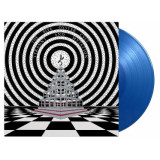
Tyranny and Mutation is the second studio album by American hard rock band Blue Öyster Cult, released on February 11, 1973, by Columbia Records. The album was recorded at the Columbia Studios in New York City during the year before and was produced by Murray Krugman and Sandy Pearlman. On May 12, 1973, the album peaked at #122 on the Billboard 200.
The song “Baby Ice Dog” features lyrics by singer/poet Patti Smith (who was keyboardist Allen Lanier’s girlfriend at the time), who would make several lyrical contributions to the band’s repertoire during its career. The song “The Red & The Black”, with lyrics referencing the Royal Canadian Mounted Police, is a renamed, re-recorded version of “I’m on the Lamb But I Ain’t No Sheep” from the same-titled debut album. The song was later covered by the Minutemen and Band of Susans.
Celebrating its 50th anniversary, Tyranny and Mutation is available as a limited edition of 2000 individually numbered copies on translucent blue coloured vinyl.
- 1: Cavity - First Communion
- 1: 2 Figurative Theatre
- 1: 3 Burnt Offerings
- 1: 4 Mysterium Iniquitatis
- 1: 5 Dream For Mother
- 1: 6 Stairs - Uncertain Journey
- 1: 7 Spiritual Cramp
- 1: 8 Romeo's Distress
- 1: 9 Resurrection - Sixth Communion
- 1: 0 Prayer
- 2: 1 Dogs
- 2: Romeo's Distress (Demo)
- 2: 3 Deathwish (Demo)
- 2: 4 Desperate Hell (Demo)
- 2: 5 Spiritual Cramp (Demo)
- 2: 6 Cavity - First Communion (Demo)
- 2: 7 Sleepwalk (198 Frontier Demo)
- 2: 8 Invocation (198 Frontier Demo)
- 2: 9 Cavity - First Communion (Alternate Version)
- 2: 10 Lord's Prayer (Alternate Version)
CHRISTIAN DEATH was formed by Rozz Williams in Los Angeles, California in 1979. Williams was eventually joined by guitarist/songwriter Rikk Agnew of ADOLESCENTS, James McGearty on bass and George Belanger on drums. This CHRISTIAN DEATH line-up was responsible for recording the band's iconic 1982 debut, ONLY THEATRE OF PAIN, widely regarded as the #1 American goth album of all-time. This exclusive double-LP version of OTOP commemorates its 40th anniversary- the first disc is the digitally remastered, original version of the album while the second disc is comprised of "Dogs" from HELL COMES TO YOUR HOUSE, four pre-Frontier demos, two studio demos made for a second Frontier Records' LP that never happened and two alternate studio mixes from OTOP. The gatefold LP jacket is printed in its original its black and metallic gold, includes a Colver collage poster and a hardcover copy of the photo book, ONLY THEATRE OF PAIN and all come in a hard slipcase. The oversized 12" x 12" book features rare and never-before-seen photos of CHRISTIAN DEATH as well as new interviews with photographer Edward C. Colver, the surviving band members, Frontier's Lisa Fancher and others. Colver befriended the band and followed them around in late 1981 and early 1982 at more than a dozen concerts as well as photo shoots in Rozz Williams' family home (used on the back cover and insert of ONLY THEATRE OF PAIN) and a session of now famous images at a Pomona CA cemetery. Info: Just as the theatrically-minded LA punk scene was beginning to give rise to such morbidly themed outfits as 45 Grave and the Flesh Eaters, an androgynous teenaged street performer named Rozz Williams (né Roger Painter) founded CHRISTIAN DEATH, one of the most prolific, enduring, and beloved gothic acts of all time. Williams' otherworldly groan can make "Only Theatre of Pain" difficult going for those that aren't the gothic faithful, but the loud/not-too-fast music (courtesy of ex-ADOLESCENTS guitarist Rikk Agnew and the walking-dead rhythm section of bassist James McGearty and drummer George Belanger) is appropriately doom 'n' gloomy, with inventive arrangements and clear sound - thanks to Frontier Records' go-to punk production legend, Thom Wilson- capturing the mood in full B-movie fidelity. The lyrics sacriligiously address horror topics and religion: they're overwrought (the backwards masking of 'Mysterium Iniquitatis' being one clever exception) but easy to overlook in the wash of inspired rock noise. The original lineup's recorded debut is a gem. Artists inspired by CHRISTIAN DEATH include Danzig, Craddle of Filth, Paradise Lost, Korn, Type O Negative, Nine Inch Nails, Marilyn Manson and Jane's Addiction. Press: "A depraved masterpiece, this was punk rock made poetic, subversive, and gracefully savage."- AV Club "The Gothic album to out-gothic all others" - Melody Maker "Only Theatre of Pain's influence should not be underestimated" - Record Collector Limited availability!
Feast or famine, Springtime will continue to sow their garden of auditory delights. Despite the global unrest and strict lockdowns that have come to define the past three years, Gareth Liddiard (Tropical Fuck Storm, The Drones), Jim White (Dirty Three, Xylouris White), and Chris Abrahams (The Necks) have continually convened to weave narratives of death, destruction, desire, and devotion. Pulling the threads cast by their eponymous debut, Night Raver offers three character studies rife with the trio's trademark urgency and poetics. To belatedly commemorate the creation of this tour de force trio, Springtime will be embarking on an Australian tour in the coming months. This is a three track EP but album length with over 40 mins of music.
In Western thought and culture, voice without speech is viewed as irrational and dangerous. Across myth and history, these voices must be contained or prohibited due to the threat they pose on social order. Female, animal, artificial and inanimate, lamenting, screaming, dreaming, mumbling. Fugitive voices, entangled in a parallel ‘nonhuman history’ coming together to create a chorus. Future Chorus is based on a collection of readings, spoken word, nonlinguistic sound, poetry, MCing, and animal sound, combined with machine learning processes to generate a genderless voice speaking a nonhuman language. The vocal database and AI voice became the raw material for five remixes by AGF, Chino Amobi, Harrga, Savvas Metaxas, Trustfall and Lafawndah. The project was conceived and curated by writer, theorist and practitioner Eleni Ikoniadou, a Senior Tutor at the Royal College of Art and member of the art collective AUDINT. The album is released by Hypermedium in collaboration with MAENADS — Anne Duffau, Eleni Ikoniadou, Aphroditi Psarra — a platform for collaborative art projects, musical, visual, performative or text based, releasing work that seeks to inhabit polyvocal narratives, group joy, alternative worlds or subjectivities, spontaneous collective ruptures.
- A1: It's All Punk Rock (Part 1)
- A2: 430 King's Road (Where Punk Meets Rock 'N' Roll) (Where Punk Meets Rock 'N' Roll)
- A3: Kiss Me Punk (Till My Mouth Gets Numb) (Till My Mouth Gets Numb)
- A4: The Class Of '76 (Punk Year Zero) (Punk Year Zero)
- A5: Punk Badge
- A6: Anarchy Tour After Grundy (Punks Out On Parole) (Punks Out On Parole)
- A7: Never Mind The Punk 45
- A8: A Punky Night In Soho
- B1: Punk Rock Jubilee 77
- B2: All You Need Is Punk
- B3: Punk Times
- B4: The Punk Rockers Gig Prayer
- B5: Flogging Punk Rock
- B6: All Aboard The Punk Rock Express
- B7: The Last Punk On Portobello Road (Ode To Joe) (Ode To Joe)
- B8: It's All Punk Rock (Part 2)
- B9: It's All Punk Rock (Full Version - Bonus Track)
Includes one-sided 7” ('It's All Punk (Full version)”, signed and blind stamped limited edition print, fly poster (20cm x 30cm), 20 page 12” x 12” booklet with lyrics and photos laid out in style of newspaper.
The ‘It’s All Punk Rock’ album was initially inspired by various artworks Punk Artist Mal-One had completed and titled. These titles usually turned into Punk Poetry / Lyrics and finally into songs. The idea would lead to grouping these songs together and to add the additional difficult cherry on the top. The songs would also include the word ‘Punk’ in each of their titles. Creating what we called the first Punk Art Concept Album. The title of the album as well as summing up the contents, grew from a term Mal-One had used for years when asked what had inspired a certain work or what was the meaning behind something …”It’s All Punk Rock”’ would be the quick reply.
Each song tells the story or relates the ideas behind a work, whether that be 430 King’s Road (where Punk meets Rock ’N’ Roll) the story of the various guises that Malcolm McLaren and Vivienne Westwood would conceive for their shop from LET IT ROCK, TOO FAST TO LIVE TOO YOUNG TO DIE, SEX, SEDTIONARIES. Anarchy Tour After Grundy (Punks out on Parole) the story of the `Anarchy Tour’ and what happened after the infamous appearance by the Sex Pistols on the ‘Today’ show with Bill Grundy. Punk Rock Jubilee 77, the Silver Jubilee celebrations of 1977 and its punk overtones. The Punk Rockers Gig Prayer, a Punk poem for the various venues that bands played back in those heady times. The Last Punk on Portobello Road (Ode to Joe), a lament to Mr Joe Strummer an inspiration to us all. Yes, every picture as they say tells a story, in this case never a truer word spoken.
Hope you enjoy the ride sonically and visually.